



Abstract
This article presents a bibliometric review analyzing 15 years of research published between 2000 and 2014 in the journal Tourism and Hospitality Research. Raw citations metrics were gathered using “Publish or Perish,” a data-miner software from Harzing, using Google Scholar as a base. The analysis focuses on six key metrics of the journal’s publications: (a) the nature of authorship, (b) the most influential articles, (c) the most influential authors, (d) the most prolific authors, (e) the themes covered, and (f) the manuscript characteristics of the articles published during the period. Notes for contributors, book reviews, conference reports/proceedings, practice papers, and editorials were excluded from the scope of this research, and 292 research articles appearing in the journal during this time were included in the investigation. Data were analyzed using SPSS and Excel. The article provides an overview of the evolution of the journal and presents some key trends in ongoing research within the industry. The study finds a clear trend toward coauthorship with a substantial increase in triple-authored articles. The majority of the articles have gone from being single authored in 2000–2004 to being dual authored in 2010–2014. Articles on marketing and consumer behavior, HR management, and environmental aspects have experienced a steady increase while strategic implications, hospitality and tourism operations, impact assessment and mitigation, and education have received a decreased attention. There has been a significant drop in theory development articles, in favor of quantitative research designs, in particular survey studies. Qualitative research designs rest relatively constant; however, case studies and interviews have lost ground to content analysis manuscripts. Contributions further include insights that can aid editors in determining future directions of the journal, guidance for potential authors in their quest to get published, and identification of new opportunities in research areas for the journal and researchers alike.
Keywords
Introduction
What is it that makes a journal a good journal? Is it the rigor of review—who and what gets published, is it the reach and impact the published work has among practitioners and the scholarly community, is it the scope of the field covered, or is it something else? Whether good or bad, these variables have a strong influence on researchers, publishers, the reputation of the journal, and finally the development of the area of research itself.
As an annual report offers stakeholders, shareholders, media, and the community insights into the operations of a company, its place, and prospects, so does a bibliometric analysis of a journal. According to Broadus (1987), a bibliometric analysis is a quantitative analysis of published material such as number of volumes in a collection, number of titles, number of articles in a certain field, and recurrence of authors. Bibliometric analyses have become increasingly important in the field of tourism studies due to the rapid growth of the field, an increasing interest from both practitioners and scholars as well as an increased demand in evaluation of the research performance (Hall, 2011). Cheng et al. (2011) emphasize the importance of longitudinal analyses of the evolution of topics and titles of academic tourism journals to provide an overview of the development within the entire field. The performance of academic journals can thus be considered to reflect the development of the academic community as a whole (Graburn and Jafari, 1991; McKercher, 2005).
One swallow does not a summer make; however, conducting studies on the performance of individual journals is important for the growth of the field in general as it can offer insights guiding authors, especially junior researchers, for their future publications regarding manuscript content, methodology, and subject areas (Holsapple et al., 1993; Martin, 2011; Phelan et al., 2002). It offers assistance to administrators and editors of journals in revealing trends, gaps in existing research, and areas of potential, as well as indicates the publications’ impact within the academic community (Holsapple et al., 1993; Phelan et al., 2002). Furthermore, it can prove helpful in highlighting paradigm shifts in the area of research (Xiao and Smith, 2006). Some researchers even go so far as to state that every scholarly journal has a mandatory responsibility to perform an introspective analysis of its contributions, where it is coming from and where it is heading (Dant and Lapuka, 2008).
The development of academic journals within the field of tourism has received increased attention and bibliometric journal reviews are becoming increasingly common in leading tourism journals, reflecting the maturation of the area itself (Ruhanen et al., 2015). Scholars have carried out analyses on a number of variables from journal characteristics to the characteristics of articles and authors. These reviews cover factors such as statistical techniques (Lee and Law, 2012), subject areas (Lu and Nepal, 2009; Zhong et al., 2015), authorship (McKercher, 2007; Zhao and Ritchie, 2007; Zhong et al., 2015), and citations (McKercher, 2008). Citation frequency is considered positively related to the influence of a journal (Law and Van der Veen, 2008) or an author, as well as to the quality of articles published (McKercher, 2008).
In light of the discussion above, this study aimed to examine key trends in the development of journal Tourism and Hospitality Research (THR) over the past 15 years. THR is a long and well-established journal that has dealt with a multitude of relevant issues that have emerged since its inception in 1986 and occupies an important place within the sphere of scholarship. In this study, we conducted an empirical analysis on several attributes. The purpose of the paper was to define (a) the nature of authorship, (b) the most influential articles, (c) the most influential authors, (d) the most prolific authors, (e) the themes covered, and (f) the manuscript characteristics of the articles published. The time span of the study is divided into five-year periods to examine the development of these variables over time.
The THR publishes articles of applied research in the context of Tourism and Hospitality within categories such as policy, planning, performance, development, management, strategy, operations, marketing, and consumer behavior. The journal is published by SAGE Publications Ltd and was launched in 1999; it is now on its 15th volume and 17th year. THR ranks a score of 0.367 SJR (SCImago Journal Rank), 225/587 in Geography, Planning and Development (Scopus®), and a 44/78 in Tourism, Leisure and Hospitality Management (Scopus®) in 2014. To date, no bibliometric study has been conducted on this journal.
The remainder of this article presents the methodology used, followed by a discussion on the main findings presented in line with the above objectives. Finally, we present our conclusions and recommendations for future research.
Methodology
Following standard bibliometric protocol, the raw data for this investigation were drawn from the THR during the period 2000–2014. The software “publish or perish” from Harzing was used to generate the list of articles published during the time frame using Google Scholar as the base of reference. Data were collected on 20 August 2015. Google Scholar is a web search engine that indexes the full text or metadata of scholarly literature. It comprises the number of times that a published article has been cited by other publications, in academic journals, books, book chapters, government reports, dissertations, and conference proceedings, and is considered to provide a better assessment of citation impact than ISI (Thomson Reuters Web of Science, generally known as ISI Web of Science or ISI) or Scopus for academics working in the Social Sciences (Harzing, 2010).
Two criteria were employed in deciding publications to be included in the analysis:
The articles should have been published between the year 2000 and 2014. While the journal began its journey one year earlier, we opted to limit the scope of our investigation for several reasons. The first is more semantic, the objective being to focus on the trend of tourism research published in the new millennium. The second reason is the inclusion of only whole years of existence; since the first published issue came out in July 1999, this would account for only half a year. The compiled list was sorted by publishing year and divided into three sections. The data were split into three five-year periods: (1) 2000–2004 (hereafter P1), (2) 2005–2009 (hereafter P2), and (3) 2010–2014 (hereafter P3). We identified 207, 237, and 196 articles for P1, P2, and P3, respectively. Second, concerning the manuscript type, only full academic research articles were considered, while double entries, notes for contributors, book reviews, conference reports, conference proceedings, practice papers, and editorials were excluded as they are not equivalent to research articles. This two-step process identified 292 articles published during the period 2000–2014, with 94, 104, and 94 articles (returning 1945, 2642, and 850 citations) for P1, P2, and P3, respectively.
The data were then identified and categorized. With the THR’s own 18 research categories as a base, taken from the journal’s stated scope and focus, a coding protocol was generated to categorize the articles into areas or themes where research is conducted. An additional category called education was also used due to the lack of an existing category to match the content of certain articles. The data were categorized and coded by two researchers independently by reviewing the titles and abstracts of the articles, coding them on the basis of the overall focus or theme. If the article could be classified under multiple themes, then the most prominent, core theme of the article was counted. If more than one theme was counted, the paper was reexamined until a consensus was reached. Furthermore, the manuscript characteristics were identified and categorized by research design and methodology for the following methodological approaches:
Theory development (conceptual, formal theory, literature review/meta-analysis); Quantitative (surveys, experimental design, observation, analysis of existing data); Qualitative (interviews, focus groups, observation, content analysis, case studies); Triangulation (mixed method, multimethod).
The final data were then analyzed on the following premises: (a) the nature of authorship by number of authors per paper, (b) most influential articles based on the number of citations, (c) the most influential authors based on number of citations, (d) the most prolific authors based on adjusted number of articles, (e) research themes covered, and (f) manuscript types.
Results and discussion
The results of the study are presented and discussed in the following section.
Articles published
Figure 1 reflects the total number of research articles published over the chosen time frame within the scope of this article. There is no absolute number that is adhered to in any year of publication. Although the journal is quarterly, the number of issues per year has varied between two and five, with a mean of 3.4 from 2000 to 2014. In 2001, 2003, 2004, and 2007, the issue count was two, and in 2005 and 2014 it was three, explaining some of the dips in the number of articles. The number of research articles in any issue also varies according to their length and the space allotted to other types of material such as notes for contributors, book reviews, conference reports, conference proceedings, practice papers, and editorials. However, the number of articles rests relatively proportionate over the periods with 94 articles in P1, 104 in P2, and 94 in P3.
Number of articles published by years.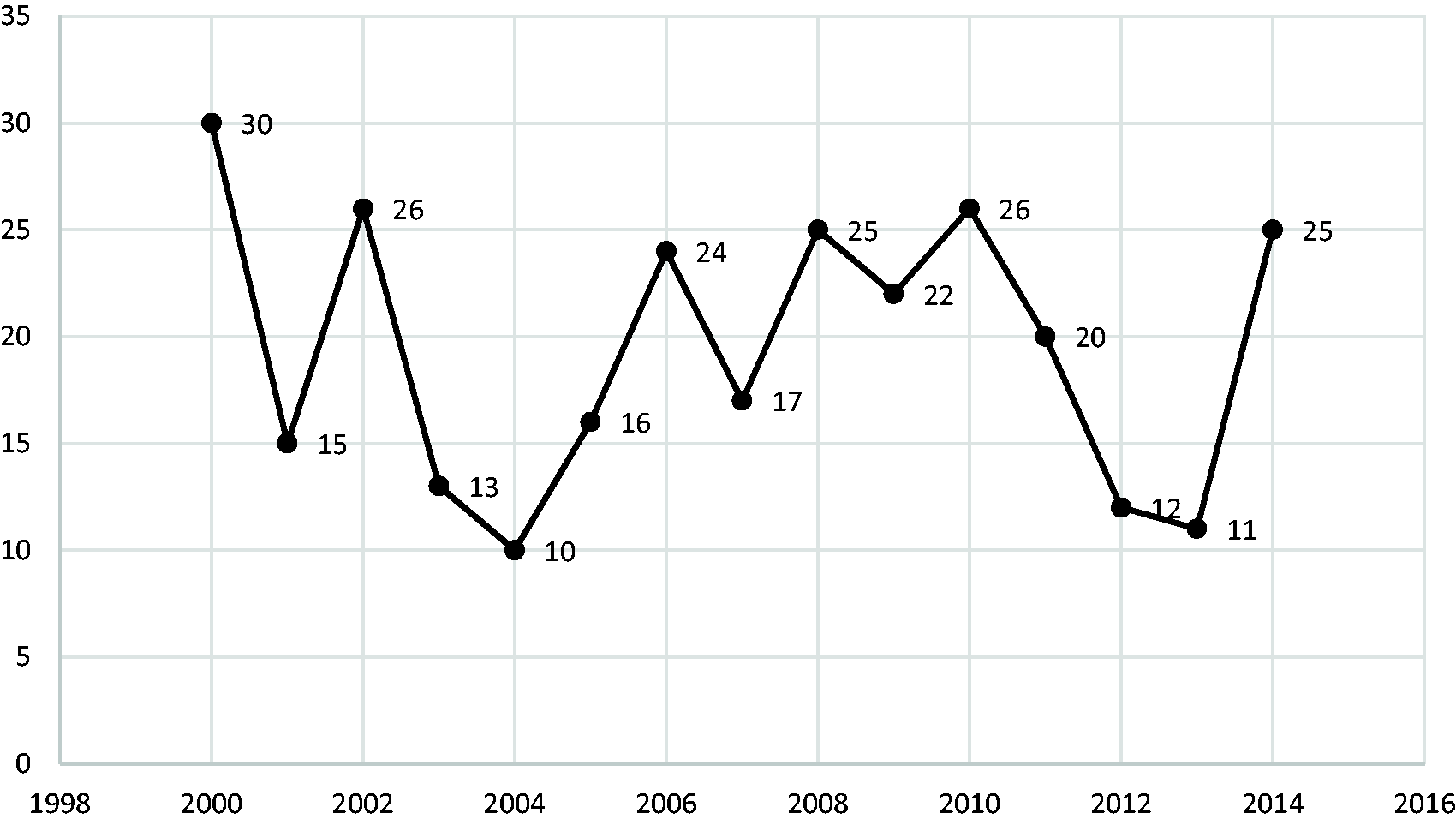
Authorship characteristics
Number of authors.
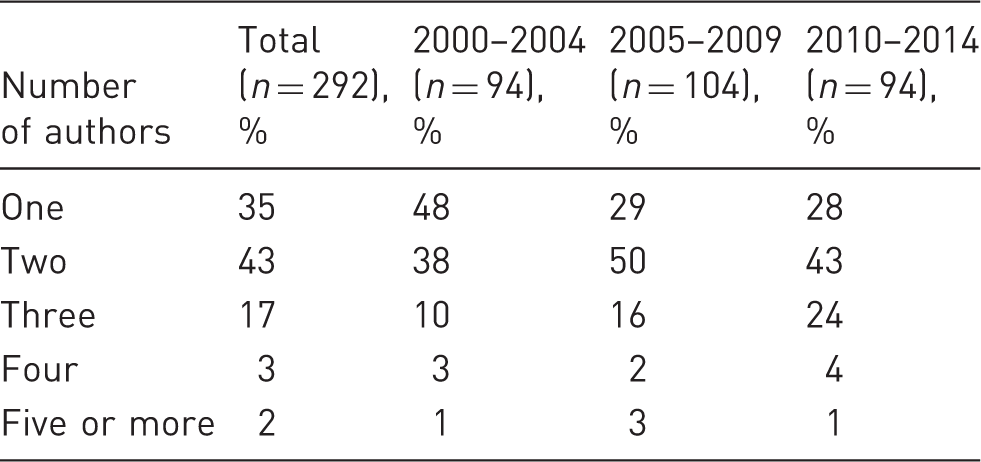
Single-authored papers have gone from representing the majority of the papers (49% P1) to 28–29% in P2 and P3. Nowadays, two authors are the norm for writing papers, while one and three authors represent 28 and 24%, respectively. This trend corresponds with the findings of Gelman and Gibelman (1999), which implies that the modern research environment, with increasing pressure to publish, pushes scholars away from single authorship toward more collaborations. Not only have coauthored papers been on the rise, but also the number of authors seems to be increasing. The amount of triple-authored articles has risen from 10% in P1 to 24% in P3, while the numbers for both one and two authors have fallen from P2. This trend can be seen in Figure 2.
Trends in coauthorship over the periods.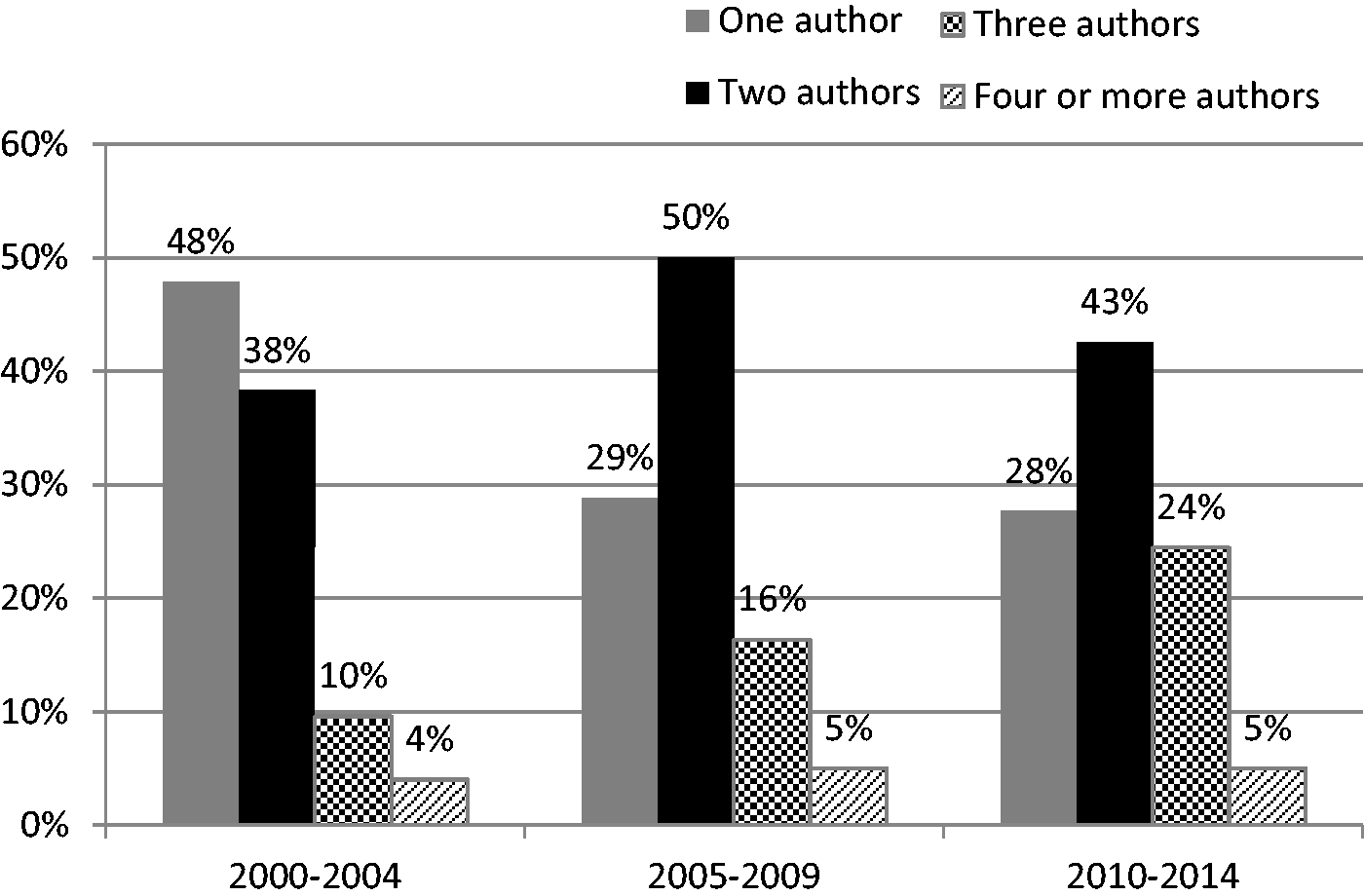
Triple-authored papers have seen a consistent rise over the past 15 years and should this trend continue they will eventually surpass single-authored articles. Articles with four or more authors have been rare and the numbers are much lower than other formats.
Influential articles
As previously stated, the impact of an article or an author is directly related to the citation frequency count. The total numbers of citations generated during 2000–2014 are reflected in Figure 3. Important to keep in mind is that research published this month could be three or more years old and citations accumulate over time (Martin, 2011). The fact that citations would likely begin a year or two after first publication of an article, giving it time to propagate, explains the high number of noncited articles in P3.
Number of citation over 15 years.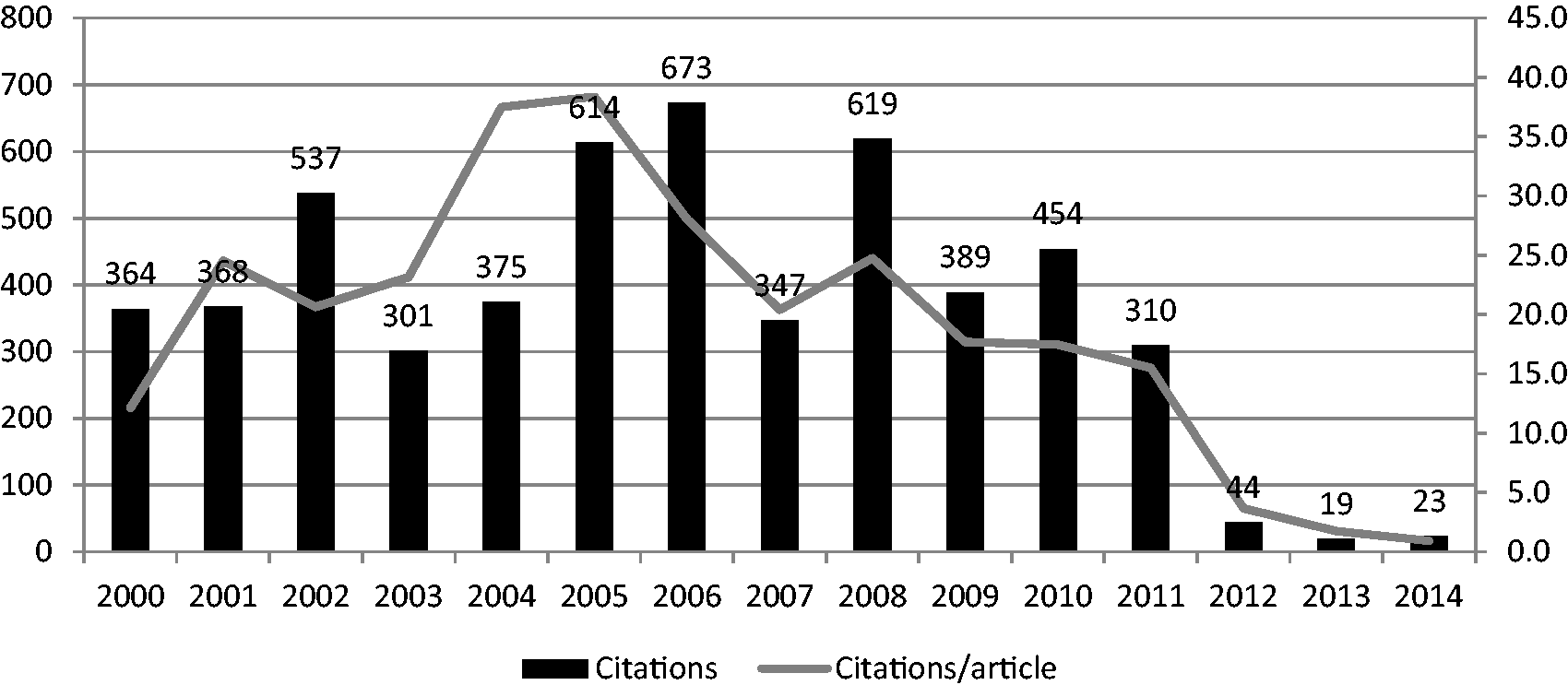
The distribution of total citations is 35.8% in P1, 48.6% in P2, and 15.6% in P3. The fact that the journal was new and just launched could be one reason why citations were fewer during P1, and as the journal has become more established it has attracted more attention from scholars and thus more citations, as well as a larger selection of articles to publish from which in turn could lead to a higher content quality. Likewise, the time of introduction of the journal into different journal databases as well as its online availability could have influenced its spread and the number of citations. Figure 4 shows the mean number of citations per paper versus number of papers published.
Mean number of citations per paper versus papers published.
Figure 4 presents a somewhat parallel picture. The cumulative effect of more issues and an increasing number of articles has resulted in more citations over the following years. This may appear a little confounding, since the number of citations prima facie should not correlate with the number of publications, but rather with the quality of the research. However, it stands to practical reasoning that the more prolific the spread and coverage of research articles, the more they may attract the attention of researchers working in the areas. We believe this would explain the somewhat parallel nature of the publication and the citations count over our selected time span.
Number of citations.

The majority of the articles land in the range of 1–9 citations over the 15-year period. Even though P2 contains the largest amount of articles published it is also the period with the least percentage of uncited articles, which could be connected to the discussion above. Due to the temporal progression of citation counts we expect the distribution to move from heavily right skewed to more normally distributed as time goes by, which to an extent can be seen in Figure 5.
Number of citations per article over the periods.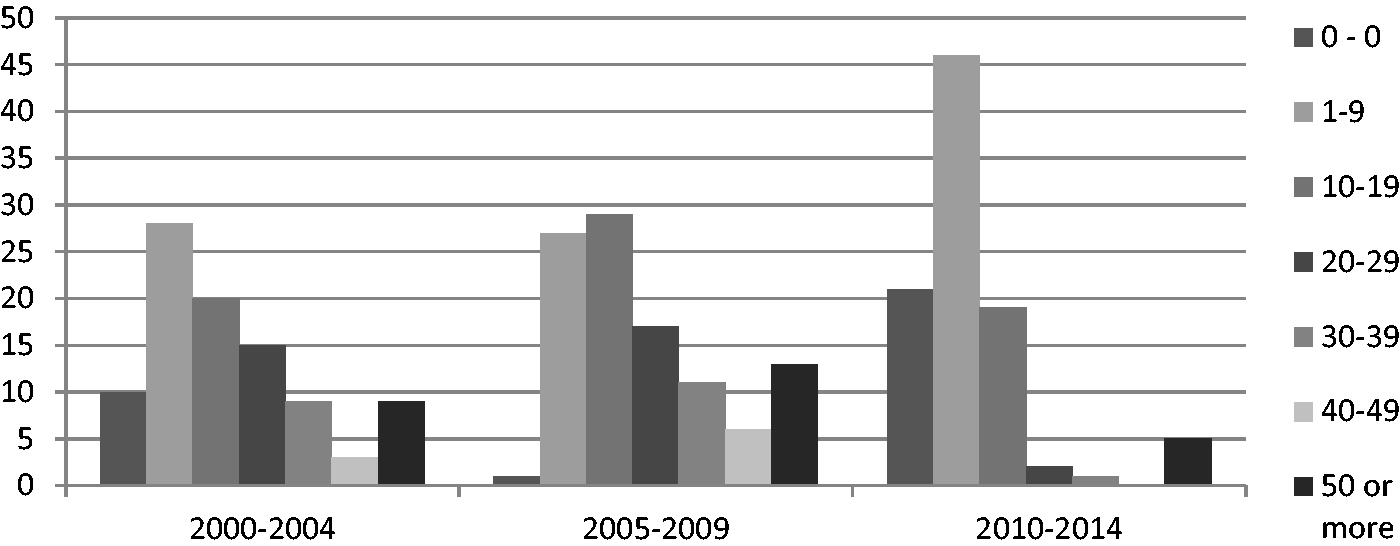
In P1, the journal was newly established and may not have received as much attention as in current day which shows in the positive skewness. In P2, there is a strong drop in uncited articles, a smaller drop in 1–9 citations and an increase in all the higher categories, moving toward more of a normal distribution. Due to the time lag from submission to publication it stands to reason that citations for papers in P3 are still waiting to be published, meaning that in time we should see a similar move of the weight toward the right. Noteworthy is the relatively high amount of articles with 50 or more citations in P3 compared to the previous periods, which have been accumulated during a relatively short period of time.
Top 10 most cited papers.

Studies have shown that the absolute number of citations typically tends to be unfavorable in the very first year after publication, peak around two years after publication, and then decrease exponentially (Yan and Ding, 2010). Especially what could be called “unpopular” articles are cited only shortly after publication and then disappear (Redner, 2004). Calculating an average annual number of citations can counterweigh this prejudice against recent articles (Wiid et al., 2012). In this case, three of the top five articles based on pure citations stay on the top five in rank even after adjusting for the life span of the article. However, the most recent article (Hedlund, 2011) ranked fifth has now moved to first place and the second most recent article (Tyrrell and Johnston, 2008) moved from ninth place to third, meaning that in particular Hedlund (2011) in spite of its relatively young age has made quite a large impact. The article by Griffin and Hayllar (2006) on the other hand drops, but only to second place, in spite of being twice as old.
Out of the top cited articles only three of the top 10 articles are single-authored papers. As mentioned by Gelman and Gibelman (1999: 207), although coauthorship is not without its pitfalls, it is favorable in that it presents a number of benefits, one of which is increased quality based on the “complementary expertise, integration of multiple perspectives, intellectual exchange and cross-editing” it supports. In short, it accords with the premise that two heads are better than one. This raises the question, does the number of authors influence the perception of the article by our peers? Figure 6 details the number of citations per paper by authorship constellation.
Trend in number of citations per paper by authorship.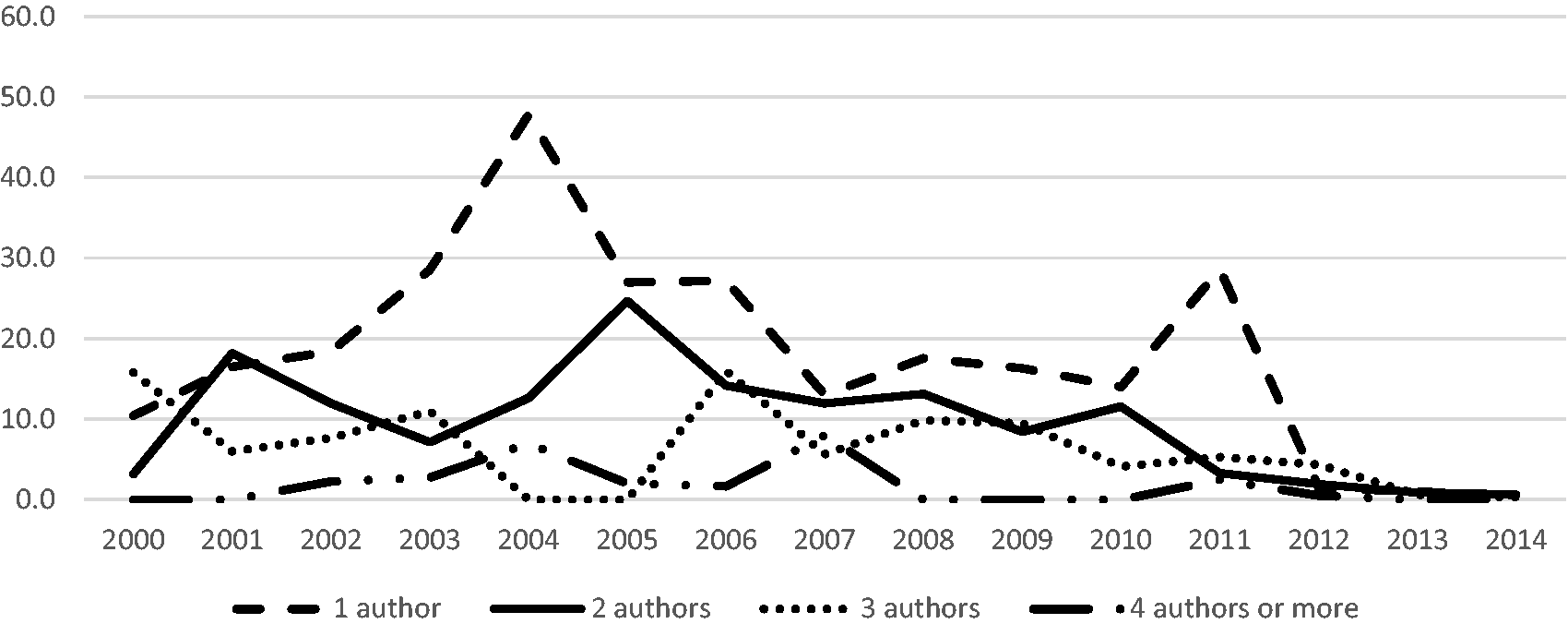
This presents an interesting yet contradictory picture. Though the number of authors per article over time has moved from single toward multiple authors, the number of citations generated per article for the different authorship constellations has remained rather stable, with single authors in the lead. Articles with single and dual authorships have over the whole period generated the highest number of citations per paper in general. This means that even though the number of papers published by multiple authors has been on the rise and has accumulated a higher aggregate number of citations during the past years the influence of single-authored papers has by no means lessened.
Since manuscripts are reviewed blind, it would seem that either there are more coauthored papers submitted or that coauthored manuscripts tend to have more in terms of content and interest in order to get published. Meanwhile, one may surmise that the articles getting accepted written by single authors thus are of higher quality, coming from more experienced researchers.
Prolific authors
Authors who published three or more articles (individual and coauthored).

Sole authorship equals one point, dual authorship half a point, three authors a third of a point, and so on.
As shown in Table 4 the top three authors with the most publications in absolute terms are Jones (12), Henderson (7), and Correia (4). The first two authors stand out both in absolute numbers and numbers adjusted for coauthorship, that is Jones (7.48) followed closely by Henderson (7.00). These authors seem to produce what it takes to get published in the THR. Henderson, which has only published single-authored papers, appears not only second on the list of most prolific authors but also as author of the most cited author’s list. Three of the 11 authors come from the University of Surrey, followed by two from Alexandria University. One may expect authors from the same institution to be coauthoring articles, rendering them on the top of the list. This is indeed the case of the two authors from the University of Alexandria, which seem to have found the recipe for a successful collaboration. However, in the case of the authors from the University of Surrey only one article is the product of coauthorship by two of the authors in the list. Nearly half of the list’s authors are scholars located in the UK. One may surmise that the fact that the journal is based in the UK means more exposure to researchers in the UK. The combined output of the top 11 (4%) most prolific authors accounts for 44 (four articles were removed so as not to be counted double due to dual authorship) out of the 292 articles, meaning 15% of the scope of the study.
Influential authors
The influence of the authors published is an additional outcome that illustrates the characteristics of authors who contributed to THR during the selected period.
Most cited authors.

Several of the authors on the most cited author’s list have coauthored the paper earning them a spot on the list, namely Griffin and Hayllar (2006), Jang et al. (2006), Jones et al. (2000), and Karplus and Krakover (2005). Meanwhile two of the authors, Henderson (2001, 2004, 2005, 2008, 2009, 2011 & 2012) and Hedlund (2011), have only published single authored papers, with the highest cited accounting for 121 citations for Henderson and 113 citations for Hedlund. It thus seems like the most common way to make it to the most cited list is hitting it big with a main influential piece (single or coauthored). However, examples do exist of prolific authors who make it on the list through publishing more numerous articles with a more even spread of citations. Finally, the most cited author stands out, having accumulated 49% more citations than the runners up, with solely single-authored articles. To us this indicates an expert in the field; single-handedly crafting high-quality manuscripts that get accepted and published to a high extent, as well as attaining a large interest from fellow researchers thereby accumulating numerous citations.
Research themes
The journal of THR publishes articles within the areas of hospitality and tourism operations, marketing and consumer behavior, HR management, eTourism/eTravel, technology, planning and development, policy, performance and financial management, strategic implications, environmental aspects, forecasting and prediction, revenue management, impact assessment and mitigation, globalization, research methodologies, leisure and culture, risk management, and change management. A category labeled education has also been added due to the lack of an existing category to match the content of certain articles. Figure 7 shows the distribution of the articles classified according to the above-mentioned categories and the percentage of citations generated by each theme.
Publications by research themes versus citations generated.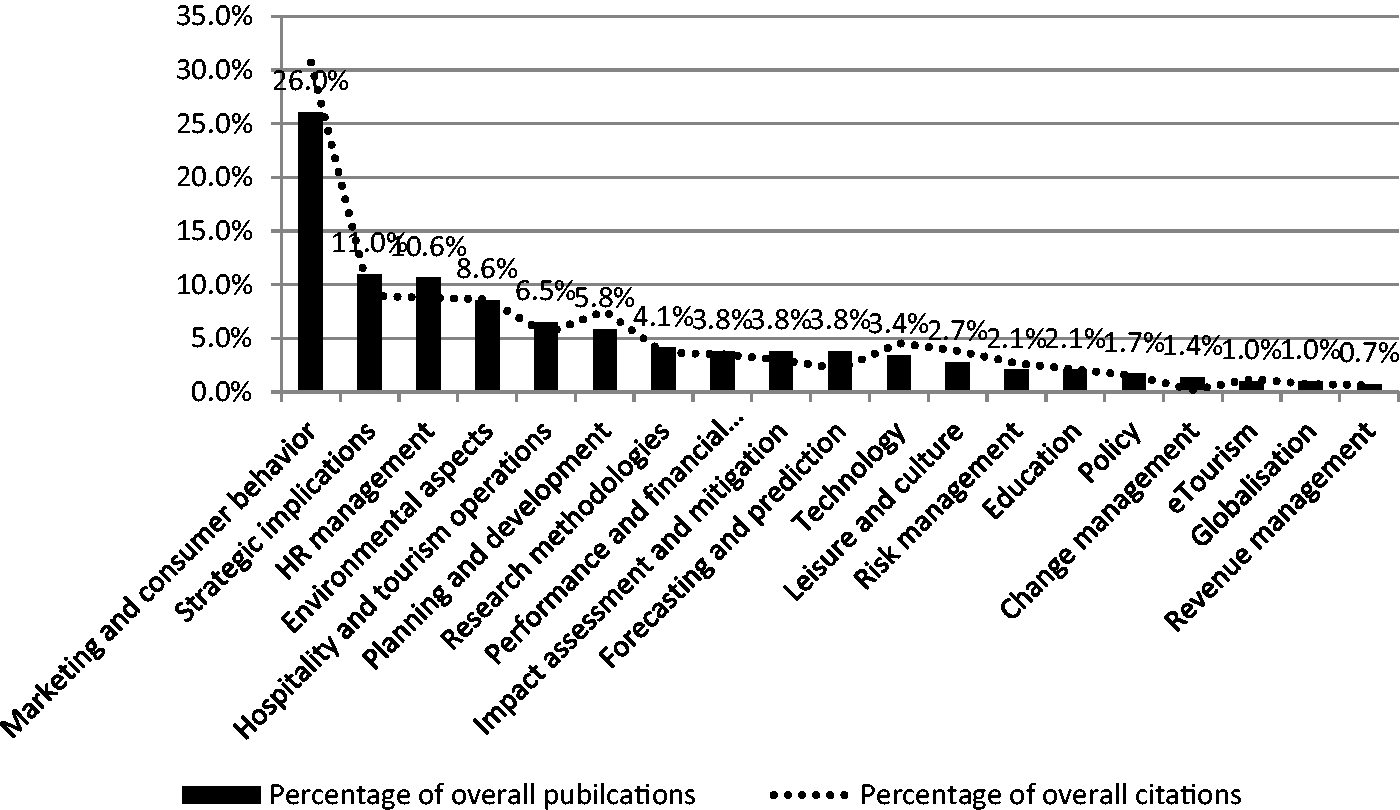
With a few exceptions we see a similar picture when it comes to percentage of publications and percentage of citations. The most prevalent topics during the time of study by far were marketing and consumer behavior topics with a total of 76 articles, 26.0% of the total and more than twice as many as the runners up. Marketing and consumer behavior are not only the most published topics but also the most cited, slightly higher than the percentage of articles published. The high representation of these topics is not unusual, since most researchers, not just in tourism but across other disciplines, investigate these subjects. It follows a logical reasoning that topics that receive much attention from authors do so because of their relevance, meaning that in general they also become cited to a larger extent. The focus in publications appears to be more application oriented in general. Strategic implications and HR management, represent 11.0 and 10.6%, respectively, accumulating a lower percent of citations than of publications. Environmental aspect is the fourth most published area with the same percent of citations (8.6) as that of publications (8.6). The remaining 43.8% of publications are distributed over the other 15 categories. Themes that receive a larger portion of citations than the portion of publication space allotted are notably marketing and consumer behavior, planning and development, technology, and leisure and culture, as can also be seen in Figure 8.
Theme citations per article published.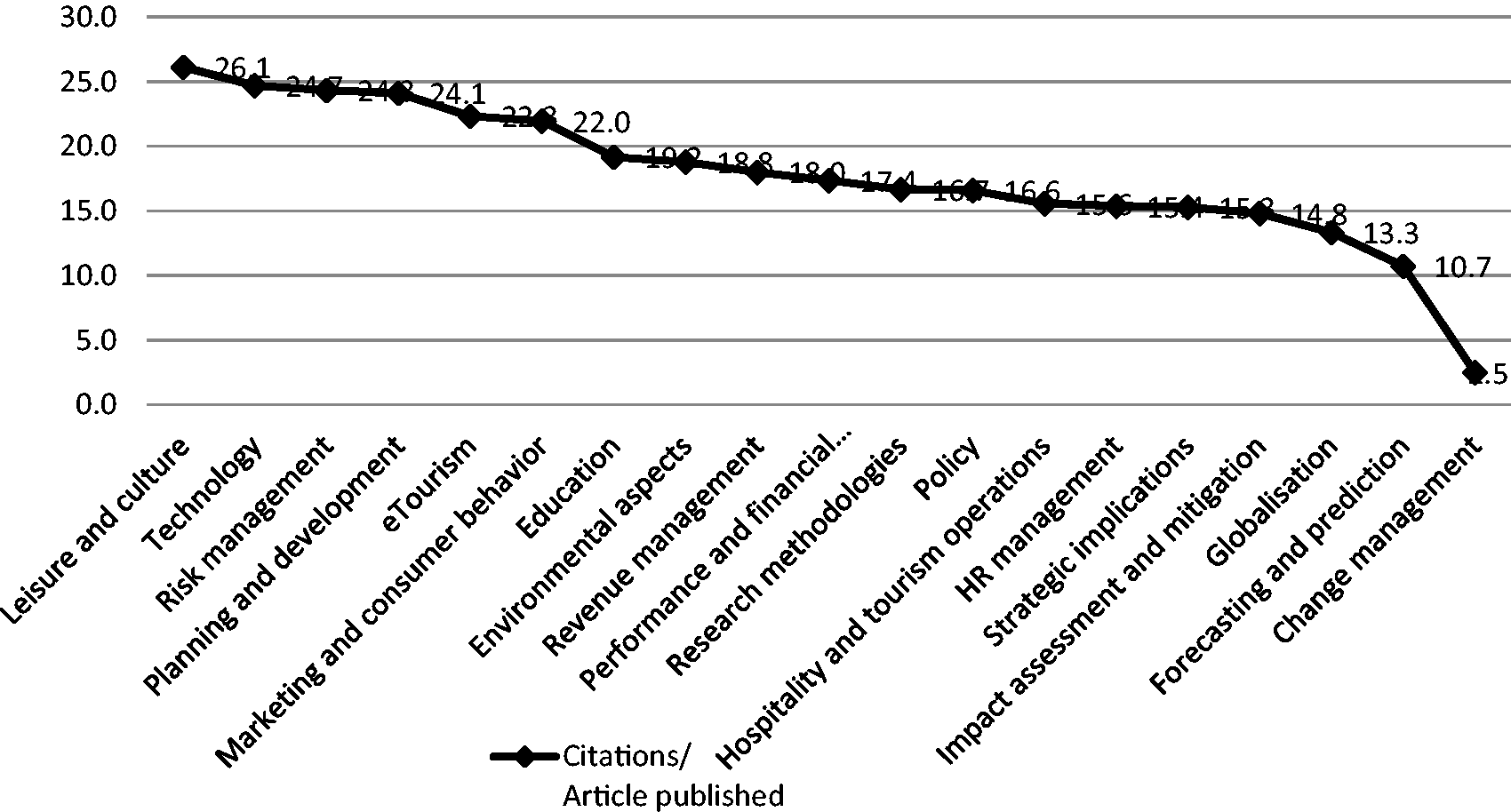
Primary research themes of articles.
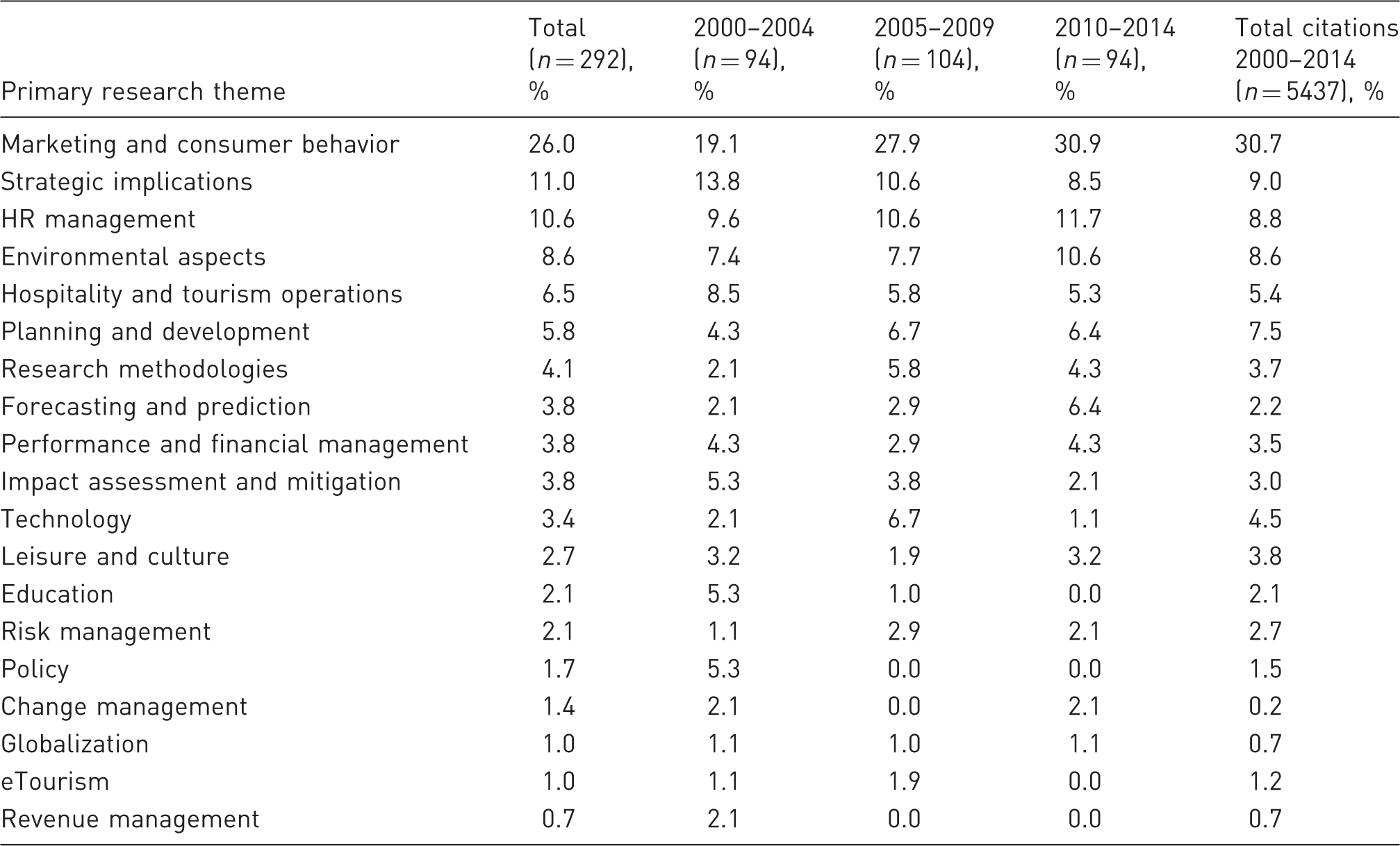
Because only the article’s primary research theme has been categorized, meaning there is room for interpretation and researcher bias, it is hard to draw absolute conclusions from the analysis made. Important to keep in mind is also that three articles represent 1% of the sample. However, some trends may still be discerned. The theme that has reigned supreme over the periods is marketing and consumer behavior. It has also seen a notable rise of 62% from P1 to P3, going from representing one-fifth of the articles to almost one-third. The distance between the most covered theme and the second most published theme has also increased, from 5.3 points to 19.2 points. The second most covered theme in P1, strategic implications, has fallen by 38% to being the fourth most published in P3 (8.5%) and has given way for HR management which used to be third but has increased by 22% and is now the second most published (11.7%). These changes may be the result of the maturity and general nature of the research area. Likewise, environmental aspects have received increasing attention over the three periods and is now the third most published. The rise in acceptance of papers focusing on environmental issues is in line with the rise of issues such as sustainability and the environment among the public and society in general. Other areas which receive a smaller coverage but have been on the rise are forecasting and prediction, risk management, and planning and development. Hospitality and tourism operations, education, policy, and revenue management, on the other hand, have all fallen substantially, some to the extent where they are no longer covered.
The four most covered themes together account for more than half of the articles published (56.2%) during the past 15 years and have gone from representing 49.9% of the articles written in P1 to 61.7% in P3. The variation of the themes can be described as having gone from a wider and more even spread to smaller and more dense. Figure 9 shows a comparative chart of changes in focus on research areas over the specified periods; likewise Figure 10 shows the discussed changes in citations of research areas.
Publications by research themes over the periods. Citations by research themes over the periods.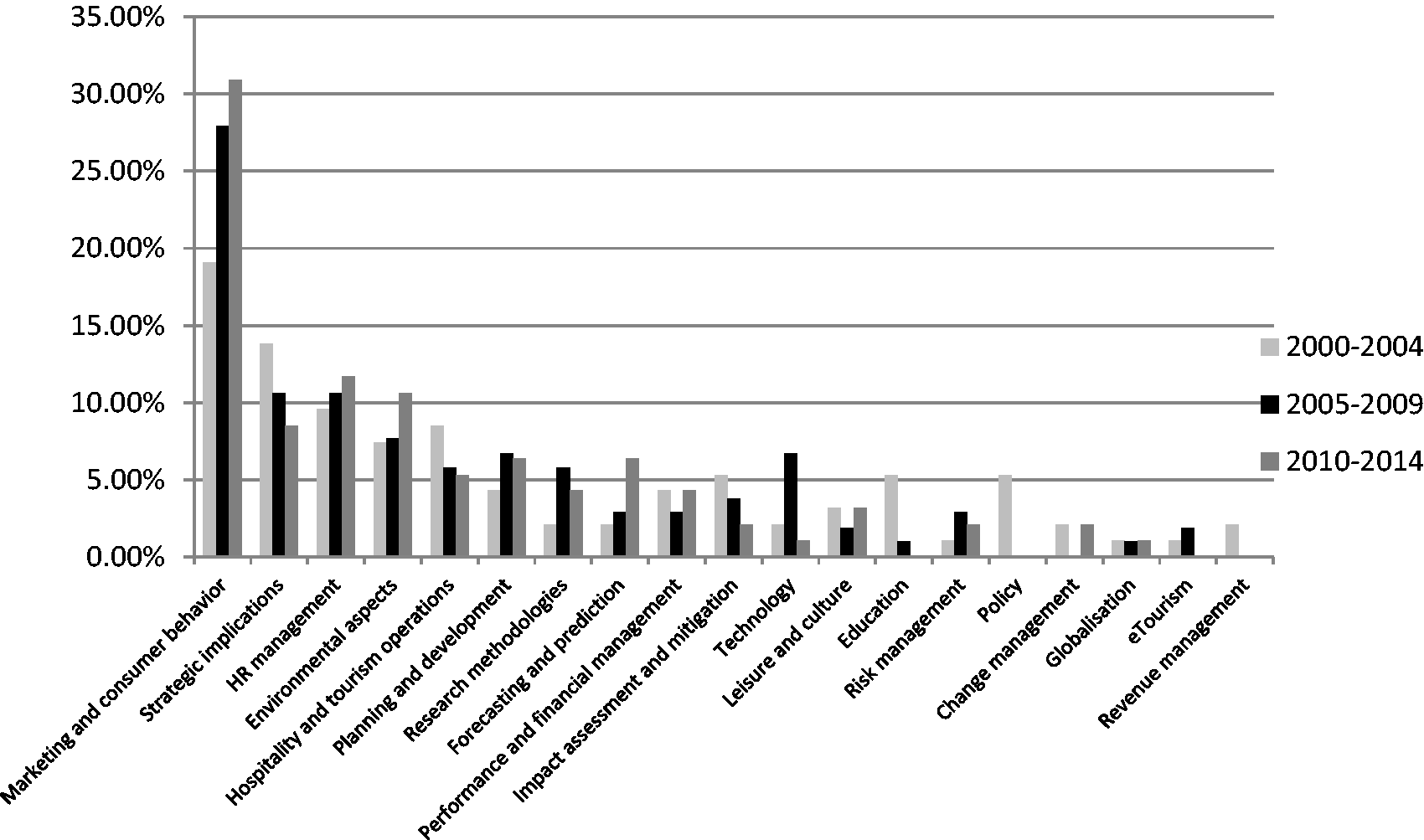

Manuscript characteristics
When analyzing the type of research design and methodology of the articles published, some trends can be seen in Figure 11.
Publications by research design.
Manuscript characteristics by research design.
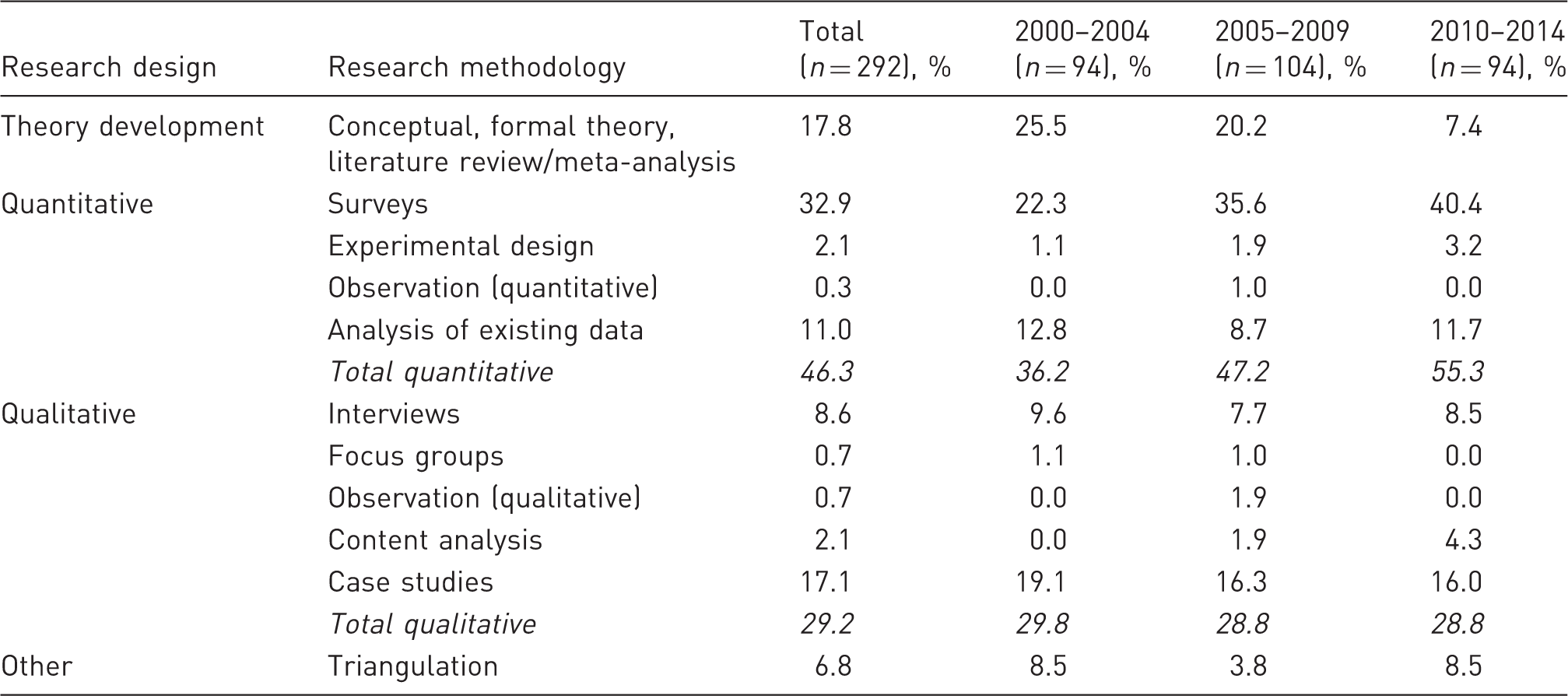
There is a significant drop in theory development articles, which fall from representing 25.5% of the articles in P1 to only 7.4% 10 years later, a drop of almost 71%. Likewise, case studies have fallen, although not as rapidly, from 19.1% to 16.0%. Meanwhile, surveys have seen a significant increase from 22.3% to almost double that (40.4%) over the whole period. Experimental design has increased from 1.1 to 3.2% and content analysis has gone from nothing to 4.3%. The remaining methods remained more or less stable. Thus, the balance, which used to be more evenly distributed between the different types of design, is now more heavily skewed and there seems to be a shifting preference from theory development articles toward more and more quantitative studies, going from 36.2% in P1 to 55.3% in P3. Meanwhile, qualitative articles remain rather stable over time. Within quantitative design studies, surveys and experimental design are being favored, while within the qualitative field, case studies seem to have given over to more content analysis-based articles, as seen in Figure 12.
Change in focus on research types over the periods.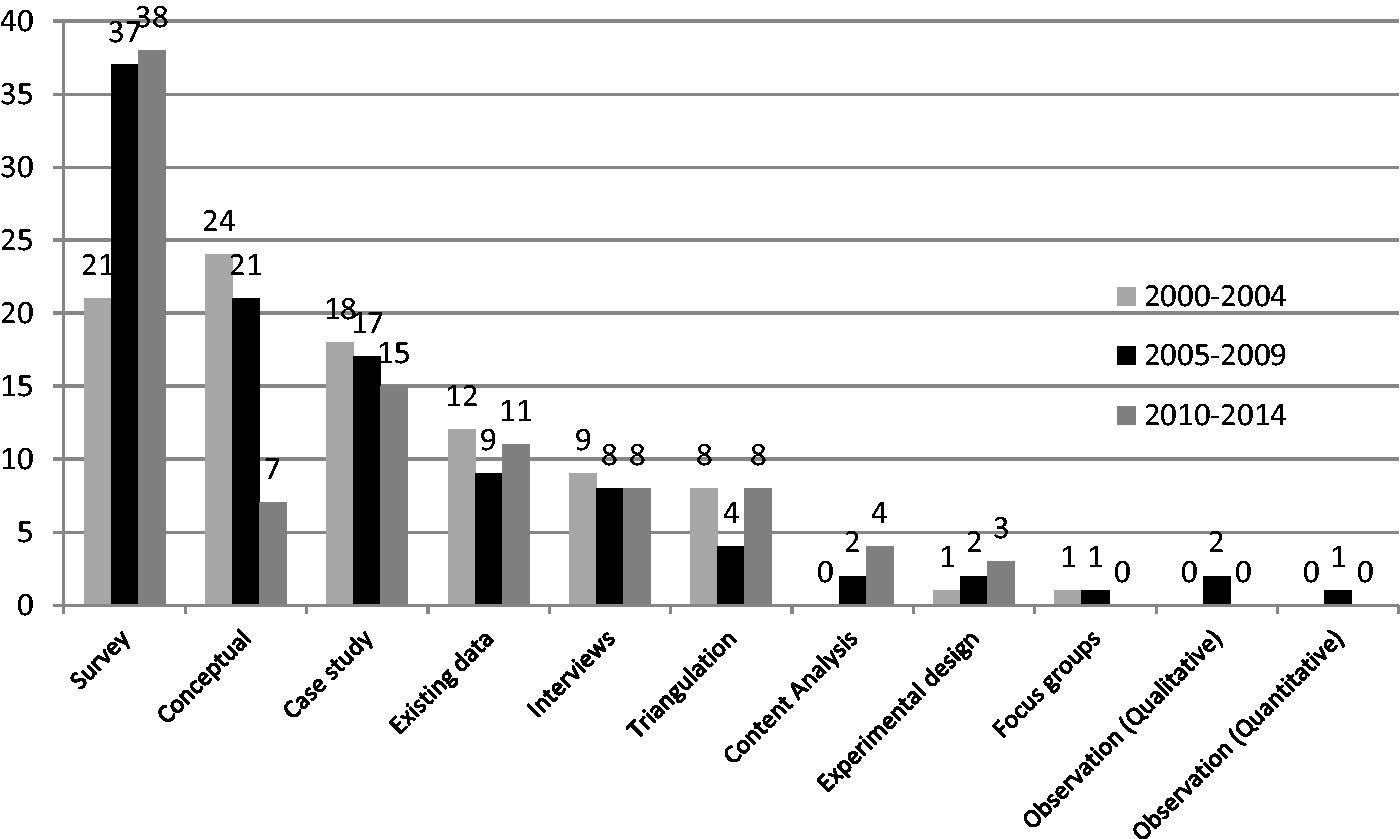
Conclusion
Conducting journal reviews such as the one presented in this paper is vital to gather insights into the operations, state, and direction of a journal. This article is the first of its kind aimed at this journal and the results presented in this article show the contribution of the THR to the academic body of knowledge with regard to themes covered, influential pieces of work, and types of studies published. Macdonald and Kam (2007) suggest adopting a more varied range of approaches and metrics in evaluating publications than mere institutional journal rankings. As such, it has been our aim to apply a variety of metrics in assessing the coverage and direction of tourism research within a top-tier THR journal.
A total of 292 research articles published between 2000 and 2014 were analyzed and several findings from our study may be highlighted. A significant decline in single-authored papers has been evidenced over the period studied, in line with trends witnessed across tourism research publications (Youn et al., 2011) as well as other neighboring disciplines (Acedo et al., 2006; Barnett et al., 1988; Martin, 2011; Wiid et al., 2012). Meanwhile, collaborative scholarship of two or more authors has become more prominent over the years. We cannot necessarily surmise that multiple authorship improves the chances of a paper getting accepted; however, the practice of collaboration in research has become more commonplace in tourism research. This trend is also in line with an increased pressure to publish witnessed across disciplines, which in turn leads to an increased competition for a limited number of slots in major journals and an increased minimum requirements threshold (Gelman and Gibelman, 1999; Martin, 2011). The citations count per article for multiple-authored papers also shows an uptick, yet single-authored papers maintain a consistent lead. The increased number of dual-authored papers may be due to an increase in submissions of this type, in line with an increased pressure to publish. However, since manuscripts are reviewed blind it may also stand to reason that collaboration with others would tend to increase output quality in, for example, that two heads are better than one, or that inexperienced authors may learn to avoid making rookie mistakes from more experienced coauthors (Gelman and Gibelman, 1999; Martin, 2011); this points to the importance for future researchers of participating in research networks. It may be beneficial for younger, more inexperienced authors to coauthor papers in the beginning of their career and, as they gain knowledge, experience, and a reputation, venture into single authorship.
The top 10 most cited papers, 3% of the articles, represent 21% of the total number of citations accumulated during the 15 years. Nine of the 10 most cited papers were published during the first 10 years and only one in the past five; however, this earned the highest annual citation average by far, with 28.25 citations per year. Furthermore, the number of uncited articles dropped from almost 11% in P1 to only 1% in P2; we also see a smaller drop in 1–9 citations and an increase in all the higher categories which could mean that the journal is picking up on recognizability among others.
Eleven authors have published three or more articles each during the past 15 years with the top three being Jones (12), Henderson (7), and Correia (4), making them the most prolific authors, all other eight authors having published three articles each. Adjusting for number of authors to an article, Jones (7.48) and Henderson (7.00) stay at the top followed by Lashley (2.50). The 11 most prolific authors represent 4% of all authors and account for a total of 44 articles, 15% of the scope of the study. Martin (2011) states that readers may benefit from studying the articles of frequent contributors since in general they have what it takes to get published; they are likely to be familiar with relevant literature, technically well trained, sensitive to managerial or other implications of their research, good writers, and show attention to detail. Features worth taking note of by new scholars are focus versus fluff in research questions, objectives and titles, the contribution-to-page ratio, relevance of research design, language style, and adaptation to reader, as well as relevance of research theme to academia or practitioners (Martin, 2011).
The top five most influential authors based on most accumulated citations over the period were Henderson, Griffin, Hayllar, Karplus, and Krakover, all counting 134 citations or more. The majority of the authors made the list through one main article accounting for a high number of citations and has also coauthored the paper earning them a spot on the list. The majority of these authors are thus also represented in the top 10 most cited papers list and two of the authors also qualify as top two of the top 10 most prolific authors, meaning that they do not only publish numerous articles but also highly influential pieces. Henderson, the most cited author, with 49% more citations than the runner up, coming from a vast amount of solely single-authored articles seem to be a major contributor to THR in terms of high-quality papers, gaining attention from reviewers, editors, and fellow scholars alike.
The rise of research areas covered in the journal was also found to be reflected in the rise of the citations count, indicating higher interest in the journal, this tally with Burdge’s (1983) assertion regarding journal progress. All 18 impact areas as identified by the journal have received attention from authors. Furthermore, Burdge (2009) in a parting editorial note for the Journal of Leisure Research wrote about the need for increase in the number of theoretical articles laying foundations for new research directions in the field, while acknowledging the preponderance of empirical papers. The number of publications in the THR has been dominated similarly by empirical papers, primarily in the area of marketing and consumer behavior. However, the trend in areas such as HR management, environmental issues, planning and development show rise in acceptance, indicating a renewed focus on theoretical papers, especially during the phase 2010–2014. This puts the journal on a well-footed position as far as new research is concerned.
Issues related to marketing and consumer behavior, strategy, HR practices, and environmental aspects are likewise the most cited research areas in the journal.
The research themes covered fit the journal’s stated theme objectives well and resonates well with other studies in tourism literature trends (see Law et al., 2009; Zhong et al., 2015). Whether by design of the journals’ editorial objective or if the distribution simply reflects what the field produces, we believe this bodes well for the discipline, since it displays both a varied and topical coverage of research areas that are pertinent to the changing nature of the times we live in. In short, tourism research coverage within the journal is not a one-trick pony. Rather, there is increasing effort at seeing tourism research carve out a strategic positioning and fit within the broader literature of marketing and strategy.
Methodologically, quantitative approaches, specifically surveys, have reigned supreme and continually gained momentum, going from 36% in P1 to 55% in P3. This may well not be a surprise as it fits with the general trend in social studies (Davies, 2003; Walle, 1997). Meanwhile, qualitative research has been well covered at close to 30% and has remained steady in its acceptance rate over the period of study; however, case studies and interviews have lost ground to content analysis manuscripts which only appeared during P2 representing 2% and growing to 4% in P3. The reason for which may well be due to the recent emergence of analytical tools facilitating this type of research. Grounded theory research, on the other hand, has witnessed a precipitous decline, going from 25% in P1 to just over 7% during P3. The decline in conceptual papers could be an effect of the so-called low hanging fruit already having been picked, making it more difficult to make a competitive contribution with this type of paper, or that the maturing of the field has led to conceptual prescience manuscripts being replaced by empirically driven science. Judging by the consistency of editorial and review policy evidenced otherwise, we suspect the decline to be due to a lack of researcher interest in theory development by researchers submitting their work to the THR rather than reluctance on the part of the journal to publish such research. If so, this may well be an early indicator of a growing weakness in tourism research trends. Conversely, this may present an opportunity and a research gap that can be utilized in future research.
This study with accounts of leading names and articles within the THR can be beneficial for practitioners in this fast-paced business world, who may not follow citation counts like fellow academics and may need to contact a leading author or would want to take stock of what is being written by the most cited THR authors and in the most cited THR articles. Furthermore, the study serves as a good base for practitioners and the general audience to quickly get a comprehensive analysis of key trends and development of authorship characteristics, manuscript types, and themes in the journal over time.
All studies have limitations and in this one the main difficulty was fitting research topics into different theme classifications, which is emphasized by the fact that not all topics fall into mutually exclusive categories. The experience and expertise of the researchers may also have influenced the categorization. Research themes were limited to the predefined themes outlined by the journal itself, with the addition of a supplementary theme due to the lack of a matching one for certain articles. This list may have changed during the period under study meaning that there may be categories missed of themes that have faded and been removed over time. Furthermore, the study is exposed to the inherent limitations in the “Publish or Perish” software and databases. However, we do still believe that the study offers useful insights regarding the contributions and publication trends of the THR development during the past 15 years.
Recommendations for future research could be to conduct a more in-depth study of research topics based on a more detailed scale of subtopics as well as a comparison with international tourism trends. Future research could also conduct replicant studies introducing variations in statistical techniques used, sample size, data collection method, scope of research, origin of authors, focus region, or geographic diversity. Other interesting variables that can warrant further investigation could be content of most cited articles, number of references, self-referencing of journal and authors, as well as time lag from submission to publication. It would also be interesting to conduct a similar study across several journals.
Footnotes
Declaration of conflicting interests
The author(s) declared no potential conflicts of interest with respect to the research, authorship, and/or publication of this article.
Funding
The author(s) received no financial support for the research, authorship, and/or publication of this article.