



Abstract
Social networks are an important element of entrepreneurship. Entrepreneurs rely on social networks to access ideas, information, and resources to facilitate their entrepreneurial process. Strong and weak ties influence the entrepreneurial process in unique ways. This study utilized social network analysis approach to examine wildlife tourism microentrepreneurship through in-person structured interviews with 37 microentrepreneurs from North Carolina’s Pamlico Sound Region. Specifically, this study examined the extent of network ties, the type of support received from those network ties, and the process of creating and maintaining the business network ties. Weak ties were more prevalent than strong ties. Support was received in terms of marketing and advertising, information sharing, and product sponsorship. Weak ties were established through professional workshops and seminars or while working in the same territory, whereas reciprocity, togetherness, communication, and trust were identified as major factors to maintain weak ties. This study suggests that cognitive social capital factors (e.g. reciprocity, togetherness, and trust) can be highly important toward effective use of social networks, as well as to ensure entrepreneurial success.
Keywords
Introduction
Wildlife tourism is a subset of nature-based tourism (Wolter, 2014), which is becoming an increasingly important component of tourism globally (Reynolds and Braithwaite, 2001). Although tourism is the world’s largest and fastest growing industry, various forms of nature-based tourism are growing even faster than tourism in general (Mehmetoglu and Normann, 2013). Wildlife tourism is defined as any tourist activity having wildlife as its primary focus of attraction (Catlin et al., 2011). It consists of travelling to interact with nondomesticated animals in consumptive and nonconsumptive ways in a natural environment (Ballantyne et al., 2011; Burns and Howard, 2003; Catlin et al., 2011; Yuan et al., 2004). Consumptive forms include fishing and hunting, whereas nonconsumptive forms include wildlife viewing, such as dolphin watching, bird watching, or wildlife photography. Wildlife tourism is a popular form of outdoor recreation in the U.S., where it is a multibillion dollar industry. In 2011, there were 90.1 million people enjoying wildlife recreational activities, generating an annual expenditure of approximately $145 billion (U.S. Fish and Wildlife Service, 2011). There is a lack of quantitative data on wildlife tourists at the global scale but the involvement of tourists in wildlife-related activities is a significant component of the tourism industry.
The potential for local communities to participate in small-scale wildlife tourism businesses increases with its growing niche market. Because rich wildlife resources are located in rural areas (Udaya Sekhar, 2003), rural enterprises (e.g. wildlife-based enterprises) stand to support sustainable rural livelihoods (Zander et al., 2014). In tourism, there has been mounting attention devoted to the role of small-scale entrepreneurship in ensuring localization of benefits and livelihood improvements of the local communities (e.g. Morais et al., 2012, 2015; Snyder and Sulle, 2011). Small-scale tourism entrepreneurship is a global phenomenon but literature still suggests that there is a lack of research on small-scale entrepreneurship (Szivas, 2001; Ulhøi, 2005). In particular, wildlife-based enterprises have not received much attention by scholars although wildlife tourism has potential to address the dual goal of conservation and livelihood improvement of the local communities (e.g. Morais et al., 2015; Spenceley and Snyman, 2017; Udaya Sekhar, 2003). However, there is a growing interest among practitioners and policy makers to understand context-specific knowledge about the entrepreneurial process (Thornton et al., 2011; Turkina and Thai, 2013).
The importance of social networks in entrepreneurship is critical as they play a vital role in garnering opportunities and resources required for entrepreneurial success. It is important to understand how information and other resources are exchanged among network ties. Further, research examining the extent and nature of entrepreneurial network is lacking. In social network analysis studies, not many researchers focus on formation of a network or its maintenance over time, which is equally important as understanding the network structure. Accordingly, the purpose of this study was to (i) examine the extent of network ties (e.g. family, friends, and business), (ii) the type of support received from those network ties, and (iii) the process of creating and maintaining business network ties.
Entrepreneurship and social networks
Entrepreneurship is a purposeful activity to initiate, maintain, and develop a profit-oriented business (Veen and Wakkee, 2003). It is perceived as an engine that drives innovation (Iakovleva et al., 2012) and promotes economic growth (Kokkranikal and Morrison, 2002; Wennekers and Thurik, 1999). Entrepreneurship literature recognizes its positive impact on local economic development by stimulating job creation while utilizing local knowledge and natural resources (e.g. Kokkranikal and Morrison, 2002; Valliere, 2014). Indeed, small tourism businesses have the greatest potential in generating positive social, economic, and environmental outcomes for local communities because they tend to increase local agency over development, generate jobs and self-employment, rely on more inclusive supply chains, and increase the value of cultural and natural resources (Morais et al., 2012, 2015; Morrison, 2006).
Although small-scale tourism businesses are considered to play a critical role in developing economies, there is a scarcity of empirical research to understand the nature of small-scale tourism entrepreneurship (Ateljevic and Doorne, 2000). Ateljevic and Doorne (2000) characterized small-scale tourism businesses for (i) quality of life, (ii) the pursuit of individualistic approaches, and (iii) constrained business growth, while conceptualizing tourism entrepreneurship as “lifestyle entrepreneurship.” They further suggested challenges in applying an economic approach to the study of tourism entrepreneurship because both noneconomic and lifestyle motivations are strong stimuli to business formation. Further, entrepreneurs tend to be high on independence (e.g. Alstete, 2008), but passion for the business can be more apparent among tourism entrepreneurs, therefore it possesses some difficulties in defining entrepreneurial success. These tourism entrepreneurs limit the scale and scope of business operations to capture niche market opportunities and simultaneously trying to strike a balance between economic performance and sociocultural and environmental values (Ateljevic and Doorne, 2000). However, it can be argued that economic performance of the business can also be equally aligned with the noneconomic motivations (e.g. passion and lifestyle), which depends on the level of involvement, such as full-time (e.g. being a part of livelihood) or part-time (e.g. primary source of income being different other than just tourism business) (KC, 2015).
Wildlife tourism microentrepreneurship reflects the nature of the business to be wildlife oriented while the scope of the business is small-scale, which makes it different from other forms of tourism entrepreneurship. This study defines wildlife tourism microentrepreneur as an entrepreneur who (i) runs a formal or informal stand-alone business entity related to recreational fishing, hunting, and wildlife viewing; and (ii) employs less than five full-time and part-time nonfamily employees (KC, 2015). Regardless of the context (e.g. wildlife tourism or other forms of tourism) or size of an enterprise, the entrepreneurial phenomenon is complex, characterized by ambiguity and risk (Casson and Giusta, 2007; Morrison et al., 1999; Zhao et al., 2011). Thus, accessing sufficient and reliable information is critical to entrepreneurs (Zhao et al., 2011). Although entrepreneurship is an individual endeavor (Casson and Giusta, 2007), it is shaped and nourished by different sociocultural environments and contexts (Yetim, 2008). Social networks are important prerequisites to start successful new ventures, where entrepreneurs rely on those networks to access ideas, information, and resources (Reynolds, 1991; Ulhøi, 2005). Entrepreneurs with extensive social networks tend to be more successful (Burt, 2000). Some types of networks are more important at an early stage of entrepreneurship and others become more important at later stages (Casson and Giusta, 2007; Hill et al., 1999). Family networks are considered important to sustain motivation through emotional support (Stathopoulou et al., 2004), whereas business networks allow access to technical knowledge and market opportunities (Anderson et al., 2005; Ulhøi, 2005).
In general, social networks are composed of both strong and weak ties (Anderson et al., 2005; Hill et al., 1999; Jack, 2005). Strong ties involve close personal relationships with frequent interactions, whereas weak ties lack emotional connectivity and are activated infrequently (Anderson et al., 2005). Jack (2005) suggested that strong ties often help to invoke weak ties; hence, strong ties can be instrumental to business activity to obtain required information and knowledge to establish, maintain, and enhance business growth. Friends and family ties are strong ties, whereas weak ties mostly refer to business connections (Anderson et al., 2005; Hill et al., 1999). Strong ties provide valuable information for entrepreneurial growth, but friends and family belong to the same social circles as the entrepreneur, therefore they are seldom able to bring new valuable information, resources, or business opportunities (Anderson et al., 2005). Weak ties tend to consist of ties directly affiliated with the business enterprise; therefore, those ties can offer resources and information much needed for the business.
Study area
North Carolina is rich for nature-based tourism opportunities and focuses on the quality of the travel and tourism industry. The state promotes a localization of benefits from tourism industry to improve rural livelihoods. For example, the North Carolina Jobs Plan is a 10-year strategic plan. It prioritizes the promotion of small-scale businesses and entrepreneurship to market natural resources and outdoor activities in favor of rural communities (North Carolina Jobs Plan, 2013). Some of the coastal counties in the Pamlico Sound Region are economically more distressed than others. For example, NC Department of Commerce (n.d.) annually ranks the state’s 100 counties into three different tier designations (i.e. 1–3, 1 being more economically distressed compared to 2 and 3). The tier designations are based on economic well-being, which accounts for average unemployment rate, median household income, percentage growth in population, and adjusted property tax base per capita. In particular, most counties around the Sound Region tend to fall under tier 1 and 2 (e.g. Beaufort and Hyde fall under tier 1, Pamlico and Craven fall under tier 2, and Carteret falls under tier 3).
Similarly, The Rural Center (n.d.) categorizes all the coastal counties surrounding the Pamlico Sound as rural based on an average population density of 250 per square mile or less. Tourism is promoted as one of the primary economic development activities in the region. The coastal counties around the Pamlico Sound are less developed for commercial purpose (e.g. Pamlico County) as compared to other coastal destinations in the state, such as the outer banks area. The availability of diverse nature-based recreational activities in the region, much of which has been unaffected by commercial development, has preserved a rustic environment that appeals to nature lovers. Therefore, the Pamlico Sound Region has a strong potential to retain and develop the area for nature-based/wildlife tourism, while fostering economic growth in the region. Thus, wildlife tourism can be an option to help mitigate economic disparity among coastal counties and their communities, specifically in the Pamlico Sound Region.
The Pamlico Sound is the largest lagoon along the east coast of the U.S., which serves as a hub for wildlife recreationists but also a platform for local communities to engage in small-scale wildlife tourism business. The shallow water levels of the Sound provide excellent fishing opportunities for small-size boats, which are easy to navigate. The Sound is less affected by weather in comparison to fishing areas offshore as it is surrounded by a barrier of islands. Fishing in the Sound is more cost effective than fishing offshore because it reduces the amount of travel and therefore, the cost of fuel. The Pamlico Sound is also popularly known as the fishing gem of North Carolina (Settlage, 2012). The Pamlico Sound and surrounding regions provide many forms of consumptive and nonconsumptive wildlife tourism including guided trips for fishing, waterfowl hunting, and bear and deer hunting. Often wildlife watching is integrated with fishing and hunting trips; however, some wildlife tourism businesses are independently established only for eco-tours focusing on dolphin watching, bird watching, and wildlife photography in the coastal environment. These tourism services are offered throughout the year. Although guiding fishing trips is quite popular in the region, waterfowl hunting (e.g. duck hunting) and wildlife-viewing aspects of wildlife tourism are equally important pull factors. Wildlife tourism activities to inshore, nearshore, and offshore are equally popular and often overlapped with the activities in the Sound Region.
Methodology
Data collection
The primary author conducted a preliminary assessment of wildlife tourism in the region from May to August 2014 and identified a list of potential participants. A series of informal meetings were conducted with cooperative extension agents, tackle shop owners, and other key informants to initiate participant identification and recruitment process. Data were collected from November 2014 to February 2015 through in-person structured interviews with 37 wildlife tourism microentrepreneurs. Initially, emails and phone calls were used to set up interviews. A chain referral process (Biernacki and Waldorf, 1981) was used later to capture the entire network, where each microentrepreneur was asked to give names for 3–5 other wildlife tourism microentrepreneurial businesses in the region. This process helped to saturate the network of wildlife tourism microentrepreneurs in the Pamlico Sound Region. These microentrepreneurs were mainly engaged with guiding trips for fishing, hunting, eco-tours (i.e. n = 31), and also the owners of bait and tackle shops/outfitters (i.e. n = 6; EID17, EID20, EID22, EID24, EID33, and EID35). All the wildlife tourism businesses were run independently and managed by a single owner or were family owned.
Egocentric data were collected using the recall method (e.g. identification of network ties is driven by individual participant) as opposed to the recognition method (e.g. a list of network ties can be provided to each participant to identify connections) (Crona and Bodin, 2011; Marsden, 1990). Participants were asked to list business support ties specific to their entrepreneurial activities. The extent of support ties in terms of family, friends, and business was documented to examine their ability to access resources and information required for the business. However, in some cases the participants suggested that it is hard not be friends while conducting a business, and in those cases, ties were identified as “business friends.” Accordingly, information was collected on type of support received from network ties and importance of those ties in business success. A five-point Likert scale (i.e. 1—not at all important and 5—extremely important) was used to measure importance of those network ties. Further, qualitative questions were asked to examine the process of network establishment and maintenance. Descriptive field notes were taken during the interview. Demographic information was collected on job status (full-time or part-time), income, length of business establishment, gender, and education.
Due to the nature of data collection (i.e. egocentric data collection using recall method along with a chain referral process to saturate the regional business network), it resulted in formation of two types of network. A Wildlife Tourism Social Network (WTSN), which is a holistic network that measures the extent of network ties (e.g. family, friends, business friends, and business). Further, visualization of the network only includes a whole network of 37 wildlife tourism microentrepreneurs consisting of business friends and business ties, which is referred as Wildlife Tourism Business Network (WTBN). However, all the ties from WTBN are also accounted for WTSN as it combines both strong and weak ties. Total network ties, type of support and its associated ties, as well as importance of those ties are discussed in the context of a WTSN. In contrast, visualization of the network is discussed in reference to the WTBN.
Data analysis
The social network analysis software UCINET 6 was used to visualize the network structure of wildlife tourism microentrepreneurs (Borgatti et al., 2002). Each study participant was assigned an identification number from 1 through 37 (e.g. EID1–EID37) in order to maintain confidentiality. Visualization of the network involves directed network (e.g. shows directionality in a network) to indicate pattern relationships. However, network visualization is interpreted in terms of undirected network (e.g. lacks directionality), especially to indicate the extent of connection (i.e. number of connection), which can be meaningful in this case because the recall method limits the number of connections since participants may not mention all the support ties instantly during data collection. Furthermore, descriptive field notes were analyzed using a qualitative approach. Qualitative data analysis was a small component integrated to understand the networking behaviors among wildlife tourism microentrepreneurs, and it falls under the realm of thematic analysis. Thematic analysis is a method for identifying, analyzing, and reporting patterns (themes) within the data, which is considered a flexible and useful research tool that provides a rich and detailed account of the data (Braun and Clarke, 2006). Descriptive field notes were read and reread by the researcher to create codes, which were then subcategorized based on recurring themes under the core categories of network creation and maintenance.
Results and discussion
Demographic information
Respondents’ sociodemographic information.
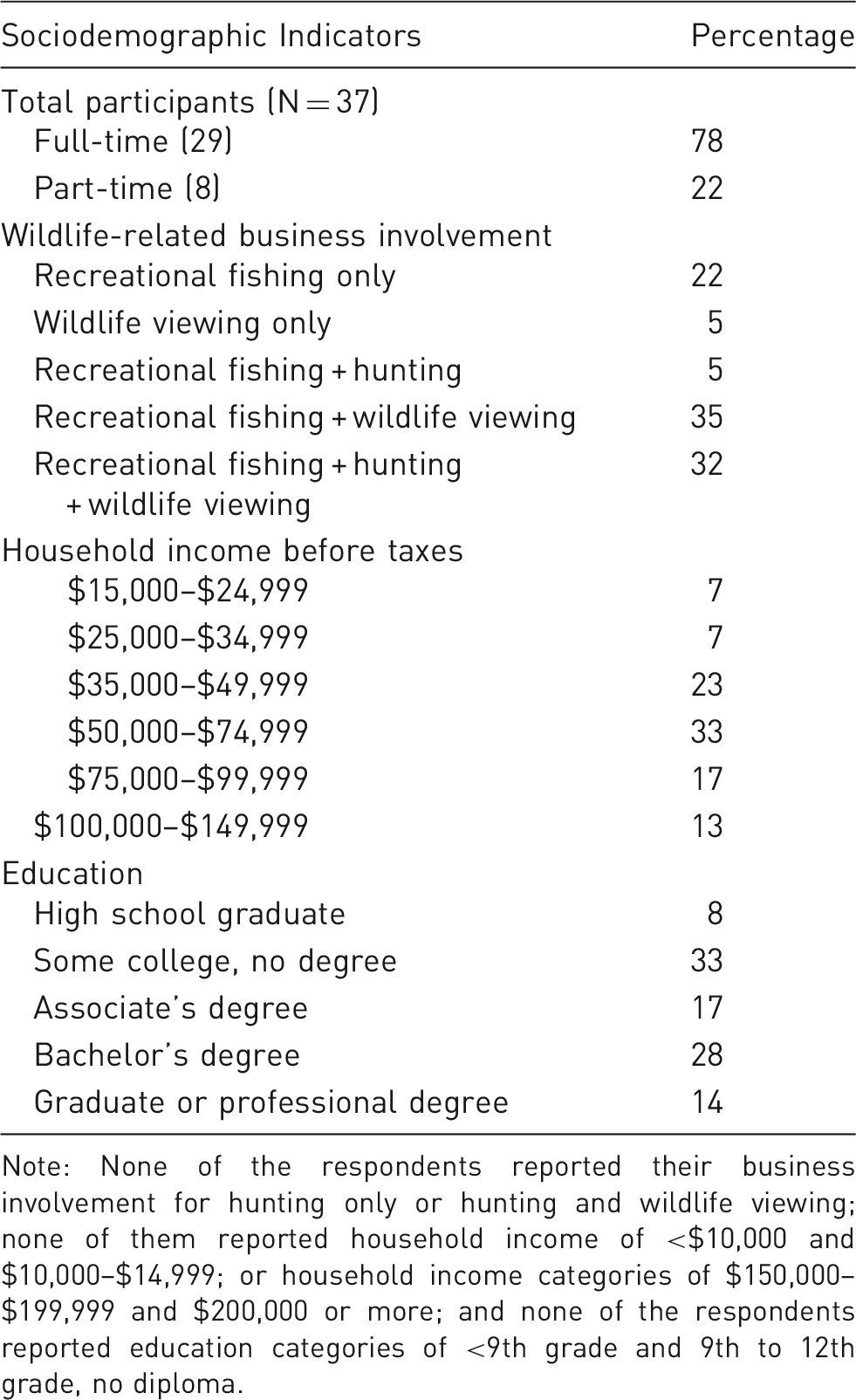
Note: None of the respondents reported their business involvement for hunting only or hunting and wildlife viewing; none of them reported household income of <$10,000 and $10,000–$14,999; or household income categories of $150,000–$199,999 and $200,000 or more; and none of the respondents reported education categories of <9th grade and 9th to 12th grade, no diploma.
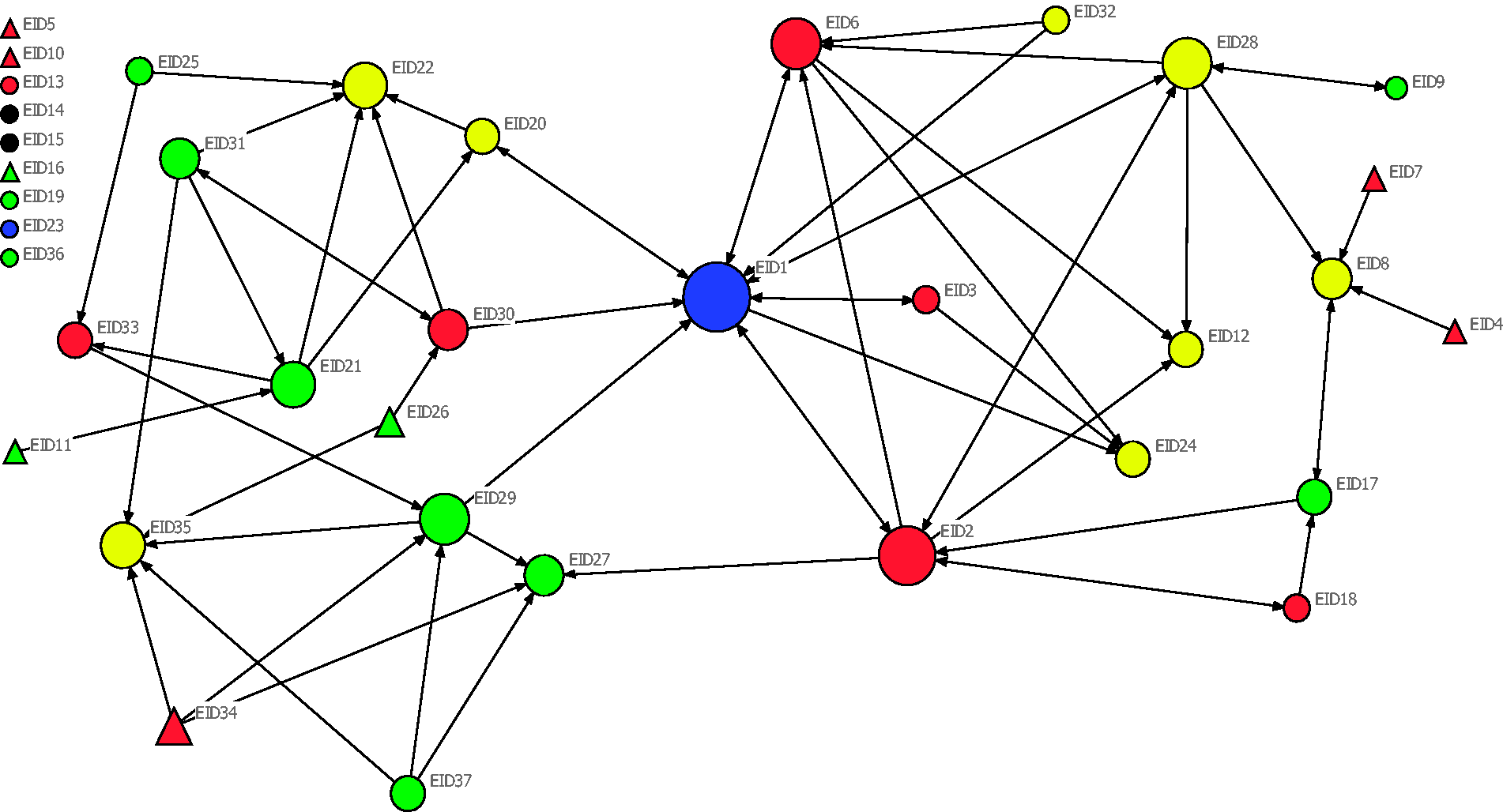
Wildlife tourism business network. The size of the node is proportional to the number of connections, whereas shape of the node indicates job status, circle indicates full-time microentrepreneurs, and up-triangle indicates part-time microentrepreneurs.
WTSN
Type of support and associated network ties for Wildlife Tourism Social Network (WTSN).
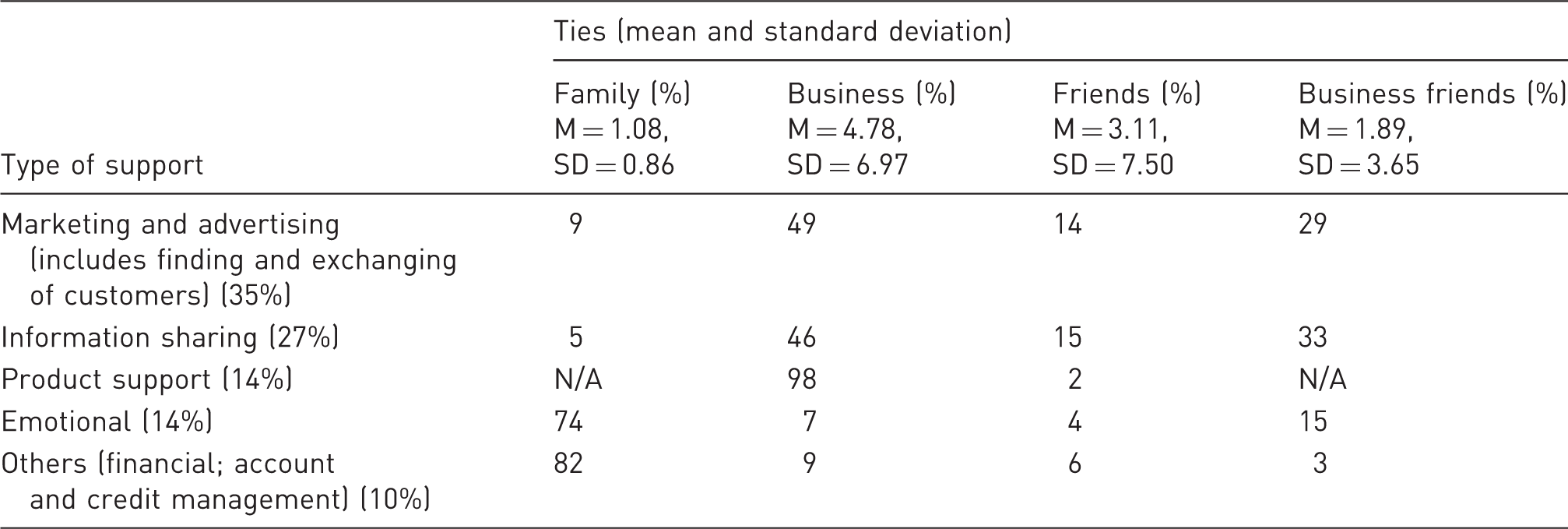
Note: Total support is equivalent to 100% and support received from network ties (i.e. family, business, friends, and business friends) is equivalent to 100% for each type of support; N/A indicates 0.
Type of support and associated network ties
Wildlife tourism microentrepreneurs reported marketing and advertising (35%) to be the most important support received from their network ties followed by information sharing (27%), product support (14%), emotional (14%), and others (10%) (Table 2). The three most important types of support (i.e. marketing and advertising, information sharing, and product support) were received by wildlife tourism microentrepreneurs from their network ties, which accounted for 76% of all the support, primarily received from business ties. Marketing and advertising also includes exchange of customers among peers, where referring customers to other peers or subhiring them to take their excess customers was a common practice.
Marketing and advertising support was usually reported to receive from peers in the network but also from the WTSN, such as connections with Angler’s magazine, local museums, restaurants, the chamber of commerce, and other sponsors. Similarly, information sharing was identified as another important type of support received from peers within WTBN. However, this support was also received from friends, specifically those highly involved with fishing and hunting as a hobby but not directly involved in the wildlife tourism business, and other business ties from the WTSN. Information sharing usually included exchange of information about the location of fish, type of bait used to catch fish, and type of fish caught. Likewise, wildlife tourism microentrepreneurs engaged with hunting (e.g. waterfowl hunting), information exchanged was about the location of waterfowls and direction of their movement. Similar information was reported to be received from outfitters or bait and tackle shops, especially among fishing guides. Wildlife tourism microentrepreneurs considered it necessary to communicate with other peers in the network to exchange information to enhance business outcomes with the advantage of knowing the location of fish or waterfowls and other related information. One wildlife tourism microentrepreneur explained information sharing process as I get information from others on the location of fish and ducks because I am going in the next three days but I did not go for the past three days. So I need to know where the ducks moved or fish moved, they are not always where you caught last time. That is the information I get from these guys because they may be there where I am not and I may be there where they are not. (EID4)
Product support was a common form of support among wildlife tourism microentrepreneurs, particularly among fishing guides. Microentrepreneurs reported to receive product support in the form of discounts on the purchase of equipment/bait or boat maintenance. Product support was mainly received from business ties (e.g. boat dealers, bait and tackle shops) within the WTSN, except for local bait and tackle shops from the WTBN. Wildlife tourism microentrepreneurs often reported their relationships with product sponsorship to be mutual, where microentrepreneurs promote or advertise products from their sponsors through entrepreneurial activities and receive free or discounted products in exchange.
The communication and support received by these microentrepreneurs were dependent upon their necessity. For example, some microentrepreneurs needed more support for marketing and advertising while others for information sharing. However, marketing and advertising as well as information sharing tended to go hand in hand most of the time. In addition, wildlife tourism microentrepreneurs’ involvement toward their business played crucial role for information exchange pattern, where certain microentrepreneurs were primarily involved in fishing but some were equally involved in fishing and hunting. Thus, microentrepreneurs involved with both hunting and fishing were more likely to activate information sharing and customer exchange/referral according to their peers’ business involvement.
Importance of network ties in business success.
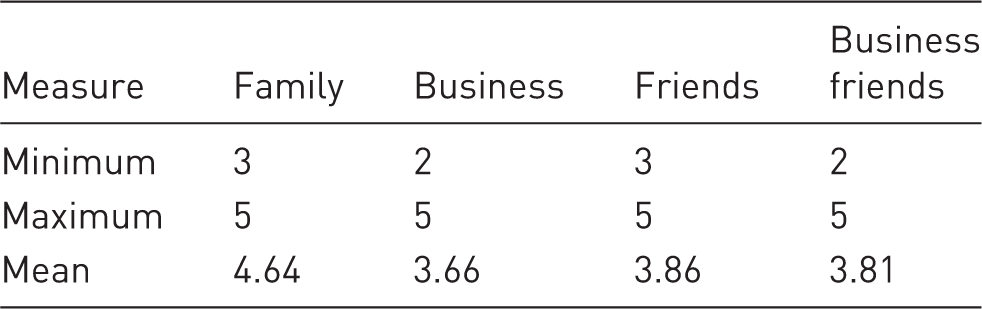
*Note: Importance of ties in business success (Likert scale ratings from 1-5; 1-Not at all important to 5-Extremely important).
Results indicate prevalence of business ties over family and friends ties. The dominance of business ties over family and friends ties can be a result of many factors. First, most of the businesses were established about a decade ago, where mature stage entrepreneurs tend to possess higher number of business ties (Hill et al., 1999). In the literature, entrepreneurs who are in the business for less than three years are considered early stage entrepreneurs, whereas those with more than three years are considered mature stage (Korunka et al., 2003; Wasdani and Mathew, 2014). Wildlife tourism microentrepreneurs were dependent on business ties for market opportunities, information sharing, and other valuable resources (Anderson et al., 2005; Ulhøi, 2005), where those ties are considered to generate nonredundant information and resources (Granovetter, 1973; Levin and Cross, 2004). A significant proportion of the support (i.e. 76%) was accrued from business ties in the form of marketing and advertising (35%), information sharing (27%), and product support (14%). Therefore, dominance of weak ties over strong ties was a cumulative effect of the length of business establishment, nature of the business, and amount of support received from weak ties.
Literature suggests that strong ties have a positive impact on business survival with a small impact on business growth (Brüderl and Preisendörfer, 1998; Hoang and Antoncic, 2003). Although a small proportion of support was received from strong ties, they were rated higher than weak ties in terms of their importance in business growth and success (Table 3). The higher number of weak ties undoubtedly favors business growth and success but strong ties are crucial for sustaining motivation through emotional support regardless of their small proportion (Stathopoulou et al., 2004). This study suggests that emotional support received from family is equally crucial as other forms of support. Accordingly, comparison of the extent of strong versus weak ties is often unrealistic because the importance of strong ties outweighs weak ties. However, strong and weak ties provide distinct resources. Strong ties offer cheaper, reliable, and trustworthy information (Granovetter, 1985; Jack, 2005), whereas weak ties provide access to valuable information, resources, or business opportunities in a wider social context which may not be offered by strong ties (Burt, 1992; Anderson et al., 2005; Jack, 2005). Therefore, an ideal microentrepreneurial network should include both strong and weak ties because the nature of these ties influences the operation and structure of the network (Granovetter, 1973; Jack, 2005; Johannisson, 1986).
WTBN
The WTBN consists of 28 microentrepreneurs connected to each other (i.e. regardless of their directionality) while nine are isolated and did not report to receive support from peers within the network (Figure 1). The network exhibits a tendency toward forming loosely connected subgroups, where EID1 and EID2 are connecting those subgroups. Often EID1 and EID2 are referred as bridging ties as they are connecting two larger subgroups. Some microentrepreneurs are better connected in the network than others. The number of connections also relied on job status (e.g. full-time versus part-time). Part-time microentrepreneurs were more likely to receive business support from full-time microentrepreneurs, such as information sharing and customer exchange. Some fishing and hunting guides in particular were offering their guiding services as part-time. However, full-time and part-time microentrepreneurs seem to have more connections than part-time microentrepreneurs. Nevertheless, the information exchange pattern even among full-time and part-time microentrepreneurs was similar.
Generally, microentrepreneurs with more connections (e.g. especially those who were mentioned to receive support from, such as EID1) are often considered popular (Ramirez-Sanchez, 2011) and independent (Prell, 2011). Being independent in the network can be an advantage, as they do not have to rely completely on fewer connections as opposed to multiple connections. Usually, actors like EID1 and EID2, with multiple connections possessing a characteristic of bridging ties, are important for intergroup communication and are often considered important for collective action and conflict resolution (Ramirez-Sanchez, 2011). Business ties in general are known to possess heterogeneous resources (Anderson et al., 2005; Jack, 2005), but well-connected key actors also avoid social fragmentation and are able to generate nonredundant information (Ramirez-Sanchez and Pinkerton, 2009). Although these key actors in the network are able to access resources and information from other actors, it is primarily for their own business growth. Therefore, most of the resources acquired from their respective ties may not be transferable except for information exchange. However, they can be the primary actors for disseminating ideas and knowledge throughout the network, which may be of particular interest from the perspective of resource managers and policy makers.
Examining the network based on different types of support (e.g. marketing and advertising, information sharing, and product support) can allow further interpretation but marketing and advertising as well as information sharing tend to go hand in hand, resulting in a formation of networks with similar characteristics (e.g. number of connections and network size did not vary significantly). Product support network, on the other hand, would result in sparse network because few microentrepreneurs (i.e. EID1, EID8, EID18, EID21, EID25, EID26, and EID 30) received product support from local bait and tackle shops (i.e. EID17, EID20, EID22, EID24, EID33, and EID35). Microentrepreneurs received product support from both WTBN and WTSN but relationships with product sponsors were still two way.
Although network structure itself can provide valuable information regarding functionality of wildlife tourism microentrepreneurship, underlying processes for network creation and maintenance can be equally important to understand the tendency for structural change overtime, or in understanding factors that play a major role in defining the network structure and reciprocal relationships. The following section reports results from thematic analysis to explain the networking process in wildlife tourism microentrepreneurship, specifically in regards to business ties.
Networking process
Three subcategories were identified under network creation: entrepreneurial activity in the same environment (48.8%), seeking sponsorship (29.3%), and professional platforms (22%). Likewise, four subcategories were identified under network maintenance: reciprocity (33.9%), togetherness (33.9%), communication (23.2%), and trust (8.9%).
Network creation
Entrepreneurial activity in the same environment was reported frequently to be the most common way of establishing new network ties. It was common to have an initial contact with other wildlife tourism microentrepreneurs through acquaintances. For instance, one microentrepreneur stated, “We bumped into one another in the field” (EID6), while another microentrepreneur said, “I met him in the water, I invited him fishing with me and we are friends since then” (EID21). Although some connections were made while growing up in the same area, microentrepreneurs often mentioned stopping by one of the local bait and tackle shops and introducing themselves. Likewise, they mentioned approaching other peers in the same way. Seeking sponsorship was another way of creating relationships. Sponsorships were sought to buy bait, equipment, and sportswear or even for regular boat maintenance. Microentrepreneurs were receiving discounted products and even free equipment or sportswear from those sponsors. Often sponsors were local bait and tackle shops, outfitters but also online sponsors. Wildlife tourism businesses were highly reliant on product support as discounted or free equipment/sportswear reduces business cost while mutual business relationships supported them to market their respective businesses.
Similarly, professional platforms, such as seminars, tournaments, fishing and hunting expos, formal social gatherings (e.g. formal events organized by chamber of commerce), or serving for an association and local clubs (e.g. North Carolina Fishing Guide Association, or clubs like salt-water fishing) were reported as a medium to connect with other peers. Microentrepreneurs were using those platforms to market their services as well. One microentrepreneur in particular mentioned the process of meeting people as Some of it involves friendship for lifetime, meeting people at the workshops, tackle shops, talking to people…literally finding them fishing in the same hole that I am in or same hunting range…and you see this guy over and over, and you start talking to him. (EID7)
Often interpersonal communication skill deemed necessary in creating relationships because face-to-face interaction was a primary mode of interaction while working at the same environment, attending seminars/workshops, or seeking sponsors. Further, they also stated to connect with other business ties with the help of friend in various settings.
Network maintenance
Mutual promotion of wildlife tourism business through exchange of support was a common practice among microentrepreneurs, which represents a form of reciprocity. They reported exchanging customers with other peers during overflow of customers for fishing and hunting, specifically within the WTBN. One of the microentrepreneurs for instance stated For next 7 days, I have hunters for me to take hunting already but I keep getting phone calls because this is the season people want to go hunting [duck hunting]. Four other captains may not be taking anybody that day so I send four trips to them and take $50 per person and I get $200 for giving them the trip because they are not advertising and they are part-time like me, they do not have time to do advertising but they still want to make that extra side of money. (EID4)
Similarly, togetherness in terms of socializing and getting along with other peers in the network was another important factor for maintaining one’s network. Seminars, workshops, and tournaments were the ways for creating and maintaining relationships since wildlife tourism microentrepreneurs periodically attend these events to market their services. Although frequent socialization was considered rare but meeting each other at the boat ramp, marinas, and social interaction at those places was perceived important to maintain working relationships. One microentrepreneur expressed his opinion about togetherness as “It is important to be able to get along with people, and be a people’s person. We are not like car dealers, trying to cut each other’s throat, nothing like that” (EID3). Microentrepreneurs often described business relationships as a combination of friendship, respect, and business. Another microentrepreneur stated I do not like people coming to me and say that they caught such and such fish when I am having a bad day and I do not do that either, so not using a bad word or bad mouth is important to maintain relationships; not bad mouth anybody. (EID30)
Communication, on the other hand, was perceived highly important to maintain relationships, for example, talking face-to-face, emailing at least once a month, or interaction through text messages, were described as usual mode of communication. In addition, trust was identified as a critical factor to maintain long lasting relationships. Because customer exchange was prevalent in wildlife tourism businesses, trust among microentrepreneurs to ensure that they do not steal their peer’s regular customers was considered extremely important. Some of the microentrepreneurs referred this trusting relationship as “gentlemen’s agreement.” One microentrepreneur stated, “I let other fishermen take my customer for fishing but they do not exchange any email or phone number on my back, no customer stealing” (EID2).
Concluding remarks
This study revealed some interesting results, especially in regards to structural characteristics of wildlife tourism microentrepreneurs’ network, their networking behavior, and determinants of existing network ties. Findings indicate prevalence of business ties (e.g. weak ties) over family and friends ties (e.g. strong ties). The dominance of weak ties was a cumulative effect of length of business establishment and amount of support received from weak ties. Interestingly, strong ties were rated higher than weak ties for their contribution toward business growth and success, despite the fact that a small proportion of support was received from those ties. This implies that a small proportion of emotional support coming from family is equally crucial as other forms of support in ensuring business success. Therefore, comparing strong and weak ties based on their numbers and proportion of support can be misleading. Similar to Jack’s (2005) finding, strong ties were found to invoke weak ties as microentrepreneurs reported to connect with businesses through friends at the settings of entrepreneurial activity or other professional platforms. The higher ratings for strong ties over weak ties were possibly due to the importance of strong ties in business survival but also their critical role in expanding weak ties (Brüderl and Preisendörfer, 1998; Hoang and Antoncic, 2003; Jack, 2005).
Most importantly, cognitive social capital factors (e.g. reciprocity, togetherness, and trust) were critical in maintaining business connections. Therefore, the number of business connections is likely to be dependent on perceived cognitive social capital, which means that less trusted network ties have tendency to dissolve. Burt (2000) suggests that microentrepreneurs with higher number of business connections are more likely to succeed; however, cognitive social capital can be considered equally important for entrepreneurial success (Anderson et al., 2010; Zhang et al., 2008). Therefore, the extent of network ties can be less important for entrepreneurial success because cognitive social capital factors facilitate cooperation among network ties and optimizes use of information and resources (Chen et al., 2015; Jones, 2005; Ramirez-Sanchez and Pinkerton, 2009). The importance of cognitive social capital stands true in this case because support (e.g. information sharing and customer exchange) coming from business ties can be affected by levels of reciprocity, togetherness, and trust. These cognitive social factors are more likely to influence the amount of support exchanged and the frequency of reciprocal relationships with business ties. Therefore, the concept of “more is better” may not completely ensure entrepreneurial success because cognitive social capital factors control level of cooperation among network members (Burt, 2000; Chen et al., 2015; Jones, 2005; Ramirez-Sanchez and Pinkerton, 2009). The higher number of business ties along with the higher level of cognitive social capital can be an ideal condition to envision success. However, additional research is needed to examine the interrelationships among cognitive social capital, number of network ties, and entrepreneurial success.
Network studies are prone to boundary specification problems. Therefore, conscious attention is required to design network studies with clear boundaries for the population of interest (Crona and Bodin, 2011; Smith, 2013). This study was confined to examine support network of wildlife tourism microentrepreneurs. Because support was also received from WTSN other than just peers from WTBN, isolation in the WTBN can be expected. Further, differences in business characteristics (e.g. consumptive versus nonconsumptive) added some limitations toward network connectivity. For instance, information and resources exchanged were different based on wildlife tourism microentrepreneur’s primary affiliation to a type of wildlife tourism business. The data on support ties were collected using recall method (Crona and Bodin, 2011), which also confined the number of ties because it is difficult to memorize all the support ties instantly during an interview process. Finally, findings from network studies tend to be contextual (Ramirez-Sanchez and Pinkerton, 2009), as such, the results are specific to the study region and not generalizable. Greve and Salaff (2003), on the other hand, looked at networking behaviors of entrepreneurs in four different countries and concluded that entrepreneurs are required to build social networks, and often cultural differences do not affect networking behavior among them. Moreover, reciprocal relationships and the role of cognitive social capital toward facilitating the entrepreneurial process remain fairly similar in entrepreneurship regardless of the type of support exchanged. Therefore, findings from the study can be compared across different research settings, while the results from this study, particularly the importance of cognitive social capital in maintaining networks, can be the basis to formulate new research questions.
Footnotes
Declaration of Conflicting Interests
The author(s) declared no potential conflicts of interest with respect to the research, authorship, and/or publication of this article.
Funding
The author(s) received no financial support for the research, authorship, and/or publication of this article.