



Abstract
Several studies explain the direct effect of travel motivation, perceived risks, and travel constraints on visit intention. However, there are relatively limited investigations on the combined effect of these factors on visit intention. This study empirically tests a comprehensive model of visit intention based on travel motivation, perceived risks, and travel constraints. A quantitative study was performed on 316 university students in Malaysia. The results of the study found that travel motivation had a positive influence on visit intention. For perceived travel risks, performance risk and time risk had negative effects on visit intention. Physical risk, financial risk, and socio-psychological risk did not affect visit intention. Among travel constraints, interpersonal and intrapersonal constraints were negatively related to visit intention. The study also found that the effect size (f2) of statistically significant relationship was low in a few cases. The findings provide useful insight to destination managers in terms of integrating the influential factors in promotional strategies to develop intentions to visit India among potential market segment. The study also suggested future researchers to test the research framework at different levels of decision-making and contexts to prove its usability.
Keywords
Introduction
India as a travel and tourism destination is failing to meet its expected number of foreign tourists despite having rich historical, cultural, and geographical diversity. India’s foreign tourist arrivals (FTAs) reached eight million in 2015, which is notably less than regional destinations such as Malaysia (25 million), Thailand (29 million), Singapore (12 million), and China (56 million) (UNWTO, 2016). Its share in global FTAs was only 4.2% in 2015, whereas Malaysia (9.2%) and Thailand (10.7%) achieved much higher percentages for the same year (UNWTO, 2016). The figures indicate that India is failing to become a desired travel destination among international travellers. This situation has developed due to various reasons such as grinding poverty, illiteracy, terrorism, unemployment, communal discord, lack of social services, and corruption (Ahmed and Krohn, 1992; Chaudhary, 2000). To become a preferred destination, India must improve the existing tourism environment and focus on attracting outbound regional travellers.
Outbound tourism is growing rapidly in Southeast Asia due to its substantial economic development. It is estimated that the outbound tourism spending of southeast Asians will reach USD 138 billion in 2025 (World Travel & Tourism Council, 2015). Malaysians (USD 10 billion) and Indonesians (USD 7.3 billion) were the second and third largest outbound tourism spending groups after Singaporeans (USD 21 billion) in Southeast Asia (UNWTO, 2014). A study undertaken by Mastercard revealed that Malaysia is expected to record the highest ratio in outbound travel in relation to the total number of households with 198.7% by 2021. The study also found that Malaysia is one of the highest emerging outbound markets with an average rate of 3.5% per year and will reach 14.2 million outbound trips by 2021 (Choong and Hedrick-Wong, 2017). However, despite increasing rate of outbound travellers, Southeast Asia was the fourth largest source region for foreign tourists to India in 2015 (Ministry of Tourism, 2016b). Destination India must understand the potential of Southeast Asia given the geographical, religious, cultural, and historical proximities with India. For this, tourism marketing managers in India must understand the travel needs and perceptions of potential travellers that influence future behaviour.
Individuals’ travel behaviour largely depends on travel motivations and susceptibility to perceived risks and travel constraints. Travel motivation is a driving factor that leads tourists to exhibit travel behaviour (Baloglu and McCleary, 1999; Beerli and Martin, 2004a; Lam and Hsu, 2006). Apart from travel motivation, perceived risks also influence tourist behaviour and play a crucial role in travel decision-making and destination choice (Fuchs and Reichel, 2006; Roehl and Fesenmaier, 1992; Sonmez and Graefe, 1998b). Early travel research regards perceived risk as a component of destination image while recent studies consider perceived risks as an independent factor that influences the travel behaviour of individuals (Chew and Jahari, 2014; Lepp et al., 2011). Travel constraints can restrict the travel decision-making of individuals and their travel behaviour (Dellaert et al., 1998; Li et al., 2011).
Numerous studies in travel and tourism have established travel motivations (Jang et al., 2009; Jang and Feng, 2007; Li and Cai, 2012; Murphy et al., 2007), perceived risks (Chew and Jahari, 2014; Floyd et al., 2004; Quintal et al., 2010; Sönmez and Graefe, 1998), and travel constraints (Huang and Hsu, 2009; Hung and Petrick, 2012) as the major factors that guide the different travel behaviours such as intention to visit, revisit, and word of mouth. However, the literature on these factors in the context of India is scarce. Authors argue that despite holding diverse tourism offerings and having the potential to be used extensively in scholarly work, destination India has not received its due share in leisure and tourism literature and has largely been ignored by academic researchers. Researchers argue that travel motivations (Kozak, 2002), perceived risks (Chew and Jahari, 2014), and travel constraints (Chen et al., 2013) must be investigated in different geographic contexts.
This study will fill the contextual research gap in existing literature by investigating the effects of motivations, risks, and constraints on the visit intention of potential travellers to India. It develops a comprehensive framework that includes all three important factors as independent variables and investigates their effects on visit intention. Previous studies have individually investigated the effects of motivations, risks, and constraints on visit intention; however, by taking these factors in a single framework, the results will detail the importance of one factor over another in travel decision-making.
Development of conceptual framework and hypotheses
Behavioural intention is central to the theory of planned behaviour (TPB) and represents the extent of a person’s intention to perform or not to perform a given behaviour (Ajzen, 1991). Behavioural intention has long been recognised as an important mediator in the relationship between behaviour and other factors such as attitude, subjective norm, and perceived behavioural control (Ajzen, 1991). According to Baker and Crompton (2000), it is forceful to understand the future course of action without understanding the attitudinal inclination towards the act. This study conceptualises the intention of the future actions of potential travellers on the basis of individual factors such as motivation, risk perceptions, and constraints.
Behavioural intention
Individuals’ behavioural intentions consists of word of mouth, purchase intention, price sensitivity, and complaining behaviour (Alexandris et al., 2002). Behaviour intention is a condition that develops from an individual’s evaluative beliefs about tourism products, social factors that lead to normative beliefs, and situational factors that arise at the time of travel planning or commitment (Moutinho, 1987). In travel and tourism literature, one of the behaviour intentions is the intention to visit a destination (Nunkoo and Ramkissoon, 2010; Sparks and Pan, 2009). Visit intention is the tourists’ perceived likelihood to visit a particular destination within a specific period (Ahn et al., 2013; Woodside and Lysonski, 1989). Therefore, to be closely correlated to the travel behaviour, intention to visit is considered an important outcome variable in tourism and travel research (Um and Crompton, 1992; Woodside and Lysonski, 1989). Visit intention is also considered a mental process and transformation of travel motivation into behaviour (Jang et al., 2009). The travel intention of tourists can be investigated by developing insight into the issues such as perceptions or attitude towards a destination along with key influences, constraints, and levels of perceived personal control over the resources required to achieve the targeted behaviour (Sparks and Pan, 2009).
Intention to perform a behaviour is a strong predictor of actual behaviour (Ajzen, 2001; Ko et al., 2008). According to TPB, perceived behavioural control, together with behavioural intention, can be used to directly predict actual behaviour. In tourism purchase, it is hard to understand the future course of action without understanding the attitudinal inclination towards the act of patronage. Behavioural intention reflects a high attitudinal propensity of the subsequent events (Baker and Crompton, 2000; Cheng et al., 2006). The intention to perform travel behaviour is also influenced by attitude and preference towards tourist products or destinations (Beerli and Martin, 2004b). Wu (2015) argued that individuals’ travel behaviour is determined by rational as well as effective evaluation of products. Rational evaluation can be defined as the needs that can be fulfilled by the destination’s features or environment (Kim and Yoon, 2003; Qu et al., 2011), while affective evaluation is defined as emotions that develop feelings about the destination (Prayag and Ryan, 2012).
Travel motivation
Motivation is an individual’s psychological state that arises due to the need to perform an action. According to Li and Cai (2012), motivation is a predisposition or frame of mind that arises due to a need that drives an individual to perform different types of actions to fulfil that need. According to Mill and Morrison (2002), an individual’s need deficiency leads to travel motivation. In tourism, motivations are psychological/biological needs that awake, direct, and integrate a person’s behaviour and activity (Park and Yoon, 2009). Li and Cai (2012) argued that in travel, behaviour motivation should be explored in the view of person–situation interaction and process in which a specific situation creates a need and this need drives a person to perform an action which has fulfilling or unfulfilling consequences. Researchers argued that the travel motivation process should be explored using the cognitive and effective approaches. The cognitive approach emphasises conscious mental activities that include information processing (beliefs and perceptions), whereas the effective approach depends on a person’s emotions and feelings which lead to decision-making (Decrop, 1999; San Martín and Del Bosque, 2008).
In tourism research, travel motivation is an initiator of tourist behaviour (Hudson, 1999; Io, 2017; Park and Yoon, 2009). Primarily, the travel motivations of tourists have been explained using various models such as the push-pull (Dann, 1977, 1981), escape-seeking (Ross and Iso-Ahola, 1991), and travel career approach (Pearce and Lee, 2005). Existing studies have explored travel motivation in different contexts such as development and testing of measurements of travel motivation (Crompton, 1979b), motivation as a stimulator of actual behaviour (Mansfeld, 1992), differences in motivation based on nationality and culture (Jönsson and Devonish, 2008; Kozak, 2002), personal values and motivation (Li and Cai, 2012), motivation and destination perception (Beerli and Martı´n, 2004a, San Martín and Del Bosque, 2008), expectations and satisfaction (Gnoth, 1997; Tang, 2014), motivation for niche tourism (Alant and Bruwer, 2004; Kluin and Lehto, 2012; Sparks, 2007; Van der Merwe et al., 2011), and market segmentation based on motivation (Chen et al., 2014; Rittichainuwat and Rattanaphinanchai, 2015). Researchers argue that motivation has the utmost importance in travel behaviours such as destination choice and visit intention (Huang and Hsu, 2009; Li and Cai, 2012). In the context of India, rich cultural heritage is considered a strong pull motivation among foreign travellers (Chaudhary, 2000). Kale and Weir (1986) found that Western prospective travellers feel positive about the culture and history, exotic environment, unique customs, and food in India.
Huang and Hsu (2009) found a positive effect of motivation (novelty and relaxing) on attitude towards revisiting intention. Lam and Hsu (2006) measured motivations as behavioural beliefs and subjective norms and found motivation an important predictor of choosing a destination. Jang et al. (2009) found senior Taiwanese motivated by novelty seeking were more likely to travel to Hong Kong. Jang and Feng (2007) found novelty seeking a direct antecedent of midterm revisit intention and indirect antecedent of long-term revisit intention. Leong et al. (2015) found that nostalgia as a push motivation had significant positive effect on individuals’ future visit intention. Given the above, the following hypothesis is proposed: H1: The travel motivation of potential travellers has a positive influence on their intention to visit India.
Perceived travel risks
Mansfeld (2006) defined perceived risk as consumer perception of the probability that an action may expose them to the danger that can influence travel decision if the perceived danger is deemed beyond an acceptable level. However, Roehl and Fesenmaier (1992) argued that a situation where the only possible outcome is a sure loss of some particular magnitude is not a risk. In travel decision-making, perceived risk has utmost importance due to its ability to change decisions (Sönmez and Graefe, 1998). Perceived risks were first explained in consumer buying as physical, financial, psychological, social, and time risk and adopted as such in travel buying (Simpson and Siguaw, 2008). Roehl and Fesenmaier (1992) explored these risks in travel research as pre- and post-travel risks of pleasure travellers. Sönmez and Graefe (1998) added three dimensions of perceived risks as health, terrorism, and political instability. Later on, Fuchs and Reichel (2006) performed an extensive study to identify perceived risks in travel by performing a factor analysis and identified nine dimensions of risk as human induced, service quality, financial, socio-psychological, natural disasters and car accidents, and food safety problems and weather.
Researchers argue that the perception of risk can vary as destination specific or region specific (Schroeder et al., 2013; Sönmez and Graefe, 1998). Sönmez and Graefe (1998) found that tourists perceive less risk travelling to developed regions than developing regions such as the Middle East and Africa. Kozak et al. (2007) found varying degrees of difference in risk perception among tourists from different cultures. They also found that tourists relate specific types of risks to specific travel regions. Schroeder et al. (2013) linked the demography of tourists with risk perception and found tourists of different age groups perceived destination risks differently. Sönmez (1998) argued that negative media coverage related to the destination or region may develop negative perceptions. However, Hung and Petrick (2012) explained information gathering as a tool to minimise the perception of risk among potential travellers.
In the context of India, studies found that personal safety from crimes, cheating, unhygienic conditions, unsafe food and drinking water, unethical practices in hospitality services, low-quality hospitality infrastructure, and general infrastructure were the major concerns among foreign travellers (Chaudhary, 2000; Kale and Weir, 1986). Researchers argue that perceived risks have a significant effect on the future behaviour of travellers.
Kozak et al. (2007) found that infection of disease and terrorism were highly related to changes in travel plan. They also argued that risk has a deterring effect on the likelihood to choose a destination for a future visit. Sönmez and Graefe (1998) found that the level of safety and security at a destination determines the interest of future travellers to travel there. Chew and Jahari (2014) found a significant direct relationship between physical risk and revisit intention and the significant indirect relationship between socio-psychological and financial risks and revisit intention to Japan among Malaysians. Schroeder et al. (2013) found a negative relationship between the perception of the likelihood of increased crime in London during Olympics 2012 and the intention to visit among American residents. Given the above, the following hypotheses are proposed: H2: The physical risk perceived by potential travellers has a negative influence on their intention to visit India. H3: The financial risk perceived by potential travellers has a negative influence on their intention to visit India. H4: The performance risk perceived by potential travellers has a negative influence on their intention to visit India. H5: The socio-psychological risk perceived by potential travellers has a negative influence on their intention to visit India. H6: The time risk perceived by potential travellers has a negative influence on their intention to visit India.
Travel constraints
Travel constraints are key factors that keep people from initiating or continuing to travel (Kerstetter et al., 2005). Travel constraints refer to the factors that inhibit continued travel, cause inability to begin travel, result in the inability to maintain or increase the frequency of travel, and/or lead to negative effects on the quality of travel (Hung and Petrick, 2010). In other words, travel constraints are factors that limit the formation of leisure preferences and inhibit or prohibit peoples’ ability to participate and enjoy the leisure activity (Hung and Petrick, 2012; Jackson, 1993). However, Hung and Petrick (2012) argued that having constraints does not mean non-participation. Potential travellers adopt constraint negotiation measures to minimise its influence in travel decision-making (Huang and Hsu, 2009; Hung and Petrick, 2012). Early literature such as Blazey (1987) defined the lack of money, time, family support or interest, and poor health as perceived constraints that influence a person’s travel intention and destination choice. Um and Crompton (1992) defined perceived constraints as perceived inhibitors in pleasure travel destination choice and classified it as need satisfaction, social agreement, and travel ability. They concluded that it has a negative relationship with travel attitude. Crawford et al. (1991) defined leisure constraints into three dimensions as intrapersonal, interpersonal, and structural constraints. However, researchers argue that travel constraints are interrelated and should be analysed contextually (Jackson and Dunn, 1991). Pennington-Gray and Kerstetter (2002) found that the perception of constraints varies according to age and family life cycle stage.
Huang and Hsu (2009) performed a study on the revisit intention of Chinese travellers to Hong Kong and found disinterest as a constraint that had a significant negative effect on revisit intention. Sparks and Pan (2009) tested TPB on potential Chinese travellers to visit Australia and considered perceived behavioural control as travel constraints. The study found that travel constraints as external factors had a moderate effect on hindering travel to Australia. Hung and Petrick (2010) found that the travel constraints of potential American college students had a negative influence on their travel intention. Chen et al. (2013), while testing the mediating effect of destination image on travel constraints and visit intention, found a significant negative relationship between travel constraints and visit intention. On the basis of this, the following hypotheses are proposed: H7: The interpersonal constraints of potential travellers have a negative influence on their intention to visit India. H8: The intrapersonal constraints of potential travellers have a negative influence on their intention to visit India. H9: The structural constraints of potential travellers have a negative influence on their intention to visit India.
Methodology
Data collection procedure and sampling
Data were collected from a large public university in Malaysia, and the primary respondents for the study were university students. Previous studies in travel and tourism have considered university students as a study population because they are a homogenous set of respondents in terms of age, occupation, education, and income (Crompton, 1979a; Gibson et al., 2008; Hung and Petrick, 2012). Convenience sampling was used, and respondents were invited to voluntarily participate in the survey. Convenience sampling is the most frequently used technique in quantitative studies. However, by using this technique, the opportunity to participate is not equal for all qualified individuals in the target population (Suen et al., 2014). Around 500 questionnaires were distributed, and 334 were returned to the researchers (response rate of 66.8%). All the returned questionnaires were thoroughly scrutinised, and 316 were fit for data analysis.
To ensure there is no common method bias in the questionnaire survey, Harman’s single factor test was performed. The results revealed that the first factor accounted for 27.17% of the variance, which was less than the given threshold level of 50% of total variance explained (Podsakoff et al., 2003).
Previous studies identified that the minimum sample size of 100 is adequate for PLS-SEM (Reinartz et al., 2009). Hence, the sample size of this study is adequate for PLS analysis. Chin (2010) explained the rule of thumb ‘ten times rule’ for PLS-SEM analysis. Statistical power is another way to estimate more restrictive minimum sample size recommended for PLS-SEM analysis (Hair et al., 2014). In all cases, it is safely concluded that 316 was an acceptable sample size for the study model.
Measurement
All constructs and items were adapted from the existing literature and were modified to fulfil the objectives of the study. All major scale items, except for visit intention, were measured on a seven-point Likert scale that ranged from (1) strongly disagree to (7) strongly agree. Visit intention was measured on a five-point Likert scale as Podsakoff et al. (2012) suggested that eliminating common scale properties will reduce common method bias. Eight items for travel motivation were adapted from Beerli and Martı´n (2004a), whereas items for travel risks (physical risk, six items; financial risk, three items; performance risk, five items; socio-psychological risk, four items; and time risk, three items) were adapted from Fuchs and Reichel (2006). The items for construct travel constraints (interpersonal constraints, three items; intrapersonal constraints, three items; and structural constraints, seven items) were adapted from Nyaupane and Andereck (2007). Finally, three items for construct visit intention were adapted from Lam and Hsu (2006). Refer to Appendix 1 for the items used in the survey.
Pretesting of the survey questionnaire was conducted using the debriefing method of personal interviews suggested by Hunt et al. (1982). For that, two tourism scholars and 10 respondents were interviewed for their feedback. The respondents who participated in pretesting were excluded from the actual data analysis. The objectives of the pretesting were explained to the respondents. The respondents were asked to evaluate the items on the (i) clarity of words, meaning, and sentences; (ii) sequencing and layout of the questionnaire; (iii) appropriateness of the items to measuring the variable; and (iv) appropriateness of items in study context. Respondents were asked to provide remarks and suggestions on each item. They were also requested to provide specific suggestions to improve the questionnaire. The study instrument was modified using the remarks and suggestions provided by the pretest respondents.
Data analysis and findings
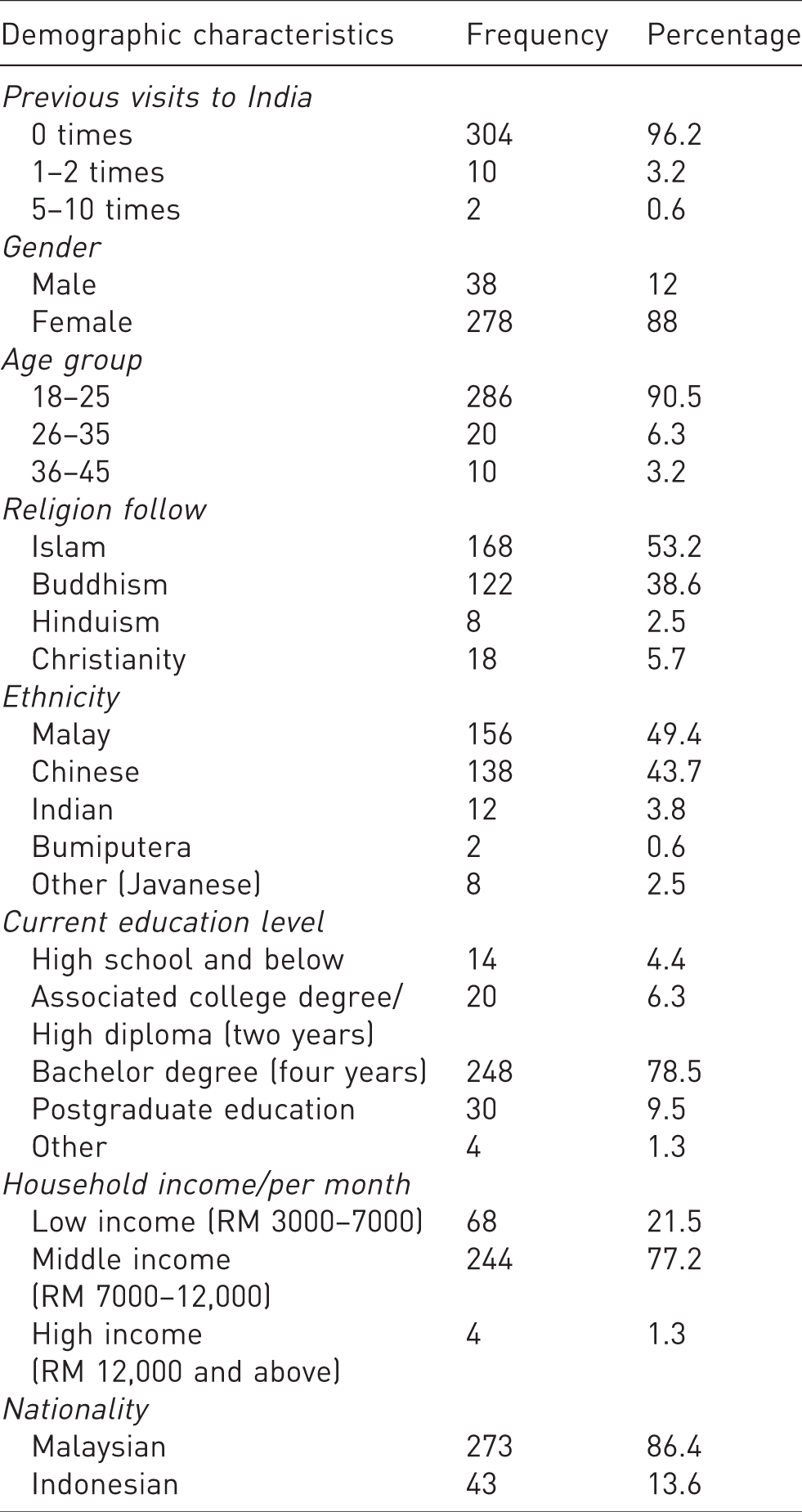
Out of a total 316 respondents, 86.4% were Malaysians, and the rest were Indonesians. Twelve per cent of the total respondents were males, and 88% were females. Most of the respondents were in the age group of 18–25 (90.5%), and the rest were above 25 years. The ethnicity of the majority of the respondent was Malay (49.4%) followed by Chinese (43.7%). The majority of the respondents were enrolled in bachelor courses (78.5%). The majority (77.2%) belonged to the households that fall in the middle-income group. Table 1 shows the socio-demographic profile of the respondents.
Demographic information of respondents (n = 316).
Assessment of measurement model
The study used structural equation model (SEM) with the PLS approach and applied the smart PLS 3.2.6 data analysis tool for model estimation and multivariate analysis. PLS-SEM is a multivariate analysis approach used to estimate path models with latent variables. First, the convergent validity of the model was analysed which included indicator loading, average variance extracted (AVE), and composite reliability (CR). Table 2 presents the indicator loadings of all the items that exceeded the recommended value of 0.708, as suggested by Hair et al. (2014). However, one item, PHY RISK 3 with factor loading 0.694 was retained as the AVE of the latent variable physical risk was 0.685. Seven items (MOT 5 & 8; PHY RISK 6; FIN RISK 1; SOC-PSY RISK 1; and STRUC CONS 1, 2, & 3) were deleted due to low factor loadings. The AVE of all the variables was in the range of 0.595–0.902, which exceed the recommended value of 0.50, and CR ranged from 0.854 to 0.965, which exceeds the recommended value of 0.70 given by Hair et al. (2014).
The results of measurement model and descriptive analysis.
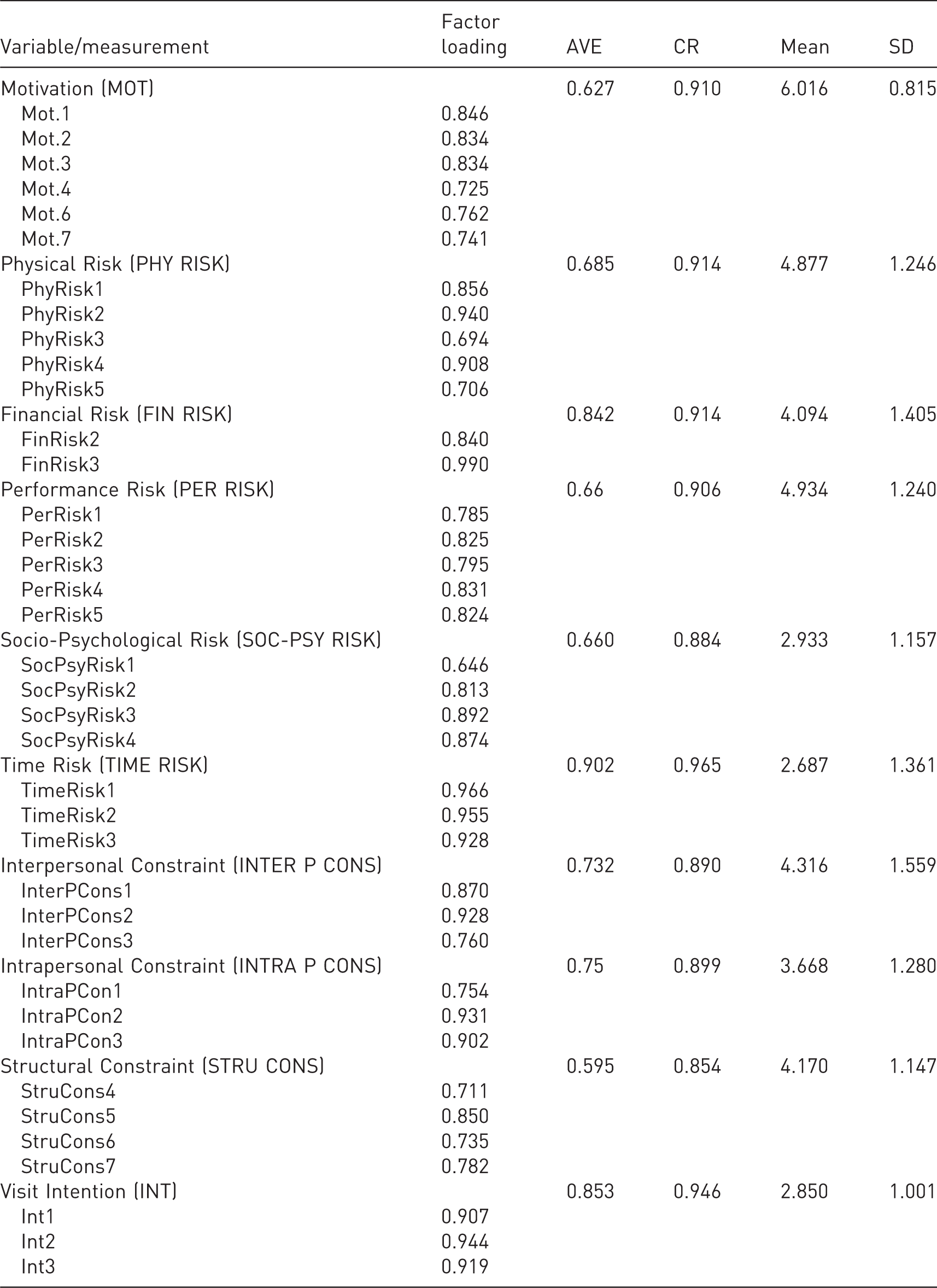
AVE: Average Variance Extracted; CR: composite reliability; SD: standard deviation.
Items MOT 5&8, PHYRISK6, FINRISK1, and STRU CONS1,2&3 were deleted due to low factor loading.
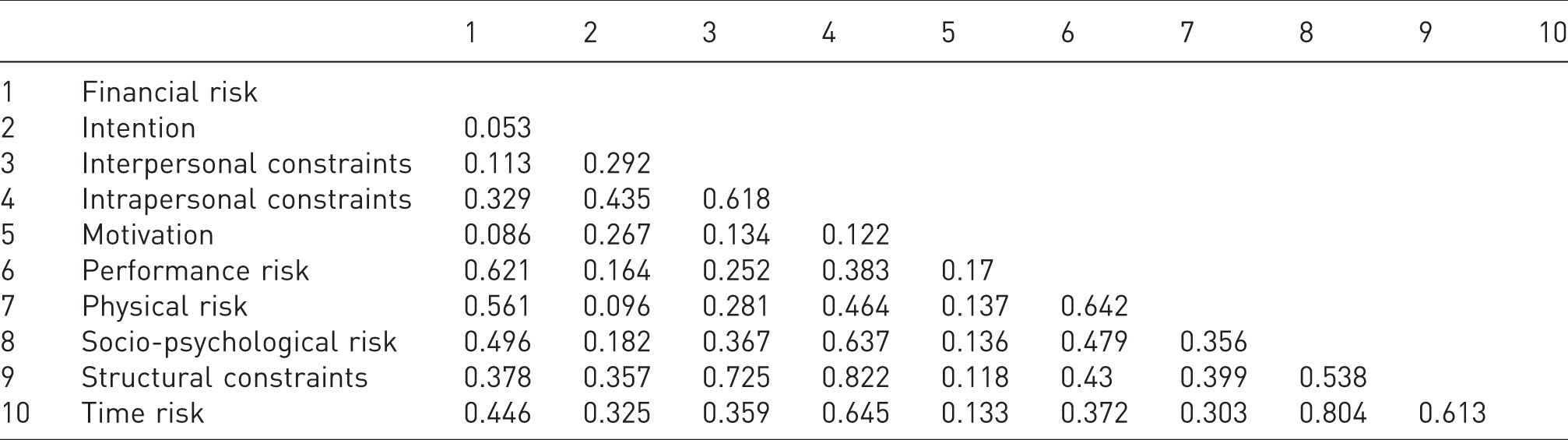
The discriminant validity of the model was tested by Heterotrait–Monotrait (HTMT) ratio. Henseler et al. (2015) explained that the HTMT ratio is a superior criterion as compared to other methods such as the Fornell–Larcker criterion. They suggested two different cut-off values of 0.85 and 0.90 for HTMT criterion to establish discriminant validity. This study used a more conservation level of 0.85 (i.e. HTMT.85) to establish the discriminant validity of the model. Discriminant validity of the model was established since all the results of the HTMT.85 criterion were below the critical value of 0.85 (refer Table 3). In total, the measurement model demonstrated the adequate convergent validity and discriminant validity. Figure 2 details the assessment of the measurement model.
The results of discriminant validity analysis (HTMT0.85 criterion).
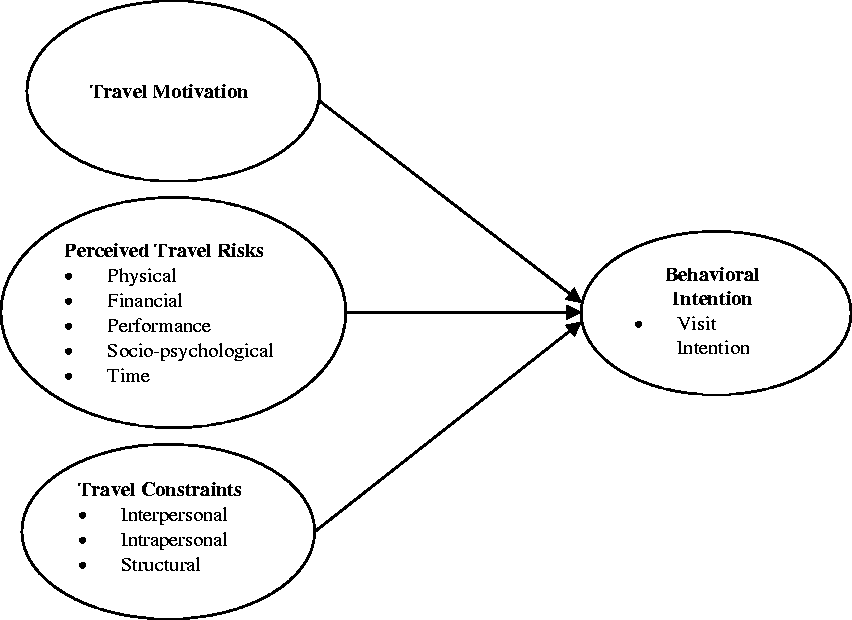
Research framework.
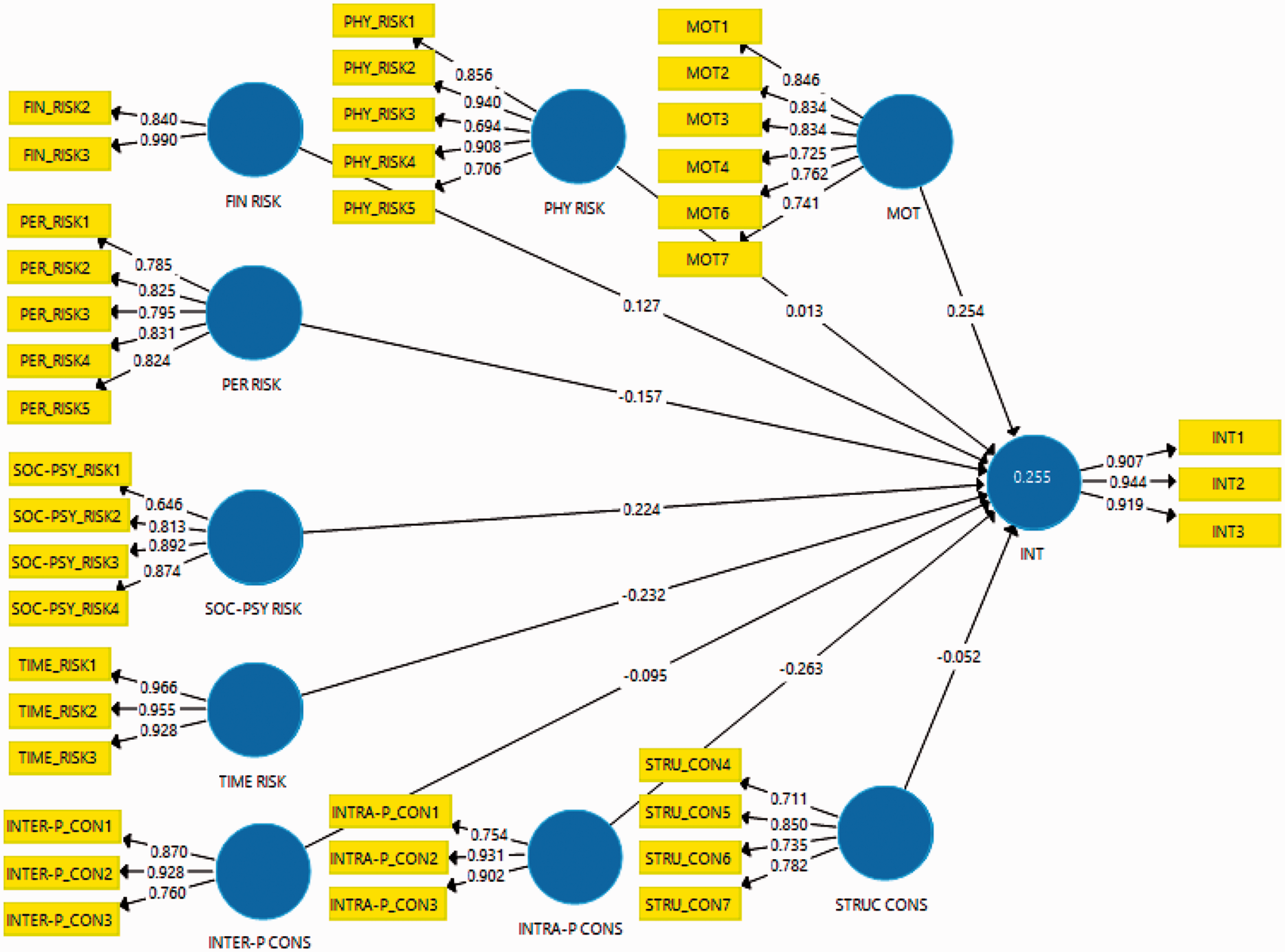
Output of assessment of measurement model.
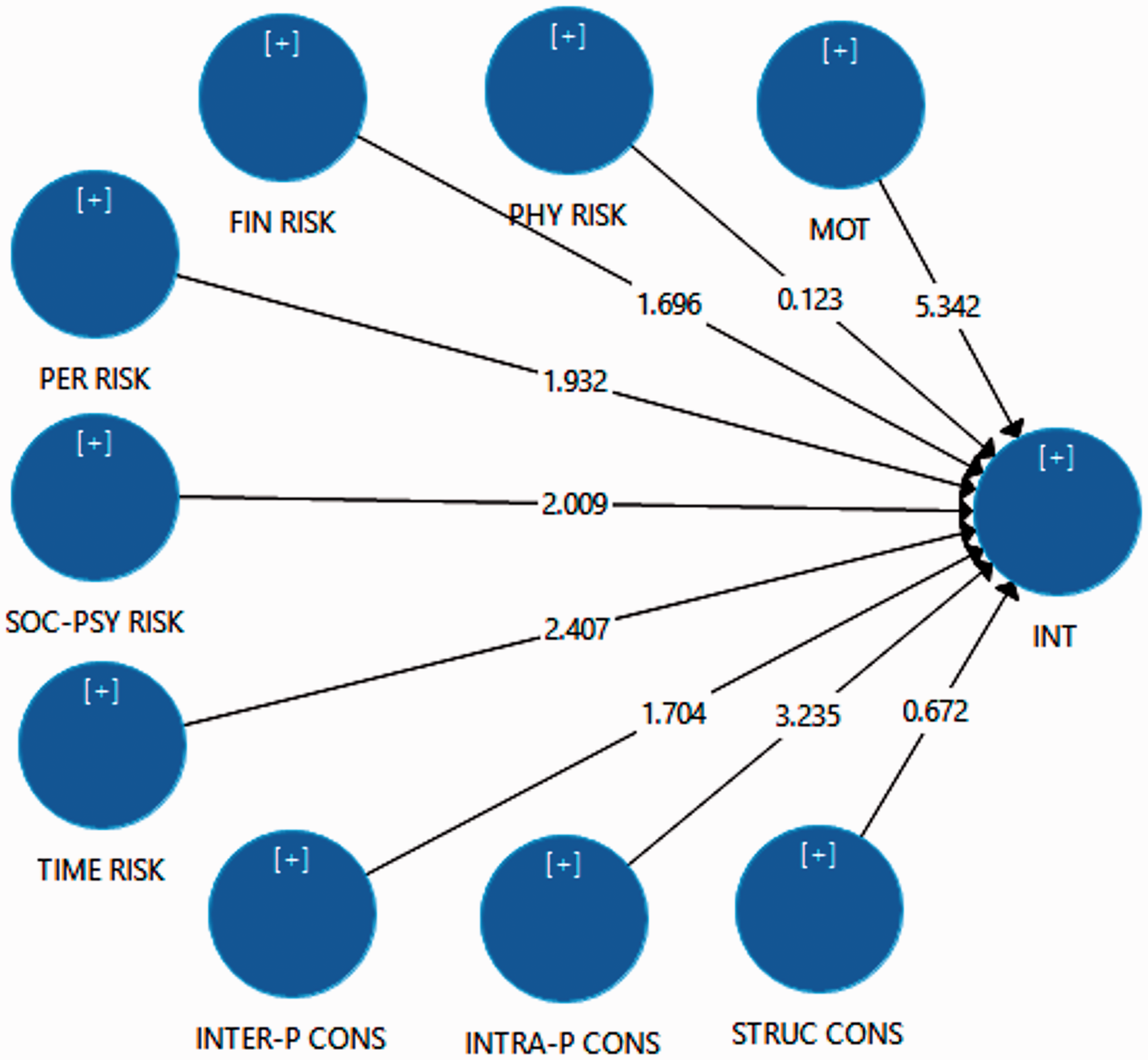
Output of assessment of structural model.
Assessment of structural model
In PLS, the main evaluation criterion for the goodness of the structural model is that the
The path coefficient in the structural model represents the hypothesised relationship between variables (Hair et al., 2014). In the study, the path coefficients of the structural model were measured, and bootstrap analysis (re-sampling = 1000) was performed to assess the statistical significance of the path coefficient. The results revealed that travel motivation had a significant positive relationship with visit intention (
Results of structural model.
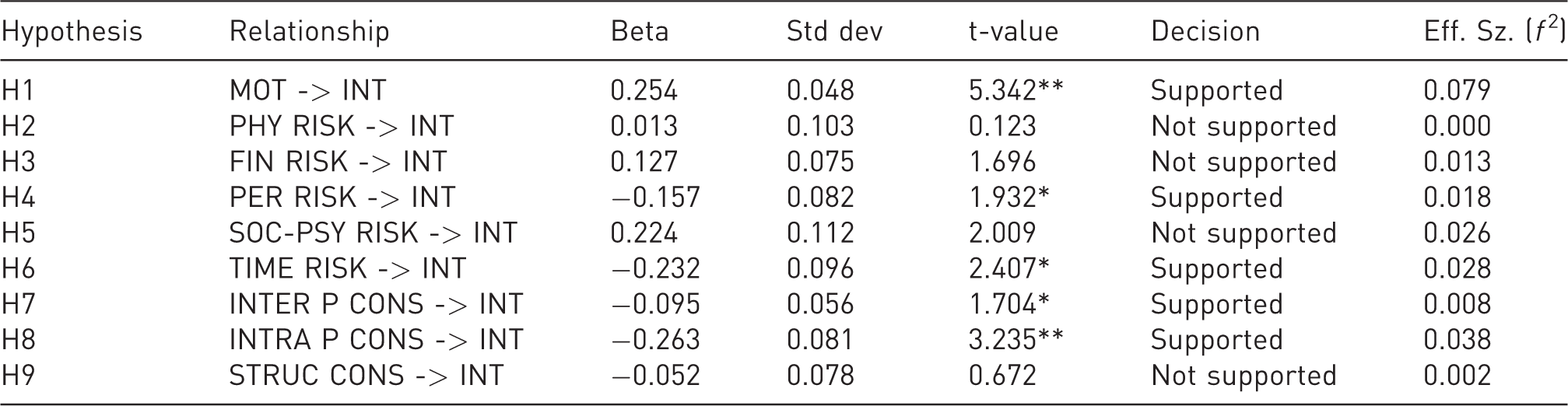
Eff. Sz. = effect size.
*p < 0.05, **p < 0.01.
The study estimated the effect size of variables (see Table 4). Sullivan and Feinn (2012) argued that both statistical significance (P value) and substantive significance should be reported in the results. Hair et al. (2014) suggested that changes in
Predictive relevance (
)
The predictive sample reuse technique, also known as the Stone–Geisser’s
Results of predictive relevance (Q2) and power analysis.

The study conducted global goodness-of-fit (GoF) for the SEM as suggested by Tenenhaus et al. (2004). It is the geometric mean of average communality and average
Discussion and practical implications
The study contributes to the body of knowledge by combining three important factors that influence travel behaviour, namely travel motivation, perceived risks, and travel constraints in a single framework and their combined effects on the intention to visit India among potential travellers. Although previous studies have established the relationship of these factors with visit intention at the individual level, the results of this study explain the differences in the importance of one factor over another when combined in one framework. The study enriches the existing literature by providing information in context of India as very few studies have explored India as a potential travel destination. The study also bridges the literature gap by providing a comprehensive travel behaviour model that explains the factors responsible for developing visit intention to a specific destination. It also contributes by providing insights on motivations, perceived risks, and travel constraints of potential travellers and their intention to visit India. The results will help tourism stakeholders in India restructure their policies and strategies to attract more foreign travellers.
The results of the study revealed that individuals with high travel motivations such as to know the culture, new places, seeking knowledge, rest and relaxation, adventure, and diversion and entertainment have high intention to visit the destination. This is similar to the findings of previous studies (Jang et al., 2009; Li and Cai, 2012) in which researchers found that travel motivations of novelty seeking and seeking knowledge had a positive influence of travel intention. Although motivations are individuals’ internal beliefs, studies found that their travel motivations vary according to their culture and country of origin (Cha et al., 1995; Jönsson and Devonish, 2008; Kozak, 2002). India’s travel and tourism marketing managers must identify and understand the travel motivations of potential travellers from different regions and project India as the best-suited destination to fulfil their travel needs. Destination India has high diversity in tourist attractions such as ancient culture, rich historical heritage, beautiful landscapes, local festivals, religious rituals, cuisines, and adventurous activities that can attract a large number of potential travellers with different motivations for travelling.
The study also found that the perception of performance risk and time risk associated with India negatively influences potential travellers to travel there in the future. Previous studies in travel and tourism have not yet tested the direct effects of performance risk and time risk on visit intention. However, studies in consumer behaviour have found that low expectation about service quality develops a high perception of performance risk that negatively influences purchase intention (Garretson and Clow, 1999; Wood and Scheer, 1996). Potential travellers perceive tourism and hospitality services of India low which causes making them hesitant to travel to India in future. Hasan (2002) argued that hospitality services in India are inexperienced in providing the desired level of services to foreign travellers due to an underdeveloped tourism infrastructure. Mohsin and Lockyer (2010) found that even luxury hotels in India failed to provide the desired services to their customers.
The study also found that the perception of wastage of valuable time associated with travel or travel planning restricts potential travellers to travel to India. These results indicate the close association of performance risk and time risk. Roselius (1971) argued that when a product does not perform according to expectations, people waste their precious time and convenience. Hence, potential travellers perceive India as low in terms of performance of tourism and hospitality services which make India a risky destination in terms of investing precious vacation time. Tourism and hospitality services are mainly associated with accommodation and facility arrangements at visiting sights. Incidences such as stealing and physical and sexual assaults on foreign tourists inside the hotel rooms and premises including luxury hotels (Agrawal, 2016; The Journal, 2013; The Times of India, 2017) may have created a negative perception about the hospitality services in India. Widespread corruption could also be a reason for India’s perception as a low-quality service destination among potential travellers. Studies have found that widespread corruption decreases the demand for tourism of a country (Yap and Saha, 2013). Chaudhary (2000) reported that India lacks a positive image mainly on the infrastructure and safety fronts. Therefore, India must invest in the development of vocational institutes that can produce trained and skilled hospitality human resource for the industry. Besides quality infrastructure, a safe and secure tourist environment should also be created to reduce the perception of performance risk and time risk associated with travelling to India.
The results of the study provide an interesting finding that perception of physical risk at the destination has no significant influence on the visit intention of potential travellers. India is considered an unsafe destination especially for female travellers (Charlton, 2014; World Travel & Tourism Council, 2014). The majority of the respondents of this study were young women. As such, that there is no relationship between physical risk and visit intention was unexpected. However, previous studies also found contradictory results in the context of physical risk and visit intention. Chew and Jahari (2014) found a significant relationship, whereas Floyd et al. (2004) found no relationship. This interesting finding can be understood from the socio-demographic profile of the respondents. More than 90% of the respondent of the study were in the age group of 18–25 years, and 88% were well educated (pursuing studies of bachelors or higher level). Previous studies found that young individuals and well-educated people are less concerned about physical risk associated with travel (Gibson and Yiannakis, 2002; Graburn, 1983). India should focus more on attracting younger travellers as they are less concerned about the physical risk at the destination. Tourism activities best suited for young travellers must be promoted aggressively such as recreational and adventurous activities along with good nightlife. The geographical proximity with Southeast Asia and the perception of being a less expensive destination due to low inflation and low exchange rate can make India a preferred destination among young travellers. However, no relationship between physical risk and visit intention does not mean that India should not emphasise on providing a better environment in terms of safety and security. Researchers found that even one major incident can malign the image of a destination (Kozak et al., 2007). The fatal gang rape of a local young woman in Delhi and the incidences of sexual harassment and rape on foreign women travellers cost India billions of dollars in terms of foreign tourist receipts (Deccan Chronicle, 2014; India Today, 2013). Therefore, providing physical safety and security is a must to sustain the growth of tourism of a destination.
The study also found no relationship between financial risk and socio-psychological risk and visit intention. The lack of relationship of financial risk can be explained by the age profile of respondents (90.5% were in age group 18–25). Jianakoplos and Bernasek (2006) found that youths were less concerned about the financial losses related to their behaviour. For socio-psychological risk, Sönmez and Graefe (1998) found that socio-psychological risks were associated with travelling to Europe only and not other parts of the world.
The study found that those potential travellers who perceived high interpersonal and intrapersonal constraints demonstrated low intention to travel to India. However, structural constraints had an insignificant relationship with the travel intention of potential travellers. These findings were partly similar to the findings of previous studies (Huang and Hsu, 2009; Hung and Petrick, 2012). Destination India should explore and adopt the strategies that can reduce the negative perceptions of travel constraints among potential travellers. Hung and Petrick (2012) suggested that increased exposure of information about destination reduces the perception of travel constraints. The insignificant relationship of structural constraint with visit intention can again be explained by the age profile and level of education of respondents. In the present scenario, young and educated people are equipped with a very strong source of information called the internet. Therefore, vital information on things such as places to visit, tourism activities, weather and distance between different places and regions, traffic, etc. at destinations are not the issues concerning potential travellers. Although young travellers could face monetary constraints, it is not an issue in the context of India due to its geographical proximity and low-cost services. However, the negative association of interpersonal and intrapersonal constraints with visit intention is a worrying concern for the travel and tourism industry in India. Although potential travellers in the current scenario are assisted with a number of information sources, they are not at the receiving end of vital information that reduces anxiety, the perception of risks, and the need of a travel companion to travel to India.
India’s travel and tourism marketing managers must highlight the measures for the safety and security of foreign travellers to India. Measures to minimise criminal incidences and encourage honourable tourism especially for foreign women tourists such as multilingual helpline, code of conduct, women-only cabs with women drivers (Ministry of Tourism, 2016a), and floors of the hotels dedicated to woman guests (Chakraborty, 2014) must be conveyed to more and more potential travellers to develop the sense of safety and security. Various mediums of information dissemination should be used to increase the exposure of positive information about India that will mitigate the issues of constraints. To reduce the concerns related to the availability of travel companions, India should develop and promote low budget quality group tours especially for potential young travellers. Tourism service providers can also arrange travel guides or escort services to those looking for a companion when travelling to India. Service providers can also create, promote, and run different online groups and portals according to region and travel activities in India. These groups can be used to disseminate information and help potential travellers plan their trips. Group members can also be encouraged to plan their trips to India together to overcome the fear, anxiety, and unavailability of travel companion. Previous studies found that the amount and types of information sources have a significant influence on the perception of a destination (Baloglu and McCleary, 1999; Govers et al., 2007; Jamaludin et al., 2013). Marketing managers must develop well-crafted marketing and promotion strategies that should target the specific travel needs and spread positive feelings about the destination among potential travellers.
Conclusion
The research analysed the travel motivation, perceived travel risks, and travel constraints in relation to future visit intention. The main focus of the study was to investigate the relationship between travel motivation, perceived travel risks, and travel constraints and visit intention to India. The results supported five out of nine hypotheses that were developed to investigate the relationships. The results highlighted the importance of integrating all important independent factors, namely travel motivation, perceived risks, and travel constraints in one framework while investigating the travel behaviour of individuals. The results explained that potential travellers consider India riskier in terms of performance risk and time risk. At the same time, they consider intrapersonal and interpersonal constraints as inhibitors to visit India. The study stresses the importance of managing the specific travel fears and hindrances by providing specific knowledge and information through marketing and promotions. Without understanding the travel motivation, perceived risks, and travel constraints of the different segments of travellers and their future travel behaviour, general marketing strategies taken by the destination will be less useful in attracting potential travellers. Analysing the position of potential travellers on various issues and their preferences would help strategy developers market the destination according to people’s travel needs which will ultimately attract more travellers.
Limitations and future research directions
Though the study used the integrative approach to capture the important factors influential in the development of visit intention, study has some limitations. The study used university students as the sample population; therefore, the generalisability of the findings is limited to university students. However, university students as a sample population are homogenous in life stage, education, and income (Crompton, 1979a). The modest sample size of 316 may not be a representative of the view of the total university students in Malaysia. Nevertheless, the sample size appears the adequate for the research framework when examining G*power in a priori power analysis (Faul et al., 2007). Another possible limitation is the very high proportion of female respondents. It would be interesting to perform the study in a more balanced sample and analyse gender differences. However, young women are a very important target in current tourism markets as their participation in travel activities is increasing rapidly.
The research focuses on potential travellers and their intention to visit India. Future studies should be performed on the decision-making stages of travellers to examine if information sources and other personal factors play a role in developing visit intention. Future research should also emphasise post-visit evaluation to identify motivations, perceived risks, travel constraints, and behaviour intention and examine their relationships. The majority of the respondents were in the younger age group, and their opinions cannot be generalised to other age groups. Additional research is needed using other segments of the population and geographical contexts to establish the usability of the research framework of this study.
Footnotes
Declaration of Conflicting Interests
The author(s) declared no potential conflicts of interest with respect to the research, authorship, and/or publication of this article.
Funding
The author(s) received no financial support for the research, authorship, and/or publication of this article.