




Abstract
The hospitality industry has undergone significant developments as new modes of environment-friendly tourism and hotels have emerged (including ecotourism, eco-hotels, ecolodges, and green hotels). These new features, however, have not been specifically investigated, especially in a considerably potential tourist destination like Iran. This study sought to develop a model for identifying and prioritizing the indicators that could determine the ecological features of hotels. Following a systematic review, exploratory factor analysis and analytic network process were used to construct a hybrid model and its elements were then prioritized in five-star hotels in the Fars province, Iran. The model consisted of five dimensions (totally including 19 indicators), namely “energy,” “ecological adaptation,” “materials and equipment,” “foods and drinks,” and “cultural-economic activities.” The findings revealed that the “energy” dimension was significantly important, while indicators such as “effective use of water,” “supply and efficient use of energy,” and “use of renewable energies” were the most important indicators, respectively. The results of this study can encourage managers/practitioners in hotel accommodation to concentrate on the indicators that could promote the ecological level of hotels. In doing so, they can consider energy, foods, and beverage indicators in developing green hotels and implement appropriate accommodation with ecotourism standards to attract (inter)national tourists.
Introduction
Tourism-related activities have been dramatically developed in the 21st century and brought about significant social and economic impacts (Bastic and Gojcic, 2012). According to United Nations World Tourism Organization (UNWTO) report, the number of international tourists grew by 6% in 2018, reaching 1.4 billion. In 2017 there were 1.326 billion tourist trips and the figure is expected to grow by 3–4% in 2019 (WTO, 2018). Therefore, tourism is one of the leading and growing sectors in the global economy, generating millions of dollars annually for the countries engaged in tourism activities. Meanwhile, along with the growth of tourism, the industry has increased its emphasis on the environment (Nayak and Rao, 2014).
Hotels are the most basic forms of accommodation and are considered to be one of the most important infrastructures in the travel and tourism industry; of course hotels consume a large proportion of energy and water in their daily operations (Han et al., 2018; Merli et al., 2019; Verma and Chandra, 2016). Hotels have significant environmental impacts and greatly depend on the environment (Horng et al., 2017). The main objective of hotels is to provide services and amenities, which is why they use so much water, energy, non-recyclable materials, goods, and natural resources. While highlighting the importance of environmental issues, numerous hotels have tried to increase green activities through innovative approaches (Noor et al., 2014).
In the UNWTO report published in 2017, the hotel industry released 20% of carbon dioxide into the air; given such awareness, the general public has noticed the severity of environmental problems (Han and Kim, 2010) and is presently more concerned than before about environmental issues (Chen and Tung, 2014). More specifically, people have learned about the effects of their buying behavior and choices on environmental issues (Han et al., 2010). Hotel managers take such issues very seriously now, given the impact of poor environmental adaptation on the reputation of their hotels. Customers today are constantly gaining awareness of these issues and are calling for “green awareness” in managing hotel operations (Yi et al., 2018).
Consequently, hoteliers try to implement environment-friendly features in their services, adapting their business to the standards of the green wave in hotel management (Verma and Chandra, 2016). The green actions in hotels were initiated in the 1990s (Fukey and Issac, 2014). The consolidation of these actions led to the establishment of a new type of hotel called “green hotel” or “eco-hotel” (Lehr, 2001). Eco-hotels or sustainable environmental hotels follow the basic principles of good hospitality to maximize their benefits and minimize their costs, while keeping the environment clean, improving their quality, and meeting the satisfaction of ecologically sensitive guests (Persic et al., 2008).
The implementation of environment-friendly hotel programs in hotels is a response to customer demands for environmental protection and can at the same time generate many benefits for hotels. For instance, such programs can help to reduce water and energy consumption (Kuminoff et al., 2010); reduce operating costs; improve organizational brands and public reputation (Teng and Chang, 2014); promote sales, fame, and innovative effects (Bohdanowicz et al., 2004); and generally achieve a competitive advantage in the hotel market (Han et al., 2011). Thus, hotels can take advantage by taking into account the criteria for environmental friendliness.
Because any research conducted in a particular environment is influenced by its contextual determinants, in this study too the specifications of Iran, as the context of this study, should be briefly described. Iran is one of the most polluted countries in the world based on recent statistics. According to the warnings from the Department of Environment and other nonprofit institutions, Iranian cities face ecosystem-related problems due to a high degree of air pollution, reduced water reserves with low quality, high levels of traffic noise, land subsidence, and a high degree of waste (Rahnama and Rajabpour, 2017). Over time, constructing environment-friendly hotels become a significant issue in the country.
The Fars province, as one of the largest Iranian provinces with a rich cultural and natural heritage, has been recorded in the United Nations Educational, Scientific and Cultural Organization for some of its major landmarks such as Persepolis (recorded in 1979), Pasargadae (2004), and the Eram Garden and nine other gardens (2011). Fars shows a strong environmental, recreational, and touristic potential, given its cultural, climatic, and ethnic diversity; such characteristics can effectively attract domestic and foreign tourists. The importance of respecting environmental principles, reducing non-renewable energies, and the need for a sustainable environment are becoming prominent issues that emphasize the necessity of designing and constructing green hotels (Hasili and Fallahnia, 2015).
Therefore, it would be important to identify the indicators that can help to assess the compliance of hotels in the Fars province with environmental principles and to find practical solutions for implementing such hotels. Although several studies have been conducted to determine hotels’ commitment to ecological indicators, most of these indicators are not systematically presented. Moreover, there are a few scientific models proposed in this area that often seek to measure the quality of services in green hotels, while failing to investigate ecological indicators in green hotels. In Iran, too, the topic remains undeveloped. The present study represents the first scientific effort to examine ecological indicators in hotels.
This study seeks to design a model guided by a systematic review of literature to assess the quality of “greenness” in the hotel industry in Fars, Iran. To evaluate the importance of each element, the study draws on exploratory factor analysis (EFA) and analytic network process (ANP) in an integrated model that uses survey data and analyzes the interrelations among the indicators in five-star hotels in the Fars province, one of the most important provinces in Iran in terms of holidaymaking. Few coherent models have incorporated statistical methods (e.g. EFA) into operational frameworks (e.g. ANP) (Zebardast, 2013). The methodology used in this paper is proposed for the first time in this field of study. The research questions explored in this study are as follows: “what are the dimensions and indicators of a model for measuring the ecological quality of the hotel industry?” and “how important are the indicators of the model in terms of prioritization in five-star hotels in the Fars province?”.
The following sections of the paper are organized as follows: the next section reviews the literature and the theoretical background concerned with green hotels. The “Method” section describes the proposed methodology including the F’ANP model (by combining EFA and ANP). In the “Findings” section the results based on the proposed model are reported; the “Discussion” section presents the discussion, conclusions, and research suggestions.
Literature review
In the tourism industry, the term “green” is used to denote the quality of being environmentally friendly. Because most of the energy consumed in tourism relies on fossil fuels, green tourism offers suggestions and plans in favor of sustainable development. More specifically, it supports the use of environment-friendly technologies, promotes socio-cultural action, and tries to achieve environmental protection goals in areas that pursue the value of biodiversity (Law et al., 2016). Green tourism involves environmental responses and activities to reduce environmental problems. It concentrates on product lifecycle and measures variables such as water used in washing; heating, cooling, and lighting devices; and the quality of papers used and shampoo boxes.
Green tourism is used to describe a stream of environment-friendly tourism in line with notions such as ecotourism and sustainable tourism. It is, however, difficult to perfectly distinguish these terms because the three notions, as perceived by researchers, are overlapping; for instance, the Green Tourism Association, acknowledging the World Tourism Organization’s concept of sustainability, defined green tourism based on four echelons, namely environmental accountability, credit to the local economy, cultural sensitivity, and rich experiences (Gibson et al., 2003. (However, green tourism encompasses a wide range of environmental activities including environmental protection, environmental education, and the distribution of income among local people (Singh and Mishra, 2004), using green, efficient, and renewable energy resources, effective use of water, waste management, ecosystem conservation and biodiversity, effective management of cultural heritage and traditional values, and promotion of intercultural understanding (Anand et al., 2012).
The problem of global resource depletion and people’s increasing awareness of environmental protection and ecological conservation have encouraged many tourist hotel managers to a follow the 3Rs (recycle, reuse, and reduce). These attempts have led to the establishment of green hotels (also known as eco-hotels) (Lee and Cheng, 2018). However, currently there is no definitive definition of the idea of green hotels in the hospitality industry. The Green Hotel Association defined green hotels as “environmentally-friendly properties whose managers are eager to institute programs that save water, save energy and reduce solid waste—while saving money—to help protect our only earth.” Nowadays, the term “green” involves more than environmental issues. It involves all aspects of sustainability and corporate social responsibility (Han and Chan, 2013).
Green hotels are considered to be eco-friendly, eco-efficient (Tseng and Kuo, 2013), environment-friendly, and sustainable establishments (Han and Kim, 2010). Environmental measures in these hotels are appreciated by guests who are concerned with environmental issues (Han and Chan, 2013). Evidence suggests that the satisfaction of green hotels clients is mainly influenced by the quality of services that these hotels offer (Yu et al., 2017). Furthermore, people are more willing to recommend green hotels to others (Wang et al., 2018). Green hotels or eco-friendly hotels are accommodations where their managers tend to devise plans to save on water and energy and reduce their losses, while saving money and protecting the land and the environment (Kapiki, 2012).
Exploring social responsibility, Kasim (2004) defines a green hotel as one that acts in a responsible manner toward its staff, local community, local culture, and the surrounding environment. In fact, green hotels follow the basic principles of good housekeeping in such a way that maximizes benefits and minimizes costs. These principles are simultaneously found in the fundamental principles of ecology as a universal scientific approach which tries to preserve the environment and implement sustainable development. Implementing environment-friendly plans in hotels is not only a response to customer demands for environmental protection, but also it can generate many benefits for hotels such as reducing their water and energy consumption rates (Kuminoff et al., 2010), reducing operating costs, and improving the organizational brand and public reputation (Teng and Chang, 2014).
To find the indicators needed to design the research model in this study, some authentic studies were explored. Bohdanowicz et al. (2004) determined the criteria and requirements for the acquisition of European Union Flower and Nordic Swan ecolabels as well as the necessities of the Polish Hotel Association for the eco-hotel label including usage of water, energy, waste, etc. Muhi et al. (2013) also included some basic measures in the operation of green hotels in Serbia such as using oils that do not harm the environment, preventing water loss, and making optimum use of light bulbs.
Gokdeniz et al. (2014) studied the current activities of hotels by directly observing ecological categories and examining factors such as thermal sensors, opening and closing balcony doors, shampoo boxes, and recyclable soaps. Lepadatescu and Sarbu (2015) tried to turn an ordinary hotel into an eco-hotel by pursuing sustainability goals. They focused on the design process, identifying the ecological areas of importance in hotels. Verma and Chandra (2018) anticipated the intention to visit in clients of green hotels in India, relying on the theory of planned behavior. Sayyad and Chavan-tirvir (2018) also highlighted the differences between hotels and eco-hotels, enumerating some of the key features of eco-hotels such as water and energy conservation, minimizing depreciation, environmental education, and commitment to the environment.
Other studies have tried to construct scientific models/tools. Bastic and Gojcic (2012) examined the expectations of tourists of the quality of hotel services in order to develop a scale for assessing the ecological element in hotels. They observed four general dimensions for the ecological element: ecological behavior of the hotel staff, healthy and environment-friendly equipment, efficient use of energy and effective use of water, and natural food. Tseng and Kuo (2013) utilized the green hotel service quality measurement tool designed by Bastic and Gojcic (2012) based on the service and quality (SERVQUAL) model, and developed it to include several major dimensions such as equipment, behavior, food, and green products. Lee and Cheng (2018) also framed a scale to measure the Green Lodging Service Quality scale in green hotels based on the SERVQUAL model. The dimensions of this scale were reliability, empathy, environmental communication, green energy saving, assurance, and tangibility.
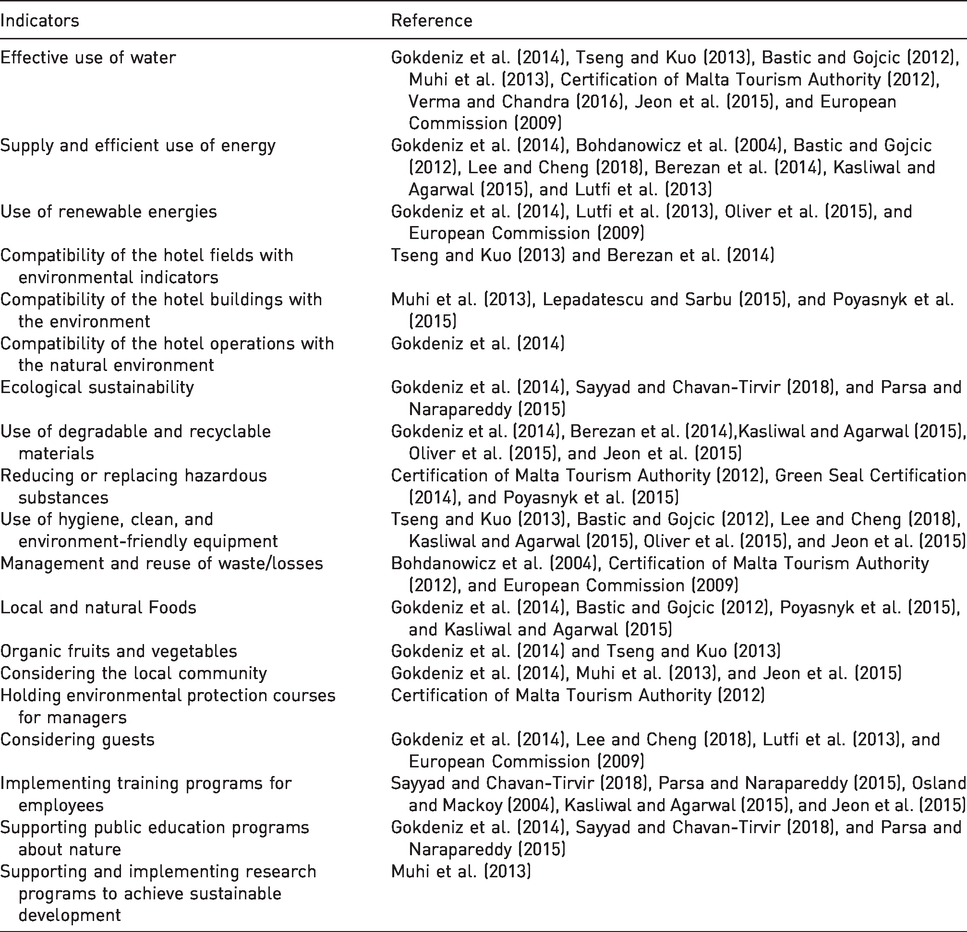
In general, empirical studies in the field of green hotels can be categorized into two main streams. The first stream includes studies addressing the organizational approach and introducing indicators/requirements that transform ordinary hotels into green hotels (e.g. Bohdanowicz et al., 2004; Lepadatescu and Sarbu, 2015; Muhi et al., 2013). Although these studies identified the criteria for distinguishing non-green hotels from green ones, these criteria were limited and their significance was not scientifically determined. The second stream of the studies focused on clients’ perceptions of green hotels and measured the quality of green hotel services from clients’ viewpoints (Bastic and Gojcic, 2012; Lee and Cheng, 2018; Tseng and Kuo, 2013). However, most of these studies drew on traditional and standardized service quality models such as SERVQUAL. Meanwhile, many of these empirical studies have addressed green hotels from very different perspectives. However, there is a shortage of studies that have proposed models, measurement tools, and evaluation frameworks in this area. This study, then, seeks to address this theoretical gap. Table 1 summarizes the findings of the systematic literature review and the indicators extracted from each of the studies. The steps for extracting these indicators will be described in the following sections.
Indicators identified through the literature review.
It should be noted that the present study dominantly uses the term green hotel because the majority of the papers and related authentic investigations used green hotel rather than eco-hotel.
Method
In this paper, the research model was designed through a systematic review. This method could help to find ideas for the research and to identify the existing topics, themes, and models of research (Seuring et al., 2005). According to Tranfield et al. (2003), the systematic review steps include planning the review, conducting the review, and reporting/disseminating the review. First, to direct the review of the wide-ranging literature, the study primarily concentrated on two questions: what are the dimensions and indicators of a model for measuring the ecological quality of the hotel industry? and how important are the indicators of the model in terms of prioritization in five-star hotels in the Fars province? As such, a protocol was developed in which the scope and domain of the research (which was the study of green hotels) were formulated; then a list of important information and measures to be undertaken was prepared and made available to the panel involved in the systematic review.
In the second step, to find the topics related to the research scope, some keywords (eco-hotel, green hotel, ecolodge, eco-friendly hotel) were searched both in isolation and in combination on various databases such as ScienceDirect, Wiley Online Library, Sage, Google Scholar, and some other academic databases (e.g. ResearchGate) to gather the information necessary for the research. Then the relevant studies were selected and used to design the conceptual model. Figure 1 illustrates the total number of studies found related (483 cases), out of which finally 20 studies were utilized. It should be noted that Critical Appraisal Skills Program tools were used to assess the methodological quality and determine the accuracy, validity, and importance of the selected studies.
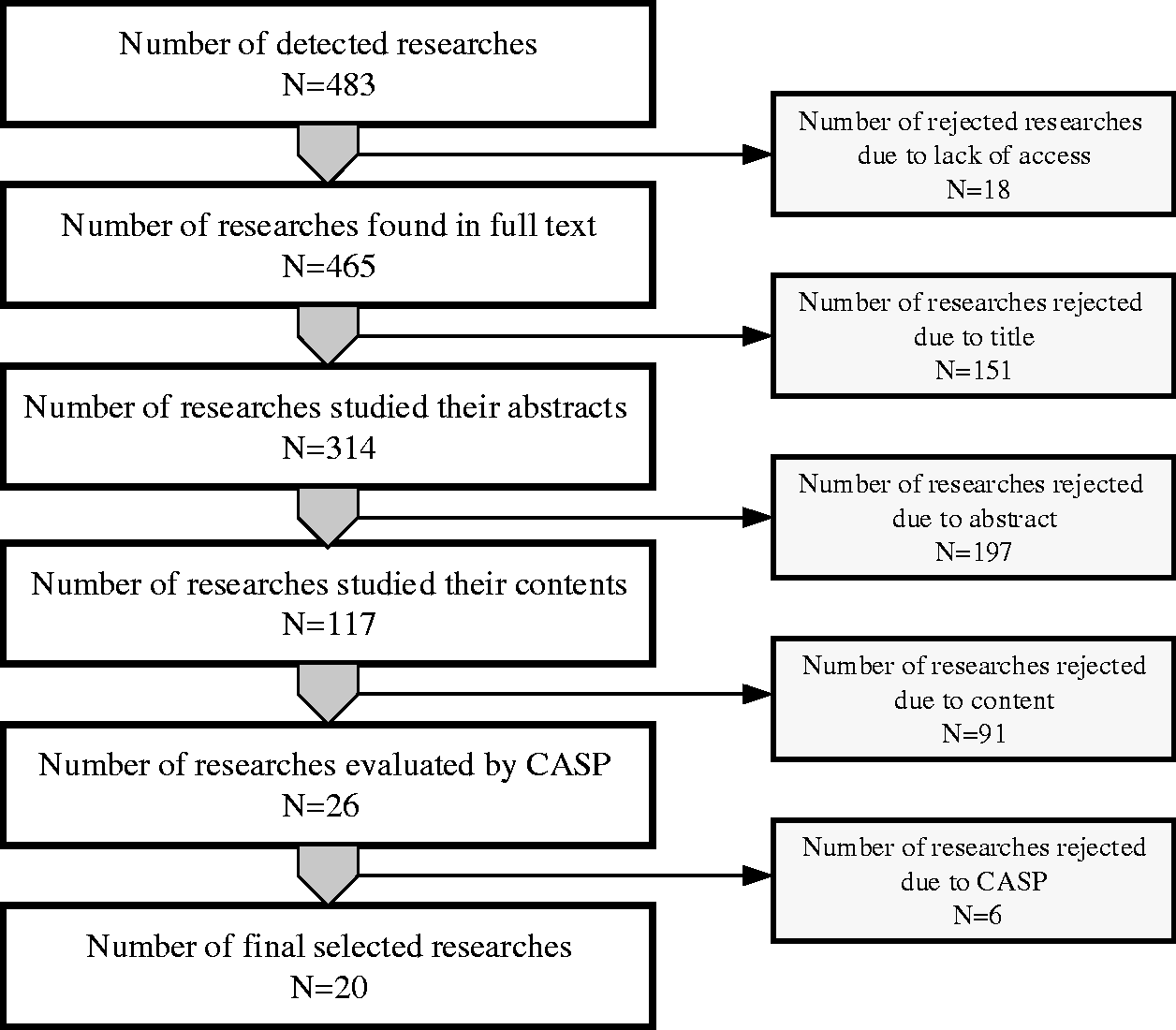
The process of selecting the relevant studies. CASP: Critical Appraisal Skills Program.
After the studies were selected, the information of each study and the indicators introduced in it were extracted and coded in accordance with the research questions. Ultimately, in the third step of the systematic review, 19 indicators were identified, which are shown in Table 1. In this study, to prioritize the elements of green hotels, a synthetic version of EFA and ANP, called F’ANP as introduced by Zebardast (2013), was used to investigate the degree of social vulnerability to earthquake in urbanization. In this model, the inherent advantages of the factor analysis method and the paired comparison matrices of the ANP method were integrated, without the need for expert opinions. The data collection instrument used in this research was a questionnaire, the items of which were measured through a 5-point Likert scale. The integrated F’ANP model process is summarized in Figure 2.

Integrated F’ANP model.
EFA
After the systematic review was conducted and the research framework was configured, the ecological indicators of the hotels were identified and selected. At this stage, the dimensions were extracted by conducting EFA. Factor analysis involves several statistical methods that identify a small number of dimensions, clusters, or factors in a larger set of independent variables or items (Bezuidenhout, 2011). Factor analysis is a data reduction technique which is used to reduce the number of variables to a small set of key factors that summarizes the necessary information in the variables. Normally, factor analysis is used as an exploratory technique to summarize the structure of a set of variables (Zulkepli et al., 2017). In factor analysis, the emphasis is on identifying the underlying factors that may explain the dimensions associated with the variability of the data (Niranjan, 2004). The best explanation that can be derived from factor analysis is “a tool to help identify the underlying factors that might explain the dimensions associated in large data variability” (Niranjan, 2004).
Factor analysis can be used in two categories: EFA and confirmatory factor analysis. In confirmatory analysis, the researcher seeks to fit a self-determined model, which may be based on theory, research, or knowledge derived from other studies. Confirmatory methods indicate whether or not the data are consistent with a specific agent structure. On the contrary, in exploratory analysis the researcher seeks to investigate empirical data to discover and identify specific indices and relationships between them without applying any particular model to the data. Exploratory analysis is a modeler, constructor, or hypothesis-maker (Yang et al., 2005).
EFA is a statistical model that shows the relationships between a set of variables and patterns between latent and observed variables, while identifying the number and composition of the essential variables for describing the total variance (Luarte-Martínez and Astudillo Díaz, 2017). EFA pursues the following purposes (Pett et al., 2003; Taherdoost et al., 2014; Thompson, 2004):
Reducing the number of factors (variables); Assessing multicollinearity among the correlated factors; Describing the unidimensionality for the constructs’ evaluation and detection; Evaluating construct validity in the surveys; Examining the relationships between or structure of the factors (variables) involved; Developing theoretical constructs; Proving the proposed theories.
ANP
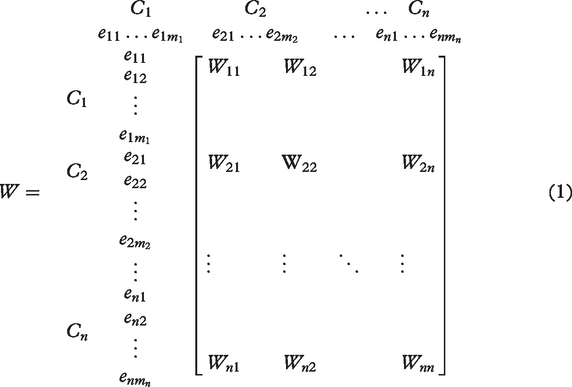
The ANP method was used to calculate the relative weights of the extracted dimensions as well as the relative weight of each ecological indicator based on EFA as conducted in the first step. This method was introduced as a more precise method for modeling complex decision environments and was used as an effective tool in situations where the interactions between the elements of a system formed a network. The method of ANP can be defined as follows (Saaty, 2004): in the first step, the network analysis process forms the indicators for the whole system to create the super-matrix. This is conducted through pairwise comparisons, and the value of relative importance can be defined using scale 1–9. The general form of the final matrix can be defined through equation (1)

Statistical population and sample
The statistical population in the study included the employees of six five-star hotels (Chamran, Homa, Persepolis, Zandiye, Pars, and Shiraz) in Shiraz, Fars province; the population then included 850 people including managers, supervisors, and employees. According to the Krejcie and Morgan table, the research sample had to include 269 people. The sampling was conducted based on stratified random sampling, through which 10 managers, 30 supervisors, and 239 employees shaped the sample. Eventually, a total number of 250 questionnaires were collected. The most important problem at this stage was that some questionnaires were not sufficiently completed. To overcome this problem, much time was spent on follow-up sessions at the hotels.
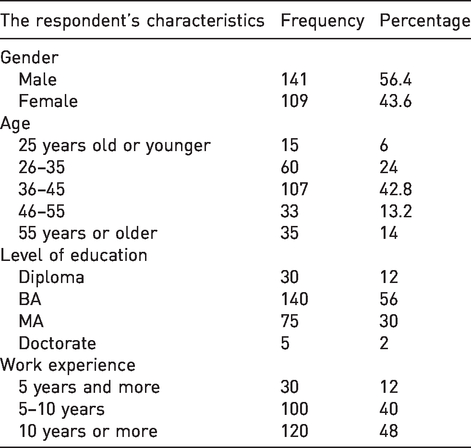
The demographic information of the respondents is listed in Table 2; the majority of the 250 respondents who completed the questionnaire were males (56.4%). The respondents were mostly aged 36–45 (42.8%). More than 56% of the respondents held a bachelor’s degree and most of them had a work experience of 10 years or more (48%).
The respondents’ demographic information.
Findings
EFA results
Because no hypothesis was formulated in this study about the latent variables or factors that could represent the indicators, the number of these variables and how they were associated with the explicit variables were investigated through EFA (of course, in confirmatory factor analysis, the number of the factors is predicted by the researcher in the model). In EFA, the Kolmogorov–Smirnov test was used to test the normal distribution of the data. This test was utilized to examine the claim that the data distribution of a small variable is normal. The results of this test are mentioned in Table 3. It can be seen that the distribution of the data was normal. Having investigated the normal distribution of the data, the study examined the suitability of the data for factor analysis. There were several methods for conducting this test including the Kaiser–Meyer–Olkin (KMO) test. If the KMO value was less than 0.50, the data were not suitable for factor analysis. However, if the value was greater than 0.70, the correlations between the data for the factor analysis would be appropriate.
The results of Kolmogorov–Smirnov test to determine the normality of the data.
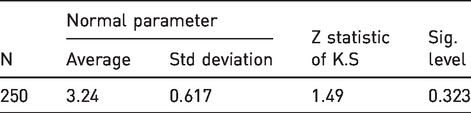
Moreover, the Bartlett test was used to determine that the matrix of correlations which was the basis of analysis was not zero in the population. Using the Bartlett test, the study was able to ensure that the sampling was sufficient. According to Table 4 and the number of completed questionnaires, the KMO index was 0.763, which showed that for all the indicators the adequacy of the data was satisfactory.
Final results of KMO and Bartlett test.
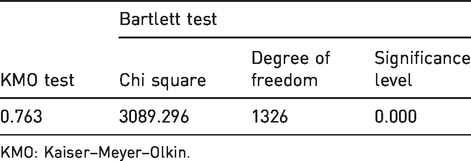
KMO: Kaiser–Meyer–Olkin.
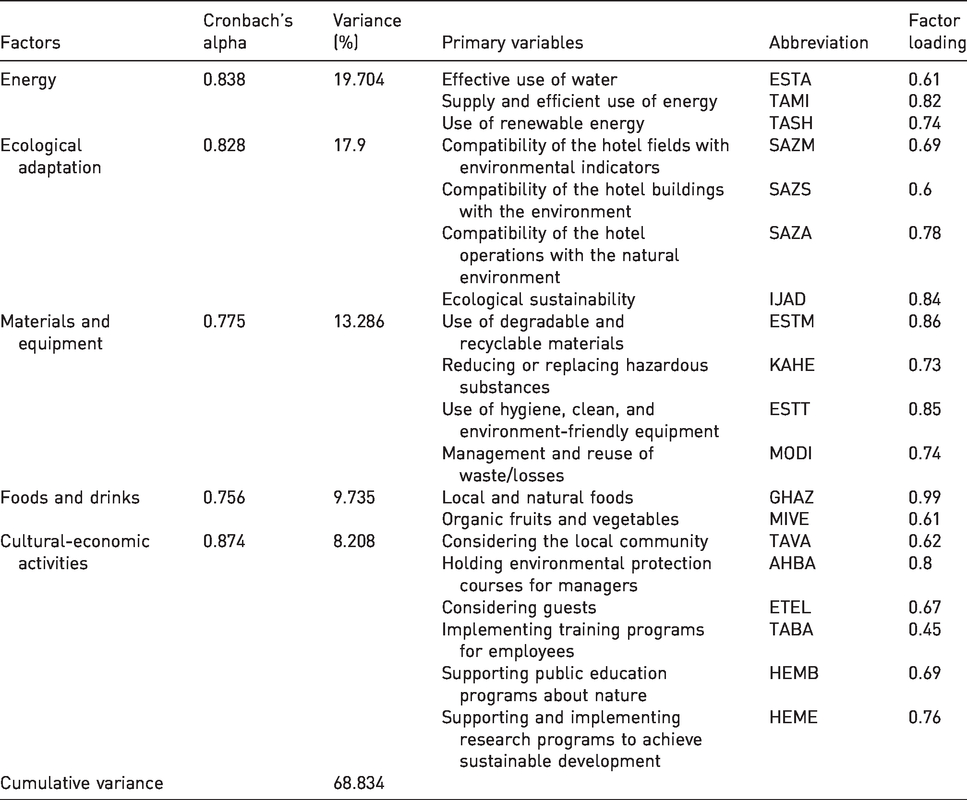
The results of EFA through Varimax rotation and principal component analysis are shown in Table 5. All 19 ecological indicators in this research had a positive impact on its respective dimension and consequently on the ecological level of the hotels. The dimensions were “energy” (F1), “ecological adaptation” (F2), “materials and equipment” (F3), “foods and drinks” (F4), and “cultural-economic activities” (F5). The results of Table 5 show that 68.83% of the variance was related to the ecological aspect of the five-star hotels in the Fars province, which was explained through the extracted dimensions. “Energy” (19.7) and “cultural-economic activities” (8.2) determined the highest and lowest variances, respectively. A Cronbach’s alpha greater than 0.7 represented an appropriate rate of reliability, which, as Table 5 shows, was found acceptable for model reliability.
Factor loading and variance of factors derived from factor analysis.
ANP results
The results of the previous step were entered in the grid of Figure 3 at this stage. In the first level, the general goal was the ecological principles, and at the next level, five dimensions, and finally, the indicators placed in the third level. The primary super-matrix in this research was a 25 × 25 matrix with a three-level structure in accordance with the following format

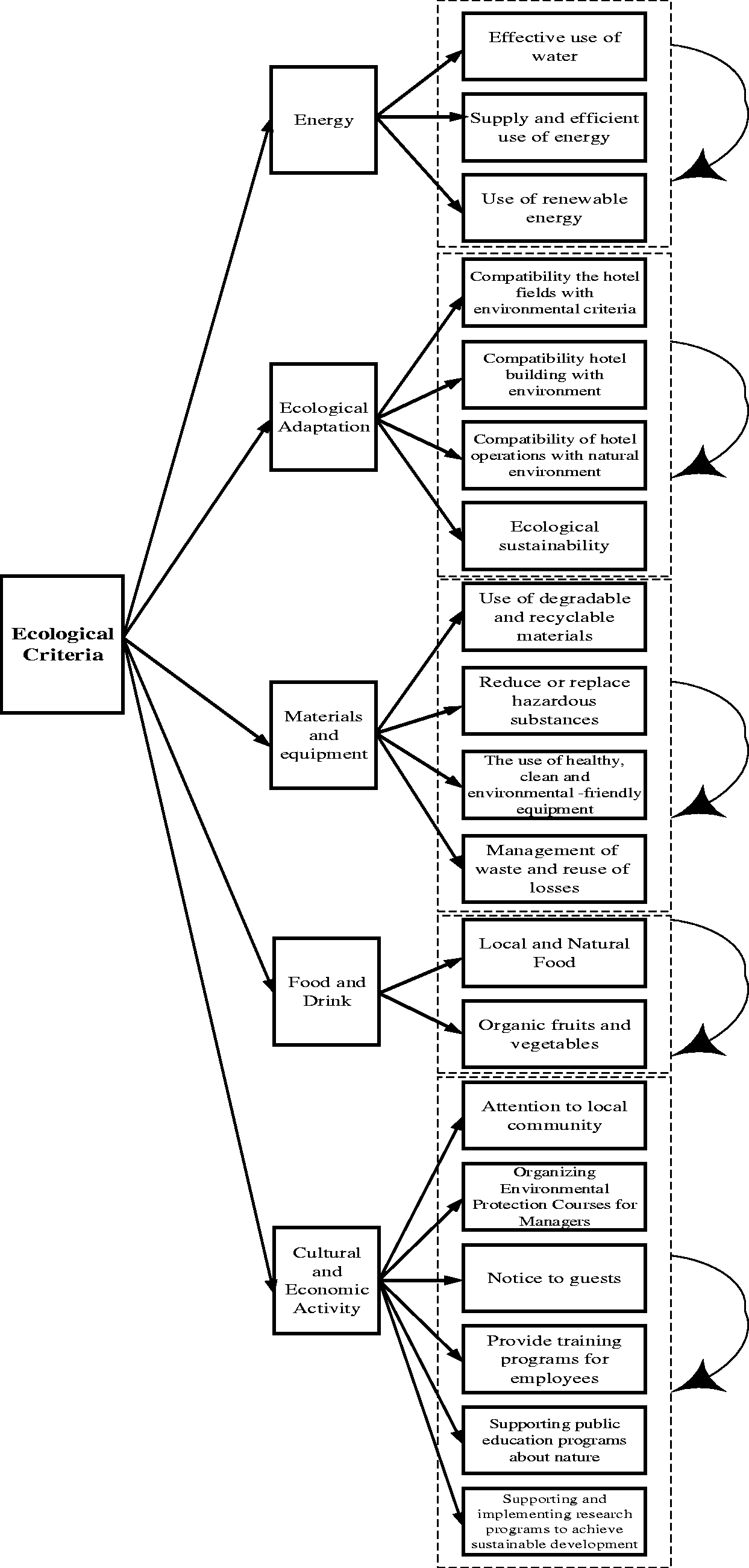
ANP model for prioritizing ecological indicators in the green hotels.
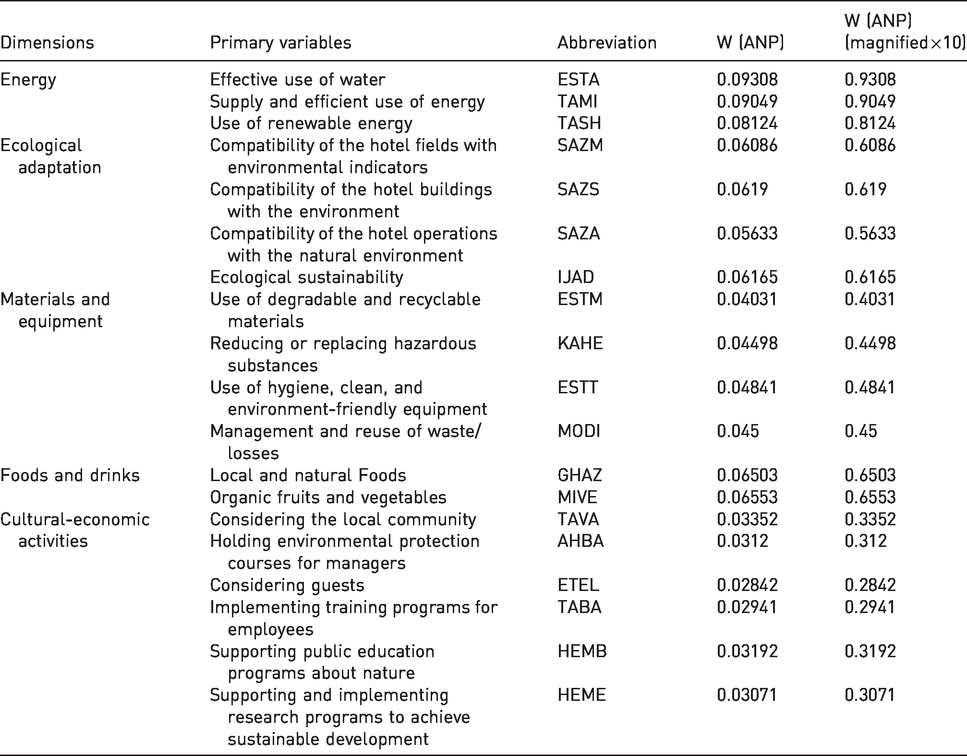
In the proposed model, the variance that each factor had in factor analysis was used as a benchmark for pairwise comparison in the calculation of the importance coefficient. Table 6 shows the results of this analysis. This principle was also applied to the calculation of the relative importance of other pairwise comparison matrices. Using the Super Decision Software, the final super-matrix was created as seen in Appendix 1. Table 7 shows the relative weight of each of the indicators.
Pairwise comparison matrix for the extracted factors.

The final weights of the indicators.
Discussion
In this section, every indicator in the proposed model is further elaborated on. The first dimension is “energy” including “effective use of water,” “supply and efficient use of energy,” and “use of renewable energies.” Today it has been demonstrated that energy can be used efficiently and effectively with small modifications in people’s consumption behavior or in the use of certain water supplies. These are some instances of the possible modifications: fixing leaking taps, taking showers rather than baths, installing displacement devices inside toilet flush tanks, and using dishwashers and washing machines with full loads (ASEAN Green Hotel Standard, 2012).
Furthermore, in general, hotels are among the five most energy-intensive organizations (Solutions, 2011); it is not surprising that heating, air conditioning, and cooling systems have the largest share in hotels’ energy consumption. That is why many green hotels try to implement plans for heating and cooling systems. Likewise, green hotels emphasize the use of renewable energies and the replacement of fossil fuels with special technologies in this field including solar water heating, graywater and rainwater, saving/reusing waste heat, and electricity generated by wind power (e.g. windmill) and by photovoltaic solar panels (Legrand et al., 2016).
“Ecological adaptation” was the second dimension in the research model including four indicators. “Compatibility of the hotel fields with environmental indicators” pointed to the requirements that should be observed in a hotel’s interior and exterior in a way consistent with environmental indicators. For example, the area around the hotel should be quiet, and there should be green spaces inside and outside the hotel (Tseng and Kuo, 2013). One of the most important aspects of green hotels is the design and construction of the hotel building, in line with environmental indicators. To accomplish this, green hotels may obtain specific design and construction certifications as Leadership in Energy and Environmental Design and American Society of Heating, Refrigerating and Air-Conditioning Engineers. Moreover, green hotels pursue the principles of sustainability and take environment-friendly measures, making efforts to contribute to the environmental protection/conservation (Gokdeniz et al., 2014: 11). For example, they may prohibit smoking in hotels but encourage the use of green and public transportation.
The third dimension of the model addressed the elements related to “materials and equipment” including “use of degradable and recyclable materials,” “reducing or replacing hazardous substances,” “use of hygiene, clean, and environment-friendly equipment,” and “management and reuse of waste/losses.” Green hotels need to use products such as herbal lotions, shampoos and soaps, hydro spas, and green tea, to comply with environmental principles. Furthermore, green hotels need to use natural, degradable, and non-toxic products for guests who are sensitive to chemical products. “Use of hygiene, clean, and environment-friendly equipment” points to pieces of equipment made from natural materials as used in the hotel building, wall paintings, and flooring (Bastic and Gojcic, 2012), green cleaning equipment, nature-friendly technology products, green electronics equipment, green transportation equipment, and other items.
“Foods and drinks” are among the services that are carefully considered in green hotels. Local and natural foods and organic fruits and vegetables are always on the agenda of these hotels. Research has shown that many environmentally aware guests are willing to pay more for natural foods to support green businesses.
The last dimension is “cultural-economic activities.” Green hotels normally pay attention to the local community, trying to design their spaces consistent with the local design and heritage; in doing so, they may use local or recyclable materials in the building; buy food from local farmers, herders, and fishermen; recruit and train local staff; support the community and local businesses; and receive support from local people (Rigatti, 2016: 12). Moreover, green hotels provide herbal shampoos, soaps, detergents, and degradable materials, while encouraging their guests to use bicycles. Obviously, if employees are not professionally trained as far as these issues are concerned, they will not be able to provide suitable services to environmentally sensitive guests or to encourage them to adhere to environmental principles.
Local people, on the one hand, can help to procure the products green hotels need, and on the other, green hotels can employ local people. When potential candidates are aware of environmental issues they can more readily acknowledge green principles and cooperate with green hotels. In addition to this, Muhi et al. (2013) observed that one of the measures taken by green hotels was to support and implement plans and projects in pursuit of environmental goals and sustainable development. These plans, if carefully implemented, can have short-term and long-term economic, social, cultural, and environmental benefits.
In the studies published in the literature, Bastic and Gojcic’s (2012) model could be compared to the model proposed in this research; their model consisted of four dimensions including energy and water, equipment, behavior, and food, out of which three dimensions were addressed in the model proposed in the present study. Tseng and Kuo (2013), following Bastic and Gojcic’s (2012) model, added two other dimensions, namely green products and environment; the present study, too, took into account the indicators of these two dimensions as in “foods and drinks” and “adaptation to the environment,” yet it also included economic and cultural activities which were not addressed in Tseng and Kuo’s model.
Lee and Cheng (2018) defined their dimensions based on the SERVQUAL model including environmental protection knowledge, focusing more on the visible details and the behavior of the hotel and its staff. The model proposed in the study, however, introduced indicators for ecological adaptation as well as economic and cultural activities, which were not incorporated into Lee and Cheng’s model. The literature, of course, did not include any other model or tool for evaluating hotels. As it seems, the model proposed in this study represents a more comprehensive integration of the dimensions involved in comparison to the studies already published.
Conclusion
The purpose of this study was to propose a model for assessing green hotels based on environmental indicators. In addition to providing hotel assessment tools, this model can identify important areas for green hotels and help managers to evaluate and improve their hotels and adapt them to environmental standards. The indicators in this research model were detected through a systematic review of the literature, and the main dimensions were determined through EFA. These dimensions were “energy,” “ecological adaptation,” “materials and equipment,” “foods and drinks,” and “cultural-economic activities.” The relative weights of the indicators were extracted through an integrated F’ANP approach, introduced by Zebardast (2013) in the field of urbanization.
Applying such a method would make it possible for ANP to control consistency without requiring subjective (expert) judgments. The results of the prioritization revealed that “effective use of water,” “supply and efficient use of energy,” and “use of renewable energies” were the highest ranking indicators out of the total 19 indicators. As a result, the “energy” dimension showed a higher priority. Among the technologies and equipment that hotels can use to reduce water consumption are washing machines and dishwashers, which are able to detect and calculate the required water intake depending on the load of the facility and its performance. Using special hosepipes for irrigating green spaces, installing sensor systems to detect water leakage, using high-speed pumps, employing variable frequency actuators and pipeline optimization, and achieving distribution network optimization are some of the measures that need to be implemented.
Furthermore, solar and wind energies represent potential sources of energy supply in the Fars province. Cookers, desalination plants, dryers, cooling and heating systems, refrigerators, water heaters, etc. are all pieces of equipment that can be used in hotels as fueled by solar and wind energies. On the other hand, one of the easiest ways for hotels to participate in environmental action is to use materials that are natural and easily decomposed after consumption. Papers and cardboards, towels, napkins, bags, herbal and natural renewable plastic products (e.g. buckets), non-hazardous detergents and cleaners, and natural fertilizers engender the least environmental pollution and contribute to hotels’ green agendas.
Another important item in this prioritization was “foods and drinks.” In fact, the use of local and natural foods and organic fruits and vegetables were indicators that, following “energy” indicators, were greatly important in the respondents’ opinions. One of the most important green products in hotels is food (along with its ingredients). Providing vegetables, fruits, drinks, and other local and natural foods, besides supplying fresh ingredients for the dishes served, can contribute to greater engagement with the local community, encouragement of local people, attraction of national and international customers, and respect for the environment. Moreover, as the respondents pointed out, from the perspective of “cultural-economic activities” and its related indicators (e.g. informing the guests), training programs have to be held to further educate the staff.
These observations can help managers to focus on the indicators that enhance the ecological level of their hotels. From the viewpoint of theoretical contribution, this study proposed a model more comprehensive than the existing ones, as it drew on a systematic review of literature; in contrast, already proposed models simplify the literature and enumerate a limited number of dimensions. Future researchers can apply the proposed research model to other active green hotels and compare their survey results with the observations of this study. Some researchers can rely on newer and more precise methods and techniques for the purpose of confirming, weighting, and conducting other statistical calculations on the data they obtained in their surveys using the proposed model. Constructing integrated models that identify the drivers and implications of environmental measures for hotels is another area that can be explored in the field of eco-hotels. Researchers can also design a comprehensive model for examining ecological indicators in other tourism subsectors. Besides scholars, the findings of this study can practically contribute to the work of practitioners.
Footnotes
Declaration of Conflicting Interests
The author(s) declared no potential conflicts of interest with respect to the research, authorship, and/or publication of this article.
Funding
The author(s) received no financial support for the research, authorship, and/or publication of this article.
