



Abstract
This study investigates the influence of psychological contract breach (PCB) on work-related attitudes and behaviors (i.e., organizational cynicism, workplace incivility and work alienation) and employees’ emotional exhaustion. It also examines the direct association between these attitudes and behaviors and emotional exhaustion as well as investigating how mindfulness moderates these associations. Based on a quantitative approach, data were collected from 437 employees of Egyptian travel agencies. The PLS-SEM analysis revealed that PCB positively affects employees’ emotional exhaustion and job-related attitudes as well as behaviors, which consequently impact their emotional exhaustion. The findings indicated that the effect of organizational cynicism, workplace incivility, and work alienation on emotional exhaustion is weaker with higher levels of mindfulness and greater with lower levels of mindfulness. Besides its theoretical contributions, this paper presents substantial practical insights and managerial implications for managers of travel agencies regarding the outcomes of PCB. Limitations and future research are also given.
Keywords
Introduction
With the outbreak of COVID-19, travel restrictions were instantly extended around the world due to the deployment of several proactive measures (e.g., discontinuing visas, isolation, quarantine, and lockdown) to restrain this pandemic, which resulted in a global lockdown, and the tourism industry being the most influenced (Gössling et al., 2020). Consequently, tourism businesses were compelled to suspend their transactions, downsize their structure, lay off their staff, etc. (Hassan and Soliman, 2021). These transformations negatively affected the performance of tourism enterprises, especially with the insufficiency of financial resources (Crespi-Cladera et al., 2021). As a consequence of such situations, the psychological contract between workers and their organizations may be dismantled, which in turn will adversely impact their attitudes and behaviors toward work (Wu and Chen, 2015).
Psychological contract breach (PCB) intimates that businesses failed to meet their promises, which may seriously harm the employee–employer relationship, leading to decreasing productivity, withdrawal, and occupational deviance (Alola et al., 2020) as well as stimulating unfavorable work attitudes and behaviors (Chambel and Oliveira-Cruz, 2010). According to Braganza et al. (2020), PCB leads to negative impacts on the work environment, lower behavioral standards, and less cognitive job-related outcomes. Therefore, this research focuses on the impact of PCB on employees’ work attitudes and behaviors and their emotional exhaustion in the tourism businesses. The outcomes of PCB have been investigated in different contexts, where PCB has a direct connection with attitudinal responses of employees, involving organizational cynicism (e.g., Johnson and O'Leary-Kelly, 2003; Li and Chen, 2018), workplace incivility (e.g., Sayers et al., 2011), work alienation (e.g., Li and Chen, 2018), and emotional exhaustion (e.g., Gakovic and Tetrick, 2003). Regarding the tourism and hospitality context, previous studies (e.g., Kaya and Karatepe, 2020; Karatepe et al., 2020; Li et al., 2016) have concentrated on PCB and associated outcomes in the hospitality industry. However, limited studies have examined the influence of PCB on organizational cynicism, workplace incivility, work alienation, and emotional exhaustion within the travel and tourism field. To our knowledge, there is no research assessing these deviating consequences of PCB among travel agencies in the Middle East region. In particular, the connections between PCB, the identified work-related attitudes and behaviors, and emotional exhaustion, have not been studied, considering the employees’ perspective within tourism enterprises (e.g., travel agencies) in Egypt. Furthermore, COVID-19 negatively impacted individuals’ attitudes and behaviors by raising the level of fear and anxiety (Hassan and Soliman, 2021). This leads to boosting their emotional exhaustion, and thus could be diminished by mindfulness at work (Hülsheger et al., 2013). Therefore, this paper evaluates the interactive role of mindfulness on the direct relation between employees deviant attitudes and behaviors and emotional exhaustion. As far as we are concerned, there is no previous research examining the moderating effect of mindfulness on such connections within the tourism sector, given the critical situation of the COVID-19 outbreak.
To address the aforementioned gaps, this study empirically examines the direct associations between PCB, employees’ attitudes and behaviors (i.e., organizational cynicism, workplace incivility, and work alienation), and emotional exhaustion and assess the moderating role of mindfulness at work on the relationships between work-related attitudes and behaviors and employees’ emotional exhaustion.
The current research provides considerable theoretical and managerial implications, as it empirically investigates an integrated conceptual model of PCB’s consequences within the tourism businesses setting. It also adds to the extant tourism literature by examining the connections between PCB and its deviant outcomes (i.e., organizational cynicism, workplace incivility, and work alienation), and explaining how these outcomes affect employees’ emotional exhaustion. It also contributes to the limited prior tourism studies assessing the interaction role of mindfulness on the association between employees’ deviant attitudes and behaviors and emotional exhaustion in tourism enterprises, particularly in the Middle East. Moreover, this research represents intrinsic practical insights and managerial implications for travel agencies’ managers in Egypt regarding the undesirable outcomes of PCB in the work environment.
The following sections of this manuscript are structured as follows. The theoretical framework and hypotheses development will be illustrated in the next section. The third section represents the methods, while the fourth part provides the research results. In Discussion of Findings, discussion of the empirical result is given, whereas theoretical and managerial implications are outlined in the sixth section. The research limitations and future research are highlighted in Limitations and Future Research.
Theoretical framework and hypotheses development
The COVID-19 pandemic has resulted in significant health and socioeconomic difficulties in developing countries, particularly those that rely largely on tourism (Gössling et al., 2020). As governments seek to safeguard their citizens, they have implemented closings, quarantines, and severe restrictions on national and international transportation (Gössling et al., 2020). When compared to 2019, the number of international tourist arrivals in 2020 fell by 74%. In several developing nations, international arrivals have fallen by 80–90%. This, combined with tourists’ decisions to stop traveling internationally, resulted in a significant drop in tourism agents’ operations and revenues (Gopalakrishnan et al., 2020), with serious socioeconomic and psychological consequences, particularly for travel agents and their employees in tourism-dependent countries like Egypt (Salem et al., 2021).
Notably, the indirect consequences of this drop are considerably more severe, since employees and investments are left unemployed, while a lack of demand for activities and services, which are dependent on travel agencies, has an adverse upstream effect (Gopalakrishnan et al., 2020). In a travel agency workplace filled in PCB symptoms, stress, and often emotional exhaustion caused by COVID-19 crisis; all of which can affect employees’ work-related attitudes and behaviors and mindfulness becomes a valuable consideration for moderating the association between employees’ attitudes and deviant behaviors, as well as emotional exhaustion (Salem et al., 2021). Specifically, in the aftermath of the COVID-19 epidemic, many tourism agents’ employees are feeling uneasy, uncomfortable, burned out, or even alienated at work (Salem et al., 2021). This study attempts to quantify these consequences among travel agents in the context of the COVID-19 crisis, as well as to understand the moderating impact of mindfulness on the association between employee attitudes and deviant behaviors, as well as emotional exhaustion.
The suggested theoretical framework of this study was designed based on the social exchange theory (SET). Blau (1964) revealed that SET provides support for in-depth understanding of phenomena in-depth which implies that relationships between individuals are determined through reciprocal social obligations. SET is as a psychological and sociological theory that examines social behavior in the reciprocation of two parties that fulfill a cost-benefit analysis to determine valued outcomes (Dulac et al., 2008). This theory, universally adopted in workplace behavior studies, contributes to explaining the theoretical framework of psychological contracts (Anggraeni, 2018; Abela and Debono, 2019). According to McLean Parks et al. (1998), STE proposes that primitive social exchange processes form the link between employees and firms. Hence, workers’ personal values govern the benefits of association with employers (Blau, 1964; Abela and Debono, 2019). In other words, Chaudhry and Tekleab (2013) demonstrated that both worker and employer engage in an association to obtain valuable outcomes providing a starting tool for this connection, as this stimulates their willingness to provide the resources needed by the other party. This frequent exchange stimulates the reciprocal relationship between the parties.
Figure 1 illustrates the theoretical framework of the current study. First, we hypothesize that PCB has a positive association with specific work-related attitudes and behaviors, that is, organizational cynicism (H1) (e.g., Johnson and O'Leary-Kelly, 2003; Li and Chen, 2018), workplace incivility (H2) (e.g., Sayers et al., 2011), and work alienation (H3) (e.g., Li and Chen, 2018), which in turn have positive associations with emotional exhaustion (H5–H7) (e.g., Eryesil and Öztürk, 2016; Gkorezis et al., 2015; Johnson and O'Leary-Kelly, 2003). We also hypothesized that PCB positively impacts emotional exhaustion (H4) (e.g., De Jong et al., 2021; Reimann and Guzy, 2017). Finally, the developed research framework also evaluates the interactive impact of mindfulness at work on the direct paths between attitudes and behaviors (i.e., organizational cynicism, work incivility, and work alienation) and emotional exhaustion (H8a, H8b, and H8c). The research model.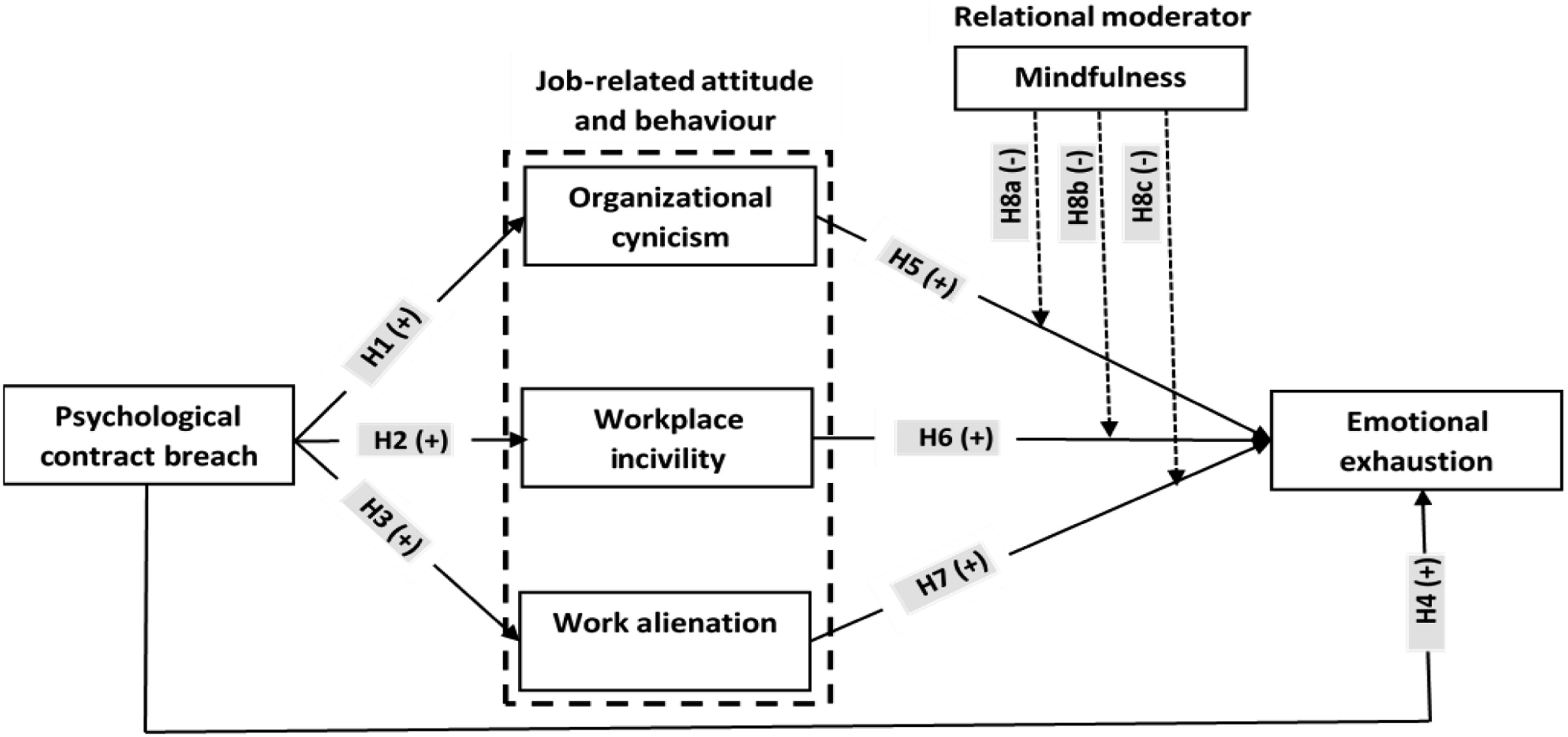
Psychological contract breach and organizational cynicism
Organizational cynicism is described as a negative attitude by employees toward their organization (Dean et al., 1998). This negative attitude constitutes employees’ beliefs about the lack of integrity in the organization, and undesirable feelings regarding the practices of the organization, policies (Dean et al., 1998). The relationship between PCB and organizational cynicism has been examined in several studies. For example, Abubakar and Arasli (2016) contended that PCB can manifest as a sense of inequity or organizational injustice, which can contribute to organizational cynicism. As a result, psychologically fatigued employees may become cynical, especially if the organizational justice climate is adverse (Abubakar et al., 2018). In this vein, Li and Chen (2018) revealed that PCB may trigger employees’ negative attitudes and ultimately lead to more negative behaviors. When PCB occurs, employees recognize that their responsibilities to the organization have not been fulfilled (Morrison and Robinson, 1997). Previous studies proposed that PCB is an influential predictor of organizational cynicism (Li and Chen, 2018). Bari et al. (2020) investigated the role of organizational cynicism in mediating the association between PCB and detrimental work behavior, along with employee’s turnover intention. Similarly, Griep and Vantilborgh (2018) examined the effect of PCB on organizational cynicism through the mediation of counterproductive job activity and employee’s self-esteem in a systematic study. In the hospitality industry, for instance, Johnson and O’Leary-Kelly (2003) found a positive relationship between PCB and organizational cynicism. In other words, when the employer does not keep his promises or commitments, employees may question his sincerity, and then organizational cynicism occurs (Li and Chen, 2018). Hence, we proposed the following:
PCB is positively associated with organizational cynicism.
Psychological contract breach and work incivility
Workplace incivility is defined as “low-intensity deviant behavior with ambiguous intent to harm the target, in violation of workplace norms for mutual respect” (Andersson and Pearson, 1999: p. 457). In this context, Arici et al. (2020) stated that the COVID-19 crisis harmed the organization’s people management by boosting power transfers from relatives to subordinates, leading to a rise in tolerance to workplace incivility, and service co-workers experiencing significant psychological harm at the workplace. However, previous research has devoted little attention to exploring the critical distinctions between “workplace incivility” and “tolerance of workplace incivility” (Abubakar et al., 2018; Arasli et al., 2018). Although the two ideas are related to some extent, their effect on employees' views regarding PCB consequences differs (see Abubakar et al., 2018; Megeirhi et al., 2020). Tolerance to workplace incivility is defined by Loi et al. (2015, p. 173) as “when an organization does nothing to deter uncivil behavior (i.e., tolerates incivility in the workplace), it can become embodied and perceived by employees as acceptable workplace behavior—and has the ability to influence employees’ workplace behaviors.” As a result, the central thesis here is that knowing the notion of tolerance for workplace incivility and its possible implications may assist tourism businesses in effectively managing the relationship between PCB and workplace incivility.
Prior studies have demonstrated that PCB could increase work incivility. For example, Cortina et al. (2001) reported that 71% of employees in their survey defined several aspects of workplace incivility related to PCB accidents, suggesting a positive association between PCB and work incivility. Likewise, in a study of 975 employees, Sayers et al. (2011) found a strong positive relationship between PCB and workplace incivility. In this regard, Irum et al. (2020) indicated that PCB is a significant indicator of incivility in the workforce. Moreover, Sears and Humiston (2015) argued that employees’ revenge through incivility after they have experienced a breach of their psychological contract. Therefore, we expect a positive correlation between PCB and incivility in tourism workplaces, seeking to replicate prior empirical studies showing how breaches contribute to attitudes of incivility (Jang et al., 2020; Sayers et al., 2011). Thus, we hypothesize:
PCB is positively associated with work incivility.
Psychological contract breach and work alienation
According to Li and Chen (2018, p.3), work alienation can be defined as “a response to organizational conditions and the psychological state that comes about if employees are estranged from their work role.” Nair and Vohra (2010) demonstrated that work alienation occurs when a person can express individuality only when she/he produces a task. In addition, Braganza et al. (2020), claimed that negative emotions of work alienation can arise without the employee or employer realizing it. In this sense, it is important to distinguish between cynicism and work alienation. According to Abubakar et al. (2017), cynicism emerges when employees acquire feelings of lack of integrity and distrust toward his/her organization, which is more typically described by thoughts of sorrow or rage that impact behavior, opinions, and attitudes. Durrah (2020), Çetinkaya (2018) describes cynicism as having “cognitive, emotional, and behavioral” dimensions. Among these dimensions, work alienation arises as an emotional component. This emotional component is triggered by negative attitudes toward the organization, which leads to work alienation symptoms such as self-estrangement and isolation (Durrah, 2020).
The connection between PCB and work alienation has been investigated in previous empirical studies which reported that PCB is a major predictor of work alienation. For instance, Nair and Vohra (2010) revealed that the higher the PCB, the less the important work, resulting in increased work alienation. Moreover, Li and Chen (2018) observed a positive relationship between PCB and work alienation. However, the influence of PCB on work alienation within tourism enterprises (i.e., travel agencies) has not been studied yet, especially in Egypt. Hence, the following hypothesis is formulated:
PCB is positively associated with work alienation.
Psychological contract breach and emotional exhaustion
Hur et al. (2016) explained emotional exhaustion as a condition of feeling mentally damaged and exhausted as a consequence of cumulative stress from personal or professional lives, or a combination of the two, and is often a symptom of burnout. Razzaghian and Ghani (2015) pointed out that emotional exhaustion happens when employees feel that they do not have enough mental energy or ability to work. Regarding the relationship between PCB and emotional exhaustion, it was revealed that emotional exhaustion was considered as one of the negative consequences of PCB (Reimann and Guzy, 2017). Maslach et al. (2001) claim that employee’s negative concerns can be explained by encountering PCB at work that causes pressure, leading to emotional exhaustion. Moreover, Gakovic and Tetrick (2003) conclude that PCB significantly contributes to the emotional exhaustion experienced by employees. Previous studies have also shown a significant positive association between PCB and employees’ emotional exhaustion. For instance, De Jong et al. (2021) found a substantial positive association between subordinate PCB and supervisor emotional exhaustion through a “weekly diary” survey among Dutch supervisors.
Moreover, Gakovic and Tetrick (2003) found that lower levels of emotional exhaustion were correlated with higher levels of organizational fulfilment of responsibilities, suggesting that PCB is positively associated with employees’ emotional exhaustion. However, researchers have not paid a significant attention to empirically explore the impact of PCB on emotional exhaustion of employees in travel agencies, considering the current situation of COVID-19. Therefore, we hypothesize that:
PCB is positively associated with emotional exhaustion.
Organizational cynicism and emotional exhaustion
Emotional exhaustion can be regarded as sentiments of moral vulnerability and exhaustion from emotional harm to the individual (Simha et al., 2014). As shown, this negative outcome is considered one of the main consequences of organizational cynicism (Nair and Vohra, 2010), indicating that organizational cynicism is directly associated with employees’ emotional exhaustion at workplaces (Johnson and O'Leary-Kelly, 2003). In this vein, Eryesil and Öztürk (2016) revealed a significant and positive link between organizational cynicism and emotional exhaustion. Similarly, Johnson and O'Leary-Kelly (2003), demonstrated that employees with the highest levels of emotive cynicism often have highest levels of emotional exhaustion, confirming the positive association between cynicism and emotional exhaustion. Despite these several studies that have investigated the relationship between cynicism and emotional exhaustion, such an association has not been comprehensively investigated in tourism workplaces, especially during the COVID-19 era. Accordingly, we propose the following hypothesis:
Organizational cynicism is positively associated with emotional exhaustion.
Work incivility and emotional exhaustion
Since emotional exhaustion is reflected by an individual’s feeling of psychological impotence and the degradation of his/her emotional capabilities (Hur et al. 2016), it has been found to be one of the most commonly remarkable outcomes of workplace incivility in relation to employee work-related attitude and behavior (Maslach and Jackson, 1981). Consequently, prior studies Jang et al. (2020) emphasized that workplace incivility is highly and positively correlated with employees’ emotional exhaustion. For example, Alola et al. (2020), recently proved that incivility among hospitality workplaces results in higher levels of employees’ emotional exhaustion. However, little attention has been given to empirical testing of the influence of work incivility on emotional exhaustion from the perspective of employees in the tourism sector. Accordingly, we suggest that:
Work incivility is positively associated with emotional exhaustion.
Work alienation and emotional exhaustion
Shantz et al. (2015) argue that alienation happens when employees retreat or are marginalized from their work atmosphere or other individuals. To this end, Yu et al. (2019) reported that when employees feel isolated from their managers, co-workers, and work atmosphere, they will feel distressed, unhappy, and apathetic, ultimately instigating emotional exhaustion. Similarly, Yu et al. (2019) confirmed the same result and indicated that work alienation has a positive link with employees’ emotional exhaustion. Regarding tourism-related literature, it is evident that the connection between work alienation and emotional exhaustion has not been empirically evaluated among travel and tourism organizations to date. However, based on the findings of prior studies in different contexts, as discussed earlier, the following hypothesize is proposed:
Work alienation is positively associated with emotional exhaustion.
The moderating role of employees’ mindfulness
Employee mindfulness is regarded as a state of a non-judgmental, and receptive mind in which humans notice thoughts and feelings that arise without altering, pushing, or running away with them (Neff, 2003). Mindfulness can diminish the emotional reaction lifecycle, leading to faster restoration from negative emotional experiences (e.g., Keng et al., 2013). In addition, it was concluded that greater mindfulness meditation experience is related to higher levels of emotional intelligence (Chu, 2010). Previous studies indicated that mindfulness enhances individual’s ability to focus (e.g., Sedlmeier et al., 2012) and open-minded thinking. It also reduces the fear of feeling of being judged (Brown et al., 2007). High mindfulness at work (e.g., improved cognitive resilience and positive affect) leads to more adaptive functioning against PCB outcomes and lower levels of employee emotional exhaustion (e.g., Abela and Debono, 2019; Anggraeni, 2018). While low levels of mindfulness (e.g., lack of self-awareness) can increase depression and anxiety, resulting in high levels of emotional exhaustion related to PCB outcomes (e.g., Irum et al., 2020). However, the interactive role of mindfulness between work attitudes/behaviors and employee emotional exhaustion during times of crises (e.g., COVID-19) has not been investigated within tourism organizations. Therefore, the following hypothesis is:
The effect of organizational cynicism (H8a), workplace incivility (H8b), and work alienation (H8c) on emotional exhaustion is weaker with higher levels of mindfulness and greater with lower levels of mindfulness.
Research methodology
Measures
The present research comprises six reflective latent variables adapted from prior studies. PCB was measured using five items adapted from Robinson and Wolfe Morrison (2000). Organizational cynicism was assessed based on a five-item scale from Johnson and O'Leary-Kelly (2003). Eight items were adapted from the study of Lamond et al. (2010) to measure work alienation. Emotional exhaustion was measured by seven indicators adapted from the work by Elbaz et al. (2020). In addition, work incivility was assessed using six items (Hur et al., 2016). Finally, as for mindfulness, four items were adapted from the study of Neff (2003).
Sampling and data collection
A questionnaire was used to collect data from frontline employees at travel agencies-A. In this regard, it should be mentioned that there are three categories of travel agents (A, B, and C) in Egypt. Travel agencies-A, which are qualified to work globally on tourism activities both inbound and outbound, are selected in this study, as they have varied departments with sufficient numbers of human resources (Abou-Shouk and Soliman, 2021; Soliman and Wahba, 2019). There are 2198 travel agents, category-A, operating in Egypt (Abou-Shouk and Soliman, 2021). The questionnaire was comprised of two parts. The first section was about the demographic profile of respondents, whereas the second section included the items of the studied latent variables. All constructs were measured with a five- point Likert-type scale (1 = Strongly Disagree: 5 = Strongly Agree). In this study, we developed an English version of our questionnaire and then translated it into Arabic and re-translated it into English to guarantee the translation accuracy for latent variable indicators. Hence, this process ensured consistency of the real meaning of each indicator in the original questionnaires. The questionnaire was distributed through two ways: An online questionnaire and self-administrated questionnaire employing two research assistants. This paper conducted a range of sampling techniques. First, a self-selection sample was conducted by distributing the questionnaire on-site and circulating the link online on social network sites. Second, a convenient sampling was employed by sending the link directly to surveyors through their accounts. Third, a snowball sample was used by requesting some employees to share the link with their co-workers in travel agencies. During January and February 2021, a total of 450 (371 online +119 self-administrated) responses were collected, of which 437 were valid for further analysis.
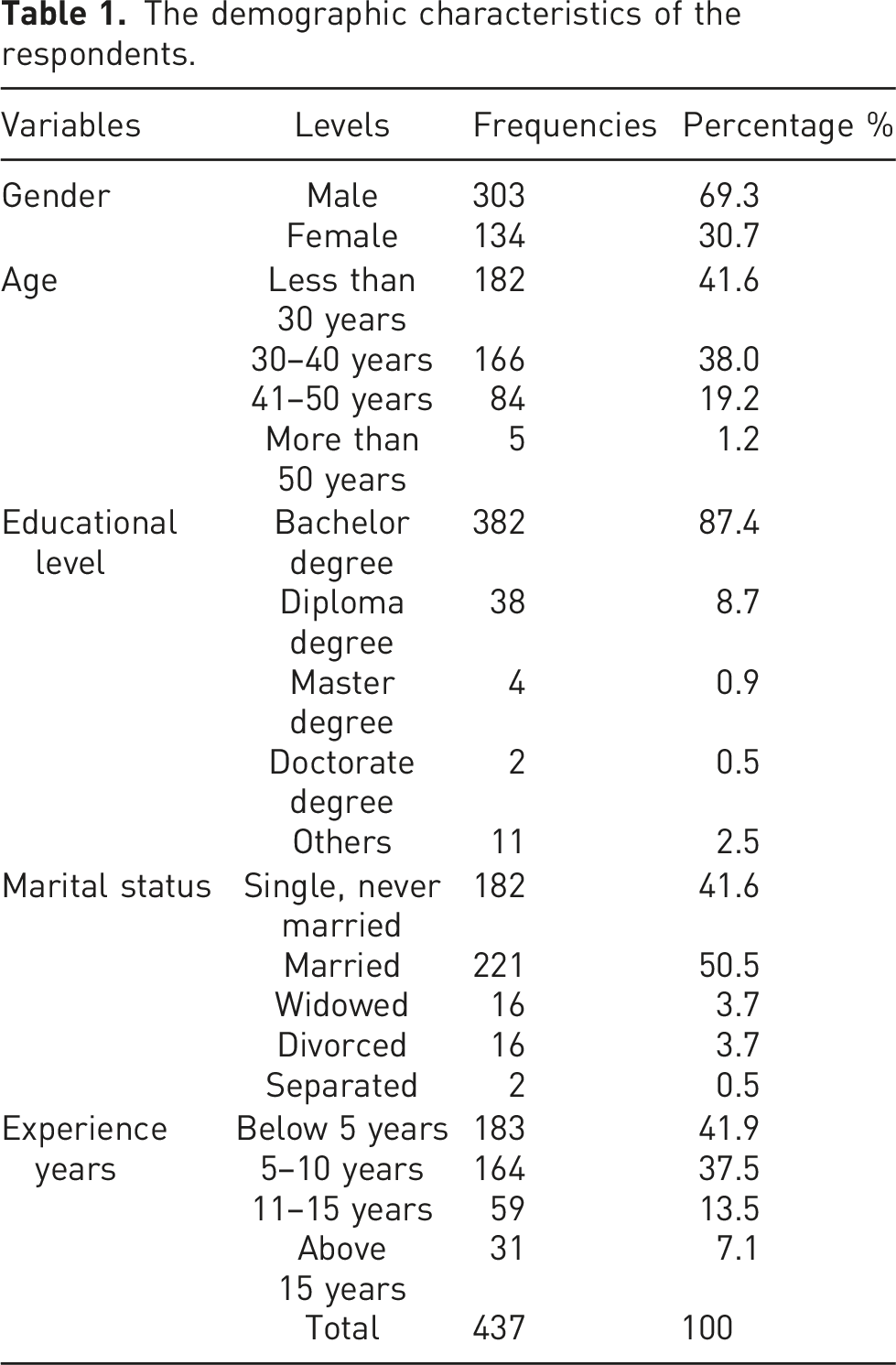
The demographic characteristics of the respondents.
Analysis and results
The current study employed PLS-SEM technique, using WarpPLS software 7.0 (Kock, 2020), to evaluate the measurement and structural model as well as to test the research hypotheses. PLS-SEM is an analytical technique widely used in different contexts (Hair et al., 2020), involving tourism studies, (e.g., Amaro and Duarte, 2015). It is a proper technique that has been adopted to assess complicated structural models with direct and indirect paths between multi-item variables (Manley et al., 2020). To perform PLS-SEM, two steps are required: evaluating the measurement model and measuring the structural model (Manley et al., 2020). The WarpPLS software 7.0 provides ten model fit and quality indices (see Appendix 1). Accordingly, it can be established that the ten criteria for the model fit, and quality indices were met.
The measurement model
PLS approach confirmatory factor analysis.
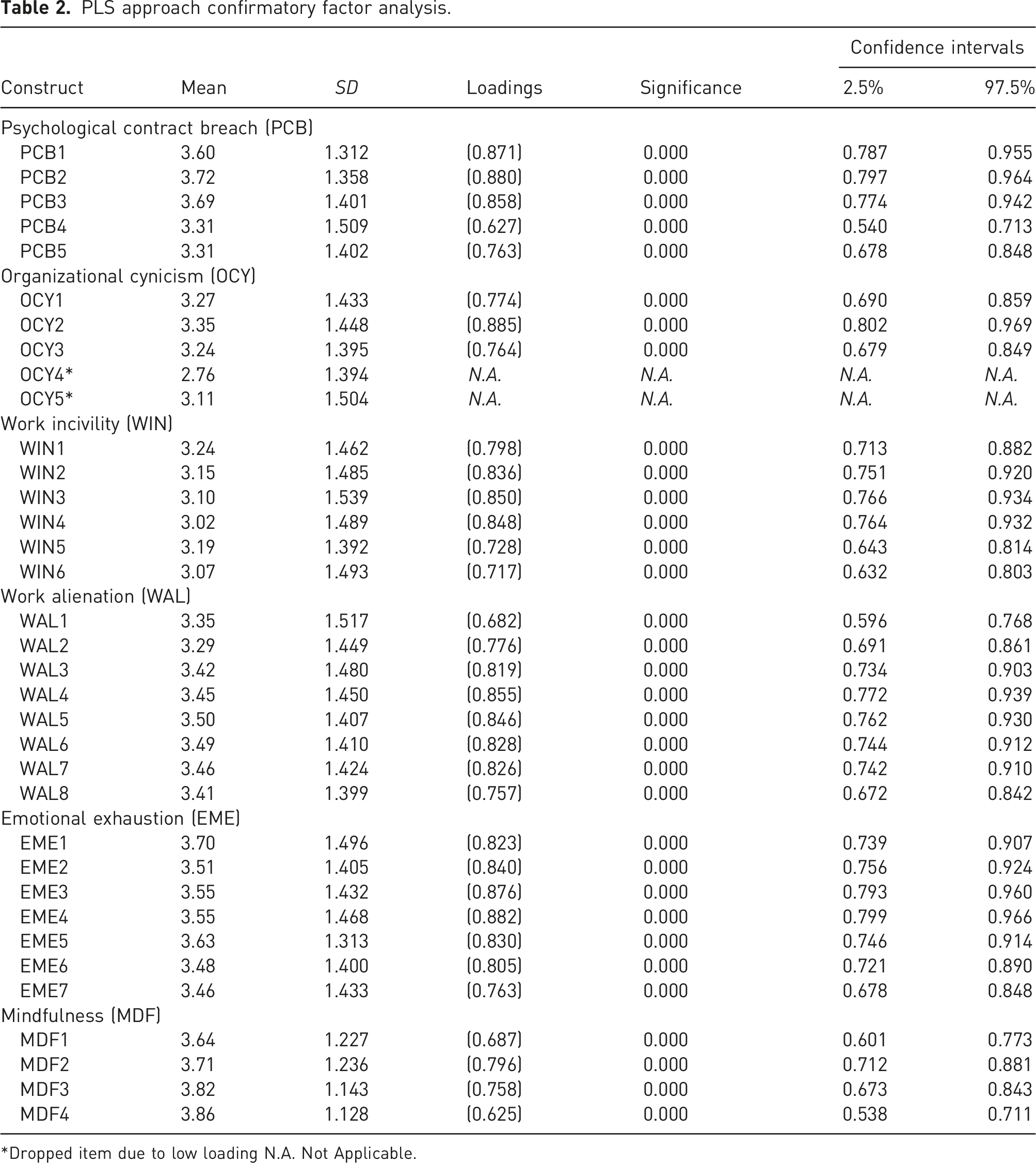
*Dropped item due to low loading N.A. Not Applicable.
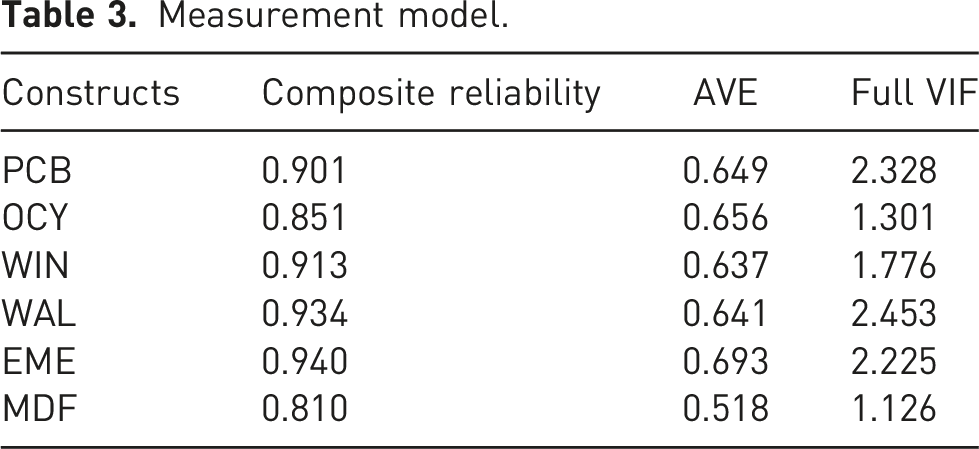
Measurement model.
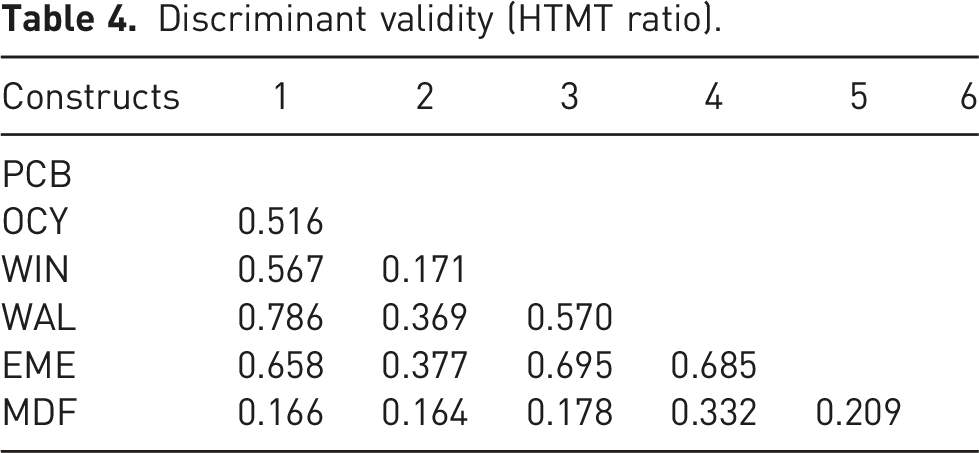
Discriminant validity (HTMT ratio).
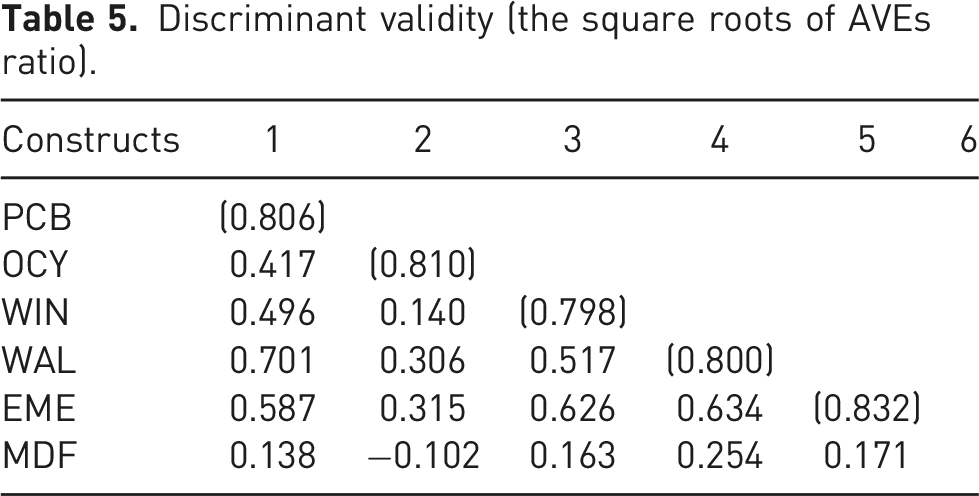
Discriminant validity (the square roots of AVEs ratio).
The structural model and hypotheses testing
To assess the structural model, the path coefficients (β), the p values, effect size (f2), R2, and Q2 values were measured. The empirical findings (Figure 2) indicated that PCB has a positive and significant effect on organizational cynicism (β = 0.42, f2 = 0.18, and p < 0.01), work incivility (β = 0.51, f2 = 0.26, and p < 0.01), and work alienation (β = 0.71, f2 = 0.51, and p < 0.01). Hence, H1, H2, and H3 are accepted. The findings indicated that PCB positively affects travel agency employees’ emotional exhaustion (β = 0.17, f2 = 0.11, and p < 0.01), supporting H4. In addition, emotional exhaustion is significantly and positively affected by organizational cynicism (β = 0.09, f2 = 0.03, and p = < 0.05), work incivility (β = 0.38, f2 = 0.25, and p < 0.01), and work alienation (β = 0.28, f2 = 0.18, and p < 0.01), confirming H5, H6, and H7. Furthermore, PCB clearly explained 17% of the variance of organizational cynicism, 26% of work incivility, and 51% of work alienation, whereas PCB, organizational cynicism, work incivility, and work alienation explained 58% of the variance of employee emotional exhaustion. (a) Path coefficient results of full sample; (b) results of high-mindfulness subgroup; (c) results of low-mindfulness subgroup.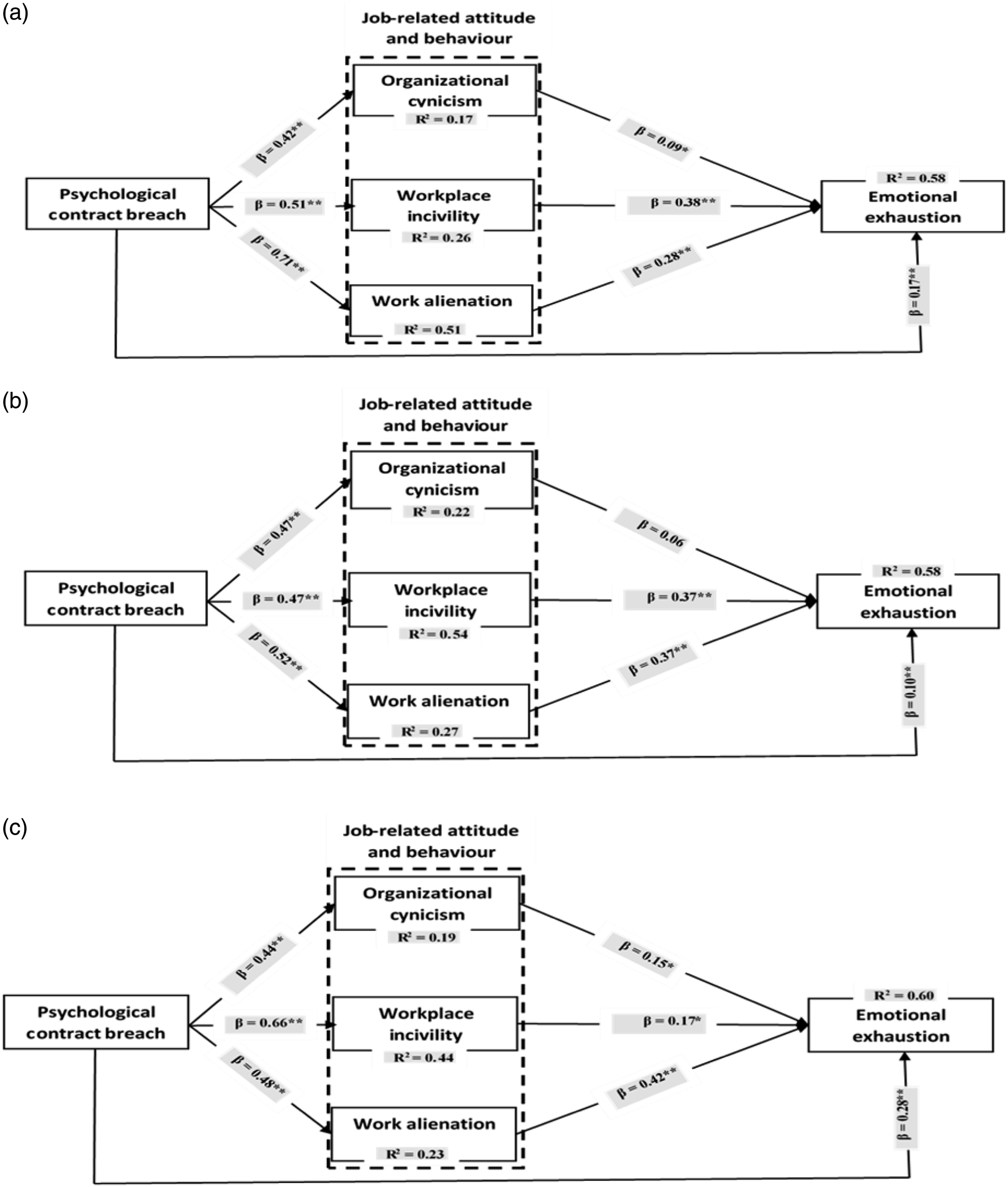
Based on Sarstedt et al. (2016), to test the predictive power of the models, a seven-deletion distance blindfolding technique was implemented. This resulted in cross-validated redundancy (Q2 Stone–Geisser) standards for the dependents variables being above zero (organizational cynicism: 0.18, work incivility: 0.26, work alienation: 0.51, and emotional exhaustion: 0.58), supporting predictive power for the study model. Regarding f2 values, it is evident that all paths have large, medium, and small effect sizes (Cohen, 1988).
The results of mindfulness as a moderator
To further assess the moderating role of mindfulness, we followed Sharma et al. (2009) and Chin et al. (2003) to assess differences in path coefficients between the high-mindfulness subgroup model and the low-mindfulness subgroup model. In this vein, based on Chang et al. (2012), t-statistics were calculated to measure the moderating role of mindfulness in the relationship between job attitudes and behaviors as well as emotional exhaustion. As presented in Figure 2(b) and Figure 2(c), job-related attitudes and behaviors have lower influences (R2; EME = 0.58) on travel agency employees’ emotional exhaustion with high levels of mindfulness, whereas these attitudes and behaviors have higher impacts (R2; EME = 0.60) on emotional exhaustion with low levels of mindfulness, supporting H8a, H8b, and H8c.
Discussion of findings
The empirical findings of this paper indicated that PCB could lead to negative work-related attitudes and behaviors, including organizational cynicism, work incivility, and work alienation. In other words, breaching psychological contracts or not fulfilling the promised obligations will create unfavorable work attitudes and behaviors and lower job outputs in travel agencies. To be more specific, it was revealed that PCB has a positive and significant relationship with organizational cynicism. This means that psychological dissolution could enhance employee’s negative attitudes and cynicism at the workplace of tourism enterprises (i.e., travel agencies). This finding is in line with the findings of prior studies (e.g., Griep and Vantilborgh, 2018; Johnson and O'Leary-Kelly, 2003; Li and Chen, 2018) illustrating that PCB is positively related to organizational cynicism. It also supports the work of Abubakar and Arasli (2016) who indicated that PCB could be considered as a sense of organizational injustice, leading to organizational cynicism. In addition, we assumed that there is a positive relation between PCB and work incivility. The findings confirmed this hypothesis and indicated that breaching the psychological contract will increase work incivility at tourism organizations, including travel agencies, through the expression of negative implicit and explicit behaviors (i.e., overlooking, disrespect, and distrust) between employees. This result supports the findings of Cortina et al. (2001), Hur et al. (2016), Irum et al. (2020), Sayers et al. (2011), and Sears and Humiston (2015) that pointed out that PCB positively impacts incivility in the workforce.
Additionally, the results of this paper demonstrated that PCB is significantly and positively associated with work alienation. This implies that the greater the PCB, the less valuable work will be recognized, which leads to the alienation of employees at tourism enterprises. This can be illustrated through the negative feelings and emotions expressed by employees such as individuality and incomprehensibility. This finding is compatible with the findings of Braganza et al. (2020) and Nair and Vohra (2010) who indicated that work alienation is a crucial negative outcome of PCB. This finding also supports the results of Li and Chen (2018) who illustrated that PCB could reinforce alienation at workplace. Furthermore, the study findings articulated that PCB positively and significantly impacts employees’ emotional exhaustion in tourism enterprises. When employees are assured that their employers have broken the agreed-upon promises, they will be emotionally exhausted, and they will feel that there is not sufficient mental energy or work ability to be provided in their firms. This result is consistent with the findings of previous studies (e.g., De Jong et al., 2021; Gakovic and Tetrick, 2003; Maslach et al., 2001; Reimann and Guzy, 2017) elucidating that employees’ emotional exhaustion can be substantially raised by their perception of PCB.
Moreover, the results depicted that organizational cynicism has a positive and significant connection with employees’ emotional exhaustion in travel agencies. This result is consistent with preceding studies (e.g., Eryesil and Öztürk, 2016; Johnson and O'Leary-Kelly, 2003; Nair and Vohra, 2010) indicating that high levels of organizational cynicism can elevate employees’ emotional exhaustion. In addition, we explicitly found that work incivility is a main PCB behavioral response that has the greatest effect on emotional exhaustion of travel agencies’ employees. This leads to compelling evidence that exposure to incivility at work exacerbates the emotional exhaustion of travel agency employees. This result is consistent with the findings of Hur et al. (2016) that indicate the positive association between service workplace incivility (i.e., customer and/or colleague incivility) and employee emotional exhaustion. This result also supports the claim made by Alola et al. (2020) that incivility at work has a positive effect on emotional exhaustion and retention intentions while detrimental to job satisfaction. It is now widely agreed that emotional exhaustion is known to be the main consequence of work incivility and, and upon reaching this stage, travel agency employees begin to feel alienated and follow a cynical attitude toward their work (Razzaghian and Ghani, 2015). Similarly, the empirical results indicated that employees’ emotional exhaustion is positively influenced by work alienation. This means that the higher alienation at workplaces, the greater the emotional exhaustion of employees at tourism enterprises. This result supports the findings of previous studies (e.g., Shantz et al., 2015; Yu et al., 2019) revealing that work alienation is a key predictor of emotional exhaustion in the work environment.
Finally, the findings of the moderation analysis articulated that organizational cynicism, work alienation, and work incivility have lower effects on travel agency employees’ emotional exhaustion with high levels of mindfulness. In addition, these attitudes and behaviors have greater impacts on emotional exhaustion with low levels of mindfulness. This means that the higher levels of workers’ mindfulness at Egyptian travel agencies will diminish the influence of deviant attitudes and behaviors on their emotional exhaustion and vice versa. This result agrees with the study of Sedlmeier et al. (2012) showing that mindfulness can improve the ability of people to focus, as well as the study of Brown et al. (2007) who illustrated that mindfulness could reinforce human open-minded thinking and diminish their fear of being judged. These findings are in line with the argument of Abela and Debono (2019) and Anggraeni (2018) who depicted that a high level of mindfulness could lead to greater adaptive functioning against PCB-related outcomes as well as weaker levels of employees’ emotional exhaustion at the workforce.
Theoretical and managerial implications
The current research has several theoretical and managerial implications. Regarding the theoretical contributions, this article adds to the extant tourism literature in multiple ways. First, it contributes to the body of knowledge in tourism by developing and empirically assessed an integrative framework for the consequences of PCB among small and medium enterprises (SMEs) in the tourism industry. In this regard, various studies have tested the outcomes of PCB within different contexts, including hospitality domain. However, limited research evaluated the outcomes of PCB in the tourism environment, especially in travel agencies in developing countries. To be more specific, no previous research has designed a comprehensive structural model combining PCB and its affiliated outcomes, namely, organizational cynicism, workplace incivility, work alienation, and emotional exhaustion, within in the tourism sector in the Middle East countries including Egypt. Additionally, this paper adds to the existing theoretical knowledge by extending the SET theory in the context of travel and tourism and empirically demonstrating and investigating the influence of PCB on tourism SMEs workers’ attitudes and behaviors. To our knowledge, it is the first attempt to assess the impact of PCB on the identified attitudes and behaviors (i.e., organizational cynicism, workplace incivility, and work alienation), and emotional exhaustion in tourism SMEs (i.e., travel agencies). In addition, the associations between these attitudes and behaviors and emotional exhaustion have not yet been empirically evaluated among travel agency employees, particularly in Egypt. Having said that, this paper provides a substantial contribution to theory by addressing the lack of research in such connections as well as outlining the outcomes of PCB in relation to work attitudes and behavior in tourism businesses. Moreover, although mindfulness has been considerably examined in several prior studies, limited attention has been paid to investigate the intervening impact of this issue in relation to workers’ attitudes, behaviors, and emotional exhaustion. Therefore, this study contributes to the inadequacy of tourism research by highlighting the moderating role of mindfulness between organizational cynicism, workplace incivility, work alienation, and emotional exhaustion in tourism organizations.
With regard to the managerial implications, this research presents valuable practical guidelines and solid insights for managers of tourism SMEs (i.e., travel agencies) regarding PCB and its influences on employees’ work-related attitudes and behaviors. The empirical findings of this study depicted that PCB has substantial negative outcomes on the tourism businesses work environment. Such contract breaches, in which promises and obligations are not fulfilled, would negatively foster employees’ attitudes and behaviors toward work and boost their emotional exhaustion. In other words, when PCB occurs, it would substantially increase organizational cynicism, workplace incivility, work alienation, and emotional exhaustion of employees in tourism enterprises. Therefore, managers of tourism organizations in Egypt must develop and elucidate a job agreement presenting the shared commitment and duties with the concerned staff in explicit and applicable manners and terms. In addition, tourism organizations are required to keep promising with the relevant employees regarding the psychological contract-related obligations. This means that employees’ perception towards psychological contract fulfilment will be positively enhanced and the employment relationship between both parties will be highly valued. As a result, employees’ attitudes toward work will be positively improved. This could eventually lead to achieving the organizational objectives in an effective manner. In addition, tourism organizations in Egypt are required to provide a suitable work environment embracing the agreed obligations and procedures (e.g., rewarding, recognition, learning, and career development) that can stimulate their engagement toward work (Soliman and Wahba, 2019). Moreover, it has been revealed that mindfulness at work leads to reduced employee emotional exhaustion. Consequently, tourism enterprises in Egypt should pursue a series of techniques and mindfulness-based stress reduction training programs that help improve and expand the level, length, and intensity of mindfulness-raising (Jang et al., 2020) among their staff.
Limitations and future research
There are some limitations to be outlined for future studies. First, this paper employed a quantitative approach using a survey to collect data from employees in travel agencies in Egypt. Thus, future research can use a qualitative and/or mixed-method approach employing other data collection tools (e.g., self-administrated questionnaire, interview, and/or focus group) to provide an in-depth understanding of PCB outcomes among tourism businesses. Another limitation is related to using non-probabilistic sampling techniques (e.g., snowball sampling). Therefore, it is suggested for future research to employ probabilistic sampling methods. Moreover, the employed current research methods depend on net effects (e.g., SEM), thus, future research is recommended to apply advanced methodologies (e.g., artificial intelligence techniques) (e.g., Abubakar et al., 2017) and/or fsQCA (e.g., Afonso et al., 2018) that could be conducted to supplement the present research methods. Additionally, the current paper focused on category-A Egyptian travel agent, and thus it is suggested to concentrate on other categories of travels agencies for further research. Next, since this empirical work was conducted in the context of tourism enterprises in one country, which is Egypt, a cross-country study is proposed in order to help provide a valuable comprehension concerning PCB’s influences on tourism businesses in these countries. Furthermore, the influence of contract breach fulfilment on employees’ work behavior and performance in tourism-related organizations (e.g., travel agencies, airlines, etc.) can be a major research focus for further work. Future research could also employ a multi-group analysis to empirically evaluate the differences between employees’ perspective in tourism and hospitality organizations. This an illustration of how PCB affect employees’ attitudes, behavior, and performance in both tourism and hospitality enterprises. The mediating role of the identified deviant attitudes and behavior in this study could be examined in further work. Finally, this research assessed the interactive role of mindfulness on the association between work attitudes and behaviors and emotional exhaustion, thus, examining other moderating variables (e.g., job insecurity, burnout, work stress, and employee trust) is recommended for future research.
Footnotes
Acknowledgments
We would like to thank the research assistants for circulating our questionnaire. We are also grateful to our respondent travel agent frontline employees for participating in the study.
Declaration of Conflicting Interests
The authors declared no potential conflicts of interest with respect to the research, authorship, and/or publication of this article.
Funding
The authors received no financial support for the research, authorship, and/or publication of this article.

Model fit and quality indices.
Criterion
Assessment
Supported/Rejected
Average path coefficient (APC)
0.270, p<0.001
Supported
Average R-squared (ARS)
0.356, p<0.001
Supported
Average adjusted R-squared (AARS)
0.352, p<0.001
Supported
Average block VIF (AVIF), acceptable if ≤ 5, ideally ≤ 3.3
2.179
Supported
Average full collinearity VIF (AFVIF), acceptable if ≤ 5, ideally ≤ 3.3
1.749
Supported
Tenenhaus GoF (GoF), small ≥ 0.1, medium ≥ 0.25, large ≥ 0.36
0.521
Supported
Sympson’s paradox ratio (SPR), acceptable if ≥ 0.7, ideally = 1
0.700
Supported
R-squared contribution ratio (RSCR), acceptable if ≥ 0.9, ideally = 1
0.962
Supported
Statistical suppression ratio (SSR), acceptable if ≥ 0.7
1.000
Supported
Non-linear bivariate causality direction ratio (NLBCDR), acceptable if ≥ 0.7
1.000
Supported