




Abstract
Amid the ongoing COVID-19 pandemic, the relatively small number of reported cases of the coronavirus for the last 8 months in Taiwan suggests that the country has successfully managed to mitigate the outbreak. Following a proactive strategy, an immediate response, and a well-orchestrated monitoring system, the public authorities prevented the epidemic and avoided lockdowns, curfews, or business closures enforced by other governments across the globe. This case study explores the implications for the restaurant sector of governmental control measures created to combat the spread of the virus. Based on ethnographic research, the paper investigates the impact of the health crisis management plan on the economic sustainability of small restaurants in tourism areas of Tainan City, in the south of Taiwan. Proceeding inductively, this research identifies seven key factors for restaurant viability during the COVID-19 pandemic. The results of the study indicate that cultural context, social cohesion, and the cooperation of restaurant professionals are essential to the effectiveness of any strategy for containing the coronavirus. The proposed model aims to provide a feasible tool for food and beverage providers in other countries to adjust their efforts and actions for surviving during a pandemic.
Introduction
The rapid global outbreak of COVID-19 has forced several countries to apply the drastic actions of lockdown, curfew, and shop closures with devasting effects on domestic economies and controversial results regarding public safety. Numerous governments in Europe, East Asia, and the Americas like France, Austria, Germany, Sweden, Cambodia, Vietnam, South Korea, Thailand, and the U.S. have temporarily shuttered bars and restaurants as an extreme measure to contain the spread of the pandemic (Caroll, 2020; Cerullo, 2020; Graham-Harrison, 2020). Although the effectiveness of these drastic measures in preventing COVID-19 remains debatable, their impact on the economic viability of businesses was disastrous National Restaurant Association, 2020; Sruthi, Biswal, Joshi, Saraswat and Prakash, 2020; World Bank, 2020a, 2020b) (Google News, 2021). In the past year, millions of restaurant employees have been laid off or furloughed, thousands of food and beverage establishments have permanently gone out of business, and several tourism-related jobs have already been lost worldwide (Caroll, 2020; Dube et al., 2020; Khmer News, 2020). In the U.S. alone, according to the economic and research analysis of the National Restaurant Association (2020), the domestic industry will sustain more than 240 billion US dollars in damage by the end of 2020. Similarly, the GDP in major tourism destinations in East and Southeast Asia, such as Cambodia, Vietnam, and Thailand, has shrunk from 5% to 20% due to temporary restaurant closures and the virtual disappearance of international tourism (Ha and Tu, 2020; Khmer News, 2020; KPMG, 2020). The economic impact from COVID-19 will affect mostly low-income households, family-owned businesses, and small tourism-related companies (Blake and Wadhwa, 2020; Dube et al., 2020).
The Taiwanese Government, however, avoided shutdown measures, instead introducing the soft measures of mask-wearing, hand cleaning, social distancing, and temperature checks to protect the public. Health authorities have managed to curtail the outbreak of the coronavirus by quickly applying strict quarantine measures, health monitoring, and contact tracing of possibly infected individuals in schools, offices, restaurants, shopping malls, hotels, entertainment facilities, airports, ports, and public transportation stations. Taiwan’s 828 confirmed cases, 720 recovered cases, and 7 deaths in the nine months since the first reported incidents of COVID-19 underscore the effectiveness of its plan against the pandemic (Taiwan Centers for Disease Control, 2021).
The Taiwanese Government has also launched a relief plan with several actions to secure the sustainability of domestic industries and businesses, including travel, tourism, and hospitality (Department of Information Services, Executive Yuan, 2020). However, despite its success in stemming the tide of coronavirus inflections, Taiwan’s response to the pandemic was overlooked by most of the global media, and it was excluded from the World Health Assembly held in Geneva, Switzerland, on 18–19 May 2020.
This paper explores the effect of the Taiwan Government’s intervention and reaction to control the outbreak on restaurants. The aim of the study is to investigate and share the experiences of restaurant operators in Taiwanese tourist areas as they worked to remain economically sustainable throughout the COVID-19 crisis. The food sector in Taiwan is characterized by a large number of small and in many cases family-owned businesses with limited resources or alternatives to survive a major health crisis. The anti-epidemic measures implemented by the Government decreased revenue in the food and beverage sector by 1.59 billion US dollars in April, and it faced a 22.8% drop in sales (Taipei Times, 2020). As a result, during the current pandemic, restaurant providers have relied largely on the assistance, support, and guidance of public and local authorities to remain economically sustainable.
A successful crisis management system for hospitality and tourism requires the “co-operation and co-ordination between stakeholders and agencies and the adoption of a multi-disciplinary approach and inter-departmental operational performance during a crisis” (Ritchie, 2004: 679). Recent research has examined the role of business model innovation in hospitality, impact on revenue, market demand, prospects for the recovery of various tourism-related businesses, and the actions, reactions, and changes related to the operations of bars, restaurants, and hotels during the pandemic (Davahli et al., 2020; Gursoy and Chi, 2020). However, there are several methodological, conceptual, and theoretical limitations in most of these studies. In several studies, the sample was relatively small; other studies investigated the impact of COVID-19 on different types of tourism and hospitality businesses from various countries without taking into account the distinct characteristics of each sector, the size of businesses, or the economic, political, social and cultural particularities of each country (Alonso et al., 2020; Blake and Wadhwa, 2020; Davahli et al., 2020).
By adopting an interpretive approach, this study examines the responses of small restaurant operators of Tainan to the Taiwanese National Strategy for fighting COVID-19. The paper proposes a model for preserving restaurant viability during the coronavirus outbreak based on the testimonies of local food professionals regarding their efforts and actions to reduce the economic losses of the pandemic. The ultimate objective of this research is to provide a successful paradigm for small and family-owned food establishments in other countries to mitigate the negative effects of COVID-19.
Nevertheless, political structures, social contexts, and cultural characteristics certainly differ in each country. Therefore, the applicability of the proposed model depends on the capacity of the restaurant sector to adapt to emerging challenges, the preparedness and promptness of each government in confronting health crises, and, above all, the willingness of the public to comply with the preventive measures against the virus. The current study emphasizes that the three aforementioned factors are crucial for the effectiveness and the utility of the restaurant viability model. Hopefully, this research will serve as a point of reference for restaurateurs in tourism destinations across the globe as they seek to maintain their economic sustainability during pandemics.
Literature review
Crisis management in the hospitality industry
Previous research on crisis management has focused on prescriptive models and frameworks to explain the life cycle of crises (Fink, 1986; Richardson, 1995; Roberts, 1994). Modifying the life cycle model, Faulkner (2001) developed the first theoretical framework for crisis management in the tourism industry, identifying pre-event, prodromal, emergency, immediate, recovery, and resolution as the six progressive stages present in each crisis or disaster. Inspired by the six stages approach, Ritchie (2004) introduced the crisis strategic and holistic management framework, which consists of three sequential phases: crisis prevention planning, strategic implementation, and resolution. This framework provided a comprehensive and useful guide for tourism organizations and destinations to deal with a crisis, outlining the importance of proactive scanning, holistic planning, and constant evaluation of proposed strategies and actions (Ritchie, 2004). The successful implementation of any strategy on crisis management, though, demands the “co-operation between a wide number of stakeholders both internal and external to the organization to effectively plan and manage crises and disasters” (Ritchie, 2004: 680–681). However, this level of synergy requires a high degree of synchronicity and efficacy, qualities that are not easy to fulfill among various actors, authorities, and businesses with often different or even conflicting interests. Thus, Ritchie’s crisis management framework is more applicable to large organizations and enterprises that have the operational capacity, managerial expertise, and marketing intelligence to adopt, implement, monitor, and modify responsive actions. In contrast, small tourism businesses, especially small, family-run restaurants, are far less capable of designing, implementing, and evaluating actions to survive a crisis due to insufficient resources and lack of knowledge regarding how to apply holistic strategic planning and management. Despite the framework’s significant contribution to tourism-oriented crisis management, it also clearly derives deductively, following a positivistic standpoint that seems to ignore the particular cultural contexts and social dynamics of each destination. The stakeholder response to any strategy against crises, however, is certainly influenced by political, economic, cultural, and geographical factors, reflecting the relations of power among different groups or individuals.
Restaurant viability in times of health crises
The issue of restaurant viability has been addressed by several studies in the past, using pre-determined factors to assess restaurant success or failure (Camillo et al., 2008; Cranage and Sujan, 2004; Mandabach, et al., 2011). Some of them emphasized the importance of the “internal environment” of each establishment, pointing to factors such as the quality of food, family life cycle, type of management, and business strategy, whereas others highlighted the quality dimensions of restaurant satisfaction (Hyun, 2010; Kwun and Oh, 2004; Mandabach et al., 2011; Parsa et al., 2005; Ryu and Heesup, 2010). However, the positivist approach and overreliance on hypotheses and pre-arranged indicators of these studies limit their applicability and methodological rigor. Additionally, these studies have underestimated the complexity and multidimensionality of different elements of the “external environment” which are critical for restaurant business viability, such as global recessions, local economic crises, natural catastrophes, political instabilities, conflicts, and pandemics. Finally, the use in these studies of certain regulatory factors to examine the failure or success of restaurants is oversimplified and generalized, which further limits their applicability. Hence, many previous studies have overlooked the particular conditions affecting the food industry in each country, the unique characteristics of distinct types of restaurants, or the different challenges that each establishment confronts (Hyun, 2010; Mandabach et al., 2011; Parsa et al., 2005; Ryu and Heesup, 2010). Therefore, it seems that the model for restaurant viability developed by Parsa et al. (2005) can only be feasible in economic environments that are free of negative externalities, crises, disasters, and threats.
The COVID-19 outbreak is an unprecedented external crisis with devastating results for the global economy, international tourism, and travel. However, it is not the first time that a health crisis has taken the tourism and hospitality industry by surprise. The severe acute respiratory syndrome (SARS) outbreak lasted from 2002 to 2003, and Middle Eastern respiratory syndrome (MERS), which emerged in Saudi Arabia in 2012, stagnated the flows of tourism worldwide (Jamal and Burke, 2020; World Health Organization, 2003). Learning from previous experience, some tourism researchers suggested that tourism destinations should develop strategies to increase their level of preparedness against pandemics while ensuring the safety of visitors during an emergency (Hung et al., 2018; Jamal and Burke, 2020). Nevertheless, the results of previous outbreaks revealed the inability of countries and local authorities to effectively implement a coordinated crisis management strategy (Mair et al., 2016). Analyzing the COVID-19 outbreak, Jamal and Burke (2020) suggested that a well-informed civic society with reliable information from national health organizations and public authorities can play a key role in confronting a pandemic. The researchers further claimed that cooperation among various stakeholders, destination organizations, and public health agencies, along with the development of an effective and efficient communication strategy, are fundamental steps to fight a health crisis (Jamal and Burke, 2020). Unfortunately, crisis management research has shown that there is a lack of coordination and limited information sharing among stakeholders during a crisis (Jamal and Burke, 2020; Mair et al., 2016).
Restaurant viability during the COVID-19 outbreak
Since the beginning of the COVID-19 outbreak, numerous studies have attempted to evaluate and measure the impact of the pandemic on the hospitality industry. Various models, marketing strategies, operational actions, management changes, and innovative solutions were proposed, tested, and analyzed with the ultimate objective of assisting food, beverage, and accommodation providers to alleviate the severe effects of the pandemic (Alonso et al., 2020; Blake and Wadhwa, 2020; Breier et al., 2021; Davahli et al., 2020). This vast volume of research, which is constantly updating, undoubtedly provides useful information and insights about the multiple consequences of the pandemic on restaurants, hotels, and bars. However, there are several theoretical, analytical, and methodological limitations in most of these studies. Some studies were based on small samples, while others examined the effects of COVID-19 on hospitality businesses of diverse types and sizes using either homogenous purposive sampling, secondary data analysis, or meta-analysis techniques (Alonso et al., 2020; Blake and Wadhwa, 2020; Breier et al., 2021; Davahli et al., 2020). Thus, their findings are frequently judgmental or generic, limiting their applicability and usefulness. Certainly, the service sector has faced common challenges and obstacles during the outbreak of the coronavirus. However, there are fundamental differences between hospitality professionals in areas of scale, scope, revenue generation options, operational functions, management structures, and market segmentation. The generalized recommendations or options for combatting the pandemic offered by recent research suggest, for example, that the same value can be applied equally to a small restaurant in an urban destination and a resort hotel on a remote tropical island.
On the other hand, several researchers investigated the effects of COVID-19 specifically on the restaurant sector, developing frameworks or models, forecasting market trends, and exploring the capacity of professionals to respond to a crisis (Kim and Lee, 2020; Kim et al., 2020; Nhamo et al., 2020; Sruthi et al., 2020). Unfortunately, these studies have ignored the significance of geographical, cultural, political, and social context on restaurant viability and assumed that the same types of restaurants would react similarly in different countries. Additionally, most studies have addressed the pandemic solely from a market perspective, focusing exclusively on the ability of professionals to respond without considering the complex interdependence of other important factors such as the intervention and preparedness of each government to control an epidemic or the population’s level of willingness to comply with control measures.
In contrast, this paper examines the effects of the COVID-19 outbreak on the restaurant industry in Taiwan within the broader cultural, social and political milieu of the country. Focused on the reactions, actions, challenges, and options of small, family-owned restaurateurs in the tourist areas of Tainan City during the pandemic, this case study developed an inductive model for restaurant viability during a major health crisis. Acknowledging the unique contexts and distinct characteristics of other countries, the objective of the current research is to highlight the importance of customer compliance and government crisis management plans as well as the restaurant sector’s resilience in taking actions for its economic sustainability during a pandemic.
This study poses the following research questions: How do restaurant owners evaluate the effectiveness of the Taiwanese Government’s plan to prevent the spread of coronavirus? To what extent do the characteristics of Taiwanese culture and society affect the applicability of prevention actions taken in response to the pandemic? What were the reactions of both customers and restaurateurs towards the control measures implemented to fight the disease? What are the key factors for the economic sustainability of small restaurants during the COVID-19 outbreak?
Methodology
Study design and procedures
This ethnographic study employs the qualitative tools of in-depth, semi-structured interviews and participatory observation to analyze the effect of the Taiwanese Government’s coronavirus management plan on the viability of small restaurants in Tainan. In-depth interviews encourage participants to share their experiences and elaborate on their personal opinions, generating a direct and interactive discussion between the interviewer and the respondent. The official website of the Tourism Bureau of Tainan served as the main source when choosing the sample of the study. The website hosted a “cuisine map” with a list of the most popular establishments with local delicacies in gastronomy and confectionery according to TripAdvisor reviews (Tourism Bureau of Tainan City Government, 2021). From a total of 33 shops displayed on this list, 15 are small or family-run restaurants with capacities ranging from 10 to 50 customers. These 15 restaurants, which are all located around the popular tourist attractions of Anping Old Fort and Confucius Temple, became the initial sample. At a later stage of the study, another 35 small restaurant providers in the same areas were approached and interviewed.
Before each interview, the researcher explained briefly the objectives and purpose of the study to the restaurateur. Each participant was asked to sign a consent form agreeing to give an interview. For reasons of practicality and convenience, the interviews were conducted either before lunch breaks or near the closing hours of each day when the restaurateurs had more time.
Sample, data collection, and analysis
The semi-structured interviews were conducted with 50 restaurant owners in Tainan over a period of two months, between April and May 2020. The participants were selected through cluster sampling and stratified sampling. Cluster sampling was based on the geographical proximity of the restaurants, which were located in the most touristic areas of the city, according to the “must visit” attraction list of the Tourism Bureau of the Tainan City Government (2021). The Stratified sampling was based on restaurant size; the maximum capacity of all restaurants in the sample did not exceed 50 customers. The interviews lasted between one and two hours, and they were either recorded or videotaped using mobile devices. The majority of the interviews (n = 42) were in Chinese, while the remaining (n = 8) were in English. Two senior students and a faculty member served as interpreters during the interviews, translating the data collected from Chinese to English. All data gathered in the recorded/videotaped interviews were then transcribed manually. To ensure the anonymity of participants, I provide only their English nicknames. The qualitative data analysis program NVivo was used to evaluate both the transcribed and the unstructured interview data, tracking the codes, themes, and key concepts of the interviews.
The author employed participant observation as a supplementary methodological tool to elicit useful insights and yield information that could advance the interpretive perspective of the paper. To this end, a research diary was developed to include the researcher’s personal remarks and comments along with the unstructured data from the informal conversations that were not recorded in the interviews. Participant observation allowed the author to map out experiential conditions, idiosyncrasies, and situations in the field while maintaining sufficient balance between his interpretation and the opinions of participants.
This study has applied certain criteria to ensure trustworthiness; these criteria demonstrate both the pragmatic objectives of the researcher and the study’s utility and contribution for various stakeholders (Budge et al., 2008; Lincoln and Guba, 1985; Nowell et al., 2017; Sen 2020; Smith 2020; Tracy, 2010) (Jamal and Budke, 2020) . The widely accepted techniques of triangulation, peer debriefing, and participant observation were employed to increase the credibility and validity of the results, displaying the boundaries between the views of the participants and the researcher’s reflections on these views (Lincoln and Guba, 1985; Tobin and Begley, 2004). Two professors from another department analyzed the theoretical approaches, the methodological tools, and the research diary to check the triangulation. To increase the credibility of the findings, an external faculty served as a de-briefer to identify any possible inconsistencies or misinterpretations of the research.
Finally, the fact that the researcher was non-Taiwanese, and thus an “outsider,” proved rather beneficial for the study, since the participants seemed more open to sharing opinions, views, and thoughts that they would not easily share with an “insider,” possibly due to cultural, political, and social or even personal implications and affiliations. Therefore, the research identity of the interviewer remained transparent and unambiguous, ensuring the reflexivity of the study, a core element in ethnographic practices that can address academic clarity and establish both the ethnographic self and the experiences of the writer within a culture (Goodall, 2000: 9).
Results and discussion
Triptych of success against the COVID-19 outbreak
In times of crisis, cooperation among various stakeholders of a tourism destination is crucial for the effectiveness of crisis planning and management (Ritchie, 2004). Additionally, “leadership is required to provide direction to the industry” when a crisis occurs (Ritchie, 2004: 681). The restaurateurs in Tainan believed that the Taiwanese Government has successfully managed to contain the COVID-19 outbreak. According to their descriptions, public agencies’ level of preparedness and Taiwan’s Centers for Disease Control’s coordination of the pandemic crisis were both exemplary. These positive perceptions and feelings of satisfaction with Taiwan’s model for combating coronavirus, are reflected in the testimony of Mr Edie, a 45-year-old owner of a seafood restaurant in the Anping area: The control measures have proven to be useful for all of us. I am happy and also proud for Taiwan because we are so close to China and we could have been affected severely, but thankfully we survived the pandemic with minor losses. In Taiwan, historically we try to put aside our differences in difficult times and work for the common good. I believe that the Government and also the people were prepared to deal the coronavirus because we all learnt our lessons from the bad experience with SARS in 2003. Public health and safety are serious issues that require not only the effective reaction of the authorities but also the understanding of the citizens and the support of the business community.
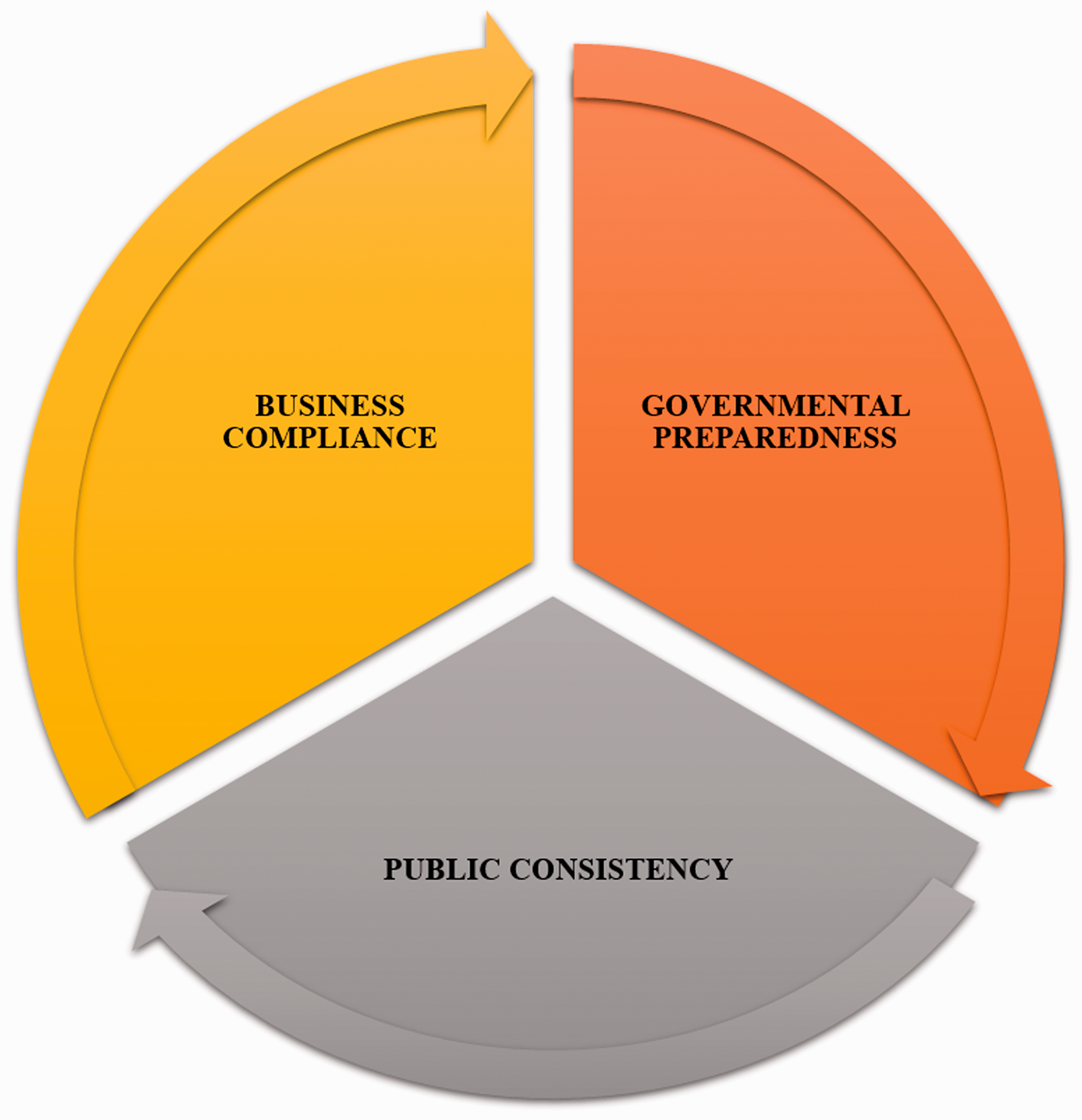
The triptych of Taiwanese success against COVID-19.
Without underestimating the efficacy of public institutions and health agencies to contain the outbreak, the restaurateurs argued that the crisis management plan would not have been implemented without the active and continuous cooperation of the public and the business community. In fact, they acknowledged that the competence of food and beverage professionals in applying control measures of temperature checks and hand sanitizing in their facilities, as well as the willingness of customers to keep social distancing and wear masks, were crucial for putting the triptych of success into action. Actually, the continuous interdependence and constant interplay among public consistency, business compliance, and governmental preparedness are key factors for Taiwan’s success against COVID-19. The restaurant owners claimed that the ability of various social actors to share a common attitude while respecting the restrictions and recommendations of public authorities has helped the Taiwanese economy to escape the disastrous consequences of the pandemic. Based on the interviews, it can be concluded that the positive results of the Government’s plan to contain the coronavirus stem from notions of collectivism, social awareness, and cooperative bonds among various stakeholders; this supports the findings of previous studies in social psychology, which have shown that social cohesion and responsibility diffusion affect the performance of groups and institutions (Forsyth et al., 2002; Mullen and Copper, 1994).
Developing a model for restaurant viability during COVID-19
Several researchers have stated that there is a need for the development of theoretical frameworks and descriptive models for crisis management in the tourism industry (Faulkner, 2001; Mair et al., 2016; Ritchie, 2004). However, the type, the context, and the scale of each crisis are different, leading to controversial reactions involving diverse groups, actors, and institutions and therefore calls for generic planning in order to provide feasible strategies (Mair et al., 2016: 22). By coding the perceptions and views of restaurant owners in Tainan about the Government’s plan to contain the COVID-19 outbreak, this research provides an illustrative paradigm for small restaurant businesses to survive during a pandemic. Unlike the simplistic, prescriptive, and deductive models introduced by previous studies, the 7 S’s model presented in this paper has been derived inductively, reflecting the experiences and post-crisis evaluations and suggestions of restaurant professionals to mitigate the negative effects of coronavirus (see Figure 2). The 7 S’s model is comprised of seven interconnected and interrelated elements, namely strategy, speed, simplicity, sharing, surveillance, support, and solidarity, which have proven to be essential for restaurant viability during a severe health crisis.
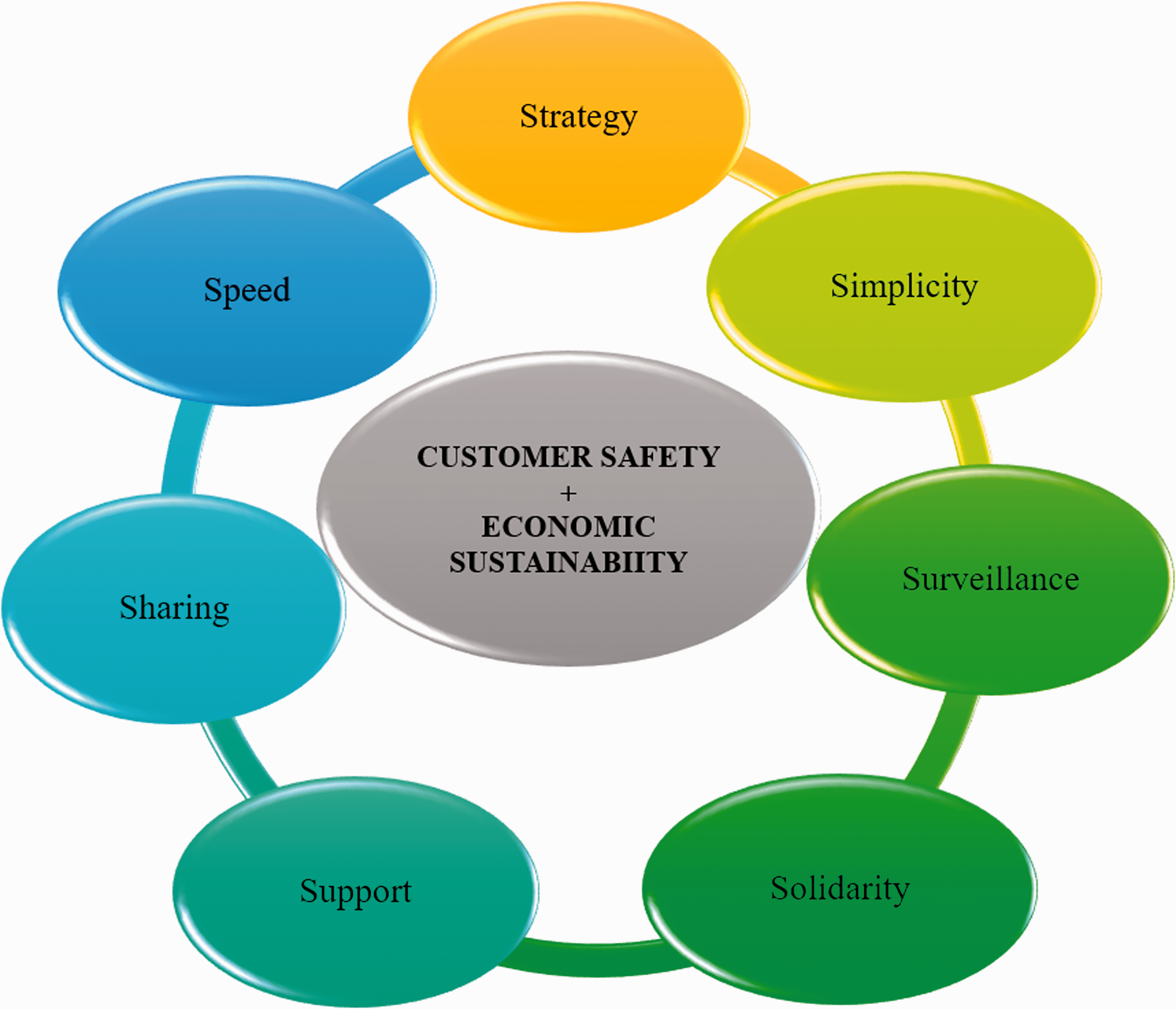
The model of 7 S’s for preserving restaurant viability in a public health crisis.
Strategic planning and management of COVID-19
Strategic planning constitutes the cornerstone of the 7 S’s model for restaurant viability. Understanding and classifying the type, scale, magnitude, and urgency of a crisis are critical issues for strategic planning and development (Miller and Ritchie, 2003; Ritchie, 2004). According to the predictions of WHO, Taiwan would be severely hit by a future pandemic due to its geographic proximity and relations with China. Therefore, the Taiwanese Government immediately took action when the first case of COVID-19 was reported in January 2019 (Taiwan Ministry of Foreign Affairs, 2020). The life cycle model suggests that each crisis progresses through a prevention stage, an intermediate stage, a control stage, and a recovery or resolution stage (Faulkner, 2001; Fink, 1986; Roberts, 1994). The level of preparedness of public and private organizations in developing a plan for stopping or preventing the threat of communicable diseases is vital for health crisis response. In 1999, the Ministry of Health and Welfare of Taiwan formed the Central Epidemic Command Center (CECC) and Center for Disease Control (CDC) as special agencies to coordinate the actions and strategies across governmental departments during an emergency. Learning from the global health emergency of SARS in 2003 and the swine flu pandemic in 2009, CECC has developed a comprehensive strategy for health crises. Anticipating the outbreak, on 5 January 2020, CDC officials activated a plan to prevent COVID-19 by monitoring all individuals who had traveled to Wuhan within the last 14 days. Their proactivity during the prodromal phase of the pandemic limited the spread of the virus, as explained by Mrs. Su, a 38-year-old, seafood restaurant owner in the Anping area: Although we lost almost 30% of our business during coronavirus, we managed to survive because the Government drastically took action to prevent the outbreak. Stopping the flights to and from mainland China right after the first reported cases gave the authorities the advantage to control the pandemic. The quick response and the alertness of our health system led to the effective management of the pandemic. The measures were clear and consistent. I was checking the temperature of all customers at the entrance and spraying their hands with sanitizers. But also, the customers follow their obligation to wear masks and keep the 1.5-meter distance from each other. It’s important in times of crisis to tell the people what they have to do in a simple and concise manner, avoiding panic.
Communication, coordination, and control of COVID-19
Restaurant operators in Tainan have emphasized the role of speed and simplicity in the effectiveness of Taiwan’s responsive actions to fight coronavirus, indicating the significance of these two elements on the 7 S’s model for restaurant viability. The development of a detailed communication strategy with clear goals and objectives can moderate the negative impact of a crisis, providing a quick, clear response to the needs of the media and the public for updated information (Barton, 1994; Coombs, 1999; Ritchie, 2004). During a major public health crisis, news coverage becomes more important as people seek reliable and factual information to remain abreast of current developments (Wen et al., 2020; Zheng et al., 2020). The COVID-19 pandemic has sparked extensive media attention worldwide, with certain media outlets presenting it as a “catastrophic event,” often using misleading labels such as “Chinese virus pandemonium” or, in some cases, providing biased information about the progression, the reported cases, the transmission pace, and the life cycle of the virus (ABC News, 2020; BBC News, 2020; Liu and Saif, 2020). Wen et al. (2020) highlighted the importance of media accountability and the media’s duty to provide objective, accurate, and fair pandemic-related information by presenting and comparing reports, data, and statistics on COVID-19 from all around the world.
The communication strategy of the Taiwanese Government included the daily dissemination of reliable, up-to-date, and consistent information about COVID-19. Cooperation with national media, frequent briefings, and consistent reporting are integral components in governmental crisis communication (Barton, 1994; Ritchie, 2004). Every evening since the outbreak began, CDC officials and representatives of the Ministry of Health and Welfare have given a press conference covered by national TV channels and journalists that presents the latest developments, news, and guidelines about coronavirus. By sharing accurate, consistent, and instant information about the reported cases using not only conventional media such as TV, radio, and newspapers but also popular social media platforms such as Facebook, Line, and Instagram, the Government enhanced public trust and business owners’ confidence about its plan to combat the disease. This enhanced trust is illustrated by Ms Chen, a 44-year-old shrimp ball restaurateur who owns a restaurant near Confucius Temple: At the beginning of the outbreak, I was a little scared. But day by day, I felt more secure listening to the CDC news about the coronavirus on TV. Also, I think it was very helpful having constant information about coronavirus cases on the social media. Personally, I use Line, so it was rather reassuring to see that the number of infected people remained low every day. I understand the utility of such a measure, but it doesn’t mean that I am comfortable with it. Leveraging location of the mobile phone is a clear violation of privacy and personal rights of the citizens.
Post-coronavirus resolution and supportive measures for the hospitality industry
The current research was conducted during a period when coronavirus seemed to ease in Taiwan, allowing restaurateurs to preview the results of responsive actions and control measures on their businesses in the post-coronavirus era. The interview results suggested that the Government’s support and solidarity for the public are essential components of the 7 S’s model for restaurant viability. Evaluation and feedback begin when a crisis stops and tourist destinations gradually return to normality (Ritchie, 2004). The resolution is the final stage of a crisis; it can offer improved conditions for the tourism and hospitality sector of a destination by introducing policy changes, modified strategies, and control measures applicable to future crises. Thus, “at the resolution stage of a crisis, a feedback loop back to proactive planning and prevention is possible” (Ritchie, 2004: 679). Following this rationale, the Ministry of Foreign Affairs of Taiwan (2020) developed “The Taiwan Model for Combating COVID-19” to share the strategy and plan Taiwan applied to contain the pandemic and minimize the negative impact on public health.
The Taiwanese Government also designed the “Coronavirus Relief Plan” to support all domestic industries and businesses by providing three types of help: financial aid, employment assistance, and tax breaks. The interviewed restaurant owners hold contradictory opinions about the effectiveness of the first two relief measures; however, all restaurateurs found the plan’s tax breaks extremely helpful. They identified bureaucratic procedures required to claim financial aid or employment assistance as the main obstacle impeding the usability of these measures. As the interviewees explained, applying for operational and stimulus loans entailed a time-consuming and complicated process of filling out forms and collecting documents from taxation agencies and municipality departments. Despite these impediments, the local restaurateurs reacted positively to the measures of tax breaks and exemptions from sales amount reporting, as indicated by Ms Lilian, a 47-year-old food provider in the Anging area: Skipping taxes for almost four months by now was a real relief for my restaurant. It is a direct, correct and appropriate measure, and a real saver for small businesses like mine through the crisis. As a citizen, I feel very lucky living in Taiwan because thanks to our health system, I was safe during the coronavirus. I can easily purchase masks from convenience stores, pharmacies and supermarkets using my health card at a very reasonable price. But also, as a professional, I complied with the control measures, which helped us to avoid closing down our business as it happened with restaurants in other countries. For me, the success of the Government’s plan against COVID-19 lies upon the common efforts of both people and professionals to protect each other and follow the restrictions.
Conclusions
Summary of findings
Crisis management in the tourism and hospitality industry requires strategic, holistic, and proactive planning, the application of suitable measures that can reduce or prevent the negative effects of the crisis, the avoidance of outward chaos, and the maintenance of social stability (Faulkner, 2001; Heath, 1998; Ritchie, 2004). Taiwan’s success in preventing the spread of coronavirus provides a paradigmatic case of an effective coordination effort and excellent operational performance for containing a public health crisis like coronavirus. This paper explores the implications of the Taiwanese Government’s strategic plan for combating COVID-19 for the domestic food industry. Based on the views and experiences of small restaurant owners in Tainan, the study has outlined the key factors for restaurant viability during the pandemic.
A central finding of this study suggests that an optimal crisis management plan presupposes the continuous interplay and cooperation among people, public authorities, and hospitality professionals. This triptych of governmental preparedness, business compliance, and public consistency was vital for the effective application of responsive actions and control measures against coronavirus in Taiwan. The restaurant owners claimed that the equilibrium among these three components has enabled the effectiveness of the strategic plan for the prevention of COVID-19. From the interviews, it can be inferred that the collectivistic characteristics of Taiwanese culture combined with the social cohesion between various groups have played a key role in supporting public safety and business sustainability.
The results of this study also revealed that socio-cultural context plays a crucial role in restaurant viability during a public health crisis, outlining the significance of cultural values, beliefs, and social relationships for the feasibility of responsive actions and prevention measures. The restaurant owners acknowledged that the Government’s plan to contain the virus has minimized the negative impacts on the economy, helping their businesses to avoid shutdowns and remain sustainable during the outbreak. However, the implementation of this plan was largely dependent on the Taiwanese public’s ability to demonstrate social responsibility, collectivism, and compliance. The testimonies of restaurant providers in Tainan suggest that continuous cooperation among various stakeholders, the willingness of the public to respect and follow restrictions, and the ability of central administration and local authorities to coordinate and monitor the crisis have fostered the success of the Taiwanese crisis management plan, ultimately preserving the viability of the entire hospitality sector.
Finally, this paper proposes a practical model for restaurant viability during a pandemic crisis. Previous studies have produced simplistic, prescriptive frameworks or generic descriptive models following a deductive approach in crisis management planning (Faulkner, 2001; Finks, 1986; Mair et al., 2016; Ritchie, 2004; Roberts, 1994). In contrast, this research has developed an inductive model especially designed for small restaurant businesses. Based on their personal experiences and views, the local restaurateurs have identified strategy, speed, simplicity, surveillance, sharing, support, and solidarity as the key factors for the viability of their businesses during the COVID-19 crisis. The 7 S’s model for restaurant viability proposed in this study aims to provide a paradigmatic and empirical action plan for hospitality professionals to survive a severe public health crisis in other parts of the world.
Methodological and practical implications
The growing body of research on crisis management in tourism has focused on producing prescriptive or descriptive models, most of which followed a deductive approach in their attempts to explain the life cycle of crises, suggesting generic strategies, general steps, or actions (Faulkner, 2001; Fink, 1986; Mair et al., 2016; Ritchie, 2004; Roberts, 1994). This study, however, provides a practical model for the survival of restaurant businesses during a pandemic. Applying the methodological tool of ethnography as the main source for data collection and analysis, the current study introduces an innovative approach to crisis management scholarship. The experiential content of this research suggests a necessary shift in crisis management methodology towards a more inductive perspective when developing future models in hospitality crisis. By incorporating the perceptions, evaluations, and experiences of food, beverage, and accommodation providers, such inductive models will be able to provide feasible recommendations and realistic solutions for the tourism and hospitality industry.
The proposed 7 S’s model for restaurant viability could offer practical implications and feasible solutions during pandemic crises for other tourism and hospitality professionals such as food and beverage providers, accommodation operators, gastronomic event organizers, and travel agents. Additionally, the triptych of success, which highlights the significance of governmental preparedness, business compliance, and public consistency during COVID-19, can set new standards in crisis management planning and prevention, improving the capacity of policymakers, administrative authorities, and destination managers at local, regional and national levels to address future health crises.
Research limitations and future inquiries
Regardless of the important contributions of this research, several limitations should be acknowledged. The first limitation involves the sample of the study, which was limited to small restaurant owners in the tourist areas of Tainan. Communication barriers also created major obstacles for data collection and analysis. The inability of the researcher to speak Chinese created a high level of dependence on the work of interpreters responsible for translating the testimonies into English. As a result, some information may have been lost in translation. Moreover, the limited English proficiency of most of the participants reduced their capacity to express exactly what they felt, making the process of coding a tedious and sometimes puzzling task.
Future ethnographic research should be conducted in larger food establishments, such as restaurants in shopping malls or hotels, and in establishments located in other destinations in Taiwan to explore the views of additional hospitality professionals about the implications of the Taiwanese Government’s plan to prevent COVID-19. Furthermore, the applicability of the 7 S’s model regarding restaurant viability during a pandemic should be further tested in different countries to provide a comparative analysis for its present feasibility and future utility.
Footnotes
Declaration of Conflicting Interests
The author(s) declared no potential conflicts of interest with respect to the research, authorship, and/or publication of this article.
Funding
The author(s) received no financial support for the research, authorship, and/or publication of this article.
