




Abstract
Due to the COVID-19 epidemic, visitors’ worries about health and safety in tourist destinations have become paramount. Consequently, this research aims to evaluate the impact of health and safety considerations on visitors’ satisfaction. It also examines the influence of health consciousness and satisfaction on visitors’ willingness toward robot-delivered tourism and hospitality services usage and the impact of destination healthcare system and satisfaction on loyalty intentions. Applying a quantitative-based methodology, 650 responses were collected from domestic tourists visiting Egyptian tourism destinations using multiple non-probability sampling techniques. Using PLS-SEM, the results articulated that emotional well-being, perceived safety, and perceived green image positively impacted visitors’ satisfaction, which in turn, positively affected their willingness toward service robot’s usage and loyalty. Tourists’ health consciousness also positively affected their satisfaction and intentions to use robot-delivered services. Additionally, destination healthcare system significantly influenced visitors’ satisfaction and loyalty intentions. Theoretical and managerial contributions as well as future research are outlined.
Keywords
Introduction
It is evident that COVID-19 has resulted in unmatched drastic health conditions around the world and intensified personal risk feelings in movement and travel (Bhati et al., 2021). With the outbreak of the recent pandemic, proactive measures (such as isolation, physical distancing, quarantine, etc.) were taken to curb this pandemic (Hassan and Soliman, 2021) that raise the demand for using automated technologies like robots, as they could provide physically distant services and keep physical distancing between humans during and after the pandemic (Seyitoğlu and Ivanov, 2021). Given the aforementioned issues, along with the ongoing unprecedented pandemic crisis, it is crucial to provide empirical evidence and better understanding regarding some critical considerations related to health and safety in tourist destinations, namely, emotional well-being, perceived safety, perceived green image, health consciousness, and healthcare system and demonstrate how these factors could impact visitors’ satisfaction and their intentions to use service robots and destinations loyalty.
In the extant tourism and hospitality literature, various major gaps concerning the studied constructs and associated connections exist, especially within the tourist destination context in developing countries, including Egypt. In this respect, prior studies have investigated the connection between health and safety factors and customers’ satisfaction and intentions. For example, Bhati et al. (2021) investigated the intervening role of health-protective behaviour on the link between health-associated risks image of destinations and visitors’ travel intention. However, there is no past research comprehensively assessing the influence of health and safety-related variables (i.e., emotional well-being, perceived safety, perceived green image, health consciousness, and healthcare system) on visitors’ satisfaction in tourist destinations, particularly in the Middle East region. Moreover, factors affecting customers’ intention to use service robots have been widely examined within different sectors belonging to the tourism and hospitality context (see Ivanov et al., 2020; Ivanov and Webster, 2021; Seyitoğlu and Ivanov, 2020). However, as far as we know, this paper is considered one of the limited attempts to examine domestic visitors’ perspectives in a developing country (i.e., Egypt) concerning the intention to use robot-delivered tourism and hospitality services in destinations. Additionally, the current empirical work is considered one of the few studies assessing the impact of health consciousness and satisfaction on the usage intention of service robots in tourist destinations.
Furthermore, although there are several attempts (e.g., Cha and Borchgrevink, 2019; Ivanov et al., 2020; Ivanov and Webster, 2021; Kim et al., 2016) partially testing the connections between the studied variables that have been included in the research model, however, to the best of our knowledge, incorporation of such constructs (i.e., health and safety factors, visitors’ satisfaction, their willingness to use service robots in tourist destinations, and their loyalty toward these destinations in an integrative conceptual framework has not been explored yet within the context of tourism destinations, focusing on the developing nations. To fill the aforesaid gaps, the main purpose of this paper is to develop and assess an integrated structural model to understand the extent of health and safety-related considerations impacting destination visitors’ satisfaction, and the latter’s effect on their behavioral intentions.
More specifically, this work aims to investigate (1) how domestic tourists’ satisfaction is influenced by health and safety-linked variables (2) how visitors’ willingness to use service robots is affected by health consciousness and satisfaction (3) how destination’s healthcare system and satisfaction impact visitors’ loyalty intentions. Thus, this paper contributes to the existing knowledge on health and safety issues and crisis management within the tourism and hospitality domain by underlining the causal connections between health and safety related factors, visitors’ satisfaction, and their behavioral intentions in tourist destinations in developing countries. In addition, it adds to the current literature on robot-delivered services in the tourism and hospitality setting. Moreover, it contributes to the theories of Protection Motivation Theory (PMT) (Rogers, 1975) and Social Cognitive Theory (SCT) (Bandura, 1999) by examining the structural associations between the studied variables in the tourism sector in Egypt. Furthermore, practical and managerial implications are presented by highlighting how health and safety issues could affect visitors’ satisfaction, which in turn affects their behaviour towards destinations. Consequently, the findings of this work help destination management organizations develop proper policies and strategies regarding health and safety infrastructure and procedures as well as the usage of service robots in delivering products/services to their customers.
Theoretical background and research framework
The theoretical foundation of this paper is based on relevant theories such as the Protection Motivation Theory (PMT) (Rogers, 1975) and Social Cognitive Theory (SCT) (Bandura, 1999). Rogers (1975) introduced the PMT to demonstrate how people react in a protective way toward a perceived health risk (e.g., COVID-19), including the effects of fear appeal on individuals’ attitudes and behaviors. SCT (Bandura, 1999) demonstrates the effect of human experiences, actions of others, and environmental-associated factors on people’s health-related behaviors. Consequently, the research framework is developed to empirically test the structural associations between health and safety considerations, satisfaction, visitors’ willingness to use service robots, and destination loyalty. As shown in Figure 1, it is hypothesized that visitor satisfaction is positively connected to emotional well-being (H1), perceived safety (H2), perceived green image (H3), and health consciousness (H4), which in turn positively associates with the willingness to use robot-delivered tourism and hospitality services (H8). Additionally, hypotheses six and seven articulate that visitors’ satisfaction is positively related to their willingness to use service robots and destination loyalty respectively. It is also suggested that the healthcare system has a positive association with visitors’ satisfaction (H5) and their loyalty intentions (9). The research conceptual framework.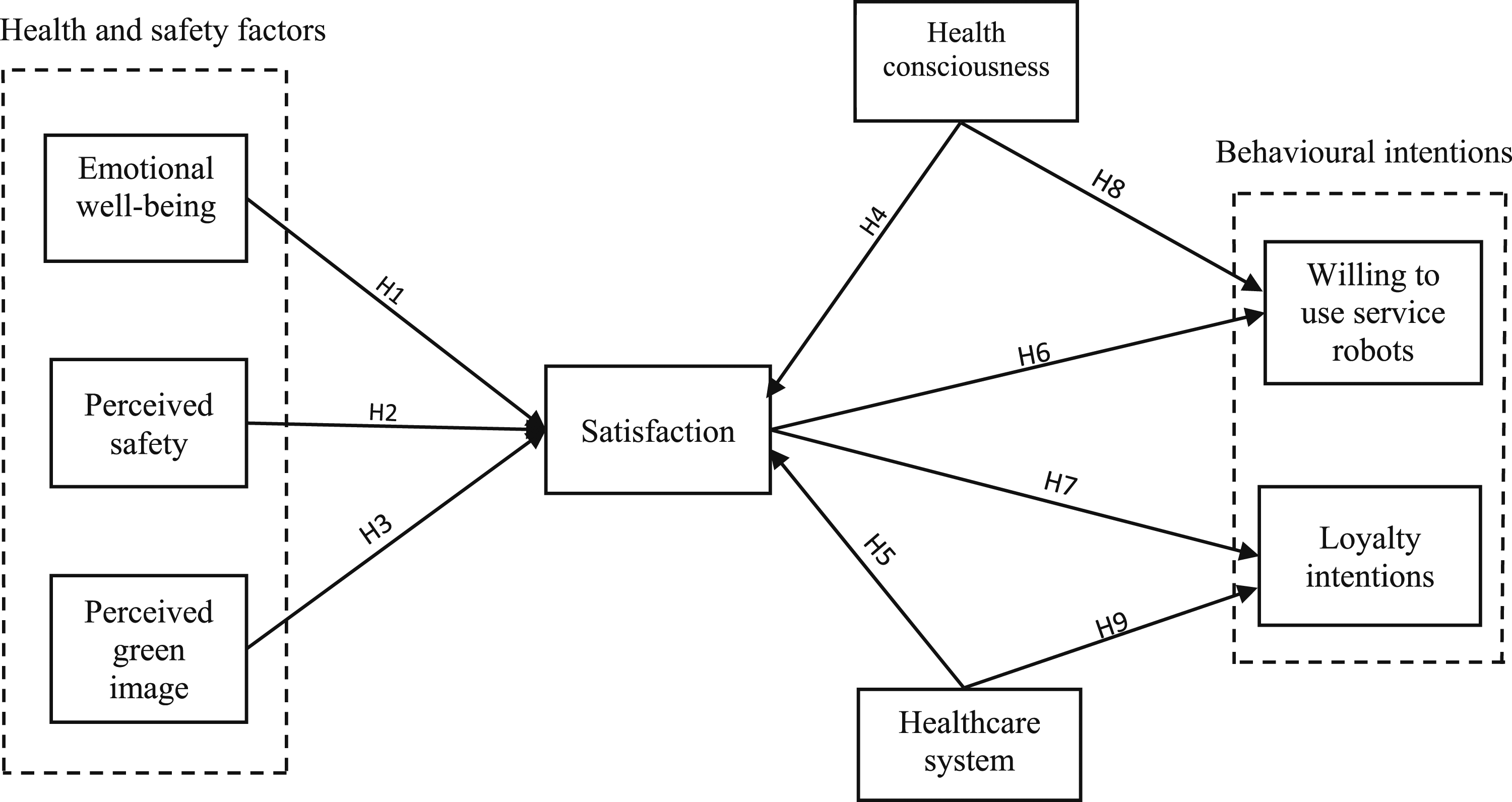
Emotional well-being and satisfaction
Individual well-being is seen as a multifaceted concept associated with one’s quality of life reflecting higher levels of life satisfaction (Grzeskowiak and Sirgy, 2007) and categorised into psychological (emotional) well-being and social well-being (Lee et al., 2016). The present paper focuses on emotional well-being, as a crucial issue to be considered along with the wide range of physiological health distress caused by the COVID-19 pandemic. Understanding well-being, as a significant yardstick, provides an affirmative perception of consumers’ satisfaction levels in consuming products or services and determines consumers’ decision-making approach (Grzeskowiak and Sirgy, 2007). The relationship between emotional well-being and customer satisfaction has been investigated in previous studies. For instance, Kim et al. (2016) demonstrated that travellers’ perceived well-being regarding the airline lounge experience induced high levels of satisfaction. Thus, the first hypothesis is formulated:
Perceived safety and satisfaction
The unique characteristics of tourism as a service sector indicate that service consumers comprehend greater risks in comparison with goods consumers (Yang and Nair, 2014). Safety is described as the protection of both employees and customers in various ways (e.g., zero accidents, something being less hazardous, and avoidance of error or malfunction (Hussaini, 2013). Safety is one of the most significant dimensions and exigent issues of perceived service quality which has a major impact on satisfaction levels (Moon et al., 2017).
Based on the theory of PMT (Rogers, 1975), consumers’ intentions, during a crisis (e.g., COVID-19), showed their willingness to make efforts and pay extra for facilities comprising safety measures (Fan et al., 2022). Similarly, Wen and Liu-Lastres (2022) revealed that restaurants’ active response to the COVID-19 pandemic with their timely adoption of safety measures enhanced consumer trust, thus affecting their actual dining activities. In their study, Shin and Kang (2020) explored that high levels of expected cleanliness through advanced cleaning technologies regulate the impact on perceived health risks in the hotel industry as it recovers from the pandemic. Additionally, da Silva Lopes et al. (2021) indicated that the COVID-19 pandemic has brought about considerable changes and challenges and changed priorities in relation to the use of public space and the way tourist visits are handled. Campbell et al. (2020) explore how consumers respond during short and long-term threats (e.g. the COVID-19 pandemic) that upsets their routines, lives, or even the fabric of society. Further previous studies have established a significant relationship between safety and customer satisfaction. The study conducted by Cha and Borchgrevink (2019) addressed the relative effects of food safety on customer satisfaction. Safety is one of the attributes contributing to positive impacts on satisfaction considered by tourists visiting Poland (Ghose and Johann, 2018). Therefore, the following hypothesis is:
Perceived green image and satisfaction
Green image has recently gained global popularity, as various aspects of life are embedded with the word ‘green’ to denote something or someone is environmentally friendly (Chairy et al., 2019). With the growing concerns about environmental issues, a comprehensive model indicated the importance of a green image in influencing hotel guests’ behavioural intentions (Assaker et al., 2020). In their study, Jiang and Wen (2020) observe that the ongoing COVID-19 pandemic has compelled human beings to recognize the significance of nature and the ecosystem, and predict that environmentally friendly varieties of eco-tourism would become popular. In order to cater to this scenario, service sectors need to explore collaborative actions with guests to co-create green value (Mathew et al., 2021).
According to the theory of SCT (Bandura, 1999), environmental factors (i.e., green image) are one of the crucial factors affecting individuals’ health behaviours. That is, green image perception should be considered a key predictor of destination visitors’ satisfaction, especially with the outbreak of diseases (i.e., COVID-19). Han et al. (2020) demonstrated the high competence of green physical surroundings and their contribution to uplifting the green ambience in airports. Additionally, a direct positive influence of perceived green image on brand satisfaction is observed, suggesting that brand experience partially mediates the influence of perceived brand innovativeness and perceived green image on brand satisfaction (Nysveen et al., 2018). Thus, the next hypothesis is proposed:
Health consciousness and satisfaction
The world witnessed the disruption caused by the COVID-19 pandemic that led to new situations like social distancing, isolation, quarantine, lockdown, etc.; bringing about negative psychological consequences such as individuals’ fear arousal that substantially affects their behaviours towards travel (Hassan and Soliman, 2021). The pandemic has also created a response of disgust and fear as consumers are wary of exposure to the transmissible disease while trying to avoid probable contagion (Galoni et al., 2020). In addition, Wang et al. (2020) state that the pandemic has considerably altered the destination risk perceptions among tourists thereby making travel intentions and the decision-making process complex and unpredictable. This underscores the need for improving health consciousness (concern), referring to the degree to which individuals are aware of health-related issues, undertake proper activities to enhance their health, and are willing to handle health-linked problems (e.g., Pu et al., 2021; Sadiq et al., 2021). It should be stressed that there are limited studies to investigate the association between health consciousness and visitors’ satisfaction within the tourism and hospitality setting. In this context, Pu et al. (2021) indicated that greater levels of health consciousness could increase individuals’ perception of health tourism usefulness. However, Tarkiainen and Sundqvist (2005) demonstrated that there is no significant link between health consciousness and customers’ attitudes. The following hypothesis is thus proposed:
Healthcare system and satisfaction
The emergence of the COVID-19 pandemic has intensified the need for a solid healthcare system within different contexts. Jiang and Wen (2020) demonstrated that this pandemic compelled people to re-examine their lifestyles and focus on physical and mental well-being. As a result, considering this new need, facilitating healthy lifestyle facilities (e.g. meditation, digital detox, fitness, healthy diet, and sleep hygiene programs) may become a post-pandemic trend among different industries. Concerning tourist destinations, there is a substantial growing regularity of travellers soliciting a vigorous healthcare system, including reasonable costs, service quality, and adequate healthcare facilities and infrastructure (Elbaz et al., 2021). The association between the healthcare system and satisfaction is discussed in previous studies (e.g., Gonzalez, 2019). According to Kumar et al. (2020), the commitment of healthcare systems to service quality leads to tourist satisfaction in destination tourism. Moreover, Elbaz et al. (2021) demonstrated that the quality of treatment and health service, and healthcare infrastructure positively impact health tourists’ satisfaction. Therefore, the following hypothesis is proposed:
Visitor satisfaction and willingness to use service robots
Along with the advancement in ICTs, customers’ expectations of technology-related services (e.g., robots) are also increasing. Prentice and Nguyen (2021) indicated that robots have been used in the service industry to facilitate customer service as well as service delivery. It is estimated that the usage of service robots in the tourism industry will intensify owing to rapid technological developments or unexpected situations like the COVID-19 pandemic (e.g., Kim et al., 2021). Robots will be used in all stages of the service process in the tourism and hospitality sector. The efficiency and feasibility of introducing robots depend on the compelling decision of customers to accept and use the in this industry (Kazandzhieva and Filipova, 2019).
In this respect, Gaur et al. (2021) examined guests’ intentions to adopt artificial intelligence and robotics as safety measures considering the COVID-19 pandemic. It is also seen by Hou et al. (2021) that robot-provided services were favored in a more (vs. less) crowded destination. According to Chen et al. (2021), the hotels which introduced contactless service during the COVID-19 pandemic created a new hospitality landscape, as the customers revealed positive satisfaction. In addition, Kervenoael et al. (2020) indicated that perceived value had a significant influence on the intention to use robots in service environments among visitors in Singapore. Consequently, visitors’ satisfaction could reinforce their intention to use robot-delivered services in destinations. The willingness toward service robot usage is due to the qualities like human-like, technology-like, and consumer features (Chuah et al., 2021a). As a result, there is evidence of positive attitudes toward using robots in the tourism and hospitality sector (e.g., Ivanov et al., 2018, 2020). The relationship between satisfaction and behavioral intentions (e.g., willingness) has been well-established in various tourism and hospitality settings. Moreover, Seo and Lee (2021) indicated that customers’ satisfaction impacts their intentions to revisit a robot service restaurant. Thus, it can be hypothesized that:
Visitor satisfaction and loyalty intentions
Loyalty can be described as the development of an emotional relationship between customers, the quality of service, and the emotional loyalty of buyers (Lai, 2019). In the field of tourism and hospitality, customer satisfaction is considered of central importance in achieving loyalty as it has positive impacts on the outcomes of both behavioural and attitudinal loyalty (Selmi et al., 2021). Loyalty outcomes create customer referrals, linkage length, intention to purchase, and service usage. Thus, satisfaction can be acknowledged as one of the precursors of customer loyalty (Wong et al., 2013). The link between satisfaction and loyalty has been widely examined in different contexts involving the hospitality and tourism area. Moreover, customer satisfaction is an important factor for service companies (like hotels) due to their impact on loyalty (Brunner et al., 2008). Therefore, we hypothesize the following:
Health consciousness and willingness to use service robots
As the COVID-19 pandemic has disrupted the entire ecosystem, it can be critically reconsidered as an opportunity to use automated technology, including robot-delivered services (Seyitoğlu and Ivanov, 2021). Due to their significance, service robots have gained increased attention in different sectors such as airports, transportation systems, recreation and scenic areas, hotels, and restaurants via contactless technologies (e.g. faster check-in/out, accessible information, personalized service, prompt room service, and flexibility toward real-time communication (e.g., Ivanov et al., 2020; Ivanov and Webster, 2021). It can be accordingly argued that high levels of visitors’ health consciousness could be a key force in to use of robot-delivered tourism and hospitality services. Health consciousness is considered a key predictor of eco-friendly behavior in research (Sadiq et al., 2021). However, limited studies have investigated the link between health consciousness and visitors’ willingness to use service robots, especially in tourist destinations. According to Yadav (2016), health consciousness has a significant impact on people’s intention to buy eco-friendly products. In addition, Chuah et al. (2021b) indicated that individuals’ willingness to utilize and pay more for robot-delivered services within restaurants in Taiwan is predicted by their attitudes, which in turn, are affected by perceived values of service robots. Wu et al. (2021) provide insights into the evident risk of the pandemic and the significant increase in customer–robot engagement in the hospitality industry. Based on the above-mentioned discussion, it is hypothesized that:
Healthcare system and loyalty intentions
Due to the COVID-19 pandemic and its health-associated outcomes, the effectiveness of healthcare systems within limited resources nations becomes a major concern (Rastegar et al., 2021). Concerning tourist destinations, the healthcare system and health services-related quality are regarded as public infrastructure impacting destination image. The healthcare system in tourism destinations could impact visitors’ attitudes, behavioural intentions, opinions, etc. regarding such destinations (Rasoolimanesh et al., 2021). The association between the healthcare system and loyalty has been evaluated in prior studies within the tourism and hospitality context. For example, Gille et al. (2020) demonstrated that confidence in the healthcare system has a direct influence on individuals’ behaviour. Healthcare service quality aspects (e.g. physical environment, customer-friendly environment, responsiveness, communication, privacy, and safety) are positively related to patient loyalty which is arbitrated through patient satisfaction (Fatima et al., 2018). Rasoolimanesh et al. (2021) indicated that there are significant differences and substantial impacts of destinations’ healthcare system on travel intention for first-time destination visitors, illustrating the significance of the healthcare system for individuals having no prior experience to visit a destination. The ninth hypothesis is therefore formulated:
Methods
Measures
The conceptual framework involves eight latent variables, which are reflectively measured by validated multiple-item scales adopted from prior studies and modified to be suitable for the current research context (Appendix A). Emotional well-being was measured through five indicators adapted from Han and Hyun (2019), whereas perceived safety was measured by three items adopted from Moon et al. (2017). Four items from Nysveen et al. (2018) were adapted to measure perceived green image, while three indicators from Kim et al. (2016) were used to measure visitor satisfaction. Health consciousness was measured using three items (Tarkiainen and Sundqvist, 2005) and healthcare system (3 items) adapted from the work of Rastegar et al. (2021). A three-item scale was used to measure willingness to use service robots (Chuah et al., 2021b), and five items, adapted from Xie and Heung (2012), were used to measure loyalty intentions.
Sampling and data collection
The population comprises Egyptians aged at least 18 years or older who have already visited an Egyptian tourism destination in the last 12 months. Thus, the online survey first involved screening questions regarding the age of respondents and past experience with Egyptian destinations. The first section consisted of demographic questions (e.g., age, gender, marital status, education level, and visited destinations). The following section included questions related to the indicators of the constructs (i.e., emotional well-being, perceived safety, perceived green image, visitor satisfaction, health consciousness, healthcare system, and loyalty intentions). In the last section, a short brief definition of service robots in tourism destinations (Ivanov et al., 2020) was first provided to respondents who were then invited to watch a short video explaining the system and operations of robot-delivered services in different places (e.g., office building/retail store/restaurant) (Appendix B). After this scenario, participants answered questions measuring their willingness to use service robots to order/receive tourism and hospitality-related services in the destination. A 7-point Likert scale (1 = strongly disagree and 7 = strongly agree) was used to evaluate all items of the studied constructs.
Next, the final form of the online questionnaire was distributed to participants employing different sampling techniques and procedures. First, the questionnaire link was directly sent/forwarded to potential respondents via their social media accounts (convenience sampling). Second, some colleagues, relatives, and friends were asked to distribute and send the link to their contacts (snowball sampling). Third, the survey link was shared on social networking sites (self-selection sampling). The questionnaire was initially prepared in English and then translated into Arabic; while considering the English language-related issues and difficulties facing respondents to fill in the survey in an understandable manner. 650 responses out of 885 collected from July 16th to August 29th, 2021 were deemed fit for further analyses, while the rest of the responses were deterred from filling in the online questionnaire based on the aforementioned screening questions.
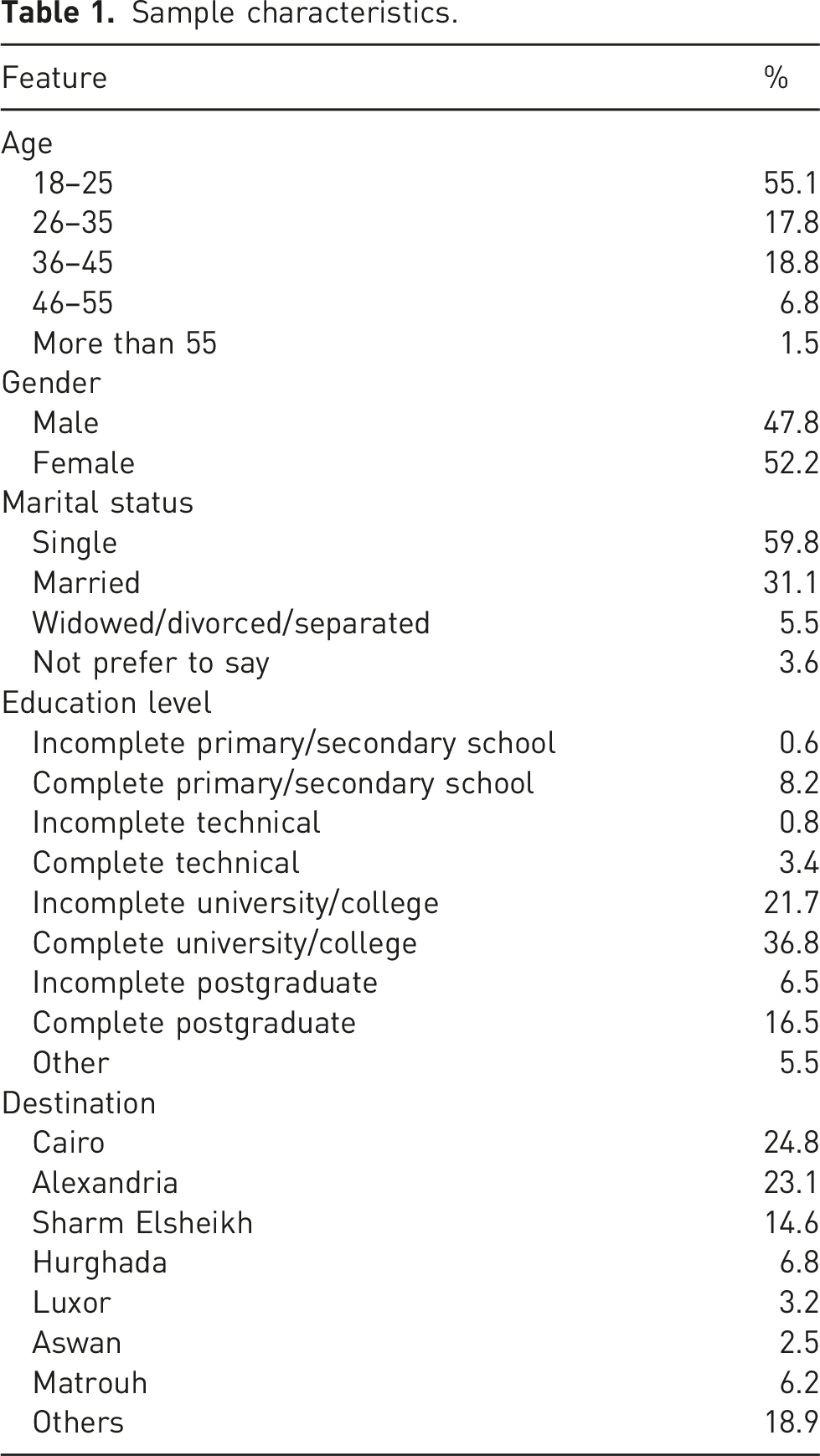
Sample characteristics.
Analysis techniques
The procedures of data analysis include the following steps: (1) SPSS software is used to analyze the sample profile. (2) PLS-SEM technique, using WarpPLS software 7.0 (Kock, 2020) is performed to assess both the measurement and structural model. It is evident that PLS-SEM is considered one of the most widely used analytical approaches among different disciplines and areas (Hair et al., 2020), involving the tourism and hospitality setting (e.g. Abou-Shouk and Soliman, 2021; Elbaz and Haddoud, 2017; Elsetouhi et al., 2022) in many countries, including Egypt (Elbaz et al., 2021; Hassan and Soliman, 2021; Mekawy et al., 2022; Soliman et al., 2022). Furthermore, it is a fit approach used to conduct exploratory study extending theory and predicting or estimating constructs (e.g., behavioral variables) and assess complex conceptual frameworks combining various multi-item latent variables (Manley et al., 2020).
Results
Measurement model
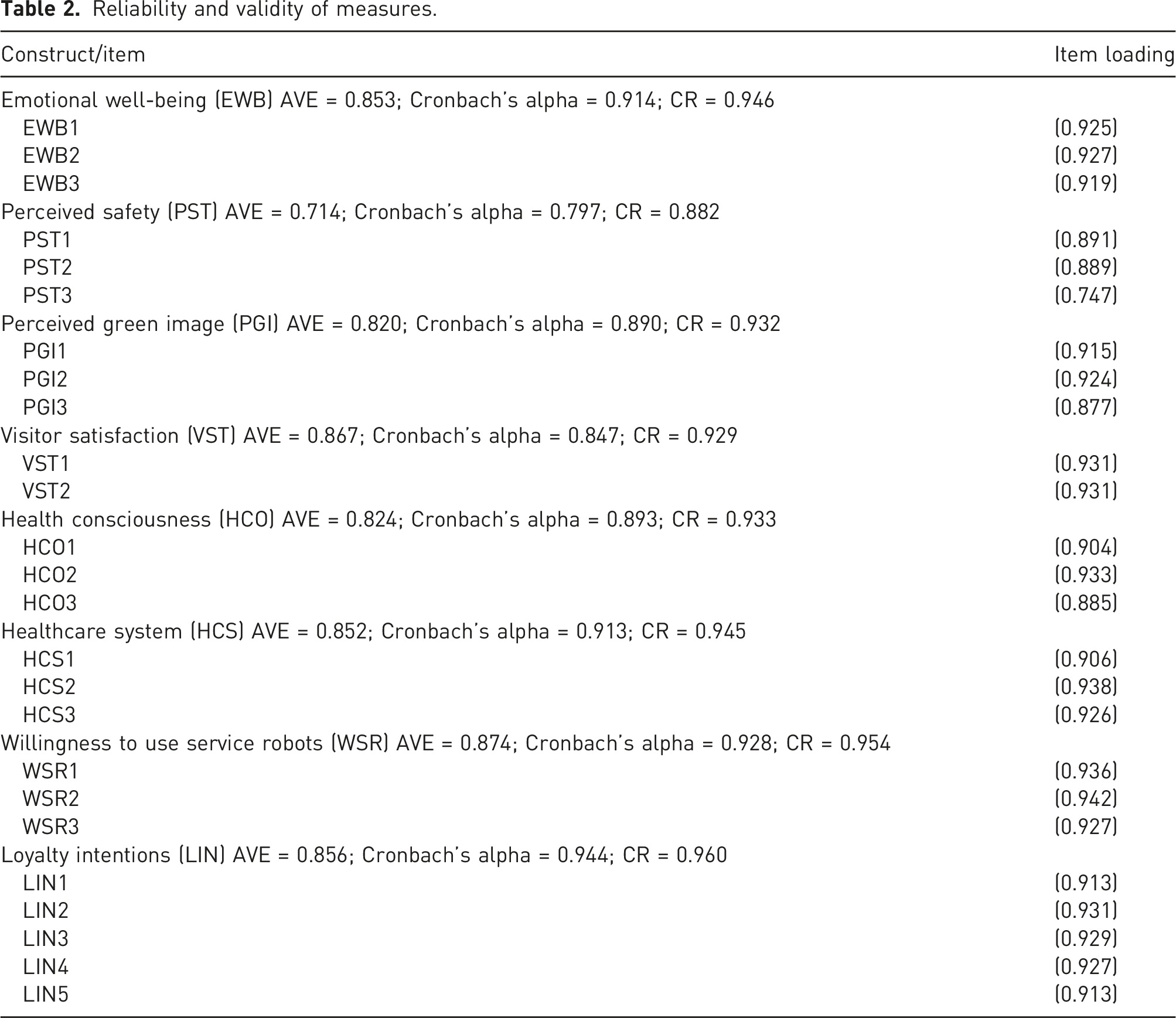
Reliability and validity of measures.
Discriminant validity.

In addition, common method variance (CMV) was assessed employing two approaches: Harman’s single-factor and fill collinearity VIF. Regarding the first approach, the results revealed that the single factor represented lower than 50% of the total variance, implying no major issues of CMV in this study (Podsakoff et al., 2003). Concerning the second method, the values of fill collinearity VIF for measures were less than the threshold of 5, demonstrating that this paper has neither CMV nor collinearity problems (Kock and Verville, 2012).
Structural model
The evaluation of the research structural model, as illustrated in Figure 2, is indicated by the path coefficients (β), p values, and R2 values. The research results show that emotional well-being has a positive effect on visitor satisfaction (β = 0.34 and p < 0.01). Additionally, both perceived safety (β = 0.24 and p < 0.01) and perceived green image (β = 0.24 and p < 0.01) have a positive and significant effect on visitor satisfaction. Moreover, visitor satisfaction is positively and significantly affected by health consciousness (β = 0.08, and p < 0.01) and healthcare system (β = 0.10 and p < 0.01). Therefore, H1, H2, H3, H4, and H5 are all accepted. Furthermore, it is revealed that health and safety-linked factors (i.e., emotional well-being, perceived safety, perceived green image, healthcare consciousness, and healthcare system) explained 74% of the variance in visitor satisfaction (R2 = 0.74). The research structural model.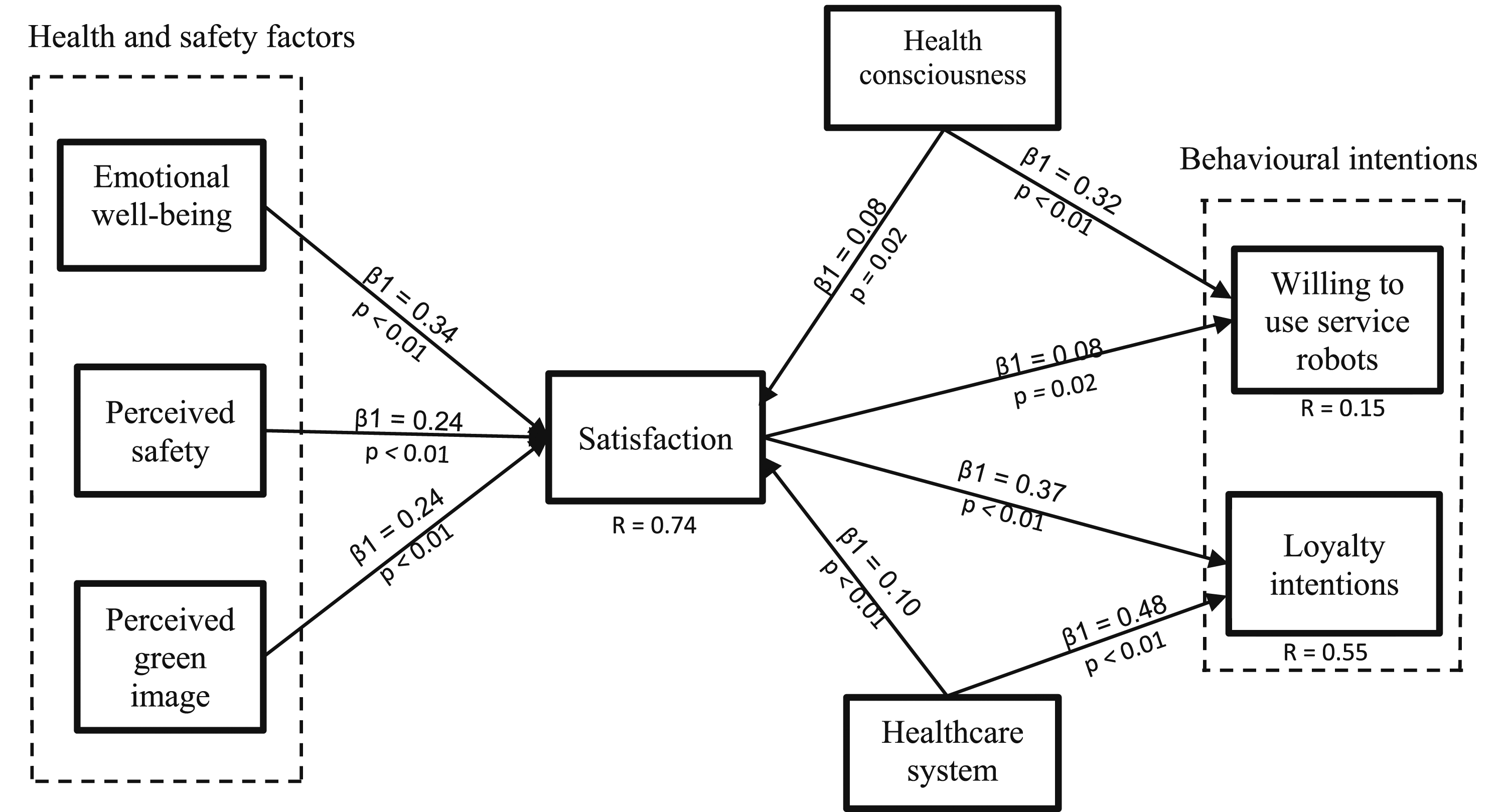
Moreover, the results revealed that visitor satisfaction has a significant and positive effect on visitors’ willingness to use service reboots (β = 0.08 and p = 0.01). Health consciousness also has a considerable influence on visitors’ willing to use service reboots (β = 0.32 and p < 0.01). Therefore, H6 and H8 are accepted. In this vein, visitor satisfaction and health consciousness explained 15% of the variance in visitors’ willingness to use service reboots in tourist destinations. It is found that visitor satisfaction has a significant and positive effect on visitors’ loyalty intentions (β = 0.37 and p < 0.01). Similarly, healthcare system has a strong positive effect on visitors’ loyalty intentions (β = 0.48 and p < 0.01). Consequently, H7 and H9 are supported. Visitor satisfaction and healthcare system explained 55% of the variance in loyalty intentions.
Furthermore, based on Kock (2020) and Sarstedt et al. (2016), we examined the study models’ predictive power (Q2 Stone-Geisser) and found that the three dependent latent variables above zero (i.e., visitor satisfaction: 0.74, visitors’ willing to use service reboots: 0.14, and visitors’ loyalty intentions: 56), showing support for the research model’s predictive power.
Discussion and conclusion
Discussion of findings
Depending on the theories of PMT (Rogers, 1975) and SCT (Bandura, 1999), and considering the circumstances and health considerations raised by the COVID-19 pandemic, the current paper sought to empirically examine the impacts of health and safety-related issues (i.e., emotional well-being, perceived safety, perceived green image, health consciousness, and healthcare system) on visitors’ satisfaction at tourist destinations. In addition, it also aimed at investigating how health consciousness and satisfaction affected visitors’ intention towards using robot-delivered services as well as how the healthcare system and satisfaction could impact their loyalty intentions towards destinations. The hypothesized conceptual framework was confirmed.
The empirical findings indicated that the emotional well-being of visitors has a positive relationship with their satisfaction. Visitors with high levels of emotional well-being are likely to be satisfied with tourism and hospitality services and products provided in destinations. This result is in line with the work of Kim et al. (2016) and Grzeskowiak and Sirgy (2007) indicating that emotional well-being is considered a key determinant of individual satisfaction. Additionally, the research results demonstrated that visitors’ satisfaction was significantly and positively affected by perceived safety, which in turn could enhance their destination satisfaction. Safety is one of the most crucial dimensions and pressing issues that has a significant impact on satisfaction levels. This finding is coherent with prior studies conducted by Cha and Borchgrevink (2019) demonstrating that customer satisfaction is substantially connected with perceived safety. It also supports the work of Ghose and Johann (2018) revealing the significant connection between the perception of safety and satisfaction. In addition, it is revealed that perceived green image positively and significantly impacted visitor satisfaction with tourism and hospitality services provided by tourist destinations. This means the higher the level of green image perception, the greater the satisfaction of visitors with tourist destinations. This finding adds to the theory of SCT (Bandura, 1999) and supports the results of Han et al. (2020) and Nysveen et al. (2018) illustrating that customers’ perception of the green image determines their satisfaction levels.
Moreover, we hypothesized that health consciousness has a positive link with their satisfaction. Domestic visitors with greater levels of health consciousness are likely to be satisfied with the tourism and hospitality services presented during their visits. This result is in line with the findings of Pu et al. (2021), articulating that health concerns and consciousness lead to a greater perception of the value and significance of services in destinations, which in turn might lead to their satisfaction. Furthermore, the empirical results also showed that destination healthcare system significantly and positively influenced visitor satisfaction. The finding conformed to the studies of Elbaz et al. (2021), and Kumar et al. (2020) demonstrating that a good healthcare system could improve the satisfaction of visitors within different settings.
Furthermore, the results of the current work elucidated that visitors’ satisfaction is positively and significantly connected to their willingness towards service robots’ usage in tourist destinations. This result agrees with several past studies indicating that customer satisfaction positively affects their behavioral intentions (e.g., willingness to use) (see Selmi et al., 2021). It also supports the work produced by Ivanov and Webster (2021) who pointed out that customers’ willingness to use robot-delivered services in tourism and hospitality-related sectors could be determined by their attitudes towards such services, which might be reflected by their satisfaction with service robots. The results also confirmed the significant and positive effect of visitors’ satisfaction on their loyalty intentions, proving that their loyalty intentions or plans to revisit the destination are based on how satisfied they are during their visits. This is coherent with some prior studies (e.g., Brunner et al., 2008; Elbaz et al., 2021) which found that visitors’ satisfaction has a positive connection with their destination loyalty intentions.
Moreover, it is found that health consciousness was positively and significantly related to visitors’ willingness to use service robots in tourist destinations. This finding is in line with the results of Wu et al. (2021) indicating that the pandemic risk could improve customer engagement toward robots. It also supports the work by Chuah et al. (2021b) revealing that customers’ willingness to use robot-delivered services is identified by their attitudes and values toward service robots. Finally, a positive and significant association was found between the healthcare system and visitors’ loyalty intentions. The healthcare system may influence visitors’ mindsets or their intention to visit their tourist destinations. This is consistent with findings of earlier studies (e.g., Gille et al., 2020; Rasoolimanesh et al., 2021) indicating that the effectiveness of the healthcare system may influence visitors' intentions and behavior in an encouraging way.
Theoretical implications
The present research holds valuable theoretical contributions in various ways: This paper adds to the extant literature on areas such as health and safety, robotic tourism and hospitality services and technologies, and tourism and hospitality management by examining a structural framework on how health and safety considerations could impact destinations visitor’s satisfaction and how the latter impacts their behavioural intentions toward tourist destinations. It also expands extant literature related to the theories of PMT (Rogers, 1975) and SCT (Bandura, 1999) by providing empirical evidence on the current study subject. This study is probably among the first to empirically examine a comprehensive conceptual model, along with its associated latent constructs within the context of tourism destinations. Although there are prior attempts to investigate the connections between the studied variables within different contexts, however, to the best of our knowledge, this work is considered the first attempt to empirically assessed the relationships between health and safety-related constructs (i.e., emotional well-being, perceived safety, perceived green image, health consciousness, and healthcare system), visitors’ satisfaction, and their behavioral intentions (willingness to use service robots and loyalty intentions) from the perspective of domestic tourists in the Middle East countries, especially in Egypt. In addition, it can be clearly seen that there are several studies that have tested consumer behaviour towards using robot-delivered services, particularly among the hospitality industry associated sectors. However, limited research conducted to empirically evaluate tourists’ behavioural intentions to use service robots in the tourism context, involving tourism destinations in particular. To be more specific, as far as the authors know, there is no prior research that has evaluated domestic visitors’ intention to order or receive tourism and hospitality-related services delivered by robots within Egyptian tourism destinations. In addition, the present study contributes to the body of knowledge of crisis management (e.g., the COVID-19 pandemic) within the tourism and hospitality area in developing countries such as Egypt, while, it is apparent that most past studies have focused on such themes and subjects conducted mostly within developed nations. A crucial academic contribution of this paper could be reflected by its concentration on a developing country’s culture/context. Moreover, the current paper represents a clear understanding and empirical evidence on how tourists’ health consciousness could impact their willingness towards service robot’s usage at tourism destinations, where the findings support the same. Therefore, this paper adds to the extant literature concerning robotic technologies in the tourism and hospitality setting by highlighting the substantial role of traveller’s health consciousness in fostering their willingness towards using robots to order and/or get services and facilities at their destinations. Furthermore, this article has made an academic contribution to the existing literature in tourism and hospitality by elucidating the crucial impact of a destination’s healthcare system in enhancing tourists’ loyalty intentions.
Managerial implications
The findings of the present paper provide substantial practical guidelines and managerial implications for managers and marketers of tourist destinations. Considering the psychological consequences of COVID-19 in terms of health and safety issues, this research provides valuable implications concerning the crucial role of health and safety related constructs in identifying the levels of visitors’ satisfaction during and after their holidays. That is, destination managers and marketers have to ensure that health and safety procedures are carefully considered and deployed within the destination. Having said that, destination management organizations are requested to focus on the most crucial factors impacting the emotional well-being of visitors, perception of destination safety, and perception of green image practices deployed in the destinations that reflect a boost in destination satisfaction, which in turn, will lead to favourable behaviours towards the destination. In addition, this paper is also applicable to Egyptian tourist managers and marketers as it highlights the significant influence of health consciousness on visitors’ satisfaction and their willingness to use robot-delivered services. Based on this finding, it is crucial to establish solid marketing plans concentrating on increasing the health consciousness of potential tourism markets at both national and international levels. In other words, tourist destinations in developing countries (i.e., Egypt) are required to form and deploy proper promotional campaigns aiming at reinforcing the levels of health consciousness of target tourism markets. Furthermore, the findings reflect that destinations’ healthcare system could improve both visitors’ satisfaction and their levels of loyalty intentions regarding these destinations. Hence, tourism policymakers and destination managers are required to prove that the healthcare system and its associated components in the destination are proper and stronger. Using robots in receiving and delivering tourism and hospitality services for tourists during their trips could help in ensuring health and safety procedures for both visitors and workers, delivering services for customers in an efficient and convenient manner, and providing a better work environment for destinations’ staff (Ivanov et al., 2020).
Limitations and future research
Like any study, the current paper has many limitations to be considered in future academic work. This article has focused on the domestic visitors’ perspectives; while future research is suggested to evaluate international tourists’ perspectives toward such variables within the Egyptian tourist destinations context. This could help in producing a broader and in-depth understanding by considering the international tourists’ opinions towards health and safety considerations in Egyptian tourist destinations, and how these could affect their satisfaction and behavioral intentions. Additionally, the generalization of the current research results could be also made with caution, as it is empirically and quantitatively applied within one nation (Egypt). Thus, we recommend further work to collect and analyse data from other developed and/or developing nations to provide solid findings regarding the research model. Longitudinal research is also suggested. Another limitation is related to the data collection instrument (i.e., online survey) used in this paper. Future work could therefore employ other tools (e.g., self-administrated survey, on-site survey, semi-structured interviews, etc.) to gather a greater number of responses from the potential respondents, leading to solid results and contributions. In addition, using probability sampling techniques (e.g., simple random sampling) could be a good direction for future research and help in overcoming the issues related to non-probability sampling methods. A qualitative research employing proper techniques (e.g., interview) to present obvious overviews and insights regarding the research framework and its related associations between the studied variables may be considered. A mixed-method approach is also suggested for further work. Future research could incorporate some intervening constructs (e.g., emotions, perceived risk, attitudes, etc.) and/or interaction variables (e.g., mindfulness, destination trust, etc.) in the research framework to provide solid findings and further theoretical and managerial contributions.
Footnotes
Declaration of conflicting interests
The author(s) declared no potential conflicts of interest with respect to the research, authorship, and/or publication of this article.
Funding
The author(s) received no financial support for the research, authorship, and/or publication of this article.

Measures and sources
N.A. = Item was dropped.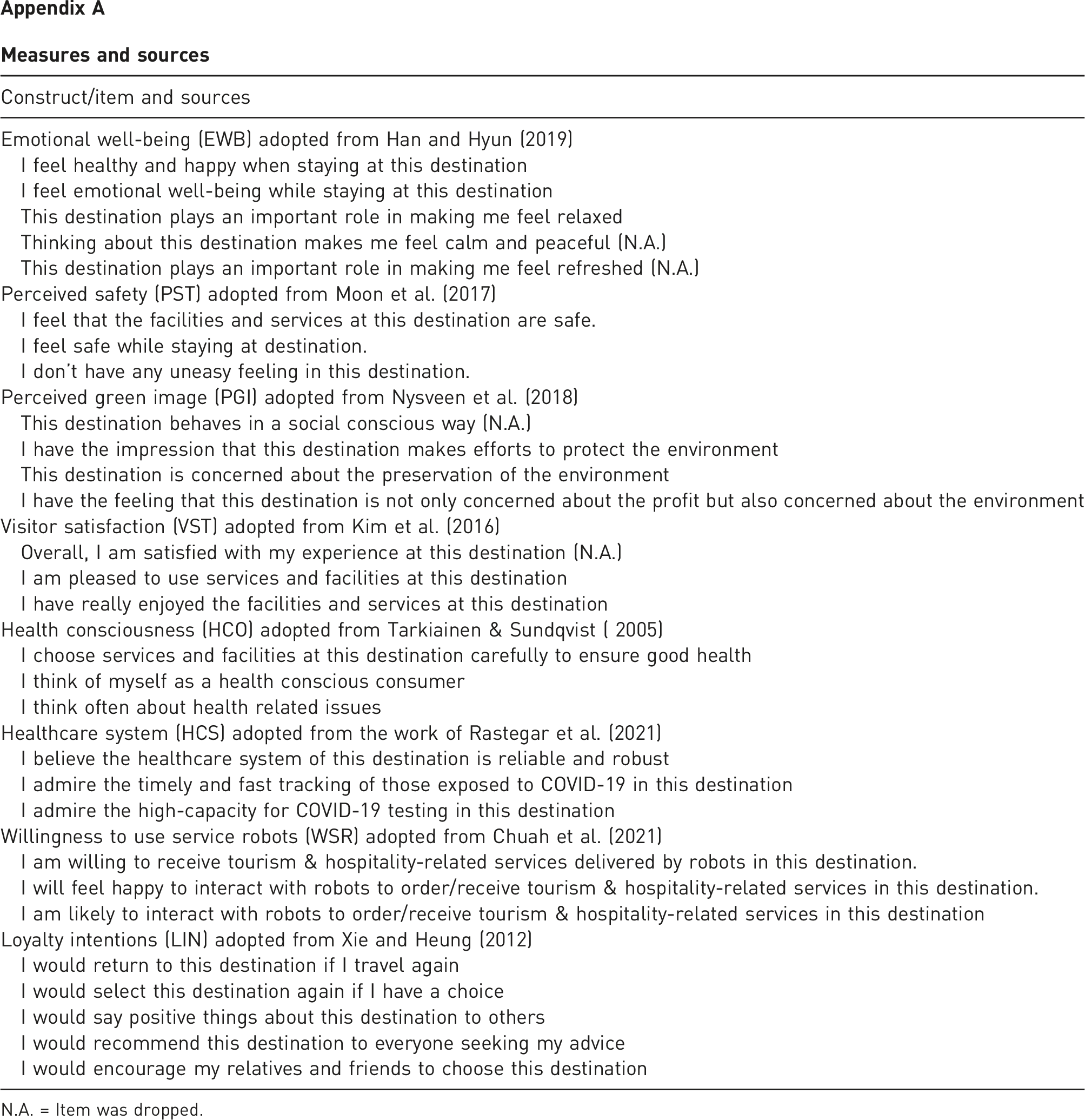
Construct/item and sources
Emotional well-being (EWB) adopted from Han and Hyun (2019)
I feel healthy and happy when staying at this destination
I feel emotional well-being while staying at this destination
This destination plays an important role in making me feel relaxed
Thinking about this destination makes me feel calm and peaceful (N.A.)
This destination plays an important role in making me feel refreshed (N.A.)
Perceived safety (PST) adopted from Moon et al. (2017)
I feel that the facilities and services at this destination are safe.
I feel safe while staying at destination.
I don’t have any uneasy feeling in this destination.
Perceived green image (PGI) adopted from Nysveen et al. (2018)
This destination behaves in a social conscious way (N.A.)
I have the impression that this destination makes efforts to protect the environment
This destination is concerned about the preservation of the environment
I have the feeling that this destination is not only concerned about the profit but also concerned about the environment
Visitor satisfaction (VST) adopted from Kim et al. (2016)
Overall, I am satisfied with my experience at this destination (N.A.)
I am pleased to use services and facilities at this destination
I have really enjoyed the facilities and services at this destination
Health consciousness (HCO) adopted from Tarkiainen & Sundqvist ( 2005)
I choose services and facilities at this destination carefully to ensure good health
I think of myself as a health conscious consumer
I think often about health related issues
Healthcare system (HCS) adopted from the work of Rastegar et al. (2021)
I believe the healthcare system of this destination is reliable and robust
I admire the timely and fast tracking of those exposed to COVID-19 in this destination
I admire the high-capacity for COVID-19 testing in this destination
Willingness to use service robots (WSR) adopted from Chuah et al. (2021)
I am willing to receive tourism & hospitality-related services delivered by robots in this destination.
I will feel happy to interact with robots to order/receive tourism & hospitality-related services in this destination.
I am likely to interact with robots to order/receive tourism & hospitality-related services in this destination
Loyalty intentions (LIN) adopted from Xie and Heung (2012)
I would return to this destination if I travel again
I would select this destination again if I have a choice
I would say positive things about this destination to others
I would recommend this destination to everyone seeking my advice
I would encourage my relatives and friends to choose this destination
Appendix B
Description of service robots in the survey
Smart Service Robot - Office Building/Retail Store/Restaurant