




Abstract
The present study examines how tourists’ experiences in wellness spas promote holistic health through the Holisticscape framework from both tourists’ and other stakeholders’ perspectives, an extension of the servicescape that encompasses the ambience, social, activity, body, mind, and spirit dimensions. An exploratory, multi-stakeholder qualitative design was employed, with 20 in-depth interviews conducted in wellness spas in Portugal. Thematic analysis revealed that ambience, social relations, activity, body, mind, and spiritual stimuli support tourists’ holistic health. These findings extend existing research on servicescape and experiencescape by demonstrating how multidimensional experiential stimuli interact to produce holistic health in wellness spa settings. The study offers practical implications for designing immersive and health-oriented environments, enhancing service customisation, and integrating cultural and natural resources into wellness spa offerings. Given its exploratory and context-bound nature, it is recommended that further research be conducted to validate Holisticscape dimensions across a range of wellness spas at distinct destinations. Furthermore, the development of measurement tools for future quantitative investigations is recommended.
Keywords
Introduction
The phenomenon of wellness tourism has undergone significant expansion over the preceding decade, propelled by mounting levels of stress, health concerns arising from lifestyles, and an escalating consciousness of mental and emotional well-being, an experience that has been particularly pronounced in the post-pandemic era (Global Wellness Institute, 2024; Liao et al., 2023). In contrast to medical tourism, which is predicated on a curative, interventionist model, wellness tourism is based on a proactive approach to maintaining and enhancing holistic health through non-invasive, preventive, and lifestyle-oriented practices (Dryglas and Smith, 2024). The concept of holistic health, as initially theorised by Dunn (1959), is understood as the integrated harmony of the functioning between the environment, the body, the mind, and the spirit.
In this study, wellness is conceptualised as a multidimensional, process-oriented construct distinct from well-being. Whilst some authors (Dillette et al., 2021; Smith and Diekmann, 2017) utilise the terms interchangeably, the present study adopts the perspective of the wellness and counselling psychology literature, which defines wellness as a way of life oriented towards optimal health and well-being through the conscious integration of body, mind and spirit (Myers et al., 2000). Wellness is thus understood as an intentional and ongoing process of holistic self-development (Olivier et al., 2005). In contrast, well-being refers more narrowly to life satisfaction or overall quality of life and can be considered an outcome to which wellness practices may lead (Brubaker and Sweeney, 2022). A distinguishing feature of wellness is its multidimensionality, encompassing lifestyle behaviours such as physical activity, rest, nutrition, meaningful engagement, and social relationships, which extend beyond the primarily psychological focus of well-being (Cooke et al., 2016; Swarbrick, 2006).
In the expanding domain of wellness tourism, wellness spas have gained increasing prominence as key infrastructures supporting the delivery of holistic well-being experiences. The sustained growth of the global wellness market has reinforced this trend, with wellness tourism emerging as one of the fastest-growing segments of the tourism industry. This growth is driven by increasing demand for preventive health practices, stress recovery, and holistic approaches to well-being (Global Wellness Institute, 2024). In this context, wellness spas function as central experiential settings within the wellness tourism ecosystem, where wellness-oriented services and experiences are conceptualised, produced, and consumed (Dryglas and Smith, 2024). These environments are designed primarily to integrate water-based facilities, therapeutic and preventive treatments, physical activities, mindfulness practices, and nature-based or culturally embedded experiences. The overarching aim of this integration is to promote relaxation, restoration, and personal development by enhancing the integration of physical, mental, and spiritual well-being (Dini and Pencarelli, 2022; Smith and Puczkó, 2014).
In this study, the tourist experience in the wellness spa context refers to the experiential encounter that occurs within wellness-oriented tourism environments. This is distinct from the provision of spa services in isolation or from general well-being outcomes that are detached from tourism contexts. To ensure conceptual clarity, this study adopts wellness tourism as the overarching field of inquiry, wellness spas as the empirical setting, and holistic health as the primary experiential stimuli in accordance with previous literature (Dryglas and Smith, 2024; Smith and Puczkó, 2014).
Despite the proliferation of research on wellness tourism, extant studies (e.g., Dryglas and Smith, 2024; Liao et al., 2023) have identified several conceptual and empirical limitations that impede a comprehensive understanding of how tourists’ experiences contribute to holistic health in the context of wellness spas. In particular, research on tourism experience has been strongly influenced by environmental experience frameworks such as experiencescape, proposed by Pizam and Tasci (2019).
Firstly, research on tourism experiences has evolved significantly through the utilisation of servicescape and experiencescape frameworks. These frameworks emphasise environmental cues, atmospherics, and social interactions as drivers of affective and behavioural responses (Bitner, 1992; Pizam and Tasci, 2019). Whilst these frameworks have been applied to spa and wellness contexts (Chen et al., 2023; Lin and Mattila, 2018), they tend to treat holistic health as indirect or post-consumption effects rather than as structurally embedded experiential dimensions.
Secondly, studies examining wellness and spa tourism experiences frequently focus on fragmented components of the experience, such as sensory ambience (Gaoua et al., 2012; Halonen et al., 2012; Lehrner et al., 2000), nature exposure (Pretty et al., 2005; Zhang and Li, 2025), social interactions (Han et al., 2018; Mody et al., 2020) or service quality and specific activities (Dillette et al., 2021; Dryglas and Smith, 2024; Kotur, 2022) without integrating these elements into a coherent experiential system. Consequently, the mechanisms through which multiple stimuli interact to support holistic health remain under-theorised.
Thirdly, the majority of empirical research adopts a tourist-centric perspective, overlooking the role of other key stakeholders, such as spa managers, therapists, consultants, and destination players, who actively design, curate, and mediate wellness experiences (Opoku et al., 2022; Pizam and Tasci, 2019). This limitation in the explanatory power of existing models is particularly pertinent in highly curated environments such as wellness spas.
Finally, although holistic health is frequently invoked as a defining feature of wellness tourism, there is a scarcity of studies structurally integrating the body, mind, and spirit dimensions into experience frameworks in a way that allows them to be empirically examined as experiential stimuli rather than abstract outcomes (Dillette et al., 2021; Kotur, 2022). The Holisticscape framework from Valente-Pedro et al. (2025) comprises six interrelated dimensions: (1) ambience, (2) social relations, (3) activity, (4) body, (5) mind and (6) spirit. This multidimensional structure offers a theoretically grounded means of examining how tourists’ experiences are co-produced, interpreted, and linked to holistic health across tourists’ and other multiple stakeholders’ perspectives.
Against this background, the purpose of this study is to explore how experiential stimuli in wellness spa settings contribute to tourists’ holistic health, using the Holisticscape framework to incorporate both tourist and other stakeholder perspectives. Therefore, the present study focuses on wellness spas in Portugal, which are carefully curated environments where experiential stimuli are deliberately designed and managed. This research aims to empirically examine the structure, interaction, and perceived stimuli of the Holisticscape dimensions. To fulfil this purpose and address the identified research gaps, the study is guided by the following research questions: RQ 1: What is the perception of experiential stimuli in wellness spa settings by tourists and other stakeholders alike? RQ 2: Which experiential stimuli dimensions contribute to tourists’ holistic health within the context of a wellness spa? RQ 3: How does the Holisticscape framework explain the multidimensionality ((1) ambience, (2) social relations, (3) activity, (4) body, (5) mind and (6) spirit) of wellness tourism experiences?
The study’s contributions to the literature on wellness tourism are: Firstly, it provides empirical validation and contextual refinement of the Holisticscape framework within wellness spa environments. Secondly, it advances experiential research by structurally integrating holistic health dimensions into experiential analysis. Thirdly, it employs a multi-stakeholder and tourists qualitative approach, thereby offering a more nuanced understanding of how experiences in wellness tourism are designed, delivered, and interpreted.
Moreover, this study directly responds to calls for more integrative, theory-driven, and critically informed research on experiences in wellness tourism (Dryglas and Smith, 2024; Opoku et al., 2022) and establishes the foundation for future empirical validation and cross-contextual comparison.
Theoretical background
Wellness tourism and wellness spas conceptualisation
Wellness tourism is defined as travel undertaken with the principal motive of pursuing holistic health by enhancing physical, mental, and spiritual development (Liao et al., 2023; Mueller and Kaufmann, 2001). Early investigations in this field conceptualized wellness tourism as a niche market, focusing on the pursuit of relaxation and the attainment of therapeutic benefits (Chen et al., 2008; Mueller and Kaufmann, 2001), while contemporary scholars have positioned wellness tourism within a broader lifestyle and health movement, emphasizing balance, self-development, and the integration of the body, mind and spirit dimensions (Dillette et al., 2021; Dini and Pencarelli, 2022). This change is revealing broader societal pressures, including stress, burnout, and rapid economic shifts, which have intensified the demand for restorative and transformative travel experiences (Liao et al., 2023). Wellness spas offer structured programs that encompass physical activity, mindfulness, nutrition, coaching, and recovery, constituting a key supply-side setting within the wellness industry (Chen et al., 2023; Smith and Puczkó, 2014). Because the present study examines the tourist experience in wellness spas functioning as wellness-oriented destinations, the phenomenon is situated within the domain of wellness tourism, with the wellness spa constituting the supply-side setting through which holistic health is delivered.
Limitations of the theoretical frameworks in tourism experience within wellness settings
The extant literature on tourism experiences in wellness and spa contexts is grounded in three prominent theoretical veins, each contributing essential conceptual building blocks but also exhibiting limitations that justify new theoretical development. Firstly, the Stimulus-Organism-Response (S-O-R) paradigm (Mehrabian and Russell, 1974) remains the dominant foundation for explaining how environmental stimuli influence internal states and behavioural responses. Within tourism studies (e.g., Chen et al., 2023; Loureiro et al., 2013), the S-O-R model has been extensively employed to understand how environmental cues influence emotional reactions, satisfaction, and behavioural responses. These stimulus-based approaches conceptually inform the Holisticscape framework, framing wellness spa environments as structured sets of experiential stimuli that may influence tourists’ perceptions of holistic health. Secondly, environmental experience theory has evolved from atmospherics, as introduced by Kotler (1973), who emphasised how environmental cues, such as colour, sound, and design, influence consumer behaviour, to Bitner’s (1992) servicescape, which expanded this to include ambient conditions, spatial layout, functionality, and staff interaction and to experiencescape, as proposed by Pizam and Tasci (2019) further extending the concept to integrate natural, cultural, social, and sensory stimuli, while positioning tourists as active co-creators in multistakeholder settings. Within the servicescape stream, ambience and social dimensions have been shown to influence perceived wellness in healthcare contexts significantly (Han et al., 2018; Mody et al., 2020). Building on this foundation, several scholars have examined the restorative qualities of wellness settings using theories such as attention restoration theory (Kaplan, 1995) and self-determination theory (Lee et al., 2026; Thal and Hudson, 2019), demonstrating that environments providing repeated exposure to restorative attributes improve holistic health through emotional healing, cognitive recovery, spiritual engagement and life satisfaction (Cho et al., 2016; Gill et al., 2019; Mody et al., 2020; Rodrigues et al., 2010).
Despite the profound influence of these frameworks on hospitality and tourism research, they do not incorporate holistic health dimensions into their structures. Holisticscape is explicitly positioned as the conceptual evolution of this trajectory, extending servicescape logic into the domain of holistic health promotion.
The third theoretical vein is derived from Dunn´s (1959) conceptualisation of holistic health, which posits that optimal health necessitates the integration of the physical, mental, and spiritual dimensions. Although this concept has been widely adopted in public health and wellness studies, it has not been structurally embedded within frameworks for tourism experience stimuli. Holisticscape’s approach is predicated on integrating holistic health into its fundamental dimensions, treating the body, mind, and spirit not merely as outcomes but as experientially influenced stimulus domains. Despite robust theoretical underpinnings, the aforementioned frameworks exhibit limitations that hinder their efficacy in examining wellness spa experiences. For instance, the experiencescape in wellness or spa environments (e.g., Dryglas and Smith, 2024; Lin and Mattila, 2022) identifies the roles of infrastructure, service quality, hygiene, social interaction, and natural surroundings in the tourist experience, but it does not integrate the holistic health through body, mind and spirit stimuli.
The Holisticscape conceptual framework in wellness spa contexts
The concept of Holisticscape refers to a multidimensional experiential environment designed to stimulate holistic health through interconnected ambience, social, activity, body, mind, and spiritual elements (Valente-Pedro et al., 2025). Building upon servicescape and experiencescape theories, the Holisticscape concept posits that tourism environments should be conceptualised as integrated systems of stimuli that influence tourists’ physical, mental, and spiritual health (Valente-Pedro et al., 2025).
The Holisticscape framework, as proposed by Valente-Pedro et al. (2025), is adopted and adapted to guide this study’s theoretical lens, as it addresses the identified gaps and provides a multidimensional structure suitable for examining wellness spa environments. In contrast to preceding servicescape or experiencescape frameworks, Holisticscape prioritises hedonic and eudaimonic well-being, personal growth, and holistic health, which are crucial to wellness tourism and align with the transformative objectives of wellness spas (Amaro et al., 2025; Valente-Pedro et al., 2025). Holisticscape structurally incorporates Dunn’s (1959) holistic health concept into its framework by conceptualising the body, mind, and spirit as stimulus-targeted experiential domains rather than merely post-hoc outcomes, thereby representing an essential conceptual development over the previous framework. The Holisticscape framework intentionally integrates environmental psychology, marketing, health and tourism studies to explain how experiential stimuli contribute to improvements in holistic health. It comprises six interrelated dimensions: (a) physical ambient, which include sensory ambience, functionality, design, and natural surroundings stimuli; (b) social atmosphere which integrates social interactions and relationships, tourists similarity and social density stimuli; (c) activity encompasses stimuli based on activities, education, entertainment, involvement, escape and cultural elements; (d) body which represents the stimuli elements that support physical vitality and health; (e) mind which includes stimuli elements that promote cognitive restoration, mental clarity and stress reduction; and (f) spirit which features stimuli promoting self-awareness, meaning, and personal growth. This study is based on the Holisticscape analytical framework, which, in turn, informs the coding categories, interpretation, and the development of subcategories.
Methods
Study design
An interpretive, exploratory qualitative approach was adopted to examine the complex nature of Holisticscape as experienced and enacted by consumers within a wellness spa environment (Belk et al., 2013). In-depth interviews were employed as the primary data collection method, as this technique enables a rich and nuanced exploration of participants’ lived and subjective experiences, capturing their personal feelings, opinions, and perspectives while remaining sensitive to the wellness spa context in which Holisticscape is developed (Belk et al., 2013; Legard et al., 2003; Milena et al., 2008). This approach also facilitated an examination of the interconnections among the different dimensions of Holisticscape as embedded in participants’ everyday experiences. The study design was informed by the Holisticscape framework, adapted from Valente-Pedro et al. (2025) and aimed to investigate how experiential stimuli within wellness spa settings influence holistic health. Consequently, the interview questions were developed through a literature review to elicit perceptions, thoughts, values, and feelings of diverse tourists and other stakeholders regarding stimulus experiences that shape tourists’ holistic health (Cranmer et al., 2020; Hammond and Wellington, 2013). These questions were reviewed by three hospitality management researchers with over 6 years of experience to ensure their rigour and usability. This was followed by a pilot test with 10 respondents from the target population, which was used to finalise the semi-structured interview scripts, including focal and exploratory questions, before formal data collection. The interviewees in the pilot test provided constructive feedback on terminology changes in the interview scripts to align with the research context in the wellness spa setting. After obtaining approval from the university’s ethics committee for the interview protocol, tourists who had a memorable wellness spa experience and professionals in the wellness and spa sector were identified and invited to an online interview via phone, email, or in person in March 2023.
Sampling and data collection
The Algarve region is the ideal setting for this research due to its established position as Portugal’s leading tourism destination and one of Europe’s most recognised coastal regions (Guerreiro et al., 2025; WTA, 2025). Its extensive Atlantic coastline, favourable Mediterranean climate, and more than 300 days of sunshine per year make it a well-established sun-and-sea destination that operates year-round and is particularly attractive for wellness-oriented travel (Bjurstam and Cohen, 2011; visitalgarve.pt, 2021). The region has successfully diversified its tourism offer beyond coastal leisure to include golf, cultural tourism, nature-based activities, and birdwatching, thereby reinforcing its adaptability and reducing its dependency on seasonal demand (Bender et al., 2024; Guerreiro et al., 2025). Additionally, the region is distinguished by the proliferation of wellness spas within hotels and resorts. These characteristics position the Algarve as a prominent region in Portugal, with a notably high spa density, measured as the number of spas per square kilometre (Registo Nacional De Turismo, 2025). The Algarve region comprises 123 wellness spas, divided between the Barlavento and Sotavento sub-regions, with Barlavento accounting for twice as many spa facilities as Sotavento (Registo Nacional De Turismo, 2025). These were mainly contemporary wellness spas, following international trends in health and wellness tourism, as the region has only one traditional thermal spa, located in Caldas de Monchique (LNEC, 2010).
Tourists and other stakeholders’ profile.
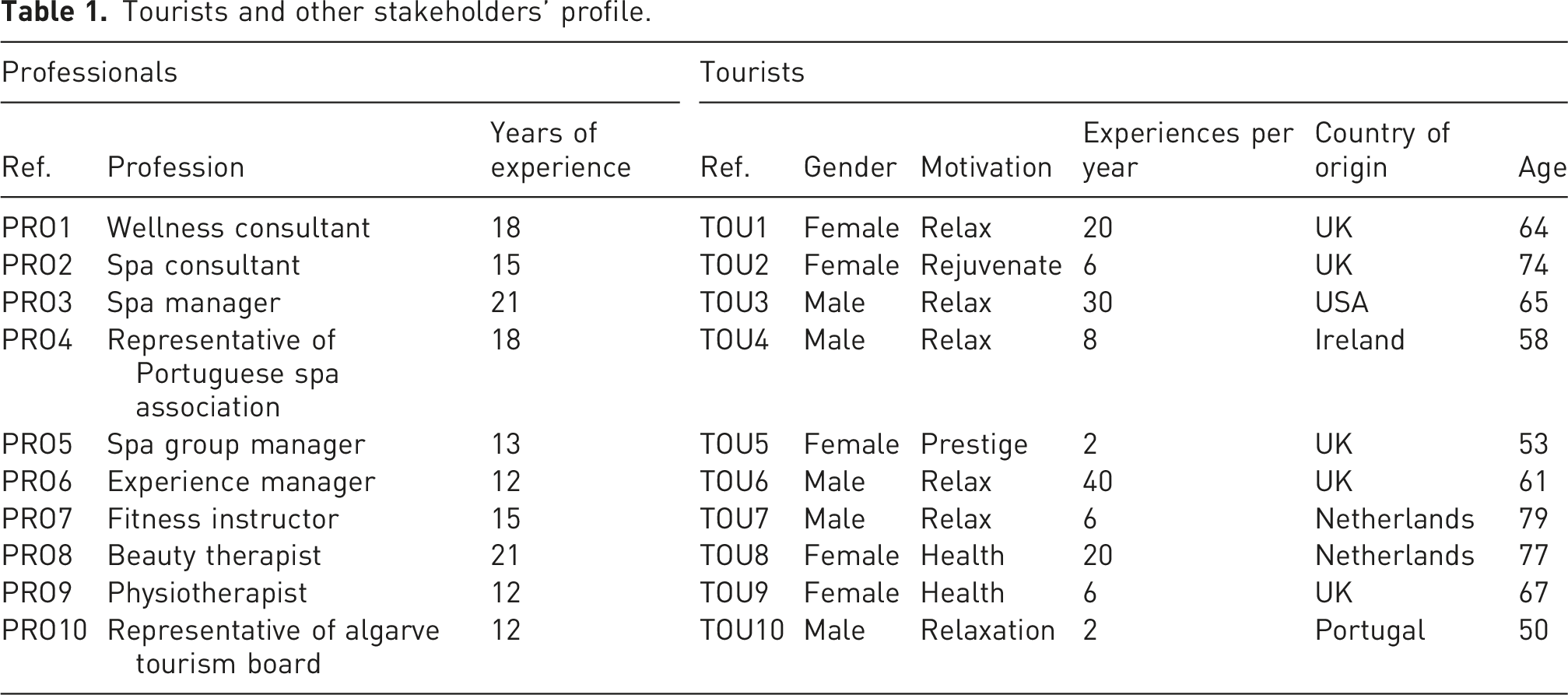
Purposeful, judgmental sampling was employed to recruit participants (Cranmer et al., 2020) based on the assumption that at least one representative of each type of respondent is required for data to be particularly informative and insightful (Cranmer et al., 2020; Newman, 2005).
One of the authors, who specialised in wellness spa management, guided the interviews conducted from April until May 2023 to maintain consistency and ensure validity and reliability (Cranmer et al., 2020; Kumar, 2011). The researcher initially established personal contact with several participants during visits to wellness spa facilities, which facilitated trust, recruitment, and effective navigation of information-rich cases (Kaya et al., 2024; Wang and Uysal, 2024; Yu and Lee, 2014). However, it should be noted that the formal interviews were conducted online, lasted 45–60 minutes and were audio-recorded with participants’ prior authorisation.
The trustworthiness of this study was ensured by adhering to the criteria proposed by Lincoln et al. (1985), namely credibility, dependability, confirmability, and transferability. The study’s credibility was enhanced through rigorous cross-checking among researchers and the audio recording of all participant responses. The dependability and confirmability of the study were ensured by maintaining the participants’ viewpoints, conducting member checking to validate the data (Mero-Jaffe, 2011), and reviewing transcripts for consistency (Lincoln et al., 1985). The issue of transferability was addressed by providing a clear and detailed description of the study context, enabling readers to assess the applicability of the findings to other settings (Korstjens and Moser, 2018).
Data analysis
The data collected in Portuguese were translated into English using a back-translation procedure conducted by bilingual experts to ensure semantic accuracy. Meanwhile, the interviews originally conducted in English were analysed directly. The transcriptions of all audio recordings were conducted verbatim to preserve the participants’ original meanings and expressions. The transcribed material was analysed using MAXQDA v.22.6.1 qualitative data analysis software (Elaldi and Yerliyurt, 2017; Zamanzadeh et al., 2015). The analysis employed a hybrid deductive–inductive thematic analysis approach, combining theoretically informed coding with the identification of emergent themes.
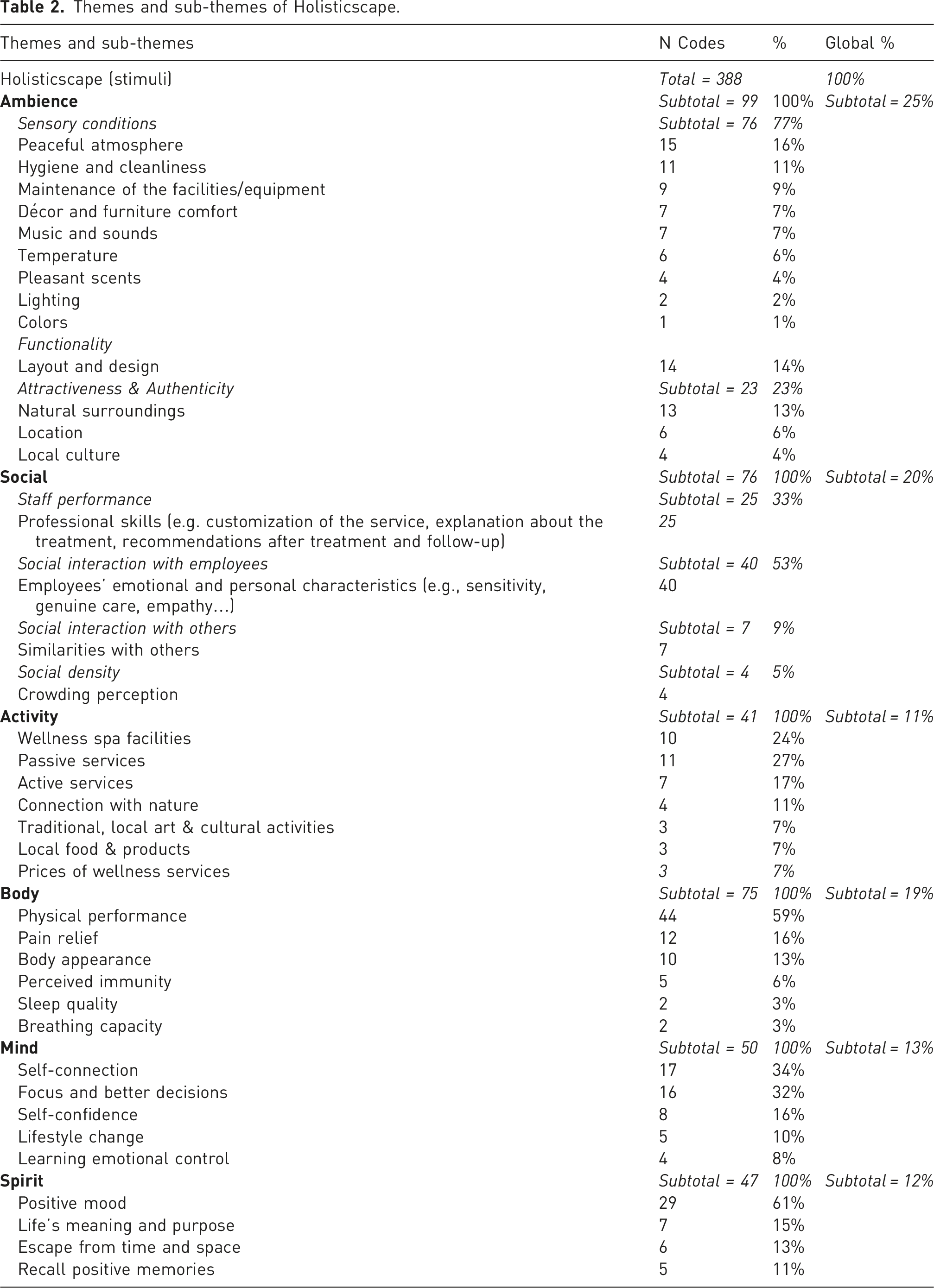
The initial coding structure was formulated based on the Holisticscape framework proposed by Valente-Pedro et al. (2025), which comprises six dimensions: ambience, social relations, activity, body, mind, and spirit. These dimensions served as preliminary analytical categories to organise the data. Subsequently, an inductive coding process was applied to identify sub-themes emerging from participants’ narratives. The analysis was conducted in accordance with the coding procedures outlined by Corbin and Strauss (1990), encompassing the initial coding stage, which entailed identifying pertinent segments of text, and the subsequent axial coding stage, which involved categorising associated codes into sub-themes. Examples include sensory conditions and functionality within the ambience dimension.
In the final stage, a thematic synthesis was conducted to identify patterns and relationships across the sub-themes, following the principles of thematic analysis outlined by Braun and Clarke (2006). This process facilitated the interpretation of how experiential stimuli were perceived across the six Holisticscape dimensions.
Themes and sub-themes of Holisticscape.
Findings and discussion
The Holisticscape framework, as illustrated in Figure 1, comprises the following dimensions: ambience, social, activity, body, mind, and spirit. These dimensions emerge as a valuable lens for understanding how multidimensional experiential stimuli contribute to tourists’ holistic health in wellness spas. The present study draws upon the seminal contributions of Valente-Pedro et al. (2025), with the analysis of qualitative data indicating that stimuli across all six dimensions interact to create a holistic health experience, with evidence of ambience, social and activity stimuli often functioning as background enablers to facilitate the reporting, interpretation, and evaluation of body, mental, and spiritual stimuli by participants. Holisticscape framework adapted from Valente-Pedro et al. (2025).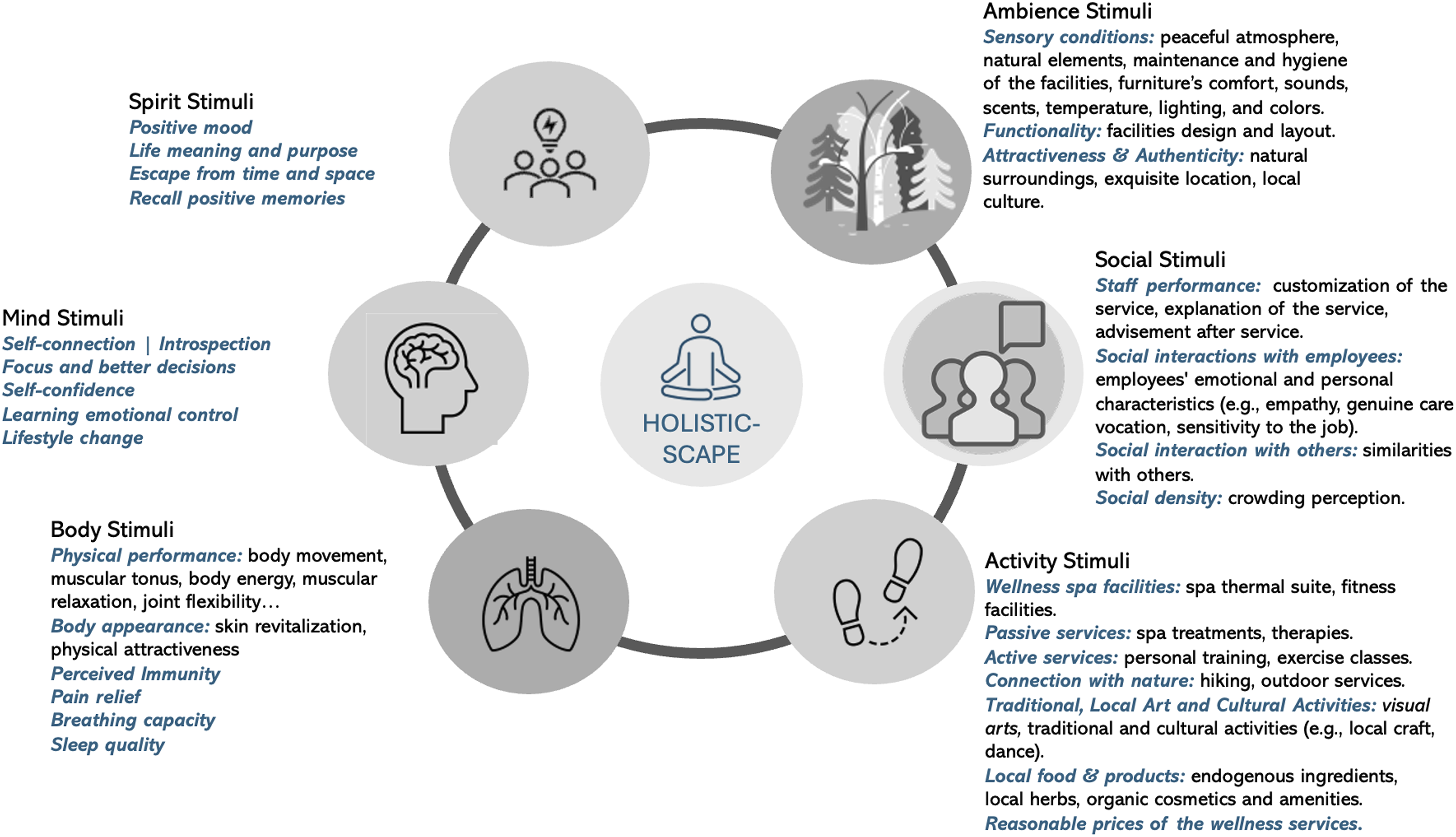
The six-dimensional configuration of Holisticscape can be conceptually related to stimulus-based environmental frameworks, such as the Stimulus–Organism–Response (S-O-R) paradigm (Mehrabian and Russell, 1974), which explains how environmental stimuli influence individuals’ internal states and behavioural responses. However, the present study does not empirically operationalise the organism and response components of the S-O-R model. Instead, the Holisticscape framework is utilised as a stimulus-oriented analytical lens to elucidate how environmental and experiential elements in wellness spa settings contribute to tourists’ perceived holistic health. In this sense, the framework extends prior work on servicescape and experiencescape by focusing on the multidimensional nature of experiential stimuli in wellness tourism contexts (Dryglas and Smith, 2024; Valente-Pedro et al., 2025).
In this section, the six Holisticscape dimensions cultivated by varied tourists and other stakeholders in a wellness spa setting are discussed. While these dimensions are presented separately, participants’ statements also suggest that they do not function independently; instead, they are perceived as either reinforcing each other or, at times, in tension (e.g., relaxation vs crowding, authenticity vs staged aesthetics, hygiene protocols vs sensorial immersion). Furthermore, through an analysis of Holisticscape dimensions, it is demonstrated how wellness spas contribute to each of them.
Ambience
Participants consistently posited ambience as an enabling condition for relaxation and restoration; however, the data also point to a more complex interplay between sensory design, operational standards, and authenticity claims.
Sensory Conditions
A recurrent theme concerned the deliberate stage management of multisensory cues (e.g., natural materials, earthy palettes, subdued lighting, and aromatics) that participants interpreted as signals of calmness and coherence with the wellness spa’s philosophy. One tourist described how sound, scent, and tactile sensations converged to facilitate cognitive settling and emotional regulation: I loved the peaceful and warm atmosphere in the relaxation room with the waterfall… listen to the water running over the rocks, … smell the lavender and rosemary scents in my skin [after aromatherapy massage] …it allowed me to relax and balance my thoughts deeply… (TOU04).
This finding is consistent with previous research that has emphasised the role of natural elements and their sensory congruence in promoting restoration and mental clarity (Chartrand et al., 2024; Kaya et al., 2024; Li et al., 2023; Rosenbaum and Massiah, 2011). However, the statements also indicate that sensory enhancement can function as both a holistic health mechanism and a symbolic marker of luxury, thereby raising a managerial tension: natural features (e.g., waterfalls, gardens) may strengthen perceived exclusivity and marketing visibility, but they also introduce sustainability compromises and resource dependencies that require explicit planning rather than being treated as inherently positive wellness.
The importance of cleanliness and visible hygiene practices as part of implicit service delivery, which conditions trust and willingness to engage in intimate treatments, has been demonstrated. Tourists have indicated that they considered hygiene to be non-negotiable, particularly in changing rooms, treatment spaces and through therapists’ behaviour: …hygiene and good maintenance of the facilities are essential … I never stay in a place that is not clean enough … I pay special attention to the changing rooms and treatment rooms … also, the therapist must show hygienic procedures to gain my confidence… (TOU09).
This finding aligns with the growing body of evidence suggesting that, in the post-pandemic era, expectations have shifted to prioritise sanitation and compliance as fundamental determinants of satisfaction and perceived safety (Dillette et al., 2021; Jiang and Wen, 2020; Lin and Mattila, 2022). Nevertheless, participants’ reports also suggest a potential experiential tension: strict protocols may be supportive, but they can also risk interrupting the flow and sensorial immersion if enacted in overly clinical ways. In this sense, hygiene operates as both a hygiene factor (baseline expectation) and a potential experiential moderator.
Tourists highlighted the significance of thermal comfort and tactile quality in facilitating sustained relaxation, emphasising that discomfort can swiftly compromise the experience: Nothing is worse than feeling cold during a massage, so a comfortable, heated bed or a blanket is always welcome… (TOU 02).
Beyond the realm of comfort, participants implicitly linked service readiness (i.e., prepared equipment, appropriate room temperature, adjusted sound and lighting) to professionalism and perceived care. This finding indicates that ambience cannot be reduced to aesthetics; instead, it is co-produced through material design and procedural competence. This aligns with Dahanayake et al.'s (2023) work, which demonstrates that the provision of professional services, incorporating knowledge, training, clear explanations of competencies, and empathetic support, has been shown to engender memorable experiences, particularly in the context of wellness tourism.
Functionality
The functionality of the thermal suite was discussed in terms of its design logic, which supports privacy, smooth circulation, and independent use. The thermal suite within a wellness spa offers a variety of heat and cooling experiences, including saunas, steam rooms, heated loungers, cold plunges, and rain showers. These are designed to promote relaxation and wellness through the principle of temperature contrast, which has been shown to boost circulation, cleanse the skin, and ease tension by alternating between hot and cold environments (Friend, 2024). The reports of participants indicate that the usability of wellness spas (i.e., the presence of clear signage, guidance on sequencing, disclosure of health risks and recommended durations) can influence the perception of facilities as therapeutic or confusing: “A thermal suite must have a circuit of the water-based, heating and cooling experiences for guests’ usage with signage to ensure health purposes,… and a spa tour must be offered in the first visit to explain the facilities usage and its therapeutic purposes… also, offering endogenous products, ancestral and destination-specific traditional therapies prioritise sustainability and circular economy of the region… (PROF 04).
This finding offers a nuanced understanding of sensory perceptions of ambience, suggesting that cognitive clarity and perceived control may be equally significant factors in determining well-being, particularly for novice users or those with health concerns.
Attractiveness and Authenticity
The concepts of attractiveness and authenticity were attributed to the geographical location, the surrounding landscapes, and cultural embedding. The concept of connection with nature has been frequently posited as a restorative and stress-reducing phenomenon, a notion that aligns with the extant literature linking nature contact to emotional balance and overall health (Li et al., 2023; Zhang and Li, 2025). Furthermore, participants have described how distinctive landscapes shape brand identity and demand: … our resort’s privileged location close to the sea, bounded by forest, away from busy places, creates a perfect scenario to help tourists disconnect from daily routine… tourists came here by the privilege of being surrounded by beautiful landscape and have the best of two worlds, golfing and wellness … (PROF 06).
However, the data also reveal a theoretical tension in which authenticity is often performed through curated cultural elements (e.g., arts, crafts, storytelling). Whilst these may facilitate differentiation and place attachment (Garcia, 2024), they also risk descending into commodification or cultural appropriation if not overseen by cultural expertise. Authenticity, therefore, should be regarded as a challenged claim rather than a simple attribute.
Social
The quality of experience was shaped by social stimuli, which included the competence and emotional conduct of staff, the depth of tourist–employee interactions, tourist–tourist dynamics, and perceived density. Throughout these themes, participants’ reports suggest that sociality can enable transformation, but only under conditions of psychological safety, privacy, and appropriate pacing.
Staff Performance and Professional Relationality
The tourists expressed a preference for personalisation, clear explanation and consent, post-treatment guidance, and follow-up. These practices were interpreted as markers of expertise and care: … the therapist is always charming, paying attention to my needs. She is always happy to help, showing calmness and discretion. I felt uniquely treated and pampered by her (TOU 10); “…Employees must be empathetic, show sensitivity and genuine care in serving others. Always respect tourists’ confidentiality because tourists are usually savvy in this type of experience and know what a good professional should be like…” (PRO 1).
This finding supports the notion that work positions empathy and professionalism as central to transformative wellness experiences, as emphasised by Dahanayake et al. (2025) and Dillette et al. (2021).
However, this study differs from previous literature by revealing an under-acknowledged tension: intense relational labour and customisation can also intersect with commercial imperatives (e.g., upselling, cross-selling). While the provision of recommendations for services or products has been demonstrated to yield favourable outcomes when aligned with tourists’ needs, the use of a commission-based remuneration model, for instance, can give rise to the perception of instrumental behaviour, which has the potential to erode trust. A more critical framing is therefore warranted, as personalisation may be experienced as care or as sales pressure depending on timing, transparency, and perceived congruence with health goals.
Social Interaction With Employees
Participants described emotionally meaningful interactions with staff as essential to achieving transformative experiences. This aligns with previous literature as wellness tourists seek deeper relationships, empathy and professionalism to promote lasting experiences and loyalty (Dahanayake et al., 2025; Dillette et al., 2021). Training approaches (e.g., emotional intelligence, neuro-linguistic programming, active listening and communication techniques) may serve as mechanisms to enhance these interactions. Concurrently, the analysed data imply that deeper engagement requires careful boundary management; insufficient engagement can reduce perceived care, while excessive engagement can compromise privacy, especially in intimate treatments.
Social Interactions With Others
The concept of shared identity and the establishment of connections between peers were identified as particularly relevant within the context of retreats: In retreats, women usually travel alone and enjoy socialising with similar people… they usually enjoy sharing their feelings and personal experience after the breathing and meditation sessions… (PROF01).
This finding aligns with the notion that reflective dialogue and guided sharing can facilitate psychological renewal, as evidenced by research (Johansen and Konu, 2025). Nevertheless, peer dynamics can be characterised as having dual implications; whilst similarity may engender feelings of belonging, it has also been demonstrated to establish implicit norms (e.g. expected levels of openness) that some guests may find disagreeable. Future theorisation could treat peer sociality as a contingent resource rather than an inherently positive feature.
Social Density
The issue of overcrowding was consistently identified as a disruptive factor, particularly in shared spaces: … in the gym, tourists and locals can often be selfish, taking too long using the equipment. It is a typical example of selfish behaviour, with no regard for others' needs. In the exercise classes, this is controlled by the instructor, so compliance is much better, allowing you to have a better experience… (TOU06).
This finding is consistent with the literature, which demonstrates a correlation between crowding and diminished satisfaction, as well as a weakened wellness motivation (Dillette et al., 2021; Kotur, 2022). The analysis of the reports reveals an operational dilemma: restrictions (e.g., time limits, capacity controls) may enhance guest experience quality, but may also risk guest dissatisfaction if perceived as punitive. The deployment of strategies such as demand distribution through scheduling, alternating treatment timing with facility access, and designing circulation flows has emerged as a set of practical interventions. However, these strategies also underscore the notion that wellness is partly an infrastructural achievement rather than solely an individual state.
Activity
The activities were described as direct health-promoting stimuli, delivered through wellness spa facilities (thermal suites), passive treatments, active services, outdoor activities, cultural practices, and wellness programs. The participants’ descriptions indicate that activity effects are not only physiological but also interpreted through meaning-making (e.g., rejuvenation, freedom, self-connection), linking the activity domain to stimuli in the realms of the mind and spirit.
Wellness Spa Facilities
Participants ascribed perceived stimuli to heat and cold practice sequences, including respiratory relief, tension release, and revitalisation: [sauna ritual] Having Peter [employee] shaking the towel to spread the heat and the eucalyptus essence inside the sauna, helped me to breathe much better. While sweating for fifteen minutes, I could feel my body slowly releasing the tension and unwinding. Then I went outside, and Peter encouraged me to scrub the cracked ice on my face, arms, and chest, and to pour a bucket of iced water over my body. It was shocking!… However, in the end, it was so invigorating! … I felt very energised and rejuvenated. (TOU10).
These perceived stimuli correspond with physiological mechanisms, such as mucociliary clearance, which enhance immune responses, reduce inflammation and pain, and promote relaxation and mindfulness, as previously discussed in the literature (Casillo et al., 2023; Cohen, 2020; Esperland et al., 2022). However, the analysed data uncover that facilitation also matters when guided rituals are provided (e.g., staff-led sauna practices), which may intensify perceived stimuli by creating structure, safety, and narrative coherence. This finding suggests that adequate use of the facilities is a predictor of health stimuli, but the practice’s programming and interpretation may further enhance these health stimuli.
Passive Services
Interventions (e.g., Reiki) were conceptualised as engendering experiences that were challenging to articulate, frequently characterised through metaphors of warmth, altered cognition, and sleepiness: Reiki is not a therapy like a common one. It is challenging to explain what I felt. First, a warm, comfortable sensation flowed inside my body. I let myself go and relax… at some point, my thoughts were in another place, like a dream. In the end, I was very calm and sleepy. (TOU08).
Whilst these descriptions lend credence to claims of psychological calmness and somatic comfort, they also raise an interpretative issue, as such experiences may be shaped by expectation, context, and suggestibility. A more critical stance would acknowledge that perceived stimuli can be real to participants, even as they are co-created through belief systems and service narratives.
Active Services and Connection With Nature
Active modalities (e.g., hydrotherapy, yoga, breathing exercises) were described as enabling bodily vitality and mental disconnection, while outdoor activities further amplified these experiences: …freedom while moving my body in the water… (TOU07) I could smell the grass… freshness of the air… It was helping me to feel less anxious. (TOU06)
These findings are consistent with the evidence that nature-based wellness supports emotional recovery and resilience (Zhang and Li, 2025). Architects, landscapers and business owners are encouraged to design facilities that integrate nature to support tourist well-being, encourage lifestyle changes, enhance marketing appeal and increase revenue. Equally, integrating outdoor activities necessitates consideration of factors such as weather, privacy, and noise, underscoring the interdependence of experiential design and infrastructural reliability in fulfilling the promise of wellness.
Local food, cultural activities, and pricing accessibility
These factors were found to be influential in the decision-making process. Participants described local art, cultural engagement, and seasonal cuisine as extending wellness beyond passive treatments and other active services towards lifestyle and place-based meaning. Workshops and gastronomic fairs support healthy eating, cultural exchange and sustainable tourism. Destination management organisations, in collaboration with hotels and resorts, promote local cuisine and sustainability, and the participants emphasised the importance of menus with local, seasonal ingredients to support health and dietary needs: The region offers some gastronomic events essential to deliver a genuine experience about the local culture, where tourists can learn about how to cook a healthy meal with local products, using, for example, (salicornia) or green salt, a small plant typical of the coast that substitutes salt, having less sodium. Also, some resorts have their small plantation of aromatic herbs and vegetables to harvest right before the mealtime and show tourists how to prepare them during the workshops. (PRO10)
The potential for arts engagement to promote well-being has been previously demonstrated in the research from Davies et al. (2016) and Jensen and Bonde (2018), as artistic activities have been supporting emotional expression, social connection and improved mental health by reducing stress, anxiety and depression, while increasing self-esteem, hope, and quality of life. However, it should be noted that these benefits may be distributed unevenly, as high prices can restrict access, while initiatives (e.g., seasonal discount programmes) can advance social sustainability. This introduces a significant equity dimension, as holistic health is shaped by both experience design and economic accessibility.
Body
The body’s physical responses to the intervention were reported to include enhanced mobility, reduced pain, improved appearance, heightened immunity, enhanced sleep quality, and increased breathing capacity. While participants frequently attributed the perceived changes to specific stimuli (e.g., thermal suites, hydrotherapy, aromatherapy oils), the reports also indicate that perceived improvement is a central mechanism, suggesting that subjective physical health assessment is itself a stimulus dimension.
Physical Performance
Participants were encouraged to articulate their perceived body stimuli as part of a meaningful holistic health experience through other stimuli such as activity (e.g., aquatherapy, physiotherapy), referring to changes in body movement, muscular tension, body energy, joint flexibility and relaxation: The spa hydro pool is excellent for improving one’s health. It helps soothe muscular tension and enables relaxation. Several feel-good hormones are released, helping to reduce stress and anxiety, creating a sense of tranquillity and well-being. (PROF04); It [physiotherapy at the pool] improved my mobility, I could walk much better, and my knees are not so sore, I can even feel more energised after it. (TOU07).
The findings from this study corroborate previous research, demonstrating that experiences related to physical exercise are significant in enhancing the body’s stimuli during the wellness spa experience (Lehto et al., 2006; Voigt et al., 2010, 2011). However, the existing literature has primarily focused on the types of activities (e.g., food experiences, detox programmes, physical activities) conducted (Dillette et al., 2021; Kotur, 2022), rather than on the perceived body stimuli that occur during these experiences, which this study aimed to reveal.
Pain Relief
The majority of participants associated the stimuli of pain relief with the relaxation and reduction of inflammation obtained through hydrotherapy and breathing practices. This finding aligns with the existing body of literature examining breathing interventions in contexts involving pain and anxiety, which have been employed by burn patients and women who have multiple sclerosis to alleviate chronic pain, anxiety, and a range of both mental and physical health concerns (Miri et al., 2023).
Body Appearance
In participants’ reports, body appearance emerged as a significant pathway through which wellness spa experiences translate into psychosocial effects, particularly self-confidence and self-image. Participants did not perceive appearance changes as purely cosmetic; rather, improvements such as feeling “more nourished” or “smoother” were described as enhancing perceived attractiveness and, in turn, reinforcing confidence in social presentation and personal well-being: [facial treatment] I can see the difference in my skin; it feels velvety, nourished, and smooth. Getting completely rid of wrinkles is not my goal. They are part of my life story, but smoothing them out is possible and important because it makes me feel more beautiful, helping me to feel more confident… (TOU09).
This finding is consistent with evidence that even subtle changes in an individual’s appearance can influence self-perception and how they are perceived by others, with downstream effects on self-esteem and overall psychosocial functioning (Dayan et al., 2019). However, the emphasis on appearance within a holistic health narrative creates an interpretive tension. When wellness is assessed through visible aesthetic outcomes, wellness spa experiences can reinforce dominant beauty norms by framing improved appearance as a marker of “feeling well”. Consequently, the apparent benefits indicate both authentic enhancements in embodied comfort and confidence and the influence of societal pressures towards culturally held ideals. This suggests that, for some individuals, wellness can become intertwined with aesthetic enhancement rather than being solely associated with physiological or psychological well-being (Dayan et al., 2019).
Perceived Immunity
The concept of perceived immunity was frequently articulated through detoxification narratives, in which participants associated treatments such as algae wraps or increased water intake with toxin elimination, enhanced vitality, and a subjective sense of improved resistance to illness in line with previous literature (Smith and Puczkó, 2013). The findings of this study indicate that feelings of “lightness” or “increased energy levels” function as experiential indicators of health improvement for tourists. However, participants’ explanations rarely referenced specific biomedical mechanisms, suggesting that these perceptions are grounded primarily in embodied sensations, symbolic meanings, and widely circulated wellness discourses rather than in clinically verified outcomes. A more critical interpretation, therefore, requires distinguishing between experiential conviction, in which participants’ subjective feelings of renewal and vitality are meaningful and real, and clinical evidence of immune enhancement, which may not be directly demonstrable within the context of spa-based detox practices.
Sleep Quality
Participants frequently linked the quality of their sleep to the deep relaxation induced by hydrotherapy and balneotherapy. They described the effects of warm water immersion, buoyancy, and post-treatment relaxation on their muscular tension and mental arousal, reporting that these interventions facilitated easier sleep onset and more restful nights. This experiential interpretation is consistent with prior research showing that balneotherapy can significantly improve sleep quality and reduce mental stress over time, likely through combined thermoregulatory, neuromuscular, and relaxation mechanisms (Yang et al., 2018).
Breathing Capacity
The association between breathing capacity and guided yoga breathing practices has been frequently documented, particularly within the context of post-COVID recovery narratives. Participants reported that structured breathing sessions improved breathing ease, reduced anxiety, and increased a sense of bodily control. These perceptions are consistent with previous research demonstrating that yoga breathing techniques (e.g., pranayama) can enhance respiratory function, reduce stress, and support recovery in individuals diagnosed with respiratory or anxiety-related conditions (Kaya et al., 2024; Miri et al., 2023). Moreover, the group-based nature of these sessions has been demonstrated to amplify benefits through social support and shared emotional expression, facilitating psychological recovery and reinforcing health-related behavioural change in wellness and therapeutic settings (Dillette et al., 2021; Johansen and Konu, 2025).
Mind
Cognitive stimuli included self-connection, improved focus and decision-making, increased confidence, lifestyle changes, and improved emotional regulation. Participants described how the reframing of daily stressor stimuli was retrieved from mindfulness and reflection: [mindfulness sessions] It allowed me to reflect on my everyday issues and put them into perspective. (TOU04).
Self-connection, improved focus, increased confidence and emotional regulation
This finding aligns with prior research demonstrating that mindfulness practices enhance attentional control, augment metacognitive awareness, and facilitate emotional regulation by engaging neural mechanisms associated with cognitive control and stress reduction (Hölzel et al., 2011; Kaya et al., 2024). Concurrently, the findings indicate that these cognitive stimuli are not uniform across participants, and the efficacy of mindfulness-based practices appears contingent on factors such as the quality of facilitation, individuals’ prior exposure to contemplative practices, and their openness or readiness for introspection. This variability is consistent with previous research indicating that mindfulness effects are moderated by contextual and individual differences, underscoring the importance of recognising boundary conditions when interpreting cognitive benefits within wellness spa settings (Dillette et al., 2021; Hölzel et al., 2011).
Spirit
Spiritual stimuli were articulated through experiences of positive mood, an enhanced sense of meaning and purpose, perceived escape from time and space, and the recall of positive autobiographical memories. These dimensions align with conceptualisations of spirituality as an inner and relational experience that emerges through immersion and emotional engagement with place and activity, rather than through formal religious practice (Sharpley and Jepson, 2011).
Positive mood
The regulation of positive mood was a recurrent theme, with participants indicating that both group-based wellness activities and individual contemplative practices contributed to emotional balance and well-being. Group activities fostered social connection and a sense of belonging, which supported emotional encouragement. At the same time, practices such as meditation facilitated the management of negative emotions, promoted gratitude, and enhanced emotional stability. This interpretation aligns with prior research associating mindfulness and meditation with enhanced mood regulation and positive affect (Hölzel et al., 2011; Kaya et al., 2024).
Life’s meaning and purpose
The concept of life’s meaning and purpose also emerged as a central spiritual stimulus, particularly in relation to meditation and experiences in nature. Participants described moments of clarity, inner peace, and heightened self-awareness, enabling reflection on personal values and life priorities, fostering gratitude for simple experiences, and fostering a more profound sense of fulfilment. Concurrent studies have indicated that immersion in natural environments and reflective practices can enhance existential well-being and meaning-making processes (Sharpley and Jepson, 2011; Zhang and Li, 2025).
Escape from time and space, and recall of positive memories
It is noteworthy that the participants’ narratives frequently referred to altered perceptions of time and vivid memory recall during water-based experiences, suggesting a deepened state of absorption and transcendence: [Watsu], I felt so deeply relaxed being embraced by the water movements that maybe I fell asleep sometimes. It made me remember my childhood. I remembered looking out the window and seeing birds dancing and chirping on the pine tree in front of my room. I could even remember what the sounds were like. It was so pleasant, it was like being back on time. I am so grateful for this. (TOU 01) While observing the water cascade with the running water over the stones and plants, I remember a wonderful holiday trip in Brazil when I was bathing under the water cascade. It inspired me to unwind, completely forget time, and relive that moment and place again. (TOU 04)
From a more critical perspective, these spiritual effects are co-produced by sensory stimulation and narrative meaning-making processes. Research suggests that rhythmic movement, buoyancy, and natural soundscapes such as flowing water can activate autobiographical memory and facilitate emotional reappraisal, contributing to feelings of transcendence and inner calm (Sharpley and Jepson, 2011; Zhang and Li, 2025).
However, it is implausible that such stimuli can be attributed solely to sensory stimuli, as the configuration of these relationships is further influenced by situational and relational factors, encompassing perceived privacy, physical and emotional safety, and the presence or guidance of facilitators. This finding reinforces the prevailing notion that the spiritual stimuli experienced in the context of wellness spas arise from the dynamic interaction among multiple Holisticscape dimensions, rather than from isolated experiential elements.
Conclusions
General conclusion
The present study aims to examine how experiential stimuli in wellness spa settings contribute to tourists’ holistic health by adapting the Holisticscape framework of Valente-Pedro et al. (2025) through the perspectives of tourists and other stakeholders.
The findings provide exploratory empirical support for the relevance of the Holisticscape framework in understanding wellness spa experiences by including the ambience, social relations, activity, body, mind and spirit stimuli contributing to the understanding that the ambience, social relations, and activities of wellness spas are not merely contextual features but actively shape how stimuli to the body, mind, and spirit are perceived and evaluated. Other stakeholders emphasised intentional design, facilitation, and service choreography, while tourists highlighted subjective sensations, emotional responses, and meaning-making processes.
The initial research question, which pertains to how tourists and other stakeholders perceive experiential stimuli in wellness spa settings, has been addressed. This finding aligns with the notion that tourists’ experiences are co-produced through continuous interaction between environmental design, professional practice, and individual interpretation (Dryglas and Smith, 2024; Valente-Pedro et al., 2025).
In response to the second research question, which sought to ascertain the experiential stimuli dimensions that contribute to tourists’ holistic health, the analysis provides empirical support for the six Holisticscape dimensions: ambience, social, activity, body, mind, and spirit. It is important to note that this study’s findings indicate that these dimensions function as an interdependent system rather than as isolated components. Ambience and social stimuli frequently function as enabling conditions, whereas activity-based stimuli act as direct health triggers that materialise through perceived bodily, cognitive, and spiritual stimuli.
Finally, addressing the third research question, how the Holisticscape framework explains the multidimensional nature of experiences in wellness tourism, the study answers that Holisticscape extends servicescape and experiencescape perspectives by emphasising the multidimensional role of experiential stimuli in shaping perceptions of holistic health within wellness tourism contexts. In doing so, the framework offers a more integrative explanation of experiences in wellness tourism, consistent with the Stimulus–Organism–Response paradigm from Mehrabian and Russell (1974), while advancing it into the domain of holistic health promotion, contributing to ongoing discussions on tourism experience and well-being.
This study uses a qualitative, multi-stakeholder approach to address key gaps in wellness tourism and experiencescape research. It integrates the perspectives of tourists and professionals to provide a holistic understanding of how the Holisticscape is designed, enacted and interpreted.
Theoretical implications
This study makes several theoretical contributions to the existing literature on wellness tourism, servicescape and experience design.
Firstly, this study contributes to the development of Holisticscape theory by providing exploratory empirical insights into its six-dimensional structure within wellness spa contexts. Contrary to previous studies, which treated health outcomes as aggregated or implicit (Dillette et al., 2021; Kotur, 2022), this research demonstrates how specific experiential stimuli are consciously perceived, interpreted, and linked by participants to distinct body, mind, and spirit stimuli. This finding substantiates the conceptual value of positioning the body, mind, and spirit as stimulus-responsive domains, thereby extending Dunn’s (1959) holistic health model into the domain of tourism experience theory.
Secondly, the study contributes to servicescape and experiencescape scholarship by disentangling ambience and social stimuli as analytically distinct yet interdependent dimensions. Whilst prior studies have recognised the significance of atmospherics and social interaction (Bitner, 1992; Pizam and Tasci, 2019), this investigation demonstrates that social stimuli, including emotional labour, relational depth, and peer dynamics, can be as impactful as physical design in influencing transformative wellness experiences. This finding supports the notion that it is necessary to move beyond environment-centric models towards relational and process-oriented perspectives (Tubillejas-Andrés et al., 2020).
Thirdly, the study challenges earlier approaches (e.g, Dillette et al., 2021) that subsume activities within broader experiential or environmental categories by conceptualising activity as an independent Holisticscape dimension. The findings suggest that no single activity delivers holistic health in isolation; rather, holistic stimuli emerge from the cumulative, contextually informed engagement with multiple activities, mediated by facilitation quality, meaning-making, and personal readiness.
The study introduces a critical lens by identifying tensions embedded within Holisticscape experiences in wellness spas. These tensions include those between luxury and sustainability, personalisation and commercialisation, sociability and privacy, and experiential conviction and clinical evidence. These tensions demonstrate that Holisticscape experiences are not inherently innocuous or universally beneficial, but are shaped by cultural norms, market logics, and power relations. Acknowledgement of these dynamics serves to strengthen the conceptual robustness of Holisticscape, thereby positioning it as a framework capable of accommodating complexity rather than idealised wellness narratives.
Practical implications
The findings offer several actionable insights for wellness spa managers, designers, and destination stakeholders.
Firstly, it is imperative to acknowledge that ambience design should extend beyond mere aesthetics to encompass functionality, sensory congruence, and operational reliability. The incorporation of natural elements, thermal comfort, and multisensory cues has been shown to enhance tourists’ restorative processes. However, this integration is contingent on clear spatial logic, visibility of hygiene practices, and sustainable resource management, requiring that investments in ambience should therefore be balanced with experiential value and environmental and operational responsibility.
Secondly, social stimuli should be strategically managed as a core component of the wellness offering. Care providers must undergo professional training in emotional intelligence, active listening, and ethical service communication. This is essential to ensure that personalised care is delivered without eroding trust through perceived sales pressure. Furthermore, peer interaction should be facilitated but not imposed, allowing guests to choose their preferred level of social engagement.
Thirdly, activity programming should be designed as a modular and adaptive system rather than a fixed menu. Guided rituals, educational framing, and optional participation have been demonstrated to enhance perceived benefits while accommodating diverse motivations, health conditions, and cultural expectations. The integration of local culture, nature-based activities, and seasonal gastronomy has the potential to enhance authenticity and sense of place, provided these elements are curated with due respect and inclusivity.
Managers must acknowledge that tourists’ holistic health is influenced not only by the quality of experience but also by accessibility. Pricing strategies, seasonal initiatives, and community-oriented programmes have been demonstrated to support social sustainability and broaden access to wellness benefits, thereby reinforcing the role of wellness spas as contributors to both individual and collective well-being.
Limitations and directions for future research
As an exploratory qualitative study, the findings are context-specific and not statistically generalisable beyond wellness spas in the Algarve region. While the present context offers a rich and relevant setting, future research should examine the Holisticscape framework across different cultural, geographic, and institutional contexts, including thermal spas, retreats, medical wellness centres, and emerging wellness destinations.
Secondly, although this study incorporated multiple stakeholder perspectives, future research could expand the stakeholder scope to include destination management organisations, policy players, and local communities to explore further governance, sustainability, and equity dimensions of Holisticscape development.
Thirdly, the study emphasises the need for methodological advancement by recommending that future research develop and validate a quantitative measurement scale for Holisticscape dimensions. This will enable empirical testing of relationships among Holisticscape, mediating mechanisms, and behavioural outcomes. Longitudinal designs would also be valuable for assessing the durability of Holisticscape’s perceived benefits and behavioural change over time.
In conclusion, this study establishes Holisticscape as a robust analytical framework for understanding tourism experiences as multidimensional, relational, and health-oriented phenomena. The integration of experiential stimuli with holistic health theory and critical interpretation establishes the foundation for more nuanced, evidence-based, and ethically informed approaches to wellness tourism research and practice.
Footnotes
Acknowledgements
The authors would like to thank CinTurs – Research Center for Tourism, Sustainability and Well-being and FCT – Foundation for Science and Technology for their support. Furthermore, we would like to thank the contributions of Professor Dora Agapito and Professor Rui Pedro.

Funding
Declaration of conflicting interests
The authors have no conflicts of interest to declare. All co-authors have seen and agree with the manuscript’s contents, and there is no financial interest to report. We certify that the submission is original work and is not under review at any other publication.