



Abstract
Research assistants play a vital role in the research process, often acting as more than just translators or interpreters. However, their contributions to and impacts on the research process and outcomes often remain unacknowledged or unaccounted for. We build on previous work that looks at the subjective relations between the researcher, research assistant and research participant to explore this issue. In particular, drawing on a political economy approach, we look at how research assistants, through their objective position, mediate relations between researcher and participants, and also how power relations and different configurations of roles influence the research process and outcomes. Our analysis concludes that ignoring the role of research assistants in empirical research will lead to flawed processes, biased data and possibly misleading results.
Introduction
It has long been acknowledged that in certain research settings, in particular in development research or when a researcher conducts qualitative fieldwork in a setting in which they are not fluent in the local language(s) or completely familiar with the local environment, there is often a strong degree of reliance on the support of local research assistants in the data collection process (Devereux and Hoddinott, 1992; Green and Thorogood, 2009). In these situations, the role of the research assistants goes beyond purely acting as an interpreter (Freed, 1988) to one in which they fulfil an expanded and active role (Turner, 2010). This greater degree of involvement raises a number of questions regarding power relations and the positionality of researchers, research assistants and participants, and how the involvement of research assistants influences and shapes the research process and outcomes.
Whilst there is a small but growing body of literature that has begun to address a number of ethical, practical and conceptual concerns regarding the role of research assistants (Bujra, 2006; Edwards, 1998; Michaud, 2010; Molony and Hammett, 2007; Molyneux et al., 2009; Randall et al., 2013; Temple and Edwards, 2002; Temple and Young, 2004; Turner, 2010), this is an issue that remains conspicuous by its absence in many qualitative research handbooks (with some exceptions such as Devereux and Hoddinot, 1992). The existing literature is subject to three main shortcomings. First, it is thin, which indicates that the role played by research assistants is too often overlooked, if not ignored. Second, some strands of the literature on the relationship between researcher and researched tend to focus more on the subjective elements and/or particular axes of power while neglecting others. Finally, as far as we are aware, there are no explicit discussions over the strengths and weaknesses in deploying research assistants in different ways.
Based on the authors’ experiences of fieldwork in Tanzania and Mozambique, we seek to contribute to and build on previous work on this topic by interrogating the important role that research assistants play in the processes of data collection and iterative interpretation and analysis (Devereux and Hoddinott, 1992; Temple and Young, 2004; Turner, 2010), and how these relations influence the research process and outcomes. In contrast to previous work, we draw upon a political economy approach to frame our analysis, which highlights how different lines of power shape the interaction between researcher, researched and research assistant. We argue that neglecting the role of research assistants in influencing the processes of data collection and research design leads to biased data and possibly misleading results.
We also reflect on the different roles that research assistants played in the two processes of field research to examine to what extent our fieldwork was influenced by the specific configurations of research roles. We find that despite using markedly different approaches, and contrary to our expectations, a number of similar challenges were encountered. As with Temple and Edwards (2002), this was not initially designed as a comparative exercise, with the analysis predominantly an outcome of post-fieldwork discussions.
The rest of this paper is structured as follows. First, we introduce our research projects and the specific roles that the research assistants fulfilled. We then discuss the influence and impact of the power relations between researcher, research assistants and participants on the research process and outcomes. Following, we contrast the different roles of the research assistants in our projects, before finishing with some concluding remarks.
Overview of the research projects
The first research project discussed here involved a five month period of fieldwork in northern Tanzania, a context within which the researcher was not fluent in the main local languages, Swahili and Sukuma. The aim of the project was to explore the relationship between circular population mobility and HIV risk, and specifically how engaging in different forms of mobility influenced sexual behaviour. Alongside other less formalised tasks, the main component of the fieldwork was comprised of three interlinked qualitative phases (see Table 1 for a summary). Each phase served to explore relevant themes, such as mobility and sexual behaviour, and inform the design of subsequent phases of field research.
Summary of research project in northern Tanzania.
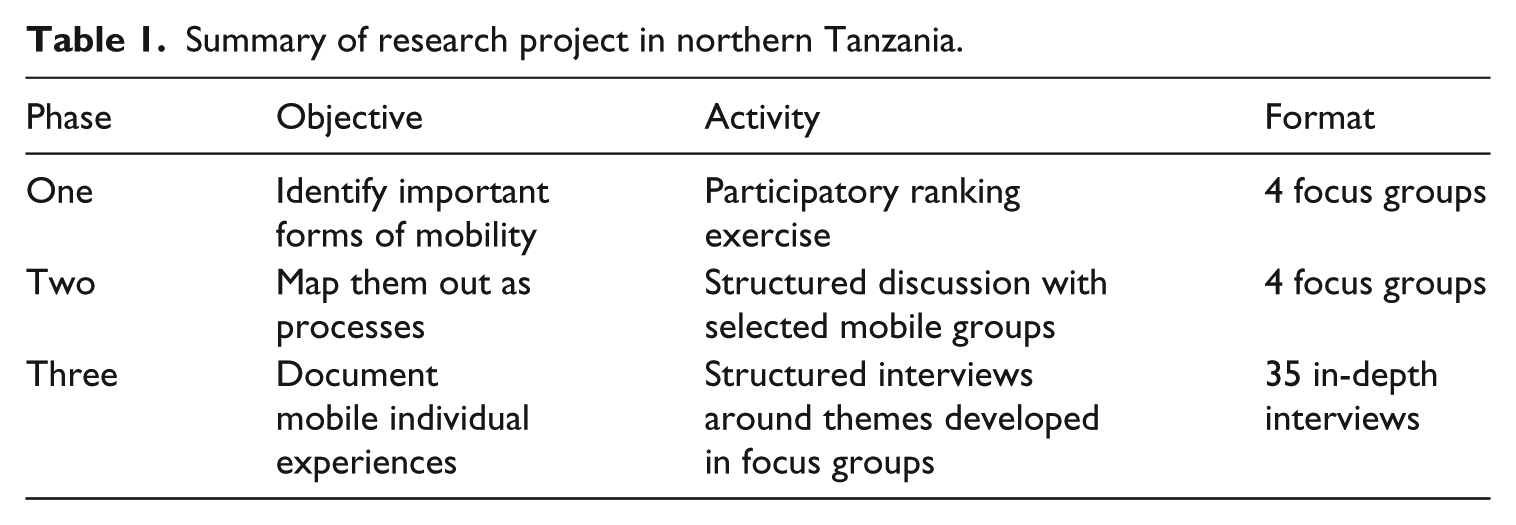
The topic under investigation thus necessitated asking participants about sex, both at a general level in phase two, and for some participants, about their own sexual behaviour during the in-depth interviews in the third phase. Challenges such as gathering accurate data on sexual behaviour (Nnko et al., 2004), accounting for the divergent socio-economic backgrounds of the researcher and participants (Molyneux and Wenzel Geissler, 2008), and the unequal power and gender relations that would be most prominent between male researcher and female participants, necessitated the consideration of a range of ethical and practical issues in the design of the data collection process. In an attempt to mitigate the influence of these power relations, it was decided that the research assistants would lead all research activities. Further, when sexual behaviour was discussed, the focus groups and interviews would be conducted by same-sex research assistants, 1 and the researcher would not be present. 2 This approach contrasts with research in which there is a language barrier but research assistants are viewed primarily as translators/interpreters, by designating and acknowledging the central and expanded role of the research assistants (Temple and Edwards, 2002) in which they cannot be viewed purely as a ‘conduit’ (Freed, 1988).
The research assistants were allocated to this project by the host institution, the National Institute for Medical Research, Tanzania, from a pool of available qualitative researchers, rather than being actively recruited by the researcher. The two main assistants had both recently graduated, but were relatively inexperienced in conducting research. This necessitated an intensive month-long training programme prior to the fieldwork covering both the research techniques to be used, and also an introduction to the topic of HIV/AIDS, with training continuing throughout the project. The tasks that the research assistants undertook included facilitating focus groups and conducting one to one interviews, alongside helping to prepare and translate research guides and consent forms, aiding with the identification and invitation of participants, maintaining contact with those who had been invited, and engaging in debriefs after each activity. As many fieldwork activities were conducted without the researcher being present, and also due to the interactive nature of qualitative research, there was a large degree of reliance on the research assistants to direct the activities, probe participants for further information, and ask appropriate follow-up questions. Further, as the outcomes from each phase informed subsequent ones, the research assistants were implicitly, if not explicitly, involved in ongoing data analysis and interpretation, highlighting the artificial distinction that is often made between data collection and analysis (Schiellerup, 2008).
The other research project investigated issues of labour, gender and nutrition in northern Mozambique, with a focus on the association between women’s participation in paid work and food outcomes. Mixed methods were used to collect primary data over a period of nine months. Field research was divided into three consecutive stages: qualitative, quantitative and qualitative, as summarised in Table 2 below.
Summary of research project in northern Mozambique.
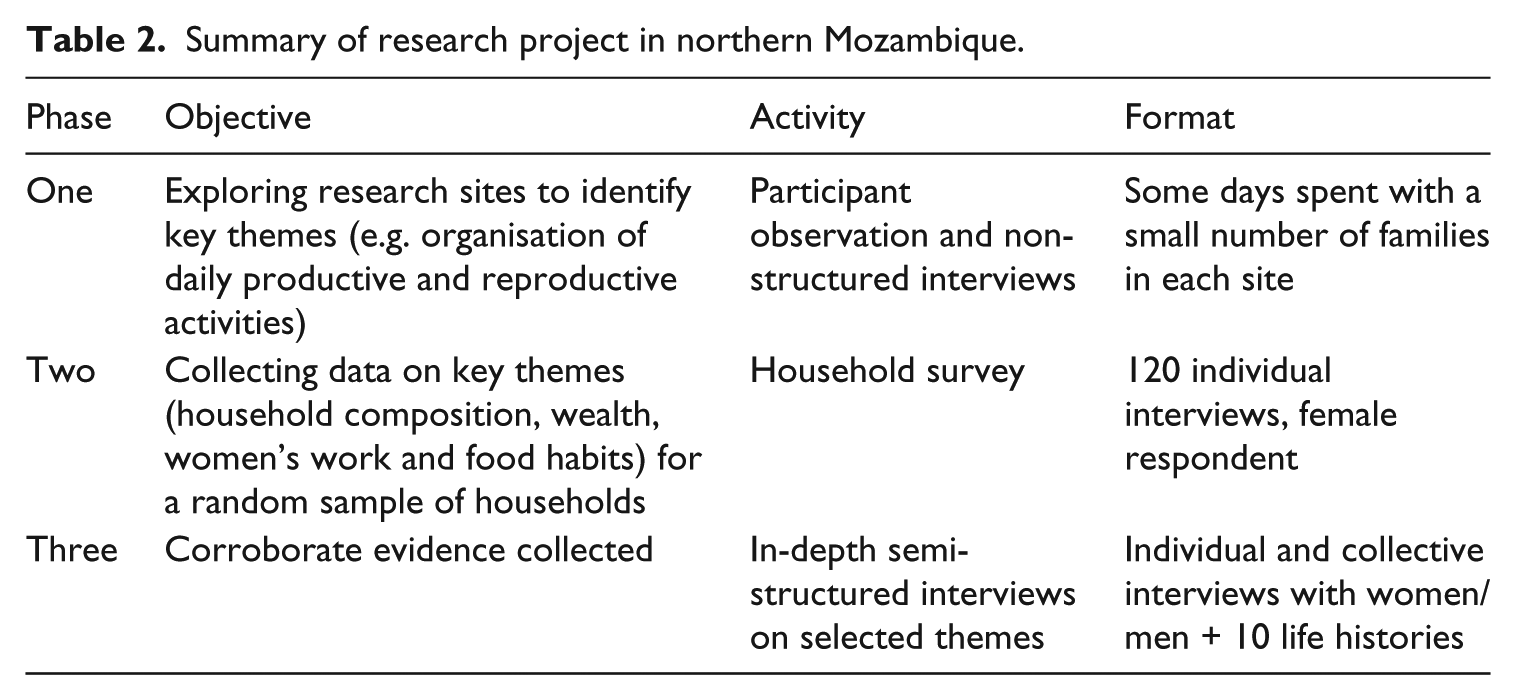
The nature of the themes investigated, such as women’s paid and unpaid work, food habits and intra-household arrangements, and the associated combination of research methods used required, or favoured, the joint presence of the researcher and the research assistant in all of the research activities, in contrast to the Tanzanian project in which the researcher was not present for the majority of the research activities. For example, the presence of the researcher facilitated the use of participant observation and life histories as methods for data collection. The research assistant was recruited on the basis of his previous experience working with other researchers in the same Mozambican province. 3 During an initial scoping visit to the field sites, the researcher provided some training to the research assistant, which included explanation of the research project’s rationale and pilot interviews. Since the research assistant is from and resides in the province where fieldwork took place, his work was essential to the process of familiarisation with the studied context. For instance, the research assistant played a role in informing the site’s selection. The research assistant offered guidance on the interpretation of data and also worked as a translator when needed – three languages are spoken in the province of Cabo Delgado (northern Mozambique), in addition to Portuguese, and many respondents were not fluent in Portuguese.
These research projects are illustrative of the two major ways in which research assistants are used in development research, and thus enable both a reflection of the research process and outcomes that the power relations among researcher, research assistant and researched exert, and also a comparative assessment of the relative merits of each approach.
Power relations
Whilst there are a range of differences and similarities between the two projects in relation to the roles and tasks for the research assistants (which to some extent reflect the topics at hand), the nature of the qualitative techniques employed, and the framing of the qualitative work within the broader research goals, it is clear that in both cases the research assistants, whether by design or as an unintended consequence, exerted a significant influence over both the research process and outcomes. Although this influence has been acknowledged previously, with Temple and Edwards (2002) referring to this as the ‘triple subjectivity’, this important issue remains underexplored – a surprising observation given the wealth of literature that examines the subjective influence and positionality of the interviewer (England, 1994; Harding, 1987; Pack, 2006; Scheper-Hughes, 1995).
One aspect of this triple subjectivity is the nature of power relations among researcher, research assistant and researched, with the exact nature and configuration of these relations shaped by the different roles that were assigned to the research assistants in each project. We conceptualise this triple subjectivity as a set of relations that interact throughout the research process, and extend the theme of subjectivity to incorporate influences that reflect the objective positions of those involved. The insertion of the research assistants into the research process requires attention to the relations between the research assistants and participants, as well as how this arrangement recasts relations between researcher and participants. We assess the implications of each relation in turn.
Relations between researcher and research assistants
As Molony and Hammet (2007) note, the relation between researcher and research assistant is essentially one of employment, characterised by ‘inevitable wealth and power asymmetries’ (Molony and Hammett, 2007), and is viewed to be as exploitative as the general research process itself. Whilst Molony and Hammet (2007) explore a range of ethical dimensions with regards to this relation, we focus on how this influences other elements of the process and outcomes. Although the wealth and power asymmetries they identify are in part rooted in a broader set of international historical relations, this relation is also a labour relation: that of employer and employee. This is arguably the defining characteristic of this relation, although clearly inequalities inherent in this relation are further exacerbated by other asymmetries.
The labour relation raises important questions of ownership of the research, in terms of both the process and output, and highlights the challenge for the ‘employer’ to ensure that ‘employees’ enjoy fair working conditions and conduct the research activities to the required academic and ethical standard. However, the nature of this relationship is multifaceted. For example, in Tanzania, due to the cessation of a degree of control over the research process the researcher was extremely reliant on the research assistants for many basic tasks to the point that one research assistant commented that it was like ‘having a child to look after’, a relative powerlessness of the researcher in an unfamiliar environment that reflects earlier descriptions of the researcher as a ‘naive idiot’ (Robson, 1994). Further, the researcher’s absence during research activities increased the reliance on the engagement of the research assistants with the project and the subject under investigation. This dependence required a different approach to the management of research assistants, which was done on the basis of building a strong, honest and mutually respectful relationship with the research assistants, though this can, and did, blur the lines between friend/companion and ‘manager’ (Turner, 2010). Similarly, in the Mozambique research project, the joint presence of research assistant and researcher in all research activities hinged upon a particular configuration of employer–employee relationship. On the one hand, the research assistant was directly trained and employed by the researcher and, on the other hand, the research assistant represented a channel into the researched communities for the researcher.
In the case of field research in Mozambique, recruiting a research assistant was based on fulfilling the requirements of familiarity with the studied context and fluency in the three local languages as well as Portuguese. This had two main implications on the position of the research assistant who had to be an insider in relation to the researched communities but possibly also positioned differently in socio-economic terms in relation to the respondents, or at least some of them. 4 The specificities of the relation between research assistant and respondents will be discussed below. For the purposes of this section it is relevant to highlight that the insider position of the research assistant does shape, to an extent, the employer–employee relationship between the researcher and the research assistant. In this sense, the use of research assistance in the Mozambique project’s process echoes the blurred relationship described above, in which the research assistant was an employee but also a companion, a guide and a manager.
However, in this case, the presence of the researcher in the research activities enhances the researcher’s possibility to lead and control the research process. By consequence, the burden placed on the research assistant to deliver a tangible product is somewhat reduced. For instance, in the implementation of a household survey the presence of the researcher enables the exploration of the reasons why some questions do not work as expected; the heuristic value of household surveys (Kandiyoti, 1999). When household surveys are instead conducted by enumerators the pressure to collect answers for all of the questions may negatively affect the reliability of the data collected (Randall et al., 2013). Importantly though, the more visible leadership of the researcher may alienate the research assistants from the research process because they are more openly confronted with the fact that the ownership is with the researcher. This is a delicate point because ensuring the good functioning of the professional relationship between researcher and research assistant may need to be based on engaging more, not less, the research assistant in the process of data collection. In both cases, then, it is clear that the establishment of this relationship was a vital element of the research process, without which any research activities conducted may have been of limited scientific value (Molyneux et al., 2009). It also emphasises that any issues that researchers have with managing research assistants may be rooted in questions of ownership and control, relations that can sometimes be obscured, with tensions put down to clashes in personalities, not interests.
The labour relation also raises issues concerning the payment of wages, discussed in detail by Molony and Hammet (2007). In Tanzania, as the research assistants were employed by and paid via the local research institution (the National Institute for Medical Research, Tanzania), this blurred the employer–employee relation, with the research assistants both government employees allocated to the project, but with their wages funded by the researcher. The issue of wages was rarely discussed between the researcher and research assistants, and it was unclear to what extent the research assistants actually considered themselves the researcher’s employees. However, in Mozambique, the research assistant was employed and paid by the researcher. One implication was that wages had to be directly discussed by the researcher and the research assistant before the beginning of fieldwork. This process made the employer–employee relation fairly explicit. Arguably, addressing wages with fairness and transparency is essential to the good functioning of the professional relationship. The challenges around payment that Molony and Hammet (2007) experienced may be related to the blurred lines and the unique nature of the relations between researcher and research assistant.
Second, there are inherent conflicts of objectives that can arise out of this labour arrangement and have an impact on how the research is conducted, and the degree to which ethical standards are maintained. In Tanzania, it was clear that there was a degree of conflict over the consent process. Whilst it was the researcher’s intention to try and gain a substantive degree of consent beyond the procedural aspect (Molyneux and Wenzel Geissler, 2008), the consent process also involved asking participants to sign a consent form. Despite these good intentions, the form inevitably became the tangible ‘deliverable’ that the research assistants had to produce and hand over to the researcher after each activity, and thus contrary to the aims of the project, it became the most important element of the consent process, and the primary form of confirmation that consent had been given. A degree of conflict of objectives was also apparent when thinking about the ethical issues around gathering sensitive personal information, in this case sexual behaviour. As sexual activity can include varying degrees of coercion, this was an issue that was given prominent attention during the preparation and training stage. The research assistants were instructed to look for any signs of emotional discomfort during any activity, and were empowered to pause or even terminate activities (in particular interviews) if the participant was upset. However, the research assistants knew from the interest that the researcher showed in the topic of sexual behaviour that this information was highly valued. This put the research assistants in a difficult position in which they had to weigh up the relative importance of each issue, though with one outcome more visible in terms of being seen to do a good job. It must be emphasised here that this situation arose due to the manner in which the objective relations manifested themselves in the configuration of who was doing what, rather than any shortcomings of the research assistants, who dealt admirably with this delicate balancing act.
In sum, the relation between researcher and research assistant is primarily characterised by its employer–employee nature. This is the foundational trait that should guide any analysis of the power relations between these two categories involved in processes of data collection. Invariably, other types of power relations and contingencies come into play, shaping the relation as well as its effects on the research process and outcomes. However, this relation is central to the process of primary data collection and hence requires greater consideration in methodological scholarship.
Relations between researcher and participants
The second relation under consideration is that between researcher and participants, which has been carefully considered by literature concerned with the relations of power that shape processes of data collection (Alcoff, 1991; England, 1994; Harding, 1987; Paerregaard, 2002; Wolf, 1996). This literature has often been concerned with the gender relations between researcher and respondents, while other axes of power have been overlooked (Randall et al., 2013). In particular, it is not clear how research assistants mediate the relations between researcher and participants in contexts characterised by significant wealth, power and in some cases gendered imbalances. This has implications for established concerns around the informed consent process, the degree to which participants report accurate information on sensitive subjects, and other ethical issues that impact on the quality of data collected. In Tanzania, although the researcher was not physically present at many of the research activities due to the sensitive topic at hand, he was to some extent still visible. For example, participants were reminded throughout the process that it was a project that was being conducted by the researcher, such as at the invitation stage, when research assistants were discussing the project with them, the consent process at the beginning of each activity when the project was again introduced, and through the visibility of the researcher in the study site for the duration of the project. In relation to the need for free participation, it was possible that participants felt an obligation to agree to give an interview or attend a focus group.
Within the running of the research activities, there were instances when participants used slang or local phrases, at which point they were asked to explain them so that the researcher would understand what was meant. Bearing in mind the topics under discussion, and the common use of local paraphrasing and slang, this occurred frequently throughout the interviews and focus groups, and so served as a further reminder of the researcher’s involvement in the project. Although the absence of the researcher created a more comfortable environment for participants to share sensitive personal information – one of the most important advantages of the way the project was run – they will have done so in the knowledge that ultimately it would be shared with the researcher. It is unclear to what extent this influenced the process as a whole, whether participants knowingly or unknowingly took this into account when deciding what and how much to share.
The presence of the researcher in the research activities in Mozambique made the relation between researcher and respondents more visible. Relations of power developing along the lines of class, gender, age and nationality forge the interactions between researcher and participants in a number of ways. For example, since a substantial part of the research conducted in Mozambique investigated household and food practices, participant observation was used to uncover the organisation of daily productive and reproductive activities. Being a young female researcher facilitated the researcher’s participation in female-dominated activities, such as cooking. In northern Mozambique, the kitchen is often a separate space from the rest of the house and is normally used by women only. In the course of fieldwork, it was always accepted, at times even welcomed, that the researcher took part in food preparation activities in the kitchen with other women while the male research assistant tended to oversee the process from outside. At the same time, the researcher and the research assistant were always invited to share their meals with male members of the households, who eat separately from women and small children. The treatment of the researcher and the research assistant as guests also meant that the intention to use food diaries to collect data on diets had to be abandoned because the food prepared during research activities was that typical of special occasions, not everyday food. This goes to show how not only gender but also nationality, wealth and social status influence the research process, with implications for the research methods used, in changing ways, with different facets of power prevailing in different circumstances.
Furthermore, an exclusive focus on gender relations of power between researcher and participants is unsatisfactory in projects, like this one, that purposively target female respondents, for two main reasons. First, there are other axes of power that must be considered, as highlighted above. Second, research on women is likely to include men in a number of ways. For instance, in Mozambique, it was considered essential not to exclude men to juxtapose women’s and men’s views on a number of themes, such as intra-household decision-making, that were relevant to address the research questions. Also, existing social norms implied that it was necessary to go through men to access female respondents, in other words, it was necessary to abide by the configuration of hierarchies of power in the studies’ context to perform the research activities. This reflects the idea of ‘negotiating with male gatekeepers’ expressed by Mandel (2003) in relation to her fieldwork experience in Benin (Mandel, 2003). Conducting empirical research entails interacting with these power relations on a constant basis and not only is this an issue that pertains to researchers and researched, it is also shaped and mediated by the role of research assistants.
Another important element that characterises the relation between researcher and respondent has to do with compensation. In Mozambique, hundreds of respondents participated in research activities throughout fieldwork and the researcher decided to compensate them with small incentive goods, such as salt, notebooks and soap, to express appreciation for their participation and time. The issue of compensation is a controversial one, as while it seems fair it is also doomed to create expectations among participants (Devereux and Hoddinott, 1992). Although the small incentive goods did not contribute to increase the wealth of respondents and their families vis-à-vis other members of the same communities, they had an impact on the relation between the researcher and the participants because the role of the researcher was at times, though not always, associated with handing out gifts. This issue was also encountered in Tanzania. Following local and imposed conventions in a study site that has been the setting for an ongoing longitudinal study, participants were compensated 5,000 Tanzanian shillings for their time. Whilst the value to the participants varied greatly, due to the ongoing nature of the research over a period of around five months, some participants may have expected this compensation, especially if they had discussed the research with other members of the community beforehand. Further complicating this issue was that leading members of the community who participated in training linked to knowledge dissemination projects were paid for their time. Therefore, it was crucial to set expectations at the point of invitation that this was a research activity that would not involve payment. Clearly the root issue remains the power imbalance that is reinforced by this and similar mechanisms of compensation; however, the dilemma is not easily resolved as it still appears highly sensible to plan some form of appropriate compensation for the respondents.
Overall, our fieldwork experiences confirm the presence of the power imbalances indicated in the literature. However, it seems to us important to reflect more on the material implications of these power imbalances: how do they shape the research methods used and the organisation of research activities? Greater transparency and importance assigned to these issues would help researchers plan and organise the research activities in ways that take account of these power imbalances.
Relations between research assistants and participants
The final relation that we examine is that between research assistant and participants. This relation is vital to acknowledge and interrogate, as the research assistant in many ways now fulfils the role of researcher, and hence this has an impact on how the research is conducted and the quality of the data gathered.
In Tanzania, the power relations between research assistants and participants were extremely complex and difficult to disentangle. As noted above, the two main research assistants used throughout were both educated to degree level, having recently graduated. In comparison to most, if not all, participants, they were far more educated, with participants schooled to secondary level standard at best. However, to some extent offsetting this inequality, most participants were older, in some cases by 10 to 20 years, than the research assistants. Age remains an important factor in the Tanzanian context as an indicator of status and respect, so that despite commanding higher levels of education, it is unclear whether this leads to a higher social status when age is accounted for. Added to this, as government employees with a reasonable monthly wage paid indirectly by the researcher, research assistants were earning considerably more than a large number of participants, though this clearly was not always the case. The tension between these relations further muddies how inequalities in education, wealth and age played out, and how this influenced the research process. This also raises important questions regarding whether this is something that only needs acknowledging as a potential source of bias, or is an issue that needs addressing in the research design, and accounted for in the interpretation of transcripts.
In Mozambique, issues of gender imbalance between research assistant and participants were considered at the beginning of fieldwork. For a short period of time the researcher worked with both a male and a female researcher, however the latter was fluent in only two of the four languages required and it proved difficult to find another woman who spoke the relevant languages, a fact that underlines existent gender inequality and the need to comply with existing hierarchies of power. Establishing the effects of working with a male research assistant in the context of a research project focused on women is hard to delineate in the absence of a term of comparison, for example, a female research assistant. In a way, working with a male research assistant was also considered to be standard praxis in the studied context and therefore it may have had some advantages too in gaining access to the respondents through the structure of local authorities.
It appeared that other relations of power were prominent in shaping the interactions between the research assistant and the participants. As described above, the particular position of the research assistant as someone who is an insider with a different – that is, higher – socio-economic status, in relation to many respondents, confers to this relation a peculiar character. For instance, the insider position of the research assistant led to excluding the places where his family and relatives live from the research sites, in order to avoid any conflict of interest and uncomfortable circumstances. This was a minor issue but it illustrates how the research assistant’s position may constrain the research process rather than enabling it. Similarly, since the research assistant and the respondents shared the same cultural background, it is sensible to assume that some nuances may not have been captured due to the mismatch between the researcher and the research assistant’s/participants’ cultural backgrounds. Clearly the main motivation for employing a research assistant is to fulfil these gaps and their work is essential to conduct empirical research; however, it is also important to be aware that the barriers may be reduced but not fully eliminated.
Yet, assuming that the insider position is the prevailing one in the process of data collection is misleading. Education, employment status and wealth differentials between the research assistant and (many of) the respondents do impact the interaction and the quality of communication. In the process of data collection there are at least two levels at which information is filtered: the research assistant and the researcher. Although the effects of these imbalances are difficult to disentangle, they do exist and should not be ignored. For instance, one possible way to detect these dynamics is to consider the sources and the processes of social differentiation in the studied context and try to place the research assistant into the wider picture. During the course of fieldwork in Mozambique, conversations with the research assistant on elements of difference between his own household and the respondents’ households were crucial to shed light on some of these dynamics.
The existence of power differentials between the research assistant and the participants makes it compulsory to consider when addressing power relations between categories of people involved in processes of data collection. Given the complexities along which this type of relation develops, as highlighted in the examples above, it may be hard to discern the material implications on the research process and outcomes. These dynamics have been more explored in relation to the use of enumerators for household surveys’ implementation (see Randall et al., 2013; Flores-Macias and Lawson, 2008; Grosh and Glewwe, 2000) but remain understudied in qualitative research. So whether this is recognised as a potential source of bias or instead addressed in the research design is a question that remains open and needs to be dealt with within the context of singular research projects.
Does it matter if the researcher is present or not?
The different configuration of roles in the two projects, and specifically the absence of the researcher from the research activities in one project, also has implications for the quality of the research process and outcomes.
In Tanzania, the configuration of roles had an impact on the methods used. The researcher had originally intended to use a variation of the life history approach. However, this is a difficult technique to master, and in the available time it was not possible to train the research assistants to the required standard, so that it was decided to use structured in-depth interviews as an alternative. There were benefits from this compromise, such as requiring that the researcher thought carefully about what questions needed to be asked and the minimum information that was needed at each stage for a viable project, and also to design research activities that were appropriate to the topic at hand. This also helped to ensure that the fieldwork did not end up on an overly tangential trajectory, as this process was repeated at each stage of the research. However, the increasingly detailed interview guides and checklists that the researcher produced to ensure that the research assistants, in his absence, covered all of the necessary topics were on reflection overly prescriptive, and some depth and nuance to the data was undoubtedly lost. In Mozambique, as discussed above, compromises over the exact methods used were also necessary, but for different reasons, highlighting that methods often need revisiting in the field.
A second concern in Tanzania was that due to the absence of the researcher, there was a reliance on the research assistants to interact with the participants and follow up on interesting and relevant (and in some cases unanticipated) themes as they arose. This required the research assistants to make a judgement as to what was, and what was not, important to follow up on. When reading through the translated transcripts, the researcher identified themes which could have followed up on but had not been, or points that required more clarification than had been given. This is inevitable, as it is almost impossible for the research assistants to pick up on every relevant theme, particularly when they are trying to find the right balance between handling a heavily structured interview guide and the need to judge when to go ‘off-script’.
Similar issues were encountered in Mozambique. Clearly the presence of the researcher enhances the opportunities to go ‘off-script’ and ask further questions on themes that emerge in the course of the interview. Yet, the practical ways in which information is collected – for example, taking notes, using a recorder, filling out a questionnaire – influence the researcher’s and the research assistant’s possibilities to recognise unanticipated points of interest and further investigate them. It frequently happened that when reading through the notes taken during the day or listening to a recorded interview the researcher realised that some points were not entirely clear and more questions were needed on particular issues. In this sense, it appears that frequent interaction with the materials collected and with the research assistant is an essential component of empirical research planning, in which earlier phases feed into subsequent ones.
The different configurations also influence the flow of research activities. When the researcher is not present, this removes the need for research assistants to continually translate between researcher and participants, and so the research activities were able to flow, with long and heated discussions at the end of most focus groups which would have been more difficult had there been long gaps while the research assistant interpreted these comments and any responses by the researcher. This is a major benefit of this particular configuration of roles. This also gave the research assistants space to form their own relationships with participants, and to do so without the pressure of the researcher observing their every move. In contrast, as the researcher in Mozambique led the research activities, the translation took place in the course of the interviews. This significantly lengthened the duration of the research activities, which could become tiring for the respondents and affect the accuracy of the information provided. An alternative would be to ask the research assistant to lead the activities while the researcher oversees the process. However, this option seems to be more appropriate if the researcher understands the language so that s/he can intervene when necessary while avoiding the extension of the length of the interviews.
In relation to the research outcomes, the structure of research activities in Tanzania produced an extremely rich dataset on which to base the final analysis. At the end of each activity the researcher conducted a thorough and structured debrief process, which involved asking the research assistants what participants had said, and also how they interpreted what they had been told. Capturing the research assistants own thoughts was a key part of this process, and acknowledges their active role in the process. It also highlighted how their understanding of the topic and overall project changed over time, and gave the researcher an insight into why certain questions had been asked. When the debrief form, notes on the research assistants’ reflections and the researcher’s own thoughts on developing themes were later combined with full translated transcripts for every activity, the result was an incredibly rich dataset, which could be analysed and assessed in light of the insights of, and which helped to ensure that the transcripts and quotes were not interpreted or used out of context. This highlights the importance of the debrief process and asking the research assistants’ own views on the research activities (Molyneux et al., 2009).
In Mozambique, the use of mixed methods produced a rich and diverse set of data, ranging from survey data to life histories. Throughout fieldwork the continuous exchange with the research assistant generated a complementary, at times parallel, set of materials that were fundamental in the analysis of the data collected. The notes taken during the research activities were limited due to a concern for tiring the respondents and stealing too much of their time, but were then expanded through conversations with the research assistant, which took place regularly, often daily. These discussions enabled reflections on unanticipated themes that required further investigation.
Regular engagement with the research assistant, then, is an essential component of the relation between research assistant and researcher and, in fact, one of the key reasons why research assistants are not just translators or interpreters. Not only is it important to make research assistants visible to do justice to their work, as stressed by Molony and Hammett (2007), but also to address explicitly their influence over the research process and outcomes.
Our reflections emphasise the complexity of conducting research which involves research assistants, and that, despite our initial view that having the researcher present would significantly improve the quality of the research, we found that a number of similar issues were encountered. Neither approach is superior to the other, with the precise role of the research assistant shaped by the interplay of the topic under investigation, the methods used, and the specific characteristics of both researcher and research assistant. What seems to matter is not the exact configuration of roles, but a sensitivity to these complexities throughout the research process.
Conclusion
This article has highlighted a range of issues in relation to the roles that research assistants fulfilled in two development research projects. It is clear the research assistants have a strong influence over the research process and outcomes in a number of ways. It is a difficult task to disentangle some of these influences in qualitative research, and to determine exactly how the process and outcomes were influenced. This leads the authors to question whether it is enough to be aware of them, or whether more should be done to quantify and account for this.
However, it is crucial to note that these influences on the research process and outcomes derive from the research design and the specific configuration of the roles of researchers and research assistants, and the way that this in turn influences the nature of power relations between researcher, research assistants and researched. Our observations emphasise that influences on the process and related challenges are also rooted in objective relations and research design, rather than necessarily being attributed to socio-cultural factors or the individual personalities and/or capabilities of research assistants, alongside the subjectivities that all parties bring to the process. An awareness of this may help researchers to manage relationships, and to deal with conflict or challenges with research assistants in a sensitive manner, acknowledging when tensions arise from these objective relations. Importantly, power relations between researcher and research assistant are labour relations, though this relationship is also muddied by the dependence that researchers have on research assistants. This confirms the importance of managing this unique but central relationship for the overall research project, as well as providing an important insight into the underpinnings of this complex relationship.
Our analysis supports the need for attention to a range of practical tasks that can help to facilitate the smooth running of qualitative fieldwork, and that are well documented in Molyneux et al. (2009). These include building in enough time for comprehensive training and education on the project aims, relevant literature, and the techniques to be used, as well as opportunities for pilot and practice. Importantly, this necessitates the consideration of the role of the research assistants in the design phase, and the acknowledgement of their contributions to the process.
Our discussion has also highlighted that, despite significantly different roles that the research assistants played in each project, the researchers encountered similar issues. This unexpected conclusion suggests that the role of research assistants should be adjusted to the tasks and topic under investigation, and that as long as potential issues have been thought through, this should not significantly undermine data quality.
Footnotes
Acknowledgements
We would like to thank our research assistants, Penina Samwell, Lucas Boniface, Grace Bulugu and Eusebio Tissa Cairo, whose work was vital to our research projects. Fieldwork in Tanzania was facilitated and supported by Mark Urassa and Ray Nsigaye at the National Institute of Medical Research, Tanzania. Fieldwork in Mozambique was facilitated by IESE (Instituto de Estudos Sociais e Economicos). Our PhD’s were supervised by Deborah Johnston (Deane and Stevano), Justin Parkhurst (Deane) and Harry West (Stevano). An earlier version of this paper was presented at the London Centre for Social Studies PhD Conference 2013, ‘Methodological Choices and Challenges’, April 2013, Kings College, London, with useful questions and comments from fellow participants. We have also benefitted from discussions and feedback from Deborah Johnston, Marco Boffo and two anonymous reviewers.
Funding
Our research was funded by Bloomsbury Colleges and the London International Development Centre (Deane) and the Leverhulme Centre for Integrative Research on Agriculture and Health (Stevano).