




Abstract
In this article, we provide an empirical analysis of the relationship between multiculturalist policies and immigrant attitudes toward homosexuality. Normative discourses implicate multiculturalism as a key obstacle to the sociocultural integration between immigrants and natives within affluent democracies. At the core of this controversial debate are differences over the extent to which multiculturalism impedes or promotes the adoption of sexual norms from host societies to immigrants. However, a dearth of empirical studies has allowed political actors to levy broad, but largely speculative, claims that multiculturalist policies aggravate cultural conflicts between incoming immigrants and the values of host societies. We begin to address this issue by examining whether immigrants’ attitudes toward homosexuality vary in any direction across multicultural contexts. We find no evidence that multicultural policies exacerbate negative attitudes toward homosexuality, or facilitate the greater acceptance of sociocultural norms surrounding homosexuality for immigrants and Muslim immigrants. The findings are consistent across alternative measures of multiculturalism and two large cross-national samples: The European Social Survey and the World Values Survey. Interestingly, we find some support that multiculturalist policies may be correlated with greater acceptance of homosexuality among natives rather than immigrant respondents. However, further research is necessary to develop and unpack this potential relationship.
Introduction
In recent years, multiculturalist policies have increasingly come under attack within affluent democracies. Political leaders, from Germany’s Chancellor Angela Merkel to British Prime Minister David Cameron, have famously denounced multiculturalist policies as a “grand delusion,” while conversely advocating for a more unified sense of national identity through “muscular liberalism.” 1 Moreover, terrorist attacks in France and Belgium have further fueled debates over whether a stronger stance toward incoming immigrants to assimilate to the cultural values of receiving countries is necessary. Some scholars argue these are fast becoming the new policy directive within the European Union (Joppke, 2004), but are also notably gaining political traction in both Australia and Canada, two countries with a history of staunch advocacy for multiculturalist policies (Banting and Kymlicka, 2010; Ley, 2010; Moran, 2011).
Many of the countervailing arguments against multiculturalism have sought to delegitimize policy claims by problematizing immigrants as “unassimilable” to the humanistic values of liberal democracies (e.g., Huntington, 2004). These arguments are particularly acute for Muslim immigrants (Inglehart and Norris, 2003a; Kundnani, 2012; Modood, 2013; Rahman, 2014). Mainstream narratives that frame host–immigrant relations as irreconcilable cultural conflicts suggest that multiculturalist policies hinder integration and exacerbate cultural dissonance between newcomers and natives (Grillo, 2007; Vertovec and Wessendorf, 2010). These narratives feed into widespread perceptions that (1) there is a backlash against multiculturalism and (2) there is an assimilation–multiculturalism trade-off for immigrants.
Despite a plurality in perspectives surrounding multiculturalism (Grillo, 2007; Meer and Modood, 2009), mainstream narratives continue to be mired in heated disputes that multiculturalism leads to unfavorable integration outcomes (Koopmans, 2010; Okin, 1999). Perhaps in no place has this juxtaposition unfolded more acutely than in the Netherlands (Puar, 2007). The Netherlands stands out as an exemplar case of the tensions that may arise between multiculturalism and gay rights (Fassin, 2006; Foner, 2008; Foner and Alba, 2008; Mepschen et al., 2010). To date, public opinion research has consistently shown that the Netherlands ranks as the most supportive of all Western democracies relative to attitudes on homosexuality, prostitution, and drug legalization (Kraaykamp, 2002). Moreover, it was formerly one of the most culturally accommodating European countries toward immigrants (Koopmans, 2010). However, following the 2002 and the 2004 murders of gay right-wing politicians, Theo van Gogh and Pim Fortuyn, a host of multicultural policy reversals were implemented to facilitate civic integration (Duyvendak and Scholten, 2012; Entzinger, 2014; Van der Veer, 2006). The immigrant demagoguery that has exemplified political discourse in the Netherlands has found greater political traction across Western liberal democracies (Kundnani, 2012; Modood, 2013; Rahman, 2014). Several countries have responded in kind by instituting programs aimed at acclimating incoming immigrants to the sexual norms of receiving countries, which critics argue are controversially predicated on assumptions that lionized “more egalitarian” Western values. 2
Despite broad condemnatory conclusions by political pundits that multiculturalism spurs radicalism and inegalitarianism in immigrant communities (Vertovec and Wessendorf, 2010; Wright and Bloemraad, 2012), there have been limited empirical studies supporting such interventions (Bloemraad et al., 2008; Koopmans, 2013). This is unfortunate, given gay rights centrally figure into fierce contemporary sociopolitical debates over the negative consequences of multicultural policies (Ewing, 2008; Fassin, 2006). Although there is a burgeoning body of literature detailing the economic and political integration of immigrants across multicultural contexts (Koopmans, 2010; Wright and Bloemraad, 2012), this study is one of the few that examines sociocultural outcomes (Kwon et al., 2017).
In this study, we interrogate the consequences of multiculturalist policies on immigrant attitudes toward homosexuality as a particularly salient form of sociocultural integration between immigrants and natives. We use two-fixed effects (FEs) regression models on pooled samples from the European Social Survey (ESS) (2002–2010). The comparative focus of the study allows for broader appraisals of policy effects across 16 affluent European democracies. On balance, we find null results for both first-generation immigrants and Muslim first-generation immigrants. Our findings suggest a degree of skepticism that national multiculturalist policies affect immigrants’ attitudes toward homosexuality in any direction. The null findings are consistent between the two most commonly utilized measures of multiculturalism, as well as from survey data drawn from the World Values survey (WVS) (1995–2006).
The civic–multiculturalist trade-off
International immigration is a central feature of globalization and Western democracies increasingly face a diverse citizenry. On average, foreign-born residents now compose over 13% of the population in highly developed countries (Organization for Economic Co-operation and Development [OECD], 2013). Although immigration is not a new social phenomenon, current waves of migrants may qualitatively differ from past waves in distinctive ways. For one, some scholars argue that migration is now “super-diverse” (Vertovec, 2007). That is, there is much more heterogeneity in migrants’ entry status, economic resources, and/or linguistic diversity than past periods—even among immigrants from the same ethnic group (Vertovec, 2007). This explosion of diversity both within and between immigrant groups poses challenging questions for the state over how best to incorporate newcomers from ever more diverse backgrounds (Crul, 2016).
In recent years, states have increasingly turned to civic policies as the primary policy instrument to facilitate immigrant integration (Mouritsen, 2013). Currently, nearly all European countries institute some form of civic requirement for newcomers (Goodman, 2015). Civic policies usually include a mix of linguistic assessment, knowledge of the host country’s history and cultural values, oaths of allegiance, and/or declarations to reject extremism (Goodman and Wright, 2015, Kundnani, 2012). Unlike multicultural policies that focus on cultural accommodation and rights for immigrants (Goodman and Wright, 2015), civic policies emphasize obligatory integration to mainstream institutions and liberal principles (Joppke, 2004). Some scholars view this rise in civic integration policies to signify a backlash or retreat from multiculturalism (Joppke, 2004). Although this narrative is popular, it is not entirely correct.
First, some scholars suggest that the civic–multiculturalism trade-off is largely confined to political rhetoric (Grillo, 2007; McGhee, 2008; Vertovec and Wessendorf, 2010). Here, McGhee (2008: 145) argues “that the term ‘multiculturalism’ has been driven underground, while some of the strategies associated with multiculturalism continue to influence policy and practices.” Indeed, the rhetorical ubiquity of multiculturalism’s demise paradoxically occurs even in countries that largely do not implement multicultural types of policies to begin with (i.e., Germany) (Goodman and Wright, 2015).
Second, political discourses often shape public misconceptions of the content of multicultural policies (Grillo, 2007). Prior studies find multiculturalist policies are talked about and perceived in their strongest form within political rhetoric—as institutionalized statues for religious schools (Grillo, 2007, 2008). More often in practice, it is much weaker. In the European context, multicultural policies are “closer to cultural recognition but assimilation in mainstream labor institutions, education, and welfare” (Grillo, 2007: 987). Some scholars posit normative discourses shape this disconnect between actual policy and public perceptions of policy that allows for backlash narratives to flourish (Bouchard and Taylor, 2008; McGhee, 2008).
Third, policy outcomes are more complex and are not limited to a zero-sum, civic–multiculturalism trade-off. Some scholars identify hybrid models which synthesize aspects of both civic integration and multiculturalism in country-specific ways. In this way, countries often experience a rebalancing of multiculturalism rather than a wholesale retreat (McGhee, 2008; Meer and Modood, 2009). For instance, Meer and Modood (2009: 479) show how shifts in “British multiculturalism which, although lacking an official ‘Multicultural Act’ or ‘Charter’ in the way of Australia or Canada (CMEB, 2000), rejected the idea of integration being based upon a drive for unity through an uncompromising cultural ‘assimilation’ over 40 years ago.” This view is consistent with studies that examine concrete multicultural policies rather than discourses cross-nationally. Indices show an expansion of multicultural polices during the 1980s and 1990s, but relatively static growth during the height of backlash discourses (Banting and Kymlicka, 2013; Koopmans, 2013). In fact, Denmark, Italy, and the Netherlands are the only countries to show a decline over time (Banting and Kymlicka, 2013). And of these countries, only the Netherlands shows any substantial decline that could credibly be characterized as a retreat from multiculturalism (Banting and Kymlicka, 2013).
The dissonance between multicultural discourse and concrete policies highlight how multiculturalism has come to occupy multiple meanings, which are not entirely congruent (Bloemraad and Wright, 2014). For example, some scholars refer to multiculturalism as the demographic diversity due to rising immigration (Brady and Finnigan, 2014; Vertovec, 2007). For other scholars, the term refers to a political philosophy of equality that critiques Western liberalism (Kymlicka, 1995, 2001; Modood, 2013; Taylor, 1992). In this paper, we specifically focus on multiculturalism as a set of concrete policies to accommodate religious and ethnic diversity. In doing so, we hope to add to a broadening empirical literature that seeks to disentangle normative political debates (which often espouse sweeping claims) into empirical research (Bloemraad and Wright, 2014; Kwon and Curran, 2016; Kwon et al., 2017; Wright and Bloemraad, 2012).
Multicultural policies and their implications for immigrant attitudes toward homosexuality
As populist cries to roll back multicultural immigration policies have swept through rich democracies, political mobilization for the equal rights of lesbian–gay–bisexual–transgender–queer (LGBTQ) persons within Western liberal democracies have gained greater traction. For some scholars, this newfound trend is attributable to rising secularity and the greater social acceptance of sexual plurality (Takács and Szalma, 2013; Weeks, 2007), even as other scholars suggest the opposite—a religious revival and a return to religion to the public sphere (Roy, 2014; Turner, 2011). The liberal values of secularity, gender equality, and sexual freedom have come to define the European identity, and become the primary basis through which the immigrant “other” is constructed, particularly for Muslim immigrants (Kundnani, 2012). In fact, Kundnani (2012: 160) argues that “this liberal discourse has displaced an older conservative nationalism and does the same work of marking out racial difference, now through a notion of British [Western] values counterposed to a Muslim communal identity.” In this way, Kundnani (2012) argues multiculturalism face challenges from both the political right, and increasingly the political left.
These dynamics unfold in heated policy debates surrounding the “home–host dichotomy,” wherein host countries (i.e., Western liberal democracies) are characterized as more equitable vis-a-vis home (i.e., countries of origin) countries (Barajas and Ramirez, 2007; Kundnani, 2012). Contemporary political discourses (1) cast immigrant identities as outside the West and (2) espouse the civilization exceptionalism of affluent democracies and their long history of tolerance toward sexual diversity (Mepschen et al., 2010; Puar, 2007; Rahman, 2014). However, contemporary political discourse in affluent democracies, belie the relative nascence of legal protections and burgeoning social acceptance for LGBTQ members (Rahman and Jackson, 2010; Weeks, 2007). These dynamics are particularly acute for Muslim immigrants (Kundnani, 2012; Norris and Inglehart, 2012; Rahman, 2014).
Historically, homosexuality within the West was met with intense sociopolitical repression. Deviations from heterosexual norms were stigmatized as criminal, deviant, or perverse (Rahman, 2014; Van de Meerendonk and Scheepers, 2004; Weeks, 2007). In fact, as recent as the 1980s, surveys from the WVS show that over 40% of respondents in affluent democracies reported that homosexuality was never acceptable, or had the lowest level of support (Inglehart, 2008; Inglehart and Norris, 2003b). Several decades later, public opinions toward homosexuality have shown a dramatic and continued liberalization in affluent democracies, led by the Netherlands and Scandinavian countries (Avery et al., 2007; Hicks and Lee, 2006; Yang, 1997).
A large body of literature implicates the role of modernization and post-materialist attitudes as key determinants explaining this gradual shift within and the difference between affluent democracies and other countries (Inglehart, 2008; Inglehart and Baker, 2000; Inglehart and Norris, 2003b). Urbanization, industrialization, and mass education have weakened traditional structures of sexual regulation, while facilitating the expansion of individualism (Inglehart and Norris, 2003b). These structural transformations altered perceptions of sexuality and consistent with the post-materialist perspective, attitudes toward homosexuality are generally more liberalized in affluent democracies relative to other countries (Inglehart and Baker, 2000; Inglehart and Norris, 2003b; Weeks, 2007).
Within affluent democracies, there is evidence to suggest that immigrants, on average, generally hold less tolerant views toward homosexuality than natives (Gerhards, 2010; Norris and Inglehart, 2012). Prior studies suggest attitudes lie somewhere in between those of natives and origin countries for immigrants (Norris and Inglehart, 2012). Over time, assimilation theory posits, immigrants gradually acculturate, and begin to inculcate the cultural values of host societies (Alba and Nee, 2003; Arends‐Tóth and Van der Vijver, 2009), albeit not necessarily in a straight-line fashion (Portes and Zhou, 1993). The acculturation process and successive adoption of cultural patterns necessitates adequate language fluency and a degree of active participation in mainstream social institutions (Koopmans, 2010). These processes facilitate formal labor participation and migration away from ethnic enclaves, facilitating upward mobility (Koopmans, 2010). In turn, greater structural assimilation of immigrants into mainstream social institutions expedites and reinforces sociocultural integration (Alba and Nee, 2003). Congruent with the assimilation thesis, studies have shown first-generation immigrants may hold less egalitarian attitudes toward homosexuality (Rӧder, 2014). However, attitudes shift over the length of residence and by the second generation, there is no significant difference in attitudes toward homosexuality or in the rate of acceptance with natives (Langstaff, 2011; Rӧder, 2014).
Here, some scholars suggest multiculturalist policies hinder the straight-line process of sociocultural integration with natives. By allowing for legally protected differences along cultural lines, multiculturalism facilitates the creation of parallel ethnic institutions. For instance, Koopmans (2010: 10) argues: [M]ulticultural policies that emphasize the own language and culture of immigrants, and stimulate them to orient themselves on their ethnic community may have the unintended consequence of sustaining linguistic deficiencies and a lack of cultural ‘soft skills.’ Moreover, the emphasis in multicultural policies on the own group and the maintenance of its language and culture may be detrimental to the development of social contacts across ethnic boundaries with natives, thus depriving immigrants of an important source of social capital, since natives hold the keys to much of the knowledge and positional resources relevant for labour market integration.
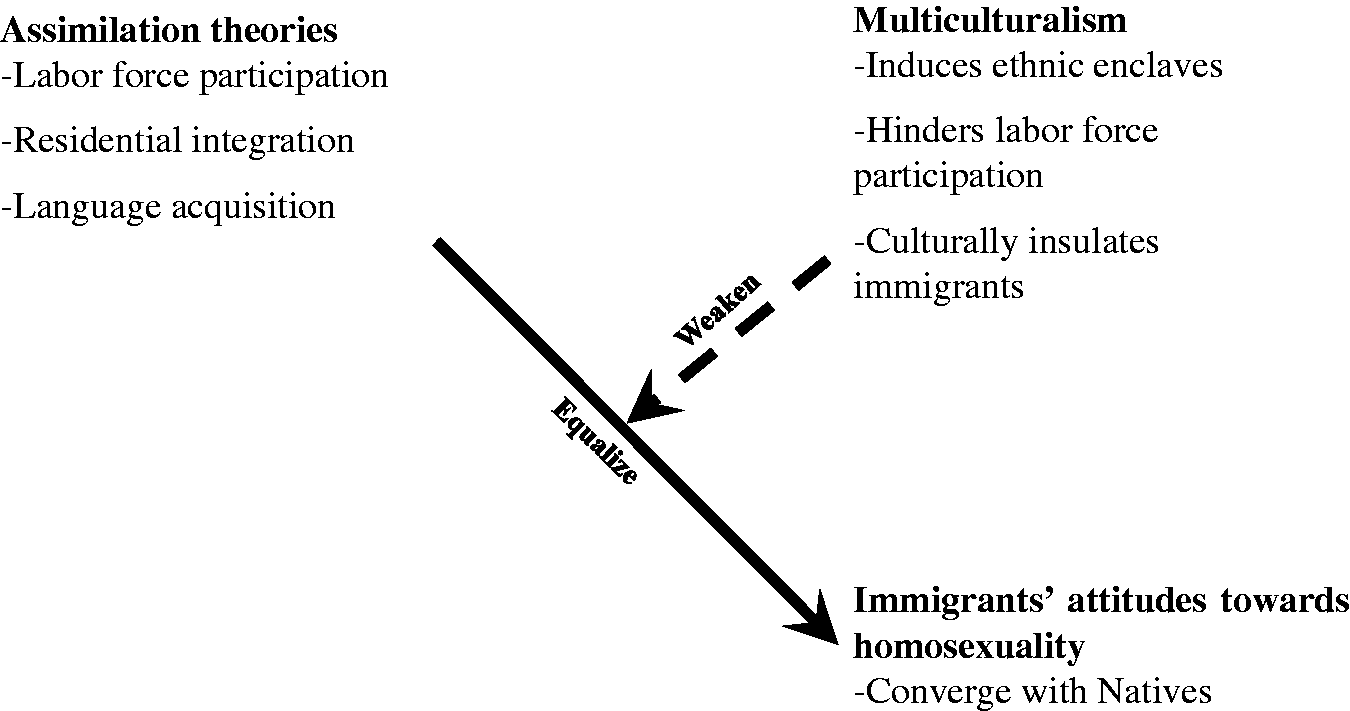
Theoretical model of the moderating effect of multiculturalism: Trade-off perspective.
In Figure 1, we summarize the mechanisms of the trade-off thesis which argues multiculturalism weakens assimilation and acculturation pressures by culturally insulating immigrant communities. And thus, we might expect: H1: Immigrants’ attitudes in countries with higher levels of multiculturalism are less accepting of homosexuality.
Multiculturalism reduces cultural “reactionism” and discrimination
Some scholars problematize the trade-off thesis between sexuality and ethno-cultural equality. First, it presupposes a zero-sum outcome for immigrants (Levy, 2000; Phillips, 2005, 2009). That is, equality along ethno-cultural lines through multiculturalist policies necessitates a decline in greater acceptance of homosexuality (Banting et al., 2006). Critics argue that discourses that rely on home–host dichotomies do more to fuel the negative imagery of immigrant cultures as monolithically patriarchal or homophobic, while denying those same elements that exist in affluent democracies (Barajas and Ramirez, 2007; Mepschen et al., 2010; Rahman, 2014). In turn, the polarizing dynamics of identity politics may promote perceptions of cultural threat and reactionism within immigrant communities. And thus, a rigid interpretation of sexual values comes to exemplify adherence to an immigrant identity in order promote “group self-preservation which takes as its goal the maintenance of a separate and distinct ethos” (Shachar, 2001: 11).
These dynamics are exemplified within identity politics surrounding Muslim immigrants. As a response to cultural discrimination, host values are conversely portrayed as morally decadent, individualistic, and frame homosexuality as a Western disease (Connor, 2010; Massad, 2002). Some scholars suggest multiculturalist policies reduce the prevalence of reactivism among immigrants, because multiculturalism largely promotes a positive message of the value immigrant cultures bring to host societies (Branscomb et al., 1999; Phillips, 2005, 2009). That is, the sociocultural outcomes of immigrants may be more successful when states employ strategies that recognize cultural difference without demonizing immigrant cultures as incongruent with liberalism (Levy, 2000; Phillips, 2005, 2009).
Second, critics argue normative discourse construe assimilation and acculturation as largely a “one-way street” in which immigrants are expected assimilate to host society norms. In return, host societies do little to incorporate the cultural values and symbols of immigrant groups (Okin, 1999; cf. Barajas and Ramirez, 2007). By contrast, some scholars argue the degree of sociocultural integration critically depends on the context of reception (Portes and Zhou, 1993). The process of sociocultural integration is more complex than normative arguments suggest, and the more accurate characterization is a “metaphorical two-way street” (Massey and Sánchez, 2010). If multiculturalist policies reduce perceptions of cultural discrimination and promote a hospitable context of reception as proponents argue, such a dynamic could counterintuitively promote sociocultural integration. Indeed, prior studies have found that immigrants report less discrimination in more multicultural countries (Wright and Bloemraad, 2012).
In sum, advocates argue that multiculturalism reduces the assimilatory pressures immigrant communities might otherwise experience. In turn, this eases the double bind immigrants face in choosing between two institutions “normatively defined as opposites” within prevailing political discourses: the immigrant family and the assimilative state (Guénif-Souilamas, 2006). By reducing perceptions of cultural threat and experiences of discrimination, multiculturalism might facilitate more rapid sociocultural convergence between natives and immigrants. Such a dynamic would lead to greater acceptance of homosexuality in more multicultural countries. We illustrate this argument in Figure 2.
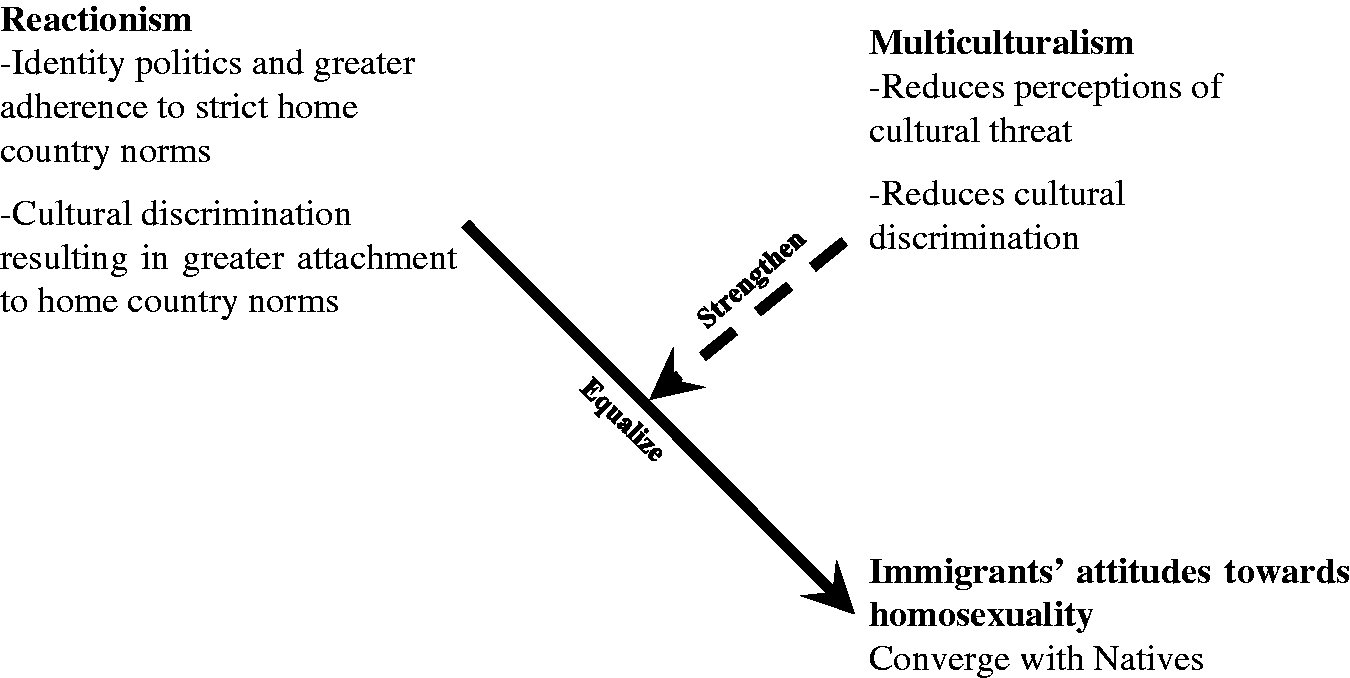
Theoretical model of the moderating effect of multiculturalism: Multiculturalism facilitates sociocultural integration.
In Figure 2, we illustrate the mechanisms of the multiculturalism–reactionism thesis. Multiculturalism strengthens assimilation and acculturation sociocultural outcomes by easing cultural discrimination and reducing reactionary responses to cultural threat within immigrant communities through incorporating important culture symbols—dress, ceremony, custom, food, religion, etc.—within mainstream institutions. Congruent with Figure 2, we might expect: H2: Immigrants’ attitudes in countries with higher levels of multiculturalism are more accepting of homosexuality.
The possibility of a null effect
Although civilizing debates often compare the relative gender and sexual values between natives and immigrants as incongruent, it remains unclear whether acceptance of homosexuality is as unambiguously supported as gender equality (Gerhards, 2010; Phillips and Sahrso, 2008; Rahman, 2014). That is, do mainstream values in affluent democracies equally value acceptance of homosexuality as does gender equality? Some scholars argue the acceptance of homosexuality and sexual plurality is largely absent, except within civilizational debates that criticize incoming immigrants as backward (Rahman, 2014). Moreover, civilizing debates often ignore that a substantial portion of the population in affluent democracies continue to hold a negative view toward sexual plurality (Rayside, 2008; Rayside and Wilcox, 2011). Even within the European Union, LGBTQ rights have faced considerable political opposition (Gerhards, 2010), and remains a relatively nascent political movement, when compared to gender equality (Rahman, 2014). In fact, Phillips and Saharso (2008: 293) suggest it may not—commenting, “[i]t can be more readily assumed that ‘we’ in the majority group all support gender equality, but not so easily asserted that ‘we’ all regard homosexuality as fine.” Finally, some scholars argue that national immigration policies, including multiculturalism, are too incoherent and diffuse to impact sociocultural outcomes (Crul, 2016; Freeman, 2004; Grillo, 2007; Vertovec and Wessendorf, 2010). Rather, sociocultural outcomes are influenced by local educational and labor institutions, and thus, the focus of national immigration policies may be misplaced (Crul, 2016).
Data and methods
We test our research hypothesis using data from the ESS. ESS data consist of nationally representative samples and harmonized survey modules across countries. ESS core modules were first collected in 2002, and were repeated biannually by the European Science Foundation. Due to the limited number of immigrant cases (e.g., roughly 9% of the total sample), we combine cases from both native-born and immigrant respondents to increase our statistical power. Respondents in this study were limited to at least 18 years old, with only one respondent per household. Following list-wise deletion, the study draws on a sample of 126,883 individuals, covering the years 2002–2010. Sixteen European countries were included in the sample: Austria, Belgium, Denmark, Finland, France, Germany, Great Britain, Greece, Ireland, Italy, the Netherlands, Norway, Portugal, Spain, Sweden, and Switzerland. On average, national samples had roughly, 1840 respondents per country year, and ranged from a low of, 1060 respondents in Italy (2002), to a high of, 2816 respondents in Germany (2010). The descriptive data and subsequent analyses are weighted according to the recommendations provided by the ESS.
Dependent variable
Cross-national measures of attitudes toward homosexuality are very limited. The majority of comparative studies utilize a single module from the WVS. Respondents are asked, on a scale of 1–10, whether homosexuality was “Never justified” (1) to “Always justified” (10) (Adamczyk, 2017; Andersen and Fetner, 2008a, 2008b; Finke and Adamcyzk, 2008; Inglehart and Baker, 2000; Jäckle and Wenzelburger, 2015). This item measures participants’ general attitude toward homosexuality and was grouped among other social and political issues in the WVS. Despite the contributions of the module, it fails to differentiate between gay men and lesbians. Prior research suggests “homosexuality” is often interpreted in nongendered ways—almost exclusively for gay men (Herek, 2000). Feminist scholars point out how lesbians are often subsumed under this category, ultimately contributing to the erasure of women’s same-sex identity, experiences, and desires (Stein, 1997).
The key outcome variable of this study is a core module of the ESS which asks respondents whether, “Gay men and lesbians should be free to live their own life as they wish.” Responses vary on a five-point scale ranging from (1) “Strongly agree” to (5) “Strongly disagree.” The social categories of gay and lesbian are culturally and historically contingent, structured, and organized by institutions. They are in fact, relatively new labels for ways of thinking about same-sex sexuality (Foucault, 1978; Katz, 1996). Today, the labels gay and lesbian are best understood in the broader culture as sexual identities (Rupp et al., 2013; Ward, 2015). That is, “who you are” (Foucault, 1978; Ward, 2008). The ESS module more broadly captures attitudes toward gay men and lesbians’ “way of life” and nonheterosexual identities (Foucault, 1978; Halberstam, 2005). This is an advantage over the WVS module as “life” in the ESS module presumes a same-sex relationship and nonheterosexual identity, while more inclusively capturing both gay men and lesbians.
However, the ESS module is not without limitations. It is possible groups hold different levels of comfort toward lesbianism and male homosexuality. That is, under hetero-patriarchy, men’s violation of heterosexuality confers greater social sanctions and stigma as men risk losing their masculine status if marked as gay (Bem, 1993; Connell, 1992; Kimmel, 1994; Pascoe, 2007). On the other hand, women’s same-sex relationships may not garner the same degree of social sanction. That is, lesbians may not receive as much resistance because women hold less social power and therefore, do not destabilize the gender hierarchy by engaging in same-sex relationships (Bem, 1993). By including both identities in the same measure, the ESS module potentially obscures the way in which these varying social constructions are perceived.
Secondly, some respondents may demonstrate abstract support for gays and lesbians to live their lives, but also approve of sexual discrimination in terms of restricting gays and lesbians’ civil rights and liberties (Herek, 2000). Or, respondents may grant greater social tolerance to gays and lesbians who assimilate to white, middle-class, and monogamous values (i.e., “homonormativity”) as opposed to nonconforming gays and lesbians (Ward, 2008; Ward and Schneider, 2009). This single item of the ESS module measure likely may not capture these distinctions. This is a limitation of the study and readers should bear in mind these complexities when reading results. As cross-nationally comparable measures of attitudes toward homosexuality become more textured and sophisticated, future research should employ several measures to assess sexual attitudes and sexual prejudice (within various contexts) to better capture the multidimensionality of such attitudes.
In Figure 3, we display the country means of the dependent variable for all respondents, Muslim immigrant respondents, all immigrant respondents, and native-born respondents.
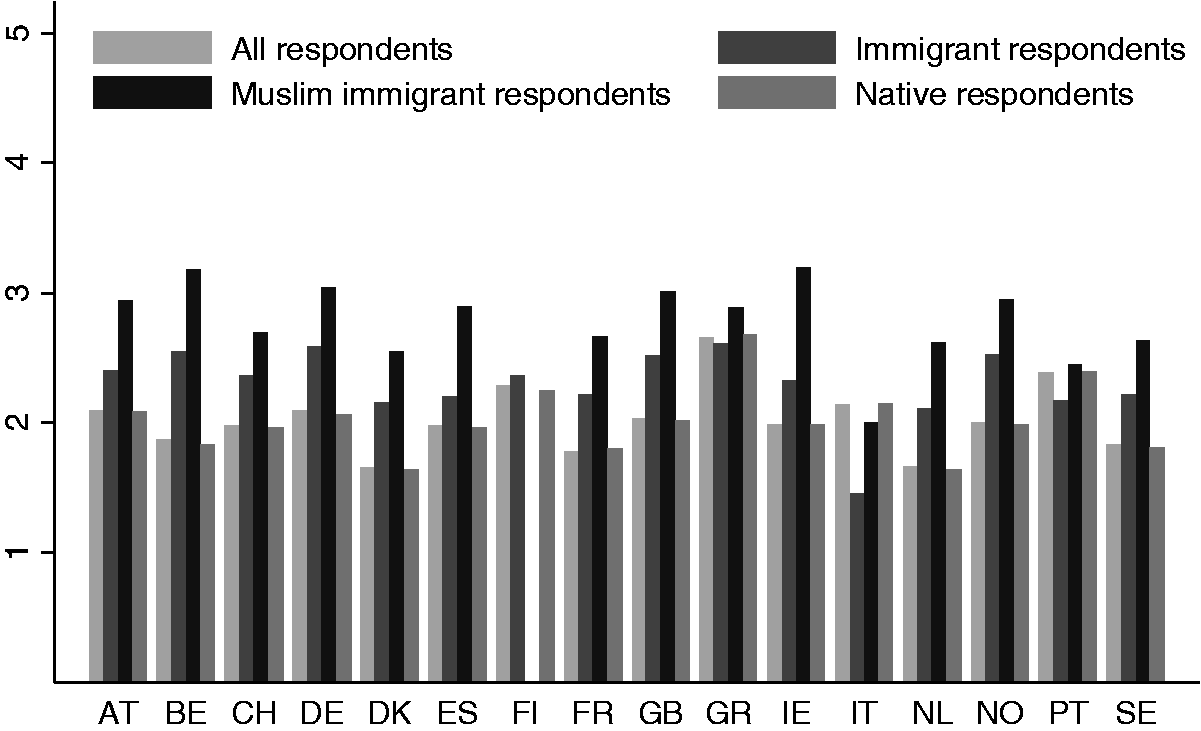
Country means of attitudes on homosexuality for native born, immigrants, Muslim immigrants, and all respondents in 16 European countries, European Social Survey (ESS) 2002–2010. Bars represent country means of the response variable and higher values denote less acceptance of homosexuality. AT: Austria; BE: Belgium; CH: Switzerland; DE: Germany; DK: Denmark; ES: Spain; FI: Finland; FR: France; GB: Great Britain; GR: Greece; IE: Ireland; IT: Italy; NL: Netherlands; NO: Norway; PT: Portugal; and SE: Sweden. Muslim immigrant respondents do not include observations from Western liberal democracies (i.e., immigrants from the US living in Belgium) and are first-generation immigrants. See Table 7 for full list of excluded Western liberal democracies.
Denmark and the Netherlands have the greatest acceptance of homosexuality, while Portugal and Greece have the lowest average acceptance. On average, immigrant respondents (black bars) have more negative attitudes toward homosexuality relative to native-born respondents (light gray). Notable exceptions in the sample of countries include Greece, Italy, and Portugal. What is striking is that differences between natives and immigrants are nevertheless very slight. The mean score on the dependent variable tends to hover roughly around a score of 2, no matter (1) the country being considered or (2) whether the respondent is native-born or an immigrant. Secondly, we notice that Muslim immigrants have higher than average scores than immigrants more generally. Albeit, even here, country-aggregated scores are on average, less than one response higher on the dependent variable than that of all respondents or native respondents.
Individual-level independent variables
We include a dichotomous variable immigrant, to denote immigrant status. Respondents were asked whether “Where you born in this country?” Respondents who answered yes were coded 1 for immigrant, while native-born respondents were coded 0 (reference group). Prior research suggests that attitudinal differences surrounding homosexuality are most salient among first-generation immigrants, with no significant differences between second and later generations of immigrants and natives (Langstaff, 2011; Rӧder, 2014). And thus, we include second and higher generations within the native sample. Across our sample of countries, immigrant respondents composed a high of 11.5% of the sample in Switzerland and a low of 2.3% of the sample in Italy.
Sociodemographic individual-level controls
Prior research establishes that several sociodemographic factors can influence attitudes on homosexuality. Consistent with prior studies, we include the following individual controls: gender, age (un-centered), age squared, educational attainment, marital status, children, religiosity, religion, employment status, and financial satisfaction (Adamczyk and Pitt, 2009; Finke and Adamczyk, 2008; Inglehart, 2008; Inglehart and Baker, 2000; Inglehart and Norris, 2003b; Scheepers et al., 2002; Yuchtman-Yaar and Alkalay, 2007). Gender was coded (0 = male, 1 = female), and age was measured in number of years. Educational attainment was recoded as a dichotomous variable. Primary education to upper secondary was coded as 0, while postsecondary and tertiary educational attainment were coded as 1. 3 Marital status included the following groups: married (reference group), divorced or legally separated (1), single (2), and other (3). The presence of a child in the household was measured as a dichotomous variable (0 = no children and 1 = has children).
Religious affiliation is one of the strongest “socializing agents” of sexual attitudes, chiefly by exposing individuals to conservative values (Scheepers et al., 2002). Religion was measured as a nominal variable and included: Catholic (reference), Eastern Orthodox (1), Other Christian denomination (2), Jewish (3), Islamic (4), Eastern religions (5), other non-Christian (6) denomination, and (7) Non-affiliation. Religiosity was measured on a 10-point scale, with 1 indicating “not at all religious” and 10 indicating “very religious.” Employment status was measured as employed (reference group), self-employed (1), and not in the work force (2).
Prior studies suggest economic security may also influence attitudes. That is, perceptions of relative financial stability open individuals to broader social issues, including sexual equality (Andersen and Fetner, 2008b). Moreover, prior studies suggest economic security mitigates negative attitudes toward traditionally marginalized outgroups (Svallfors, 2006). Thus, we include a measure of self-reported financial satisfaction. Financial satisfaction was measured on a 4-point scale ranging from “living comfortably on the respondent’s present income” (1) to “very difficult on the respondent’s present income” (4). Next, we include controls for citizenship status (0 = native-born or naturalized) and non-citizenship status (1), as well as the length of residence in the country (0 = within the last year, 1 = 1–5 years, 2 = 6–10 years, 3 = 11–20 years, 4 = more than 20 years, and 5 = native born). Prior studies have shown that immigrants’ attitudes towards homosexuality become more accepting as the length of their residence increases (Langstaff, 2011; Rӧder, 2014).
Lastly, to control for important differences between immigrants owing to distinctive immigrant channels (i.e., Moroccans to France or Nigerians to Greece), by identifying a full set of unique “home-host dyads” observed in our data. We then created dummy variables for each dyad by survey year. In total, there were 1120 unique home and host-dyadic pairs in our sample. Including dyadic pairs controls for any unobserved, time-invariant differences among immigrant groups, host countries, and relationships between them (Koopmans, 2013). Time-invariant differences may include selective immigration policies based on the educational attainment of specific immigrant groups, etc. (Koopmans, 2013). Stable differences in human capital and the religious affiliation of immigrants within specific immigrant channels may select either more egalitarian or inegalitarian than average immigrants into particular countries, leading to omitted variable bias. Due to the large number of dyadic pairs, they are omitted for presentation purposes.
Country-level variable: Multicultural policy index
To assess the degree of multiculturalism in the host countries, we utilize the Multicultural Policy Index (MPI). The multicultural index ranges from 0 to 8. Higher values indicate greater multiculturalism. Eight policy classifications compose the index and policy specifications include: (1) Constitutional, legislative, or parliamentary affirmation of multiculturalism, at the central and/or regional and municipal levels; (2) the adoption of multiculturalism in the school curriculum; (3) the inclusion of ethnic representation/sensitivity in the mandate of public media or media licensing; (4) exemptions from dress codes, Sunday closing legislation etc. (either by statute or by court cases); (5) allowing dual citizenship; (6) the funding of ethnic group organizations to support cultural activities; (7) the funding of bilingual education or mother-tongue instruction; and lastly (8) affirmative action for disadvantaged immigrant groups (Banting et al., 2006: 57). The index can be accessed at http://www.queensu.ca/mcp. 4
Country-level controls
Individual and country-level descriptive statistics.
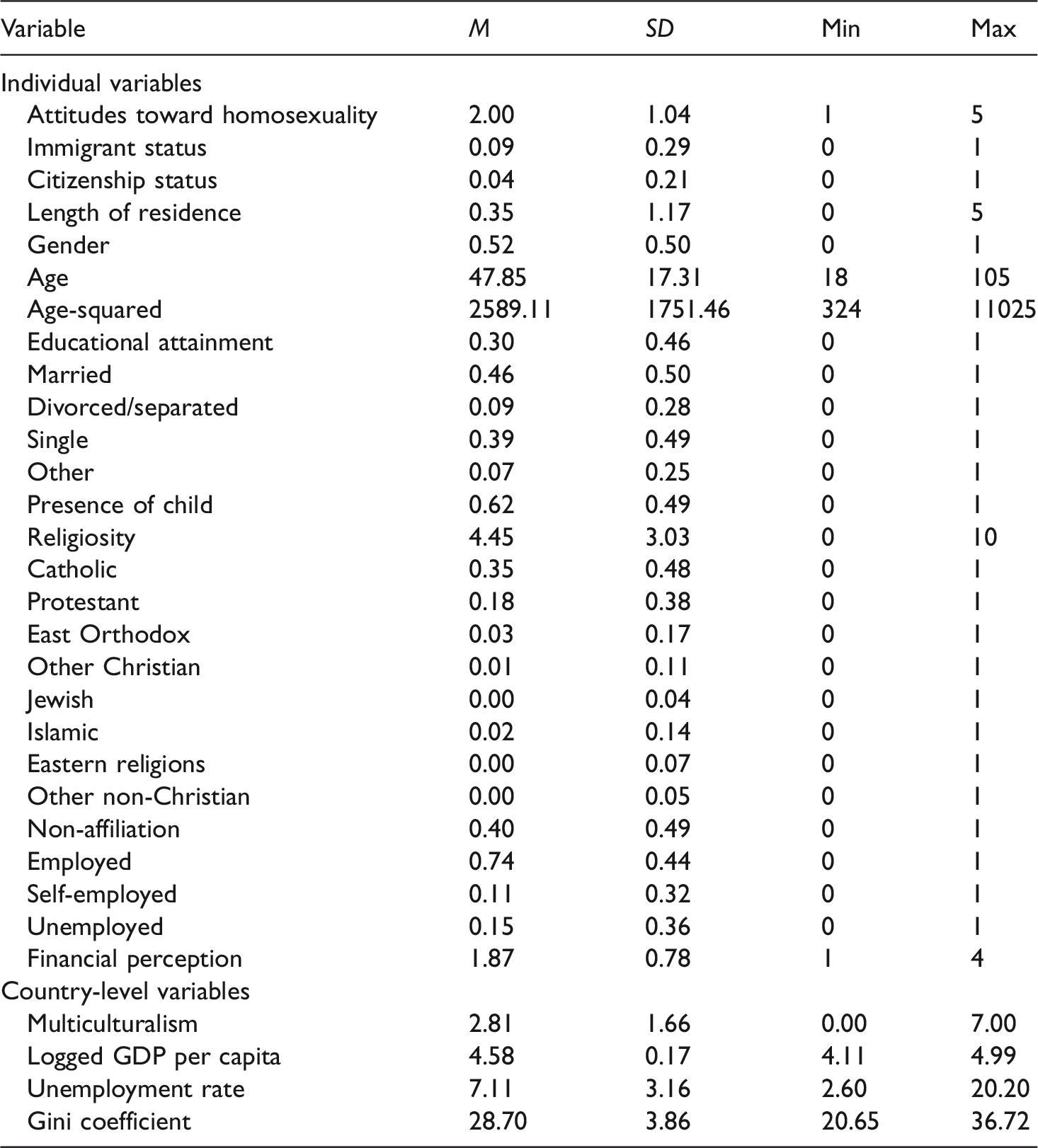
Note: GDP: gross domestic product.
Descriptive statistics are weighted.
Analytic strategy
Theoretical arguments linking multiculturalist policies at the macro-level to individual-level attitudes require analytic strategies that account for the nested structure of the data. In this case, oft-used hierarchal linear models (HLMs) are problematic due to the limited number of level 2 observations (countries) in the study. Limited numbers of level 2 observations can lead to overconfident standard errors involving level 2 covariates. The problem is often compounded if cross-level interaction terms are included in the analysis, which is the case in this study (Bryan and Jenkins, 2015). In contrast, we utilize FE estimators. First, limited level 2 units tend to diminish rather than enhance statistical power. Second, they require a less restrictive set of assumptions about the correlation between unobserved variables and right-hand side covariates (Wooldridge, 2002). Third, FE estimators control for all time and country unobserved processes (e.g., culture, history, values, religious legacies, and legal institutions) that prior research suggests can impact attitudes toward homosexuality (Adamczyk and Pitt, 2009; Brady and Finnigan, 2014; Inglehart, 2008; Inglehart and Norris, 2003b; Takács and Szalma, 2011). Lastly, we corrected for nonindependence among observations using robust standard errors centered on countries (Hoechle, 2007).
To test our central research question of whether multiculturalism conditions immigrant attitudes toward homosexuality, we included the two-way interaction between immigrant status at the individual-level and the country-level variable of multiculturalism (MPI). A positive and significant coefficient on the two-way interaction would provide evidence multiculturalism exacerbates less tolerance toward homosexuality among immigrants, because higher values on the dependent variable correspond to less tolerant attitudes toward homosexuality. The analysis was carried out with STATA 13 (StataCorp, 2013).
Results
We begin by examining the bivariate relationship of the differences in attitudes between Muslim immigrant and native attitudes toward homosexuality across low and high multicultural contexts in Figure 4. Observations are country-mean deviated, and to simplify the bivariate analysis, we categorized multiculturalism into low and high multicultural contexts. Low multicultural contexts included countries with observed MPI scores lower than the median, and high multicultural contexts included countries with observed MPI scores equal to, or higher than, the median. The results suggest that differences are greater in high multicultural contexts, consistent with Hypothesis 1. However, the difference in attitudes between first-generation immigrants and natives appear marginal at best (.0145), suggesting differences may not be altogether salient. Do these results substantively change when we control for country- and individual-level correlates of attitudes on homosexuality?

The difference in attitudes on homosexuality between natives and immigrants across levels of multiculturalism. Observations are country-mean deviated; gray bar refers to low multicultural contexts (MPI scores below the median) and the black bar refers to high multicultural contexts (MPI scores at or above the median). The bars are the difference in average scores between native and immigrants.
Fixed effects models and the conditional effect between immigrant status and multiculturalism on attitudes towards homosexuality in 16 highly industrialized countries, European Social Survey (ESS) 2002–2010.
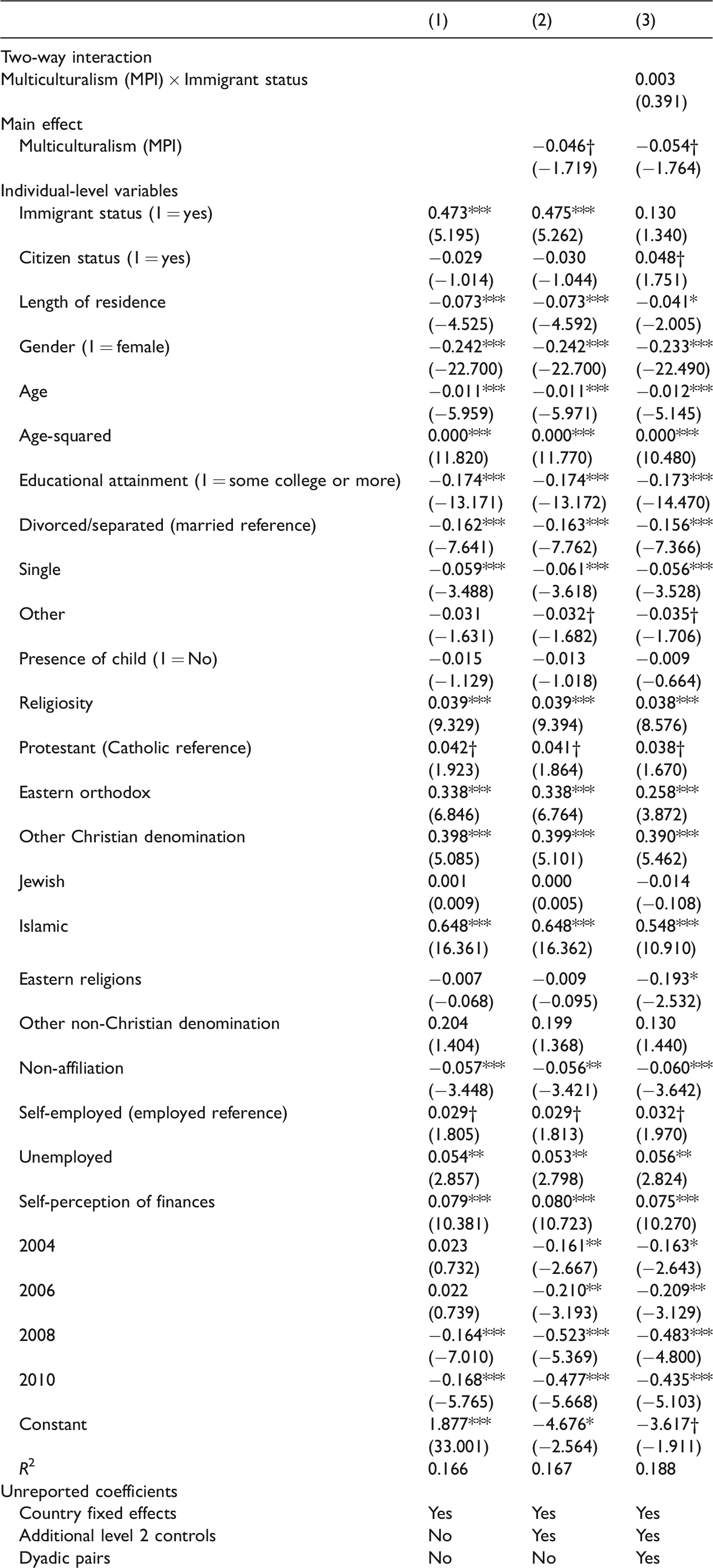
Additional level 2 controls include: logged gross domestic product (GDP) per capita, the Gini coefficient, and the unemployment rate; for presentation purposes country fixed effects, additional level 2 controls, and dyadic pairs are omitted (available upon request).
†p ≤ .10, *p ≤ .05; **p ≤ .01; ***p ≤ .001, two-tailed tests; n = 126,883 for all models.
In Model 2, we introduce country-level covariates in addition to individual-level controls. Country-level covariates include: Multiculturalism, the logged GDP per capita, the Gini coefficient, and the unemployment rate. The coefficients and statistical significance of individual controls remain consistent in Model 2, while including country-level covariates marginally improves the goodness of fit between the two models. The coefficient size of multiculturalism is negative and marginally significant (β = −0.046, p < .10), suggesting that native respondents in more multicultural countries appear to be more supportive of homosexuality, net of controls, and time- and country-invariant processes.
In order to test our central research question of whether multiculturalism exacerbates less tolerant attitudes to homosexuality among immigrants, we include the two-way interaction between immigrant status and multiculturalism in Model 3. Here, we include an additional level of robustness by including the full set of dyadic pairs, which controls all time-invariant processes due to specific immigrant channels. The focal interaction (row one, column three) although positive, is not significant and close to zero (β = 0.003, p > .05). The average marginal effects by immigrant status presented in Figure 5, show that none of the estimated coefficients are significantly different from zero across all observed levels of multiculturalism in the sample (0–7).
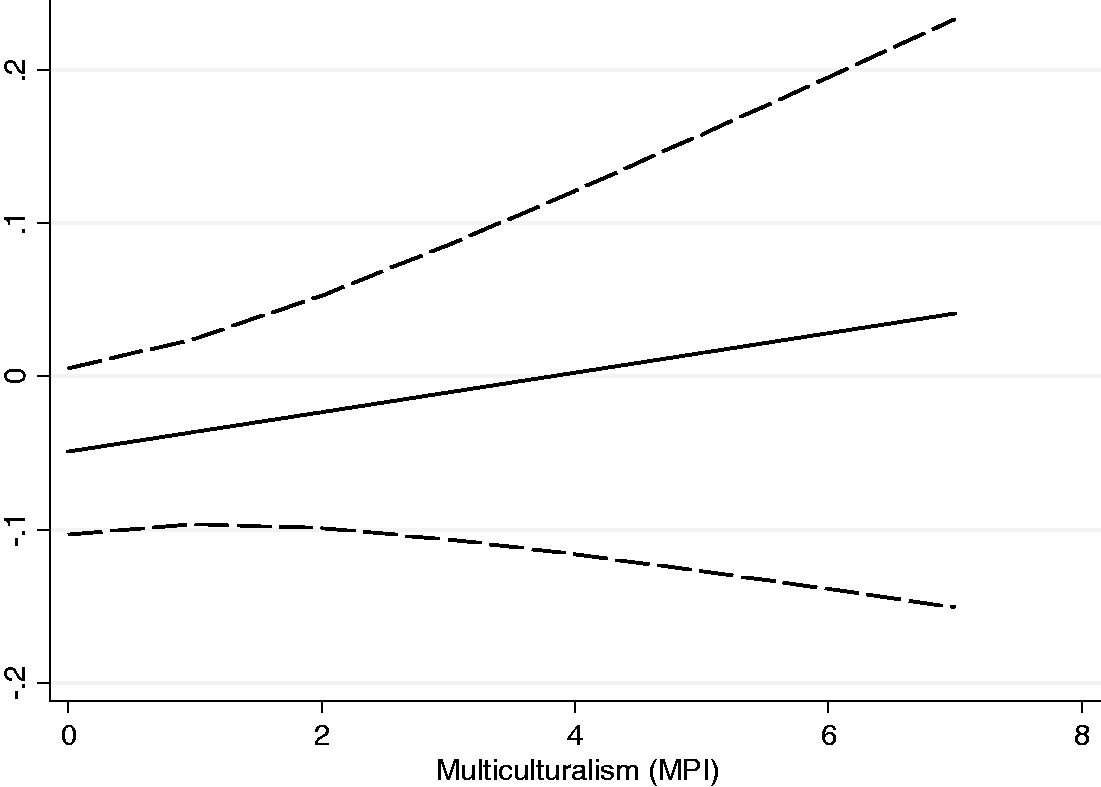
The average marginal effect of multiculturalism for immigrants. The Y axis is the country-specific slope of immigrant status on attitudes towards homosexuality, estimated with Model 3 of Table 2; upper and lower bounds of the effect of multiculturalism for immigrants on country-specific slopes are 95% confidence intervals; positive slopes indicate less tolerance for homosexuality.
The results provide little supporting evidence of a universal trade-off and is incongruent with both Hypotheses 1 and 2. However, the main effect of MPI remains marginally significant (β = −0.054, p < .10). In short, we find no evidence of a universal trade-off. Surprisingly, we find more support that multiculturalist policies may affect native-born rather than immigrant respondents.
Are Muslim immigrants from non-Western countries unique?
Fixed effects models and the conditional effect between Muslim immigrant status and multiculturalism on attitudes toward homosexuality in 16 highly industrialized countries, European Social Survey (ESS) 2002–2010.
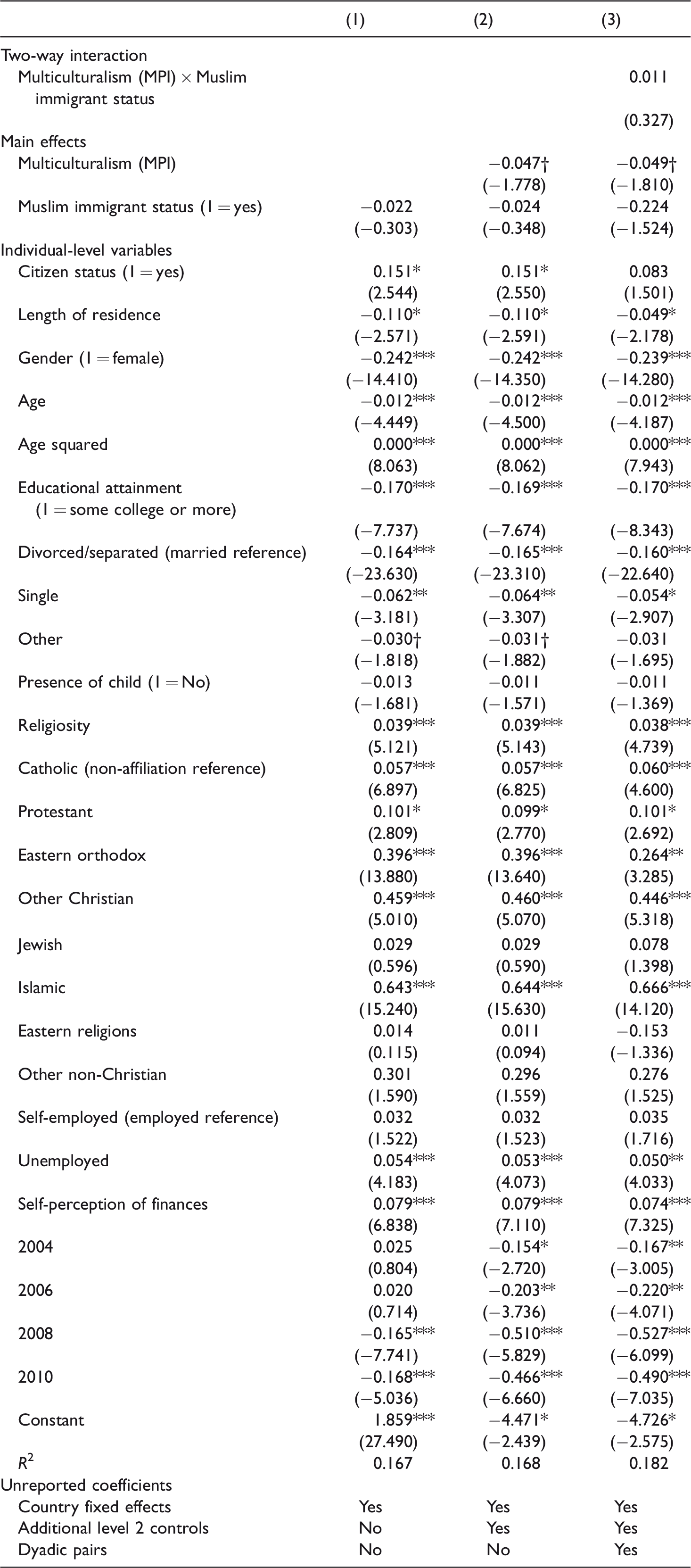
Additional level 2 controls include the logged gross domestic product (GDP) per capita, the Gini coefficient, and the unemployment rate; for presentation purposes country fixed effects, additional level 2 controls, and dyadic pairs are omitted (available upon request).
†p ≤ .10, *p ≤ .05; **p ≤ .01; ***p ≤ .001, two-tailed tests; n = 122,656 for all models.
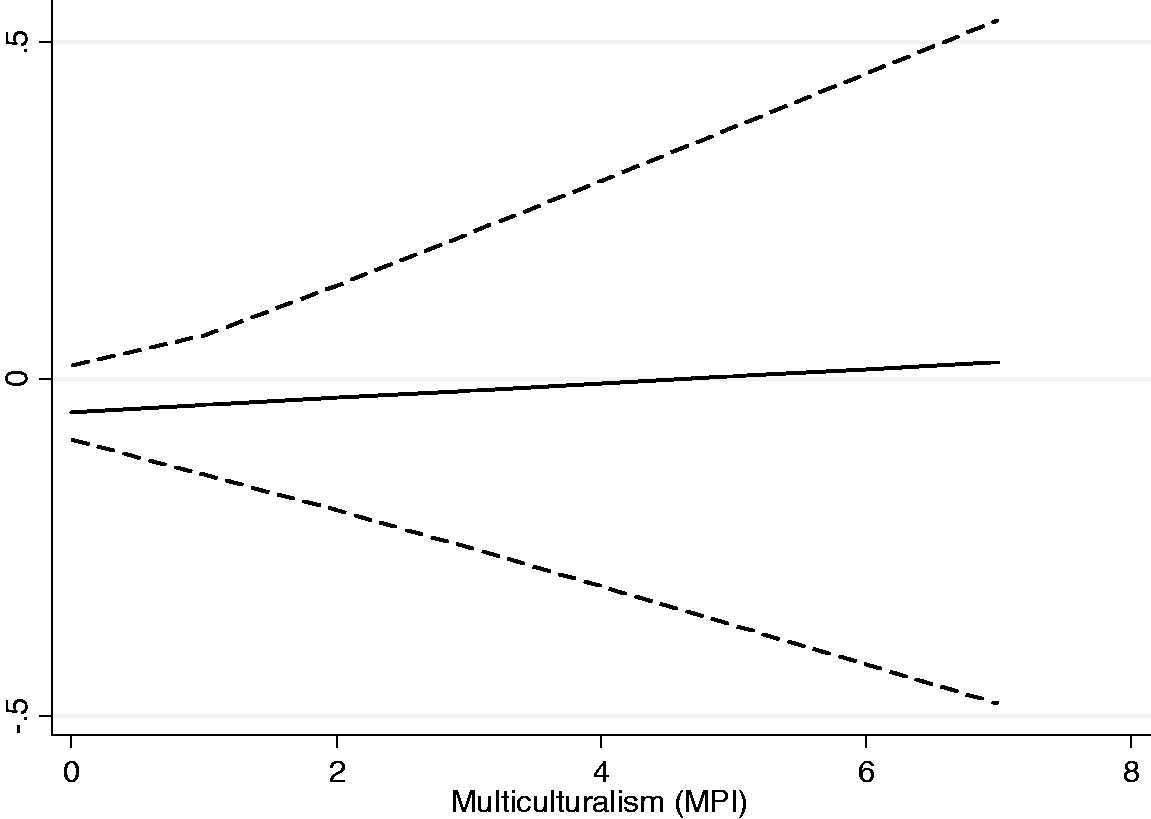
The average marginal effect of multiculturalism for Muslim immigrants. The Y axis is the country-specific slope of multiculturalism for Muslim immigrants, estimated with Model 3 of Table 3; upper and lower bounds of the effect of multiculturalism for immigrants on country-specific slopes are 95% confidence intervals; positive values indicate less tolerance for homosexuality.
We find the main effect of MPI attenuates (natives’ attitudes), but remains marginally significant (β = −0.049, p < .10). In short, we find no evidence of a universal trade-off, even when specifically examining Muslim immigrants.
Sensitivity analysis
Prior studies show that findings vary, often dramatically, based upon the policy index utilized and the sample of countries analyzed (Goodman, 2015). To assess the sensitivity of the null results from Table 2, we (1) used an alternative measure of multiculturalism; as well as (2) selected an alternative cross-national survey, the WVS, which includes English settler countries (i.e., the United States, Canada). To begin, we utilized an alternative measure of multiculturalism provided by the Indicators of Citizenship Rights for Immigrants (ICRI) (Koopmans, 2013). Higher values on the index denote greater levels of multiculturalism and the ICRI measure includes 23 policy indicators on a five-point scale ranging from −1 to 1. 5 The ICRI index is highly correlated with the MPI index. However, it differs from the MPI index because it emphasizes the absence of assimilatory policies as an indicator of multiculturalism (see, Koopmans, 2013 for review). The ICRI measure yielded a smaller number of countries and years, and included: Austria (2002, 2006), Belgium (2002–2008), Denmark (2002–2008), France (2006, 2008), Germany (2002–2008), Great Britain (2002, 2008), the Netherlands (2002–2008), Norway (2002–2008), Sweden (2002–2008), and Switzerland (2002–2008). In total, the number of observations drops by roughly half to 65,418 respondents.
In Table 4, we present the findings in the same manner as Table 2, beginning with individual controls, country controls, and finally, our focal interaction variable. The models in Table 4 utilize identical estimators, as well as individual- and country-level controls in Table 2. The coefficients on control variables remained substantively consistent between models and congruent with results from Table 2. The two-way interaction remains null (row one, column three). The coefficient for the ICRI measure is negative and significant at conventional significance thresholds in Model 2 (β = −0.176, p < .05), however, is no longer significant in Model 3, once we include dyadic pairs. Despite utilizing an alternative measure of multiculturalism, we find no effect of multiculturalist policies on immigrant attitudes toward homosexuality. Similarly, we find a null effect for the interaction term when we analyze first-generation Muslim immigrants from non-Western countries (available upon request).
Fixed effects models and the conditional effect between immigrant status and multiculturalism on attitudes toward homosexuality using Indicators of Citizenship Rights for Immigrants (ICRI) measure of multiculturalism in 10 highly industrialized countries, European Social Survey (ESS) 2002–2010.
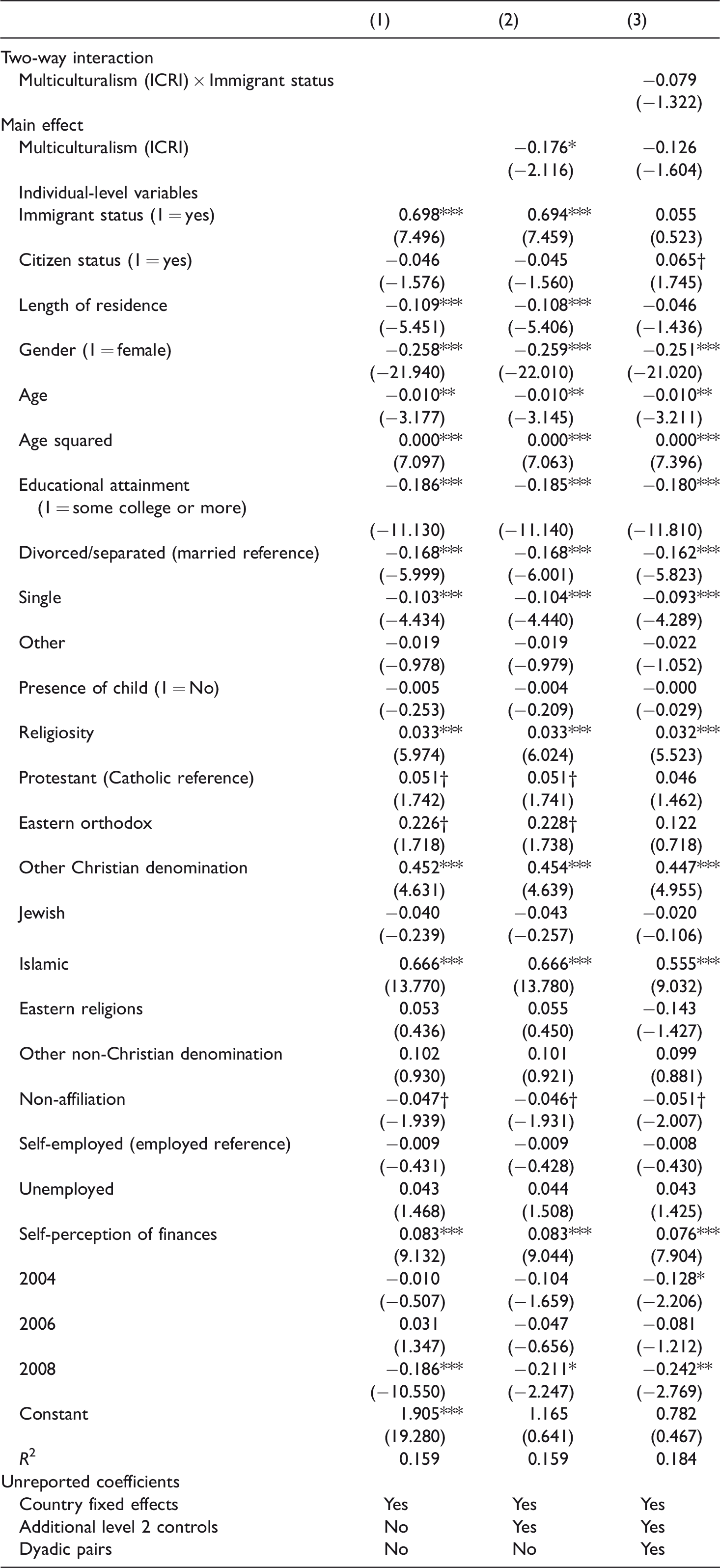
Additional level 2 controls include logged ggross dometic product (GDP) per capita, the Gini coefficient, and the unemployment rate; for presentation purposes country fixed effects, additional level 2 controls, and dyadic pairs are omitted.
†p ≤ .10, *p ≤ .05; **p ≤ .01; ***p ≤ .001, two-tailed tests; n = 65,418 for all models.
Lastly, we assess whether the null results remain consistent when we used data drawn from the WVS. For analyses utilizing WVS data, country years included: Australia (1995), Canada (2006), Finland (1996), Germany (1997), New Zealand (1998), Spain (1995), Sweden (1996), Switzerland (1996), and the United States (1995). The sample of countries notably included English-speaking settler countries (i.e., Australia, Canada, and the United States). In total, the number of observations drops to 11,171 respondents. The resulting cross-sectional data set obviated the use of year FEs. However, we continued to include country FEs, all country-level controls, and nearly all individual controls from Table 2. It is important to note the ESS and WVS surveys did slightly differ in their measurements of several key individual control variables.
Several notable differences included the lack of measures for citizenship status and length of residence in the WVS, which were present in the ESS modules. Responses on several control variables, including religiosity and financial satisfaction, were measured differently in the two surveys. Responses for religiosity ranged from “Not at all important” (1) to “Very important” (4) in the WVS, while financial satisfaction is measured on a 10-point scale (WVS) rather than a four-point scale (ESS), ranging from “Satisfied” (1) to “Dissatisfied” (10). The dependent variable using data from the WVS asked respondents, on a scale of 1–10, whether homosexuality was “Never justified” (1) to “Always justified” (10). The dependent variable was reverse coded to facilitate comparisons with Table 3. Recall, the WVS measure may be more likely to capture attitudes toward homosexuality that may be gender specific to gay men. Moreover, the measure may also capture abstract notions of equality, but fail to tap into attitudes surrounding civil liberties and specific practices—a similar shortcoming to the ESS module (Herek, 2000). Remaining individual control variables were coded consistently between the two samples of countries. These differences between ESS and the WVS variables are summarized in Table 5, while the results of the analysis are presented in Table 6.
Differences in variable measurement between the World Values Survey (WVS) and the European Social Survey (ESS).
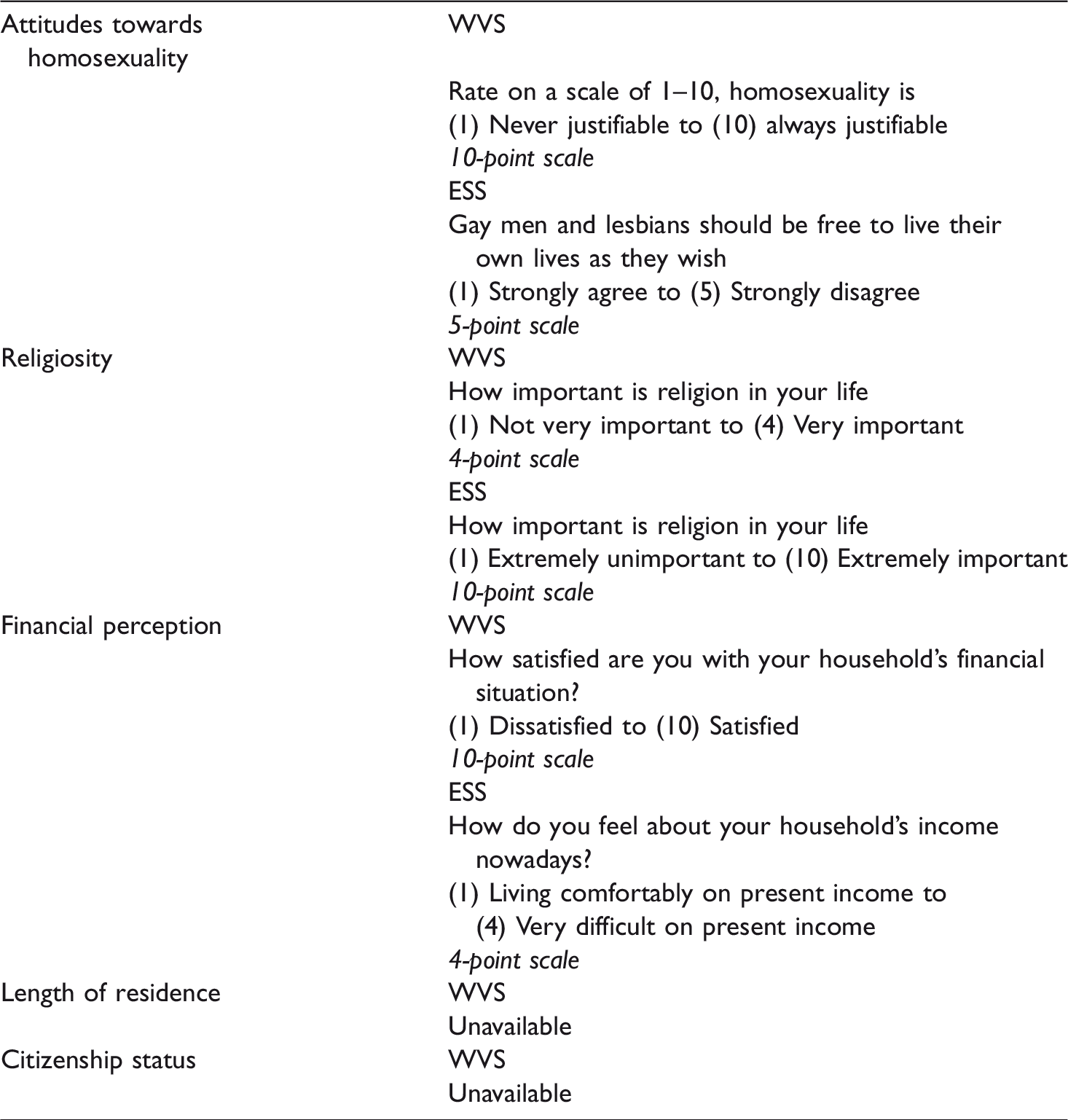
ESS: European Social Survey; WVS: World Values survey.
Fixed effects models and the conditional effect between immigrant status and multiculturalism on attitudes towards homosexuality in nine highly industrialized countries, World Values Survey (WVS).
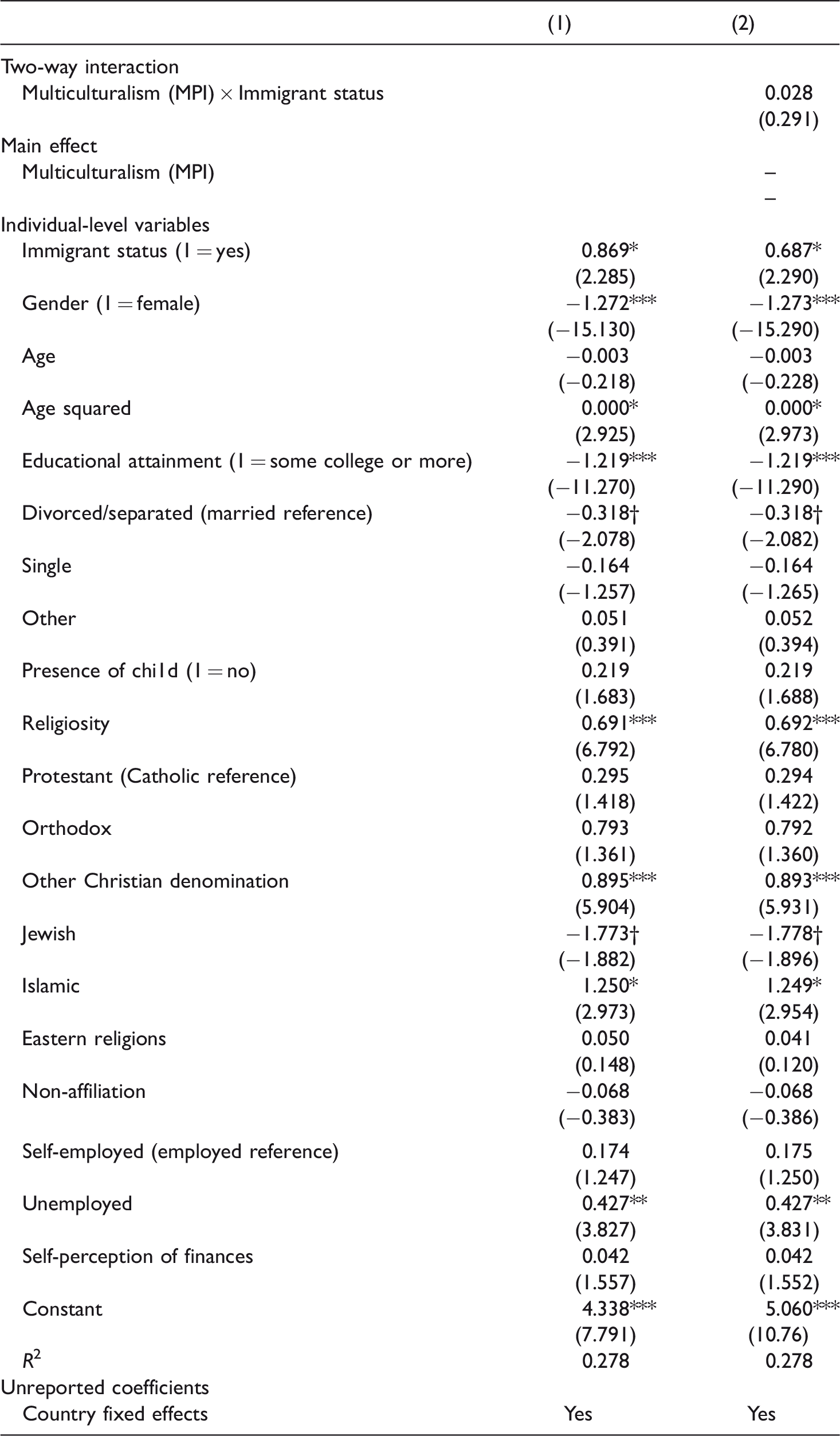
For presentation purposes country fixed effects are omitted (available upon request); other non-Christian denomination was omitted due to small cell size.
†p ≤ .10, *p ≤ .05; **p ≤ .01; ***p ≤ .001, two-tailed tests; n = 11,171 for all models.
Due to the loss in country years, all country-level covariates and the MPI measure are now perfectly colinear with the country FEs, and thus drop from the fixed-effects equation. Nevertheless, the two-way interaction between multiculturalism and immigrant status is estimable because immigrant status varies within countries (Allison, 2009). Although control variables between the two samples slightly differ between the two samples, the results remain largely consistent. In Model 1, we control for individual-level covariates. In Model 2, we sequentially include the two-way interaction term between immigrant status and multiculturalism. The interaction term is not significant and once again close to zero (β = 0.028, p > .05). We find similar results for Muslim first-generation immigrants as well (available upon request). In total, the results are inconsistent with both hypotheses 1 and 2. That is, attitudes toward homosexuality do not significantly vary in any direction across levels of multiculturalism. These findings are congruent across two different measures of multiculturalism (MPI and ICRI) and two large cross-national surveys (the ESS and the WVS).
Discussion and conclusion
Attacking multiculturalist policies as key barriers to sociocultural integration has become more commonplace within heated political debates, but few studies have empirically addressed this controversial topic (Koopmans, 2013). In this article, we address this policy gap by assessing whether immigrant attitudes toward homosexuality systematically differ across affluent democracies that widely vary in their implementation of multiculturalist policies. Although two divergent bodies of literature provide narratives as to why multiculturalist policies should matter for the sociocultural integration of immigrants within affluent democracies, we find no such relationship empirically. Indeed, we find that multiculturalism has a null effect on immigrant attitudes and on Muslim, first-generation immigrants in particular. The null results are consistent across two large cross-national samples (i.e., ESS and WVS) and two measures of multiculturalism (i.e., MPI and ICRI). Our findings suggest that a trade-off between multiculturalist policies and sociocultural integration appears to be more a crisis of perception in mainstream political discourses than one supported by empirical evidence.
Despite the purported prominence of national immigrant policies in immigration debates, our null findings are more consistent with a growing body of literature that questions the utility of national policies over more proximate determinants of regional, labor, and education policies (Crul, 2016; Crul and Vermeleun 2003; Greenman, 2011). This may be because national immigration policies are too diffuse (Crul and Vermeleun, 2003), or because the experiences of immigrants are more affected by local institutions (Freeman, 2004). Indeed, some scholars argue that there is no such thing as a coherent national incorporation regime; rather, “one finds ramshackle, multifaceted, loosely connected sets of regulatory rules, institutions and practices in various domains of society that together make up the frameworks within which migrants and natives work out their differences” (Freeman, 2004: 946). Future studies may further focus on localized over national contexts to better understand the nuances of the integration processes, which may be more obscured in studies that solely focuses on national policies (Crul and Vermeleun, 2003).
Our null findings may also suggest that increasing heterogeneity in new immigrant waves may negate any discernible effect of national immigration policy. Although we control for many established correlates of attitudes at the country and individual levels, within and between, heterogeneity increasingly challenges the validity of cross-national comparisons (Vertovec, 2007). Future research may more fully underscore what impact “super diversity” in new waves of immigration, and its intersection with more proximate educational and labor market institutions, have on immigration research and traditional theories of assimilation and its variants (Crul, 2016; Vertovec, 2007). Here, some scholars suggest that intersectional and contextual approaches provide promising advances to better understand integration processes in the coming decades, rather than relying solely on established assimilation perspectives (Crul, 2016).
Interestingly, we find the main effect of multiculturalism is negative and marginally significant at an alpha level of 0.10 (Tables 2 and 3). However, the results do not appear to hold when we utilize the ICRI measure of multiculturalism (Table 4). Here, our findings are suggestive that multiculturalist policies may more significantly affect attitudes for natives than immigrants. Perhaps, multiculturalist policies may increase social awareness of cultural discrimination toward immigrants which, in turn, stimulates awareness of other dimensions of discrimination, such as sexual discrimination (Banting et al., 2006). However, it remains unclear whether the direction of the causal arrow runs in the opposite direction. That is, more accepting attitudes toward homosexuality may facilitate support for other types of policies that emphasize difference, such as multiculturalism. Ancillary analyses provide a degree of skepticism. When we regress the MPI index, measured at a later time point, on attitudes at an earlier time point, we should observe a positive significant association. This would imply that more favorable attitudes on homosexuality explain greater propensity for supporting multicultural policies at a later point in time. In Table 8 in the Appendix, we find no such association. That is, attitudes aggregated at the country level in, 2002 are not correlated with multiculturalism scores measured in 2004, 2006, 2008, or 2010. Indeed, we find no significant effects of lagged MPI on attitudes measured in 2004, 2006, or 2008. Nevertheless, future research may more fully unpack the impact that multiculturalist policies have on native attitudes toward homosexuality.
Footnotes
Declaration of conflicting interests
The author(s) declared no potential conflicts of interest with respect to the research, authorship, and/or publication of this article.
Funding
The author(s) received no financial support for the research, authorship, and/or publication of this article.