



Abstract
Drawing on case illustrations of a six-year-old child as he ‘assembles’ a digital world using Webkinz™, this paper proposes an approach that researchers and educators might use to understand, analyse and critique multimodality. This multidisciplinary theoretical framework integrates new literacies, social semiotics and critical literacy perspectives. Data were collected during a broader three-week case study via a side-shadowing interview technique (McClay and Mackey, 2009), where the first author sat next to the child, making detailed research notes, interviewing him and taking screenshots of his digital productions. The findings suggest that authorship is rarely linear as authors continually remix, layer, embed and inter-animate semiotic resources as they assemble their sociocultural worlds and critical positions within these worlds.
Introduction
The growing shift towards new and online literacies in education is being taken up in research and scholarship around the globe. For example, Kate Pahl and Jennifer Rowsell (2005) posit that broader literacy frameworks compiled with a proliferation of accessible digital technologies demand that schools reinterpret what is required for students to emerge as literate citizens. Additionally, Hull and Nelson (2005: 224) state: ‘there are unmistakable signs that what counts as text and what constitutes reading and writing are changing – indeed, have already changed’. And Vasquez (2005: 202) adds that what is especially intriguing is that ‘children, more so than adults, seem to have an affinity with the new communication systems’.
Yet questions continue to be raised about how researchers and educators might analyse and critique the plethora of communication systems that children use. For example, what are the relationships among and between the sites of digital designs, negotiations, productions and disseminations? What are the benefits and limitations of online texts? Additionally, while combining the social and the semiotic is familiar ground in the field of literacy, criticality is often implicit. So how are power relations with situated contexts, access and social identities being woven into the assemblages that humans create? And how might highlighting these particular features together (i.e. the social, semiotic and critical) reveal new insights and discussions? As researchers state, there is a greater need than ever for ‘multidisciplinary theoretical frameworks’ that weave together recent research trajectories, such as new literacies and critical literacies, digital technologies and sociocultural theories (Larson and Marsh, 2005; Stein, 2008).
There are three research questions that guide this case study: (1) How does the six-year-old boy in this study ‘digitally assemble’ an online virtual world within his sociocultural context? (2) How might a multidisciplinary theoretical framework provide new opportunities to understand, transcribe and analyse children’s semiotic, social and critical communication? (3) How might researchers and educators gain new insights into the field of modal literacies by adopting a multidisciplinary theoretical framework – specifically one that integrates new literacies, social semiotics and critical literacy perspectives?
Digital technologies
Labbo and Reinking (1999: 276) defined the term digital as ‘electronic representations of alphabetic and graphic information using binary code’. This coded representation enables computers to transmit and transform text and pictures quickly and fluidly. Thus, the term digital literacies refers to the multiple ways of constructing, expressing and disseminating information through binary-coded representations.
Although technical skills are important, the ability to use digital tools only provides the capability to access representations. Withrow (2004) suggested that the digital mode also requires the ability to navigate, negotiate, visualize (e.g. photographs, videos or animations) and hear (e.g. music or audio narration) in ways that represent critical engagement, personal preference and intent in a digital environment. Thus, those who are truly ‘digitally literate’ not only have technical skills, but can: remix new meaningful materials from existing ones; critique and evaluate the quality and validity of information; and ‘have a mature and realistic understanding of the “rules” that prevail in the cyberspace’ (O’Brien and Scharber, 2008: 93).
Yet, digital literacies are also socioculturally situated practices supported by communities that enable the representation and understanding of ideas using a range of modalities, social networking and critical spaces enabled by digital resources (Lankshear et al., 1997). A child’s world is neither isolated nor de-contextualized. He or she uses digital technologies for particular purposes and approaches each device with his or her own beliefs, knowledge, preferences and agenda. Additionally, digital literacies, like all literacies, are semiotically integrated (e.g. including sounds, images, animation, print) and critically positioned (e.g. ongoing access, opportunities to participate). To illustrate this idea further, a survey by the American Association of Colleges of Teacher Education (2009) reveals that when given access to digital communication systems such as the Nintendo DSI™, even young children (five years old) can text, doodle, digitally alter photos and share with one another electronically, even before they can fully decode and encode printed texts. Arguably, this example suggests that digital literacy is more than a set of learned skills. Rather, it is an illustration of our digital culture – these practices speak to broader ideas such as: who has access to these multimodal tools? how has history shaped our technologies? what semiotic potentials are offered by different multimodal tools? and what digital technologies are children choosing for their own purposeful communication?
Multimodality in out-of-school contexts
A child’s home life is intrinsically connected to his/her multimodal authorship and social worlds. Scholars (Hull and Shultz, 2002; Kendrick, 2003, 2005; Kendrick and McKay, 2004; Pahl, 2009) have stated that the home is not only intimately connected to the meanings children produce, but also shapes children’s in-school learning and the ways in which they see themselves and others as meaning-makers. Additionally, new literacy researchers such as Larson and Marsh (2005) posit that there is a need to reconsider traditional notions of theorizing literacy when we consider children’s out-of-school communicative practices, which involve a wide array of digital technologies such as hand-held devices, computers, DVDs, games, etc.
Burke et al. (2010: 1) draw from the work of Jewitt and Kress (2003) when stating that ‘children cross from their everyday literacy practices into the virtual world of playmaking when visiting an online virtual world/game such as www.webkinz.com, thus demonstrating that their contemporary authorship is informed through the affordances and constraints, which may be found in multimodal spaces’. As scholars and educators we can learn much about the educational value of multimodality by documenting how children naturally interweave play-making and learning within and beyond school contexts (Kendrick, 2003, 2005; Pahl, 2009).
In the narrated case illustrations that follow, a six-year-old boy uses Webkinz™ (an online virtual world) and Webkinz™ pets (plush animals with a secret code that allow access to Webkinz World™ – to shape and communicate his multi-modal literacy practices. Currently, there are only a handful of studies that explore how this particular online world can develop student literacy. Marsh (2011) writes about how children (aged 5 to 11) use Webkinz as a way to negotiate social order and literacy practices in ways that allow for ‘online social cohesion’ (i.e. social, material and cultural structures) between their online virtual worlds and their everyday lives. Similarly we found that Leon (pseudonym) was constantly bringing the semiotic resources and past critical positions that he encountered outside the Webkinz™ game (e.g. experiences from school) to his present sociocultural context, and to the critical positions that he assumed and assigned during his virtual play.
In another study conducted by Burke et al. (2010), Webkinz™ was used to explore the ways in which students negotiate existing at-home literacy practices for the purpose of ‘play’ within the virtual world of Webkinz™. The authors suggest that children negotiate their existing literacies through a conception of their understandings and the constraints of digital multimodal learning spaces. Our study is similarly aligned. Indeed, Leon’s understanding, as well as the benefits and constraints of the Webkinz™ space, informed his play. But extending this idea, we also noticed that the critical positions he assumed and assigned in the past and in the present (i.e. during his online play), to a significant extent, shaped his moment-to-moment decision-making and the overall design of the Webkinz™ movie he produced.
A multidisciplinary theoretical framework
Given the complexity and fluidity of children’s multimodal meaning-making/communication when using digital technologies, how might contemporary scholars or educators bring together rich multidisciplinary theoretical perspectives and practical applications in order to better understand, transcribe and communicate nuanced scholarship?
Throughout the day, children actively engage with and author all types of semiotic meanings by assembling what they know, believe and experience (Pahl, 2009). Their assemblages are authentic and informed by their social encounters, modal choices and power relations (Kendrick, 2005). So rather than focusing only on the social and the semiotic – a well-trodden path in new literacy studies, digital literacies and social semiotics – this theoretical framework also highlights critical perspectives, particularly discursive positioning theories (Davies and Harré, 1990; Holland et al., 1998). This Authorship as Assemblage model (Winters, 2010) considers authorship broadly, it suggests four principles that undergird authorship:
Authors are both external and internal meaning-makers; they include any person who contributes meanings to texts whether they be ‘declared, hidden, or withdrawn’ (Barthes, 1977: 110). Within situational contexts, authors assemble a multiplicity of modes that are made up of different semiotic resources and potentials. Authors actively engage in and move between sites of social inter(action) – design, negotiation, production and dissemination (not necessarily in this order) – as they interpret and communicate meaning. Inside discursive practices, authors create storylines and critical positions. Authors assume and assign these socially constructed positions in ways that are flexible and iterative.
Looking at multimodality and digital technologies through this particular lens reveals nuanced and layered perspectives. Although this poses broader questions about the nature of multimodality – for example recursive thinking, the complexities of social inter(actions) and modal integration, and the ways that children situate themselves and construct power relations – it also gives us a tool we can use to better transcribe and understand how Leon, then a six-year-old boy, assembled his out-of-school world. The case illustration that follows supports what some new literacy studies and critical literacies have suggested: meaning-making and communication (authorship) are always semiotically integrated, socioculturally situated and critically positioned (Barton et al., 1999; Stein, 2008). Here, Leon orchestrates a multiplicity of semiotic modes and resources, conducts social (inter)actions, and discursively positions himself and others within his situational context.
The method and study context
This paper draws from one section of a broader case study. During the summer of 2006 the first author had the opportunity to observe Leon and collect data. She observed Leon for three weeks in and out of school using a side-shadowing interview technique (McClay and Mackey, 2009), whereby she sat next to Leon, making detailed research notes (both in the moment and reflectively), interviewed him, collected documents, took screenshots of his digital productions and video-taped whenever possible. Leon was already familiar with Webkinz™ and had recently learned how to compose ideas through print (i.e. decode and encode words). In this way, Leon guided the study.
Leon is a sensitive and thoughtful Caucasian boy who loves playing with Lego, reading books, gaming on the computer and writing in his journal. At the time of the study, the child’s mother, Kate (pseudonym), was finishing grad school and his father, John (pseudonym), was finishing a training programme to become a registered massage therapist. Together, his parents’ income totalled just over $23,000, well below the poverty line. He lived in an urban environment in western Canada, in a one-bedroom apartment with his mother, father, younger sister Kenzie (pseudonym) and their two cats. Leon’s parents were both very involved with his education as schooling for both their children was regarded as a high priority. The teacher once told John that Leon is at ‘the top of his class in academics’ and that ‘he is a leader on the playground’. His report cards support these claims. Leon has many friends at school, with whom he loves to talk and play, but he is also quite content to play on his own.
Methodology
The section that follows uses a narrative case-illustration research method that illustrates specific moments from the study by moving between first person-narrated field notes, images and academic reflection or analysis. This narrative case-illustration approach allowed the first author to observe from a variety of perspectives (e.g. as participant, observer, collector of data, literacy researcher). This approach enabled us, as researchers, to capture both the minute details of Leon’s online play and the broader social contexts and discourses in which he interacts and, at the same time, explore some of the benefits and challenges of digital authorship.
Analytic frame for multimodality
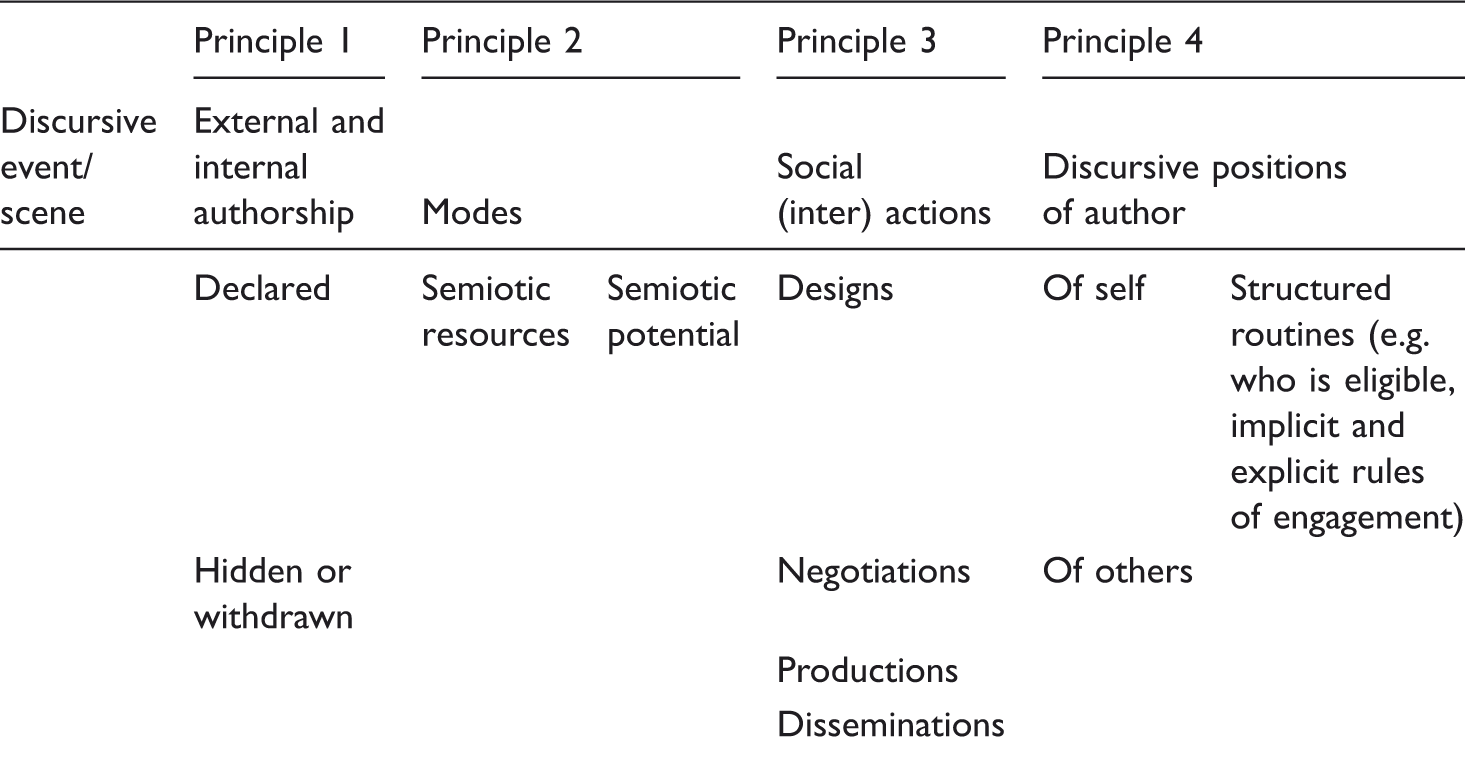
Below, each of the terms used in the analytic frame is explained:
Discursive event/scene. Any occasion where multimodal discourse is authored among participants and within concrete situational contexts (Kress and van Leeuwen, 2001). External and internal meaning-making. Authors ‘donate’ meaning both externally (producing and disseminating) and internally (designing and negotiating), adding to the texts or storylines that are being created (Barthes, 1977). In this paper, authorship includes both the interpretation and actualization of information. Declared participants include authors who are visibly creating meaning and contributing to the text within social contexts (Barthes, 1977). For example, Leon can be seen creating a digital movie. Hidden or withdrawn participants include authors that are less visible or may have, at one time, been ‘dialogically' involved in donating meaning (Bakhtin, 1981; Barthes, 1977), e.g. Leon’s classmates, who before this digital play-making event called Leon a baby. Modes. Orchestrations of available semiotic resources (e.g. materials or actions) within discourses and situated social contexts. All modes have potential affordances and limitations arising from the perceivable properties of the semiotic resources employed (Kress and van Leeuwen, 2001). Social (inter)actions. Modal actions that authors engage into construct meaning, including the ways they design, negotiate, produce and disseminate information within situated contexts. In addition, social (inter)actions include the ways in which authors interact with one another, and how their actions relate to the discourses across and within sociocultural contexts (Bakhtin, 1981; Kress and van Leeuwen, 2001). Positions of authors. How, within a discourse, authors psychologically or physically situate themselves and others socially, culturally, economically and politically (Davies and Harré, 1990). Discursive positioning includes structured routines and pathways, including routes that facilitate and regulate actions, rules of common practices and eligibility, e.g. who does/does not, can/cannot engage in particular activities (Barton et al., 1999).
As humans author assemblages (based on their own social contexts, experience, background, modal choices, and so forth), the four principles undergirding authorship relate to or speak back to one another, weaving meaning and communication that is always fluid, interconnected and recursive. Perhaps a visual metaphor to describe this complex process might be a spiral torus (Figure 1).
Spiral torus: a visual metaphor for Authorship as Assemblage.
Ideally, this visual metaphor (http://bugman123.com/Math/Hopf Fibration1-large.jpg) for Authorship as Assemblage should be represented bumping up to and interacting with numerous other tori within a three-dimensional space. However, because we are limited by both the visual complexity of the image and the two-dimensional affordances of the paper or screen, only one torus from one perspective is illustrated in this example.

The black space at the core of the torus and surrounding it represents the possible meanings that are available within any discursive event. The woven doughnut area represents the author’s recursive and integrated process of semiotic, social and critical meaning-making. Looking closer, each whorl of the woven area – which is both internal and external – suggests the ways in which an author (inter)acts with and orchestrates semiotic resources both internally (designing and negotiating) and externally (negotiating, producing and disseminating). Simultaneously, while moving between and among other tori (within communities of practice), authors donate meanings by taking in information and reinterpreting it, by making new connections, by adding to existing texts or storylines, and so forth. Furthermore, while assembling these meanings they assume or assign discursive positions in ways that always interweave with their sociocultural environment.
The torus, as presented here, is one way of visualizing the complex and fluidly-assembled discursive events that children author. To demonstrate these nuances more concretely, we offer narrative case illustrations from a larger case study of a young child’s computer interactions when creating multimedia embedded in a virtual world.
Narrative illustration (data and analysis)
In this section, the first author uses italics for transferred field notes and roman text for analytic reflections described after data were collected.
In the afternoon Leon plays Webkinz™ (
www.webkinz.com
) on the computer. Here, he adopts a pet and takes care of it by buying it food, clothes and furniture.
Webkinz World™ is Web-based edutainment program. More specifically, Webkinz™ Worlds are marketed with Webkinz™ Pets—stuffed animals equipped with a code that can be used to access an online virtual world for your toy. This program offers hundreds of interactive activities: interactive storybooks, arcade games, job skills, sports tournaments, live chat, and so on.
Today Leon is producing a theatrical movie which, when programmed, will be performed on his computer screen. As he plays he talks to himself (and to me presumably). I am transcribing his conversation now. Later, I take screen shots (included below).
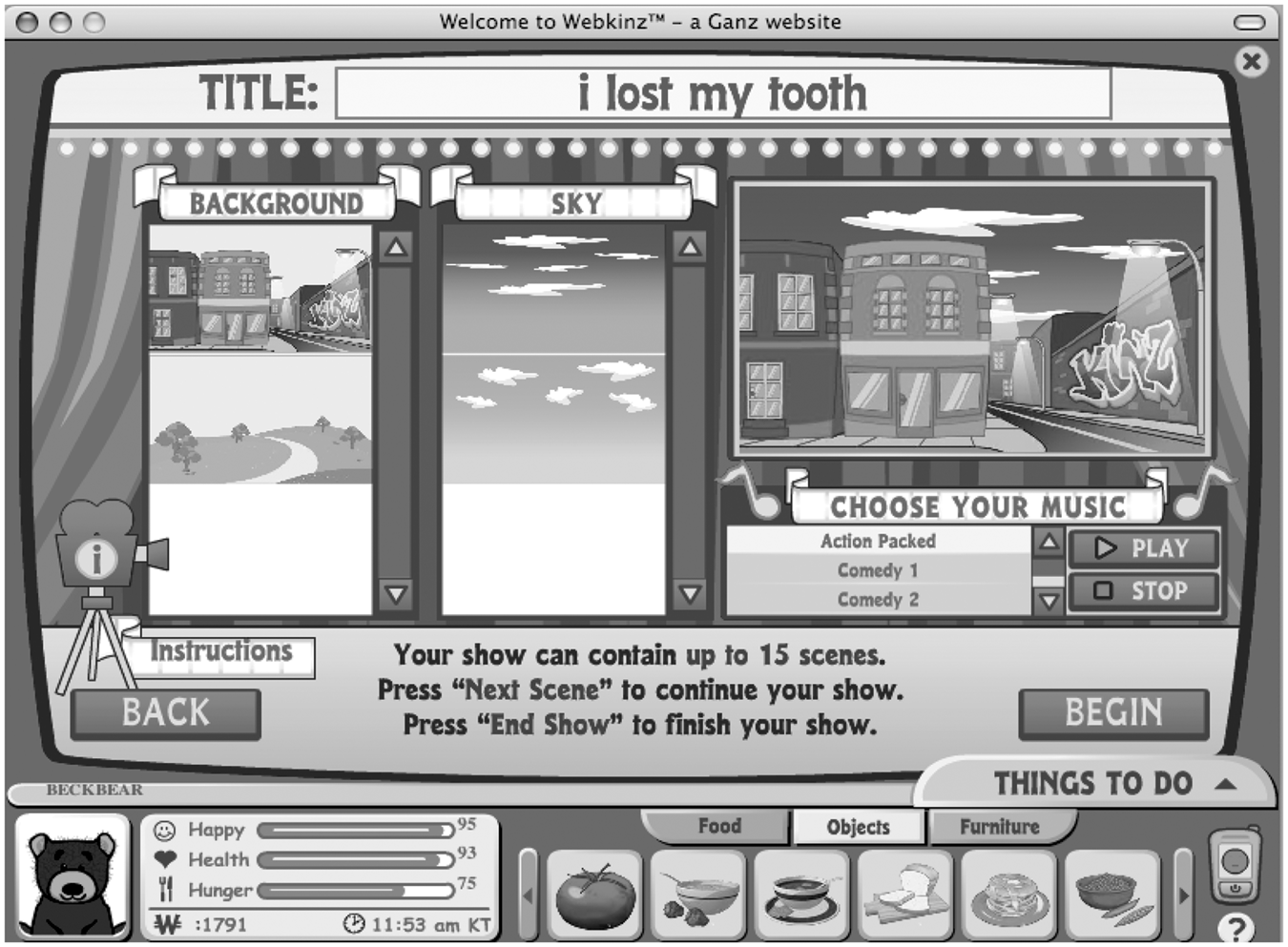
Leon sets up the theatre in Webkinz™ and goes to the initial set-up page [
Figure 2
]. Here he types in his movie title, “i lost my tooth”. Then, he chooses technical features, such as the background setting, the colour of the sky, and the music. He decides on a cityscape and a dark blue cloudy sky. The music he picks is upbeat (similar to the theme song of the TV show Seinfeld).
He is adept at moving between the social (inter)actions of design, production and dissemination. Though he does not need to, he explores every semiotic option available to him, including visual setting, accompanying music, costumes, a title for the movie, and so forth. Digital forms such as these afford the dynamic and simultaneous assembling of modes, including digital, movement, musical, pictorial, linguistic and dramatic. Each of these modes individually generates its own distinctive meaning and encompasses its own semiotic resources (e.g. the pictorial device of the speech bubble indicates what the character is saying). Further, each semiotic resource has inherent benefits and limitations. For example, print is sequential (i.e. each word is meant to be spoken or written in a specific order – from left to right). This means that an author of words can prioritize and determine the order in which the reader will read the text. This also means that writing and reading print has the potential to be very time-consuming. Leon’s ability with digital technology appears to be intuitive. He makes quick decisions, producing a remixed text. For instance, he is drawing from both printed and visual modes in order to select the representation that best communicates his ideas. Moreover, Leon combines his understanding of print (e.g. alphabetic symbols) with his understanding of visual tools (e.g. speech bubbles) so that we know that characters are speaking. The print and visual representations are creating a new representation (e.g. a comic format). Gainer and Lapp (2010) state that such a process of remixing is integral to understanding how new literacies unfold within and beyond school contexts; children are constantly combining and representing what they know in new ways, for new purposes. As Leon engages in a process of remixing, he is layering meaning in flexible and authentic ways. Choosing a movie title and technical features (e.g. setting, music). Hiring the actors.
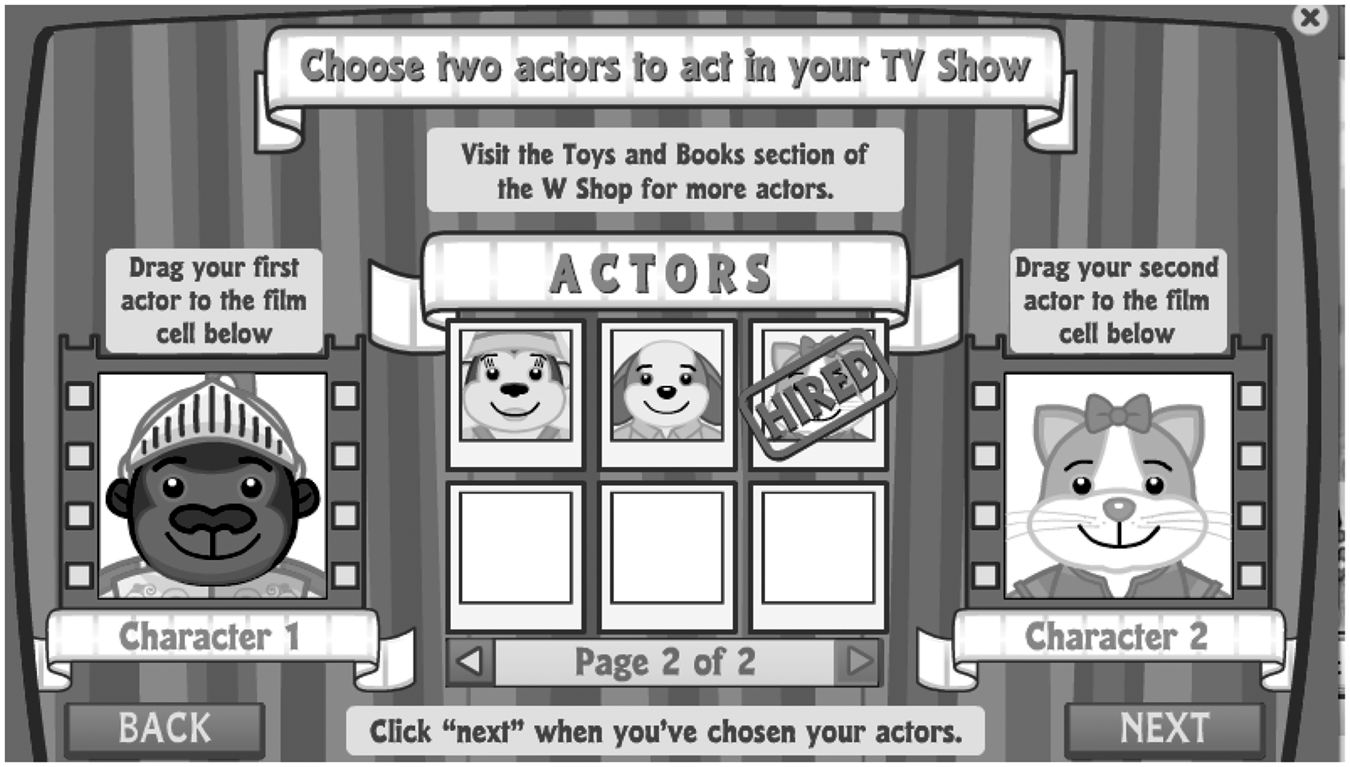
Next Leon hires his actors (Figure 3).
He chooses a gorilla wearing an armoured knight suit and a cat (that looks a lot like his own pet) wearing a striped tee-shirt and a bow in her hair. I ask him, “Why these characters?” but realize that I am sounding judgemental so I stop myself. Yet, I am curious about the costumes. Perhaps I can ask him later.
Leon says to me, “I’m going to choose a gorilla because he’ll lose his tooth.”
I am unsure why he chooses these characters; perhaps because they are mammals? I know that Leon has studied mammals in school and knows that mammals grow teeth. I am also unsure why he picks these genders and costumes. However, the topic that Leon chooses is not surprising. Over the past weeks, Leon has learned a lot about what it means to lose a tooth. As a six-year-old who had not lost a tooth until yesterday (a late bloomer in some ways – his mom mentioned that he was a preemie and often reached physical developmental stages later than his peers), he had been teased by his classmates and called a “baby”. Additionally, earlier in the week, he has watched videos and read books on this topic. Yesterday, I observed Leon at the beach when his first tooth fell out and was literally “lost”. Thus, this title is resonant of the sociocultural experiences that he has recently encountered. Leon is engaging in a process of transaction (Rosenblatt, 1978), whereby he draws on his existing sociocultural understanding as a way to give meaning to and position himself within the text. Perhaps what is distinct about this event (why he is designing a movie about teeth as opposed to other topics), is that he is still trying to negotiate his own feelings and navigate a storyline where he can better understand the positions he hopes to assume and assign. Holland et al. (1998), and others, discuss this idea in their research, showing how people create storylines in order to know their own lives and, further, to explore how their lives connect to the lives of others. It is interesting to note that Leon chooses a gorilla, rather than a mouse or even another cat. Gorillas are known for their strength and dominance. Perhaps the selection of a gorilla is in response to the earlier teasing that occurred at school. Based on this teasing incident, he chooses to position himself as a character that is both powerful and authoritative. This also speaks to the affordances of digital technologies such as Webkinz™ that actively allow children to recreate their identities through online role-play; within the digital text of Webkinz™, Leon is the one determining how others will view him.
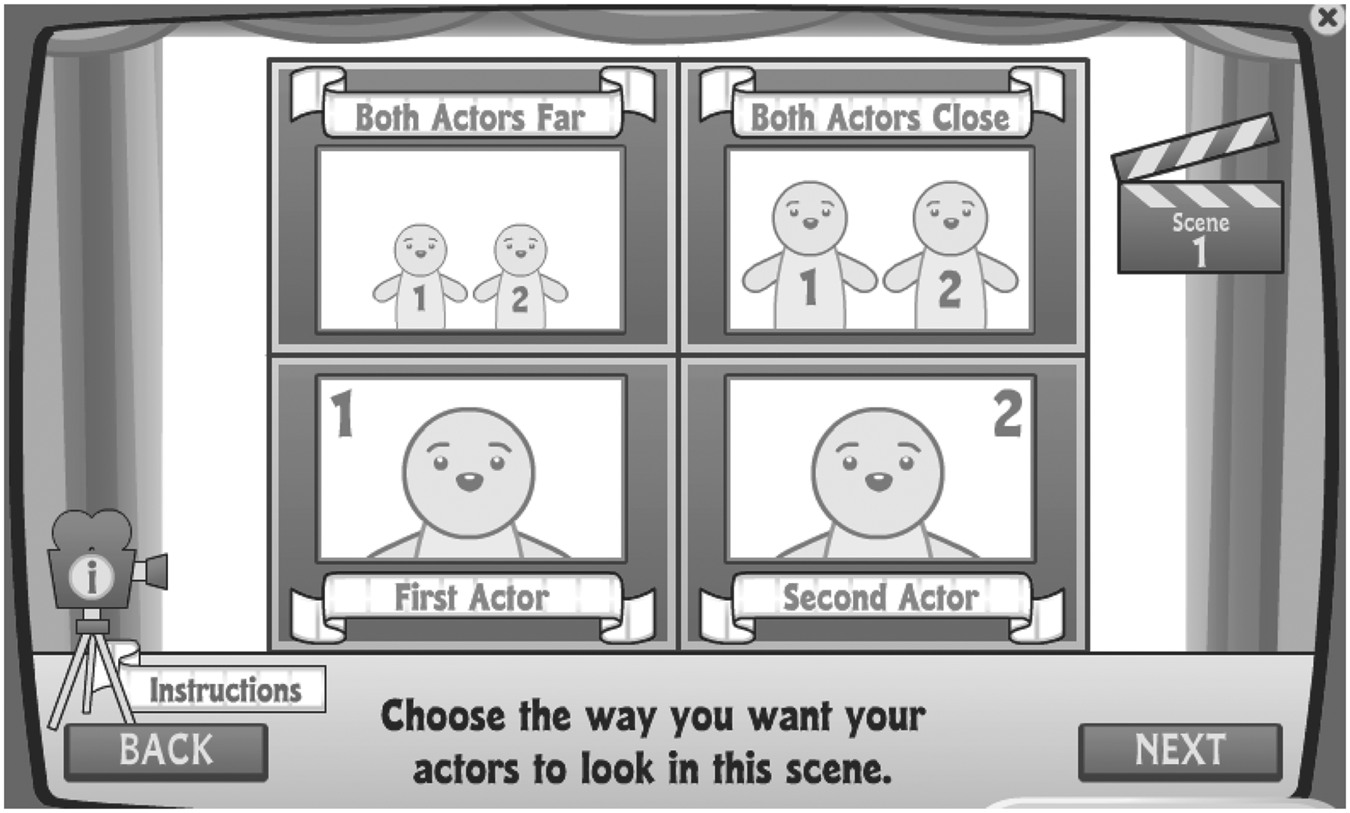
Next, he looks through all the camera angle options [
Figure 4
]. He chooses the third option (First Actor only).
Camera angle options.
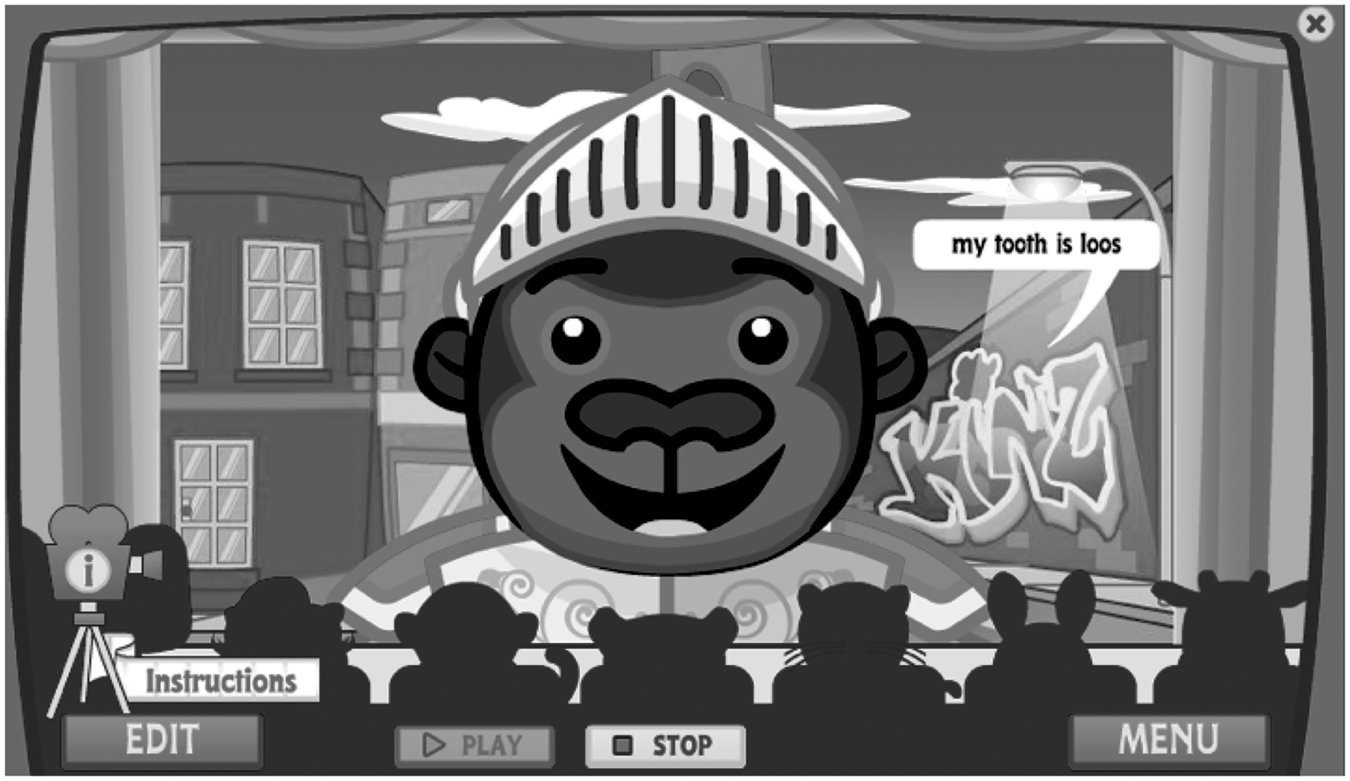
He picks an extreme close-up of the gorilla. All that can be seen is the gorilla’s head and shoulders and the background setting [
Figure 5
].
‘[M]y tooth is loos[e]’.
Next, he designs the characters’ emotions and types words in a speech bubble. He chooses a happy emotion and then writes in the gorilla’s speech bubble, “my tooth is loos”.
Theories of critical positioning (Davies and Harré, 1990; Holland et al., 1998) suggest that as authors create discourse, they position themselves in terms of categories (e.g. I am a boy or I am a girl) and/or roles (I am a director or I am an actor), and/or storylines (e.g. The gorilla will also lose a tooth and then feel the way I felt when I was teased). Once located within these imagined categories, roles and storylines, they design, negotiate, produce and disseminate their understandings from this perspective. For example, Leon decided that the gorilla, like himself, is a boy who has lost a tooth. From Leon’s perspective, he might have categorized the information in this way: I am a boy so the gorilla is a boy. I lost a tooth and so the gorilla lost a tooth. We are both (positioned as) powerful mammals who have lost teeth, not babies who can be teased. In this way Leon is refuting or speaking back to a position that he was assigned earlier in the week (i.e. as a baby). Here, the affordances of digital technology have the potential to empower him in ways that may not be afforded in non-virtual spaces, such as in the school playground.
Leon is taken back to the camera angle page [
Figure 4
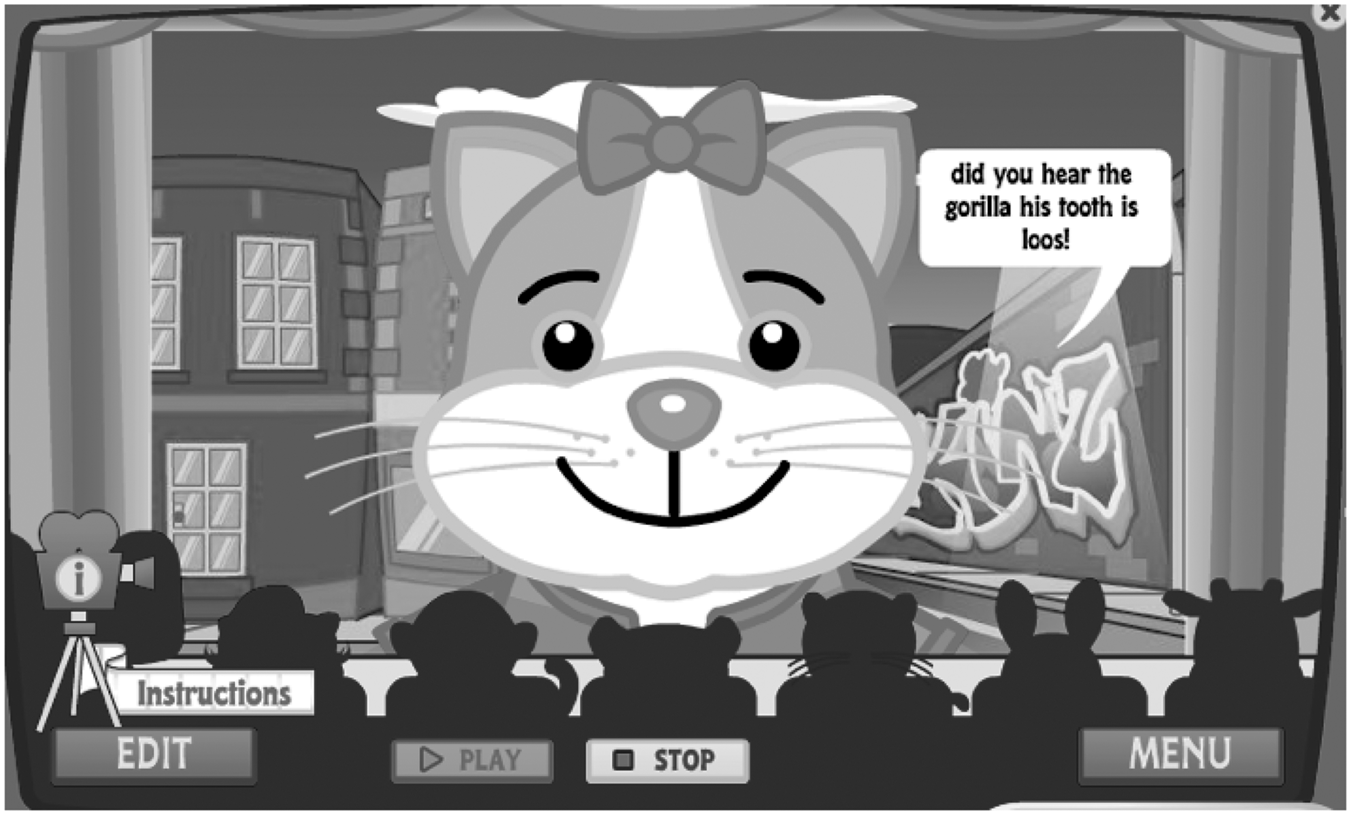
]. This time he chooses a close-up shot of the cat [
Figure 6
]. Again he chooses a happy emotion. He types in the cat’s speech bubble, “[D]id you hear [about] the gorilla[?] His tooth is loos[.]”
‘[D]id you hear [about] the gorilla[?]…’.
But Leon is not satisfied with his writing. He tries different keys on the keyboard. He inputs and deletes several times. After a few minutes he sighs loudly.
Leon: (to me) How do you use the exclamation mark?
Me: How do you use it or how do you type it?
Leon: I mean type it.
[I show Leon how to type an exclamation mark.]
Leon: I can do it.
[He pushes my hand away.]
Leon types an exclamation mark at the end of his dialogue [
Figure 5
].
This is another limitation of print; it inherently carries grammar conventions. Leon is aware of these conventions and tries to negotiate them on his own, and then with my help. Unsuccessful, he briefly positions me as a teacher, but only until he understands the concept. It is interesting to note that, in school, Leon is learning about end punctuation. Although he pays attention in class his mother noted that “Punctuation doesn’t exactly excite him.” However, in this virtual space, in order to design the meaning that he wants to portray, he draws on his own experiences with printed texts and engages with these ideas. For example, he not only recognizes that people “use” punctuation to express specific types of information (i.e. that an exclamation mark indicates strong feelings or high volume), he is also considering his audience (i.e. me or his family) and what he wants them to understand. Here, the digital space not only offers Leon authentic opportunities to disseminate his work, it also affords the use of multiple semiotic resources, including actions, sounds, speech bubbles and punctuation. Often parents and teachers compare digital vs. print-based literacies as though they were at opposite ends of the spectrum. However, this example demonstrates that children, when given opportunities, often embed semiotic resources in order to better design, negotiate, produce and disseminate information.
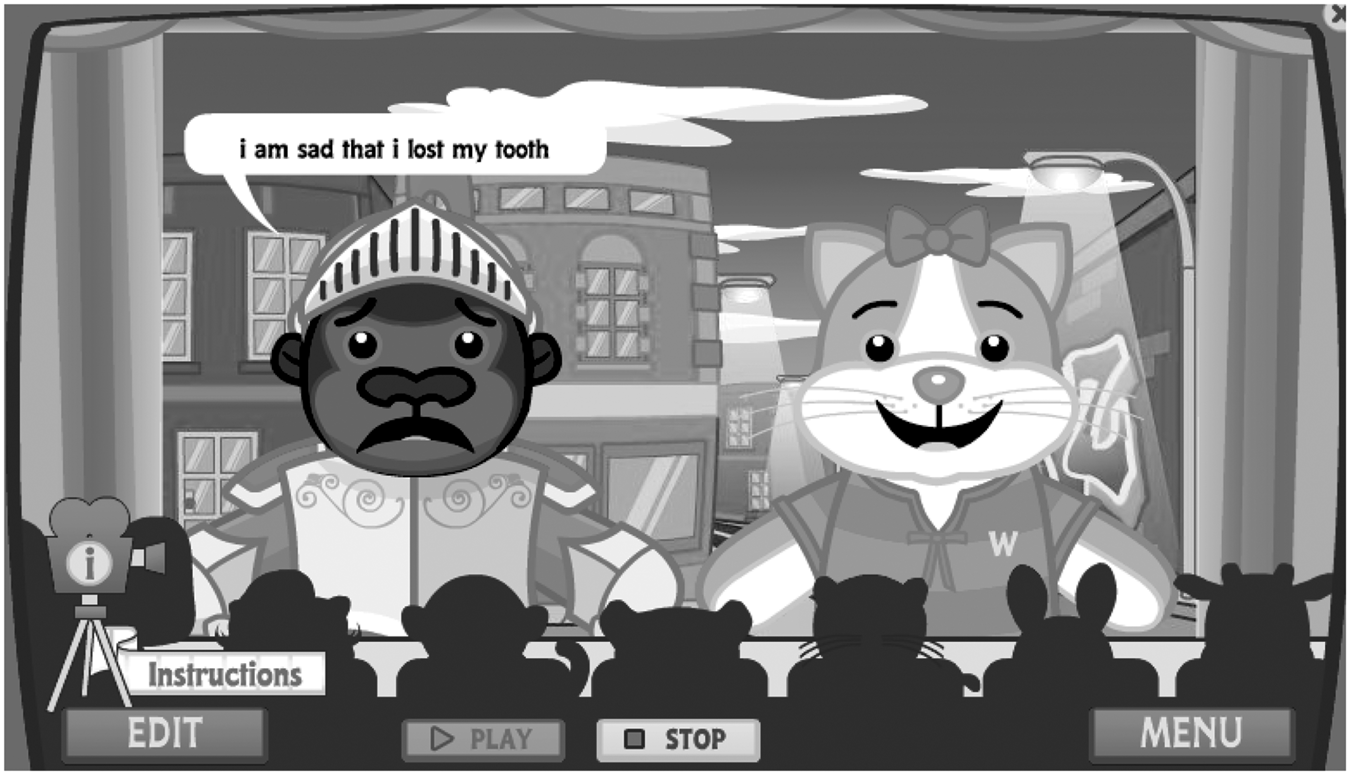
Next, Leon decides on a medium shot (both the gorilla and the cat are shown from the waist up) [
Figure 7
]. This medium shot now allows Leon to choose an action. He determines that the gorilla should be dancing and looking scared. Why did he choose dancing? People don’t usually dance when they are sad. But, before I can ask, he types in the gorilla’s speech bubble, “[I] am sad that I lost my tooth”.
‘[I] am sad…’.
He clicks on the gorilla and it begins to dance around. The gorilla’s dancing action combined with his sad face and his words makes the gorilla look panicked about losing his tooth.
Leon: “Look, the gorilla is worried because he lost his tooth.”
In addition to moving from mode to mode, Leon was also assembling (i.e. layering and embedding) multiple semiotic resources together in new ways that relate to and affect one another. For instance, Leon assigned the gorilla dance-like gestures when this character was supposed to be feeling sad. This action seemed strange to me at first, as characters do not usually dance when they are worried or sad. But when the gestures were layered with the sad facial expression and the words “[I] am sad that I lost my tooth,” the message became clearer. These resources when assembled together “interanimated” each other, making the gorilla look panicked, as though he was floundering or overwhelmed. The meanings resulting from the overlapping semiotic resources exceeded the sum of their parts. When orchestrating multiple semiotic resources in this digital way, authors (like Leon) are given further opportunities to access and articulate emotions and to assume positions from different perspectives.
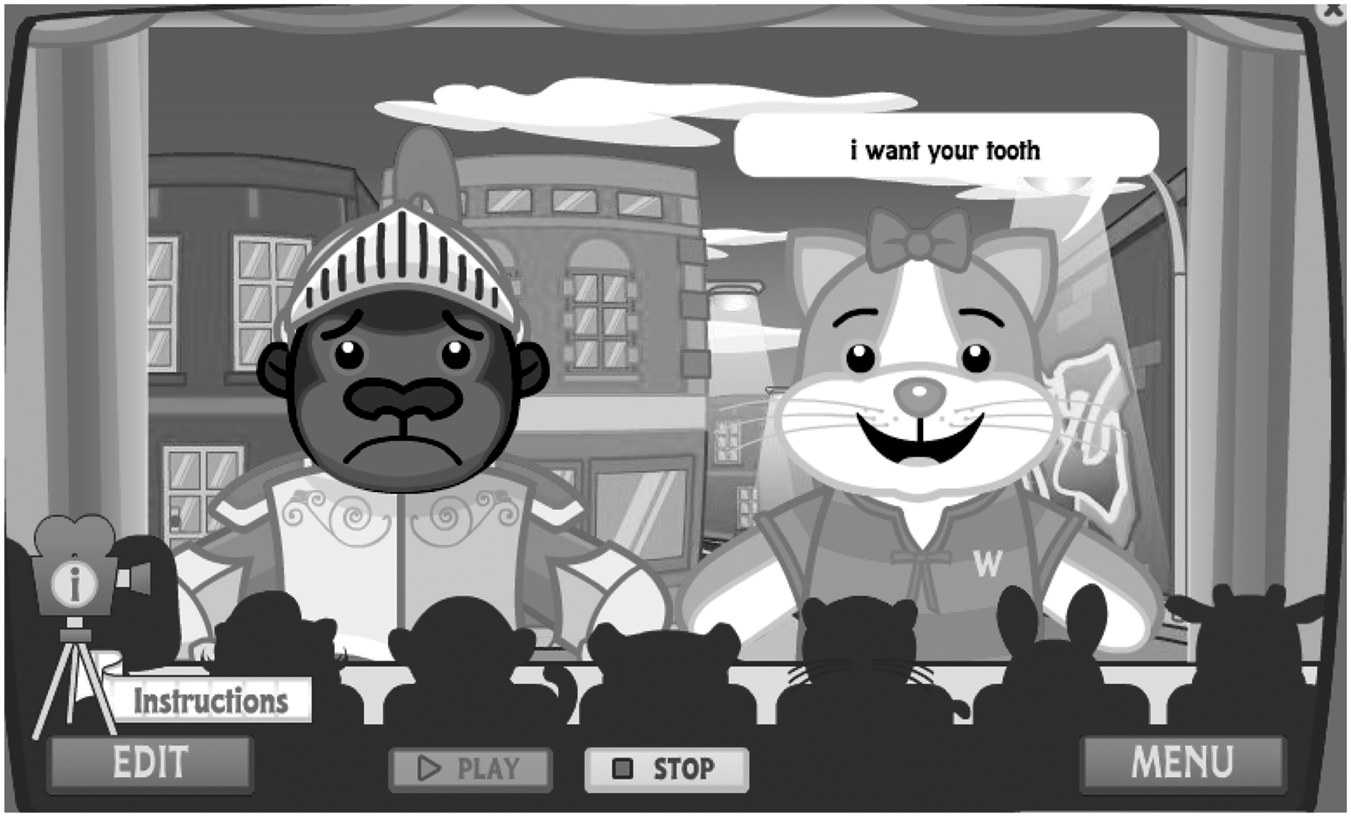
Leon types the cat’s response, “[I] want your tooth.” [
Figure 8
] Leon makes the cat smile and shake. She appears greedy and anxious to get the tooth.
‘[I] want your tooth’.
Leon: Look how exited she is! She’s so excited that she can’t stop shaking. (Leon laughs and imitates the cat’s gestures).
Again, the sum of the parts is bigger than the whole. While I wondered about why Leon might make the cat simultaneously smile and shake, the result is both logical and funny. Leon finds it humorous because it is unexpected – people (or characters) rarely appear so full of glee when they are planning to take something from someone. This case illustration demonstrates the complexities of semiotic communication and one reason why researchers find it so challenging to record, transcribe, interpret and disseminate data, because a person’s authorship is rarely linear, isolated or print focused. Rather it comprises layered communication that is semiotically integrated, socially situated and embedded with power relations. When children are encouraged to use multiple modes as a way to contribute to their own meaning-making, they are offered more opportunities to engage with texts and to mediate and realize information in generative and reflective ways (Siegel, 2006).
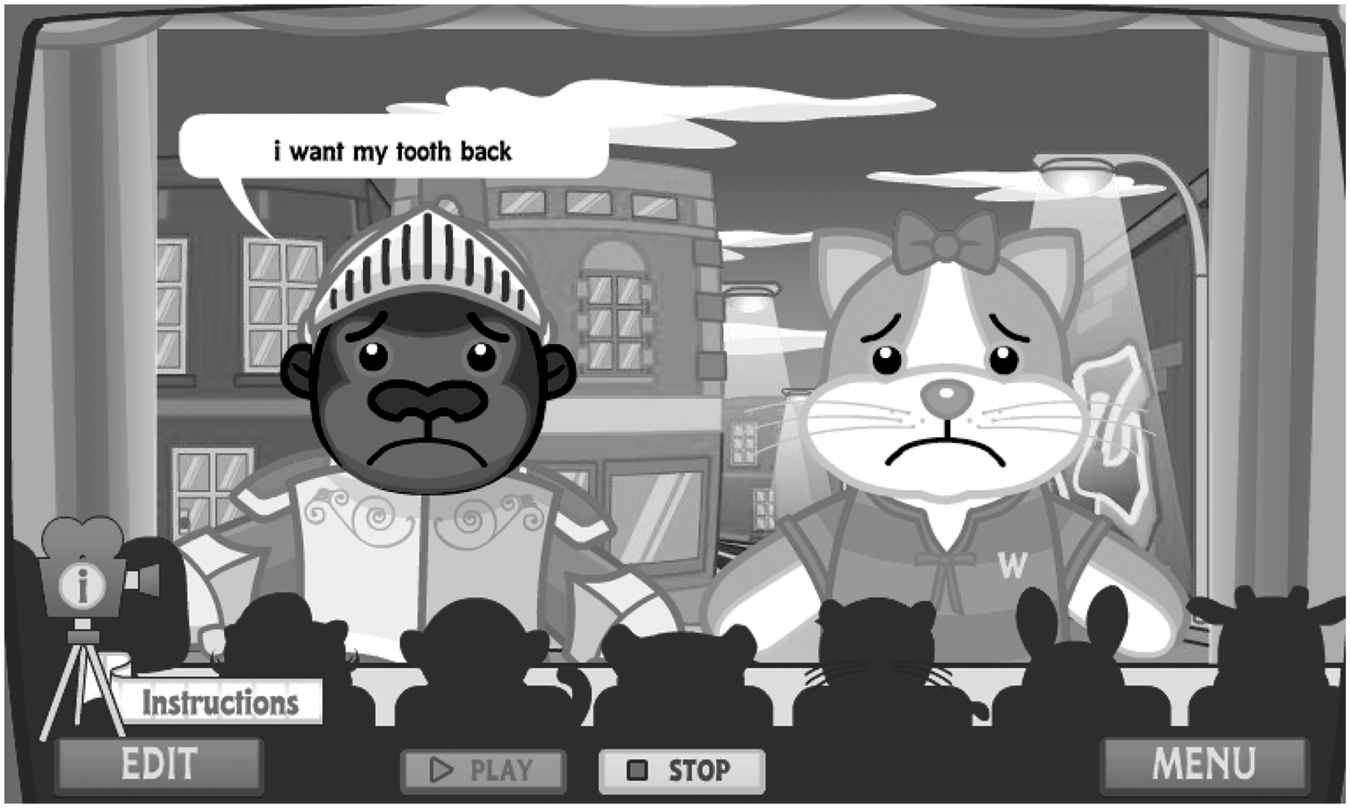
In the next frame [
Figure 9
], Leon gets the gorilla to say with a sad face, “[I] want my tooth back.” Again he chooses a medium shot.
‘[I] want my tooth back’.
“Why did you choose that shot?” I ask.
“I need to show how their arms are moving. It didn’t look good to go too close here because I couldn’t show his arm waving. See?”
[He shows me. I nod.]
He gives his cat character a sad expression and a waving action. The waving, in combination with her sad facial expression, makes the cat look really distraught.
During this case illustration, Leon furthers his storyline and positions the gorilla as sad. Since Leon was sad when he lost his tooth, he determines that the gorilla might be sad too. This may be, as he experienced days earlier, a common reaction to losing a tooth. Though the semiotic and the social have been discussed in research, the Authorship as Assemblage framework also employs critical perspectives and has the potential to allow researchers to understand and transcribe children’s lived-through experiences. By considering this aspect alongside social and modal research, scholars and educators have additional opportunities to transcribe and analyse children’s meaning-making within situational contexts, as well as to gain additional information about power relations the child has encountered, such as how they construct power, and how they come to understand the world through their own authorship (Winters 2009). Authorship is realized by and through the social (inter)actions of design, negotiation, production and dissemination. Although resonant of Kress and van Leeuwen’s (2001) multimodal communication model, an important word – negotiation – has been added as a social (inter)action in the Authorship as Assemblage model. Do authors move directly from their designs into production? Or might they also negotiate these semiotic decisions as they mediate their understanding? Vygotsky (1978) argued that there are two types of negotiations: those that are symbolic and those that are human. Both mediate thoughts. Symbols, for instance, have the potential to denote or replace other things (a pile of clothing becomes a baby). Authors negotiate these symbols within concrete human contexts in order to construct meanings. Here, Leon constantly negotiates the potential semiotic resources (i.e. the camera shots, the gestures, the facial expressions) as well as the critical positions in order to author the results he desires – a sad gorilla and a very distraught cat.
Next he types in the cat’s speech bubble, “[I] have a loos[e] tooth too and i will have to give my tooth to you and i will get no money”.
Leon has experienced “getting money” for a loose tooth. While there are numerous rituals around the world for the loss of a tooth (Beeler, 2001), Leon believes that the “Tooth Fairy” comes in the night and puts money under your pillow.
For the next scene, Leon chooses a medium shot so that both characters can be seen from the waist up.
On the gorilla’s pull-down emotion menu he chooses happy.
From the action menu he decides on a shaking gesture. He types into the gorilla’s speech bubble, “[T]hen [I] will be happy”.
Leon: (to me) “[The gorilla] thinks that is a good idea. He wants to have the teeth. Then he’ll get some money.”
Leon assumes the positions of film-maker and director – because of the intention of this game, I expected this. But he is also assuming the positions of actor, camera operator, Web navigator, teacher, and author too.
Leon, only six years old at the time of the study, moved (seemingly) effortlessly between the various discursive positions that he created (as actor, director, teacher, author, etc.), demonstrating complex layers of interpersonal negotiations and social relationships. And at the same time he is coming to know how to use digital technologies in meaningful, embodied and “dialogical” ways (Bakhtin, 1981). Additionally, digital technologies (particularly in this online game) offer Leon opportunities to engage fully as a reader and writer of his digital text. For instance, he reads the screen and his environment (past and present) and also rewrites his play, remixing in authentic and original ways. For example, Leon is interpreting print, gestures, sounds, images, camera angles and so forth as he produces these digital interactive scenes. It is a recursive process where reading informs his writing and his writing shapes his reading. Together, reading and writing play an important role in his overall authorship practice. Digital technologies afford children many opportunities such as the inter-animation of semiotic resources (e.g. words + gestures + sounds + images). Additionally, children have control over the remixing of these resources, authentically applying their skills. Yet, in terms of limitations, in some ways these digital resources are more simplified than real-life scenes (e.g. only one movement can be repeated) and the roles may be more limited too (e.g. he can only choose from a selection of nine characters). Also, the space is two-dimensional and the frame can only be as big as the screen’s dimensions (e.g. he can only fit one sentence into a thought bubble). Furthermore, the process of developing a complex narrative is also “bound” or limited by the number of speech bubbles (e.g. one per character) and the number of available frames allowed per play; this significantly limits the sophistication of the plot.
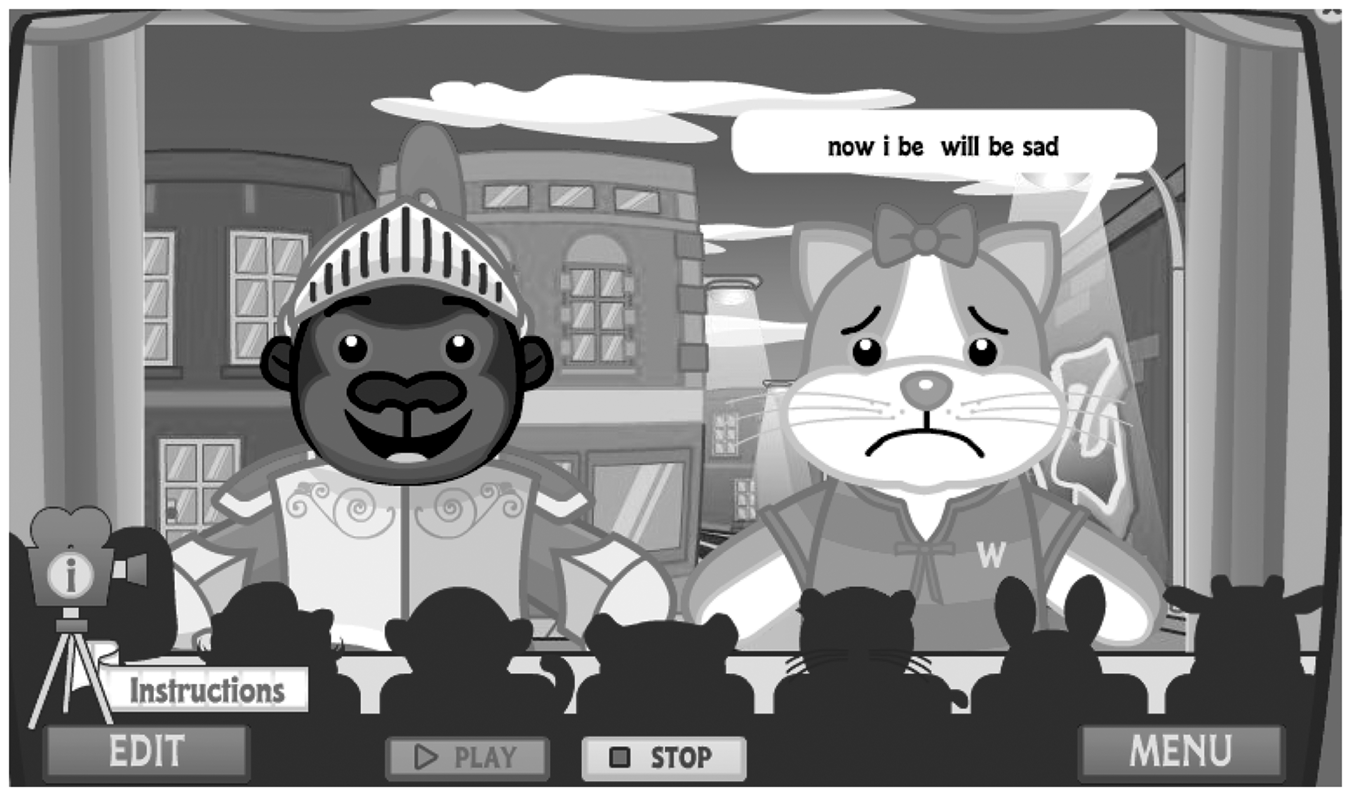
Leon chooses a sad face from the cat’s emotions pull-down menu and a shaking action. He types in her speech bubble, “[N]ow [I] will be sad” [
Figure 10
].
‘[N]ow [I] will be sad’.
Leon: “She’s giving up her tooth but she didn’t have to do that. And now she is sad. She just shouldn’t have said anything. Now look at her. She’s shaking with sadness. (laughing) She sure is a baby.”
This is yet another demonstration of the ways that authorship is constantly being assembled. The four principles described above are interweaving and playing together here. As principle 1 states, Leon is re-writing his past experiences including the ways in which the now hidden participant (e.g. this first author of this paper) and the withdrawn participants (e.g. his peers who called him a baby) are and were contributors. Here, Leon might be drawing on his own experiences as he designs, negotiates, produces, and disseminates this multimodal text. This point touches on principles 2 and 3. Additionally, the 4th principle is also demonstrated;
Davies and Harré (1990)
write about utterances that get replayed across social situations. Here, Leon repeats the word that he was assigned earlier in the week before his tooth fell out and when he felt sad. He replays the screen with attention to both his powerful (e.g. as a gorilla) and powerless (e.g. as a baby) identities.
Leon types in his name as the director, sound, scenic, and light designer. He watches his movie seven times, saves it, and then turns the computer off.
Leon successfully constructed a complex multimodal play without feeling overwhelmed. He also transitioned between, and layered, multiple modes (visual, tactile, linguistic, gestural) and semiotic resources (pictures, words, actions) with ease, and naturally assumed a variety of roles within a discursive storyline. At the same time he was able to position me as a student of technology and could inform me about his digital meaning-making practices.
Response to the case illustrations
Leon authored assemblages, in a digital world, about what it means to lose a tooth, demonstrating the multiple ‘pathways’ to any one piece of knowledge (Dyson, 1997; Kress, 1997). These case illustrations, which are part of a broader research study, suggest that young children are flexible multimodal authors, who portray and enact the meanings that best suit their intentions within their broader social worlds (e.g. Dyson, 1997; Kendrick, 2005; Kress, 1997; Pahl, 2009). And yet this study also demonstrates that authorship might be even more assembled than has previously been theorized. We suggest that Leon not only moved from mode to mode, realizing multimodal meaning in his social out-of-school worlds, but also fluidly authored a complex range of semiotic resources and drew upon his own dialogic and digital experiences in order to position himself and others within imagined storylines. Not only was meaning embedded within his sociocultural context, it was carried differently by each semiotic resource, giving Leon rich opportunities to assemble meaning through a process of remixing and to re-position himself as an effective and skilled digital designer.
Within digital virtual worlds, authors play out their multimodal under standings intuitively and in non-categorized, embedded and overlapping ways – through play, drama, song, art, language, numeracy – with natural ease, not fretting about which semiotic system they will use first. They mesh together semiotic resources, inevitably drawing on their past connections with the world, their present experience with the sociocultural context, and with the semiotic systems available to them (Pahl, 2009).
Leon demonstrated that authors continually layer, remix, embed and inter animate semiotic resources as they author their sociocultural worlds in order to interpret and actualize particular meanings. His meaning-making was rarely linear; rather, it was recursive and complex, shaped by his in- and out-of-school relationships (with the declared, hidden and withdrawn participants), his own personal narratives and the critical positions he assumed and assigned. For example, he represented both the one who teases and the teased, the teacher and the student. He attended to and utilized a range of semiotic and cultural resources that were made available to him – speech bubbles, camera angles, accompanying music, animation choices and so forth. He continually revisited his ideas and re-contextualized storylines within his at-home contexts while, at the same time, linking his authorship to his larger community. He not only draws on his experiences from the larger society, such as what it means to lose a tooth in Western culture (i.e. a tooth fairy will come and give him a reward), but also remixes new meanings in ways that are meaningful to him within the given context. The assemblage of Leon’s critical positions, social inter(actions) and semiotic resources provides rich and interwoven spaces of meaning-making that emphasize literacy practices, symbolic weaving and discursive positioning. The re-contextualized meanings he created here and over the course of the broader study (three weeks) were realized in both generative and reflective ways (Siegel, 2006). In other words, one idea led to another and then another – they were remixed and recursive. Some of these ideas continued to emerge throughout the larger study.
Literacy scholars have argued for broader, more socially complex and integrated, notions of authorship that consider semiotic design alongside the child’s social and critical contexts (e.g. Larson and Marsh, 2005; Pahl and Rowsell, 2005; Stein, 2008). Clearly these theories or studies would need to be multidisciplinary in order to take into consideration a variety of perspectives, as further demonstrated in this case study. Indeed, it is natural for humans to communicate through more than one mode and, because all authorship is social, semiotic and critical, meaning-making never takes place in isolation (Barton et al., 1999; Stein, 2008). Furthermore, humans relate what is happening in the situational contexts to their own experience, constructing their own storied worlds and critical positions (Holland et al., 1998).
Conclusion
In this paper, we have explored how a six-year-old child assembled a digital world using Webkinz™, an online virtual game. Sharing children’s out-of-school literacy practices has great potential for multimodal literacy scholars and for educators alike for, as we see here, children’s authorship is shaped by events that occur both in and out of school. Our goal was to introduce a theoretical framework that interweaves semiotic, social and critical perspectives in order to expand researchers’ and teachers’ conceptions of digital authorship. Our findings demonstrate that linear and language-focused views of authorship fail to recognize the complexities of today’s authors, and could be disenfranchising children who come to school with complex, layered and integrated ways of making sense of their worlds.
The theoretical frame offered here takes an integrated and multidisciplinary approach to understanding, analysing and critiquing children’s multimodal meaning-making and communication. Thinking about Authorship as Assemblage is significant. First, it puts children front and centre stage, showing the flexible and recursive ways in which they author in order to suit their own sociocultural and critical situations and needs (Stein, 2008). Second, it offers researchers more nuanced and intra-semiotic understandings into children’s authorship and assemblage patterns. Third, it considers the critical ways in which children position themselves in relation to others within situational contexts, offering insights into power differentials, changing circumstances and possible perspectives, and guiding the thoughts/beliefs/assumptions that authors constantly grapple with as they author across various social settings.
Kress (1997) demonstrated over a decade ago that children must use multiple ‘communicative pathways’ to participate in today’s literacy practices. Given that we are in an ever-developing ‘information economy’ (New London Group, 2000) where meanings are pluralized and infused with multiple semiotic resources (words, images, gestures, sounds, etc.), and where technological advances suggest new ways of thinking and living in the world, mono-disciplinary approaches to literacy research are no longer enough – no longer adequate for teachers to fully understand children’s sophisticated literacy interactions and social practices (Larson and Marsh, 2005; New London Group, 2000; Pahl and Rowsell, 2005; Stein, 2008). A child’s world is neither isolated nor primarily print based; this is because literacy and communication are always semiotically integrated, socially situated and critically positioned. To consider it otherwise not only creates a dissonance between children’s in- and out-of-school experiences at the current time (Sefton-Green, 2011), it also underplays the sophisticated relationship between sociocultural contexts and critical dynamics, and underestimates the challenge presented by the increasing range of semiotic options that children and their educators are faced with in today’s interactive and digital information economy (Alvermann, 2010; Hull and Nelson, 2005; Mishra and Koehler, 2006).
The Authorship as Assemblage framework offers a multidisciplinary theoretical approach, which has the potential to look at how multimodal authorship is simultaneously social, semiotic and critical (Winters, 2010). For authorship is greater than the sum of its parts – as shown in this study: there is a constant interconnectivity between all meanings, past, present and future. The model suggested in this study is subtle. Instead of exploring and drawing on individual theories and research (e.g. new literacy studies, digital technologies, critical literacy), this framework affords an interwoven approach, which offers new insights for literacy researchers looking at children’s authorship practices. In addition, this paper suggests that literacy research and scholarship need to reflect the recursive and assembled ways in which authors layer, inter-animate and embed semiotic resources as they move across and within social contexts. Moreover, it proposes that all authorship is critically positioned. For this reason, criticality needs to be included in researchers’ theories and research practices. This Authorship as Assemblage theoretical framework may expand researchers’ and educators’ conceptions and analyses of authorship, so that they can better understand and facilitate students’ abilities to garner, interpret, create and share their ideas through a range of semiotic, sociocultural and critical actions.
Footnotes
Acknowledgements
Webkinz™ and Webkinz World™ are trademarks of Ganz. Images and trademarks used with permission. The authors would like to thank Drs. Carl Leggo, Maureen Kendrick, Theresa Rogers and Jennifer Rowsell for helping us solidify the Authorship as Assemblage theoretical framework.