




Abstract
Although many young children become literate within an environment in which different writing systems exist, there is little research on what children know about different writing systems and how they understand and develop them when they are learning more than one simultaneously. This qualitative study discusses how Korean EFL (English as a Foreign Language) children understand two different writing systems, the Korean alphabet, Hangul, and the Roman alphabet, used for English, within a peer teaching setting. The findings show that they were able not only to discover key orthographic principles which characterise each writing system but also to find similarities and differences between Hangul and English from different points of view: shapes of letters (block shaped vs linear), language units (syllables vs letters) and sound–letter relationship (shallow orthography vs deep orthography). The paper suggests that young children are able to look for key concepts in different writing systems by constructing their own ideas about the principles of reading and writing from an early age as active language learners.
Keywords
Introduction
Since many children learn how to read and write in different writing systems from an early age, their awareness of different scripts needs to be taken into account in order to understand their literacy acquisition. However, although many emergent literacy researchers acknowledge that children develop literacy knowledge and skills during the early years, the issue of writing systems and their relation to early literacy development is an area which has received little research attention. Moreover, the issue of early script learning with children who are learning two different alphabetic scripts, Hangul (a non-Roman alphabetic script) and English (a Roman alphabetic script) simultaneously in a foreign language context has received little attention. Both Hangul and English are written using alphabetic scripts and share some characteristics, but they have different orthographic rules. This paper, therefore, is keen to explore Korean preschool children’s early awareness of two different writing systems, i.e. Hangul and English, so that children’s literacy acquisition can be better understood and shared.
In order to study the individual child in detail and capture the full richness of children’s experiences and understandings of Hangul and English, ten Korean preschool children aged between five and six took part in peer teaching sessions, in five pairs, with each pair having a tutor child, aged six, and a pupil, aged five, based on the qualitative aspect of script learning. The tutor children taught the tutee children how to read and write in both Hangul and English and they led each teaching session in their own ways by using their own materials brought from their classrooms or homes as teaching resources. The tutor children’s communicative interactions around reading and writing, written explanations presented on paper, behaviours, comments and responses during peer teaching were observed and analysed. Children’s considerable knowledge and understandings between Hangul and English, as presented in this paper, can open a new window onto young children’s literacy acquisition.
Children’s awareness of writing systems
Most studies of early script learning for children have investigated monolingual young learners by focusing on one particular language system, and these mostly include English, written in the Roman alphabet, as used for most European languages. Many researchers investigating English have found evidence suggesting that young children already possess some awareness of an alphabetic script before they learn to read and write (Dooley and Matthews, 2009; Fox and Saracho, 1990; Lancaster, 2007; Morrow, 2005; Teale and Sulzby, 1986; Whitehurst and Lonigan, 1998). For example, in Lancaster’s (2007) research, monolingual children under three years old living in Britain had already explored the principles underlying English. She investigated graphic signs made by children relating to personal meaning and a writing system from analyses of children’s mark-making: drawing, writing and numbers. Her findings show that the children were able to use graphic marks such as signs and texts in intentional ways, and the types of children’s marks provided evidence of reflecting regularities associated with systems of writing.
Studies concerning English also include the developmental sequence of children’s alphabet writing via an analysis of children’s emergent writing samples from drawing to conventional spelling. A number of studies provide evidence that young children start to practise and develop writing abilities at an early age and show developmental continuity in alphabet writing (Clay, 1975; Fox and Saracho, 1990; Kellogg, 1970; Saracho, 1990; Sulzby et al., 1988; Yang and Noel, 2006). For instance, Fox and Saracho’s (1990) research shows how young children between three and five engage in distinguishing between pictures and print, and finally understand the principles of alphabetic writing by an analysis of their emergent writing samples. In their research, children’s awareness of the features of alphabetic writing was beginning to emerge through picture-print differentiation, cursive-like writing and the inclusion of a capital letter or initial consonant before gaining insights into the appropriate use of English writing.
Monolingual children’s awareness of scripts has also become clear vis-à-vis learning non-alphabetic scripts such as Chinese and Japanese. The Chinese writing system is a logographic script in which the relation between symbols and sounds is opaque: generally, symbols give no clues to pronunciation (Chan and Nunes, 1998). Unlike in alphabetic languages, a single character represents one morpheme in Chinese, hence Chinese children need to learn the relation between morphological and orthographic knowledge for a large number of characters (Shu et al., 2003). However, Chan and Nunes (1998) showed how monolingual Chinese children aged between 4 and 9 develop their awareness of the Chinese script like children who are learning an alphabetic script. They found that young Chinese children have the ability to distinguish non-words from formal characters; and in order to represent their own meaning, they can make use of semantic and phonological strategies. The research concluded that Chinese children become aware of the underlying rules of Chinese script at an early age, and learning to read and write Chinese script is not simply achieved by memorization or repetition of individual Chinese characters.
The Japanese writing system is another non-alphabetic script, but unlike Chinese, Japanese children have to learn three different systems: “the kanji series (Chinese characters with an ideo/logographic function), hiragana (syllabograms: a symbol represents a syllable) and katakana (syllabograms used mainly for foreign words)” (Baroni, 2011: 132). Akita and Hatano (1999) investigated children’s awareness of script when learning Japanese script which is composed of these three kinds of letters. The research found that Japanese children’s awareness of script is very similar to that of children who are learning the English alphabet. For example, young Japanese children in their study were able to distinguish between Japanese writing and drawing from an early stage. Then, they gradually started to distinguish between hiragana, katakana, kanji and Arabic numerals, and finally acquired certain linguistic rules such as morphological knowledge and advanced phonological awareness. The results show that young Japanese children are able to discover certain orthographic rules for themselves before formal instruction, and developmental awareness of learning Japanese script has some cognitive processes in common with those for learning to read and write alphabetic scripts.
Bilingual or multilingual children’s awareness of different writing systems has been discussed in several studies conducted with different focuses in diverse sociocultural contexts. These studies have mostly been conducted in London, one of the largest global cities in the world, where many bilingual children from diverse linguistic backgrounds are learning English as well as their home language in community language classes or at home. Examples of such studies include Sneddon’s (2000) research with children from the Muslim community in North-East London, Saxena’s (1994) study on literacy practices in the Panjabi community in West London, Kenner’s (1999) research conducted in a South London multilingual nursery class, and Rashid and Gregory’s (1997) research with a Bengali child living in the East End of London. For instance, Saxena (1994) investigated how individual family members in a Panjabi Hindu family in Southall in West London are exposed to different scripts and how they make use of each language in their daily lives. The family lived in different linguistic and cultural environments in India, East Africa and Britain and used three different scripts: Panjabi (Gurmukhi script), Hindi (Devanagari script) and Urdu (Perso-Arabic script). Along with the main finding that there were close symbolic linkages between each script for religious reasons, he also found that a four-year-old son in the family who was born in Southall and exposed only to Roman script (English) in school was already able to distinguish Gurmukhi, Devanagari and Roman scripts.
Other studies conducted in many parts of the world where linguistic minority children are learning different languages have also highlighted the role of home and community. The study by Masny and Ghahremani-Ghajar (1999) conducted in Ottawa, Canada discusses the importance of the relationship between literacy, school and community cultures as it affects home-based Somali children learning literacy (Somali), religious literacy (Arabic) and school-based literacy (English). The research found that literacy incorporates home, community and school cultures, suggesting that these multiple literacy practices need to be woven together in the classroom. Similarly, Volk and de Acosta (2001) investigated Spanish dominant, mainland Puerto Rican kindergarteners’ literacy development supported by their home, church and school settings in the USA. They found that literacy interactions and events in homes and churches enrich children’s literacy development, since a network of people can provide children with multiple resources related to literacy lives including literacy beliefs and experiences, culture, religion and knowledge of two different languages. These studies, conducted in diverse contexts where “linguistic minorities exist as multicultural and multilingual subsystems both in terms of their ideologies and practices” (Saxena, 1994: 112), conclude that children’s literacy learning includes their culture and their religion, which are closely related to home and their particular community.
Such studies partly discuss children’s awareness of different scripts with a different research focus, but Kenner et al. (2004) investigated the issue of young children’s understandings of different language systems in more detail in their research. They conducted an in-depth study, the ‘Signs of Difference’ project, over a period of one year, during which there were six case studies of bilingual six-year-olds growing up in London who were learning to write in Chinese (a logographic script), Arabic (a non-Roman script with a different directionality) or Spanish (a Roman script with some differences from the English writing system), as well as English. The children were observed participating in a variety of literacy interactions, of an informal and a formal kind, ranging from home to school, within their learning environments. As a principal research method in their study, children’s knowledge and understandings of different writing systems were observed through peer teaching sessions in which the case-study children were asked to teach classmates how to write in Chinese, Arabic or Spanish, using their own work and materials. Kenner and her colleagues found that the children were able to understand key concepts from different scripts, involving particular comparisons between writing in English and in another writing system.
In line with the study conducted by Kenner et al. (2004), this paper discusses young children’s understandings of the Korean alphabet, Hangul, and the Roman alphabet used for English. Although children’s awareness of different scripts has been considered from various aspects in diverse contexts, few research studies have been done with children who are becoming literate in an EFL context. Moreover, no in-depth research has yet explored how young children – who are learning a non-Roman alphabetic script (L1) and a Roman alphabetic script (L2) at the same time – interpret and learn these different scripts. In this respect, a study examining Hangul and English would provide evidence for the literacy development of children who are learning two different writing systems. Regarding the study of Hangul and English, Pae et al. (2010) wrote that:
“A study of English and Korean offers an excellent opportunity to examine between language interdependence because the two languages share a fine-grained alphabetic principle, but exhibit propound differences in their visual lexical form (linearity vs. block layout) and their linguistic structure” (Pae et al., 2010: 377).
The general characteristics of Hangul, focusing on its unique features which are different from most other alphabets, are introduced below.
The Korean alphabet, Hangul
The Korean alphabet, Hangul, was invented in 1446 by King Sejong (1419–1450). For the purpose of providing an easy script that ordinary people would be able to learn easily, scholars under the king’s supervision travelled to many countries to examine various writing systems, and their careful studies finally led to creating Hangul script (King, 1996; Lee and Ramsey, 2000; Sohn, 2012; Taylor, 1980; Taylor and Taylor, 1983). The original name of Hangul was ‘훈민정음’ /hun-min-jeong-eum/, which literally means ‘the correct sounds for the instruction of the people’, and this shows the king’s intention for the new script (Taylor and Taylor, 1983).
One of the unique features of Hangul is the fact that it is the only alphabet in which the shapes of symbols reflect the articulation of sounds (Lee and Ramsey, 2000; Taylor, 1980; Taylor and Taylor, 1983). The twenty-four alphabet letters (fourteen consonants and ten vowels) were not designed separately; rather, most letters were created based on a number of basic letters which represent the shape a of the articulators pronouncing the consonants (Lee and Ramsey, 2000; Taylor, 1980). These basic letters include ‘ㄱ’ /g/, ‘ㄴ’ /n/, ‘ㅅ’ /s/, ‘ㅁ’ /m/, ‘ㅇ’ /ng/, and Hangul starts with these five basic symbols to represent 14 single and 5 double consonants. For example, ‘ㅁ’, which looks like a small square, was created in imitation of a closed mouth pronouncing /m/. Based on these basic letters, other related consonant letters were made by adding extra strokes derived from the features of articulation (Taylor and Taylor, 1983). For instance, ‘ㄷ’ /d/ was created by adding a single stroke to ‘ㄴ’ /n/, which is articulated in the same place, while ‘ㅋ’ /k/ is articulated in the same place as ‘ㄱ’ /g/, so its symbol was created by adding a stroke inside the ‘ㄱ’.
Another characteristic of Hangul is its unique visual feature. Although Hangul is a phonemically based alphabetic script, it has always been written in syllable blocks, unlike other alphabetic orthographies which are written in a row and side by side. The overall shape of Hangul looks more like logographic Chinese script because its alphabetic letters are fixed into syllable blocks that are the same size as Chinese characters (Coulmas, 1989; Simpson and Kang, 1994; Wang et al., 2003). For example, three alphabetic symbols including a consonant, ‘ㅅ’ /s/, another consonant, ‘ㄴ’ /n/, and a vowel, ‘ㅏ’ /a/, are arranged together within the syllable ‘산’ /san/ to stand for ‘mountain’. No alphabet letter is ever used alone; rather, from two to four alphabet symbols are always combined to form a block, which represents a syllable (Taylor, 1980; Taylor and Taylor, 1983). When a consonant comes after a consonant–vowel combination in a syllable, it is placed at the bottom, and this consonant is called ‘받침’ (batchim), which means support or underpinning (Lee and Ramsey, 2000). This unique feature makes Hangul distinctive, and Taylor (1980: 70) called it an ‘alphabetic syllabary’.
Taylor (1980) also wrote that Hangul shares some logographic characteristics with Chinese, in that one syllable block represents one meaningful unit, such as a morpheme or word. Like Chinese, Korean morphemes appear at the syllable level, e.g. a plural suffix ‘들’ is often used with nouns which refer to people or animals in order to make a clear distinction between a singular and a plural of a noun. For instance, the plural form of ‘고양이’ (a cat) is ‘고양이들’ (cats). Most Hangul words are composed of two or more morphemes. The word, ‘암탉’ (hen), for example, is composed of two morphemes, ‘암’ (the prefix for female) and ‘닭’ (chicken). Regarding this feature, Wang et al. (2009) wrote that “the clear-cut syllable boundaries in Korean Hangul may make its morphemes more visible than linear orthographic systems such as English” (p. 133). Another logographic feature of Hangul is that a small stroke within a syllable block can change a word into a different one which has a different meaning. In Chinese, for example, the difference between the two words ‘王’ (king) and ‘主’ (owner) depends on a tiny stroke. Likewise, the Hangul word ‘날다’ /nal-da/ (fly) can be ‘달다’ /dal-da/ (hang) by adding a small stroke, ‘-’.
Finally, in Hangul, there is a close match between letters and sounds. In English, 26 letters represent approximately 40 phonemes, and the relation between sounds and letters is irregular and complex. But in Hangul, 14 basic consonants and 10 basic vowels represent sounds unambiguously. Either singly or in combination, these represent 40 distinctive sounds of Hangul, including eight simple vowels, 19 consonants and 13 diphthongs (Lee, 2001). According to the Orthographic Depth Hypothesis, which refers to “a degree of regularity in sound-symbol correspondence” (Koda, 1999: 52), Korean, written in Hangul alphabet, is regarded as a shallow orthography with a regular correspondence between sounds and letters. In contrast, English has a phonologically irregular orthography, which is referred to as a deep orthography. However, although Korean is considered to have a shallow orthography, there are also omissions or irregularities in terms of sound. For example, in the case of two consonants which are placed at the bottom in the syllable block, this requires special treatment in terms of its pronunciation. Hangul does not have consonant clusters; therefore, although its orthography allows two consonants as ‘받침’ (batchim) at the bottom, only one of the consonants is actually pronounced. There are some rules here which relate to the manner of articulation; for example, a sonorant sound such as /l/, /r/, /m/, /n/ is usually chosen to be pronounced. However, it does not explain all cases, thus the selection of the consonant which is realized among two is irregular (Lee and Ramsey, 2000; Shin et al., 2013).
As presented above, Hangul is unique in that it is an alphabet, a syllabary and a logography (Taylor and Taylor, 1983). As an alphabet, the shapes of basic letters reflect the articulation of the phonemes, and letter–sound correspondence is regular. As a syllabary, each letter is assembled in a syllable block, and some single Hangul syllable blocks represent meaningful units, like a logography. As Wang et al. (2006) wrote, “the unique feature of the Korean Hangul orthographic system forms an excellent comparison with other Roman alphabetic systems” (p. 150). For these reasons, this study seeks to examine whether Korean children understand orthographic similarities and differences between these two scripts. This includes exploring comparisons between writing in Hangul and in English, and finding out which features of each script children consider to be important. Key research questions include:
Do Korean children aged six have an understanding of the similarities and differences between Hangul and English in an EFL preschool classroom context? If so, what understandings do they have? Do the children make comparisons between the two scripts? Which features of each script are considered to be important by the children?
Peer teaching as a research methodology
In order to find out how children understand two different writing systems, I decided to construct peer teaching situations within a qualitative research paradigm. The qualitative approach aims to provide rich descriptions of human behaviour from an ‘insider’ perspective (Nunan, 1992), and it is concerned with deep understandings of how people make sense of their experiences and the world where they live (Greig et al., 2007). Since a qualitative approach allows researchers to have access to children in individual or small group settings at an intensive level, I believed that peer teaching in a small group setting would enable me to capture even single comments from a child’s perspective, thus offering evidence of understandings. I also expected that giving children opportunities to explain how to read and write to others would provide literacy interactions conveying meaning and their interpretation. Therefore, I attempted to arrange a child-directed context in which children could display and express their own knowledge, skills, experiences and thinking about different writing systems whilst engaged in literacy activities.
This peer teaching method shares assumptions with some research studies based on sociocultural theory derived from Vygotsky’s (1978) views suggesting that children’s literacy development is mediated and facilitated by social interactions with more capable and experienced members of their culture. Some of these studies discuss the important role of older siblings or peers and the benefits of their interactions for children’s literacy learning by viewing children as active literacy users who draw on cultural resources and construct meaning together (Gregory, 2001; Jones, 2003; Kim, 2016; Long et al., 2004). Particularly, the peer teaching setting I adopted for the study was influenced by the research conducted by Kenner et al. (2004), who looked at bilingual children’s understandings of different scripts. As mentioned earlier, they were able to determine whether the case study children were able to understand key concepts from different scripts through peer teaching where the children were asked to teach classmates how to write in Chinese, Arabic or Spanish. In my case, the sessions were set up for Korean children learning Hangul and English simultaneously in order to look more closely at how individual Korean children in an EFL preschool classroom context interpret the principles of Hangul and English.
Research site
Ten Korean preschool children who were learning English as a foreign language (EFL) at an English Centre for Children (ECC) school located in Gwangjin-gu in Seoul, the capital city of South Korea, took part in peer teaching sessions. ECC is a subsidiary of YBM Sisa company and is one of South Korea’s largest and most reputable English education-based private language institutions. Since both Hangul and English needed to be encountered at the same time for this study, the reason for selecting Gwangjin ECC was that although the programme of ECC schools focuses only on English language education, this school sometimes provides classes in Hangul as an extracurricular class, given by a Korean classroom teacher.
The preschool curriculum of Gwangjin ECC covers the four language skills in English: listening, speaking, reading and writing, along with mathematics, science, song and chant, violin etc. Each class lasts 35 minutes and Western teachers or Korean English teachers teach preschool children aged between five and six (in Korean ages between six and seven). The teachers only speak English, and all children are encouraged to speak only in English in the classroom. Each child is allocated to a particular class according to their age and English level, and two Korean classroom teachers facilitate their learning. The curriculum also includes extracurricular activities such as Korean, art, play time, origami, drama, talent show, show and tell, movie classes and so on, since the principal of the school wants to provide children with well-rounded education through a variety of activities and experiences. Children have three or four extracurricular classes a week and these classes are very flexible and named differently for different purposes. Mostly, Korean classroom teachers lead these classes in Korean. For this research, a new extracurricular class, called ‘peer teaching’, was established for three months.
Participant children
In order to collect background information on potential participant children for peer teaching sessions, two Korean classroom teachers (a teacher in charge of six-year-old classes and a teacher in charge of five-year-old classes) were interviewed together. The reason for an interview with Korean classroom teachers was that they teach extracurricular activities in Korean, and their major responsibilities are classroom management, taking care of each child and counselling the children’s parents. Therefore, they knew each child’s learning experiences of Hangul and English as well as their personality and relationships with peers at school. The questions included two main criteria for choosing potential participants: child’s age (date of birth) and learning experiences of English and their first language, Korean (Hangul). In this study, the oldest children who had the maximum experiences of learning Hangul and English in ECC preschool were chosen as tutor children, and the tutee children were the youngest children who had the least experience of learning both languages. When arranging pairs, I tried to have the maximum gap in terms of age and learning experience between tutor child and tutee child, since I wanted to give the tutor children the maximum need to explain when teaching Hangul and English to the tutee children, who were beginning to learn the two scripts. Children’s personality and relationships with peers were also taken into consideration when arranging each pair.
After the interview with the Korean classroom teachers, five pairs of children (pairs A, B, C, D, E) were formed. Most tutor children had been learning English for more than two years in the ECC preschool at the time, and they had been mostly learning Hangul at home. Each pair had one tutor child, aged six, and one tutee child, aged five, but the child who was chosen as a tutee in pair E had to unexpectedly leave the peer teaching after his first session because of a family matter. Therefore, another tutee child aged five was chosen following the same criteria for choosing the participants.
Implementation of peer teaching
Peer teaching sessions took place in a quiet classroom away from other classrooms to help the children concentrate better. Teaching and learning facilities such as cassettes, pencils, erasers, crayons and paper were provided for all participant children. Before each session, I checked whether tutor children would need additional facilities for their own teaching. Mostly, each session lasted 35 minutes, like normal classes in the ECC school, with three parts: preparation (5 min), a tutor child’s teaching (20 min) and an interview with a tutor child (10 min). However, this time arrangement was flexible according to each session and each child. Both tutor and tutee children were allowed to speak in Korean and English during peer teaching, in order not to restrict their ability to communicate. Each tutor child in each pair led three different teaching sessions; hence, 15 sessions in total took place over three months. I handed over some control and responsibility to the tutor children, for example, they led each teaching session in their own ways using their own materials. The tutor children could discuss with their classroom teachers or parents when choosing their own teaching materials, and I made their choices significant. The materials included a variety of texts such as their favourite storybooks, workbooks, cards or even their own work brought from their classrooms or homes. I also arranged a meeting with participant children so that each pair of children could have a chance to discuss their teaching and learning before each session began.
During the session, I observed and video-recorded the whole process of each session. An observational method often requires a researcher to enter a particular context and take part in an event (Dyer, 1995; Scott and Usher, 1999), and the role of the researcher is incorporated with the extent of participation depending on the focus of observations (Robson, 2002; Simpson and Tuson, 2003). In this study, my participation seemed to be completely accepted by participant children, and my role was passive during peer teaching. I sometimes asked the tutor children to explain more when I captured significant information as a more detailed explanation was needed. Also, I let them know the remaining time so that they could end the session within the 20 minutes allotted. However, I did not take part in the sessions directly, and I tried not to have much influence on what was going on since I wanted to provide the children with open-ended and child-centred settings so that they could enjoy their teaching and learning. This role permitted me to support each child and to record the whole process of their teaching. As soon as I had recorded each session, I wrote field notes to keep important information I observed so that I could elicit more in an interview session.
After each peer teaching session, five tutor children took part in three separate interviews in the same classroom where the peer teaching took place. For these interviews, all the materials they had used and the written texts produced by them during the peer teaching were displayed on the table so that the materials could remind each child of their teaching. Within a semi-structured interview framework in which “an interviewer works from a range of predetermined questions, while providing a lot of opportunities to expand answers to an interviewee” (Dyer, 1995: 59), I asked them some predetermined general questions related to the research questions, for example, questions about their learning experiences of Hangul and English, and their ideas about the two languages. Some specific questions derived from observation of each tutor child’s own teaching and data from my field notes were also given to each child. During the interviews, they sometimes wrote or drew on paper to explain, and these sheets were photocopied and scanned after each session. These interviews were also recorded with a hand-held digital video camera because I believed that all the ideas demonstrated through their behaviour, manner and body language during the interviews might be another important source of data to make observable data more explicit. Each interview lasted about 10 minutes, and Korean was used for them to avoid any confusion caused by language barriers. I also took field notes after each interview.
Ethical considerations
Because this study directly looks at children’s knowledge and understandings of different scripts through observation of peer teaching and interview methods, carefully considered ethical plans were needed. An important issue in qualitative research with children as active participants is the power barrier between researcher and children, and this is closely related to the issue of how adult researchers can gain children’s trust and confidence (Pinter et al., 2013). In order to reduce the power differential, I tried to create a comfortable space where children could feel at ease. It was very important that my participant children were encouraged to enjoy their teaching and learning because their own words and behaviours produced in a comfortable atmosphere were a significant source of data for my study. Therefore, my main role was to minimize possible stress at being observed, to encourage them to enjoy peer teaching in a natural setting, to try to keep the peer teaching child-centred, and not to intervene in their conversations and social interactions. I repeated that participant children would not be tested, and they would not be put in any stressful situations during peer teaching sessions. Moreover, I clearly stated that they could stop at any time if they felt uncomfortable. Some ethical issues, such as obtaining informed consent from the school, parents and participant children as well as the issues of protecting children’s right to privacy and protection from harm, were also carefully considered in this study because “ethical considerations and the need to reduce distance between researcher and children combine in support of the idea that children can themselves be involved as active co-researchers” (Pinter et al., 2013: 486).
Another challenge in qualitative research with children as active researchers is “to listen to children and make their views accessible without distortion” (Baumann, 1997: 69). I tried to deal with this issue by ensuring the children noticed that their voices and thoughts were valued and respected. I made it clear to both participant children and their parents that peer teaching for this study would be a child-centred setting and all aspects of their teaching and learning would be encouraged and respected. Most importantly, this was explained clearly and simply to try to ensure they could understand easily. Having considered the idea that “effective communication involves attention, listening well, flexibility, openness, asking for clarification, and providing space for questions and discussion” (Freeman and Mathison, 2009: 74), I also arranged several meetings with participant children in order to try to find out their views and ideas regarding their peer teaching, and their feedback was taken into consideration during the research.
Data analysis
The data consist of a record of peer teaching observation and follow-up interviews as well as written texts produced by the children in each session. Data analysis was conducted qualitatively, focusing on the meaning of what each child said, acted and wrote. The data were interpreted based on a view of literacy within social semiotic theory which suggests that children use multiple communicative pathways in literacy practices involving different modes of representation whereby meanings are expressed (Kress, 1997). Therefore, the data analysis focused on multiple modes of communication and representation, including visual, written, verbal, auditory, spatial and gestural resources (such as marks, words, sounds, gestures and images) in order to fully understand participant children’s sophisticated literacy interactions which convey meanings. I used a variety of categories that came from tutor children’s ideas as expressed by them talking around reading and writing, their behaviours, and written presentations for three peer teaching and interview sessions for each tutor child. I focused on the data themselves derived from each child, e.g. particular features which children were identifying as important rather than relying on specific linguistic features in each script. Drawing on the idea that “scriptwriting involves particular kinds of attention to visual detail and particular physical movements” (Kenner and Kress, 2003: 182), the analysis also looked at all of the aspects expressed by each child in each script, e.g. attention to strokes, shape of letters, length of words, spatial organization of text or direction of writing. When analysing the data, my teaching experience over ten years in a Korean EFL young learner classroom helped me to understand children’s meanings expressed through a variety of different modes between Hangul and English.
Children’s understandings of Hangul and English
The analysis shows a variety of ways in which children understood the principles underlying Hangul and English by looking for key concepts which characterise each script, and by making comparisons between the two writing systems. Key orthographic characteristics of Hangul and English drawn from the findings are:
Hangul as an alphabetic syllabary: children were able to compare this unique feature of Hangul with English in terms of visual feature, length of words, and language units. Hangul as a logography: children were able to look for logographic characteristics of Hangul through close attention to small strokes when forming a syllable blocks. Hangul as a shallow orthography / English as a deep orthography: children were able to make comparisons between the two scripts in terms of sound–letter relationships. Batchim: children showed considerable understanding of batchim, in particular the one with two consonants. They considered it the most important part of Hangul learning because of its irregular phonological feature.
These four main findings of the study are discussed below.
Hangul as an alphabetic syllabary
The key characteristic of Hangul which differentiates it from English is its unique visual feature. Findings from the study suggest that the children seemed to understand the visual and syllabic features of Hangul and its differences from English. This was evident in KH’s peer teaching in pair A in which she drew some boxes along with Hangul words so that her tutee could write each Hangul syllable in each box. For example, when she asked her tutee YJ to write ‘나비’ /na-bi/ (butterfly) in her first teaching session, she gave YJ two blocks on the paper as explained below. KH: (draws one rectangle on the paper, and then draws the vertical line to split the rectangle in half, to make two squares) Can you write 나비 (butterfly) here? 나비 (butterfly)? YJ: (nods) KH: (points at the first block) 나, (points at the second block) 비. Write this way. One blank is for 나, and the other one is for 비.
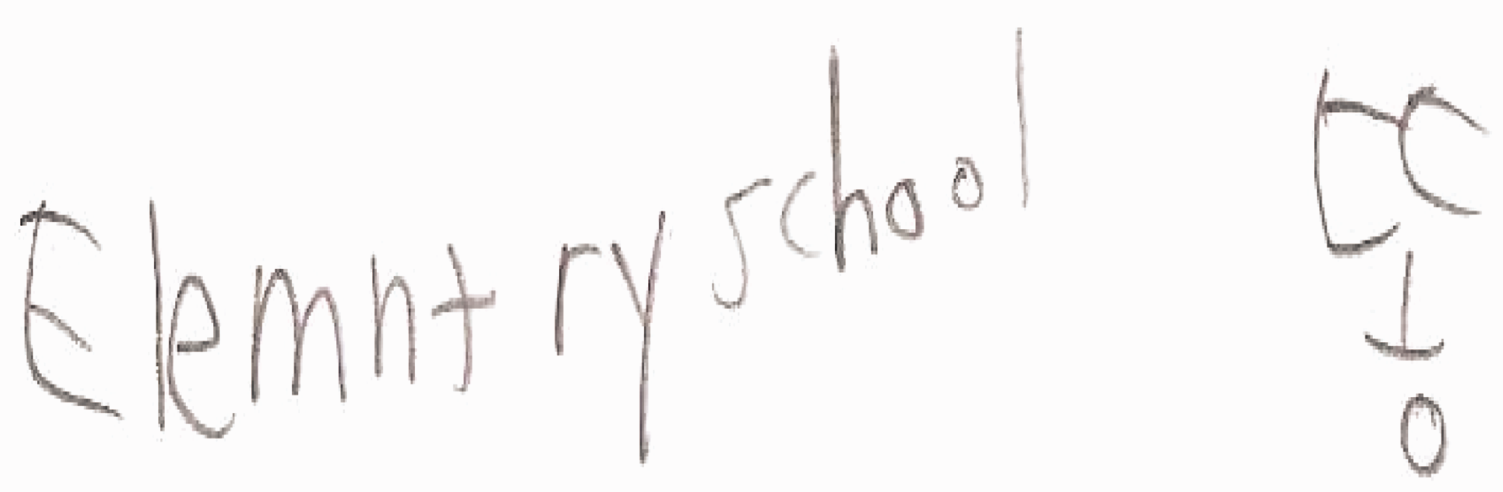
Another aspect regarding the characteristic of Hangul as an alphabetic syllabary relates to the length of words. In Hangul, between two and four letters are combined together to form a single block, and most Hangul words have no more than four syllable blocks. Regarding this way of arranging blocks, Taylor and Taylor (1983) wrote that Hangul is advantageous for long words, e.g. ‘unconsciousness’ contains 15 letters arranged in a line in English, but transcribes into three syllable blocks, ‘무의식’ /mu-ui-sik/, in Hangul. The interview with HB in pair C exemplifies such awareness of Hangul as a syllabary by comparing English to Hangul in terms of the length of words, showing her understanding of English which is written in a row, and the formation of a syllable block in Hangul. When she was asked about her experiences of learning Hangul and English in the second interview session, she replied, ‘English is more difficult than Hangul’, showing me two example words alongside each other, as Figure 2 shows. She wrote ‘elementary school’ on the paper as a difficult English word along with ‘똥’ /ddong/, which means ‘poo’, as an easy Hangul word, saying, ‘Hangul is easier … because it doesn’t have many long words’. She compared linear alphabetic writing, ‘elementary school’ in which 16 individual letters are arranged in a row to one Hangul word ‘똥’, in which four letters are arranged in one syllable block. When I further asked her why ‘똥’ is easy, she replied, ‘because it is only one word’. It seems likely that she was aware that Hangul has fewer longer words than English, which may result from the way of arranging blocks, and these lengths of words made her think Hangul is easier.
Written text produced by KH and YJ (use of boxes). Written text produced by HB (length of words).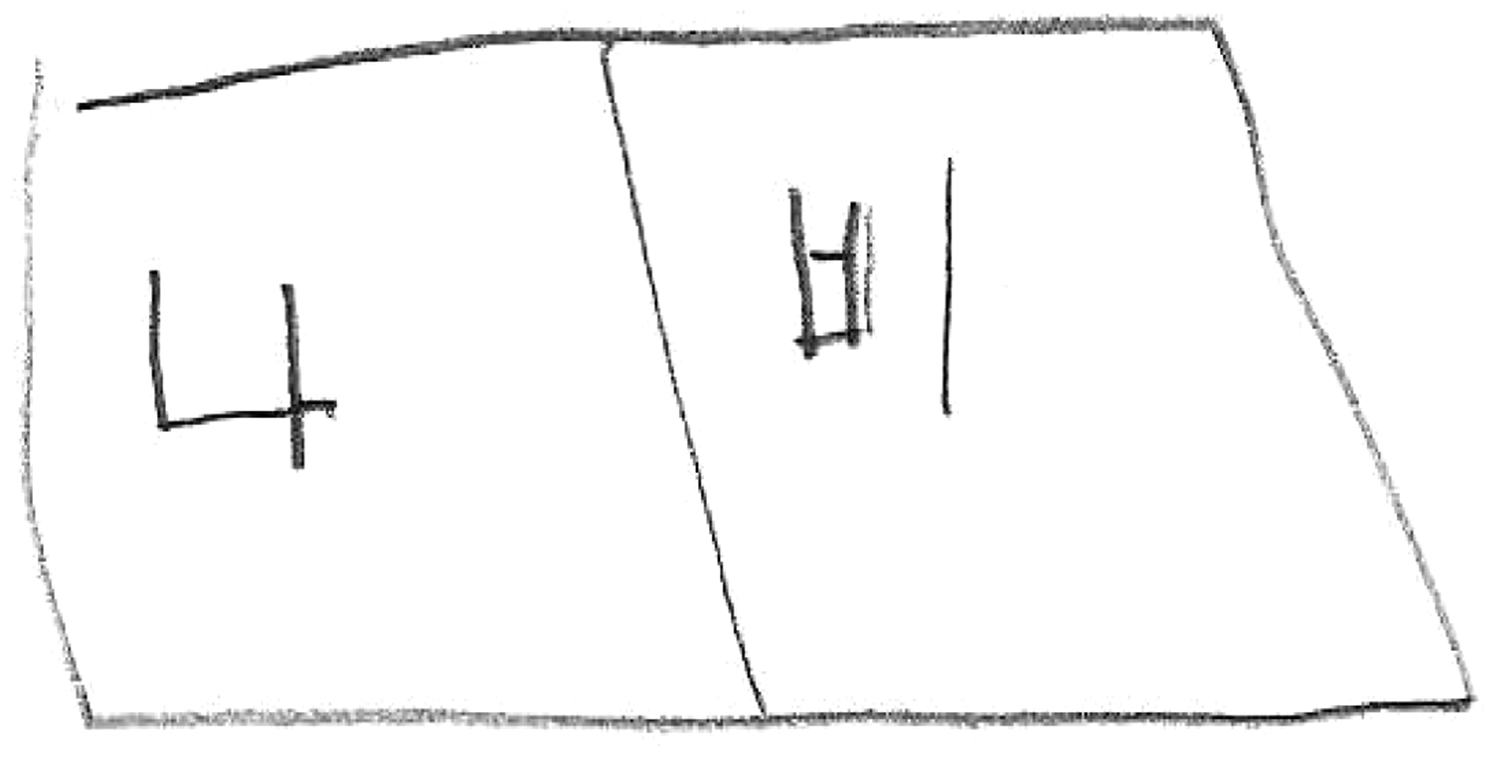
The findings of the study also suggest that children recognized syllables as the basic units of Hangul, and this led them to count the number of syllables in a word. This was evident in YB’s teaching, in pair B, in which he broke a Hangul word down into individual units in terms of the number of syllables. In his second session, he gave his tutee a question with three blanks, which may indicate the number of syllables, as Figure 3 shows. After he taught Hangul with a workbook about animals, he wrote ‘소의 아기는 ΟΟΟ’ (a baby cow is a ΟΟΟ) on the paper, which related to the task his tutee had done on the workbook page. He provided his tutee with three blanks so that the answer ‘송아지’ /song-a-ji/ (calf), which consists of three syllable blocks, could be put in each blank. This shows that he seemed to think of the word ‘송아지’ as consisting not of seven units according to the number of letters, i.e. ‘ㅅ’, ‘ㅗ’, ‘ㅇ’, ‘ㅇ’, ‘ㅏ’, ‘ㅈ’, ‘ㅣ’, but of three units, ‘송’, ‘아’, ‘지’. This shows his awareness of the syllabic feature of Hangul, in that “because the Hangul syllable blocks are separated, there is a clear syllable boundary for a Hangul word” (Wang et al., 2006: 149). This finding also supports Cho and McBride-Chang’s (2005) research on the acquisition of Hangul among kindergartners and second graders, suggesting that children’s syllable awareness develops early and plays an important role in early Hangul acquisition. They note that:
Written text produced by YB and SJ (blanks for Hangul). “The fact that Korean is read using syllable-level units of print and that the syllable level of language in Korean is strongly salient relative to other languages such as English makes syllable sensitivity crucial for beginning reading of Hangul” (Cho and McBride-Chang, 2005: 12). Written text produced by YB (blanks for English).

YB wrote ‘EΟEΟHΟNΟ’ on the paper and asked his tutee to fill in the blanks with correct alphabet letters to complete ‘elephant’. He used each blank for each alphabet letter in English, and this might show that he thinks of ‘elephant’ as consisting of eight units in terms of the number of alphabet letters while he used each blank for each syllable for Hangul. His use of blanks for each script suggests that he was aware that different writing systems represent different language units.
These findings presented here show that the children had some idea of the key principle governing Korean orthography which characterises it as an alphabetic syllabary, and they were able to make it clear that this characteristic of Hangul is different from English. They suggest that young children might have considerable script-learning abilities from an early age, and when they learn a new language, they develop their own understandings between different writing systems, clarifying differences between them. As Kenner (2004) wrote, this indicates that “difference is not inherently a source of difficulty” (p. 59) for young learners who are acquiring a new language.
Hangul as a logography
The findings from an analysis of KH’s peer teaching show that she paid attention to each individual stroke when teaching Hangul. In her teaching, her focus was on showing the correct stroke sequence to build up each syllable block, and how a small stroke can change the graphic representation of a word into a different one, which has a different meaning. Her attention to small strokes was occasionally demonstrated when she was teaching similar looking Hangul words, such as ‘주’ and ‘추’, and ‘으’ and ‘의’. For instance, when she was showing how to write ‘주’ as in ‘주문’ /ju-mun/ (spell), she explained that it is different from ‘추’, which is visually similar to ‘주’ with an emphasis on a small stroke. She added a stroke ‘'’ onto ‘ㅈ’ and then crossed it out saying, ‘you should not put this here’. Similarly, when she was teaching ‘의’ as in ‘의자’ /ui-ja/ (chair), she also showed a similar looking letter, ‘으’, along with ‘의’. After she showed how to write ‘의’, she wrote ‘으’ above it and crossed it out, saying ‘not 으 but 의’. Figure 5 shows examples of KH’s written texts when teaching ‘주’ and ‘의’, which might demonstrate her perception of a difference derived from a small stroke.
Written text produced by KH (stroke).
Similar awareness was also seen in HB who focused on the stroke sequence of Hangul during peer teaching. In every session, she gave her tutee, HM, words with dotted lines so that her tutee could practise the words along the lines. When I asked her why, she answered ‘to help him (HM) not to be confused about the sequence’. In her last interview session, HB also showed me how to write ‘너무’ /neo-mu/ (too) correctly, saying that the stroke sequence is important in Hangul writing. As Figure 6 shows, after she wrote ‘너무’ in the correct order, she wrote it again underneath in order to show a wrong sequence, from right to left, from bottom to top, saying ‘we should follow the sequence’. This suggests that HB was aware that Hangul should be written from top to bottom and from left to right, considering the sequence of writing as an important aspect in Hangul.
Written text produced by HB (sequence of writing).
These findings exemplify children’s awareness of the principle which characterises Hangul as a logography. In this study, the children worked out this logographic characteristic of Hangul through precise writing, such as paying close attention to small strokes and stroke sequences. The findings relate to research on children’s awareness of a logographic Chinese script (Chan and Nunes, 1998; Tsai and Nunes, 2003). As mentioned earlier, Chan and Nunes (1998) showed Chinese young learners’ awareness of the position and types of strokes, as well as semantic and phonological features of each stroke. They claim that this understanding does not simply come from memorization or repetition of individual Chinese characters. The findings also correspond with the results of Kenner et al. (2004), in which a six-year-old Chinese child who took part in peer teaching sessions showed close attention to the formation of Chinese characters, including the stroke sequence, accuracy in each stroke and even the balance between strokes in each character. Their research concluded that despite relatively little input in Chinese compared with in English, the child showed sophisticated abilities to look for the logographic characteristics of Chinese derived from his early awareness of scripts.
The findings of this study suggest that the children were able to look for not only alphabetic characteristics of Hangul but also its non-alphabetic nature. These findings are in line with the literature on children’s awareness of alphabetic scripts as well as studies of children’s early awareness of non-alphabetic scripts. Therefore, it is possible to say that young children develop their awareness of the underlying rules of a writing system regardless of whether it is alphabetic or non-alphabetic.
Hangul as a shallow orthography/ English as a deep orthography
One of the issues to be considered in young children’s acquisition of a second writing system includes that of whether children are learning a more complex writing system or a simpler one than their first language (Sassoon, 1995). In this respect, the findings of the study seem to be in accordance with previous studies based on the Orthographic Depth Hypothesis, suggesting that the Korean alphabet, Hangul, is regular in its sound–letter relationship, thus it is referred to as a shallow orthography, whereas English is referred to as a deep orthography where sound–letter mappings are inconsistent. One of the findings of this study is concerned with children’s awareness of irregular phoneme–grapheme correspondences in English. For instance, HB was aware of the fact that the sound of a vowel in an unstressed syllable is weakened to /ə/, showing her understanding that some sounds of English letters may not be fully pronounced. When she was asked about her experience in learning English in the first interview session, she mentioned the word ‘apartment’, saying that it was difficult for her to spell. She said she was confused about whether it has ‘mnt’ or ‘ment’, saying ‘it should be ‘m’, ‘n’, ‘t’’, i.e. the word should be written as ‘apartmnt’, without ‘e’, not ‘apartment’. Regarding her confusion over whether to use ‘e’ or not, I found that her idea of ‘mnt’ derived from the fact that the vowel ‘e’ as in ‘ment’ is in an unstressed syllable, as in ‘apartment’, thus its sound is weakened. In English, stress can have a great effect on the sound–letter correspondence, and this is not recognized in its orthography (Taylor and Taylor, 1983). In ‘apartment’, the second syllable, ‘part’, is stressed, hence the vowel ‘a’ in the syllable is fully sounded as /a/, whereas the vowels in the unstressed syllables: ‘a’ in the first syllable and ‘e’ in the third syllable, are represented as /ə/. These findings suggest that she was aware that the sounds of some letters may not be fully pronounced in English.
The tutor children, SB in pair D and YE in pair E, were also aware that some letters have two possible sounds in English. They gave me the words ‘sky’ and ‘fairy’, respectively, in order to explain that the letter ‘y’ has two different sounds, /ai/ and /i/. For example, when I asked SB about the most important thing when teaching English in the third interview session, she answered, ‘pronunciation’. I asked her to give me some examples, and she said the sounds of ‘i’ and ‘y’ as follows. SB: Hmm…‘i’ /ai/…‘i’ at the end…because ‘i’ sometimes becomes ‘y’. Researcher: Which word, for example? SB: Sky … sky
Based on the findings from interview data related to English pronunciation, I was able to see that this irregular sound–letter relationship of English made the children feel that English is more difficult than Hangul. HB expressed it by saying, ‘English is more difficult than Hangul because English has many difficult words … spellings’, whereas YE said “y’ made me difficult’ by pointing at ‘y’ as in ‘fairy’. Moreover, I also found that English pronunciation is considered very important by most tutor children due to its complex phonological rules. For example, YE said pronunciation is most important when learning English because there are some letters which have to be carefully pronounced. These findings show their awareness of different degrees of sound–letter ambiguity between Hangul and English, which means the grapheme–phoneme correspondence of Hangul is more transparent compared with that of English.
Batchim
Another finding of this study is that a number of tutor children were concerned about ‘batchim’ in Hangul. In the case of YE, this was visible. Whenever her tutee made spelling mistakes in batchim, YE rubbed them out and wrote them again, saying the names of each consonant so that her tutee could write each batchim letter correctly, with more attention than for others. In the following interview session, she stated that batchim is the most difficult and important thing when learning Hangul. The findings also show that some of the children’s awareness of batchim was quite sophisticated. For instance, when YB was asked about his experience in learning Hangul and English in the second interview session, he said that it was more difficult for him to learn Hangul than English thus far because of some Hangul words, having ‘받침 두 개’ (batchim with two consonants). These interview data show that YB knew not only its special name, ‘batchim’, which means ‘supporting’, but also the fact that, along with a single consonant, two consonants can also be placed at the bottom in a syllable. The interview data also show that he was aware of particular difficulties in writing batchim with consonant clusters due to its irregular feature. When I asked him for a Hangul word having batchim which was difficult for him, he started to write ‘닭’ /dak/ (chicken) on the paper, as Figure 7 shows.
Written text produced by YB (batchim).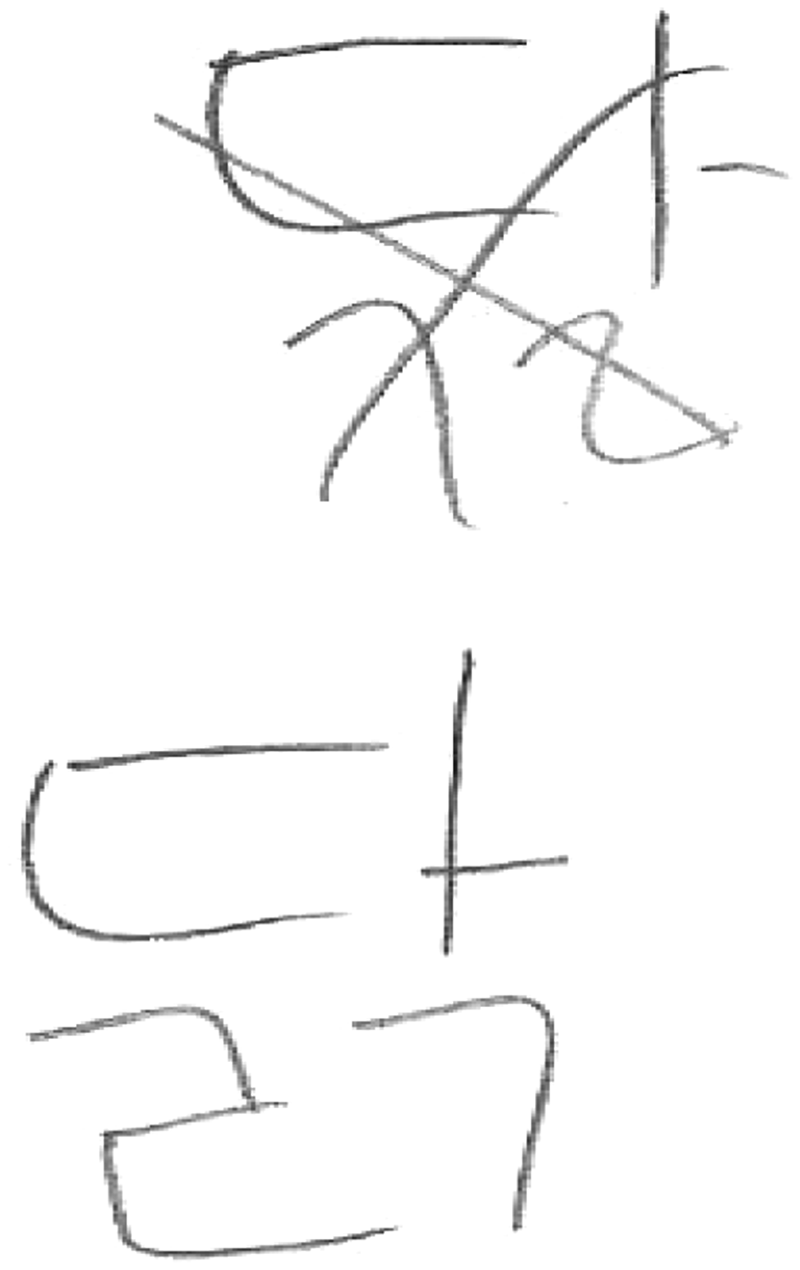
As the written text shows, he misspelled the word at first: he wrote ‘ㄱㄹ’ underneath instead of ‘ㄺ’ as in ‘닭’. Finding that the batchim he wrote was wrong, he crossed it out and wrote ‘닭’ correctly again. It is likely that he wrote the second consonant ‘ㄱ’ first, since it is pronounced among consonants as ‘ㄺ’. When I asked him again why ‘닭’ is difficult, he said that he is confused about consonant clusters ‘ㄺ’, as the following extract illustrates. Researcher: Why do you think that 닭 is difficult? Why is 받침 (batchim) difficult? YB: Because … Researcher: Yes? YB: (points at ㄺ as in 닭 he wrote) These are confusing.
Conclusion
This study has attempted to fill a gap in the literature on how and to what extent young children learning a non-Roman alphabetic script and a Roman alphabetic script simultaneously understand different scripts by exploring Korean EFL children’s understandings of Hangul and English. The findings of the study, which establish children as active language users who are able to construct their own meanings and ideas about the principles of languages, could lead to new insights into children’s literacy learning. The study provides evidence that young children are very aware of the fundamental rules of scripts before going to school, and they gradually develop them by highlighting their knowledge of the similarities and differences between writing systems. The findings suggest that Korean EFL preschool children are able to identify key principles which characterise each script, and this broadens the understanding of how children negotiate worlds in which they face two different writing systems in an EFL context. It is therefore proposed that such early awareness of languages and scripts needs to be valued and encouraged by teachers and educators so that children can benefit from having more opportunities to expand their ideas of literacy learning. Literacy instruction for young learners should take into consideration how to make use of such remarkable understandings of different writing systems and how to build on what children already know in order to help them become “better architects and better builders” (Bruner, 1996: 20).
Although the findings of this research provide valuable insights into children’s awareness of languages and scripts in literacy acquisition, this study has some limitations. The three-month peer teaching setting where this study took place, in which each tutor child had three different teaching and interview sessions, limits the implications in terms of a developmental trend. Therefore, a further longitudinal study where children are regularly observed throughout a school year is necessary in order to provide evidence with more details of children’s understandings, as well as changes and development over time. Another shortcoming is that the children’s informal literacy interactions at home or community were not observed in this study. Although information about each participant child’s personal experiences of learning Hangul and English at home was collected from their classroom teachers and parents in this study, it would have been ideal to explore children’s home literacy environments where they are taught by parents or interact with family members, as done by Cremin et al. (2012). This could further explain the relation between home literacy practices and their awareness as observed in the peer teaching setting.
As previous studies have pointed out (Kenner and Kress, 2003; Sassoon, 1995), more studies on children’s understandings of different scripts are still needed, and in particular the findings of this study in relation to Hangul and English call for more in-depth studies on EFL children’s phonological and orthographic processing between the two languages. For example, young children’s early awareness of the irregular features of Hangul and English can be studied further. Future research comparing children’s awareness of irregular ‘batchim’ with their perceptiona of the irregular sound–letter relationship of English would be of interest. In addition, further research examining whether children’s understandings of the irregular principles of Hangul influence the way they learn English would also be of interest. This would enable an examination of how young children deal with certain irregular rules of different writing systems.
As Masny and Ghahremani-Ghajar (1999) wrote, ‘reading the world’ is more important than ‘reading the word’ in children’s literacy acquisition. Children’s remarkable understandings and creative ideas about the different writing systems presented in this paper can open a new window onto how young children learn to make sense of their world where two different writing systems exist.
Footnotes
Acknowledgements
I would like to thank the participant children, their parents and teachers who were willing to join and support my research. Many thanks also to Professor Alice Deignan, Dr Penelope Robinson and Dr Judith Hanks of the University of Leeds for their excellent supervision of this study.
Funding
The author(s) received no financial support for the research, authorship and/or publication of this article.