




Abstract
Previous studies have presented discrepant findings of e-stories’ contribution to children’s narrative comprehension, which can be attributed to not only the variation of multimedia features among studies but also to learner and text features. The main goal of the present study was to expand understanding of the effect of e-stories on children’s narrative skills and reading attitudes for poor and good story comprehenders. A quasi-experimental factorial design was employed to explore the effect of book type and group level on children’s narrative skills and reading attitudes. The participating children were pre-readers. The printed version of The Red Winged Owl was read aloud to small groups of 4–5 children. Participants included 41 good and 40 poor comprehenders
Introduction
Storybook reading is an activity that children in the early years of life find mesmerizing; it is also a significant indicator of the home literacy environment (Marjanovič-Umek et al., 2019; Wirth et al., 2020). Shared storybook reading is a substantively important vehicle for children, as it exposes them to new words and story grammar elements and develops print awareness in the content of the narratives (Breit-Smith, et al., 2017; De Temple and Snow, 2003; Han and Neuharth-Pritchett, 2015). Stories provide meaningful context for children to rehearse skills such as monitoring a plot, inferential thinking, listening comprehension and retelling (Collins, 2016; Florit et al., 2011; Morrow, 1985; Strasser and del Río, 2013). Moreover, early shared book-reading experiences spark positive reading attitudes in children (Altun et al., 2021 Altun, 2013; Lee and Yeo, 2014; Saracho and Dayton, 1991).
Meta-analyses have consistently reported on the contribution of storybook reading to children’s language and literacy skills (Bus et al., 1995; Mol and Bus, 2011; Mol et al., 2008; National Early Literacy Panel, 2008; Scarborough and Dobrich, 1994). Mol and Bus (2011) showed that storybook reading also has a long-lasting cumulative effect on oral language development from preschool (12%) to the undergraduate and graduate years (34%). They concluded that storybook reading is moderately related to academic achievement. These findings clearly indicate that although pre-reader children are dependent readers of stories, they are active listeners, viewers and learners during the shared reading process (Beaty and Pratt, 2003).
Both the quantity and quality aspects of children’s storybook-reading experiences have been well documented and have served as key topics for researchers (Hindman et al., 2014; Hutton et al., 2017; Isbell et al., 2004; Sénéchal et al., 2008; Zevenbergen Whitehurst, 2003). Nevertheless, storybook reading remains a valuable research topic because of the influence of rapid changes in information and communication technologies (ICTs) on storybook features and children’s storybook experiences. With the advent of new technologies, today’s young children’s early literacy experiences have also been altered, compared to earlier generations, and they are exposed to both digital and printed literacy environments (Kucirkova, 2016). A growing number of digital storybooks and applications have also become available for young children (Danaei et al., 2020; Smeets and Bus, 2012). Studies have shown that a growing number of young children are engaging with both electronic and printed stories (Flewitt et al., 2015; Marsh et al., 2017; Neumann et al., 2017). Printed storybooks have static illustrations with text, while digital stories include multimedia features (e.g. animation and sound) that can enrich the story’s plot and allow a child to listen to the story with or without an adult’s participation (Merjovaara et al., 2020; O’Byrne et al., 2018). Therefore, the effect of electronic stories on children’s learning is one of the hottest research topics in education.
Electronic storybooks
Electronic storybooks (e-storybooks or e-stories) are a kind of hypermedia narrative that combines text and multimedia enhancements to enable children to listen to and read stories independently or with adults (Takacs et al., 2015). Advances in ICTs have markedly changed digital literacy environments (Leu et al., 2013) and led to an evolving selection of multimedia-saturated, child-sized, light and easily portable new e-storybooks. E-storybooks offer extra-textual properties – sound, music, animated pictures and interactive features – that elaborate more on the strategy to execute story-to-story tracking and require the processing of different forms of information in story comprehension (Altun, 2021). Leu et al. (2004) analysed the proliferation of forms and functions of new literacies in the digital age and asserted that children’s literacy experiences should extend beyond printed storybooks. Similarly, the International Reading Association (2009) recommended the effective integration of ICTs in literacy practices to produce fully literate individuals in today’s world.
Numerous studies have addressed the efficacy of e-storybooks in building young children’s language and literacy skills (e.g. Chera and Wood, 2003; Ihmeideh, 2014; Korat, 2009; Lauricella et al., 2014; Okolo and Hayes, 1996; Shamir and Korat, 2007; Takacs and Bus, 2016). Although this research is in its early phases, a consensus has emerged concerning the contribution of e-storybook reading to children’s (a) vocabulary (Ihmeideh, 2014; Kocaman-Karoglu, 2015; Korat, 2010; Korat et al., 2014; Korat and Shamir, 2012; Segers and Verhoeven, 2002; Shamir et al., 2011, Shamir et al., 2012; Shamir et al., 2011; Shamir et al., 2012; Smeets and Bus, 2012; Takacs et al., 2015; Verhallen and Bus, 2010), (b) phonological awareness (Chera and Wood, 2003; Ihmeideh, 2014; Shamir, 2009; Shamir et al., 2012) and (c) print awareness (Ihmeideh, 2014; Moody, 2010; Segal-Drori et al., 2010; Shamir et al., 2008).
A meta-analysis (Takacs et al., 2015) found that e-storybooks had a small but significant effect on children’s story comprehension; however, other studies have presented mixed findings. Despite substantial evidence that e-storybook reading benefits children’s story comprehension (Altun 2018; De Jong and Bus, 2004; Doty et al., 2001; Matthew, 1997; Verhallen et al., 2006; Zucker et al., 2009), some studies found that printed storybooks are superior to e-storybooks (Krcmar and Cingel, 2014; Parish-Morris et al., 2013), and others found no difference between book types (Lauricella et al., 2014; Moody et al., 2010; Richter and Courage, 2017). These discrepant findings of e-stories’ contribution to story comprehension can be interpreted through a theoretical lens.
Theoretical underpinnings
The possible efficacy of the multimedia features of technology-mediated e-stories on story comprehension are addressed in dual coding theory (DCT; Paivio, 1986), the cognitive theory of multimedia learning (CTML; Mayer, 2003) and Neuman (2005) theory of synergy (Neuman, 2005). DCT proposes that the human mind processes information through an interdependent and interconnected dual channel consisting of nonverbal (imagens) and verbal (logogens) elements (Paivio, 1986). The multimodal structure of e-stories navigates the processing of verbal and nonverbal information simultaneously, and this dual processing can facilitate narrative comprehension (Sadoski and Paivio, 2001). Bus et al. (2015) suggested that dynamic visuals in digital books may support efforts to concretize the oral text since a single static illustration (e.g. an action like jumping or many little fish forming the shape of a big fish) in printed books can be displayed in five to eight scenes in digital storybook versions (Altun 2018; Takacs and Bus (2016)). Thus, animation provides more visual details, which may foster contiguity between illustrations and oral texts. Children simultaneously process the dual information types – narration and animation – which may facilitate their narrative comprehension.
In a similar vein, CTML assumes three qualities about the nature of learning: dual information processing, a limited capacity for information processing and active learning (Mayer, 2003). Multimedia learning takes place when information is presented via more than one modality; the multimodal format bolsters the transfer of referential connections between verbal and nonverbal representations to construct knowledge (Mayer and Sims, 1994). However, Neuman (2005) theory of synergy suggests that each medium (sound, music and animation) has specific features and the combination of the media is greater than the sum of the parts. The synergy among the media forms may represent a new dimension for the processing of information that helps children to construct meaning from the story.
In this context, studies have shown that animations, sounds and music are commonly assistive (Altun, 2018; Doty et al., 2001; Korat, 2010; Korat and Shamir, 2012; Verhallen et al., 2006), whereas interactive features, such as hotspots and games, can be detrimental when these are intense or incongruous with the text (Bus et al., 2015; De Jong and Bus, 2002; Korat and Shamir, 2007; Moody et al., 2010; Takacs et al., 2015; Zucker et al., 2009). The studies that have examined e-storybooks using a variety of multimedia features and heterogeneous formats provide evidence of mixed effects on children’s story comprehension (Bus et al., 2015; Takacs et al., 2015; Zucker et al., 2009). However, these discrepant findings might be due to more than the variations among multimedia features; learners’ characteristics may also play a role. For instance, studies found that the contribution that e-stories made to children’s language outcomes varied depending on their socioeconomic status (De Jong and Bus, 2002; Korat and Shamir, 2008) and language and learning impairment (Shamir et al., 2011; Smeets et al., 2014; Takacs et al., 2015). In particular, these variations may be related to the children’s cognitive capabilities. For example, cognitive load theory focuses on the limited capacity of the working memory in information processing (Sweller, 1994). Similarly, the capacity model (Fisch, 2000) noted the significance of children’s working memory capacity in media exposition. The difficulties that children face when exposed to e-stories may be related to the heavy informational complexity of these texts; tracking multimedia features and story plot simultaneously may interfere with narrative comprehension because the effort creates an excessive cognitive load. Narrative comprehension is a complex cognitive process that includes monitoring the story’s plot, identifying characters, inference-making, constructing meaning from text and/or pictures and summarizing (Collins, 2016; Paris et al., 1991; Paris and Paris, 2003). Attention, working memory (Andreassen and Braten, 2010; Hannon, 2012; Strasser and del Río, 2013), executive functions (Strasser and del Río, 2013), inferential skills (Collins, 2016; Florit et al., 2011) and verbal intelligence (Florit et al., 2009; Florit et al., 2011) all contribute to narrative comprehension.
Narrative comprehension
The simple view of reading model (SVM; Gough and Tunmer, 1986; Hoover and Gough, 1990) and the unitary process reading model (UPRM; Diakidoy et al., 2005) assert that although reading comprehension involves decoding printed text and listening comprehension involves unravelling visual and aural information, both derive from the same process. This assertion is consistent with research that has found a link between preschoolers’ listening comprehension and reading comprehension in the primary grades (Kendeou et al., 2007; Kendeou et al., 2009; Storch and Whitehurst, 2002). Studies consistently revealed that pre-readers’ narrative comprehension is one of the predictors of later reading comprehension (Kim, 2016; Language et al., 2018; Lervåg et al., 2018). Furthermore, preschoolers’ comprehension processes in non-reading contexts are notably similar to those used in elementary school when reading (Kendeou et al., 2007). Horowitz-Kraus et al., (2013) examined the same children’s brain activation by using fMRI during a narrative comprehension task at age 5–7 and, later, reading comprehension tasks at age 11. They provide neural evidence that reading comprehension is linked with brain activation (occipital) in narrative comprehension. Thus, pre-readers’ narrative comprehension is important and contributes their reading comprehension during the elementary school years (Kendeou et al., 2007).
Previous research on narrative comprehension found that pre-reader children also have varying levels of narrative comprehension (Paris and Paris, 2003; Potocki et al., 2013; Sarı and Altun 2018; Strasser and del Río, 2013). An examination of early narrative comprehenders’ profiles that are similar to school-aged children may help to determine appropriate text, storybook design and learning strategies to promote comprehension skills before they enter elementary school.
One rationale for expecting performance differences in e-story reading between poor and good story comprehender groups lends support to the theory of school-aged children’s e-storybook performance. Okolo and Hayes (1996) showed that for highly engaged second-grade poor readers, spending more time with an animated e-story did not yield greater story comprehension. Their findings indicated that highly animated e-stories may interfere with poor readers’ comprehension. Poor story comprehenders may dedicate a high cognitive effort to unscrambling verbal and visual information within e-stories, thus causing the cognitive load to hinder their story comprehension. They may also have low working memory to monitor and process information. Thus, children’s story comprehension levels may be related to their differential e-story comprehension performance. Lastly, text length, or the amount of verbal information in a story, may also be related to variations in children’s story comprehension. The increase in verbal information may exceed children’s working memory capacity. In sum, learners’ characteristics and multimedia features are important dimensions of e-storybook research. There is a research gap in investigating the effect of e-stories on pre-reader children’s story comprehension levels. Therefore, the present study aims to investigate the efficacy of e-stories’ use with poor and good narrative comprehenders.
Text length and narrative comprehension
Text length is an important issue; thus, there are several readability formulas for selecting the appropriate materials for each grade level (Bailin and Grafstein, 2016; Graesser, 2007). Studies have shown that text length can be related to both the cognitive dimension – comprehension by processing information – and the affective dimension – being bored by constraining the process of reading (Meyer, 2003; Oakhill and Cain, 2007). Poor readers are more vulnerable to text length and complexity (Cain and Oakhill, 1996; Francis et al., 2018). Like reading comprehension, narrative comprehension comprises complex cognitive skills such as monitoring the story’s plot, making inferences and extracting meaning from the text (Lynch et al., 2008; Tompkins et al., 2013). Young children actively engage in listening to the story text and construct their own meaning. Thus, the content, complexity and length of the story are crucial factors that influence young children’s narrative comprehension (Skaraki-Doyle and Dempsey, 2008)Studies indicate that text length is a potential factor for working memory and narrative comprehension, however research on e-stories has, to date, ignored the issue. Previous studies used mixed text lengths (ranging from 239 to 1817 words) (e.g. Altun 2018; De Jong and Bus, 2004; Korat and Shamir, 2012; Moody et al., 2010) or present no information regarding the total number of words in each story (Reich et al., 2019; Sarı et al., 2019). In contrast to printed stories, e-stories provide further input, such as sound and dynamic illustrations, together with the story’s text. Therefore, the text length can be a possible factor influencing cognitive load and children’s narrative comprehension in e-stories. Finally, poor comprehenders may be more vulnerable to challenges related to monitoring the story and comprehending them as school-aged poor readers. One of the purposes of this study is to address the gap between text length and e-stories’ comprehension among poor and good comprehenders.
Reading attitude and e-stories
Reading attitude refers to children’s feelings towards engagement in reading-related activities (Saracho, 1988). Young children’s attitudes towards reading are a component of emergent literacy (Whitehurst and Lonigan, 1998). They play role in learning to read, and children typically prefer engaging reading-related activities (McGettigan, 2016; McTaggart, 2003; Snow et al., 1998). Studies have revealed that children’s pleasurable early reading-related experiences associated with their attitudes towards reading (Altun et al., 2021; Lee and Yeo, 2014; Saracho and Dayton, 1991). Recent studies have shown that e-stories can foster children’s attention, engagement and enjoyment in storybook reading (Barnyak and McNelly, 2016; Richter and Courage, 2017; Takacs and Bus, 2016; Yilmaz et al., 2017; Zhou and Yadav, 2017). Thus, e-stories may be potential tools for promoting young children’s positive reading attitudes. The aforementioned studies examined the efficacy of e-stories on children’s engagement and enjoyment, regardless of their narrative comprehension level. Studies with school-aged children have revealed that there is a relationship between reading comprehension and attitude (Kocaarslan, 2016; Widyasari, 2016). Poor readers tend to have less positive reading attitudes than good readers do; thus, children’s narrative comprehension levels may be related to their reading attitudes, and e-stories may affect poor and good narrative comprehenders differently. Poor narrative comprehenders may benefit more from e-stories that grab their attention, and they may enjoy engaging reading activities. Therefore, this study sought to investigate the efficacy of e-stories on children’s reading attitudes regarding poor and good comprehenders.
Hypotheses
These arguments lead to the following hypotheses. (1) Poor and good comprehenders will recall more from a story’s plot, retell more details and answer more narrative comprehension questions when they encounter short text length e-stories. (2) E-stories with longer text lengths and embedded with multimedia features may require more simultaneous information processing. This may pave the way for extra cognitive load. In comparison to the good comprehenders, the poor comprehenders may be more vulnerable to processing information challenges and may be distracted from the story’s plot and monitor comprehension. They will recall less from the story’s plot, retell less and answer fewer narrative comprehension questions when encountering e-stories with longer text lengths. (3) The multimedia features of e-stories may be more effective at attracting children’s attention. Poor comprehenders may need more extra-textual properties to monitor the story; thus, they may be more interested in visual and audio details in e-stories and may engage more in the reading session. E-stories will affect poor comprehenders’ reading attitudes more than they do good comprehenders.
Method
A quasi-experimental 2 × 2 factorial design was employed to explore the effect of book type (e-story vs printed story) and group level (poor vs good) on children’s narrative comprehension, retelling and reading attitudes. A factorial design enables the examination of possible interactions among variables. More than one independent variable is included in the study design to investigate the variables’ unique and combined effects on the dependent variable (Fraenkel et al., 2012).
Participants
After receiving official permission to conduct the study, four preschool headmasters and 14 teachers were informed of the study’s goal and process. The preschool teachers sent parents the informed consent forms; 270 consent forms were delivered, and 219 parents agreed. Twelve children were excluded due to developmental delays, reluctance to participate or attendance problems. The initial pool of the study was 207 children (106 girls and 101 boys), recruited from 14 classes in four public preschools from a large suburban area in Turkey. The mean age was 65.35 months (range 59–68), and all the children were pre-readers. The classroom teachers reported that the participating children were not yet able to read, and none of the children displayed reading ability during the storybook sessions. In Turkey, formal reading instruction begins in first grade. All children were monolingual Turkish speakers and typically developing, based on parent and teacher reports.
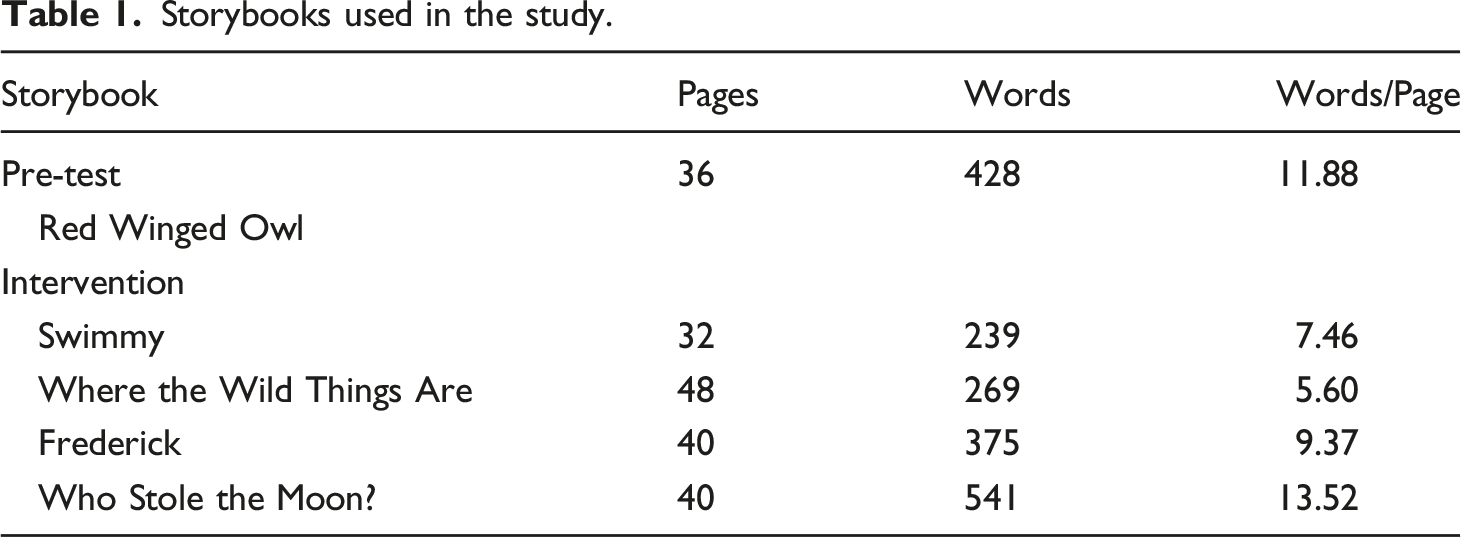
Storybooks used in the study.
The narrative comprehension scores ranged from 3 to 9 (M = 6.47, SD = 1.49). The second coder scored about 22% of the data (45 records) independently. The Pearson product-moment correlation between the raters was 96%. The initial comprehension scores were transformed to z-scores to check for potential outliers, and five cases with standard scores in excess of 3.29 were excluded from the data set (Tabachnick and Fidell, 2007). The good story comprehenders selected from the pool scored above the 75th percentile on the initial comprehension scores; poor comprehenders scored below the 25th percentile (Carretti et al., 2005; Kim and Goetz, 1994). Forty-one good (24 girls and 17 boys) and 40 poor (19 girls and 21 boys) comprehenders were identified. From each of the four preschools, 25, 20, 19 and 17 students, respectively, participated in the study. The mean age of the participants was 64.70 months. Mothers signed a majority of the consent forms (86%). A majority of parents (61%) held a college degree. The monthly average household income of the participants’ parents was 2873 TRY (low socioeconomic status, ±$755). The distribution of the participants’ socioeconomic status was 51% low, 30% middle and 19% high status. Only two children had prior e-story experience at home.
Instruments
Narrative comprehension
Paris and Paris’s (2003) five prompted story comprehension questions were used to assess the children’s level of narrative comprehension. Explicit questions addressed the main story elements of characters, setting, initiating event, problem and outcome–solution (e.g. ‘Who are the characters in this story?’ and ‘Where does this story happen?’) (Paris and Paris, 2003: 73). The questions were asked to each child under book closed conditions after each storybook session for both the printed and e-story groups. Based on Paris and Paris (2003: 74) rubric, each question was scored from 0 to 2 points. The total story comprehension scores ranged from 0 to 10.
Story retelling
After each book-reading session, children were asked to retell the story on their own. Their retellings were audio-recorded and then transcribed to measure their narrative productivity and lexical diversity in terms of the total number of words (TNW) and number of different words (NDW). Number of different words is commonly used to measure children’s index of productive vocabulary in retellings (Burgoyne et al., 2018; Heilman et al., 2010; Isbell et al., 2004; Ucceli and Paez, 2007). In the present study, not only narrative comprehension but also poor and good comprehenders’ lexical production were investigated to understand the effect of text length on monitoring a story’s oral text for electronic and printed conditions.
Reading attitude
The Preschool Reading Attitude Scale (PRAS) was used to measure children’s attitudes towards reading. Saracho (1988) developed the pictorial scale for assessing pre-readers’ reading attitudes, and Altun (2013) translated it into Turkish for 414 preschoolers. The scale consisted of 12 questions, to which children responded by selecting one of three faces (very unhappy, neither very happy nor unhappy, or very happy), which were scored from 1 to 3. The scale covers questions to gauge children’s feelings about reading and reading-related activities. The total reading scores ranged from 12 to 36 points. The reliability of PRAS was computed 0.95 using a test–retest method and 0.89 using the Kuder–Richardson 20 test.
Materials
Four storybooks were selected based on the appropriateness of both their plots and illustrations for young children. The stories Swimmy, by Leo Lionni; Where the Wild Things Are, by Maurice Sendak; Frederick, by Leo Lionni; and Who Stole the Moon? by Helen Stratton-Would are well known and Caldecott Medal award-winning children’s picture books. Swimmy and Where the Wild Things Are were the shorter stories used, while Frederick and Who Stole the Moon? were selected as the longer ones. Many studies have investigated young children’s story comprehension by using these picture books (e.g. Altun, 2018; Altun 2021; Klein et al., 2017; Lee, 2017; Lisenbee and Ford, 2018; Tabernero and Calvo, 2020). The e-book of Who Stole the Moon? is commercially available in Turkish; however, Frederick, Where the Wild Things Are and Swimmy were dubbed in Turkish from the available English e-story versions (Altun 2018). Printed editions of the four storybooks are available in Turkish; however, while the storybooks are well known and famous in children’s literature, they are less popular in Turkey. None of the storybooks were available in the classrooms’ book corners. Teachers reported that they had not read these books to the children. In addition, none of the participating children mentioned any familiarity with the stories regarding their characters, plot or illustrations during the storybook sessions. The reading levels of the stories were determined based on previous text classifications and their numbers of words (Allen et al., 1988; Knight, 1994; Wingate, 2002). Previous studies have suggested that books with around 250–300 words can be considered short texts that are easy for young children to comprehend. Both the electronic and printed stories contained the same text and illustrations. Table 1 presents detailed information about the materials.
Although the Who Stole the Moon? e-story had hotspots, neither the researcher nor the children used this feature since a meta-analysis found that hotspots may interfere with children’s story comprehension (Takacs et al., 2015). In addition, multimedia features (pictures, sound and music) were standardized across the e-stories, and all of them were presented to children using an iPad, to hinder extraneous variables among e-book sessions.
Procedure
Study procedure.
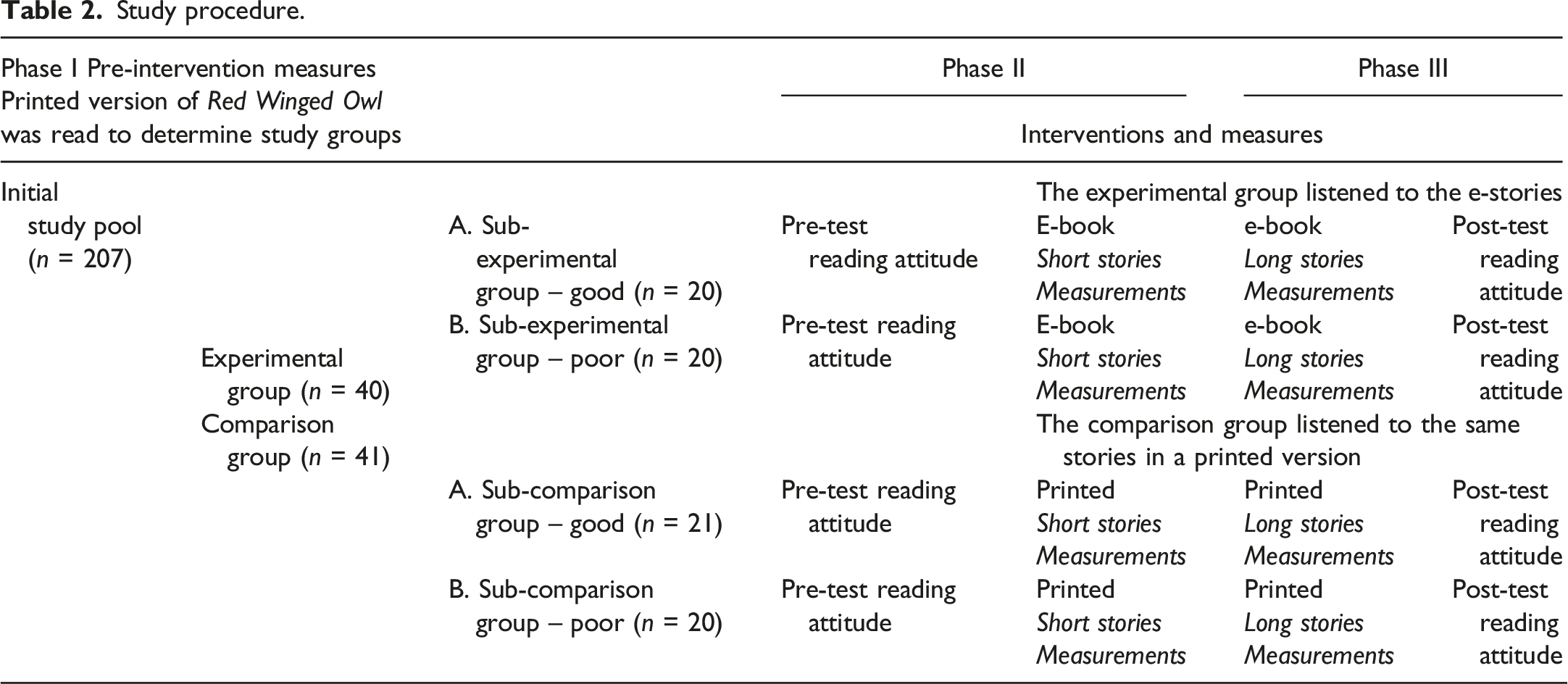
The children were placed into sub-experimental and sub-comparison groups based on their initial story comprehension scores. Before the intervention, the researcher administered the PRAS to the children individually (8–15 min) to assess their initial reading attitudes. Each measurement took place at the school in a spare room equipped with a child-sized table and chairs. Book-reading sessions for all subgroups (4–5 children) took place at the school in a spare room away from noise. In the experimental group, the children listened to e-stories while watching them on the iPad screen. Children in the experimental group gathered around a single iPad. In the comparison group, the children listened to the same printed stories by looking at static illustrations in storybooks. The researcher read the printed books to the comparison groups to eliminate threats to internal validity and to control the readers’ characteristics. The experimental groups watched e-stories under the researcher’s supervision as well. All children were informed briefly about the intervention with the following statement: ‘It’s story time! Please listen to the story carefully. After story time, we will have another activity about the story. I will ask you some questions about the story’. Neither group received any additional support (e.g. by asking questions and talking about the pictures), nor were they exposed to any learning strategies. After each reading, the children were asked to retell the story and to answer story comprehension questions individually. Each child’s retelling and answers were audio-recorded.
Reliability
All reading sessions were video-recorded. The camera was placed behind the children, so their faces do not appear in the records and confidentiality was assured. 10% of the video records were randomly selected to check the fidelity of the experiment (Lombard et al., 2004: O’Connor and Joffe, 2020). A five-point checklist was used to score the videos in terms of environment, the researcher’s directions, reading prosody and consistency of the story-reading duration throughout the interventions. Two trained coders rated the selected videos independently. One of the blinded raters was a graduate student, and the other holds a PhD in early childhood education. The inter-observer reliability coefficient was .91 for treatment fidelity. After each session, children retold the stories and then answered comprehension questions individually. Their retellings and answers were audio-recorded and transcribed for analysis. To assess inter-rater reliability, 25% of the narrative comprehension data were randomly selected (Lombard et al., 2004: O’Connor and Joffe, 2020), and the first and second researchers scored them independently. The Pearson product-moment correlations between the raters were 98% for The Red Winged Owl and Swimmy, 97% for Where the Wild Things Are, 94% for Frederick and 96% for Who Stole the Moon? At the end of the intervention process, the PRAS was used to assess children’s post-reading attitude scores. The intervention and data collection process lasted about 12 weeks.
Results
Descriptive statistics for the data set.
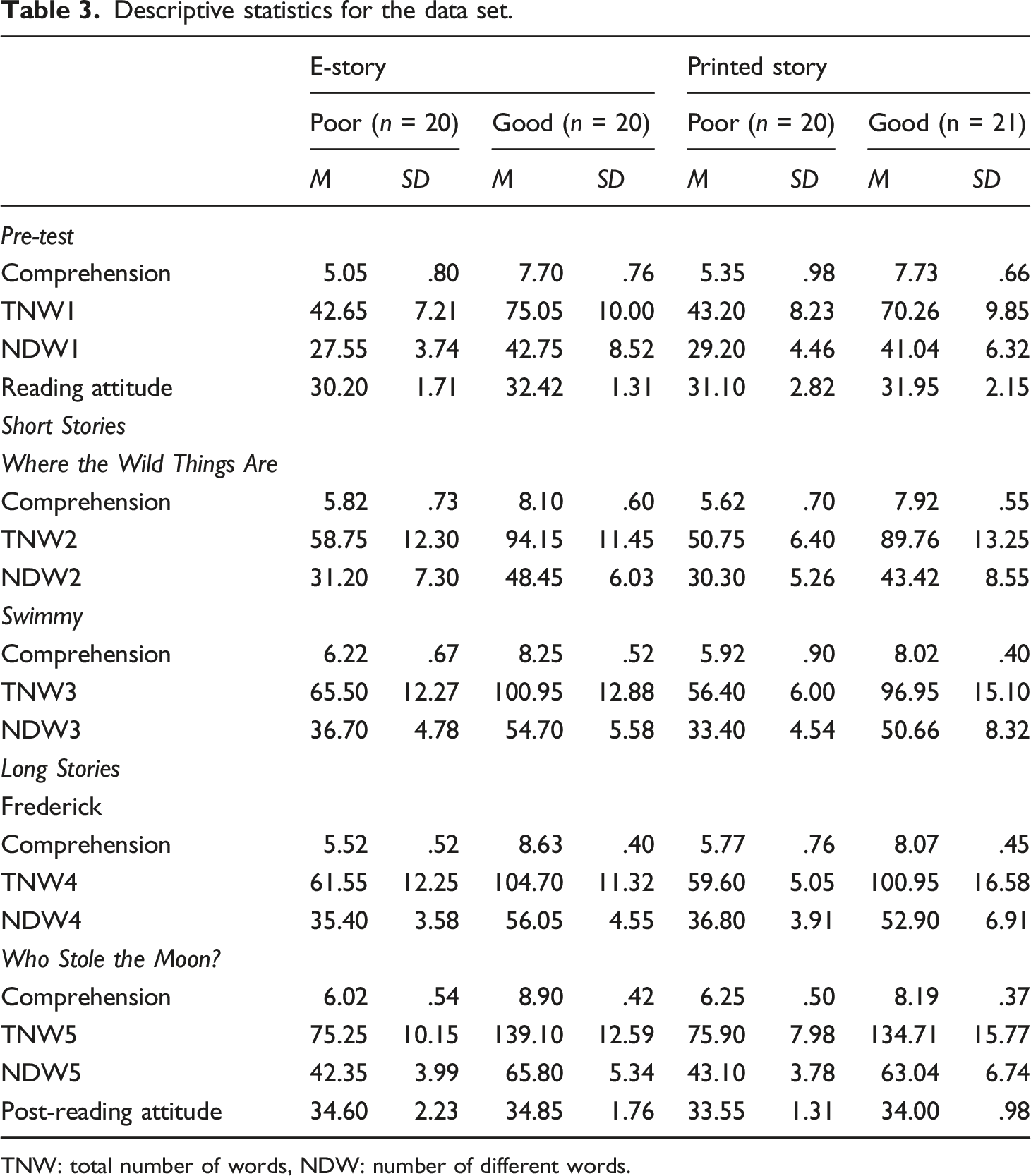
TNW: total number of words, NDW: number of different words.
Narrative comprehension
Two-way analysis of covariance (ANOVA) results for TCSS and TCLS.

TCSS a R 2 = .798 (adjusted R2 = .790), TCLS R2 = .902 (adjusted R2 = .898).
TCLS: total comprehension of long stories; TCSS: total comprehension of short stories.
A two-way between-groups ANOVA was conducted to explore the impact of book type and group levels on children’s total comprehension of long stories (TCLS). The interaction effect was statistically significant, F (1, 77) = 20.100, p < .05, and the effect size was large, ηp2 = .20. Figure A2 shows that the poor-comprehenders group in the printed storybook condition had higher TCLS, whereas the good comprehenders group achieved higher scores in the e-storybook condition (see Appendix B). Table 4 shows that there were statistically significant main effects for book type, F (1, 77) = 4.204, p < .05, ηp2 = .05, and group level F (1, 77) = 685.654, p < .05, ηp2 = .90.
Story retelling
Two-way ANOVA results for TNDWS and TNDWL.
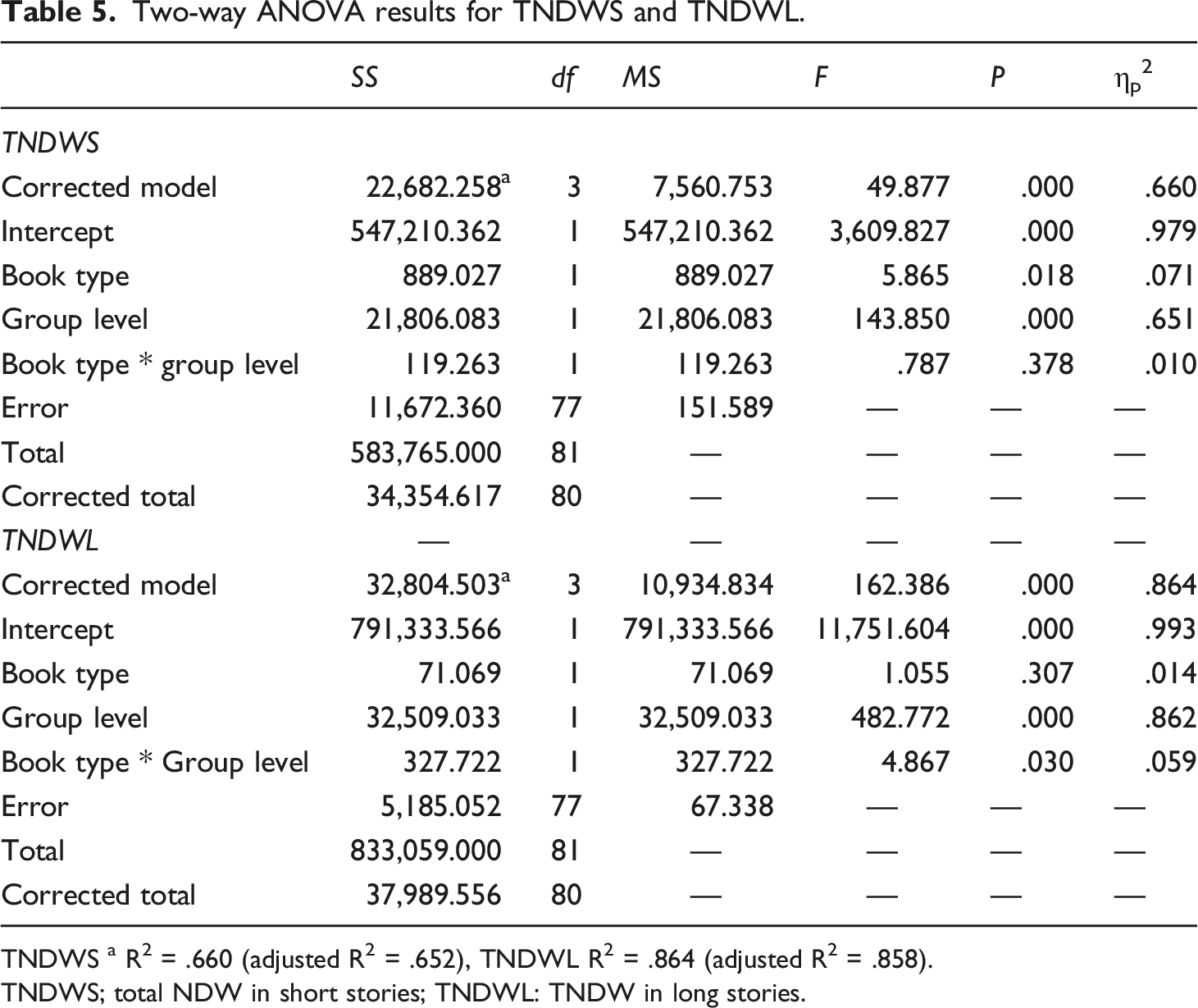
TNDWS a R2 = .660 (adjusted R2 = .652), TNDWL R2 = .864 (adjusted R2 = .858).
TNDWS; total NDW in short stories; TNDWL: TNDW in long stories.
A two-way between-groups ANOVA was conducted to explore the impact of book type and group levels on children’s TNDW in long stories (TNDWL). The interaction effect was statistically significant, F (1, 77) = 4.86, p < .05, and the effect size was moderate, ηp2 = .06. As Figure A4 shows, the poor comprehenders group had higher TNDWL from the printed storybook condition, and the good comprehenders group achieved higher scores from the e-storybook condition (see Appendix D). Table 5 shows that there was no statistically significant main effect for book type, F (1, 77) = 1.05, p >.05, ηp2 = .01, whereas the main effect for the group level was statistically significant, F (1, 77) = 482.77, p < .05, ηp2 = .86.
Reading attitude
Two-way ANCOVA results for reading attitude.
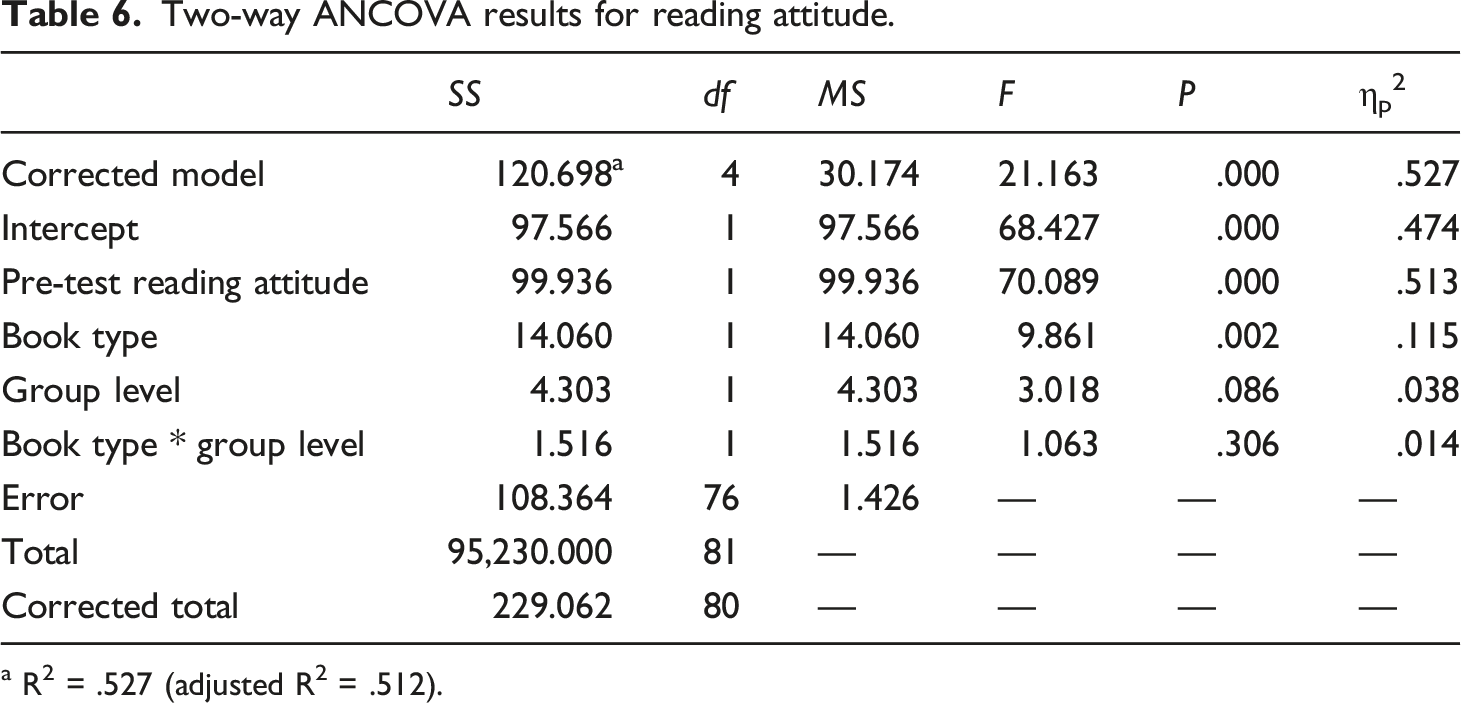
a R2 = .527 (adjusted R2 = .512).
Discussion
The main goal of this study was to expand knowledge of the effect of e-storybooks on young children’s narrative comprehension, taking into consideration the learners’ characteristics and text length. Previous studies revealed mixed findings concerning the value of e-stories; the present study aimed to determine whether individual differences between poor and good comprehenders contributed to these variations. The study fills a research gap by providing evidence about the effect of matched printed and e-stories of different text lengths on children’s (a) narrative comprehension, (b) retelling and (c) reading attitudes in poor and good story comprehender groups.
Narrative comprehension and retelling
The length of a story was tested at two levels. The findings indicate that multimedia-embedded stories are associated with superior comprehension of short e-stories for poor and good story comprehenders. The study findings support the first hypothesis. These findings are in line with the DCT and CTML views that multimedia components aid in dual information processing and story comprehension (Altun, 2018; De Jong and Bus, 2004; Doty et al., 2001; Takacs et al., 2015). Previous studies (Altun, 2018; Takacs and Bus, 2016) have demonstrated that e-stories provide more lavishly animated illustrations compared to the static pictures in printed storybooks. The abundant illustrations enhance close temporal contiguity between story plot and images (Craig et al., 2002; Johnson and Mayer, 2012; Moreno and Mayer, 1999). The contiguity effect between modalities can provide a meaningful learning environment for young children. Research conducted with school-aged children (Boerma et al., 2016; De Koning and van der Schoot, 2013) offers a rationale for expecting mental imagery skills to relate to narrative comprehension. One plausible explanation is that the animated depictive illustrations and sounds in e-stories may scaffold children’s mental imagery, helping to concretize the story plot and, thus, act as a mental aid that enhances their story comprehension.
One of the most interesting findings of the present study is that there is a significant interaction effect for the narrative comprehension of poor and good comprehender groups in relatively longer texts. These findings confirmed the second hypothesis. Poor comprehenders showed higher story comprehension performance for the longer printed books. The advantage of e-stories, in terms of story comprehension, prevailed for good story comprehenders of both text lengths, but the performance of poor story comprehenders changed based on text length. These findings are preliminary, but this is the first study that shows the differential effects of e-story text length on pre-reader children’s narrative comprehension in poor and good story comprehender groups. From the perspectives of cognitive load (Paas et al., 2003; Sweller, 1994) and the capacity model (Fisch, 2000), the difference between the story comprehension of poor comprehenders for short and long e-storybooks may result from children struggling to assimilate the multimedia features with the story text during story reading. Because this seems to refer to longer e-stories, the continued presence of multimedia features accompanying the narration may distract poor comprehenders and cause them to lose the plot of the story, which is in the line with Okolo and Hayes’s (1996) findings that second-grade poor readers were highly engaged in e-story reading, but showed lower story comprehension. Furthermore, Labbo and Kuhn (2000) found that presenting children with highly interactive stories that include incongruent multimedia features supports passive viewing. After passively viewing an e-story, children gave low cognitive level responses; for instance, they labelled objects or actions, rather than making predictions or commenting on characters, plots and themes.
Our findings suggest the possibility that when children’s attention and working memory have difficulty making connections between text and multimedia features, children experience the text passively. Therefore, it is plausible that the discrepant findings of previous studies may be attributed to the roles of attention, working memory and executive function in story comprehension (Andreassen and Braten, 2010; Hannon, 2012; Strasser and del Río, 2013). Children may use different information-processing strategies while monitoring e-stories and printed stories (Altun 2021; Evans and Saint-Aubin, 2005; Takacs and Bus, 2016). Therefore, further research is needed to clarify the role of working memory and executive function in narrative comprehension for poor and good comprehender groups during e-story exposure with different text lengths.
Regarding story productivity, children’s indicators of lexical diversity in narratives presented findings similar to those related to story comprehension. Although these results were expected, based on the results of previous studies (Altun, 2018; Morrow, 1985; Paris and Paris, 2003; Pearman, 2008), one striking finding is that the interaction effect between text length and group level provides new insights for vocabulary acquisition studies. Previous studies focused on how multimedia-embedded stories scaffold children’s vocabulary acquisition through animated illustrations, dictionaries or interactive questions (Ihmeideh, 2014; Korat, 2010; Korat et al., 2014; Korat and Shamir, 2012; Shamir et al., 2012; Smeets and Bus, 2012; Takacs et al., 2015). These studies focused on extra-textual multimedia features as the medium for children’s new word learning. However, the story itself is another medium that provides context for vocabulary acquisition. Thus, the story’s structure and length may be among the extraneous variables that create discrepancies in research findings. Further studies should explore these relationships in detail.
Reading attitude
In contrast to the third hypothesis, children in both the poor and good comprehender groups who were exposed to the e-stories exhibited significantly more positive attitudes towards reading than those exposed only to printed stories. Similarly, previous studies found that young children are avid listeners/readers of e-stories (Moody et al., 2010; Richter and Courage, 2017; Takacs and Bus, 2016). Another interesting finding is that children’s post-reading attitude scores after the initial adjustment did not differ by story comprehension level. Poor comprehender groups had positive reading attitudes, as did good comprehenders. These findings suggest that the edutainment function of e-stories may spark poor comprehenders’ interest in book reading. In the same vein, Okolo and Hayes (1996) found that second-grade poor readers are highly engaged in e-story reading; however, they demonstrated lower story comprehension. It is possible that the multimedia features of e-stories attract children’s attention and interest, regardless of their narrative comprehension level. At the same time, these findings may be related to the fact that pre-reader children have not been introduced to formal literacy instruction, so they do not face any struggles with reading-related activities and they tend to have positive reading attitudes (Altun et al., 2021). Furthermore, novelty may be related to these results; a majority of the children had no prior e-story reading experience, and the format was unfamiliar to them. Future research should examine the influence of e-stories on children’s reading attitude development in detail.
Limitations
The contributions of this research notwithstanding, the limitations of this study should be noted. First, because of the relatively small available sample of e-stories, the story length was based entirely on word count. Further studies could use different techniques (e.g. T-units) to determine text length. Second, book-reading sessions were performed as a group activity. Previous studies (Altun, 2018; Shamir et al., 2008) have shown that small group e-story reading activities contribute to children’s language and literacy gains, but future studies could compare the effectiveness of e-stories in small groups, or whole-group versus one-to-one sessions. Third, the novelty effects of the e-stories may have influenced the experimental group’s performance. Fourth, all sub-study groups listened to or viewed the stories only once. The repetition of stories (Takacs et al., 2015) may alter the practice effect for story comprehension and reading attitudes in terms of book type and group level. Finally, the present study did not comprise teaching strategies or additional support (asking questions, talking about the pictures, etc.) during the storybook sessions and thus at risk for low ecological validity. Future research should consider the role of teacher–child interactions and scaffolding strategies for use with e-stories and printed stories for poor and good comprehenders.
Conclusion
The varying findings of studies examining the impact of e-stories on young children’s story comprehension is a striking issue that concerns researchers, educators, e-storybook designers and parents. The study revisits existing issues surrounding e-storybook efficacy on story comprehension and adds the new consideration of whether the text length of e-stories has a differential impact on story comprehension for poor and good comprehenders. Learners’ characteristics interact with story comprehension in relatively long e-stories. The discrepant findings regarding the contribution of e-stories to story comprehension can be attributed not only to the variation of multimedia features between studies but also to learner and text features. Several findings of this study have important pragmatic implications for developing and selecting well-designed e-stories to optimize children’s learning by matching learner and e-story characteristics.
Footnotes
Declaration of Conflicting Interests
The author(s) declared no potential conflicts of interest with respect to the research, authorship, and/or publication of this article.
Funding
The author(s) received no financial support for the research, authorship, and/or publication of this article.
