



Abstract
Place is a key driver in the formation and maintenance of cultural lifestyles. Yet, place remains largely ignored in scholarly studies of cultural omnivorousness. After establishing whether there are different modes of omnivorousness as well as distinguishing between other cultural lifestyles, this article then takes a first step in readdressing this anomaly by examining whether clustering exists at the regional level in England. Using a methodologically innovative approach to simultaneously capture latent class typologies and between-group heterogeneity at the area scale, our findings illustrate how place is vital to consumption habits, particularly to voracious omnivores. We argue that the underlying mechanism behind these cultural patterns at the area level is contextual in nature, and in the case of voracious omnivores, primarily due to the supply of cultural items and the importance of likeminded individuals in active networks.
Introduction
Questions about how cultural omnivorousness is defined, measured and operationalised still remain the focus of much debate in cultural sociology (Berghman and Van Eijck, 2009; Warde et al., 2008; Warde and Gayo-Cal, 2009). While scholars have explored different dimensions of omnivorousness through volume and composition (Warde et al., 2008), others have examined the concept of omnivorousness with a theoretical emphasis on how people consume rather than just focussing on what they consume (Stichele and Laermans, 2006; Sullivan and Katz-Gerro, 2007). Increasingly, researchers have also found that there are different types of omnivores in particular cultural fields (Sintas and Alvarez, 2002; Van Eijck and Lievens, 2008). There is also growing recognition that among high-status groups, there are both ‘highbrow’ (liking for only legitimate genres) and ‘omnivorous’ patterns (Peterson, 2005; Van Eijck, 2001). Yet, relatively few studies have examined omnivorousness by measuring not just what individuals consume but also the differences in the way they consume cultural activities (Sullivan and Katz-Gerro, 2007). The omnivorousness literature now spans much of Europe, Australia and North America, and even some countries in South America (Alderson et al., 2007; Torche, 2007; Van Eijck, 2000, 2001; Van Rees et al., 1999). Despite the paucity of data, there have also been some attempts to specifically measure omnivorousness across countries (Katz-Gerro, 2002; Lizardo and Skiles, 2009) but very few studies have examined the importance of place on cultural consumption within a country (Widdop and Cutts, 2012).
In this article, we make a number of contributions to the cultural omnivorousness literature. In the first part, using a latent class (LC) modelling approach, we examine whether there are different modes of omnivorousness in England based on the frequency of participation. Building on previous research, we aim to differentiate between voracious omnivores and a more general or infrequent omnivore group as well as distinguish between other cultural consumers (Stichele and Laermans, 2006; Sullivan and Katz-Gerro, 2007). Here, we use a wide variety of activities that cross-cut the perceived symbolic boundaries of culture in England (Peterson, 2005). Our aim is to determine the socio-economic make-up of the different omnivore groups, specifically the voracious omnivores, in order to examine whether members of this lifestyle group have a distinctive socio-economic profile.
The second part of the article builds on these findings and makes an important substantive and methodological contribution to the omnivorousness debate. Here, we examine whether cultural consumption patterns are clustered at the area level within England based on the frequency and participation in cultural activities of individuals. Part of the theoretical justification for this novel approach is to re-establish the importance of place as a key driver in the formation and maintenance of cultural lifestyles. Place remains a constituent element of social and cultural life, and historical change (Friedland and Boden, 1994; Gieryn, 2000), yet place, the macro-contextual mechanisms and the different spatial scales in which participation occurs, remains relatively ignored in studies of cultural omnivorousness. Here, we seek to readdress this anomaly by establishing whether clustering exists at the regional level in England. However, our focus is on the voracious omnivore group and the expectation that individual members of this lifestyle group, given their socio-economic profile, will choose to live in close proximity to individuals with similar values and cultural participation habits to their own. We hypothesise that this lifestyle group would not only cluster in space but share daily interaction with similar people in local networks. We stress that the context in which such interactions occur is likely to be an important determinant on which preferences are formed and the frequency in which they are consumed. Given this, we aim to determine whether there are area-level clusters of cultural consumption based on the LC cultural typologies at the individual level, and hypothesise that voracious omnivores will cluster in distinct places when compared to other cultural consumers, including other omnivores. This is methodologically innovative because conventional LC models, which are widely used in the omnivorousness literature to capture cultural lifestyle types, make the assumption that observations are independent. If clustering exists, then this assumption is violated. Here, we employ a non-parametric multilevel LC model to simultaneously capture LC typologies at the individual level and types of areas. While this has been applied in other fields, at present, it has not been used in the cultural omnivorousness literature to measure between-group heterogeneity.
The omnivore thesis
Up until the early 1990s, the path-breaking work of Pierre Bourdieu’s ‘Distinction’ represented the most comprehensive theoretical understanding and explanation of the apparent interrelationship between cultural and social hierarchies (Bourdieu, 1984). The existence of a homology in cultural stratification, that people belonging to the dominant classes affirmed their higher social status through the consumption of highbrow culture while those with lower social status preferred and consumed lowbrow culture, became the orthodoxy for 20 years or more. However, by the last decade of the 20th century, scholars began to question whether Bourdieu’s theory still reflected contemporary social reality (Stichele and Laermans, 2006; Van Eijck, 1999). In a number of important articles, Peterson and his colleagues (Peterson, 1992; Peterson and Kern, 1996) reformulated the relationship between status hierarchy and cultural taste. Put simply, high-status groups had a broader cultural repertoire, appreciating more middlebrow and lowbrow activities than the orthodoxy suggested. These were labelled ‘omnivores’. Whereas the lower status groups were restricted in their consumption patterns to only the mainstream or popular culture and were, therefore, coined ‘univores’ (Peterson, 2005; Peterson and Kern, 1996). Following this ground-breaking work, numerous scholars have sought to classify cultural preferences in a broadly similar way, with many supportive, although not exclusively so (Bryson, 1996; Sintas and Alvarez, 2002; Van Eijck, 1999, 2001; Van Rees et al., 1999).
Most scholars, though, have observed the existence of an omnivore group and claim that greater socio-cultural heterogeneity reflects the rise in social mobility over recent decades with the growth of the mass media and online technology, the development of the leisure industry and easier access to higher education as important drivers (Peterson, 2005; Stichele and Laermans, 2006). Omnivores also benefit from a broader and more diverse social network where they can display knowledge gained from interaction with individuals in different social circles which reinforces social approval within these circles (Van Eijck, 1999). Nonetheless, numerous empirical findings suggest that the omnivore group is relatively small in number and that its socio-economic make-up does not purely reflect the relationship between economic class and patterns of consumption (Sullivan and Katz-Gerro, 2007). Generally, studies have found that higher education, higher income and higher occupational status are strongly associated with omnivorous cultural preferences (Sintas and Alvarez, 2002; Van Eijck, 2001). However, effects for gender and age are contested. Whether gender is strongly associated with omnivorism depends upon the domain of activity selected for the analysis, as shown by the differentiated gender effects found in a number of studies (Sintas and Alvarez, 2002; Van Eijck, 2001; Warde and Gayo-Cal, 2009). Similarly, some scholars suggest that younger age cohorts are more inclined to be omnivores (Stichele and Laermans, 2006; Van Eijck, 2000), while others disagree (Warde et al., 2007; Warde and Gayo-Cal, 2009).
Recent scholarly debate has focussed on the meaning and significance of cultural omnivorousness and how the concept is currently operationalised (Peterson, 2005; Warde et al., 2007). For instance, a number of studies have emphasised that appreciating a wide range of cultural genres or activities is not in itself limited to higher status groups (Van Eijck, 1999). Omnivores may still discriminate against some particular forms of popular culture (Bryson, 1996). Others have highlighted the existence of different types of omnivores in a number of cultural fields (Sintas and Alvarez, 2002; Van Eijck and Lievens, 2008), while there is increasing evidence of both ‘highbrow’ and ‘omnivorous’ patterns among high-status groups (Peterson, 2005; Van Eijck, 2001). This has led to refinements in the established omnivore–univore dichotomy with new categorisations to reflect the small minority in the higher social strata which reject popular culture as opposed to those with omnivorous consumption habits, and equivalent sub-divisions to reflect similar consumption patterns among ‘lowbrow’ groups (Peterson and Rossman, 2007). Alongside such refinements, some scholars have explored different dimensions of omnivorousness through volume and composition (Warde et al., 2008). Others have examined how omnivorousness is differentiated between taste and participation (Warde and Gayo-Cal, 2009; Yaish and Katz-Gerro, 2010), establishing what people like and what people do are different phenomena, with different causes and effects.
Cultural omnivorism is not without critics. As an explanation of contemporary cultural engagement, it remains unclear whether such variations are due to a global trend regardless of nationality, whether omnivorousness is indeed a peculiar feature of the American society or whether it is confined to specific countries (Prior, 2013; Rimmer, 2012). When it first appeared, the work of Peterson and his colleagues was interpreted as a challenge to the widely accepted approach of Bourdieu. However, questions persist about omnivorism as the sole explanation of contemporary cultural engagement (Atkinson, 2011). Furthermore, Friedman (2012) notes that rather than presuming the cultural eclecticism, researchers should play closer attention to both how and why omnivorous taste is established. Other scholars remain sceptical about the true nature of the omnivore manifestation, specifically whether it represents a new form of cultural capital or whether omnivorousness is an orientation which itself acts as a marker of distinction (Bennett et al., 2009). Some are critical of the concept stating that it may be a product of empiricist quantitative methods (Lahire, 2004), while evidence persists that particular forms of less legitimate culture simply don’t cross boundaries (Bryson, 1996). For Savage (2006), this may be indicative of the reworking of highbrow culture. In summary, although its true meaning remains unclear, nowadays, it is broadly accepted that homology and omnivorism are indeed compatible (Lizardo and Skiles, 2012; Tampubolon, 2008).
Reconsidering omnivorousness
The general aim of this article is to revisit and further extend the boundaries of the omnivorousness literature. Initially, we seek to achieve this by mapping cultural consumption in England using a measure based on both the frequency and range of cultural participation. Here, we explore a range of cultural activities that cross the perceived cultural hierarchical boundaries to determine an accurate account of cultural lifestyles (Alderson et al., 2007; Peterson, 2005). By measuring both the range and frequency of participation, theoretically, we stress the importance of examining not just what individuals consume but also the differences in the way they consume cultural activities (Bourdieu, 1984; Sullivan and Katz-Gerro, 2007).
The theoretical basis for this analysis stems from scholarly work that emphasises the link between the insatiable consumer, whose wants are seemingly endless, and the dynamic of modern day consumption (Campbell, 1987; Sullivan and Katz-Gerro, 2007). The depiction of a ‘voracious’ cultural consumer – someone who switches from one activity to another for brief periods thus avoiding immersion in one specific activity – reflects wider social and cultural developments for individuals in late modernity and the need to take time into account when examining cultural participation (Cotte et al., 2004; Rosa, 2003). As the pace of life of individuals accelerates, particularly for those who are well educated and high income earners, time becomes scarcer and speed becomes more important, and therefore, an intensification of activities occurs (Gershuny, 2000; Sullivan and Gershuny, 2004). Moreover, as intensity increases, more activities are done simultaneously, that inevitably spirals in to individuals increasingly compressing their time, resulting in ever shorter spells spent on each activity (Southerton, 2003; Sullivan and Katz-Gerro, 2007). Therefore, the tension between limited free time and a broad taste or lifestyle has resulted in such consumers being coined ‘cultural hoppers’: those who ‘take a little bit here, a little bit there, but never a lot of the same’ (Stichele and Laermans, 2006). Yet, a growing literature also suggests that it is those individuals from high-status groups who not only work more but consume more (Schor, 1992). Another study also showed that as educational levels increased, participation in cultural activities increased, as did the frequency of participation (Stichele and Laermans, 2006). Through their innovative use of cross-sectional time data from different sources, one group of scholars found voraciousness in leisure participation shares similar relationships to that of omnivorousness – associated with high status, education and cultural capital – and that those individuals with ‘insatiable’ appetites for a broad range of cultural activities could not be just attributed to having more time or money than others (Sullivan and Katz-Gerro, 2007). Voraciousness is, therefore, a depiction of ‘status distinction, a cultural boundary, and a sign of social exclusion’ (Sullivan and Katz-Gerro, 2007: 133). The classification of this dimension of cultural behaviour has gone some way in reconciling the apparent contradiction between increases in leisure time and the increase in time devoted to work.
The scholarly works discussed here, therefore, provide the theoretical justification to take account of both how and what is consumed. 1 Given such consumption habits, it is apparent that we may be able to distinguish a voracious group from not only other cultural lifestyle groups but also other omnivore types (Stichele and Laermans, 2006). After identifying this voracious omnivore group, the aim is to examine its socio-economic make-up and to examine whether it is distinct from other cultural lifestyle groups, and whether our findings concur with those stated above. Yet, if voraciousness is a depiction of ‘status distinction’, one might expect such a group to cluster by geographical location or place. Given the tension between limited free time and an insatiable appetite for a broad range of cultural activities, place is likely to be an important driving force of the voracious lifestyle cluster. This is not only a supply side issue, in terms of access to a range of cultural items, but reflects the fact that many participation acts are socially learned and stimulated (Agnew, 1987; Huckfeldt, 1979). Place mediates social life: it is a vital medium through which social life happens (Gieryn, 2000). While it is clear that high-status individuals are more likely to both be voracious and participate in a wider range of cultural activities than those from the lower echelons of society, we hypothesise that living in a local context surrounded by higher status individuals is also likely to encourage voracious omnivorousness.
To date, much of the scholarly analyses of omnivorousness are based on a compositional approach, whereby cultural consumption patterns are assumed to be largely influenced by an individual’s position within society or their personal evaluation of the contemporary cultural field. From this compositional stance, any variation in cultural participation by place is likely to be a reflection of the variation in the numbers of disadvantaged or affluent individuals in that area. Individuals with similar lifestyles or socio-economic characteristics are, therefore, likely to adopt comparable consumption habits wherever they live (Macintyre, 2007). However, such explanations of cultural behaviour ignore the importance of contextual effects, how they mediate social life, not only through social interaction and other macro-level forces but also how participation in the cultural field is enhanced through a sense of belonging or place (Agnew, 1987). If beliefs, attitudes and expectations are socially constructed, then any form of participation will be influenced by place, not only through the interaction with others they reside with or share the same social world (Buck, 2001) but also through geographical location, as this social interaction must take place somewhere (Agnew, 1987).
In this article, we stress that the social context is a crucial connecting tie between individual stratification and partaking in cultural activities. The decision to participate might be heightened by interpersonal interaction with family, friends, neighbours, work colleagues or others in local social networks (Huckfeldt, 1979), or even from information flows from the local media as well as different cultural bodies that operate in the vicinity. For those individuals who live close to a cultural venue, participation may be enhanced given that they will be more exposed to its physical presence and what it offers (Curtis and Rees-Jones, 1998).
We regard context, therefore, as complementary to compositional effects. Theoretically, high-status individuals may be more likely to participate, frequently, in a broad range of cultural activities. But participation may reflect the local social environment, with individuals stimulated to consume cultural activities both where they are around people who engage in these cultural genres and through the adoption of prevalent group norms which enhances participation. Hence, we may expect consumption of cultural activities to vary in some areas than others. Given that these high-status individuals will choose to locate in close proximity to individuals with similar values, lifestyles and cultural participation habits to their own, it is probable that such groups would not only cluster in space but share daily interaction with likeminded people in active networks. The context in which such interactions occur is likely to be a significant influence on how individuals’ preferences are formed, the frequency of participation and the consumption of cultural activities.
These expectations can be linked to recent research on the importance of culture in cities, the cultural economy and the creative class where scholars have rallied against those who seek to devalue place by stressing that place and community are more critical factors than ever before (Florida, 2005). For instance, Florida (2005) stresses that creativity lies at the heart of cities and accounts for why consumption may vary by place. He argues that ‘regional economic growth is driven by the location choices of creative people – the holders of creative capital – who prefer places that are diverse, tolerant, and open to new ideas’ (Florida, 2002: 223). If those with the highest levels of cultural capital are socially and geographically mobile, it is inevitable that they would choose to reside in the very places Florida identifies, constructing alternative cultural lifestyles in different places. Because creative people want to live there, supply side creative and cultural institutions and companies then follow the people – or, in many cases, are started by them. Creative centres provide the integrated habitat where all forms of creativity – artistic and cultural, technological and economic – can take root and flourish which in turn encourages similar people to be located in these places (Miles, 2010). Florida’s human capital theory of regional development suggests that creative people require ‘quasi-anonymity’ preferring the flexibility of weak community ties as opposed to the constraints imposed by strong community ties (Miles, 2010). Recent research also suggests that those with cultural omnivorous tendencies have weaker less dense networks and comprise friends and acquaintances as opposed to the less culturally active who had stronger family ties (Widdop et al., 2014).
But is it possible to differentiate between voracious omnivores and other cultural lifestyle groups, including other omnivores, using measures of frequency and participation? Do voracious omnivores exhibit the same socio-economic make-up as portrayed in previous scholarly work? And if voraciousness is a depiction of ‘status distinction’, do voracious omnivores, as our theoretical discussion of the role of place suggests, cluster in areas which are distinct from other area clusters of cultural lifestyle groups? To address these questions, we examine cultural participation in England using innovative statistical techniques.
Data and methods
Our analysis of cultural participation in England uses data drawn from the 2005–2006 Taking Part Survey (TPS). While this wave of the TPS is not the most up-to-date version, we believe that it provides the most complete data at both the individual and area level when compared to more recent surveys; therefore, we believe it is an appropriate survey to test the article’s hypothesis. The TPS surveyed 28,117 adults via face-to-face interviews, about their participation in a range of cultural activities. Households were drawn from the postcode address file and interviews were conducted with a randomly selected member of each household aged 16 or over. The survey asked whether respondents had taken part in a number of cultural activities in the last 12 months (1 = Yes, 0 = No). We use these questions to measure what cultural activity people take part in rather than their self-reported tastes for particular cultural genres. The decision to examine actual cultural practices than self-reported tastes is largely a reflection of available data in the TPS which does not contain information on individuals’ reported tastes. However, a number of cultural scholars have stressed the need to examine actual claims about an individual’s cultural consumption – as a form of social action – rather than tastes, and as such measure actual participation in cultural activities (Chan, 2010; Sintas and Alvarez, 2002; Stichele and Laermans, 2006; Sullivan and Katz-Gerro, 2007; Van Rees et al., 1999).
Operationalising omnivorism
Cultural participation frequency in England (TPS 2005–2006; percentages).
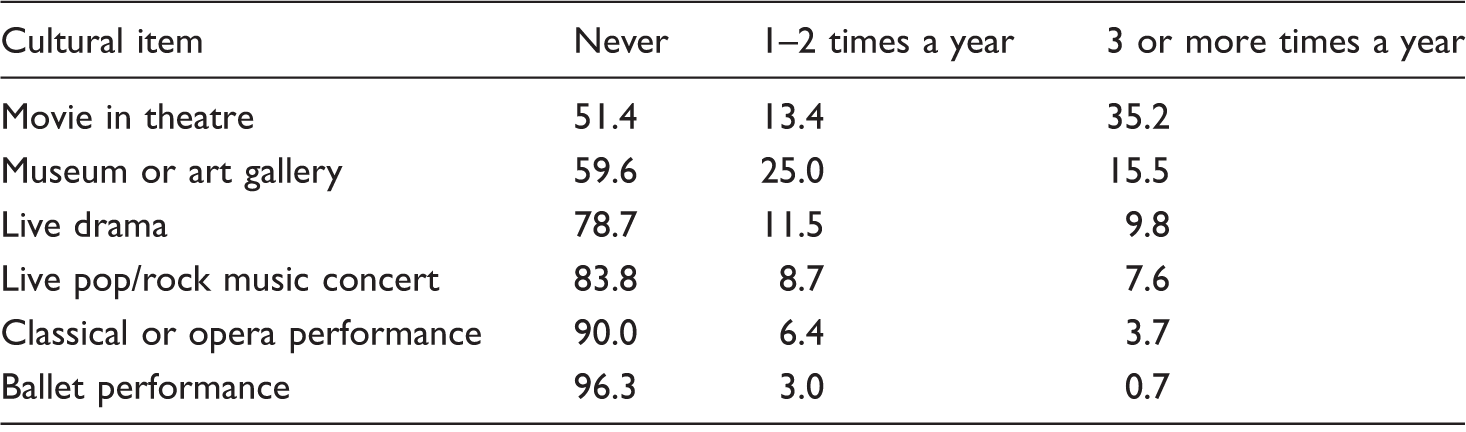
TPS: Taking Part Survey.
In this article, we operationalise omnivorousness through actual participation, rather than taste or knowledge (Bennett et al., 2009). Put simply, we are measuring a single specific aspect of consumption and our results only lend themselves to participation in leisure outside of the home. This has a number of limitations. First, this form of cultural engagement may be supply side specific. The more cultural items on offer, the greater the opportunity for engagement; this is especially true when examining place-based participation. Second, by not accounting for home-based consumption data, membership of typology groups and place effects might be conflated. Indeed, perhaps individuals with similar characteristics may share the same participation habits but choose to do it at home rather than in the physical form, and this may be place specific. Unfortunately, there was no comparable home-based consumption data available in the survey to determine whether this was the case here.
One of the major benefits of the 2005–2006 TPS is that it contains a significant amount of socio-demographic information on a large number of respondents. All respondents were coded to the National Statistics Socio-Economic Classification (NSSEC) which is used as the standard measure of occupational class. Educational attainment is coded to the six official National Vocational Qualifications levels (England), ranging from degree level to no qualifications. We also use a wide range of other important individual socio-economic data including sex (female dummy variable), age (categorical variable from young 16–25 to old age 65 plus) and ethnicity (categorical variable including White and four non-White categories: Black, Asian, Mixed, Chinese and other).
The TPS has a hierarchical sample design; individuals are nested in different geographical locations. Given that we seek to simultaneously capture LC typologies at the individual level and types of areas, we need to determine an appropriate spatial scale in which to base our empirical investigation. Using a non-parametric multilevel LC approach does limit us computationally, to some extent, given the complexity of the analysis. As a first cut, given the methodological innovation employed to examine whether voracious omnivores cluster in areas which are distinct from other cultural lifestyle groups, it is important to use a spatial context which is both well established in the geographical literature and commonly used. For a combination of these reasons, we use regions as our collective unit of analysis. Regions are groupings of individual units which are internally relatively homogeneous, although the standard regions used by the British government and official bodies are a very coarse division of England. Hence, we use a larger number of internally more homogenous regions by separating out the major urban conurbations from their surrounding ‘rural’ areas. The 16 regions used in the analysis are shown in Figure 1. Using the regional scale is a strict test, given that some, although not all, of the contextual processes we identified – interpersonal interaction with family, friends, neighbours, work colleagues or others in local social networks – that may precipitate the clustering of voracious omnivorous behaviour would be more likely to occur at lower spatial scales than the region. If we can identify a distinct voracious omnivore cluster at this area level from other cluster lifestyle groups, then it is likely that place will be a significant influence on such behaviour at varying geographical spatial scales in England.
Map of England (regions included).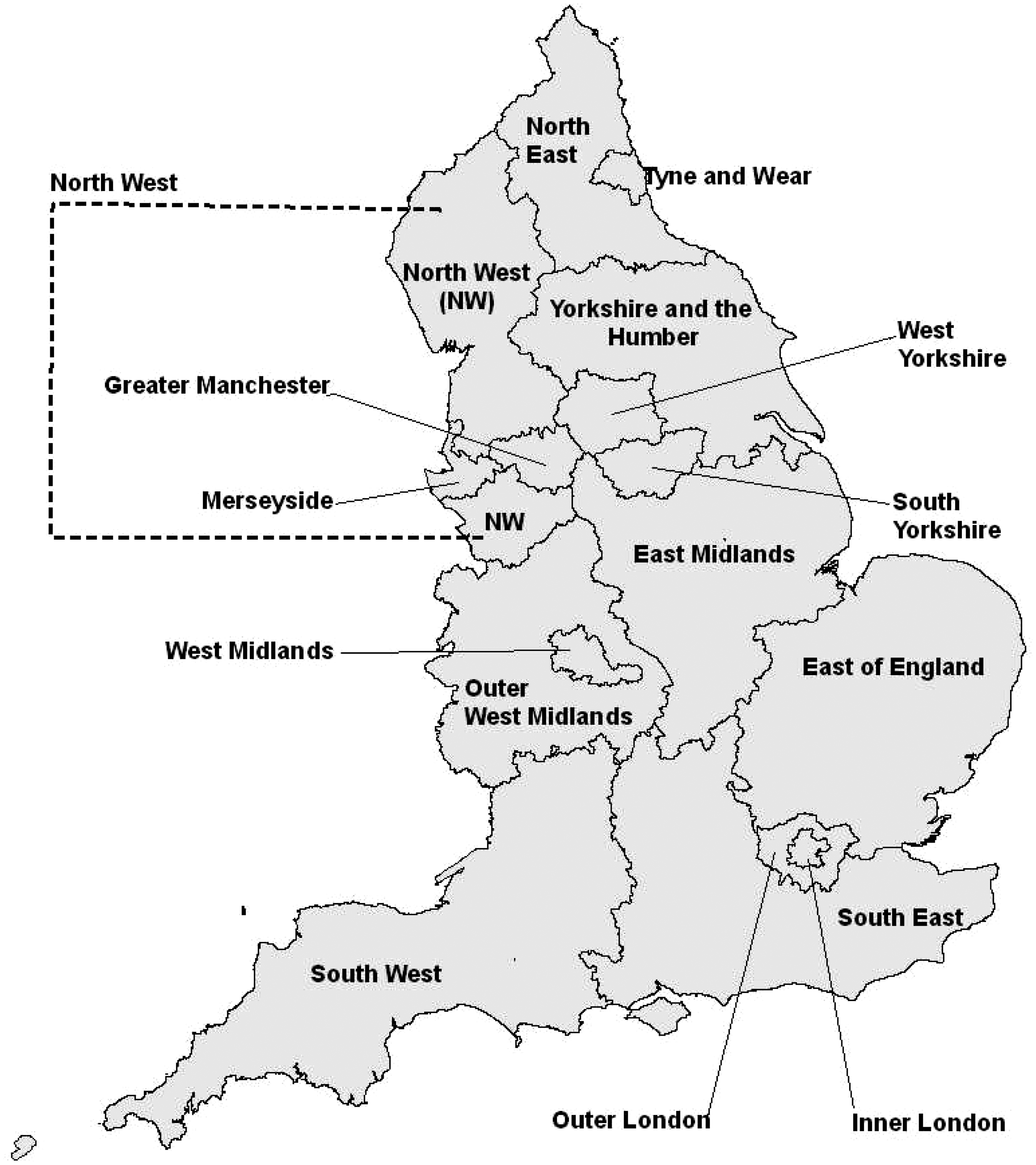
Multi-level LC model
As most statistical models, LC analysis assumes that the dataset of interest contains a sample consisting of independent observations. This is an assumption that is often violated. So while standard LC models assume that the model parameters are the same for all individuals (level 1 units), the multilevel LC model allows some of the model parameters to differ across groups or clusters (level 2 or higher level units) where respondents share common experiences and interactions. Not only is it vital to use multilevel techniques to overcome any dependencies between observations, but it is often possible to examine the extent to which the phenomenon of interest (in our case whether we can identify a voracious omnivore cluster at the area level) can be found or even explained by macro-level forces (Vermunt, 2008). Our approach uses a discrete unspecified mixing distribution (a multinomial distribution assumption) which ensures that both the LCs of level 1 units and the LCs of the level 2 units share the same parameter values (Vermunt, 2003, 2008). This non-parametric Multi-level LC modelling approach is preferred here because it is more natural to classify groups into a smaller number of different types (e.g. countries or regions) than to make the assumption that they exist on a continuous scale (Vermunt, 2003). In this article, we can examine the extent to which regions are homogenous in their cultural latent structure. In the LC component of the model, we develop typologies of lifestyles of respondents based on their consumption habits; here, the 16 regions will belong to the same regional segments if they are highly similar in the within-regional structure of cultural segmentation (Vermunt, 2003, 2008). 2
Fitting the model
Results of the estimated cluster models, covariates included (TPS 2005–2006).
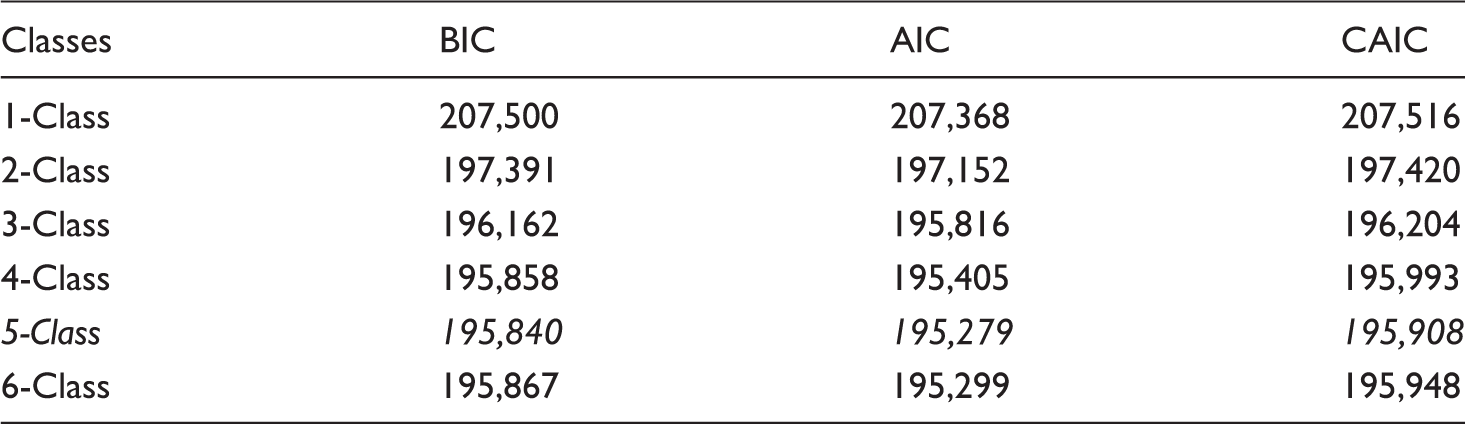
TPS: Taking Part Survey; BIC: Bayesian information criterion; AIC: Akaike Information Criterion; CAIC: Consistent Akaike Information Criterion.
Profile of LCs (individual level)
Conditional probabilities of participating ‘3 or more times a year’, ‘1–2 times a year or ‘Never’ in a certain cultural activity, given that the individual belongs to one of the five clusters (TPS 2005–2006).
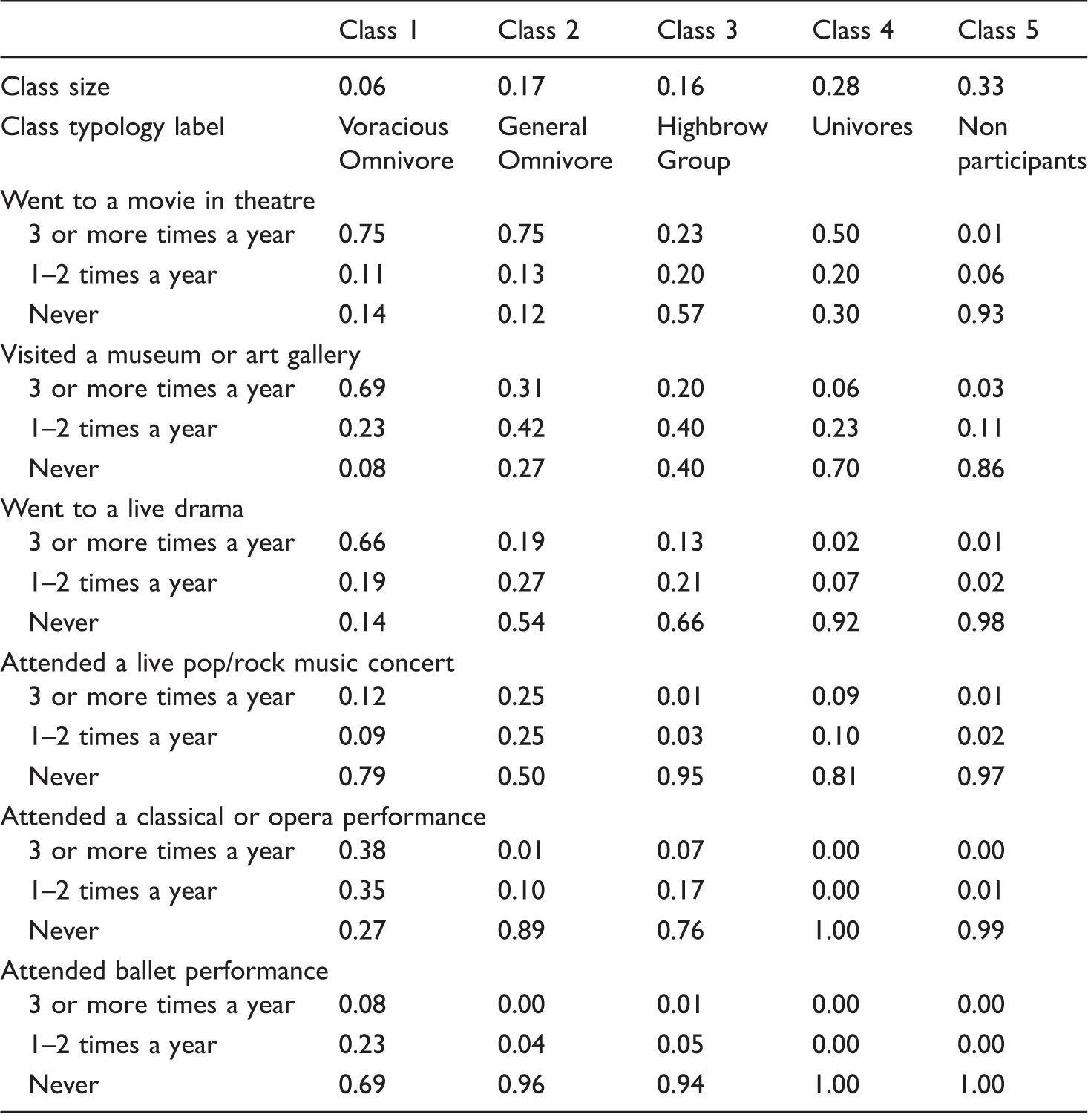
TPS: Taking Part Survey.
In contrast to the ‘voracious omnivores’, the ‘general omnivore’ (cluster 2) group is populated by nearly three times as many respondents (17% in total). While this cluster exhibits omnivorous traits, they do so without the voracious behaviour of their omnivorous counterparts. However, they have a high probability of consuming each of the cultural indicators here (in relation to the mean attendance), but are more likely to be frequent consumers of the non-highbrow cultural activities. And their frequent consumption of cinema and attending live rock and pop concerts suggests that this group may be much younger in age than their more voracious counterparts.
The remaining three LC clusters at the individual level resemble those found in other scholarly work. Cluster 3 (‘Highbrow’) is populated by 16% of the survey population and are a high cultured group in the Bourdieusian tradition, engaging in legitimate culture but distancing themselves (aesthetically) from more popularised activities (Bourdieu, 1984; Peterson, 2005). They are not frequent consumers, even of highbrow activities, particularly when compared against the ‘voracious omnivores’. A similar group has been identified in a wide range of cultural activities and has been labelled everything from ‘highbrow snobs’ (Peterson and Kern, 1996) to ‘traditional participants’ (Stichele and Laermans, 2006). Cluster 4 (‘Univore’) is the popular active class and is made up of 28% of respondents. They exhibit ‘univorous’ traits given their frequent consumption of one cultural item above all others – going to the cinema – and their avoidance of more legitimate highbrow activities (Peterson, 2005; Peterson and Kern, 1996). The final cluster is populated by one-third of respondents and can be labelled as ‘non-participants’. This group is highly distinguishable from their counterparts through their inactivity, both in the range and frequency of consumption (Sintas and Alvarez, 2002; Van Rees et al., 1999).
Socio-economic profile of latent clusters (individual level)
Conditional probabilities of belonging to the different classes given response category of the variables within the model.
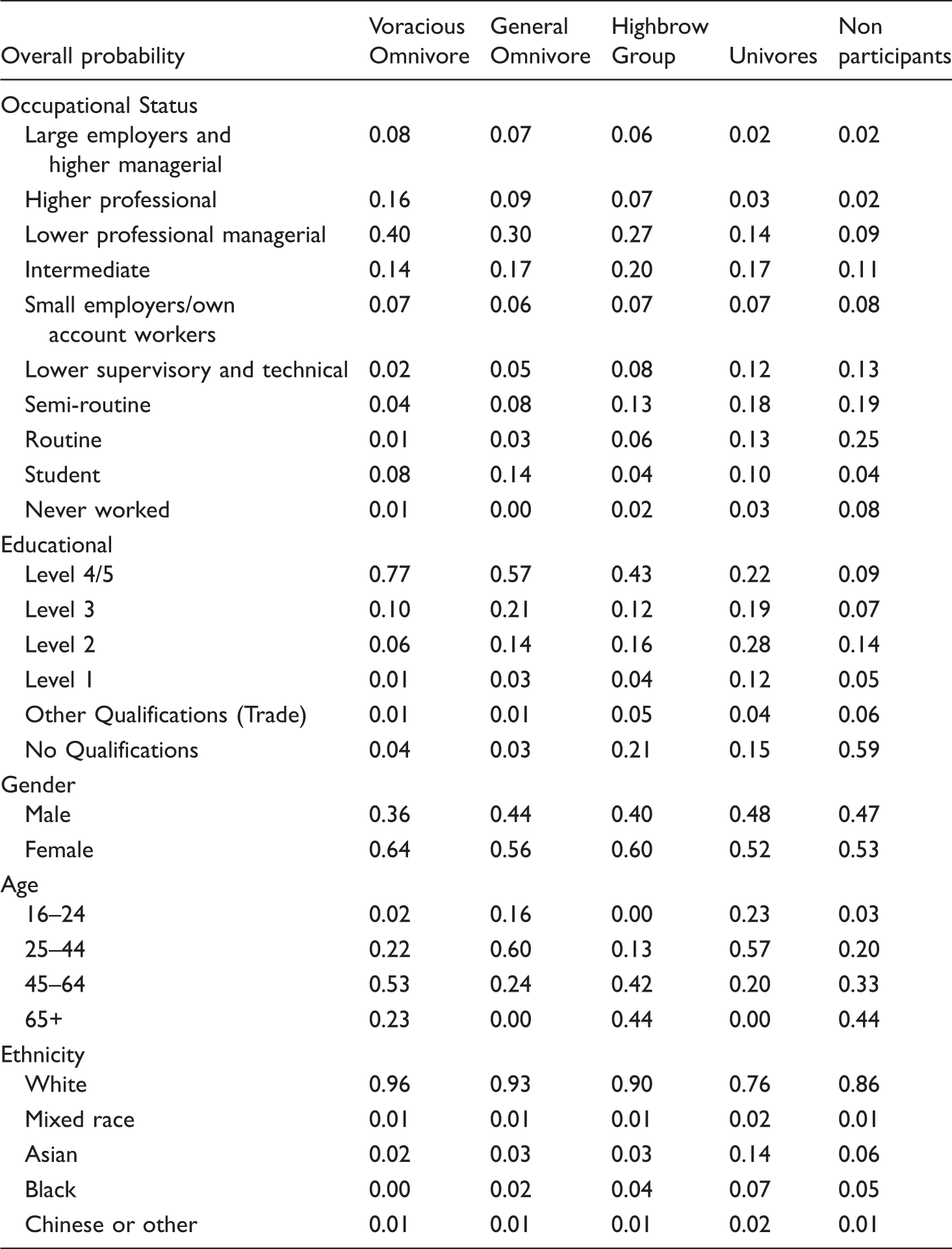
When compared against the other latent groups, ‘voracious omnivores’ are high-status individuals: largely from the higher occupational classes and well educated with more than three quarters having a degree or a postgraduate qualification. There is some evidence that both the ‘general omnivore’ and ‘highbrow’ groups share similar traits to the ‘voracious omnivores’, albeit not on the same scale, hence some members of the former were also more likely to be students and have level 3 educational qualifications. Likewise, a significant proportion of those in the ‘highbrow’ group do not possess any educational qualifications. The ‘voracious’ omnivores’ are mainly White and female when compared against the other latent clusters. Those from non-White ethnic backgrounds have a higher probability of being ‘univores’ than members of any other latent cluster. Another important distinction is age. Unlike the less voracious omnivore group, which tends to contain individuals from a younger age cohort, ‘voracious omnivores’ are predominantly from the middle older age group from 45 to 64. They are extremely unlikely to be from the youngest age cohort (18–24), which mainly exhibits ‘univorous’ traits. Those aged 65 plus are either significantly more likely to be ‘highbrow’ consumers or non-active participants.
Scholars have consistently found that high-status individuals, particularly those who are well educated, have omnivorous cultural preferences (Sintas and Alvarez, 2002; Van Eijck, 2001). Those who have taken account of voraciousness have found similar relationships for age, class and education (Sullivan and Katz-Gerro, 2007). Previous evidence suggests that frequent participants with omnivorous traits are commonly found among the younger age cohort, reflecting the growth of mass entertainment, heightened forms of youth (sub)culture and general societal context which has affected cultural practice over the past 30 years or so (Stichele and Laermans, 2006). We found evidence to the contrary. While the less voracious omnivore group largely contained individuals from the younger cohorts, more than half of the ‘voracious omnivores’ in England were from the middle older 45–64 age group. Nonetheless, ‘voracious omnivores’ exhibit a distinct socio-economic make-up when compared to the other cultural latent groups and as such one might expect these high-status individuals to be located in close proximity to others with similar cultural participation habits to their own. We would, therefore, expect them to cluster in areas which are distinct from other area clusters of cultural lifestyle groups.
Does place matter?
Using the non-parametric Multi-level LC modelling approach, it is not only possible to identify LC typologies at the individual level but to classify the 16 regions of England into a number of area types where individual cultural classes differ between areas (Figure 1). The model findings shown here take account of the socio-economic make-up of the LCs at the individual level. The results are presented in Table 5. Based on the goodness-of-fit statistics (Bayesian information criterion (BIC)), we find three area-level types that exist at the regional scale. Two of the segments are relatively large, with both Area A (‘Moderately Active’) and Area B (‘Inactive’) consisting of eight regions. By examining the relative sizes of each of the five individual LCs across these areas, it is clear that Area A cluster exhibits moderate or average consumption patterns. Most classes are close to the mean, with higher than average ‘general omnivores’ in Area A than other clusters. Likewise, there are less non-active participants here than in the other two area clusters. Area B (‘Inactive’) is distinguished by the high level of non-consumers and low level of ‘voracious omnivores’, while the other classes are close to the mean as in Area A (‘Moderately Active’). These two area clusters are populated by 92% of respondents. A map of the regional clusters identified is shown in Figure 2 and suggests a salient north–south divide. The ‘inactive’ area (Area B) consists of regions which are all but confined to the North/Midlands of England.
5
Whereas the ‘moderate consumption area’, which does have higher than average levels of ‘general omnivores’ and noteworthy levels of ‘voracious omnivores’, has clusters of English regions concentrated in the more affluent South East, South West and Outer London.
6
But do ‘voracious omnivores’ cluster in areas distinct from other cultural groups?
Map of area typologies derived from multilevel latent class analysis. Probabilities of cultural class sizes given membership of an area-level segment. Bold denotes the larger probabilities of latent class size given membership of an area type.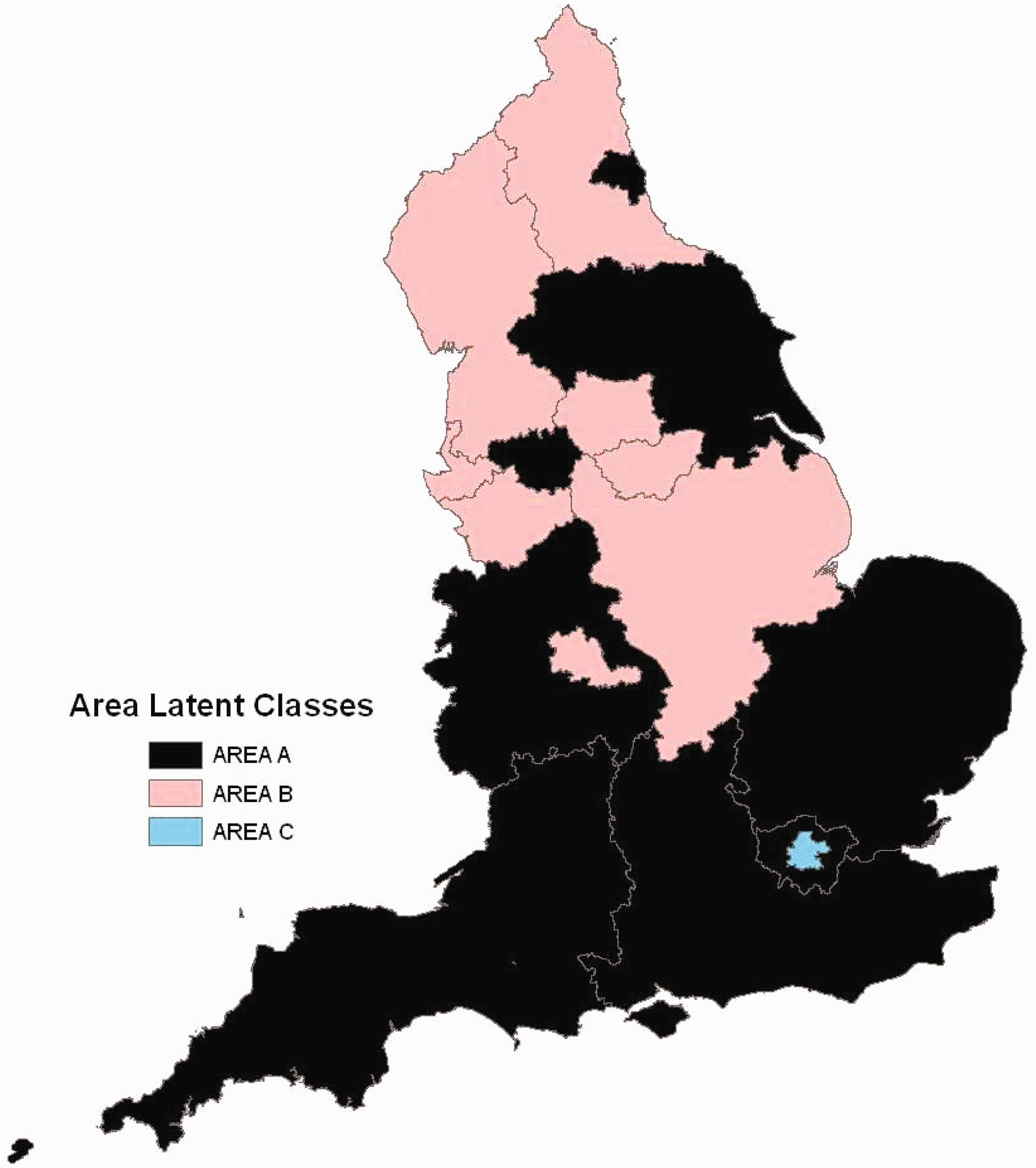
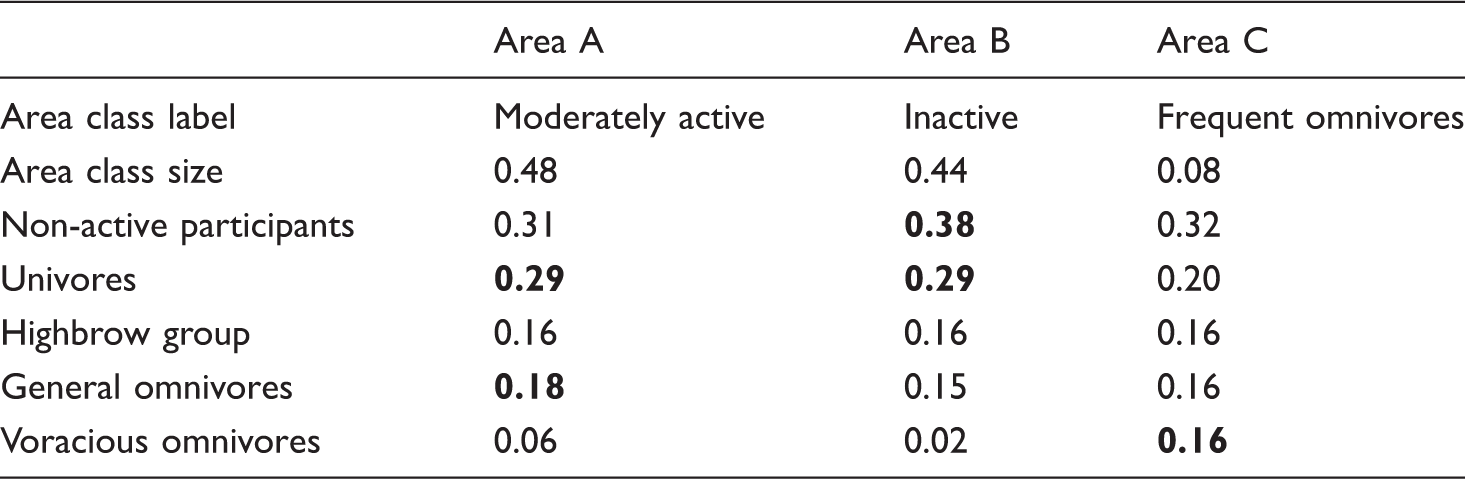
Area C (‘Frequent Omnivores’) is a small segment and consists of only one region. Closer inspection reveals that it contains 8% of respondents and is distinguished from the other area clusters by the much higher than average probability of containing ‘voracious omnivores’. Unlike the other active classes – ‘highbrow’ group shows no difference across the three area clusters, the ‘general omnivore’ group shows a slight difference and the ‘univore’ class shows no difference between Area A (‘Moderately Active’) and B (‘Inactive’) – ‘voracious omnivores’, even after controlling for individual socio-economic characteristics, are predominately confined to one region in England. As Figure 2 shows, this region is Inner London. Part of the explanation undoubtedly lies in the supply of cultural goods available in Inner London, the depth and breadth of which is not matched elsewhere in England. It is also relatively small in geographical size compared to the other regions of England, so as the pace of life for high-status individuals (‘voracious omnivores’) increases and intensification of activities accelerates, time and speed can be maximised given that a wide variety of cultural goods are easily accessible within short distances (Sullivan and Gershuny, 2004). The existence of this ‘voracious omnivore’ area cluster at the regional scale also suggests that high-status individuals choose to reside in close proximity to individuals with similar values, lifestyles and cultural habits to their own. It is likely, although not explicitly tested here, that ‘voracious omnivores’ cluster in this area because they interact with likeminded people in active social networks. Place is therefore integral to our understanding of cultural consumption habits. It not only mediates social life for ‘voracious omnivores’, it is the critical tie between individual stratification and the consumption of cultural activities.
Conclusion
Our aim was to revisit and further extend the boundaries of the omnivorousness literature. We sought to map cultural consumption in England using a measure based on both the frequency and range of cultural participation. Based on the link between the insatiable consumer and the dynamic of present-day consumption, our primary focus was on the ‘voracious omnivore’ cultural consumer. Was it possible to distinguish between this group and other cultural lifestyle groups in England, using measures of frequency and participation? Our findings clearly suggest the existence of such a group, which is distinct not only from lifestyle typologies but also from a ‘general omnivore’ group which also exhibited an insatiable appetite for cultural items but not with the depth, breadth and frequency of those classed as ‘voracious omnivores’. The socio-economic make-up of this ‘voracious omnivore’ group shared many of the characteristics noted in other scholarly work: largely high-status individuals, particularly in relation to occupational class and educational qualifications, but there was little evidence that were from the younger age cohorts. As such, they could be depicted as high-status individuals who exhibited an intensely active cultural lifestyle and enjoyed a diverse range of cultural experiences. Given these traits, and based on our theoretical arguments about the role of place, we hypothesised that this ‘voracious omnivore’ group were likely to cluster in areas which were distinct from other lifestyle groups.
We fused the theoretical case for taking account of the importance of place in the cultural literature with methodological innovation in order to empirically test our key hypothesis. Our expectation of between-group heterogeneity at the regional scale was realised in our non-parametric multilevel analysis of both the range and frequency of cultural participation in England. Even after controlling for individual socio-economic characteristics, we identified three area-level clusters. Of all the active individual latent groups, the ‘voracious omnivores’ were distinct in being predominantly contained in one area-level cluster. Place, therefore, is integral to the consumption habits of those in the ‘voracious omnivore’ group both in terms of the unparalleled supply of available cultural items (inner city London) and the likely interaction of likeminded individuals in an active social network. While individuals in the ‘voracious’ omnivore group may reside in similar locations to themselves reflecting shared cultural attitudes, values, preferences and habits, it is also apparent, given that we control for shared socio-economic characteristics, that the underlying mechanism behind these cultural patterns at the area level is likely to be contextual in nature.
Despite the robustness of our findings, there are some limitations. Due to data limitations, we were unable to include home-based consumption–based items which are most often undertaken by individuals lower in the social hierarchy. Clearly, future work needs to include both out-of-the house and home-bound activities to offset any concerns about measurement validity and to corroborate the existence of different lifestyle groups in England and the socio-economic make-up of these groups identified here. More generally, when distinguishing between omnivore groups, there is a lack of data about why some individuals engage more frequently than others, for what purpose and with what expectations. Here (along with other scholars), we hypothesise why, but there is a lack of large N survey evidence at the individual level which seeks to explain this behaviour. Survey questions/modules that unpick and differentiate between key drivers and motivations would aid our general understanding about why individuals seek to become insatiable consumers. It is also imperative, from our evidence here, that such surveys contain geographical information at various spatial scales so that individuals can be placed in different settings, alongside network data, to gauge the importance of contrasting mechanisms.
One of the key findings of this article is that the ‘voracious omnivores’ were distinct in being predominantly contained in one area-level cluster. Here, we identified that place is important, and we identify the possible processes that could explain this, but determining the actual mechanism is beyond the scope of the article given the data available. But it should be the focus of further work. In combination with survey data, future research should examine whether ‘voracious omnivorism’ exists as an individual trait – where individuals seek out locations containing similar-minded individuals and influence others through networks in a variety of different contexts – or whether it is a behaviour that is furthered in some contexts but not in others. There is some existing evidence of the former. A number of studies have shown that omnivores benefit from a broader and more diverse social network, where they can display knowledge gained from interaction with individuals in different social circles which in turn reinforces social approval within these circles (Kane, 2004; Lizardo, 2006; Relish, 1997). Furthermore, Widdop et al. (2014) find that while education and class remain important aspects of the omnivore–univore thesis, consumption is mediated and constrained through networks. They note that networks play a much more significant role in shaping cultural behaviour than the theoretical frameworks suggest. Moreover, networks even in the age of social media tend to be grounded geographically. Therefore, our findings offer support to the role of networks and relational mechanisms (Crossley, 2011) in mediating consumption, in that network structure is different in different places. But the evidence is far from conclusive with the urgent need for network questions or modules in different contexts attached to respondent data.
Despite the existence of three area-level clusters and a distinct area-level typology with a higher than average probability of containing those from the ‘voracious omnivore’ individual latent group, it is impossible to be certain that prevailing contextual influences dominate without further testing. Here, we used the regional scale. In light of the scholarly theoretical contributions outlined in this article, it is probable that the underlying mechanisms which may explain any contextual effects are more likely to occur at much lower levels of geography. Indeed, the clusters exhibited here may reflect aggregations of much finer contextual effects. It was apparent, for instance, that ‘voracious omnivores’ were evident in the Area A (‘Moderately Active’) cluster, possibly reflecting the existence of area clusters at much smaller spatial scales, for example, smaller cities or towns, local neighbourhoods or perhaps network-based clusters from the work place and so on. On the assumption of data availability at these different spatial scales and further computational advances, statistical testing simultaneously across the range of geographies along with network data will allow cultural scholars to pinpoint at which scale such contextual processes operate and the underlying processes at play. Place remains vital to our understanding of cultural behaviour. While scholars continue to explore different dimensions of omnivorousness through volume and composition, the role of place and the different contextual mechanisms in which such insatiable consumption occurs remains largely ignored. Here, we have a taken a first step in readdressing this anomaly.
Footnotes
Declaration of Conflicting Interests
The author(s) declared no potential conflicts of interest with respect to the research, authorship, and/or publication of this article.
Funding
The author(s) received no financial support for the research, authorship and/or publication of this article.