



Abstract
When they introduced cattle into Guatemala in the 16th century, Europeans also brought a whole new industry involving ranches, slaughterhouses, and new forms of labor. On the one hand, cattle producers had to treat the animals as intact living organisms requiring care and nurture to maintain and increase the herds. Those animals were grown by the ranchers for specific purposes. In the first place, colonial Mesoamerican cattle were raised to produce hides and leather for intercontinental trade with Spain. The regularized disassembling of the bovine bodies created these new products, but it also had some unintended consequences, namely the generation of new subject positions among the indigenous workers of these facilities. New forms of butchering techniques aimed at extracting animal parts were unlike the indigenous practices of animal hunting and exploitation, which aimed at preserving the physical integrity of the animals’ bodies. The newly introduced techniques that involved the compartmentalization of animal bodies also involved an increased compartmentalization of labor, accompanied by new body techniques and gestures. As the butchers and the tanners became enskilled, their bodies changed and so did their hexis. To operationalize these ideas, technological approaches combined with zooarchaeological (butchery marks), ethnographic, and historical evidence are used to investigate how humans and cattle mutually grew each other’s matter and subjectivities.
Introduction
When they first arrived in the Americas, Europeans were not traveling alone. With them, a multitude of different human and non-human actors were making the voyage from Europe to the newly discovered continent, including cattle. The importation of cattle into Mesoamerica specifically introduced different activities that involved new spatial organizations, new industries (e.g. slaughterhouses, tanneries), and new occupational practices (Herrera, 2003). Some of the professions revolving around the processing and use of animal products were socially devalued and filled by enslaved and free native or African workers (Samayoa Guevara, 1962). At the same time, urban hygiene was becoming a growing concern, and activities associated with the processing of animal products were increasingly stigmatized and confined to the outskirts of Spanish cities (Córdoba de la Llave, 1998).
Historical studies have addressed the question of the introduction of European organisms from a wide range of perspectives. Earlier works tackled this issue through the study of institutional sources and the introduction of livestock management institutions such as the Mesta, a ranching organization typical of late medieval Spain (Klein, 1920; Miranda, 1944). Around the mid-20th century, scholarly works focused on the economic and demographic aspects of livestock management in New Spain. Using legal sources, these authors generally adopted statistical approaches, reconstructing the livestock populations and the evolution of meat prices (e.g. Chevalier, 1963; Matesanz, 1965; Simpson, 1952). More recently, the scope of historical studies on European domesticates in the Americas shifted toward environmental issues. Following Crosby’s (1972) concept of “Columbian exchange,” the European colonization of the continent was approached through the lens of a biotic exchange that affected both sides of the Atlantic Ocean. Consequently, the environmental impact of Old World livestock has been a major historiographical topic at the end of the 20th century (Melville, 1994; Sluyter, 1996). More recently, these issues have been progressively supplanted with concerns for the evolution of intersubjective relationships between human and animals using an approach centered on animals as social actors in the colonial and post-colonial world (Few and Tortorici, 2013).
Previous works on faunal remains from colonial archaeological contexts have generally focused on resource management and subsistence issues (Corona, 1996, 2012; deFrance and Hanson, 2008; Emery, 1999). Traditionally, zooarchaeological approaches to human–animal relationships often emphasize the overarching human control over beasts, at least implicitly (Russell, 2012: 266). Human agents harvest animals and extract products from their passive bodies. The animals are indeed seen as products, commodities, or means of subsistence but rarely considered as playing a social role out of the scope of human consumption. These views reflect the broader Modern dichotomy between Nature and Culture that constitutes the fundamental basis of positivist sciences (Wallace, 2011: 48).
To overcome this bias requires radically reframing our conception of the animals and the human actors interacting with them. An alternative approach to the subject/object dualism that structures this conventional approach is to consider humans and cows together as forming an interacting assemblage wherein each term shares the same basic ontological status. In this perspective, humans and cows are constantly affecting each other, enabling and actualizing new properties through their relationship. As humans assemble cattle by nurturing them, for example, cattle also contribute to creating new forms of social organization, such as ranches, slaughterhouses, and butcheries.
This approach derives from assemblage theory, an umbrella term that encompasses the works of various thinkers (Deleuze and Guattari, 1980; Latour, 2005; Whitehead, 1919) who all shared a similar non-essentialist stance on reality, grounded in “process philosophy” or “philosophy of immanence” (Harman, 2009: 6). This metaphysical stance contrasts with classical essentialist philosophies by considering that reality is in constant change, emphasizing “becoming” rather than “being” (Rescher, 2000: 5). Another common principle is the radical opposition of these approaches to the Nature/Culture divide and the Cartesian mind and body dichotomy characteristic of Modernity.
In colonial Mesoamerica, these human–cow assemblages extended their ramifying effects across many different social fields of the emerging colonial society. The notion of social field derives from Bourdieu’s “champ social,” which can be defined as relatively autonomous social microcosms within the broader social world (Bourdieu, 2013). Each field shares a common set of rules and accepted behaviors, as well as common spaces and objective structures that both constrain and enable these practices. For “social field” to be operationalized using archaeological materials, the notion of human–cow assemblages must be apprehended in a physically restricted social field in order to follow the actors and their interactions more readily. The slaughterhouse is such a salient field, the crucial space where cattle bodies are disassembled to be turned into new material components. Using zooarchaeological techniques of analysis, this paper aims at demonstrating how the disassembling of cattle bodies affected the butchers by enabling the emergence of new subject positions among these indigenous peoples in Santiago de Guatemala, the original Spanish capital.
In terms of human–animal relationships, butchery indeed holds a unique place in the sense that it involves close interactions between human and animal bodies. Butchery can be characterized as a socio-technological practice where “cross cultural perceptions of ‘self’ and ‘other’ are codified and expressed on the basis of interactions with animal bodies” (Seetah, 2018: 47). Concepts of gestures (Leroi-Gourhan, 1964) and body hexis (Bourdieu, 1977) are fundamental to this approach since they provide a bridge across the Modernist chasm between mind and body.
This paper thus offers an innovative way of using zooarchaeological data to explore how humans and animals are continuously created and assembled (and disassembled) by each other. Given the broader context of radical cultural change that occurred in Mesoamerica during the early colonial period, this study also aims at apprehending the effects of the introduction of new animal species on indigenous populations in a way that differs from the usual zooarchaeological focus on diet. Zooarchaeological analysis also permits us to explore the finer-grained processes at work during this encounter and thus offers an opportunity to apprehend the effects of colonialism on indigenous workers’ bodies and minds.
This paper begins with an introduction to the ontological grounds of the cow–human assemblages and how they differ from earlier approaches. The social field of the slaughterhouse is also described, since it offers a unique window on the close bodily interactions between humans and animals. The ties between the matter of cattle bodies and the subjectivity of humans are modeled on concepts of gestures, hexis, and enskillment to explore how body techniques affect the sense of self. Some elements of cultural and historical context are also discussed, notably dealing with precolonial butchery practices. The objective is to show how the zooarchaeological analysis of faunal collections from the city of Santiago de Guatemala (now Antigua Guatemala, see Figure 1) demonstrates changes among the indigenous Maya workers of the slaughterhouses and butcheries in the early colonial period.
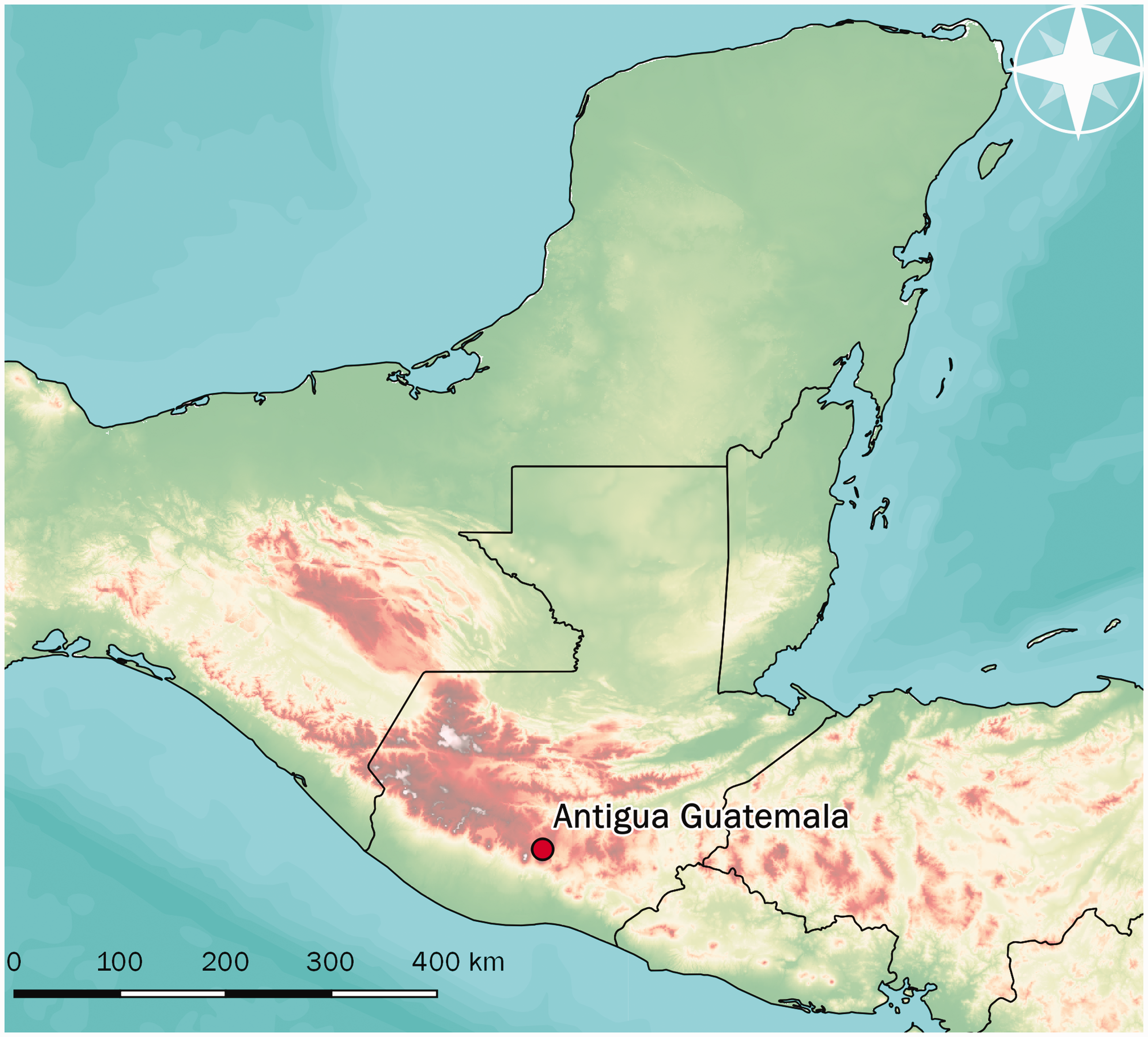
Localization of Antigua Guatemala (map N. Delsol from cartographic data from USGS).
What are cattle? An ontological issue
Natural sciences tend to define animal species as categories of individual organisms sharing the same essence, common biological traits that distinguish them from organisms of other species. This essentialist ontology of animals characterizes them as bounded totalities defined by a fixed series of physical and behavioral characteristics.
This conception is historically and culturally situated. It corresponds to an objectivist epistemological stance inherited from Western philosophy that conflates the observer’s experience of the world with reality (Wallace, 2011: 48). While constituting the theoretical basis of the positivist epistemology in science, this stance presents a major blind spot when it comes to conceptualizing the properties of non-human animals that escape the observer’s scrutiny.
This Modern view raises two important issues when dealing with historical and cultural change. First, it confines non-humans, animals but also things, to an accessory and backgrounded role in the course of historical processes that are considered to be driven by human intentionality only. Humans are therefore the only active agents of change; they either adapt to or shape their environment, while animals and other things remain passive in the background of human history (Domanska, 2006; Olsen, 2003). Second, this notion of organic unity fails to account for the wide variety of non-Modern conceptions of animals. As emphasized by Alberti and Marshall (2009), when applied to archaeological inquiry, such an approach acts as a cognitive trap: archaeologists interpret the world’s past populations through the narrow lens of Modern Western ontology and therefore fail to account for other ontologies. As suggested by Orton (2010), humans and animals of the early European Neolithic likely maintained intersubjective relationships that cannot be characterized using this Cartesian worldview.
The alternative approach proposed here is to consider humans and cattle as assemblages, relational entities in a constant state of flux, whose properties are continuously emerging out of the interactions they maintain with each other. Such a non-essentialist perspective has been developed by several thinkers such as Whitehead, Bergson, Simondon, Deleuze, and Latour (Harman, 2009: 6). To analyze the cow–human assemblage in colonial Antigua, I use Bruno Latour’s model of assemblage, the actor-network (Latour, 2005). This theory is developed over several different works by Latour, as synthesized by Graham Harman (2009).
In Latour’s metaphysics, reality is defined in terms of the association of heterogeneous entities which are not a priori substances but are primarily defined by the relations they maintain with others (Harman, 2009; Latour, 2005). One practical consequence of these networks is that agency, the capacity of affecting other entities, is not limited to sentient beings only. Latour’s actants, which are all ontologically equivalent, work in collectives or networks in a constant state of assembling with each other, thus generating this new relational category of the actor-network.
Since actors or actants primarily exist through the relationship they maintain with others, they constantly assemble and affect other actants’ qualities to become something else. A consequence of this is that a cow–human actor-network can extend virtually indefinitely, gathering actants of various kinds: grass, fences, knives, horses, slaughterhouses, corrals, etc. This property enables the establishment of links to analyze interactions among actants sometimes very remotely related, thus apprehending relationships that are often not directly apparent. It also constitutes a strong caveat to the analysis of social processes because the lack of clear boundaries, and the absence of ontological primacy between the actants, can potentially lead to the loss of focus on a research problem and dilute it among an infinity of actants. To operationalize this theoretical approach and restrict it more narrowly to cows and humans requires the notion of social fields and fields of action, described in the next section.
The social field of the slaughterhouse
A problem that constantly arises when adopting a non-essentialist approach concerns the limits of the assemblage. If all the actants extend their being in infinite networks, where do we choose to set the limit to apprehend them and study them? In other words, where do we “cut the network” (Strathern, 1996)?
One way to model these networks is to focus on the cow–human actor-network interactions in the social field (Bourdieu, 1979, 2013). Fields strictly speaking are historically constructed social settings obeying a certain set of rules and accepted behaviors (nomos) whereby agents compete to accumulate different forms of capital (social, cultural, economic). They can be considered as specific forms of assemblages since they relationally bind together agents, places, and objects. They are not closed, self-sustained entities but rather connect with other fields to compose the whole social body. For this reason, their limits are often fuzzy; they are not closed microcosms but affect and are affected by what is happening outside of them.
A means to add borders to the social field is to adopt Henri Lefèbvre’s concept of “social spaces” (Lefèbvre, 1991: 190). A social space is defined by the dialectical relationship between a field (the social conditions) and the bases (the material conditions) of the action. Conceiving social spaces in terms of assemblage, they are moments when things take a more permanent form, which makes it possible to analyze the relationships between them. In the case of the human–cow actor-network, the slaughterhouse and other cattle processing facilities are considered as social spaces, wherein cattle and human agents undergo profound alterations through the assemblages they form.
In the social field of the slaughterhouse, the workers disassembled the animals’ bodies following certain technical and practical prescriptions. The slaughtering and the butchering of the animals were crucial steps whereby some material properties of the animals were actualized in the form of separated components. In this case, “actualization,” a concept central to Alfred North Whitehead’s ontological approach that inspired most of Latour’s metaphysics (Harman, 2009: 6), means that by these actions, some material properties of the cattle ceased to be backgrounded or virtual and became salient.
New subject positions for human actors emerged out of these close corporeal interactions with the cattle bodies. The tasks of disassembly required the use of new gestures, following new rhythms in dedicated spatial settings. As introduced in Marcel Mauss’s (1936) notion of “techniques of the body,” technology has an efficacious action not only on the object of the technique but also on the human subject who realizes the action. In the next section, “body techniques” are further developed from derived concepts of gestures (Leroi-Gourhan, 1964), body hexis (Bourdieu, 1977), and enskillment (Ingold, 2001) to link corporeal practice and actors’ subjectivity.
Gestures and body hexis: Bridging the subject-object divide
Working in the slaughterhouse and engaging in close physical contact with these animals likely constituted a whole new experience for the Maya workers. For example, cattle are big mammals, much bigger than any animal that was endemic to the region. Killing them implied a physical proximity and an engagement between cattle and butcher that involved a certain degree of physical struggle. Beyond the actions of killing and butchering them, cattle also likely generated several additional practical constraints. Animals waiting to be slaughtered were corralled in fields near the slaughterhouse, where they needed to be cared for (Pardo, 1984: 110).
The first generations of Native workers had to be trained in these new butchering techniques. Across the Spanish Americas, African slaves constituted a crucial link in the transmission of practical and technical knowledge in craft activities (Herrera, 2003; Lockhart, 1994: 199). However, as mentioned earlier, the historical evidence indicates that the bulk of the slaughterhouse workforce was composed of indigenous laborers. These workers thus learned new techniques and skills related to the killing and the chopping of cattle carcasses.
These techniques, which involved new kinds of implements such as iron knives, would have required innovative body gestures. Inspired by Mauss’s body techniques, Andre Leroi-Gourhan (1964) developed an evolutionary theory of gestures as a type of relationship between animate beings and matter that bridges the divide between mind and body. The dialectical interactions between the motor system and the mind of hominids and modern humans become the main drive behind the evolution of the species. Consequently, it means that any changes in material conditions modify ways of interacting with matter (i.e. gestures) and necessarily lead to deep changes in the minds of the subjects.
In addition, changes in the spatial layout of the activities would have influenced ways of moving through and dealing with space. Here Bourdieu’s (1977) concepts of habitus and hexis are germane. The habitus is a system of durable and transposable dispositions that governs the actions of the individuals. These dispositions are acquired through experience and the confrontation with what Bourdieu calls the “world of objects.” Objective conditions regulate the physical behavior of individuals through the hexis, the embodied habitus. As the set of attitudes and movements constrained by the habitus, the hexis determines what an individual actor can and cannot do with his or her body (Bourdieu, 1977: 93).
Tim Ingold’s (2001) ecological and relational conception of “skill” links these notions as a way to model butchers’ bodies within the greater assemblage of the slaughterhouse. The butchers, their tools, and the cattle were not separate entities but components of the same social space wherein the different qualities of all these actors or “actants” progressively emerged through a series of successive adjustments. By becoming enskilled in the practice of disassembling cattle bodies, Native workers did not just act on passive matter but were instead engaged in an activity that also changed them. This incorporation of the objective condition into the body image of the butchers was primarily realized through the sensorimotor experience of working in the slaughterhouse (Warnier, 2001). Following Jean-Pierre Warnier, this phenomenological experience reached deep into their subjectivity because it acted at a non-discursive level of consciousness: through the daily realization of these tasks, the newly enskilled subjects integrated into their psyche their new experience of the outside world. Bleed (2008) develops this notion a bit further by providing a methodological approach of skill adapted to the archaeological inquiry. According to his model, skill is a form of knowledge that draws on both the cognitive and the motor aspects of human practice that can be apprehended through a technological approach.
In archaeology, technological models divide production into operational sequences, successions of operations that bring a material from its raw state to a fabricated one (Bleed, 2001; Lemonnier, 1986). Theorized by Leroi-Gourhan (1964), the chaîne opératoire is such a model that contributes to bridge that gap between matter and mind by following all the actors involved in each step of the sequence, with a particular emphasis on the cognitive aspects of each operation.
The historical context of the cattle industry and its workers in colonial Santiago de Guatemala
To assess the degree of change involved by the introduction of new social divisions of labor and new techniques requires identifying more specifically some of the actors interacting in butcheries and slaughterhouses. Historical documentation provides some clues to the physical structures of these activities (buildings, implements) and the social identity of the human actors.
The slaughterhouse as a disciplinary device
The crafts associated with the processing of animal bodies underwent major changes in the Western world during the Modern era. One of the most noticeable of these changes relates to the perception of unhealthy practices that had to be confined to the margins of the cities (Seetah, 2018: 63; Vialles, 1994: 5).
Historical documents such as municipal ordinances and other legal texts provide insights into attempts at regulating these facilities in New Spain. In Santiago de Guatemala, the office of butcher was a position put in bid every year on the first of January (Fuentes y Guzmán, 1932; Gage, 1677; Remesal, 1966). The role of this official was principally to provide the city with adequate provisioning in cattle, to organize the whole chain of production, from the slaughter to the retail of meat, and to combat the clandestine meat market (Matesanz, 1965).
The municipal ordinances of Santiago de Guatemala reveal a wide array of regulations and prohibitions revolving around the processing of animal products and their disposal (Samayoa Guevara, 1962: 271). In 1559, a municipal decree detailed the legal and sanitary prescriptions that regulated the activities associated with the processing of cattle body parts, such as those of butchers, tanners, and cobblers. The killing of animals outside the slaughterhouse was strictly forbidden, as was the sale of meat, which was authorized only in endorsed shops. The meat was to be kept away from other substances deemed unhealthy, such as the entrails. Butcheries and slaughterhouses had to be cleaned every week, and substances considered waste (dung and bones) needed to be discarded in dedicated places nearby. The trade of animal materials was also strictly regulated, with prescriptions on the temporality of the sales (only on weekdays) and their material organization (Samayoa Guevara, 1962: 271–272).
This official concern for sanitary matters and the municipal obsession for control certainly found a counterpoint in the illegal and clandestine activities involving the slaughtering and disassembling of animals. Beyond these fraudulent practices, the rules as well as the spatial marginalization of these activities are reminiscent of what Michel Foucault (1995) coined as “disciplinary devices.” Through the control of human bodies, disciplinary devices were progressively creating new subjects, subjects shaped by new divisions of space, time, and labor (Foucault, 1995: 137–138).
The slaughterhouse and butchery workers
Santiago de Guatemala was an important economic center and a major Hispanic outpost in the southern margins of New Spain. A significant part of the profits made by European settlers came from the exploitation and trade of agricultural commodities, including cattle hides, which were exported to Spain (Brockington, 1989: 50). Santiago was also the administrative capital of the Audiencia de Guatemala, the southern subdivision of the vice-kingdom of New Spain. Its highly diverse population gathered different socio-cultural groups such as Iberians (Castilians, Aragonese, Portuguese) and other European settlers, central Mexican soldiers who had been offered land for their help with the conquest in Guatemala, Maya natives, and enslaved and free workers of African descent (Herrera, 2003; Lutz, 1994).
Even though historical evidence highlights the occurrence of intercultural unions from the mid-16th century on (Lutz, 1994), cultural divisions between groups appear to have endured over the first centuries of colonization (Herrera, 2003). While the upper classes, composed of merchants, hidalgos (minor aristocrats), government officials, and high clerics, were almost exclusively of European ancestry, the lower social positions were generally filled by enslaved or free African laborers and native workers. Little is concretely known of the composition of the slaughterhouse and butchery labor force over the 16th century. However, Herrera (2003: 162) emphasizes the crucial contribution of workers of African descent in the transmission of specialized crafts such as iron working or hide tanning. Workers and slaves of African ancestry thus potentially worked in animal processing facilities alongside native laborers who composed the bulk of the labor force.
Fuentes y Guzmán (1932: 403) provides the only description of the slaughterhouse workforce when discussing the barrio de Indios (Indian neighborhood) of Santa Ana, located in the southeastern margins of the city. This suburb was created during the 1530s, along with other reducciones in the Panchoy valley, the result of aggregating different Maya household groups from diverse small settlements. According to the chronicler, its population in the early 17th century was mainly composed of Maya Kaqchikel residents who were known to be “meat cutters” (cortadores de carne) in the public slaughterhouse.
Maya hunting practices: Planting the bone and regeneration principles
The contemporary practices of Maya hunters offer an interesting counterpoint to the disassembling of cattle in the slaughterhouses. These involve the tracking of wild species in the forest, generally medium- to large-sized mammals such as peccaries or deer (Brown and Emery, 2008). Ethnographic data from the Atitlan area in Guatemala suggest that the hunters take particular care of the bones and skins of the animals: no butchering marks are left on the bones, which are cleaned and boiled after the removal of the meat and kept away from the scavengers (Brown and Emery, 2008: 313–314). After consumption, the hunters make sure to retrieve the different anatomical parts to deposit them in hunting shrines located in the forest. There, a supernatural entity, the Master of the Animals, is then supposed to proceed to the regeneration of the wild game from the remains deposited at the entrance of these caves. Such actions are related to a general regenerative principle found in several instances in the Maya world, in both pre- and post-colonial contexts (Carlsen and Prechtel, 1991). The deposition of bones is therefore not associated with “places of death” but rather with the concept of rebirth and regeneration, as with human burials (Gillespie, 2002: 73).
Technologies of disassembling in colonial Guatemala: What do zooarchaeological data tell us?
The regularized disassembling of cattle, along with all its social and material correlates, as it was effectuated in Spain, found no equivalent in pre-Columbian Mesoamerica. Elaborating a comparative approach to reveal the changes in regimes of value associated with the disassembling of animals requires identifying an analogue in the Maya world. By establishing parallels between Maya hunting and ordered butchering practices as observed in zooarchaeological materials, the contrasts between these two sequential chains become apparent, along with their implications in terms of intersubjective relations between human and animals.
The analysis of zooarchaeological remains from colonial contexts in Antigua Guatemala can demonstrate how the introduction of new butchery practices entailed the emergence of new subjectivities among the butchers of Santiago de Guatemala. As discussed earlier, this issue is closely linked to the evolution of body techniques. In other words, the question is to show how the practitioners’ subjective positions changed through the materiality of their engagement with cattle bodies. These premises provide the foundation for formulating some hypotheses to be tested with the faunal remains.
The zooarchaeological assemblage
The data come from an archaeological collection of animal bones curated in Antigua Guatemala by the Consejo Nacional para la Protección de la Antigua Guatemala. These zooarchaeological remains come from 10 colonial contexts dating between the 16th and the 17th centuries and represent a total of 6014 identified specimens. More than half of these specimens (n = 3037) could be identified as Bos taurus (cattle), which corresponds to a minimal number of 64 individuals. Minimum Number of Individuals (MNI) was assessed following a matching method including the identification of paired elements, their age, and the archaeological context (Klein and Cruz-Uribe, 1984: 26). These remains present a total of 1262 butchery marks corresponding to the processing of the animals’ carcasses. These marks were recorded and analyzed following Seetah’s methodology on archaeological butchering techniques (Seetah, 2018; Seetah et al., 2014).
Zooarchaeological indicators and hypotheses
To demonstrate this evolution requires shedding light on important changes in the body techniques of the practitioners. Three distinct indicators can operationalize these ideas and reveal changes in the treatment of animal parts and the body practices of the colonial butchers. Assessing these changes in terms of subjectivity will require looking at changes among the butchers in terms of skills and corporeal activity.
First, the intensity of work as in the pace of labor could have imposed increased stress on the butchers’ bodies and therefore affected their body techniques. This line of evidence will be assessed by looking at the ratio of cutmarks on the different parts of the skeleton and comparing it with what is known about pre-Hispanic butchering techniques. A significant increase in cutmarks together with other qualitative evidence on specific body parts will suggest an intensification in butchering actions.
A second line of evidence has to do with butchering implements. Changes in the shape and materials of the implements imply new types of gestures to utilize them and therefore new kinds of sensorimotor experiences. The shape and location of the cutmarks found on the bones allow inference of the tools that were used and their associated gestures. Significant changes in the range and type of implements between pre-Columbian and colonial faunal assemblages constitute a related line of evidence pointing toward important changes in the butchers’ body techniques.
The material conditions of experience, including notably the spatial setup of the actions, greatly condition how people move in space and therefore their hexis. Changes in the social and spatial organization of labor, and the shift from units of production based on households to specialized butchery facilities that separated butchers from familial social and residential fields, also influenced the workers’ subjectivity. This third research question will be addressed by observing the spatialization of the different butchering activities (gross dismemberment of the carcasses, pot-sized pieces for retail) and their comparison with the available data from pre-colonial sites. Separating the butchering activities among different locations suggests a fragmentation of the chain of production among various facilities specifically designed to actualize certain material components of the cattle bodies.
If confirmed, these indicators will constitute strong evidence of important technological changes, implying the emergence of new kinds of subject positions among the butchers of colonial Santiago de Guatemala.
The intensification of butchery
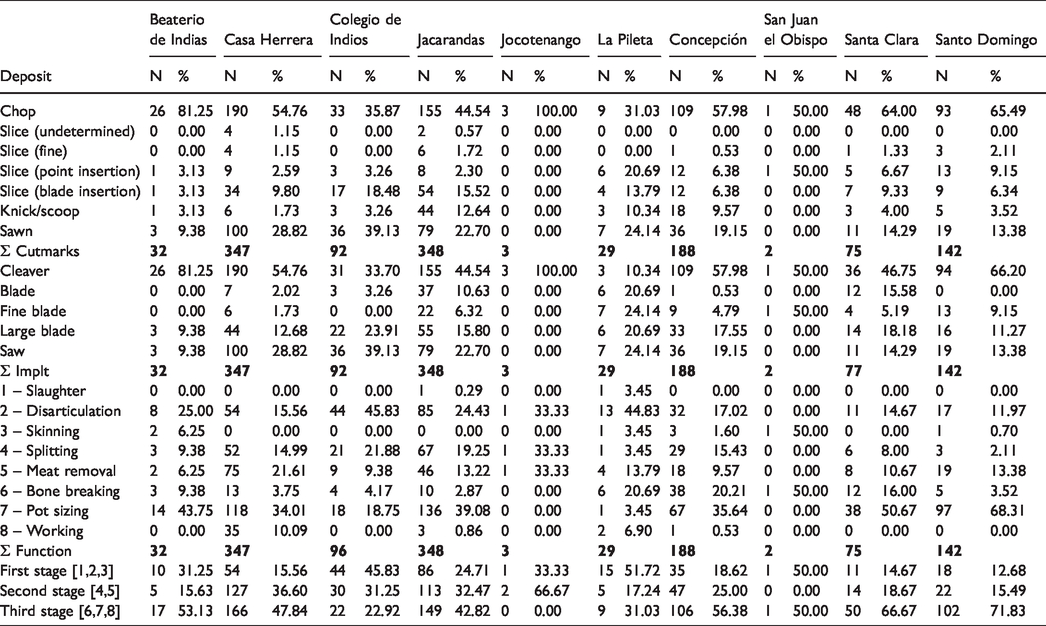
Over the last two decades, various excavations in Antigua Guatemala have yielded several bone assemblages from deposits dating from the mid-16th to the end of the 17th century. Most of these sites were part of the city center or were in its immediate outskirts. In terms of function, the historical documentation as well as the archaeological materials recovered suggest that some of them were associated with private households (Casa Herrera, Jocotenango), convents and other religious communal institutions (Santo Domingo, Concepción, Santa Clara), or artisanal facilities (Jacarandas, La Pileta, Colegio de Indios). The analysis of 10 of these assemblages yielded 3037 identified cattle specimens by specific anatomical parts (Table 1). Out of this subset, 1262 specimens (41.6%) bore cutmarks associated with different stages of the butchering process.
Distribution of cutmarks on cattle bones from different colonial deposits in Antigua Guatemala.
The scarcity of cutmarks in pre-Columbian Maya assemblages is documented from different sites of the northern Maya lowlands (Götz, 2007; Montero López, 2013). In sites of the Petexbatún basin such as Arroyo de Piedra, Dos Pilas, and Tamarindito y Bayak, the ratio of bones bearing cutmarks of any kind does not exceed 10 percent of the total number of specimens. The Terminal Classic deposit of Lagartero (Chiapas, Mexico), likely associated with ritual feasting, yielded only 50 remains presenting marks linked to butchering out of a total collection of 3999 specimens (Kozelsky, 2005). The site of Aguatecas in Guatemala, suddenly abandoned during the 9th century AD, offers another interesting example. A very high ratio of bone remains presented marks linking them to the manufacturing of bone tools and ornaments (46.81% of the total remains). On the other hand, cutmarks linked to the butchering and disassembling of the animal bodies are extremely rare (0.27% of the remains). The ethnoarchaeological data from modern hunting shrines in the Guatemalan highlands, where climatic conditions are more temperate and where hunters use metal tools to process the carcasses, equally show a very low rate of anthropogenic modification at the surface of the bones: in two deposits located near Lake Atitlan studied by Katherine Emery (Pa’ Ruchi’ Abaj and Pa Sak Man), butchering marks were observed on only 7–8 percent of the remains (Brown and Emery, 2008). One notable exception is the deposit, likely associated with remnants of a ritual feast, of the palace of Chinikihá in Chiapas (Montero López, 2013). This faunal assemblage, mostly composed of white-tailed deer specimens (n = 178), presented a rather elevated ratio of cutmarks (53.14%).
While this last example may temper any firm conclusions, there seems to be a trend toward the intensification of the butchering process from the pre-Hispanic to the early colonial eras, measured here in terms of relative abundance of cutmarks. Another line of evidence, qualitative this time, provides more insight into this process of intensification and its consequences on the butchers in terms of the pace of work. The processing of a meaty part such as the shoulder leaves observable marks on the scapula. In the assemblages from Antigua, scapula bones bear a significant amount of cutmarks (38.5%) with a clear prevalence of gestures associated with meat removal using heavy implements such as cleavers or large blades (n = 32, or 47% of the total cutmarks found on scapulae). The process implies the use of such implements to chop down the meat together with the bone in a way that ensures a much quicker removal of the meat when compared with the detachment of meat from bone using lighter cutting implements such as knives (Seetah, 2006). In comparison, marks left on deer scapula in the Classic Maya context of Chinikihá suggest a more cautious and slow removal of meat from deer scapulae: only one chopping mark, likely associated with disarticulation, was observed over a total of 16 cutmarks (Montero López, 2013).
Implements and gestures: New body practices and the emergence of new subjects
The butchering sequence involved new tools such as knives, cleavers, saws, and other instruments, most of them made of iron, which contrasts with the lithic blades used during pre-Columbian times. The shift from lithic to metal butchery implements constitutes a fundamental change that parallels deeper transformations in other aspects of the meat procurement operational chain. These transformations involve an intensification of production accompanied by an evolution in husbandry practices (Seetah, 2018: 90). By allowing butchers to cut through bones and sinews, the iron tools also liberated them from some constraints of the animals’ body features. The hanging of the carcasses for rapid processing also had important consequences for body position (standing) and body practices of the butchers. Likewise, the use of chopping instruments and saws required the use of blocks and tables, which implied other operations had to be conducted while standing. The gestures and body techniques had thus to change.
The relative scarcity of chopping marks in pre-Hispanic assemblages such as Chinikihá (Montero López, 2013: 358) was already noted. Interestingly, heavy cutting tools seem to have been used during the pre-Conquest period, but iconographic representations suggest that they were restricted to the slaughter of victims kept still (Figure 2).
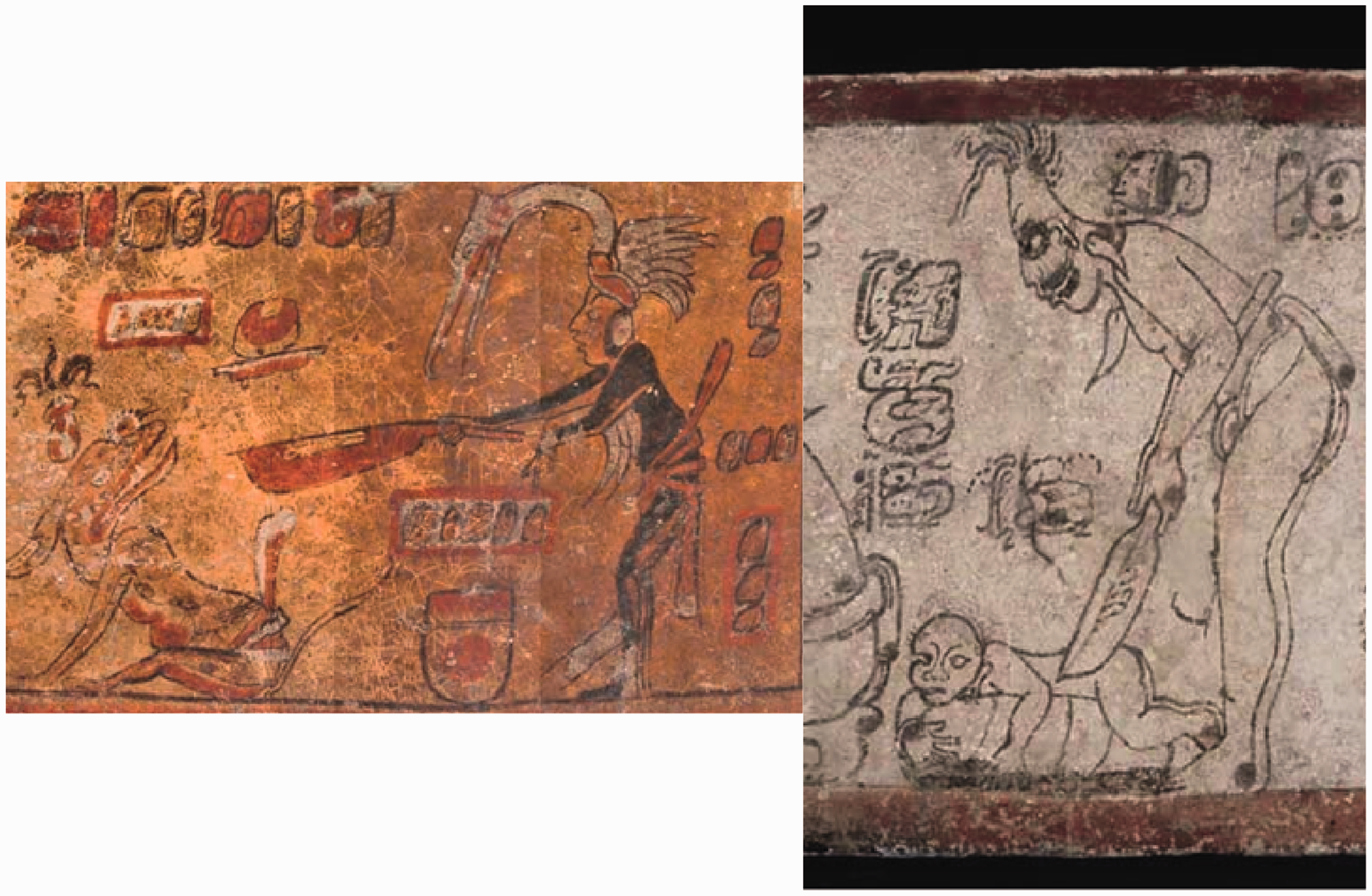
Sacrifice representations with depiction of a heavy instrument consisting of a long handle and a large blade. Photographs© Justin Kerr, all rights reserved, www.mayavase.com. (Left: K9149, Scene of animal (dog?) sacrifice; Right: K1247, Some type of sacrifice of an infant by masked characters holding an instrument.)
Unfortunately, little is known of colonial cutting tools. Knives of different sizes and shapes were manufactured and used in Hispanic America, and the range of their use appears to have been very broad (Simmons and Turley, 1980: 130–132). A good illustration is the colonial cleaver, which was used in butchery but also as a versatile tool in agriculture and other crafts (Figure 3). An important feature of these tools is the manufacture of the blade, which was fixed on the handle using a scale tang (Seetah, 2018: 95). This mode of attachment confers a greater durability to the tool, so that it can be used to perform heavy activities. Such activities were highly common among Antigua’s colonial butchers, as suggested by the ratio of cleaver marks in the different faunal assemblages (Figure 4).
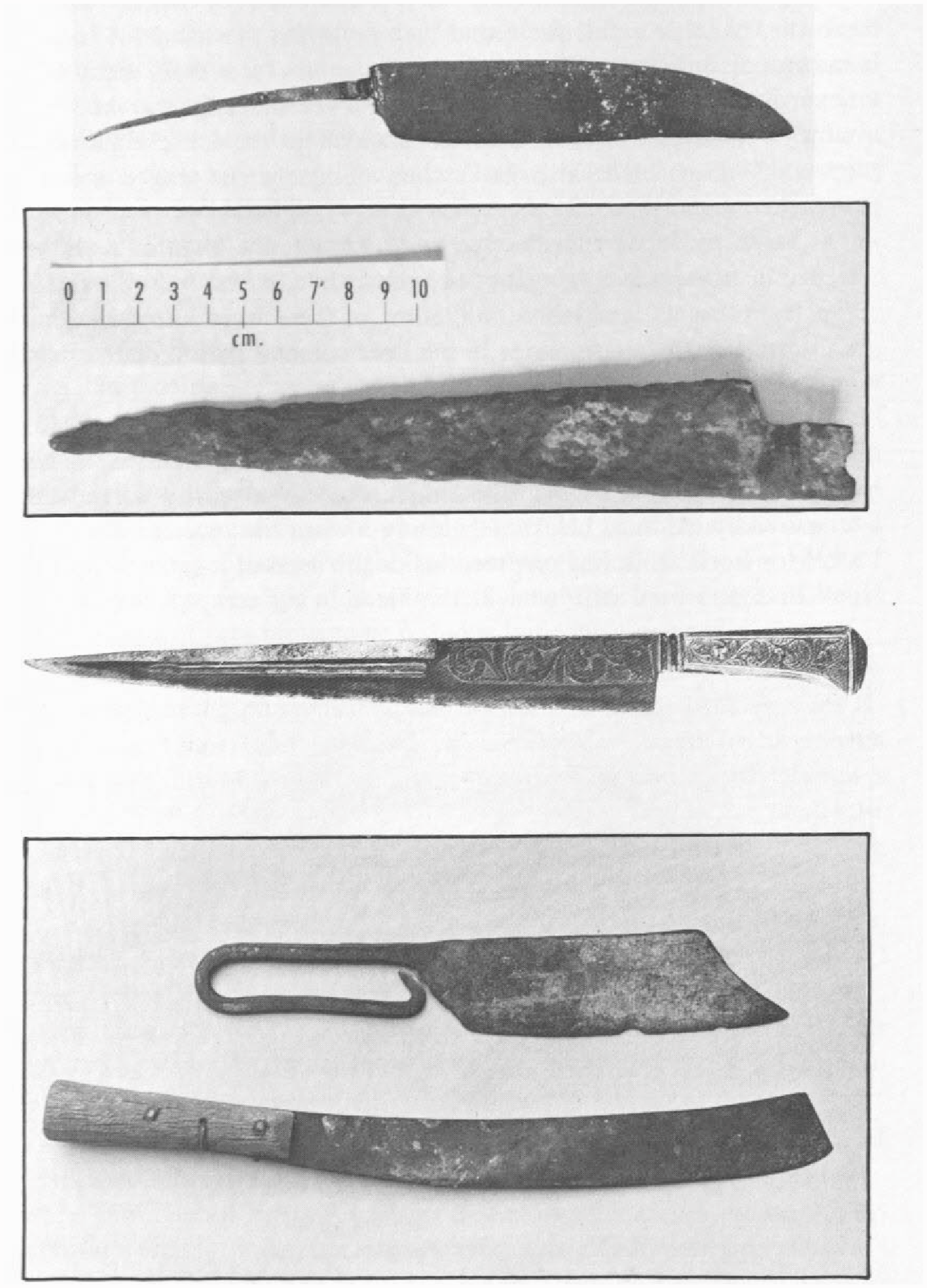
Examples of cutting implements, knives, cleaver and machete used and produced in the American Southwest during the colonial period (Simmons and Turley, 1980: 131). The cleaver is the object in the upper part of the lower box.

Chart representing the ratio of different implements used in cattle butchery in colonial Antigua.
The new spatial structures of disassembling
The systematized act of killing and butchering cattle introduced by the Spanish derived from schemes of actions imported, for the most part, from the Old World. These schemes of actions necessitated a specific division of labor tied to the dedicated facilities where specialized workers performed regularized tasks.
In pre-Columbian Maya communities, it appears that the processing of animal carcasses and the extraction of meat were performed in temporary structures, located generally close to the area of consumption (Montero López, 2013: 364). The analysis of bone crafting in the site of Dos Pilas also showed that different specialized activities could be carried out in dedicated areas of the same household (e.g. bone crafting and lithic debitage) (Emery, 2008).
The analysis of cutmarks allows inferences about the spatial organization of the butchering process in Santiago de Guatemala and its associated facilities, discriminating specific bases of actions, as described above. The fact that carcasses were hoisted, for example, constitutes an indicator that has far-reaching implications, not only in terms of the gestures of the butchers but also in terms of space: “hanging requires vertical space […]. This implies that specific buildings would have had to be created, or parts of premises converted, with tiered platforms, to accommodate the needs of the butcher/meat processor” (Seetah, 2006: 113). The hanging of the carcass allows for its temporary storage during the disarticulation process; in contrast, in a carcass left lying on the ground, the blood can accumulate in some parts, making the meat unfit for consumption. The animal body thus arranged also permits the butcher to chop through the ribcage and split the axial skeleton more quickly and with less effort (Seetah, 2006).
Little detail on the exact procedures employed by pre-Columbian butchers and hunters can be drawn from published zooarchaeological data. Still, according to Seetah (2006), strong zooarchaeological indicators for such practices are chopping marks on the ribs (particularly the inferior face) or on the vertebrae that would suggest that the carcass was hung from the hindlimbs. In the deer assemblage of Chinikihá, Montero López (2013: 358) observed a total of 19 cutmarks on thoracic and lumbar vertebrae (13.3% of the total cutmarks) and 23 on the ribs (16.1% of the total), but did not identify any sign of chopping activity. Interestingly, Classic Maya iconography seems to confirm this trend of deer carcasses being butchered and left lying on the floor or ground surface (Figure 5).

Detail of a hunting scene with a hunter butchering a deer carcass on the floor (K1373, photograph© Justin Kerr, all rights reserved, www.mayavase.com).
In colonial Antigua Guatemala, while no implement or facility related to cattle butchery has yet been archaeologically documented, the analysis of cutmarks left on the thoracic and lumbar vertebrae of most faunal deposits allows radically different inferences. Over the different collections, 146 remains of thoracic and lumbar vertebrae bore marks associated with butchery activities. The examination of these cutmarks shows that 56.2 percent (n = 82) come from a blow performed using a chopping tool such as a cleaver. More specifically, this operation was performed on the dorsal face of the transverse processes, suggesting that the cattle carcasses were split along the axial skeleton, hanging from the hindlimbs. This evidence matches the imagery of late medieval and early modern European butchery (Figure 6).
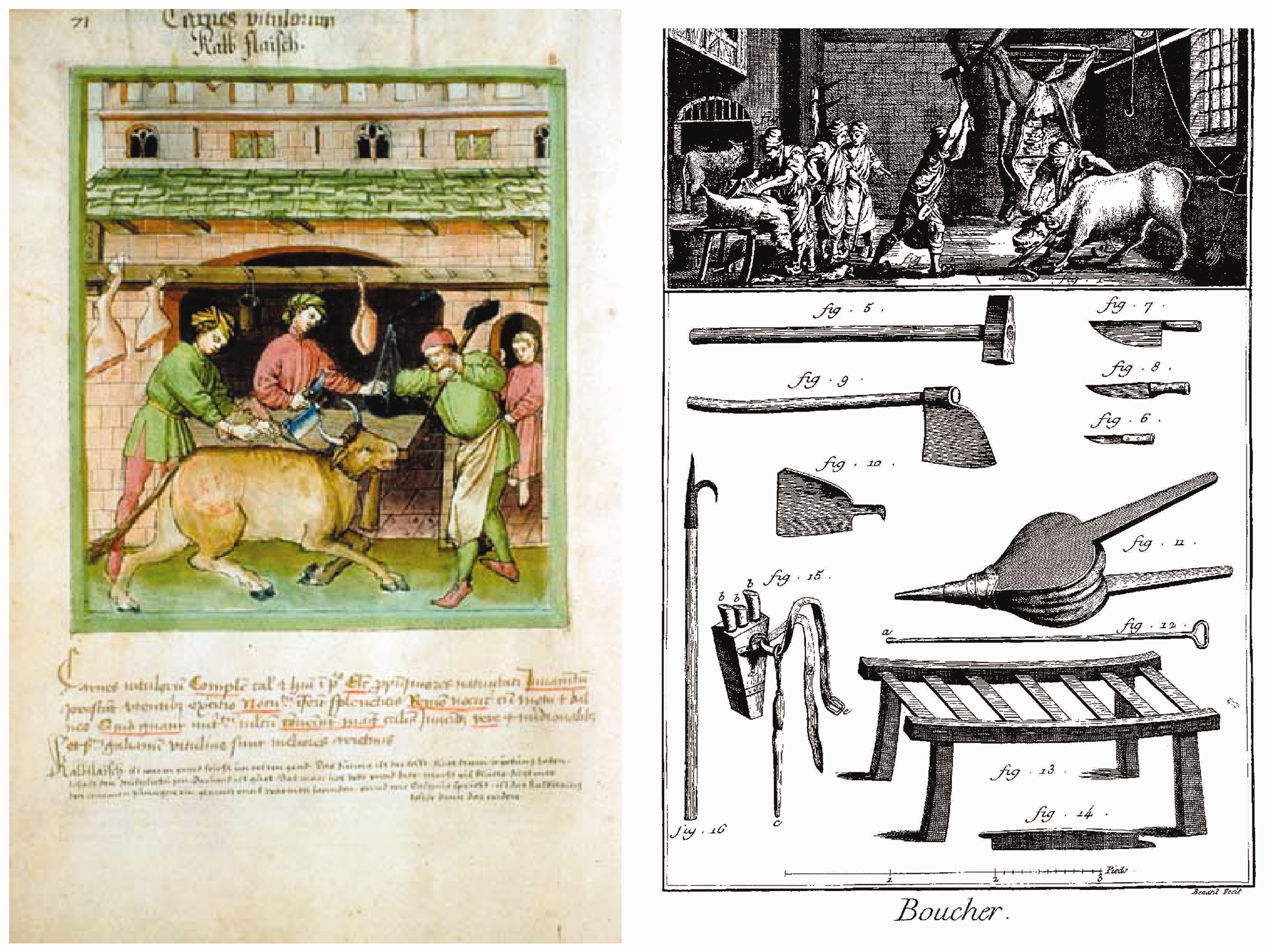
Left: excerpt from the Tacuinum Sanitatis of Ibn Butlân, circa 1400, Bibliothèque Nationale deFrance; Right: excerpt from the Encyclopédie of Diderot and d’Alembert, 1751–1772.
Discussion
By learning this new craft, Maya workers became enskilled, their body hexis and their gestures changed, and integrating these new sensorimotor experiences into their selves changed their own subject positions. The daily engagement with animals likely also introduced new bodily dispositions at a non-discursive level (Bourdieu, 1977: 93). The butchers’ bodies changed and so did their way of moving and being in space. But how concretely were their bodies affected, and how much can we infer from the zooarchaeological evidence?
The data suggest a much higher pace of work, with many more chopped and broken bones than in pre-Columbian times. This line of evidence is corroborated by the historical documentation, which suggests that enormous amounts of animals were slaughtered and processed in the municipal facilities each year. In Antigua Guatemala, Fuentes y Guzmán (1932: 146) states that for the year 1584, more than 9000 cows were killed and consumed in this city of about 17,000 inhabitants (Lutz, 1994: 110). Conjointly, the new butchery techniques introduced the use of heavier implements whose manipulation implied a higher stress on the body, particularly on the upper portions (arm and forearm, back and neck). All of these bodily actions were performed in highly specialized areas and facilities. The compartmentalization of the city compelled the concentration of these activities, deemed unhealthy and unhygienic by the authorities, in a marginal area. The zooarchaeological analysis also suggests that these facilities had a layout specifically designed to facilitate the performance of this job in certain body positions. Restraining the animals being killed and hoisting the carcasses are likely to have been extremely demanding activities for the entire body of each worker.
With the carcasses hoisted in the slaughterhouse and the use of elevated work-tables to chop and saw, this intense physical labor entailed standing in an upright position for long working hours. Legal documents from New Spain regulating the activities of these crafts indeed state that the workday began before sunrise (around 5 am) and finished by the end of the afternoon (Del Barrio Lorenzot, 1920: 217).
The repeated use of heavy implements such as the cleaver or the saw for extended periods of time, the hoisting of the carcasses, and the handling of big quarters of meat likely developed the muscular strength of the native workers, particularly in the anatomical regions of the upper body. Ergonomic studies on meat-cutters in the Modern industry (Viikari-Juntura, 1983) but also among workers in non-mechanized facilities (Mukhopadhyay and Khan, 2015) emphasize the intense stress imposed on these specific areas of the workers’ bodies. Antigua Guatemala slaughterhouse workers might also have developed specific musculo-skeletal ailments related to this intense labor. Although it is difficult to establish a clear parallel between the working conditions of the modern meat-cutters and those of colonial laborers, the data from this study indicate it is likely that they suffered similar syndromes that affected body parts such as the neck, back, and arms. These syndromes include chronic pain, arthritis, and limb joint inflammation in these anatomical regions.
By becoming butchers through these new sensorimotor experiences, the Antigua workers also became enskilled (Ingold, 2001), and this new phenomenological experience would have altered their subjectivity. A wide variety of crafts involving the processing of animal parts were organized into corporate institutions or guilds, known as gremios, that regulated the trade and acted as interlocutors with public authorities (Samayoa Guevara, 1962). These guilds also acted as moral personae in the public arena, for example, by participating in annual religious processions. As emphasized by Herrera (2003: 188), “a corporate type of identity [did] emerge among practitioners of specific trades.” As such, these “guild-like” entities may have replaced the Maya “houses,” which were already disappearing, as social bases of personhood. In the social field of the slaughterhouse, the working bodies, with the development of their upper body strength and the specific ailments linked to their hard labor, also participated to redefine the collective personhood of the butchers. Other probable factors that distinguished them, such as the lingering odors linked to their craft (“the smell of blood”) or a preferential access to meat, cannot be inferred from the zooarchaeological data but are suggested by ethnographic and historical data in other regions (Vialles, 1994: 77, 90). Altogether, these lines of evidence suggest the creation of conditions for the emergence of a new subject position among the butchers.
Conclusion
The zooarchaeological data introduced here constitute a new line of evidence, which together with other pieces of documentation indicate the corporeal changes at work in the slaughterhouse laborers’ bodies. These data even give a finer-grained outlook to these changes by providing insights into the actual gestures and body positions of the practitioners and emphasizing the stress exerted on their bodies by these new tasks.
This evidence seems to confirm that human–cattle assemblages played a crucial role in the emergence of original personal and social identities. As humans modified and shaped cattle bodies into new material components, their own bodies underwent radical transformations that affected their subjectivity. The new butchering technologies not only acted on the animal matter; they also modified the bodies of the workers who filled these new subject positions and became butchers as they were performing these new tasks. These constantly emerging subject positions were also part of a larger process: as a social field, the slaughterhouse was not isolated but participated in the creation of larger social spaces that contributed to shaping the colonial society. As a social field, the slaughterhouse acted as what Foucault would have called a disciplinary device. These marginalized places were thus the arena of emergence of new forms of governmentality that involved an increased control over human and animal bodies.
Footnotes
Acknowledgements
I want to express my deepest gratitude to Susan Gillespie for inspiring this paper and helping me with her critical comments on the early drafts. I thank Norman Muñoz and Claudia Wolley of the Consejo Nacional para la Protección de la Antigua Guatemala for granting me the access to the faunal collections in Guatemala and supporting my research in Guatemala. Justin Kerr ( ) permitted me to reproduce and use some iconographic representations of his database. Maricela Puluc Perez provided some advice on Guatemalan archaeology as well as crucial technical support during the lab phase of this project. I am also grateful to Randee Fladeboe for proofreading and editing the latest version of this paper. Finally, I want to thank the anonymous reviewers whose comments greatly helped to improve this paper.
Declaration of Conflicting Interests
The author(s) declared no potential conflicts of interest with respect to the research, authorship, and/or publication of this article.
Funding
The author(s) disclosed receipt of the following financial support for the research, authorship, and/or publication of this article: The initial stages of this research would not have been possible without the financial support of the Department of Anthropology of the University of Florida and the Florida Museum of Natural History. It was also made possible thanks to a NSF Doctoral Dissertation Improvement Award (Title: Social and Ecological Effects of Cattle Introduction, #1930628).