




Abstract
The Mausoleum of Halikarnassos (modern Bodrum, Turkey) is one of the wonders of the ancient world, although little remains above ground to give visitors a sense of its original grandeur. While previous scholarship has studied the Mausoleum’s place within the canon of classical Greek art, this paper identifies specifically local perceptions of the monument through interviews with residents of Bodrum, exploring how different images, values and futures are projected onto the archaeological site, in conversation with both national and local discourses of the past. The responses of local inhabitants, living in an Aegean town dramatically transformed by mass tourism, urbanisation and migration, encompass being underwhelmed, pragmatically interested in the monument’s economic potential, or proud of its status, fuelled by the local discourses of “Blue Anatolianism” and “Karianism”. We argue that these influential discourses allow different heritage actors to turn the Mausoleum into a specific kind of locally rooted “heritage capital” and to negotiate a distinctive identity for the monument’s otherwise ambiguous position within the landscape of Turkish national heritage.
Keywords
Introduction
The heritages of the classical Greek and Roman past have a complex place within contemporary Turkish memory politics, as is evident from a number of recent events that have attracted both national and international attention. On 29 October 2018, Sedef Yavuzalp, the Turkish ambassador to Uganda, dressed in historical attire to represent Helen of Troy in an official ceremony celebrating the Republic Day. 1 While this followed other re-enactments from Turkey’s past in state ceremonies in Ankara’s Presidential Complex hosted by Recep Tayyip Erdoğan, 2 Yavuzalp’s clothing provoked an overwhelmingly negative response on Turkish social media, where it was described as an inappropriate celebration of Greek and/or Roman heritage. Although Yavuzalp pointed to the fact that 2018 was the Year of Troy, celebrating the twentieth anniversary of its inclusion on the UNESCO World Heritage List, and also marked by the inauguration of a new museum near Çanakkale, she was ultimately recalled from her post. 3 On a different scale, responses to the transformation from museums to mosques of the Hagia Sophia and Chora churches during the summer of 2020 reveal equally complex constructions of the place of Greek and Roman as well as Christian heritage in contemporary Turkey (Harmanşah, 2020), where there is a schism between the celebration of early Republican/secularist and Ottoman/Islamic pasts. Indeed, Erdoğan’s conversion of the Hagia Sophia from a museum to a mosque overturns the secular denomination it was given under Atatürk, in order to appeal to a conservative Muslim voter base in Turkey, to whom the Ottoman past is offered as a focus of nostalgia (Bozoğlu, 2020).
As one of the seven wonders of the ancient world, the Mausoleum of Halikarnassos (modern Bodrum) occupies an equally multi-layered place within the heritage landscape of contemporary Turkey (Figure 1). 4 It was constructed in a complex cultural setting with local, Greek and eastern influences in the mid-4th century BCE as the monumental tomb of the satrap Maussollos (c. 410–353 BCE) and his sister-wife Artemisia II (died c. 350 BCE). Originally, it rose to a height of 40 m and was adorned with sculptures by the most famous contemporary Greek artists (Jeppesen, 2002). Its fame in classical antiquity meant that it inspired a new type of dynastic funerary monument emulated by the Roman Emperor Augustus in his tomb on Rome’s Campus Martius. The Mausoleum remained relatively intact until the 15th century CE, when the crusader Knights Hospitaller dismantled large parts for the construction of Bodrum’s castle of St Peter (Jeppesen and Luttrell, 1986). Although conservation efforts in the 1980s and a small archaeological museum on the site preserve and communicate the results of British and Danish excavations undertaken since the mid-19th century (Funder, Kristensen and Nørskov, 2019: 82–98), precious little survives above ground today to give a sense of the monumentality and grandeur that once secured the Mausoleum a place on the list of wonders alongside, amongst others, the Great Pyramid at Giza and the Colossus of Rhodes. Visitors have to make do with imagining rather than experiencing this wonder of the ancient world.
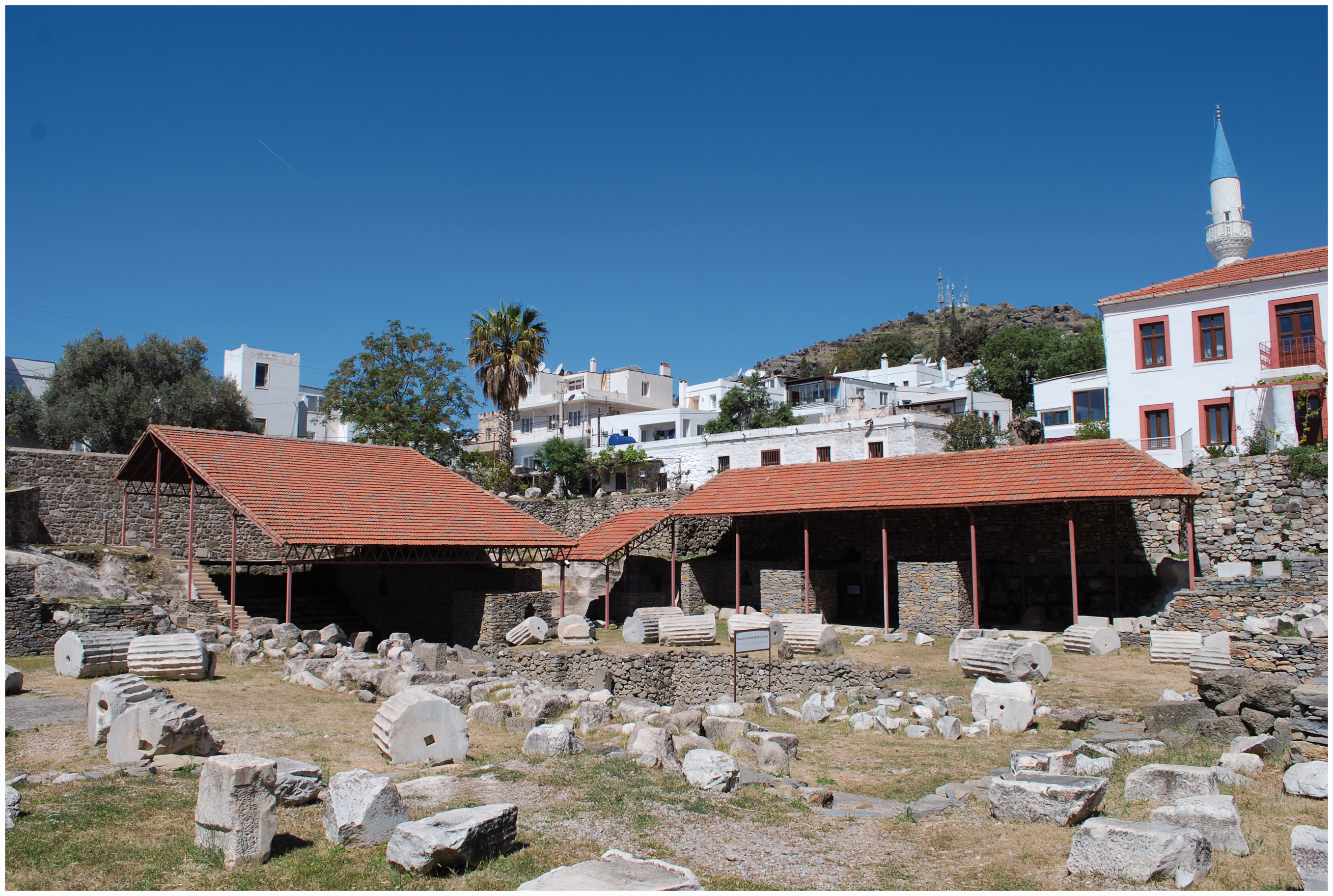
The Mausoleum of Halikarnassos, April 2018 (photo: authors).
In spite of its ruinous state, the Mausoleum is extensively discussed in scholarship on classical Greek art and archaeology, beginning with Cesariano’s imaginary reconstruction for his 1521 Vitruvius translation (Figure 2). On the basis of ethnographic fieldwork and interviews, this paper follows a different path by exploring the Mausoleum as a locus of locally rooted identities within a complex geopolitical and cultural setting that is contested at many levels. Over the past century, Bodrum, a small town on Turkey’s Aegean coast, has experienced drastic changes through an explosion of mass tourism, urbanisation and migration, most dramatically since 2012 as part of the European migrant crisis when it became a hotspot for refugees fleeing the war in Syria. Our work reveals considerable tension between the allure of a famous archaeological monument from an illustrious past on the one hand, and the Mausoleum’s present state on the other: it is a relatively little-visited archaeological site perceived as a mere shadow of both what it once was and what it could be. Indeed, one interviewee referred to the Mausoleum as a “phantom” (R18). We argue that this absent materiality of the Mausoleum is a fundamental issue that allows local heritage actors to mobilise powerful narratives around it with a bearing on their own self-identification within the highly contested social and political landscape of contemporary Turkey. The paper is complemented by a documentary film illustrating some of these tensions in Bodrum’s perception of its past (www.whoiseuropefilm.com/a-film-in-six-acts/, act four).
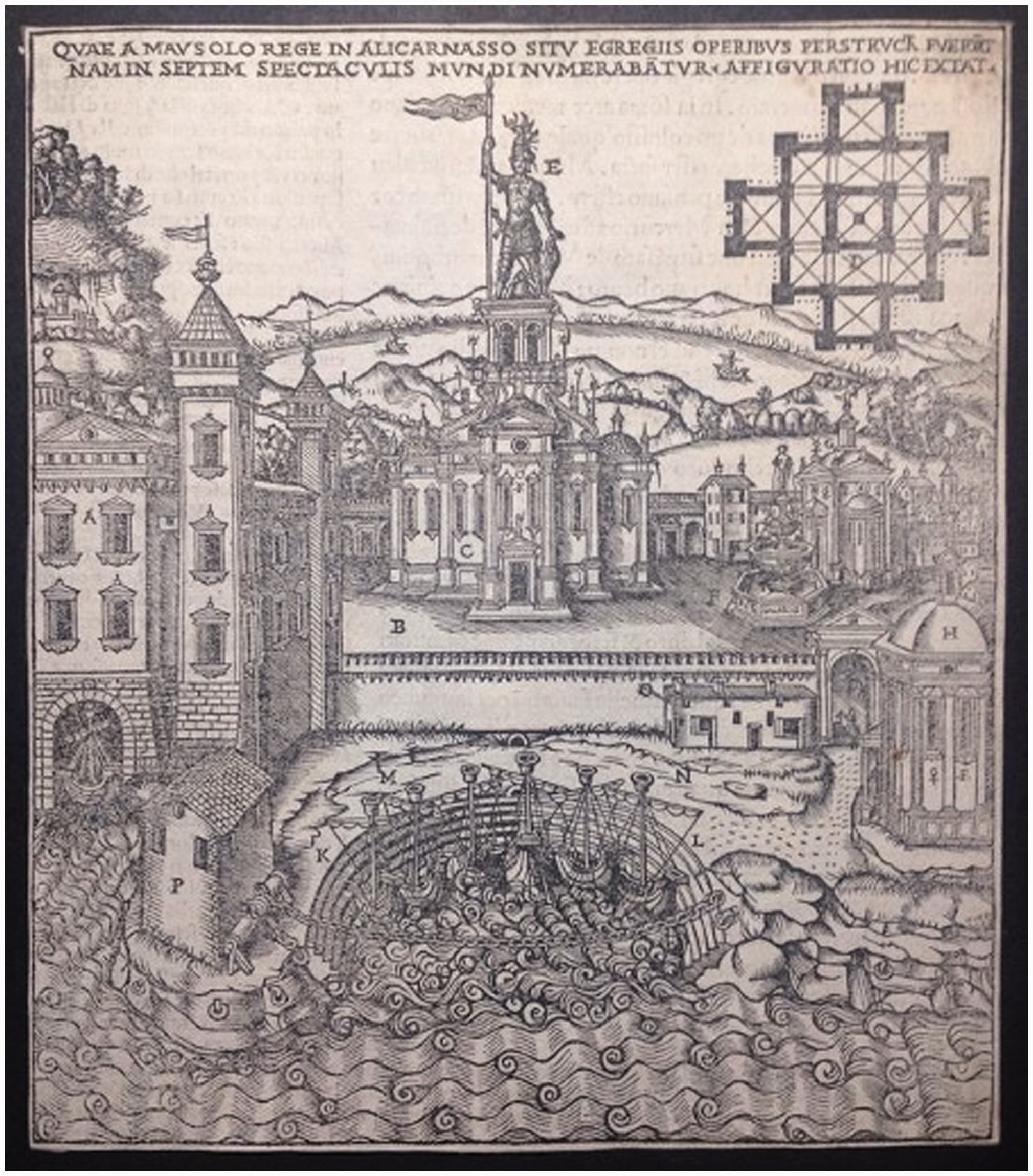
The Mausoleum of Halikarnassos in the European cultural imagination: Cesare Cesariano’s reconstruction for his Italian translation of Vitruvius’ De architectura (1521).
Bodrum’s pasts and presents
The past matters in Bodrum, just as it does everywhere else in Turkey. However, exactly which past matters is an increasingly contested issue, as the town and the country as a whole are undergoing drastic social and political change (Mansur, 1972, 1999; Sancar and Severcan, 2010). Once a small village on the Aegean coast dependent on fishing and agriculture, beginning in the 1960s Bodrum became a popular residence of liberals and artists, including such influential figures as the poet Ilhan Berk (1918–2008) and the flamboyant singer-actor Zeki Müren (1931–1996). Bodrum’s sunny climate and natural attractions also attracted growing numbers of tourists (Tanrıöver, 2011). Today, the town is home to 180,000 people, a number that doubles during the summer, when tourists and owners of second homes and yachts flock to the region, with an increasingly negative impact on the local environment and infrastructure (Koç et al., 2017, 2020). Although still considered a non-urban destination, Bodrum is in fact becoming a miniature version of İstanbul with increasing gentrification and the construction of new gated communities, private schools and hospitals. Like many other communities on the Aegean coast, it is a stronghold of the Kemalist Republican People’s Party (CHP).
In response to the rapid transformation of Bodrum, the local community is increasingly searching for a resilient identity rooted in the region’s history and sense of place (Gür, 2002). One locally administered Facebook group, “Eski Bodrum” (Old Bodrum), has some 30,000 members posting images of the town before the “tourism boom”, displaying a general sense of nostalgia also evident in many of our interviews (Özyrürek, 2006). 5 As one respondent phrased it, “everybody talks about the old Bodrum, and I actually miss it” (R11). Accordingly, the local government invests in the past through its official communication strategy: the seal of Bodrum Municipality (Bodrum Belediyesi) depicts the silhouette of the castle of St Peter, in addition to an amphora and a series of blue waves that signal the city’s maritime heritage and its rich record of underwater archaeology (Bass, 1996).
The Mausoleum’s role in constructions of a local civic identity and past is complex, being at first glance strikingly absent. Indeed, in spite of the global fame of the Mausoleum as a world wonder, its visibility in the cityscape of Bodrum is limited, certainly beyond individual initiatives such as popular history books and biographies of Maussollos and Artemisia (Kazmaz, 2008; Öndeş, 2017). Our survey of Bodrum’s numerous souvenir shops uncovered very few items representing the Mausoleum. Much more common were depictions of the castle, which has housed the Bodrum Museum of Underwater Archaeology since 1964; or more “generic” ancient monuments such as the town’s Greek theatre, which was partially reconstructed between 1976 and 1985 (Pedersen and Isager, 2015: 294). It is also the castle, rather than the Mausoleum, which was placed on the tentative UNESCO World Heritage list in 2016 (https://whc.unesco.org/en/tentativelists/6121/, accessed 25 June 2020). Although the castle was built by Christian crusaders, it is preserved (and reconstructed) in a more pristine and monumental state than the Mausoleum (Alpözen, 1983). This “completeness” was emphasised in several interviews with locals: “The castle [is the most important place in Bodrum], because the silhouette is still there” (R8). The recent renovation of the castle has taken place under intensive local scrutiny, most notably at a public conference that we attended in December 2017, which was co-organised by Bodrum Municipality, the Bodrum Chamber of Architects and the Mediterranean Countries Academy Foundation (Akdeniz Ülkeleri Akademisi Vakfı), a locally prominent and media-savvy heritage NGO (http://academia.org.tr, accessed 13 November 2020).
In contrast, and in spite of its ancient fame, the Mausoleum is markedly less prominent. Although the name Mausoleum is occasionally used by local businesses, such as the cab company Mausoleum Taksi, the city has no streets or public places named after either Maussollos or Artemisia, to the chagrin of one respondent (R18). The archaeological site itself is only accessible from a single entrance on the narrow and heavily trafficked Turgut Reis Caddesi, which lies close to but outside the marina most frequented by tourists. In 2017, fewer than 20,000 people visited the wonder. 6 Herodotus (c. 484–425 BCE), the so-called “father of history”, who was born in Bodrum, has fared slightly better, although his local significance is a largely under-researched topic that would require a paper of its own. Bodrum Municipality operates the Herodotus Cultural Centre (Herodot Kültür Merkezi) in Konacık, a suburb of Bodrum; and in 2010 a group of retired citizens founded the Herodotus Third Age Academy, linking their activities to the charisma of this important historical figure (http://www.hero3a.com, accessed 10 August 2020). Recently erected plaster copies of statues of Herodotus, Maussollos and Artemisia close to the entrance to Bodrum Castle are the most conspicuous monuments to classical heritage in Bodrum’s cityscape (Figure 3). These replicas – ironically also monuments to absence, since no contemporary portrait of Herodotus survives and the originals of Maussollos and Artemisia are now in London – do little to detract from the fact that the Mausoleum, to many people, remains a phantom.
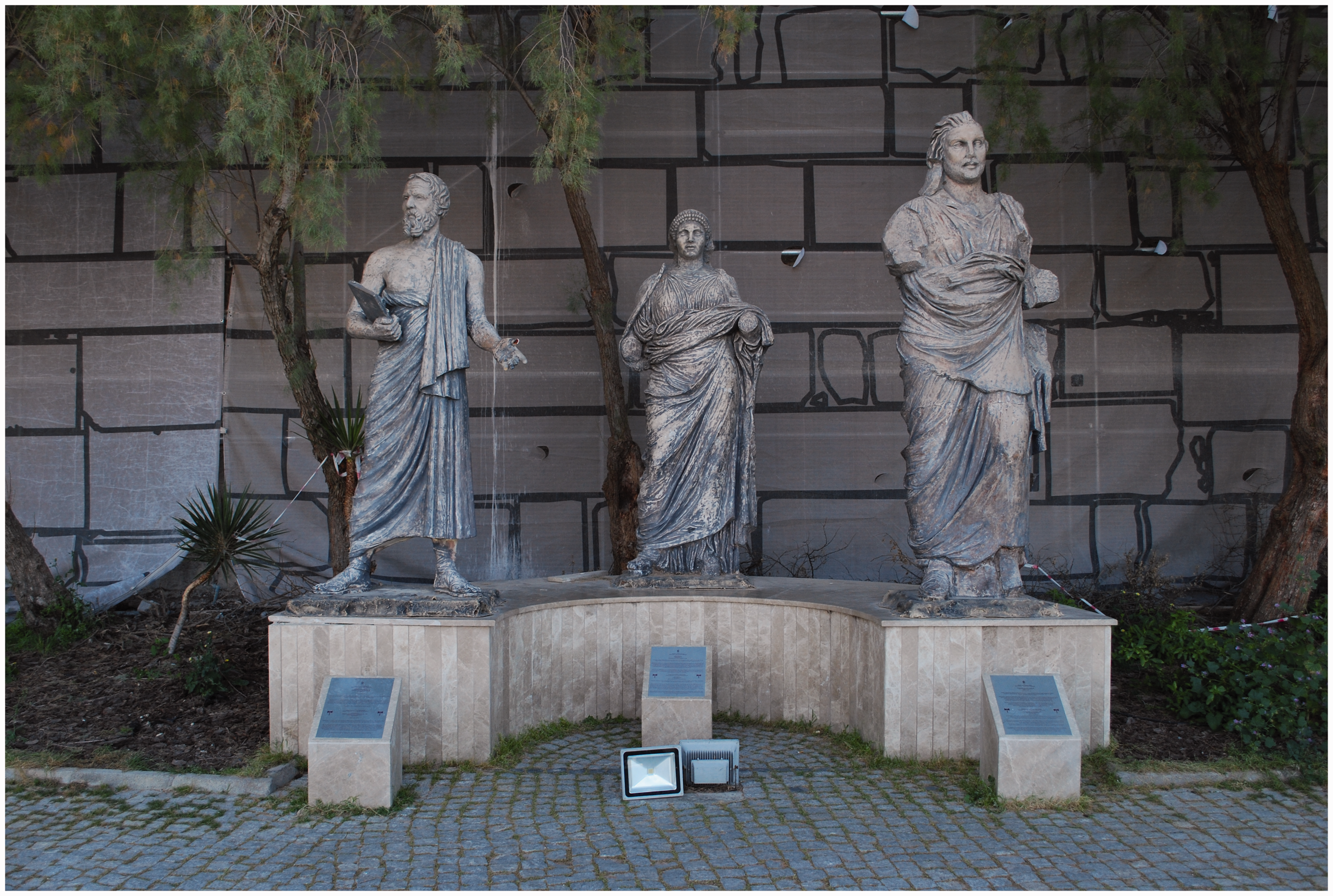
Copies of statues of Herodotus, Artemis and Maussollos by the entrance to Bodrum Castle, April 2018 (photo: authors).
The “classical past” and Turkish heritage
To contextualise the Mausoleum’s absence and the relationship between Bodrum’s multiple pasts and their contemporary roles, this section turns to the broader context of Turkish heritage politics from the Late Ottoman period onwards. It will focus on classical, here defined as Greek and Roman, or “Hellenistic”, heritage, which has a particularly complex place in both state-sponsored and popular narratives of archaeology (Anderson, 2015; Bahrani et al., 2011; Çelik, 2016; Davis, 2003; Kersel et al., 2008; Özdoğan, 1998; Shaw, 2003; Shoup, 2008).
In November 1856, the British vice-consul Charles T. Newton (1816–1894) arrived in Bodrum, two months later locating “the true site of the Mausoleum” (Newton, 1862: 86). Newton discovered a rich hoard of sculptures, including colossal statues interpreted as Maussollos and Artemisia that he transported to London, where they remain on display in the British Museum (Challis, 2008: 55–76; Jenkins, 1992: 168–185). Newton’s removal of the Mausoleum sculptures attracted the ire of the Ottoman administration, contributing to the introduction of new antiquities laws in 1874, 1884 and 1906 that defined Turkish heritage in revealing ways (Díaz-Andreu, 2007: 112–113; Shaw, 2003: 73–74, 89–96, 110–130). The 1884 Antiquities Law is particularly interesting because it began a process through which the Ottoman Empire appropriated, or to use Wendy Shaw’s term “adopted”, its classical past, implying that the West no longer had a right to claim it as its own. In the Law, antiquities included “all of the artifacts left by the ancient peoples who inhabited the Ottoman Empire” (cited from Shaw, 2003: 111). Shaw argues that this served as a claim to territory through archaeology as well as a policy of multi-culturalism that adopted the peoples who lived within the Empire (Shaw, 2003: 112). The Law of 1906, authored by the director of İstanbul’s Imperial Museum, Osman Hamdi, did not include the same strategic claim to possession, opting instead to describe a wide assortment of antiquities without specific use of terminology such as “classical” or “Hellenistic”. The lack of any differentiation between classical and other forms of heritage operated as a blanket claim to everything and was a way of getting around the complex issue of cultural ownership of specific pasts.
With the establishment of the Turkish Republic in 1923, Mustafa Kemal Atatürk (1881–1938) faced the challenge of creating a new, national identity, further contributing to the ambiguous status of classical heritage (Atakuman, 2008; Bozoğlu, 2020: 42–65; Coşkun Özgünel, 2010). Archaeology played an important part in Atatürk’s vision for the new republic (Goode, 2007; Hodos, 2015: 89; Savino, 2017; Shoup, 2008: 119–128), encapsulated by the Turkish Historical Thesis (Türk Tarih Tezi), in which the Hittites and Phrygians that had populated the Anatolian plain were especially important. The thesis and the broader ideology of “Anatolianism” continue to be highly influential in a less radical form defined as the Anatolian Civilisation Discourse, which “constructs the national identity around ‘the peoples of Anatolia’, which is an imagined community across ages and which shares a common identity of ‘Anatolian-ness’” (Gür, 2007: 49, echoing Anderson, 1983). The Turkish Historical Thesis stresses deep continuities in Turkish history, although with significant omissions (Özyrürek, 2007). As a consequence of the conflict with Greece in the Turkish War of Independence (1919–1923), the classical past was often neglected in spite of its prominence in the archaeological landscape of Asia Minor (Davis, 2003; Redford and Ergin, 2010). Greek and Roman antiquities consequently play a minimal role in Ankara’s Museum of Anatolian Civilizations, which is designed to embody the Kemalist conception of Turkish archaeology (Gür, 2007; Whitehead and Bozoğlu, 2015). The more recent tussle during the AKP government between what has become known as “Neo-Ottoman” memory and Early-Republican memory has further contributed to the sense that classical heritage has not conspicuously been mobilised in identity discourse at state level, even if adverts aimed at foreign markets sponsored by the Ministry of Culture and Tourism conspicuously feature classical ruins. Such adverts demonstrate how national agendas compete with the flow of revenue from international tourists.
In addition to these influential state-sponsored discourses of the Turkish past, a range of other narratives in relation to local heritage can be identified, both in Bodrum and the wider region, where important divisions in Turkish society, such as secular/religious and urban/rural, are especially apparent (Luke, 2018). One particularly pervasive influence is the so-called “Blue Anatolia” movement, which arose among Turkish humanist intellectuals, many with close ties to Bodrum (Bilsel, 2007; Sharpe, 2018). The “Blue Anatolia” movement started in the 1940s, but has deeper roots, including the “New Hellenism” literary movement of the Late Ottoman period (Sharpe, 2018: 171–172). “Blue” in this context refers to the colour of the Mediterranean Sea, as well as, more symbolically, the maritime identity of its coastal regions and the cross-cultural connections that they have facilitated for millennia, while the use of “Anatolia” pertains to the Republican project of “Anatolianism”. One important aspect of the “Blue Anatolian” view of Turkish history is that it extends beyond the Anatolian “homeland” and embraces the contested islands of the Aegean Sea historically claimed by both Greece and Turkey. “Blue” in this sense also emanates neo-Ottoman national romanticism, as evident in the emerging rhetoric of Mavi Vatan (“Blue Homeland”) in current Turkish politics in the context of the maritime border crisis with Greece which is ongoing at the time of writing.
The prolific author and broadcaster Cevat Şakir Kabaağaçlı (1886–1973) is among the most influential figures in the “Blue Anatolia” movement (Oppermann, 2013). Together with other intellectuals, such as Azra Erhat (1915–1982), who translated Homer into Turkish, Kabaağaçlı re-framed the role of classical heritage within the larger narrative of Turkish identity, and remains a pervasive influence. Kabaağaçlı spent a substantial part of his life in Bodrum, initially as a prisoner and later as a tour guide (Williams, 2013). He used the pen name the Fisherman of Halikarnassos (Halikarnas Balıkçısı) in a deliberate reference to Bodrum’s classical heritage. In radio shows and books, Kabaağaçlı argued that what many people (Europeans as well as Turks) regarded as Greek heritage was in fact Anatolian, stressing “site-specific” cultural achievements, for example, that the biggest ancient “Greek” cities were located in Asia Minor; that Homer was born in İzmir (ancient Smyrna); and that Herodotus was born in Bodrum (Halikarnas Balıkçısı, 1980: 159–160; 1982: 153). Kabaağaçlı’s writing often collapses time by jumping back and forth between historical periods and cultures, continuously emphasising the significance of place. Given the Fisherman’s special relationship with Bodrum, it is no surprise that his writings occasionally turned to the Mausoleum. In Merhaba Anadolu (“Hello Anatolia”), he presents an account of the history of the Mausoleum and considers the differences in style of its sculptures in respect to Greek art (Halikarnas Balıkçısı, 1980: 145). Kabaağaçlı also discussed Halikarnassos’ linguistic origins, observing that “the names which end with Assos, Ossos are from the same root and they have no link with Greek” (Halikarnas Balıkçısı, 1980: 138). 7
Blue Anatolianism and Kabaağaçlı’s writings in particular have a significant impact on the ways in which classical heritage is conceptualised in western Turkey. Although Kabaağaçlı explicitly stated his dislike for the science of archaeology, many professional archaeologists revere him.
8
8 For example, in a recent newspaper interview, Fahri Işık, professor of archaeology at Antalya’s Akdeniz University and director of the Patara excavations, demonstrates his intellectual debt to Kabaağaçlı’s “re-centring” of the ancient world: If the excavations of ancient cities did not start at all and you asked me “where would you like [to excavate]”, I would choose Miletus. Because, Athens is not the main city of Europe; it’s Miletus. Actually, it was the people of Miletus who created the Western civilizations. (Anonym, 2017)
The Mausoleum as local heritage
Aiming to analyse contemporary perceptions of the Mausoleum and understand its role in local constructions of identity, we conducted 19 semi-structured interviews with a total of 25 respondents in Bodrum, as part of an emerging conversation about the local significance of archaeology in eastern Mediterranean communities (see, for example, Duke, 2007; Human, 2015; Loukaki, 2008; Stroulia and Sutton, 2010). The interviews were conducted in April 2018, in the aftermath of two significant episodes in recent Turkish political history: the March 2016 statement of cooperation between the European Union and Turkey aiming to halt the wave of refugees from the Syrian civil war, and the attempted coup d’état on 15 July 2016. Both episodes had a considerable negative impact on the number of international tourists visiting Turkey, although this was slowly beginning to pick up again. The respondents were found using snowball sampling following two paths. The first focused on members of the town’s self-perceived “cultural elite”, such as architects, archaeologists and other intellectuals, many of whom are active in public heritage debates and have moved to Bodrum from other parts of Turkey, partly because of its climate but also because of the liberal culture and the commercial opportunities and amenities with which it is associated. The second path focused on communities in the Tepecik neighbourhood, in which the Mausoleum is located and whose livelihoods depend more directly on tourist revenue.
Following excavations between 1966 and 1977 by the Danish archaeologist Kristian Jeppesen, the Mausoleum was turned into an open-air museum. Musealisation protected the remains but made the Mausoleum inaccessible to the local public in significant and underappreciated ways. For example, parts of the Mausoleum grounds have been used for the accommodation of museum staff, a differential treatment that causes some resentment among locals (R1). Even more disconcertingly, a wall was erected around the site, protecting its remains but also giving it a fortress-like feel (Figure 4). Many respondents reacted very negatively to the impact of this wall on their community:
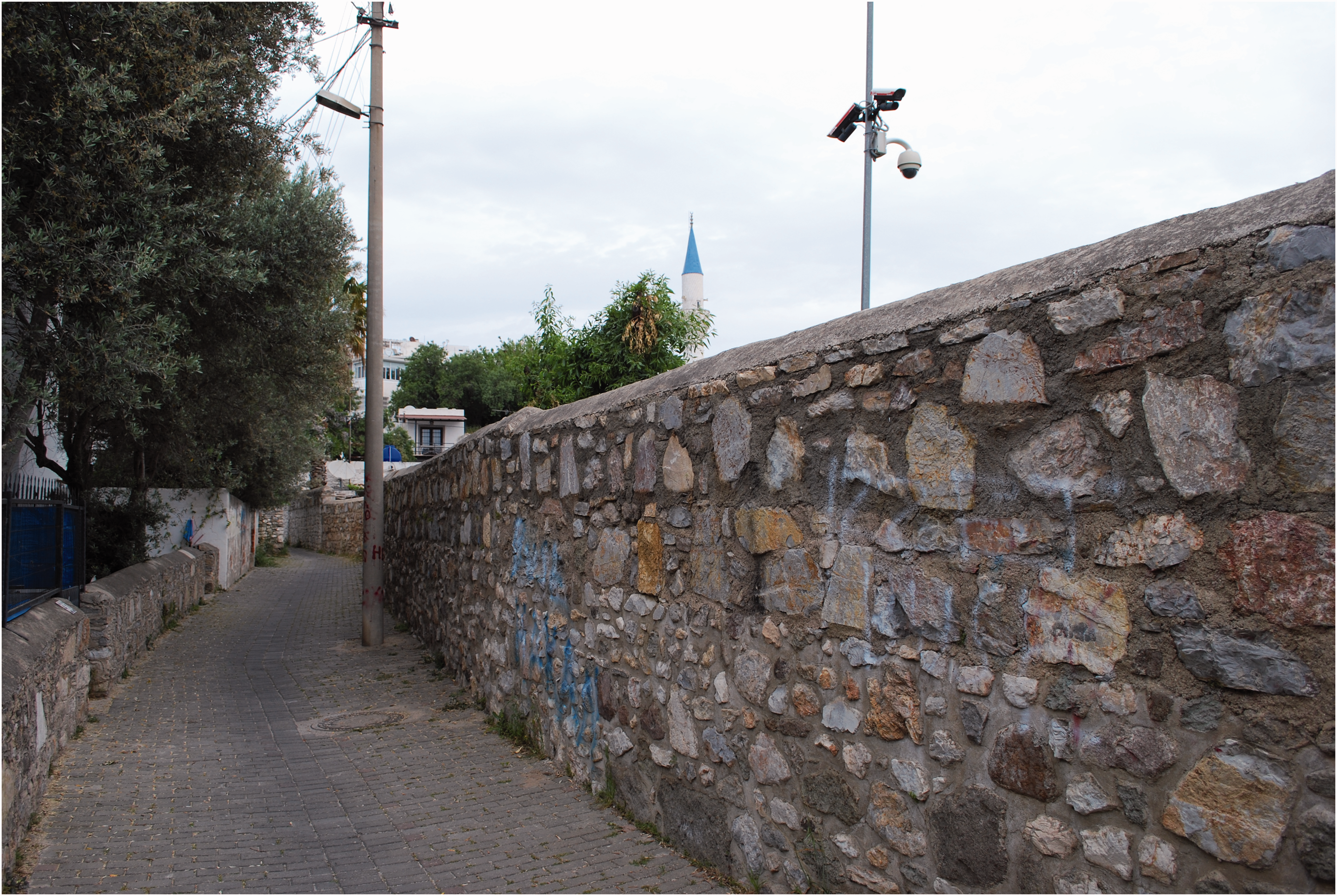
The wall around the Mausoleum site in Saray Sokak, April 2018 (photo: authors).
They should demolish those walls. Those walls stand there like the Berlin Wall. As if they are hiding stuff inside. That’s not right. (R14)
In light of such sentiments, it is unsurprising to find in our interviews that few locals visit the Mausoleum. Those that do consider it to be a place of rather limited appeal. Even the self-described intellectual elite were infrequent visitors. Indeed, the most common perceptions of Mausoleum visits were of absence and disappointment, as evident from this selection of responses: As a museum I have visited only once or twice because there are only stone ruins over there … There is no reason to visit the grounds when the monument is not there … Tourists visit because they hope to see something because this place is one of the seven wonders of the world. It is devastating not to be able to see the original work. (R15) This is the eighth [sic] wonder of the world, right? But I really want to see what the other seven wonders are like … Honestly, it’s a total disappointment. (R8) There is nothing to be seen that has any value. (R4)
In spite of the seemingly limited appeal of visiting, many interviews revealed a proactive approach towards the role of the Mausoleum as a source of local pride. An important example of vernacular preservation is found in a private garden east of the Mausoleum “compound”. In this garden, one of Jeppesen’s trenches remains open and has been maintained by a family with minimal support from the authorities and in spite of the fact that there is no signage guiding visitors to this area (Figure 5). The Mausoleum is also included in educational initiatives organised by passionate locals. Echoing Fahri Işık’s post-colonial sentiments, a local schoolteacher noted the political stakes of local heritage: “If you do not stake a claim to your past, someone else will” (R7). In response to this call for action, he described how he used the Mausoleum in his own teaching.
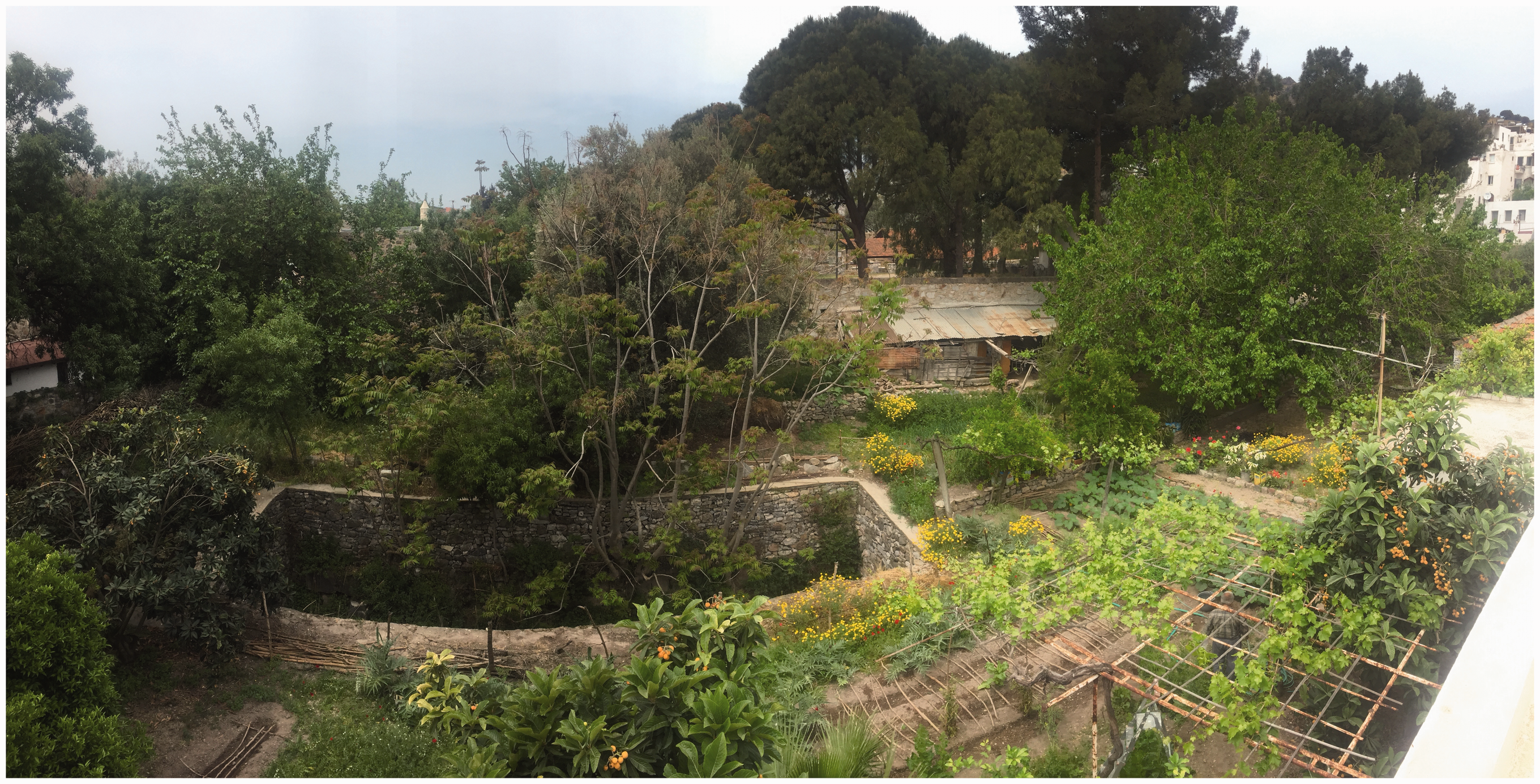
A trench from the Danish excavations in a private garden in Tepecik. The main Mausoleum site is visible behind the trees (photo: authors).
Other respondents noted a feeling of ownership of and pride in the Mausoleum, again highlighting its ancient status as a “wonder”: When I was a kid, I was always proud of one thing. When we travel outside of Bodrum, we never say that we are from Muğla [the province in which Bodrum is situated]; we always say that we are from Bodrum. I used to say that we have one of the Seven Wonders of the World. One of the wonders is in my province. It is such a thing of honour for me. (R15) All of the artists who worked on the Mausoleum came from Greece such as Bryaxis and others, but that must be because of Maussollos’ request, because they all made sculpture according to the local style … In Anatolian style, the woman is always positioned on the right side of the man. The quadriga – a carriage drawn by four horses – sculpture at the top of the Mausoleum shows the woman situated on the right side. (R20) [Herodotus] says that the language spoken in Karia was very coarse. Today, you can hardly understand the speech of Bodrum natives. (R7)
At the time of writing, plans for the Mausoleum site were being developed by both government agencies and an NGO. Under the sponsorship of the Ministry of Culture and Tourism, the Halicarnassus Mausoleum Landscaping and Exhibition Project plans to protect and revitalise the site with a small number of new structures and didactic displays (http://mausoleumproject.atolyemimarlik.com, accessed 10 August 2020). The website prepared by the architectural team specifically addresses the issue of the Mausoleum’s absence, noting that “its complete obscurity is actually part of its reputation”.
A competing project, designed and promoted by the Mediterranean Countries Academy Foundation (MCAF), goes much further, proposing to reconstruct the Mausoleum in its original location and to its original height, using steel and transparent materials (http://academia.org.tr/mozole-projesi.html, accessed 10 August 2020) (Figure 6). The MCAF uses the Mausoleum as a key marker of a distinctive, local identity with a particular Mediterranean outlook that can draw in tourists. The group rightly refers to the need for further conservation of the Mausoleum – while at the same time proposing to build on top of the archaeological remains, on the premise that the site has a largely unrealised potential that should be mobilised to promote the town and its heritage. The project has attracted local, national and even some international media attention. While grand in scale, the project’s philosophy of reconstruction mirrors plans to rebuild the equally ruinous Temple of Artemis at Ephesus, another wonder of the ancient world, as well as the more common practice of anastylosis at archaeological sites across Turkey, including Bodrum’s own theatre. The project strikingly evokes local pride, the traditional role of the Mausoleum in the European cultural imagination (cf. Figure 2), and the neo-liberal opportunities of the experience economy that are so strongly felt in Bodrum’s contemporary landscape. It is essentially a hyperreal iteration of Maussollos’ original monument (Baudrillard, 1994).

The Mausoleum as simulacrum: Computer image of the proposed reconstruction project within the cityscape of Bodrum (courtesy of Akdeniz Ülkeleri Akademisi Vakfı).
Responses to the proposed reconstruction were varied. Locals in Tepecik generally had only vague knowledge of the project; some had heard that something made of glass was being built but were unsure of the specifics. Those familiar with the project were often positive, highlighting its potential to attract more tourists: “There is already a miniature model [in the museum]. If they built a full-size one, it would be great” (R11). In contrast, many outspoken members of the “elite” fiercely opposed the project, often citing what they described as the ignorance of the general public: “people are very lazy … they are waiting to see what it was … they want to see exactly what it was” (R17). They also repeatedly referred to best practices and international codes of conservation. Different responses to the reconstruction clearly expose the different educational, social and economic backgrounds of our respondents, but also different conceptions of the value of heritage as either abstract, symbolic capital or as something material and concrete.
Yet the reconstruction is in fact only one part of a much larger project developed by the MCAF to transform the Mausoleum and realise its potential as a heritage site with global appeal. Plans have been drawn up to connect it directly with Neyzen Tevfik Caddesi and Bodrum’s marina as part of a larger museum complex, drawing inspiration from the New Acropolis Museum in Athens. As some respondents noted, this proposal has considerable merit in turns of facilitating access to the Mausoleum complex (R17; R20; R21).
However, the project would require the demolition of the Cumhuriyet Elementary School, Bodrum’s oldest school, founded in 1907 and currently used by some 500 students. As the possible location of Halikarnassos’ agora, the area is also archaeologically rich. Several respondents reported a strong affiliation with this school, citing childhood memories. In the school, we interviewed a very active teacher who routinely took his students to the Mausoleum to draw and re-enact the poses of the statues of Maussollos and Artemisia, encouraging them to engage with what he specifically framed as Karian heritage. He objected to the new project: The Mausoleum may be rebuilt. A replica may be built. I am not against that. But building something over there should not affect our school. The Mausoleum already has its own entrance. It has a larger open-air area than our school has. (R7)
Overall, the interviews revealed a range of different ways in which the Mausoleum is key to local pride and a particular sense of place in Bodrum. Some use a variety of strategies and techniques to characterise the site as part of a “Karian” identity, noting, for example, that the sculptors of the Mausoleum used a local style and that an Anatolian “cult of rock” explains the construction of the tomb in the first place (R20). This rhetoric usefully grounds the distinctiveness of an individual group within a crowded landscape of Turkish archaeology and identity politics. In Tepecik, the Mausoleum’s immediate neighbours have different perceptions. For them, a more down-to-earth, pragmatic pride in the site’s significance (and in the fact that people come to visit it), is common, even though disenfranchisement and a clear sense of irrelevance are also evident. The Mausoleum is part of the physical, economic and imaginative space of the town that they negotiate in their everyday lives, but without the temporal constructions and connections made by elites who invest the history of the site with identity politics. Their relationship with the site was connected to matters of livelihood: if the site was “improved”, more people would come, bringing more business with them.
The Mausoleum and Karian identity politics
As noted, some of our respondents took care to distinguish the Mausoleum through the discursive strategy of promoting its “Karian” identity, often as a corrective to the influential narrative of a classical “Greek” masterpiece prevalent in European scholarship. Although the contemporary meanings of a Karian identity are varied, it captures many of the qualities of the Bodrum region’s contemporary identity as a meeting place of cultures that looks both to the east (and thus more traditional Republican Anatolianism) and to the west (and an Aegean or pan-Mediterranean identity that, however, also has neo-Ottoman connotations). The label furthermore appropriates classical heritage within a local cultural framework, constructing a sense of distinctiveness and belonging that is unique within the multiple competing identities in contemporary Turkey. As such it has particularly strong appeal among members of a small but vocal heritage elite who aim to mobilise local archaeology for their own purposes and who have been referred to as “heritage entrepreneurs” in other contexts (Escallón, 2017).
Potential motivations for this strategy of framing the Mausoleum include the creation of a particular kind of symbolic capital, inasmuch as the Karian nature of the site renders it unique, bestowing distinction – in Bourdieu’s sense (1984) – on both the place and the heritage actors who work on it. In this view, it is not just any classical site in Turkey. The insistence on the Karian identity of the site is part of the tense negotiation of where – in the world, and in time – we can locate “civilisation” as a heritage to claim. If the “Karian civilisation” is distinct from that of classical Greece, then this opens the way for alternative claims about where exactly the civilised, democratic, modern world (all discursively connected to imaginaries of the classical past) comes from, and which place and people, therefore, can take credit for this. The Karian framing is therefore a response to the contested place of classical antiquity in Turkey both nationally and regionally. In the light of contemporary geopolitical contestations, the claims of the “heritage entrepreneurs” indeed bear witness to a complex negotiation of identity that makes the local archaeology of the Bodrum region different from other parts of Turkey as well as anything in Greece, building on the philosophy of Blue Anatolianism and its paradoxical conception of “Hellenism without Greeks” (Sharpe, 2018). The Mausoleum may be a phantom, but through the prism of “Karianism” it becomes a special and fascinating one that belongs strictly to this region and not to wider geographies of antiquity, nor to modern Greece.
Furthermore, the Karian framing of the monument is potentially a unique selling point for heritage tourism; and the project involving the reconstruction of the monument as an immense glass replica shows how relevant to economic interests the phantom Mausoleum is in the city. While many professional archaeologists vocally oppose the project, comparable impulses to valorise the distinctive Karian character of the monument and the area underpin the proposed reconstruction. Disagreements focus not on the Karian identity issue, but on the proper way of expressing that valorisation: in a spectacular reconstruction that would suit the new identity of the city as a tourist hotspot and home for new wealth and “concrete luxury”, or as a unique archaeological site that should be preserved and safeguarded with non-invasive principles of expert care defined by global regimes of heritage management. Its very absence means that the Mausoleum then becomes a site of imagination about the past, a screen onto which desires can be projected about what the past should have been and, in other ways, desires for what the future should be.
The Karian identity characterisation of the Mausoleum has some appeal beyond the elite. For instance, “Karia” is the name of several local shops and hairdressers in Bodrum. In the film Who is Europe?, one interviewee – a prominent local journalist – even proudly identifies as Karian and calls Maussollos his “fellow townsman” (hemşehri). As McDonald et al. (2019: 200) state: “Such rhetorical acts collapse historical and temporal discontinuities and connect over the millennia, as if in an a-temporal imaginary the two men could bump into one another in the street, and have a world of things in common”. The authors use the concept of “self-in-history” to describe such practices of identification: how we understand ourselves as members of a historical trajectory running up to the present and into the future: how we position ourselves in chronologies and narratives; what historical symbols we use to orient our moral compasses; with whom we group ourselves, over variable spans of historical time, such that we might claim ethnic, cultural, moral or spiritual descendance from populations and cultural groups who lived decades, centuries or millennia ago. (Whitehead et al., 2019: 6)
As our interviews show, however, many other people have no such sense of “self-in-history” and concern themselves above all with shallower temporalities of belonging, connected to inhabitancy and living memory of their relationship with and uses of the site. These relationships have little to do with elite discourse or deep senses of unique historical identity, and a lot to do with pragmatic concerns, including the value to their livelihoods of the site, or reconciling a new tourist influx with everyday life. This does not mean that people did not have other, non-pecuniary senses of care for the past. Indeed, this was often how longstanding inhabitants distinguished themselves from incoming groups such as the “new money” from İstanbul. One local taxi driver, for example, complained that İstanbulis who came to Bodrum had “no idea about the culture”, and came only “for entertainment and sex” (R22). Another (an electrician) commented that “the people who emigrated to Bodrum don’t know this place [the Mausoleum]”: Once, a customer who emigrated from İstanbul called me to get directions to my shop. I told him that I was opposite to the Mausoleum and he said, “what is that?” The locals know what it is, but the newly emigrated ones don’t. Our people [i.e. Turks] don’t care about the history and know nothing about it. The foreign tourists know what it is, and it’s mainly them who visit the Mausoleum. Or maybe some Turkish university students too, but it’s a small number. But the problem is, there is no parking space here. When the tourist buses come here, there is a massive traffic jam. They [the officials] really need to think about these problems! (R2)
Conclusion
The Mausoleum of Halikarnassos, traditionally studied and indeed musealised as an archaeological monument to the classical (“Greek”) past and detached from its contemporary local context, is entangled in significant questions of ownership and geopolitics that add considerable complexity and ambiguity to the “place” of heritage, as well as posing important questions of the culture to which it belongs, and how this clashes with the geography of modern nation states. Classical antiquity fits poorly with dominant state historiographies such as the Early-Republican insistence on Anatolian civilisations, or the current administration’s mobilisation of the Ottoman past. However, classical sites constitute a considerable heritage asset in terms of soft power and tourism revenue to be exploited by both the state and local “heritage entrepreneurs”. The strategies and tactics to appropriate the Mausoleum that various stakeholders use therefore become important, especially given its phantom nature, which allows imaginative reconstruction in a variety of forms.
In this regard, important questions need to be addressed in future research about the relationships between uses of the classical past and contemporary geopolitical questions such as the relations between Greece and Turkey. At the time of writing, this conflict is once again capturing global headlines over conflicting claims to undersea gas exploitation rights in the Aegean. These issues should be addressed not only at the national level but also in the context of regional identities within Turkey. It is clearly not the case that classical antiquity does not have a place in Turkish heritage. Indeed, it is often manifest in what we may call localised, indigenous “refigurations”, a term Lorna Hardwick describes as a way of “selecting and reworking material from a previous or contrasting tradition” (Hardwick, 2003: 10).
Studying the Mausoleum from the perspective of local heritage indeed adds additional layers to the complex tapestry of competing discourses of the past. Our interviews with local inhabitants in Bodrum revealed a range of different constructions of value and social perspectives on heritage in the context of a single town in a complex cultural and geopolitical setting, testifying to vastly different perceptions of archaeology based on status and wealth, perhaps most evident in the formulation of a distinctive “Karian” identity in the emerging heritage elite among some respondents. The empty space of the Mausoleum becomes a screen onto which people’s wishes for the site and their sense of self and the future of Bodrum can be projected. These different wishes, and the state-level uses of the past, are held together contingently in a state of ambiguity, so that the Mausoleum is invested with multiple meanings that may be at odds with one another. This leads to pressing questions such as: in what way is the town’s future predicated on constructions and re-imaginings of the past in the present? Whose voices – or whose money and interests – command most authority, and what does this mean for the town and for the livelihood and identity of its inhabitants? What will the future of Bodrum look like, and what place will the Mausoleum have within it?
All interviews were undertaken with informed consent in Bodrum in April 2018 and conducted in Turkish except where noted. All translations are by the authors.
R1: male, 55, shopkeeper.
R2: male, 40, electrician.
R4: female, 48, homemaker.
R7: male, 43, teacher.
R8: male, 45, shop owner.
R11: female, 65, homemaker.
R14: male, 33, restaurateur.
R15: female, 35, shop owner.
R17: male, 68, retired architect, interview conducted in English.
R18: male, 46, marketing professional, interview conducted in English.
R20: female, 68, retired archaeologist.
R21: male, 72, retired archaeologist.
R22: male, 58, taxi driver.
Footnotes
Acknowledgements
We owe a significant debt to our CoHERE colleagues and everyone who helped us with our research in Turkey, particularly Lacin Karaoz. We are grateful to the three reviewers whose comments helped us to further develop this paper.
Declaration of conflicting interests
The author(s) declared no potential conflicts of interest with respect to the research, authorship, and/or publication of this article.
Funding
The author(s) disclosed receipt of the following financial support for the research, authorship, and/or publication of this article: The fieldwork undertaken for this paper was funded by the European Commission’s Horizon2020 framework, grant no. 693289, “Critical Heritages: Performing and Representing Identities in Europe (CoHERE)”.