



Abstract
Although the application of semiotics to the archaeological study of rock art is not new, Peircean perspectives are still uncommon, and those implementing the concepts of qualisigns and qualia are only rarely employed. Yet, an approach centered on sensuous properties can serve as a valuable complement to other materiality- and landscape-based frameworks popular in contemporary rock art research. Using Ancestral Pueblo rock art from the Middle and Northern Rio Grande region of the U.S. Southwest as an example, I offer an archaeological narrative of how social values may be attached to conventionalized qualia rooted in sensorial experiences. Specifically, I examine how diverse media—rock art, shields, objects of adornment, and feathers—were connected through luminosity and security, culturally conceptualized qualitative properties that became formalized and enregistered in the context of new social institutions and modes of group conduct appearing during the 14th century CE.
Introduction
Meaning-making is a deeply material process, one in which the physical properties of objects, and how we perceive those qualities sensorially (qualia), are at the very root of our value systems and naturalized types—of things, personae, situations, and practices. Especially within the context of sociocultural studies over the last decade, researchers increasingly consider how the intersections of semiosis and sensuous experience generate and transform our understandings of material qualities and categories. These cultural analyses employ an approach informed by Peircean semiotics, in which a sign’s material properties actively participate in the production of its meaning. Two semiotic phenomena—iconicity and indexicality—are central to how qualia are ‘bundled’ together or materially embodied across multiple media (Harkness, 2015; Keane, 2003, 2005; Munn, 1986). Importantly, when social values are attributed to these categories, they form the basis for conventionalized and enregistered ‘kinds’ (Chumley, 2017: 7; Gal, 2017) that powerfully guide social conduct and future action.
In this paper, I apply the concept of qualia to the late pre-Hispanic (1325-1550 CE) rock art tradition of the Middle and Northern Rio Grande Valley region of the U.S. Southwest. Previous archaeological study of the area’s petroglyphs draws on the ethnohistoric and ethnographic record, as well as on the perspectives of Pueblo descendant communities, to interpret these images as representing named spiritual beings (kachinas), characters from oral tradition, and specific ritual societies (Schaafsma, 1980, 1999, 2000b). This work also identifies stylistic or iconographic ‘complexes’ consisting of associated elements/motifs and interprets these in relation to traditional Pueblo worldviews.
Building on this previous research, I suggest that our understanding of these interconnected depictions may be deepened by considering the qualia they mutually conveyed, such that representations of apparently disparate things denoted embodied instances of the same category. Specifically, I propose that the qualitative experiences of luminosity and security underlie the grouping of different material entities, particularly celestial bodies, protective instruments (i.e., shields), and birds. I also examine axes of differentiation and contrast in sensuous experience across multiple modalities to consider how these meaningful qualities became formalized and conventionalized in the context of new social institutions and modes of group conduct appearing in the region during the 14th century CE. Finally, I use the El Créston petroglyph complex in the Galisteo Basin as an archaeological case study to illustrate the development and enregisterment of specific qualia in Rio Grande-style rock art.
Qualisigns, co-presence, and value regimentation
Unlike a Saussurean approach, in the Peircean model of semiosis, which informs most current semiotic analyses in social research, some kinds of signs—icons and indexes—are not arbitrary but are rooted in their material conditions 1 (Peirce, 1931: 228, 5.484). Although these signs are grounded in these qualities, their meanings are not determined by them—they are interpreted within ontological frameworks that identify the kinds of objects and beings that exist and the properties with which they are associated (Chandler, 2014; Keane, 2003: 419; Peirce, 1931: 2.229).
Through physical resemblance, icons may signify not only things themselves but also the qualities associated with things, such as those related to colors, tastes, and textures; Peirce referred to these as qualisigns (Peirce, 1931: 2.299, 3.362). It is to these abstracted sensations that we attach social value—for example, we value lushness or greenness rather than the leaf itself (Chumley and Harkness, 2013: 4). Qualia are the socially evaluated perceptions of sensuous experience embedded not only in things or ‘substrates’ (Chumley, 2017: 7), but also in practices and modes of expression (e.g., the ‘flakiness’ of a person’s actions) (Gal, 2017: 131; Harkness, 2015: 574).
Nancy Munn’s (1986) application of these concepts to her ethnographic research on Gawa, Papua New Guinea, drew anthropological attention to the subject, an interest that continues to grow (see also Tambiah 1985). Munn’s work highlights the ways different material entities may come to resemble one another through their shared qualia. She observes, for example, that in Massim society, canoes, gardens, and bodies are all perceived as embodying ‘lightness’ and thus are associated with one another. Physical qualities may be ‘bundled’ together as ‘like’ or ‘the same as’ one another through their co-existence within the same medium, such as blueness and wetness in water (Keane, 2003). Disparate materials and media may also be perceived as connected if they exhibit similar qualities, such as blueness manifested in water, the sky, or certain minerals. These chains of resemblance and association between properties multiply and shift as a quality is materialized in diverse kinds of objects over time (Keane, 2003, 2005).
Recent research on qualia highlights the connections between sensuous experiences of abstract qualities and systems of social value (Chumley, 2013; Gal, 2017). We evaluate material things based on the qualities they are perceived as embodying in the context of institutions and ideological frameworks (Keane’s [2003: 419] ‘semiotic ideologies’). In Munn’s (1986) research, for instance, activities and materials associated with lightness/buoyancy are seen as creating positive social value within the context of kula exchange and inter-island relations. As qualities are recontextualized over time within different social institutions, however, their values shift.
The social evaluation of entities based on their sensuous qualities relies on the presence of contrast. Just as darkness and smoothness may be defined in relation to lightness and roughness, so fine or balanced wines may be considered superior in relation to those that are coarse or harsh (Silverstein, 2013). When appraised qualia are seen as characteristic of a naturalized kind, type, or category of person, thing, or situation, they become enregistered. Sensorial qualities are considered to be not only indexical of a certain attitude, persona, or way of being but also iconic or typical of it (this process is also known as ‘rhematization’) (e.g., Harkness, 2015; Keane, 2018; Swenson, 2020). Importantly, these differently valued, conventionalized categories actively shape conduct. Qualia materialized across diverse media or modes are particularly powerful guides for human engagement through ‘enregistered bodily practice’ and ‘styles’ of doing (Harkness, 2015: 581).
While this brief review centers on our understanding of qualia within anthropology, it’s important to note that the concept has been applied and debated within various fields of study, such as philosophy, neuroscience, and psychology (e.g., Dennett, 1988; Levine, 1983; Shoemaker, 1990; Tye, 2021). Within each of these domains, the term is used somewhat differently, with major disagreement centering around whether or not qualia actually exist as discrete components of experience. It also bears highlighting that within anthropology, the concept of qualia has largely been used in ethnographic contexts, where researchers are able to gather information on specific, and often multivalent, meanings of materials from cultural practitioners themselves. By comparison, there are significant limitations in examining qualia in the archaeological record, where factors such as cultural distance and preservation restrict the detail with which past social values and associations attached to qualia can be reconstructed. It is immensely helpful when the archaeological record can be augmented with ethnographic, historic, and contemporary traditional accounts, however, such as those available for the Pueblo Southwest.
Semiotics and qualia in rock art research
A shift in focus to landscapes is the most significant trend in modern archaeological rock art research (e.g., Gillette, 2014; Lenik and Gibbs, 2021). Contemporary perspectives view rock art as an agentive practice intertwined with social memory that co-creates cultural landscapes (Diaz-Granados et al., 2018; Vogt, 2014). It is within these landscape-scale frameworks of understanding that we see an increase in Peircean semiotic approaches that examine the meanings of rock art with reference to both materiality and relationality (e.g., Martel, 2020). For example, in his research on Andean rock art, Ambrosino (2020) uses a Peircean model to explore how the connections between ancestor veneration, identity, natural features, and movement relate to the negotiation of water rights. In another recent study, Tapper and colleagues (2020) highlight the fluid meanings of Algonquin rock art, which indexes reciprocal relationships between ‘humans, other-than-humans, animals, and places’ within changing semiotic ideologies. Although more archaeologists now recognize the usefulness of Peircean models in exploring the relational meanings of rock art, the concept of qualisigns is only rarely employed (see Danielsson, 2015; Rédei et al., 2019; Swenson, 2020).
Recent rock art research in the U.S. Southwest largely mirrors the general theoretical trends in the field, with current perspectives primarily centering on cultural landscapes, social memory, Indigenous ontology and cosmography, or other-than-human agency (Hays-Gilpin, 2019; Schaafsma, 2018; Wright, 2016; Wright and Russell, 2011). Fowles (2009), for example, explores how petroglyphs, along with other features, constituted sacred geographies that situated northern Ancestral Pueblo villages in relation to a larger cosmological order. Recent studies also point to the participation of rock art in ‘wider ecologies’ (Alberti and Fowles, 2018: 134) involving non-human forces, such as the action of water, lichen, microbes, and mineralization. Based on Indigenous interpretations, these various ‘multispecies’ agencies are key to the creation and meaning of petroglyphs (Fowles and Alberti, 2017).
Although Southwestern rock art is increasingly viewed in relational terms, Peircean approaches have not been implemented, nor has there been a consideration of the social qualia embodied by rock art. I suggest that these concepts have great potential for investigating the materiality of the region’s rock art by expanding the ways we explore the connections between images, landscapes, social institutions, and ritual practice.
Middle and Northern Rio Grande rock art
In the Ancestral Pueblo world, the 14th century (the beginning of the Pueblo IV or Classic period, 1325-1600 CE), was a time of significant demographic reorganization and cultural change. Populations shifted dramatically across the region between 1300 and 1350 CE, actively restructuring earlier social networks, boundaries, and identities. Some areas, such as the northern San Juan Basin, were abandoned almost entirely, while others, such as the Northern and Middle Rio Grande region, experienced major population increases (Figure 1). Changes in material culture—particularly in pottery technology, ritual and residential architecture, and iconography—accompanied the growth of new aggregated communities. Map of the Northern and Middle Rio Grande regions and sites mentioned in the text (drafted by H. Mattson).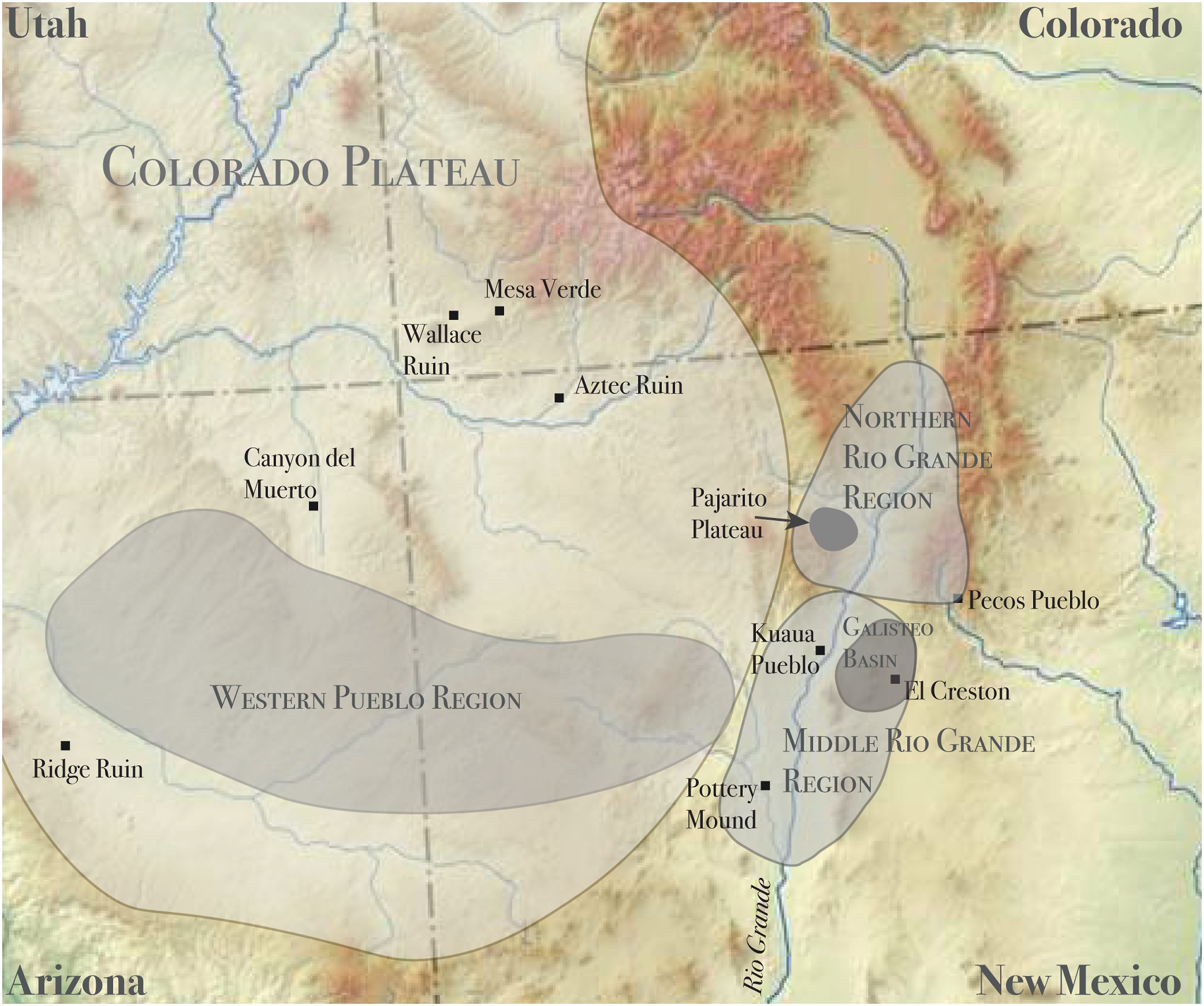
These shifts in material practice are generally interpreted as indicating the emergence of new social and religious structures, including kachina ceremonialism (Adams, 1991). Documented historically and ethnographically, and still practiced by most of the Pueblos, this religious belief system centers on anthropomorphic beings that act as intermediaries between the human and spiritual realms and are closely associated with both ancestors and weather. Kachinas are impersonated during ceremonies and represented by masked figures, either through worn regalia or artwork, or, in some cases, by effigies. Archaeologists suggest that the adoption and long-term persistence of this ideology may be tied to its effectiveness in integrating those residing in densely populated villages, which initially included migrants from different areas (Adams, 1991; Longacre, 1966; Rautman, 2000). Important to kachina religious practice are community-wide ceremonial events centered around public plaza spaces and involving dancing and feasting. It is within this context of social and ritual transformation that rock art in the region increased in frequency and changed in style.
Petroglyphs are especially common on the volcanic escarpments and talus slopes exposed along the edges of the central and northern basins of the Rio Grande Rift. This is likely related to the dark ‘desert varnish’ that coats these basalt surfaces, which, when removed through pecking and scratching, reveals the lighter-colored stone underneath. Polly Schaafsma (1975) was the first to define a cohesive Rio Grande Style and has researched the rock art of the area intensively over the last four decades. Emphasizing the connections between depictions and traditional Pueblo ‘myths and ritual dramas’, Schaafsma (1980: 254) interprets figures as named kachinas, deities and other-than-human characters from Pueblo oral tradition, and symbols of warrior and curing societies with historical and contemporary analogs. Integral to the Rio Grande Style are patterned associations between motifs (e.g., Schaafsma, 1980, 2000a, 2000b). In particular, Schaafsma highlights the links between certain ‘iconographic complexes’ and interrelated concepts in Pueblo worldviews surrounding warfare, weather control, and agricultural fertility (Schaafsma, 1999). In this paper, I focus on two of these interconnected iconographic pairs—shields/solar signs and stars/birds.
I suggest we may increase our understanding by further exploring the materiality and relationality of these images through their sensuous qualities, drawing on the perspectives of both Indigenous traditional knowledge and contemporary social theory. That these motifs are historically associated with characters with comingled attributes, are depicted in a standardized fashion across an area of extreme linguistic diversity, proliferated during a time of cultural reorganization and consolidation, and display patterned associations across multiple media suggest they are underlaid by social qualia linked to enregistered forms of practice.
The qualia of shields, celestial bodies, and birds—Sensorial experiences of luminosity and security
One of the most distinctive motifs of the Rio Grande rock art tradition is the shield-bearer. These human figures are typically depicted in profile with their legs in motion, wielding large body shields in one hand and implements of war in the other (Figure 2(a)–(c)). The shields are circular, often life-sized, and most display interior and/or exterior embellishments, particularly serrations, rays, and feathers in combination with other motifs. As noted by Schaafsma (2000b: 114–115), the shape and radiating elements of these elaborated shields visually resemble the sun, a widespread Pueblo deity often referred to as the Sun Father, as well as sun-related ceremonial regalia. In the oral traditions of several communities, the sun is alternately conceived of as the shield of this deity or a shield represents his face (Ortiz, 1969; Parsons, 1939; Waters, 1963). In Hopi creation stories, the sun was made by throwing upwards a ‘black tablet or shield … Together with a fox skin and a parrot tail, for the lights of dawn’ (Parsons, 1939: 240). In some versions, it is referred to as the ‘shield-light’, which ‘they send to the east where it becomes the sun’ (Parsons, 1939: 240), and in Hopi ceremonial dances, the countenance of the sun is portrayed in regalia as ‘a back shield, a tablet or disk’ (1939: 378–379). The Sun is also often associated with warfare in traditional histories. For example, at Isleta and Picuris Pueblos, it is called a ‘head-taker’ (Parsons, 1939: 180–181), and at Zia Pueblo, it is the father of the Twin War Gods (White, 1962). Common icons in Rio Grande tradition rock art. Clockwise from upper left: Shield-bearers from LA 112719/LA 76065 and Mesa Prieta; fringed disc/shield from Mesa Prieta; feathered/taloned star and bird of prey from LA 76065; star pictograph with red pigment from the Galisteo Basin. Stippled areas represent unmodified basalt surfaces. Drafted by H. Mattson; not to scale.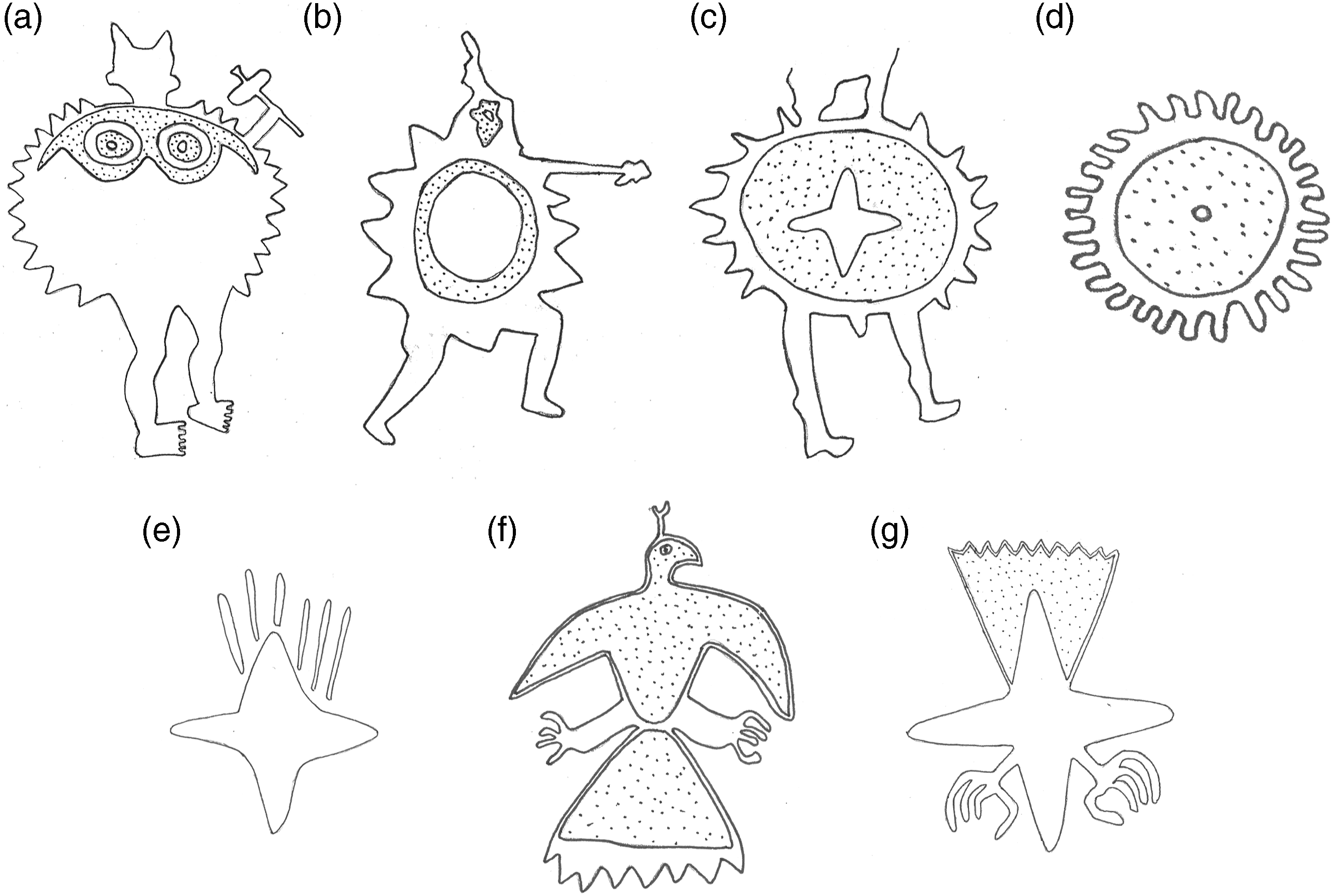
Although there are no intact archaeological examples of shields from this time period, there are surviving historic ones, as well as written ethnographic descriptions. Based on this, shields were likely produced from bison hide obtained from neighboring Plains groups (Jolie, 2022; LeBlanc, 1999; Schaafsma 2017; Wright, 1976). While the appearance of shields in rock art became more common in the Rio Grande region beginning in the 14th century, they were widely, albeit sparsely, depicted in earlier rock art on the Colorado Plateau, particularly during the Pueblo III period (1150–1300 CE) (Crotty, 2001; Schaafsma, 2000b). Schaafsma (2000b: 10–12) documented 36 shield pictographs in the larger Four Corners area dating to this time, noting that they are all round and painted in white (see also Forton, 2019). Most have interior designs with solid circular centers and/or concentric circle patterns (Crotty, 2001: 81; Schaafsma, 2000b: 11).
There are five existing examples of Pueblo III period shields from the Ancestral Pueblo region, all produced from coiled basketry (Jolie, 2018, 2022; Morris and Burgh, 1941) (Figure 3(a)–(d)). Each of the specimens exhibit painted decoration or traces of mineral pigments, indicating they were once colorfully embellished. The outer coils of one of the shields, found in a burial at the site of Aztec West Ruin, are covered in crushed selenite, and the central portion of the shield is covered in blue-green pigment (Jolie, 2018: 310–311, 2022; Morris, 1924: 194) (Figure 3(a)). When exposed to sunlight, the selenite would produce a sparkling, iridescent effect around the piece. Another fragmentary shield from the site displays red and white pigment arranged in ‘alternating vertical rays of triangle or zig-zags’ emanating from a solid red center (Jolie, 2022: 17) (Figure 3(b)). A shield from the site of Cliff Palace, located in the Mesa Verde area, is decorated with a concentric-ring pattern rendered in red and white pigment (Jolie, 2022: 19), and a specimen from Mummy Cave displays a frog-like figure with a central solid red circle surrounded by concentric yellow and black arcs (Figure 3(c) and (d)). Pueblo III period basketry shields from the Colorado Plateau: (a) Aztec West Ruin, Burial 83; (b) Aztec West Ruin, Room 95; (c) Cliff Palace, Mesa Verde; (d) Canyon del Muerto (adapted from Jolie, 2022: Figure 6). Not to scale.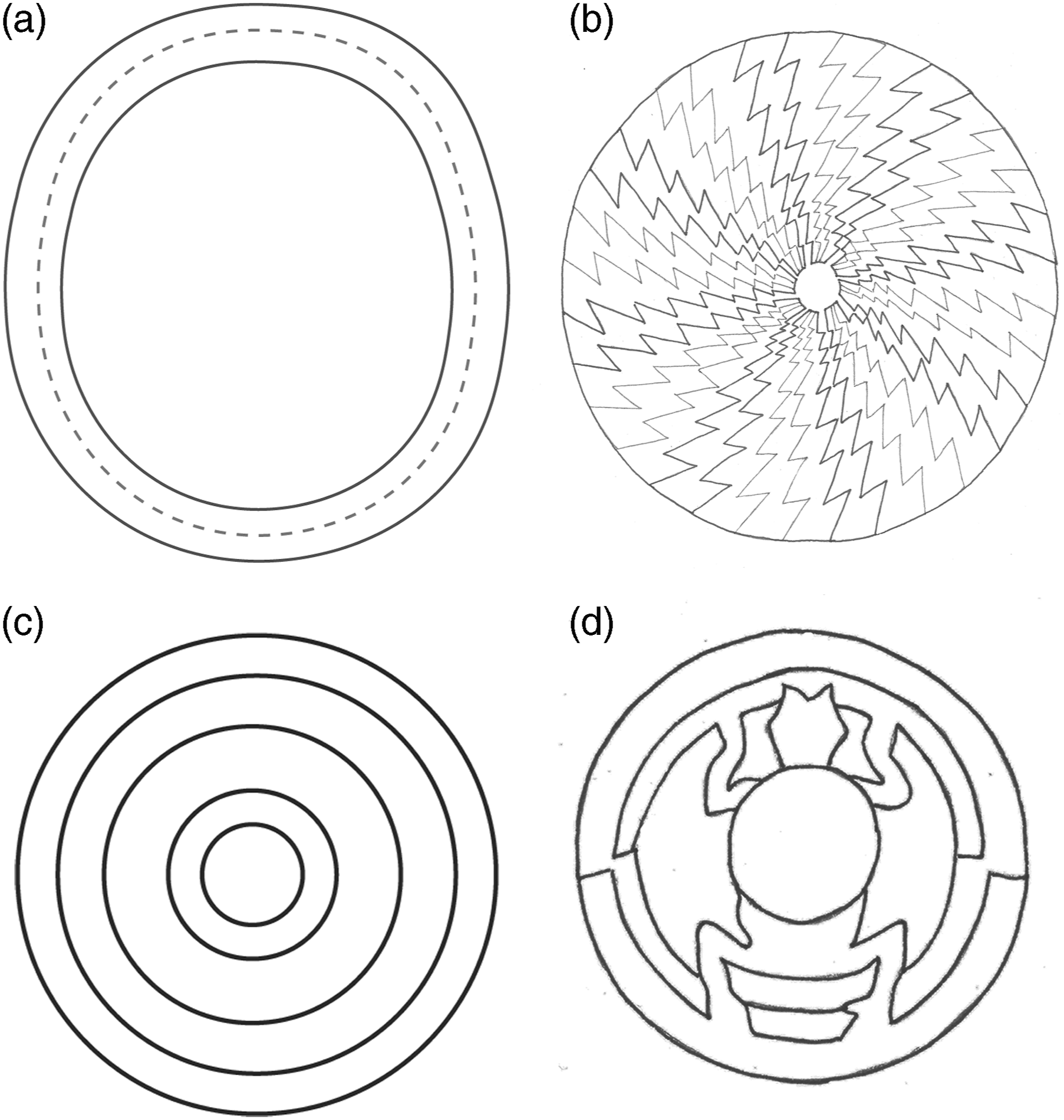
Other circular luminous objects also occur in late 12th- and 13th-century sites in the region, particularly in high-status mortuary contexts. At Aztec West Ruin, for example, an adult male in a lavish burial was found with 20 circular mosaic plaques on his chest (Morris, 1924: 102–103). These plaques, approximately 5–7 cm in diameter and primarily produced from marine shell, have concentric rings on their convex, exterior surfaces, upon which mosaic tesserae were attached (Figure 4(a) and (b)). Each piece has a solid central disc surrounded by concentric circles comprised of polished jet, turquoise, and galena tesserae. Notably, the triangular elements of galena appear to have been arranged in serrations or rays. In addition, this same individual’s burial, as well as an additional high-status interment at the site, also included similarly sized circular abalone shell pendants. Two circular bone plaques inlaid with smaller circles of galena were found with a Pueblo III period high-status individual buried in Wallace Ruin (Bruce Bradley, personal communication, July 2022) (Figure 4(c)). Another example is an elaborate circular mosaic ‘medallion’ from a sumptuous burial at the site of Ridge Ruin (McGregor, 1943) (Figure 4(d)). The piece is inlaid with shell and turquoise tesserae, which form a design that is both radiating out from a central disk and arranged in concentric circles. Several similar mosaic disc ornaments have also been documented at other Pueblo III period sites on the southwestern Colorado Plateau (Jernigan, 1978: 143–145) (e.g., Figure 4(e)–(i)). The resemblance between the basketry shields, these ornaments, and the 13th-century rock art shields in shape, design, and use of luminous components is compelling. This association may also have analogs in historic Pueblo practice, such as Hopi sun-disk ornaments that include feathers, either brightly colored or those of eagles, to represent the sun’s rays (Roediger, 1991: 145). Pueblo III period mosaic plaque ornaments from the Colorado Plateau: (a and b) Aztec West Ruin (Morris, 1928: Figure 73); (c) Wallace Ruin (provided by Bruce Bradley, July 2022); (d and e) Ridge Ruin (McGregor, 1943: Figure 3); (f, g, and h) Flagstaff area; (i) Montezuma Castle (e–i adapted from Jernigan, 1978: Figure 67; by H. Mattson). Not to scale.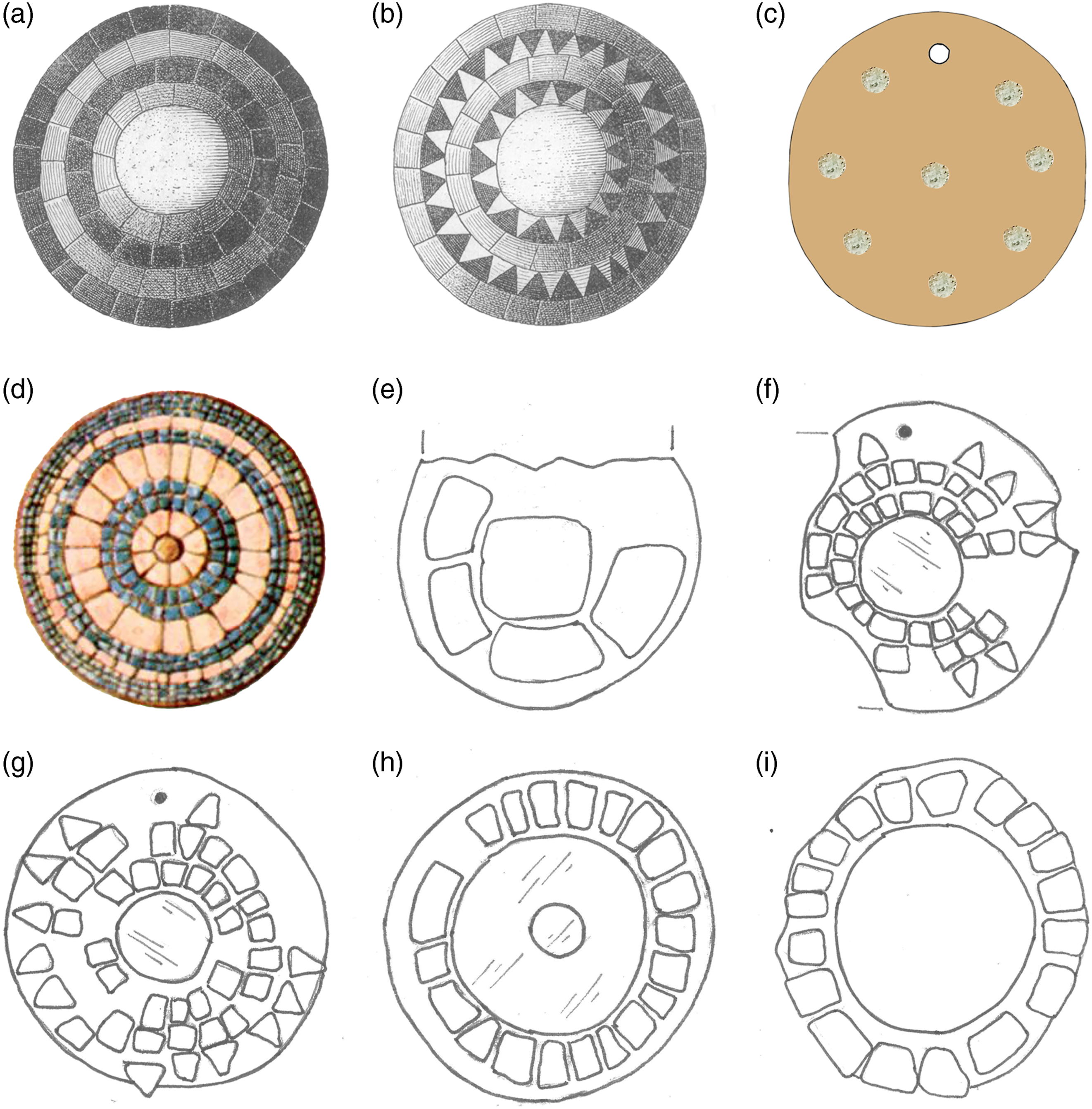
Reflective materials were widely ascribed positive social values in the pre-colonial Americas (Saunders, 1998, 1999). Considered precious because they served as qualisigns of ‘brilliance’, these objects were interpreted within semiotic ideologies wherein light was an index of supernatural power. As noted by Saunders (1999: 245), this spiritual brilliance … manifested itself in natural phenomena—sun, moon, water, ice and rainbows; natural materials—minerals, feathers, pearls and shells, and artefacts made from such matter, as well as ceramics, textiles and metals. All … partook of an inner sacredness displayed as surface gleaming.
These diverse phenomena and materials are classified as similar through their shared qualia of luminosity, forming a category of things serving as indexical references to not only spiritual potency, but also to also to social power through the strength and virtue required by their use, production, and exchange. Similarly, Gell (1992) and Helms (1993) note the ‘enchanting’ aesthetic qualities of social valuables, which compel and attract through pleasing qualitative traits tied to material, form, decoration, and burnishing.
The social valuation of brilliant materials, particularly in the context of ritual performance and power, is deeply rooted in the Ancestral Pueblo region. Ethnographic sources note the spiritual power of reflective materials in 19th- and 20th-century Pueblo ritual practice, such as iridescent, sparkling, or shiny black paint applied to the body of dancers or to masks (Roediger, 1991: 100; White, 1962: 312). These paints ‘make the mask sacred, valuable, what makes it into a living person’ (Parsons, 1939: 341). At Zuni, red pigment and iridescent black pigment are offered to war god shrines, and at Laguna Pueblo, white mica is mixed with other materials and offered to the Mountain Lion, a spiritual figure associated with warfare (Bunzel, 1932: 861; Parsons, 1939: 298). Quartz crystals appear to be widely used in ritual contexts for divination; reflecting light into kivas, onto altars, or into medicine bowls (Parsons, 1939: 330); or enlivening fetishes (White, 1962: 307, 313). Abalone shell was also highly valued and used for ceremonial regalia associated with the War Brothers or war chiefs at Zuni, Hopi, and Jemez Pueblos (Parsons, 1939: 331)
Based on archaeological evidence, the practice of placing reflective materials in ceremonial deposits and spaces began as early as 300 CE and persisted at least into the 1500s CE (Mattson, 2021). Consistent with this long-lived tradition, ceremonial contexts at 14th–16th-century Pueblo villages, such as Pecos Pueblo, Tijeras Pueblo, Arroyo Hondo Pueblo, and Hawikuh, among others, also contain luminous objects, particularly in the form of pearlescent marine shell, but also mineral crystals, schist, and polished hematite. Accompanying the demographic changes of the 14th century was a major shift in ceramic technology with the appearance of glaze-painted wares (Eckert, 2006; Habicht-Mauche, 2006). Produced using crushed lead in combination with other ingredients, glaze paints vitrify during firing, becoming glass-like (Huntley et al., 2007). Spielmann (2002: 198–199) suggests that the social value of these vessels may have been tied to their reflective paints, polished surfaces, and brilliant red and yellow slips. As another layer of brilliance, the primary form of lead used for glaze paints was galena, itself a reflective and socially valuable material. Ethnographically, access to valuable minerals was restricted in Pueblo society to initiated members of ritual or medicine societies, as these materials were also used to paint kachina masks and other religious paraphernalia (Huntley et al., 2012: 16–17).
The luminosity of rock art shields is imparted not by the use of reflective materials, but through design and color. In a discussion of the ‘aesthetics’ of Yolngu paintings in Australia, Morphy (1989) describes how infilling outlined elements with intricate cross-hatched patterns is conceived of as ‘shimmering brilliance’ (bir’yun). This visual quality is associated with ‘intense sources and refractions of light, the sun’s rays, and to light sparkling in bubbling fresh water’ (Morphy, 1989: 28) and also with positive emotions, ancestral beings, and spiritual power. Similarly, I suggest that the use of concentric circles, serrations, and radiating elements on rock art shields both resembled and produced a quality of lustrousness and was considered analogous to other kinds of materials also embodying this sensorial effect.
Through their brilliant qualities, Ancestral Pueblo shields—actual shields, shield-like personal adornment, and petroglyph shields—correspond to other kinds of radiant celestial bodies and beings, particularly stars and birds. Four-pointed stars and avian figures are often depicted together with shield bearers and shields (Figure 2(c) and (e)). The two sometimes appear as composite figures, such as stars that have bird talons and feathered tails or headdresses (Figure 2(g); Figure 6(f) and (g)). Schaafsma (2000b: 113) interprets the four-pointed star as representing the Morning Star, or Venus, which is important in Pueblo cosmology as a deity associated with war and hunting. Although birds of all kinds are depicted on petroglyphs, those with outstretched wings and the hooked claws of birds of prey are most associated with stars and shields (Figure 2(f)). When plumage patterns are displayed, they typically resemble those of eagles. Schaafsma (2000b: 57, 67, 142) suggests that these figures represent an eagle deity appearing in many Pueblo stories (i.e., ‘Knife Wing’ at Zuni), which is linked to both war and the Morning Star. Interior shield decorations commonly include birds of prey, and feathers are often shown radiating from shield perimeters, taking the place of solar serrations or rays. At Hopi, the Sun Kachina from Walpi wears a headdress in which ‘radiating eagle feathers represent the rays of the sun’ (Parsons, 1939: 175). Hopi migration stories indicate close ties between the sun and eagles, both of which are powerful beings and in which eagle feathers are required to convey prayers to the Sun; the Eagle Clan is also associated with a spirit that ‘will keep a lookout for the approach of people who would try to overpower us and take away our knowledge’ (Waters, 1963: 68–69). In the Eagle Dance at Hopi, the eagle ‘is the chief of birds, and so he wears the shield on his back’ (Roediger, 1991: 195).
Birds were important in Ancestral Pueblo society and had multiple meanings, depending on the setting. Avian remains appear in specialized archaeological and historic contexts—they figure prominently on 14th- and 15th-century kiva murals; feathers commonly adorn ritual regalia and paraphernalia, altars, and fetishes; and feathers, bone items, talons, and entire bird burials are found in ritual offerings across the region (e.g., Ainsworth et al., 2018; Eckert and Clark, 2009; Mattson and Jones, 2020). Among the Pueblos, feathers and birds are variously associated with the sun, lightness, wind, specific cardinal directions, rainbows, lightning, clouds, and warfare (Tyler, 1991). Macaw and eagle feathers appear to be particularly valued, the former for their brilliant colors associated with ‘the bright sun and his rays’ (Tyler, 1991: 14) and the latter for their association with strength, power, protection, and the zenith/above (Eckert and Clark, 2009; Parsons, 1939).
In this case study, I suggest that the qualitative experience of luminosity and its indexing of spiritual power in Ancestral Pueblo society is intertwined with security or safety, the sensation of being free from perceived danger, loss, risk, or harm. Some researchers interpret the proliferation of shields and shield- and weapon-wielding figures on rock art as evidence of an increase in interpersonal, or even intercommunity, conflict during this time (Crotty, 2001; LeBlanc, 1999). Although elevated social tensions may be expected in the context of in-migration and aggregation, archaeological evidence does not indicate that these were expressed through violent physical encounters. In fact, it appears that conditions were fairly peaceful in the Northern and Middle Rio Grande regions from the early 1300s CE until the arrival of the Spanish in the late 1500s CE (Kohler et al., 2014). This contrasts with the preceding century on the Colorado Plateau, particularly between 1250 and 1300 CE, a period of high resource unpredictability (Haas and Creamer, 1993; Kuckelman, 2010; Lipe, 1995).
By the 14th century, threats appear to be more intangible in nature, with conflict increasingly ritualized within the framework of social and ritual institutions. In Pueblo religious practice, spiritually potent objects, places, and beings are perceived as beneficial in some circumstances and dangerous in others, often requiring special knowledge or preparation to handle, view, or manipulate (Munson, 2020; Munson and Hays-Gilpin, 2017). Ritual specialists with the required expertise and training serve protective roles for their communities. Part of ensuring the safety of the village is keeping members safe from spiritual hazards, such as dangerous outside influences or nonconformance with established standards and norms. In their discussion of the appearance of large, plaza-oriented Pueblos, Graves and Keuren (2011: 276) propose that a disciplinary order involving social monitoring accompanied a new ‘communal ethos’. Continuation of these roles may be seen in communities such as Zia Pueblo, where the War Chief’s duties include guarding the village during ceremonials and ensuring ‘observance by advice and exhortation’ (Stevenson, 1894: 18–19; White, 1962: 129–130).
While the association of luminosity with instruments of war and depictions of both warriors and war-like animals might be construed as aggressive or intimidating rather than defensive, a convergence of traditional Pueblo views supports the latter interpretation. Ethnographic accounts observe that Pueblo shields were viewed as objects of spiritual protection, sanctified and animated through their designs and embellishments (Parsons, 1939: 197, 240). The symbolic potency of these implements, even divorced from their bearers, may be rooted in their earliest depictions in the 1200s CE in the Four Corners area, when shield petroglyphs appear alongside cliff dwellings located in defensive locations. The images themselves may have acted as ‘magical protective devices for residents of that particular house’ (Crotty, 2001: 81; Schaafsma, 1999). The elaboration of decorations on rock art shields in the following two centuries and their appearance on kiva murals, despite the decline in actual warfare, reflects their increasingly metaphysical role (sensu Schaafsma, 2000b: 30). Through iconic correspondence, I suggest that other brilliant circular objects, such as mosaic plaques and pendants, are associated with these shields through the shared qualia of safety.
In all the examples discussed here, luminous objects or phenomena act as safekeeping agents—the blazing sun embodied by the shield or shield-like ornaments made of reflective materials, shining stars with sharp talons and raptor feathers, and raptors associated with the bright zenith (and sometimes rendered in effigy form in brilliant materials) with wings outstretched in displays of predatory prowess.
Axes of contrast and the orientation of social value
Variation in the sensuous experiences attributed to objects, persons, situations, and ways of being or doing form the basis for their cultural assessments (Chumley, 2013; Gal, 2017; Keane, 2003; Munn, 1986). For instance, differentiation in the qualia of ‘hardness’ is connected to a host of appraisals within modern Western ideological frameworks. ‘Hard’ sciences, for example, are associated with practicality, advancement, and concreteness, and ‘soft’ sciences with uncertainty, elusivity, and subjectivity (see also Chumley, 2017: 56). Relative locations along axes of qualitative experience become rooted in ‘regimes of value’ (Gal, 2017) within institutions and semiotic ideologies (sensu Keane, 2003, 2018).
One way to explore the axes of contrast intertwined with regimes of social value in the past is to examine archaeological evidence of qualia occurring across disparate media and contexts of use. I have argued here that several interrelated motifs (shields, celestial bodies, and raptors) are signs for the qualia of luminosity and security, indexes for spiritual power and protection. The way in which these qualia, and their opposing states, are embodied within multiple modes of Ancestral Pueblo material practice in the late pre-Hispanic period suggests they underlie important value determinations (Harkness, 2013: 15).
Birds, shields, and feathers figure prominently not only in rock art, but also on kiva murals (Figure 5). Beginning in the 14th century, the walls of kivas were painted with colorful scenes including people, objects, animals, spiritual beings, and natural phenomena. I suggest that creating rock art and painting kivas were forms of illumination or ‘making more brilliant’. In a literal sense, both media are comprised of bright, contrasting colors on dark and dull/rough backgrounds—rock art on dark patinated basalt surfaces and kiva murals on the dark interiors of subterranean chambers. In another sense, similar to Yolngu paintings (Morphy, 1989), the designs themselves may have generated luminosity through infusing the media to which they were applied with spiritual power. Importantly, not all surfaces were considered appropriate to paint or alter in this manner. Rock art and murals are thus conceptually linked and appear to reference one another—the simple, black-and-white images in open-air petroglyph panels cite the detailed, colorful ones in enclosed ceremonial rooms, and vice versa. Examples of shields depicted on kiva murals from the site of Pottery Mound (adapted from Hibben, 1975: Figures 53, 103, and 104). Not to scale.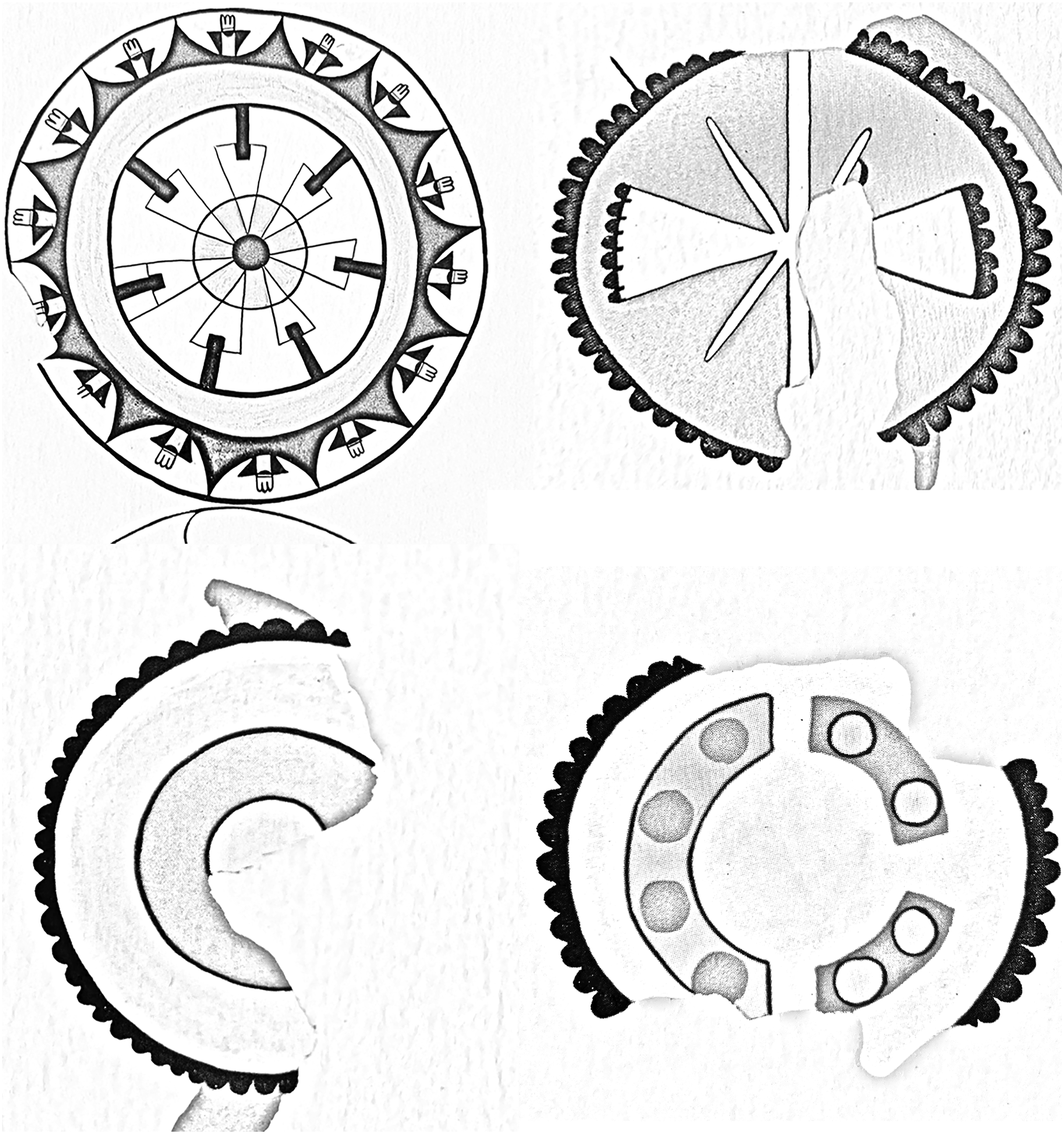
Differences in the contexts of security-related images on rock art and murals also appear to reference variable degrees of vulnerability. Most apparent is the difference in the settings and scale of these two media. Rock art is widespread and generally situated in public, extramural locations that would have been visible to a greater number and diversity of people, perhaps to the entire community or to any person passing by that location. Murals occur in more restricted, intramural spaces and were likely only viewed by initiated members of ritual societies (Newsome and Hays-Gilpin, 2012). The figures on petroglyphs are typically anonymized and stylized, while those on kiva murals are individuated and elaborate. It may be that the safeguarding qualities assigned to these motifs functioned along a continuum of perceived threat, with a higher level of danger associated with the activities conducted in kivas compared to those associated with communal locales. These more perilous encounters may have been mitigated by the creation of more fully realized, powerful imagery, which served as indexical icons of brilliance and safety in that they both resembled and generated these positive qualitative states. In this way, rock art publicly, permanently, and stylistically referenced activities and social values enacted in secret, dangerous, and specific settings.
There are also different temporalities indexed by these two modes of image-making. Based on the presence of multiple layers of painted and unpainted plaster, Pueblo IV-period kiva murals were temporary and repeatedly remade. This is likely related to cycles of ceremonial renewal, as has been suggested for the episodic rebuilding, remodeling, or replastering of earlier kiva structures elsewhere in the Ancestral Pueblo region (Crown and Wills, 2003). Kiva murals appear to have been produced and obscured within delimited windows of time. Petroglyphs, on the other hand, are enduring and accretional. When an individual pecked an image, it was with a certain sense of permanence, durability, and participating in a continual appending to the existing archive of images in a location. As noted by Alberti and Fowles (2018: 139), ‘rock art begets more rock art’. In concert with the surrounding landscape, the act of creating a petroglyph eternally defined a place as significant, which then attracted more acts of rock art creation in a seemingly never-ending chain.
Portable materials also lie along axes of sensuous contrast. Glazes and bright ceramic slips, richly hued feathers, iridescent seashell, and vibrantly colored minerals are all conspicuous against the more neutral, earth-toned color palette of the American Southwest landscape. Based on the archaeological contexts in which more colorful and reflective objects occur (Mattson, 2021), particularly structured ritual deposits and high-status interments, their perceived positions along these continuums were clearly intertwined with their social evaluation.
Conventionalization and enregisterment of rock art
The axes of valuation along which qualia are assessed are embedded in the conventions and ideals associated with social institutional frameworks (e.g., Gal, 2017; Swenson, 2020). Because they are enregistered as naturalized ‘types’ or ‘kinds’, these signs serve to further promote the sense of innateness of those standards and practices, particularly when they are widespread and used often. This is demonstrated in the qualia embodied within Rio Grande Style rock art, where specific petroglyph elements not only increased in frequency, but also became more formalized and standardized in the context of new social and religious formations. In a study of diachronic sequences of rock art on the Pajarito Plateau in the Northern Rio Grande region, Munson (2002, 2011, 2012) finds significant change between 13th- and 14th-century petroglyphs in content, style, and setting. Specifically, there is a prevalence of naturalistic, solidly pecked figures placed in private and more restricted spaces dated to the 1200s CE. In the following century, rock art proliferates and Rio Grande Style figures appear, including those depicted in a stylized and ‘generalized’ manner with outlined, geometric forms (Munson, 2002: 275, 2012: 112–17; see also Schaafsma, 2018). The panels are also situated in more visible and public locations than before. Interestingly, these changes do not coincide with an increase in population on the Pajarito Plateau, as they do in the Rio Grande Valley proper. Thus, the increase in petroglyphs is not a simple function of more people on the landscape. There is also no evidence that rock art styles coincide with linguistic or ethnic boundaries in the area, as indicated by the distribution of distinct ceramic wares (Munson, 2002: 249, 270–272). Rather, the suites of motifs comprising the Rio Grande rock art tradition, and their associated qualities, appear to be integrally associated with broader Pueblo institutional norms of the time.
In other portions of the Northern and Middle Rio Grande region, a diversification in the location of rock art accompanies this 14th-century stylistic and iconographic shift (Brody, 1989). While rock art appears in hyper-visible locations, such as prominent geological formations, it also occurs in range of other ‘semi-public’ and open-air locations, exposed or restricted by the local topography to various degrees, as well as in more private locales such as rockshelters (Munson, 2011, 2012). These more restricted spaces tend to have images that are more specific (e.g., certain kinds of birds), while public locales often include the more widespread and standardized figures defining the larger tradition. Overall, the changes in rock art during this time indicate to Munson (2012: 119) ‘increased societal restrictions on the mode of representation’ and ‘greater concern with the appropriate way to produce images’.
From a Peircean perspective, it is the enregisterment of qualities that entities such as shields, the sun, stars, and birds epitomized that empowered them to contribute to systems of cultural value embedded in the new ideological and organizational structures of aggregated village life (Gal, 2017: 130; see also Graves and Keuren, 2011). Spiritual and moral safekeeping through the depiction of potent materials and protective beings became part of a genred practice. Authorized through expert knowledge in the form of ritual specialists and secrecy (Brandt, 1977), this practice was intertwined with the painting of kiva murals, the production of glaze ware vessels, and the use of brilliant objects and feathers in specific settings. This cross-modal embodiment of the qualia of luminosity and safety was vital in bringing different kinds of activities into alignment as a conventionalized, integral way of doing (Harkness, 2015: 581). Furthermore, it was important in shaping human action by focusing and reinforcing ‘proper’ behavior on multiple scales; rock art was perhaps the most spatially extensive and public of these guides for community conduct and bodily engagement.
Case study: El Créston petroglyph complex
El Créston is a prominent volcanic dike located in the Galisteo Basin of north-central New Mexico (Figures 1 and 6(a)). Between 1995 and 2004, the Archaeological Society of New Mexico recorded the nearly 5000 petroglyphs covering the feature (Brody and Brody, 2006). For recording purposes, the formation was divided into 60 ‘proveniences’, each containing numerous panels. Shield-bearers, shields, stars, and eagles are common motifs across the formation, but they are particularly prevalent at its eastern end, such as in Provenience 57. This locale alone contains approximately 70 different rock art panels, which together include at least five shields (two with bearers) with solar or luminous attributes in the form of rays and serrations; four of the shields also enclose stars (Figure 6(b)–(e)). An especially elaborate shield displays interior embellishments in the form of stars and what appear to be smaller shields, surrounded by a double row of serrations and an outer ring of radiating feathers (Figure 6(e)); a raptor with outstretched wings is located immediately to the upper right of the shield and its bearer. Eagles and stars with faces, raptor talons, and/or feathered headdresses are also common on the panels of this provenience, sometimes in direct association with the shields (Figure 6(f) and (g)). El Créston Petroglyph Complex: (a) overview of formation (Provenience 57 is on the far right); (b–e) solar shields; and (f–g) birds and stars from Prov. 57. Bottom six images courtesy of ASNM.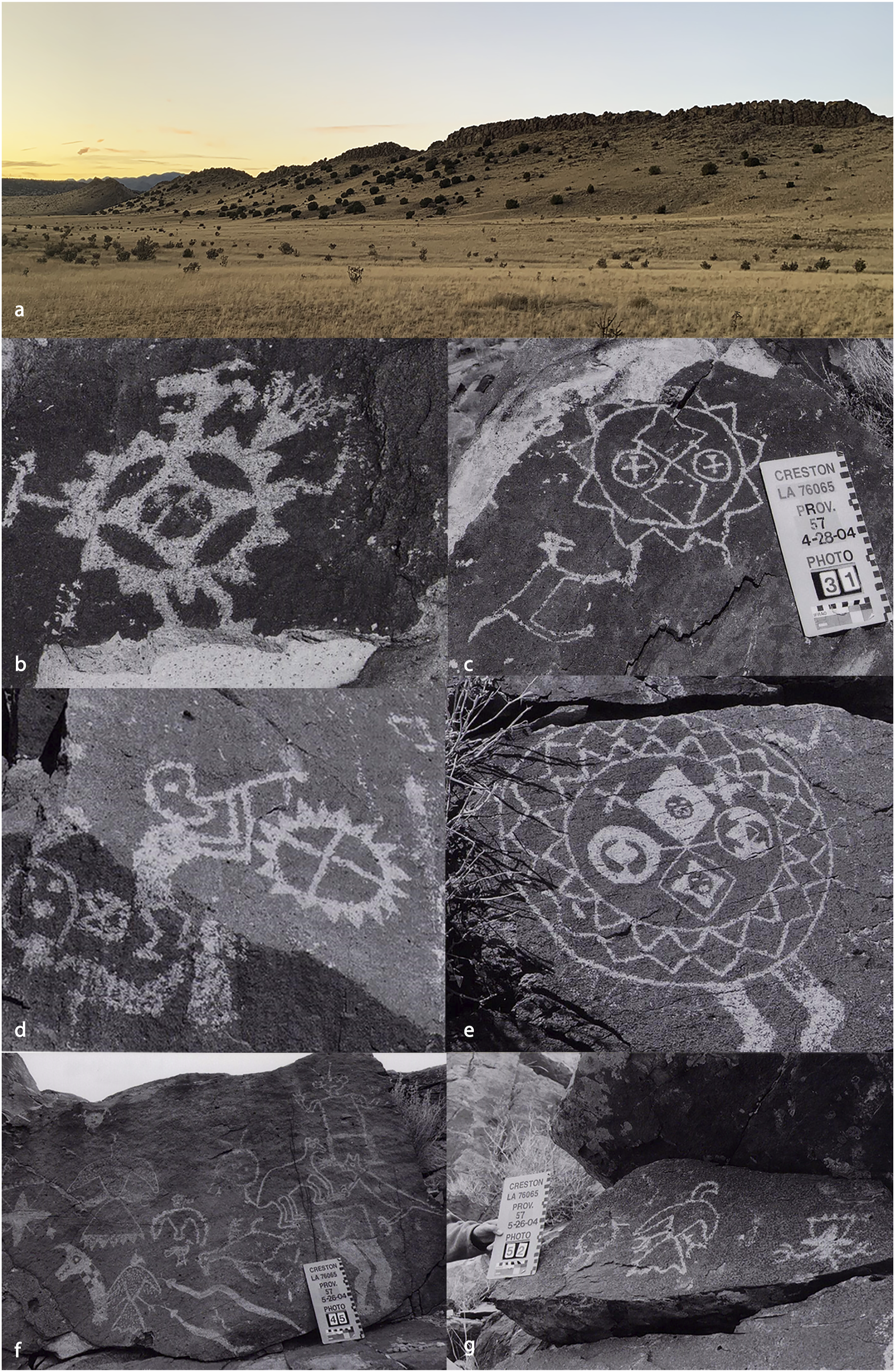
This example is an excellent illustration of the spatial and iconographic comingling of these motifs in the rock art of this area and of the conspicuous settings in which they often occur—in this case, a dramatic feature towering more than 30 m above the surrounding basin floor. Additionally, the timing of the appearance of the petroglyphs on the formation is characteristic of the larger Rio Grande tradition. Recorders estimate that 85 percent of the images are pre-colonial in origin and stylistically consistent with the period between 1300 and 1550 CE (Brody and Brody, 2006: 7). Three large communities occupied during this same interval are located within 7 km of El Créston—Pueblo Blanco, Pueblo She, and Pueblo Colorado. While the depictions on the dike cannot be attributed to any one of these communities, it is probable they were created by those residing nearby. Archaeological evidence indicates that humans had visited the Galisteo Basin since at least 6000 BCE and that the area was settled by sedentary agriculturalists during the 1100s CE. Yet, despite a knowledge of the area, and the visual prominence of El Créston, which surely served as a well-known landmark, it was not until the cultural changes of the early 14th century that the dike’s surfaces were intensively marked, and with a standardized suite of images.
Also interesting is that the easternmost proveniences on the formation, including Provenience 57, contain more shield-bearers, shields, stars, raptors, and mountain lions than those on the western end (Brody and Brody, 2006: 12). The eastern end of the dike is consistent with the location of the easternmost boundary between the Pueblo and Plains culture areas, and historic documents suggest that Ancestral Pueblo settlements in this frontier area may have faced periodic raiding from Plains groups. If these motifs were already understood as related to protection in a spiritual sense, then it’s consistent that they also appear in larger numbers in an area where defense against outsiders was a concern. In this case, the creation of the petroglyphs in this location may have generated a sense of security for those living in nearby communities. It’s important to understand this in context, however—while the residents in this immediate area may have faced actual physical threats, the region overall appears to have been relatively peaceful prior to 1500 CE (e.g., Kohler et al., 2014).
Conclusion
This paper offers an archaeological account of how conventionalized qualia grounded in sensorial experience come to be imbued with social value, using as an example Ancestral Pueblo rock art from the Middle and Northern Rio Grande region. Specifically, I examined how qualia materialized in diverse objects, entities, and settings may be construed as instances of the same property and thus aligned through evaluation within ideological and institutional frameworks. Building on previous research that identified associations between certain icons in Rio Grande Style rock art—celestial bodies, instruments of defense (shields), and birds—I explored the sensuous properties that unite these depictions with one another and with other interrelated objects and contexts (e.g., items of adornment, feathers, ritual deposits, and kiva murals). Based on these observations, I proposed that these diverse media are connected through the qualia of luminosity/brilliance and security/safety, positively valued qualisigns enregistered as a ‘kind’ of doing important in ontological discourse in pre-colonial Pueblo society.
While a semiotic approach to the archaeological study of rock art is not new, Peircean perspectives are less widely used, and those implementing the concepts of qualisigns and qualia are rare (for examples, see Danielsson, 2015; Swenson, 2020). Yet, an approach centered on sensuous properties serves as a valuable complement to other materiality- and landscape-based approaches, particularly those highlighting the agency of rock art in creating social memory, reproducing institutional structures, and shaping modes of action and attention (e.g., Ambrosino, 2020; Rédei et al., 2019; Tapper et al., 2020). Recent research tends to emphasize the larger context of rock art in the construction of its meaning, particularly its relationship to landforms or features with cosmological significance, to aspects of the built environment, or to the dynamics of natural phenomena such as light and shadow. Because qualia of sensorial properties incorporate multiple scales and modes of practice, they are one way to re-incorporate and connect the content of images themselves to these wider-scale examinations.
A qualia-informed approach also has the potential to bridge a growing intellectual divide between a representationalist focus on images or other signs as discrete units of meaning and a non-representationalist emphasis on materials, relationality, and interconnectivity. An historical and flexible semiotic framework grounded in the material—one that attends to the shifting properties and relational agency of things in the context of human signification and qualitative experience—integrates these two approaches. Any given entity has a multitude of properties that can be drawn into conventionalized axes of contrast and bundled with other qualities, depending on ideological and ontological frames of reference. This materiality creates a ‘productive open-endedness’ (Gal, 2017: 133) in that the categories that objects, and their depictions, belong to or ‘count as’ are continually reconstructed, providing new potentials for human engagement.
Footnotes
Declaration of conflicting interests
The author(s) declared no potential conflicts of interest with respect to the research, authorship, and/or publication of this article.
Funding
The author(s) received no financial support for the research, authorship, and/or publication of this article.
