



Abstract
Taught postgraduate students are a unique group, undergoing a short, intensive period of study. Many taught postgraduate students are international, engaging for the first time with new learning approaches, including Personal Development Planning (PDP). This article provides analysis of the views of international taught postgraduates about the place and value of PDP within the academic curriculum, an area that has received scant attention in the research literature on PDP. A total of 41 students from 17 countries studying at five universities were interviewed. Responses revealed that these students were able to identify their development needs and the perceived employability benefits of engaging with PDP as part of, and beyond, their Master’s programme. There were strong indications that international taught postgraduates do not need to be convinced of the value of PDP, a point not frequently associated with PDP engagement at undergraduate level. We conclude that international taught postgraduates recognise the value of PDP, and that PDP is more likely to appeal to international taught postgraduates’ own agendas if it is underpinned by a strong employability focus. In particular, PDP resources developed specifically to meet the needs of international taught postgraduates and integrated into the curriculum appear essential.
Keywords
Personal Development Planning
Employers are increasingly demanding graduates who possess a strong set of transferable skills beyond technical subject knowledge (Prospects transferable skills webpage, n.d.). Employers emphasise that the process of Personal Development Planning (PDP) completed by undergraduates is crucial for lifelong learning and enables graduates to make the widest contribution to organisations (Maxwell et al., 2009). PDP is defined as a structured and supported process undertaken by a learner to reflect upon their own learning, performance and/or achievement and to plan for their personal, educational and career development. It is an inclusive process, open to all learners, in all HE provision settings, and at all levels. (Quality Assurance Agency for Higher Education (QAA), 2009a)
Increasing use of PDP at undergraduate level in the United Kingdom has led to the production of a ‘Toolkit for enhancing personal development planning strategy, policy and practice in higher education institutions’ (QAA, 2009b). The effectiveness of PDP in enhancing undergraduate learning, academic achievement and career planning is well documented (Hearn, 2007; Quinton and Smallbone, 2008). Clegg and Bradley (2006), working with both staff and undergraduates, reported three ideal types of PDP: professional, employment and academic. Other undergraduate-focused research indicates the PDP process has also been used to support student understanding of graduate attributes and skills, and notions of graduateness and employability (Edwards, 2005). The relationship between PDP and employability is central to the development of undergraduates supporting them to identify, articulate and evidence their learning and overall development. This in turn supports effective student progression through higher education (HE), enabling students to become successful lifelong workplace learners (Monks et al., 2006). There are strong indications that undertaking PDP benefits undergraduates in several ways, for instance by clarifying career goals and increasing motivation towards their academic studies.
PDP, employability and graduate attributes are interrelated concepts. All three seek to enhance the student experience by helping students to maximise their full academic potential. Employability enables students to translate their knowledge, skills and qualities into an employment context (Yorke and Knight, 2004). Graduate attributes provide a language for students to articulate their knowledge, skills and qualities, and a framework to self-assess their personal development (Barrie, 2007). In contrast, PDP is a process to assist students in reflecting upon experiences, identifying their strengths and weaknesses, and enabling them to set goals for personal and academic growth (QAA, 2009a). Preparing undergraduates for future employment is an important area within HE (Monks et al., 2006), and PDP is one mechanism which has been used extensively with undergraduates to prepare them for life beyond academia.
The ideas underpinning undergraduate PDP are not new, with a wealth of research from professional disciplines such as medicine, health and education highlighting the value of PDP (summarised in Clegg and Bradley, 2006). These areas have a long tradition of incorporating reflective practices into the academic curriculum. In these undergraduate areas, PDP is extremely well established and also reinforced by professional bodies. In contrast, taught postgraduate programmes do not frequently incorporate PDP. Additionally, taught postgraduate programmes frequently draw in a large number of ‘international’ students. International students are defined in a broad sense, as students from outside the country from which they come, which, for example, in the United Kingdom means non-UK domiciled whether from the European Union or elsewhere. Nearly 20% of all students in higher education institutions (HEIs) in the United Kingdom are taught postgraduate students, numbers having increased by 77% over the 10 years to 2008 (Universities UK, 2009). In terms of postgraduate students, taught postgraduates account for more than 75% of the total in the United Kingdom (Universities UK, 2009). Of the taught Master’s cohort in the United Kingdom, 50% are students from outside the United Kingdom, and these non-UK students are much more likely to be studying full-time than part-time (Higher Education Policy Institute and The British Library, 2010).
Taught postgraduate students who are studying overseas have a different experience to home students while at university, and such students often face challenges upon arrival beyond those which arise immediately and implicitly around language (Andrade, 2006; Bache and Hayton, 2012); simply expecting them to adjust to life in a different country without some level of support is not appropriate (Andrade, 2006). International taught postgraduate students have particular needs, such as follows:
They are usually studying for a short period, frequently 1 year;
They may have a wide variety of social, cultural, linguistic and educational backgrounds, which might cause the process of reflection to be challenging if they have had little or no prior experience of this within their undergraduate programme;
They may arrive with little or no direct experience of PDP.
Ainscough (1997) noted the issue of working at a cultural interface between learners from different cultures, where differences in beliefs, values and procedures can enrich the learning experience. This can be further enhanced through the use of both formal and informal elements of the curriculum to encourage interaction between students from different cultures (Leask, 2009). However, reflective practice and different approaches to learning generally are considered to be areas that some international students can find difficult to engage with, particularly if they form an implicit part of learning in the selected country of study (Ryan and Viete, 2009). The issue of engaging students with the reflective process, particularly those from cultures where reflection is not commonly part of the educational process, is a particular issue when introducing PDP. Jankowska (2009), in a study of 12 international students from various countries, noted that reflection on personal development can vary across different cultures, and that the notion of reflective practice, while valued in UK HE, may not be similarly valued elsewhere. Kanu and Marr (2007) reported on the experience of a group of 30 African students, whose educational backgrounds were shaped by a largely didactic mode of teaching, and who found it difficult to adapt to a non-didactic pedagogy in UK HE. Feedback from these students indicated that they wanted more opportunities to engage with the process of writing, and required more feedback, more quickly, on the work they did produce.
Complicating these issues further, Evans et al. (2010), while describing a range of issues relating to understanding how individuals process information, highlight the issue of how students access and act on feedback received on their work. With feedback identified as a critical aspect of student learning (Hattie, 2008), misunderstandings and miscommunication of feedback in the learning process is an area where international students in particular can be disadvantaged. With a taught Master’s programme being of generally short duration, these issues are exacerbated considerably. This latter point regarding time pressure and immersing students in the learning culture of the programme is particularly pertinent in the case of Master’s students, whose study period is time-restricted, providing relatively little time to become acquainted with the norms of their learning environment. Zhenhui (2001) noted that aligning the learning styles and approaches of the students with teaching provides the greatest opportunity to meet programme learning outcomes, or, as phrased so succinctly by Zhao and Coombs (2012), it requires an ‘individual and cultural paradigm shift’ (p. 250). In an earlier study, Liu and Littlewood (1997) pointed out that perceptions by teaching staff of the approaches to learning of international students (in this case students from Hong Kong) were frequently based on limited knowledge, and were often wrong.
Little is known about PDP in relation to postgraduate students, whether international or not. Meredith’s (2010) is one of the few studies that highlight the need for further evaluation of PDP with postgraduates, and in particular international students. Her study highlighted the different learning styles adopted by students from different cultures, and in particular drew attention to the issues surrounding the widespread acceptance of ‘reflective practice’ as a valued approach underpinning PDP. In particular, she noted that students who failed the assignments tended to be descriptive in their accounts, not engaging with the reflective aspect or linking this to their own personal planning. In the United Kingdom, it is incumbent on universities to ensure that all learners in HE should have access to PDP provision (QAA, 2009a). However, despite considerable activity in PDP development at undergraduate level, there has been little investigation into whether a need exists for different, perhaps tailored, PDP materials for international taught postgraduate students.
The issue then can be viewed as twofold: first, questioning the need for tailored support for international students generally, given the complex and high level demands required of all students to undertake PDP effectively (Gaitán, 2012); second, whether such support needs to take into account the particular demands of taught postgraduate programmes, which are typically of short duration. In the light of the above overview of the existing literature, questions remain as to what the particular needs are of international students undertaking taught Master’s programme. To ‘shoehorn’ taught postgraduates into an undergraduate PDP setup, without some tailoring of resources, seems inappropriate (QAA, 2009b), and more detailed research is required to investigate the perceptions and perceived needs of international taught Master’s students in this area.
For example, how much (if any) prior experience of PDP at undergraduate level have international postgraduate students had and how much involvement have they had in activities which include aspects of PDP such as reflection, monitoring progress and goal setting? Are international postgraduate students able to identify transferable skills learnt from their programmes and, if so, have they thought about these explicitly? Do they regard PDP as an exclusively ‘undergraduate thing’? Are international postgraduate students enthusiastic about PDP or are they more focused on getting the qualification itself and view PDP as a distraction? If they are keen, should PDP be embedded within the curriculum or as a discrete model, that is, a ‘bolt-on’ extra (Higher Education Academy, 2009)? These questions are now addressed.
Methodology
International taught postgraduate students attending 1-year-long Master’s programmes at five Scottish universities were invited to participate in individual interviews regarding their experiences of PDP, following an open invitation sent to each institution in 2009. A total of 41 students (22 males and 19 females) agreed to take part in the study.
Students agreeing to attend the interviews were sent a project outline and an associated ethics protocol. All interviews were recorded and subsequently transcribed, with permission granted by all participants. The project is covered by the Universities UK with the British Educational Research Association’s (2011) Guidelines for ethical approval of cross-institutional projects (related to learning and teaching) based in Scottish Higher Education Institutions (2009). In line with educational good practice, all data obtained as part of the research project were anonymised, with individuals allocated a numerical identifier. At all stages, good practice in data handling, storage and processing in line with the requirements of the UK Data Protection Act (1998) was followed.
Participants were interviewed following a semi-structured protocol, with interviews lasting 20–30 minutes. Interviews were held in summer 2009, when students were around half to three-quarters of the way through their study programme. Interview questions were designed and delivered by two independent educational researchers. These were not members of the institutions at which they interviewed, and were not involved in the subsequent analysis of the findings. The primary areas investigated through the interviews were as follows:
Previous experience of planning for future personal development;
Skills learning, that is, skills learnt or developed during their current programme of study;
Planning for future work or further study;
Perceptions of the PDP process.
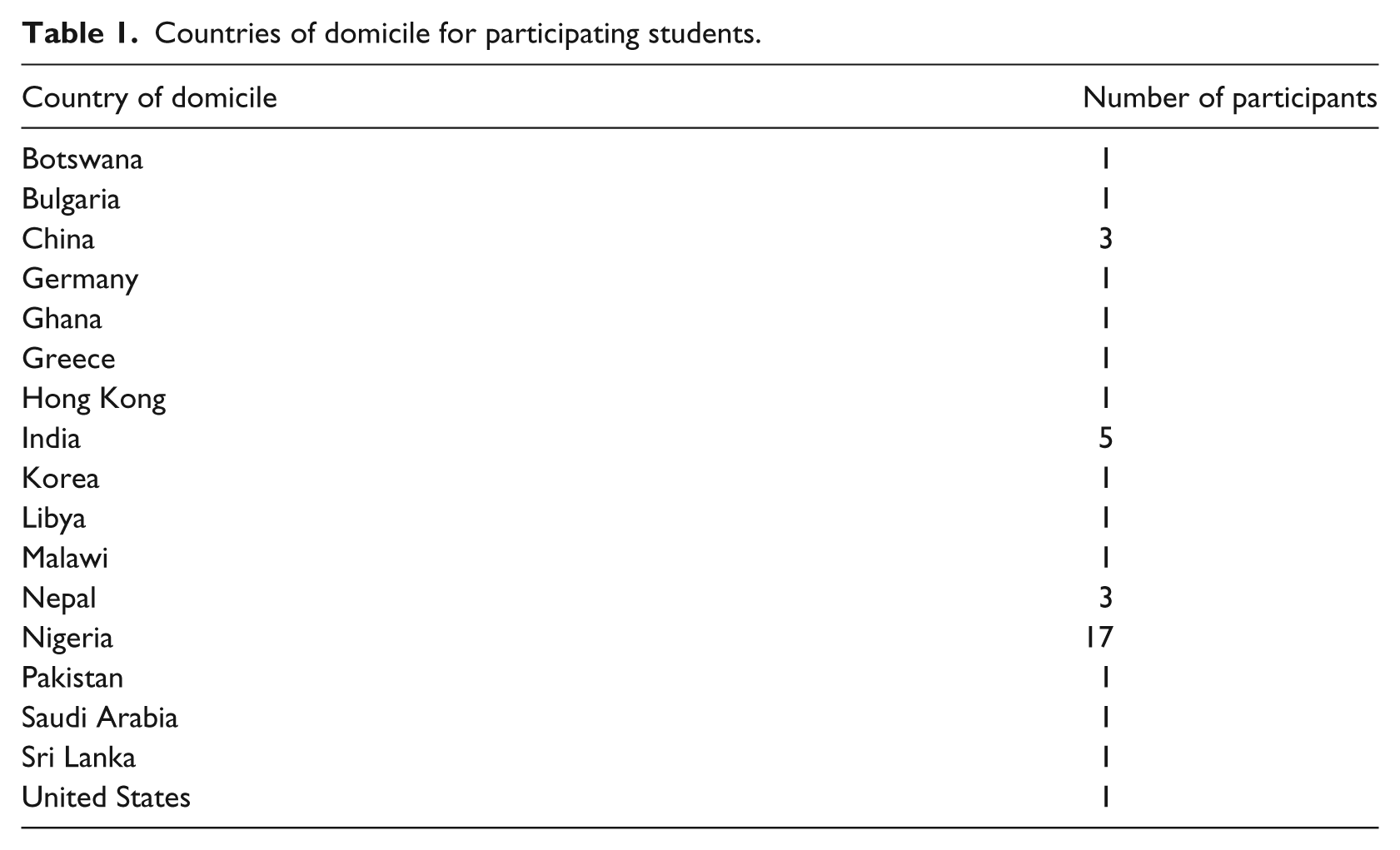
The interviewees were studying 23 different disciplines covering a range of subjects across the arts and sciences, including Fine Art, MBA, Environmental Science and Computer Science. The breakdown by discipline area is shown in Figure 1. Proportions of participating students grouped by continent are shown in Figure 2, with the specific countries of origin of the students shown in Table 1.
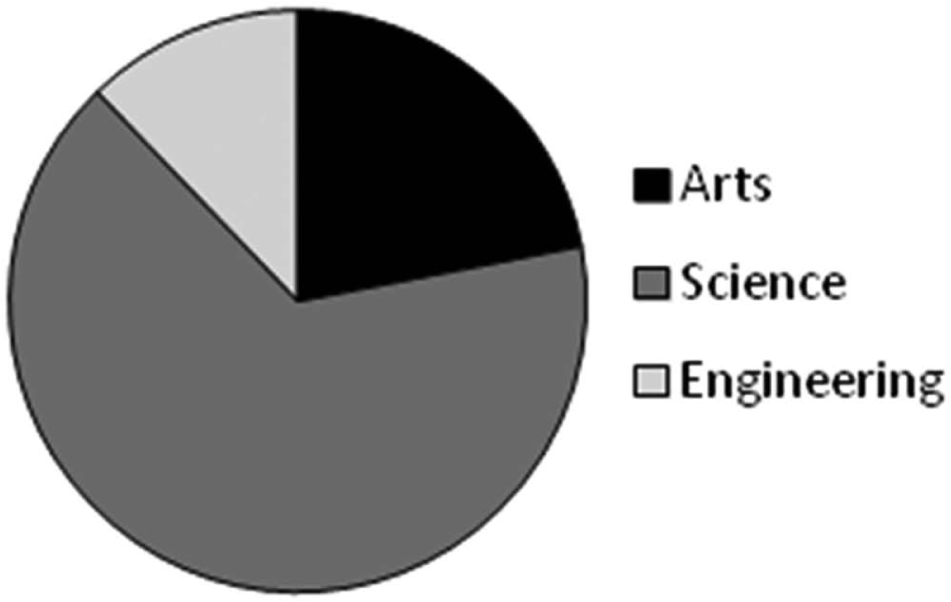
Proportion of participating students by discipline: arts, science and engineering.
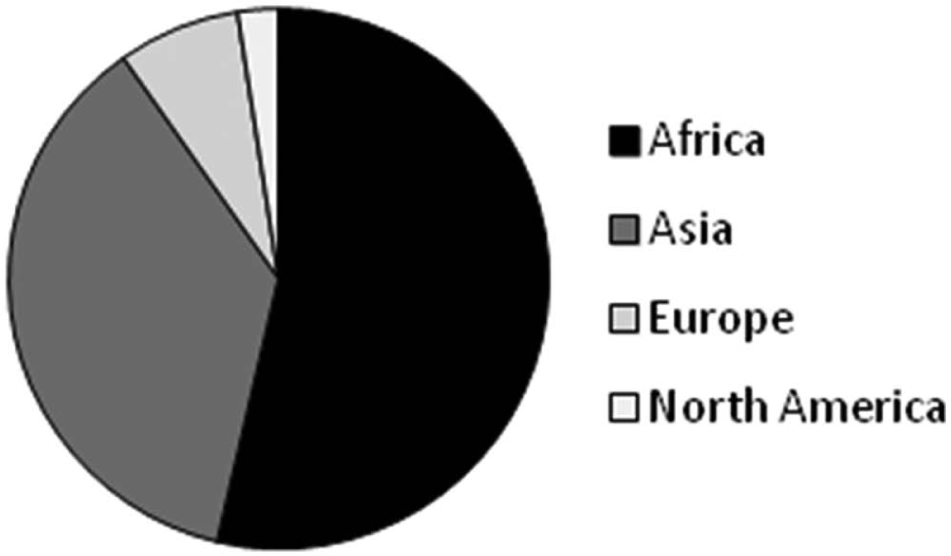
Proportion of participating students by continent of domicile: Africa, Asia, Europe and North America.
Countries of domicile for participating students.
Results and discussion
For any international student, coming to another country to study is a great commitment and upheaval. Several students had resigned from their jobs, and they had left their families and friends back home because they felt that they had reached a ‘glass ceiling’ (Participant 33) in their employment. One student summed this up by saying … it’s a large sacrifice to come here, but it’s worth it. (Participant 33)
They perceived that the only way they could progress at work was to seek further qualifications, and that those from the United Kingdom provided greater opportunities to enhance their employability, both at home and abroad. UK institutions were perceived to have ‘good reputations’.
Student prior experience of PDP or continuing professional development
None of the students interviewed had prior experience of PDP at undergraduate level. However, the majority had worked before they arrived in the United Kingdom and had been involved in activities which included aspects of PDP such as reflection, monitoring progress, goal setting, appraisal, continuing professional development (CPD) and participating in training programmes.
There appeared to be a lack of understanding of the differences between PDP and CPD. One student commented that they did some PDP at work, but upon further analysis, the process was more of a performance review for the company, less about the student’s development.
Just one student had ‘a flexible plan’, a written record where … everything is planned, I know what I am going to do ten years down the line. (Participant 32)
This was cited as being particularly useful as I have a tendency to leave things half done … You know, writing things down makes it more concrete. When you see it, it becomes more real, in your head it’s more of an idea … you would forget it … If you don’t want to do something you can just procrastinate, so I feel, you know, writing it down keeps it on track. (Participant 32)
PDP and skills development
The majority of interviewees showed a lack of awareness of PDP, highlighting the current lack of, or low level of, explicit PDP provision at Master’s level within the participating universities. However, a small number of students were already practising reflection and independent learning external to the curriculum. One student had worked out their own strengths and weaknesses, and another said that their university had helped them to do this but had let them down by not following it through with advice on how to improve. Some students had taken the initiative and had been to the library to read about how to address their weaknesses.
When asked to identify transferable skills learnt from their programmes, some students required considerable prompting to appreciate the meaning of this, which suggested that they had not spent time thinking explicitly about their skill set. Many could provide generic responses and simple lists of skills which are valued outside academia, but were unable to provide much detail until prompted further. One student said they had only heard about PDP through a staff–student liaison committee, and was told that PDP was only for undergraduate students and did not apply to taught postgraduates.
Where students had engaged with PDP, they appeared convinced of its merits. Several students recognised that they have benefitted with respect to learning about their own capabilities and weaknesses, for example by completing strengths, weaknesses, opportunities, threats (SWOT) analyses. Others acknowledged the benefits of self-analysis: I realised that indeed I really did have some weaknesses. Now I know about them … I know how to tackle them. (Participant 8)
PDP was noted by others as being helpful in supporting their wider skills development, for example group activities were found to increase communication skills. One student reported that students were encouraged by tutors to think about what they were doing in terms of past experiences. Reflection was built into the assignment and gave rise to positive new ideas and their writing skills also improved.
In addition to being unfamiliar with UK educational norms, participating students highlighted that writing in particular could be difficult for international students: … especially for those of us that come from developing countries, writing is one of our major problems. We don’t know how to write. (Participant 16)
While some international students have excellent English language skills, for others, it can take time to become proficient with day-to-day usage. So, for some, limited English language skills can become a barrier to understanding (Andrade, 2006) and to feelings of ‘belonging’ (Ryan and Viete, 2009), at least at the beginning of the degree. Even if a student is completely fluent in English, the UK HE system might differ from the system in their home country, and will require adaptation (Liu and Littlewood, 1997). Confidence is required to enable international students to have the courage and persistence to ask for clarification when they are unsure, or for help when it is needed. Hence, it could be very easy to miss information or fall behind.
Another student reiterated that the emphasis of their programme was on examinations: That [skills] is one area I would like them to add value. They should make us aware of these skills … your thoughts are towards passing exams rather than gaining experience and skills and knowledge. So you can see somebody who has done very well academically but cannot fit into industry. They haven’t got the skills. (Participant 26)
One student developed this further, saying that international students had made sacrifices of money, time and hardship to get here and that means they must make the most of any opportunities. Additionally, several interviewees reported that they had paid a considerable amount for their education, so needed to feel they were getting value for money.
This latter point highlights the added pressures on some international taught postgraduates to perform well, as many students stated that to study, they had been sponsored by their company or country, funded by their parents, or were self-funded. In addition, some students were also working part-time to provide the funds for living costs and fees. All of these factors led to students working hard and feeling the pressure of high external as well as internal expectations to do well, the focus being to obtain the highest marks possible and frequently emphasising effort on the examined part of the programme. Other activities which were seen as not directly related to their studies could therefore be viewed as a much lower priority, although interviewees recognised that this was perhaps not the best attitude to have as it can cause a skills gap.
Careers planning and PDP
It was apparent from the comments that many interviewees misunderstood the nature and scope of careers services offered at their universities. One common misunderstanding was the expectation that employment could be arranged on their behalf. This finding mirrors the results of the International Student Barometer, and while many careers services have a Statement of Service, perhaps students are unaware of this. Other students perceived that the careers service was only available to review curricula vitae and application forms.
The careers service was frequently mentioned as being a place that the students either had visited or knew they could go to if required. Other students commented that the careers service was a useful resource if only students would use it: … they should encourage more people, especially the international community, to really make use of the [careers] service … most people [international students] hardly patronised these services. (Participant 26)
Other pertinent points raised by individuals included the following:
It was helpful to undertake research into UK industry and practice applying for a job and being interviewed;
It was useful to have people who could help and encourage the students in the right direction;
Reflective report writing as part of PDP on a compulsory taught course allowed focus on what they really wanted to do;
Sharing reflection with others including tutors and colleagues was beneficial and students reported learning a great deal from this process.
It is clear from students’ comments that careers services are able to provide a key role in PDP provision and students described ‘bolt-on’ PDP-based courses having been run by their respective careers service, which they found to be beneficial.
Perceived benefits of PDP
Once it had been explained to the interviewees, all agreed that PDP would be very useful in helping them to achieve their aims, both personally and academically: I think it is very useful because most of the times when a student comes in … [to the country] and they’re trying to settle down it can take them a while to start thinking that … after this course I need to be thinking about my career because [that is] the whole reason that I’m here … it makes life much easier. (Participant 15)
Some students added that they needed guidance to get an overall view of possibilities and someone to put it all into perspective, but remained positive about the concept. When asked about how useful PDP would be at taught postgraduate level for international students, one student replied, Personal development is as important as the [degree] certificate itself. (Participant 16)
However, it must be noted that the above was the same student who had worked in a careers service, who had had chance to reflect and had seemingly understood the value of PDP through firsthand experience. Many international students have not had such an opportunity but could still recognise the value of it. PDP could help fill some of the perceived skill development gaps within their programmes.
Some recognised the value of PDP in encouraging decision-making and forward planning, which are often delayed until the end of the programme, when these skills are arguably of reduced value. One student said PDP had helped them develop self-awareness, and it was implicitly part of every programme and it would be helpful to make it more explicit. Another student noted, I would have really loved it if this [PDP] was part of our academic curriculum … We need information like this but … if it were part of our academic work it would be very very helpful. (Participant 34)
PDP was perceived by students to be potentially a good introduction to understanding the current systems in UK universities, and the desirability of building effective channels of communication with staff right from the start was emphasised: Some [international students] don’t know … how to go about things … if they are given this opportunity to explain to them what to do, how to go about it, create an avenue for them to ask questions, don’t just presume they know … it’s going to help international students. (Participant 35)
Very few students had considered producing a written record of their thoughts and plans for the future, but the value of this when implemented appears clear. One student reported that since coming to the United Kingdom, the student had started to … write things down … this makes you … more focused … I originally had the ideas in my mind and I tried to regularly think about them … Now it is much better when I write it down, it gives you a better way of improvement. (Participant 35)
There was awareness among some more mature or experienced students of a complacent attitude among international students towards a UK degree being a ‘golden ticket’ to successful employment. However, with the increasing ubiquity of UK degrees held by international students, the quality of the degree experience is critical, and this can be enhanced by developing employability skills: … one mistake people make is most of them still think that coming to the UK and getting a good degree is actually [enough] … once you have a foreign degree, you’re sure that you’re going to get a good job, but now because of that, everybody is coming to get a foreign degree. It’s now the quality of the foreign degree and … [that] is basically based on these employability skills that you can develop … and you stand a better chance of being employed time and time again. (Participant 26)
The same student went on to make the point that it is vital to stand out from the crowd and how PDP could facilitate this: Now you have to be competitive, you have to be a step higher. Those [employability] skills really count. Your PDP should be towards acquiring … and demonstrating certain skills to make you competitive, not just having made a very good scoring. (Participant 26)
Another student summarised this well: It’s not that you’ve just studied a particular course that matters, it’s the whole package … when you get a job, the employer looks at the whole individual. (Participant 15)
This same student recognised that learning other, perhaps less obvious, skills would also have been beneficial in order to have more skills to offer the employer: Also the lecturers have a part to play … we do a lot of group work, presentational skills. But there are other skills they need to make us aware of … you need to have a skill set that is acceptable to employers … like project management skills, sales selling skills, negotiation skills, problem solving skills, and critical thinking skills. All those skills are actually what employers now seek … rather than your qualifications … (Participant 26)
In the above quotation, the fact that international students may be mature students too meant that they may be able to recognise the necessity of additional (non-academic) skills to differentiate themselves from the many other UK Master’s degree holders. There was also the sense that the individual could take some ownership and responsibility for learning skills themselves.
Some students appreciated that the PDP process could continue throughout their life. One student identified PDP as providing skills which would help them continue to plan and develop after graduation and into their future life. Another student highlighted the importance of following up and acting upon areas of weakness identified outside their academic studies.
Students thought that PDP would help them become more self-aware. There was an indication of the desire for assistance to help crystallise thoughts. It was recognised that Personal goals I think relate to the person … but it would be helpful to discuss them. (Participant 15)
Overall, the students appeared to recognise the value of a formalised structure for thinking about their aims and capabilities, and for discussing possibilities for their future, the essence of effective PDP.
Reasons for reluctance to participate in PDP, and less positive comments on the process
While the majority of students in this study were supportive of the implementation of PDP, a minority of students were less enthusiastic. Some saw gaining the Master’s qualification as something that would help them secure a better paid position. Others were being sponsored by their home governments or were on paid leave from work, and so were obliged to return to their employer and did not perceive the need to engage with PDP. These students did not feel they had the time to devote to ‘distractions’ not directly related to their programme: I am overloaded with information from the course and the deadlines are very short, so my high priority is to finish the dissertation and the course successfully and get hopefully a good grade and after that … I will think about things in more detail. (Participant 41)
Another student commented that while advice was always welcome, they were ‘mature’, and already knew what they wanted to do. This point aligns with the findings of Jankowska (2009), who reported that firm belief in their own perceptions of what constituted personal development by some international students in her study resulted in no change in their resultant concept maps of the topic.
While the benefits of PDP were appreciated by most, it did not always attract positive comments from some of the international students interviewed. However, it is quite possible these comments could be attributed more to style of delivery and lack of understanding by the students and indeed the staff implementing the procedures, rather than inadequacy in the process itself.
It is clear from a number of students that academic staff add value to the PDP process and that their attitudes can strongly influence student engagement: It [PDP] was mentioned once when we were introduced to the programme and it was mentioned that we can do it but it is not mandatory … I mean there was a link on a website but we never bothered because there wasn’t much emphasis on it. (Participant 31)
Students reported frequently that they wanted one-to-one support from staff members and that this offer of help needed to be repeated to ensure students are confident to approach their lecturer with questions and issues. Rea (2001) highlighted a similar disparity, noting the difference between what a teacher considers helpful and what the students actually do as an issue when considering the availability of opportunities to develop reflective skills among students.
Another student commented that they would have … loved some advice from my tutors. (Participant 31)
Lack of personal attention was regularly raised as an issue for students, illustrated by the example below where PDP was delivered to a class of 40–50 students: To improve, you could have small groups of people … If it’s just five people that would give people the incentive to actually come and attend because … you’re going to be missed … I think personal attention is one big thing … that is not there. (Participant 39)
Some students saw difficulties in sustaining and building on what they had learned. If the students have already developed techniques of self-reflection and planning as part of their programme, it will be much more likely that they will continue this process later in life.
Implementing PDP
Of the students who commented about the model of PDP, the majority stated that they would like to see PDP embedded as part of their programme. The remainder saw PDP as either a linked model, whereby there are crossovers between the programme and the PDP programme, or as a discrete, bolt-on model (Higher Education Academy, 2009). There were mixed opinions about whether PDP should be assessed, although there was more agreement that it should be made compulsory.
The majority view was summed up by the following: If it was built into the course it would be even better, because … you are doing the whole thing together whereas if it’s a service on the side, some students don’t use the service because they are busy with their studies. (Participant 15)
Owing to the levels of prior work experience and probable maturity among international taught postgraduate students, it is important that any PDP delivery should not be delivered in a manner which seems patronising to them.
Conclusion
The analysis of interviews carried out with international taught postgraduates revealed that their perceived benefits of PDP can be grouped into three main areas as
Transferable skills and employability,
Lifelong learning,
Self-awareness.
The outcomes of the research also revealed taught postgraduates’ generally positive perceptions of PDP once they knew what it entails, in line with the findings of Meredith (2010). In contrast, the wider PDP literature confirms undergraduates often have negative attitudes towards PDP, particularly at early stages in their degree programme (Gaitán, 2012). There is evidence from this research that taught postgraduates are very job-focused, and as a result, Master’s level programmes with a vocational or advanced training element may assist with taught postgraduates’ motivation to engage with career-orientated PDP frameworks, reflecting Clegg and Bradley’s (2006) employability-focused PDP as a key area for development. It is also clear from our findings that implementation requires sufficient academic staff time for programme teaching teams to support the development and delivery of appropriate, tailored PDP resources for international taught postgraduates. If implemented thoughtfully and with adequate resource, our data suggest that international taught postgraduate students would consider PDP as having a high perceived value. With the exception of Meredith (2010), relatively little is known about PDP in relation to postgraduate students, whether international or not. The outcomes of this research have therefore uncovered ideas and perceptions of participating students in an area which is likely to be of interest to lecturers, careers advisers and other employability practitioners.
The provisional conclusion from this research is that embedding PDP within taught postgraduate provision is likely to be received positively by the majority of students, both international and home, provided that it is contextualised, its purposes made explicit and staff time is allocated to supporting it effectively. However, with a limited sample size, further research is required to ascertain whether or not these findings can be generalised more widely. While the evidence presented here indicates the benefits of tailored PDP for international taught postgraduate students, analysis of a larger sample size of interviewees of different nationalities, at a greater number and range of universities both throughout the United Kingdom and elsewhere, would provide further insights into the conclusions drawn here.
Suggestions for further research in this area include interviewing taught postgraduate programme delivery teams, or those with responsibility for PDP curriculum planning, reviewing the purposes and activity currently classified as PDP within their programmes, against student interest in specific PDP topics as revealed through this research. It would also be interesting to undertake similar research in other countries to observe attitudes towards PDP-like activities. For instance, Zhao and Coombs (2012) identify current Chinese education policy as now making explicit reference to internationalisation of its own universities, including aspects of intercultural teaching and learning. In the context of the findings of this study, if such a policy were to include elements of PDP for example, this would require considerable effort by students, staff and indeed policy makers in overseas HEIs to ensure such a change was effective.
As funding for HEIs becomes increasingly unpredictable, universities in the United Kingdom and likely elsewhere are increasingly financially reliant on international students, particularly at the taught postgraduate level. If we are to continue to attempt to see growth in the number of international students on such programmes, the views and perceptions of our students need to be heard and acted upon. Our data suggest that students recognised how value can be added through support and encouragement to develop skills and attributes both within and beyond the academic sphere. PDP was identified as a useful approach to achieve this, enabling students to develop qualities applicable to life beyond academia. This research has demonstrated the perceived benefits of, and demand for, tailored PDP for this often overlooked and yet increasingly valued group. We suggest that PDP developed specifically to meet the needs of international taught Master’s students and integrated into the curriculum can help ensure that their expectations of a firm foundation for a successful period of study and subsequent career planning requirements are met.
Footnotes
Acknowledgements
The authors are indebted to the students at the five institutions involved in this research, and to the educational consultants who undertook the interviews.
Funding
This research was commissioned by the Scottish Higher Education Employability Network (SHEEN), through the Scottish Funding Council’s Learning to Work Initiative. The work was supported by Higher Education Academy funding (Grant number 1150 LT000 RGH0478).