



Abstract
Online learning has been widely adopted in higher education but there is a need to better understand the nature of student engagement with online courses. For example, there are questions about whether students engage with courses as educators intend and what features of online courses engage students to enhance learning. Bringing together student and educator perspectives, this article reports on a study that identified ‘pedagogical touchpoints’ – opportunities within online courses for student engagement – to ascertain whether a better understanding of these could improve online course design and student engagement. Data were collected across three undergraduate online courses. Data analysis produced three key findings: mapping pedagogical touchpoints against dimensions of engagement reveals patterns that may inform enhanced course design, students’ engagement with pedagogical touchpoints varies according to their learning needs and desires, and mapping pedagogical touchpoints can inform course design at both conceptual and practical levels. Discussion of the findings highlights that purposeful design of online courses, including strategic planning for pedagogical touchpoints, can maximise the potential for student engagement and consequent learning.
Student engagement and online learning
Online courses have long been widely valued for making higher education more readily accessible to students unable to attend conventional classes. Online courses offer flexible learning and increased opportunities for student participation and there have been steadily increasing enrolments but they typically demonstrate poorer retention and completion rates in comparison with on campus cohorts (Bawa, 2016; Stone et al., 2019). Student engagement, understood as the degree to which students are doing the things that impact the learning outcomes, has been proposed as an indicator of quality in education (Coates, 2005) and linked to retention, with the implication that increased engagement will reduce attrition (Tight, 2020). Factors known to influence online student success include the choice of technologies used, how courses are designed, and how and by whom courses are delivered (Bawa, 2016; Dacko et al., 2015; Ellis and Bliuc, 2019). Yet, despite deployment of the best available technologies, course designs and staff, it is ultimately students who choose how they will engage. Hence, it is important for educators to seek deeper understanding of online student engagement and its relationship to learning.
Defining engagement for online learners is complex. Traditional indicators of engagement include students accessing learning materials sequentially and progressively through the semester and regularly connecting with the educator and peers via platforms. Engagement has also been described in terms of a student’s commitment, time, and effort given to their studies (Krause and Coates, 2008; Kuh, 2003). However, these definitions tend to privilege behavioural processes or the extent to which students actively think about and interact with the content, educators and peers, and such definitions may not accurately nor adequately represent the engagement of particular cohorts (Stone and O’Shea, 2019). Definitions of student engagement founded upon sociocultural theories (Lave and Wenger, 1991; Vygotsky, 1978) take into consideration the broader student experience within the course and more widely in the context of the university and students’ life-contexts (Dixson, 2015; Kahu and Nelson, 2018). Such definitions have been particularly useful for understanding the engagement of online students (Herrington and Oliver, 2002; Parker, 2015) who may reflect far greater diversity than on campus students, and who require increasingly flexible online study approaches (Stone et al., 2019).
However, there is little consensus in the literature about what online student engagement looks like in practice (Redmond et al., 2018). Given that engagement with online learning has an influence on the quality of student learning and overall achievement (Kahu and Nelson, 2018), developing better understandings of how to monitor student engagement and using this knowledge to enhance the student experience is important. An Online Engagement Framework for Higher Education aids understanding about how various types of engagement interact to support students’ learning in online environments (Redmond et al., 2018). In this framework, summarised in Table 1, five interrelated dimensions of student engagement are present; namely, social, cognitive, behavioural, collaborative and emotional engagement. For each dimension the framework identified illustrative indicators that might be used to support investigation of student engagement with existing courses and inform design of new courses.
Summary of dimensions of online student engagement (Redmond et al., 2018).

Student engagement can lead to a successful online learning experience when fit-for-purpose technology, quality instructional design, learner dispositions and skills, and educator knowledge and pedagogies specific to online teaching converge (Buckingham Shum and Deakin Crick, 2012; Gedera, 2014; Langub and Lokey-Vega, 2017), but learner perspectives remain critical to understanding how online learning can be improved. Many studies have emphasised the importance of creating effective online learning communities, but too few have paid attention to the diversity of online learners (Sun and Chen, 2016). Traditionally, students’ responses to a course have been gathered through course evaluations (Shook, 2013) which can be used to inform future changes to a course but do not support the personalisation and responsiveness needed to address student issues as they arise. Recent years have seen substantial developments in learning analytics using data captured from online systems (Buckingham Shum and Deakin Crick, 2012; De Freitas et al., 2015; Knight et al., 2014; Rienties et al., 2017). The timely availability of such rich data may support immediate adjustments to the presentation and operation of a course in response to critical issues. Whether using traditional end-of-course evaluations, ongoing data from the learning management system (LMS), or less formal personal interactions with students, educators will continue to seek feedback from students. However, unless the process is approached systematically and findings shared among colleagues, any benefits from this feedback will be limited to those specific courses.
Designing online courses for student engagement
Course design is an important influence on generating and maintaining student engagement so that it is effective in supporting learning. Educators control which virtual, conceptual and material tools are implemented (Gedera, 2014), but it is the specifics of how these are used that contributes to effective student engagement. As Knight et al. (2014) observe, ‘Technology alone does not determine practice; moreover, as with any tool, it is not only the design of the tool, but the way in which it is wielded in context, that defines its value’ (p. 42). Designing courses to promote student engagement requires educator knowledge about the technology, their learners, discipline-specific content and instructional design. Within a university environment, the LMS will be consistent across courses but course design is often the responsibility of individual educators with the assistance of an educational designer, if one is available. University educators are typically expert in their subject matter but may have little or no preparation as designers and operators of online courses, highlighting the importance of promoting professional development in online educational practices (Sun and Chen, 2016), along with ‘design thinking’ (Wrigley and Straker, 2017) to re-envision online course design.
Devices such Redmond et al.’s (2018) framework can help educators understand how course design elements impact student engagement across five dimensions (cognitive, behavioural, emotional, social and collaborative). The status of university educators as subject matter experts generally ensures that courses include ample opportunities for cognitive engagement. Behavioural engagement requires course design which establishes clear expectations about how learners can successfully complete the course, including alternative pathways supported by strategically selected available technology to meet different needs and preferences (Rubley, 2016). Students access and engage with learning material based on personal preferences that work in the context of their wider lives (Dixson, 2015; Kahu and Nelson, 2018; Wrigley and Straker, 2017), so another crucial element of course design is creating an online structure that develops a sense of community where individual students may feel connected to the course and other participants (Bigatel and Edel-Malizia, 2018; Garrison and Arbaugh, 2007). This connection extends to the educator, who facilitates and guides learners through active learning and exploration and strategic use of technology, providing feedback and support throughout the course (Garrison, 2011). Given the diversity of online student cohorts who are often balancing study with family, work commitments and other life-wide circumstances, opportunities for social and emotional engagement are valuable for those students who benefit from these, without any expectations that all students can, or will desire to, engage in these ways (Stone and O’Shea, 2019). Learners will not need to engage with online learning across all five dimensions at all times, but the availability of a range of opportunities can help learners engage in the ways and at times that suit them within a semester (Kahu and Nelson, 2018).
Learning analytics data extracted from an LMS provide insight into how regularly and extensively students access learning materials, synchronous tutorials, and collaborative and social opportunities, thus revealing to some extent their social, cognitive, behavioural, and collaborative engagement but emotional engagement is less visible in such data. Developments in sentiment analysis suggest that analysis using artificial intelligence may be able to shed some light on the emotional engagement of learners (Huang et al., 2019; Ortigosa et al., 2014). Although such analysis is helpful for directing an educator’s attention to potential issues, educators should also be attentive to indications of emotional response in learners’ contributions in the LMS and through direct communications with the educator. Educator charisma comprising ‘knowledge, character traits, teaching techniques and humour’ plays a significant role in how students engage (Lin and Huang, 2016: 139). An educator’s interpersonal influence may strongly impact the engagement of learners who are new to online learning or to ‘non-traditional’ learners who seek a sense of belonging (Kahu and Nelson, 2018).
Aids to course design
One approach to designing courses to enhance student engagement while keeping student perspectives at the fore is to look at the sequence of interactions between those involved. In the business context, this would be the ‘customer experience’ which, in the university one would be the ‘student experience’ (Brumby, 2014). The ‘customer’ or ‘student’ experience at each ‘touchpoint’ has a focus on their physical and emotional expectations. That information is used to prepare a ‘moment map’ and design improved interactions to improve the customer experience. The use of a similar process to map critical moments in the student journey through processes leading to university enrolment and seeking ways to enhance the emotional quality of the experience would be useful for increasing the likelihood that students would enrol as a result of positive experiences with the university (Brumby, 2014). The touchpoints approach has been used to map touchpoints across the student journey from pre-admission, through study, to graduation and career growth (Khanna et al., 2014). Another study identified five touchpoints (through first contact with the institution, enrolment and first assessment to completing the first course) and considered how students’ expectations might be met in ways that enhanced engagement and learning in the transition of students to online study (Moss and Pittaway, 2018). Touchpoint mapping can guide closer examination of interactions at specific touchpoints with the aim of enhancing the experience. For online learning, one of the anticipated benefits of the mapping process is to support educators in considering how their course design provides for different dimensions of engagement and how the design might be enhanced to better serve the needs of students.
The above has confirmed the importance of student engagement for success in online learning and the need to cater for different preferences and needs in the design of online courses. It has also identified the potential of ‘mapping’ for examining the student experience and ways in which it might be enhanced. ‘Touchpoint mapping’ has been used with some success for examining the student journey at university or program level. Hence, there is reason to think that analogous mapping may have potential to offer insights for improving the student experience of online courses.
Investigating how the pedagogical touchpoints in a course support student engagement should be able to inform decisions about changes to design that would enhance student engagement and learning. The study was guided by these questions:
What patterns in design of online courses are revealed when pedagogical touchpoints are mapped against dimensions of student engagement?
How do students engage with pedagogical touchpoints in online courses?
How might mapping of pedagogical touchpoints inform design of online courses?
Research methods
The study was conducted over two semesters in 2019 at a regional Australian university servicing a diverse student cohort of whom 75% were studying online. Ethical approval was sought and gained from the university ethics committee. We began by adapting touchpoint mapping methods (Rosenbaum et al., 2017; Wagner et al., 2020). In those applications, touchpoints are arrayed horizontally and strategic actions are listed vertically to form a grid. Our ‘pedagogical touchpoints’ were course elements designed to promote student learning. They included the content, assigned readings, scheduled tutorials, forums (online discussions), additional resources, student feedback, assessment, and interactions outside the LMS. A vertical component was established using the five dimensions of engagement (Redmond et al., 2018) in order to enable identification and classification of resources and how they were intended to facilitate student engagement.
Data were obtained from two consecutive semesters of each of three undergraduate teacher education courses facilitated online by three of the authors, supported by the fourth author in their capacity as an educational designer. The study lasted a little over a year from the time when a mapping grid was developed prior to the first semester of the courses through to analysis of course evaluations and other data collected after completion of the second semester. The research team met periodically to review data and discuss progress.
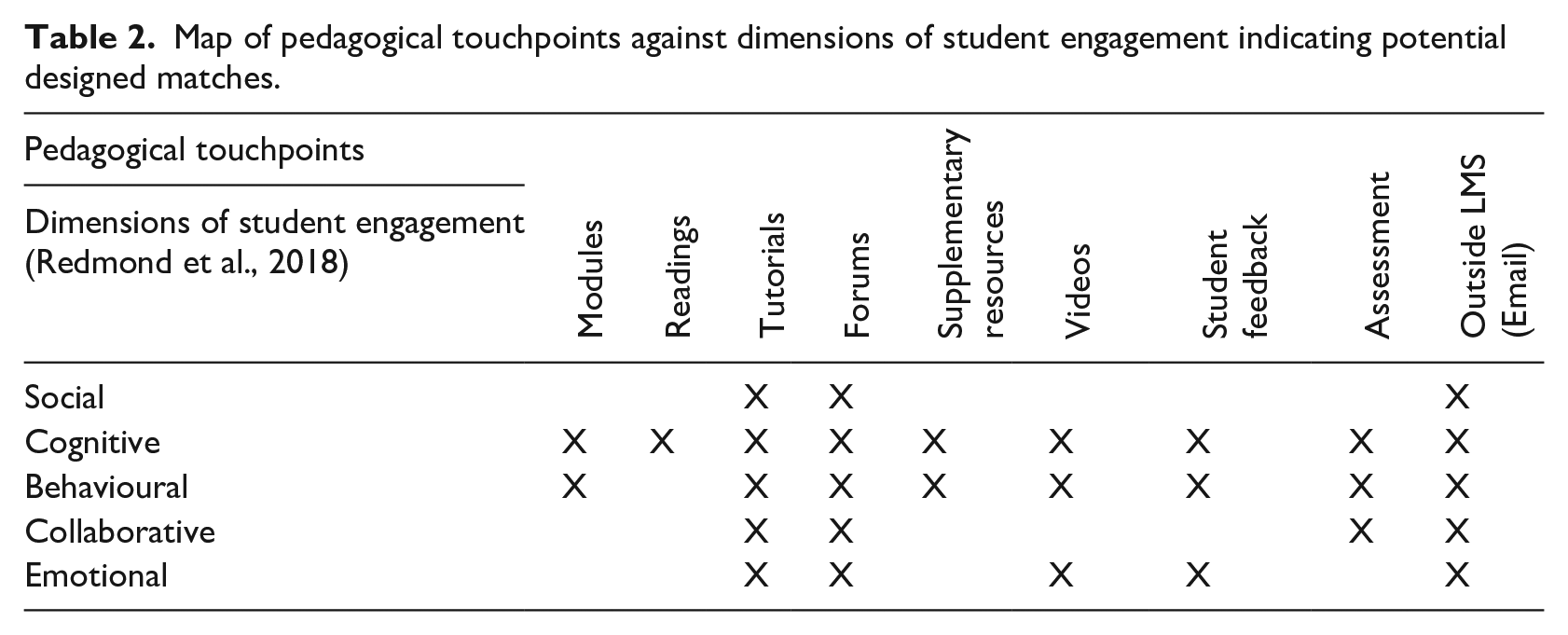
At the beginning, before the first semester of the course, the researchers discussed pedagogical touchpoints across the courses and categorised these according to the dimensions of student engagement each touchpoint addressed. For example, various types of forums were identified as pedagogical touchpoints, but forums for questions about assignments were aimed at cognitive and behavioural engagement while social forums were aimed at students’ social engagement. This information was summarised by the insertion of ‘X’ in the relevant cells of the pedagogical touchpoint map (see Table 2). As is apparent, touchpoints may affect multiple dimensions of engagement. Moreover, not every touchpoint needed be present in every course. This conceptual mapping exercise identified the potential designed matches as shown in Table 2 and once the mapping grid had been established the team was able to apply it to each of the three courses.
Map of pedagogical touchpoints against dimensions of student engagement indicating potential designed matches.
Course learning analytics were used to examine the proportions of students who interacted with LMS elements in each course (Course 1 n = 70, Course 2 n = 170, Course 3 n = 62). The data available from the standard LMS report were relatively crude, reporting just the percentage of students who had, or had not, accessed each identifiable LMS element such as a content module, forum, or other linked element. Because the researchers were also the educators responsible for design and delivery of the courses, they were able to tabulate the LMS data and categorise it according to dimension of engagement. Thus, discussion forums or other LMS elements could be assigned to cells in the map grid according to whether they were primarily addressing course content, social interaction, assessment, or other aspects.
Each educator also used semester 1 course evaluation data (response rates: Course 1: 35%, Course 2: 42%, Course 3: 37%), which are collected by the university at the completion of each course, to review and reflect on students’ experiences. Course evaluation data includes questions about student satisfaction and how they felt about the learning opportunities. These reflections were used to inform adjustments to the courses in the subsequent semester. Semester 2 course learning analytics data and course evaluations (response rates: Course 1: 32%, Course 2: 50%, Course 3: 36%) were also collected in the same way. These data enabled comparisons to be made between the first and second deliveries of the courses. Such comparisons had potential for illuminating variations in the ways that students interacted with these touchpoints.
All students enrolled in the three courses over semesters 1 and 2 were invited to participate in a 15-minute semi-structured interview. A research assistant conducted the interviews to minimise any sense of coercion or anxiety students may have felt when discussing their experience with the educators. A low response rate to the invitation to interviews (n = 3) led to the subsequent offer of an anonymous survey which received a 17.5 % response rate (n = 53) and 13.2% completion rate (n = 40). The survey included questions related to each dimension of engagement, for example, ‘Were there opportunities to get to know other students in this course?’ (social engagement) and ‘Were there opportunities to discuss your opinions with fellow students?’ (collaborative engagement). These data were analysed using NVivo (QSR, 2018) to enable triangulation of the findings (Flick, 2018). This was also achieved through NVivo by cross-analysing the various sets of data across courses and within each course against Redmond et al.’s (2018) five dimensions of student engagement.
Findings
What patterns in design of online courses are revealed when pedagogical touchpoints are mapped against dimensions of student engagement?
Unsurprisingly, given the intention of online courses to promote learning, all of the identified pedagogical touchpoints had potential for cognitive engagement. Perhaps less obviously, study modules and readings, which tend to be accessed individually by students, were seen as limited to cognitive engagement. On the other hand, touchpoints which offer opportunities for students to interact with an educator and other students, such as tutorials and forums, had potential in all dimensions of engagement though not necessarily simultaneously or even in the same forum. The potential depended on the function of the activity such as discussing content, collaborating on project work, or providing social opportunities.
This initial touchpoint mapping of the separate courses revealed that all three provided multiple touchpoints for cognitive engagement, but there were varied engagement opportunities in the other dimensions. Specifically, Course 1 provided few opportunities for emotional engagement except for assignment feedback and online synchronous tutorials which were not attended nor accessed by all students in the course. The mapping of courses 2 and 3 highlighted that, while opportunities for all dimensions were potentially available to students, social, collaborative and emotional engagement opportunities were limited.
There were patterns in the presence of opportunities for student engagement at both conceptual and practical levels. At the conceptual level, some touchpoints offered more obvious opportunities for certain dimensions of engagement. There was an understandable prevalence of opportunities for cognitive engagement across all touchpoints with the risk that failure to provide opportunities for social and emotional engagement might make a course less appealing to some students. At the practical level, there were variations among the courses with some apparent limitations in the availability of opportunities for social, collaborative and emotional engagement.
How do students engage with pedagogical touchpoints in online courses?
Derived from course analytics, Table 3 shows the percentage of students who interacted with the pedagogical touchpoints present in the first and second semesters of each course. Where there were multiple instances of a touchpoint, as for modules, forums, and tutorials, the values shown are the means of the percentages interacting with each instance.
Percentage of students interacting with pedagogical touchpoints.
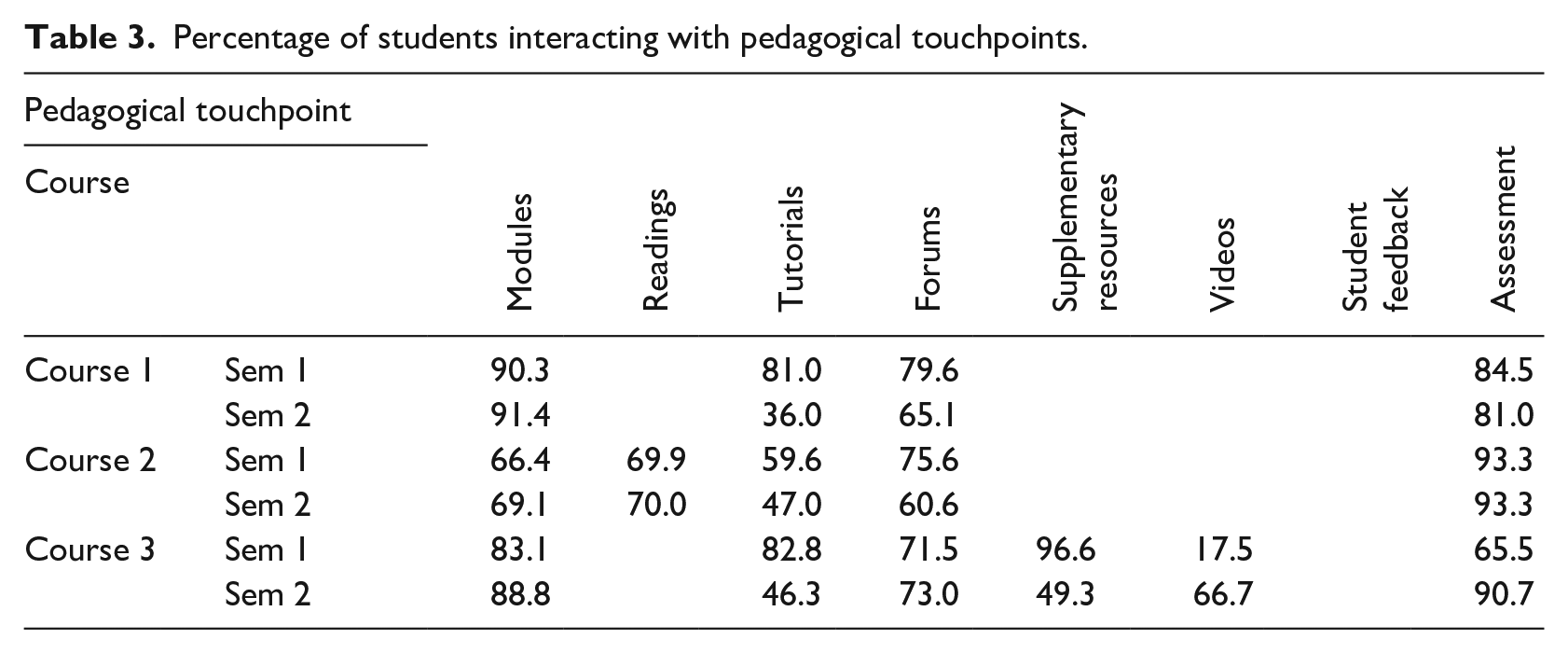
Table 4 shows the estimates of the average percentage of students interacting with touchpoints offering opportunities for each dimension of engagement.
Percentage of students interacting with pedagogical touchpoints by dimension of engagement.

It is apparent from Table 3 that there is considerable variation in the proportion of students interacting with these touchpoints. The proportions accessing specific touchpoints varied from less than 20% for videos in Course 3 to more than 95% for supplementary resources, mostly slides from tutorials. The values reported in Table 3 are averages that mask substantial variation within individual categories. For example, 91% for the ten modules in the second semester of Course 1 is the average of values ranging from 100% for the first module to 76% for the last.
Variations in interaction according to dimension of engagement are visible in Table 4. Courses 1 and 3 both recorded the highest values for cognitive engagement. Course 2 had higher levels for behavioural and collaborative engagement in the first semester and for behavioural engagement in the second. Interaction with touchpoints offering social engagement was moderately strong in both semesters but opportunities for emotional engagement were more variable across courses and mostly limited.
Examination of data obtained from course evaluations, interviews and surveys suggested that less experienced students were more likely to engage with forums and with elements that supported behavioural engagement with course organisation features. Just over half the students sought social engagement through their online courses but this appeared to be less important to older students. As one student stated:
It’s more because I’m 45 years of age, so most of the people my age are looking after children. It was actually really great to get to know some of the other students I was working with but it wasn’t something that I would seek out. No. (student 1)
For cognitive engagement and emotional engagement, students clearly preferred tutorials and online forums over online breakout rooms, group work or course-related social media. In a student’s own words:
The forum posts and responses let us view a variety of perspectives and to express our own. The tutorials also asked for opinions and thoughts. (student 16)
In addition, the majority of students (74%) reported emotional engagement as they felt supported that staff had knowledge of their learning progress. This was through technology such as online badging and completion bars offered in the LMS but also from personal contact with staff within tutorials and forums.
Most students reported valuing collaborative engagement with courses through email, forums and tutorials, although one student commented that ‘the availability was there. I just never took it up. I’ve never joined any [tutorials] in my whole degree’ (student 1). Students reported collaborative engagement through being able to contact staff outside the LMS using email, but only two students in the study saw student feedback and videos as collaboratively engaging. Students were also divided in their responses about collaborating with peers with eighteen students (45%) responding that they did not enjoy or seek out collaborative engagement due to negative past experiences and lack of time, ‘especially when we all have different time schedules to meet and follow’ (Course 1 evaluation). Online group work especially was noted in the data as a possible stressor in online engagement.
While interaction with most pedagogical touchpoints could be mapped and identified through the LMS, some proved more elusive. For example, when asked what course elements were noteworthy for engagement, students responded:
Nothing unique that I recall however the course was incredibly engaging (student 32).
The course itself did not do anything special, but it was one of the most memorable for me as it was so well run and [the educator’s] passion and enthusiasm shine through (student 15).
In summary, students’ engagement with touchpoints was highly variable. Some of that variation stemmed from differences in course design while some could be attributed to students’ diverse needs and desires for different forms of engagement affecting the frequency and intensity of their touchpoint interactions. Students near the commencement of their program of study and those with unmet needs for social interaction were inclined to access touchpoints more frequently and to seek engagement beyond the cognitive and behavioural components required to succeed in the course. Those with greater confidence based on more experience of online study or with more demands from employment or home were inclined to limit their interactions to those essential for success in the course.
How might mapping of pedagogical touchpoints inform design of online courses?
There are expectations that readings, videos, student feedback and assessment would engage students, but comments from students indicated that did not find such content particularly engaging. Course readings were often mentioned as a way that course content was provided, and a few students appreciated having variety and readings that were not ‘too content heavy’ (Course 2 evaluation). However, students did not typically identify readings as cognitively engaging, with typical reasons such as:
Links to readings being difficult to open. At times you had to log out and back on in a different browser. (Course 1 evaluation)
Readings were of great detail and I found it easy to get lost in all of the information. (student 19)
The first comment highlights the effect of accessibility on engagement, a point raised by 36 out of 40 students who completed the survey, all three interviewees, and several comments in course evaluations. The second comment shows that cognitively overwhelming touchpoints can negatively impact student engagement.
The mapping process that generated the data shown in Tables 3 and 4 identified some pedagogical touchpoints that attracted limited interaction from students. For example, videos in Course 3 were viewed by just 17.5% of students in the first semester.
Table 5 lists some examples of changes to touchpoints informed by student feedback and made between the first and second semesters of the courses. The table cites student comments about the first semester course with a brief description of the changes made.
Effects of changes to pedagogical touchpoints informed by student feedback.
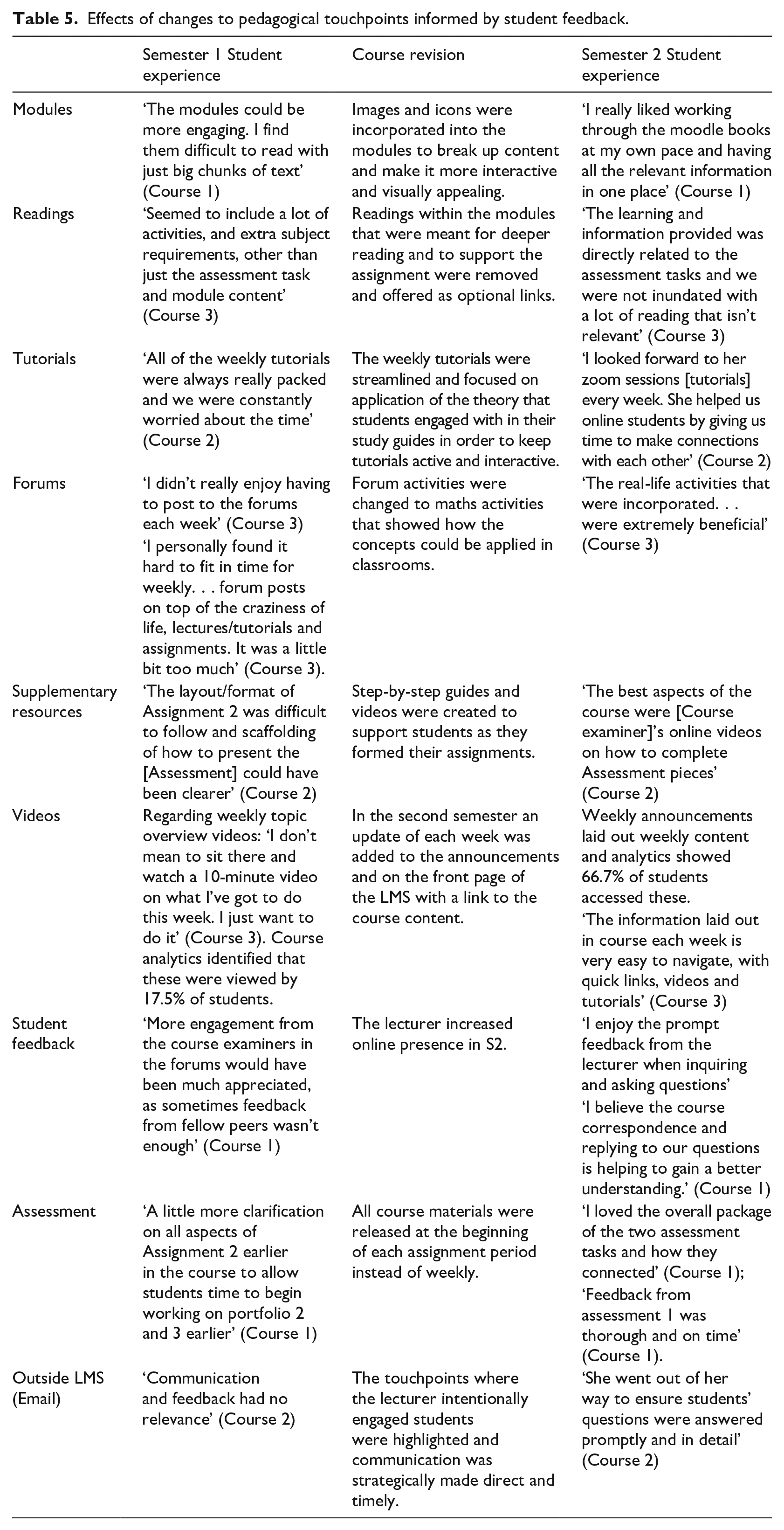
As shown in Table 5, the changes made produced positive responses from students who undertook the same course in the second semester. Changes are also evident in Tables 3 and 4 although there are some discrepancies where the proportions of students interacting with touchpoints or with engagement dimensions decreased from the first semester to the second. The causes of those changes are not apparent and may have resulted from differences in the composition of the student cohort from one semester to another affecting students’ needs for particular course features or through some element of redundancy introduced through the changes.
Discussion and conclusion
The importance of multiple dimensions of engagement for learning is well established and there are numerous studies detailing how design features can support student engagement in online courses. However, there is potential for developing new ways to support the educators responsible for design and delivery of online courses. The use of mapping ‘touchpoints’ against dimensions of engagement may be useful as an aid to investigating and enhancing the ‘student experience’ of an online course, as has been demonstrated by the study undertaken and described in this article. Our study has demonstrated the utility of mapping touchpoints against dimensions of engagement for supporting online course design at multiple points. Conceptual mapping of three courses revealed that all three courses included multiple touchpoints supporting cognitive and behavioural engagement but were less rich in opportunities for other dimensions of engagement, especially social and emotional engagement. Variations in students’ use of touchpoints were found, at least some of which were related to individual differences in need or desire for social interactions within a course.
Online courses exist to support students in acquiring specified knowledge and skills and the educators who design and deliver such courses are primarily subject matter experts. Hence, it is not surprising that the design of online courses tends to highlight touchpoints that support cognitive engagement with the relevant knowledge and skills, supported by behavioural engagement to guide students through the course. Neither is it surprising that students who take courses to advance their career and life prospects tend to interact more with those touchpoints that they see as most likely to contribute to their success in demonstrating the knowledge and skills that are the focus of a course.
Nevertheless, educators designing and delivering online courses would do well to consider all five dimensions of engagement (Redmond et al., 2018) as online courses attract diverse cohorts of students who have different needs for collaborative, social, and emotional engagement. More than half of the students in all three courses interacted with touchpoints offering social engagement with their course peers and our findings confirmed the importance of forums for supporting students’ active learning online, as found in Gedera (2014). Social engagement was valued less by students with more demanding work or family commitments, but it was important for some students. Moreover, the students reported higher levels of social and emotional engagement with synchronous touchpoints such as tutorials rather than asynchronous touchpoints such as forums, highlighting the value of providing both types of touchpoints to meet the needs of diverse students.
The findings suggest that some resources are more useful to students than others. For example, in Course 3, the educator put great effort into providing weekly summary videos for students, but most students did not access these. This raises the question of whether the effort put into certain resources provides sufficient returns in terms of student engagement. Our study affirms the findings of Stone et al. (2019) regarding the provision of flexible learning opportunities that support a student’s right to engage with online learning in a manner that best fits with their individual needs. Catering to diversity should be foundational for the design and delivery of online courses and it highlights the value of considering opportunities for student engagement at each of the touchpoints included within a course design. Clearly the nature of a touchpoint affects the dimensions of engagement that can be most readily manifested but additional opportunities may be uncovered in some cases. For example, cognitive engagement will be the dominant feature of course modules and readings but other dimensions of engagement may be injected through careful selection of examples, adjusting the writing tone of introductions and explanations, or encouraging sharing of reactions with colleagues. Some students may prefer not to engage socially or collaboratively but others may find that collaborative, social, and emotional engagement with course colleagues meet needs or wants they experience because of their personal circumstances and preferences.
The implications for practice are that online courses require purposeful design not just for cognitive and behavioural engagement, but also for social, collaborative and emotional engagement. Pedagogical touchpoints should be incorporated in course design for students to access and engage with when and how it suits them. During course design, touchpoint maps may serve as a useful prompt for considering the inclusion of pedagogical touchpoints and their capacity to support dimensions of engagement. Conceptual mapping can be used to inform initial course design by encouraging educators to consider the potential of various touchpoints for meeting the needs of students with different characteristics. Beyond the initial design of a course, mapping course analytic data may identify touchpoints that are not performing to expectations and point to fruitful areas for redesign of course elements informed by additional data from students. This may lead to online courses that offer a wider range of opportunities for student engagement across multiple dimensions.
There are limitations which need to be acknowledged. The findings are based on data from only three online undergraduate teacher education courses at a regional university in Australia. Numbers of students in the courses were not large (ca. 600 across all six courses) and survey response rates were modest. Moreover, the involvement of the course educators as researchers was advantageous for understanding of the courses and student interactions within them but carried an inherent risk of bias. Future research might focus on how courses can be designed for specific dimensions of student engagement, and the impacts of lecturer presence and interpersonal interactions. Research would also be useful to understand what online student engagement looks like across diverse contexts, for instance, across disciplines or country/cultural contexts, and whether or not experiences vary from level to level, that is, for students at the start of a degree program compared with those at the end of their studies or those undertaking postgraduate studies.
The purpose of our study was to explore the impact of mapping touchpoints to improve course design and student engagement. By exploring educator and student experiences of online courses, our study confirmed the value of course structure and organisation from the lecturers’/designers’ perspective. Educators may be prone to designing activities specifically for cognitive and behavioural engagement, without providing sufficient opportunities for emotional, social and collaborative engagement. The study revealed that courses should be intentionally designed to incorporate a variety of engagement opportunities because whether online or not, student cohorts have such diverse preferences and circumstances. Given the context of online learning and how much we use this, further research to understand online course design in relation to student engagement is required.
Footnotes
Funding
The author(s) received no financial support for the research, authorship, and/or publication of this article.
