




Abstract
Franz Boas is best known for his pioneering work in the area of cultural anthropology. However in the 1890s, Boas created hundreds of anthropometric photographs as part of a vast study aimed at documenting the physical characteristics of Native Americans. The primary purpose of the Jesup Expedition, as the study was called, was to discover the racial origins of America’s Native peoples, but the data collected and the knowledge gained were also later used by Boas to report on the physical changes occurring to migrant children in the USA, and to mount an attack on the scientific credibility of the racial theories being used to hound and discriminate against Jewish and other racial minorities in Germany and Europe.
Keywords
The existence of any pure race with special endowments is a myth, as is the belief that there are races all of whose members are foredoomed to eternal inferiority. (Franz Boas, Race and Democratic Society, 1969[1945]: 20)
Franz Boas, a German-born anthropologist who later emigrated to the United States, 1 was arguably the first 20th-century scientist to question one of the most fundamental beliefs behind Social Darwinism and the eugenics movement. This was the theory that the different ethnic groups making up modern nations fell into distinct racial groupings known as ‘racial types’, some of which were superior to others. Boas went public with his views, attacking not just this idea, but also the claim that the different racial groupings possessed a distinct set of physical characteristics that resulted from genetic inheritance and these were more or less fixed for all time. He also attacked the nationalist sentiment that had arisen on the back of these beliefs, and which in the period 1912 to 1940 had caused Europe to become a hot bed of racial hatred and intolerance. 2
Boas’ concerns about the typological thesis owed much to the anthropological studies that had occupied him during his first decade in the United States. These studies, which centered on the Native American tribes of the North West Coast of America, had caused him to reject the typological theory of race, which proposed a discrete and stable set of physical measurements that could be captured visually by photographing peoples’ individual heads and bodies. The topological thesis had originated in the early 19th century as part of the polygenesis argument that the different races were created by God separately at the same time and that breeding between different races was therefore not only impossible but it was undesirable. It had later been absorbed into Darwinist thinking with the result that ‘race’ continued to be thought of as something finite and measurable. So ubiquitous was the typological thesis among race scientists at the turn of the century that it was adhered to by the scientific institutions responsible for implementing Germany’s social hygiene movement in the period 1900 to the end of the Second World War. In addition, it was subscribed to by leading eugenicists in Britain and the United States.
The very same studies of Boas that lead to his disputing the concept of the ‘racial type’ also helped to lay the foundations of modern anthropology. This is because they were a vital catalyst in shifting the focus away from physical characteristics and placing it mainly on cultural practices. It was in fact the result of using methods that emphasized Native Americans’ cultural practices in addition to their physical characteristics that caused Boas to replace the prevailing Social Darwinist theory of human development with its belief in a hierarchy of races, with an alternative theory premised on cultural relativism.
In this article, I investigate the part played by the many ‘physical type’ photographs Boas created as part of the pioneering fieldwork he conducted on America’s North West Coast, in his decision to reject the typological thesis. These ‘physical type’ photographs were created using the anthropometric style of photography that had been evolved in the 1870s as part of the effort to confirm Darwin’s theory of a natural racial hierarchy. Given this connection, one would perhaps expect Boas to have either rejected or placed less emphasis on the anthropometric style once he began to question the idea of race as a stable category. That he kept on producing large numbers of anthropometric images throughout the duration of the North West Coast project was due partly to the essential conservatism of the American anthropological establishment, and partly to Boas’ belief that this type of photography when combined with the other types of data might prove scientifically useful. It could of course be argued that since anthropometric photography had a long history of being used by the exponents of a racial hierarchical, 3 Boas was running the risk of granting legitimacy to the very racialist theories he would soon openly challenge by deploying this technique for as long as he did. However, this would be to overlook Boas’ recognition early on in his career that such photography had the potential to not just reinforce the notion of a racial hierarchy, but to discredit this very same idea.
To date, commentators such as Richard L Jantz, JE Szathmary, Lyle W Konigsberg and Stephen D Ousley, who have examined the data Boas collected as part of these studies of Native Americans, have focused exclusively on the body measurements that he and his assistants collected (Jantz et al., 1992; Konigsberg and Ousley, 1995; Szathmary, 1995) ignoring the many ‘physical type’ photographs they made during the same period; this is perhaps in keeping with Laurel Kendall, Barbara Mathé and Thomas Ross Miller’s claim that Boas did not regard the photographs as important as objects like bones when it came to establishing the different racial groupings that existed on the North West Coast. According to them ‘Actual bones were the most reliable and scientifically useful acquisitions, followed in importance by casts, measurements, and photographs, in that order’ (Kendall et al., 1997: 26–27).
Yet to the extent that they acted as visual evidence of Boas’ findings, and in particular of his recognition that the whole concept of ‘race’ itself was highly problematic, I would maintain they formed an integral part of his scientific challenge. The main goal of this article is to examine some of the ‘physical type’ photographs Boas made as part of his early field work and to establish to what extent they helped place him at the forefront of a definitive shift in the concepts and practices of race science in the early 20th century as new developments and debates within the fields of anthropology and sociology began to impinge on older Darwinian ideas about race.
***
Boas’ early fieldwork studies were conducted on America’s North West Coast (the region that covered the North Pacific coast from Puget Sound to Alaska). Between 1894 and 1901, he and his assistants measured hundreds of Native American peoples and made ‘physical-type’ photographs of each one. Such measuring and photographing of bodies was common among Social Darwinists because it allowed visual comparisons to be made between the so-called different ‘races’, which could in turn be used to justify imperialism. Boas did not share the Social Darwinists hierarchical view of race nor their enthusiasm for imperialism; nonetheless, he did concede that the Native peoples of the North West Coast could be divided into several groups on account of their different physical characteristics. However, he also insisted that these characteristics were far from stable, which meant that classification itself would be far from easy.
Boas conducted two major expeditions to the North West Coast. The first was in 1894 when he studied the Kwakiutl peoples. On that occasion, his brief had been to collect ethnological material that could be used for displays at the American Museum of Natural History; and at the same time, his other sponsor—the British Association for the Advancement of Science (BAAS)—had commissioned him to gather data on the Kwakiutls’ physical characteristics. Boas’ rigorous statistical training in Germany under Rudolf Virchow demanded that he amass as much data as possible, for only then could he draw accurate conclusions about the Kwakiutls’ relation to other Native American tribes.
As well as measuring hundreds of subjects, Boas hired a professional Native American photographer named Oregon C Hastings to make ‘physical-type’ photographs, most of them at Fort Rupert. Like most anthropologists, Boas regarded the camera as a relatively objective recording device. Not only was it an ideal instrument for capturing physical details, but it also complemented and contributed to the information supplied by metric measurements and plaster casts. In short, Boas seemed to regard it as an integral component of the holistic approach he had been trying to cultivate since 1883 when he spent a year living with and studying the Indians on Baffin Island. 4 Boas and Hastings took 168 photographs on the 1894 expedition, 91 of which were conventional ‘physical type’ images; the remainder were personalized portraits of important community figures and shots of religious costumes and ceremonies, which meant they had a cultural focus. In keeping with the requirements of anthropometry, each subject was photographed three times, once from in front, once from the side and once in semi-profile. As Benoit Massin (1996: 107) has pointed out ‘Anthropometry involved the careful measurement of different human anatomical features, in substantial populations, for comparative study, in order more precisely to characterize human racial groups.’ The extent to which it involved multiple measurements of a single specimen can be seen from the fact that as late as 1890 the eminent Hungarian anthropologist Aurel von Török made 5,371 measurements on a single skull before announcing his findings. 5 Because it provided a permanent visual record of the original specimen which could be referred to at a later date, photographic anthropometry did not require so many measurements, and indeed, Boas’ decision to photograph each person three times was standard practice for the era.
The 1894 expedition established the method of photographing that Boas would use for all his subsequent ‘physical-type’ photographs. Subjects were photographed outdoors, seated against a neutral background—usually a white sheet, blanket or the wall of a house. This meant that very little in the way of cultural information could be gleaned from the images. Boas would probably have preferred his subjects naked, but since this would have antagonized them, they were photographed in the clothes they happened to be wearing: generally manufactured trousers and skirts with a trade blanket on top (Jacknis, 1984: 10). 6
The second expedition was undertaken between 1897 and 1902, the period when Boas was employed as a curator at the American Museum of Natural History. Known as the ‘North Pacific Jesup Expedition’ after its wealthy sponsor, Morris K Jesup (also the museum’s founder), this expedition was mounted specifically for the purpose of solving the riddle of Native American origins. What little there was in the way of existing literature suggested that there was a migration from Asia to the Americas some time in the Pleistocene period when areas of the continental shelf were exposed due to water being locked up in glacial ice, but which Asian groups were involved and the route(s) by which they came were not known. The ‘physical-type’ photographs Boas created on this trip formed only a small component of the total data he and his assistants collected. Also collected were caliper-based body measurements, bones, plaster casts, artifacts and photographs of daily ceremonial life, tools and costumes, along with myths, tales, songs and glossaries. From the start, Boas had other goals in mind besides establishing Native Americans’ Asiatic origins. For example, a letter he published in the Globus, suggests that he planned to additionally focus on the physical and cultural relationship between the peoples of Siberia and the New World, and that he was also looking for universal laws of cultural development (Kendall et al., 1997: 10).
A vast and expensive undertaking, the Jesup Expedition required teams of scientists to be employed on both sides of the Bering Strait, as this was considered to be the most likely route of migration from Asia to North America. Half the work was carried out in Siberia, the other half on America’s North West Coast. As on the earlier expedition, Boas used three different media to procure his data—body measurements obtained with calipers and other standard measuring instruments; plaster casts of body parts; and ‘physical-type’ photographs. 7 In addition, he sought out skeletal material where possible, although in 1897 he was less willing than on previous occasions to risk Native sensitivities by disturbing ancestors’ graves. 8 A further difference was that this time he hired not 1, but 12 photographers: Waldemar Bogorus, Waldemar Jochelson and Berthold Laufer carried out the Siberian work, while Roland B Dixon, Gerard Fowke, Arthur French of Tacoma, Oregon Hastings, George Hunt, Emile Ninaud, William Orchard, Harlan Smith and John Savannah were employed to photograph the Indians of the American North West Coast. As with the 1894 expedition, portraits and snapshots of religious ceremonies were taken, but the majority of photographs were aimed at documenting physical characteristics. Indeed, as Jacknis (1984: 8) has noted: ‘In reviewing the Jesup photographs, one is struck by the relative lack of ethnographic shots and preponderance of physical type shots. Apparently this was Boas’ explicit policy.’
All the photographers chosen had experience in photographing Native Americans. They were also competent in the documentary style; besides knowing how to use lighting and depth of field to maximum effect, they could produce images that were sharply focused, correctly exposed and well composed (Jacknis, 1984: 11). To ensure objectivity, Boas did everything he could to ensure that the photographers did not stamp their individual styles on the documentary process, and to a large degree he succeeded. There are some minor stylistic differences among the photographs, but the overall impression is one of stylistic consistency. For example, none use artificial lighting or experiment with composition. In fact, most backgrounds are out of focus and natural lighting is used in a way that exposes every detail of the facial features. The exception is Harlan Smith’s photographs where the surrounding scenery is just as distinct as the faces in the foreground.
It could be said, however, that some images were noticeably more anthropometric than others. The most anthropometric, taken by Jochelson, are the full body length images of Tungus men and women photographed from the front, the rear and the side. Dated 1901, the first of these shows two completely naked men standing on boxes directly in front of a large white cloth, their hands tightly clenched, their arms hanging by their sides, their feet together. The second image features two young Tungus women with their frocks lowered to their waists. As with the men, their bodies were captured from three different angles. The third set of photographs was of two Tungus women standing rigidly on boxes, their arms at their sides, their feet together, wearing nothing but beads and earrings. Both women are pregnant, one noticeably more so than the other. It is not clear whether Jochelson, who had trained in anthropometric photography in Russia, was instructed by Boas to photograph his subjects naked, or whether this was his own decision. The obvious discomfort shown by these people suggests that adhering to a strict anthropometric approach was thought, at least by the photographer, to be more important than respecting cultural sensitivities. 9 Gunter Kress and Theo van Leeuwen (1996: 163, 3) point out that the visual codes that Western sciences rely on come complete with meanings that are culture specific and are consequently not always understood or appreciated by non-Western peoples. Nineteenth-century photographic anthropometry uses one such scientific code. Because there is ‘an absence of setting’, the subjects are ‘decontextualised’; they also become ‘generic, a “typical” example, rather than particular’ (pp. 165–166), which for many would have constituted a further humiliation besides that of nakedness. Boas was trying to obtain data in as objective a fashion as possible and the dehumanizing aspects of the anthropometric method was either something he wasn’t aware of, or he felt could not be avoided.
Significantly, none of the Native Americans photographed on the North West Coast are posed in a manner similar to the Tungus men and women; either they could not be coerced to undress before the camera, or Boas, unwilling to upset Natives with whom he had forged friendships and on whom he was relying for ethnographic material, did not ask them to undress. The result is images that are not so uncompromisingly anthropometrical even though the subjects are photographed using the standard anthropometric views. Take, for instance, Smith’s 1897 photograph of a middle-aged man taken at Spences Bridge on the Thompson River. The image shows his facial features bathed in strong natural light to show the details of his bone structure, yet he is also wearing normal, everyday clothes (Figure 1) and standing against the wall of a log cabin—two features that are quite at variance with standard anthropometric practice.
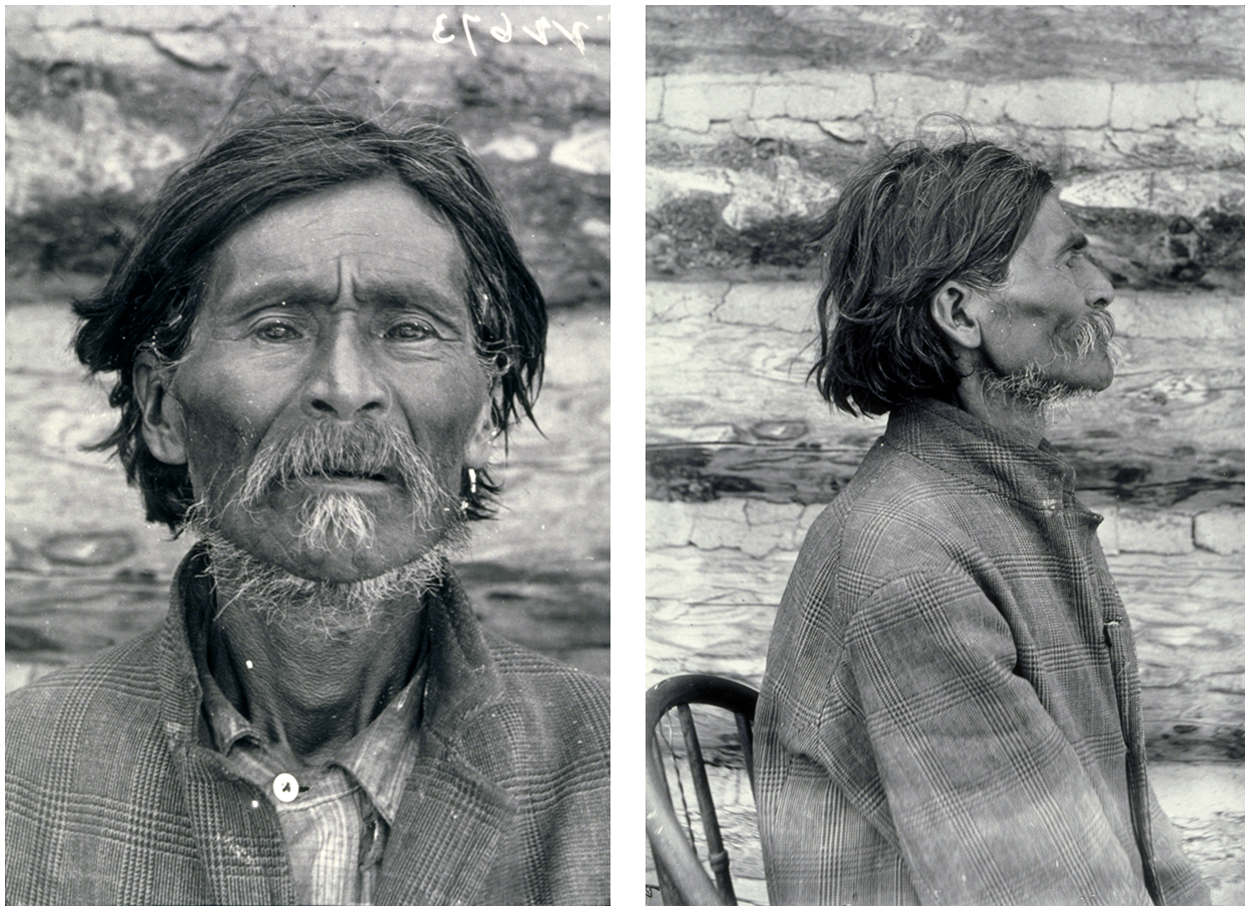
Harlan Smith collection, neg. 22661 (front view) and neg. 22663 (side view): a Native American middle-aged man taken at Spences Bridge on the Thompson River (1897). American Museum of Natural History Archives.
Different from either of these styles and arguably making up a third category of anthropometric image are Jochelson’s photographs of Tungus children (Figure 2) in Siberia. What is unusual about these is the way the subjects have been made to stand on boxes and photographed from the front, side and rear against the standard white sheet, even though they are wearing the full Tungus winter raiment of beaver skin hats, coats and boots. It is as if the images were intended to be simultaneously anthropometric and ethnographic, with the clothing being deemed just as important as the body shapes.
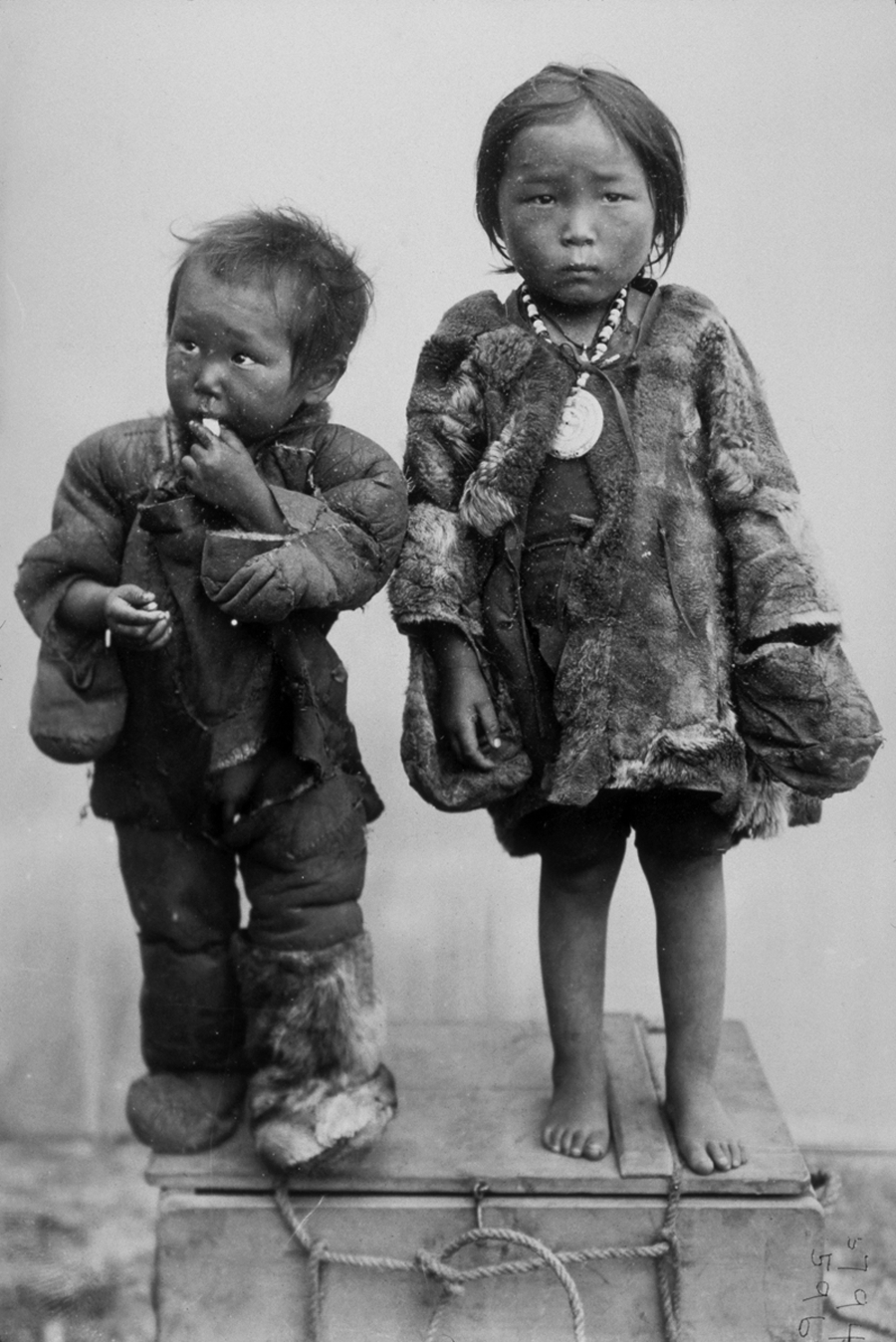
Waldemar Jochelson collection, neg 1598: Tungus children in Siberia (1901). American Museum of Natural History Archives.
The photographs of tribes living in the northernmost reaches of both the American North West Coast and Siberia also appear to have doubled as records of both anatomy and clothing. These served the additional significant function of recording the degree of acculturation that had taken place following European contact. For example, many tribes had become Christianized during the 18th and 19th centuries while retaining other traditional practices and beliefs. In northeastern Siberia, the situation was particularly complex. Not only had old settlers, new Russian emigrants and exiles, Cossacks and numerous Native groups intermarried, but there was also a long history of economic and religious exchange, resulting in a mingling of Christianity and Shamanism (Kendall et al., 1997: 29). In addition, the photographs showed the extent of mixing that had occurred between communities over time as subsequent waves of immigrants had settled in the area.
French’s photographs of a young Nisqually woman (probably from the Puyallup tribe) taken in 1898 (Figure 3) are a good example of the high degree of mixing and Westernization characteristic of some North West Coast settlements. Judging from her dark complexion, wavy hair and relatively fine facial features, the woman appears to be of mixed European and Native American ancestry. She is clothed in a fashionable dress and has an equally modern hairstyle, suggesting that she has received a Western-style education and upbringing. As with the other photographs, she is captured from three views standing before a plain white wall, with her facial contours exposed to the harsh sunlight.
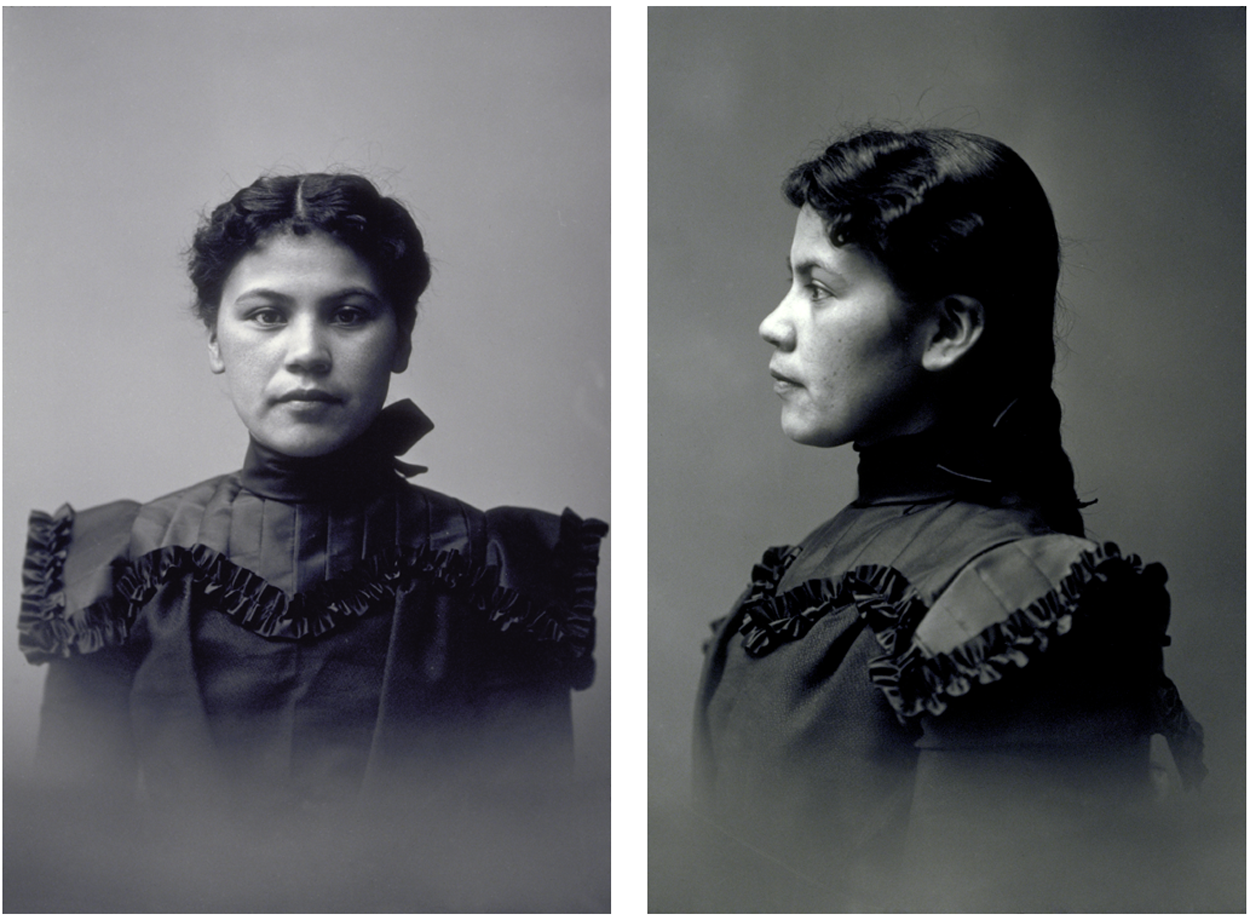
Arthur French collection, neg, 12114 (front view), neg. 12115 (side view): a young Nisqually woman, probably from the Puyallup tribe (1898). American Museum of Natural History Archives.
To determine the racial origins of his American North West Coast subjects, Boas looked at differences of physical size and shape, but he also took into account the evidence supplied by the cephalic index and the changes in bodily form and growth rate of each individual. Finally, he took into account the evidence for cultural mixing that had taken place, for which the photographs showing clothing and ornament proved especially useful. His findings appeared to support his hypothesis that Native Americans of the North West Coast were closely related to the Chukchi, Koryak, Itel’men and Yukaghir tribal groups in Siberia and that the two groups had become separated due to the arrival of the Inuit from the East (Kendall et al., 1997: 28). In addition, the anthropometric data obtained from physical measurements showed small but distinct differences within the tribes of the North West Coast, suggesting that they themselves were the result of mixing.
When the expedition ended in 1902, over 3,000 photographs had been amassed, all of which had to be arranged into albums by staff at the American Natural History Museum. 10 It was Boas’ intention that, like the metric information, the photographs ‘would form part of a biological data bank for the history of evolution, migration and diffusion’ (Kendall et al., 1997: 20). Only a very small number, however, were actually published by Boas or the museum. In 1897, some appeared in an essay titled ‘The social organization and secret societies of the Kwakiult Indians’. Several portraits also made their way into the volume The Kwakiutl of Vancouver Island (1909), though not as examples of physical anthropology, but as part of a section on clothing and ornament. Several more appeared in a chapter dealing with Native American conceptions of beauty (Figure 4). In addition, two images appeared in a posthumous publication titled Kwakiutl Ethnography (1966), one of the few places where Boas published results from his study.

Kwakiutl physical types from Franz Boas, Kwakiutl of Vancouver Island (1909). American Museum of Natural History Archives.
In Kwakiutl Ethnography (1966: 13–14), Boas concluded (on the basis of body and head measurements) that there were four main types of Native American on the coast of British Columbia alone: the northern type (medium stature with long arms and short bodies, wide face, flat nose); the Kwakiutl (medium to short stature with shorter arms and legs, very long heads, high thin nose); the Harrison Lake type (very short stature, short broad head and small faces, high, narrow nose); and the Salish type (tall stature, shortish head, average length face, high nose). But he added that within these four main types, there was considerable variation.
Why were so few photographs published? Richard Jantz (1995: 349) notes that, owing to the poor computational methods of the time, Boas was unable to make sense of all his data. Jacknis (1984: 51) concurs, saying: ‘Boas was never able to analyze successfully his many physical type portraits or to integrate the visual data into his metric evidence.’ Part of the problem was that anthropometric photographs only documented the physical features of individuals, whereas Boas had reached the conclusion that distinguishing the different races required collecting physical samples from many individuals. Indeed, it was his belief that:
measurements could only be meaningful if an individual were assigned to the correct ideal type, based on very large cumulative samples, against which his or her features could be compared. (Kendall et al., 1997: 26)
However, in practice the ideal type (the numerical average derived from the samples) turned out to be not truly ideal since ‘the samples included individuals with deformities and other peculiarities’, and as Boas himself was to later say ‘classification by type could not be as definite or detailed as classification by language’ (Boas, 1940: 165–171). Looked at like this, not only was the decision to use anthropometric photography for classificatory purposes problematic, but the concept of ideal races was also questionable. 11
A further problem was that the medium of photography itself was limited in its capacity to make an exact record of the physical evidence. The foreshortening of perspective that was integral to the photographing process was only part of the problem (foreshortening had the effect of compressing space, hence flattening a form’s appearance); of equal concern to Boas was the fact that the photographs only depicted subjects from one angle and at a single given moment. This meant that the physical information supplied was only partial, at best. In fact, it seems that Boas believed that no analysis based on a description or representation by an individual at a single place or time and recorded in a particular medium could be scientific—only repeated sampling from a multiplicity of perspectives and the use of several mediums would produce a meaningful result (Jacknis, 1984: 45).
The photographic data arising from the expedition may have been difficult to interpret, but the other data proved less so. Indeed, it painted a very clear picture of the pattern of migration that had occurred between the two continents; at the same time it pointed to the flawed nature of the whole typological thesis. When Boas began his anthropometric studies of Native Americans, he subscribed to the Darwinist view that they could be divided into distinct racial types; however, the more information he gathered, the more he questioned this assumption. Jantz (1995: 349), for example, has observed that both the nature of anthropometric data collected on the Jesup Expedition and the methods used to collect it, point to Boas’ rejection of the typological thesis as early as the mid-1890s. At this time, Jantz says,
Boas was using the word ‘type’, but he clearly attached something other than the standard meaning attributed to it, since typological approaches emphasized ‘within-group homogeneity’ and Boas’ focus was on the very opposite—namely ‘variability’.
Certainly, Boas’ data on Native American bodily forms and facial features did much to destabilize the typological thesis, pointing as it did to their immense physical variability, a variability that existed even within geographically distinct populations. Even the photographs were useful in this regard, confirming as they did the variability that existed within groups who spoke the same language and shared the same culture. But the data also appeared to contradict the Social Darwinist assumption that each major race’s physical features had remained stable over time. For example, how accurate was the concept of the racial type if things like the cranial index and even the length and breadth of the head could be shown to have undergone modification as a result of environmental factors such as diet and aging? 12 Furthermore, Boas could find no evidence to support the Social Darwinists’ claim that culture was a function of race. People with similar physical traits were found to be speaking different languages and practising different religions, while the incidence of physical variation within the same cultural group was also very high. 13 Given these findings, it is perhaps no wonder he preferred to use the term ‘physical type’ to ‘racial type’ in his published accounts of the expedition. 14
If Boas already had a different understanding of the term ‘racial type’ prior to his expeditions, how did he arrive at this position? A glimpse at his background before 1897 reveals that three features already distinguished him from mainstream physical anthropologists: first and foremost was his emphasis on culture—a legacy of the liberal–humanist tradition of ethnography that dominated Germany in the 1870s and 1880s, and his belief that what was assumed to be biologically inherited was in fact sometimes the result of environmental forces; second was his rejection of the Social Darwinist idea that cultures and races conformed to an evolutionary hierarchy—the result of his recognition of the roles played by religion on the one hand and physical isolation on the other, in differential rates of technological development and openness to change; and third was his belief that to achieve an accurate understanding of a people’s racial origins using physical measurements, an enormous number of specimens or samples was required—far more than anthropologists were used to collecting. 15
By 1907, Boas’ reputation as an anthropologist was such that he was invited by the United States Immigration Commission to submit a report on the current policy of admitting large numbers of foreign immigrants. This body, which became known as the ‘Dillingham Commission’ (after William Dillingham, its chairman), was set up in the same year by President Roosevelt, and consisted of senators and scientists. Its task was to inform the executive and legislative branches of government about the likely impact of the present high levels of migration on American society, and whether the entry of certain ‘racial’ groups should be restricted. The commission, which was from the start tilted in favor of tighter restrictions, consulted a large number of experts, resulting in a massive final report totaling 41 volumes. Among these volumes were reports from eugenicists claiming that eastern European and southern European migrants (a category that included Jews) posed a serious threat to the American nation because they were descended from inferior racial stock. Higher levels of crime, lower intelligence level of children, a smaller cephalic index and smaller stature were cited as proof of their inferiority. Future generations, they argued, would be no better since these characteristics were inherited (United States Immigration Commission, 1983: Vols 26–27 29–33, 36, 41). Boas’ report implied the opposite. Titled ‘Changes in immigrant body form’, it demonstrated that careful measurement of the head forms and cephalic indexes of migrant children showed dramatic differences between the growth patterns of first- and second-generation children. He concluded that European immigrants’ head forms were quite ‘plastic’, developing differently in different environments.
Not even those characteristics of a race which have proved to be most permanent in their old home remain the same under new surroundings: and we are compelled to conclude that when these features of the body change, the whole bodily and mental make-up of the immigrants may change. These results are so definite that, while heretofore we had the right to assume that human types are stable, all evidence is now in favor of a great plasticity of human types, and permanence of types in new surroundings appears rather as the exception than as the rule. (Boas, 1974: 202–210)
Boas’ work on the children of immigrants was carried out in 1910, but it owed much to his earlier anthropometric work on Native Americans undertaken on the Jesup Expedition. Indeed, it is likely that he would not have been able to conceive of such a project, nor write such a definitive report, without the insights gained from the extensive studies on bodily forms undertaken on that expedition. In each case, he showed that what were previously thought to be permanent racial characteristics (including the very features thought to measure intelligence and capacity for civilization) in fact transformed drastically under the influence of a new environment. Boas also demonstrated that so-called ‘racial types’ were not consistent with cultures, nations or even tribes, but were the result of environmental factors that included geographical isolation. This last meant that the more movement there was of people from one region to another, the less the notion of distinct racial types had any meaning or relevance. 16
This latter point was to form the basis of his 1915 pamphlet Race and Nationality, written during the First World War and published by the American Association for International Conciliation. In this publication, Boas (1915: 8) refutes the widespread belief engendered by eugenicists that the struggle devastating Europe was an unavoidable war of races, saying:
In short there is no war of races in Europe: for in every single nationality concerned in the present struggle the various elements of the European population are represented, and arrayed against the same elements as grouped together in another nationality. The conflict has nothing whatever to do with racial descent. The so-called racial antipathies are feelings that have grown up on another basis and have been given a fictitious racial interpretation.
This view also formed the basis of his book The Question of Race: Aryans and Non-Aryans (1934), in which he challenged the racial myths being promulgated by the Nazis, claiming that the ‘unity of race, which is the foundation of the policies of the German Government, does not exist’, and that ‘there is no such thing as racial heredity even in relatively pure groups’ (p. 3).
Although Boas’ report was summarily dismissed by the authors of the Dillingham Commission findings, it was taken seriously in scientific circles with the result that increasing doubt began to be cast on the Social Darwinist idea that the different races each had their own very clear set of physical characteristics and these remained immutable even when they shared the same geographical spaces and spoke the same languages. Just as his report on immigration went against accepted convention, Boas’ early anthropometric studies of North American native peoples constituted a direct challenge to prevailing scientific ideas about race, but this aspect of his work and career has frequently gone unrecognized because present-day scholars have tended to emphasize his innovations in field work instead. That Boas regarded his anthropometric work as important is clear from the fact that he was not prepared to see the huge corpus of metric data (including the photographs), which he had collected during the Jesup Expedition destroyed because of a shortage of storage space at the American Natural History Museum. In 1923, in a desperate bid to find a home for this material, he offered it, somewhat surprisingly, to the Eugenics Record Office, even making out a will to that effect. 17 Perhaps his thinking was that of all American scientific institutions, this organization would uphold the significance of anthropometry for scientific research the longest at a time when it was losing ground to other less measurement-dominated practices. Here it needs to be pointed out that Boas was not averse to measurement, only its misuse. This occurred, he said, whenever measurements were taken in isolation from other important cultural data, or when applied to all forms of physical anthropology without due consideration for the particular problem under investigation (Boas, 1899: 103). As for physical anthropology, this he defended as one of the three branches of anthropology that ‘all equally contribute to the solution of the problem of the early history of mankind’ (p. 106).
In conclusion, Boas’ ‘physical type’ photographs were created at a time when the discipline of anthropology was still dominated by the measurement of bodies–a legacy of Social Darwinism’s emphasis on physical as distinct from cultural anthropological data and the belief that evolution had resulted in a hierarchy of races. As Susan Hegeman (1998: 470) has observed, far from accepting this legacy, Boas fought it from within the existing paradigms of scientific racism:
Boas’s anti-racist crusade was pre-genetic, and thus relied on the same scientific principles and kinds of evidence as his theoretical opponents, the scientific racists. In other words Boas’s critique of scientific racism was internal to that paradigm, an exercise in negative critique, showing how such environmental factors as nutrition might influence otherwise self-evidently ‘racial’ differences.
The North Pacific Jesup Expedition data Boas and his assistants collected suggest Hegeman is right. Certainly they deployed much the same methods as those deployed by Social Darwinists, but they came to vastly different conclusions. Whereas Social Darwinists and eugenicists measured and photographed physical traits to substantiate the view that human evolution had resulted in intrinsically different cultural levels, Boas was able to use these same methods to demonstrate that the pattern of evolution and migration across time and space was a function of separate but equal development. Indeed, for Boas, the whole point of using bodily measurements and photography to document native peoples’ physical attributes seems to have been to cultivate a much broader and layered understanding of human development, one that did not reduce populations to the narrowly evolutionary rhetoric of fixed racial or physical essences. Looked at like this, it seems reasonable to conclude that not only were Boas’ anthropometric methods in their own way just as scientifically valid and radical as his cultural methods, but the two activities were mutually reinforcing and compatible. The ‘physical type’ photographs by themselves may not have furnished much useful information towards understanding the patterns of human migration that Boas was investigating, but to the extent that they formed part of the anthropometric data that pointed to in-group variation, they did help to show that ‘race’ was neither a tangible concept, nor a physical essence. This in turn contributed to the death of the typological thesis with its assumption of a natural cultural hierarchy.
Footnotes
Notes
Biographical Note
ANNE MAXWELL is Associate Professor in the School of Culture and Communication, University of Melbourne. Her monographs include Colonial Photography and Exhibitions (Leicester University Press, 2000) and Picture Imperfect: Photography and Eugenics 1870–1940 (Sussex Academic Press, 2008). In addition to publishing numerous articles on colonial photography, she has published widely on colonial and postcolonial literature.
Address: University of Melbourne, Room 244 East Tower, John Medley Building, Melbourne 3010, Australia. [email: