




Abstract
The Hungry Ghost Festival is a month-long spiritual period celebrated and observed mostly by Chinese individuals, where it is believed that ancestral spirits are released from the netherworld to roam the earth. During this festival, various rituals of offering and burning are performed in simultaneously private and public ways to feed and appease these hungry ghosts. The offerings are left to the environment as ashes, wax and burn marks that scar and mark the landscape. This visual essay examines such activities in a particular suburban town centre in Singapore known as Teck Ghee Court. Through the photographs, the author proposes that the rituals and material practices are an act of material anchoring through the making of aesthetic markers in urban spaces. Individuals appropriate carefully planned public, commercial and residential spaces into temporary sites of performative spirituality and ethnicity. In doing so, they ‘anchor’ their ethnicities and identities to these spaces.
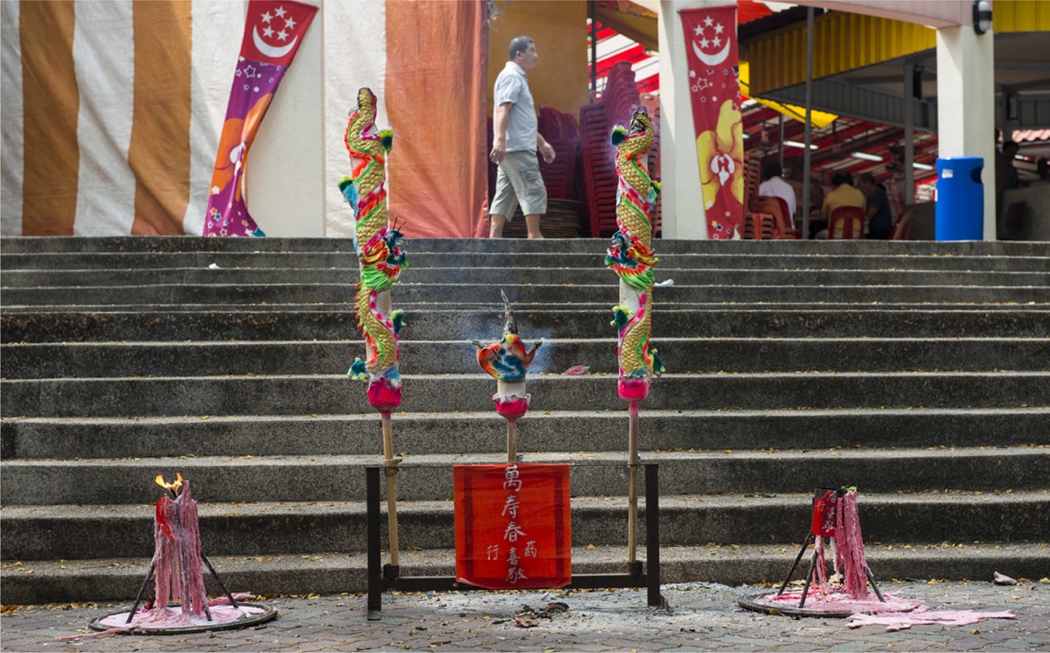
This essay is a visual study of the Hungry Ghost Festival as it is observed in and around Teck Ghee Court, a typical suburban town centre in Singapore. On the 7th Month of the Lunar Calendar (usually around mid-August), the residents and business collectives of Teck Ghee Court celebrate and observe the Hungry Ghost Festival, a month-long series of rituals that can be traced back to China (Tan, 2004; Teiser, 1996) which, largely because of the carrying over of cultural forms through the diaspora (Gilroy, 1991), has now found itself practiced in contemporary urban Singapore (Tan, 2004). During this festival, individuals believe that ancestral spirits are released from the netherworld to roam the earth in a kind of respite from purgatory, 1 but because they roam the earth they also require sustenance, entertainment and spending money. As such, individuals and social groups spend a considerable amount of time and resources preparing offerings to these spirits.
The rituals of the Hungry Ghost Festival involve a syncretic mix of animism, ancestral worship, Taoism and Buddhism (Stepanchuk and Wong, 1991; Teiser, 1996; Tsao, 1989). Two rituals in particular are the focus of this essay. The first is the offering of food and incense to both one’s own ancestral spirits as well as any other spirits who might be wandering around. These offerings are often arranged in small makeshift altars by the road or at strategic transitory points like staircases and outside one’s home or business premises.
Most importantly, paper effigies of gold and silver, collectively known as kim zua, or gold paper in the Hokkien dialect, are also burnt near these altars, or in specially designated incense burning drums provided by the town council. Kim zua is the currency for spirits to use in the netherworld, often to either purchase items for their own use, or to bribe netherworld entities for an easier afterlife. Burning kim zua, or any other paper effigy of an item (clothes, house, car, computer) or person (servants) makes them real in the netherworld for spirits to consume and own (Chan et al., 2005).
These private practices are also accompanied by larger, more elaborate and public events that are organized by social groups centred around spiritual or commercial interests. Commercial areas similar to the subject of this visual essay often involve collectives of small business owners such as food vendors who each contribute sums of money to hold a public burning of kim zua and an effigy of the deity Tai Su Yah (more on this later), as well as an end-of-festival ‘appreciation dinner’ for all contributors.
These rituals, both private and public, are material narratives in that they tell stories of individuals’ and social groups’ beliefs, values and identities primarily through interactions with aesthetic markers. Aesthetic markers (Knowles, 2003) are commonly seen in racial and ethnic studies as material artefacts that perform an individual’s or collective’s ethnic identities (Soja, 1989). They can be fleeting, like parades of culture and ethnicity (Mason, 1996), such as the Notting Hill Carnival in London, but they can also exude permanence – in the case of buildings, like religious structures or ethnic food shops, that create a ‘look’ of ethnic occupation (Anderson, 1991; Farrar, 1997).
In this visual essay, the aesthetic markers are primarily objects that are central to an individual’s ritual practice. These include but are not limited to kim zua and other effigies of gifts and deities, food offerings, ritual candles, joss (incense) sticks and idols. These markers are both transient and lasting in that they exist for a limited period of time (either burnt, consumed or cleaned up the following day), but leave a more permanent mark or scar on the urban landscape in the form of burn marks, melted candle wax or leftover food. The ‘look’ of ethnicity, in this case a kind of Chineseness, is apparent during and after the removal of markers.
In creating a ‘look’ of ethnicity, aesthetic markers do not merely perform an individual’s ethnicity, but they also have the potential to connect the individual (or social group) to a particular place or space, especially if the marker itself is structural in nature. In this case, I propose that the metaphor of a material anchor can be used to understand the geographical significance of aesthetic markers to individuals dwelling in Teck Ghee Court. Offerings are never positioned randomly during the Hungry Ghost Festival, they are either placed in the potential path of wandering spirits (as previously mentioned – roadsides and transitory points) or if in a commercial context, outside one’s shop in order to ensure good luck and good business for the remainder of the lunar year.
Material anchors also explain my choice of Teck Ghee Court, as opposed to a wider geographical area in Singapore. By focusing on a particular area, my photographs attempt to interrogate the connection that individuals create between the aesthetic marker and the space in which these markers are situated. Using these photographs, I will explore the marking or ‘anchoring’ of ethnic identities (particularly Chineseness) and spirituality to a particular space through the use of aesthetic markers as a form of material and ethnic narratives. The essay begins with a very public ritual, the returning of the Tai Su Yah to the netherworld, which was conducted by a business collective of hawkers (food vendors) in Teck Ghee Court. The photographs then take on a more personal and intimate tone – where I consider the aftermath of worship and the ashes and offerings left on the roadside and town centre for the consumption and appeasement of spirits. I end with a landscape photograph contrasting the structures of spirituality with that of Singapore’s own urban aspirations, questioning if either is willing to let the other exist.
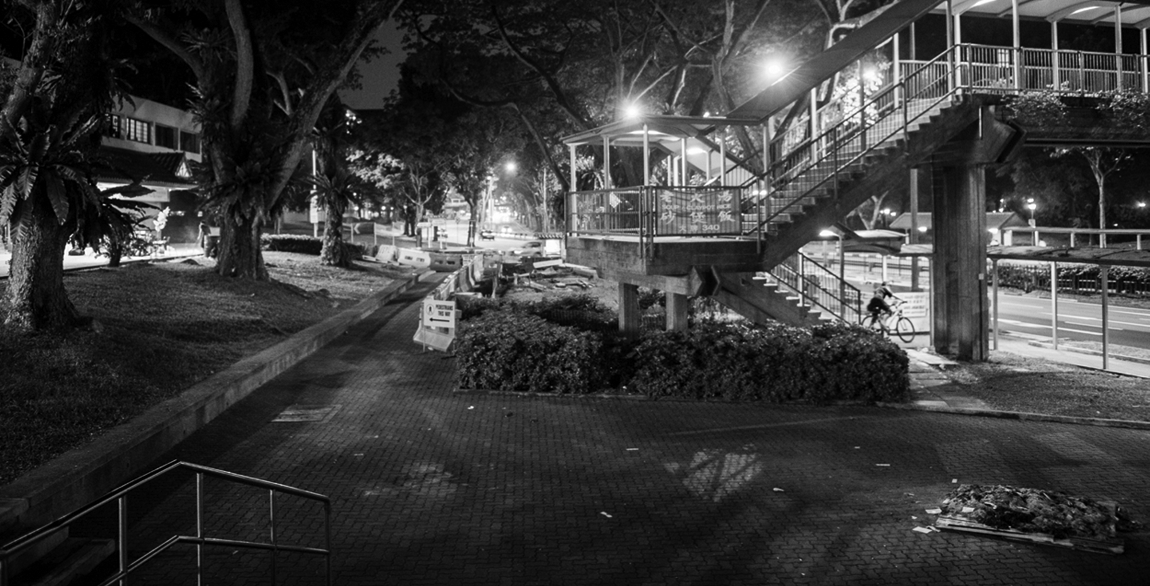
The beginning of the Hungry Ghost Festival is quiet and relatively unobtrusive. Visiting the area at night, the only sign of activity was a stray zinc sheet near the centre of the town with ashes from burnt kim zua and money left to be blown by the wind. Contrasted with this are the ‘official’ incense burners placed in the same location later in the festival.
The most public event in Teck Ghee Court during the Hungry Ghost Festival is the burning of the effigy of Tai Su Yah, a deity commonly known as the King of Hades. Tai Su Yah is commonly said to be an incarnation of Guan Yin, the Buddhist Goddess of Mercy. Tai Su Yah opens the gates of the netherworld at the start of the Hungry Ghost Festival (Choo, 2011) and watches over and disciplines the spirits as they roam the earth. The burning of Tai Su Yah’s effigy is a symbolic gesture of returning the deity to Hades.

The most public event in Teck Ghee Court during the Hungry Ghost Festival is the burning of the effigy of Tai Su Yah, a deity commonly known as the King of Hades. Tai Su Yah is commonly said to be an incarnation of Guan Yin, the Buddhist Goddess of Mercy. Tai Su Yah opens the gates of the netherworld at the start of the Hungry Ghost Festival (Choo, 2011) and watches over and disciplines the spirits as they roam the earth. The burning of Tai Su Yah’s effigy is a symbolic gesture of returning the deity to Hades.
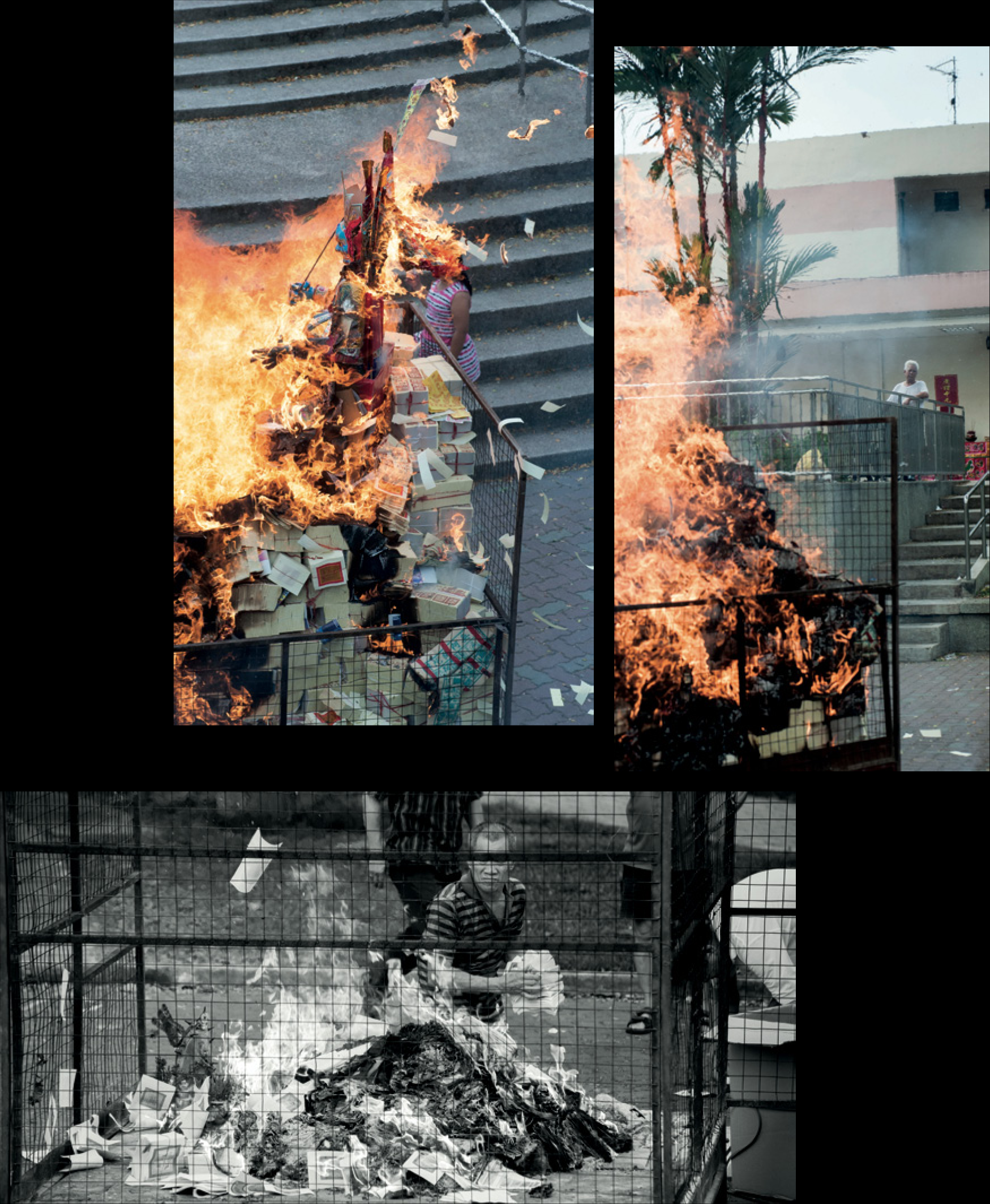
Tai Su Yah is seated in the centre of a carefully arranged pile of kim zua. The more that is given to the spirits, the more the spirits might give back in the form of material blessing.
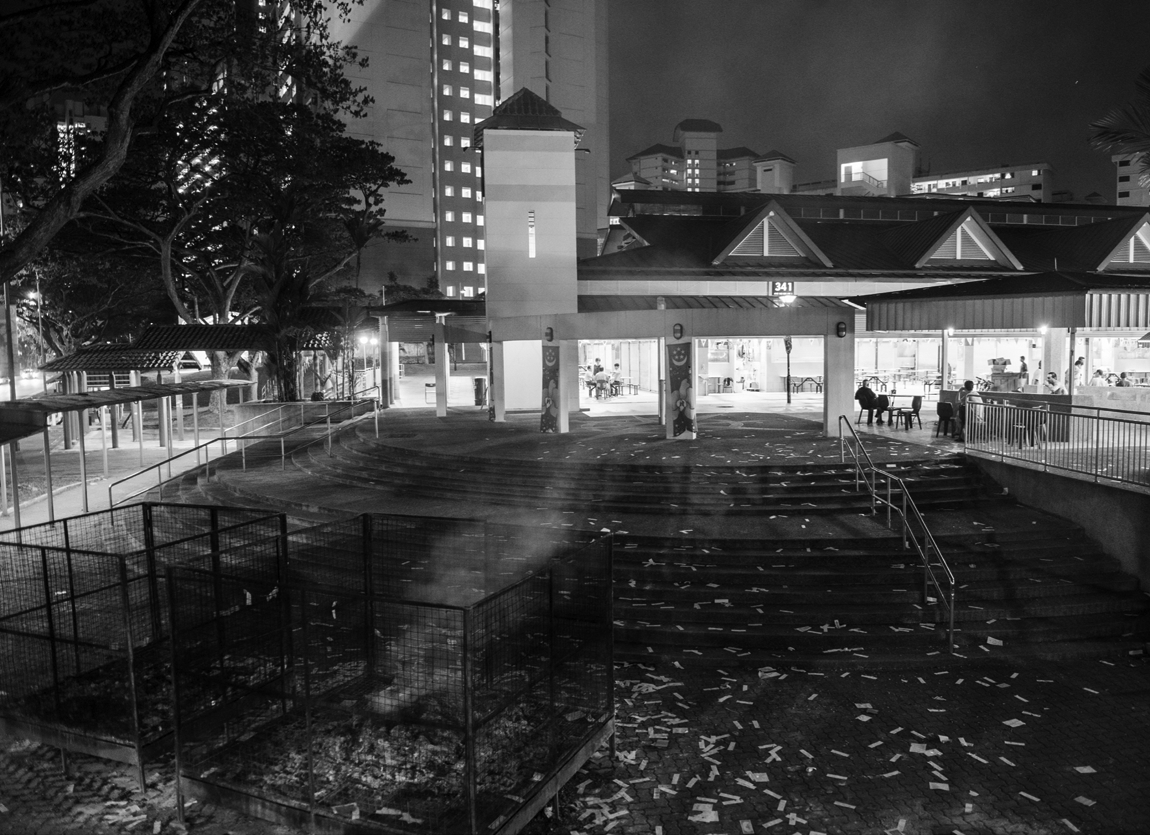
Aftermath: rectangular-shaped paper effigies of silver are scattered throughout the town centre as payment for the living’s safe passage past unseen spirits.
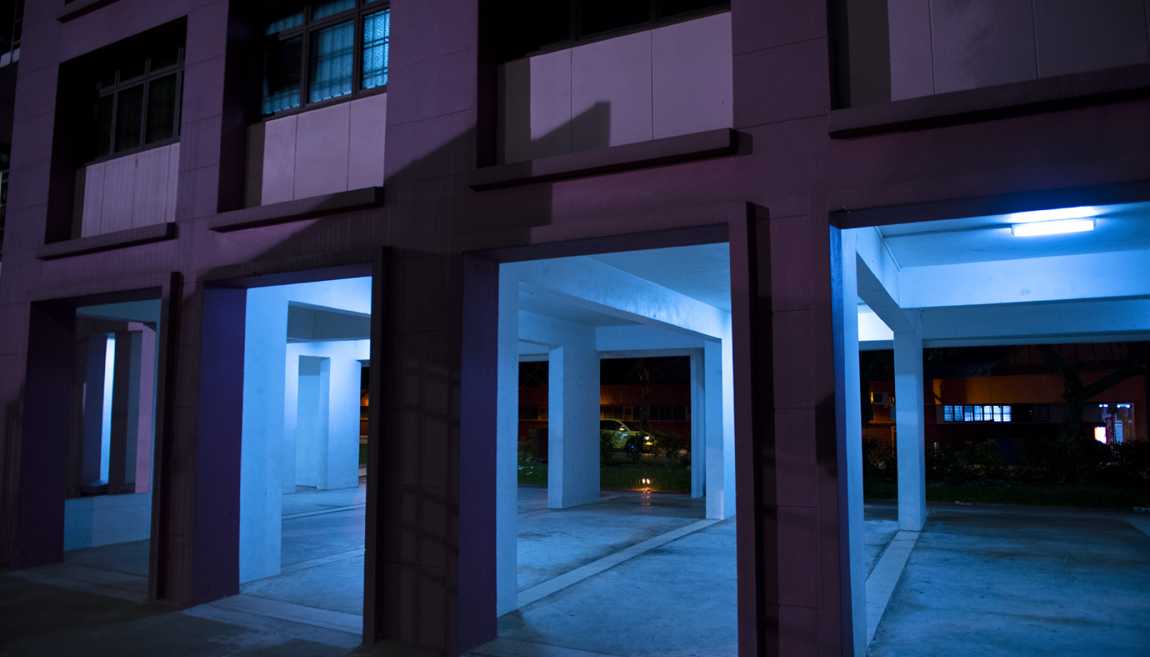
From public to private: individuals and smaller social groups create smaller performances of ethnicity and spirituality in the form of makeshift altars and offerings to wandering spirits. These offerings are often left in transitory areas where wandering spirits might encounter them – outside by the road, in public corridors of flats and at staircases.
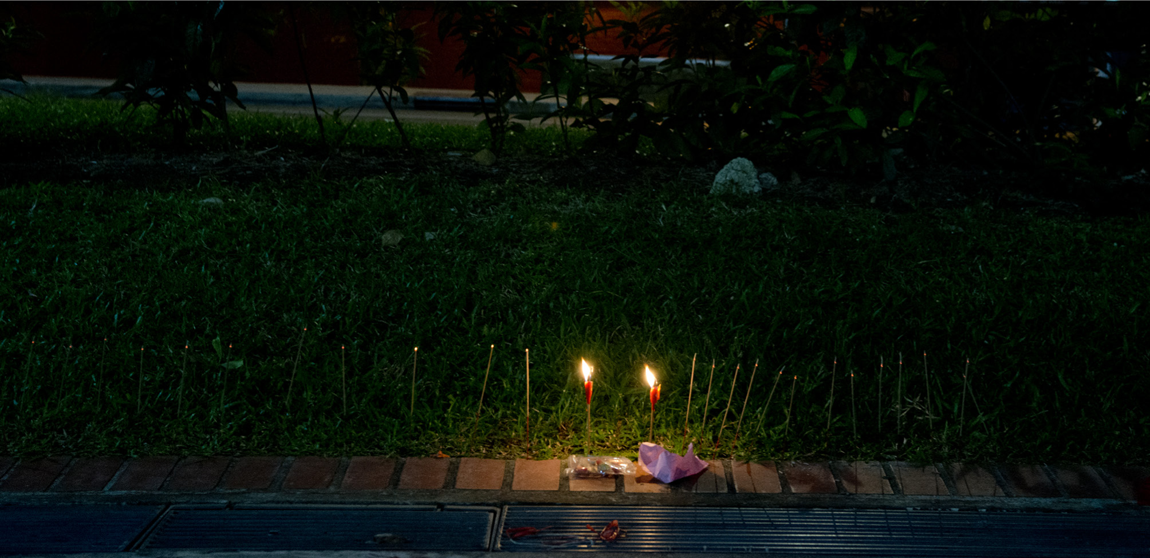
From public to private: individuals and smaller social groups create smaller performances of ethnicity and spirituality in the form of makeshift altars and offerings to wandering spirits. These offerings are often left in transitory areas where wandering spirits might encounter them – outside by the road, in public corridors of flats and at staircases.
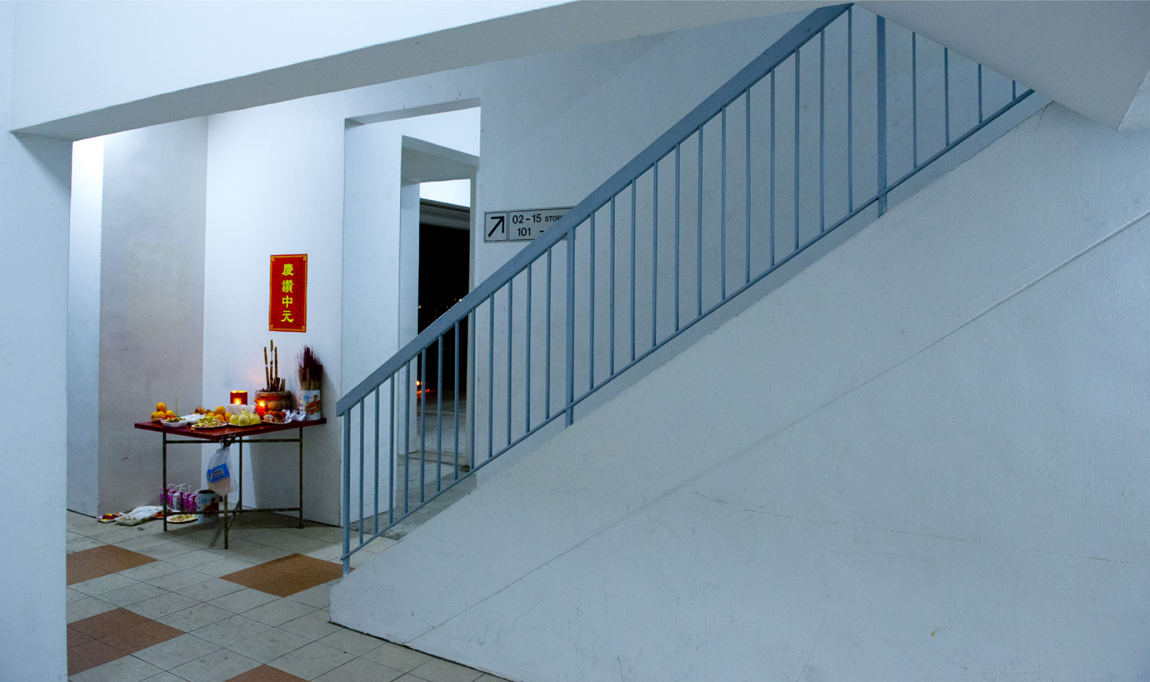
From public to private: individuals and smaller social groups create smaller performances of ethnicity and spirituality in the form of makeshift altars and offerings to wandering spirits. These offerings are often left in transitory areas where wandering spirits might encounter them – outside by the road, in public corridors of flats and at staircases.

Personal spirituality mixes with political spiritedness. Singapore’s national day, the 9th of August, tends to coincide with the Hungry Ghost Festival (the exact date varies with the Lunar calendar). Aesthetic markers performing both personal and state narratives compete for space and attention.

Food and drinks placed for the nourishment of wandering spirits must be presented properly because spirits lack the corporeal ability to open sealed packets. Hence, all drinks must have a straw pushed through, and cutlery must be placed properly. Child ghosts who are too short to reach the table have a special altar of milk, sweets and toys placed on the ground.

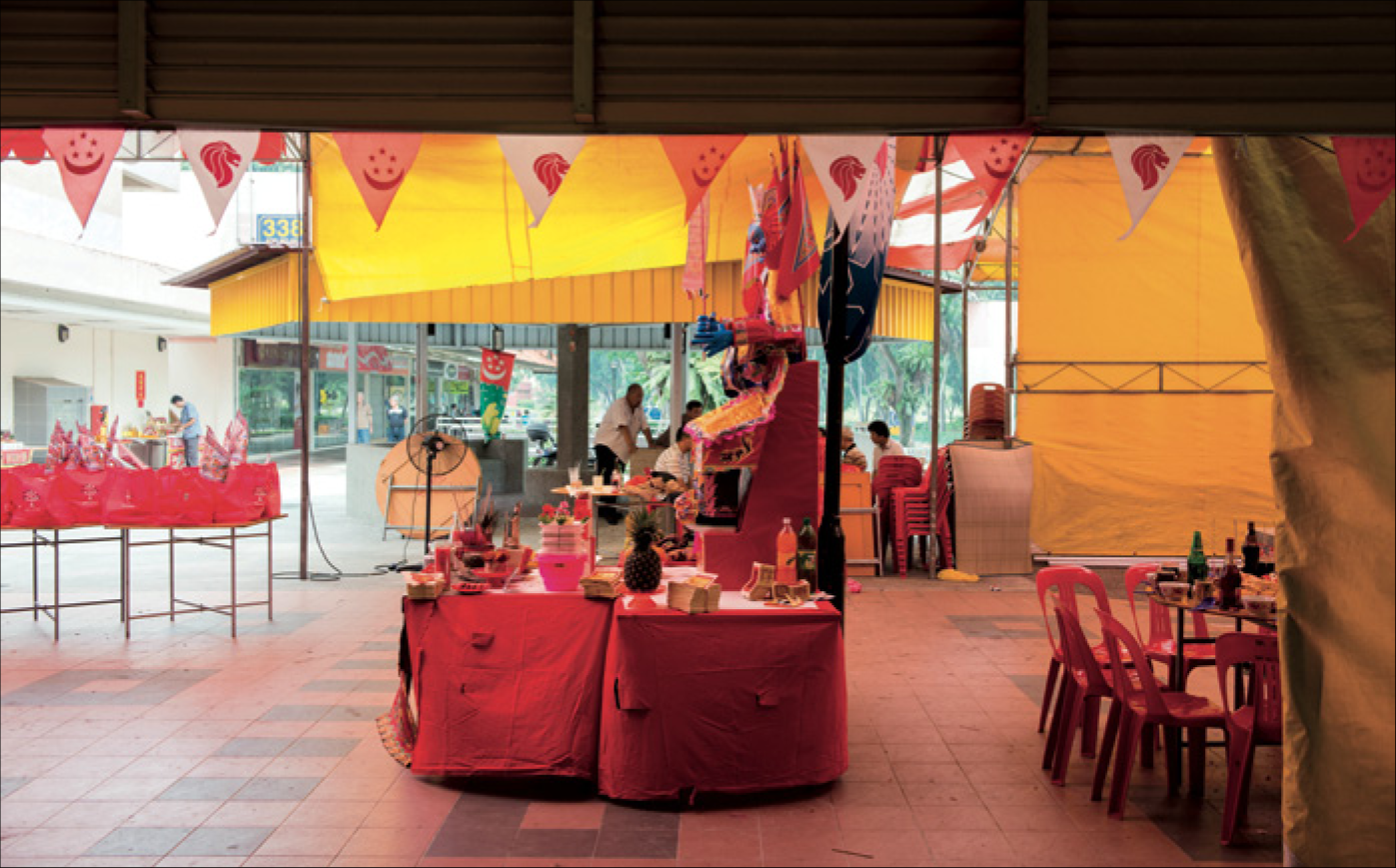
Commercial, spiritual and ethnic spaces intersect and interact during the Hungry Ghost Festival.

Commercial, spiritual and ethnic spaces intersect and interact during the Hungry Ghost Festival.

Commercial, spiritual and ethnic spaces intersect and interact during the Hungry Ghost Festival.
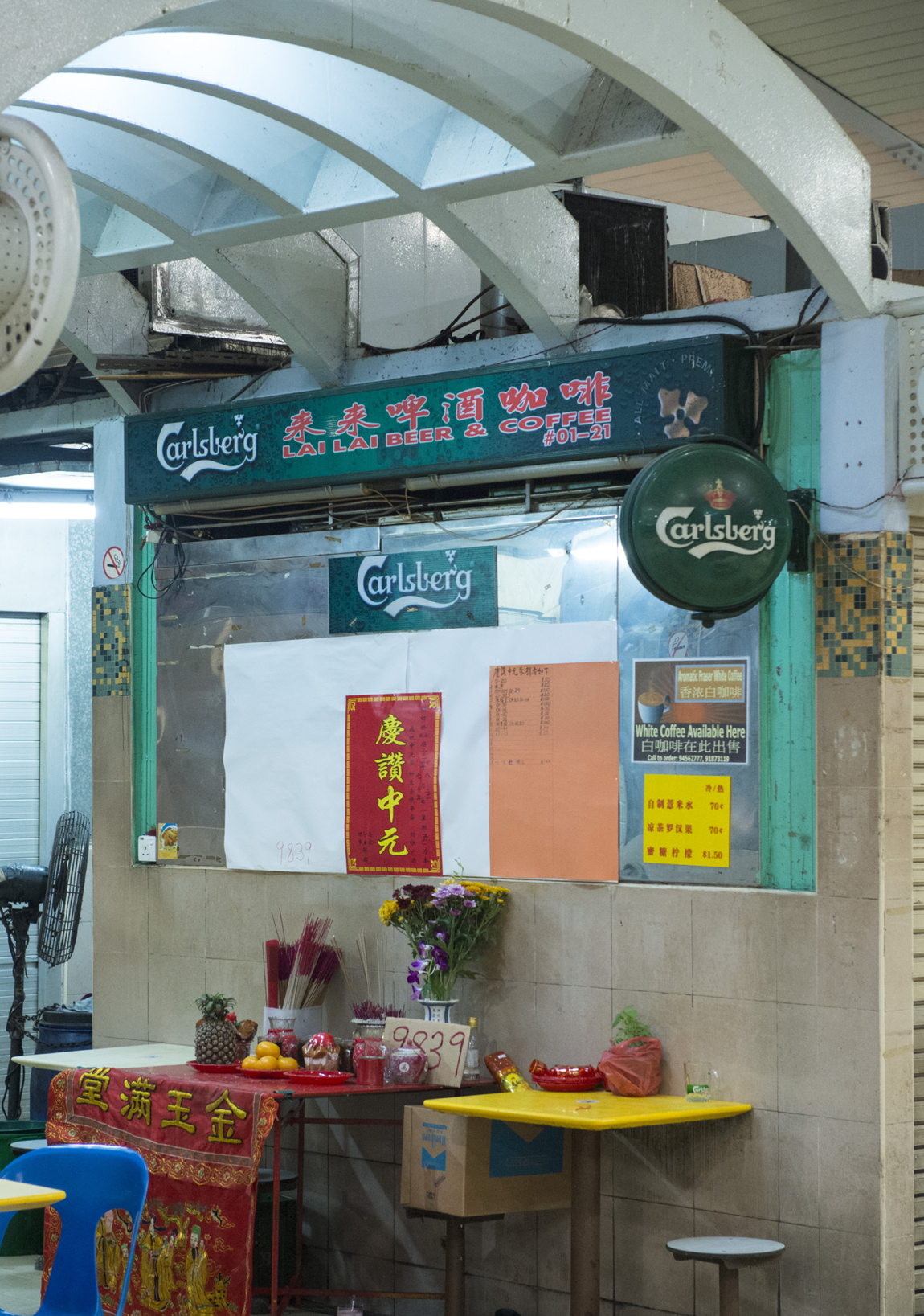
Commercial, spiritual and ethnic spaces intersect and interact during the Hungry Ghost Festival.
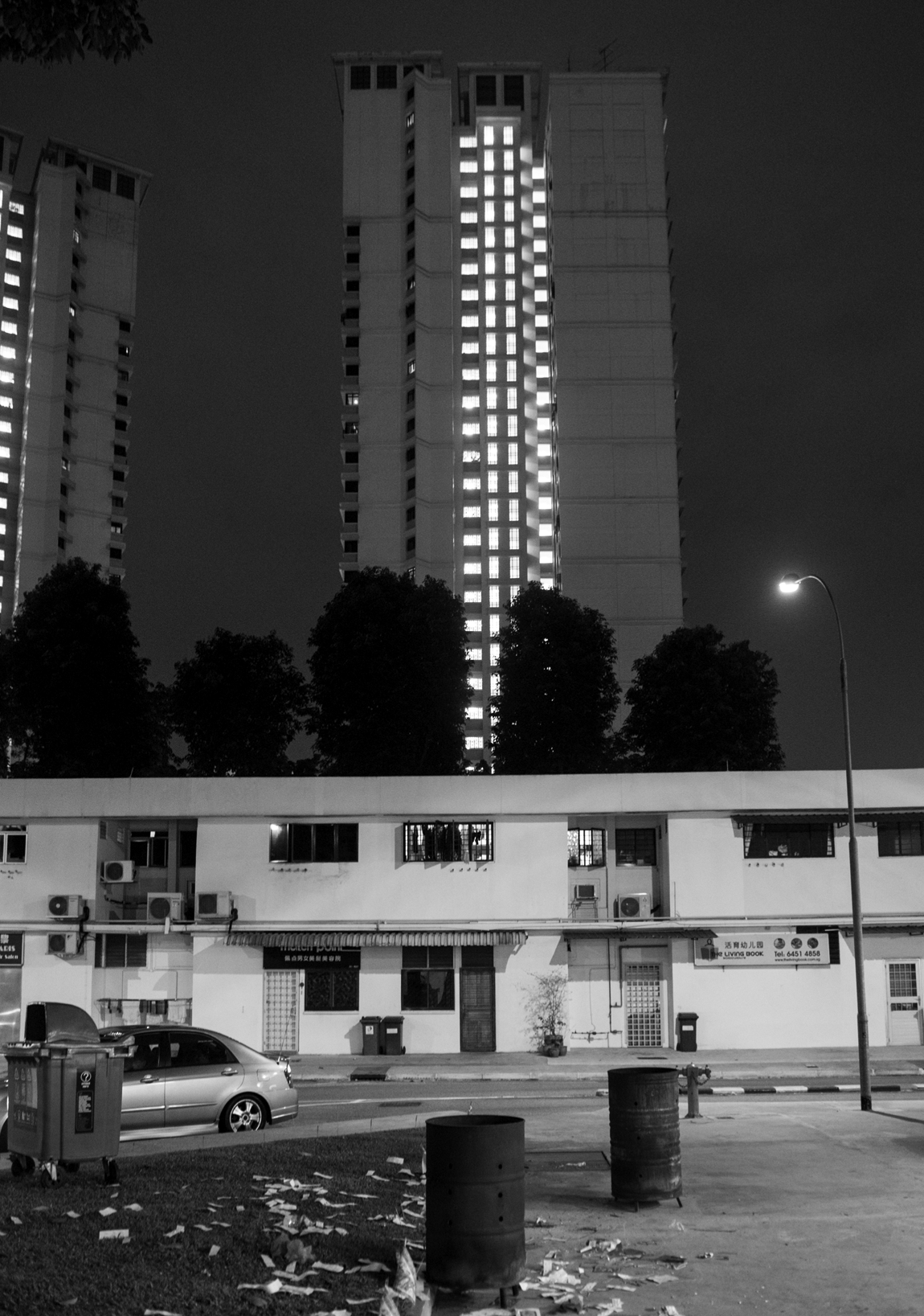
Commercial, spiritual and ethnic spaces intersect and interact during the Hungry Ghost Festival.
Footnotes
Acknowledgements
This research was made possible by a Small Research Grant from the UniSIM Centre for Chinese Studies.
1.
It is generally agreed that almost everyone’s soul spends time in the netherworld as a kind of purgatory before being reincarnated. Only individuals who have lived a flawless and blameless life are eligible to enter Heaven.
Biographical Note
Terence Heng is a photographer and visual sociologist. His visual work lies in the interdisciplinary borderlands between photography, sociology and cultural geography. His research interests include the study of diasporic Chineseness in everyday Singaporean life, visual methodologies for social research and the social and cultural life of Taoism in urban cemeteries and suburban homes. Terence is also an adjunct lecturer at the Department of Communications and New Media, National University of Singapore and the Glasgow School of Art Singapore.
Address: Department of Communications and New Media, Faculty of Arts & Social Sciences, National University of Singapore, Blk AS6, #03-41, 11 Computing Drive, 117416, Republic of Singapore [email: