




Abstract
The Irish state and Catholic Church established Magdalene laundries and Mother and Baby Homes in Ireland. These institutions forcibly housed unwed women who became pregnant, the last of which closed in 1996. It is estimated that 35,000 women were forced into these institutions and 6,000 babies died in their care. In 2014, a mass grave of babies and children was found in the septic tank at Bon Secours Mother and Baby Home in Tuam, County Galway. The following year, a commission was created to investigate these establishments. This visual essay explores the stories of these women and their babies as well as the reaction of a shocked nation.
Introduction
In Ireland, the first Magdalene laundry opened in 1767 and was known as the Magdalene Asylum for Penitent Females. It was established by Lady Arabella Denny, a Protestant benefactor, to house ‘penitent prostitutes’ (Quinn, 2011). However, after the Irish Famine of 1845 (Geber and Murphy, 2012), these laundries became dominated by Catholic religious congregations (McGarry, 2011). After this, the Catholic Church and Irish state transformed Magdalene laundries and what would also become known as Mother and Baby Homes into places to hide away unwed, pregnant women (Barry, 2017). These laundries and homes operated between 1922 and 1996. An estimated 35,000 women were forced into these homes, and 6,000 babies and children died in them (Meagher, 2018). Babies were taken from their mothers and often adopted by Catholic Americans. They were also subjected to vaccine trials by pharmaceutical companies and their remains were used by medical universities for anatomical study. In 2014, a mass grave of babies and children was discovered at Bon Secours Mother and Baby Home in Tuam, County Galway. In 2015, a commission was set up to investigate these institutions (Barry, 2017).
The Innocents, by Clare O’Hagn.
© Photograph: Niall Carson.
Reproduced with permission.
(Churreáin, 2017: 43–44).
Wet hands, apply soap and rub palm to palm until a white lather forms like the spit and rage of women, who, having lain among waves, were dragged back up again by the hair and stripped of their names to pay for the wrongs in their bellies, as they stitched lace, pressed linen sheets, and each week bowed their heads to the post-partum girls all lined up at the font like a row of roots half-pulled out of the earth and still holding on to their young.
Rub right palm over left dorsum and left palm over right dorsum to ensure the scent of infant leaves your skin: the sour fumes of bottled milk, triangled terry cloth, ice-cold smears of cream. The scent of sin can cling for years as potent as a bad dream of trade-deals, needle pricks, poppies bloomed on the skull. The scent of a child in an unmarked grave may get in beneath your fingernails and cause all sorts of problems in later life.
Rub palm to palm, fingers interlaced and around the wrists to erase all trace of fathers. Never mention cuffs. Never mention scars. Raise your head against the sky and let the violet clouds overfill your eyes as the names of these men become again unknown as birds. When you see a wing, like a realm of thumbed pages fluttering, take this as a sign: the fathers are no more.
Rub backs of fingers to opposing palm with fingers interlocked and loosen the joints of wards, nurseries, bolted pantries stocked with canisters of warm milk and cheese sold by the yellow quart as the imagined cream of it dripped from the mouths of hungry, swollen girls. Rub out the halls, statues, sills. Leave only a rusted nail in a cemetery wall.
Rotational rubbing of right thumb clasped in left palm and vice versa to disimprint the memory of files. Wash clean the data until days, months, years signed by clammy hands run like slip-streams into a great shaking lake. This means that, even should your lips part to release a holy word, all that will spill out is a wet pulp no one understands.
Rotational rubbing backwards and forwards with clasped fingers of right hand in left palm and vice versa to wear thin the heart-lines. Be a sister and repeat the law like a hymn into the sink. Do not commemorate: Do not remunerate. Do not let the wounded woman or her child speak in a bare tongue. Wash in this way and rid your hands of Mother, Baby, Home.
Wet hands, apply soap and rub palm to palm
Invoice from the Magdalene Asylum to Mrs Margaret Pearse for laundry services provided to the amount of £12-14-0.
National Library of Ireland, Pearse Papers, 1890–1932.
Reproduced with permission.

Rub right palm over left dorsum and left palm over right dorsum
“They lived amid the absence of affection and the ever-present threat of infectious disease…‘Like chickens in a coop’”
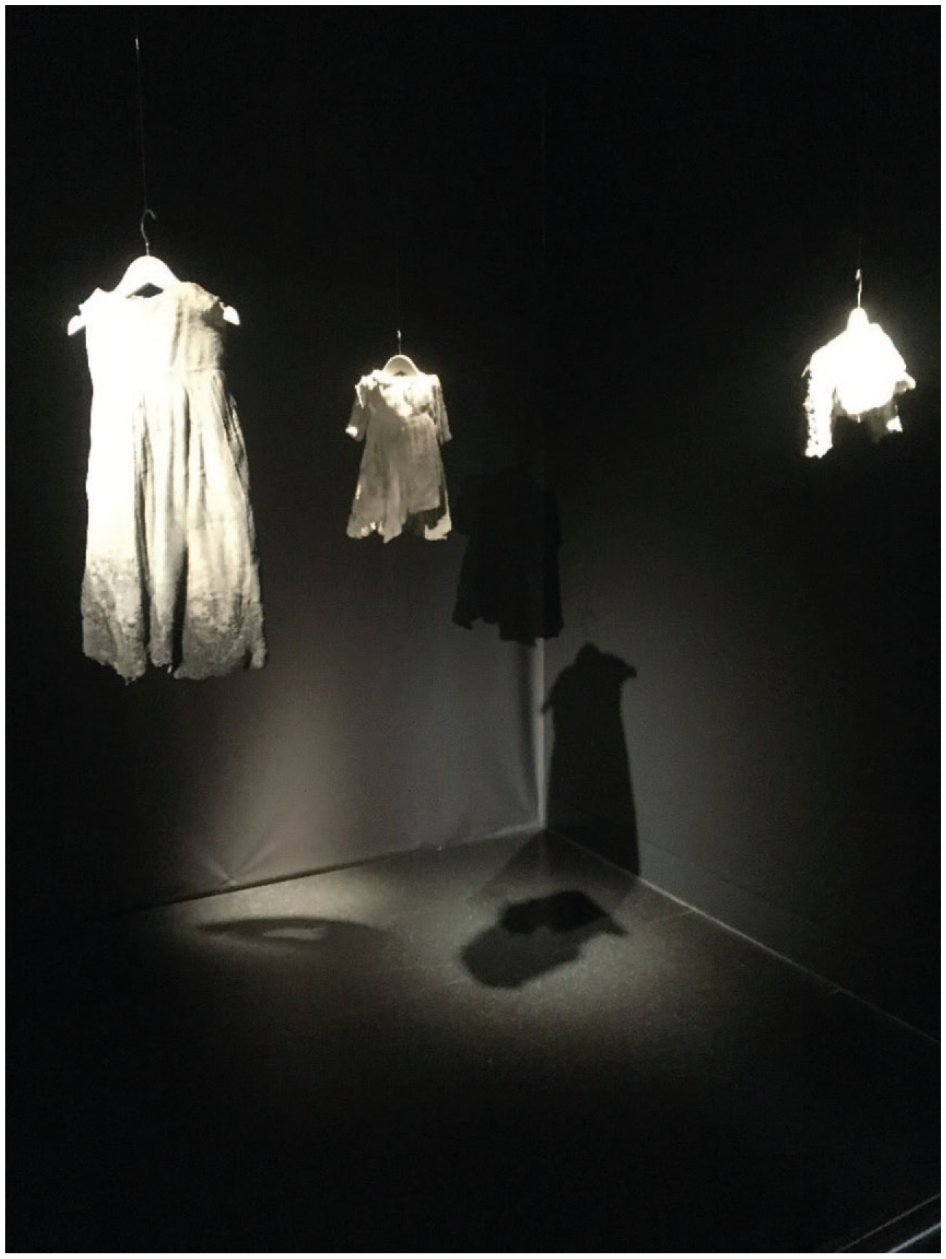
Home Babies, Pâte de Verre, Nylon Fibers by Alison Lowry. Suspended sand-cast pâte de verre (glass paste) christening robes.
© Photograph: Serena Clark.
Rub palm to palm, fingers interlaced and around the wrists
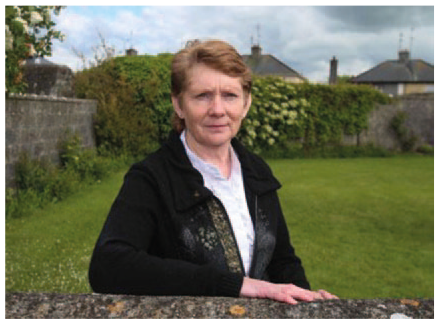
“On (Catherine Corless’) mother’s birth certificate, in the space reserved for the name of the father: nothing”
Catherine Corless, the historian that discovered the mass grave at the former Bon Secours Mother and Baby Home in Tuam, County Galway.
© Photograph: Niall Carson.
Reproduced with permission.
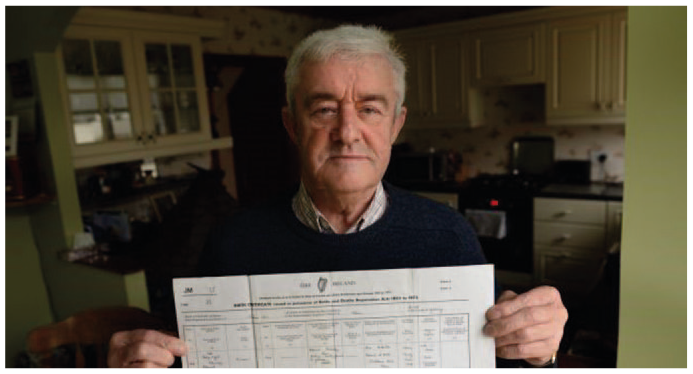
Michael’s mother died in October 1999 but with no mention to his biological father. ‘She never said and I never asked.’
Dara Mac Donaill of The Irish Times.
Reproduced with permission.
Rub backs of fingers to opposing palm with fingers interlocked
“…a pit has been found filled with the skeletons of tiny babies and small children, 800 of them, dumped in the pit which some prefer to call a ‘mass grave’ but is actually a septic tank”
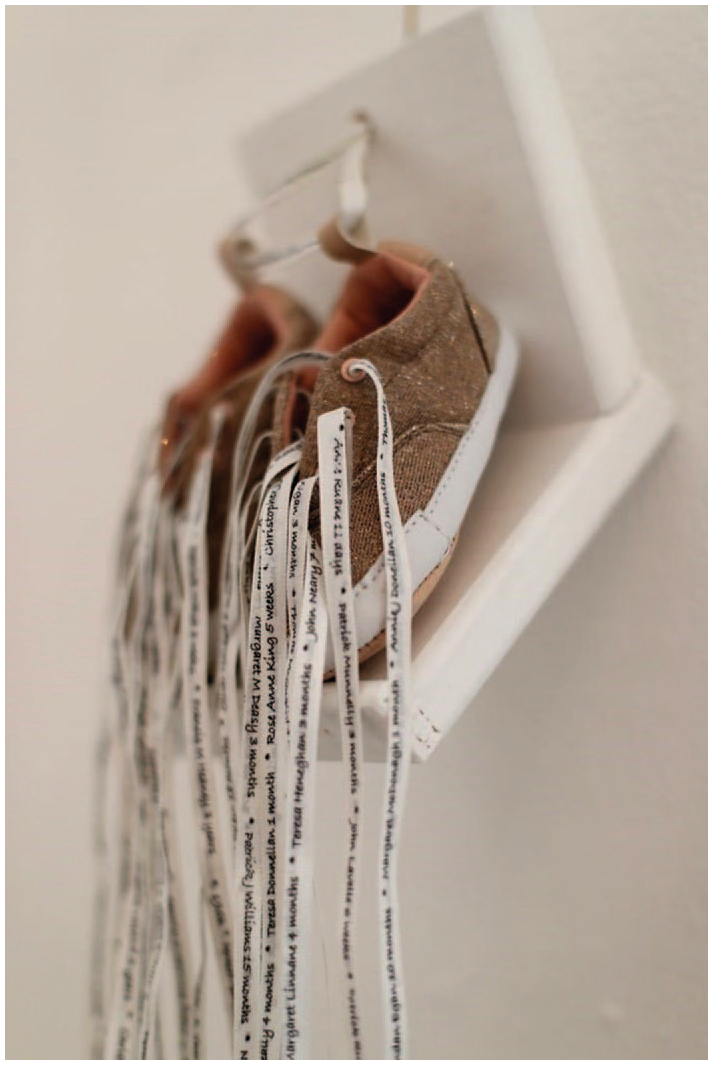
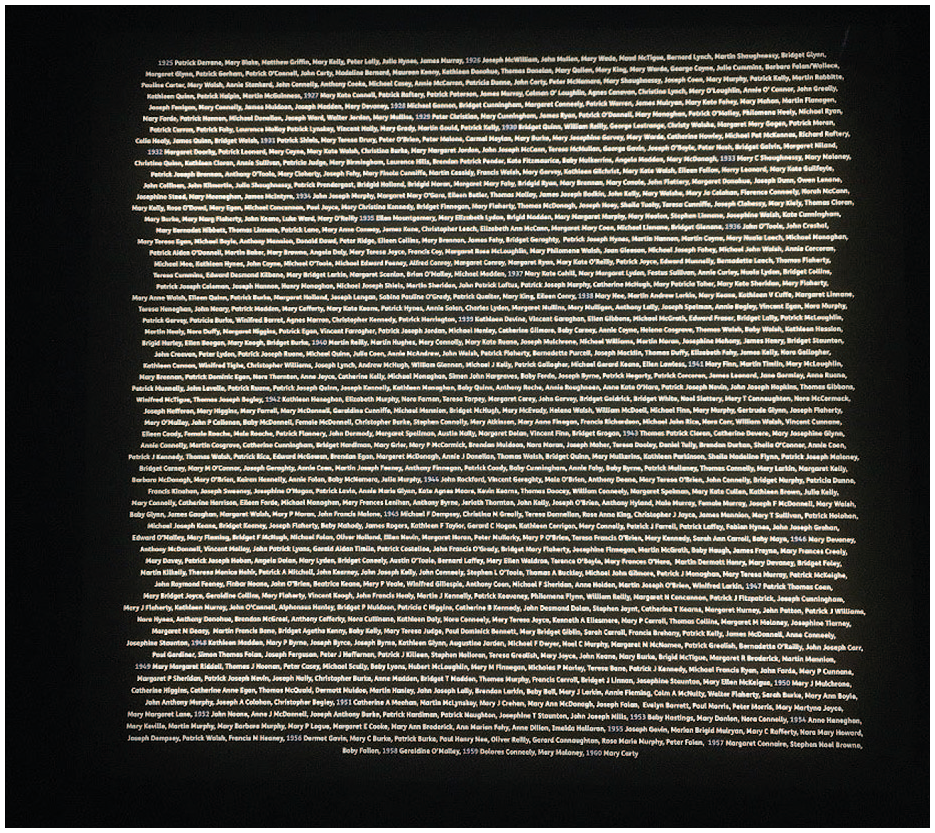
(A) dressing our Hidden Truths by Alison Lowry.
Names of the babies and children that died in the care of Magdalene laundries and Mother and Baby Homes.
© Photograph, 2019: Serena Clark.
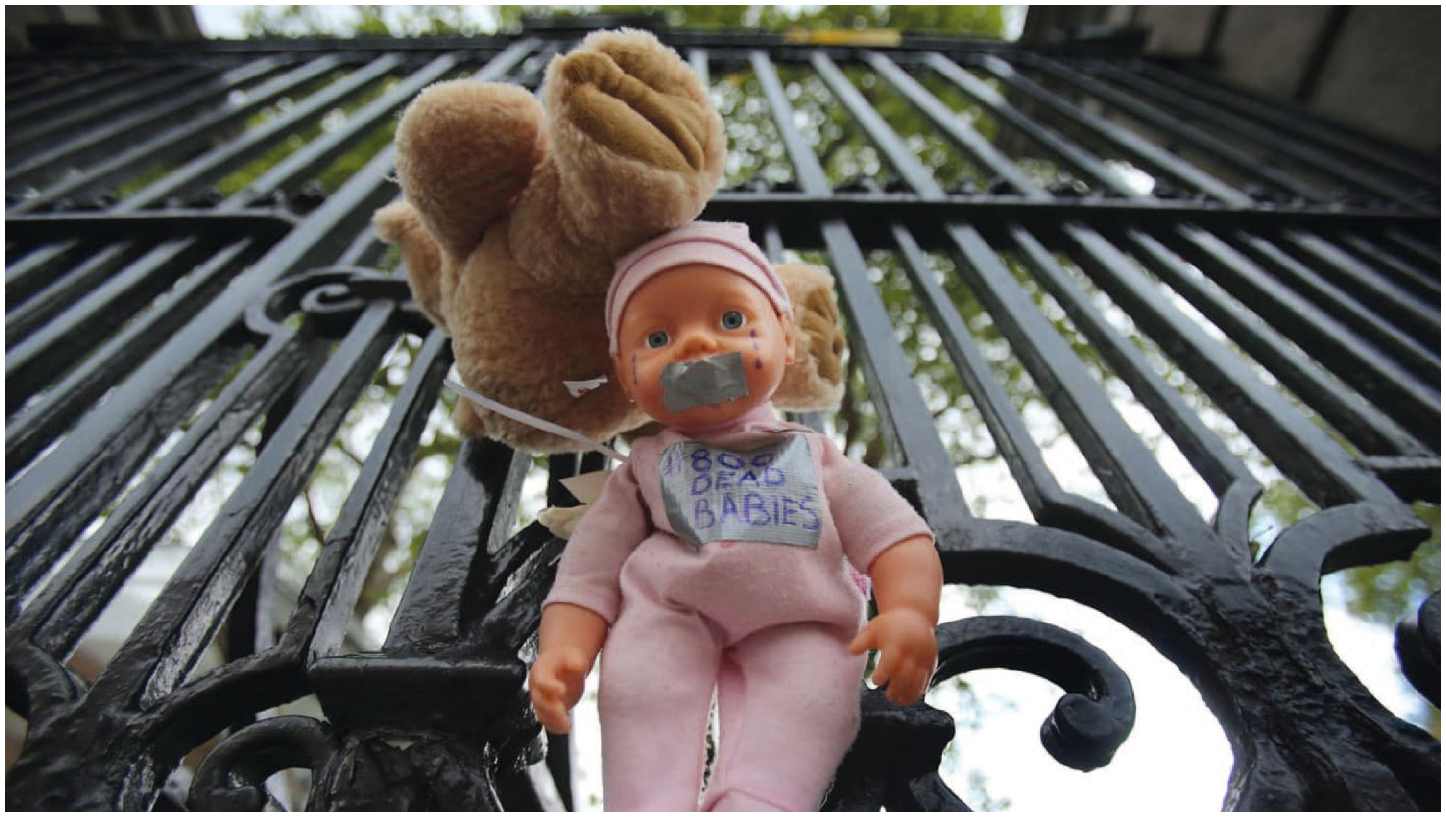
In protest of the mass grave found at Bon Secours Mother and Baby Home in Tuam, County Galway.
© Niall Carson.
Reproduced with permission.
Rotational rubbing of right thumb clasped in left palm and vice versa
“These are real, joyful young women who had sex and got pregnant and then got shoved into a home to be made a slave for the rest of her life. These were real, vulnerable, little babies that were snatched from their mothers and stolen and sold…We are real. They are real. Nothing (the Catholic Church) have said has acknowledged that we are real…”
Terry Harrison and a photograph of her baby, Nial John Dunne Kiernan. Nial was born in St Patrick’s Mother and Baby Home. After his birth he was taken from her.
© Sam Boal/RollingNews.
Reproduced with permission.
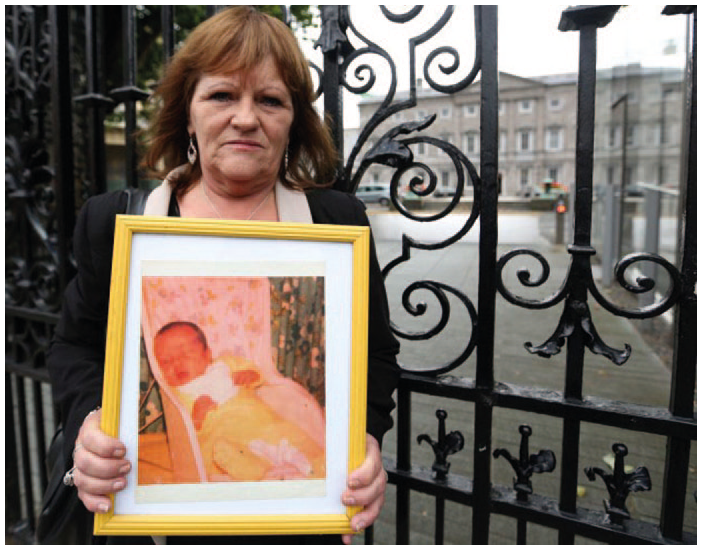
Survivors gathered outside St Patrick’s Mother and Baby Home, County Dublin. © Dublin Live.
Reproduced with permission.

Rotational rubbing backwards and forwards with clasped fingers
She told me, and she was brief: ‘Holy Father, we found mass graves of children, buried children, we’re investigating … and the Church has something to do with this’.
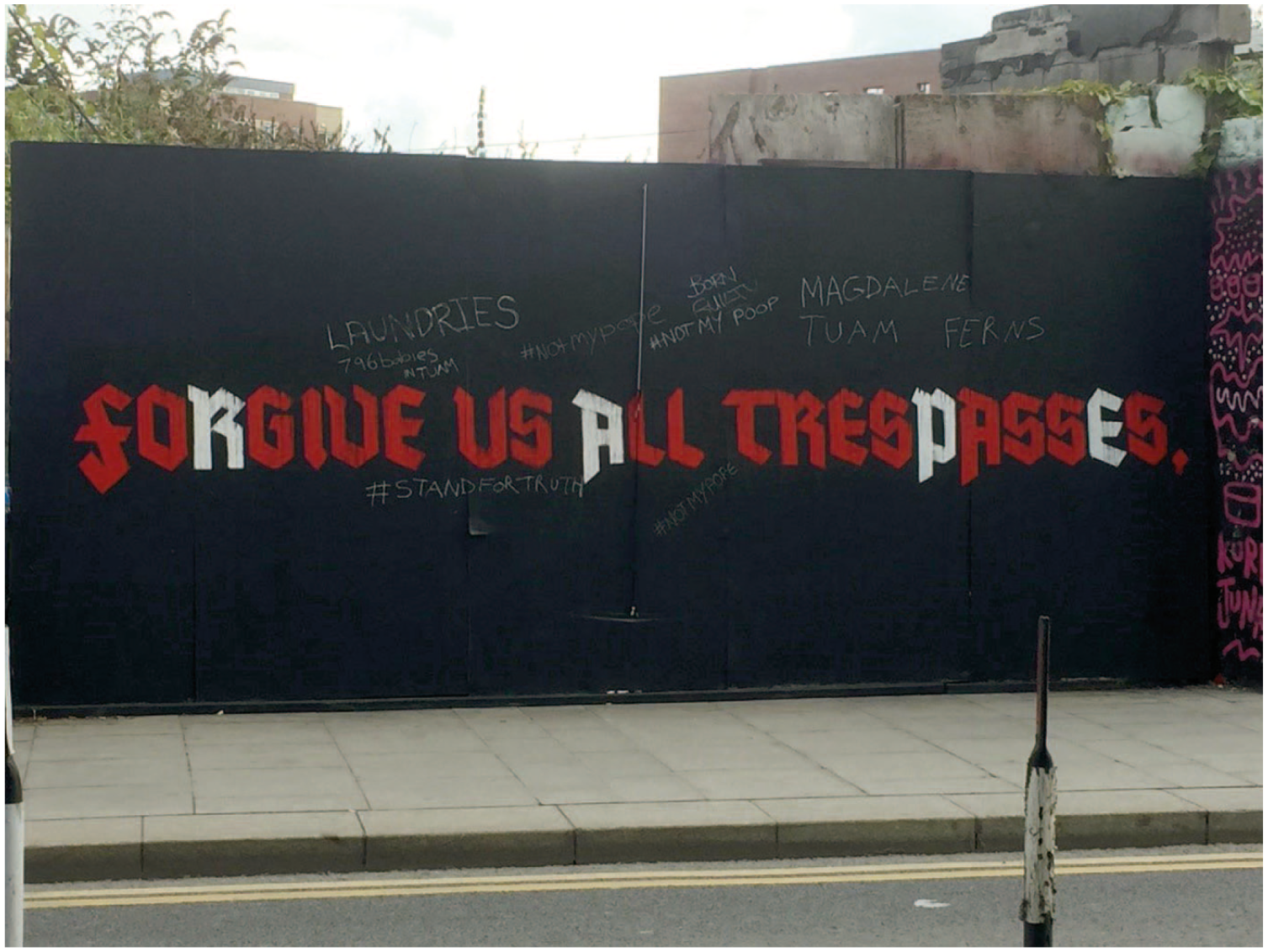
Caught between terror and dishonour, Ireland made our abused people invisible … We made you invisible. We made you inaudible. We made your stories unreliable. And then, somehow, through the courage of a handful of extraordinary people, the truth about the Church’s crimes began to be exposed, but the Church slandered and libeled those heroes.
Mural in South Dublin painted in response to Pope Francis’ visit to the Republic of Ireland in August 2018.
© Photograph: S erena Clark.
Footnotes
Funding
The author received no financial support for the research, authorship and publication of this article, and there is no conflict of interest.

Biographical Note