




Abstract
This visual essay investigates two photographic techniques to challenge pre-existing notions of the human body that are derived from people’s locally consistent set of beliefs about bodily proportions, shapes and functions. These techniques centre around the mirror as the medium to investigate peculiar visual representations that take aim at normative concepts of what constitutes the human. The essay includes selective images of defamiliarized bodies that the author has photographed within a studio environment and that are applied within the Freudian context of the Uncanny to convey how humans seek familiarity, which is inherited through lived experience as a form of solace in the face of unfamiliarity. The mirror, with its paradoxical nature as a device of reflection, captures both the reality and its representation in a single image, or of presence and absence, allowing for the defamiliarization of the body. The essay provides an explanation of how this is achieved, demonstrating the mirror’s potential to expand visual representation beyond the limitations of the body itself.
We are all born as humans with an adept understanding of the natures of our bodies: what body parts we have, the flesh of our muscles, our mobility, our imperfections, the limitations of our body, our nakedness. We build a locally consistent set of beliefs about how bodies should function and be perceived, and these become familiar over time. For Maurice Merleau-Ponty (1964), the way in which we experience the world is based on the body and our perceptions of it. In spite of the body being used as an instrument to navigate the world, Merleau-Ponty argues that the body is ‘our expression in the world, the visible form of our intentions’ (p. 38). It is lived experience that determines how we perceive other bodies and ‘where we are not able to come to a true perception of our own body, we are also unable to perceive the bodies of others’ (Schilder, 1999: 45). This visual essay is based on the premise of upending preconceived notions of the familiar human body and how, regardless of how distant a body is from any semblance of human in the photograph, our unconscious familiarity of the human body through lived experience draws us to experience the Uncanny and reconcile the body as that of a human. The Uncanny is that which is strange, yet familiar (Freud, 1953[1919]). The feeling of Uncanny is not a repulsion of the unfamiliar sight or feeling but rather, in Freudian terms, finding solace through an unconscious pursuit of the familiar to reconcile with the unfamiliar sight or feeling. For this essay, the familiar is underpinned by one’s own corporeality.
The visual pieces I present for this essay are personal photographs I have captured within a studio environment, distorting and defamiliarizing human bodies for the camera to visually challenge preconceived notions of the familiar human body. The defamiliarizations have been achieved by the inclusion of an object – a mirror – in the image, for objects create meaning and comprehension, and expand upon visual possibilities beyond the scope of merely the image itself (Hinthorne and Reeves, 2015). I am drawn to two types of mirrors to pursue the connection with the Uncanny: flat and curved mirrors.
Mirrors are paradoxical devices of reflection. The flat mirror produces reflections of objects that constitute their counterparts on the plane (Asakura, 1990), yet the reflection is fictitious. The reality and its representation are captured in one image, showcasing a visual paradox of presence and absence, and presence transformed into absence (Krauss, 1981). Figures 1 and 2 consider this paradox to convey presence of the familiar and unfamiliar. The body and its disjointed reflection demonstrate the familiar transformed into the unfamiliar. The body is deconstructed and dismembered at the edge of the flat mirror to present a new perspective on corporeal narrativity (Juler, 2016), evoking a bodily form that is unconsciously familiar, risen from the unfamiliar form. The act of making the body unfamiliar, or defamiliarized, does not necessitate the complete removal of the familiar, but simply prolongs the duration by which one perceives the familiar form due to an increasing difficulty of perception (Shklovsky, 1989). One would suppose these kinds of imagery, where the body has been repurposed to resemble a new form, would result in the viewer questioning their perception of the subject.

Flat mirror study, dysymmetrical forms, 2016–2019.
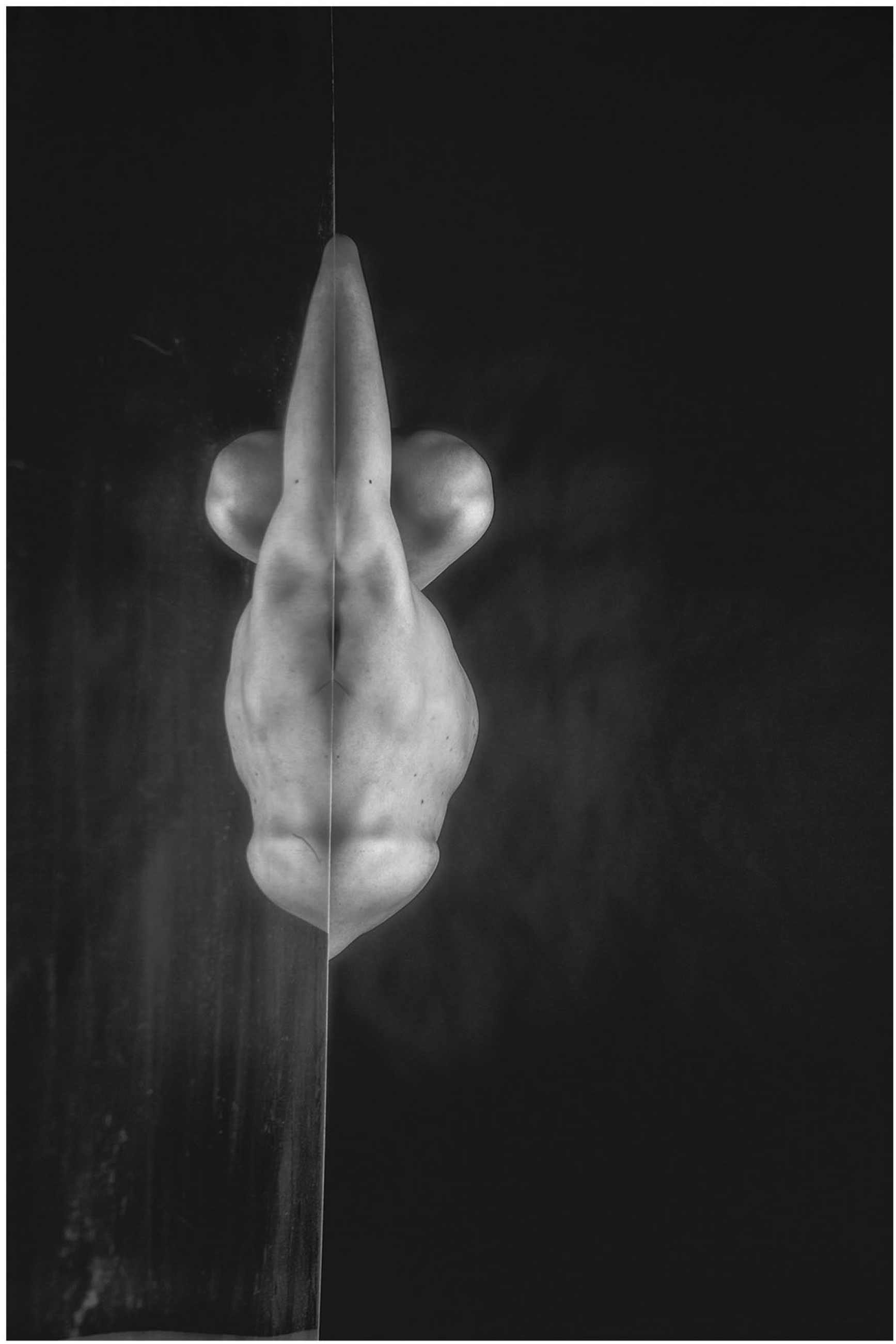
Flat mirror study, quasi-symmetrical forms, 2016–2019.
Metamorphosing these reconstructions, Figures 3–7 lean further into the Uncanny effect by emulating Surrealist visual experimentation to project unconscious desires (for example, Man Ray’s Minotaure, 1934, where a minotaur manifests from a torso, or Edward Weston’s Pepper No. 30, 1930, a photograph of a bell pepper projecting the silhouette of a muscular human figure). Experimentation with the orientation of the images along with more complex placements of the model in relation to the flat mirror transforms the form into something terrifying that mobilizes Surrealist irrationality and subversive realism to upend preconceived notions of human forms. The metamorphosed forms are not represented as human yet have familiar corporeal characteristics that root the form in the human.

Flat mirror study, metamorphic body, 2016–2019.

Flat mirror study, metamorphic body, 2016–2019.

Flat mirror study, metamorphic body, 2016–2019.
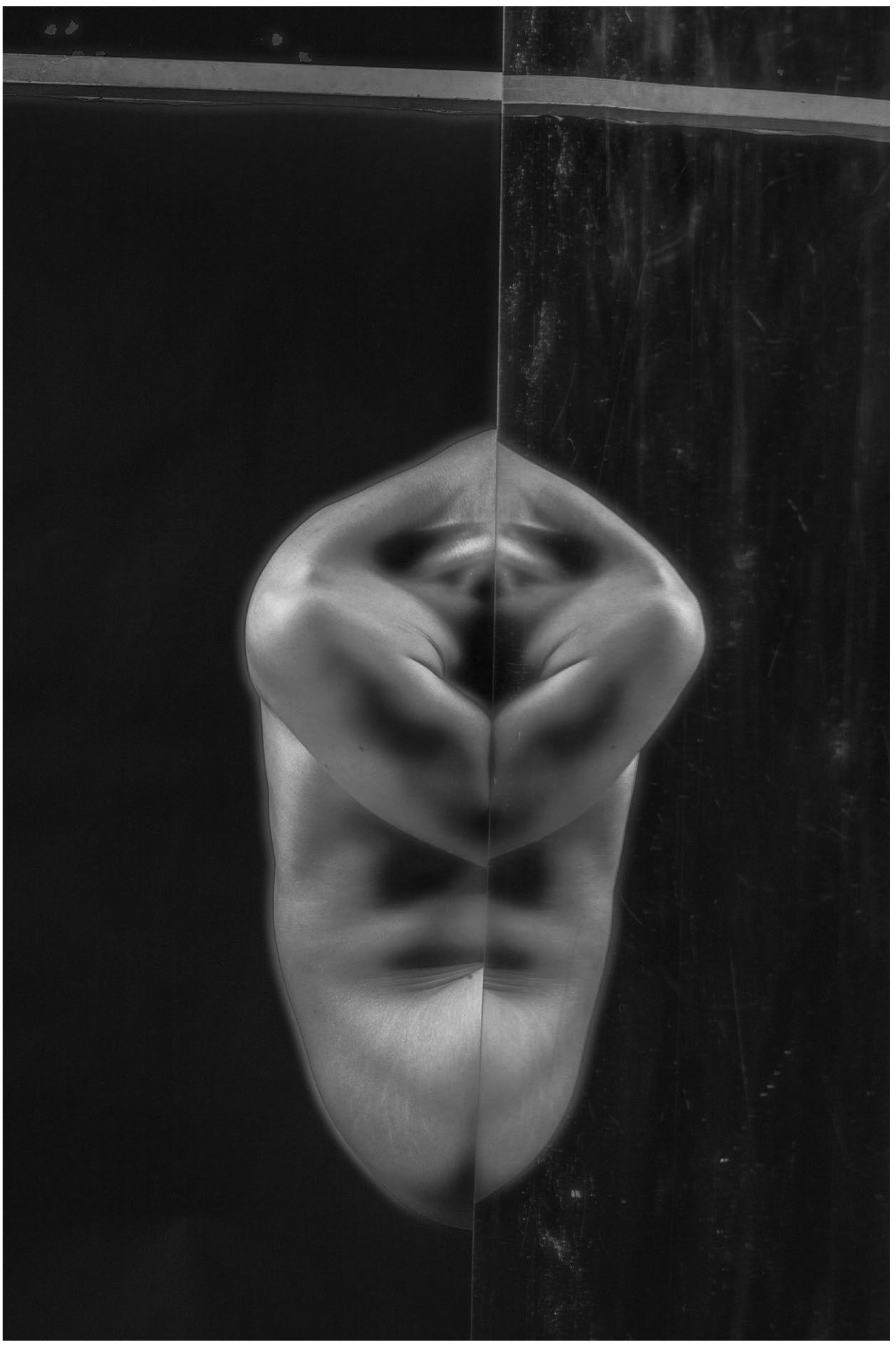
Flat mirror study, metamorphic body, 2016–2019.

Flat mirror study, metamorphic body, 2016–2019.
Figures 8–13 depict Uncanny encounters with the curved mirror. This mirror has a different method of defamiliarization in that it distorts and visually deforms the subject (Asakura, 1990). What one would hope to see in a mirror reflection is a reflection, or replica of the real. The curved mirror does not afford this. The reflected human bends, skews and folds. Body parts are truncated, twisted, duplicated, dismembered and mangled. In some instances, it is a combination of one and the other, or all of them at once. The mirror cannot faithfully record reality and, by extension with the body as the reflected subject, it no longer accurately records the proportions with which humans are intimately familiar. These bodies output by the reflection are presented as different forms that defy sensibility and are abstract in nature. The bodies are chaotic, irrational and defamiliarized, yet they retain notions of the familiar human, such as crevices of joints (Figure 11) and glimpses of hands (Figure 12). The forms depicted in the figures are so bizarre, remarkably peculiar, yet there is a corporeal texture that binds us to that feeling of the Uncanny.

Seeing through the mirror, curved mirror study, 2016–2019.
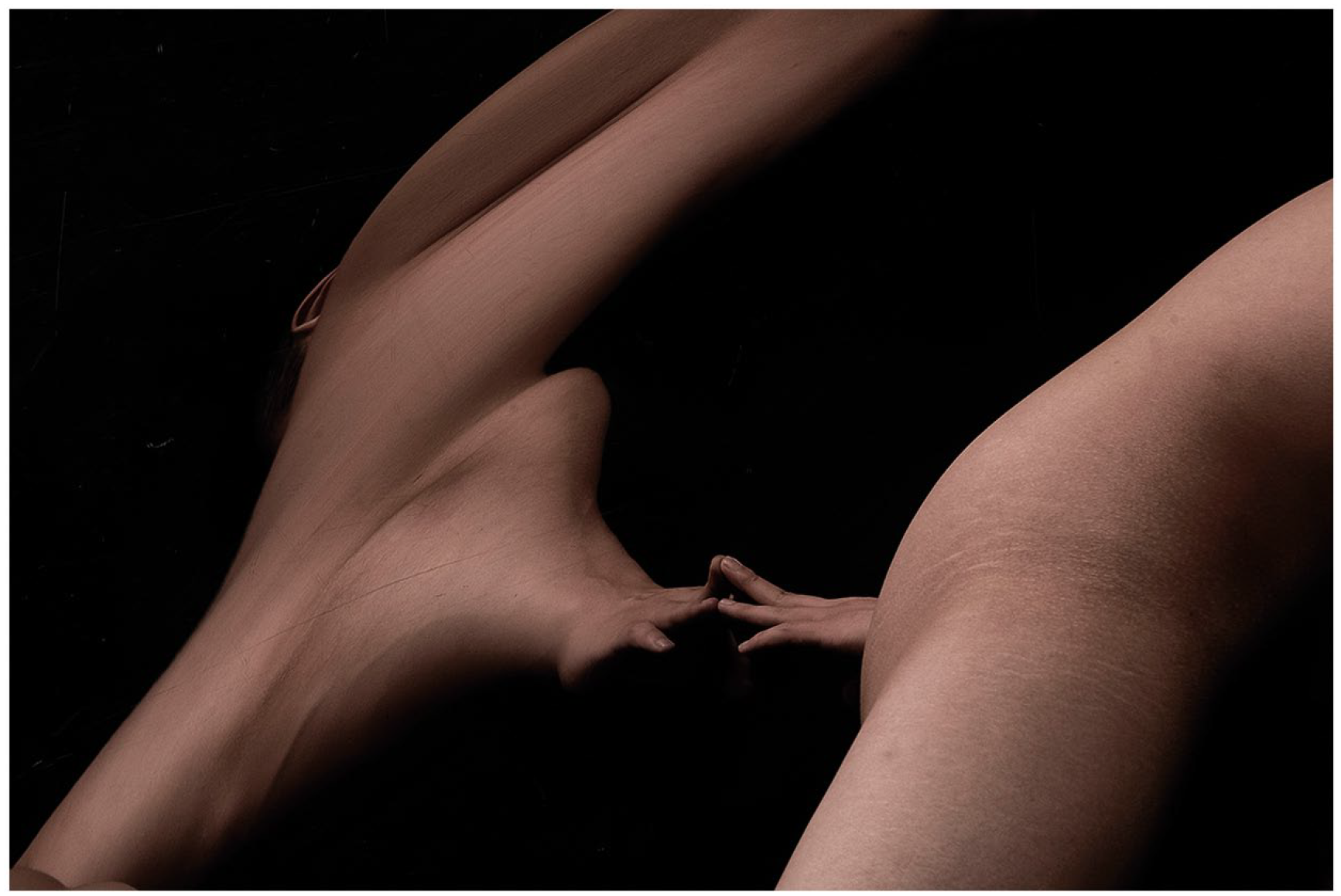
Seeing through the mirror, curved mirror study, 2016–2019.
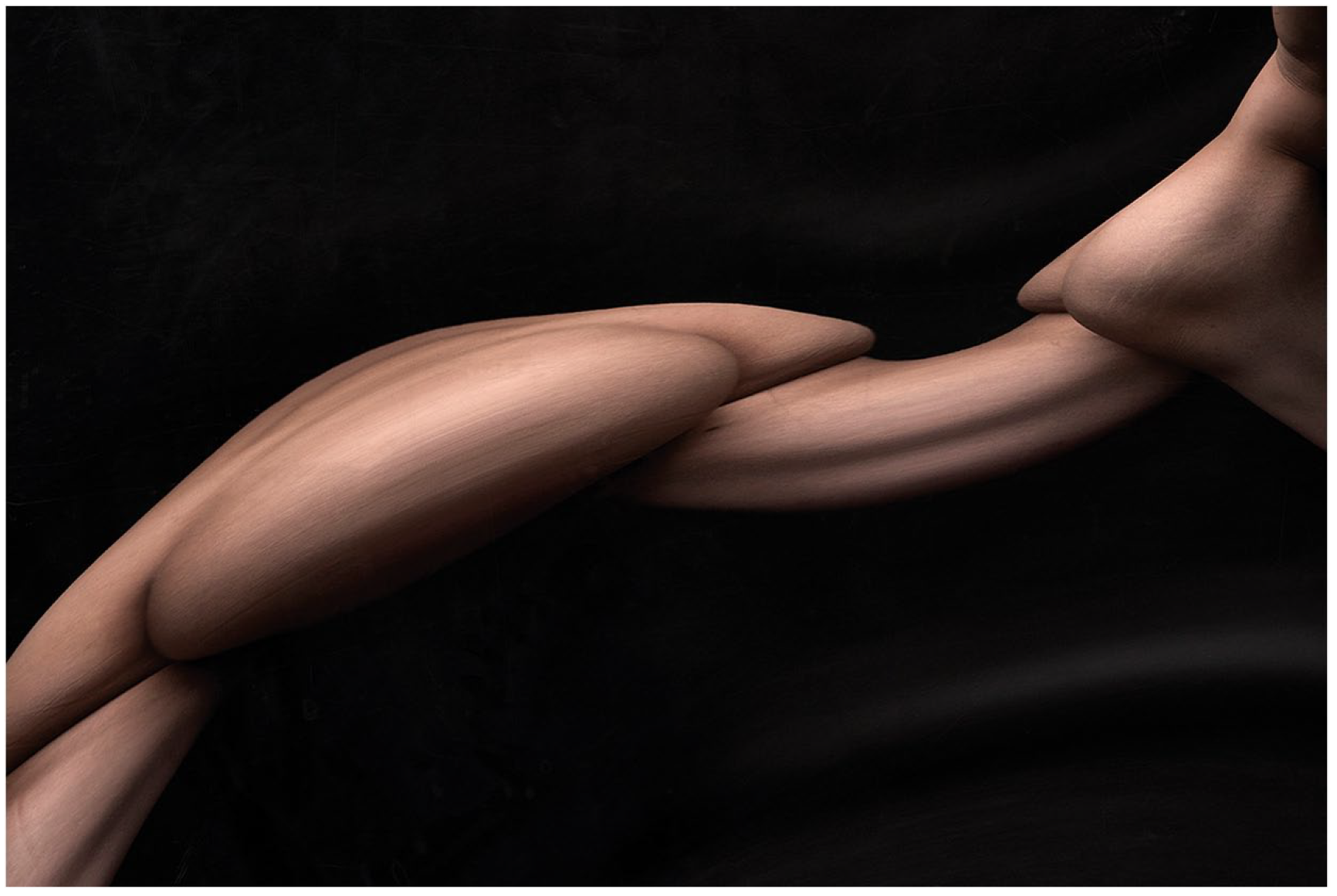
Transmogrification, 2017.
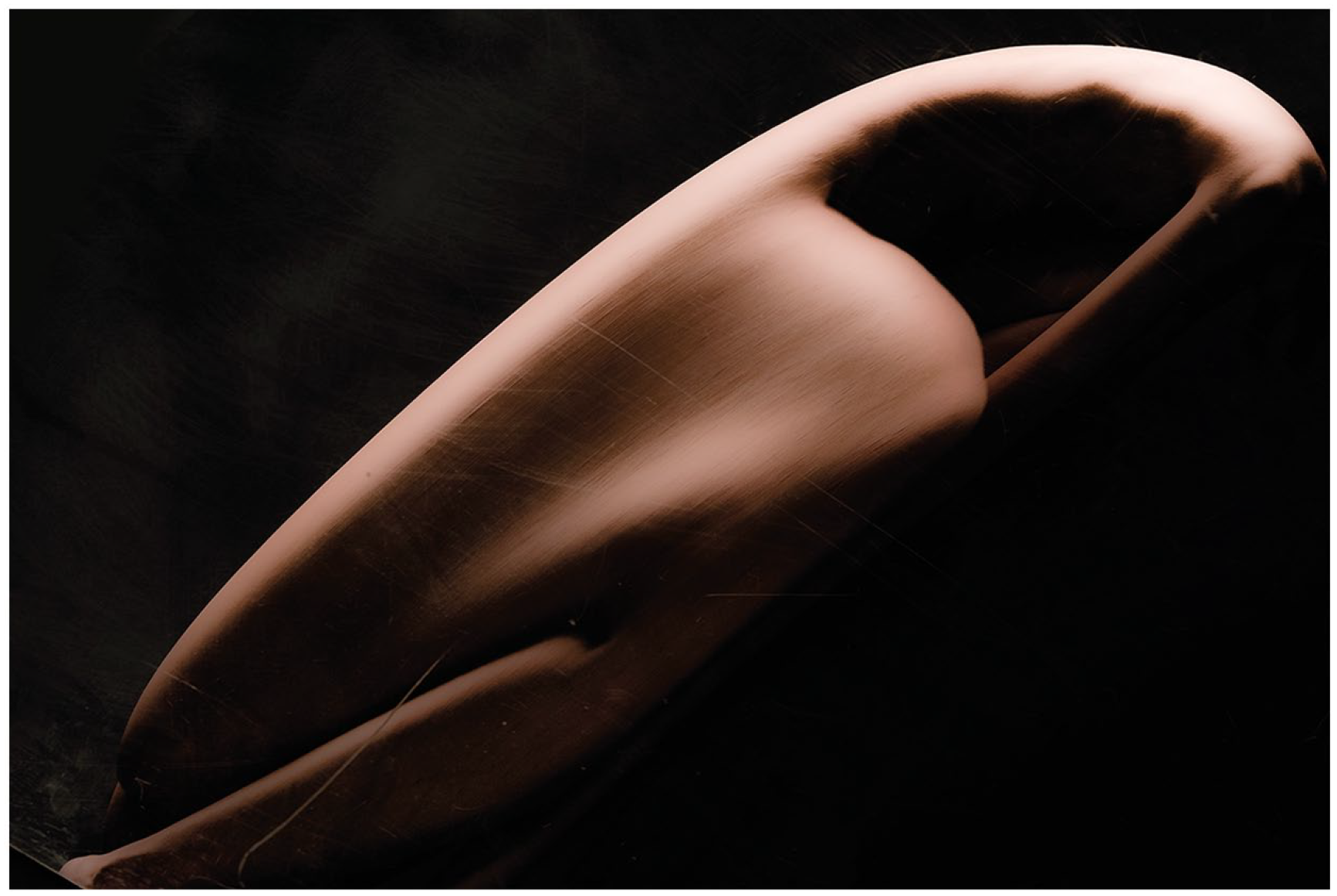
Seeing through the mirror, curved mirror study, 2016–2019.

Seeing through the mirror, curved mirror study, 2016–2019.
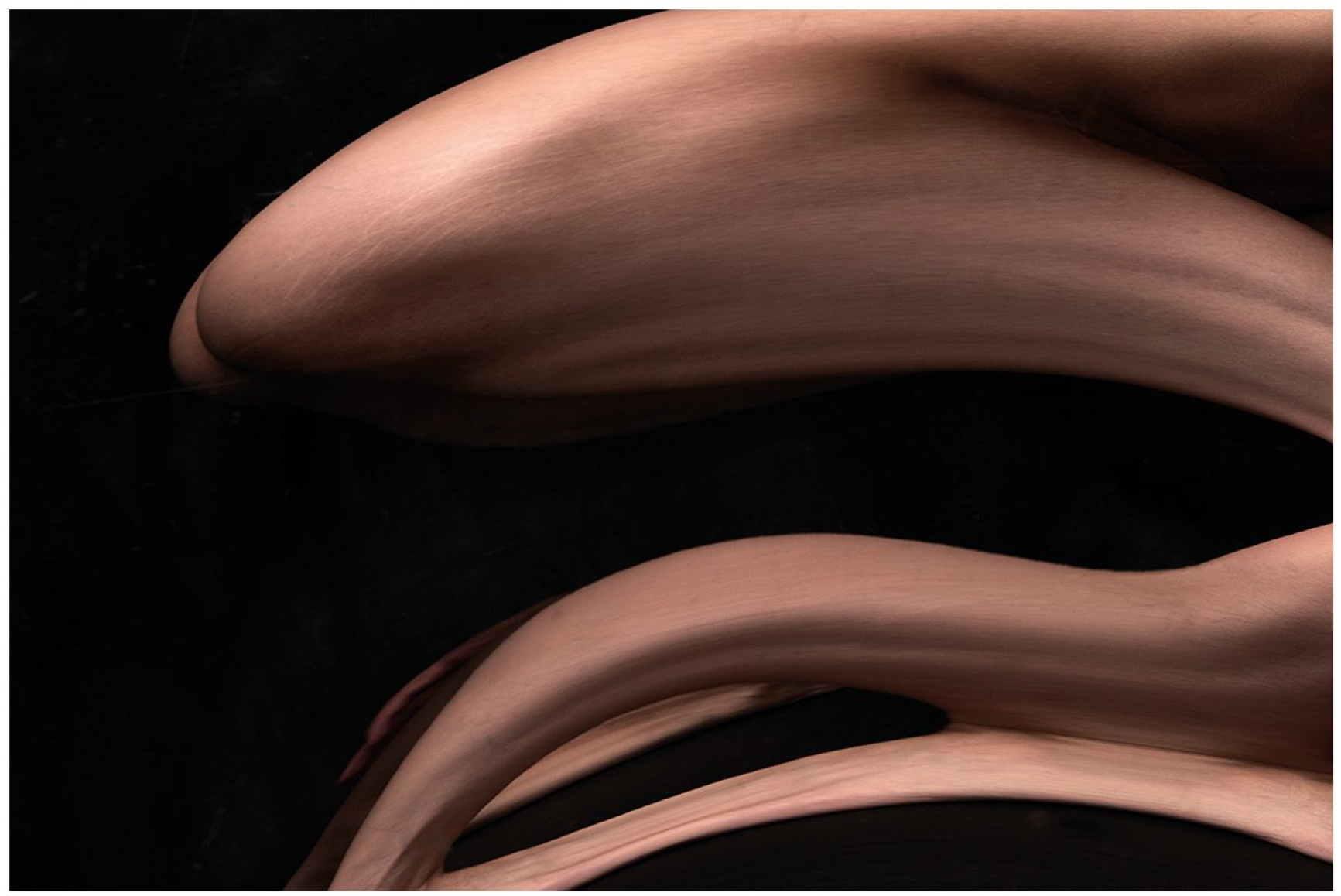
Transmogrification, 2017.
Footnotes
Declaration of conflicting Interests
The author declared no potential conflicts of interest with respect to the research, authorship and publication of this essay.
Funding
The author received no financial support for the research, authorship and publication of this article.

Biographical Notes
email: