




Abstract
Various authors hold that what is wrong with risk imposition is that being at risk diminishes the opportunities available to an agent. Arguably, even when risk does not result in material or psychological damages, it still represents a setback in terms of some legitimate interests. However, it remains to be specified what those interests are. This article argues that risk imposition represents a diminishment of overall freedom. Freedom will be characterized in empirical terms, as the range of unimpeded actions available to an agent. After briefly outlining the main characteristics of overall freedom as defended by Hillel Steiner and Ian Carter, the article shows that this notion is able to capture many of our intuitions about when and how risk imposition disadvantages an agent, without reference to welfare indicators. The article argues that if this non-welfarist perspective can be defended, then it would be easier to approach a number of applied questions about risk, including the questions of when risk imposition is permissible or legitimate, in which ways risk can be an object of distributive justice and how one can be compensated for being subject to a risk.
Introduction
Risk taking is a very important part of our life. We cannot imagine a society in which risks are not run, and, at least in some circumstances, we praise risk taking, for example, as necessary for scientific innovation and economic progress. But although risk taking is generally motivated by the chance of benefits, it often has (as a byproduct) negative consequences. These negative consequences are in many cases distributed differently among various agents in society, and they are sometimes imposed on those who had no chance of benefitting from the risk that was taken.
Most people would intuitively agree that imposing a risk on someone else is at least in some cases wrong and sometimes gives rise to claims of compensation and redistribution. But it is hard to know exactly why this is, especially in cases where the risk does not actually result in the negative outcomes it threatens.
Theorists disagree on what exactly is wrong with risk imposition, how exactly it makes people worse off, what exactly we are meant to compensate for, and what precisely the object of distribution is. My aim in this article, therefore, is to present a plausible explanation of the wrong of risk imposition. The question I address is not about the ‘outcome harm’ that can follow from risk imposition (that is, the harm inflicted when the more or less probable negative outcomes are actually realized), but what, if anything, is morally problematic with risk imposition as such.
I argue that references to people’s welfare cannot account for all our intuitions on why and in which respect risk imposition treats people in the wrong way. Instead, in order to understand what is specifically morally problematic about risk, I submit, we should ask whether risk imposition is compatible with respecting people as moral agents. I argue that the notion of overall freedom, as defended by Hillel Steiner (1994) and Ian Carter (1999), can be very useful to capture the sense in which risk imposition is (in certain cases) problematic with respect to the moral agency of those at the receiving end. In particular, by focusing on the concept of overall freedom, it is possible to give an account of what I will call the ‘nonspecific negative impact’ of risk on the whole range of options open to an agent. The basic idea is that when imposing a risk on someone (often in pursuit of my own ends) I am interfering with a person’s range of external options (more precisely, her set of sets of options), that is, her overall freedom. One basis of the judgment that interference with our set of sets of options is wrong lies in the idea that each of us, as a moral agent, is owed respect. In a broadly Kantian approach, in virtue of respect, each of us is entitled to a measure of external freedom (equal or otherwise, depending on the substantive moral theory one endorses). It is this entitlement that best explains the moral wrongness of the particular kind of interference that is constituted by risk imposition. Risk imposition, I will argue, diminishes the overall freedom of those at the receiving end, rather than (trivially) their probability of being free. Decreasing people’s overall freedom under a certain acceptable level fails to treat them in the appropriate manner.
This approach contrasts with ‘actualist’ views according to which the wrong of risk imposition is realized only at the moment in which the harm being risked is actually realized. What is more it offers an alternative to ‘probabilist’ views that see risk imposition as bad because of its adverse effects on the agent’s well-being (for example, creating fear or anxiety) or on the agent’s autonomy; and to capability approaches that consider the impact of risk on a closed list of opportunities for specific functionings. In the next section, I will explain my reasons for focusing on risk imposition itself, rather than its effects on persons’ well-being. I will then present two versions of why risk imposition, rather than just its outcomes, is morally significant. I elaborate on these in order to explain how risk impacts on people’s freedom and defend an approach based on overall freedom. I argue that, unlike other approaches, the freedom-based view is able to account for the social dimension of risk imposition and identify what is specifically problematic with risk in inter-human relations. I then explain how both dimensions of risk magnitude, that is, risk probability and risk impact, can be said to diminish people’s overall freedom. Finally, I ask how we can make sense of the fact that some persons are more vulnerable to risk than others. I conclude by considering the consequences that my conception of risk as a decrease in freedom has for the debate over compensatory and distributive issues in the regulation of risk. I also point out the methodological advantages of the overall freedom-based approach.
The wrong of risk imposition
Roughly defined, risk is the probability of the occurrence of a negative outcome. 1 Thus, without the probability of a negative outcome it would be impossible to talk about risk. However, I am interested in whether being subject to a risk means being made worse off, whether or not the probable negative outcomes actually materialize. What is more I will mainly discuss risks that involve the probability of negative effects being imposed by some agents (who expect possible benefits) on some other agents. I will only consider cases where risk is imposed, rather than freely chosen. Accordingly, when I refer to risk, what I really mean is risk imposition. I will consider simplified cases of risk imposition (by setting aside questions of responsibility, which is relevant in cases of self-imposed risks or consensual risks) in order to focus in on what is problematic with imposing the possible negative outcomes of risk. In this context, natural risks are relevant only to the extent that they result from risk imposition. For example, in the case of floods, it may be that, say, failure of the city council to secure the river banks results in risk imposition on those probably affected by the flood. The reason to focus on risk imposition, rather than on risk in general, is that risk imposed by some human beings on others represents a special way to treat persons (rather than being simply something that happens to persons) and, as such, is the core moral issue when discussing risk. The cases that I am thinking of are those where an actor takes a risky action (normally in the hope of obtaining a benefit for herself or others) but in so doing imposes a burden of risk on some third party. For this latter person, there is a chance of loss or non-loss but no chance of gain. This would be the case if, for instance, emissions from a factory created health risks for the surrounding populations, but there was no prospect of these populations benefitting, in any way, from the presence of this factory. In real life, often, expected benefits come together with risks, and toward the end of the article, it will become clear that my approach is able to account for the impact of both risks and expected benefits on an agent’s freedom. However, for analytical purposes, I will concentrate on risk only.
One obvious objection to my project of focusing on risk in itself is that what strikes us as problematic when considering risk imposition is not that risks are run but that adverse effects materialize, which diminish his or her well-being. On this view, sometimes called ‘actualism’, the wrong is realized only at the moment in which the harm being risked materializes. Yet if someone plays with explosive materials in your cellar – you are not aware of it – and no accident actually happens, then there is neither harm nor loss (Arneson, 2010: 346). In this perspective, there are still reasons to prevent actions that are very likely to produce substantial loss (even if we do not know exactly who will suffer that loss) by treating risk as a proxy for harm (Perry, 2007). In this view, however, what is morally relevant is the outcome not risk imposition as such.
An alternative way of looking at the question is to consider that the very fact of being at risk, even when it does not result in the negative effects that it threatens, may cause decreases in well-being when it gives rise to fear or anxiety among those on which the risk is imposed. What is more, it may induce people to take costly precautionary measures, whether or not the risk realizes (Wolff and de-Shalit, 2007). In this view, what is crucial is risk awareness and the psychological reactions to the fact of being exposed to a risk. As a consequence, risk imposition here is morally problematic only in cases in which the awareness of risk diminishes the well-being of those on which risk is imposed. To wit, what makes an instance of risk imposition morally relevant is not what kind of risk is imposed on someone, or the magnitude of that risk, but rather the consequences of risk awareness in terms of well-being.
Such an approach must allow for a high degree of his or her variation in risk assessment based on risk perception. What some people find frightening may leave others indifferent. Moreover, people may be scared by risks that are relatively small in terms of objective probability but remain indifferent to risks that in probabilistic terms are quite serious. Although some theorists argue that this awareness-based understanding is appropriate in the regulatory context, others have exposed the absurdities and inefficiency of risk policies that respond to people’s subjective levels of fear and anxiety rather than risk objectively measured. 2 For example, in a number of countries there is a very low level of awareness of the risk threatened by climate change, despite empirical evidence pointing to the need to take precautionary measures to avoid severe damage to humans and the environment (UNEP, 2006).
For Wolff and de-Shalit, however, risk awareness and its material or psychological consequences are not the only way to account for how risk may affect people’s lives or – as they put it – may render insecure their future functionings. Wolff and de-Shalit explicate the different ways in which risk may impact on functionings (such as life, health, shelter, and so on) by identifying three categories of risk: first, threats to a specific functioning, such as the threat to one’s health; second, what they call ‘cross-category risk’; and, third, ‘inverse cross-category risk’. Cross-category risks are risks likely to spread their effects from one functioning to another. For example, the risk of losing one’s job may involve at the same time the risk of not being able to pay the rent and thus to have shelter. What is more, the risk of losing one’s house is an inverse cross-category risk, if the agent in order to secure shelter has to give up, say, nutritious food (Wolff and de-Shalit, 2007: 70–71).
This classification is useful to understand the different ways in which risk may affect well-being but also – and more interestingly in my opinion – shifts the focus onto the opportunities open to an agent. What seems specifically interesting about risk is not (or at least not only) the indication it gives us of future states of well-being, but how risk modifies the opportunities of a subject at the very moment in which it is imposed. Although their risk classification seems to point in the right direction, Wolff and de-Shalit discuss the impact of risk by reference to actual functionings. Yet, when considering the impact of risk at the moment of its imposition, a focus on specific functionings hardly gives a satisfactory picture of the impact of risk because it is very difficult to identify the particular functionings that will be actually impaired (Murphy and Gardoni, 2012: 993). What is needed instead is a way to capture the impact of risk on the whole range of opportunities available to an agent under risk imposition. In the next section, I will discuss two different proposals that help us to understand how risk imposition as such affects opportunities. In the fourth section, I will then present my own position on this issue. The well-being–based approach involves consequentialist accounts of right and wrong (low risk is a means to increased well-being). By contrast, I will offer an approach which is anti-consequentialist, at least in the sense that it aims to show how risk imposition is a wrong in itself when it entails a reduction of external freedom under a certain acceptable level.
Risk imposition as a setback of a legitimate interest
Claire Finkelstein suggests that the harm involved in exposing someone to a risk can be explained in the same way as the good involved in exposing someone to the chance of a benefit. Suppose that someone gives me a lottery ticket. Whether or not I win a prize, Finkelstein argues, the very fact that I have the chance to win constitutes an advantage. By analogy, when you put me at risk, you somehow put me at a disadvantage, whether or not the negative outcome materializes (Finkelstein, 2003, 2013).
What is more, if you give me a lottery ticket, I feel grateful, even if I do not end up winning a prize, and the sentiment of gratitude seems appropriate because I was offered a chance. When someone puts me at risk, I feel that they damaged me somehow, and the feeling of being disadvantaged persists even if the damage never, in fact, materializes. 3 This, for Finkelstein, can be explained not (only) in psychological terms but by the fact that when a person is intentionally exposed to a risk, she is deprived of a particular set of opportunities. This constitutes harm if it involves a setback or an impairment of a legitimate interest in avoiding unwanted risk. Any normal, non-suicidal agent has reasons to prefer not to be exposed to, for example, the risk of developing cancer. Thus, it is not necessary to know the subjective status of an agent in order to know that exposing her to the risk of cancer constitutes a setback to her interest in basic health (Finkelstein, 2003: 972–974). However, it is not entirely clear to me what exactly makes this a harm. We could understand the harm involved in putting someone at risk as derivative from the harm that is risked. We have a right to basic health and what intentionally jeopardizes our health is wrong. However, this view is vulnerable to an objection envisaged by Nozick: if this view is sound, then any risk that threatens the violation of a right does, in fact, actually violate that right; so, all actions that entail a non-zero probability of violating a right are impermissible (Nozick, 1974: 74). Alternatively, we may think that that we have a legitimate interest in avoiding the unwanted status of being at risk. Yet, obviously, not everything that puts us in a status that is not our preferred one constitutes a harm. So, if we take this view, then in order to avoid the result that all unwanted risks are illegitimate, we would need a substantive account of which risks status it is legitimate to want to avoid, both in terms of probability and impact.
These difficulties notwithstanding, the intuition captured by Finkelstein is an important one. In particular, the idea that risk imposition corresponds per se to a setback of our interests indicates that risk is disadvantageous and that such disadvantage is linked to the diminished chances of pursuing one’s interests, independently of one’s subjective perspective on what those interests are and the actual impact on those interests.
John Oberdiek (2012) elaborates on this idea and suggests that the interest setback caused by risk imposition must be identified with a diminishment of personal autonomy. The argument, in a nutshell, is that risk, being the probability of a negative outcome, is like a trap that forecloses an option, by rendering unsafe the path where the trap has been set. Thus, risk modifies the opportunities open to people and, with that, the ways of life that they can choose to lead. This, in turn, affects people’s autonomy, whether or not it has a material impact on people’s lives.
Oberdiek argues that even where the will of an actor is not modified by the risk situation – even if the risk trap is put on a path that she would not choose anyway – her autonomy is affected and the risk imposition stands in need of justification. What is more, even if she is not aware that she is running a risk, the very fact of risk imposition diminishes her options by making them unsafe. For this reason, risk imposition is prima facie wrong.
Oberdiek offers an example in which someone shoots a bullet in your range of action. You do not move, and hence you do not get killed. But if you had moved in the direction of the bullet, so the example goes, you would have been killed. However, it is not clear that your autonomous will has been affected here if you do not know about the bullet and you do not move in the direction of the bullet. Although Oberdiek’s focus on the agent and the opportunities open to her is appealing and points in the right direction, I find that describing the impact of risk in terms of autonomy does not really hit the nail on the head and fails to capture what we find wrong with the bullet shooting in the example above.
Autonomy is a complex concept, and Oberdiek follows Joseph Raz’s definition of personal autonomy, which involves having (a) appropriate mental abilities, (b) an adequate range of valuable options, and (c) independence from external manipulation (Raz, 1986: 372). By Oberdiek’s own admission, of these three elements, what counts, really, are external impediments to options, not the subject’s abilities, or her actual choices (Oberdiek, 2009). It is rather controversial that a diminishment in an agent’s options always amounts causally to a diminishment in an agent’s autonomy, and it is difficult to establish when this occurs (Dworkin, 1998: 14–17).
Certainly, we would not say that someone who decided to move in a certain direction and as a lucky result was not killed by a flying bullet acted in a nonautonomous way but only that under risk imposition there are less options available. I contend that autonomy is still too wide and complex a concept to be useful in understanding the impact of risk in the bullet example, and so the focus of the analysis should be sharpened further. In particular, we need an interpretation that is insensitive to the choices of the agent subject to risk and that concentrates on open and impeded opportunities only. Moreover, as I will argue, it is necessary to consider the whole horizon of opportunities open to an agent, rather than focusing on the security of particular options in isolation. Such an interpretation, I argue in the next section, is one that draws a connection between risk imposition and the diminishment of freedom. By focusing on freedom, I submit, we can better understand how risk imposition negatively affects people, even if it does not change their material situation, or affect their will.
Freedom and options for actions
Although they follow different strands of reasoning, both Finkelstein and Oberdiek suggest that what is wrong with risk imposition is that it negatively affects the opportunities open to a subject. This notion is captured by economists and social choice theorists using the concept of an opportunity set, that is, a set of available alternatives from which an individual can choose an element (Pattanaik and Xu, 1990). Different opportunity sets provide different degrees of freedom of choice. Here, freedom of choice refers not to the faculty or the action of choosing but to having choices or external options.
As characterized so far, risk imposition is not simply a factor that diminishes the range of choices for an agent but an impediment imposed by someone on someone else’s options for action (that were otherwise unconstrained) and, as such, represents a problematic aspect of human interrelations. This problem, as I will show, is best captured by Hillel Steiner’s and Ian Carter’s idea of social freedom, which conceptualizes freedom as those actions that are free from humanly generated impediment (Carter, 1999: 23–30; Steiner, 1994: 42–54; for a discussion on what counts as human constraint on freedom see Kramer, 2003; Miller, 1983).
So understood, options for action refer not only to opportunities as Rawls understands them, that is, a ‘normal opportunity range’ that is mainly concerned with the availability of jobs and offices but more generally to the available alternatives open to an agent. The overall freedom approach also contrasts with proposals, such as those based on the capability theory, which assess the wrong of risk on the basis of its impact on opportunities to do or become valuable things. A capability describes the freedom to choose things of value (for example, the freedom to eat or fast) and the freedom to choose things of no value is not a capability (and deserves no consideration in this approach). For this reason, it is very important to list what the relevant capabilities are. Because a capability, on the capability theory, identifies the freedom to choose a specific functioning, it is necessary to identify which functionings are of value and which are of no value before being able of making any assessment in terms of well-being. Sen has intentionally left open the list of capabilities, and different theorists have proposed a variety of solutions. Those aimed at explaining the impact of risk are especially problematic. To give an example, Murphy and Gardoni conceptualize and assess risk in terms of impact on capabilities (or genuine opportunities to achieve valuable functioning). Their first methodological step is to select the capabilities relevant for the kind of risk in question and explain that in order to do this it ‘is necessary to identify which capabilities will provide an accurate picture of the impact of a hazard’ (Murphy and Gardoni, 2012: 86). Yet, if risk is defined according to its impact on capabilities, the attempt to define relevant capabilities as those which will give an accurate picture of the hazard seems to be circular. Thus, there are two alternatives: either (a) one considers the impact of risk on all options or (b) one has to decide on a list of capabilities that make a certain action risky in a relevant way. Murphy and Gardoni go for solution (b) and list some basic capabilities (including some basic opportunities that appear in most capability lists such as the opportunity to have shelter, food, and so on) which may be relevant when considering the impact of natural hazards and suggest that this list can be appropriately modified to assess other kinds of risk.
However, in the context of humanly imposed risk, the relevant question is whether risk imposition is a morally acceptable way of treating people, and it would be awkward to consider the consequences of our actions only on a restricted set of basic capabilities. Imagine, for example, that the house with the cellar in which you are playing with explosives is my holiday home and the risk of an explosion does not impair my basic capability of having a shelter. This fact does not seem to render morally irrelevant the fact that you are risking destroying my holiday home. In particular, considering that the motivation of risk imposition on others is to gain a benefit (often confined to the risk imposer herself), it seems important to ask whether by imposing a certain risk I am unduly interfering with the subject’s opportunities for pursuing her own ends (and not just the ends that I think are relevant, or that normal people consider as basic, or that have been democratically selected, and so on). In this sense, the solution of considering the impact of risk on all options (a) seems the only appropriate one.
The most relevant consideration seems to be that by taking a risky action I may reduce the options for some other agents and that these, before my intervention, were options against which they could form or reform their plan of life. Considered in this perspective, it seems that the wrong of risk imposition finds its source in the Kantian requirement according to which respect for people prohibits subordinating other people’s goals to my own goals or sacrificing their ends for the promotion of a social goal (Hills, 1980). Thus, the appropriate moral question to be asked is whether (and in which cases) risk imposition is compatible with treating people as sources of ends and, in which cases, it reduces their options in a way that is incompatible with this requirement. This seems to require moving away from an idea that freedom has value only when is used for the right purposes (as in the capability approach) but to attribute value to freedom as such and to recognize freedom as a condition for people's purposiveness (Carter, 2009: 177).
One way to give theoretical coherence to this intuition is to refer to the notion of overall freedom. Ian Carter and Hillel Steiner have argued that whatever treating people with respect may mean, it must involve according to them ‘a measure of overall freedom’, and in this sense, noninterference with a certain measure of freedom is constitutive of a respectful conduct toward persons.
Steiner holds that freedom is a relation between agents, constraints, and actions. He proposes that the measure of one’s freedom is given by the ratio between the free options (F) and the sum of free and unfree options (U). This can be expressed by the formula (F/F + U). By expressing freedom as a fraction, it is possible to take into account not only the unconstrained options one has but also the humanly imposed constraints on all the feasible (constrained and unconstrained) options. The reason to use a ratio is that when an agent’s options expand, we should not necessarily conclude that the agent has more overall freedom. Indeed, one may also be subject to a higher number of interferences. For example, it may be that technological advancements make actions feasible that were foreclosed previously. Any given agent can be either free or unfree to choose those actions because some other agents may physically impede her freedom to perform them. To wit, the ratio is an expression of the social and political dimension of freedom and considers humanly imposed constraints, rather than mere inabilities. The problem, when expressing freedom in the form of a ratio, is that the denominator in the fraction has to be a finite number, and therefore, we need a criterion for saying which actions count as ones you can be either free or unfree to perform. There are various solutions available. Steiner considers the set of all logically possible actions, while other solutions consider technological possibility or actions that are possible, given the laws of nature. 4
My argument would go through whichever of these formulae were correct. Because risk imposition should be taken into consideration as an aspect of interpersonal and social relations, I believe that it is important to use a ratio despite its difficulties. I will present a version of that argument that follows Carter’s formula. However, it will be readily seen that, by making the relevant adjustments, the argument could be presented using another formula, which is able to account for the impact of probability on overall freedom.
Note that, so conceived, overall freedom is an extensive quality, which can be possessed in various degrees. In other words, we are not merely free or unfree to do this or that but are also more or less free overall. What is more, we value freedom (rather than only valuing the various things that freedom allows us to do) because freedom is a good for many ends (Rawls, 1971). In other words, freedom has nonspecific value. Money is an example of a good with nonspecific value. We value it because of the things that we can buy. Yet, other things being equal, we prefer money to, say, tokens for books, food, or other goods for which we have a subjective preference because money offers us flexibility across the things that we may want to buy in the light of an indeterminate set of present and future preferences. Analogously, freedom is nonspecifically valuable for it gives an agent several options. An agent’s preference satisfaction can be increased by removing constraints on the options that she favors, and freedom, on the other hand, is measured by non-impediment on action tout court, both chosen and non-chosen. People can be understood as sources of ends only by granting them a certain measure of freedom understood as nonspecific value. Overall, freedom has a nonspecific constitutive value in the sense that is a necessary (albeit not sufficient) condition for moral agency (for a discussion see Carter, 1999: 43–50; Hees, 2000: 156). Behavior that accords to another person a measure of overall freedom is constitutive of respect for her moral agency (Carter, 2009: 181).
Carter’s revision of Steiner’s formula, as I will show, offers a framework that is useful to understand how risk affects freedom, and this in turn captures many of our intuitions about what we find problematic about risk imposition. This is because Carter takes into account a number of different ways in which freedom can be constrained, in particular, the compossibility of unimpeded actions and the probability that a constraint is successfully applied.
Let us consider compossibility first. According to Carter, when measuring freedom, one should consider both basic actions and causally generated actions that could in principle be foreseen by the best informed person at the time at which the agent has the degree of freedom under investigation (for a discussion see Kramer, 2003: 420–425). 5 A constraint might not affect one’s freedom to perform any single action option but instead restrict the number of sets of actions that are possible in combination. The availability of certain options in combination is what Carter calls action compossibility. Recall the example of housing and food under condition of unemployment in the second section. The agent in the example is free to get food, but – given the constraints in place – the action required to exercise that freedom excludes the possibility of performing the actions necessary to get shelter. Thus, the particular option to get shelter and the option to get food are there, but the overall freedom of the agent is diminished because the two freedoms are not exercisable in conjunction (and thus the set of options ‘shelter and food’ must be subtracted from the calculus of overall freedom). The availability of these sets of options open to an agent can be expressed in the measurement of freedom by aggregating over sets of compossible actions, rather than single actions. Rather than on particular functionings in isolation, the focus is on how the options are conjunctively possible, how they affect one another and how they can be computed in the calculus of overall freedom and bypasses the problem of evaluating different options (and ranking them) that afflicts capabilities theories. What is more, unlike the approaches based on capability, it explains the intuition that risk imposition is a special kind of harm by reference to an idea of social freedom. Regardless of one’s views on the maximization or distribution of social freedom, in order to recognize others as moral agents (rather than simply being concerned with their well-being as patients), we have to respect a certain measure of overall freedom (Carter, 2009).
Carter’s revised version of Steiner’s formula describes one’s freedom as equal to the ratio of the set of sets of compossible actions unconstrained for a subject divided by the set of sets of compossible actions unconstrained (F) for a subject plus the set of sets of compossible actions constrained (U) for the subject (Carter, 1999: 182).
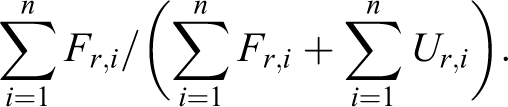
The second element added by Carter, which is the most relevant given our interest in risk, is that of probability (Carter, 1999: 189–191). Commonsensical attributions of freedom or unfreedom take into account the fact that we rarely know with certainty the constraints that will be faced by an agent, and most constraints are not certain but only probable.
On the one hand, if we take the possibility of interference as non-probabilistically relevant in attributions of freedom – and consider that any possibility of interference diminishes freedom – then we will hardly find any freedom in our society since risk is ubiquitous. On the other hand, if only constraints that certainly result in actual unfreedom were to count as restraining the freedom of an agent, then we would take into account very few constrains on freedom (Goodin and Jackson, 2007; Pettit, 1993). A formal measure of freedom that is closer to our commonsensical way of attributing freedom is one that considers probability. Note that probability refers to the existence of a particular unimpeded set of options for an agent. Probabilistic qualification expresses the confidence with which we can attribute particular unimpeded sets of options and impeded sets of options to agents, and thus the overall freedom that we attribute them (Kramer, 2003: 418).
The intuition is that a probability that a constraint will be imposed affects the degree of overall freedom contributed by the availability to the agent of the constrained/unconstrained set of actions. Probability can be integrated into the freedom formula in the same way that economists calculate probable utility gains. In the formula denominator, a number is assigned to each set of options identified as relevant (that is, the list of conceivable, or nomologically possible, or technologically possible sets of actions). Then, for each set, we consider the probability that it is unimpeded for the agent (that is, that the agent would succeed in performing that complete set of actions if she tried) and the probability that the set of actions is impeded for the agent (that is, that the agent would not succeed in performing that complete set of actions if she tried). Thus, for a set that has a 60 percent probability of being available, we multiply the number assigned to the set of actions by 0.6. The resultant number for the action set being unprevented then goes into the numerator in the formula.
Ceteris paribus, the higher the probability of being unprevented from a set of compossible actions, the higher the degree of overall freedom one has. Carter’s revised formula is such that it factors in the probability that a set of actions will remain unimpeded.
Although applying this formula to practical cases would give rise to various technical difficulties, it offers a model that allows us to identify what happens to an agent’s empirical freedom when a risk is imposed on her. Carter’s formula makes it possible to take into account risk as a factor that diminishes freedom.
Imposing a risk on an agent amounts to imposing an increased probability that some of her sets of options will be constrained, and this in turn diminishes her overall freedom. Note that this is different than stating, trivially, that risk increases the probability of being unfree but asserts that the degree of overall freedom of an agent is actually modified by the impact of risk.
Thus, risk concerns all the sets of compossible actions that one cannot take as unimpeded with certainty but rather have a certain probability of being impeded. A less probable and more remote risk will have a negligible impact on overall freedom, a higher risk will be more weighty. Moreover, the impact of a risk will be indicated by the size and number of sets of compossible actions that are (more or less probably) removed. A risk imposed on a particular option may have repercussions on many other options (because that option is a member of many sets), and this fact is expressed in terms of a correspondingly greater loss of freedom.
By comparing the amount of freedom that an agent has in the absence of risk imposition and the amount of freedom that she has under risk imposition, we can in theory calculate the loss of freedom caused by risk imposition. This loss of freedom indicates how much worse off the agent under consideration has been made by the risk itself (in terms of overall freedom). For the sake of risk management, most of these comparisons will be made thinking of the state of freedom at the moment of risk imposition. Thus, the freedom that an agent will have at a time T in the absence of risk will be compared with the freedom that the agent would have at T under risk imposition. There may be instances of risk imposition that are illegitimate because they reduce freedom to an unacceptable degree, others that may be legitimate but still call for some redress or compensation, and others still that are acceptable. 6 Thus a loss of freedom, per se and without being connected to a normative theory of freedom, does not tell us anything about the permissibility or impermissibility of risk imposition, or what moral claims this may give rise to, but simply indicates how risk affects an agent without reference to welfare indicators. What we find prima facie wrong in risk imposition is that it diminishes people’s overall freedom.
Probability of occurrence and impact
One objection to my reasoning may be that so far I have considered only one dimension of the magnitude of risk, namely the probability of occurrence of the negative effects, while the second dimension, qualitative impact, is ignored. Welfarists presuppose either that risks that threaten the satisfaction of basic needs such as health, nutrition, or education are qualitatively more important than other risks or that subjective preferences should be used to determine which risks are more damaging for people. Can we account for impact without making a qualitative distinction between different kinds of possible effects and without resorting to a preferentialist approach?
Carter suggests that, when measuring freedom, we should consider the ‘fecundity’ of an action; that is, we should consider the extent to which the performance of an action is a precondition for other possible generationally distinct actions (Carter, 1999: 204; Feinberg, 1980). Many of the freedoms that we consider qualitatively more important are simply freedoms for actions that are more fecund. Impeding those actions renders impossible many other actions that would otherwise have been possible.
In the same way, I submit, the risk of interference with a particularly fecund action is particularly weighty in the balance of overall freedom because it threatens to impede all of the other actions the availability of which depends on its performance. Thus, we can explain why some risks are weightier than others, in terms of their impact rather than their frequency: Risks that apply to actions that are more fecund are, other things being equal, of greater magnitude.
This analysis also allows us to explain why we should try to make some rights, such as the right to bodily integrity and the right to political freedom, as secure as possible: These rights protect options that are very fecund (Carter, 1999: 205). In this way, we can make sense of the claim, made by neo-republican theorists, that certain options deserve special protection, durable in time. The question is then what actual and possible constraints we should remove in order to guarantee ‘resilient noninterference’ for these options (Pettit, 1993: 17). ‘Possibilists’ would say that this requires us to make an option completely secure, but this is impracticable (for a discussion see Goodin and Jackson, 2007). For example, in order to prevent threats to political freedom, we need measures aimed at reducing the power of certain individuals such a tyrants because there is a high probability that they will act to constrain our political freedom. However, provisions against, say, possible psychopaths who may decide to commit political crimes may be difficult to implement, and indeed too costly for society unless there is evidence (and thus a probability) that there are some psychopaths ready for action. Similarly, the Precautionary Principle makes sense when applied to cases where it is expected a severely negative outcome (say, a natural disaster), even if we are not sure about the exact probability of this outcome being brought about. 7 But to use the precautionary principle where we have no indication of the probability and impact of a catastrophic outcome would impair too many social activities. Thus, even republicans must concede that given constraints on our time and resources we must resort to calculations of which impediments are more probable in order to enhance freedom. This is what Pettit calls ‘bounded probabilism’ (Pettit, 2008). Bounded probabilism is compatible with the idea that we should incorporate risk into the measurement of freedom.
Thus, to sum up, by coupling the idea of the fecundity of an option with Carter’s probabilist approach, we are able to account for the fact that the impact of risk on certain options is greater than on other options, without resorting to a qualitative distinction. Risk impact and probability can be built into a unitary formula and calculated together to produce a measure of overall freedom. To come back to our initial question, my idea is that risk imposition disadvantages those subject to it by decreasing their overall freedom. Not all decreases in an agent’s freedom are illegitimate or give rise to injustice. In order to decide when reducing an agent’s freedom is wrong, or gives rise to compensation claims, one would need a normative perspective on freedom, for example, one may want to equalize overall freedom, or rather maximize it, or merely guarantee a minimum of it at all times to all of the relevant persons. For the sake of this article, I can be agnostic about this. The important point is that our judgments about risk imposition should be guided by the normative theory of freedom distribution that we favor. For example, if we are egalitarians about freedom, all risk imposition that causes a departure from an equal distribution of freedom is problematic. Thus, the point is not to ensure that everyone is equally subject to risk. This would be too strong a requirement in many cases and probably demand that nothing is risked so that no one is subject to risk more than others. Instead, in the model that I have offered, a loss of freedom due to risk imposition can in some cases be compensated by other freedom enhancing resources, such as money or free services.
Talking about risk is useful, as it describes a specific way in which overall freedom may decrease. It may turn out to be useful, for example, when discussing compensatory measures. For example, if a subgroup of society is exposed to an increased risk of cancer because of a hazardous waste site, it may be appropriate to compensate this population by giving them the money that they need to move house to a safer location, rather than to try to compensate them for the harm that cancer might cause them. If the probability that this subgroup would develop cancer was lower, the impact that this risk would have on their freedom would be lower, and so it might be appropriate to offer them a different kind of compensation – for example, the money needed to cover regular medical checkups. It goes without saying that the choice of whether to convert resources into medical care, or a new house or into something else, can be entirely left to the agent. In this sense, the compensation method based on overall freedom, as well as any other risk policy based on overall freedom, is compatible with respecting people as sources of ends and strongly anti-paternalistic.
How risk imposition should be matched by other resources is a separate question, but as a rule of thumb, a bundle of resources that gives to the agent the same amount of freedom that is detracted by the imposed risk seems to be appropriate. In this way, the compensation (if any) that is appropriate in any given case of risk imposition will be sensitive to the frequency and the impact of the risk on the overall freedom of the agent (rather than on the probable negative effects on specific options for an agent) and it will not be sensitive to the agent’s subjective attitude to the risk. 8 This – just to be sure – does not mean that any risk, under compensation, can be imposed nonconsensually on a subject at any time.
Risk and vulnerability
A further worry may be whether the framework that I have offered actually helps us to understand the cases that I used in the introduction to explain how risk imposition can cause injustice, such as the case in which the poor become more exposed to environmental risks. What we find problematic is not (or at least not only) risk imposition but the special vulnerability of certain population groups to risk.
I think that in these cases it is useful again to think about the constraints on freedom in order to draw out our intuitions. Consider poverty. The fact that money is necessary in order to perform certain actions shows that a lack of money is an indicator of a high probability of a constraint on freedom – some options are impeded for those who cannot afford them. If houses were free, my lacking money would not limit my freedom to occupy one, but because landlords normally make paying rent a condition for anyone to occupy a house, my lack of money is, in fact, indicative of a very high probability of landlords and law-enforcers impeding my entry to, and use of, a house should I try to gain such entry or to engage in such use. The set of compossible actions available to an agent depends on the market prices and the resources at their disposal (Carter, 1999: 58–59; Cohen, 1995).
In cases of environmental classism, the injustice of risk imposition is not (only) that hazardous waste sites are typically located where low-income populations live, but that members of that group tend to have less resources, and thus are in the worst position to cope with or avoid the imposed risk. Thus, if two persons with different amounts of resources live in an area where an incineration site is to be placed, the imposed risk is the same for both, but the freedom impact for the poorer of them is higher, at least if (other things being equal) her lack of resources is a barrier, say, to moving house to a healthier place. The idea defended by some, including Wolff and de-Shalit, according to which some goods are non-replaceable fails to capture the idea that we normally find it more unjust that a poor person loses his house, or has to relocate, rather than a rich one. If we accept that one’s home is non-replaceable by other goods, we would think that the risk of losing one’s home is equally bad, both for the rich and the poor. Instead, we tend to think that the risk is more worrying for the poor, exactly because the rich has more resources that can be converted so as to replace what has been taken away by the loss of a particular house.
This may become clearer with an example in which risk imposition is not geographically identifiable. Consider pesticide residue in food. Both the rich and the poor are exposed to the health risk attached to consuming such food. However, it is likely that lower income people are more vulnerable to this risk because they may have more difficulty accessing organic food (because of lack of money) and so have to eat the affected food. ‘Difficulty’ here is sensitive to the sets of compossible actions available (as described in fourth section) to the poor and affluent, given the total exchange value of the resources available to them. Affluent people can, with their abundant resources, buy organic food (call this option a) and other goods essential to a healthy life (option b). So, the set of compossible actions for them includes (a), (b), and (a, b). For poorer people, this and/or combination may not be available, and they can buy either organic food or other goods essential to a healthy life. So understood, difficulty is described in terms of high opportunity costs.
By focusing on the way in which risk impacts on freedom, we can better explain the injustice of risk. Poor and rich people are equally exposed to certain risks, but since they are more likely to have more options (and not simply valuable options in the sense indicated by capability lists), the rich are in a better position to avert the negative outcomes that a risk threatens. Poverty, of course, is not the only ground for the preclusion of certain options. Members of certain ethnic groups, even when group membership is not an indicator of poverty, tend to be impeded in the performance of certain actions. For instance, a Black person may be prevented from renting a flat in an area populated mainly by White people, which is less degraded than other areas, despite the fact that she could pay for it. Thus, because of racial barriers, it may be more difficult for a Black person with the same income to move away from a hazardous waste site.
An agent who starts with a smaller measure of overall freedom (because she has less resources or is subject to racial barriers, or indeed is subject to any other kind of barrier) is more vulnerable to risk because the relative impact of risk on her overall freedom will be greater than it would be for someone with a greater measure of overall freedom. For the same reason, a fine of €1000 will have a significant impact on someone who has, say, €1001, but a negligible impact on someone who has, say, €30 billion. Carter’s formula allows us to perform exactly these kinds of calculations.
These examples show how focusing on the overall freedom and the whole set of sets of options available to an agent, rather than on the security of specific options, allows us to understand how differently situated people may be differently burdened by risk imposition in a way that is nonspecific with respect to the actions that are directly threated by risk but that affects all the options (and their combinations) available to the agent.
Conclusions
I have argued in this article that the wrong of risk imposition is that it decreases the overall freedom of an agent. There are some instances of risk imposition that have either negligible consequences or a justified impact on people’s freedom and thus are unproblematic. But other cases do affect people’s overall freedom in ways that make them impermissible or that are permissible but generate claims to compensation.
Our judgments as to the permissibility or impermissibility of a risk imposition, or as to whether a risk imposition makes redistribution or compensation appropriate, will be guided by the theory of justice that we favor and the way in which it weighs freedom relative to other values. Prioritarian views, for example, will make different judgments about what kinds of diminishments of freedom are permissible than equalizing or maximizing views would. But whatever theory we favor, cases involving risk imposition must be adjudicated by considering the impact of risk on a certain measure of overall freedom to which each of us is entitled.
What is more, by focusing on overall freedom, we can make sense of our intuition that risk imposition makes us worse off even when no damage occurs. It is not simply the materialized negative effects of risks that can disadvantage agents, or the fear and anxiety caused by agents knowing about these possible bad effects, but also the way in which risk determines which sets of options are available or not available to agents, and thereby affects their overall freedom and their ability to form, revise, and pursue their own life plans. In this sense, imposed risk contributes negatively in a nonspecific way to what an agent is free or not free to do. Most importantly, diminishments of overall freedom under a certain measure are incompatible with respect for others as sources of ends, and this explains the wrong of risk imposition. Framing risk in terms of the impact it has on the overall freedom of those at the receiving end establishes the prohibitions to take risky action that interferes with the life of others as moral agents and to overpower them by restricting their options in order to pursue our ends, or ends we ourselves ascribe to them, or ends that we think socially valuable. This is the ground for risk policies that are strongly anti-paternalistic and refuse to identify and rank the options that should be valuable for people.
Finally, my model is able to explain why people are differently vulnerable to risk. People have different degrees of overall freedom because some face more constraints than others. Risk imposition has a greater impact, ceteris paribus, on the overall freedom of those who already have less freedom. This allows us to make sense of the fact that the same risk may represent a greater disadvantage for people differently situated in society.
To conclude, what I have offered in this article is a framework that conceives of risk imposition as a wrong or, in distributive contexts, a burden. Measuring the impact of risk on overall freedom brings with it some important technical difficulties that deserve more accurate analysis. However, my aim was rather to sketch a framework that makes sense of our intuitions about risk and that offers a plausible alternative to actualist approaches and to approaches that focus on the impact of risk on welfare; or on the agents’ capacity for autonomous choice; or on the autonomy of the agent’s actual choices.
I suggested that if we can calculate the impact of risk on people’s overall freedom, we can explain the sense in which people are negatively affected by risk as such. This puts us in a better position both to understand the injustice that can be caused by risk imposition and to start to think of ways to bring about a more equitable distribution of risk and its negative effects.
Footnotes
Acknowledgements
Earlier versions of this article were presented at workshops in Charlottesville (UVa), Darmstadt, Frankfurt, Pavia, Rome (LUISS), Utrecht; at the Joint Session of the Aristotelian Society and the Mind Association in Exeter (2013); and at the Society for Applied Philosophy Annual Conference in Zurich (2013). I should thank all those who have provided comments on those occasions. For extensive comments, I am especially thankful to Colin Bird, Vittorio Bufacchi, Ian Carter, Joe Horton, Darrel Moellendorf, Peter Niesen, Thomas Rowe, Gianfranco Pellegrino, Federico Zuolo, as well as two anonymous reviewers.
Declaration of Conflicting Interests
The author(s) declared no potential conflicts of interest with respect to the research, authorship, and/or publication of this article.
Funding
The author(s) disclosed receipt of the following financial support for the research, authorship, and/or publication of this article: My research was financially supported by the Cluster of Excellence ‘The Formation of Normative Orders’ (EXC 243) at the University of Frankfurt am Main.