



Abstract
Developmental issues of organizational commitment have received little attention and have been mainly examined through cross-sectional or longitudinal designs which used predefined scales validated in an Anglo-Saxon cultural context. The present study aims to address this gap by examining the developmental processes as well as possible intersections among commitment components as experienced by Greek employees working in a public sector organization. As 25 interviews with employees of different tenure length suggested, employees’ experience of organizational commitment reflected culturally driven values and expectations. Specifically, the notion of organizational commitment was interwoven with that of self-definition. Shifts in employees’ psychological contract were found to follow commitment and self-definitional developments. Moreover, commitments to different work-related foci were intertwined with commitment to the organization in the discourse of less experienced employees, while perceptions of wants and obligations were found to change in nature and were increasingly interwoven as tenure increased. The implications of the study for cross-cultural management lay in furthering our understanding of organizational commitment in a less studied cultural context in management research, while pointing out that cultural diversity constitutes an additional aspect for understanding employees’ commitment to their workplace.
Keywords
Introduction
Organizational commitment (OC) constitutes a phenomenon of long-standing interest to both organizational scholars and practitioners. OC has generally been studied as a force binding an individual to a target (i.e. employing organization) and a course of action relevant to that target (Meyer and Herscovitch, 2001). It has been formulated in a variety of ways, commonly conceptualized as a construct with multiple components. Among the various multidimensional frameworks, Meyer and Allen’s model (1991), which has mainly been validated in an Anglo-Saxon cultural context, constitutes the widely used conceptualization of commitment which has also received considerable empirical support (e.g. Gellatly et al., 2006; Wasti, 2005). Review of relevant research indicates that research examining commitment development in the sense of how intra-individual commitment changes with time has been scarce, as compared to voluminous research on OC (Beck and Wilson, 2001; Bergman, 2006). Moreover, the links between OC and self-definition as well as psychological contract have scarcely been examined.
The nature of organizational commitment may differ among countries as a result of different culturally driven values which employees carry with them in their workplace. For instance, in their study, Andolsek and Stebe (2004) found that different types of commitment are stronger in collective cultures as compared to individualistic ones, while culture also impacted on what individuals considered to be important for the development of feelings of adherence to their work organization. Adopting an emic approach, the present study advocates that culture is an integral part of human behavior, while the latter cannot be separated from the cultural context (Gergen, 1985). Despite voluminous research on commitment, pertinent research has mainly been ‘a-cultural’ or ‘uni-cultural’, in the sense that employees’ formations of commitment to their workplace have usually been assumed to be influenced by the same factors, independently of the cultural context within which this process is embedded. Moreover, there is a scarcity of studies on commitment from different cultural perspectives, while Greece constitutes an under-researched cultural context in relation to OC, with the exception of two studies which have examined organizational commitment of Greek employees and its relation to job satisfaction (Karassavidou and Markovits, 1994; Markovits et al., 2007).
This study postulates that the formation of organizational commitment may be different in different cultural contexts and thus the organizational commitment construct (as examined in North American cultures) may not be generalizable to all cultural contexts. This study sets out to explore the content of commitment and how it evolves in a different cultural setting as well as through the eyes of the individuals under investigation. In specific, this study sets out to examine a) how employee commitment toward his/her work organization develops, b) possible relationships among OC components, and c) possible links between OC and self-definition as well as psychological contracts. In the light of globalization and given the paucity of research in non-US societies, the study aims to further the understanding of organizational commitment in a less studied cultural context, such as Greece.
Before examining the patterns of relationships proposed in this paper, we first need to understand the specific cultural and organizational context within which the particular study is embedded.
The Greek cultural context and the public sector in Greece
During recent decades, there has been an increasing interest in cross-cultural management as a result of the acknowledgement of the importance of culture. Adopting Hofstede’s (1980) approach of culture as a ‘collective programming of the mind’ distinguishing the members of one group/category from another, one can appreciate the implications of culture for employees’ viewpoints and behaviours regarding their work organization. Nevertheless, despite the realization of the importance of culture, extant studies have focused on North American work contexts. An overview of existing cluster classifications (Hofstede, 1980; Smith et al., 2002) indicates that Greece is noticeably different from the Anglo cluster of countries.
Following Smith et al.’s classification (2002), Greece is a culture high in power distance and uncertainty avoidance as well as collectivist. As far as power distance is concerned (i.e. degree to which members of an organization/society expect and agree that power should be unequally shared), Bochner and Hesketh (1994) have illustrated that people high in power distance seek exchange-based security and economic relationships. In regard to the country’s high levels on uncertainty avoidance (i.e. degree to which people feel threatened by uncertain and ambiguous situations) (Ronen and Shenkar, 1985), societies high in uncertainty avoidance have been found to seek more formal rules and demonstrate less intentions to quit their jobs; due to the feared potential loss in leaving their work organization, these cultures have been found to promote attachments stemming from maintaining the security of the current position (e.g. Clugston et al., 2000). As far as the country’s collectivism is concerned (i.e. extent to which individuals express pride and loyalty towards their organization/society), collectivists have been found to have high social identification with the workplace as a result of the intense emotional attachments made to the in-group (e.g. Chew and Putti, 1995); in this regard, Greek employees have been found to demonstrate strong identification with their work organizations (Markovits et al., 2007). Finally, Greece has been found to illustrate a reliance on unwritten rules which is indicative to a substantial degree of commitment to one’s work organization.
While organizations and their management cannot be isolated from their particular cultural environment, it is also important to clarify what the public sector is in the Greek context, since participants in the present study worked in a large public sector service organization. In general, Greek public sector values (collectivism, power distance, adherence to rules, uncertainty avoidance) further promote Greek societal values. In Greece, the starting salary for public sector employees is higher than that for the private sector; this unusual phenomenon, coupled with the increasing unemployment rate in the country and the security of life-long employment provided to public servants, means that employment in public sector constitutes a highly desirable career choice for Greeks (Papapetrou, 2006, and Sotirakou and Zeppou, 2005, both cited in Markovits et al., 2007). Moreover, organizational commitment is higher in the public sector, which is also reflected in the exceptionally low withdrawal rates of public sector employees. Moreover, Bourantas and Papalexandris’s earlier study (1999) indicated that Greek public sector employees (as compared to private sector ones) display less tolerance for ambiguity and lower scores on performance orientation; the latter can also be attributed to the lack of connection between pay and performance level. The extent of institutional collectivism is also reflected in the verbal oath of loyalty toward the Greek Constitution, on the first day of an employee’s service.
Organizational commitment
The three-component model
Research on organizational commitment has highlighted the importance of differentiating among the components of commitment. O’Reilly and Chatman (1986) suggested that the bond between an employee and an organization may take three forms: compliance (instrumental involvement as a means of gaining rewards), identification (desire to maintain relationship with the organization due to attractiveness of organizational goals), and internalization (congruence between individual and organizational values). One could argue that compliance represents a lower level order of commitment, while both identification and internalization signify deeper attachment.
Meyer and Allen’s (1984, 1991) framework constitutes one of the most widely used conceptualization for studying organizational commitment. According to this framework, employees are theorized to experience this binding force (i.e. OC) in the form of three mindsets: the affective component of commitment (AC) entails acceptance and internalization of the organization’s goals and values as well as willingness to exert effort on the organization’s behalf. Continuance commitment (CC), calculative and exchange-based in nature, denotes the perceived costs associated with leaving the organization as well as the perceived availability of job alternatives. Finally, normative commitment (NC), which was added later, refers to feelings of obligation to remain with the organization. In line with O’Reilly and Chatman’s conceptualization, Meyer and Allen’s framework also alludes to instrumental exchange processes (i.e. CC) and psychological attachment ones (namely, AC and NC).
Despite the extensive use of Meyer and Allen’s scale for the study of commitment, their model has been criticized on certain issues. One such criticism refers to instability in AC and CC factor structures, as found in Vandenberg and Self’s longitudinal study (1993) of employees during the first six months of tenure in an organization. This finding was attributed to the fact that scale items may take on different conceptual meaning depending on an employee’s organizational career stage, while it is also indicative of possible changes in the way in which OC is conceptualized in the course of employees’ organizational career stages.
Commitment development
Even though OC has been theorized to develop via a process of social exchange during which positive work experiences initiate employees’ positive work attitudes and behaviours (e.g. Meyer and Allen, 1991), OC has predominantly been approached as a static variable. Development of each commitment component is theorized to begin at different times; specifically, CC is considered to develop after employment in the organization, AC after the occurrence of certain work experiences, while NC has recently been theorized to develop through norms of reciprocation or psychological contracts (Meyer and Allen, 1997; Meyer et al., 1998).
Organizational commitment changes have generally been studied using two different approaches. The first approach consists of cross-sectional designs (e.g. Allen and Meyer, 1993; Morrow and McElroy, 1987) which focused on the comparison of members of different age groups at a single point in time; the majority of these studies have been concerned with identifying the antecedents of commitment in an attempt to highlight the reasons for individual differences without addressing the function of change itself. As a result, research pertaining to commitment antecedents resembles a ‘laundry list’, with each of the three commitment components proposed to develop as a function of different antecedents. The second research stream consists of longitudinal studies (e.g. Meyer et al., 1991; Ostroff and Kozlowski, 1992; Vanderberg and Self, 1993) which examined changes in each employee over a period of time. Some of these studies focused on the investigation of the way in which the relationship of commitment with particular hypothesized antecedents varied over time, while some other studies interpreted change in OC through a comparison of group means over time by means of variance analyses and regression procedures (e.g. Meyer et al., 1991). However, due to problems inherent in longitudinal studies, intra-individual commitment changes with tenure have not been examined for periods longer than a few years. Thus, a gap in extant research has been observed regarding the examination of intra-individual changes in organizational commitment after the first couple of years of employment, while no research has examined such changes in experienced employees (Beck and Wilson, 2000). Finally, commitment changes were considered to be generalizable to employees in different cultural contexts.
Inter-relationships of OC components
In regard to the relationships among the commitment components, there have been few studies on interactions among the three commitment components which have often demonstrated significant two-way interactions (e.g. between AC–NC and CC–NC) (e.g. Bentein et al., 2005; Cheng and Stockdale, 2003; Jaros, 1997). Recent theoretical developments (Gellatly et al., 2006; Herscovitch and Meyer, 2002; Markovits et al., 2007; Wasti, 2005) have examined overall commitment profiles which permitted the examination of non-linear relationships among commitment components.
Possible inter-relationships of OC components are also suggested by the criticism of Meyer and Allen’s model on the lack of discriminant validity between AC and NC. The most recent meta-analytic study (Meyer et al., 2002) illustrates a considerable correlation (.63) between the two components, while they have been found to be more closely correlated in contexts outside North America. On the one hand, the convergence between the two notions has also been attributed to the fact that the content of the scales has been imposed by researchers rather than communicated by the employees themselves (e.g. Bergman, 2006). On the other hand, the convergence between AC and NC has also been attributed to a conceptual overlap between these two commitment components in specific cultural contexts (e.g. South Korea in Ko et al.’s (1997) study). It thus becomes apparent that more research is needed on possible cultural differences in employees’ perceptions of the meaning of OC and its components, as these perceptions emerge from employees’ discourse.
Foci of commitment
Employees have been found to form attachments among various foci of entities, such as their organization, workgroup, and supervisor to name a few. Becker (1992) has shown that these commitment foci are distinguishable from commitment to the organization as a whole, while they are associated with employees’ attitudes and behavior. While it has been theorized that the entities which have greater impact on employees are those which are closer in proximity to them (e.g. supervisor and coworkers) (Lewin, 1943), other researchers have postulated that commitment to the supervisor or to colleagues is dependent on whether the latter are regarded by employees as important referents (e.g. Reichers, 1985).
Findings from cross-cultural research (e.g. Chew and Putti, 1995; Clugston et al., 2000; Triandis, 1989) have demonstrated that culture affects which entities employees choose to become the focus of their attachment. For instance, in their empirical research, Chew and Putti (1995) showed that people high on uncertainty avoidance are more likely to form long-term commitments to their work organization. As becomes apparent, research on the foci of employee commitment adds to a better understanding of OC construct.
OC and self-definition
The notion of self-definition is based on social identity theory and its reconceptualization (i.e. organizational identification) (Ashforth and Mael, 1989; Tajfel and Turner, 1986), according to which a person may not only define him/herself in terms of unique characteristics (i.e. as distinct from others); instead, the self-definition may also include social groups of which s/he is a member; in other words, the self can be defined as ‘we’ rather than ‘I’ and consequently, social group membership becomes self-referential. Thus, the more an employee identifies with the work organization, the more organizational norms and values are embedded in his/her self-concept.
Recent theoretical as well as empirical research has proposed three self-concept levels (or else, three distinct loci of self-definition) depending on the salience of different goals which engender distinct patterns of employee’s relations with the employing organization (e.g. Brewer and Gardner, 1996; Brickson, 2000; Triandis, 1989). In particular, at the individual level (‘individualistic’ or ‘private’ self), a person’s attitudes and behavior are driven by a concern for one’s own advantage and wellbeing. The relational level (‘relational’ or ‘public’ self) alludes to definition of self in terms of specific others. Finally, at the collective level (‘collective’ self), the person’s attitudes and behavior focus on the promotion of the group’s welfare and collective interests. While researchers have mainly examined self-definition as a stable notion, Lord et al. (1999) have provided evidence suggesting that, at the early stages of employment in an organization, an employee is likely to develop a relational self-concept, while at later stages this self-concept may shift toward either the individual or collective level depending on the organizational context.
As early as 1971, Sheldon posited that commitment exists when a person’s identity is linked to that of the organization; this postulate indicates a connection between self-definition or self-concept (i.e. information relevant to one’s self) and OC. Since then, the psychological link between the employee and his/her work organization has been conceptualized in terms of both organizational identification and OC (mainly affective). Nevertheless, in general, self-definition and commitment research have been conducted independently with little attempt for integration. One exception is van Knippenberg and Sleebos’s (2006) study, the findings of which demonstrated a relationship between organizational identification and AC (even though both constructs are conceptually distinct); the study concluded with a call for future research on the extent to which OC reflects self-definition. Another exception is Johnson and Chang’s empirical study (2006) which examined possible associations between the two constructs and demonstrated an individualized self-concept–CC link (due to extrinsically motivated focus on potential gains) as well as a collective self-concept–AC link (both characterized by internalization of group-level goals); the study did not examine a possible association between relational self-concept and OC since the former was thought to be pertinent only to other foci (e.g. supervisor) and not commitment to the work organization. Moreover, even though Johnson and Chang (2006) acknowledged the possibility of change of work-based concept levels during one’s tenure with an organization, it examined self-concept as a chronic concept. However, as has already been proposed (e.g. Lord and Brown, 2004), it is likely that during one’s tenure with an organization, the way that an employee defines his/herself may shift, changing the goals pursued; this shift is likely to correspond to an analogous shift in employee’s relations with the employing organization (OC).
OC and the psychological contract
The notion of psychological contract alludes to the organizationally shaped beliefs of a person regarding the terms of an unspoken agreement between the person and the organization (Rousseau, 1995). Psychological contracts have been found to vary in generality and intensity. On the one hand, employees may adopt narrow psychological contracts which are also characterized by low involvement on the behalf of employees and focus on economic resources; such contracts have been described as ‘transactional’. On the other hand, employees may develop ‘relational’ contracts which allude to longer term, open-ended involvements and the exchange of socio-emotional resources (Rousseau, 1995). While psychological contracts are theorized to change over the course of employment relationships and obligations are expected to increase with the trust that gradually develops, Robinson et al.’s study (1994) of employees with two years’ tenure indicated that employees’ perceived obligations to their employers decreased over time; as the researchers stated, there is a need to investigate how such perceptions continue to change after the initial years in an organization.
In regard to possible association with OC, pertinent research has focused on possible psychological contract–AC/CC links since these two commitment components were thought more likely to be associated – at a conceptual level – to employees’ psychological contract. Accordingly, empirical studies have demonstrated an association between psychological contract fulfillment and the two OC components (i.e. AC and CC) (e.g. Coyle-Sapiro and Kessler, 2000; Johnson and O’Leary-Kelly, 2003), while there is a lack of empirical research examining possible links between NC and psychological contracts; in specific, transactional psychological contract has been found to be associated with CC, and relational contract with AC (e.g. Rousseau and Wade-Benzoni, 1995; Sturges et al., 2005).
Aim and research questions
This review has highlighted the existence of certain gaps in OC research. First, research on organizational commitment formation and development as examined in North America has been considered to be generalizable to all cultural settings and consequently has rarely been studied in other cultural contexts. Second, there is a scarcity of empirical research that examines employees’ commitment trajectories past the first few years of employment and as communicated by employees themselves. Moreover, there is a lack of research examining possible inter-relations among commitment components, as well as the two most well-researched commitment foci (i.e. supervisor and colleagues) as OC develops. Finally, possible intersections (or reciprocal development) between OC and employees’ self-definition as well as psychological contract have rarely been studied.
To address these gaps, the present study focuses on the examination of the developmental trajectories of OC in three groups of Greek public sector employees with different tenure; this decision was made in accordance with relevant literature which has approached tenure as an explanatory index for commitment development (e.g. Beck and Wilson, 2001; Lee et al., 1992; Vandenberg and Self, 1993). Specifically, the study’s research questions were: What does organizational commitment mean to Greek employees? How does their organizational commitment develop over time? Do they experience any change in the prominence of commitment foci over time? Is the notion of organizational commitment closely related to the way that Greek employees define themselves? Is there a reciprocal development between Greek employees’ OC and their psychological contracts?
The use of an emic approach allowed for sensitivity to the cultural context by focusing on employees’ experiences within their specific cultural and organizational context, while examining whether Meyer and Allen’s three-component model is applicable to the particular cultural context as well as whether there is a conceptual overlap among its proposed components.
Methodology
Research design process
Due to the exploratory nature of the study, an emergent qualitative design drawing on the epistemology of constructionism was adopted. The study has followed a discursive approach, in the sense that it advocates that social world phenomena are constructed through language, namely through socially and historically specific discourses which shape phenomena in a consistent and meaningful way (Parker, 2002). In particular, a grounded theory approach has been used (Glaser and Strauss, 1967; Strauss and Corbin, 1998), which is a data-oriented, interpretative methodology that provides opportunities for generating new theory and for model development. 1
The interviews were of a narrative nature, were conducted at employees’ offices, and lasted between one and one and half hours. Interviewees were assured anonymity for their voluntary participation. The presence of the researcher on site for a period of over a month prior to interviews aimed to develop trust and rapport with study participants. Interviews focused on the questions regarding what the notion of commitment mean to them as well as asking for accounts of particular turning points in their experience of OC. At no stage of the interviews were the interviewees given a definition of OC, nor was any reference made to the commitment components; instead, this information was extrapolated from their narratives during the data analysis stage.
Participants and research context
Following the social psychological perspective which advocates that commitment and organizational context in which the latter is embedded are interdependent, the present study has adopted a case study design. All interviewees worked in the HR department of a Greek service organization employing approximately 5,500 employees. The organization belonged to the public sector and was a typical bureaucracy characterized by increased routinization of tasks.
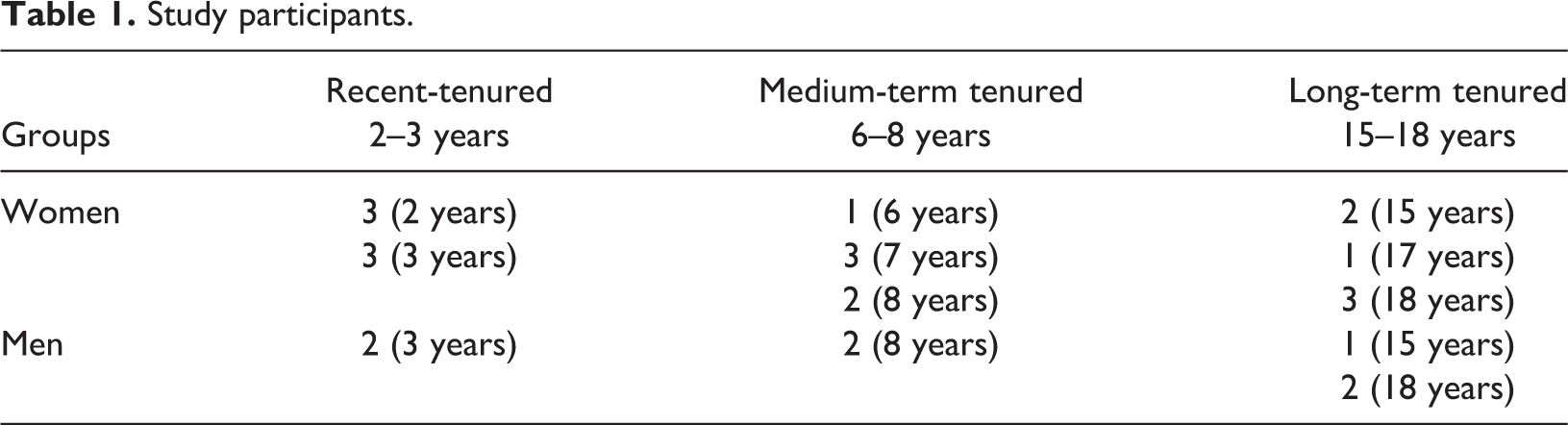
Out of the 80 employees working in the particular department, 25 were interviewed; all interviews were conducted within a period of two months. Eighteen interviewees were women and seven were men; these numbers are reflective of the gender representation of workers in the department selected, where the majority of employees were women. In total, eight employees had up to three years’ experience in the organization, eight employees had tenure between six and nine years, and nine employees had tenure between 15 and 19 years. The age of the study participants ranged from around 28 to 50 years. A snowball sampling technique was used as a means of recruiting the study participants.
Three tenure groups were chosen, on the basis on two sets of information. First, employees’ psychological adjustment to their employing organization has been theorized to be completed around two years after entry into the organization (e.g. Mowday et al., 1982). Second, up-to-date, experienced employees have never been the focus of commitment studies (Beck and Wilson, 2000). As a consequence, it was decided that the first group studied would consist of employees between two and three years’ tenure (i.e. recent-tenured employees). The second group consisted of employees between six and eight years of tenure (i.e. medium-term tenured employees). Finally, employees with tenure extending from 15 to 18 years were studied; in regard to the last group, care was taken that these participants were not close to retirement, since this was thought to be likely to have an effect on employees’ experiences/accounts of OC. Moreover, there was no difference in each group in regard to the levels of OC as experienced by employees; since the researcher’s presence in the company for a period of six months prior to the study (the latter being part of a wider project) enabled prior acquaintance and informal discussions with employees, interviewees were chosen so that in each group there were employees who had reported experiencing low as well as high levels of OC. Information regarding each tenure group is presented in Table 1.
Study participants.
Data analysis processes
Having been tape-recorded, interviews were transcribed; in cases where audio-taping the interview was not welcomed, extensive field notes were used. Written transcriptions/notes were read several times and then analyzed following an iterative process, which constitutes the essence of grounded theory research. Transcripts were subjected to thematic analysis, with the term ‘theme’ alluding to patterns of responses which emerged in employees’ accounts regarding their commitment to their work organization. The initial steps of coding were of a descriptive character, keeping as close to the data as possible, while at later stages of the coding process codes were revised and became more focused (Hammersley and Atkinson, 1990). In all analysis stages, there was a constant comparison across participants, codes and themes. The findings were examined in relation to extant theoretical and empirical research, which informed the generation of a theoretical scheme about the development of employees’ OC; this scheme was subject to constant refinement throughout the analysis process (Strauss and Corbin, 1998).
In an attempt to be self-reflective as well as maximizing research rigour, the following steps were taken. First, before the conclusion of each interview, the researcher reflected her initial interpretations of the interviewees’ accounts back to each participant as a means of examining the validity of such interpretations. Plausibility of the researcher’s interpretations was also enhanced through a) researcher’s participation in informal meetings held among employees of the department on a number of occasions, b) informal discussions with department’s employees and study participants during coffee breaks, and c) contact with three study participants (one from each tenure group) with whom interpretations of research findings were discussed.
Research findings
The findings are presented in terms of higher level categories (i.e. themes) identified by the analysis and which emerged irrespective of tenure length. Results were sent to five participants who assessed the model as being representative of their experience of commitment to the organization. While there were no gender differences in employees’ discourse on OC, narratives of each tenure group differed considerably from the others; these differences are depicted in the analysis that follows.
OC development: inter-relations among OC components
The analysis of employees’ narratives indicated that references to the three commitment components were enmeshed in the same narration; it was often the case that interviewees would start referring to a particular component of OC but soon would continue with another component.
In general, the recent-tenured group’s narration was characterized by an abundance of CC references; all interviewees referred explicitly and extensively to side-bets as well the notion of job security offered by the organization. CC references were mostly related to NC references. This finding suggests that these employees felt that they had already been recipients of certain benefits from the organization and, as a consequence, they would experience a sense of obligation to reciprocate through an expression of loyalty to the organization and their willingness to expend more effort in performing their job. As the following extract suggests, experience of CC, together with social influences from senior organizational members which have usually remained implicit, seemed to act as a precursor to the development of NC in new employees: The organization offers me a lot, it offers me security. I can take my leave of absence when it’s convenient to me … eight hours of work and then I can devote myself to my family. On the contrary, I haven’t offered the organization, so far, that much, since I feel that I don’t make full use of my capabilities within these eight hours. I sometimes experience remorse about it. I don’t want the others to feel that I’m not grateful to what I’ve been offered. (Man, 3 years of tenure) It depends on what commitment we are talking about. There is a part of commitment that is ‘objective’: you have to be committed to the organization you are working for. And, there is another part which really depends on you. Since I have chosen to remain in this organization, for eight years now, there was a need to come to terms with the organization’s beliefs and wants, to start fitting with them. This organization has been acting like a mother to me; it still takes good care of me. The least I could do in return is to care about its development, to see that it gets good reputation to the market. It comes naturally to one’s mind as the right thing to do. (Woman, 8 years of tenure) Regarding my being committed to the supervisor, it’s part of my obligation to the organization. I work here so I have to offer my services to my best possible standard. It’s not that anybody ‘obliges’ me to act in this way, it’s just the way I see it. I am really keen in helping out my supervisor and my colleagues. I don’t want to create any unnecessary problems, all this is part of my devotion to the organization, since, had I not felt like a family member of the organization, I wouldn’t have wanted to behave in similar ways. However, the organization has been offering me a lot all these years, the least I can do in return is to be co-operative with everybody. (Man, 15 years of tenure)
OC and other commitment foci
Even though not primed, employees’ narratives regarding their OC abounded in references which highlighted the relationship between OC and various forms of work-related commitment. Work-related foci were individuals and groups to whom an employee is attached such as supervisors, colleagues, subordinates, or groups which collectively comprise the organization.
Recent-tenured employees were found to become tied to the organization through their everyday interaction with their supervisor. This group was also found not to be in a position to differentiate between commitment to supervisor and to the organization; for example, after being primed to talk about his attachment to the organization, the following employee argued:
To a great extent, it has to do with my relationship with my supervisor. He knows his job well. I respect him, he has ‘protected’ me from making ‘mistakes’, not only in terms of work done but also in terms of possible behavioural ‘misconduct’, as every supervisor should do with a new employee. So, I don’t have any reason to dislike the organization or not to be committed to it[.] However, I do understand. organizational commitment should be something different [to supervisor commitment]. (Man, 2 years of tenure)
In the case of medium-term tenured employees, references to OC were distinguishable from other commitment foci but nevertheless often intermingled (in seven out of eight occasions) with workgroup commitment and/ or affiliations to other groups:
It took me a few years to feel I belong in this organization. I couldn’t understand what the organization wanted from me. After a point, I decided to get involved with the Literature group. I found people there with similar values to mine, the more I was becoming involved in the activities of the group, the more I felt that I was slowly becoming a member of this organization. (Man, 8 years of tenure)
While the analysis illustrated that commitment to various foci (e.g. group, supervisor, union membership) was important for recent and medium-term tenured employees’ trajectories of OC, long-tenured employees’ narratives suggested that OC was an entity distinct from other commitment foci, while it often had an effect on these foci. Thus, even though spillover between different foci was possible (e.g. commitment to a supervisor may affect OC), these commitments were not highly related, with the organization being the predominant commitment focus more likely to affect the rest; the second extract includes a reference to what was happening during the first years of his employment:
I don’t agree with the task-related decisions my supervisor takes, nor with his leadership practices. However, I have to try [to be on good terms with him]. It’s part of my commitment to this organization, to be committed to my supervisor and do my best to ensure cooperation with all levels of hierarchy. (Woman, 15 years of tenure)
Being committed to the supervisor may only enhance organizational commitment, the opposite doesn’t apply[.] During the first years, I was devoted to my supervisors. I was 100% into whatever they were telling me. I even declined an offer to go and work for another department, because of my devotion to him. Slowly, I came to realize that I cared for the organization more than they ever did. (Man, 15 years of tenure)
OC and self-definition
According to the analysis, employees’ OC narratives were closely entangled with the ways the former defined and represented themselves in the sense of their connectedness with the organization; interviewees belonging to the same tenure group tended to define themselves in similar ways.
Commitment narratives of the first group (recent-tenured employees) contained an abundance of references to personal goals and aspects of self which were ‘personal’ and would clearly differentiate their ‘self’ from other co-workers; the way they would talk about their own achievements and unique characteristics was indicative that the latter served as a basis for establishing a sense of self and self-worth: In my work environment, operations and performance levels are done in a mediocre way. Due to my personal competencies, and, actually, the way I really am, I’m doing things a bit better. As a result, everybody here sees me like an expert. It’s not that big deal. However, among my co-workers who have the same seniority with me – and who are like ‘corks’ (i.e. not very good employees) – I come out as a champagne cork. (Woman, 3 years of tenure) This assignment was divided between my supervisor and his subordinates. I was assigned a more ‘procedural’ part of work. I worked really hard on it; not only doing what I was supposed to do, but also taking initiative, to the extent that this was possible. I’ve got some mentoring from the more senior colleagues of the team; they were there for me every time I needed guidance about what to do next. Thankfully, and upon completion of my task, my effort was appreciated by my senior colleagues as well as my supervisor. I really felt proud of myself; for a relatively new employee, like myself, such events make you take pride in your work, wanting to put more effort on your everyday work. (Woman, 7 years of tenure) Despite occasional problems of co-ordination, some of us really working hard, some others not so hard, we managed to finish the work on time[.] There is a need for team and collective work. This organization does not need single, talented employees who are productive. (Man, 8 years of tenure) In the course of one’s career in a work organization, one becomes congruent with the beliefs of the organization. At this stage, I can say that the organization’s values are also my values. I’m very happy that I’m working in an organization with a human face towards both employees and clients, this makes me feel proud of working here, we’re all doing our best towards this end. (Woman, 17 years of tenure) The organization is co\unting on the contributions of the conscientious and hard-working employees like myself. These people, we, are really doing our best. We are taking pride in our work, and we are making this organization a better place, for both employees and clients. (Man, 18 years of tenure)
Psychological contract
As it applied in the case of self-definition, references to the notion of psychological contract, in the sense of perceived reciprocal exchange agreement between an employee and the work organization (e.g. Blau, 1964; Rousseau, 1998) were interwoven with employees’ discourse on OC development. Each tenure group defined this mutual obligation in different terms.
The recent-tenured group’s narratives were characterized by frequent references to monetizable exchange of obligations and tangible outcomes, the most common being pay, benefits and overtime work. Their narratives consisted exclusively of references to performance-reward contingencies and were always linked with the notion of CC. In general, the analysis of recent-tenured employees’ narratives illustrated the adoption of narrow, ‘transactional’ psychological contracts which were also characterized by low involvement on the behalf of employees: Commitment means … respecting the written and unwritten rules in the organization, abiding by guidelines, but mainly, performing up to a required level, no more no less, doing what upper levels of hierarchy ask you to do, that’s why you get paid after all. And what is more is all those healthcare benefits, getting back home early in the afternoon, it’s really difficult to find such a deal elsewhere. (Woman, 2 years of tenure) To me, I feel that my relationship with the organization has evolved like an intimate relationship, or a marriage … In the beginning, it may be enough to stay in the relationship just for the money, you don’t get involved that much. But you cannot spend your entire life being with somebody just because of the money. Slowly, you get to develop a real caring about the other person, you invest in him. You get to see your fate in conjunction with the other. (Woman, 15 years of tenure) Organizational commitment belongs to the sphere of psychological contract, it’s all about the involvement that you take[.] It depends on what the organization is offering you, financial rewards, recognition for your work, security. I know that I owe much to this organization, if it weren’t for it [i.e. the organization], I wouldn’t be in this position, both financially and personally. (Man, 8 years of tenure) If it hadn’t been for this organization, I wouldn’t have enjoyed such a quality of life all these years, good social status, even on the emotional part … I’ve always had supportive relationships with colleagues. I’ve made good friends here[.] We’ve been lucky working in this organization … it has a very ‘humane’ side, for instance, being supportive to family difficulties[.] It has been like a ‘mother’ to me. (Man, 18 years of tenure)
Discussion
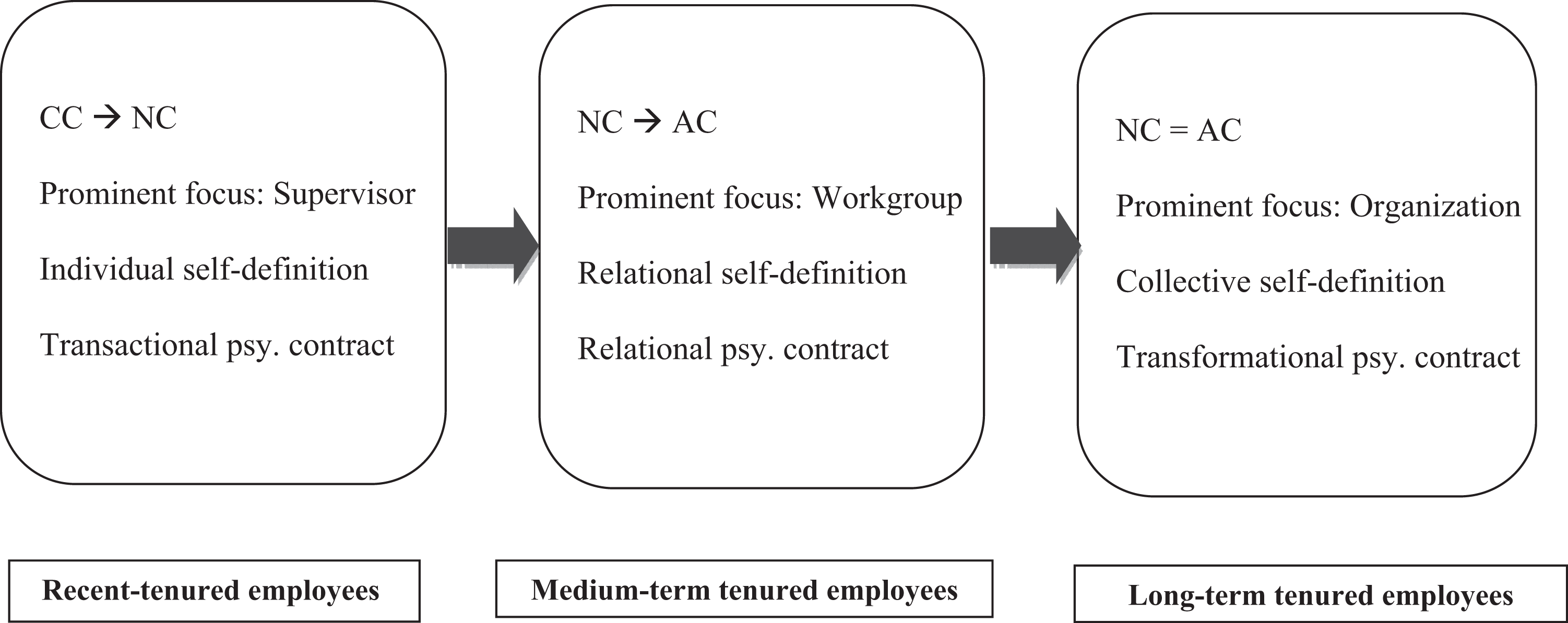
Figure 1 presents a graphical representation of the study’s findings. At early stages of employment in an organization, employees appear to adopt an individualized self-definition while forming transactional psychological contracts with their work organization. At this period, the mentor/supervisor appears to have a crucial role since initiation and further evolution of experiences of OC seem to emanate largely from perceptions of commitment to the supervisor. Having evaluated the benefits offered to them by the organization (mainly tangible benefits) (CC), new employees develop a sense of obligation to their work organization and a consequent urge to reciprocate (NC).
Greek public sector employees’ organizational commitment trajectories.
At a later stage of tenure (medium-term tenured), employees’ self-definition becomes more relational, putting emphasis on interpersonal relationships mainly formed in the context of their workgroup while adopting a more long-term and enduring psychological contract. For this group, experiences of OC development are closely related to workgroup commitment. Feelings of obligation to reciprocate to the organization (NC) are coupled with experiences of being emotionally attached to it and exerting more effort towards attainment of organizational goals (AC).
Finally, experienced employees tend to hold a more collective self-definition according to which their notion of self-worth is closely interwoven with experiences of value congruence and reference to collective welfare. Their psychological contract has been revised and most often turned into ‘transformational’ one. In their case, OC appears to evolve independently of other commitment foci. For this group, perceptions of obligations are related to perceptions of wants, thereby perceiving their commitment to the organization as both more obligatory and more personally desirable.
The findings of the present study described the content and development of organizational commitment in a less studied cultural environment. Culture driven values and expectations have been found to play a role in shaping perceptions of the development of organizational commitment of Greek employees. In specific, CC was found to be the first commitment component which develops at the early stages of an employee’s tenure, and is followed by NC. Given the ‘attractive’ career that Greek public sector offers (high salary, extra benefits, and job security), new hires become soon aware of the ‘costs’ associated with leaving the particular organization and thus experience high levels of CC; such dependency-based relationships are often found in contexts high in power distance and uncertainty avoidance, which are reported to have stronger beliefs (as compared to other contexts) about having limited job alternatives (e.g. Clugston et al., 2000). Similarly, Hofstede’s study (1980) has demonstrated that, in collectivistic cultures, employees expect their organization to take care of them and, in exchange, they adhere to organizational norms.
The analysis also indicated that employees’ notion of obligation to the organization (NC) preceded AC. This finding is at odds with certain theoretical propositions (e.g. Bergman, 2006) suggesting that NC develops as a result of AC, the latter being regarded by employees as a positive work experience to be reciprocated; however, this finding is in accordance with empirical studies demonstrating that in collectivistic cultures employees show higher moral identification with the workplace while NC is reinforced above other types of attachment (e.g. Bochner and Hesketh, 1994; Clugston et al., 2000). Since cultural socialization is seen as an NC antecedent, this finding can be seen as reflective of the collectivistic orientation of Greek society; the fact that this finding supports other research evidence in a Greek context further corroborates the study’s argument for the effects of cultural values on employees’ organizational commitment experiences. The particular organization, which is a typical bureaucracy with a strong rule orientation and obedience to norms, may have further reinforced strong feelings of loyalty (NC) from early stages of employees’ tenure.
Another finding worth noticing is that NC is defined differently by recent versus more experienced employees. In particular, in the case of recent-tenured and medium-term employees, NC takes the form of a moral obligation closely related to the need to reciprocate for benefits acquired as well as the need to meet others’ expectations; in the case of long-tenured employees, NC is experienced as a moral imperative which has taken the form of an internalized value. This finding is particularly interesting for organizational commitment research since, even though recent NC conceptualizations have been oriented towards a two-fold nature of NC (e.g. Gellatly et al., 2006) like the one indicated in the present study, such dual meaning has not so far been examined in association with possible changes in employees’ conceptualization of OC at different organizational career stages. The finding also adds to cross-cultural management literature since it needs to be appreciated in the context of the Greek collective culture; as Bontempo et al. (1990) demonstrated in a comparative study of Brazil and US samples, in collective – as compared to individualistic – cultures, individuals derive pleasure from behaving as expected. In the case of the present study, the fact that the organizational value of collectivism is closely aligned to the societal one may have further accentuated employees’ desire to behave dutifully.
The finding that there is a shift in prominence of commitment foci for employees (from supervisor and workgroup to organization) is in accordance with existing empirical research in western contexts indicating that an employee’s relation with the organization is closely related to supervisor and workgroup commitment due to formation of collegial ties (e.g. Palich et al., 1995). It appears that, through supervisors and more experienced colleagues, new employees gradually internalize norms regarding in-role behaviors and finally organizational goals.
In regard to research on self representation, the present findings support Brickson’s framework (2000) and Triandis’ (1989) conceptualization of self. The present analysis suggested that the three distinct loci of self-definition informed employees’ sense-making regarding their commitment experiences while self-definition tended to evolve from personal to relational and finally to collective, as a function of accumulation of work-related experiences (i.e. length of tenure). The pattern of shift from individualized to relational to collective self-definition found in the present study contrasts with Lord et al.’s (1999) theoretical propositions that relational self-definition precedes the shift toward either individualized or collective ways of characterizing oneself in the context of his/her work organization. The fact that long-tenured employees develop a primarily collective self-definition may also be reflective of the collective cultural orientation of Greek society as well as the high levels of loyalty reported in the public sector (e.g. Markovits et al., 2007).
The study also corroborates theoretical and empirical research conducted in other cultural settings which connects transactional psychological contract with CC and relational contract with AC (e.g. Rousseau and Wade-Benzoni, 1995; Sturges et al., 2005). As the findings suggest, the initiation of NC (through experienced sense of obligation) takes place at the early stages of an employee’s tenure in an organization (the period in which employees form transactional, and later on relational, contracts); in this regard, the study advocates toward a NC–psychological contract formation link. Since there is a lack of empirical research examining the psychological contract–NC relationship, this relationship needs to be further examined.
Study limitations and implications for cross-cultural management
One limitation of the study is that groups of employees at different career stages may construct their OC experience in diverse ways or experience different OC trajectories. In addition, as the narratives studied are self-reported, it may be the case that some developmental indicators in commitment trajectories might be inaccurately recalled. In this study, organizational culture was closely aligned to Greek societal values (e.g. collectivism, high in power distance and uncertainty avoidance), a fact which probably accentuated the effect of these cultural values on the phenomena studied.
The present study has certain limitations in regard to its sample and design. Despite these limitations, the present findings offer a number of implications for both research and practice. In regard to the theoretical implications, this study contributes to existing OC knowledge by suggesting that greater cross-fertilization between OC self-definition and psychological contract research needs to be encouraged. In addition, it poses new questions concerning the relationship between NC and psychological contract construct which need to be empirically tested. Another future direction which has arisen is the exploration of the development of NC prior to experiences of AC.
In regard to implications for cross-cultural management, the study further adds to the literature on cultural differences by indicating ways in which societal values influence employees’ experiences of their commitment development to the work organization; in this respect, it suggests that cultural diversity constitutes an additional aspect for understanding organizational commitment. The present research furthers our understanding of OC in a less studied cultural context in management research; given increasing globalization, it is crucial to extend the existing body of knowledge on commitment research beyond US and Anglo cultures. Given that certain findings of this investigation are consistent with results obtained in North America (i.e. existence of three OC components, relationships between psychological contract, and OC components), it is possible to speculate on the existence of some degree of generalization of the present findings to other societies. In this regard, and even though national cultural variables were not specifically measured, the findings need to be seen as a call for more research on culture-specific examination of the OC construct as a means of examining whether the conceptual model proposed is applicable to other cultural contexts. Moreover, further studies examining the role of culture and/or institutional arrangements in the process of OC development would strengthen our understanding of its cross-cultural aspects. As far as the practical implications of the study for cross-cultural management are concerned, in the context of globalization, it is important for managers to be aware of cultural differences as well as organizational particularities to properly design HRM policies; understanding various ways in which employees’ commitment develops will enable human resource practitioners to anticipate the impact of particular policies or HRM systems on employees’ OC.