




Abstract
Despite the importance of attributional complexity (AC) of managers in cross-cultural contexts, empirical tests of the relationship between AC and the degree to which managers make isomorphic (accurate) attributions are absent. This study provides a crucial contribution to the literature by focusing on the hitherto unexamined empirical link between AC and accurate attributions. This study also contributes to the literature by drawing on the psychological and leader attribution literature to delineate the processes resulting from the information processing of attributionally complex individuals who use complex schemata and then linking these processes to leadership in cross-national contexts. This article tests the theoretical propositions of the model focusing on the process through which AC of managers affects the accuracy of their attributions, subsequently leading to their behaviors that create the climate for leader effectiveness. We provide an empirical test with data from manager–subordinate dyads in France and India. The following hypotheses are supported: AC of managers is linked to accuracy of attributions, as perceived by subordinates and performance enhancement strategies of managers are linked to isomorphic attributions and to key outcome variables (subordinate satisfaction and leadership perceptions), with power distance being a critical moderator. By examining and showing evidence for the moderating impact of power distance, we also contribute to the cross-cultural management literature on leadership. Results are discussed, along with limitations/directions for future research.
Keywords
Introduction
Despite the importance of attribution theories of leadership for international management (e.g. Chen and Van Velsor, 1996; Lakshman, 2013), the literature has not adequately addressed issues related to the attributions managers are likely to make for subordinate behavior in cross-national contexts. Traditional international business (IB) researchers (e.g. Triandis, 1975) have suggested that isomorphic attributions (the extent to which a person from one culture makes accurate attributions about the behavior of a person from another culture) are an imperative for leadership effectiveness and success in leader–subordinate interactions in cross-national contexts. For instance, an American expatriate manager in Korea is surprised at the absenteeism and withdrawal behaviors of a local subordinate who he had accosted at lunch to inform her that her mistake in not typing a letter on time was a minor error but one that should not recur. Being admonished in public was a bigger problem for the local (and Koreans in general) rather than the fact that the manager was giving negative feedback to the subordinate. Thus, the manager’s understanding of the situation was not isomorphic with the way Koreans would understand it (see Cushner and Brislin, 1996). Working across cultures is replete with these and other more serious challenges for managers.
The importance of accurate attributions by managers on subsequent actions and behavior vis-à-vis subordinates has also been noted in non-international contexts (e.g. MacNab and Worthley, 2012). Yet traditional literature (North American) on attribution theories of leadership (e.g. Martinko et al., 2007) suggests that, in general, leaders tend to make biased attributions for a broad range of subordinate behaviors (see Chen and Van Velsor, 1996; Lakshman, 2013 for exceptions). This literature suggests that managers tend to be self-serving in their attributions of subordinate performance (e.g. Dobbins and Russell, 1986), while also being potentially biased against people of the opposite gender and of other racial/nationality individuals. Managers tend to take credit for their managerial effectiveness when a subordinate performs well but ascribe blame to the subordinate for less than desirable performance, indicating their susceptibility to the fundamental attribution error (e.g. Dobbins and Russell, 1986; Sillars, 1981).
Recent research, however, has noted the importance of attributional complexity (AC; propensity of individuals to infer complex internal and external attributions in interpersonal situations) of managers (e.g. Lakshman, 2013; Sun and Anderson, 2012). Yet empirical tests of the relationship between AC of managers and the degree to which they make accurate attributions are absent. If high AC managers do in fact make more accurate attributions as theorized (Lakshman, 2013), managers in cross-cultural contexts can either be selected for high AC or be provided with AC training (Sun and Anderson, 2012) after selection to improve their leadership capabilities. Developing and enhancing AC in managers in cross-cultural contexts are both practical and effective (see Lakshman, 2013). IB literature focused on cross-cultural training of expatriates (e.g. Landis and Wasilewski, 1999) has long recognized that individuals’ attributional patterns vary across cultures (e.g. Mok et al., 2010). In a review of two decades of research on the culture assimilator, a training tool designed to increase the accuracy of attributions, Landis and Wasilewski (1999) characterize this tool as one of the few training techniques derived directly from the theory of attributions (see also Tolbert and McLean, 1995). Thus, training techniques to increase accuracy of attributions and the more fundamental AC, reflecting complexity in attributional thinking, are available and quite useful.
IB researchers (e.g. Landis and Wasilewski, 1999) find Triandis’ (1975) concept of isomorphic attributions useful because it dovetails with the conceptualization of cultures as sets of mutual expectations and reciprocal relationships. All of this points to the general importance of attributions and attributional thinking patterns of individuals across cultures, for a deeper understanding of culture (beyond this study’s more immediate focus on leadership effectiveness). This study therefore provides a crucial contribution to the literature by focusing on the hitherto unexamined empirical link between AC and isomorphic (accurate) attributions. This study also contributes to the literature by drawing on the psychological (e.g. Fast et al., 2008) and leader attribution literature (e.g. Lakshman, 2013; Lindsley et al., 1995) to delineate the processes resulting from the information processing of attributionally complex individuals who use complex schemata and then linking these processes to leadership in two countries outside North America.
Attribution theories of leadership (e.g. Martinko et al., 2007) have been identified by researchers (e.g. Chen and Van Velsor, 1996; Lakshman, 2013) as having the greatest potential for contributing to cross-cultural leadership. Chen and Van Velsor (1996: 289) argued that attribution is often the key mediating process through which leaders and subordinates interpret and evaluate each other’s behaviors (see also MacNab and Worthley, 2012). Chen and Van Velsor further postulated that the success of leader–subordinate interactions, and hence leader effectiveness, depends greatly “on Triandis’ (1975) notion of isomorphic attribution, or the extent to which a person from one culture makes accurate attributions about the behavior of a person from another culture” (1996: 289). However, only recently have researchers theorized about the complexity surrounding attributional processes and identified implications for leadership research (Lakshman, 2013). Sun and Anderson (2012) note that transformational leaders who are high on the individual difference measure of AC may not be biased in their attributions, as the general literature on attributions would lead one to believe (Lakshman, 2013). Other researchers have noted this predominant focus on biased attributions suggested the need to focus on positive and functional attributions and the resulting processes and have examined the role of attribution accuracy (e.g. Lakshman, 2013). This article addresses two issues identified above and provides a test of a functional attributional model of leadership.
For leadership and leader effectiveness, we use the Implicit Leadership Theory (Lord and Maher, 1991) approach used by Global Leadership and Organizational Behavior Effectiveness (GLOBE) researchers to identify which traits and behaviors are universally desirable and which are culturally contingent. However, instead of focusing only on traits and behaviors, we also include the nature of attributions (e.g. isomorphic or accurate vs. contrastive and culturally and racially unbiased vs. biased) to empirically examine their desirability in cross-national contexts. First, following GLOBE, we define leadership as the “ability of an individual to influence, motivate, and enable others to contribute toward the effectiveness and success of the organizations in which they are members” (House et al., 2004). Second, following both GLOBE (House et al., 2004) and the larger literature on leadership (e.g. Yukl, 2006), we define leadership effectiveness as a composite of subordinates’ satisfaction, subordinates’ performance, and leader acceptance understood as perceptions of leadership, thus capturing the degree to which subordinates consider their managers to be providing adequate leadership. We contribute to the cross-cultural management literature by examining the cultural impact in the context of this model in two countries, namely, France and India.
AC and leadership processes
A major strength of the traditional attributional models of leadership is that they consider information processing as an important aspect of leadership. More specifically, they view leaders as scientists who seek informational cues that explain the causal relationships affecting various aspects of work. Whereas extant models focus on naive attributional processes using cognitively simple schemata, the model presented here focuses on expert attributional processes using cognitively complex schemata (see Fletcher et al., 1986). Every behavioral episode is likely to result from both subordinate dispositional causes and external system causes. In the event that a manager decides to choose one from among these two causes without much deliberation, he/she is likely to be using simple schemata. On the other hand, if a manager searches for more in-depth informational cues relating to factors that augment some causes while also considering factors which discount others, he/she is likely to be using complex schemata. We describe these more completely in what follows. Such a process of seeking informational cues can reduce the uncertainty inherent in many management situations. Such reduction of uncertainty is an important aspect of leadership (see Lakshman, 2013).
An attributional analysis of experience forms the central determinant of self-efficacy perceptions, which then results in increased motivation and thus performance (see Bandura, 1986; Gist and Mitchell, 1992). Thus, the overall attributional approach to leadership theorizing is quite valuable. Furthermore, recent research has identified the importance of AC for transformational leadership, by identifying a key link between them, while also suggesting that transformational leaders may not be attributionally biased as generally suggested (Sun and Anderson, 2012). There is also an established body of literature linking transformational leadership to multiple measures of leadership effectiveness, including subordinates’ satisfaction, motivation, leader acceptance, and performance (e.g. Gang et al., 2011; Howell and Avolio, 1993; Judge and Bono, 2000; Lowe et al., 1996), consistent with the definition of leadership effectiveness in the present study. Through this link to transformational leadership, AC has been linked to globally appreciated leader behaviors identified by GLOBE (Den Hartog et al., 1999) in the charismatic/transformational realm. Although this research falls short of directly examining the empirical link between AC and accurate (isomorphic) attributions, and resulting leader behaviors, it has begun to identify the complexity surrounding attributional processes, which were hitherto considered to be simple.
The attribution model of leadership tested here focuses on such key leadership constructs as AC, accuracy of leader attributions, leader behaviors that follow their attributions, mediating variables such as subordinate satisfaction, and outcome variables such as leadership perceptions. These variables are linked in a process model in the manner shown in Figure 1. The main insight provided by the model is that scientific information processing by high AC managers results in accurate attributions. These accurate attributions facilitate managers in the design and use of effective strategies to enhance subordinate performance. The design/use of effective performance enhancement strategies (PES) acts as a key intervening variable, which influences both the performance and the satisfaction of the subordinate. Thus, high AC of the manager creates a favorable perception of leadership through its impact on subordinate performance and satisfaction. As also shown in Figure 1, these relationships are subject to cultural differences, most notably related to the value dimension of power distance.
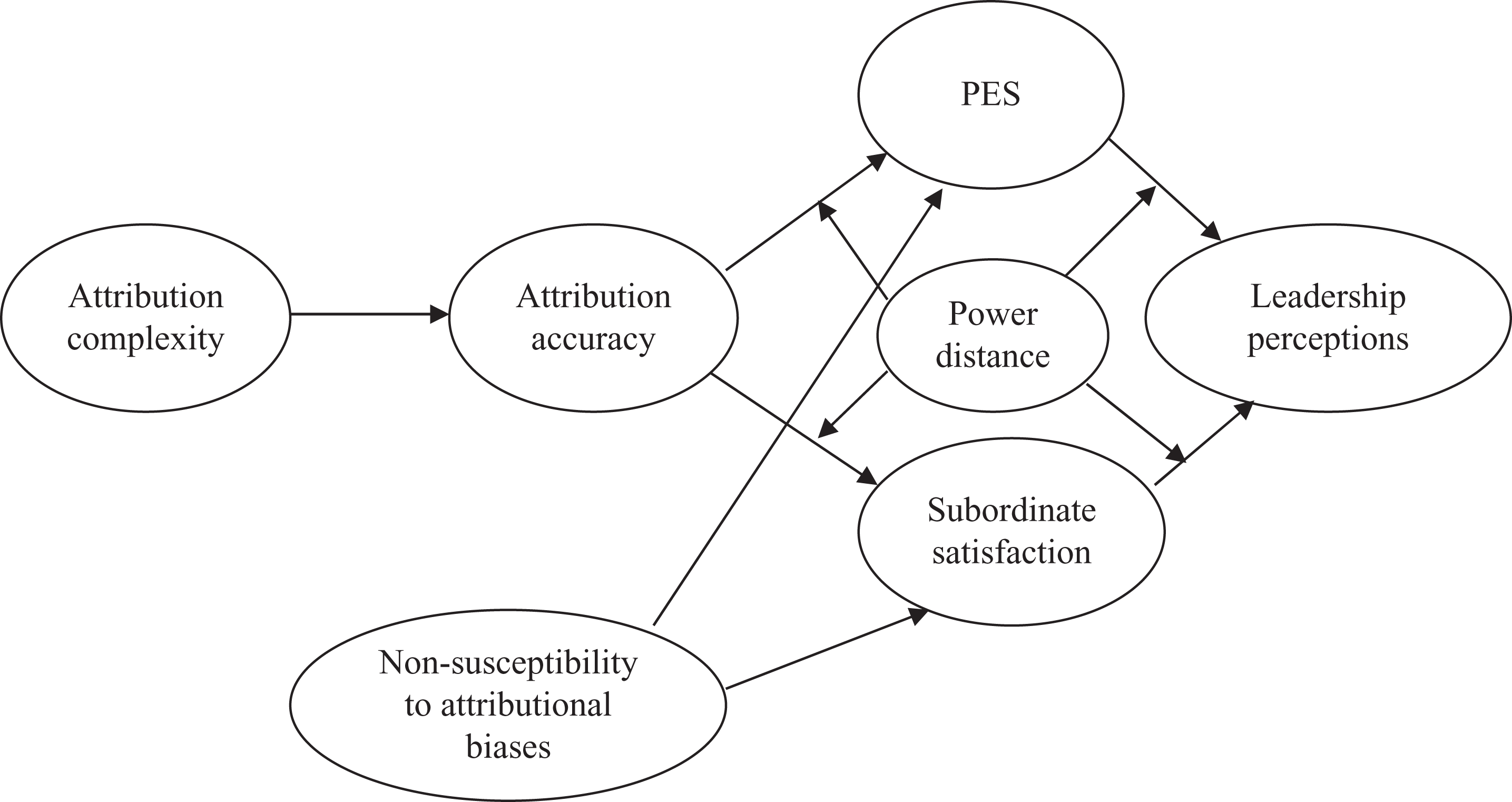
Hypothesized theoretical model.
AC and attributional accuracy
One might think that higher levels of information processing lead to more accurate attributions and avoidance of errors (e.g. Lord and Smith, 1983). However, it is not merely a higher level of information processing that is required but a careful search of multiple plausible causes. AC has been identified as the source of more in-depth information processing and therefore accurate attributional processing (Fletcher et al., 1986; Lakshman, 2013). Following Lakshman (2013), we conceptualize attribution accuracy on two fronts, based on the two types of attributions, namely, attributions related to behaviors as a result of cultural differences and attributions that are related to performance outcomes (see also Chen and Van Velsor, 1996). In this study, we focus only on the accuracy of attributions related to performance outcomes, although we examine its desirability in two cultures. For behaviors related to cultural differences, Lakshman (2013) borrowed the notion of isomorphic attributions from the culture assimilator research (e.g. Landis and Wasilewski, 1999) as an indicator of the accuracy of attributions. For attributions related to performance outcomes, Lakshman (2013) focused on leaders’ information processing, pursuing an analysis along the lines of searching for augmenting and discounting causal schemata (Kelley, 1972) that will lead to making accurate attributions for the subordinates’ behavior. Identification of augmenting and discounting causal schema (described below) for each of the multiple plausible causes, more easily done by high rather than low AC individuals, can lead to more accurate (or reasonable) attributions on the part of managers in cross-national contexts. For instance, as briefly noted earlier, every poor performance episode is likely to have both subordinate dispositional causes and external system causes at some level of analysis. Nevertheless, it is possible for managers to analyze these multiple plausible causes and arrive at more reasonable (or accurate) attributions.
Some researchers (e.g. Forsterling and Morgenstern, 2002) have defined attributional accuracy in the context of simple schemata based on Kelley’s (1972) covariation principle as the level of congruence with the antecedent covariation information. Kelley’s covariation principle identifies three major classes of information that can help a manager decipher the behavior of subordinates: distinctiveness, consistency, and consensus. Distinctiveness refers to the uniqueness of behavior in response to a specific task, reflecting whether the subordinate performed similarly on all tasks or performed this way only on the task in question. Consistency refers to the subordinate’s unchanging pattern of behavior over time or across situations. Consensus refers to the similarity of the behavior of others to the behavior of the subordinate in question, reflecting whether many subordinates performed similarly in the task. However, even Kelley (1972) suggested that not all data patterns along the three covariation dimensions lead to clear attributions because of the simplicity of these schemata. Thus, a slightly different definition of attributional accuracy is needed for the context of Kelley’s (1972) complex schemata, such as augmenting and discounting causal schemata. For the model presented here, in the context of complex schemata, we thus follow Lakshman (2013) and define attributional accuracy as the level of congruence with the antecedent discounting and augmenting causal schemata, as explained subsequently.
The perceived effect of a particular cause can either be enhanced (augmented) or be diminished (discounted), depending upon the consistency of the alternative plausible causes with the observed outcome (Phillips and Lord, 1981). In situations of low complexity, there are few causes that are consistent with the observed outcome and thus any one cause possesses an augmenting schema. In situations of higher complexity, there are multiple causes that are equally consistent with the outcome. In such a situation, a leader who wants to make more accurate attributions is faced with discounting those causes with less import for the observed outcome, thereby focusing on the cause with the most augmenting schema (or alternatively, with the least discounting schema). In such situations, high AC individuals are likely to be more accurate and faster in their judgments of social behaviors (e.g. Fletcher et al., 1993) and more accurate in their judgments of attitudes in a performance domain (e.g. Fletcher et al., 1990).
Attributional complexity
Fletcher and colleagues (1986) argued that the attribution process is quite complex in some important respects and differentiated between naive and expert perceivers. These researchers then developed the construct of AC, constituting seven distinct components, complete with a construct validated scale (see also Flaherty, 1996). AC reflects high levels of differentiation, articulation, abstraction, and integration in individuals’ causal reasoning. The seven empirically validated components of the AC construct are as follows: (1) a certain level of interest or motivation for causal reasoning, (2) preference for complex rather than simple explanations of behavior, (3) presence of metacognitions concerning explanations, (4) awareness of external causes of behavior, (5) tendency to infer complex internal attributions (such as distinguishing between beliefs, attitudes, and abilities), (6) tendency to infer complex external attributions (such as distinguishing between proximal and distal environments), and (7) tendency to infer external temporal causes. People who score higher on AC have a greater cognitive facility for assigning causes to the behavior of others by discriminating between potential causes and integrating them.
Attributional accuracy
High AC individuals are less likely to be susceptible to the fundamental attribution error (e.g. Blumberg and Silvera, 1998; Devine, 1989; Follett and Hess, 2002), in addition to being less punitive and less racist (Tam et al., 2008). Additionally, Fast and colleagues (2008) found that individuals high in AC possess a host of characteristics that are typical of transformational and charismatic leaders (e.g. Bono and Judge, 2004) such as expressiveness in terms of face, voice, and gestures; confidence and assertiveness; positive emotions and attitudes; charming and “arresting” personalities; and sympathy, warmth, and compassion. More specifically, Sun and Anderson (2012) found that managers with high scores of AC were seen as more transformational leaders by their subordinates than those with low scores. More importantly, high AC individuals, who are known to use complex cognitive schemata (see Fletcher et al., 1986), have been found to be more accurate and faster in judgments about social behaviors (e.g. Fletcher et al., 1993) and more accurate in judgments about attitudes (Fletcher et al., 1990). AC provides people with sophisticated reasoning in the context of social judgment and behaviors which helps them in making more accurate attributions (Lakshman, 2013). Studies have shown that AC explains unique variance in the interpersonal social judgment domain, which is not accounted for by other constructs, in contexts such as racism (Reid and Foels, 2010) and in the use of relationship-based techniques in interpersonal work/business situations (Porter and Inks, 2000). Based on the above, we formulate and present our first hypothesis as follows.
Cultural context
We believe that some of the relationships outlined in the model in Figure 1 are likely to be impacted by cultural value dimensions such as power distance, more than other dimensions, mainly because of the hierarchical nature of this value dimension (see also Lee et al., 2000). Power distance reflects the extent to which a society expects and accepts authority structures and unequal distribution of power (Hofstede, 1980). The level of power distance prevailing in a specific culture may affect the degree to which individual subordinates assign importance to managerial attributions and behaviors that may result from the nature of these attributions, more so than any other cultural dimension. Power distance is the only variable that pertains to hierarchical relationships involving managers and subordinates and their interactive processes. The value dimension of individualism/collectivism may become more important in team contexts and the value dimension of uncertainty avoidance may be more important when it pertains to managers’ choice of control strategies. However, for the broad leadership process of manager–subordinate interactions, we believe that power distance is the most appropriate moderating variable. Variations in power distance across cultures are closely linked to the degree to which subordinates accept managerial actions including performance feedback.
By examining the potential role of power distance orientation (individual level), we also take into account intra-cultural variation associated with a culture (Tung and Verbeke, 2010). However, with specific respect to hypothesis 1 above, we do not believe that the relationship between AC and attribution accuracy would be different from one culture to the next. This is because the individual difference measure of AC refers to the basic human capability of discriminating and integrating across dimensions related to social judgment in order to understand social behavior (Lakshman, 2013), which in itself should lead individuals to make more accurate attributions regardless of culture. We describe in later sections, how we expect power distance to moderate the other relationships in the model tested in this study.
Leader attributions and PES
Attribution is often the key mediating process through which managers and subordinates interpret and evaluate each other’s behaviors in order to respond accordingly (Chen and Van Velsor, 1996). Successful superior–subordinate interactions depend on the degree to which managers make accurate attributions of subordinates’ behaviors (e.g. Chen and Van Velsor, 1996; MacNab and Worthley, 2012; Sun and Anderson, 2012). The attributional model of leadership presented here suggests that accurate attributions of managers are important for subsequent behaviors related to their design and the use of effective PES, leading to subordinate satisfaction. The desirability of leader behavior across cultures hinges on the extent to which subordinate performance and satisfaction are influenced by PES resulting from managerial AC and accurate attributions. Therefore, this model focuses on attributions that relate positively to managerial effectiveness, including aspects such as building trust, building credibility, and enabling subordinates to perform and contribute to overall organizational performance. Biased attributions, in contrast, lead to erosion of trust and credibility as suggested earlier, thereby leading to further poor performance.
Based on the above, it can be argued that managers who make inaccurate attributions may not be perceived positively and will be ineffective in enhancing performance of their subordinates and thus their units. A review of the literature that examines subordinate perceptions and reactions to inaccurate and biased attributions (e.g., Gavin et al., 1995; Liden et al., 1988; Liden and Mitchell, 1985) does reveal that such attributions are likely to be seen as unfair and result in dissatisfaction among subordinates. Dobbins and Russell (1986) suggest that self-serving attributional biases are likely to lead to manager–subordinate disagreement, loss of trust in work group, loss of credibility, and subordinate dissatisfaction and turnover. Lindsley and colleagues (1995) point to more severe consequences of unfavorable and inaccurate attributions of managers on emotional reactions of subordinates, leading to downward performance-efficacy spirals. Larson (1989) notes that managers have a general reluctance to provide negative feedback, thus avoiding the giving of such feedback, delaying it as much as possible (high feedback latency) (see also Ensari and Miller, 2006; Moss and Martinko, 1998; Sillars, 1981) and distorting it when further delay is not possible, all in an effort to avoid some of the unpleasant and negative consequences of such feedback. Moss and Martinko (1998) suggested that internal attributions directed toward subordinates or biased attributions may be a factor that causes this delay in feedback (latency), distortion of feedback, and, more importantly, the negative interactive behaviors with subordinates in poor performance contexts (see also Gavin et al., 1995; Offermann et al., 1998). However, it is not evident that delaying or distorting feedback does any good for the subordinates. Instead, it may enhance apprehension and increase subordinate uncertainty (Larson, 1989).
On the contrary, Forsterling and Morgenstern (2002) suggest that it is functional to make more realistic and more accurate attributions. In their study, participants made better resource-allocation decisions when they were induced to make more accurate attributions than in the inaccurate attribution condition. Such decisions were followed up with behaviors that were functional and in line with the more accurate attributions, all of which resulted in higher levels of performance. Thus, Forsterling and Morgenstern (2002) conclude, in the context of their integrative attributional model, that it pays to make more realistic or accurate attributions.
The literature suggests that accurate attributions are likely to lead to functional behaviors that result in the effective design and use of PES (e.g. Miller et al., 1982; Sillars, 1981). Attributionally complex managers engaging in in-depth processing of information may arrive at more accurate attributions (Lakshman, 2013), identifying complex internal causes and complex external causes along the way (Sun and Anderson, 2012). Such assessments provide these individuals with more information and more confidence in their information, thereby minimizing the possibility of withdrawal behaviors and feedback latency. Sillars’ (1981) theory and evidence suggests that accurate attributions lead to positive interactive behaviors, positive interpretation of subordinate behaviors, and, most important, the formulation and implementation of integrative strategies to correct performance deficiencies (viz., PES). Thus, the model predicts that accurate attributions facilitate positive interactive behaviors and results in an environment of low uncertainty for subordinates, all of which are likely to enhance subordinate affect and attitudes positively. Based on the above discussion, we propose the following hypotheses.
Cultural context
Most of the arguments made above in favor of attribution accuracy, leading to the above hypothesis, are drawn from North American literature sources, representing a relatively lower power distance than other cultures. Thus, their applicability to relatively high power distance cultures, such as France and India (both higher than the United States) in this study, is unknown and has not been addressed in prior research. However, results from GLOBE suggest that being communicative, trustworthy, encouraging, positive, and a confidence builder are all universally endorsed attributes (Den Hartog et al., 1999), although they may be “seen” in culturally specific ways. Our arguments pertaining to accurate attributions and their connections to positive and encouraging interactive behaviors are likely to be seen as communicative, trustworthy, positive, and encouraging. Still these may be seen differently in high versus low power distance cultures in a manner such that accurate attributions may have a stronger effect in low power distance cultures than in high power distance cultures. This is primarily because of the fact that despite being universally desirable, attributes such as trustworthy and encouraging may be seen differently in different cultures that vary along the dimension of power distance. Subordinates in low power distance cultures may pay relatively more attention to managerial attributions to be able to discuss/challenge/question them as appropriate. In contrast, subordinates in high power distance cultures may be more accepting and less likely to challenge managerial feedback, resulting in relatively lower attention to such attributions. This leads us to the following hypotheses.
Non-susceptibility to attributional biases
Following previous research (e.g. Lakshman, 2013), we treat Non-Susceptibility to Attributional Biases (N-S AB) as a separate and parallel construct that operates more at the emotional and motivational level than at the cognitive level. Attributional accuracy, discussed above, pertains to specific performance episodes and triggers cognitive reactions. Attributional biases, on the other hand, pertain to generally biased and discriminatory (or stereotypical) attributions that may trigger emotional responses not related to specific interactions. Subordinates in diverse settings are affected both by specific attributions and by general patterns of attribution on the part of their managers. Therefore, in addition to the attributional accuracy discussed above, which operates at the cognitive level, we also focus on N-S AB, such as gender, cultural, and racial stereotypes, which all operate at the emotional and motivational level in terms of their impact on leader effectiveness (see also Chen and Van Velsor, 1996).
Both traditional and recent research suggest that attributional biases are likely to lead to heightened interpersonal conflict and disrupt the processes of communication between managers and their subordinates (e.g. Ensari and Miller, 2006; Forsterling and Morgenstern, 2002; Moss and Martinko, 1998; Sillars, 1981). Much like the performance-efficacy spirals discussed by Lindsley et al. (1995), these biases can lead to attribution-conflict spirals whereby biased attributions can lead to more severe conflict, which can in turn affect the attributions made in conflict contexts and the choice and interpretation of communication strategies. Moreover, gender and cultural biases can also lead to a loss of trust, dissatisfaction, and turnover (e.g. Dobbins and Russell, 1986; Dobbins et al., 1983). Loss of trust could result in the erosion of leadership in the worst case or severely negative perceptions of leadership in the best case scenario. Biased attributions, as suggested earlier, have been known to cause delay in these types of feedback being provided (e.g. Larson, 1989), in addition to distorting them when they are eventually provided (e.g. Moss and Martinko, 1998), thereby leading to a lack of proper developmental feedback that could be instrumental for subordinates.
These ideas suggest that, to be effective, managers need to avoid biases such as gender, regional, cultural, and self-serving biases, especially in the context of performance attributions (e.g. MacNab and Worthley, 2012). Managers who avoid gender and cultural biases in attributions of performance are more likely to be effective and perceived more as leaders. More specifically however, when managers are not biased by gender and cultural biases, they are better able to develop plans of action for the improvement of performance on the part of their subordinates. When these attributions are unbiased, feedback and performance enhancement strategies are less likely to be delayed or distorted and are more likely to be delivered in a highly effective manner (e.g. Offermann et al., 1998).
Cultural context
Although gender and other cultural (racial) biases may be prevalent in some countries, they are never sanctioned legitimacy and never held up as values to be desired or emulated, at least with specific reference to the two countries investigated here. Thus, consistent with universally desirable values of trustworthy, encouraging, positive, and communicative behaviors found by GLOBE studies, we expect unbiased attributions (both in hypothesis 3 and in hypothesis 3a) to be not moderated by power distance or other cultural value dimensions.
Leader behaviors, subordinate attitudes, and leadership perceptions
Leader interactive behaviors and selection of communication behaviors are enhanced as a result of accurate attributions (e.g. Lakshman, 2013) as stated earlier. Further, their feedback-giving behavior is also likely to be more immediate and short on latency. In addition, self-internal attributions for poor unit or organizational performance are also likely to enable leaders to develop integrative strategies for correcting performance deficiencies. All of these behaviors are likely to help the “self-esteem–enhancing” tendencies of subordinates and thereby contribute positively to the levels of self-efficacy, satisfaction, and motivation of subordinates. Specifically, leader development of integrative strategies for enhancing performance is likely to be seen positively by subordinates, as they contribute to uncertainty reduction and esteem enhancement. Therefore, effective design and the use of PES is likely to be positively related to leadership perceptions. Positive levels of these subordinate attitudes, such as satisfaction, are likely to enhance efficacy-performance spirals in the positive direction (Lindsley et al., 1995), thus enhancing subordinate and unit performance, in addition to improving perceptions of leadership (Phillips and Lord, 1981).
Cultural context
We expect a differential moderating impact of power distance vis-à-vis performance enhancement strategy and subordinate satisfaction as they impact leadership perceptions. Again, although these two variables are likely to be universally desirable, the manner in which the corresponding behaviors are seen and perceived are likely to be different in low versus high power distance cultures. First, with respect to performance enhancement strategies, we expect that these are more likely to be prevalent in high power distance cultures, especially at middle managerial levels and thus seen as more acceptable and valuable in these cultures. In such high power distance cultures, subordinates expect to be told what is to be done, as it is within the normal realm of managerial roles and culturally endorsed as such. Although performance enhancement strategies may still be important in low power distance cultures, they may not be as important as the underlying values (or message conveyed) such as encouraging, positive, communicative, and so on. Thus, performance enhancement strategies may have a stronger impact on leadership perceptions in high power distance cultures vis-à-vis low power distance cultures.
We expect the exact opposite to be true with respect to the impact of satisfaction on leadership perceptions. In other words, the impact of subordinate satisfaction on leadership perceptions, based on North American literature sources, reflects its relative value in low power distance cultures more so than in high power distance cultures, despite its universal desirability. In other words, the impact of subordinate satisfaction on leadership perceptions is likely to be stronger in low power distance cultures than in high power distance cultures. Thus the following hypotheses have been derived:
We have argued that accuracy of attributions made by managers is likely to be strongly related to their subsequent behaviors such as the development and communication of performance enhancement strategies. In addition to this effect on their own behaviors, accuracy of attributions made by managers is also likely to impress subordinates and result in favorable perceptions of leadership. Additionally, N-S AB of leaders is also likely to lead to higher leadership perceptions. However, effective design and the use of PES are independently likely to impress subordinates and result in favorable perceptions of leadership. Therefore, the impact of accurate attributions on leadership is likely to be mediated by the behavioral variable of PES and the subordinate attitudinal variable of satisfaction. Therefore, the following hypothesis has been derived:
Method
We chose participants for this study from France and India because of these countries’ positioning on the cultural value dimensions. The GLOBE studies (House et al., 2004) identified nine different cultural clusters in their study of 69 countries. France was identified to be in the Latin European cluster, whereas India was grouped into the South Asia cluster. Whereas both of these countries are higher in power distance than the United States, for instance, India is characterized by much higher power distance than France. The different cluster positioning of these two countries also suggests other significant differences in cultural value dimensions. Hence, these two countries serve as an interesting pair to examine the hypothesized theoretical model.
The model was tested using questionnaire responses of 128 manager–subordinate dyads in a variety of business organizations, from France (68) and India (60), including retail (8 percent), manufacturing (12.8 percent), telecommunication (5.6 percent), financial and insurance services (9.6 percent), and other services (62.4 percent). Managers responded to a questionnaire that included an extant, construct-validated scale measure of AC (Fletcher et al., 1986), in addition to responding to background questions. The subordinate respondents in this study reported on their managers’ accurate attributions and behaviors from their perspective. In both countries, participants in an executive education program were contacted and presented the opportunity to participate in the study either as a subordinate or as a manager. Accordingly, they were asked to hand the “other” questionnaire to either their manager or their subordinate based on their initial choice. As the questions were sensitive in nature and confidential, we had to depend largely on the interpersonal rapport between the survey administrator (professor in the executive education program) and the participants. With very few exceptions, we received two responses from each of the participants in the executive education program, with the response rate being in the upper 90s in terms of percentage. In the few odd cases (less than five), we had only one of the two responses. We did not include these in our analysis or sample count. We thus had 128 dyads responding to our questionnaire survey.
The length of the relationship they had with each other, ranged from a minimum of a few months (2.4) to a maximum of 22 years, with the average relationship tenure being 4.25 years. The subordinate respondents ranged in experience from a minimum of 2 years to a maximum of 35 years, with the average experience being 11.69 years. The manager respondents ranged in experience from a minimum of 4 years to a maximum of 44 years, with the average being 22.26 years.
Questionnaire
The questionnaires were first written in English and then translated into French and then back translated to verify correctness of translations, for France, while the English version was used in India. The subordinate questionnaire sought responses from the subjects with regard to their manager who would be providing the other response. These subordinates were requested to think about this manager’s handling of subordinate performance and subordinate relationships while answering the questions. We conducted a confirmatory factor analysis (CFA) constituting the measurement model test of the constructs in the study using the AMOS 18 package in SPSS. In Table 1, we present the means, standard deviation, and correlations among the variables, with the square root of the average variance extracted (AVE) along the diagonal of the table. We present the exact wording of the questions (stems), the factor loadings, AVE, and construct reliability information in Table 2.
Means, standard deviations, correlations, and square root of AVE of variables.a
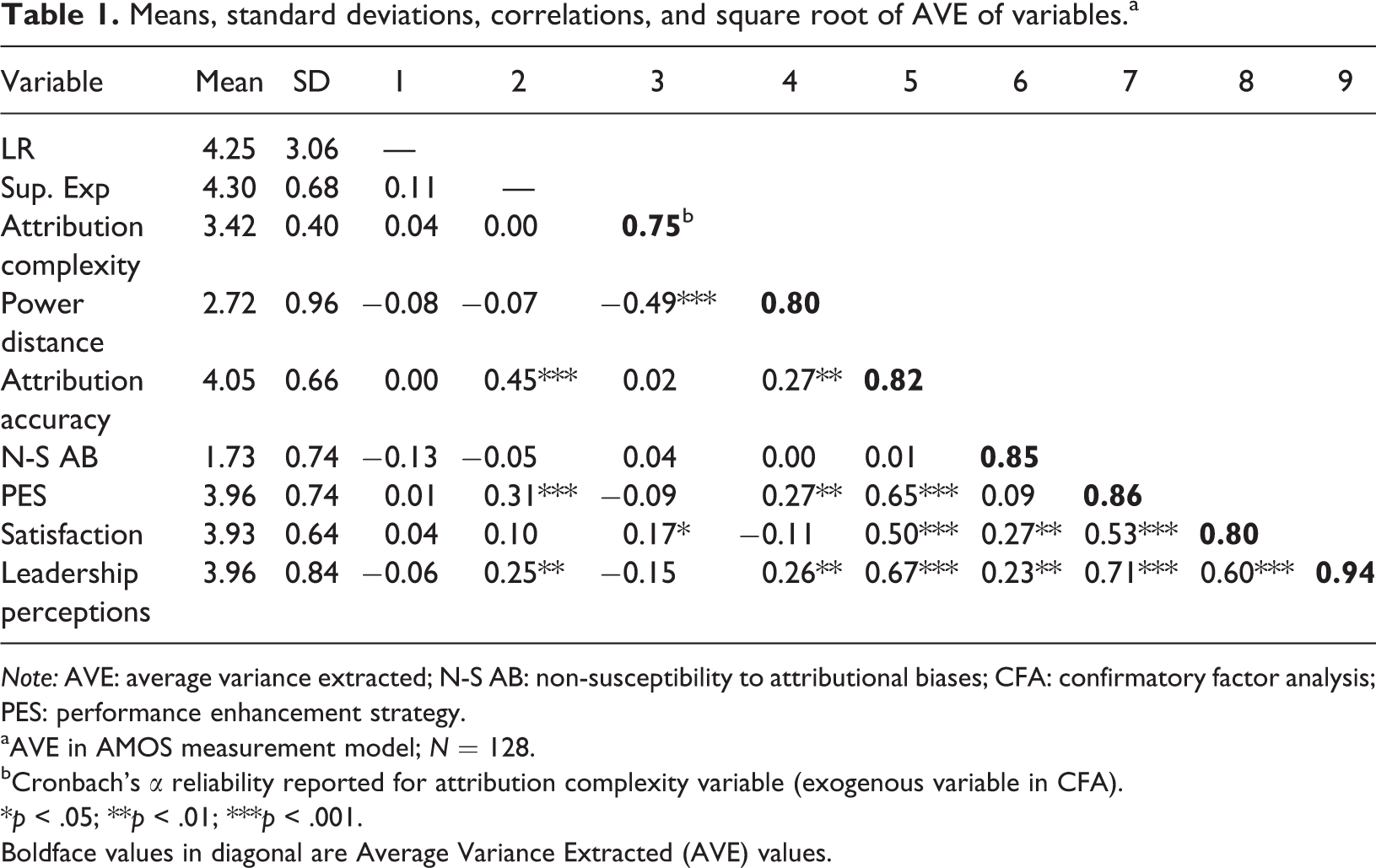
Note: AVE: average variance extracted; N-S AB: non-susceptibility to attributional biases; CFA: confirmatory factor analysis; PES: performance enhancement strategy.
aAVE in AMOS measurement model; N = 128.
bCronbach’s α reliability reported for attribution complexity variable (exogenous variable in CFA).
*p < .05; **p < .01; ***p < .001.
Boldface values in diagonal are Average Variance Extracted (AVE) values.
CFA of constructs in the study.
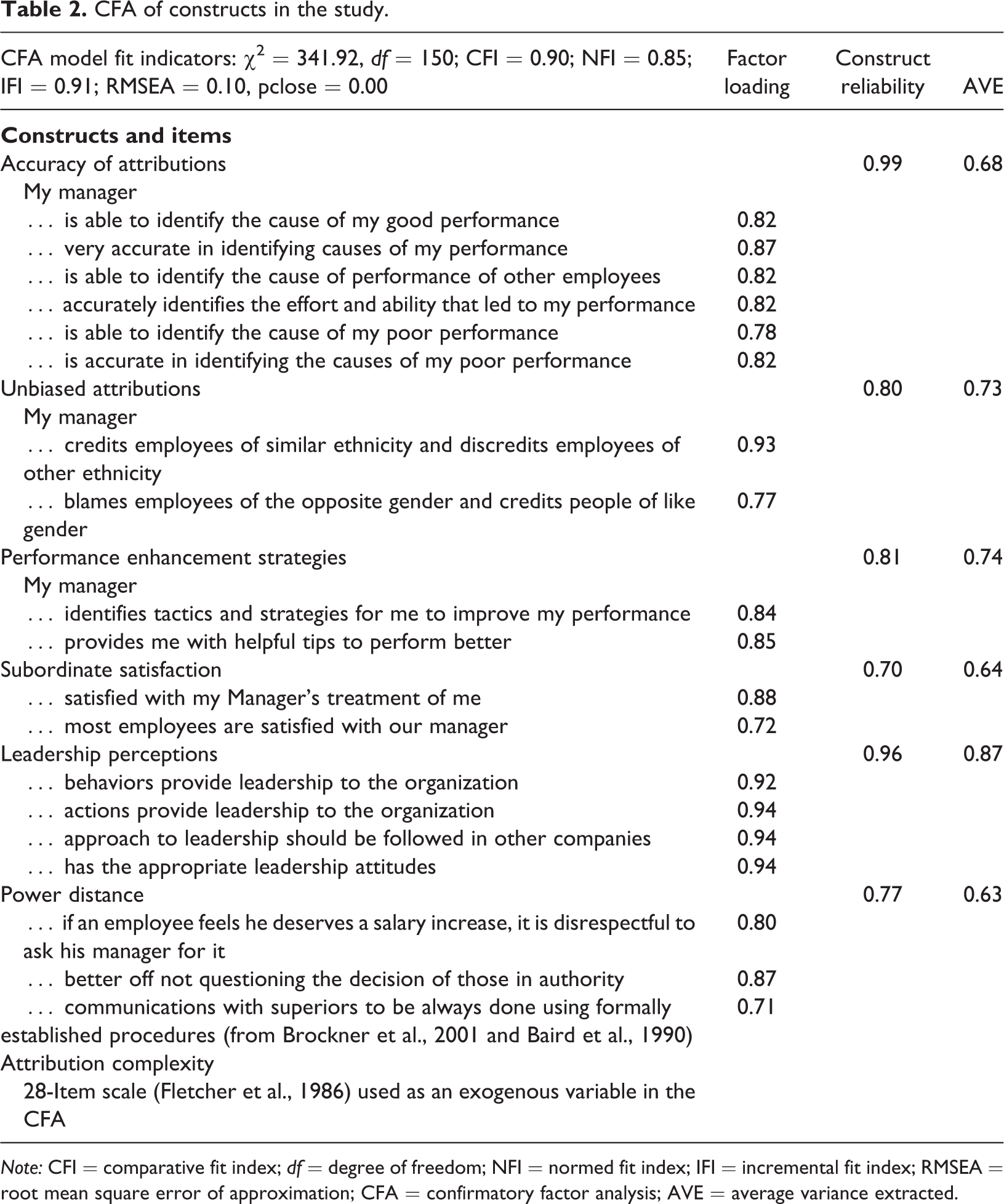
Note: CFI = comparative fit index; df = degree of freedom; NFI = normed fit index; IFI = incremental fit index; RMSEA = root mean square error of approximation; CFA = confirmatory factor analysis; AVE = average variance extracted.
Attributional accuracy (Cronbach’s α = 0.92) was measured with a 6-item scale (see Table 2). All responses were on 5-point Likert-type scales, with anchors ranging from strongly disagree to strongly agree. N-S AB (gender and racial) was measured with a 2-item scale (α = 0.83). Higher scores on this scale would indicate low susceptibility to gender and racial attributional biases and thus N-S AB would be high with high scale scores. Managers’ performance enhancement strategies were measured using a 2-item scale (α = 0.85) to assess the degree to which managers developed performance enhancement strategies and communicated these to subordinates. Subordinate satisfaction with the manager was measured using a 2-item scale (α = 0.77) to assess the degree to which they were satisfied with their manager’s handling of them. Leadership perceptions of subordinates were measured using slightly modified items from existing scales (e.g. Phillips and Lord, 1981). The 4-item scale (α = 0.96) assessed the degree to which subordinates thought the managers were providing leadership to their unit. In addition to these scale items, the subordinate version of the questionnaire also collected background information on both the manager and the subordinate in terms of gender and ethnicity. The respondents also provided information on the length of their relationships with their managers, their assessment of how experienced their manager was on a 5-point scale ranging from very inexperienced to very experienced and the type of organization (manufacturing vs. service) that served as the context.
The manager version of the questionnaire contained a 28-item measure of AC (Fletcher et al., 1986). This scale (α = 0.75) consisted of questions such as: “I have found that the causes for people’s behavior are usually complex rather than simple” and “Once I have figured out a single cause for a person’s behavior I don’t usually go any further (reverse scored). Additionally, managers also responded to background questions about gender, experience, supervisory experience, and the type of business sector where they worked.
Validity and reliability of measures
We entered all the study variables from the subordinate questionnaire as observed endogenous indicators of the study constructs, with the exception of the 28-item scale (Fletcher et al., 1986) measure of AC (obtained from managers), which was entered as an observed exogenous variable. We did this for two reasons. First, the 28-item measure of AC has previously demonstrated properties of construct validity (see Flaherty, 1996). Second, our sample size does not permit us to include this relatively large scale as an endogenous variable in the CFA in view of the ratio of number of items to sample size (see Gagné and Hancock, 2006). The measures of model fit, factor loadings, construct reliabilities, and AVE presented in Table 2 provide sufficient indications of measurement validity of the constructs in the study. First, on examining the correspondence between constructs and their items, we conclude that all of the constructs in the study show high levels of construct reliability, above the threshold of 0.7 (see column 3 of Table 2) (Gerbing and Anderson, 1988). Second, all of the constructs show high degrees of convergent validity, with the corresponding AVE measures (a measure of the error-free variance of the set of items related to the construct) (see Fornell and Larcker, 1981) above the threshold of 0.5. Finally, as suggested by Fornell and Larcker (1981), the square root of the AVE (in Table 1) is larger than the correlations with other constructs in all instances, suggesting that constructs in this study have more internal variance than that shared with other constructs, indicating their discriminant validity. In addition to the above, the model fit indices provided in Table 2 (CFI = 0.9; NFI = 0.85; IFI = 0.91, RMSEA = 0.10) do suggest that the constructs and their measures show acceptable levels of measurement validity. We therefore now turn to a presentation of the results of the hypotheses tests.
Results
We tested the hypotheses comprising the model using hierarchical regression analyses, with the appropriate control variables entered first in each case, followed by one independent variable or a set of independent variables at a time (where applicable), while monitoring change in proportion of variance explained in the dependent variable (ΔR2) and the significance of such change for each step. The results of these regression analyses are reported in Tables 3 to 5 and are interpreted in this section as follows.
Regression on attributional accuracy.
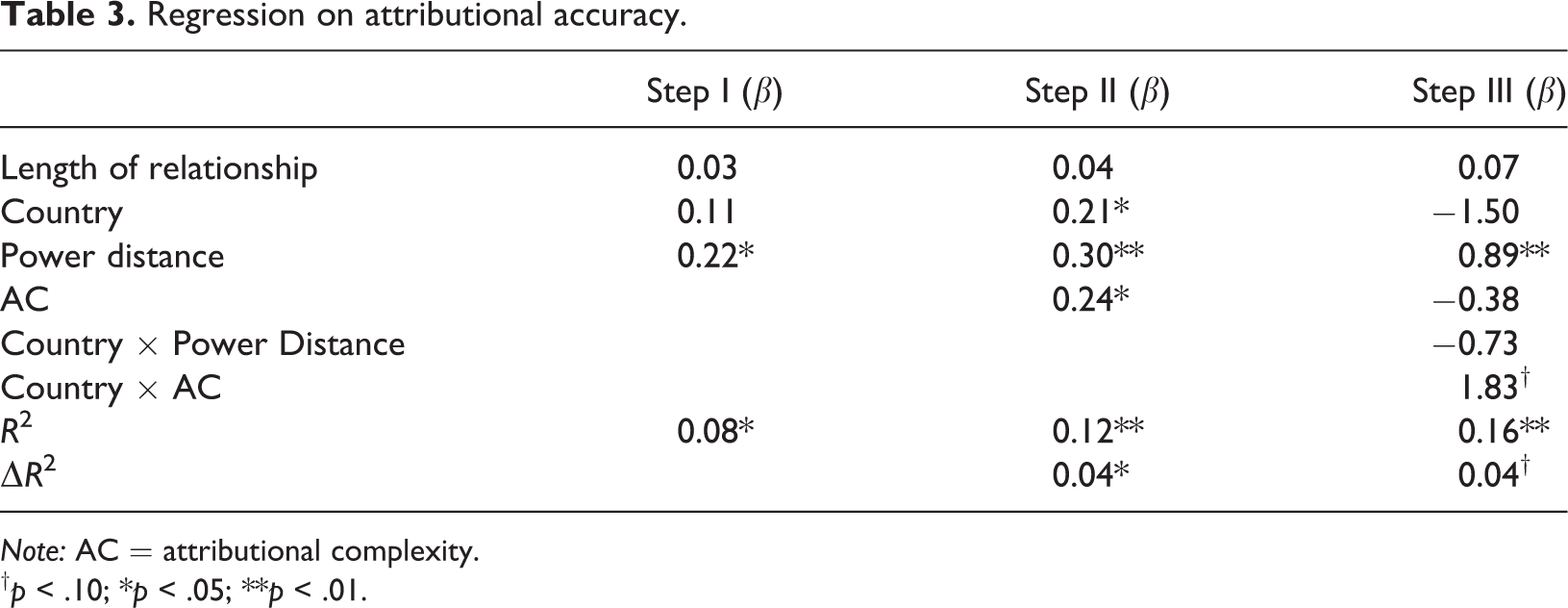
Note: AC = attributional complexity.
†p < .10; *p < .05; **p < .01.
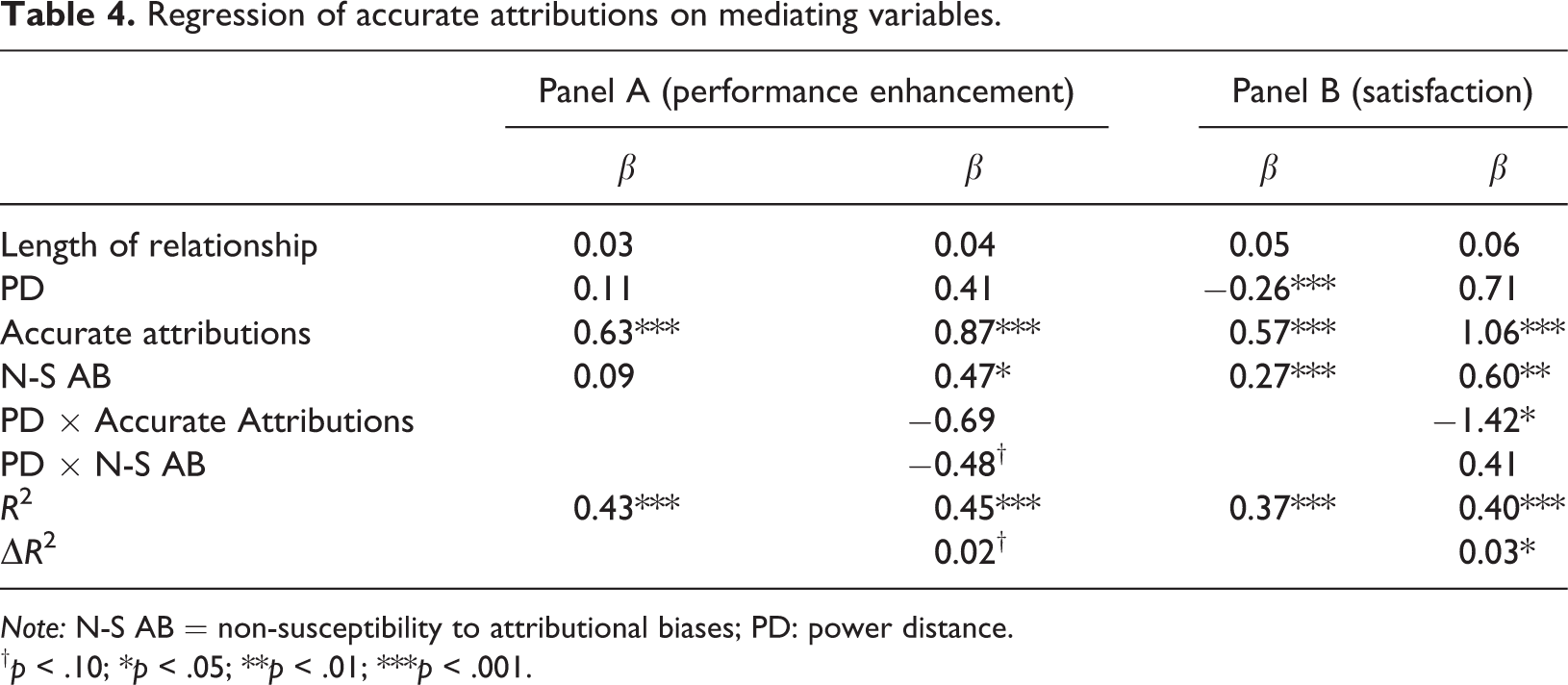
Regression of accurate attributions on mediating variables.
Note: N-S AB = non-susceptibility to attributional biases; PD: power distance.
†p < .10; *p < .05; **p < .01; ***p < .001.
Test of process model (mediation) of leadership perceptions.

Note: PD = power distance; PES = performance enhancement strategies; N-S AB = non-susceptibility to attributional biases.
*p < .05; **p < .01; ***p < .001.
Attribution complexity
Our first hypothesis relates AC of managers to the accuracy of their attributions as perceived by subordinates. The test of this hypothesis is shown in Table 3. We control for relationship tenure and power distance in the regressions shown in Table 3, in addition to a dummy code for country. The results in this table suggest that hypothesis 1 is supported. First, in step II of the regression, attribution complexity is significantly (β = 0.24, p < 0.05) related to accuracy of attributions. Additionally, as can be seen in step III, neither the general country variable nor the specific power distance variable yields an interaction effect. Thus, the direct effect of managerial AC on subordinate perceptions of attribution accuracy is stable across the two subsamples in this study.
Accurate attributions
We show the results of hypotheses 2 and 2a in Table 4. The results suggest that both of these hypotheses are strongly supported. First, accuracy of attributions is strongly related (β = 0.63, p < 0.001) to the effective design and the use of performance enhancement strategies by managers, in support of hypothesis 2. Second, accurate attributions are also related to subordinate satisfaction (β = 0.57, p < 0.001), in support of hypothesis 2a. Thus, accurate attributions resulting from higher levels of managerial attribution complexity are related to the leader behavioral variable of PES, in addition to the subordinate attitudinal variable of satisfaction.
Non-susceptibility to attributional biases
The results for the tests of hypotheses 3 and 3a are also shown in Table 4. These suggest that both of these hypotheses are supported. First, N-S AB is positively related (β = 0.47, p < 0.05) to the effective design and use of PES, in support of hypothesis 3. N-S AB is also significantly related (β = 0.27, p < 0.001) in the positive direction to subordinate satisfaction, in support of hypothesis 3a.
Power distance as a moderator
We find that the moderating impact of power distance along with accurate attributions is significant for subordinate satisfaction (β = −1.42, p < 0.05; H2c) but not for PES (see Table 4; H2b). We analyzed and plotted this interaction effect following Aiken and West (1991) as shown in Figure 2. Consistent with the hypothesis, the impact of accurate attributions on satisfaction is higher for those with low power distance orientation than those with high power distance orientation, as can be seen in Figure 2. Contrary to expectations, however, the corresponding interaction in hypothesis 2b was not significant for the dependent variable of PES.
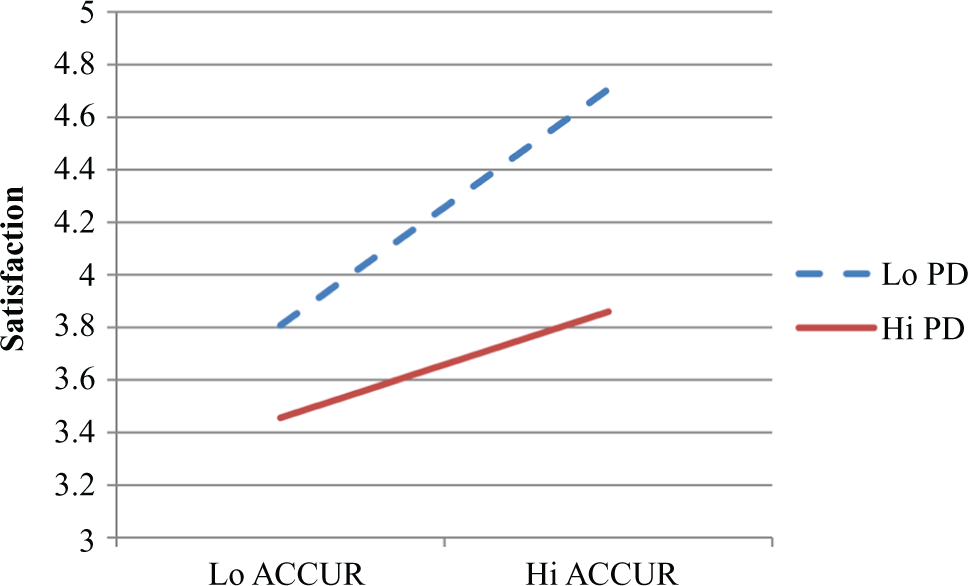
Plot of Power Distance × Accurate Attribution interaction on satisfaction.
Leadership perceptions
The results of the tests for hypotheses 4, 4a, 4b, 4c, and 5 are displayed in Table 5. These suggest that hypotheses 4, 4a, 4b, and 4c are strongly supported, whereas hypothesis 5 is partially supported. PES are significantly and positively related (β = 0.34, p < 0.001) to leadership perceptions, in support of hypothesis 4 (see step III in Table 5). In support of hypothesis 4a, subordinate satisfaction is strongly related (β = 0.25, p < 0.001) to their perceptions of leadership provided by their managers, as can also be seen in step III of the model shown in Table 5. Following Baron and Kenny (1986), the support for the mediation hypothesis in Table 5 can be seen in three steps. First, as shown in step II of the regression, both accurate attributions of managers (β = 0.66, p < 0.001) and their unbiased attributions (β = 0.22, p < 0.001) are strongly related to the leadership perceptions held by subordinates, thereby establishing the direct effect of the two attribution variables on leadership perceptions. Second, the support for hypotheses 4 and 4a described above establishes the direct relationship between subordinate satisfaction and PES on the one hand, with leadership perceptions on the other. Finally, after the introduction of PES and subordinate satisfaction in step IV of the regression, one can see that the coefficient for accurate attributions has reduced in magnitude and that for unbiased attributions is no longer significant, indicating partial mediation, in partial support of hypothesis 5. Thus, the intermediate variables of PES and subordinate satisfaction partially mediate the relationship between accurate and unbiased attributions and leadership perceptions.
Power distance as a moderator
Table 5 also shows the results for hypotheses 4b and 4c, indicating strong support for the cultural impact of power distance. First, the interactive effect of power distance and PES on leadership perceptions is significant (β = 1.01, p < 0.05). We analyzed and plotted this interaction effect following Aiken and West (1991) as shown in Figure 3(a). As can be seen from this figure, it is in the expected direction and in support of hypothesis 4b. The impact of PES on leadership perceptions is stronger for those with high power distance orientations than those with low power distance. Next, the interactive impact of power distance and satisfaction on leadership perceptions is significant (β = −1.60, p < 0.001). Analyzing and plotting this interaction effect following Aiken and West (1991) (see Figure 3(b)), we find that it is in support of hypothesis 4c. Consistent with the hypothesis, the impact of enhanced levels of subordinate satisfaction on leadership perceptions is stronger in low power distance cultures than in high power distance cultures. We discuss these findings in the following.
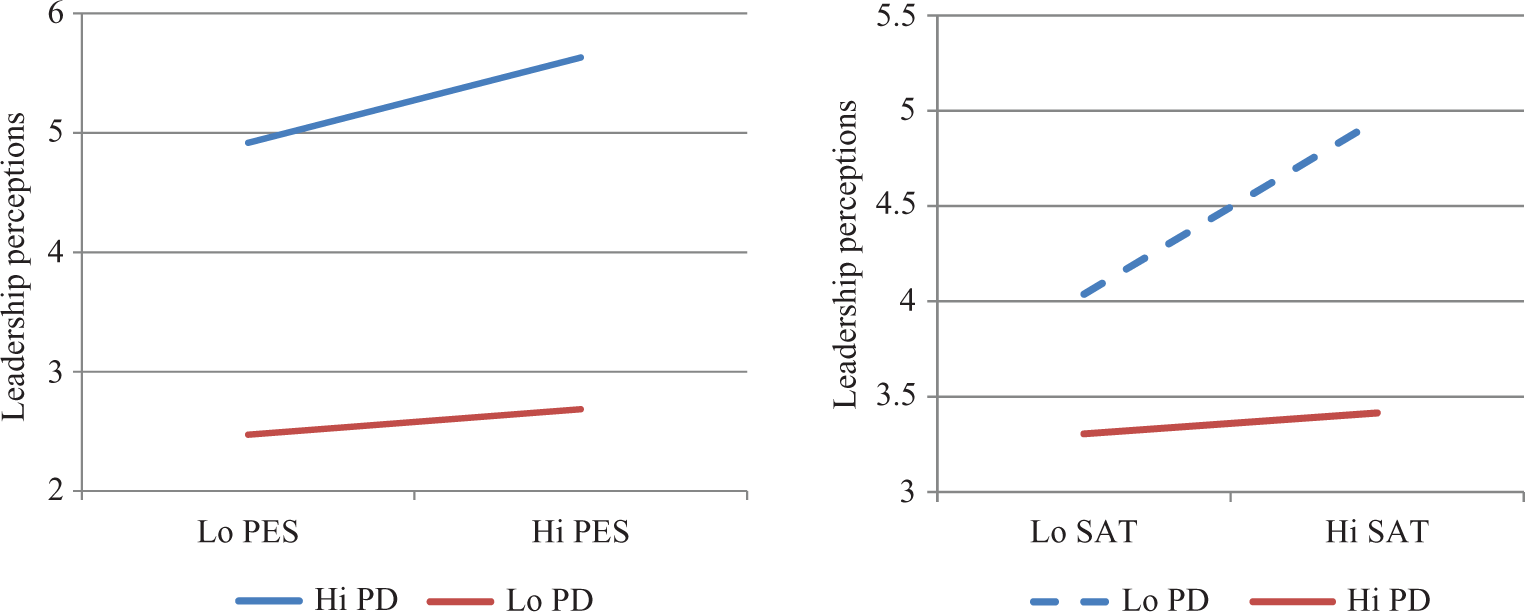
Plot of (a) Power Distance × Performance Enhancement Strategy on leadership perceptions and (b) Power Distance × Satisfaction interaction on leadership perceptions.
Discussion
Despite the importance of AC (Lakshman, 2013; Sun and Anderson, 2012) and isomorphic attributions (Triandis, 1975) to the IB and comparative management literature, these have not been adequately empirically examined in extant research. We contribute to this literature by establishing the empirical link between AC and isomorphic (accurate) attributions in two countries. We also contribute by providing empirical evidence to support earlier arguments (Chen and Van Velsor, 1996; Lakshman, 2013) that attribution is often the key mediating process through which leaders and subordinates interpret and evaluate each other’s behaviors. First, and most important, we find support for the fact that attributionally complex managers are seen to be making accurate attributions for their performance by subordinates. Attribution complexity is a finer grain measure of cognitive complexity (Scott et al., 1979), pertaining only to the domain of attributions (Fletcher et al., 1986), with well-established reliability and validity. Attributionally complex individuals are better able to think through both internal and external attributions, complex interrelationships between multiple internal attributions such as attitudes, beliefs, and efforts and temporally separated causes (internal and external) for any specific performance episode. High AC individuals are likely to use a causal reasoning process similar to that involving dialectical logic (e.g. MacNab and Worthley, 2012), resulting in higher perceptual accuracy. Thus, we contribute to the international management literature that has neither focused on accuracy of attributions in leadership contexts nor has considered the role of AC in leadership to date. Our findings suggest that managers who score higher on AC are likely to make more accurate attributions and thereby have an impact on leadership perceptions through a behavioral process. This behavioral process has been identified as the key mediating process in leader–subordinate interactions in international contexts (Lakshman, 2013). Therefore, our evidence for AC, from a behavioral focus based on attributions, as opposed to trait connections to transformational leadership (as in Sun and Anderson, 2012) serves as a critical contribution of this study. However, what is clear is that the construct of AC deserves further investigation in the context of global leadership studies, as duly pointed out by Sun and Anderson (2012). From an international management perspective, such investigations need to focus more on attributional processes following managerial attributions.
We also contribute to the leadership literature using an implicit leadership theory framework (as in GLOBE) and identifying and distinguishing between desirable and undesirable attributions in two countries. Subordinates in both France and India seem to prefer accurate (isomorphic) attributions and unbiased (racially and gender-wise) attributions, although the manner in which this is seen was found to be different depending on cultural orientations. We find that our process model of AC and attribution accuracy-related interactive leader behaviors is largely supported in both cultures examined. Important leadership behaviors, along the lines of interpersonal citizenship behaviors (ICBs) identified recently within this literature (see Lakshman, 2013), are immediate outcomes of accurate attributions. In this study, we investigated the role of integrative PES (see Sillars, 1981) developed and communicated by managers and found that these are an outcome of attribution accuracy and that they have an impact on leadership perceptions. Furthermore, subordinate attitudinal variables such as satisfaction mediate the relationship between attribution accuracy and leadership perceptions. We therefore also contribute by developing and demonstrating the support for a process model of attribution accuracy leading to leadership perceptions discussed in the literature (Chen and van Velsor, 1996; Lakshman, 2013; Triandis, 1975).
By examining and showing evidence for the impact of power distance, we also contribute to the cross-cultural management literature on leadership. Much of our arguments on accurate attributions were based on dominant North American literature, which is inherently low in power distance. Consistent with this argument, we found, for instance, that accurate attributions have a stronger impact on subordinate satisfaction in low power distance cultures than in high power distance cultures. Such subordinate satisfaction in turn is likely to have a stronger impact on leadership perceptions (thus more desirable) in low power distance cultures compared to the opposite. Our findings would suggest that accurate attributions would play a relatively lesser role in leader–subordinate interactions in high power distance cultures, although it is likely to be important in an absolute sense across all cultures. Additionally, our findings would also suggest that although subordinate satisfaction may be important across all cultures, it may be more so in low power distance cultures than in high. We think that this is primarily because subordinates in high power distance cultures are more accepting and less likely to challenge/question supervisor judgments. Thus, both accuracy of attributions made by managers and subordinate satisfaction play a relatively weaker role in high power distance cultures than in low.
We also found that PES were more likely to be offered by managers in high power distance cultures and relatively more desirable in these contexts than in others. Thus, although important for all cultures, leader behaviors directed at enhancing performance through feedback are that much more appreciated in high power distance cultures. These cultural variations in desirability of leader behaviors across cultures are relatively new to the literature and hence contribute to the development of a stronger base of knowledge in IB. Despite these cultural variations, we should note, however, that accurate attributions and unbiased attributions, along with the mediating behavioral variables, are equally desirable in both cultures examined. These relationships need to be examined in other cultures with varying degrees of power distance and other cultural value dimensions.
Despite these valuable contributions, our study suffers from some limitations. Although we collected data from both managers and subordinates, our research design is still cross-sectional and hence subject to caution in the interpretation of causality of the relationships. We sought respondents for our study from executive education programs, which may perhaps have resulted in a sample of managers who value human capital enhancements and are high in need for cognition. However, the AC literature notes that higher levels of education or higher need for cognition are not necessarily correlated with AC (e.g. Reid and Foels, 2010) and that therefore does not necessarily imply artificially elevating AC or accuracy levels in the study by virtue of sampling errors. Additionally, although Sullivan and Reno (1999) identify three different methods of measuring accuracy of perceptions, they state that no single study has measured such a construct using all three methods. Our study is subject to this limitation as well. However, we do measure accuracy of attributions from subordinates and relate it to AC measured from managers and demonstrate a significant relationship. Future studies would do well in using two or more of the following three methods of measuring accuracy: (a) consensus of attributions, (b) correspondence of attributions to an objective criterion, and (c) pragmatic utility of the attribution, identified by Sullivan and Reno (1999). It is to be noted that Triandis’ (1975) conception of isomorphic attributions refers to Sullivan and Reno’s (1999) method of “consensus of attributions.” Our measure of accuracy of attributions is in fact different from all three of the above, as it captures perceptions of accuracy, which are perhaps related to “pragmatic utility” to the participants. How different measures of accuracy impact the relationships outlined in attribution theories of leadership in general and the specific model used in this study can and should be investigated in future research.
Despite these limitations, our study results are strong and carry a number of managerial implications. First, our results reaffirm the value of isomorphic attributions (Triandis, 1975) and the value of the culture assimilator training (e.g., Landis and Wasilewski, 1999) identified by traditional IB research. As noted earlier, the cultural assimilator training builds on the foundation provided by the notion of isomorphic attributions drawn from the theory of attributions. We extend the traditional focus on isomorphic attributions by showing its value for desirable leadership behaviors (Den Hartog et al., 1999) in two different cultures. More importantly, we demonstrate the significance of AC for isomorphic attributions in this study, thereby highlighting the importance of AC training for managers in IB contexts. Expatriates and other cross-cultural managers (e.g. third country nationals or host country nationals) can be trained to increase their AC, which can heighten their awareness and sensitivity to the complexity of human behavior across cultures and make them more effective in IB ventures. Improving AC of managers can help tap into the crucial process through which they can gain the trust and acceptance of subordinates across cultures. Such trust and acceptance is only likely to lead to higher levels of self-efficacy and motivation for the subordinates and improved performance and cross-cultural leadership effectiveness for the managers and their organizations. Recent research (Lakshman, 2013) has noted that AC training can help shift managers’ culture-specific capabilities developed through the culture assimilator (e.g. Brislin et al., 1983; Tolbert and McLean, 1995) to culture-general capabilities. This recent research has also noted that bicultural individuals who have significant exposure to two different cultures (Brannen and Thomas, 2010) may already possess high levels of AC (Lakshman, 2013). Thus, selection practices of organizations in IB may focus on choosing biculturals and further enhancing their AC through training for the purpose of enjoying the benefits of higher levels of leader effectiveness. Selecting and training international assignees for higher levels of AC would serve to minimize expensive attrition and assignee failure in such settings.
Conclusion
Research on AC has only recently started to focus on accuracy (isomorphism) of attributions and the resulting behavioral processes of managers that lead up to effective management of people across countries (Lakshman, 2013). This study, the model presented herein, and the results provided serve to contribute strongly in this direction of investigating AC, its impact on accurate attributions, and subsequent processes of leadership. As indicated here, attribution complexity on the part of managers is a critical antecedent to accurate attributions. Further, attributions made by managers can contribute to a whole process resulting in positive leadership perceptions (Forsterling and Morgenstern, 2002). Recent evidence suggests that AC is linked to transformational leadership (Sun and Anderson, 2012) and thereby a set of universally desirable leadership behaviors (Den Hartog et al., 1999). Thus, AC is clearly emerging as an important variable in IB and cross-cultural management as demonstrated here from a behavioral process perspective. More specifically, this study shows a relationship between AC and accuracy of managerial attributions in two different cultures, thereby providing critical theoretical and empirical contributions to the IB literature on isomorphic attributions and leadership. We hope that this will serve as the impetus for researchers to more deeply investigate these attributional variables in the context of cross-cultural leadership.
Footnotes
Declaration of Conflicting Interests
The author(s) declared no potential conflicts of interest with respect to the research, authorship, and/or publication of this article.
Funding
The author(s) received no financial support for the research, authorship, and/or publication of this article.