



Abstract
This article focuses on consumer–brand relationships in the social media environment and suggests a typology of the benefits and costs consumers perceive when interacting with social media brand pages. Employing an online questionnaire, quantitative data were collected from 881 followers of popular brand pages on both Facebook and Twitter. Study results indicate that followers of brand pages on Facebook and Twitter perceive “social,” “functional,” “enjoyment,” “special treatment,” “self-enhancement,” “advice,” and “status” benefits. “Privacy concern,” “information overload,” and “ad irritation” are consumers’ perceived costs. As the same seven factors of relational benefits and three factors of relational costs have been confirmed across all Facebook and Twitter brand pages, it is argued that the structure and dimensions of relational benefits and costs are medium and brand invariant, and are perceived in the same way by Facebook and Twitter followers. Considering the rapid development of social media and their penetration in business marketing actions, this research contributes to the digital marketing literature by providing a better understanding of relational benefits, relational costs, and consumer–brand relationships in a social media context. Finally, the article offers recommendations to brand managers, when designing appropriate social media content, that can enhance and strengthen a brand’s relationship with its customers.
Keywords
Introduction
The emergence of communication technologies, which have developed in parallel with the rise of the Internet, have served as platforms facilitating interaction with and among consumers, allowing the formation of brand communities in social networks (Zaglia, 2013). The advent of social networking sites has not only introduced radically new means and ways of interaction between individuals but also altered the digital marketing landscape (Hudson, Huang, Roth, & Madden, 2016). Consumers increasingly use social media (SM) platforms to interact with the firms they love and purchase from, as well as with other consumers who may have insights about these firms (Kabadayi & Price, 2014). Concurrently, due to the popularity and the interactive nature of SM, companies are increasingly building their own brand communities or brand pages (De Vries, Gensler, & Leeflang, 2012; Jahn & Kunz, 2012; Martins & Patricio, 2013) on popular social networking sites such as Facebook and Twitter to spread messages about their brand, drive engagement and awareness, and create and enhance relationships with customers (Kabadayi & Price, 2014; Kang, Tang, & Fiore, 2014; Rohm, Kaltcheva, & Milne, 2013; Valos, Habibi, Casidy, Driesener, & Maplestone, 2016).
For a long-term consumer–brand relationship to develop and last, consumers must perceive the relationship to be valuable enough to stay. One of the most promising conceptual approaches within the relationship marketing literature, which explains to a significant degree the success or failure of relationships between companies and customers, is the relational benefits and costs approach (Bendapudi & Berry, 1997; Gwinner, Gremler, & Bitner, 1998; Morgan & Hunt, 1994; Reynolds & Beatty, 1999). Relational benefits are the benefits customers receive beyond the core offering of the company, and are derived from an established, long-term relationship with a firm, while relational costs refer to all the monetary and non-monetary sacrifices consumers face while in a relationship with a firm (Bendapudi & Berry, 1997; Gwinner et al., 1998; Morgan & Hunt, 1994; Reynolds & Beatty, 1999).
The interactive nature of SM has led marketers to refocus their marketing objectives, prioritizing the establishment and maintenance of fruitful consumer–brand relationships via SM interactions (Hudson et al., 2016). However, a main challenge in doing so lies in generating engaging content that will make consumers perceive important relational benefits from the page (Zhang & Luo, 2016). Engaging SM brand pages not only ensure that consumers enjoy a positive experience along with their participation but also enhance and strengthen the brand–consumer relationship (Gutiérrez-Cillán, Camarero-Izquierdo, & San José-Cabezudo, 2017; Relling, Schnittka, Sattler, & Johnen, 2016).
Even though SM have been recognized as potentially the most powerful medium for relationship building (Hudson et al., 2016; Labrecque, 2014), very little is known about how SM relate to consumers’ relationships with brands, and how SM-based consumer–brand interactions are perceived by consumers. In the literature, there is a lack of systematic work based on conceptual frameworks that simultaneously captures and examines what benefits and costs consumers perceive through the use of SM brand pages. Previous research has mainly focused on the relational benefits based on customer–brand relationships in traditional services (e.g., P. T. Chen & Hu, 2012; C. H. Wang & Hsu, 2012), and has almost neglected the prospect of relational benefits and costs derived from consumer–consumer and consumer–brand relationships in the SM context. In addition, many businesses today fail to use SM brand pages effectively to accomplish marketing goals, mainly because they do not fully understand the mechanisms of consumers’ participation in SM brand pages (Martins & Patricio, 2013) or are unable to successfully meet consumer benefit needs (Zhang & Luo, 2016). Therefore, empirical studies that look into the nature of SM consumer–brand relationships are needed.
Considering this gap, the article aims to identify a typology of the benefits and costs consumers perceive from interacting with Facebook and Twitter brand pages, thus extending the relational benefits and costs frameworks in the context of SM. Through this examination, this study provides firms with insights to enhance the benefits perceptions of consumers, while minimizing the perceived costs that can jeopardize brand communication efforts and consumer–brand relationship longevity. Thus, the present study not only contributes to the theory of relationship marketing through its empirical investigation in the context of SM but also has important implications for brand managers who strategically employ SM for the enhancement of brand–customer relationships.
The remainder of the article is organized as follows. First, the concepts of relational benefits, relational costs, and SM are introduced. Second, the methodology of the field study is presented, followed by a presentation of the findings. It concludes by discussing the results and offering managerial implications, limitations, and directions for future research.
Theoretical background
SM brand pages
Traditionally, companies have tried to reach consumers and build relationships through conventional marketing activities such as public relations, reward programs, and direct marketing (Jahn & Kunz, 2012). The emergence of social networks brought major changes in marketing practices and company–customer relationships by enabling the establishment of SM brand pages, where companies frequently develop direct relationships with their fans (Martins & Patricio, 2013). SM brand pages can be found in the literature as “brand fan pages” (De Vries et al., 2012; Jahn & Kunz, 2012) or as “company social networks,” which according to Martins and Patricio (2013) are “a group of people (followers, fans) connected to a company or brand within the boundaries of a social network site” (p. 568).
Recent research shows that the marketing budgets directed toward SM are constantly growing, suggesting that brands are increasingly interested in interacting with fans, shaping their experiences and leveraging their voices for greater marketing impact (Hudson et al., 2016). SM brand pages are mainly company driven and used as an explicit brand communication and interaction channel (Jahn & Kunz, 2012). Through them, companies offer activities and content related to the brand, or the core product or service, while the consumer–brand interactions are now more complex, as they represent a multi-party conversation about the brand rather than a brand-dictated monologue (Tsimonis & Dimitriadis, 2014). SM brand pages are usually visible to all SM users, with distinct spaces for static information about the company and for interactions with and among followers. When consumers connect with a brand on SM, they start receiving company updates and news on their personal page stream without needing to revisit the page. Furthermore, followers of an SM brand page are more likely to post comments on the page, get in contact with the company, forward messages and offers from the page, and interact with other followers (Hudson et al., 2016).
Relational benefits
According to the theory of relationship marketing, for a relationship to develop and last, both parties should receive some benefits additional to those stemming from the core product or service. Two widely adopted and used typologies of relationship benefits within an off-line service context were proposed by Gwinner et al. (1998) (i.e., “confidence,” “social,” and “special treatment” benefits) and Reynolds and Beatty (1999) (i.e., “social” and “functional” benefits). With the emergence of the Internet and e-commerce, several authors studied and confirmed the existence of the relational benefits proposed by Gwinner et al. (1998) in a Web 1.0 environment. These were “confidence” and “special treatment” by Yen and Gwinner (2003), and “confidence,” “special treatment,” and “social” by Colgate, Buchanan-Oliver, and Elmsly (2005) and Su, Li, and Cui (2009).
Similarly, a number of authors have studied the benefits that people expect (defined as “motives”) or actually perceive when participating in a social network environment. This involved adopting mainly “use and gratifications” (U&G; Katz, Blumler, & Gurevitch, 1974; Nambisan & Baron, 2009), “motivation” (Davis, Bagozzi, & Warshaw, 1992), or “social identity” (Bagozzi & Dholakia, 2002) theories. For instance, studies based on the motivation theory have explored the role of a series of motives such as “usefulness” (e.g., Lin & Lu, 2011) and “status” (e.g., D. C. Li, 2011), and perceived benefits such as “enjoyment” (e.g., D. C. Li, 2011; Lin & Lu, 2011), on intentions to use social networks. The study of Parra-López, Bulchan-Gidumal, Gutierrez-Tano, and Diaz-Armas (2011) revealed that intentions to use SM when organizing and taking vacation trips are directly influenced by the perceived benefits (“social,” “functional,” “hedonic,” and “psychological”). Gummerus, Liljander, Weman, and Pihlström (2012) studied the effect of customer engagement behaviors within a Facebook brand community on perceived relational benefits and relationship outcomes, and confirmed the existence of “social,” “entertainment,” and “economic” benefits. Based on the U&G theory, Y. Wang, Chan, and Yang (2013) examined how customer interactions in virtual brand communities affect the perceptions of “social-integrative,” “cognitive,” “personal integrative,” and “affective” benefits and brand loyalty. Likewise, Jung, Kim, and Kim (2014) proposed that “social” and “information” benefits affect the attitude toward an online brand community, while Park and Kim (2014) examined the existence of “functional” (information and economic) and “experiential” (social and hedonic) benefits in the context of company social networks. Also, Kang et al. (2014) studied the impact of “functional,” “social-psychological,” “hedonic,” and “monetary” benefits on active participation in restaurant SM pages. Finally, Zhang and Luo (2016) confirmed the positive impact of “confidence,” “social,” and “honor” benefits on satisfaction with an SM community.
Relational costs
Apart from benefits, the development and maintenance of a relationship between customers and firms is supposed to generate, or require from the customer, some sacrifices and costs. Relational costs have been mainly discussed and empirically examined as “termination” (Bendapudi & Berry, 1997; Morgan & Hunt, 1994) or “switching” (Burnham, Frels, & Mahajan, 2003; Jones, Reynolds, Mothersbaugh, & Beatty, 2007) costs.
In the online environment, costs arising from consumer–brand relationships take a quite different form. The use of online environments such as e-commerce websites, online communities, and personal social networking sites is accompanied by a series of consumer concerns, unpleasant experiences and feelings related to, and derived from, marketing, and promotional actions of firms. These can make the use of such environments difficult and generate perceptions of certain costs. The most commonly discussed and examined costs in the online environment are “effort” costs and “difficulty of use” (e.g., Parra-López et al., 2011), “privacy concern” (e.g., Ku, Chen, & Zhang, 2013), “ad irritation” (e.g., Baek & Morimoto, 2012), and “information overload” (e.g., Y. C. Chen, Shang, & Kao, 2009).
“Effort” costs concern the time and the personal effort needed to find information of interest by means of SM, while “difficulty of use” concerns all the processes that Internet users face when trying to contribute by posting comments and expressing opinions on SM pages (e.g., login, registration), which may force them quit the process (Parra-López et al., 2011). With the emerging popularity of social networks, some researchers have begun giving attention to the issue of “privacy concern” in the context of online social networking (e.g., Ku et al., 2013; Tan, Qin, Kim, & Hsu, 2012). “Privacy concern” is a person’s awareness and assessment of risks related to privacy violations (Tan et al., 2012). In other words, it is an individual’s concern about who has access to his or her private information, and how such information will be used. Hence, “privacy concern” is suggested as causing additional psychological costs for the consumer in an online environment (Tan et al., 2012). Similarly, the advent and the continuously growing use of SM has led to an increase in the amount of information to which users are exposed, making consumers experience “information overload” (Y. C. Chen et al., 2009). “Information overload” refers to the simple notion of receiving too much information. It is defined as the difference between the volume of information supplied and an individual’s information processing capacity (Y. C. Chen et al., 2009). Also, stemming from the advertising and psychology literatures, “ad irritation” on the Internet has been perceived and studied as a negative feeling in response to online advertisements. This can cause disturbance and interruption to performance of a task such as thinking (Baek & Morimoto, 2012). As online activities in social networks involve mostly enjoyment of the content, and individuals tend to be more task-oriented when online, they usually perceive online advertisements as being intrusive and irritating (H. Li, Edwards, & Lee, 2002).
Although a number of studies have theoretically proposed or empirically tested the existence of various individual benefits and unpleasant experiences perceived by Internet users in several online contexts (i.e., e-commerce websites, online communities, personal social networking sites), none of them have examined and identified what relational benefits and costs consumers simultaneously perceive through their participation in company created Facebook and Twitter brand pages.
Hence, this article aims to
identify the benefits and costs consumers perceive through their participation in Facebook and Twitter brand pages, and
propose and validate a typology of relational benefits and costs that will operate as an integrated marketing mechanism for firms to strategically enhance brand communication efforts and consumer–brand relationship development and continuance in the SM environment.
Methodology
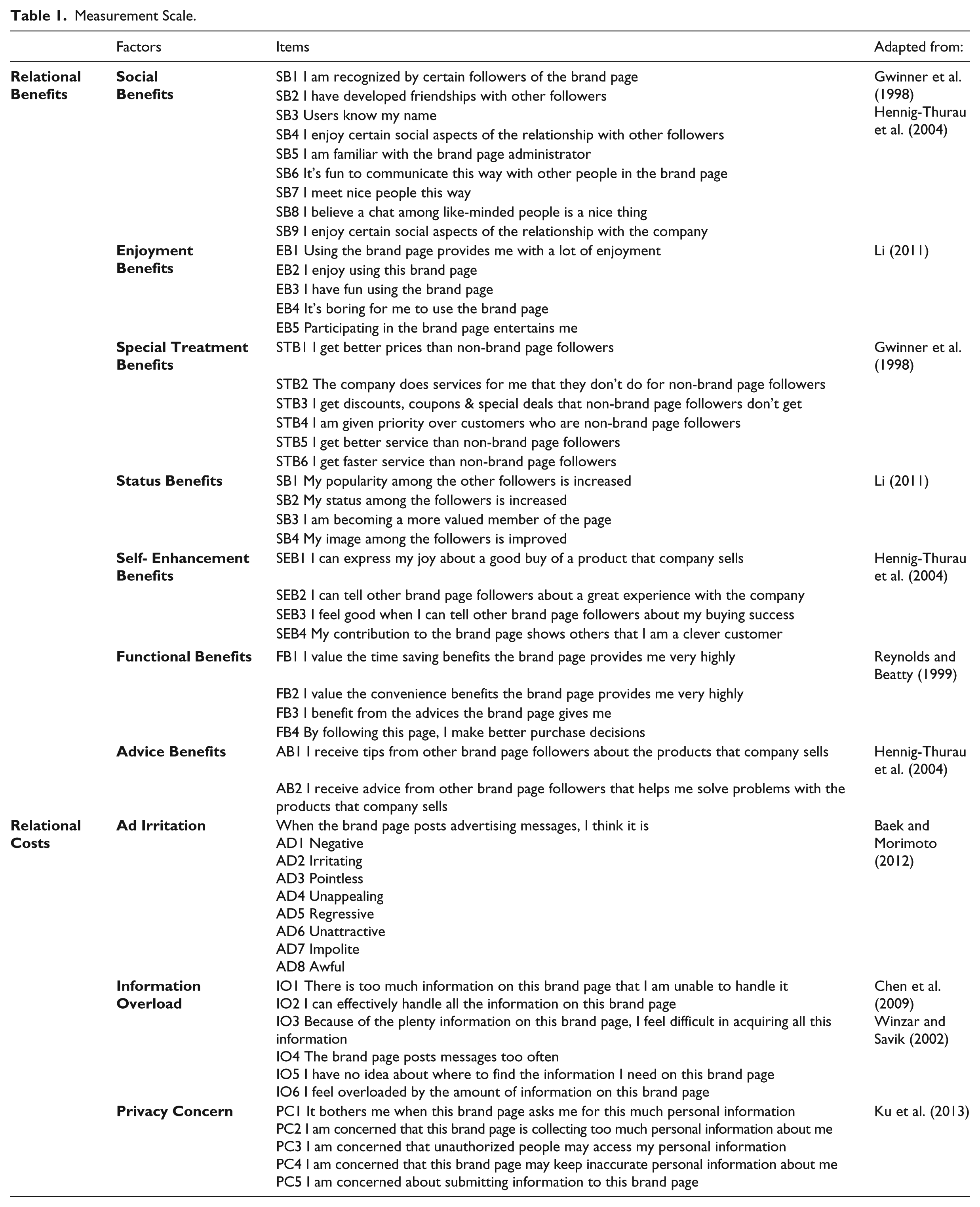
Given the purpose of this research, the study undertook quantitative research using the survey method, which is an effective way to gather quantitative data (Hair, Black, Babin, & Anderson, 2010). Measurement items were adapted to the study’s specific context from established scales. Table 1 presents the items of the measurement scale and their respective theoretical sources. All items of the questionnaire were measured on a 7-point Likert-type scale ranging from “strongly disagree” to “strongly agree.” Because the study took place in Greece, the questionnaire was translated from English to Greek following the “Back-Translation” methodology (Behling & Law, 2000). The questionnaire was also slightly adjusted according to the medium (Facebook or Twitter), and the specific company or brand.
Measurement Scale.
The questionnaire was subjected to a rigorous pilot testing process to eliminate flaws and to identify potential concerns by using two highly recommended pre-testing methods: personal interviews and field survey for pre-testing (Churchill, 1995; Hunt, Sparkman, & Wilcox, 1982). The final questionnaire for each firm’s Facebook and Twitter brand page was uploaded on an online survey platform.
Data collection
Following a thorough screening process, we identified SM brand pages that had regular posting activity and content updates, and a relatively large number of followers on both Facebook and Twitter. It also ensured that participants had adequate experience with the SM brand pages. Fifteen firms were invited by email to take part in the research. Subsequently, two leading firms/brands operating in telecommunication services and FMCG (Fast-Moving Consumer Goods) in Greece agreed to have a link to the survey instrument displayed on their SM brand pages on Facebook and Twitter (Table 2) to target their followers. This resulted in the collection of survey data from four purposive samples, which are representative of the SM population in Greece. In total, 881 followers of Facebook (470) and Twitter (411) brand pages completed the online questionnaire. The majority of the respondents were aged between 18 and 54, with 58% males and 42% females (Table 3). Hence, the sample profile is comparable to the generic SM population or to the ones typically observed in similar studies (Socialbakers, 2017).
Participating companies/brands, SM brand page followers, and sample size.
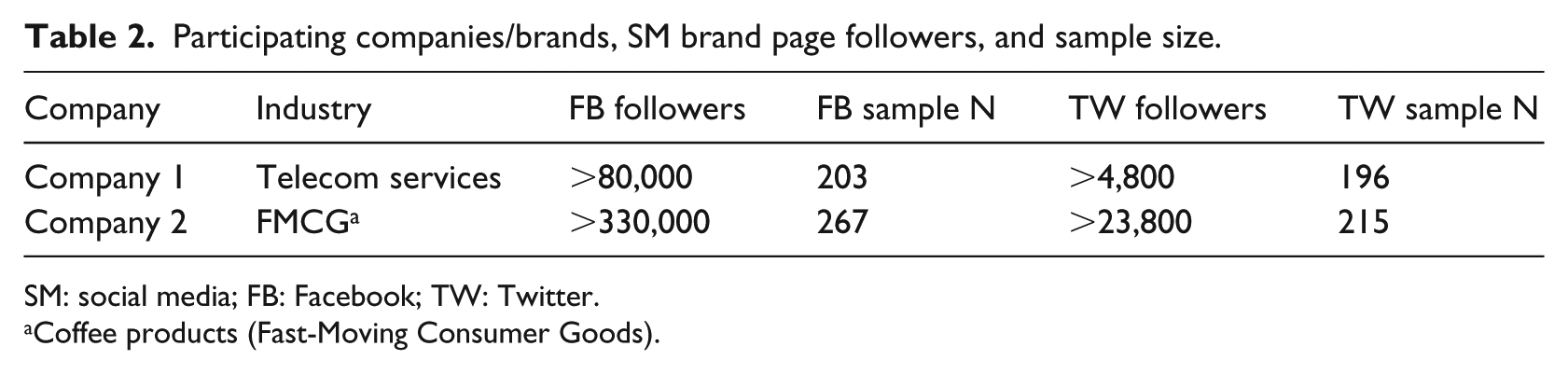
SM: social media; FB: Facebook; TW: Twitter.
Coffee products (Fast-Moving Consumer Goods).
Sample demographics.
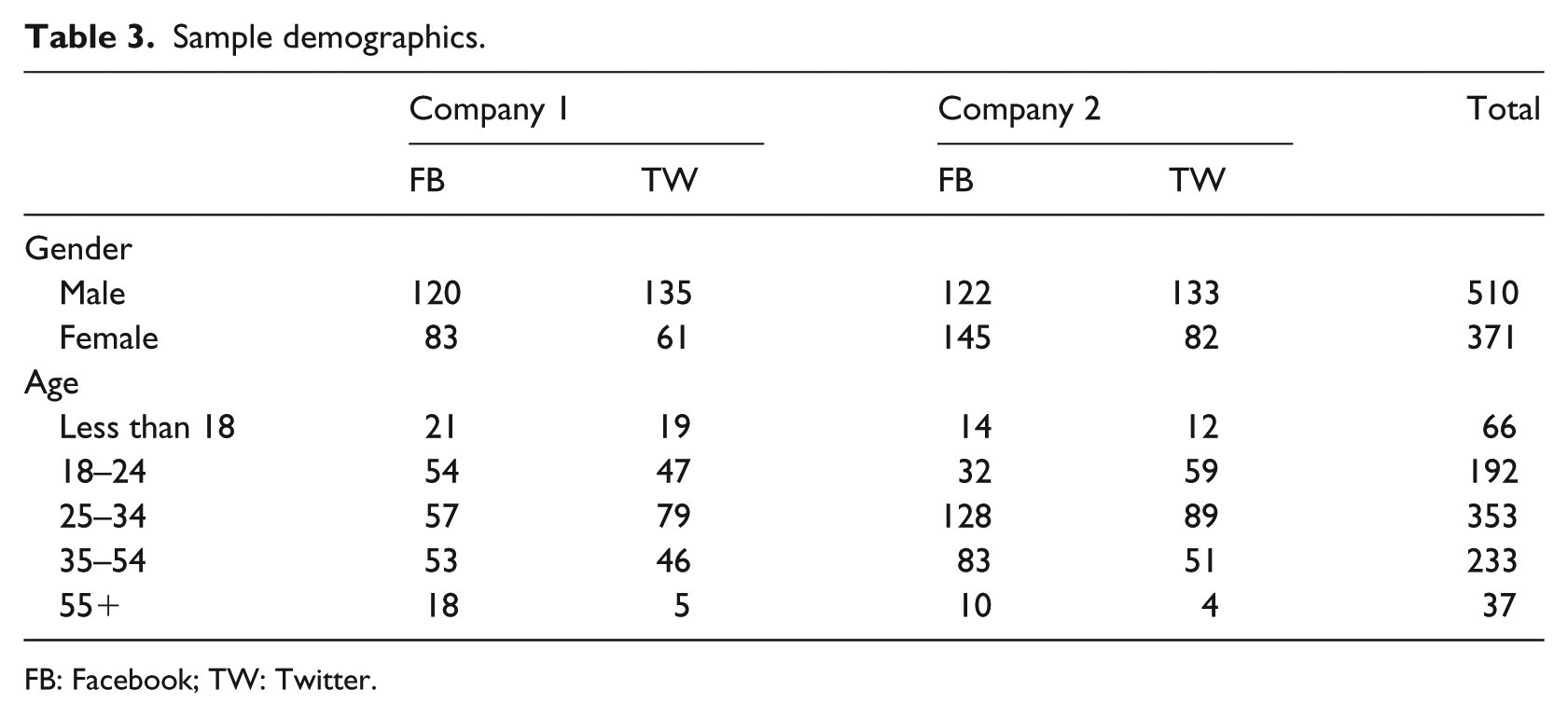
FB: Facebook; TW: Twitter.
Results
Exploratory factor analysis (EFA) was first carried out to explore the structure of the data and identify the factors of relational benefits and costs. 1 Subsequently, confirmatory factor analysis (CFA) was performed to confirm the factors of relational benefits and costs and assess the psychometric properties and the unidimensionality of the measurement scales using two Facebook and two Twitter samples. Based on the goodness-of-fit indices, which were above their recommended thresholds (Hair et al., 2010), the measurement scales of relational benefits and costs reflected a good fit for the data (Tables 4 and 5). The CFA verified the seven-factor solution for relational benefits consisting of “Social,” “Enjoyment,” “Special Treatment,” “Status,” “Self-Enhancement,” “Functional,” and “Advice” benefits (Table 4). CFA also demonstrated the existence of three factors for relational costs as expected: “Ad Irritation,” “Information Overload,” and “Privacy Concern” (Table 5). In each performed CFA, most item loadings were well above the recommended threshold of .70 and were statistically significant.
CFA for relational benefits.
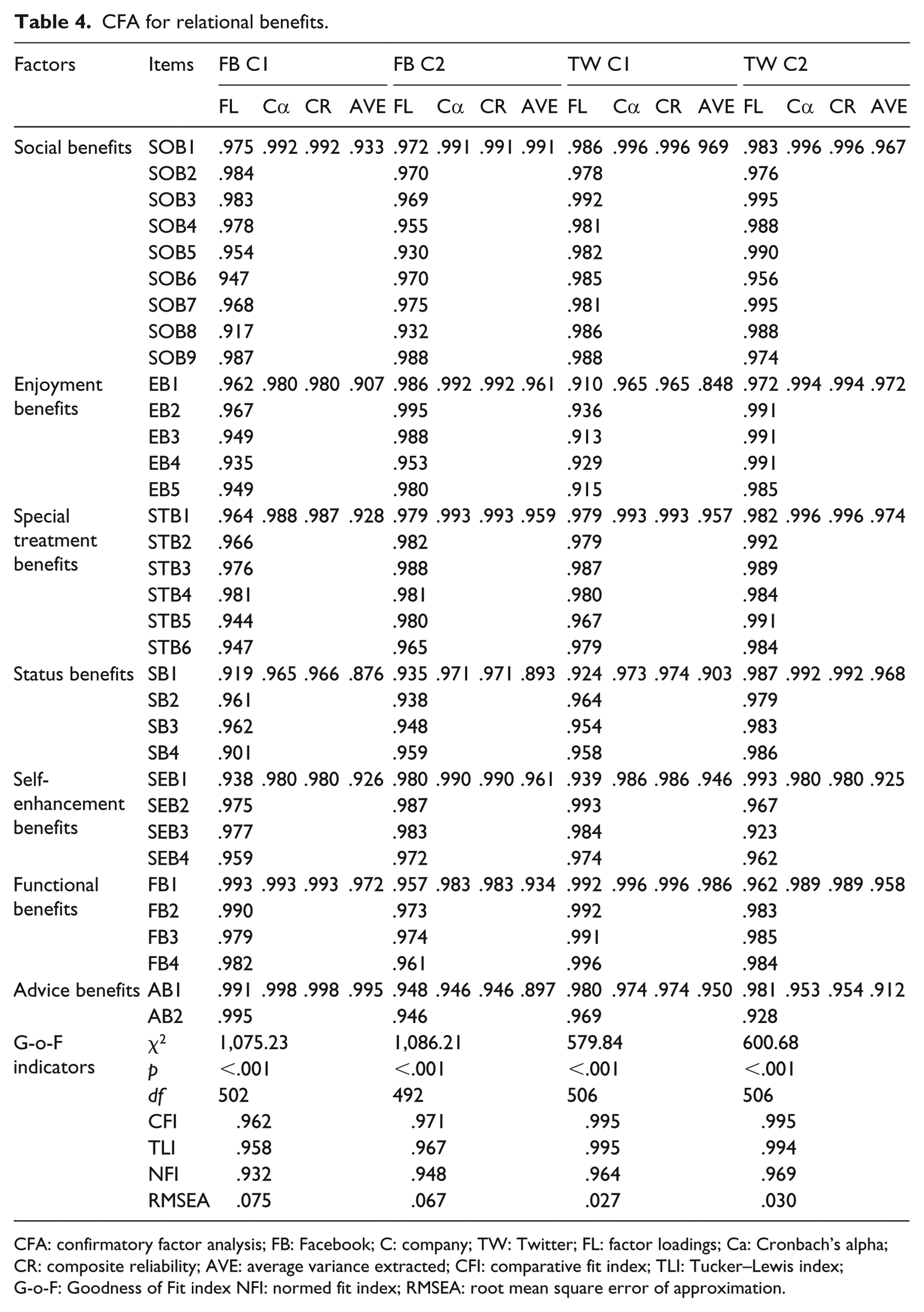
CFA: confirmatory factor analysis; FB: Facebook; C: company; TW: Twitter; FL: factor loadings; Ca: Cronbach’s alpha; CR: composite reliability; AVE: average variance extracted; CFI: comparative fit index; TLI: Tucker–Lewis index; G-o-F: Goodness of Fit index NFI: normed fit index; RMSEA: root mean square error of approximation.
CFA for relational costs.
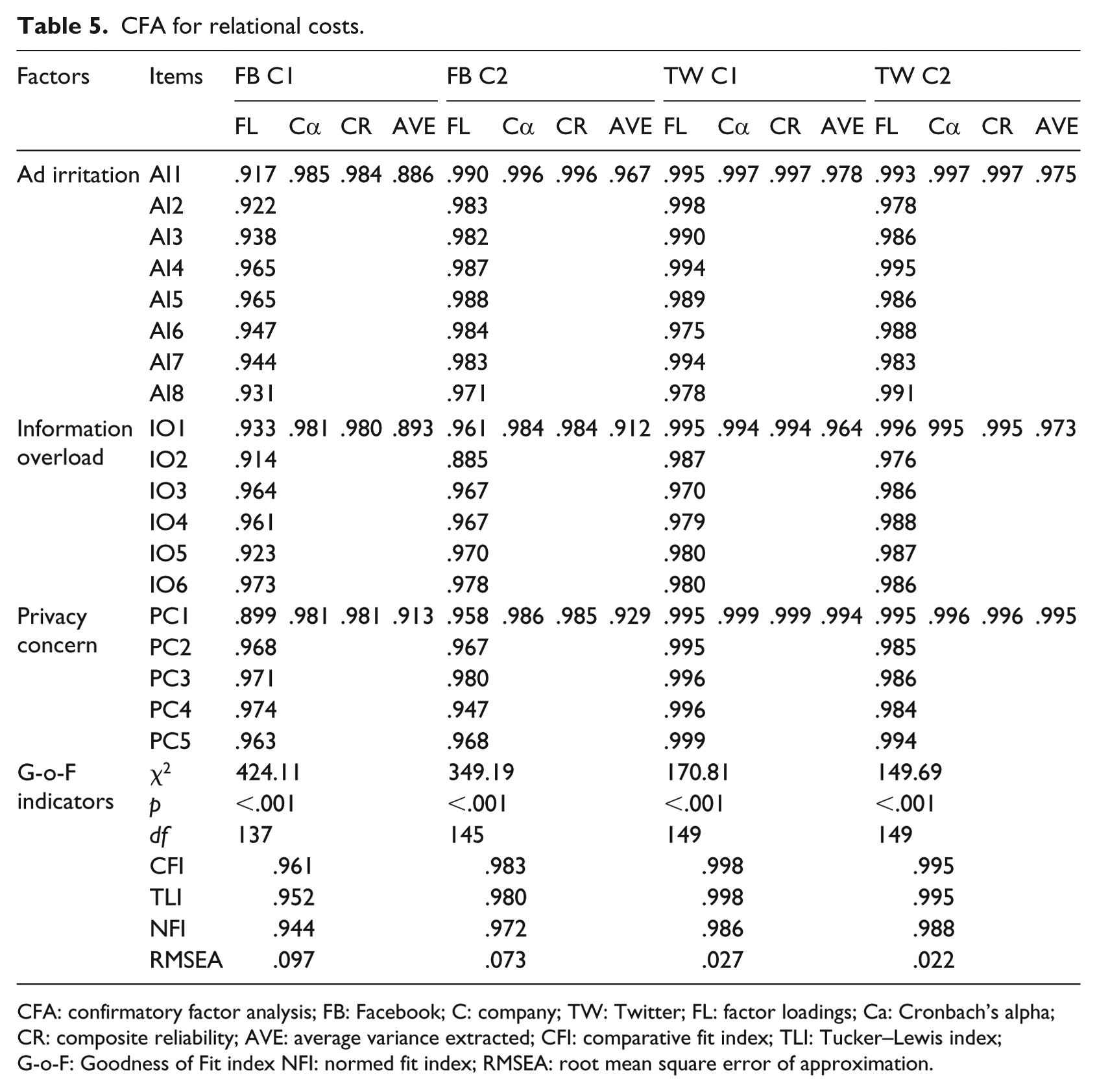
CFA: confirmatory factor analysis; FB: Facebook; C: company; TW: Twitter; FL: factor loadings; Ca: Cronbach’s alpha; CR: composite reliability; AVE: average variance extracted; CFI: comparative fit index; TLI: Tucker–Lewis index; G-o-F: Goodness of Fit index NFI: normed fit index; RMSEA: root mean square error of approximation.
Reliability and validity assessment
The reliability and validity of the measurement scales were established through CFA, the analysis of Cronbach’s alpha, composite reliability, and average variance extracted (AVE) using the procedures recommended by Fornell and Larcker (1981). For each factor of the relational benefits and costs scales, Cronbach’s reliability alpha scores and composite reliability scores were greater than .70, supporting the internal consistency of the measurement scales (Bagozzi & Yi, 1988), while the AVE was greater than .50 (Tables 4 and 5). These results suggest that the scale is reliable for measuring relational benefits and costs on firms’ SM brand pages.
Construct validity was assessed in terms of convergent and discriminant validity. As shown in Tables 4 and 5, the measurement scales for each factor exhibited strong factor loadings, and composite reliability scores above the recommended threshold of .70 and AVE values greater than .50, together confirming convergent validity (Bagozzi & Yi, 1988; Fornell & Larcker, 1981). With regard to discriminant validity, the square root of the AVE of each construct should be larger than the correlation of the specific construct with any of the other constructs (Fornell & Larcker, 1981). The results showed that, in all instances, the square root of the AVE of each construct was greater than the correlation coefficients between the constructs. 2 Thus, the analysis supports the convergent and discriminant validity of the measurement scales.
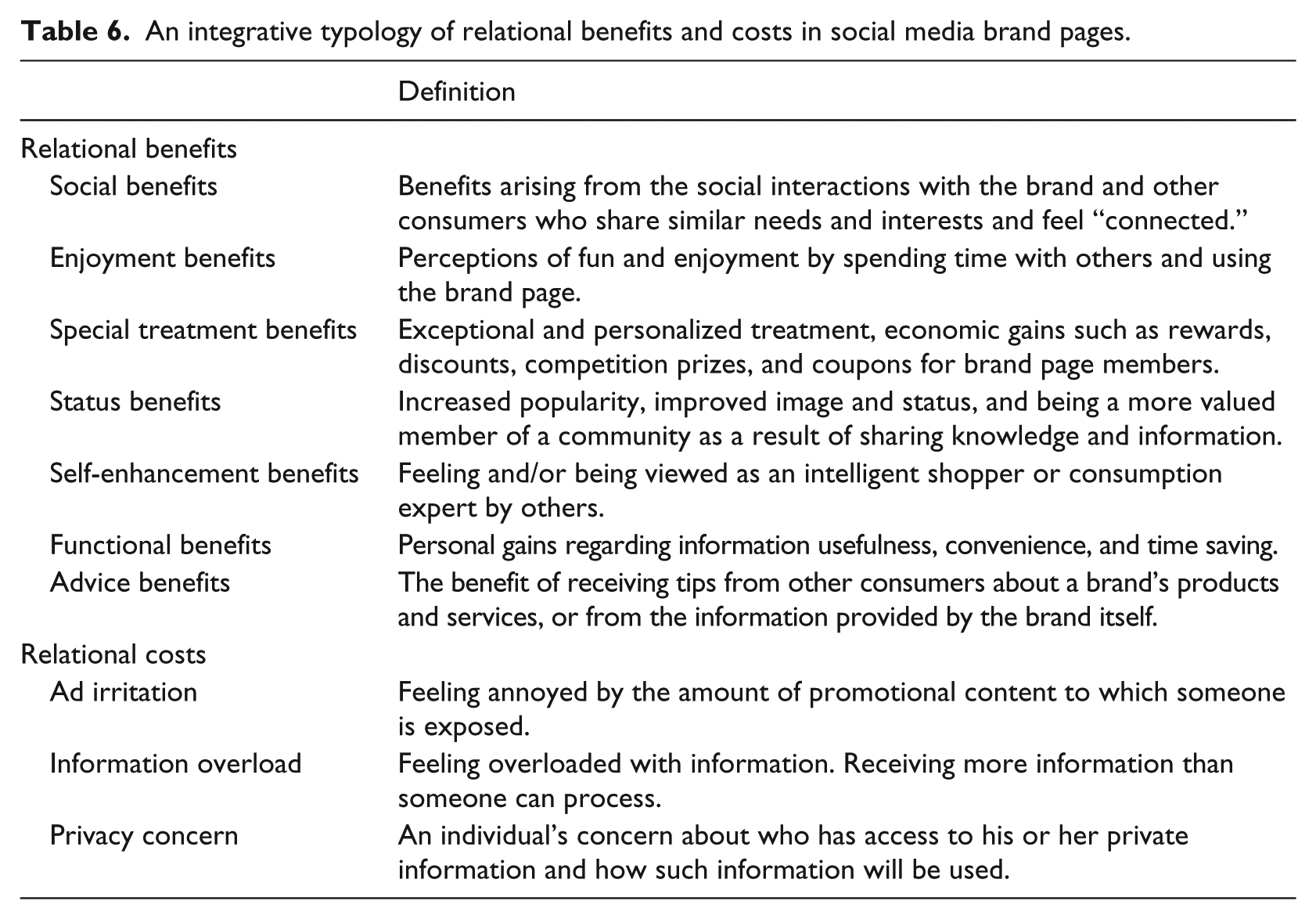
Following the establishment of the reliability and validity of the measurement scales, Table 6 presents the identified factors of relationship benefits and costs in SM brand pages, along with their definitions.
An integrative typology of relational benefits and costs in social media brand pages.
Discussion
Theoretical implications
This study contributes to the understanding of consumer–brand relationships developed in an SM environment by providing a comprehensive analysis of the positive and negative experiences consumers perceive in the SM brand pages they follow. The article enriches the SM marketing and relationship marketing literature, as it is a first attempt to propose, test, and validate an integrative typology of perceived relational benefits and costs in the SM context. Our research differs from previous research by identifying and empirically examining both the relational benefits and costs simultaneously perceived by followers of SM brand pages. Also, the collected quantitative data come from two leading FMCG and telecommunications companies with a strong SM presence that allowed the collection of 881 responses from both Facebook and Twitter brand page followers. This has further allowed us not only to propose and validate a typology of relational benefits and costs but also outline and confirm their dimensions across popular SM platforms utilized by firms operating in two distinct sectors.
To the best of our current knowledge, though various studies have sparsely examined some relational benefits in the Web 2.0 environment, these were studied as expectations or motives for participation, were explored individually and in isolation from relational costs, and, most importantly, were not examined in the SM brand pages context. Based on the study’s results, the same seven-factor structure of relational benefits (i.e., “social,” “enjoyment,” “special treatment,” “status,” “self-enhancement,” “functional,” and “advice” benefits) and the same three-factor structure of relational costs (i.e., “ad irritation,” “information overload,” and “privacy concern”) were identified in all Facebook and Twitter samples. Thus, the findings provide strong supporting evidence that followers of Facebook and Twitter brand pages perceive the same relational benefits and are faced with the same relational costs.
Social benefits indicate that consumers benefit not only from interactions with the brand but also from the social interactions with other consumers who share similar needs and interests, and feel an important connection with them. Social benefits confirm that brand communities in SM are an important conversational and social environment (Park & Kim, 2014), and that individuals join brand pages to interact with others (Hajli, 2014; Okazaki, Rubio, & Campo, 2014). The importance of social benefits has been recently explored in the study of Zhang and Luo (2016), which confirmed the strong and positive impact of social benefits on satisfaction with an SM community.
Functional benefits describe the personal gains regarding information usefulness, convenience, and time saving derived from participation in the brand page. This finding is consistent with previous research, which supports that people choose to join online brand communities to access information about products and services (Y. Wang & Fesenmaier, 2004). In addition, research suggests that virtual brand communities on social networking sites provide features such as useful brand-related information and utilitarian incentives, which enhance users’ convenience (Sung, Kim, Kwon, & Moon, 2010). Similarly, authors have supported that practical and informational benefits are often achievable through online communities (Dholakia, Bagozzi, & Pearo, 2004; D. C. Li, 2011) and companies’ Facebook sites (Gummerus et al., 2012).
Enjoyment benefits suggest that brand page followers perceive fun and enjoyment by spending time with others and using the page. This is supported by previous research, which highlights the importance of “entertainment value,” “enjoyment,” “hedonic,” or “affective” benefits in online communities (Dholakia, Bagozzi, & Pearo, 2004; Gummerus et al., 2012; Nambisan & Baron, 2009).
Results also indicate that followers perceive exceptional treatment through their participation in Facebook and Twitter brand pages such as rewards, incentives, sales promotions, contests, and coupons for brand page members. This finding suggests that non-monetary and monetary incentives can play a significant role in the interactions that take place within the brand page. This is in line with previous studies, which found that online consumers do perceive special treatment benefits in a Web 1.0 environment (e.g., Colgate et al., 2005) and that such benefits can have a positive impact on satisfaction with an online retailer (Su et al., 2009; Yen & Gwinner, 2003). The non-monetary and monetary incentives can also be an important “incentive motive” for consumer participation (Rohm et al., 2013; Sung et al., 2010).
Self-enhancement benefits can take the form of being viewed as an intelligent shopper or consumption expert by other consumers (Hennig-Thurau et al., 2004). As one of the typical characteristics of fans is self-identification, consumers decide to participate in fan pages expecting an impact on their image. Also, by being members of an SM brand page, consumers feel that they gain value for their own personal identity (Jahn & Kunz, 2012).
Similarly, the status benefits refer to the degree to which sharing information through social networking websites is perceived to be effective in enhancing social status in one’s social group (D. C. Li, 2011). This is consistent with previous studies in the context of online communities, which address the concept of “personal-integrative” benefits, defined as the gains in reputation, through product knowledge exhibition and application of problem-solving skills in online brand communities (Nambisan & Baron, 2009). Furthermore, relevant studies (e.g., Lampel & Bhalla, 2007; Wasko & Faraj, 2005) suggest that people’s social status or reputation could be enhanced through participation in an online community.
The advice benefits refer to the benefit of receiving tips from other brand page followers about a brand’s products, and arise from individuals who write product reviews or comments describing their experiences with a product or service, and either submit or request problem-solving information. Advice benefits may also derive from the information provided by the brand itself. According to previous research, advice benefits have been found to be a significant consumer motive for participating in an online community (Dholakia et al., 2004; Hennig-Thurau et al., 2004). Also, literature supports that social networking sites like Twitter are places where members tend to help and support each other by exchanging opinions and ideas and answering other members’ questions (Okazaki, Diaz-Martin, Rozano, & Mendez-Benito, 2014).
Privacy concern, information overload, and ad irritation were the relational costs that were identified. In the context of SM brand pages, privacy concern refers to an individual’s concern about who has access to his or her private information, and how such information will be used. With the increased use of social networking and the information sharing it evolves, several studies have examined and confirmed the existence of privacy concern in the context of social networking websites. These also identified privacy concern as a key factor that negatively affects attitude toward using SM (Mohamed & Ahmad, 2012; Tan, Qin, Kim, & Hsu, 2012).
The emergence of SM has led to an increase in the amount of information to which a user is exposed, making followers of SM brand pages experience information overload. This type of negative experience has also been studied by Hutter, Hautz, Dennhardt, and Fuller (2013) who found that information overload in SM can cause annoyance, which in turn has a negative effect on the evaluation of the brand regarding purchase intentions and word of mouth. Finally, ad irritation was identified as another cost perceived by followers of Facebook and Twitter brand pages. This implies that ad irritation may be an important issue in SM brand pages. To the best of our knowledge, this study is the first attempt to address the issues of information overload and ad irritation in the context of SM brand pages.
Managerial implications
This research leads to important managerial implications and offers brands practical and applicable recommendations on how to increase an SM brand page’s capabilities and relationship building effectiveness. We propose a cross-medium and cross-sector validated typology of relational benefits and costs that can operate as an integrated marketing mechanism for firms to better understand their followers’ needs and concerns, appropriately address them, and strategically enhance brand communication efforts. More specifically, the findings of this research provide a deeper understanding of the structure of the relational benefits and costs in the environment of SM brand pages that can guide brand managers’ relationship building efforts when designing and implementing their SM marketing activities. To our knowledge, this is the first time that an integrative typology of consumer–brand benefits and costs related to SM is established. Given the existence of these seven benefits and three costs, marketers should design and implement activities that promote and strengthen perceived benefits among users of their SM brand pages, while ensuring that the content of such pages does not create costs for their customers.
First, through these benefits, SM channels provide marketing managers with the opportunity to have deeper interactions with consumers in ways that previous media could not deliver. For instance, the value of social benefits is multiplied when the instant nature of SM brand pages enables users to interact almost immediately with other users. Social benefits can be developed by providing more opportunities for member-to-member interactions and by adding social features that are valued by members. These interactions can be strengthened by a firm seeding conversations or planting provocative ideas. Also, brand page events, or even interactive games such as knowledge games, can trigger discussions about relevant topics. Companies could also reinforce their actions toward the strengthening of social ties among brand page users by motivating them to share their experiences with others (Okazaki, Rubio, & Campo, 2014) and touching them emotionally. Finally, the social nature of SM brand pages makes them an effective forum to exchange opinions about the brand and to learn from customer conversations. Firms can identify new consumer needs arising from consumer feedback on SM brand pages and rapidly adjust marketing efforts accordingly.
Regarding the enhancement of enjoyment benefits, brands should deliver entertaining content to its followers. Online events and contests are some of the means SM brand pages can utilize to accomplish this. By offering enjoyable content, brand pages can put consumers in a good mood, increase perceptions of enjoyment benefits, and ensure consumers experience the brand in a more positive way.
Considering the fact that functional and advice benefits are perceived by followers of Facebook and Twitter brand pages, firms should adjust their SM activities more in this direction, by offering useful, daily, innovative, and informational content. As Facebook and Twitter are two different platforms, each one with its fans, differentiating and adjusting the offered content could enhance followers’ perceived functional benefits. Furthermore, as SM are a world of information, brands can increase the attractiveness of their pages and make their followers feel that they gain informational value by providing useful content to their fans.
Special treatment benefits can arise from both monetary and non-monetary incentives. Thus, positive perceptions can be enhanced through rewards and incentives, contests, coupons, and exclusive content. On the other hand, brands should adjust their communication with fans by interacting personally with each follower, answering each question separately, and mentioning the name of the person. By providing special treatment benefits, marketers can generate positive word of mouth (Relling et al., 2016) and gain brand recommendations (Barreto, 2014; Okazaki, Rubio, & Campo, 2014).
As regards the enhancement of the perceptions of status and self-enhancement benefits, marketers could strengthen the information sharing capability of their brand pages. Thus, brand page followers will have the opportunity to tell others about their experiences with the company’s products and feel that they are a valued member of the brand page.
Likewise, brands should adjust their SM strategy to moderate followers’ perceived relational costs. With respect to information overload, when consumers get overloaded by the information provided by the brand page, they may turn against it by spreading negative word of mouth (Barreto, 2014). Marketers could aim at getting feedback from followers to figure out the optimum frequency of updates on Facebook and Twitter brand pages.
In addition, marketers should put more effort into understanding brand page followers’ perceptions and concerns on security-related factors, and how these factors influence members’ attitudes. Firms should define a clear policy on followers’ personal data and inform their fans about the handling of their information. The introduction of General Data Protection Regulation (GDPR) in Europe has further pushed all companies to communicate more clearly with their customers about their data collection, storage, and use. Similarly, the recent Cambridge Analytica scandal indicates that users of social networking sites are becoming more concerned about their privacy. As Facebook has been under increasing pressure over its privacy policies, especially in relation to the collection and misuse of personally identifiable information by third-party apps, brands should also adapt and adjust their policies of handling SM users’ personal data.
Finally, concerning irritation caused by advertising messages, marketers should realize that SM pages are not there for selling only. When posting updates, companies should make sure that they are providing useful content, not just promotional advertising for their products and services.
Limitations and suggestions for further research
This study validated a typology of the benefits and costs consumers perceive when participating in SM brand pages. Findings proved to be robust across two SM and two sectors. However, as there are various SM, each one with different characteristics and audiences, results should be validated for other SM platforms (e.g., Instagram, Snapchat) and across other sectors (e.g., retailers). As this study was conducted in Greece, further studies in different cultural settings are needed. A longitudinal examination of SM participation is also needed to observe how users’ perceptions of benefits and costs are affected by changes and newly added features of SM. Thus, the extension of the present study to other platforms, combined with a longitudinal observation, may reveal additional benefits and costs, perceived in different SM platforms.
Further quantitative studies are welcomed to measure the impact of relational benefits and costs on behavioral intentions toward the SM brand pages and behavioral outcomes toward the brand. Also, a quantitative measurement of the impact of page characteristics (i.e., number of photos, company information, important pinned posts) on perceived relational benefits and costs would be an interesting research direction. Finally, subsequent studies might identify distinct individual member’s segments, according to their different participation motives and the page characteristics they value most.
