



Abstract
Photography is a tool that has been used in research for many years. It allows people to create a record of an event, capture a complex phenomenon or to tell a story with pictures. Because it does not rely on language, it can be used with vulnerable populations who might not normally be included in research. This paper discusses the use of photography as one component of the evaluation strategy for a project that provided an opportunity for people with younger onset dementia to return to the workplace one day per week. Participants in the workplace project used photography to create a record of their experience of returning to the workplace. Based on the nature of the participant’s comments, photographs were grouped into four broad areas: impact of dementia, impact on family, the work experience and new friends. Issues related to the use of photography with people who have dementia are explored based on the experiences gained during this project.
Introduction
Photography has a long history of use as a research tool. It enables researchers to create a permanent record of events, artefacts, environments and people. Its use by research participants has generated the greatest interest because it is not dependent on communication skills, memory or English language proficiency. This paper describes the use of photography by the participants of an innovative workplace engagement project for people with younger onset dementia (Robertson, Evans, & Horsnell, 2013). The paper briefly introduces the workplace engagement project, explores the use of photography in research and then presents a discursive discussion about the experience gained using photography with people with younger onset dementia.
Engaging people with dementia
Dementia is a chronic disease of the brain that affects memory, thinking, behaviour and the ability to perform everyday activities (Alzheimer’s Disease International, 2010). It has been estimated that in 2010 there were 35.6 million people living with dementia, and this number is predicted to double every 20 years (World Health Organization, 2012). Dementia usually affects older people but can start before the age of 65 years (Prince & Jackson, 2009). When dementia starts at a younger age, it comes at a busy time in life. Some will have young families and school-age children. Many will be employed when the signs of dementia first appear (Thompson, 2011). While public awareness of the existence of dementia has increased, acceptance of individuals who have dementia has not changed very much (Batsch, Mittelman, & Alzheimer’s Disease International, 2012). The stigmatisation that often accompanies dementia can result in social isolation and marginalisation (Grange & Zumla, 2001).
Side by Side project
To help overcome some of the challenges that accompany dementia and to provide an opportunity for meaningful engagement, a demonstration project call Side by Side was established in 2011 (Robertson et al., 2013). The Side by Side program provided an opportunity for people with younger onset dementia to engage in a workplace setting to undertake negotiated work duties. The aim of the project was to evaluate the feasibility of engaging this population in the workforce and to provide family carers with regular periods of respite.
Participants were people with dementia who were 65 years or younger. They worked one day per week in a hardware store beside a work-buddy. These work-buddies were store employees who had volunteered to assist in the project and had participated in a dementia education program. At the workplace, participants undertook a broad range of duties that were negotiated individually at the beginning of each work shift. These duties included serving customers, restocking shelves, plant care, assembling display stock and assisting with the store’s school programs. Participants travelled to and from the workplace in a mini-bus as a group and wore a common blue uniform (that was different from the red uniform of the hardware store staff). A project staff member and a volunteer remain on site at all times when participants were working. Prior to the commencement of the evaluation and photography, ethics clearance was gained from the Human Research Ethics Committee at the University of South Australia. Given that the target population were people with dementia, consent to participate in the study was obtained from their legal guardian. However, participants with dementia were asked to give permission prior to commencement to ensure that each person wanted to be involved in the workplace project.
Eight people with dementia were recruited, and six of these people have now been working in the hardware store with this project for more than 18 months. All participants have been able to gain the necessary skills to work in the hardware store and have been able to expand the range of work duties that they undertake. There have been no major workplace incidents or problems involving the project participants. Participants have enjoyed the workplace experience, and a strong friendship has developed between the group members.
Evaluation of the Side by Side program was achieved using interviews, focus groups and observation of the workplace setting. However, to increase the opportunity for the participants with dementia to contribute, photography was added to the program evaluation. Because photography creates a visual record, it enabled the participants with dementia to have a voice in the evaluation by recording aspects of their work and then adding their own commentary to the photographs. Given that memory dysfunction is one of the hallmarks of dementia, the photographs were also used as an aid during interviews to help focus the discussion on the hardware store workplace. The workplace photographs were also used as part of the participant’s work journal, creating a written and photographic record of their workplace experience.
The photography was not implemented during the first six months of the project to ensure each participant had settled into the workplace routine. During the photography, individual participants were given a camera for a short period and asked to take photos of what was important for them in the workplace. They were reminded of the restrictions that applied when taking the photographs (that no pictures were to be taken of staff or customers). They were accompanied by a project staff member who provided technical assistance with the camera. Participants selected the subject of each picture and then took the photograph themselves. The photography was intended to be a background activity to support the project, to add to the participant’s experience and assist in the project evaluation. It proved to be quite successful in the project and with support all participants were able to engage in some aspect of the photography, either taking photographs or using them in their work experience journal.
This paper reports on the photographic component of the larger Side by Side project to permit a more in-depth discussion of using this visual research methodology with people with younger onset dementia. The following sections provide a broad discussion of photographic research methods and then how they were utilised during the Side by Side project. The outcome of the participant’s photography at the workplace is then presented, along with five photographs and commentaries as examples of output from this endeavour.
Photography as a research method
Photography has long been used as a tool in research (Becker, 1975; Collier, 1957; Prosser & Schwartz, 1998; Ruby, 1976), although its use has fluctuated over the last century with claims of it being ‘unscientific’ and ‘unsystematic’ (Hurworth, Clark, Martin, & Thomsen, 2005). Photography can contribute in a number of different ways to the research and evaluation process. The nature of photographs means that they provide a permanent record of an event, environment or person. Taking photographs is a physical and cognitive process that involves constructing and reconstructing rather than telling a static verbal story (Olliffe & Bottorff, 2007). It is a medium that allows participants to have an active role in the research process and is a way to promote empowerment and understanding (Riley & Manias, 2004). Photography allows complex environmental, health and social issues to be captured and then shared with other people. Photography does not require participants to be able to read or write, so can be used by people who cannot speak English, are illiterate or have disabilities (Hergenrather, Rhodes, & Bardhoshi, 2009).
Photography has been used with many different research populations including homeless women (Bukowski & Buetow, 2011), lone mothers (Duffy, 2011), family caregivers (Aubeeluck & Buchanan, 2006), older people (Baker & Wang, 2006; Mahmood et al., 2012), people with learning difficulties (Aldridge, 2007) and people along the margins and in the shadows of society (Villigran, 2011). Photography has been used to explore the experience of chronic pain (Baker & Wang, 2006), aphasia (Levin et al., 2007), hospital discharge (LeClere, Wells, Craig, & Wilson, 2002), the influence of the environment on the physical activity of older people (Mahmood et al., 2012) and the experience of mental illness (Fleming, Mahoney, Carlson, & Engebretson, 2009). It has also been used with children to explore medical examinations (Salmon, 2001) and children’s understanding of disability (Diamond, 1996). Photography has also been used with family caregivers of people with Huntington’s disease (Aubeeluck & Buchanan, 2006) and with people who have dementia (Bartlett, 2012; Wiersma, 2011).
Photography is a flexible research method that can be used in a variety of different ways. Some of the approaches are described below.
Reflexive photography
This approach involves the use of photographs combined with a reflective interview to explore reactions to a particular issue (Hurworth et al., 2005).
Photo-survey
This involves creating a record of the environment using photography during the research process (Moore et al., 2008).
Photo-driving
This involves showing photographs to the informant of themselves so that the interview is driven by the person seeing their own behaviour (Hurworth et al., 2005).
Photo-elicitation
This involves showing photographs to the informant during the interview to provoke a response about a specific issue, cultural matter or ritual (Hurworth et al., 2005). The photographs can be taken by the research participant or obtained from other sources. The photographs act as prompts to get people to talk about difficult or abstract concepts. The use of photographs gives participants the opportunity to consider what they might talk about at the interview and then produce a storyboard of photos that they can discuss (Olliffe & Bottorff, 2007).
Photovoice
This approach is used to enable people to record and reflect upon their community, then to produce a critical dialogue (Wang & Burris, 1997). Photovoice is consistent with the principles of community-based participatory research (Catalani & Minkler, 2010), so is concerned with partnership and collaboration with study populations. It permits researchers to see the world from another viewpoint, sample different social and behavioural settings and view society from the perspective of vulnerable populations (Wang & Burris, 1997). Photovoice is based on the notion that local people are experts on their own communities and therefore know what action is needed to improve quality of life (Novek, Morris-Oswald, & Menec, 2012). It enables people to depict both the assets and needs of a community, plus it brings the explanations, ideas and stories from community members into the assessment process (Wang & Burris, 1997). The images that are produced with photovoice and the subsequent discussions that are generated may act as the stimulus for social action and change (Wang & Burris, 1997).
Using photography with people with dementia
Photography was used during the Side by Side project to give the participants with dementia a voice in the evaluation and to allow them to create a record of their workplace world. Despite the apparent simplicity of taking photographs and its flexibility as a method in research, using photography with vulnerable populations such as people with dementia brings some challenges. The literature highlights some of the issues that should be considered when using photography in research, and these concern participant preparation, taking the photographs, ethics, selecting the photographs and the outcome of the research activity.
Participant preparation
The first step in the process of using a photographic research method is to engage participants in the activity. In the literature, it has been reported that older adults may have difficulty using small digital cameras, so this may bias participant select towards younger healthier individuals (Novek et al., 2012). However, photography has been successfully used with older people (Baker & Wang, 2006, p. 777; Mahmood et al., 2012) and with people who have dementia (Bartlett, 2012; Wiersma, 2011). To overcome the difficulties, a number of studies offered their participants some form of photographic training. This training has included basic documentary photographic skills (Catalani & Minkler, 2010), a half hour camera orientation session (Walia & Leipert, 2012) and a half day training session on photovoice, on photo-taking techniques and on the responsibilities of taking photographs in a public place (Mahmood et al., 2012). However, in one study, no training was provided and it was suggested that the way untrained photographers take pictures provides a rich source of social and cultural data (Harrison, 2002).
During the Side by Side project, all participants were invited to take part in the photography. They were given a small digital camera on several different occasions while at the workplace. Participants were asked to select their own subject for the photographs but were instructed not to take pictures of the general public. Photography was not commenced until six months after the start of the project to allow sufficient time for participants to establish their workplace routines and become comfortable with their new role. Formal training was not provided because of the memory-related difficulties of dementia and the challenges associated with learning new skills. To overcome this, basic instruction was provided each time the camera was given to a participant.
Taking photographs
During research, participants are able to keep the camera for enough time to allow them to complete the photographic assignment. In one study, women were allowed to keep the camera until they had photographed everything that they wanted (Bukowski & Buetow, 2011). During a study involving rural youth and another involving older adults, participants were able to keep the camera for a period of two weeks (Mahmood et al., 2012; Walia & Leipert, 2012). Research involving people with dementia provided participants with a disposable camera and the picture-taking period ranged from two weeks to a month (Wiersma, 2011). For vulnerable populations, taking photographs can pose a challenge. During a study that involved older people, a member of the research team was available to accompany the participants during the taking of photographs (Novek et al., 2012). However, this companion was only to provide physical and technical assistance, the participants were in charge of selecting the subject of the photographs.
During the Side by Side project, participants only kept the digital camera for a short period of time during a work shift. However, participants were able to take photographs on a number of different occasions. Participants were required to take their own photographs. However, during the photo-taking period, staff provided support and advice related to camera operation. Five of the participants were able to take photographs on at least one occasion. Additional photographs were also taken by project support staff to give participants a greater selection of photos to use in their work experience journals.
Ethics and photography
Taking photographs of people without their consent may constitute an invasion of privacy, so when photovoice is used during research participants are sometimes requested not to photograph people (Aubeeluck & Buchanan, 2006). Developing confidentiality and informed consent procedures for research that take into account photography’s loss of privacy is very difficult (Donaldson, 2001). When photography is used by research participants, it has been reported that they are reluctant to ask for permission and to have a consent form signed (Novek et al., 2012). When study participants do not have the cognitive capacities to grasp concepts such as confidentiality, authority and permission, ensuring that they adhere to the ethical requirements is very challenging (Aldridge, 2007).
As previously noted, human research ethics approval was granted for the Side by Side project, and this ethics clearance included the use of photography as one of the evaluation strategies. During the project, participants were asked not to take photographs of hardware store employees and customers. They were also accompanied by a support staff member when taking photographs. However, this processes had a significant impact for participants trying to create an accurate record of their workplace world because customers and work-buddies were such an important component of that world. From a slightly different perspective, because the photographs included pictures of the participants themselves, when the photographs were used during presentations at seminars and conferences permission to use the photographs was sought from the participant and their legal guardian. Permission was given to use the photographs included with this article.
Photograph selection
When the photographs have been taken during research, participants are then usually asked to select a smaller number of photographs that are most personally significant (Bukowski & Buetow, 2011; Mahmood et al., 2012; Novek et al., 2012). However, the selection and use of photographs depends of the approach being taken during the research. For some studies, the main source of data was not the actual photographs, but responses stimulated by photos during focus group or interview (Catalani & Minkler, 2010). During this photo-elicitation approach, the researcher engages participants in a discussion about a subset of the photographs that are linked to concepts of interest (Catalani & Minkler, 2010). Photographs may also be used to produce a storyboard that can be narrated at the interview (Olliffe & Bottorff, 2007). During photovoice, the photographs may be the data, so are analysed and coded to identify themes and categories in their content (Wang & Burris, 1997). However, during photovoice, participants may also use the photographs to create posters or to use them during presentations to raise awareness of community issues and to bring about change (Wilson et al., 2007).
During the Side by Side project, participants selected photographs for inclusion in their journals and the project team selected photographs for use during the interviews and focus groups. Photographs were not treated as data and subject to content analysis for two reasons. First, all participants needed some degree of support and supervision during the photography. So despite the best intentions, it was not possible to guarantee that each photograph represented an independent contribution from a participant. Second, not all participants were able to use the camera, so their voice would have been excluded from the analysis process. A large collection of photographs was selected by participants and, with the assistance of project staff, used in the work experience journals. With the assistance of project staff, participants were also able to select a smaller collection of photographs and then add their own commentary. The photographs and commentary included with this article were taken from this smaller collection to serve as examples of the participant’s contribution. While the participants were asked to comment about their workplace experience for the photovoice component of the evaluation, comments often addressed broader issues related to the impact of dementia on their life and family. Perhaps not surprisingly, this process provided an opportunity for the group to share how dramatically their lives had changed as a result of their dementia.
Outcome of the research photography
During research, photography is often used as a component of the research method, for example as a prompt for interviews or as the data for analysis. However, photography may also form one of the products or outcomes of the research process. For photovoice, the photographs make a contribution towards the achievement of broader outcomes such as enhanced community engagement and advocacy, improved understanding of community needs and assets, and increased individual empowerment (Catalani & Minkler, 2010). Wang, Cash, and Powers (2000) used the photographs as part of a presentation to community leaders and the photos and captions were exhibited at a local gallery. Other studies have used the photographs in posters to raise awareness of community issues (Wilson et al., 2007) and for presentations at meetings and conferences (Duffy, 2011). One study used the photographs to assist homeless women voice their needs and to use the knowledge generated during the research to facilitate positive change (Bukowski & Buetow, 2011). The researchers displayed the photographs that were taken by the homeless women at a conference and a human rights film festival, and then displayed the photographs and verbatim texts from the interviews during an exhibition at a public library (Bukowski & Buetow, 2011).
During the Side by Side project, photographs were used in different ways. They were used as a memory aid and prompt during focus groups and interviews. Each participant used photographs in their work experience journal to help create a permanent written and photograph record of their work experience. Given the cognitive changes that accompany dementia, this permanent record was considered to be an important outcome of the project for each participant and their family. Photographs were also selected jointly by participants and project staff to create a presentation that combined participant’s words with the photographs.
In terms of bringing about change, the aim was to communicate the success of the workplace project and show that a diagnosis of dementia does not necessarily preclude people from the workplace or other forms of meaningful engagement. To help bring about this change and to raise community awareness, presentations were given at a range of community, industry and professional forums, seminars and conferences. These presentations featured photographs that were combined with the participant’s comments, so provided a powerful medium to tell the story. These photographs showed participants engaged in range of different activities at the hardware store, working beside hardware store staff, working together as a team and socialisation at the end of their work shift. The participant’s comments helped communicate the impact that the return to the workplace had for individual people in the project.
Photographic results
Participants selected photographs and then added comments with the assistance of project staff. While the intent was to explore the workplace experience, the comments added to the photographs by participants addressed broader issues beyond the workplace. Comments were group into four broad areas: impact of dementia, impact on family, the work experience and new friends. See Table 1 for examples of the participant’s comments related to each of these four areas and Figures 1 to 5 for examples of the photographs and commentary.
Impact of dementia. Impact on family. The work experience. The work experience. New friends. Participant’s comments.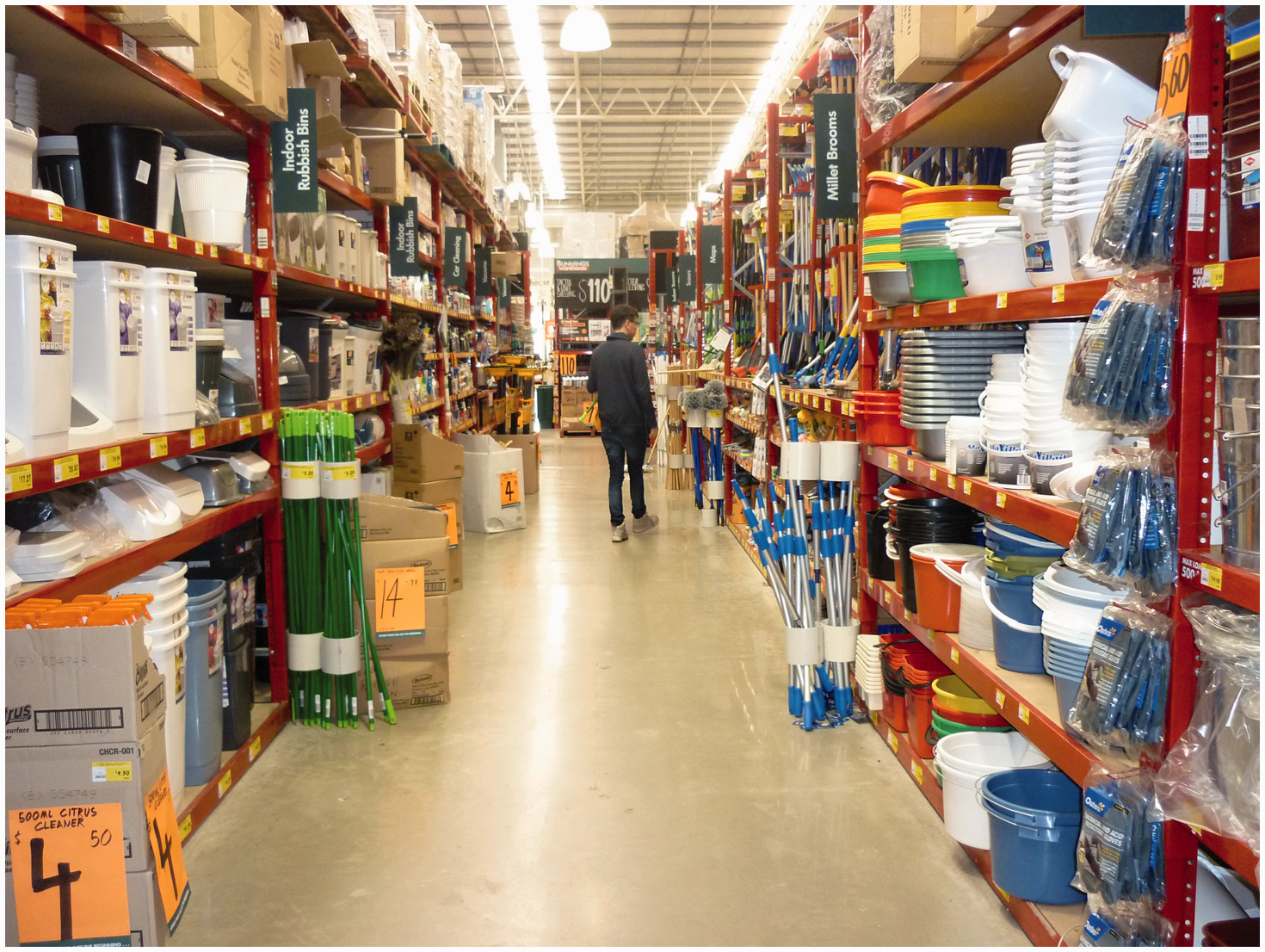


Statements about the impact of dementia related to feelings of frustration, difficulty coping, loss of control and self-doubt. The photograph and comment in Figure 1 tells of the loneliness experienced by one participant as a result of living with dementia. Statements about the impact on family concerned the unexpected changes caused by the dementia and that the spouse was just as much a victim of the dementia. Figure 2 captures the change in the marriage as a result of the ever-present dementia within their relationship. Statements about the work experience tell of the participant’s joy at returning to the workplace and having meaningful and productive things to do once again. The opportunity to interact with people was an important part of the work experience as they worked alongside their work-buddy and served customers. Participants enjoyed the experience of learning new skills and being challenged with different activities (see Figures 3 and 4). For a number of the participants, an important component of the work experience was the opportunity to be productive once again and to make a worthwhile contribution to the community. Finally, statements about new friends concerned the enjoyment that participants gained from socialising with other similar people, and the opportunity to relax and to make new friends. They enjoyed having coffees together at the workplace and a glass of wine at the end of the day. Figure 5 shows some of the project participants at the workplace and captures the friendship and team spirit that developed during the project.
Discussion
The use of photography as a component of the Side by Side project provided participants with a voice in the evaluation process. As a research tool, it was flexible enough to fit within participant’s workplace schedule at the hardware store and was suitable for the range of differing abilities. The experience gained during the project showed that photography could be used with people with dementia if an appropriate framework of support is provided. This framework of support during the photography was based on the approach that underpinned the Side by Side project. Participants were shown how to use the camera and then encouraged to go out into the workplace and take photographs. A support person stayed with them during the photography to offer assistance and encouragement. While taking photographs at the workplace was beyond the capacity of a couple participants, most were able to take photographs on at least one occasion. However, all participants were able to use the photographs in their work experience journal. The experiences gained during the Side by Side project highlighted additional benefits from the use of photography and these benefits are discussed below.
Creating a record of the work experience
Dementia is characterised by memory dysfunction (Alzheimer’s Disease International, 2010), so creating a permanent record of the work experience was perhaps the most important benefit to be gained from the use of photography. Consistent with the photo-survey focus of creating a record (Moore et al., 2008), participants captured their workplace, work duties and fellow participants in photographs. In research, photographs most often reflect the individual participant’s view of their wider community. However, during the Side by Side project, all photographs were shared so that participants also had access to pictures of themselves as the subject. These photographs provided a personal record of the participant as a worker rather than as a person with dementia. The record that was created took the form of a journal that combined the participant’s own descriptions of the workplace with the photographic record of the experience. The work experience journals have recently been printed and bound to create a permanent record of the work experience for each participant.
Cognitive challenge
One of the main aims of the Side by Side project was to provide people with dementia with the opportunity for meaningful engagement. Working in a hardware store presented participants with many challenges to their thinking, memory, communication and organisational skills. Photography presented participants with another cognitive challenge related to using a digital camera, selecting a subject and taking a photograph. In addition to this, preparing a work experience journal and adding a commentary to photographs required participants to engage in reflection on what the work experience meant to them. So while the photography was a component of the project evaluation, it also represented an additional opportunity for meaningful engagement.
Bringing about change
Photovoice provides an opportunity for people to create a record and to engage in reflection. It concerns community-based participatory action to stimulate social action and change (Catalani & Minkler, 2010; Wang & Burris, 1997). Photography allowed Side by Side project participants to be part of this reflection and change. Photographs provided an external view that allowed participants to see themselves once again as workers with specific jobs. It also enabled them to see themselves within the project team group, and so helped them better appreciate the support and friendship that had developed during the project. So in the context of the Side by Side project, photographs did help bring about some measure of change within the participants themselves.
Photographs were also used at conferences and public displays to challenge stereotypical views of dementia and help bring about some measure of community change. It is difficult to gauge the extent and nature of the change that resulted from the presentations. However, presentations were always well received and generated a considerable discussion about workplace engagement. There is a small but growing interest from community support organisations on how best to engage younger people with dementia in meaningful activities. It is believed that the Side by Side project made a positive contribution towards this growing interest.
Limitations
While photographic and other visual techniques have been used for many years in research, it is still an emerging methodology. The development of these visual research methods has received considerable attention but their limitations have not been well addressed (Pickard, 2008). The limitations of visual techniques during research that involves people with dementia have received even less attention. During this project, only five of eight participants were able to take photographs and all five required assistance each time they used the digital camera. All participants were able to add photographs to their work experience journal, but all required assistance to be able to do that. A similar need for assistance with photography was reported in a study that involved older people (Novek et al., 2012). Despite this, the use of photography during the Side by Side project did provide an opportunity for participants to capture and communicate aspects of their workplace experience. However, the technical nature of using a digital camera, selecting a subject, framing and then taking the photograph clearly requires a reasonable level of cognitive function. As a result, photographic research methods will not necessarily be suitable for every person with dementia. Given that photovoice is often used with populations on the periphery of society, further discussion is warranted on how best to support the participant-photographer while still ensuring the integrity of the visual research methodology.
From a slightly different perspective, photography is a medium that lends itself well to posters and presentations. Its visual nature when combined with the words of participants can be exceptionally powerful. However, using photography is more challenging with journals that rely predominantly on words rather than pictures. The ethical issues related to consent and privacy that accompanies the use of photographs that depict people, add to the challenge of using photography in journal publications. Therefore, this represents another limitation that photographic research methodologies may not lend themselves to the journal publication format as easily as research techniques that rely on words and numbers.
Conclusion
In conclusion, photography is a potentially important research method, particularly for vulnerable populations. Past research endeavours have demonstrated it is suitable for use with many different populations, ranging from children to frail older people. It is a flexible method that aids the research process, encourages reflection and may become the focus of the data for analysis. But its most important contribution is its potential to bring about change. This change is most often externally focused during photovoice and is linked to photography acting as a stimulus for social action and change. However, the act of talking and reflecting on photographs has an important impact for participants and brings with it the potential for personal change. However, in the context of the cognitive impairment that accompanies dementia, photography also allows a permanent record to be created for the study participant and their family.
Footnotes
Declaration of Conflicting Interests
The author(s) declared no potential conflicts of interest with respect to the research, authorship, and/or publication of this article
Funding
The author(s) received no financial support for the research, authorship, and/or publication of this article.