




Abstract
Background and Objectives
Young onset dementias (young onset dementia) produce a myriad of stressors for persons with young onset dementia and their caregivers, yet there is a critical shortage of supportive services that address their needs. To develop such services, it is necessary to first comprehensively understand persons’ with young onset dementia and their caregivers’ service preferences. Therefore, we conducted a meta-synthesis to integrate and summarize qualitative data on persons’ with young onset dementia and caregivers’ preferences for supportive services for young onset dementia, defined as support provided by medical providers, psychosocial interventions, and any other resources/services provided to promote positive adjustment in persons with young onset dementia and their caregivers.
Research Design and Methods
We searched five electronic databases for qualitative articles from inception to January 2020. We extracted and synthesized data from eligible articles using thematic analysis. After removal of duplicates, we screened 219 articles identified through database and hand searches.
Findings
Forty-three studies met our inclusion criteria. We extracted findings from these 43 studies on preferences within three a priori defined domains: 1) general characteristics of supportive services, 2) format and modality of supportive services, and 3) content for supportive services. Persons with young onset dementia and caregivers predominantly expressed common preferences, with some unique preferences based on their specific roles within the partnership.
Discussion and Implications
Persons with young onset dementia and their caregivers endorsed largely overlapping preferences, including having direct contact with providers and the ability to participate together in programs that have content and skills relevant to their specific needs and challenges. Findings can directly inform the format, content, and procedures of supportive services for persons with young onset dementia and their caregivers.
Keywords
Introduction
Young onset dementias, such as Alzheimer’s disease, frontotemporal lobar degeneration, and Lewy body disease, are progressive illnesses without any known cure (Ducharme & Dickerson, 2015). They occur during an active life stage (typically ages 45–64) when individuals are often working, caring for other family members, and in otherwise good health. This early onset of atypical dementia symptoms (e.g., behavioral and cognitive changes) is often confusing and disruptive to the daily life of persons with young onset dementia and their loved ones. Receiving a diagnosis of young onset dementia is therefore a life-altering event for both persons with young onset dementia and their informal caregivers (e.g., spouse, partner, and child), given the uncertainty regarding diagnosis and prognosis and lack of cure or impactful treatments (Spreadbury & Kipps, 2019b).
Systematic reviews indicate high rates of clinically elevated emotional distress (e.g., depression and anxiety) (Spreadbury & Kipps, 2019a) for both persons with young onset dementia and caregivers, which can negatively impact their shared communication, relationship quality, and illness management (Kilty et al., 2019; Millenaar et al. 2016). These rates are not surprising given the difficult emotions (e.g., sadness, anger, and grief) and substantial stressors (e.g., loss of employment, increased caregiving, and change in roles) that accompany young onset dementias (Bannon et al., 2020; Spreadbury & Kipps, 2019a, 2019b; Stamou et al., 2020). However, both persons with young onset dementia and caregivers report dissatisfaction with the availability and fit of existing supportive services, defined as encompassing support provided by medical providers, psychosocial interventions, and any other resources/services provided to promote positive adjustment in persons with young onset dementia and their caregivers (Bannon et al., 2020). Previous systematic reviews also highlight the need for specialized, age-appropriate, and individually tailored psychosocial resources for persons with young onset dementia and their caregivers (Beattie et al., 2002; Sansoni et al., 2016). Yet, their preferences for such services remain unknown, and it is unclear whether persons with young onset dementia and caregivers report predominantly common (i.e., expressed by both persons with young onset dementia and caregivers) or unique (i.e., specific to persons with young onset dementia or caregivers) preferences in terms of general characteristics of their supportive services, format (e.g., in person or over live video) and modality (e.g., participating together or separately), as well as the content or skills viewed as most useful and relevant for services to include.
Prior systematic reviews have documented the importance of mitigating persons’ with young onset dementia and caregivers’ emotional distress through tailored supportive services (Bannon et al., 2020; Spreadbury & Kipps, 2019a, 2019b). Despite this recognition, there is no synthesized information available to guide their development. Qualitative research has the ability to provide insights about persons’ with young onset dementia and caregivers’ subjective experiences (Spreadbury & Kipps, 2019b) and is well-positioned to characterize their service preferences. An in-depth review of the preferences of persons with young onset dementia and their caregivers can help inform the development of tailored services and clinical care. Thus, in the present study, we conducted a meta-synthesis of the qualitative literature on supportive service preferences of persons with young onset dementia and their caregivers. Our long-term goal is to use this information to develop novel resources that meet the common and unique needs of persons with young onset dementia and their caregivers.
Method
Aim
We sought to identify and synthesize qualitative studies concerning persons’ with young onset dementia and caregivers’ preferences for supportive services within the following domains: 1) general characteristics of supportive services, 2) format and modality of supportive services, and 3) desired content of supportive services. Our larger goal was to inform resource development and clinical care for young onset dementia.
Search strategy and screening
Our meta-synthesis conformed to PRISMA guidelines (Page et al., 2021) and was registered prospectively on PROSPERO (CRD42020164802). Of note, database searches, article screening, quality appraisal, and data extraction were conducted simultaneously with our previously published meta-synthesis describing psychosocial stressors and coping strategies among persons with young onset dementia and informal caregivers (Bannon et al., 2020). Below we summarize key aspects of the methodology and those that were unique to the aims and scope of the present meta-synthesis.
Database Search Terms.

Inclusion and Exclusion Criteria.
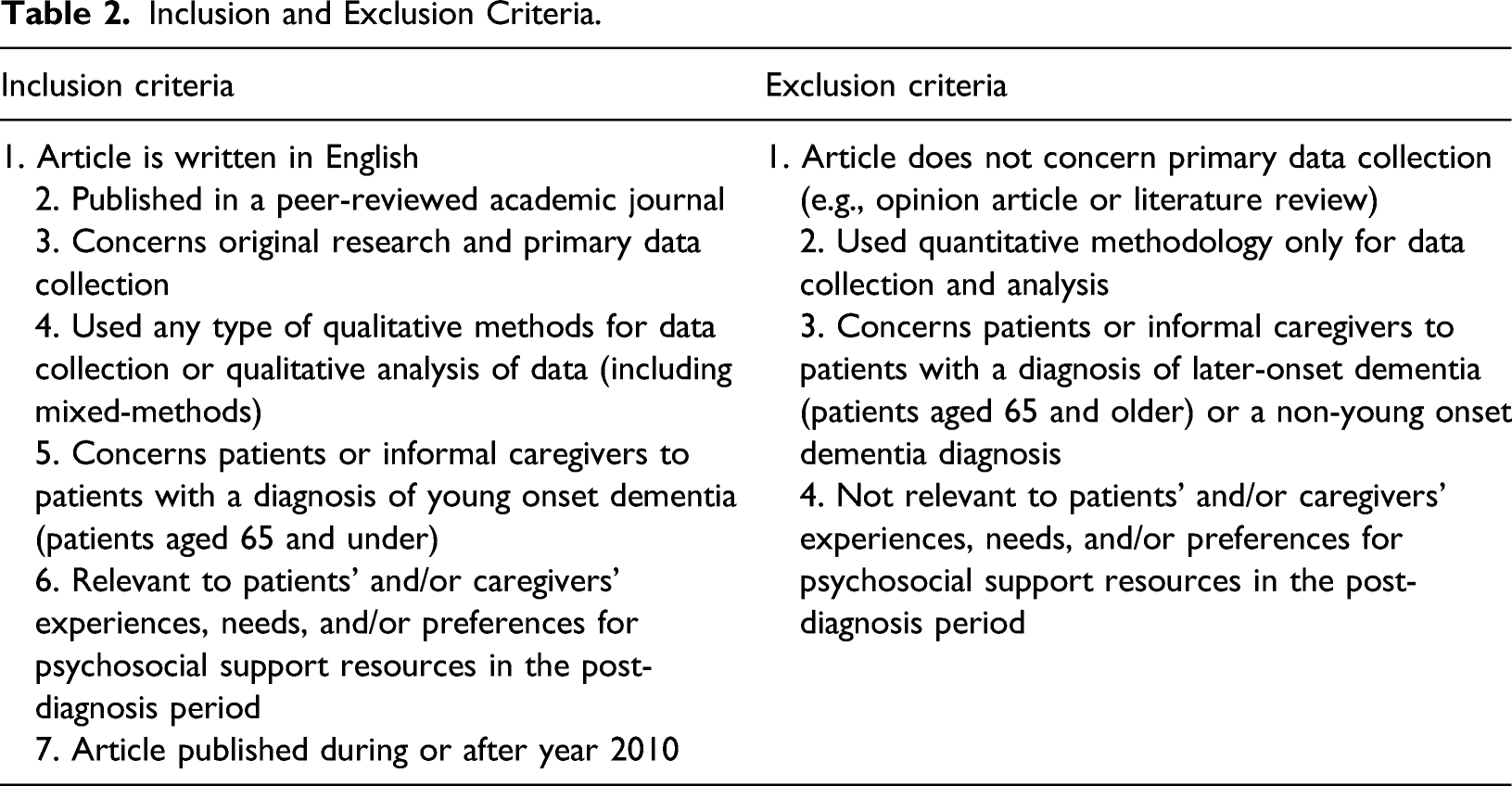
Of note, very few articles directly addressed persons’ with young onset dementia or caregivers’ preferences for supportive services (i.e., concerned specific proposed or implemented services). Therefore, in addition to including studies in this meta-synthesis that evaluate specific interventions or services (e.g., assistive technology interventions and physical activity interventions), we include articles that describe experiences after young onset dementia more generally, yet include some mention of experience with supportive services or preferences for supportive services. Our search strategy was intentionally inclusive with respect to relevance to the topic of supportive service preferences, including all articles that yielded at least one relevant insight to the topic.
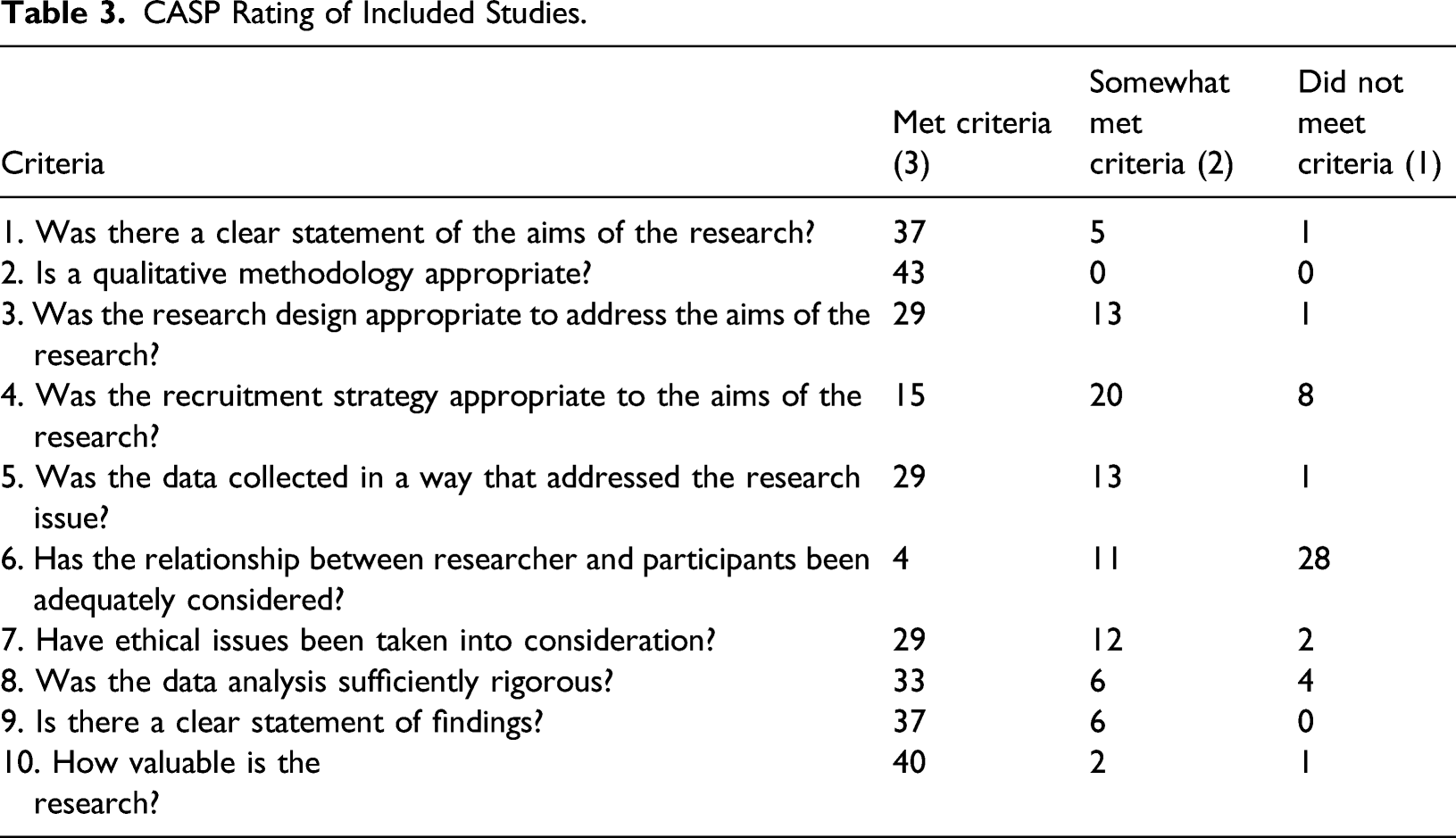
Quality appraisal
CASP Rating of Included Studies.
Data extraction process
Two members of the study team independently read the full text of every article included in the meta-synthesis and extracted findings (i.e., supportive service preferences as relevant for persons with young onset dementia or caregivers) within a priori established domains of interest: 1) general characteristics of supportive services, 2) format and delivery modality of supportive services, and 3) desired content for supportive services. This structure for data extraction helped us identify findings relevant to preferences for supportive services from studies that concerned various types of interventions (e.g., community engagement programs and assistive technology interventions) as well as the broader literature of the experiences of persons with young onset dementia and their caregivers. The two reviewers discussed any differences that emerged among extracted findings and resolved disagreements.
Data synthesis
Our approach to data analysis utilized the meta-synthesis and thematic analysis analytical frameworks, which allowed us to integrate findings across studies to identify themes that represent novel interpretations of the results (Walsh & Downe, 2005). We organized findings within the domains of interest that structured our data extraction process and identified themes within each domain to describe findings. The authorship team iteratively revised the list of themes to combine similar ideas, reduce redundancies, and promote concision without loss of specificity.
Findings
Characteristics of studies
Figure 1 presents a PRISMA flow chart of the study search and selection process. Our meta-synthesis included 43 articles after the full-text inclusion screen. Supplemental Table 1 displays the participant and study characteristics of all articles included in our review. Included studies were conducted in a number of countries, including the United Kingdom (N = 15), Norway (N = 9), multiple European countries (N = 5), France (N = 4), Canada (N = 4), Australia (N = 4), United States (N = 2), and South America (N = 3). The mean sample size across studies was 27.6 (SD = 42.3, range = 1–233). Methods of data collection predominantly included interviews of either persons with young onset dementia (N = 13) or primary informal caregivers (N = 27). Few (N = 2) studies included dyads of persons with young onset dementia and caregivers interviewed together. In addition, some studies included individual interviews of other individuals (i.e., other family members and professional care providers for persons with young onset dementia) (N = 12) or focus groups (N = 7) that including a combination of persons with young onset dementia, caregivers, other family members, and professional care providers for persons with young onset dementia. A minority of included articles (N = 12) directly focused on specific supportive services, which included evaluations of community engagement and support programs (N = 5), assistive technology interventions for everyday living (N = 3), dementia care service models (N = 2), and individual education or coping skills interventions for caregivers (N = 2). PRISMA chart.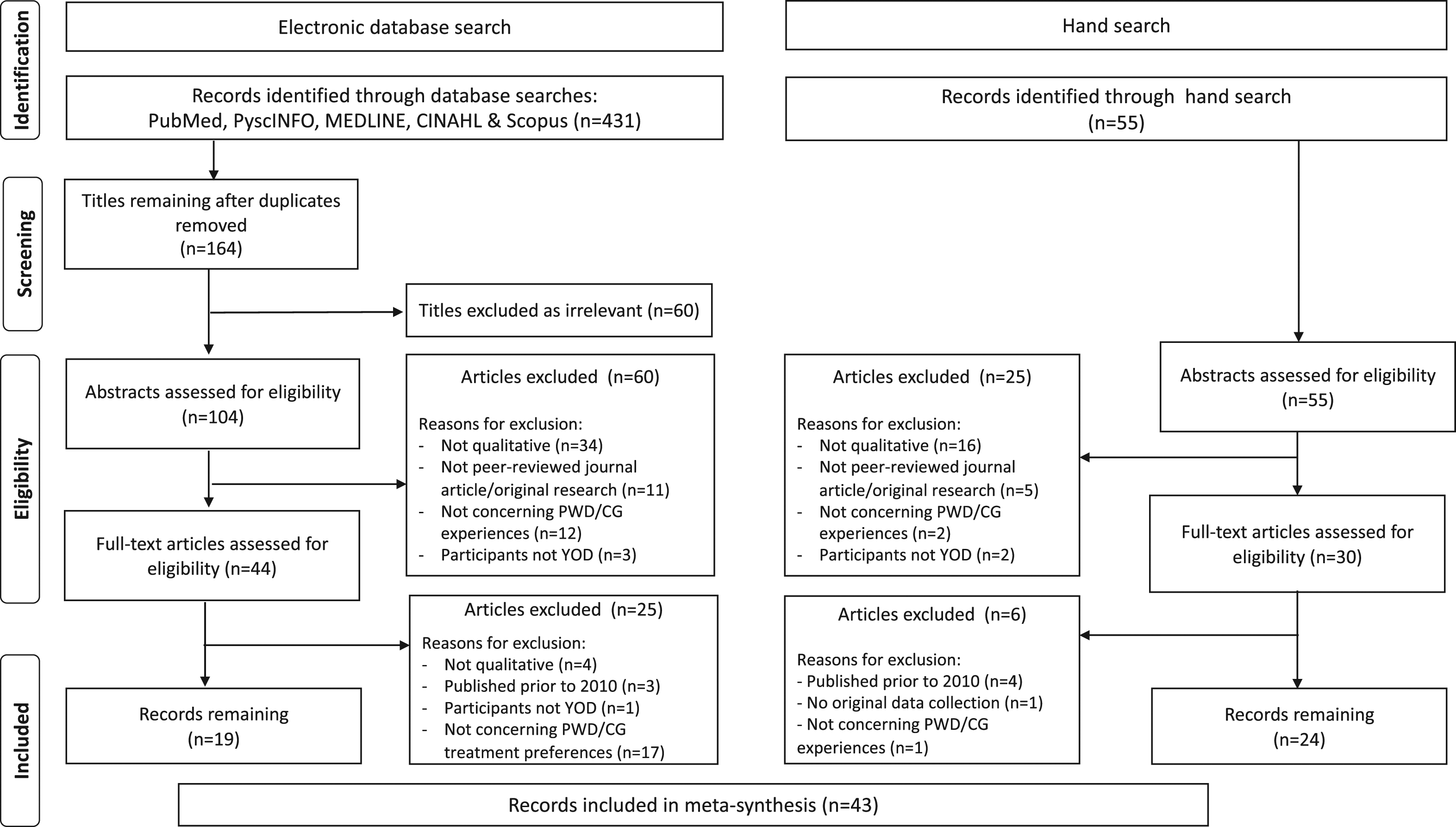
To analyze qualitative data, studies primarily used thematic analysis (N = 19), interpretative phenomenological analysis (IPA) (N = 8), or grounded theory (N = 5), with the remainder adopting a variety of different approaches (see Supplemental Table 1). Approximately half (47%) of the studies reported on time elapsed since young onset dementia diagnosis for participants. Out of these studies (N = 20), 75% reported that individuals were diagnosed on average more than 1 year before study participation. Two studies included both individuals with young onset dementia and later-onset dementia (>65) yet presented findings separately for each group. In addition, some studies focused on specific subtypes of young onset dementia, such as FTD (N = 17) and posterior cortical atrophy (N = 3). Caregivers included spouses (N = 16), children (N = 7), and other family members (N = 12). Descriptive characteristics of all included studies can be found in Supplemental Table 1.
Synthesized findings
We synthesized qualitative findings (i.e., supportive service preferences as relevant for persons with young onset dementia and caregivers) within three a priori defined domains: 1) general characteristics of supportive services, 2) format of treatment and delivery modality of supportive services, and 3) desired content of supportive services. Within each of these domains, we captured persons’ with young onset dementia and caregivers’ common and unique preferences.
Synthesized Findings Across Study Domains.

Domain 1: general characteristics of supportive services
This domain encompasses five common themes that address the general characteristics of supportive services that persons with young onset dementia and caregivers believed were helpful for promoting their positive adjustment to young onset dementia. Both persons with young onset dementia and caregivers had preferences for supportive services that are (1) appropriate to their age and life stage and specific to young onset dementia subtype; (2) inclusive, accessible, and readily available; (3) consistently available and relevant to the stage in young onset dementia illness progression; (4) flexible and individualized, tailored to their shared needs and challenges; and (5) allowing time for persons with young onset dementia and caregivers to process the diagnosis at their own pace. Persons with young onset dementia endorsed a unique preference for (6) service providers to indicate a respect for their autonomy by treating them as experts on their own symptoms and as active participants in their healthcare decisions. We briefly describe themes with relevant evidence below.
Both persons with young onset dementia and caregivers strongly preferred age-appropriate resources, and requested disease-specific guidance so that they could best navigate current financial, personal, medical, and practical challenges and plan for the future (Arntzen et al., 2016; Bakker et al., 2010; Cations et al., 2017; Johannessen et al., 2016; Lockeridge & Simpson, 2013). Both persons with young onset dementia and caregivers indicated preferences for respectful, knowledgeable, and trustworthy service providers who provided relevant information about young onset dementia diagnosis and prognosis (Bakker et al., 2010; Johannessen et al., 2016; Kinney et al., 2011; Millenaar et al., 2014; Stamou et al., 2020). They also described the benefits of accessible support and continuity of care throughout young onset dementia progression (Bakker et al., 2010; Giebel et al., 2020; Johannessen et al., 2016; Mayrhofer et al., 2020; Stamou et al., 2020). Persons with young onset dementia and caregivers described a preference for services that were appropriate for their stage in the young onset dementia illness progression and accounted for persons’ with young onset dementia current functioning (Carone et al., 2016; Dourado et al., 2018; Flynn & Mulcahy, 2013; Hutchinson et al., 2016) and individualized to their specific challenges (e.g., parenting in the context of young onset dementia for couples with children). They also both expressed a desire for “gentle support” in connection to the impact of the diagnosis and transition to care-partners, particularly before discussion of long-term issues like advanced care planning (Johannessen & Moller, 2013; Metcalfe et al., 2019; Nichols et al., 2013).
Domain 2: delivery format and modality of supportive services
This domain encompasses two common themes regarding preferences for the format and delivery modalities of supportive services. Both persons with young onset dementia and caregivers expressed preferences for resources that (1) meaningfully connect them to providers through in-person support or interactive live video and (2) give them the option to participate together to discuss both partners’ needs. Persons with young onset dementia specifically endorsed desire for (3) involvement of caregivers in their services, through active involvement in conversations regarding information about their diagnosis and how to best function as a team. Caregiver-specific preferences included (4) live video or other virtual support to minimize barriers in access and (5) flexible timing (e.g., evenings and weekends) to reduce burden.
Both persons with young onset dementia and caregivers expressed a desire for services that would allow them to develop networks to meaningfully engage with their providers and others impacted by young onset dementia (Metcalfe et al., 2019; Nichols et al., 2013; Thorsen et al., 2020). They also described the benefits of including an option to participate in services separately or together to discuss young onset dementia-related challenges (Carone et al., 2016; Ducharme et al., 2013; Johannessen et al., 2017; Jentoft et al., 2014). Persons with young onset dementia explained that participating in psychosocial services with their caregivers would help promote at-home practice of coping skills and lifestyle changes (Arntzen et al., 2016; Hewitt et al., 2013). Though caregivers indicated that in-person support was valuable, they found online formats for support groups and skills training to be helpful to overcome the barrier of travel for sessions (Lockeridge & Simpson, 2013; Metcalfe et al., 2019; Nichols et al., 2013). Given their need to navigate increased responsibilities and time commitments, caregivers also expressed desire for support and practical skills that were not burdensome and could be easily integrated into their changing daily schedules and routines (Arntzen et al., 2016; Johannessen et al., 2016; Metcalfe et al., 2019; Millenaar et al., 2014; Wawrziczny et al., 2017b).
Domain 3: desired content for supportive services
This domain encompasses six common themes that describe shared preferences among persons with young onset dementia and caregivers for the desired content discussed in supportive services. Both persons with young onset dementia and caregivers expressed desire for (1) education to promote an understanding of young onset dementia and what to expect in the future, (2) individualized practical support for logistical challenges, (3) skills for open communication about thoughts and feelings, (4) skills for communicating effectively in the context of worsening young onset dementia symptoms, (5) skills to navigate changes in family roles and responsibilities, and (6) skills to reduce social isolation and meaningfully engage in social support. We identified two unique themes for persons with young onset dementia: (7) skills for managing symptoms while preserving autonomy and (8) support identifying and pursuing opportunities to engage in rewarding or positive activities. In addition, we identified three unique themes for caregivers: (9) support adjusting to caregiver responsibilities, (10) skills to identify individual needs and prioritize self-care, and (11) skills to reduce the emotional impact of caregiving.
Persons with young onset dementia and caregivers both expressed interest in training to build skills related to having more open conversations about their individual experiences with young onset dementia (Hutchinson et al., 2016, 2020; Larochette et al., 2019; Nichols et al., 2013; Stamou et al., 2020). Specifically, they sought to learn strategies to more effectively express and understand each other’s needs in general and in the context of young onset dementia-related communication disruptions (Larochette et al., 2019; Stamou et al., 2020). Both persons with young onset dementia and caregivers also sought training in skills (e.g., collaborative problem-solving) to maintain the functional balance of roles and responsibilities within their couple or family unit (Arntzen et al., 2016; Aslett et al., 2019; Ducharme et al., 2013; García-Toro et al., 2020; Svanberg et al., 2010) and highlighted the benefits of participating in support-group activities with other persons with young onset dementia and caregivers to promote normalization, problem-solve common stressors, and cultivate a sense of belonging (Hewitt et al., 2013; Johannessen & Moller, 2013; Kinney et al., 2011; Mayrhofer et al., 2020; Rabanal et al., 2018).
Regarding unique themes, persons with young onset dementia desired practical strategies for managing their symptoms that were appropriate for their current level of functioning (Ducharme et al., 2013; Hewitt et al., 2013; Holthe et al., 2018; Johannessen & Moller, 2013; Rabanal et al., 2018) and to learn to cultivate new skills and engage in hobbies to promote their health and well-being (Cations et al., 2017; Hewitt et al., 2013; Holthe et al., 2018; Kimura et al., 2015; Robertson & Evans, 2015). Caregivers hoped to learn strategies to better manage persons’ with young onset dementia behavioral symptoms (Kilty et al., 2019; Kimura et al., 2015; Larochette et al., 2019; Millenaar et al., 2014; Wawrziczny et al., 2017b), navigate practical tasks (e.g., arranging care, navigating medical appointments, financial support, and advanced care options), and provide support without needing to excessively “monitor” persons with young onset dementia (García-Toro et al., 2020; Lockeridge & Simpson, 2013; Mayrhofer et al., 2020; Van Rickstal et al., 2019; Wawrziczny et al., 2017b). Caregivers also sought to learn to prioritize their own mental health and emotional or practical needs (Dourado et al., 2018; Flynn & Mulcahy, 2013; Johannessen et al., 2017; Larochette et al., 2019; Svanberg et al., 2010). Finally, caregivers highlighted the benefits of guided training and practice in positive coping skills to reduce the impact of daily stressors, manage difficult emotions associated with young onset dementia (e.g., sadness, anxiety, and grief), and learn to stay connected to persons with young onset dementia in the context of progressive symptoms (Larochette et al., 2019; Millenaar et al., 2014; Svanberg et al., 2010).
Discussion
Young onset dementia produces unique challenges relative to later-onset dementias, and persons living with young onset dementia and their caregivers report dissatisfaction with the availability and fit of existing supportive services. Yet, there is currently no integrated information available to direct the development of such resources (Bannon et al., 2020). Therefore, we conducted the first meta-synthesis to comprehensively characterize persons’ with young onset dementia and caregivers’ preferences for supportive services to address the challenges they experience after diagnosis. We generated a wealth of information on their common and unique perspectives regarding the 1) general characteristics of supportive services, 2) format and delivery modality of supportive services, and 3) desired content for supportive services.
Our review replicates and extends the scope of previous qualitative reviews of experiences with young onset dementia (Bannon et al., 2020; Spreadbury & Kipps, 2019a, 2019b) and service needs before and after diagnosis (Sansoni et al., 2016; Westera et al., 2016). Specifically, prior reviews described the individual preferences of persons with dementia and their caregivers in terms of the general characteristics and format of services and emphasized the need for adopting an individualized and person-centered approach to young onset dementia services that recognizes the diversity among diagnostic groups and individuals’ varying needs (Sansoni et al., 2016). In addition, they also acknowledge the need for timely provision of post-diagnostic services to promote adjustment and allow persons with young onset dementia and caregivers to engage in routines and meaningful activities (Sansoni et al., 2016; Westera et al., 2016). Our review is the first to comprehensively characterize the preferred content of services, and our findings can be used to directly inform services that promote positive adjustment for both partners after diagnosis. Our findings also parallel those observed in qualitative systematic reviews involving persons with older onset dementias and their caregivers, where both individuals expressed preferences for continuous support and counseling as well as services that they could participate in together to manage their individual distress and work to adjust to changes in their shared experiences (von Kutzleben, Schmid, Halek, Holle, & Bartholomeyczik, 2012; Wadham, Simpson, Rust, & Murray, 2016).
Our meta-synthesis revealed that only a small number of published studies (N = 11) pertained to persons’ with young onset dementia or caregivers’ preferences for specific proposed or implemented supportive services. Two studies pertained to individual interventions for caregivers, with only one assessing perspectives of a skill-based intervention (Larochette et al., 2019). Only two studies obtained preferences prospectively for the purpose of the development of dementia care service models for young onset dementia, and we failed to identify any studies discussing perceptions of individual interventions for persons with young onset dementia, dyadic interventions (i.e., involving persons with young onset dementia and caregivers simultaneously), or family-based approaches. By adopting a rigorous strategy for identifying articles (database and hand search) and including other studies that revealed insights related to service preferences, we were able to comprehensively extract findings that can guide future efforts in this area.
Across studies, we observed that preferences were predominantly common among persons with young onset dementia and caregivers. Specifically, regarding the general characteristics of supportive services and the preferred format and delivery modality of supportive services, both endorsed a strong preference for young onset dementia-specific services to participate in together early after diagnosis. Persons with young onset dementia and caregivers underscored the importance of meaningfully interacting with service providers and others in the young onset dementia community to develop relationships that would be maintained throughout the illness progression. They both emphasized the need for supportive services to be flexible and tailored to their specific needs and stage in the illness progression. Regarding the desired content of supportive services, common preferences included education on young onset dementia diagnosis and prognosis and tailored skills training to navigate practical challenges, communicate openly about young onset dementia-related challenges (e.g., difficult emotional experiences and changes in roles and responsibilities), and meaningfully engage social support.
While the majority of preferences were common, we identified important unique preferences for service providers to consider. Persons with young onset dementia described the importance of maintaining agency in their management of young onset dementia through their participation in supportive services with caregivers, with the goal of collaboratively preserving their continued autonomy and independent identities. In addition, caregivers described the importance of overcoming barriers to participating in supportive services, in light of their caregiving responsibilities and time constraints (e.g., offering live video or virtual support and flexible timing of delivery), and expressed a desire to learn how to prioritize self-care and minimize the emotional toll of caregiving. The common and unique preferences identified in our review highlight the benefits of offering services capable of being tailored to both persons’ with young onset dementia and caregivers’ shared and individual circumstances.
Limitations and future directions
Very few studies directly assessed the supportive service preferences of persons with young onset dementia and caregivers facing young onset dementia. Therefore, our meta-synthesis was limited by the available qualitative literature in this area. However, the preferences identified in our meta-synthesis are similar to those described in interventions for later-onset dementias (Moon & Adams, 2013), where experts have advocated for a movement beyond caregiver-focused supportive services to instead include persons with dementia and their caregivers simultaneously. Historically, these approaches have been difficult to implement due to delays in timely diagnosis, resulting in a missed “window of opportunity” to meaningfully involve persons with young onset dementia in their own supportive services and care (García-Toro et al., 2020; Mayrhofer et al., 2020; Metcalfe et al., 2019). While the articles included in this review were of overall good quality, we identified a number of methodological weaknesses of the available literature (e.g., considering and reporting on the relationship between researchers and participants). Future qualitative investigations of persons living with young onset dementia and their caregivers could be strengthened by considering and reporting on the appropriateness of study design, recruitment strategies, and data collection methodologies for addressing research aims as well as considering and reporting on the relationship between researchers and participants.
Recent advances in technology have enabled earlier and more confident diagnoses of young onset dementia (Mayrhofer et al., 2020), leading to new possibilities for supportive services. Future studies are needed that include both persons with young onset dementia and their caregivers and focus specifically on service preferences to facilitate the development of additional resources for young onset dementia, including studies characterizing (a) service preferences of dyads in the initial post-diagnosis period and across the young onset dementia illness continuum; (b) barriers and facilitators of use and meaningful engagement in supportive resources among persons with young onset dementia, caregivers, and dyads; (c) ways of adapting content and skills to meet the unique needs and considerations of young onset dementia; and (d) individual and dyadic factors that may contribute to the feasibility, acceptability, and utility of supportive services in young onset dementia. In addition, findings identified in our study may diverge from the experiences of more diverse groups of persons with young onset dementia and caregivers, particularly because samples in the included studies were predominantly recruited from Western countries and involved non-Hispanic White participants.
Conclusion
Our meta-synthesis is the first to comprehensively investigate the available literature concerning the supportive service preferences of persons with young onset dementia and caregivers. We observed that most preferences were common among persons with young onset dementia and caregivers, including desires for young onset dementia-specific services to participate in together early after diagnosis. Both persons with young onset dementia and caregivers also expressed interest in having direct, interactive contact with service providers and programs that are flexible and tailored to their specific needs and challenges in their stage of young onset dementia progression. We also report on unique preferences for persons with young onset dementia and caregivers to be taken into account in the development of services. Findings directly inform the development of supportive services for persons with young onset dementia and their caregivers.
Supplemental Material
sj-pdf-1-dem-10.1177_14713012211048118 – Supplemental Material for A qualitative meta-synthesis of common and unique preferences for supportive services among persons with young onset dementia and their caregivers
Supplemental Material, sj-pdf-1-dem-10.1177_14713012211048118 for A qualitative meta-synthesis of common and unique preferences for supportive services among persons with young onset dementia and their caregivers by Sarah M Bannon, Mira R Reichman, Katherine Wang, Simrit Uppal, Victoria A Grunberg and Ana-Maria Vranceanu in Dementia
Footnotes
Declaration of conflicting interests
A-MV reports serving on the Scientific Advisory Board for the Calm application outside of the submitted work. She also reports research support from NIH, NF-Midwest, NF-Texas, NF-Northeast, and royalties from Oxford University Press. All other authors declare no conflicts of interests.
Funding
The author(s) disclosed receipt of the following financial support for the research, authorship, and/or publication of this article: This study was funded by grants 5R21 NR017979 and 3R21 NR01797902-S1 from National Institute of Nursing Research and National Institute of Aging to Ana-Maria Vranceanu.
Ethical approval
No ethical approval was needed because data from previously published studies in which informed consent was obtained by primary investigators were retrieved and analyzed.

Supplemental material
Supplemental material for this article is available online.
References
Supplementary Material
Please find the following supplemental material available below.
For Open Access articles published under a Creative Commons License, all supplemental material carries the same license as the article it is associated with.
For non-Open Access articles published, all supplemental material carries a non-exclusive license, and permission requests for re-use of supplemental material or any part of supplemental material shall be sent directly to the copyright owner as specified in the copyright notice associated with the article.
