




Abstract
Objectives
To describe the perceived and unmet needs for health and social services and their relative importance among families coping with dementia in urban China.
Methods
We used data from a cross-sectional survey conducted between 2018 and 2019 in two cities in eastern China. Trained staff conducted structured interviews of family caregivers of people living with dementia at home to obtain individual characteristics as well as types of service needs of families coping with dementia. Service needs and utilization in 24 types of services across five domains (daily living, medical/nursing, rehabilitation, mental health, and other) were examined. Descriptive statistics were used to describe characteristics of the dyads and the ranking of services based on the percentage of respondents with perceived/unmet needs.
Results
A total of 170 (87.6%) family caregivers completed the interviews. The mean age of the care recipient was 77.2 years (range: 60–102) and 65.3% were female. The mean age of family caregivers was 58.4 years (range: 28–90), and 57.1% were female. The top five services used by the care recipients were: primary care, medication management, housekeeping, activities of daily living assistance, and adult day service. The five services with the most unmet needs were: legal assistance (42.7%), hospice care (44.7%), respiratory secretion management (expectoration) (57.6%), life enrichment activities (65.4%), and companion care (67.0%). Except for transportation and dressing/grooming, working and nonworking caregivers reported similar relative importance of service needs.
Conclusions
The findings suggest that people living with dementia and their family require a wide range of services and supports to live in the community. Future research and policy efforts should target the unmet needs of families to improve dementia care in the community and promote aging-in-place.
Introduction
More than 55 million people had dementia and the number of new cases is growing by almost 10 million each year (World Health Organization, 2021). China has one-fifth of the world’s older adult population and a quarter (more than eight million) of the world’s dementia population (Jia et al., 2018; Li et al., 2018). In 2020, the total cost of dementia care to families and the health care system was estimated to be $249 billion in China, and this number is expected to double by 2030 (Jia et al., 2018). Despite continued progress in our understanding of the disease, effective prevention and treatment for dementia are still lacking. To address the growing needs for services, the World Health Organization has developed a global plan for action which emphasizes seven action areas, with dementia care and support being two key areas (World Health Organization, 2017). As the needs of people living with dementia are complex and evolve over the course of the disease, a range of health and social care will be needed by the growing number of families coping with dementia in China.
For people living with dementia, the irreversible decline in brain functioning can lead to progressive memory loss and impairment in their ability to perform daily activities. Most people living with dementia also experience behavioral and psychiatric symptoms, which contribute to a lower quality of life and higher caregiver strain. Thus it is necessary to develop strong health care and social support systems and policies to help families caring for people living with dementia (Choi et al., 2021). Despite several recent studies documenting the prevalence rates of dementia in China and its impact on caregiver burden (Chen et al., 2016; Li et al., 2018; Zhao & Li, 2020), evidence regarding the day-to-day care needs of families coping with dementia remains very limited (Wang et al., 2018; Wang, Cheung, & Leung, 2019; Yang, Wu, et al., 2021). Therefore, how to strengthen the health care and social service systems to support aging in place and enhance the quality of life of families coping with dementia requires a better understanding of the needs of people living with dementia and their family caregivers (Wang et al., 2020; Yang, Ye, & Sun, 2021). In response to challenges posed by the rapid population aging, the Chinese government issued the “90-7-3” framework as a guiding principle for long-term care in which 90% of all older adults would age in place at home, 7% would receive residential care in the community; and the remaining 3% would be cared for in institutional settings (Wang & Wu, 2017; Wang, Cheung, & Leung, 2019). Currently, in line with strong traditions of Confucious core values of filial piety and collectivism, the overwhelming majority of people living with dementia (96%) in China are cared for by family caregivers (Wang & Wu, 2017). However, due to the challenges in providing care for them, many caregivers bear physical, financial, social, and psychological burdens (Wang et al., 2021).
In both developing and developed countries, family caregivers provide substantially more care for people living with dementia as compared to the time spent caring for individuals without dementia. For example, a nationally representative study of US caregivers found that dementia alone accounted for 41% of all caregiving hours provided by family caregivers and that caregiving is most burdensome for caregivers living with the care recipient (Kasper et al., 2015). Heavy reliance on informal caregivers may also contribute to lower labor force participation, with over 60% of the estimated cumulative impact of dementia is due to productive labor losses(Keogh-Brown et al., 2016; Wittenberg & Hu, 2016). Since China has the largest share of global manufacturing output, lower labor force participation due to caregiving could have detrimental long-term effects on the global supply chain. Consequently, providing adequate support for caregivers is likely to reduce the negative impact of a growing dementia population will have on care provision, caregiver well-being, and productivity (Chang et al., 2020; Clay et al., 2019; Amjad et al., 2018). Understanding whether and to what extent families coping with dementia have their needs met is important for clinicians, researchers, and policymakers because unmet needs negatively affect caregivers’ ability to provide support for aging-in-place among persons living with dementia and contribute to caregiver stress, burnout, and worsened mental health.
Given the large impending increase in people living with dementia and a diminishing pool of family caregivers, more research aimed at strengthening the national public health response to support family caregivers is urgently needed. The aim of this study is to describe the perceived and unmet needs for health and social services and their relative importance among families coping with dementia in two cities in eastern China.
Methods
Study design
This is a cross-sectional descriptive study involving families coping with dementia at home in Ningbo and Shanghai, two cities in eastern China. A two-stage stratified random sampling design was used to select and screen potentially eligible families in each city to participate in the study. An in-home survey was then conducted for each eligible and consented family. All interviewers participated in a five-day training program before the study. Two teams of interviewers visited each participant’s home and conducted face-to-face interviews between July 2018 and October 2019. Each interview lasted between 30‐60 minutes. A total of 188 participants completed the questionnaire. After excluding participants with normal MMSE and whose age variable was missing, data from 170 participants were used in the analysis.
Inclusion/exclusion criteria
Residents were eligible for study inclusion if they (1) were ≥60 years old, (2) lived at home, (3) had a family caregiver willing to provide written informed consent, and (4) had medically diagnosed dementia. Dementia is defined as meeting the Chinese Guidelines for Diagnosis and Treatment of Cognitive Impairment and Dementia (Jia et al., 2018). Those younger than 60 years old, undiagnosed, normal cognitive function, served in an institutional setting, or unwilling to consent were excluded from the study.
Survey/Measurement
The survey was designed to obtain information on both care recipients and caregivers. The survey included questions on basic social-demographic information of people living with dementia (age, gender, education, income, marital status, and occupation) and caregiver information (relationship with the care recipient, age, employment status, health, and functional status). Disease status included the type of dementia, clinical symptoms, medications, and rehabilitation. Dementia severity was assessed by the Mini-Mental State Examination (MMSE), a standard tool used to assess cognitive function and screen for dementia (Folstein et al., 1975). The MMSE includes assessment on time and location orientation, immediate recall, attention focus and math literacy, delayed memory, language, and visual space. To account for the cultural context of the Chinese older adult population, two sets (high vs. low education attainment) of cut-points were used to classify cognitive function. For those with ≤6 years (elementary school) of primary education: severe (0–9 points), moderate (10–15 points), mild (16–19 points), and normal (20–30 points). For those with >6 years of secondary education: severe (0–10 points), moderate (11–17 points), mild (18–23 points), and normal (24–30 points) (Chua et al., 2019).
The Barthel Index was used to assess the activities of daily living (ADL) of people living with dementia. It consists of 10 items, including bowels, bladder, grooming, toilet use, feeding, transfer, mobility, dressing, stairs, and bathing. The Barthel Index (0–100 points) was grouped into five levels: completely independent (100 points), mildly dependent (91–99 points), moderately dependent (61–90 points), severely dependent (21–60 points), and completely dependent (0–20 points) (Collin et al., 1988).
Regarding service needs and unmet needs, we used a list of services adapted from the service categories described in the Camberwell Assessment of Need for the Elderly (CANE) (Reynolds et al., 2000) and the Johns Hopkins Dementia Care Needs Assessment (JHDCNA) (Black et al., 2008). Four categories of services essential for community living were included: ADL, Medical Care, Mental Health Care, and Other. The degree to which needs were met was calculated as the percentage of the number of unmet needs out of the total number of service needs reported by each respondent.
Statistical analysis
Descriptive statistics were examined based on the individual characteristics of the persons with dementia and their caregivers, respectively. Results were reported as percentages for categorical variables and means and standard deviation for continuous variables. We also compared caregiver characteristics by employment status. The total perceived needs and unmet needs were calculated based on their frequency at the individual level and ranked among all services. Bar charts were used to describe the relative importance of the unmet needs (in descending order). We also compared the perceived needs for services by caregiver employment status. Fisher’s exact tests were used to examine whether working caregivers have significantly different needs as compared to non-working caregivers. All analyses were performed using SAS 9.4 (SAS Institute, Cary, NC).
Results
Descriptive statistics of persons with dementia in the study sample.
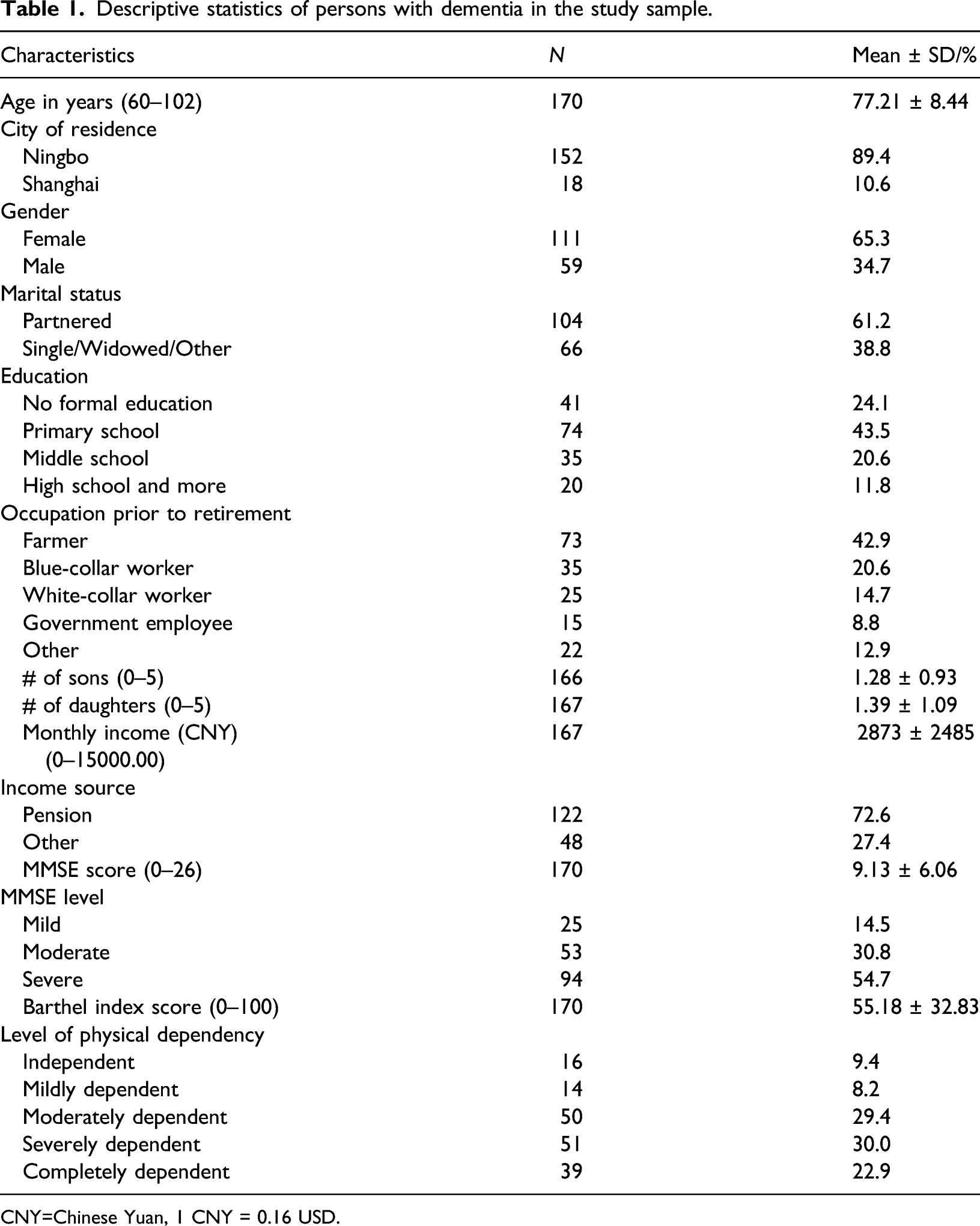
CNY=Chinese Yuan, 1 CNY = 0.16 USD.
Characteristics of family caregivers of persons with dementia.

Family caregiver reported perceived and unmet service needs.

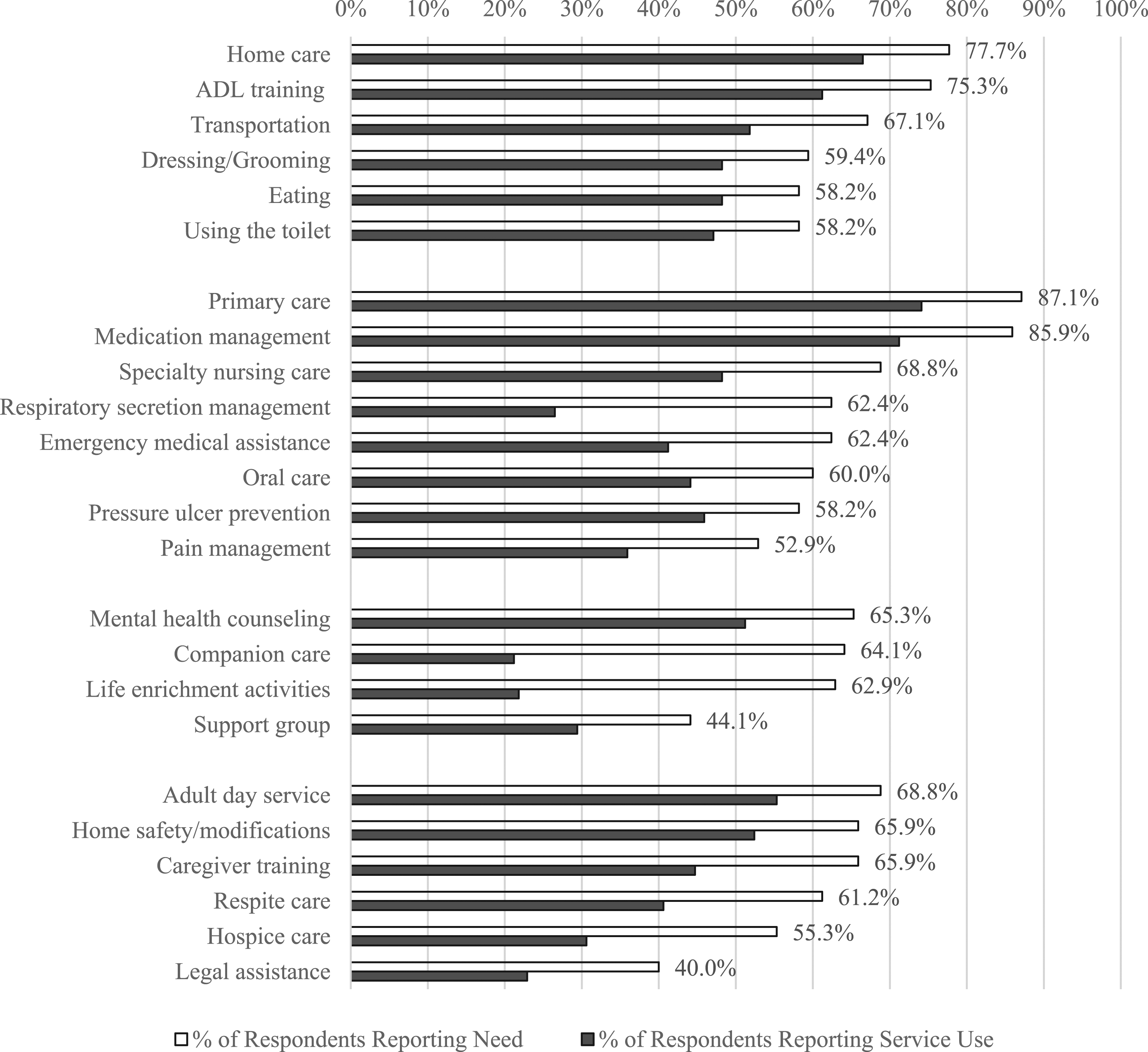
The percentage of caregiver reported service needs and service use.
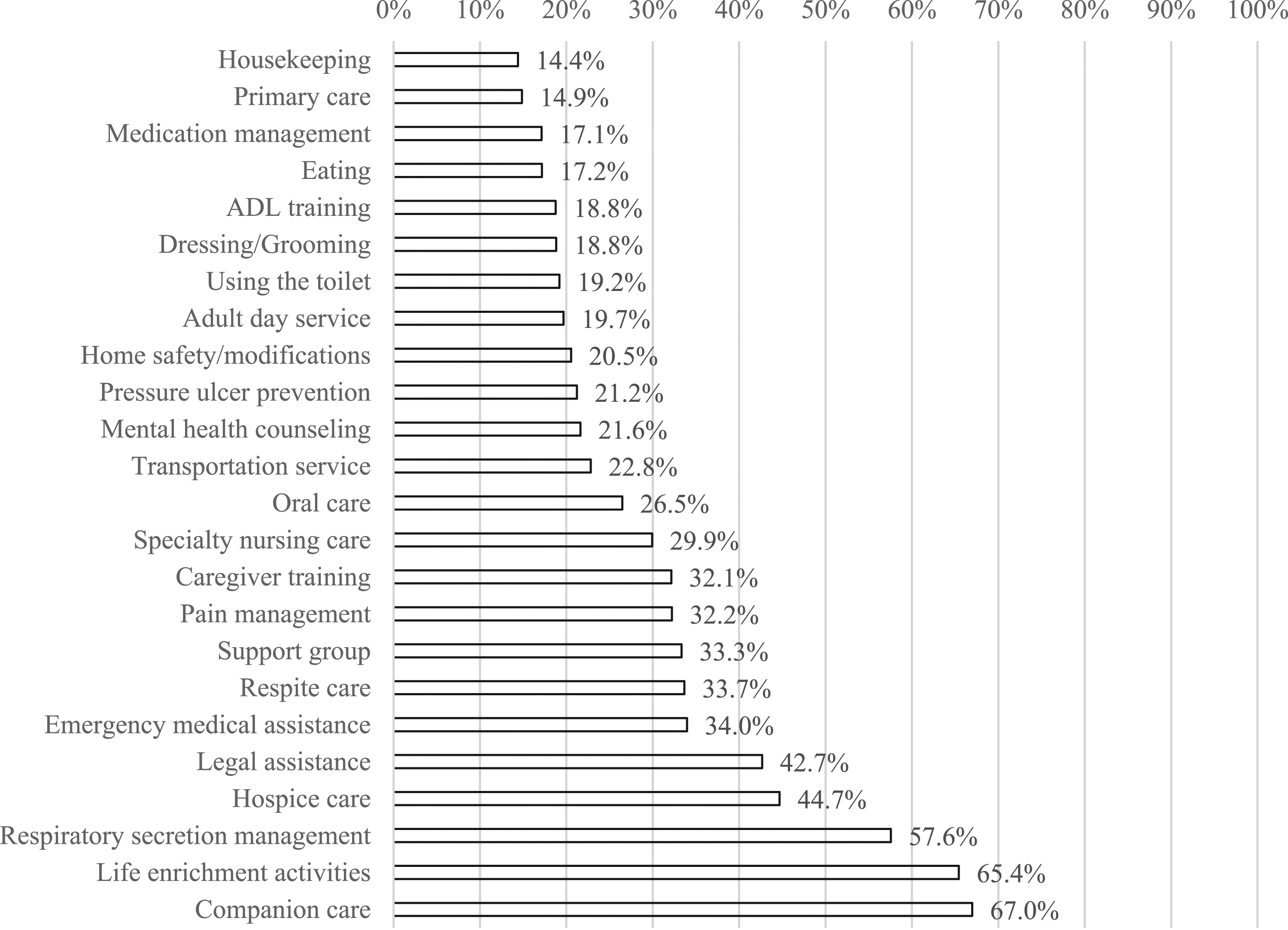
The percentage of caregiver reported unmet needs for each service.
Family Needs for Services, by employment status.

Discussion
In this cross-sectional survey of family caregivers of people living with dementia in two cities in Eastern China, we found wide-ranging perceived and unmet needs reported by family caregivers. The majority of families coping with dementia reported needing and using both health and supportive services in the community. The research findings suggest that psychosocial needs (e.g., companion care and life enrichment activities, legal and emergency medical assistance, and respite care) are among some of the most common unmet service needs for supporting aging-in-place for people living with dementia in China.
The findings on unmet needs largely mirrored those reported by studies conducted in developed countries. For example, daytime activities, companionship, and psychological distress have been reported by persons with dementia and their caregivers as the most common unmet needs (Hancock et al., 2006; Miranda-Castillo et al., 2013; Tapia Muñoz et al., 2019). However, strengthening the support for home-based care for families coping with dementia may be a universal approach across cultures (Samus et al., 2018). The third-most reported unmet need of respiratory secretion management is of significance as persons with dementia at later stages of the disease are more prone to developing respiratory illnesses such as pneumonia (Mitchell et al., 2009). Assistance with respiratory secretions is vital to improving quality and life and life expectancy. For example, aspiration pneumonia is common among people living with dementia due to difficulty swallowing in later stages of the disease (Marik, 2010). Hospice care refers to a specialized type of care offered to persons at their end of life. It has been shown that patients who received hospice care reported fewer unmet needs than those who did not (Teno et al., 2011). Because the great majority of the sample consisted of persons at moderate and severe stages of dementia, the finding of high unmet needs for hospice care should be noted by funders and medical and social service providers to promote timely provision of palliative care in this population. As the 5th ranked unmet need, legal assistance services (establishing power of attorney, health care proxy, and documenting living will) are considered very important for families coping with dementia. This finding is consistent with those obtained from the MIND study in Baltimore, Maryland, in which 48% of dementia caregivers reported needing legal assistance (Black et al., 2013). Somewhat unexpectedly, working and non-work family caregivers shared the majority of service needs, with the only exception being higher needs for ADL training reported by working caregivers and higher needs for home care reported by non-working caregivers.
Disease severity often has a direct impact on the level of care that is needed by and provided to people living with dementia. In this study, caregivers tended to be children or spouses of the care recipient, and the majority of caregivers had very limited education. Because caregiving needs and burden are largely determined by dementia severity (Liu et al., 2012), this sample of people living with later stages of dementia may explain the high levels of reported caregiver burden (Montgomery et al., 2018). Caring for persons with dementia has been shown to be incredibly taxing on the caregivers physically, mentally, socially, and economically (Chen et al., 2016; Cole et al., 2014). Despite their caregiving responsibilities, 39.4% of caregivers in this study remain employed, which is higher than the 26.2% employment rate reported by Chen et al. (2016) in a study including 130 dementia caregivers in six Chinese provinces. It is also worth noting that the overwhelming majority (88.8%) reported having a secondary caregiver. These findings suggest that home and community-based dementia care programs may need to accommodate working caregivers and multiple caregivers.
The findings of this study provide important information for the development of public financing and long-term services and supports to assist families coping with dementia in China. Although it is important to improve the access to and the quality of care in institutional settings, home and community-based health and social care should become a priority for policy development and capacity building. This is especially true in the context of rising cases of dementia and the impact of the “One Child” policy on the supply and demand for caregivers. One study reported that 5.8 million people served as caregivers to people living with dementia and provided a total of more than 6 billion hours of care (Kasper et al., 2015). Given that the average duration of dementia caregiving ranges from 8 to 12 years (Lee & Chodosh, 2009). Single-child households may face an even more significant burden on families coping with dementia. A recent study suggests that home care may bring unintended consequences to families coping with dementia, such as social isolation (Zhang, Clarke, & Rhynas, 2020), thus highlighting the need for more research into the best model or combination of models to provide personalized yet socially meaningful caring environments to optimize evidence-based caregiver support programs in the community. Support programs and interventions for informal caregivers should be a priority in long-term care policy planning and research funding (Xu et al., 2018; Qiu et al., 2019).
The study has certain limitations. First, the study was conducted in two economically more robust cities, and the sample size is relatively small. Therefore, results may not be generalizable to other cities or rural areas in China. Second, as people living with dementia have limited cognitive capacity, the analysis is based on caregiver-reported information of perceived and unmet needs. It is possible that caregivers may over or underestimate the family’s needs for services. Future studies should expand the study area and enroll a study population from wider geographic areas with better rural representations. Additional research is also needed to investigate contextual factors associated with caregiver burden and better understand how caregivers can be supported in the community.
Despite these limitations, the present study is among the first studies documenting the extensive unmet needs of the vulnerable population of families coping with dementia in the community in China. Similar to the findings from other countries, family caregivers play a crucial role in caring for people living with dementia, and they have substantial unmet needs (especially in the psychosocial domains). Therefore, more research is needed to understand the care needs of families coping with dementia in both urban and rural settings. These findings help inform the Chinese government on areas of need that should be prioritized in building and strengthening an emerging home and community-based medical and social services system for people with long-term care needs.
Footnotes
Acknowledgements
The authors would like to thank all families for their participation, as well as the research staff who conducted the interviews. We also wish to thank Dr. Hansheng Ding from the Center for Health Development Research of Shanghai, China, for his valuable technical assistance with survey research design and implementation.
Declaration of conflicting interests
The author(s) declared no potential conflicts of interest with respect to the research, authorship, and/or publication of this article.
Funding
The authors disclosed receipt of the following financial support for the research, authorship, and/or publication of this article: This work was supported by the National Natural Science Foundation of China (NSFC Project #71774092).
Ethical Approval
The study was conducted in accordance with the Declaration of Helsinki, and the study protocol was approved by the Ethics Committee of Ningbo College of Health Sciences, China (approval number NBWY-011).
