



Abstract
Traditional buildings face problems such as low construction efficiency and high costs during the construction process, which cannot meet the requirements of green and sustainable development of buildings. To address this, a design model is constructed using BIM technology as a framework, which optimizes the energy efficiency of multiple building indicators and constructs a building energy efficiency optimization model based on decomposition of multiple objectives. Considering the cost and convergence issues of the goal solving model, an agent-assisted multi-objective particle swarm optimization model is introduced to construct an energy-saving design optimization model. The fitness of the particle swarm is optimized through an agent optimization strategy, thereby adjusting the speed and position of particles and improving the model optimization effect. Performed performance testing on the proposed model, and the proposed model has the best optimization performance under the Ackley function. After 100 iterations, it tends to converge. At this point, the best fitness value of the model is 0.452. Applying the proposed technology to specific cases for target optimization of urban single-room office buildings, the proposed optimization model has a shorter search time, a minimum of 2408 uncomfortable hours, and a minimum total energy consumption of 47.5, which are superior to the other three models. Finally, by comparing the comprehensive application effects of the model, the proposed model has the best performance in terms of super volume index, reaching 26,473 in urban office buildings. Compared to the comparison model, the proposed model takes 1.3 h, and the overall optimization time is the shortest. In traditional residential building testing, the proposed model has a super volume index of 50,132, which is also the best and has the shortest training time. It can be seen that the proposed optimization model has excellent optimization ability, and compared to other technologies in energy-saving optimization design, the proposed technology has the best optimization effect. Research technology will provide important technical support for the energy-saving optimization design and construction management of modern buildings.
Keywords
Introduction
Traditional construction methods are both costly and energy-efficient, and they cannot meet the requirements of sustainable urban development. Therefore, finding a more energy-efficient architectural design and analysis method has become particularly important. 1 This study will use BIM (Building Information Modeling) technology as the framework, which is a method of describing and managing construction projects through digital modeling. 2 It integrates various components and related information of the building into a model, facilitating collaborative work between designers and engineers, and can simulate the performance of the building under different conditions. To solve the energy consumption (EC) problem in building design, this study innovatively utilizes BIM technology to construct a design model for buildings and conducts energy-saving (ES) optimization design for multiple indicators such as indoor EC and residential comfort. A multi-objective (MO) optimization model is constructed, and the Multi-objective Evolutionary Algorithm in view of Decomposition (MOED/D) evolutionary optimization algorithm is introduced to solve the problem. Considering the cost problem, it introduces the agent-assisted MO particle swarm optimization (MOPS) algorithm and uses the surrogate model (SMO) for estimating the fitness of particles, thus improving the optimization effect of the model. The research content will help promote the sustainable advancement of the urban construction industry and provide new ideas and methods for related research. 3
The research content is separated into four. The first introduces the application of biofuels in diesel engines and the related technologies of diesel engine emission control, and discusses and analyzes the cutting-edge technologies of machine learning in diesel engine emission control. The second of the study focuses on diesel engine emissions, introducing machine learning models to construct diesel engine emissions models, and introducing the second-generation genetic algorithm to construct MO optimization models. The third is to apply the mentioned technology to specific scenarios for verifying the effectiveness of the MO optimization model in practical diesel emission tasks. The fourth summarizes and analyzes the entire article, and elaborates on the improvement direction of the research.
Related work
The BIM building integration platform provides important support for building construction, design, and data platform construction, and has important applications in the field of building ES design. Mehrbod et al. proposed the goal of conducting research on the coordination process of architectural design, with the aim of identifying bottlenecks in the current process and providing design considerations to alleviate them, in order to effectively deliver cost-effective and high-quality projects. Research has found that traditional design coordination settings are inefficient and prone to errors, while Building Information Modeling (BIM) tools have many advantages, but there are still many design coordination issues that have not been discovered, design problem records are insufficient, and coordination strategies are inefficient. The research results are of great significance for future construction projects and software development communities. 4 Lai et al. proposed a method of combining Building Information Modeling (BIM) with team collaborative design in large-scale building systems and studied the main difficulties of data exchange. In this study, he diagnosed the issue of data exchange between different design tools, especially in collaborative design. To address the issue of data interoperability, he proposed a collaborative design and project management platform based on BIM. This platform consists of a BIM-based database and five data processing engines, which can simplify data exchange between different software tools. This platform can handle BIM-based data from multiple design tools and has sufficient universality to accept almost any software tool related to design. Finally, using a multi-story library building as an example, various aspects of the platform’s data processing in collaborative design and project management were demonstrated. 5 Trzeciak’s research mainly focuses on the importance of scanning in the construction, engineering, construction, and operations industries. He proposed a dense three-dimensional (3D) reconstruction pipeline for improving point cloud resolution, suitable for handheld scanners composed of color cameras and LiDAR. By using spatial artificial intelligence (AI) methods to fuse time-synchronized and spatially registered images with LiDAR scans, higher-resolution dense scans can be generated and used for progressive reconstruction. The experimental results indicate that this method can reduce the noise of point clouds and increase their density. 6 Chen et al.’s research aims to develop an effective data transmission mechanism from BIM to augmented reality/virtual reality (AR/VR). They proposed an ontology-based BIM semantic information transfer method, which effectively transfers BIM semantic information to AR/VR by classifying building components in geometric models and simplifying them using different polygon simplification methods, and improves the frame rate in corresponding applications. 7 Wang et al. focused their research on the field of green intelligent buildings. Through research and comparative analysis of advanced technologies such as BIM, they proposed the principles and specific processes of green intelligent building automation systems, and introduced the development trends and system structures in this field. This study aims to provide overall solutions and ideas for the “green” and “intelligent” goals of green intelligent buildings and further enhance the product and market competitiveness of China’s building automation industry. 8
The ES optimization design of urban buildings belongs to MO optimization problems, which need to satisfy the needs of EC and comfort. Relevant scholars have conducted relevant research on this. Hong et al. aim to improve building power consumption. It studies thermochromic glass and analyzes its properties in view of MO. The conversion temperature, solar transmittance in transparent state, and solar transmittance modulation ability are considered, and MO Pareto decision-making is used for problem optimization. Taking the weather of a certain region as the experimental object, it verifies the proposed building energy conservation plan; the verification proves that this scheme can provide low EC under sufficient sunlight, which is superior to traditional schemes. This scheme provides important ideas for building ES renovation and architect design. 9 Xue et al. proposed an MO optimization design scheme for diminishing building EC and consider the impact of material cycle on efficiency; this solution is optimized to minimize the life cycle cost and carbon dioxide emissions of buildings, and finally solved through an MO particle swarm optimization (PSO) model. Through experiments, compared with the initial design, the optimized building design has a maximum life cycle cost reduction of 18.9%, while significantly improving building EC, meeting the requirements of building ES design. 10 To achieve the goal of building EEF design, Sohani et al. conducted research on existing building solar systems and geothermal-combined power generation systems, and determined the optimal operating conditions of solar systems and geothermal-combined power generation systems through MO, thereby providing important energy for buildings. This study uses a disposable genetic algorithm to solve MO solutions and obtains the final design scheme of the building energy system through optimization. Through specific experimental testing, after optimization of this scheme, building EC has been significantly improved, and the stability of the energy system has been significantly improved, meeting the ES and emission reduction goals of buildings. 11
According to the above research, the development of digital information technology has made BIM technology widely used in fields such as architectural design, construction, and scheme selection. Therefore, applying advanced BIM technology and machine learning technology to the field of building EEF optimization can improve the effectiveness of building design, reduce building EC, and strengthen the healthy advancement of the construction industry.
Construction of BIM-based urban energy-saving building design model
This section mainly considers factors such as urban building EC and comfort, and constructs an MO optimization model for building ES design. Meanwhile, it considers the optimization design characteristics of the model building, introduces an improved MO machine learning model for optimization, and constructs an optimization model.
Construction of multi-objective optimization model for building energy-saving design
In building ES design, building EC and user comfort are two important indicators. However, typically, these two indicators conflict with each other. To solve this problem, it is necessary to combine building EC with user comfort and construct an MO optimization model.
12
However, due to limitations in construction costs and time, decision-makers are unable to repeatedly build real buildings to evaluate the merits and demerits of various design schemes. To simplify modeling work, this EnergyPlus building EC simulation software in view of BIM technology is used to describe building EEF design issues.
13
The EC analysis model for building design in view of BIM is shown in Figure 1. Schematic diagram of BIM building energy consumption analysis model.
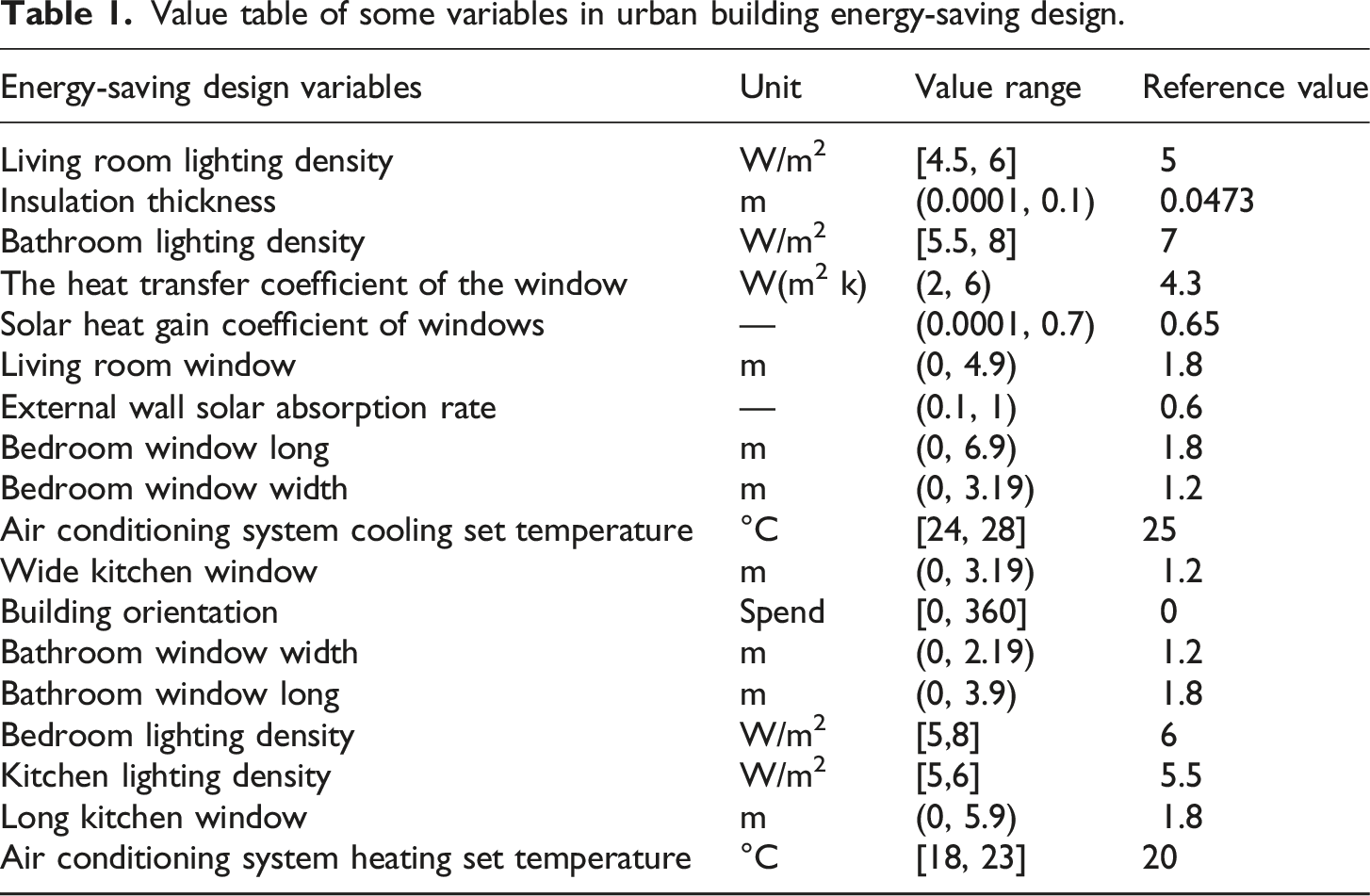
Value table of some variables in urban building energy-saving design.
This study assumes that 
In equation (1), 
The building EC model is a complex nonlinear model that can be modeled in view of the EnergyPlus building EC simulation software. This study assumes that 
In equation (3), 
In equation (4), 
In equation (5),
Construction of building energy efficiency optimization design model based on MOEA/D
For addressing the MO optimization issue of constructing EEF design, MOEA/D (Multi-objective Evolutionary Algorithm in view of Decomposition) algorithm in the MO Evolutionary algorithm can be used in this research. The MOEA/D model can simultaneously consider multiple independent objective functions and has good adaptability in multi-objective processing in construction. At the same time, the MOEA/D model also has fast convergence and excellent constraint processing ability, so MOEA/D is used to construct a multi-objective optimization model. Firstly, this study needs to define an MO optimization model for the issue. The goal of its hypothetical research is to minimize EC and discomfort hours in buildings, while meeting other design requirements. The optimization process of the MOEA/D model is shown in Figure 2.
16
MOEA/D model optimization process.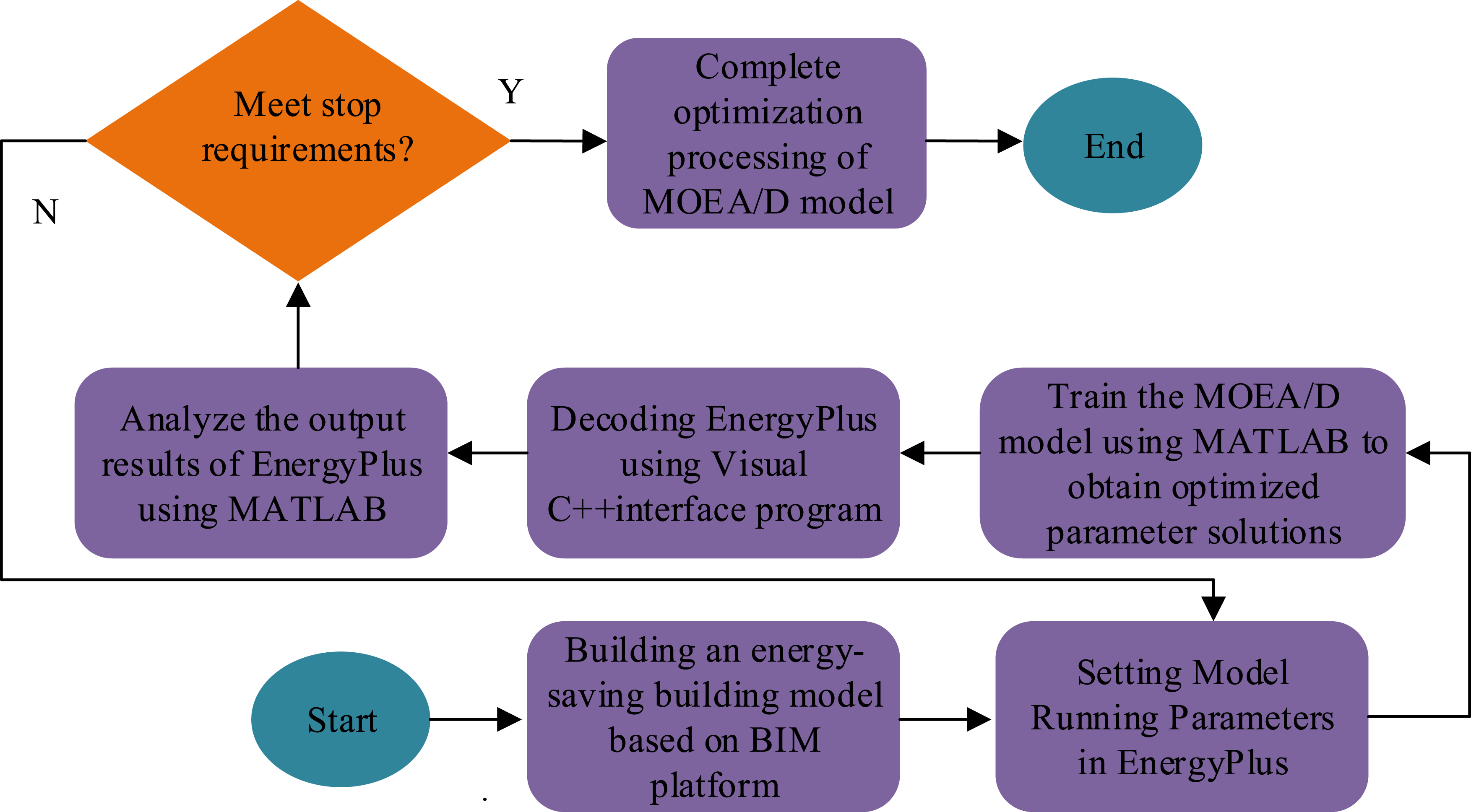
This study redefines the MO optimization model for building ES design, as shown in equation (6).
Among them, 
In equation (7), 
In equation (8), 
Finally, it analyzes the solution of the sub problem, and for each individual 
In equation (10), $
Building energy efficiency optimization design model based on agent-assisted MOPSO
For enhancing the performance of the MOEA/D evolutionary optimization algorithm in dealing with expensive MO optimization problems, this study introduces an agent-assisted MO PSO model for diminishing the quantity of actual evaluations of individuals, thereby reducing the running cost of the algorithm. The SMO approximately simulates the behavior of the real evaluation function by modeling the existing sample data.
18
In this algorithm, two methods can be used for optimization, including agent-based particle location update and SMO construction and management. The proxy-assisted optimization framework is shown in Figure 3. Agent-assisted optimization framework.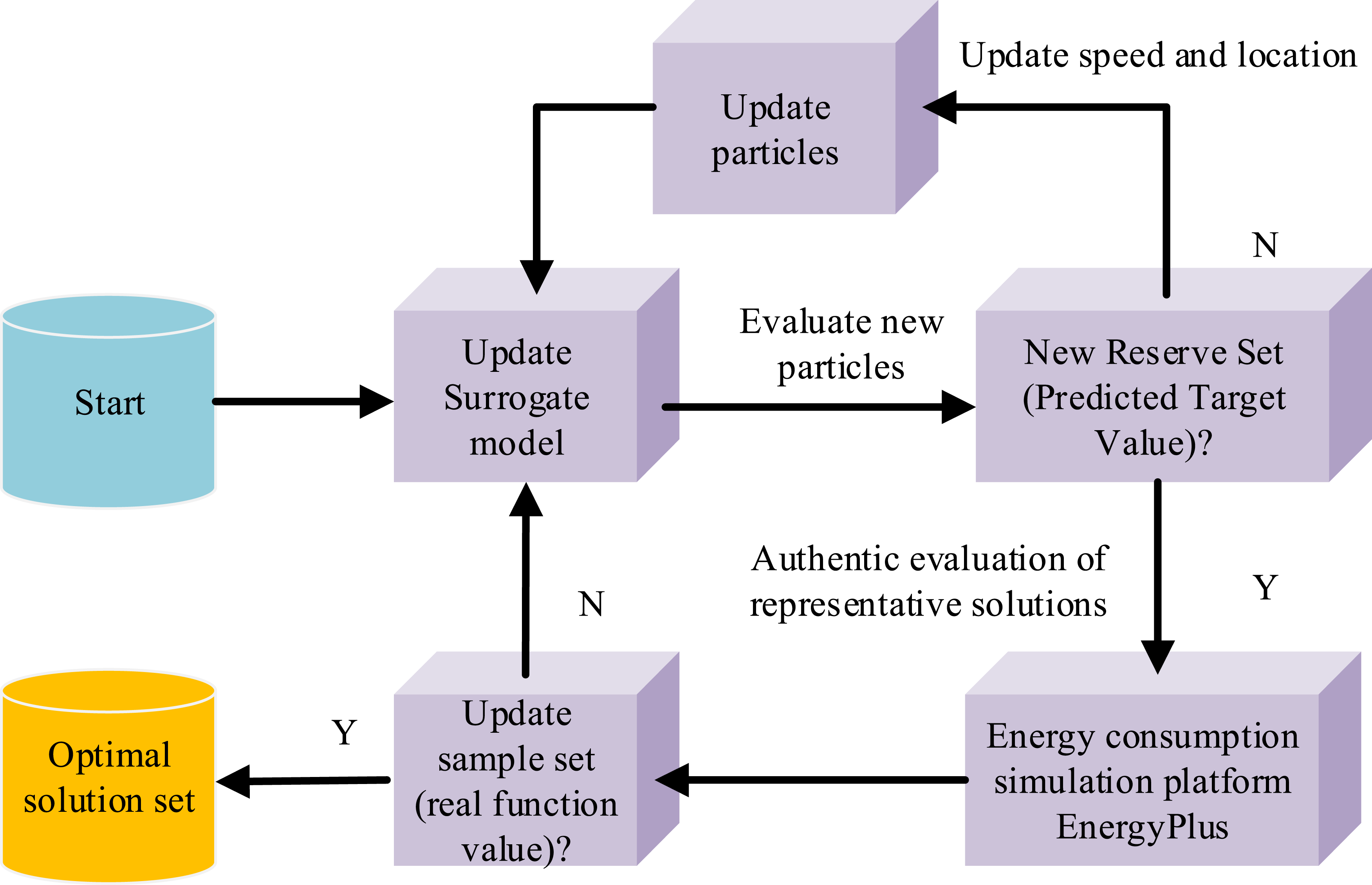
Firstly, this study needs to define some symbols and variables: 
In equation (11), 
In equation (12), 
In equation (13), 
In equation (14), 
Next, it evaluates the updated particle position in view of the real evaluation function and updates the fitness value and individual optimal solution, as shown in equation (16).
In each iteration process, it saves the non-DS in the population and uses non-dominated sorting and crowding distance calculation methods to sort the non-DS. The purpose of non-dominated sorting is to sort individuals in view of their strengths and weaknesses, while the purpose of crowding distance is to maintain population diversity. Firstly, it calculates the set of DS and the quantity of dominated individuals for each individual, as shown in equation (17).
In equation (17), 
In equation (18), Flowchart of agent-assisted multi-objective particle swarm optimization design for building energy efficiency.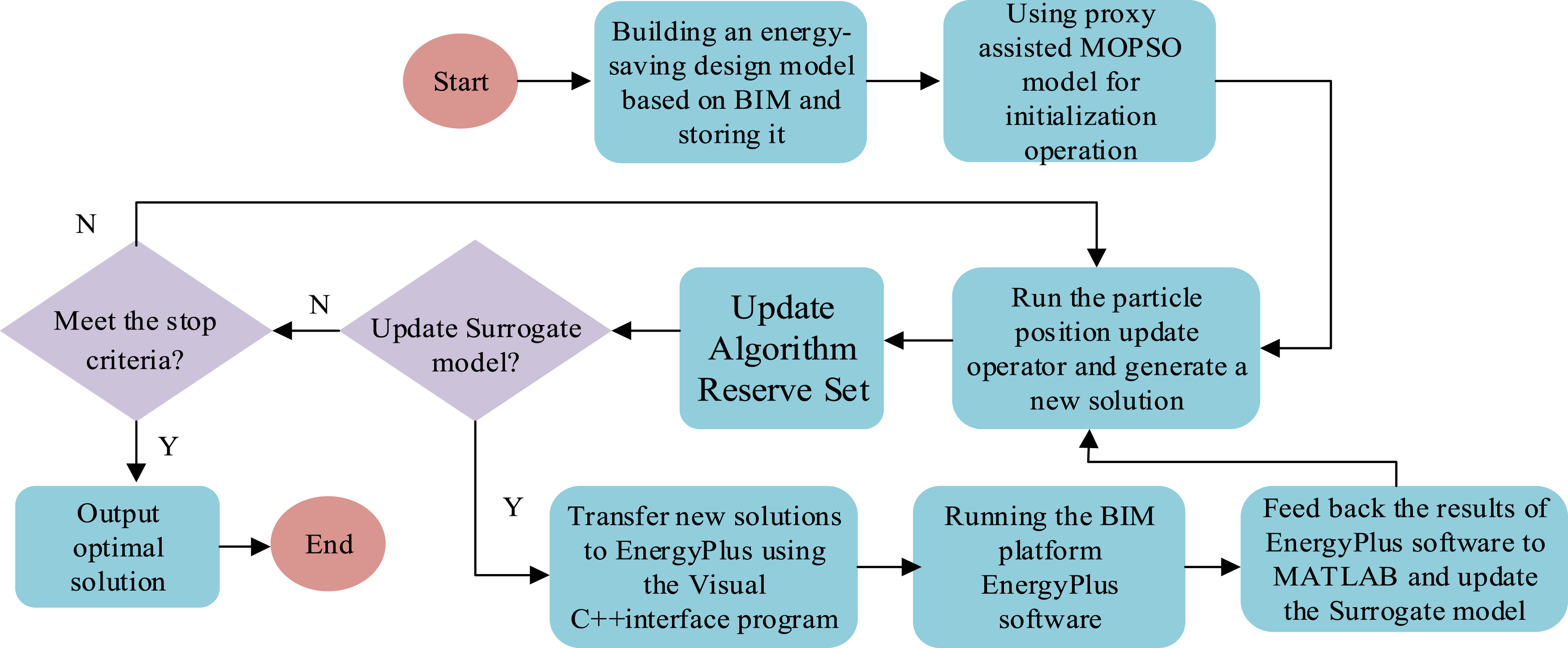
Algorithm model simulation testing
This section mainly tests the proposed optimization model, including convergence and optimization effect. Meanwhile, this study will apply the construction model to specific building optimization design scenarios to evaluate the model’s optimization performance, EC, etc.
Model performance testing
Model initial parameters.
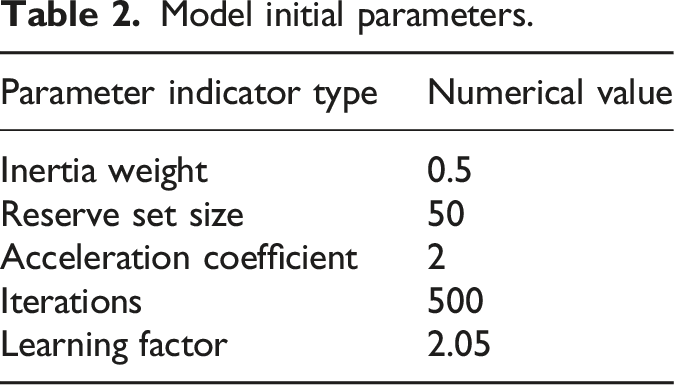
The MOEA/D model and the traditional MO Particle Swarm Optimization (MOPSO) algorithm were selected as the benchmark models for testing. The proposed proxy assisted MO particle swarm model is represented as S-MOPSO. It selects the Ackley function and Rastrigin function to test the optimization effect of the model, as shown in Figure 5. Optimization results under different functions of the model.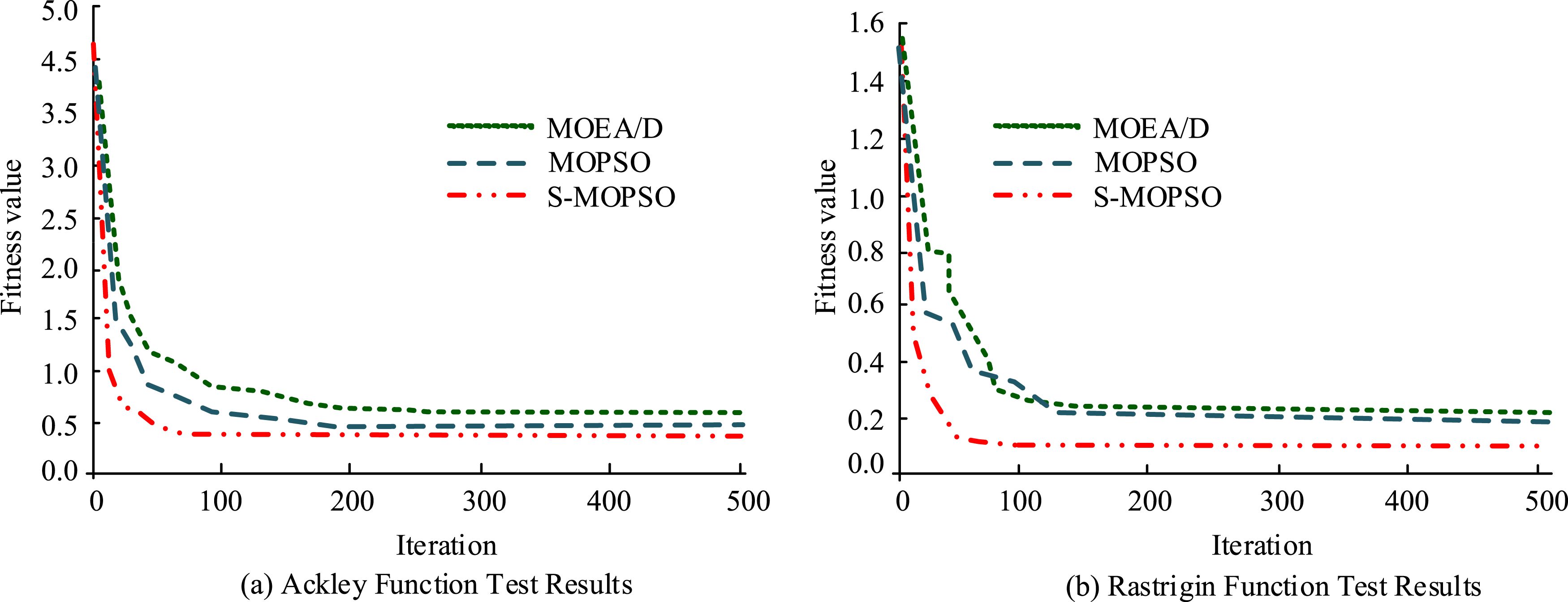
Figure 5 shows the optimization results of MO optimization models under different functions. Figure 5(a) and (b) show the outcomes of the Ackley function and Rastrigin function tests, respectively. The test curve demonstrates that in the Ackley function, the MOEA/D model performed the worst, tending to converge after 300 iterations with an optimal fitness value of 0.752. The proposed S-MOPSO model performed the best, tending to converge after 100 iterations with an optimal fitness value of 0.452. In the Rastrigin function, the proposed M-MOPSO model performs best and tends to converge after 46 iterations, with an optimal fitness value of 0.149. According to the test results, the proposed S-MOPSO model performs best in both convergence and fitness value search. Simultaneously selecting the ZDT1 and ZDT2 benchmark functions, the model frontier results are shown in Figure 6. Model frontier test results.
Test results of three types of indicators for two benchmark functions.
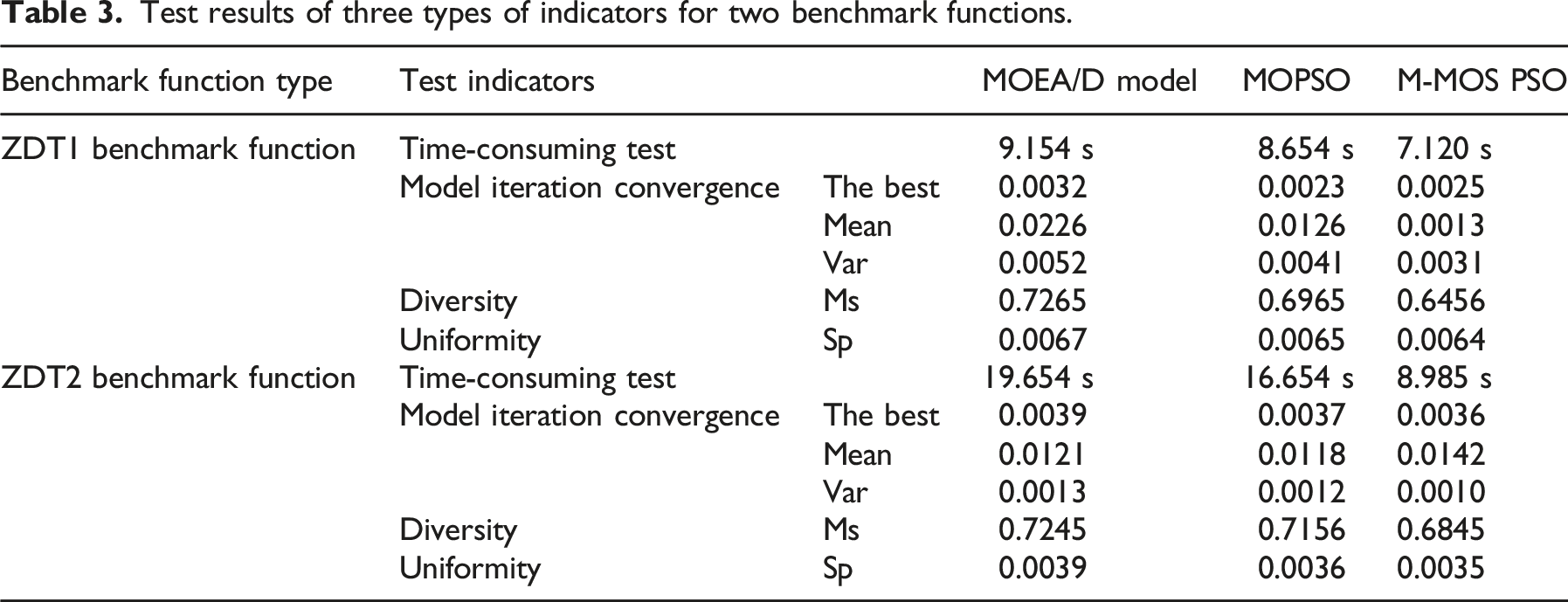
Table 3 shows the detailed Pareto frontier test results of the three models. In the ZDT1 benchmark function and ZDT2 benchmark function, the proposed M-MOPSO model performs best in both optimal and average values, with values of 0.0025 and 0.0013 in the ZDT1 function, respectively. It also performs best in diversity and equilibrium, with values of 0.6456 and 0.0064 in the ZDT1 function, and 0.6965 and 0.0065 in the MOPS model, indicating that the proposed model performs better. In the comparison of time consumption, under the ZDT2 function, the MOEA/D model, MOPSO model, and M-MOSPSO model were 19.654 s, 16.654 s, and 8.985 s, respectively. In the comparison of optimal values, the MOEA/D model, MOPSO model, and M-MOSPSO model were 0.0039, 0.0037, and 0.0036, respectively, which still showed the best performance of the proposed model. It can be seen that the proposed M-MOPSO model has the best performance in Pareto cutting-edge testing.
Case experiment analysis
This study selected common urban commercial single-room office buildings and traditional northern residential buildings as ES optimization design objects, and tested the practical application effect of the proposed M-MOPSO model. Figure 7 shows two 3D models of buildings. Two kinds of 3D models of urban buildings.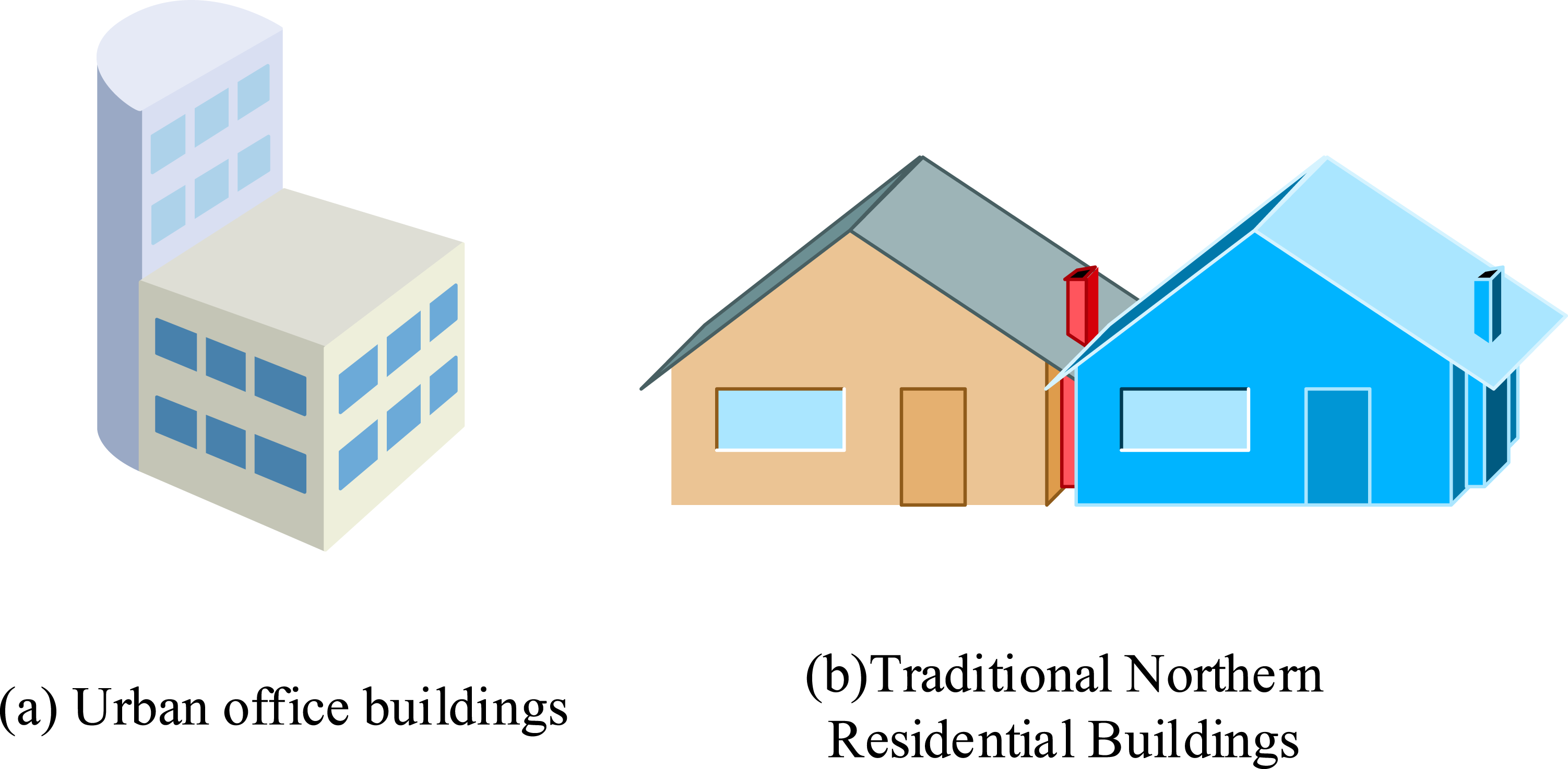
In the optimization of building ES design, the main decision variables to consider are the thickness of the external insulation layer of the wall, the solar absorption rate of the external wall, etc. The specific range of decision variables can be found in Table 1. To effectively reflect the effectiveness of different models in building EEF optimization design, the Hypervolume Indicator (HV) is introduced. The larger the value, the better the optimization and convergence effect. Figure 8 shows the Pareto frontier results of urban single-room office buildings. Pareto frontier results of urban single-room office buildings.
Figure 8(a) and (b) show the frontier results of the MOPSO model and the M-MOPSO model, respectively. Figure 8(b) shows the comprehensive comparison results. The vertical axis represents the quantity of uncomfortable hours, and the horizontal axis represents the total EC of the building. By comparing three models, the optimization solution set for building EEF can be obtained, but the MOEA/D model has a longer search time, the longest uncomfortable hours, and higher EC, which clearly cannot meet the requirements; on the contrary, the MOPSO model is similar to the M-MOPSO solution set, but the search time is shorter. Meanwhile, the minimum number of uncomfortable hours is 2408 h, and the total EC is 47.5. Compared with traditional single-room buildings, MOEA/D optimized buildings, and MOPSO optimized buildings, the EC is reduced by 47.6%, 24.6%, and 6.2%, respectively. Figure 9 shows the cutting-edge results of traditional residential buildings in the north. Frontier results of traditional residential buildings in northern China.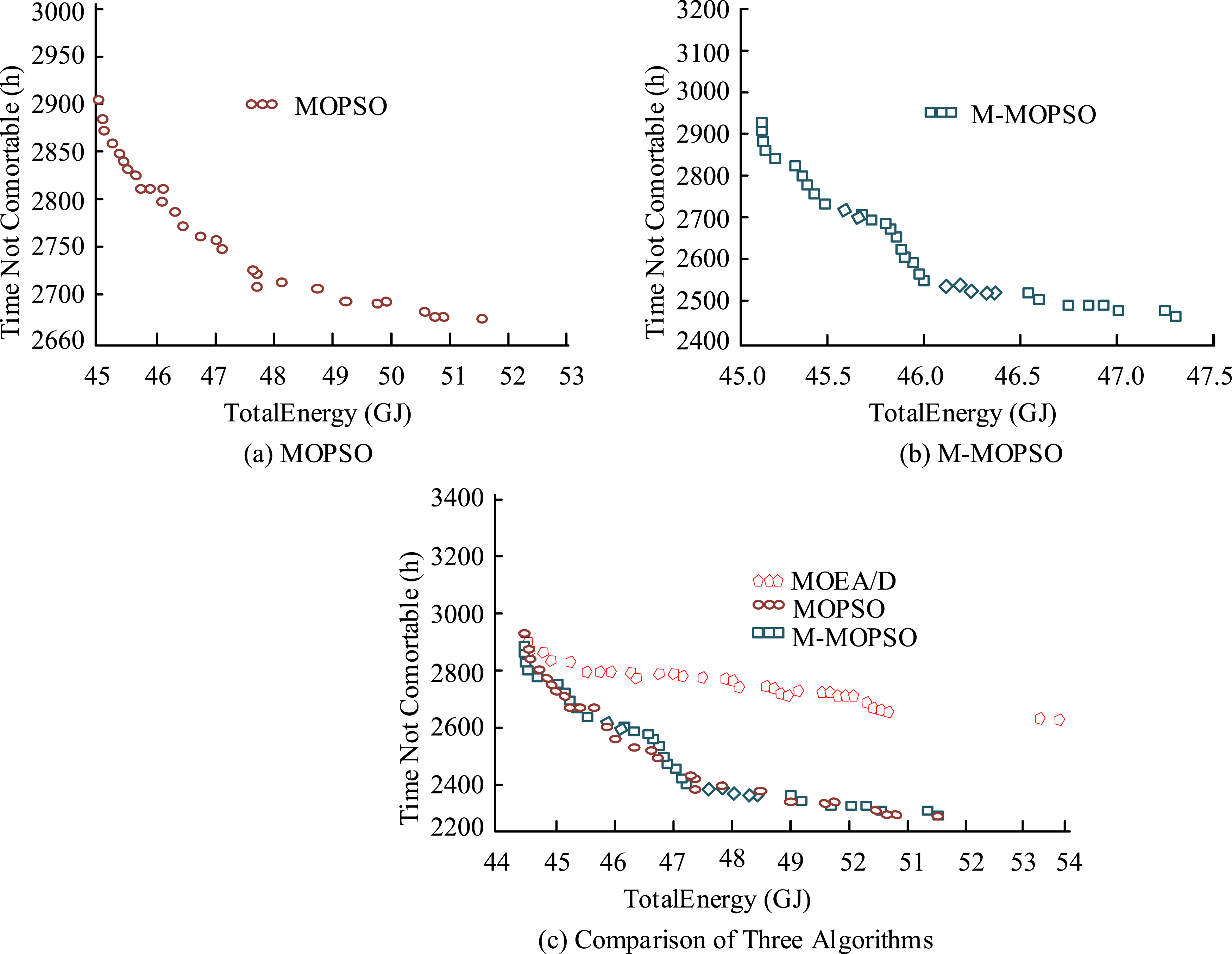
Comprehensive comparison of model building energy-saving design.
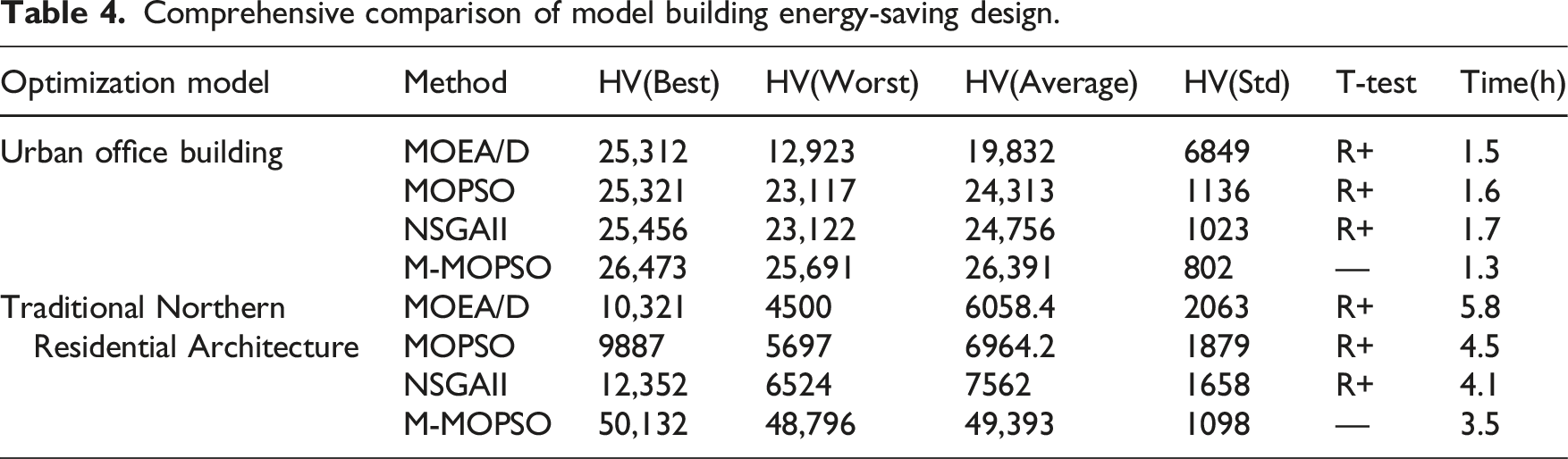
Table 4 shows the total HV values for energy-saving optimization of the three models, while introducing a genetic algorithm with elite strategy and non-dominated sorting (NSGAII) for comparison. From the results, it can be seen that the M-MOPSO model performs best in both types of buildings. The optimal HV values for the MOEA/D model, MOPSO model, NSGAII model, and M-MOPSO model in urban office buildings are 25,312, 25,321, 25,456, and 26,473, respectively. It can be seen that the proposed models have excellent optimization capabilities, and the energy consumption is the lowest and the comfort is the best in building energy efficiency optimization.
Conclusion
As the advancement of urbanization, solving the problem of high EC in buildings has become an urgent need for sustainable urban development. In view of BIM technology, a model for optimizing urban building EEF design is constructed, existing building EEF factors are studied, an MO model for building EEF design is constructed, and MO MOEA/D is introduced for optimization solution; considering the high cost and poor convergence of the MOEA/D optimization model, this study introduces optimization to improve the MOPSO model for optimization solution and uses an agent optimization strategy to adjust particle parameters, thereby improving the overall optimization effect of the model. In model performance testing, using the Rastrigin function, the S-MOPSO model had the best convergence, tending to converge after 46 iterations, with an optimal fitness value of 0.149. The MOEA/D model performed the worst, with an optimal fitness value of 0.332 after 1000 iterations. In the comparison of model comprehensive optimization time, the MOEA/D model, MOPSO model, and M-MOSPSO model are 19.654 s, 16.654 s, and 8.985 s, respectively; the M-MOSPSO model takes the shortest time and has the best convergence and diversity in optimization. In specific case experiments, the proposed M-MOSPSO optimization aims to optimize urban commercial single-room office buildings. Compared with traditional single-room buildings, MOEA/D optimized buildings, and MOPSO optimized buildings, the proposed M-MOSPSO optimization reduces building EC by 47.6%, 24.6%, and 6.2%, respectively; this indicates that the proposed M-MOSPSO model has excellent performance in optimizing urban building EEF. However, the constructed urban building EEF optimization model did not consider variables such as optoelectronics and smart homes, and in the future, full consideration is needed to improve the accuracy of the model.
Statements and declarations
Footnotes
Conflicting interests
The author declared no potential conflicts of interest with respect to the research, authorship, and/or publication of this article.
Funding
The author disclosed receipt of the following financial support for the research, authorship, and/or publication of this article: The research is supported by “Application Research of BIM Technology in the City Renovation of Old Residential Areas in Chongqing,” Science and Technology Research Plan Project of Chongqing Education Commission in 2022, project number: KJQN202204410; “Technology Plus Cultural Tourism” Research on Digitized Cultural Products Innovative Design of Liangping Wooden New Year Painting, project number: KJQN202104403.