



Abstract
Recently, intelligent tutoring systems (ITSs) aid in assisting instructional procedures and help students traverse online learning resources adaptively. It has laid a strong foundation and has grown rapidly in the last several years. Web-based learning platforms make it easier for students from diverse backgrounds with varying requirements, interests, and traits to learn remotely and provide instant access to any subject area and learning method. An ITS is a computer-based system that imitates human tutors and its goal is to give students quick, personalized teaching or feedback usually without the need for human teacher intervention. The purpose of this study is to analyze the artificial intelligence (AI)-driven autonomous interactive English learning language tutoring system. The AI-powered approach utilized by Duolingo facilitates real-time feedback and adjusts to the rate of the student, including exercises that are specifically designed to enhance the English learning language. Through the system’s use, users gradually remember grammar and vocabulary by going over topics at suitable times. A total of 125 students participated in this study. This questionnaire was created to investigate important areas of students’ learning of the English language. Therefore, their feedback offers a more accurate depiction of their opinions toward learning English. Spell and grammar check in the essay are taken into account by a thorough scoring algorithm that is used to evaluate the user-centric system. The data was analyzed using SPSS software. The results indicate that by offering a scalable, user-centric system that adjusts to the demands of specific learners, Duolingo’s AI-based technology greatly improves the English language learning process. The AI-driven language tutoring systems are highlighted in this study, along with possible advancements in conversational AI and the integration of innovative learning technologies to improve the quality of learning.
Introduction
The most important instrument for communication in human society is language. Language competence is developed and used to support people at every stage of their development. English language learning is considered to be significant and the central aspect is to learn effectively with clear understanding through improved tutoring systems. 1 Hence, artificial intelligence (AI) algorithms are used which implement software or computer programs called AI language learning aids. It assists users in learning and developing their proficiency in the English language. The software supports users instantly and automatically, offering capabilities such as speech/text translation, language coaching, and timely feedback.2,3 There are numerous varieties of AI language learning systems available on the market, each with unique capabilities and features. Google Translate, Elsa Speak, and Duolingo are a few well-known examples and these resources are used all over the world to enhance English language proficiency. Certain categories are combined in other AI language learning systems, such as chatbots that converse with users in many languages using natural language processing (NLP) algorithms. These resources can be utilized by users to get information and support or to practice language. 4
Further, researchers discovered that although digital writing tools can help students become better learners, qualitative data indicated that in-person teacher mentoring was necessary to support the use of digital writing tools.5,6 Hence, AI should be used in conjunction with the English teaching and learning process while creating a model of an English classroom. Combining technology and language literacy is a clever way to increase global competency. Therefore, approaches like NLP, intelligent search, and machine learning (ML) can all successfully support the reform of English teaching and learning. 7 Many schools were compelled to convert from in-person to online tutoring systems during the beginning of the pandemic to avoid the spreading of COVID-19. However, many schools lacked the resources, infrastructure, and essentials to provide high-quality online education. On the other hand, it was difficult to stimulate students’ intellectual interest in online courses that consisted of recorded lectures delivered in a one-way fashion without any interaction between the lecturers and the students. 8 Teachers have reservations about AI’s presence in the education sector, yet overcoming this obstacle is necessary to keep education alive. Teacher collaboration with AI in the application of learning is one of the fervent convictions that teachers cannot be replaced by AI. Instructors must be proficient in the use of science and technology. Thus, educators can utilize AI to streamline school administration tasks including creating instructional materials and media, reporting learning objectives, and creating lesson plans.9,10
As the integration of AI in education becomes increasingly prevalent, ethical considerations must be addressed. Key concerns include data privacy, as AI systems often require substantial amounts of personal data to function effectively. Safeguarding this data is crucial in maintaining the trust of students and parents. Moreover, while AI can enhance the educational experience, it is vital to emphasize that the role of educators remains irreplaceable. Teachers should be equipped to utilize AI tools effectively while maintaining human oversight and personalized engagement. This balance ensures that students benefit from technological advancements without losing the critical interpersonal aspects of education. Furthermore, understanding the impact of demographic factors on system usage is crucial in tailoring language education to diverse learner needs. In this study, we aim to explore how variables such as age, education level, and proficiency levels influence engagement with the Duolingo system.
The main objectives of this work are: (1) To investigate the student’s perception of using Duolingo AI-based English language tutoring system. (2) To collect participants and characterize the variables according to the questionnaire for efficient analysis. (3) To evaluate student satisfaction based on performance by using an efficient AI scoring algorithm. (4) To apply statistical analysis techniques to identify how variables influence student’s learning process.
Related works
The advancements in technology changed the methods of education by acquiring unique pedagogical adaptation techniques. In this context, Ni et al. 11 developed a technology acceptance model (TAM) that incorporates artificial intelligence (AI) to interpret the continuous intention of secondary students to use an intelligent tutoring system (ITS) in the English learning process. The study involved 528 senior secondary students and tested 15 hypotheses conducted in China. Analysis of the model explored the actual use of ITS, the price value of the continuous intention of the students to use ITS, facilitating conditions, motivational beliefs, and determinants of perception. Experimental results demonstrated that the study obtained a high quality of 69.6% predictive power value. The limitation of lack of representativeness of sample size, cross-sectional data collection, and data were according to the self-reported use frequency leading to a decreased precision rate. Additionally, the learning analytics method investigated by Cukurova et al. 12 focused on monitoring the quality of study in a one-on-one tutoring system. In the conventional approach, the teacher’s behavior was analyzed and the model aided in classifying tutoring systems based on effective and ineffectual. A co-occurrence map-sequential pattern algorithm (CM-SPAM) algorithm was applied, which possesses the tendency to perform a depth-first search to excavate frequent sequential patterns in a corpus. The algorithm is supported in classifying tutoring sessions into two sectors by indulging repeated incremental pruning to produce error reduction (JRIP) and the J-48 decision tree technique. The analysis involved teaching time duration of 2250 minutes with 44 tutors accumulated from eight different schools. Results attained by the study showed a 0.98 accuracy rate and pertained that the tutors were effective in their monitoring actions.
An approach of automatic supervision integrated with a machine learning algorithm (MLA) was executed in the study recommended by Lu et al. 13 Integrated remote supervision (IRS-MLA) was the ML algorithm used for the online teaching audit process of the English language. In addition, reporting of analytical data by using a software framework known as a hybrid learning management system (HLMS) was performed to detect learning gaps. HLMS monitors information by detecting whether a student can access, observe improvement, and use communication instruments effectively. Further, an electronic tracking system called E-Supervision was involved in the study that used video conferencing technology based on real-time management. The study gained improved accuracy rate, efficiency, success ratio, and performance ratio. Another approach of AI applied system was developed for the autonomous learning process by Leeet al. 14 Three different Korean secondary schools were adopted for the analysis with varying educational backgrounds. By using the system called as Learner-Generated Context (LGC) framework, the learning experiences of the English language by the students were analyzed. The motive of the study implemented by Handini et al. 15 was to establish how AI technology improved speaking and listening skills in the Duolingo application. Pupils of a total of 101 were split into three sessions and participated in the English program under study. To analyze the data and test the hypothesis using the Homogeneity Test, Normality Test, One-Way ANOVA, and T-test, the information investigation’s findings made use of descriptive statistics. In summary, there was an impact on improving speaking skills through the use of the Duolingo program.
Analysis of how the English language learning method might enhance speaking and listening abilities was the main goal of the study delivered by Krasaesom et al. 16 Teacher interviews, observations in the classroom, and assessments of the instructional materials were used to gather data. To gauge student’s advancement in speaking and listening, surveys and tests were also administered. Qualitative analysis techniques were used to examine the data, which included coding, transcription, and organizing the main findings of the research into categories with similar implications. Student’s listening skills have improved as a result of using podcasts, mobile applications, and other audio resources. The research developed by Albornoz et al. 17 analyzed conversational frameworks and how they might help existing tutoring systems be converted to natural language interaction. The research developed a conversational agent to communicate with the hypergraph-based problem solver (HBPS). Further, the conversational agent demonstrated its ability to determine the objective of a meticulous speech and derive pertinent component.
In the study recommended by Su et al., 18 three Chinese working adults who had completed their college degrees and were asked about their Duolingo-assisted language learning (DALL) experiences. Using reflective learning journals and think-aloud protocols, individuals documented their learning experiences over the month. The study was enriched, since it showed that learners at the basic level employed more methods than learners at the intermediate and advanced levels as specified by the results. Duolingo was seen well by all three participants. Conventional approaches for assessing the English quality instruction were introduced in the study created by Li et al. 19 Deep learning (DL) algorithms integrated with convolutional neural networks (CNN) were employed with evaluation indicators from the traditional methods. Experimental outcomes were performed on the CNN technique. Further, the method called analytic hierarchy process (AHP) was used to assess the instruction quality. CNN produced improved efficiency when compared with support vector machine (SVM). Thus, CNN offered a useful benchmark for intelligent assessment of the quality of English instruction.
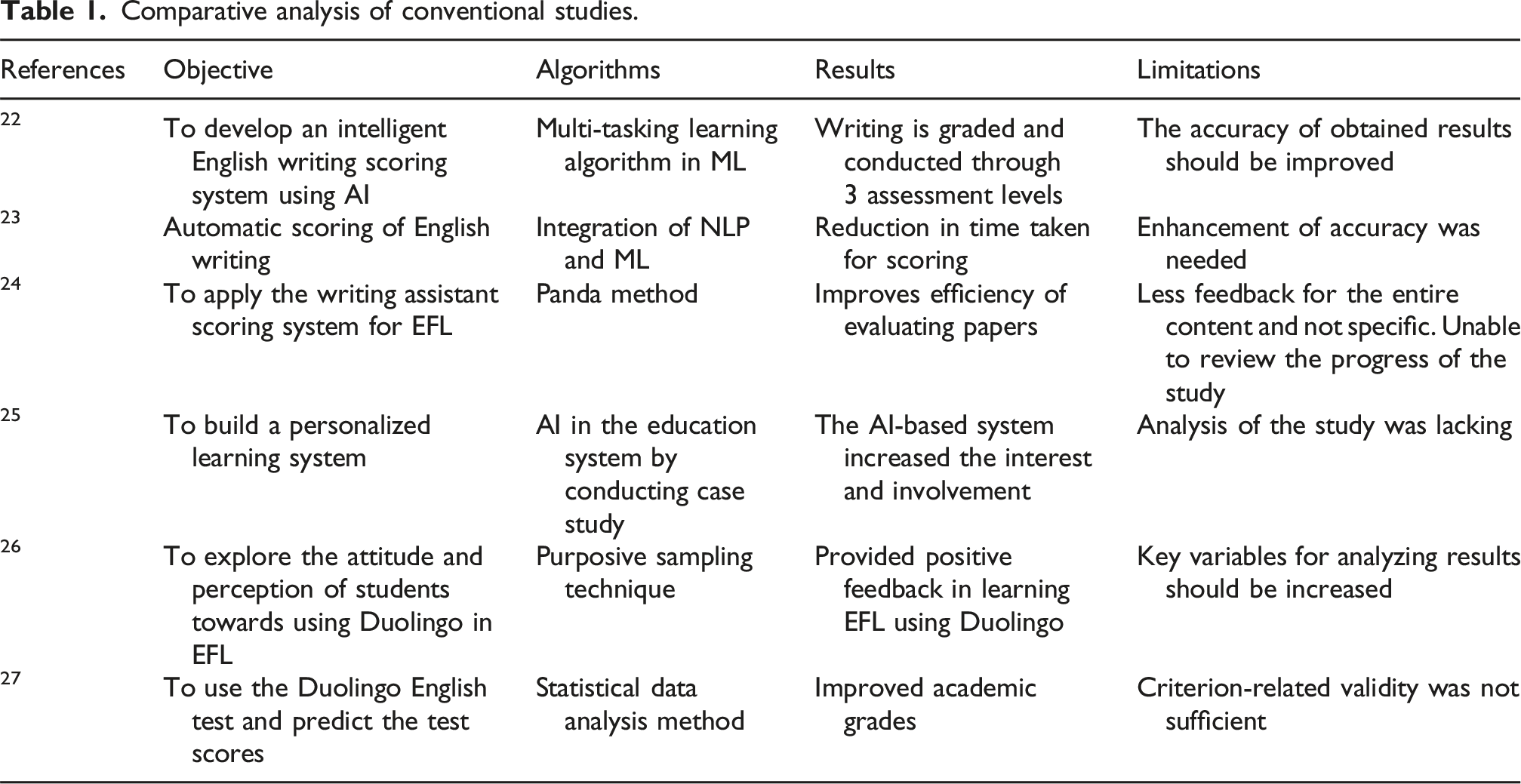
Comparative analysis of conventional studies.
Research gap
The existing literature highlights several advancements in integrating AI, ML, and DL technologies into English language education, yet there remain critical gaps. Studies applied ITS, which have provided valuable insights for learning analytics and assessing teacher performance. However, these studies are often constrained by limitations such as cross-sectional data, reduced and non-representative sample sizes, and reliance on self-reported usage frequency. Furthermore, many approaches, such as those involving hybrid models for AI-driven autonomous learning frameworks, are context-specific, focusing on particular educational settings or regions, with limited applicability across diverse learning environments. It focuses the need for comprehensive, adaptive, and scalable AI-based representation, which can effectively bridge these gaps and support personalized and diverse English learning experiences across various educational levels. Hence, the proposed study implements strategic methods in analyzing the English tutoring system with improved accuracy and effectiveness.
Proposed methodology
Duolingo
AI plays a significant role in learning the English language efficiently by providing easy understanding. With this aspect, Duolingo is considered a type of AI-based tutoring and learning technology that eases learning English without having to face the teachers directly. It is a language learning application, which is used to learn foreign languages. The app involves games by filling in some missing parts of a sentence and matching related words. The main motive of this app is to teach phrases, words, and grammar efficiently. It helps any student level in learning English by tutoring and analyses the ability by conducting tests. Learning materials are also provided by the application based on the test results. Learning vocabulary and related terms are also offered accompanied by grammar. A technique called spaced repetition is applied to review vocabulary to enhance retention. Integration of adaptive learning approaches makes the learning experience according to the user’s pace, limitations, and strengths of learning. It is structured as a competitive or gaming-like to make users adaptable to the application. By using the application, the learner can effectively learn and communicate the English language and can predict their proficiency level.
The Duolingo application uses the fastest scoring process among all other English language proficiency tests. The general timing for acquiring test results is within 48 hours, irrespective of standards. Both NLP and ML processing models were used to develop proficiency scales and linguistic models to evaluate item difficulty for use. A large language model (LLM) is a type of AI, which is used in the prediction of scores in Duolingo. Individually, overall scores and sub-scores are provided for listening, reading, writing, and speaking. This aids the learners in identifying the areas of improvement and strengths in each skill section. Each integrated sub-scores are computed and an average of individual sub-scores is the overall score. Figure 1 shows the effects and uses of an AI-based English tutoring system. Illustration of processes involved in AI-based English tutoring system.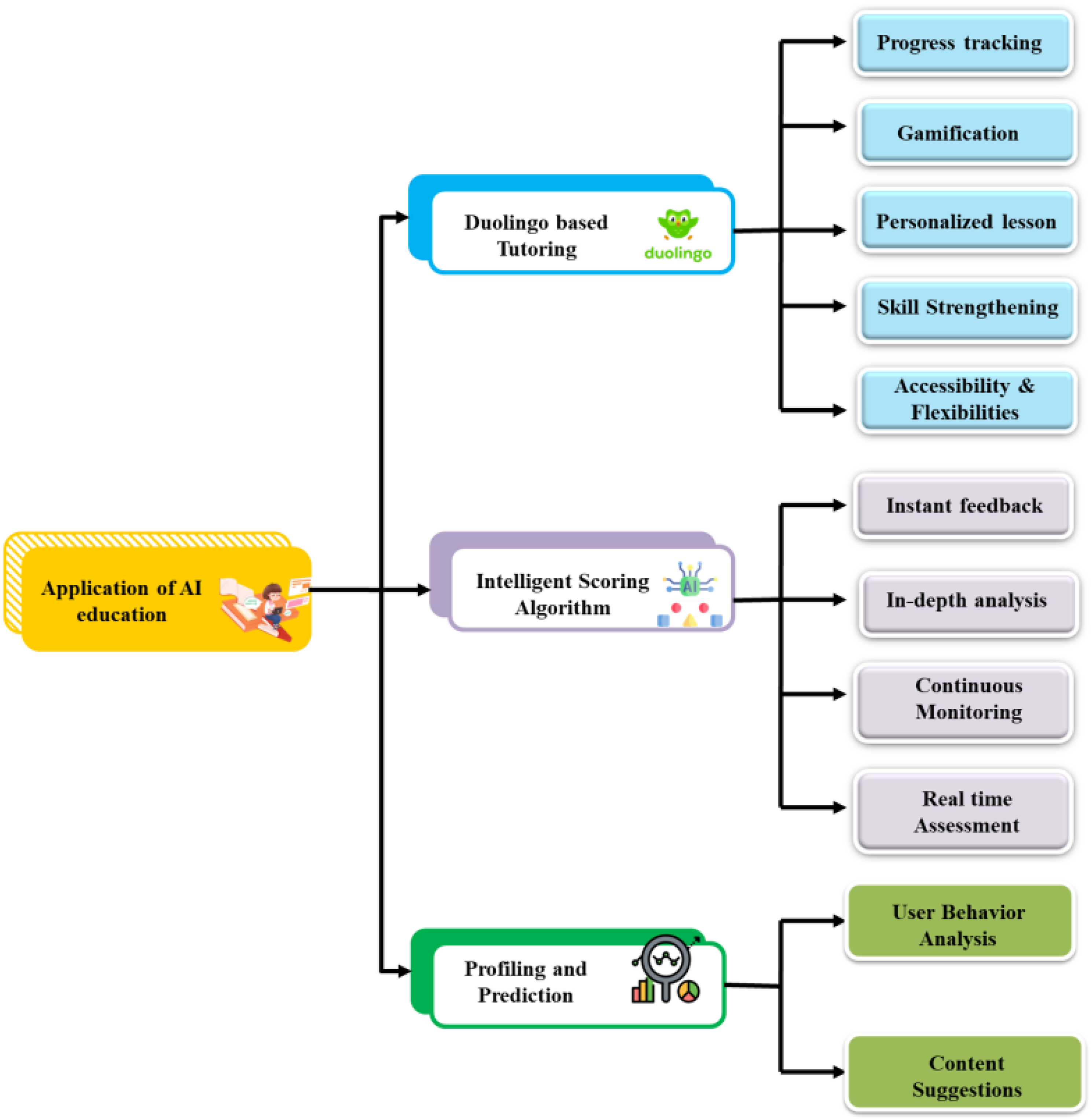
Participants
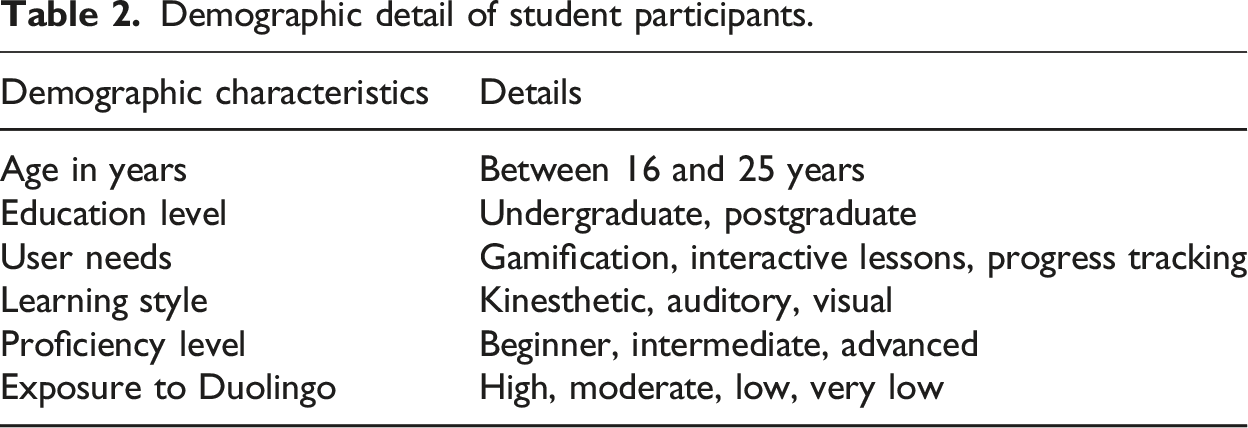
Demographic detail of student participants.
Detailed analyses of demographic details.
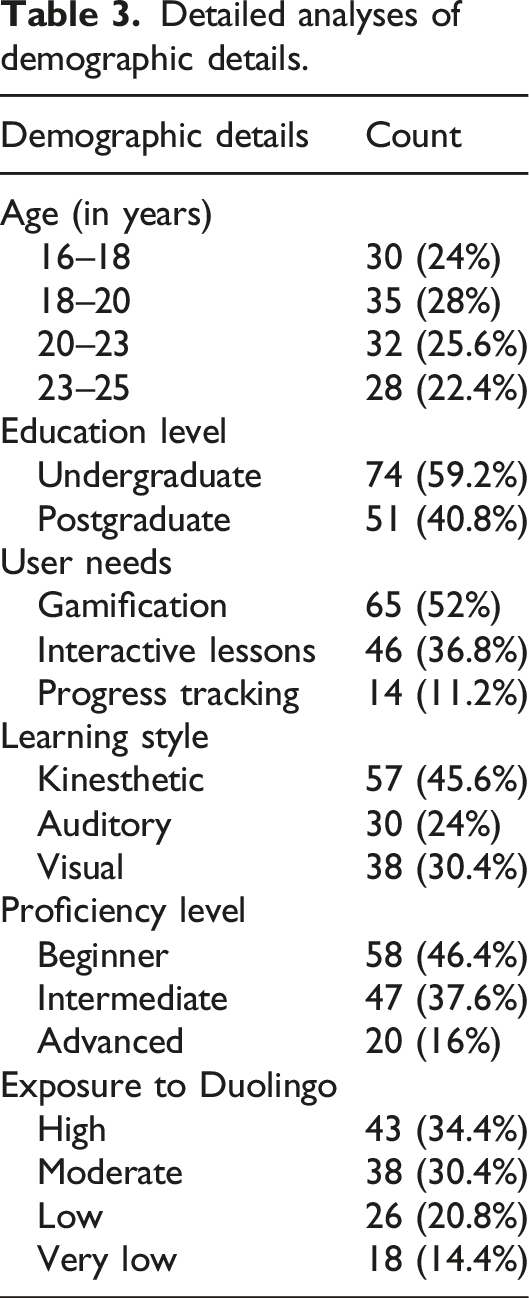
In addition to the demographic characteristics, we have also collected qualitative feedback through open-ended survey questions and interviews with select participants. This qualitative data will enrich our understanding of user experiences and highlight how various demographic factors influence individual perceptions of the Duolingo application.
Data analysis is performed based on the demographic details and data of significant features are displayed using different graphs for easy understanding. Figure 2(a)–(c) shows the pictorial representation of the percentage calculation of student’s learning style, proficiency level, and exposure to Duolingo participated in the present study. (a–c) Percentages of learning style, proficiency level, and exposure to Duolingo of students.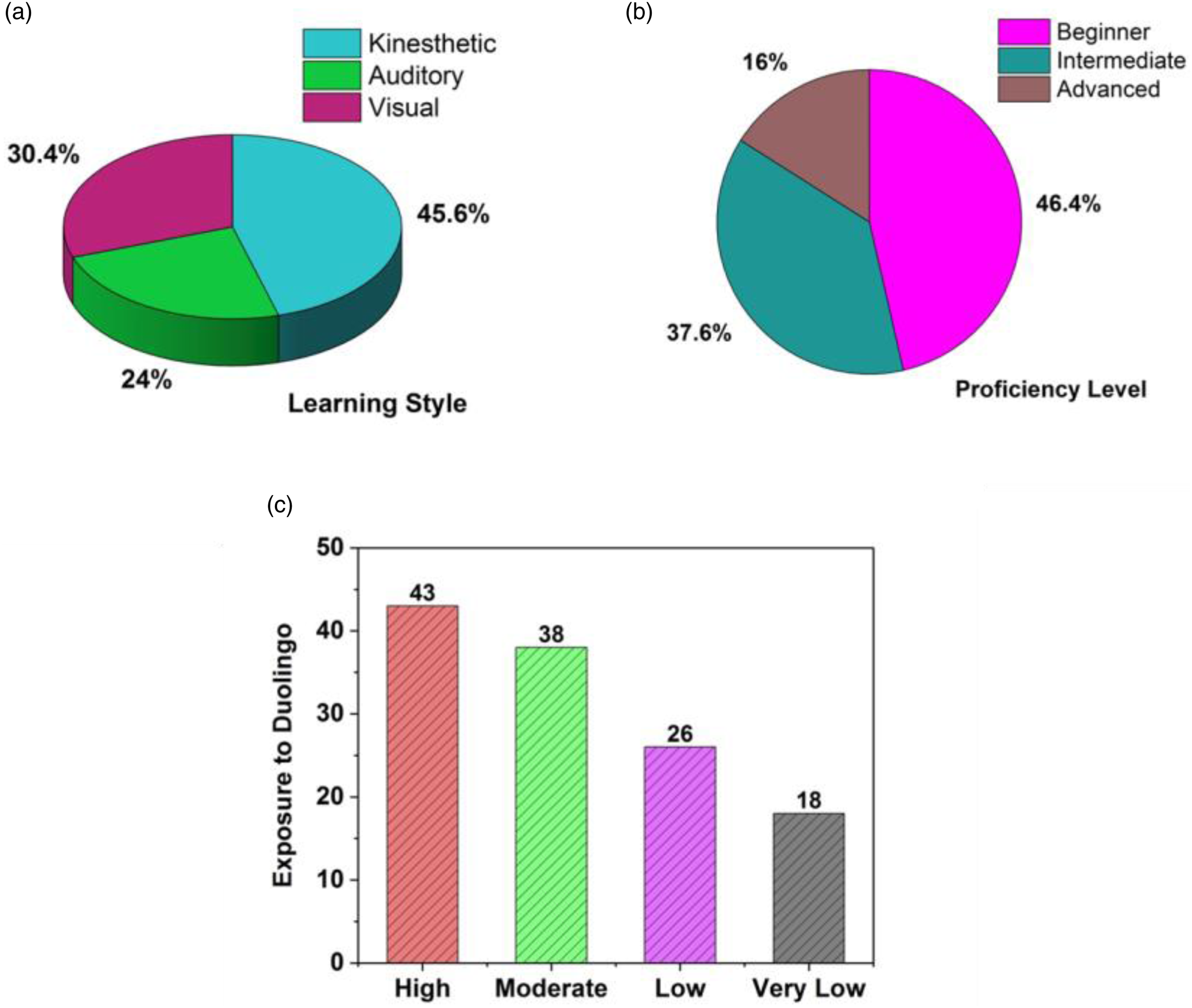
Questionnaire
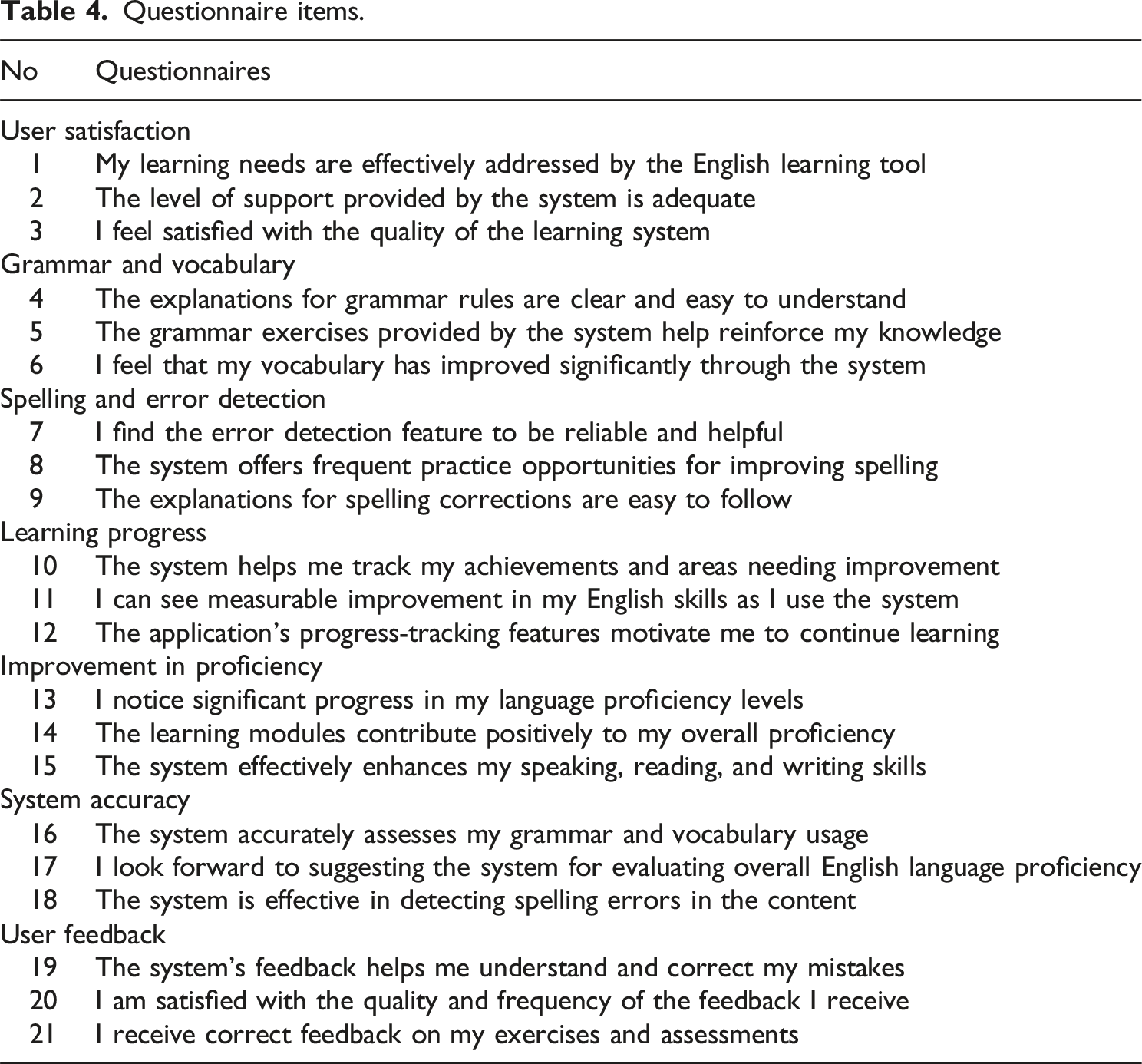
Questionnaire items.
Evaluation variables
The present study involves seven variables for analyzing the student’s performance while using an AI-based English tutoring system. The variables are User Satisfaction, Grammar and Vocabulary Acquisition, Spelling and Error Detection, Learning Progress, Improvement in Proficiency, System Accuracy, and User Feedback. • User Satisfaction: It is stated as the measure of how students are satisfied with the AI-driven tutoring system, which is assessed through providing a questionnaire. • Grammar and Vocabulary Acquisition: Assesses the correctness and accuracy of grammar usage, evaluated through exercises or quizzes. Computes the extent to which students learn and correctly use new vocabulary, typically measured by conducting assessments. • Spelling and Error Detection: It is signified as the measure of correctness of spelling in written exercises and assesses the system’s ability to identify and correct errors in the input. • Learning Progress: Tracking of learning improvements in language skills over time which is evaluated through continuous assessments. • Improvement in Proficiency: It aids in calculating the overall enhancement in language proficiency by using progress-tracking tools • System Accuracy: Measures the accuracy of the AI system in providing, correct recommendations, feedback, and responses based on user input. • User Feedback: Collects quantitative and qualitative feedback from users according to their experience with the system, including overall effectiveness, content relevance, and usability.
Results and discussion
This section covers the explanation of the software implemented, the analysis methods, and the results acquired by the present study. To assess the reliability of the study, a statistical package for social science (SPSS) was deployed. The present study involves three types of data analysis namely MANOVA, predictive analysis, and discriminant analysis. The analysis aims to identify the connection among the variables to identify the impact of students using AI in English language learning.
To further understand the qualitative experiences of users, we included direct testimonials from participants regarding their interaction with the Duolingo platform. One participant noted, “Using Duolingo transformed my perception of language learning; the gamification keeps me motivated and engaged.” Another participant shared, “The spaced repetition feature has helped me remember vocabulary effectively, which I struggled with before.” These insights illustrate the diverse user experiences shaped by individual backgrounds.
MANOVA
Results obtained by implementing MANOVA.
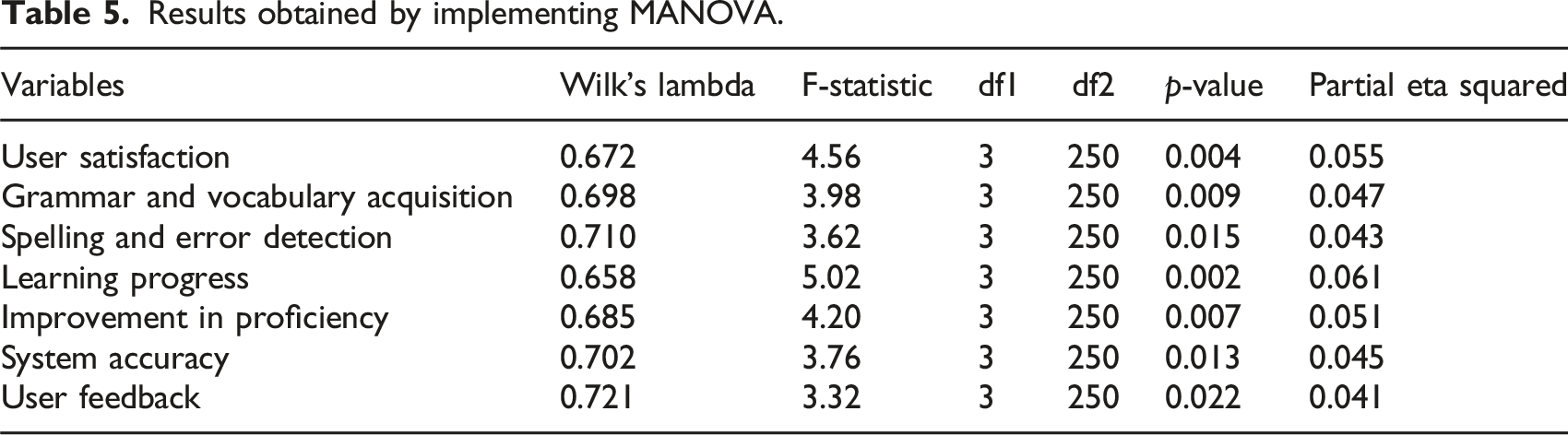
According to results acquired from MANOVA analysis as shown in Table 5, Wilk’s lambda is considered as a test statistic used to assess the overall significance of the approach. The Wilks’ Lambda values are between 0.658 and 0.721, suggesting moderate to high multivariate effects across the variables. The F-statistic compares the variance between groups with the variance within groups. Here, the learning progress variable shows the highest F-statistic of 5.02, indicating a significant effect. Variables such as user satisfaction with p = 0.004 and Learning Progress with p = 0.002 have p-values less than 0.05. Learning progress possesses the highest partial eta squared value with 0.061, indicating a significant proportion of the variance in the dependent variable. Thus, variables such as user satisfaction, grammar and vocabulary acquisition, spelling, and error detection, learning progress, and improvement in proficiency show major differences between groups, where p<0.05. In our MANOVA analysis, we also examined how demographic features correlate with responses. For example, younger participants (16–18 years) reported higher satisfaction levels, reflecting a stronger engagement with the gamified elements of the application compared to older demographics.
Predictive analysis
Results obtained by involving predictive analysis.
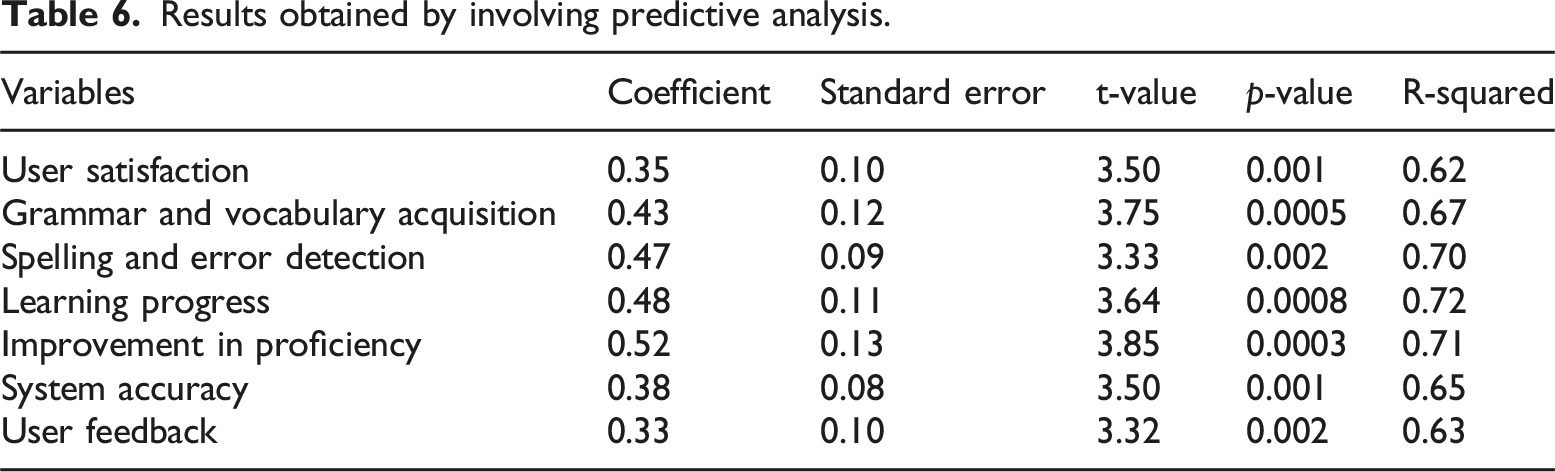
Table 6, it is signified that the variables spelling and error detection, learning progress, and improvement in proficiency produced the highest coefficients and R-squared values. It suggests that they are the most influential factors in predicting the outcome variable. Similarly, user satisfaction, grammar and vocabulary acquisition, system accuracy, and user feedback also have strong effects but slightly lower R-squared values. Further, the analysis of participant demographics revealed that students with a high exposure to Duolingo (34.4%) experienced a greater improvement in language proficiency compared to those with moderate to low levels of engagement. This suggests that user experience is influenced significantly by familiarity with the platform.
Discriminant analysis
Results obtained by applying discriminant analysis.
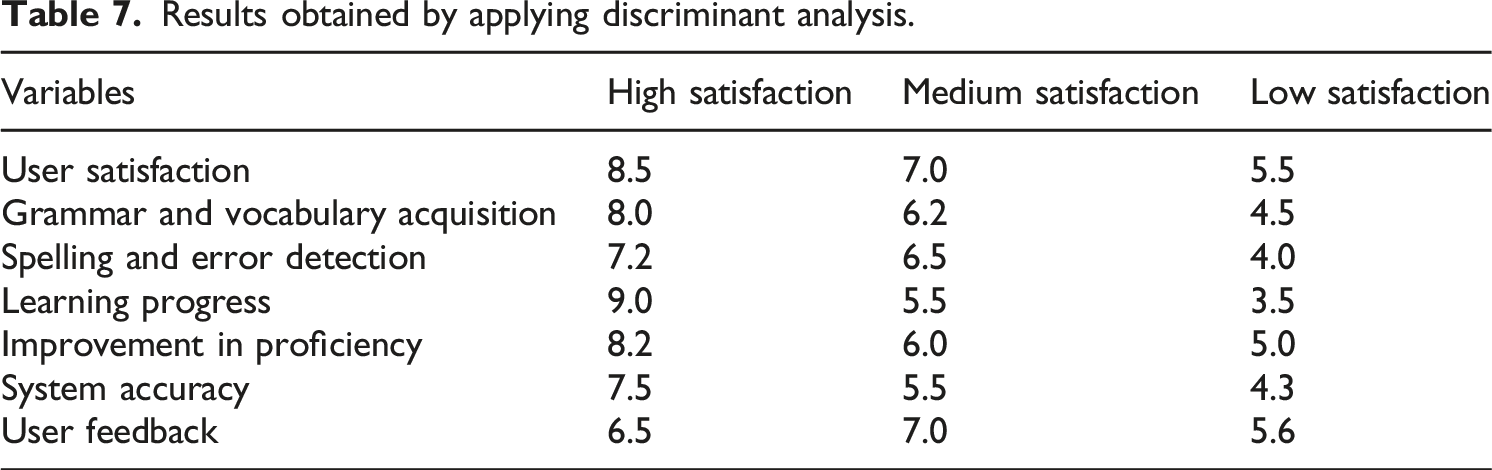
From the above Table 7, the data suggests that higher satisfaction with the AI-driven English learning system is associated with better performance in grammar, vocabulary, spelling, error detection, learning progress, engagement, and development in proficiency. This indicates that students who achieve better scores and are more engaged with the AI system reported higher levels of satisfaction. Therefore, the combined use of MANOVA, predictive analysis, and discriminant analysis provides a comprehensive understanding of how different factors influence user satisfaction and performance in an AI-driven English language tutoring system.
In addition to quantitative measures, qualitative insights were gathered via open-ended responses from participants. Students emphasized the importance of fostering interactivity within the app, suggesting features such as peer-to-peer learning modules and community discussions to enhance engagement. Many users expressed a desire for more personalized feedback on specific language challenges. These insights illustrate a clear demand for continuous improvement of the platform to better suit diverse educational needs. They also highlight that while AI provides significant support, learners value direct interactions that can enhance their educational journey.
Discussion
This study used MANOVA, predictive analysis, and discriminant analysis to understand the impact of AI-driven English learning systems on students. Initially, MANOVA results indicate significant multivariate effects across key variables such as user satisfaction, grammar and vocabulary acquisition, and learning progress, as demonstrated by Wilk’s lambda values ranging from 0.658 to 0.721. The learning progress showed the highest values indicating substantial variance among groups. Further, the predictive analysis method reveals that spelling and error detection, learning progress, and improvement in proficiency have the highest coefficients and R-squared values, indicating their strong influence on overall system effectiveness. Finally, discriminant analysis highlights that higher satisfaction levels are associated with better grammar, vocabulary, spelling, and error detection scores. This finding shows that students who engage more deeply with the AI system report higher satisfaction. Collectively, these methods offer a comprehensive view of factors influencing user satisfaction and system performance, supporting targeted improvements in the AI tutoring system.
Conclusion and future scope
Study assesses an AI-driven autonomous interactive English tutoring system’s efficacy analyzing how it influences student learning and satisfaction. Research showed how web-based intelligent teaching systems (ITSs), like Duolingo, are rapidly expanding and providing individualized, adaptive learning knowledge that are adapted to the requirements of students individually. These AI-powered tools improve spelling accuracy, grammar and vocabulary development, and general learning progress by offering personalized education and real-time feedback. By providing user-centric solutions and scalable, Duolingo’s AI technology considerably enhances the learning process, according to an analysis of data from 125 students conducted with SPSS software. The results highlight how AI-powered tutoring systems have the power to revolutionize English language instruction and open the door for new developments in conversational AI and cutting-edge educational technology.
The analysis methods involved in the present study provide significant insights into variables influencing student learning of the English language. However, it is important to acknowledge the limitations of this study. The research was conducted with a specific sample size of 125 students, predominantly consisting of undergraduate and postgraduate participants, which may limit the generalizability of the findings to wider populations. Future research should consider larger and more diverse samples across different educational contexts and cultures to validate and expand upon our findings. Moreover, the integration of AI-driven tools like Duolingo into pedagogical practices presents both opportunities and challenges for educators. We recommend that educators incorporate AI technologies into their lesson plans, using them as supplementary resources rather than replacements for traditional teaching methods. Faculty training on effective utilization of such tools could be introduced, enabling educators to adaptively enhance their teaching strategies while fostering an engaging learning environment for students. Educators should be encouraged to explore the potential of AI-driven systems not only as tools for assessment and vocabulary development but also as means for facilitating interactive language conversations. This could involve creating collaborative activities where students use Duolingo for homework and engage in peer discussions during class to share their learning challenges and successes. Additionally, teachers can track student progress through Duolingo’s data analytics features, which will help them understand individual student needs and provide targeted support.
Statements and declarations
Footnotes
Conflicting interests
The author(s) declared no potential conflicts of interest with respect to the research, authorship, and/or publication of this article.
Funding
The author(s) received no financial support for the research, authorship, and/or publication of this article.

Data availability statement
Data will be made available on request.