




Abstract
College students are expected to possess a higher level of education, and increasing numbers of job positions require higher proficiency in English. Students come from various wisdom, and their demands for learning, ways of thinking, and learning methods will vary. In higher education, Personalized English Language Teaching (PELT) is crucial for addressing the various requirements of students, boosting motivation with involvement, maximizing resource use, preparing them for future professions, and improving their learning outcomes. To provide students with personalized and effective training in higher education, Fuzzy associated Frequent Pattern-Growth (F2PG-PELT) has been proposed to discover personalized relationships and patterns in student data using fuzzy association rule mining. Secondly, the Frequent Pattern-Growth algorithm is used to identify frequent patterns in learner data that are pertinent and meaningful. The relationships and connections between language factors or student qualities are crucial to personalized education and can be identified using a candidate frequent pattern tree. Due to the diversity of teaching strategies, the fuzzy association rules are generated using minimum support and confidence measure. The proposed model develops high learning outcomes with self-assurance, improves language and communication skills, offers individualized learning opportunities, and fosters lifelong learning abilities. The experimental outcomes demonstrate that the suggested fuzzy association rule mining employed for the PELT model increases the student engagement ratio, teaching efficiency ratio, learning outcome ratio, and teacher involvement ratio compared to other state-of-the-art approaches.
Introduction
The idea of classroom teaching needs to be fundamentally altered to make greater use of feedback; new teaching models must be developed where the requirements of the individual students need to be satisfied. The classroom teaching models have been around for a while; still, a lack of proper resources has hampered their widespread adoption by identifying student’s various learning styles, aptitudes, and interests adjusting teaching techniques accordingly. A friendly learning atmosphere is created by personalized teaching, where students feel appreciated and engaged.
Personalized teaching in higher education is used to teach the English Language to match the learning process with the unique requirements of each student and society. The aim is to improve students’ language competency to match the changing demands of society by tailoring the teaching strategy, subject matter, and other techniques. Personalized English Language Teaching is also urgently required to meet the needs of students’ learning by identifying the patterns and correlations within a dataset and is the goal of the data mining technique known as fuzzy mining of association rules. A teacher can better fulfill the unique needs of each student and improve the outcomes of English language acquisition by utilizing these fuzzy mining rules. The association rule uses fuzzy logic and assists in identifying pertinent patterns and relationships between numerous elements when personalizing English language teaching in higher education to deal with ambiguous and inaccurate data. Fuzzy logic can guide teachers to make instructional decisions and improve all students’ learning experiences. A mathematical algorithm called a rule of association mining algorithm is frequently used to extract pertinent information from high education student learning choice information and looks for relationships between various items.
Many academics have researched personalized teaching methods to enhance learning outcomes. According to them, personalized teaching should first take into account six fundamental components: the multiple responsibilities of educators, coaches, and advisors; an assessment of students’ educational attributes related to English; a collaborative education culture as a whole and engaging learning surroundings; adaptable time and growth; and genuine assessments. 1 Personalized education in a digital environment enhanced students’ critical thinking mode. In general, it is difficult to select valuable teaching materials due to the availability of information; however, it is especially difficult to find appropriate resources for students at this time. 2 For mining, the information association rules, extensively used in many domains, can efficiently portray the relationship between variables in a huge amount of data to mine the useful data within the dataset. Universities and schools can forecast student performance and identify relationships between various qualities, such as academic performance, thanks to the existence of data mining techniques and the enormous volumes of data maintained by higher education. The outcomes of applying these strategies may significantly influence program designs and provide direction to personalized ways of teaching. 3 The most appropriate data are culled from various data and divided among multiple models to estimate the future trend. Sort the data into groups based on the findings of the estimate and comparable group data together, and make sure that all the data in one collection share a high degree of resemblance and the data in other sets do not. The fundamental purpose of this platform for instruction is to improve the quality of learning, enhance pedagogical methods, and use cutting-edge technologies. 4 Accelerating the creation of a personalized learning system that pays attention to learners’ preferences and is tailored to meet their requirements is something that should be done. 5 Mengash 6 employed data mining techniques to predict university applicants’ academic performance, revealing high school grade average, Scholastic Achievement Test score, and General Aptitude Test score can predict early university performance. Adekitan 3 found that cognitive entry requirements do not fully explain first-year academic performance in Nigerian universities, with maximum accuracies of 50.23% and 51.9%, respectively. Hence, according to the current status of Association Rule Mining (ARM) technology, the technology is moving in a vital and profitable direction. 7 The ARM method reveals many association rules, which helps establish correlations between different groups of items. These correlations are the essential components that have led to groundbreaking scientific discoveries. Large datasets may be restricted by the memory requirements of compressed transactions for marking and retaining transaction metadata. Liu et al. 8 created a learner model that can be used to create personalized recommendations for online learning materials based on the relevant information about the learners on the online education platform and educational Information related to the teaching. The learner model’s static and dynamic aspects have been incorporated to enhance the collaborative filtering recommendation method.
To close the information gap between students and learning resources, we strive to design highly personalized learning routes for students. The study explores predicting student performance using data mining techniques. It analyzes two datasets at different stages of course delivery, using graphical, statistical, and quantitative techniques. 9 Wang 10 created the higher education English teaching system optimization model, highlighting that students are the model’s most crucial ecological factor and that teachers, teaching materials, information technology, the environment, and other factors all contribute to and interact with one another in the right environmental niche. Dahdouh et al. 11 discussed frequent pattern (FP) growth item sets that determine the interesting rules of students activities associated with suitable learning materials. To improve higher education efficiency, Liu et al. 8 suggested using collaborative recommendation technology to connect learners with top-notch audio-visual resources in a mixed-learning environment for dynamically customizing personalized learning content for all students. However, it is only suitable for audio-visual teaching learning choices because students come from different backgrounds.
Problem statement
Existing methods lack solid methods to extract and model complicated relationships between student backgrounds, learning styles, proficiency levels, and language abilities. Thus, creating adaptive, tailored training strategies that maximize engagement and success is difficult. To fill this gap, the F2PG-PELT model uses fuzzy association rule mining and the FP-Growth algorithm to dynamically discover individualized learning patterns and rules from student profile data. Data-driven personalization of language learning is achieved by fuzzy rules that utilize minimum support and confidence analysis to accommodate varied teaching approaches.
Existing personalized language teaching methods lack sufficient data mining tools to model challenging student data correlations for flexible, personalized course planning, and they struggle to find meaningful patterns and relationships in student data. Hence, F2PG-PELT uses intelligent mining of patterns on student profiles to address this research challenge.
Research motivation
The motivation behind this research is to address the issues present in standard English language instruction by putting forward a tailored strategy that considers each student’s specific requirements, preferences, and learning styles. The researchers intend to make use of recent developments in technology, such as fuzzy logic and data mining techniques like FP-Growth, to create a model that is capable of analyzing student profiles and providing English language teaching that is both individualized and efficient. Through this move, they hope to improve student involvement, the results of their learning, and their general satisfaction with the learning process. Providing a more efficient and individualized educational experience is the ultimate objective, intending to contribute to enhancing English language instruction in higher learning institutions.
Research contribution
Based on the abovementioned context, this article has started the research development with significant contributions: i) To meet college students’ various demands and specifications and create a PELT model based on F2PG. ii) Discover personalized learning and teaching environment related to student trends in learner profiles using fuzzy association rule mining and the FP-Growth technology to enable individualized and targeted education for frequent patterns from the English language. iii) A candidate frequent pattern tree can be used to find the correlations between linguistic elements essential to personalized education. The fuzzy association rules are constructed using minimum support and confidence measures due to various teaching methodologies. iv) Enhance learning results, student engagement, teaching effectiveness, and instructor involvement compared to current individualized English language instruction methods.
Research objective
The main objective of this research is to develop and evaluate an F2PG-PELT adapted to each student’s specific requirements and preferences. This research aims to significantly improve student engagement, learning outcomes, and overall satisfaction with English language education in higher education institutions.
Research significance
This research has significant implications for teaching English at higher learning institutions. Implementing the F2PG-PELT framework makes it possible to handle the difficulty of meeting the varied educational requirements of English language learners. The framework’s goal is to improve learning outcomes and student engagement through individually tailored instructional strategies. The proposed technique that it takes, which combines fuzzy association rule mining with the FP-Growth algorithm, contributes to the advancement of pedagogical practices. In addition, the findings of this study have the potential to influence educational policies and practices, thereby assisting educational institutions in maximizing English language instruction to fulfill the demanding educational requirements of the global community.
Research work section outline
This work is organized into the following sections: Section “Prior Work” describes recent previous works and their limitations. Section “Proposed algorithm” implements the proposed algorithm with the basic formulation of fuzzy rules and mining algorithms for a personalized environment. Section “Preprocess the student profile data with a fuzzy set” addresses the data source with the necessary variables. Finally, a summary of this work was provided.
Prior work
In this section, state-of-the-art works are detailed, including their limitations. Liu et al. created a personalized recommendation model for educational assets built around Multidimensional Rules of Association, using Apriori (MRA2), achieving the correct extraction of resources for higher education and ensuring a degree of compatibility between learners and resources. The Apriori algorithm is combined in this algorithm to group similar types of data, clarify multidimensional association rules, and extract vital Information from vast educational resources. The results showed minimal root mean square error, higher accuracy through clustering, and fast consumption of time 20 ms data mining with the extraction error ratio of 95.6%. The utilization of feedback from users to enhance the system of recommendations as time goes on is not specifically mentioned in the study.
Nabil et al. investigated the effectiveness of deep learning in Educational Data Mining (EDM) for predicting students’ academic performance and identifying those at risk of failure. 12 Using a public 4-year university dataset, various methods were used, including deep neural networks, decision trees, random forests, gradient boosting, logistic regression, support vector classifier, and K-nearest neighbor. The proposed DNN model achieved an 89% accuracy.
Alsayadi et al. investigated the use of advanced deep learning approaches in Arabic automatic speech recognition (ASR) to improve diacritized Arabic ASR. 13 Using Mel-Frequency Cepstral Coefficients and log Mel-Scale Filter Bank energies, the researchers propose a new CTC-based ASR, CNN-LSTM, and attention-based end-to-end approach. The word-based language model is also employed for better results. The CNN-LSTM with attention framework outperforms conventional ASR and the Joint CTC-attention ASR framework, achieving a better word error rate.
Liu combined Association Rule Mining (ARM) in data mining with Multimedia Network (ARM + MN) for linking English to educational assets and analyzing the relationship between the Apriori algorithm and integration of the educational resources system; one can design and put into practice a computer network incorporation of educational assets structure. 14 The results evaluated the teaching and students’ learning outcome quality in minimal time consumption. They freed them from hard and boring classes and helped them improve their English teaching management aspect. While using multimedia and technology might increase engagement, it’s crucial to consider the pedagogical concepts of teaching.
The major metrics used to determine if learning objectives were met were achievement scores, grades, and performance class standings or ranks. 15 To categorize student performance, linear and machine learning algorithms were often used. The most obvious predictors of educational results were student academic moods, term evaluation grades, and learning via Internet activities. The performance results give the efficiency of hybrid models in raising the predictability of student results with high accuracy.
Khedmati and Babaei elaborated an N-person bargaining game is used to generate an interactive competition between the current N-weights to acquire a better ranking in the suggested mixed-integer linear programming model based on association rule mining to identify frequent interactions, which is intended to identify the most effective association rules. 16 The suggested model is fuzzified by assigning an unclear threshold for the weight of the indicators in each rule to enhance the overall ranking of the rules to strengthen the responsiveness of the models to various real-world settings; the risk, resilience, and decongestion aspects are also taken into consideration. The limitation identified here is associated with the ranking process of association rules requiring additional expertise.
Feng et al. employed clustering, discrimination, and convolution neural network theories to predict students’ academic performance in education. It optimizes clustering-number determination using a new statistic, tests the clustering effect using discriminant analysis, and introduces a convolutional neural network for data labeling. The model’s effectiveness is evaluated using cross-validation methods, demonstrating its improved prediction reliability. 17
Li et al. suggested the application of fuzzy logic and digital assistance technology in educational systems in the education research. 18 The research scope was focused on the learning experience and addressed technological innovation with improved educational outcomes. The advancement in technology related to educational domains helps in making decision in student success, and evaluation with higher quality learning paves the way for improved learning for transformation.
Expanding on such limitations shows that existing techniques struggle with uncertainty, adjusting to dynamic data, generalizing to various students, and missing pedagogical grounding. The F2PG-PELT methodology addresses the drawbacks of traditional English language teaching by tailoring lessons to each student’s needs and learning style. It addresses issues like conventional techniques’ failure to accommodate varied learning styles and adaptability. Based on student progress and profile variables, the model dynamically modifies teaching tactics using fuzzy association rule mining and the FP-Growth algorithm. This improves learning and instructor involvement while increasing student engagement. The F2PG-PELT methodology makes higher education English language teaching more individualized, adaptive, and efficient.
The examined studies shed light on the practical implications of personalized teaching techniques in English language education. They bring to light the significance of gaining an awareness of each student’s specific requirements and preferences, providing educators with insights that may be utilized to develop strategies centered on the student. Instructors can systematically customize training depending on student data by utilizing algorithms such as F2PG-PELT. This allows for the optimization of learning pathways unique to each learner. The findings emphasize the importance of continuous assessment and feedback to monitor progress and adjust teaching methods. This allows educational institutions to modify individualized approaches and improve their effectiveness in real-world educational situations.
Proposed algorithm
English language teachers adapt their lesson plans, teaching resources, and instructional activities to meet the individual student’s needs, goals, and learning preferences which is referred to as PELT. The interests, knowledge makeup, student efficacy, and learning capacity of every student vary greatly. Therefore, from the students’ personalities standpoint, college English language teaching should increase students’ excitement for learning. According to the goal, each student should have an effective, relevant learning experience. Teachers consider the students’ competence level, language objectives, domains of deficiencies and strengths, preferred learning methodologies, and personal interests while providing individualized English language instruction. The approach considers the essential elements of learning, such as student motivation and the sensations of ability, autonomy, and relevance that go along with it. The personalized learning model uses useful technologies to encourage students to take more responsibility for their education. In recognition that students frequently have a deeper awareness of the abilities they are the potential to and motivates them to succeed, the goal is to boost their inspiration and dedication to learning. Teachers’ performance, knowledge level, and involvement in teaching have been assessed to have a positive implication in promoting teachers’ teaching level and the quality of universities related to higher education.
As Figure 1 shows, the initial student database learning for the English language is collected from open sources and utilized for analyzing individual learners’ choices based on their profile information. The FP-Growth algorithm is used to find frequent patterns in learner data that are relevant and meaningful to offer pupils individualized and efficient training. English language instruction tailored to each student’s requirements, choices, and learning pattern aims to maximize learning outcomes. To develop personalized learning pathways for each student, FP-Growth can be used to find recurring trends in the English language data. F2PG-PELT scheme.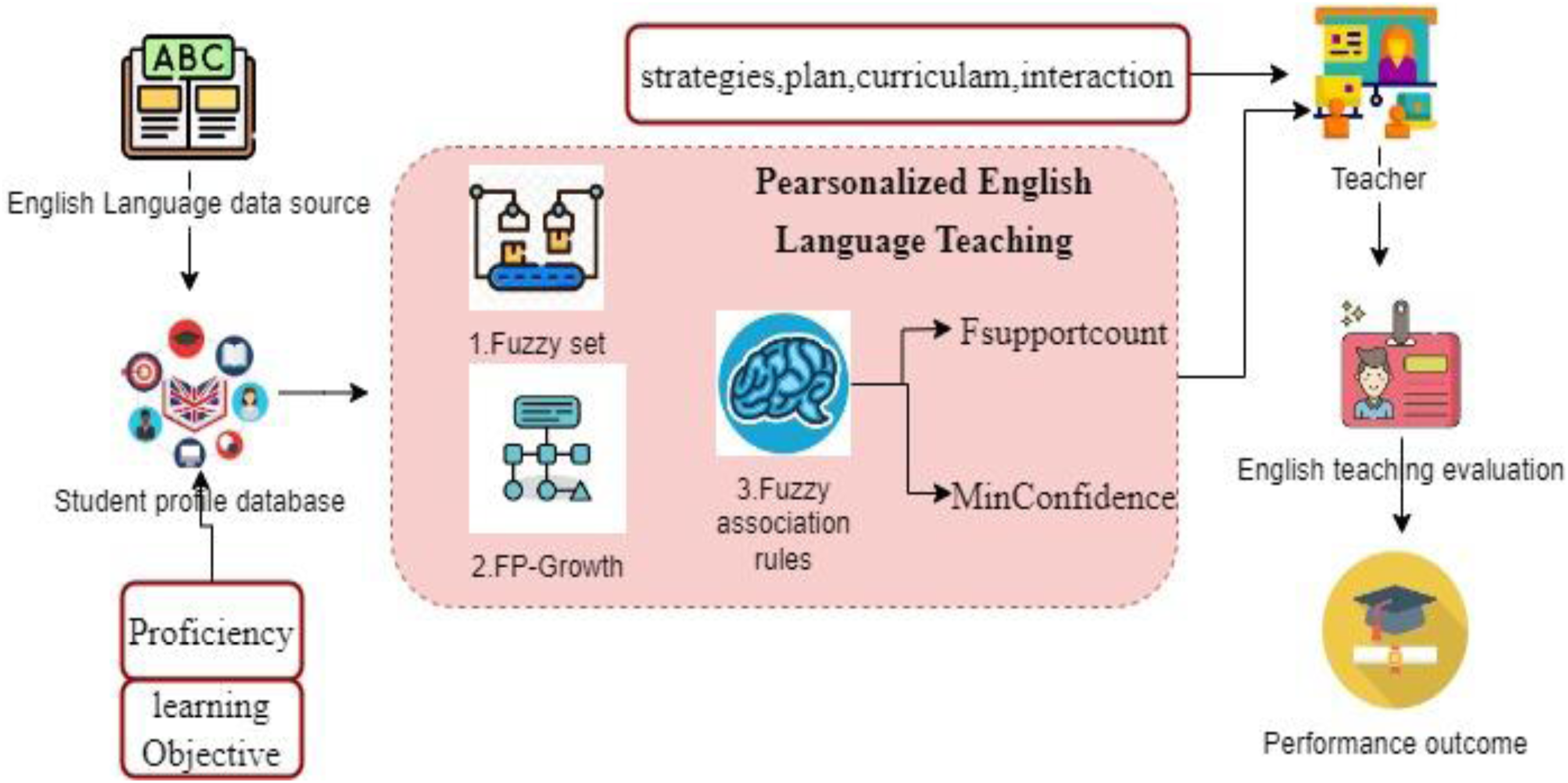
Language assistance: Personalized teaching enables teachers to offer students individually tailored language assistance to address particular areas of difficulty. Figure 1 offers a graphic illustration of the F2PG-PELT scheme, which illustrates the procedure of PELT by means of individualized instruction tailored to the students’ profiles and preferences. The framework of the algorithm for assessing student data and producing personalized educational routes is highlighted here.
Whether it’s enhancing a student’s writing, grammar, vocabulary, or word pronunciation, personalized teaching ensures they get targeted help. Three steps make up fuzzy association rule mining. Before identifying fuzzy frequent item sets from the freshly built database, fuzzy sets are first formed and then fuzzy rules of the association are created and assessed.
Preprocess the student profile data with a fuzzy set
Collect profile information related to students based on proficiency levels (low, medium, and high) with fuzzy membership function as learning style or media (audio and visual) as an input variable. Create a transactional structure using fuzzy values for membership using the learner/student data. The learner profile consists of records of student academic growth based on strengths and weaknesses related to motivation and goals in addition to the above. During mining the attributes, the linguistic variables fuzzy membership function is defined by triangular membership function,

Distinctive student learning profiles guide the creation of student-centered paths to learning. The knowledge, abilities, and characteristics of a graduate prepared for college and working life are noted along with each student’s unique strengths, areas for improvement, and learning objectives to create student learning profiles. As each student advances through education, the learning patterns are continuously modified to meet and surpass the outcomes. The needs of each student determine the pace of instruction in a personalized classroom. Depending on their specific learning route, students might spend longer on one topic than another. Fuzzy preparation of student profile data optimizes for managing student data’s inherent ambiguity and vagueness, such as inaccurate competency levels or style of learning preferences. Using fuzzy sets, the system can simulate graded boundaries and overlapping categories in real-world student language abilities and attributes data.
Apply the FP-Growth algorithm to create a personalized learning environment
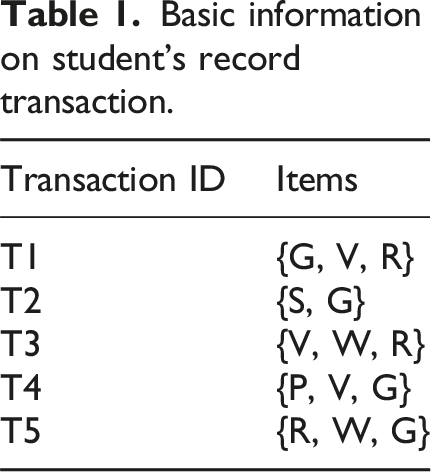
Utilize the FP-Growth method to extract frequent item sets from the learner data that has been preprocessed. Consider the fuzzy membership values for the learning style and proficiency level parameters in the item sets. Create the FP-tree structure to effectively represent and browse through the transactional information with fuzzy memberships. Frequent pattern mining with FP-Growth finds relevant patterns in student profiles’ grammar, vocabulary, reading levels, etc., and is essential for identifying each student’s strengths, limitations, and preferences for a personalized learning plan. These patterns are efficiently extracted using FP-Growth. Step 1: Frequent Pattern Mining. Use the FP-Growth algorithm to find recurring patterns in the preprocessed data. Patterns can stand in for a variety of linguistic elements in the context of teaching English, including Grammatical constructions (G), Reading (R), Writing (W), Speaking (S), Vocabulary usage (V), Phraseology (P), syntax, and cohesion. Let us consider the initial transaction with fuzzy linguistic variables G: intermediate, R: moderate, W: advanced, V: basic, P: intermediate, and S: Advanced. Each transaction serves as a student’s profile, and the items within each transaction show the student’s level of competency in several language areas.
Basic information on student’s record transaction.
Ordered item set analysis.
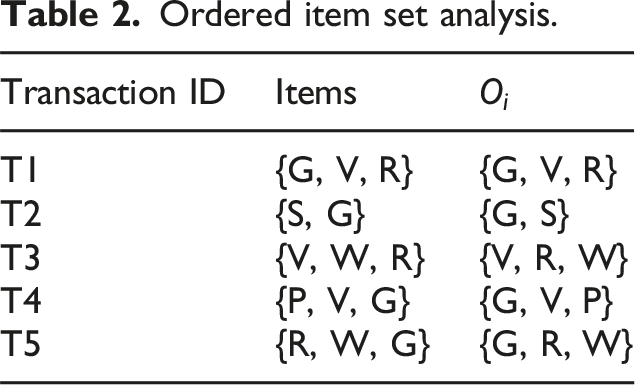
Hence all the involved learning elements are considered in personalized teaching criteria to prepare necessary assessments, tasks, and exercises that specifically target the student’s area of improvement based on the learning preference attributes. Step 2: Construct the FP-Growth tree.
The FP tree’s goal is to extract the most common pattern, representing an item from the item set represented by a single node of the FP tree. The lowermost nodes indicate the item sets, whereas the top node represents the root node called null. While constructing the tree, the associations between the nodes and lower nodes, or the relationship between the item sets and other item sets, are preserved. Find the item set in the first transaction by examining it. The item set with the highest count is selected first, followed by the item set with the next lowest count. It indicates that the transaction item sets are built into the tree’s branching structure in decreasing order of count. Based on the combination patterns of the students learning, the personalized teaching criteria and item sets are given as personalized choices, and the tree structure depicts the connections between them, as shown in Figure 2. Step 3: Conditional pattern base and frequent pattern tree. FP-Growth tree structure.
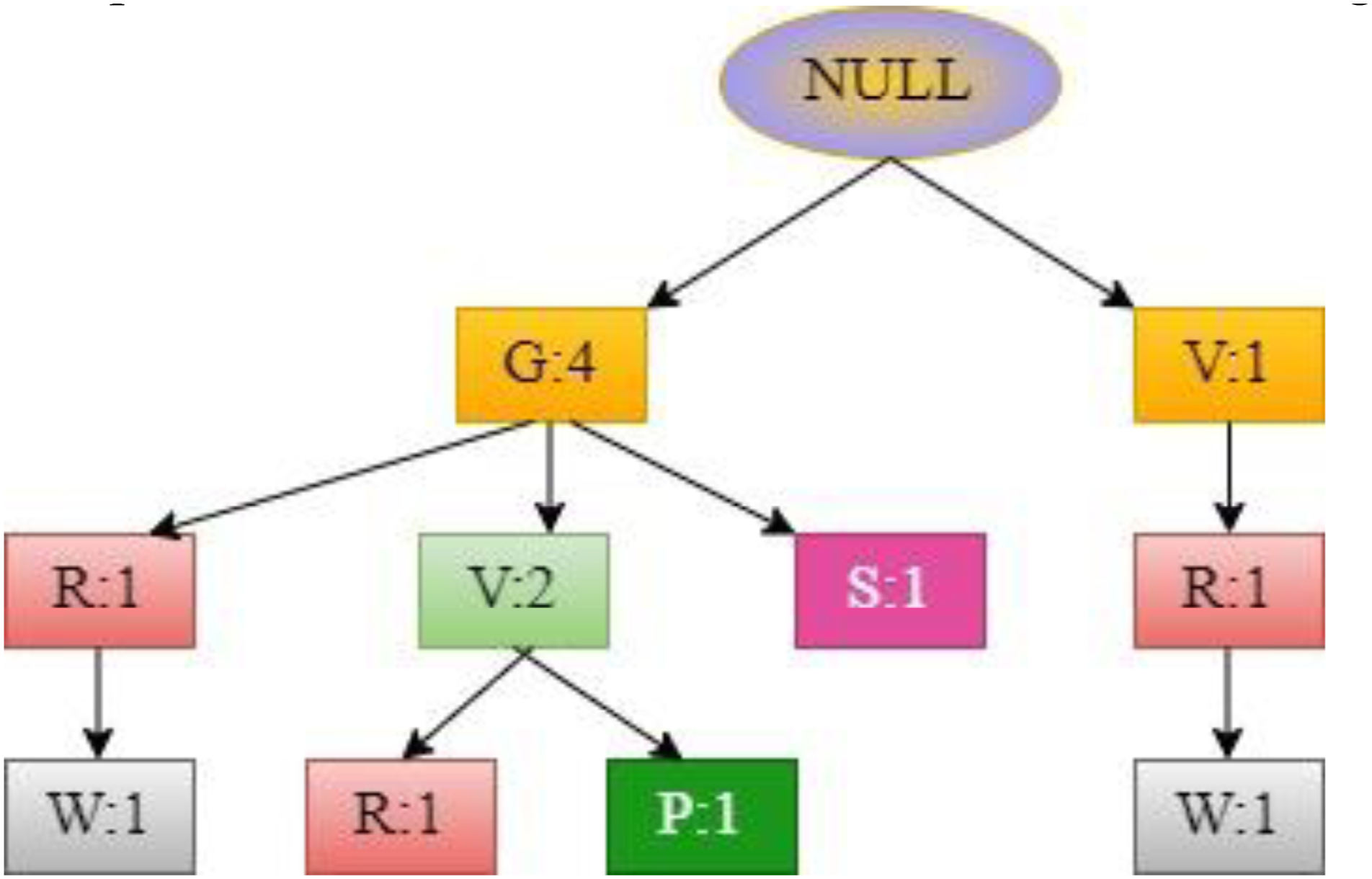
One of the most important aspects of the F2PG-PELT algorithm is the FP-Growth tree structure, which is depicted in Figure 2. To facilitate the identification of individualized learning pathways along with the construction of tailored teaching strategies, the FP-Growth tree can efficiently organize frequent patterns in data about students to optimize efficiency. To find linguistic patterns or sequences regularly linked to a certain student trait or aim,
The FP-Growth algorithm generates all non-empty subsets for each frequent item set, representing combinations of grammar, vocabulary, and learning styles. These subsets generate fuzzy association rules like “If antecedent subset, Then consequent subset.” The fuzzy sets antecedent and consequent include the linguistic terms and functions for membership of the subset and complement’s items. The system finds significant fuzzy rules representing student traits, proficiencies, and pedagogical recommendations by generating fuzzy support counts and evaluating them against minimum confidence criteria. This fuzzy logic approach harnesses student data uncertainty to provide interpretable rules for tailored language training.
Conditional pattern base with frequent tree.
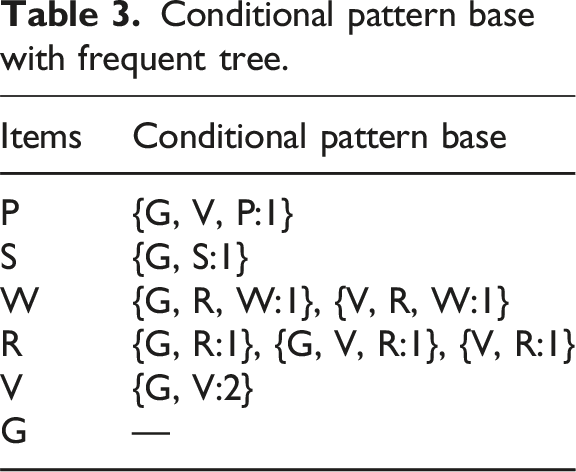
You can enable adaptive teaching approaches by dynamically modifying the frequent patterns based on the learner’s success and changing profile attributes. The whole set of frequent patterns can be found by mining the FP-Tree after it has been built. Step 4: A conditional frequent pattern tree is built for each item. It is done by taking the set of elements that is common in all paths in the
Make minimum fuzzy support and confidence calculations
For the frequently occurring item sets, determine the imprecise support and confidence metrics using the fuzzy value of membership connected to each item in each frequently used item set when calculating the overall support for fuzzy support. Calculate the combined confidence of each association rule’s predecessor and subsequent fuzzy value of membership to obtain the fuzzy confidence for evaluating the efficiency of personalized teaching among students. FP-Tree and conditional pattern bases record the correlations and interactions between linguistic aspects, which is vital for mapping how language factors interact for each learner. Conditional pattern bases reveal student-specific language patterns.
Fuzzy association rules generation from FP-Growth frequent item sets
Fuzzy association rules can be derived from the frequently occurring sets of items the FP-Growth algorithm produces. In both the prior and subsequent rules, consider the uncertain membership scores for the level of proficiency and learning style variables to implement effective personalization of teaching. Use fuzzy set or fuzzy logic operations to assess the association rules with minimum fuzzy confidence and fuzzy support. The algorithm uses fuzzy logic measures such as support and confidence to assess the credibility and strength of connections between characteristics such as student competence and resource recommendations. Fuzzy rules implement these insights to create adaptive tailored curriculum. Rule 1: IF (G is advanced) AND (V is advanced), Then (proficiency is high) Rule 2: IF (R is moderate) OR (W is moderate) Then (proficiency is medium) Rule 3: IF (proficiency is a medium (0.7), AND learning style is visual (0.8), Then teachers recommend V.
Teacher involvement and teaching efficiency ratio analysis: Based on the above fuzzy rules, the student’s proficiency level can be analyzed, and it is very helpful to identify the teacher involvement ratio in personalized teaching among students. Teachers are essential in interpreting the fuzzy association rules and observed patterns of student profile data concerning the minimum support and confidence level values. They analyze patterns and rules to comprehend the linkages and dependencies between various factors in the student data. Teachers base their lesson planning on the identified frequent pattern algorithms and fuzzy association rule principles mentioned above. These guidelines can help educators to create individualized learning activities, choose the best materials, and let students set their own goals. Teachers that take an active role in the rule discovery process actively incorporate it into their lesson planning, ensuring that personalized learning experiences follow the identified patterns and rules from student profiles. With this teacher-involvement ratio analysis, teaching efficiency can be calculated with the planned teaching resources for each learner.
Data-driven fuzzy association rules from the F2PG-PELT algorithm help educators understand student characteristics, language proficiency, and learning preferences. These rules help teachers choose educational methods, materials, and assessments that match each student’s needs. Discovered patterns and rules can help students create personalized learning routes. Educators can use the identified relationships to address strengths and weaknesses by creating tailored curricula, learning activities, and targeted interventions. This adaptive method gives students personalized guidance and materials based on their competency and learning goals. Teachers can create interesting and relevant educational tactics for individual students by using the algorithm’s capacity to identify students’ interests, motivations, and learning styles. Personalized teaching strategies that meet students’ requirements can boost engagement, motivation, and learning outcomes.
Teachers can improve resource allocation and instructional planning with the algorithm’s observations. Understanding student cohort patterns and relationships helps institutions allocate teaching resources, establish targeted educator professional development programs, and improve course offerings to meet the unique requirements of their students.
The performance measure for support and confidence: This is the method for computing support and confidence substituting the relevant fuzzy set-theoretic operations for the set-theoretic operations to enable the assessment of a fuzzy association rule. Fuzzy association rules can be generated as follows: For each frequent item set 

For instance, propose grammar drills or vocabulary-building activities considering learners’ linguistic tastes and fuzzy affiliations that fit their interests and strengths. Implement personalized resource recommendations. Applying these personalized teaching concepts determines the fuzzy support and fuzzy confidence for any association rule in your transactional student English language teaching database containing fuzzy membership values. These measurements facilitate the selection and evaluation of significant rules in individualized English language instruction by evaluating the strength and support of the associations. The proposed portion underscores the critical significance of personalized teaching concepts in fostering a PELT approach. Through individualized resource suggestions and customized activities, instructors ensure that the educational journey follows the students’ interests, requirements, and proficiency levels. Personalizing the approach guarantees that educational resources and tasks profoundly impact every student, thereby encouraging a more profound involvement with the subject matter. Moreover, personalized teaching enhances the efficacy of instruction by accommodating individual preferences and proficiency levels, resulting in enhanced learning outcomes and an overall more engaging learning experience.
Data collection
Students studying English as a second language and needing specialized education and additional language tutoring are known as English language learners. The English language teaching parameters are analyzed from database (https://www.kaggle.com/code/tangelus/english-language-learning-vectorization-lgbm, https://www.kaggle.com/datasets/supriodutta2022/multilabeldataset?select=train.csv).
Comparative study analysis
Three existing algorithms are evaluated to validate the proposed concept’s performance using four metrics for comparative study to prove the effectiveness of PELT.
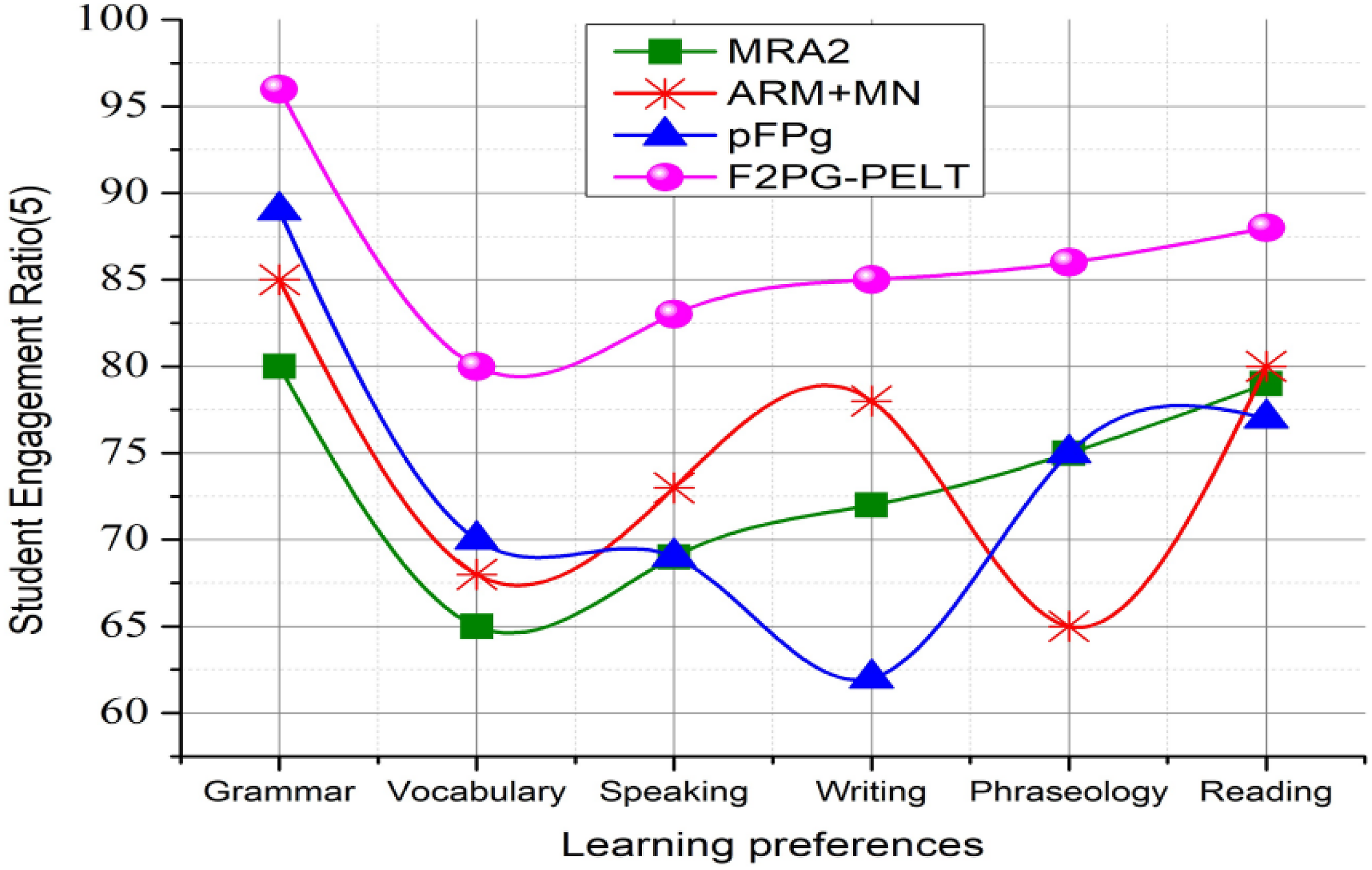
Student engagement ratio (%)
Assess the students’ participation and engagement in the customized ELT activities. The process can involve keeping track of attendance, class discussion participation, task accomplishment, and student feedback forms. The student engagement ratio is important because it shows how much students participate in PELT activities. Engaged students participate in class discussions, complete activities, and give feedback, which is essential to language development. This score measures PELT’s ability to engage pupils in learning.
Pre- and post-assessments, standardized tests, and additional performance indicators can be used to gauge this. Equation (4) analyzes the student engagement ratio (%) based on personalized learners. Student engagement ratio (%).
Teaching efficiency ratio (%)
A greater teaching efficiency ratio, shown in Figure 4, means that resources and efforts have been used more efficiently during the personalized teaching process to produce the targeted learning outcomes. The teaching efficiency ratio assesses how well-individualized teaching uses resources and efforts to meet learning goals. A significant teaching efficiency ratio means resources are employed efficiently, improving student learning. This statistic shows how PELT maximizes language learning resources, including teaching materials, strategies for instruction, and teacher-student interactions. A smaller ratio, on the other hand, can point to the need for changes in instructional methods, allocation of resources, or teaching techniques to boost teaching effectiveness. Analyze the effects of individualized ELT on these metrics. The measure considers things like advancement to more advanced-level courses in languages and course completion rates. In most cases, it is determined by evaluating the learning results attained by students about the time, energy, and resources expended by educators or educational institutions. Teaching efficiency analysis.
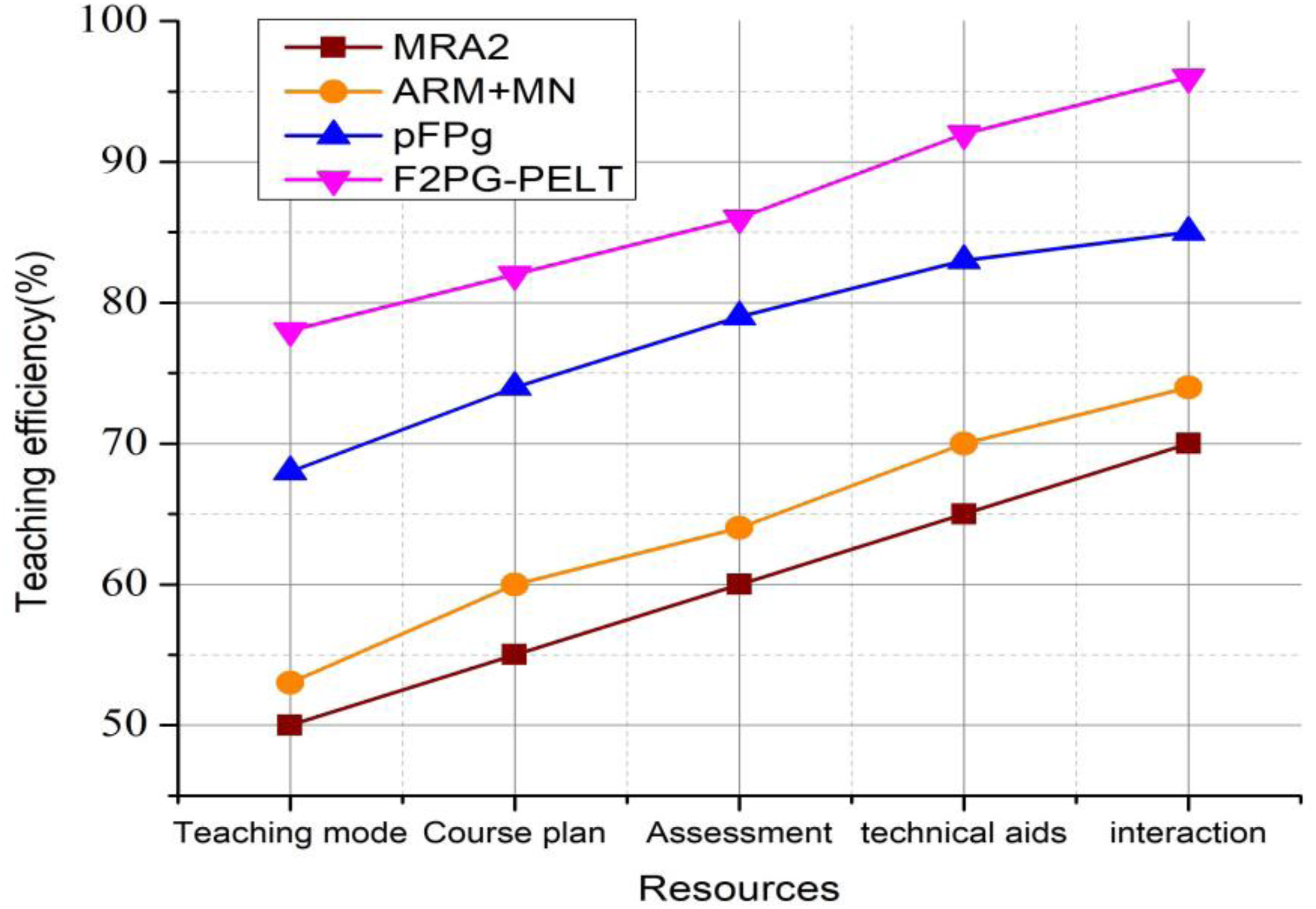
As mentioned in equation (5), the learning outcome of the learners based on the measures mentioned above are analyzed in addition to the involvement of teachers in the students’ personalized English language teaching like teaching mode, interaction level, course completion rates with a correct plan, proficiency levels of advancement in technical aids, and assessment given for each student in higher education, as depicted in Figure 4.
Learning outcome analysis (%)
Learning outcomes in individualized English language instruction are of higher caliber, emphasizing acquiring skills and competencies. Learning outcome analysis evaluates tailored English language instruction. Language proficiency, skill acquisition, and growth in skills are considered. The substantial learning outcome percentage indicates that students are making significant language learning progress and that PELT effectively promotes learning outcomes that meet students’ aims. As a result, rather than using mathematical formulas, learning outcome assessment frequently relies on qualitative evaluations and observations. Based on the analyzed fuzzy rules generated from Table 3, the candidate pattern base for frequently attended assessments is identified, through which learning outcomes can be easily calculated using equation (6).
Accuracy is related to metric measures of how effectively the rules, depending on the given linguistic characteristics, predict or explain student learning outcomes, as shown in Figure 5. Higher accuracy suggests more trustworthy regulations. Developing effective communication skills among learners includes meaningful English discourse, active listening, and effective questioning. Learners develop into independent language users who create goals, take ownership of their education, and employ powerful study techniques. Learning outcome ratio.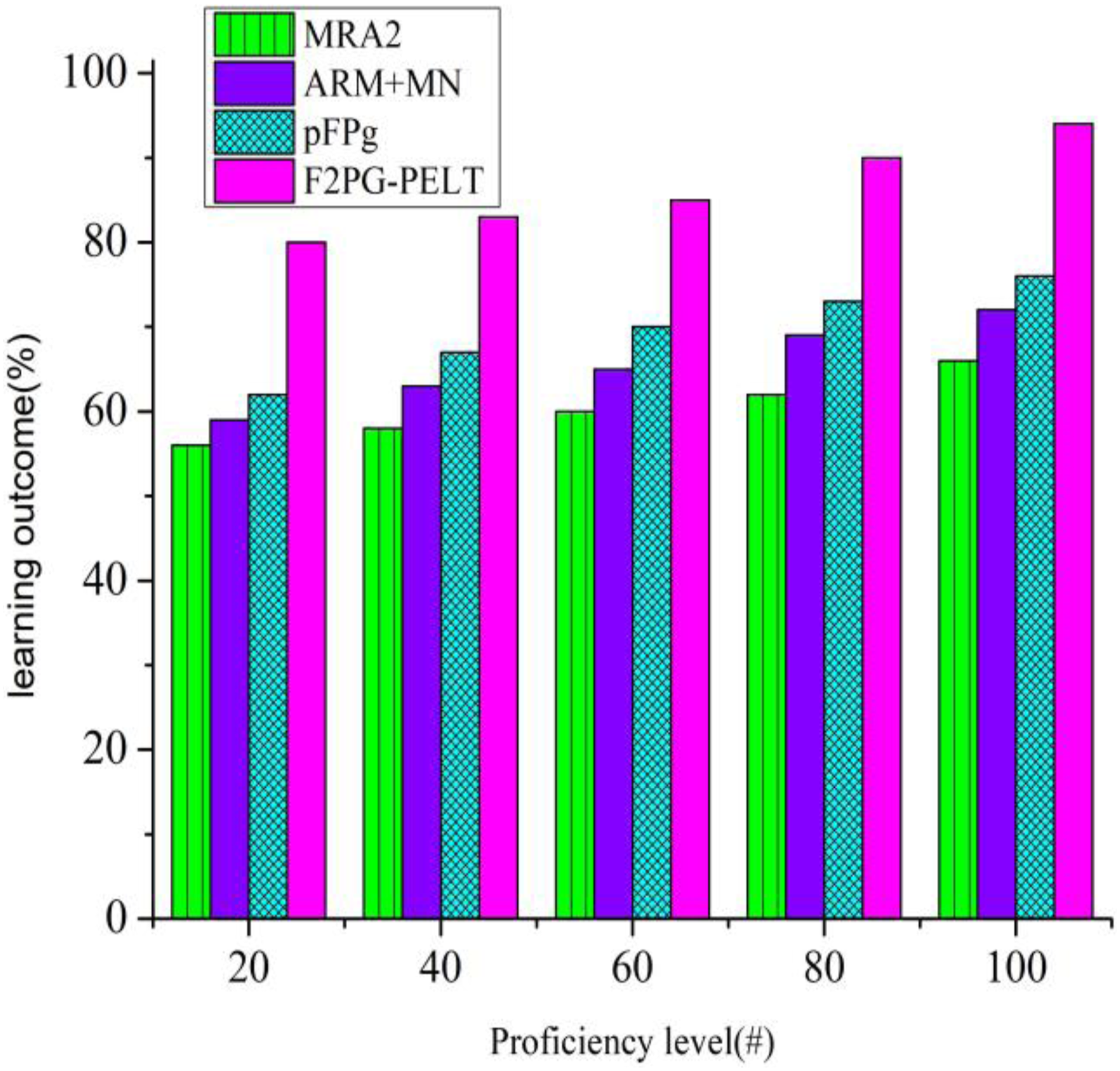
Teacher involvement ratio (%)
The teacher is engaged in conversation, and cooperation with the student may involve individual conversations, group activities, or internet forums for interaction and opinion sharing may all be used to provide a supportive engaging learning environment. The teacher-participation ratio measures teacher engagement and support for personalized education. A high teacher-engagement ratio means teachers build individualized learning plans, provide feedback, and adapt education to student requirements. This metric emphasizes teacher-student collaboration along with personalized support to improve student learning and satisfaction. Individual learning plans are created in collaboration with the student by the teacher and include resources, goals, and tactics specific to the student’s requirements. Based on the student’s success and input, the teacher constantly examines and modifies these plans.
Equation (7) estimates the ratio of the number of students to the number of personalized learning plans the teacher has developed for each student. Figure 6 displays the teacher’s engagement in modifying the curriculum to match the unique needs of every student. Teacher involvement ratio (%).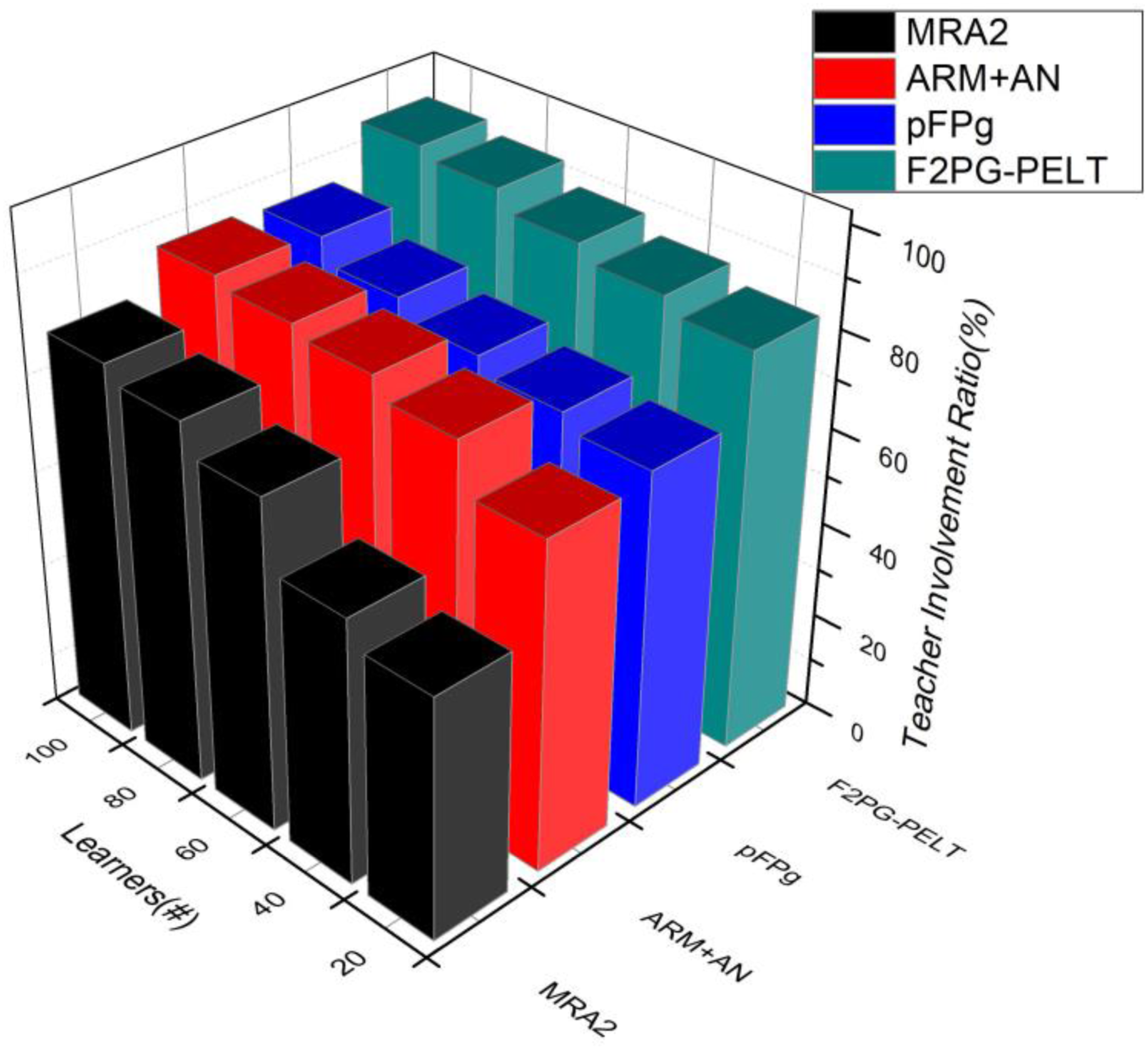
Designing personalized learning experiences that improve the learner’s English language acquisition and overall learning results using the mined patterns. Asking students for feedback on their satisfaction with the personalized teaching techniques. Surveys or interviews might be employed to acquire qualitative information on students’ opinions of the efficacy and relevance of personalized teaching tactics. These metrics show how PELT improves learning outcomes and student satisfaction by encouraging active involvement, resource efficiency, learning outcomes, and collaborative teacher-student interactions. They reveal how individualized education affects student motivation, development, and language competency.
Potential limitation
High-quality and thorough student profile data can affect the accuracy and reliability of discovered patterns and fuzzy association rules. As the number of students and profile data dimensionality increase, the algorithm’s computational cost may increase, restricting its scalability to applications on a large scale or needing additional optimization. Educational environment elements, including resources, curriculum design, and student characteristics, may affect evaluation measures and the generalizability of the findings.
Conclusion and future scope
Personalized learning is one of the most important trends in pedagogy and education, where the student-led method enhances learning and is essential for developing skills and confidence. It demonstrates that the algorithm works well with the actual data set and can produce the desired result. It can give pupils a clear and efficient learning route to help them accomplish their learning objectives more successfully. The proposed F2PG-PELT model combines fuzzy association rule mining with the FP-Growth technique, thereby effectively discovering personalized patterns and relationships from diverse student data, one of the central goals. The model intelligently captures the complex relationships between linguistic variables like grammar, vocabulary, reading ability, and student traits like style of learning and proficiency level by fuzzy preprocessing students’ profiles and constructing the FP-Tree with conditional pattern bases and showing the key relationships for personalized teaching planning. Based on support and confidence analysis, fuzzy association rules implement these trends as teacher instructions. Uncertainty in student data is handled via fuzzy logic. High-quality, specialized courses tailored to each student’s needs, abilities, restrictions, and preferences meet a crucial goal. Experimental results show that the F2PG-PELT model outperforms other personalized language teaching methods in student engagement, teaching efficiency, learning outcomes, and teacher involvement. This supports personalizing education to improve outcomes. The suggested model achieves its overarching goals by combining data mining with pedagogical concepts for tailored, effective language acquisition guided by teachers.
In conclusion, the F2PG-PELT paradigm provides a solid foundation for individualized English language instruction in higher education. Using fuzzy association rule mining and the FP-Growth algorithm, the F2PG-PELT model revolutionizes personalized English language training. It personalizes instruction to improve learning, and the innovative use of fuzzy association rule mining gives educators actionable insights to improve learning outcomes.
Future work may focus on creating a system with an adaptation that can automatically modify teaching methods in response to learner input in real-time. Continuously updating and improving the personalized teaching method depending on student achievement and shifting demands can entail incorporating machine learning methods. The future potential of the F2PG-PELT model involves the capability to adjust to real-time learner input through the application of machine learning techniques in order to make dynamic alterations to instruction. Machine learning can help personalized education proliferate and reduce computing expenses. The use of distributed computing and parallel processing handle large datasets well. Feature selection reduces high-dimensional data impact. Advanced algorithms like deep learning improve pattern discovery and integrating these strategies improves accuracy, scalability, and adaptability.
Statements and declarations
Footnotes
Conflicting interests
The author(s) declared no potential conflicts of interest with respect to the research, authorship, and/or publication of this article.
Funding
The author(s) received no financial support for the research, authorship, and/or publication of this article.