



Abstract
In today’s fast-progressing economy and society, demands on the quality of electricity are increasing, and accordingly, the size of the electricity supply system is growing. The structure is becoming more and more complex; if the power system fails, it will lead to large-scale blackout accidents. Especially for carbon fiber composite core wires made of expensive carbon fiber materials, it will cause greater economic losses and serious social impacts. This article proposes a gap insulation state evaluation model for carbon fiber composite core wires, including considering altitude factors. Comparison of minimum safe clearance distance between carbon fiber composite core wire and steel core aluminum stranded wire through calculation of wind deflection angle. It can achieve online assessment of the risk of conductor wind-induced flashover. In addition, the practicality and functionality of this model have been verified through real-world examples.
Keywords
Introduction
Carbon fiber composite core wires, made from carbon fiber materials known as “black gold,” serve as organic composite materials for the capacity expansion and renovation of transmission lines in China.1,2 It has a number of outstanding characteristics, including high strength, low line losses, excellent electrical conductivity, low droop, high operating temperatures, and high current-carrying capacity which are combined with low weight and high corrosion resistance. 3 Due to the lighter weight of this organic composite material compared to steel-reinforced aluminum stranded wire,4,5 it is necessary to adopt differentiated windproof design for carbon fiber composite core wires. 6
In nature, overhead power transmission conductors are often deflected under the action of gusty wind or strong convective weather, resulting in insufficient safety distance between the conductor and the tower metal components, or the overhead transmission conductor headroom distance is too small, which is the phenomenon of discharge tripping. Wind-biased flashover is a major factor affecting the safe operation of overhead transmission lines. 7 In this essay, considering the effect of altitude on the flashover voltage, the carbon fiber composite core conductor gap insulation state assessment model increases the altitude correction factor, using the rigid straight bar method to calculate the minimum distance for the air gap between the overhead transmission lines and towers, and objects in the vicinity of overhead lines. In the case of transmission line determination, the minimum distance for the air gap is mainly related to the maximum wind deflection angle of overhead conductor.8,9 In order to effectively warn the tripping of wind deflection of transmission lines, a method of evaluating and warning the gap insulation status of carbon fiber composite core conductor based on weather forecast is proposed.
Conductor gap insulation state assessment model and warning level
The calculation process of the conductor gap insulation state assessment model is as follows: the first step is to process the weather forecast to determine interval of variation of wind speed and direction. In the second step, using Monte Carlo methods to randomize wind speeds and angles, the wind speed and wind volume perpendicular to the transmission line are calculated according to where the route goes. In the third step, the wind angle is calculated, and the minimum distance for the air gap is calculated according to the tower parameters. Calculate the corrected minimum air gap value according to whether there is rainfall or not. The fourth step is to repeat the sampling to record the probability of wind deviation.
The flow chart for evaluating the gap insulation status of carbon fiber composite core conductors is shown in Figure 1. Flowchart of gap insulation state assessment of carbon fiber composite core conductor.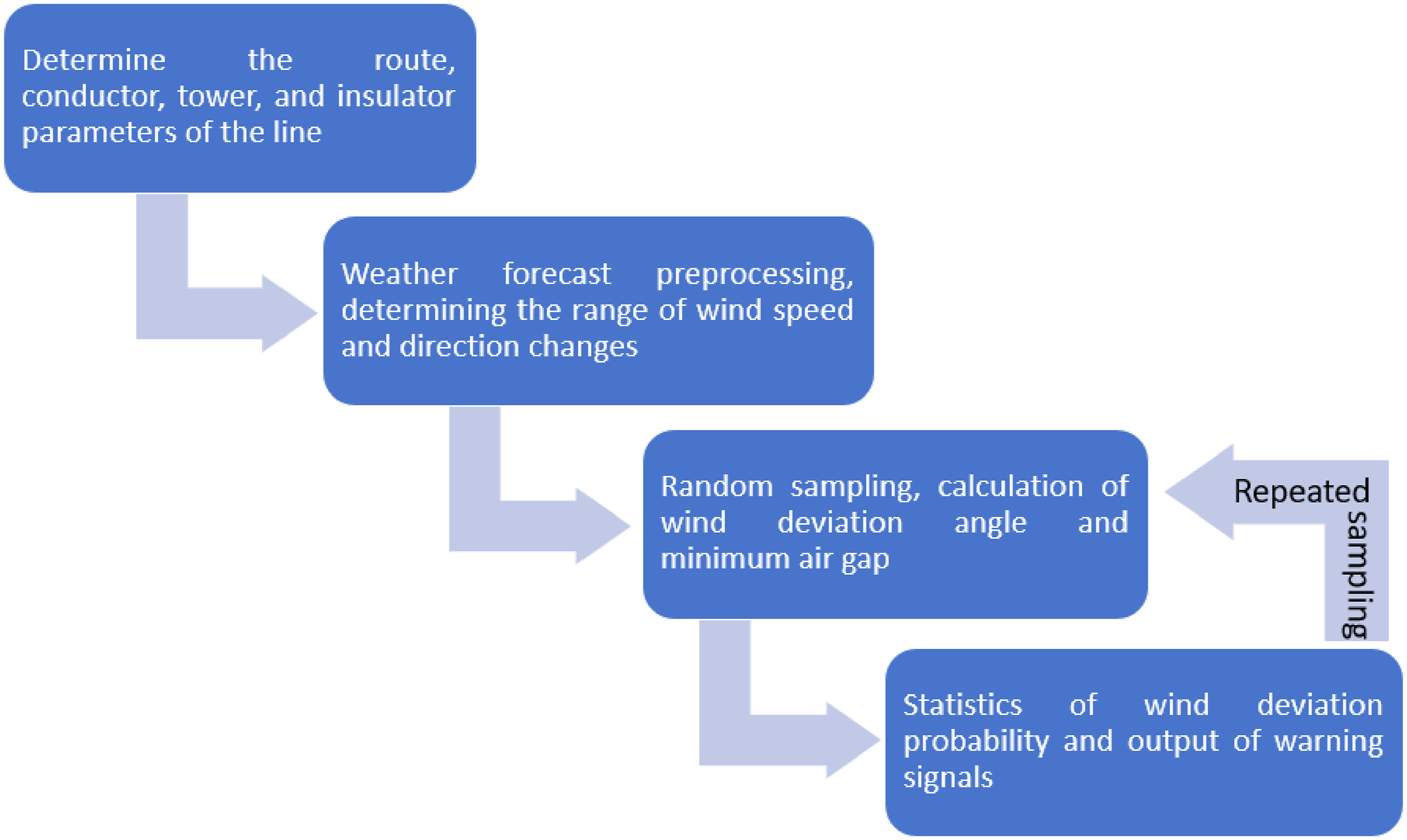
Research and calculation
Numerical pre-processing of weather forecasts
Wind speed and direction are the main external factors affecting the insulation condition of the conductor gap.
10
With the wind speed kept constant, the direction of the wind will not only change the swing angle of the wire but will also have an effect on the swing direction of the wire. The magnitude of the sway angle of the conductor depends on the wind speed component perpendicular to the overhead transmission line, and the direction of sway of the conductor depends on the direction of the wind and the alignment of the line. The speed and direction of the wind in the weather forecast are now expressed in the most common 16 azimuths. Sixteen equal parts from the north direction. The angle between each neighboring azimuth is 22.5°. The division angle is shown in Figure 2. Hexadecimal azimuth.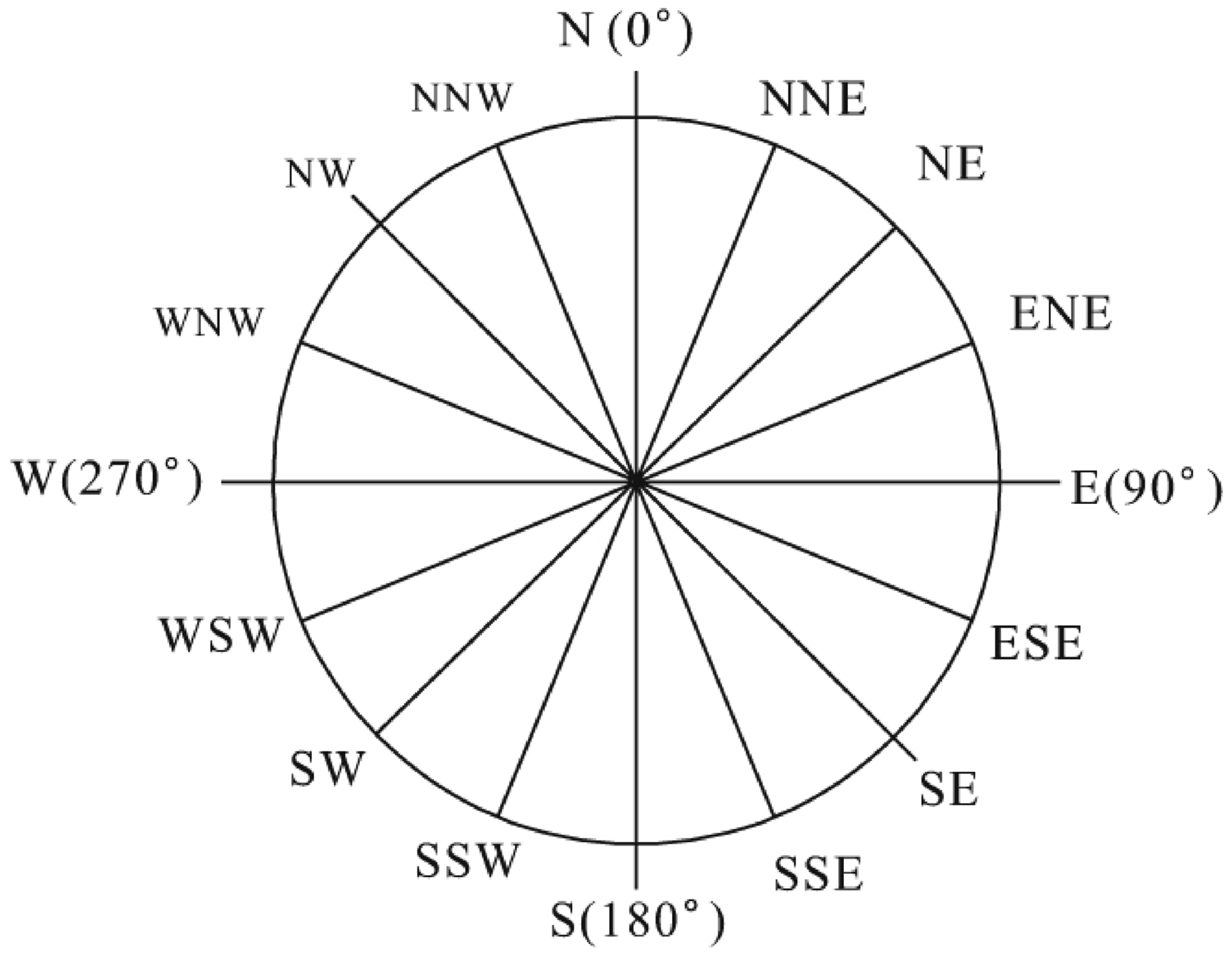
At the same time, consider the weather forecast is usually the wind direction and wind level, here the wind direction to do zoom processing, the specific operation is to 16 azimuth angle, for example, the wind direction is Wind speed rating comparison table.
For example, the wind forecast for a certain day in a certain place is northeast wind force 3, then the corresponding wind direction is
Assuming that the line alignment makes an angle with due north direction of, the Wind direction and line alignment angle.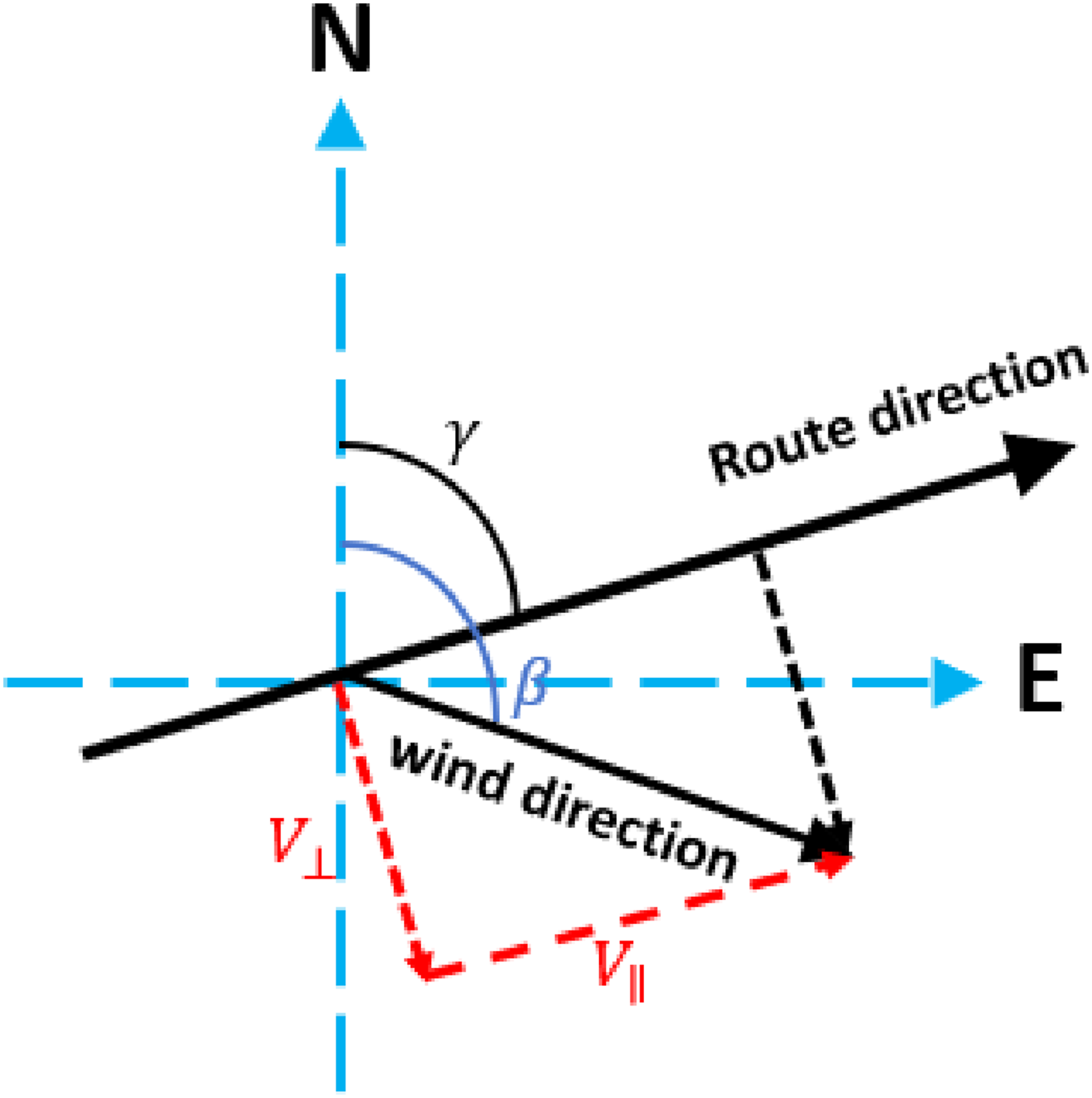

Divide the wind speed into Schematic diagram of early warning.
The theory of Monte Carlo method is based on the law of large numbers, which states that when the number of repeated experiments becomes sufficient, the number of occurrences of a certain event will approach its likelihood of occurrence. When dealing with mathematical and physical problems, it is usually necessary to generate a large number of random samples to simulate real situations. Due to the complexity of the mathematical calculation method, the Monte Carlo sampling algorithm is used to approximate the simulation, when random points are taken in this area, and the sway angle of the overhead conductor under the action of high winds is repeatedly calculated when the sampling times are large enough, and the final wind deflection prediction probability can be approximated.
Calculation of wind deflection angle
The rigid straight bar method is analyzed based on the principles of classical mechanics, and its main purpose is to evaluate the dynamic and response of components under specific forces. This method is based on a prerequisite that the rod is rigid and therefore will not undergo any bending or distortion, mainly studying its extension or reduction under axial pressure. This hypothesis simplifies our analysis steps; even though it reduces the breadth of method use, it is very beneficial for early design and analysis. Calculate and solve for the conductor wind swing angle using the rigid straight bar approach,11,12 and the gravity load on the transmission line is compared with the wind load. Schematic diagram of the rigid straight bar method.
The specific formula for calculating the wind deflection angle is as follows:

The gravity load calculation formula is as follows:

In the formula,
The wind load is calculated by the following formula.

In the formula, the
Insulator wind pressure calculation is as follows:
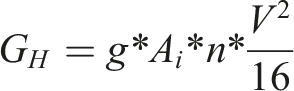
Calculation of minimum air gap of conductor tower
Conductors after being subjected to high winds, the minimized distances of air gaps from conductors to towers can be calculated based on tower parameters and insulator string types as well as conductor parameters. And the calculation formula varies for different tower types. The calculation formula of catenary tower is as follows: Schematic diagram of wind deviation distance of Maotou Tower insulator.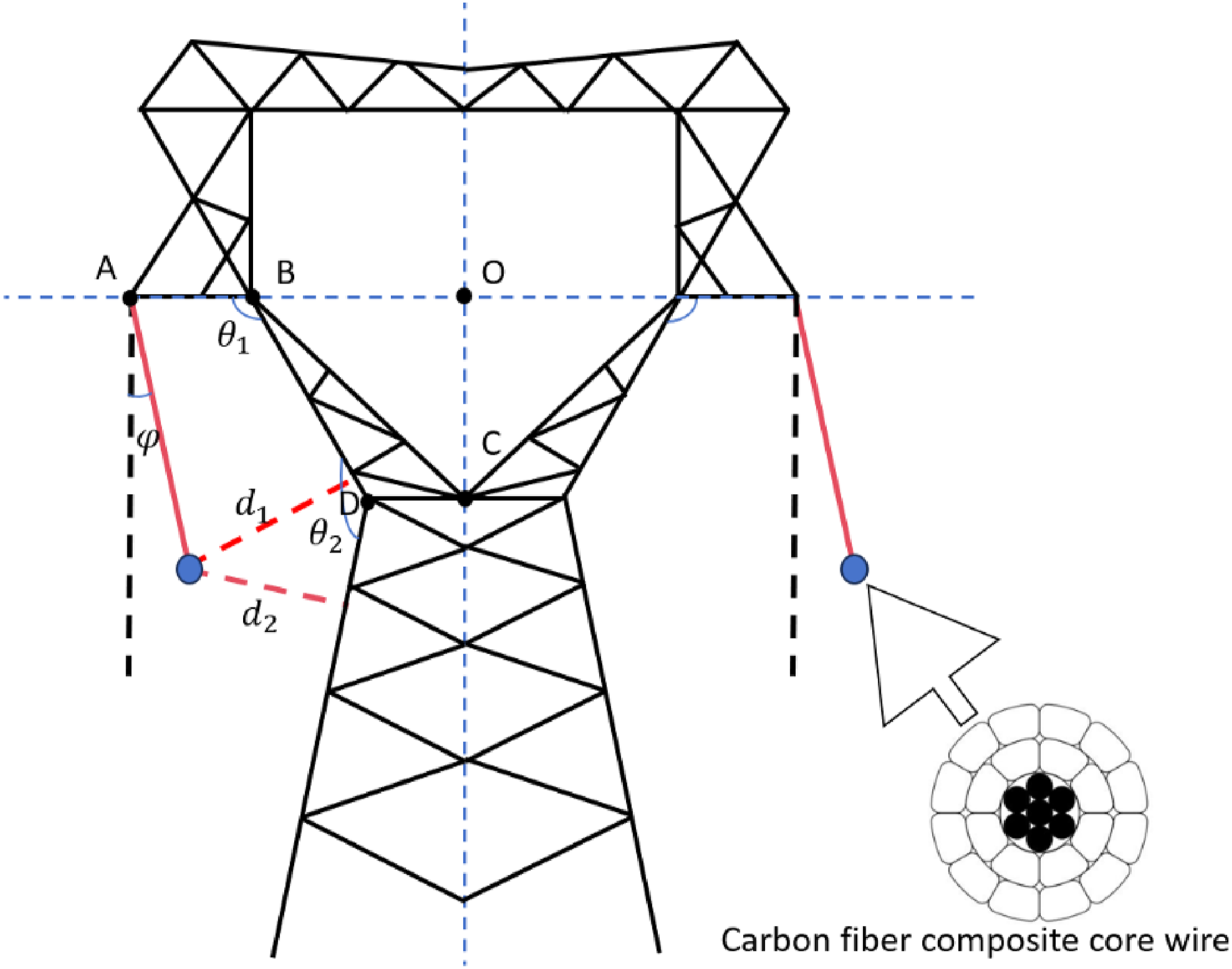



Elevation factor conversion factor solution
Due to the vastness of our country, the altitude of the west is high and the east is low; in a stepped distribution, the altitude conditions in different areas vary greatly. With the increase in altitude, the atmospheric pressure and air density will gradually decrease, which will lead to the occurrence of flashover of the starting voltage increases. In addition, high altitude air humidity is usually lower because the reduction of humidity will reduce the insulation properties of the air, thereby increasing the possibility of flashover, so high altitude may be less likely to flashover. Therefore, the altitude factor is added in this paper, aiming at a more accurate assessment of the insulation status of carbon fiber composite core conductor gaps.13–15
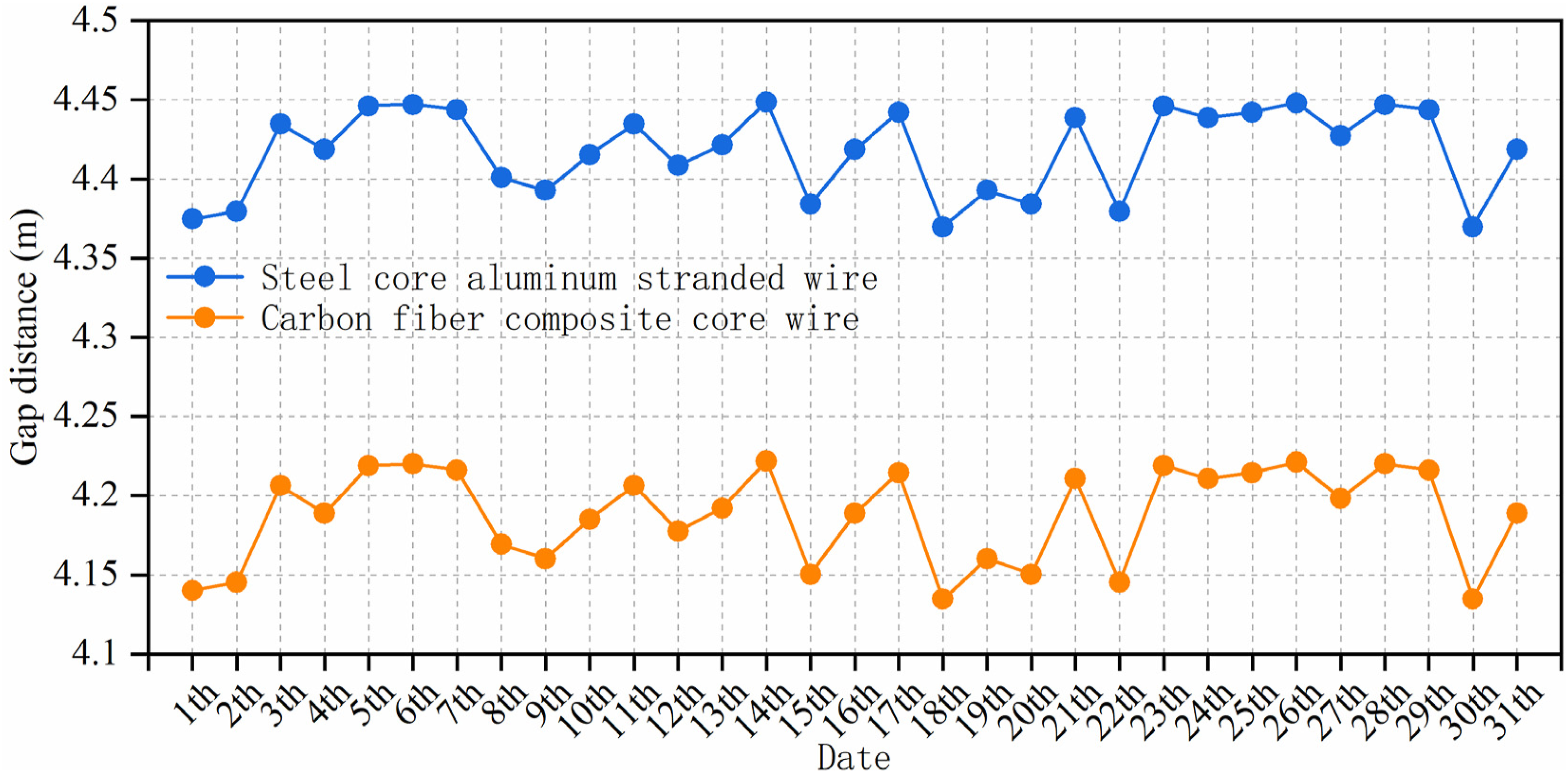
At higher altitudes, there are fewer atmospheric pollutants (e.g., dust and salt particles), which helps to reduce the probability of flashover between lines. And some experiments in the literature show that the altitude will have an impact on the frequency flashover voltage of the gap, and the voltage at which the air gap breaks down varies at different altitudes. Therefore, the altitude conversion factor corrects the calculation to account for the change in the insulation state of the conductor gap due to the altitude factor. Daily average wind deviation angle in January. Daily average wind deviation angle in July. Daily average minimum air gap distance in January. Average minimum air gap distance in July.


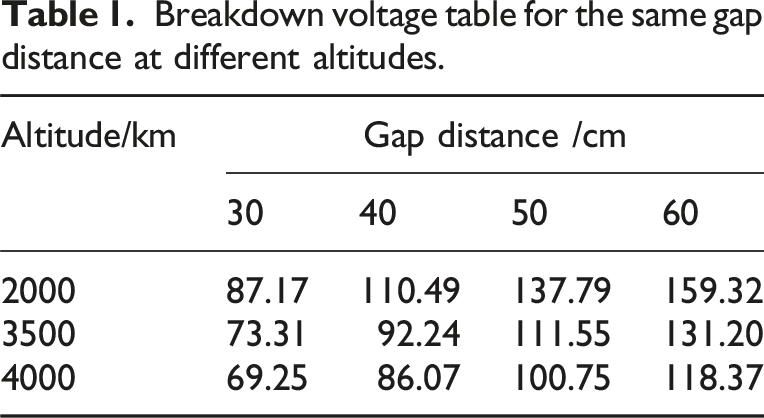
Breakdown voltage table for the same gap distance at different altitudes.
Minimum clearance safety distance between the charged part and the pole tower.

Table of altitude and breakdown distance at the same voltage.

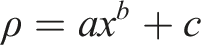
Coefficient values.

The JLRX1/GPF1B-240/40 fiber optic cluster type carbon fiber composite core soft stranded wire was produced by Hebei Silicon Valley Chemical Company as an example of the daily wind deviation angle and the minimum clear air clearance distance in January and July 2022 in a city in Hebei Province (Figures 8-11).
Tower parameters.

Lead parameters.

Example analysis
According to the calculation process of the wire gap insulation state assessment model established in this paper, the program is written. Input the tower, conductor and insulator string parameters, wind speed range, wind direction, and rainfall conditions during the calculation and select the jumper wind deflection or straight tower insulator string wind deflection calculation module for the calculation according to the wind deflection warning location.
In 2022, the Hebei line, which has a length of 9.97 km, features sections 6 to 36 that utilize carbon fiber composite core heat-resistant aluminum alloy conductors (model ACCC/LH-240). The towers used are of the ZM1 type. The line experienced a wind bias tripping fault due to strong convective weather and thunderstorms, which resulted in unsuccessful reclosing. The nature of the fault was identified as the insulator string's swing angle exceeding the design wind deflection angle, causing a reduction in the air gap at the tower head. This led to a discharge from the conductor to the tower material, resulting in a flashover failure. During an on-site inspection, staff discovered flashover burn marks on the conductor clamps and the towers. The tower and conductor parameters are shown in Tables 5 and 6.
Conductor self-weight ratio load:
Conductor wind pressure specific load: (take 
Horizontal gear spacing:
Insulator string gravity loading:
Insulator string wind pressure:
Wind deflection angle:
According to the national design standards, the minimum clearance distance between the live part of the 220 kV overhead transmission line and the tower under power frequency voltage is 4500 mm, considering a 200 mm sag at the bottle mouth and a 150 mm thickness of the tower. According to the above evaluation model for the insulation status of carbon fiber composite core wire gaps, the minimum distance of the live part of the wire is calculated to be 724.1 mm, which does not meet the requirements for margin and is prone to wind-induced tripping accidents. The calculated results are consistent with the actual situation.
Conclusion
Carbon fiber conductors are predominantly utilized for retrofitting old transmission towers, offering the advantages of lighter weight and higher current carrying capacity than conventional conductors of equivalent cross-section. This study establishes an evaluation and early warning model for the insulation status of carbon fiber composite core conductors, taking into consideration the impacts of strong winds and rainfall on overhead transmission lines. By adjusting the calculation parameters based on different line specifications and tower models, this model effectively mitigates the impact of wind-induced flashover on grid operation. In comparison with finite element algorithms, this model demonstrates superior applicability and faster computation. However, there are still areas that need to be further addressed in the existing work. If the consideration of factors is not comprehensive enough, more influencing factors can be considered, such as dirty rain, altitude, and snowfall. Establish more refined weather forecast sampling models and warning calculation models based on statistical data. Further exploration is possible in the future.
Statements and declarations
Footnotes
Acknowledgments
The authors acknowledge the State Grid Hebei Electric Power Co., Ltd. Project (kj2023-008), the entry name: Research on Gap Insulation Evaluation Technology for Carbon Fiber Composite Core Conductors Based on Multidimensional Data.
Conflicting interests
The authors declared no potential conflicts of interest with respect to the research, authorship, and/or publication of this article.
Funding
The authors received no financial support for the research, authorship, and/or publication of this article.