



Abstract
With the increasing requirements of performance and reliability of mechanical equipment, how to improve the performance and life of mechanical components through optimal design has become a key research topic. Failure to combine material fatigue properties in the design of mechanical components can easily lead to overestimation of fatigue life in areas with complex loads and multi-axial stress states. This article combined material fatigue properties with the optimal design of mechanical components to design a mathematical model that takes into account fatigue life, mechanical properties and design cost, and realized the all-round optimal design of mechanical components in practical applications. This article used a standardized S-N curve to describe the fatigue behavior of materials, and used von Mises stress to uniformly describe the fatigue response under multi-axial stress states. At the same time, constraints such as strength, stiffness, and cost are introduced into the model to ensure the comprehensiveness and operability of the design. In the solution process, the genetic algorithm was used for iterative optimization. By comparing the convergence speed and stability of different algorithms, the optimal design parameters were finally obtained, ensuring the full optimization of mechanical components. The experimental results show that the service life of the sling twist lock was increased from 24,000 hours to 48,221 hours through the structural optimization design. This article established an optimization design mathematical model that comprehensively considered the fatigue characteristics of materials, providing a new theoretical basis and practical reference for engineers to achieve the reliability and economy of mechanical components under complex load conditions.
Keywords
Introduction
In contemporary mechanical engineering, the design of mechanical components faces increasingly complex challenges, especially in scenarios involving multi-axial stresses 1 and complex loading conditions. 2 As an indispensable core component of various engineering systems, mechanical components are responsible for transmitting power, bearing loads, and realizing multiple functions. Its design not only directly affects the performance, reliability and safety of the equipment, but is also closely related to the production cost and economic benefits of the enterprise. Therefore, scientific and reasonable design of mechanical components has become one of the key issues that engineers need to solve urgently. With the continuous development of engineering technology, the design requirements of mechanical components are increasing day by day. The design requirements of mechanical components are reflected in material selection, structural optimization and functional enhancement.3,4 During the design, factors such as multi-axial stress, dynamic load and vibration must be fully considered to ensure normal operation under complex stress conditions. 5 In the design of mechanical components, it is necessary to focus on the design requirements of mechanical components. In practical applications, fatigue failure may not only cause unexpected equipment downtime and increase maintenance costs, but may also cause serious safety accidents, causing economic losses to enterprises and society. Therefore, scientifically predicting and extending the fatigue life of mechanical components has become a top priority in the design process. In order to address this issue, modern mechanical design has introduced a variety of advanced analysis tools and methods,6,7 such as finite element analysis, material fatigue testing, and fracture mechanics. Through precise calculations and experimental methods, engineers can better predict the fatigue life of components in actual use, optimize the design, and improve the overall performance and safety of mechanical systems. Although many studies have attempted to incorporate material properties into the design process, most studies still focus on optimizing a single goal and ignore the interaction between design factors. Traditional design methods usually focus on improving a specific performance, such as material strength or cost-effectiveness, but pay insufficient attention to the interaction between different design factors under complex conditions.
To this end, this article is committed to constructing an optimization design mathematical model based on material fatigue properties to explore the optimal balance between fatigue life, mechanical properties and design cost. The model not only considers the physical and mechanical properties of the material, but also combines the influence of different working conditions and load conditions to achieve more comprehensive design optimization. Its innovation lies in the organic combination of material fatigue properties and design requirements, and the use of mathematical models to optimize the system in an all-round way to ensure that mechanical components maintain optimal performance under complex loads. In order to improve the efficiency and accuracy of the optimization process, this article can also introduce modern optimization algorithms,8,9 such as genetic algorithms. Genetic algorithms are known for their ability to handle complex design problems, can quickly find global optimal solutions, and adapt to the needs of multi-objective optimization. In summary, this study provides engineers with more scientific design tools by establishing a mathematical model based on material fatigue properties. To verify the accuracy of the fatigue life prediction model, the experimental design included multiple stages of fatigue testing. First, common engineering materials (such as steel, aluminum alloy, and titanium alloy) were selected for experiments, and standardized S-N curves were used to describe their fatigue characteristics. A fatigue testing machine was used in the experiment to apply multiple loads of different stress amplitude values and to ensure the accuracy of the fatigue behavior of the material by analyzing the test data. In the simulated environment, different stress levels were set for testing, and the applicability of the model to the multi-axial stress state was verified. The fatigue test was repeated several times to ensure the representativeness and reliability of the data.
Related work
In terms of material fatigue theory, the definition of fatigue and its basic concepts are the core of understanding fatigue life. Fatigue is the phenomenon that materials gradually accumulate damage under repeated loads and eventually fail. Studies have shown that factors affecting fatigue life include stress amplitude, number of cycles, and material properties. Ye Huawen et al. 10 pointed out in their study on the fatigue performance of orthotropic steel-steel fiber concrete composite bridge decks that the fatigue limit state of the material is significantly affected by different design parameters, emphasizing the need to pay attention to the relationship between material properties and fatigue performance during design. Chen Chunyue et al. 11 analyzed the effects of different material combinations on fatigue strength by simulating the corrosion-replacement welded joints of railway passenger cars, further verifying the importance of material properties in fatigue life. In addition, Ma Hang et al. 12 proposed an equal life fatigue limit model for the fatigue life of wind turbine blades, and proved the effectiveness of the new model by comparing it with the classical model. Zhang Jinbao et al. 13 reviewed the prediction model of fatigue S-N curve and discussed its applicability and limitations under different working conditions, providing a reference for subsequent research.
In the current state of mechanical component design, the limitations of current design methods are gradually revealed. In order to improve the accuracy of fatigue life prediction, researchers have proposed a variety of innovative methods. Xu Bin et al. proposed a fatigue life prediction method that combines finite element analysis with online stress monitoring, which effectively improves the accuracy of life assessment under multi-axial stress. 14 Wu Yang et al. established a fatigue life assessment model based on stress level through fatigue tests with different stress ratios. 15 Li Nan et al. used cold spraying and supersonic laser deposition technology to study the fatigue properties of aluminum alloys and proposed a new fatigue life prediction model. 16 Deng Yang et al. reviewed the research progress of fatigue life prediction models based on artificial intelligence, analyzed the advantages and disadvantages of different models, and provided a reference for optimized design. 17 Li Tianxiang applied deep neural networks in the fatigue life prediction of parallel steel wires. The results showed that the model was superior to traditional methods in terms of accuracy. 18 Qiu Guangyu proposed a fatigue life prediction method for welded joints based on convolutional neural networks. The results showed that the new model has advantages in accuracy and stability. 19 For mechanical parts under multi-axial cyclic loading, Ren Zhong et al. proposed a new fatigue life prediction model, which significantly improved the accuracy of practical applications. 20 Cheng Liqin developed a fatigue life prediction model for metal parts based on deep learning, which demonstrated the potential of deep learning in fatigue life prediction. 21 Fu Ling et al. proposed a fatigue damage prediction model based on embedded physical information, which integrated physical models with deep learning and significantly improved the fatigue damage prediction ability. 22 In addition, Qin Wu proposed a vibration isolation rubber fatigue life prediction model based on dung beetle optimization algorithm and extreme learning machine, and verified its effectiveness in improving prediction accuracy. 23 The fatigue life prediction model of wood core composite structure constructed by Xu Ziheng showed that the modeling method based on BP (Back Propagation) neural network has advantages in accuracy. 24 Gao Hongying proposed a virtual design method for mechanical composite parts, which improved the design efficiency and provided a modern tool for the design of mechanical parts. 25 In summary, research on fatigue characteristics and design methods of mechanical parts has made significant progress. This study can draw on existing results to construct a mathematical model that takes into account fatigue life, mechanical properties and design costs to promote the development and optimization of mechanical component design.
Mathematical model construction
Basic assumptions of the model
When establishing a fatigue life prediction model for mechanical components, reasonable assumptions need to be made on material properties, stress states, and design constraints to simplify the complexity of the problem and ensure that the model is engineering-operable. In order to more accurately describe the fatigue behavior of materials under multiple cyclic loading, this article adopts the standardized S-N curve26,27 as the basic description of the fatigue characteristics of materials. The S-N curve data used in this study is based on the fatigue test results of common engineering materials (e.g., steel, aluminum alloys, and titanium alloys) in the laboratory. Through the standardized fatigue test method, the fatigue test machine was used for multiple loading under different stress amplitude. The data obtained were verified many times to ensure the accuracy and representativeness of the material fatigue behavior. The S-N curve shows the relationship between the number of cycles that a material can withstand under different stress levels, as shown in Figure 1. As the stress decreases, the number of cycles that the material can withstand increases and can be expressed as: S-N curve.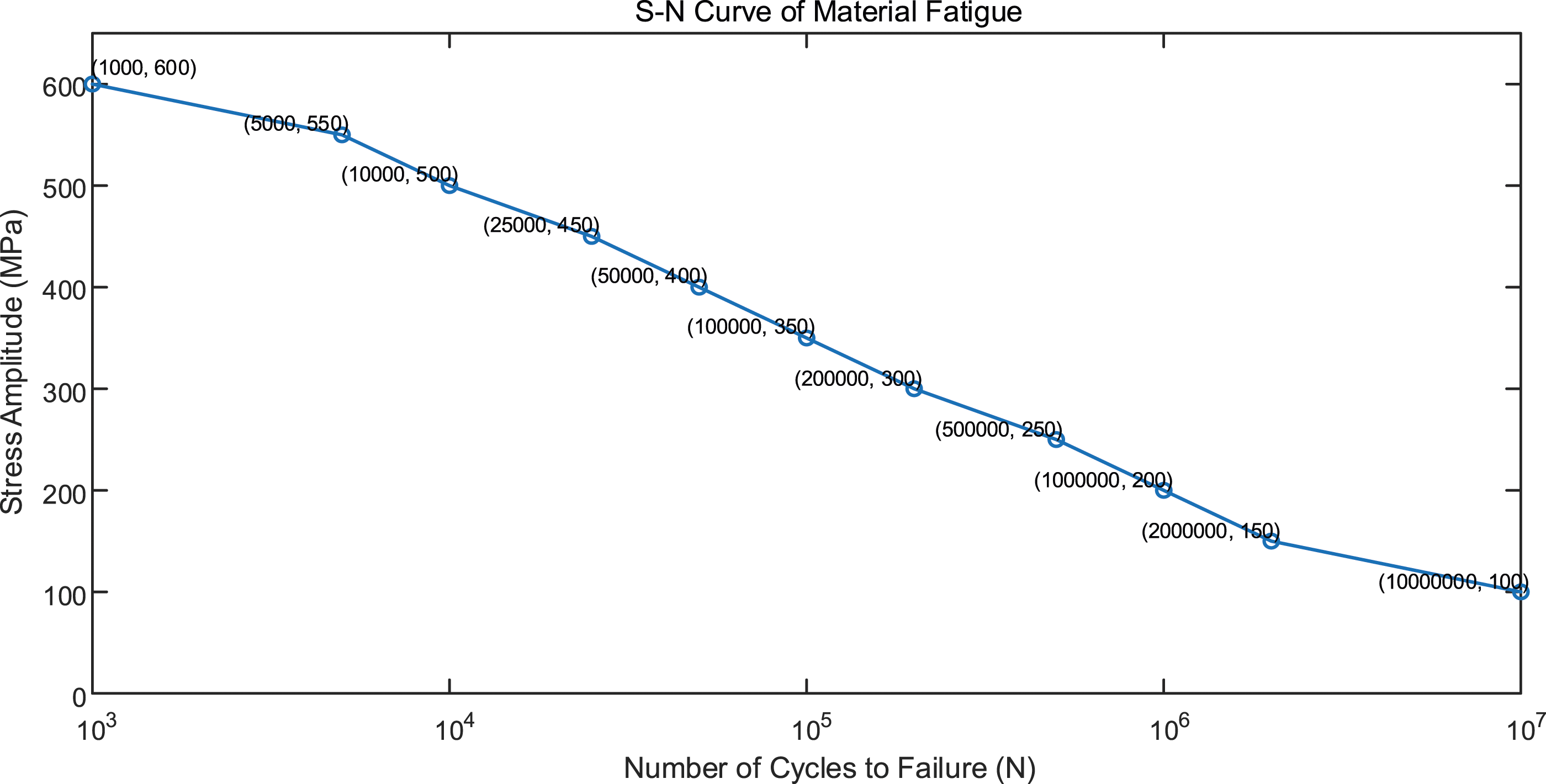

Research has shown that the fatigue limit of materials and the number of cycles show a specific regularity. According to the verification of existing experimental data, when the stress amplitude reaches or is lower than a certain critical value, although the fatigue life model assumes that materials can withstand unlimited numbers of cyclic loads under critical stress, this assumption may have limitations in practical applications. The fatigue limit of the actual material is restricted not only affected by the stress amplitude, but also may be restricted by environmental factors, loading frequency, surface defects and other factors. Therefore, assuming a material fatigue life tending to infinity under critical stress may be too idealized. The fatigue life of the material can tend to infinity, which means that at these stress levels, the material can withstand an infinite number of cyclic loads. Assuming that the fatigue limit of conventional metal materials is

In practical engineering applications, mechanical components are often under complex multi-axial stress states. Therefore, it is assumed that the fatigue behavior of materials can be uniformly described by equivalent stress. In order to simplify the analysis, this article uses von Mises stress28,29 as the equivalent stress, and its expression is:

In the design process, in order to ensure the safety and reliability of mechanical components in practical applications, the model needs to introduce a series of design constraints. The core content of design constraints includes strength, stiffness and cost. The following describes each constraint separately.
Strength constraints
30
are a basic requirement for mechanical design, which aims to ensure that components do not yield or fail under operating conditions. The actual stress in the component cannot exceed the yield strength or ultimate strength of the material. This constraint can be expressed as:

Stiffness constraints ensure that the deformation of mechanical components under stress conditions does not exceed the design allowable range, thereby avoiding excessive deformation that affects the normal operation of the equipment. Stiffness can be defined by the geometric dimensions and material properties of the component, and its deformation can be calculated using the following formula:

F is the applied load, L is the length of the component, A is the cross-sectional area, and E is the elastic modulus of the material. The geometric dimensions (e.g., cross-sectional area A and length L) of different mechanical components will vary according to the specific design requirements and industry specifications. For mechanical shaft components, their dimensions and material characteristics are usually determined according to ISO 6336 standards; while for supporting structural components, corresponding dimensions and geometric characteristics may be determined by ASME or DIN standards. Cost constraints are introduced into the model to control material costs, manufacturing costs, and other related expenses. The cost constraint is expressed as:

Establishment of mathematical model
Derivation of fatigue life model
The derivation of fatigue life model is based on Miner’s law,31,32 which is one of the classic theories describing the damage accumulation of materials under cyclic loads. According to Miner’s law, the fatigue damage accumulation of materials can be estimated by the known fatigue limit and stress amplitude, and the damage accumulation follows a linear law. Under a certain stress level, the fatigue limit of the material is set to

In practical applications, mechanical components usually experience complex load cycles, and different stress amplitudes have a cumulative effect on the fatigue damage of components. If the number of cycles experienced by a component under different stress amplitudes

Mathematical expression of mechanical properties and design costs
In the optimization design of mechanical parts, mechanical properties and design costs are two core indicators, and their mathematical expressions are an important basis for building optimization models. Mechanical properties are usually measured by the yield strength and ultimate strength of the material. If the yield strength of the material is set to

The expression of stiffness is closely related to the geometric dimensions and material properties of the component. Based on the elastic modulus E and the stress-strain relationship, the stiffness model can be constructed using the following formula:

In terms of the expression of design cost, multiple factors need to be considered comprehensively, including material cost, processing cost and fixed cost, which together constitute the total cost. It can be described by the following formula:

Among them,
Selection and optimization of model parameters
Basis for the selection of key parameters
In the process of constructing the optimal design model of mechanical components, this article clarifies the key parameters that significantly affect fatigue life, mechanical properties and design cost. These parameters include mechanical properties, geometric properties of components, and loading conditions. The mechanical properties of materials include yield strength, ultimate strength and fatigue limit. These indicators determine the safety and durability of materials under load. The geometric properties of a component, such as cross-sectional shape, length and thickness, influence its stress distribution and deformation behavior under stress. Loading conditions include static load and dynamic load and their cycle times, which are directly related to the fatigue behavior and performance of the component in actual use.
To effectively select these parameters, this article conducts a comprehensive literature review and consults the latest research results related to material fatigue properties33,34 and mechanical component design.35,36 By studying the fatigue behavior of different materials, this article summarizes the performance of various materials under specific conditions and provides theoretical support for the selection of model parameters. By conducting fatigue tests on existing materials, real fatigue life data were obtained, which provided an empirical basis for the selection of model parameters.
Setting optimization goals
After determining the key parameters that affect the performance of mechanical components, this article sets clear optimization goals. These goals include maximizing fatigue life, minimizing design costs, and keeping mechanical properties within acceptable ranges. Maximizing fatigue life is the main goal of the optimization design, which is achieved by rationally selecting materials, optimizing component shapes, and controlling stress concentration. This article takes into account multiple aspects such as material cost, processing cost and maintenance cost, and reduces costs by selecting cost-effective materials and optimizing production processes to ensure the economic feasibility of the design scheme.
The objective function of this article mainly considers the comprehensive evaluation of fatigue life, design cost and mechanical properties, which is expressed in the following form:

F(x) is the objective function value, C represents the total design cost of the component, and
Model solution and verification
Solution method
Selected optimization algorithm
To compare the performance of genetic algorithm (GA), 37 particle swarm optimization (PSO), 38 and simulated annealing (SA), 39 this article conducted an experiment. The specific goal of the experiment is to find the optimal design parameters under the set objective function and analyze the convergence speed and stability of each algorithm. This study selected a mechanical component optimization problem and focused on the design parameters of the gear, including the gear module, number of teeth, and fatigue strength of the material. The objective function is defined as a weighted combination of cost, fatigue life, and stiffness to minimize the design cost while maximizing fatigue life and stiffness.
To ensure the fairness of the experiment, the same parameters were set for the three algorithms. The population size of the genetic algorithm was set to 100, the crossover probability was 0.8, the mutation probability was 0.1, and the iterations were 200 times; the number of particles of the particle swarm optimization algorithm was 100, the speed range was set between [−1, 1], the inertia weight was 0.7, the individual and social learning factors were both 1.5, and the iterations were also 200 times. The initial temperature of the simulated annealing algorithm was set to 1000, the cooling rate was 0.95, and the maximum number of iterations was 200. These parameter selections are designed to enable the algorithm to fully explore the solution space and find the optimal solution.
Before implementing each algorithm, preprocessing was performed to standardize the input data to ensure that different algorithms run under the same conditions. Next, each algorithm was executed for 10 independent experiments to eliminate the influence of accidental factors. In each run, it can start from different initial conditions to improve the evaluation of algorithm performance. When recording the optimal solution, fitness value, running time and convergence process of each run, special attention can be paid to the performance of each algorithm under different iteration numbers, and the convergence curve can be drawn to intuitively analyze the convergence speed and stability of the algorithm. At the same time, the experiment performed statistical processing on the results of each run and calculated the mean and standard deviation of each algorithm to ensure the reliability and scientificity of the experimental results.
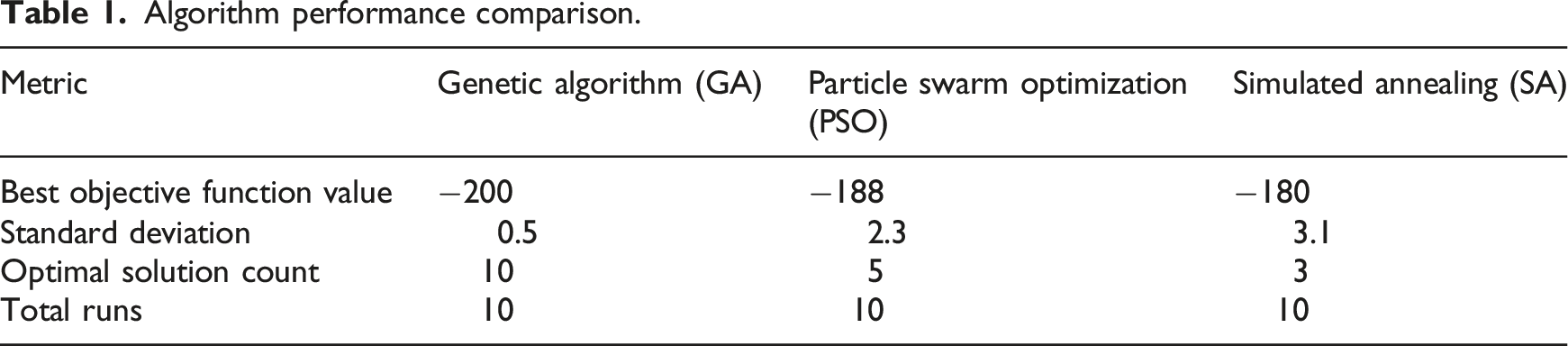
The experimental results are shown in Figure 2. The genetic algorithm performs outstandingly in terms of the quality of the optimal solution, with an objective function value of −200, while the objective function values of the particle swarm optimization algorithm and the simulated annealing algorithm are −188 and −180, respectively. In terms of convergence speed, the genetic algorithm is close to the optimal solution after 10 iterations, while the particle swarm optimization algorithm and simulated annealing algorithm take a long time to achieve relatively stable results. Algorithm performance comparison.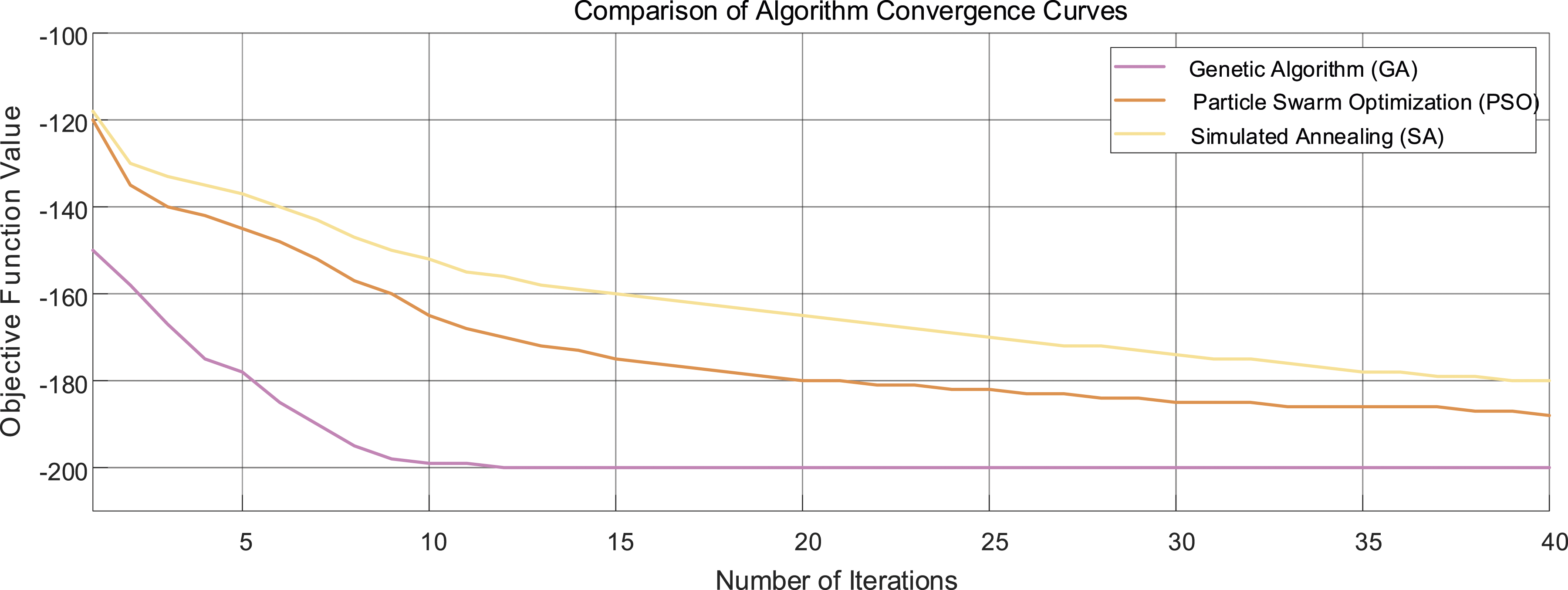
Algorithm performance comparison.
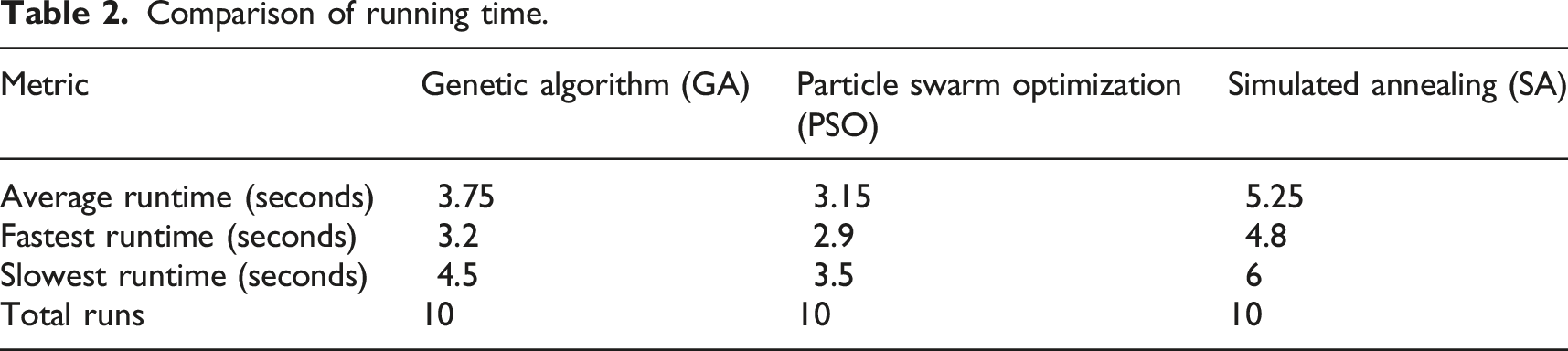
Comparison of running time.
Model solving process
In this section, the specific steps of using genetic algorithm to solve the mechanical component optimization design model are studied. The first step of model solving is to initialize the algorithm parameters. This article sets the population size to 100, the crossover probability to 0.8, the mutation probability to 0.1, and the maximum number of iterations to 200. These parameters provide the algorithm with an operational basis to ensure that the solution space can be effectively explored and convergence goals can be achieved.
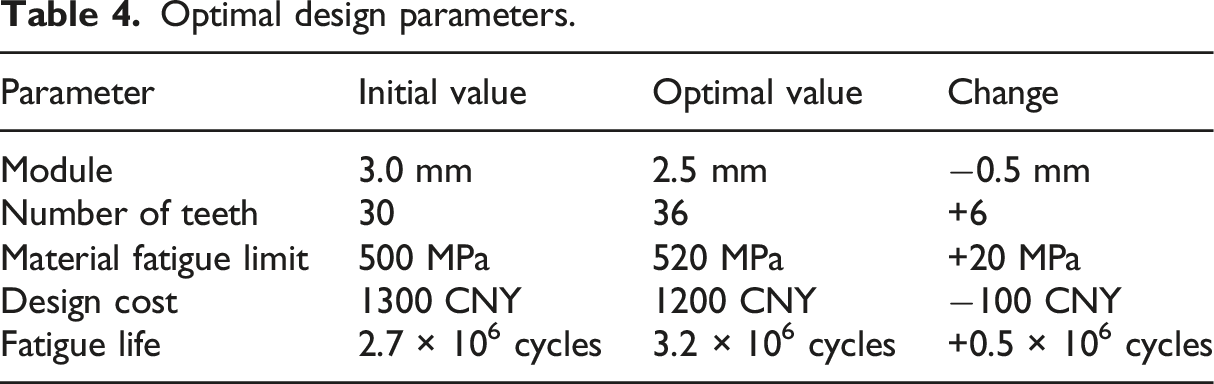
In the process of generating the initial solution set, this article constructs 100 individuals as the initial population. Each individual is composed of design parameters (such as module, number of teeth and material fatigue limit), and its value range is set according to actual engineering requirements to ensure that the generated individuals can reflect possible design choices. The randomly generated initial solution set provides basic data for the subsequent iterative process.
In the iterative solution stage, this article evaluates each generation of population and calculates the fitness value of each individual to evaluate its performance under the optimization goal. The calculation of this fitness value involves the objective function, which comprehensively considers fatigue life, design cost and stiffness. Through the selection operation, individuals with higher fitness are selected for reproduction to ensure the retention of excellent genes. Subsequently, this article performs crossover and mutation operations to generate new offspring individuals and update the population. The crossover operation uses a single-point or multi-point crossover method to combine the information of two parent individuals to generate new individuals; the mutation operation randomly changes some parameters of the individual to enhance the diversity of the population.
In each iteration, this article determines whether the convergence condition is met to determine the termination of the algorithm. The convergence condition is mainly based on the improvement of the fitness value and the maximum number of iterations. If the fitness value of the current population reaches the preset convergence standard, or the number of iterations reaches the upper limit, the algorithm can stop and output the individual with the lowest fitness value in the current population as the optimal solution. This optimal solution represents the best combination of parameters for mechanical component design under given constraints, which can maximize fatigue life, minimize design costs, and ensure the reliability of mechanical properties. Through this series of steps, the genetic algorithm effectively solves the optimization design problem of mechanical components and provides a scientific and reasonable design solution.
Example analysis
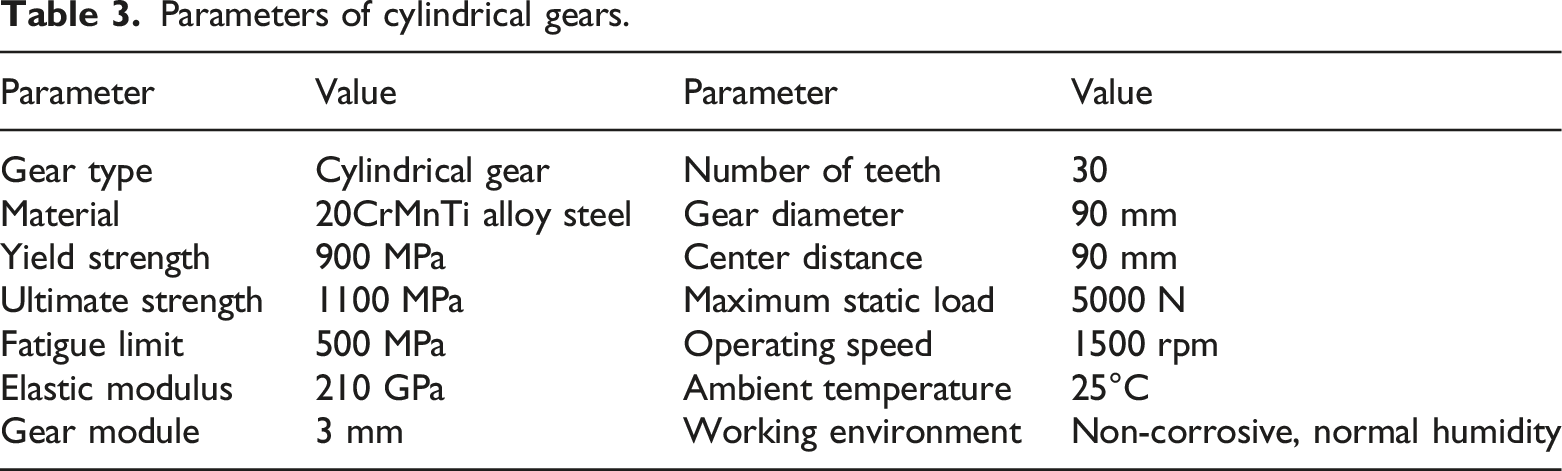
In the mathematical model of this paper, the material used is the common 20CrMnTi alloy steel, and the load type is static load or variable load. The applicable working environment requires no-corrosive, normal humidity conditions to ensure the accuracy and application of the model. For different types of mechanical parts or materials, the model may need to be adjusted accordingly to meet the specific engineering requirements and actual use conditions.
Selecting actual mechanical components for case analysis
Parameters of cylindrical gears.
Practical application and effect evaluation of the model
Optimal design parameters.
Verification and comparison
In this section, this article conducts a systematic experimental study on the structural optimization of the spreader twist lock to verify the effectiveness of the optimization scheme, and conducts a detailed verification and comparison between the traditional design method and the optimization scheme proposed in this article. The structure of the spreader twist lock is shown in Figure 3. Traditional design methods mainly rely on experience and experiments. The service life of the sling twist lock is tested through fatigue tests under real working conditions. In this process, the stress model of the twist lock is established using finite element analysis software. By applying actual loads, the working state of the twist lock is simulated and the stress distribution of each component is evaluated. The key to this method is accurate model construction and in-depth understanding of material properties. When using the S-N curve to estimate fatigue life, the relationship between fatigue limit and stress amplitude is calculated to obtain the theoretical life of the twist lock. The research results show that the weakest position of the twist lock fatigue life is located at the first thread. In order to improve the problem of uneven load distribution on the thread teeth, the traditional method proposes to open an annular groove at the bottom of the nut to optimize the load transfer and strive to improve fatigue performance through structural adjustment. Spin lock for slings.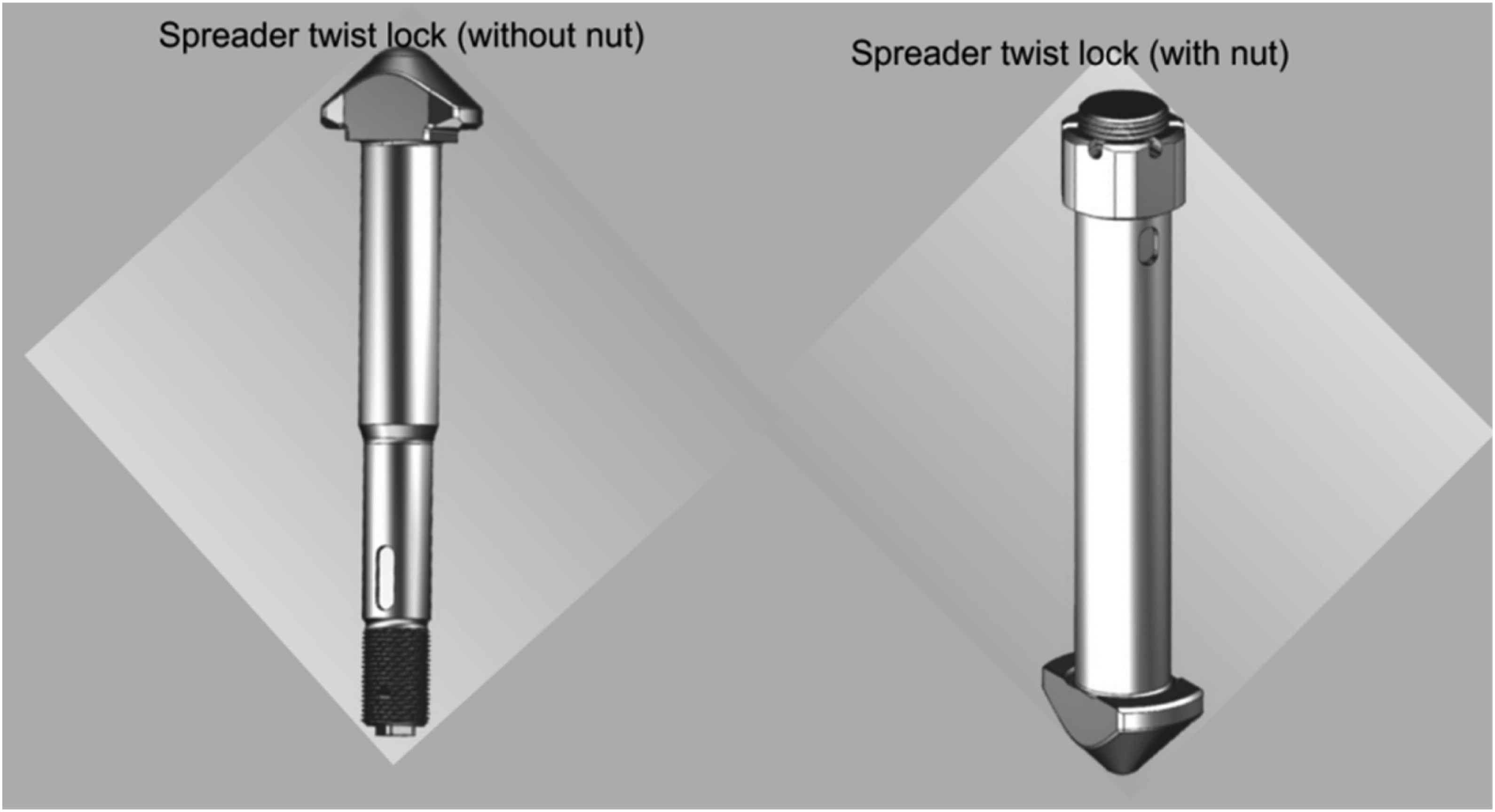
In contrast, this article adopts a more systematic optimization design method. First, a mathematical model is established and the design parameters are optimized in combination with a genetic algorithm. This method not only considers fatigue life and design cost, but also comprehensively considers the mechanical properties of the material. The study redesigns the geometry of the bottom of the nut to form a layered structure so that the load can be more evenly transmitted to the middle thread through a specific pad.
The comparison results are shown in Figure 4. Before optimization, the service life of the sling lock was 24,000 hours, while under the traditional optimization method, the maximum stress of the first circle was 501 MPa and the service life was 39,587 hours. After the optimization design in this article, the maximum stress was reduced to 485 MPa and the service life was significantly increased to 48,221 hours. The traditional method fails to fully consider the uniformity of stress distribution during the optimization process, resulting in a high maximum stress level, which directly affects the fatigue life of the component. In contrast, the optimization scheme in this article effectively adjusts the design parameters and reduces stress concentration by establishing a mathematical model and applying a genetic algorithm. At the same time, it significantly extends the life while improving material properties. Scheme comparison.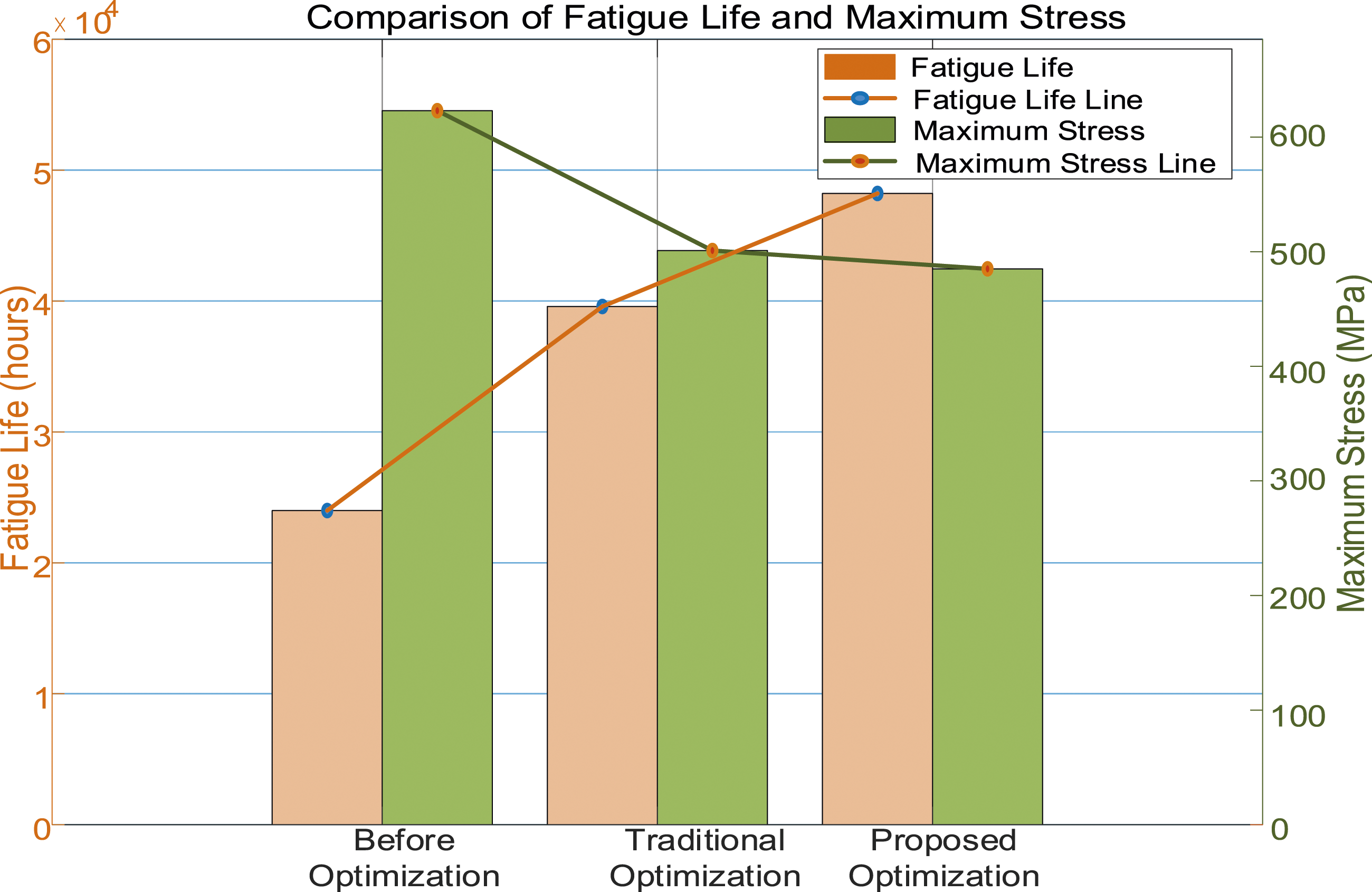
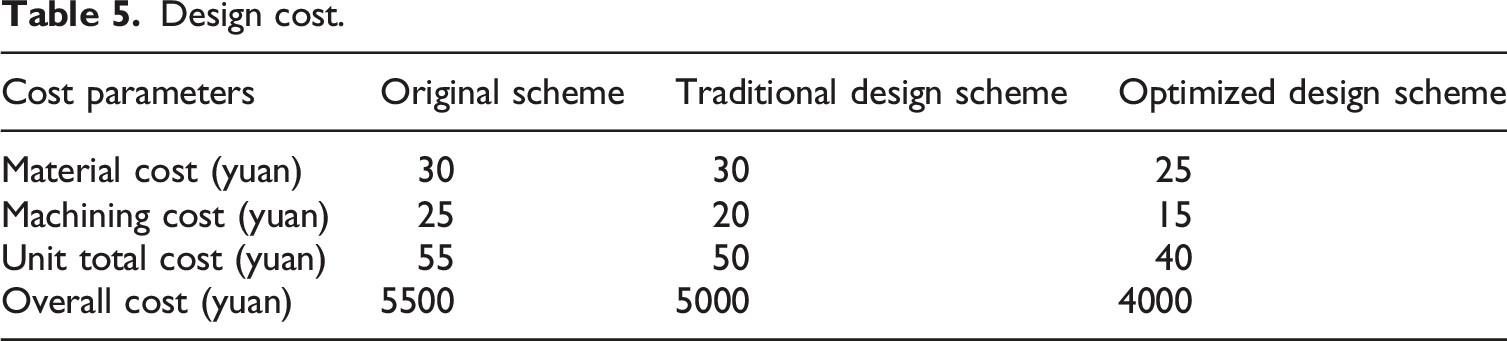
When conducting the design cost experimental analysis, this article made a detailed estimate of the actual production cost of the sling twist lock. The production cost of the sling twist lock is affected by many factors, including material type, processing technology, production scale and design complexity. In this experiment, it is assumed that the material cost of each twist lock is 30 yuan and the processing cost is 25 yuan. Therefore, the overall cost of the ordinary sling twist lock is set at 55 yuan.
Design cost.
Conclusions
With the improvement of the requirements of mechanical parts design, fatigue has become an important factor in design. In this study, we successfully established the mathematical model of the optimized design based on the material fatigue characteristics by using the standardized S-N curve. We derive the fatigue life model with Myer’s law and propose a comprehensive optimization model based on considering strength, stiffness and cost constraints. The experimental results show that the optimized design method has significant advantages in improving the fatigue life of mechanical parts, and also shows good results in reducing the cost. The experimental results show that the service life of the optimized sling torsion lock is increased from 24,000 hours to 10,000 hours. However, the optimization design of mechanical parts is still a complex and multi-level problem, future research can further explore and improve the existing model, into more factors affecting the fatigue life, such as temperature and loading frequency, , and try to combine other advanced optimization algorithms, such as genetic algorithm or particle swarm optimization algorithm, in order to further improve the solving efficiency and model accuracy. These improvements are expected to provide more practical solutions for wider engineering applications.
Statements and declarations
Footnotes
Conflicting interests
The authors declared no potential conflicts of interest with respect to the research, authorship, and/or publication of this article.
Funding
The authors received no financial support for the research, authorship, and/or publication of this article.