



Abstract
In today’s rapidly evolving job market, university students face unprecedented challenges in navigating their career paths. Traditional career guidance approaches sometimes fail to provide students with the knowledge and skills necessary for successful transitions from academics to the profession because of the changing nature of industries and the growing complexity of job possibilities. The study aims to explore the integration of AI and ML in providing predictive career guidance and entrepreneurial development for university students. This study proposes a novel Wild Horse Optimized Resilient Extreme Gradient Boosting (WHO-RXGBoost) model to predict the personalized recommendations that guide students in their career choices and entrepreneurial endeavors. University records and questionnaires are used to collect demographic data about students as well as information about any prior employment or entrepreneurial experience. The data was pre-processed using data cleaning and normalization using a robust scaler for the obtained data. The PCA feature extraction method is utilized to extract the datasets. By using this methodology, students can efficiently travel a massive amount of employment information by creating an information recommendation system that is customized to satisfy their requirements. The results indicate the proposed method outperforms traditional algorithms in providing relevant and timely career insights with metrics, such as F1-score (90%), precision (93%), accuracy (95%), and specificity (91%). User satisfaction indicates that technology considerably increases students’ experiences in entrepreneurship and CP. This research contributes to enhancing career outcomes and encouraging an entrepreneurial spirit among university students by providing a practical and effective response to the job issues experienced by students.
Keywords
Introduction
The college students’ EE affects not only how they grow as individuals but also the potential growth of the country’s economy and society. 1 To improve CP for college students in an era of innovation and entrepreneurship, the government, institutions, and graduates must collaborate and support each other. 2 In today’s fast-paced world, creativity and entrepreneurship are crucial for cultural growth. 3 As industries evolve, individuals with talents in innovation and entrepreneurship are increasingly sought after. 4 Simultaneously, the unavoidable presence of vast amounts of information has affected perception, investigation, and gain insights from various aspects of lives. 5 The exploration focuses on massive information research and information sharing for innovative and entrepreneurship education, aiming to explore the transformative capability of incorporating large information evaluation into academic standards to promote innovation and entrepreneurship. 6 High education institutions have the demanding situation of imparting college students with both theoretical know-how and practical abilities to allow them to thrive in an unexpectedly changing professional landscape. 7 Using large data in education allows for tailored education to meet the needs of the workforce. This exploration focuses on exploiting information-sharing components to enhance innovation and entrepreneurship education through multilayered data evaluation. 8 Researching various information sources can provide valuable insights regarding pupil commitment, learning designs, and academic interventions. 9 Institutions can adapt their strategies to address the difficult needs of aspiring innovators and business humans by tapping into the wealth of statistics generated inside the educational system. 10 A course content recommendations system is a form of recommendation algorithm developed especially for educational purposes. 11 These systems use data consisting of student overall performance, studying targets, direction materials, and options to create tailored courses and resources. 12 These technologies can also help entrepreneurs develop by identifying new marketing possibilities and providing recommendations on powerful launch techniques. Predictive profession recommendation employs data-driven strategies to forecast future jobs and skill requirements, giving individuals insights into ability career paths. 13
The study’s goal is to investigate the use of AI and ML in giving predicted career advice and entrepreneurial growth to university students. The main contributions of this work are as follows: (1) Research collects demographic data as well as information about students’ previous employment or entrepreneurial experience using university records and questionnaires. (2) In data preparation, the collected data is cleaned and normalized using robust scaler techniques to ensure consistency and clarity. PCA is used to extract features from processed data, which helps the model make more accurate suggestions. (3) Research proposed a novel WHO-RXGBoost model for career guidance and entrepreneurial development to university students. (4) The proposed strategy improves the accuracy of career guidance and entrepreneurial development for university students compared with the traditional approaches.
Related work
Using ML and AI approaches, 14 we presented a framework for student career advice. The NB performed predictions with 91.2% and 90.7% accuracy, outperforming DT, SVM, LR, and KNN, combined models used in the study. ML approaches could be utilized to create an educational framework that understands pupils’ and parent inputs and intelligently delivers results.
The midterm exam results of undergraduate students were used as the raw material for the novel model, which was built on ML algorithms to forecast the pupil’s last exam grade. 15 Predicting the student’s final exam marks involved calculating and comparing the performances of various machine learning techniques. The department, faculty, and midterm exam marks were the only three categories of data used to make the forecasts.
Using multilayer perceptron ANN models with a back-propagation approach, 16 they classified 655 individuals from a privately owned institution based on their total grade point average, cognitive preservation, and completed academic success. The results showed a high level of accuracy across all classes.
To enhance the curriculum and methods of EE, develop students’ entrepreneurial attitude and aptitude, as well as reserve and nurture upcoming professional talents in the field of social security legislation. 17 Using a questionnaire and regression analysis, an appropriate model based on the concept of proactive personality and planned action was built to investigate the relationship between students’ entrepreneurial psychology and aspirations.
The findings revealed that entrepreneurial learning influences entrepreneurial inclinations. The hybrid ML model that combined RF and LR algorithms was used to evaluate the intensity of entrepreneurial education. 18 Information was collected from 25 important high education institutions across various provinces. The research has shown that colleges were incorporating entrepreneurship skills into their curriculum, as seen by higher rankings for curriculum creation and skill enrichment. 19 Using the Kaggle educational dataset, they investigated the applicability of several algorithms, such as Random Forest, C5.0, CART, and ANN. The results showed that ML was a useful tool for predicting students’ adaptability to online entrepreneurship instruction, with excellent accuracy rates.
Improve college students’ entrepreneurial psychology education by developing a personality development-based recommendation algorithm that employed the PMF technique and DNN. 20 There were 518 students separated into two groups: EG and CG. The EG received the optimized recommendation system. The results demonstrated that the EG had significantly higher entrepreneurial intention and psychological resilience than the CG, proving the usefulness of the suggested algorithm above traditional methods. 21 Methods include developing classifiers using algorithms such as SVM, DT, SGD, LR, and Neural Networks. The results were evaluated using accuracy, confusion matrix, heat map, and classification reports. ML was used to forecast project performance based on an individual’s inclination toward entrepreneurship. 22 After applying algorithms, such as lasso, ridge, and random forest, to analyze 185 observations, the findings indicate that lasso was the most effective model. It pinpoints social self-efficacy, appearance self-efficacy, comparativeness, and proactiveness as important variables. To create a hybrid model for predicting student employability that combines a DBN-SR. 23 The method entails preprocessing student data to ensure consistency, optimizing feature selection with the Crow search algorithm, and learning intrinsic features using DBN. The results show that the DBN-SR model achieved greater than 98% accuracy, surpassing deep autoencoder and DNN models by 2.5% and 5%, respectively.
The model that forecasted how DL activities affect university students’ job choices and entrepreneurial aspirations, as well as offering several strategic recommendations, was developed. 24 The findings suggested that DL could assist undergraduates in better planning their lives, developing their business skills for their futures and strengthening their entrepreneurial skills. The method not only offered a unique viewpoint on academic research, but it also provided practitioners with valuable insights and tools. 25 The K-means clustering and DT were used to analyze student engagement, influential factors, collaborative relationships, and forecast outcomes in the educational system. The result showed that K-Means achieved 75% clustering precision and DT obtained 82% accuracy.
The purpose of the work was to improve the accuracy of interest inventory-based career choice prediction using machine learning. 26 They investigated 81,267 employed and unemployed people and compared the accuracy of a classic interested profile method to a novel ML-augmented approach for forecasting occupational classification and vocational desires.
To illustrate the practical utility of our work, we performed a comparative analysis with existing AI and ML models used for career guidance. For example, while conventional models such as Random Forest and Decision Trees provide reasonable predictive capabilities, they often lack adaptability and responsiveness to individual student profiles. In contrast, the WHO-RXGBoost model’s advanced optimization techniques enable it to deliver personalized recommendations that can dynamically respond to students’ changing career needs, showcasing its potential impact in real-world educational settings.
Methodology
The methodology section includes data collection, and data gathering from university students for predictive career and entrepreneurship. Data preprocessing techniques, such as cleaning and normalization, and the robust scaler used in the normalization were used to assure precision. The Wild Horse Optimized Resilient Extreme Gradient Boosting (WHO-RXGBoost) model was then created to deliver personalized guidance. The overall flow of the model is shown in Figure 1. This strategy allowed students to effectively traverse substantial job information, personalizing insights to their career and entrepreneurial goals. Workflow of the designed model.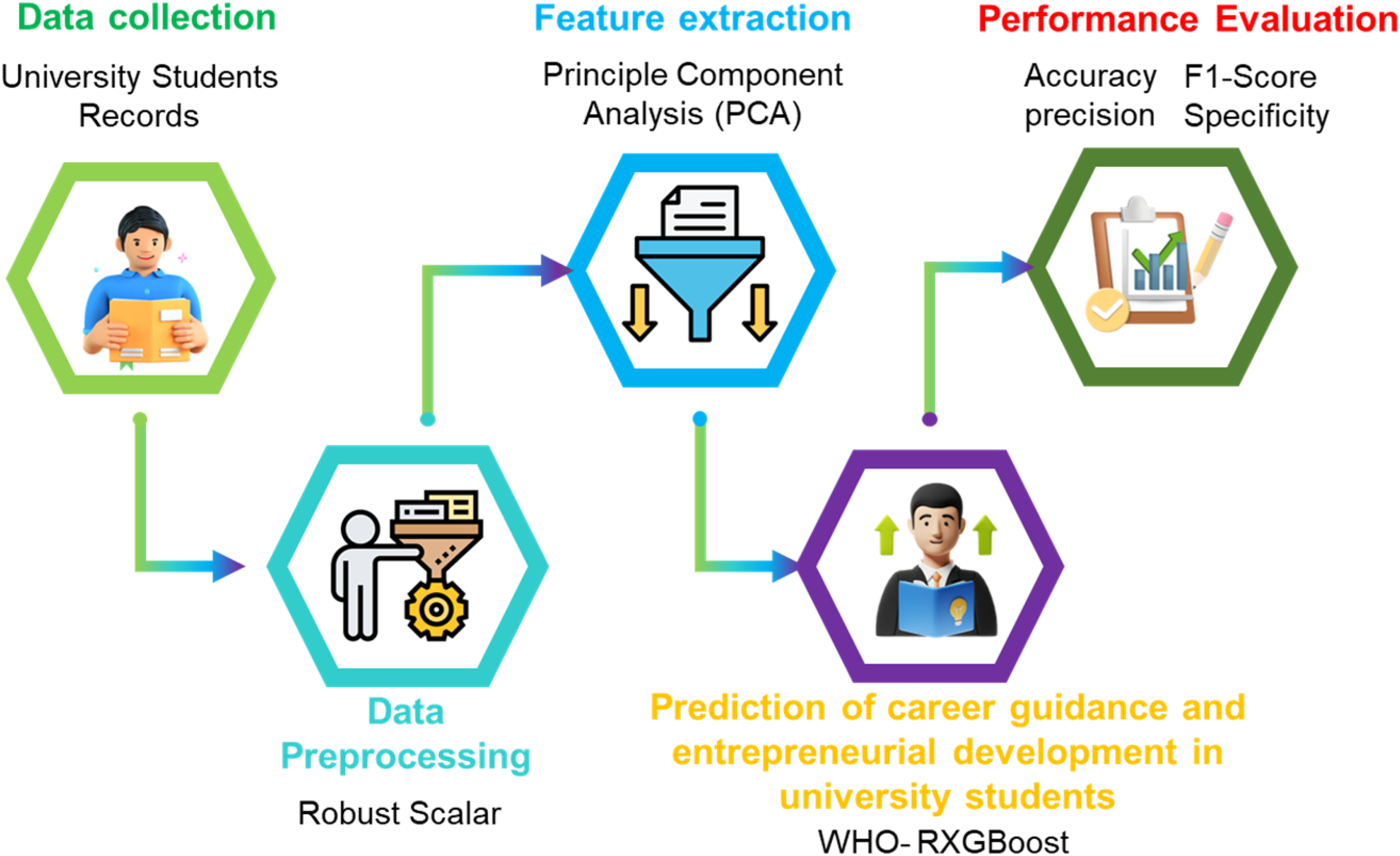
Data collection
The total number of university students is 1000. The dataset aims to aid in forecasting career and entrepreneurial support by providing insights into how ML models could enhance students’ career planning and entrepreneurial success. The dataset is gathered from Kaggle source: https://www.kaggle.com/datasets/ziya07/career-guidance-and-entrepreneurial-development/data.
Data preprocessing using cleaning and robust scaler
Data preparation is the process of cleansing and organizing information to increase its reliability, permitting dependable and efficient model overall performance.
Cleaning
Data cleansing is an important step in the process since it assures that the dataset is accurate with high quality. This consists of disposing of duplicate entries to preserve uniqueness and repairing missing values through imputation strategies, and formats to maintain consistency throughout the dataset. Exceptions are identified and addressed to prevent distortion in the evaluation, and the cleaned dataset is proven to ensure that each entry is correct. These actions increase the dataset’s integrity, the prediction model’s performance, and the findings’ validity.
Robust scaler
The normalization method is the procedure of enhancing the values of functions or variables in a dataset to achieve a steady scale or range. This is crucial for improving the performance of prediction models. Normalization is applied to achieve a high level of classification accuracy while imparting predictive career guidance and entrepreneurial development to college students. This procedure eliminates features that are excessively noisy or irrelevant to the career guidance. Robust scaler was used to normalize the data. This technique scales features by addressing outliers in the data. The formula for the robust scaler is provided in (1).

In the above instance,
Feature extraction using PCA
The PCA methodology is a statistical method for mapping multiple specific variables to a few broad characteristics. These PCA-based extensive criteria are not related to one another and can correctly describe original fault features. PCA can successfully highlight significant elements impacting career selections and entrepreneurial aspirations in university students by providing predicted career advice and encouraging entrepreneurial development. Demographic characteristics, academic achievement measures, and prior experiences, for example, can be combined into principal components that effectively describe underlying trends and patterns. This simplified information enables more precise projections and targeted recommendations, allowing students to better manage their career plans.
The algorithm for extracting sensitive features for a given feature vector set

Determine the covariance matrix

Determine the eigenvalues

Compose the first


Wild Horse Optimized Resilient Extreme Gradient Boosting (WHO-RXGBoost)
The Wild Horse Optimized Resilient Extreme Gradient Boosting (WHO-RXGBoost) method is a unique algorithm for improving predicted career guidance and entrepreneurial growth among university students. This method combines the robustness of Extreme Gradient Boosting (XGBoost) with a new optimization strategy inspired by wild horse behavior, which represents adaptability and agility in adverse circumstances. XGBoost is a sophisticated machine-learning algorithm that is well-known for its accuracy and efficiency when working with structured data. However, its performance may be considerably enhanced by optimizing hyperparameters, which is where the WHO algorithm comes in. The Wild Horse Optimization (WHO) method mirrors wild horses’ nature of adapting to their surroundings and overcoming difficulties. WHO-RXGBoost algorithm is shown in algorithm 1 and uses an optimization technique to determine the most effective hyperparameter configuration, resulting in improved model performance. The WHO-RXGBoost combines the strength of resilient machine learning techniques with an effective optimization strategy, resulting in a powerful tool for advising university students on their career paths and entrepreneurial endeavors. This novel method not only improves individual outcomes but also benefits the overall economic environment by developing a new generation of qualified professionals and entrepreneurs.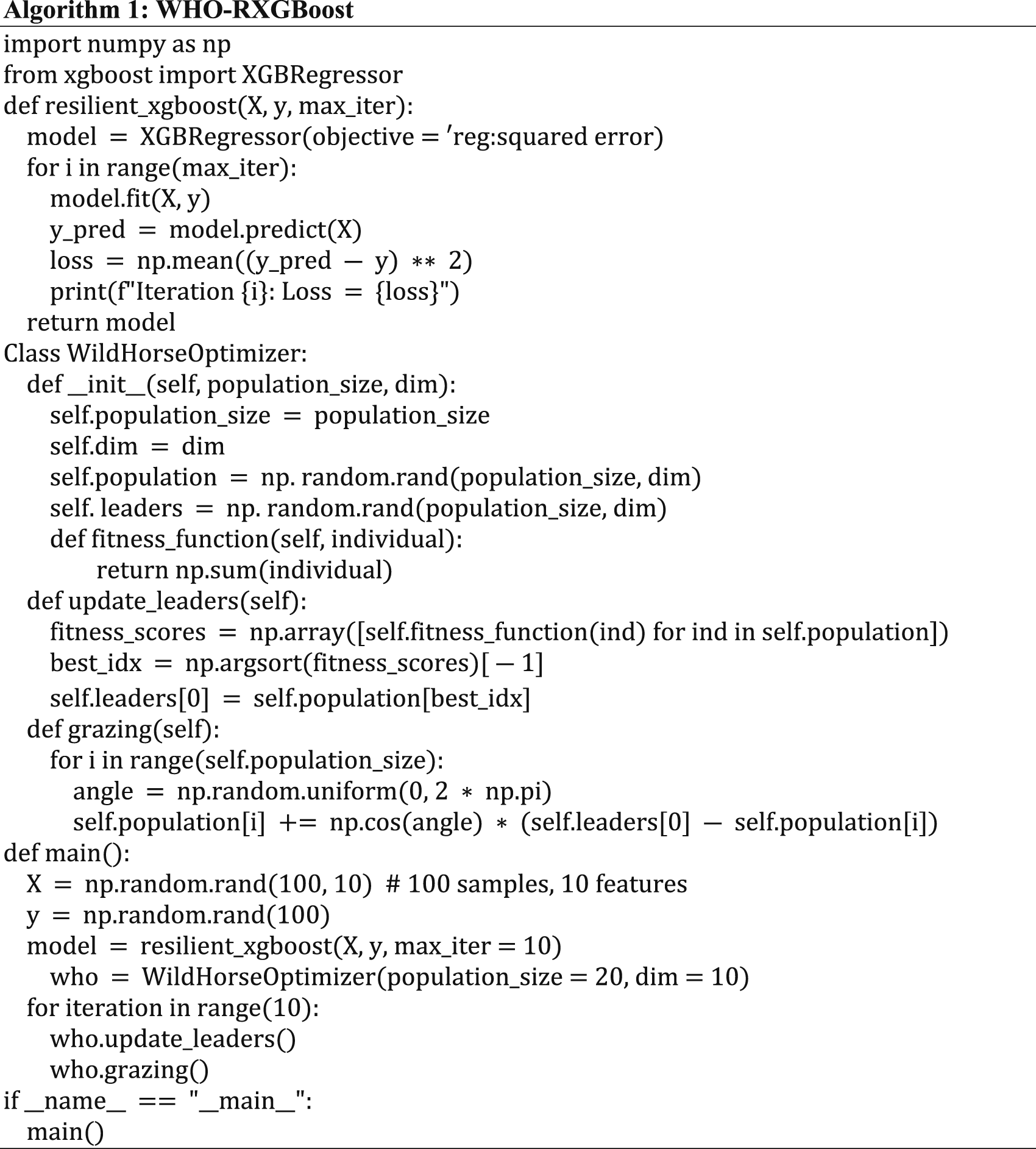
Resilient extreme gradient boosting
The Resilient XGBoost algorithm is a cutting-edge machine learning technique that is ideal for predictive career guidance and entrepreneurial development. XGBoost can evaluate huge and diverse collections. It discovers patterns and correlations between individual characteristics and successful career paths or business endeavors using historical data training. The algorithm’s capacity to handle complicated, high-dimensional data while producing interpretable results makes it a perfect tool for promoting individual career development and entrepreneurial success. The XGBoost method is a well-designed gradient-boosted DT technique that offers cutting-edge benefits in ML. The XGBoost algorithm excels at handling sparse data while maintaining high accuracy. In the research, XGBoost is used to address high-dimensional assembling career development and entrepreneurial development. A resilient XGBoost algorithm is then suggested to generate an accurate prediction in equation (7).



In equation (8),

The reduction function is trained using iterative methods. For the

The XGBoost technique adds



Using the XGBoost method can identify the significance of students’ careers. However, the model and feature importance are approximate and may not be congruent with empirical information. To improve the XGBoost model, use empirical knowledge to adjust feature importance and normalize weights.
Wild horse
Wild horse (WH) can examine a wide range of collections, including individual abilities, interests, and market trends, to predict career paths and promote entrepreneurship. By modeling the movement of wild horses, the optimizer discovers and exploits prospective career routes and entrepreneurial prospects, providing the most promising options for users. This dynamic method improves decision-making processes by providing personalized career assistance and cultivating entrepreneurial skills that are tailored to the changing demands of the labor market.
The WHO imitates how wild horses behave. Non-terrestrial horses are referred to as wild horses. They reside in two groups: a family group for mares, or female horses, and a separate group for stallions, or male horses. Between the family group and the lone group, mating takes place. Foals, or young horses, are first concerned with grazing. After leaving their home group, female foals join other groups. Once a male colt reaches maturity, they are referred to as stallions. Stallions, however, joined just one group out of civility. Honesty, in the feeling that incest is avoided by assembling the stallions into a single group. The act of prominent rulers can reach water holes, while other less prominent leader’s members must wait for hours, as demonstrated by their pursuit of water during dry seasons. Although mares are the leaders of their families, they are nonetheless subservient to stallions and must obey their chosen leader.
Initialization of population and selection of leaders
The

Groups
Grazing actions
Equation (2) depicts the grazing behavior in equation (16).

The present situation of a participant’s group is denoted by


The horse mating activity
Equation (17) presents the behavior of decency and mating.

Leadership in groups
The leader’s party must steer the others to a suitable location near the water. Leaders fight over water for the dominant category, preventing others from using it until they depart. Where
Leadership selections and exchange
The leaders are first selected at random. The computer eventually chooses a leader from the fittest populace.
Result and discussion
Values of parametric.
Satisfaction rate
Figure 2 presents satisfaction ratings in multiple categories for a program, service, or platform. Users report high overall satisfaction (90%) and ease of use (90%), implying a generally favorable experience. Improvements in career planning (80%) and suggestion relevancy (85%) indicate that the application is effective in supporting users’ professional development. Enhanced entrepreneurial aspirations (75%) demonstrate moderate support for pursuing entrepreneurial endeavors, although increased knowledge (70%) indicates a need for educational content development. User involvement is 78%, showing potential for deeper interaction, while a very high future usage rating (95%) indicates great loyalty and intent to continue using the product. Performance of satisfaction rating.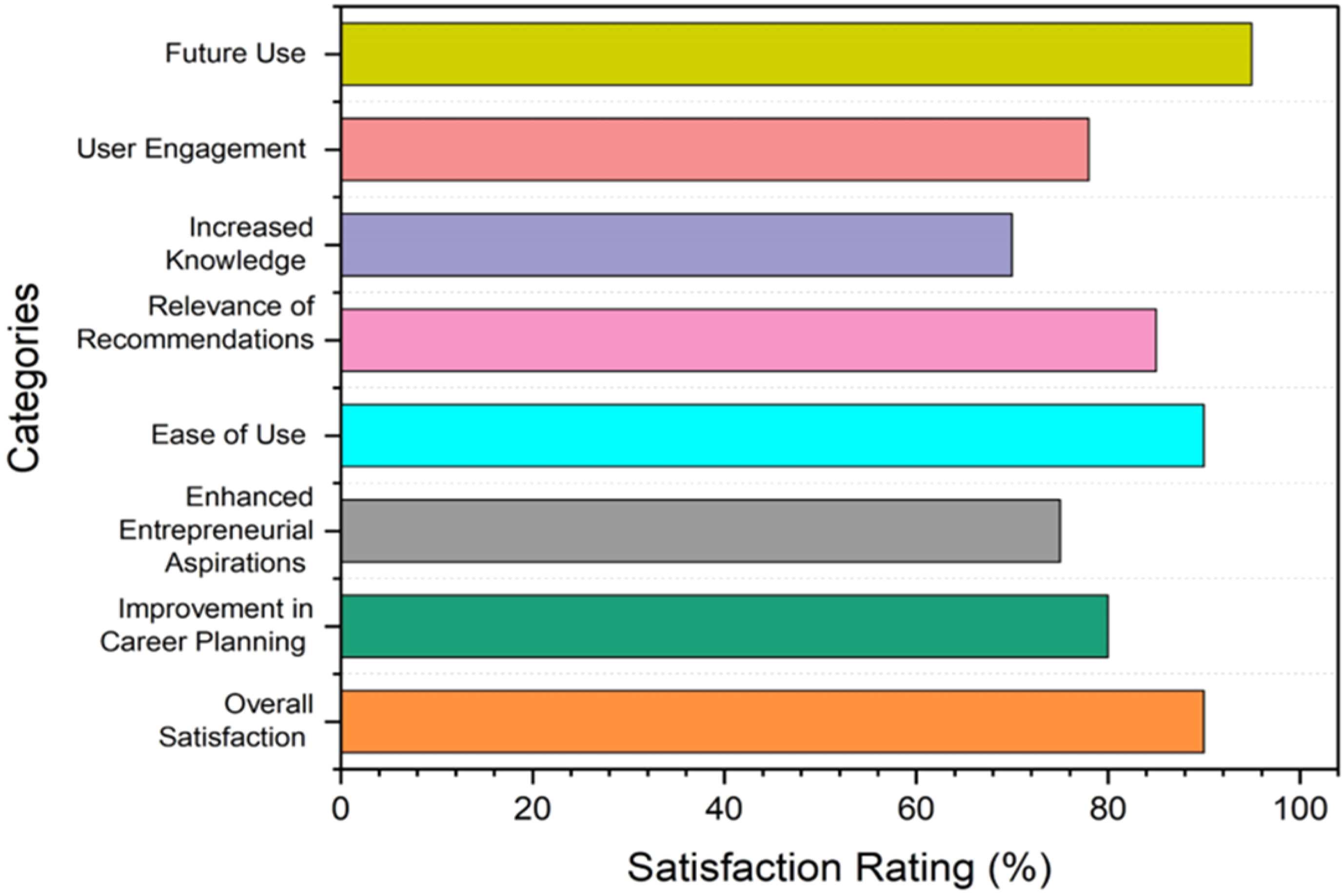
Precision
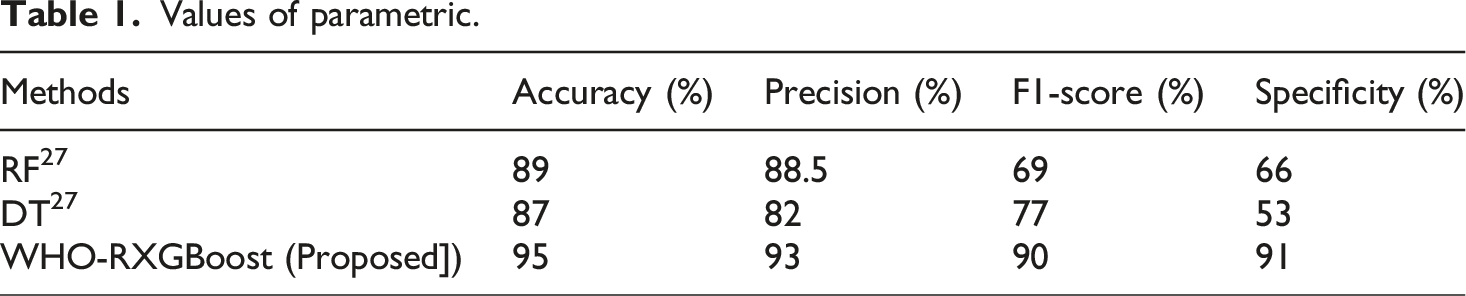
Precision is a model’s ability to precisely identify good outcomes associated with predictive career guidance and entrepreneurial development, particularly in terms of instructional activities that are considered advantageous by the framework. The computation’s total number of true positives is calculated by dividing it by the entire number of actual positives. Figure 3 compares the innovative approach’s precision to existing approaches and evaluates its performance. RF and DT attained precision rates of 88.5% and 82%, respectively. When compared to other ways, the precision of the proposed method WHO-RXGBoost was 93%. These findings suggest that the system significantly enhances and improves predictive career advice and entrepreneurial development when compared to earlier approaches. Performance of precision.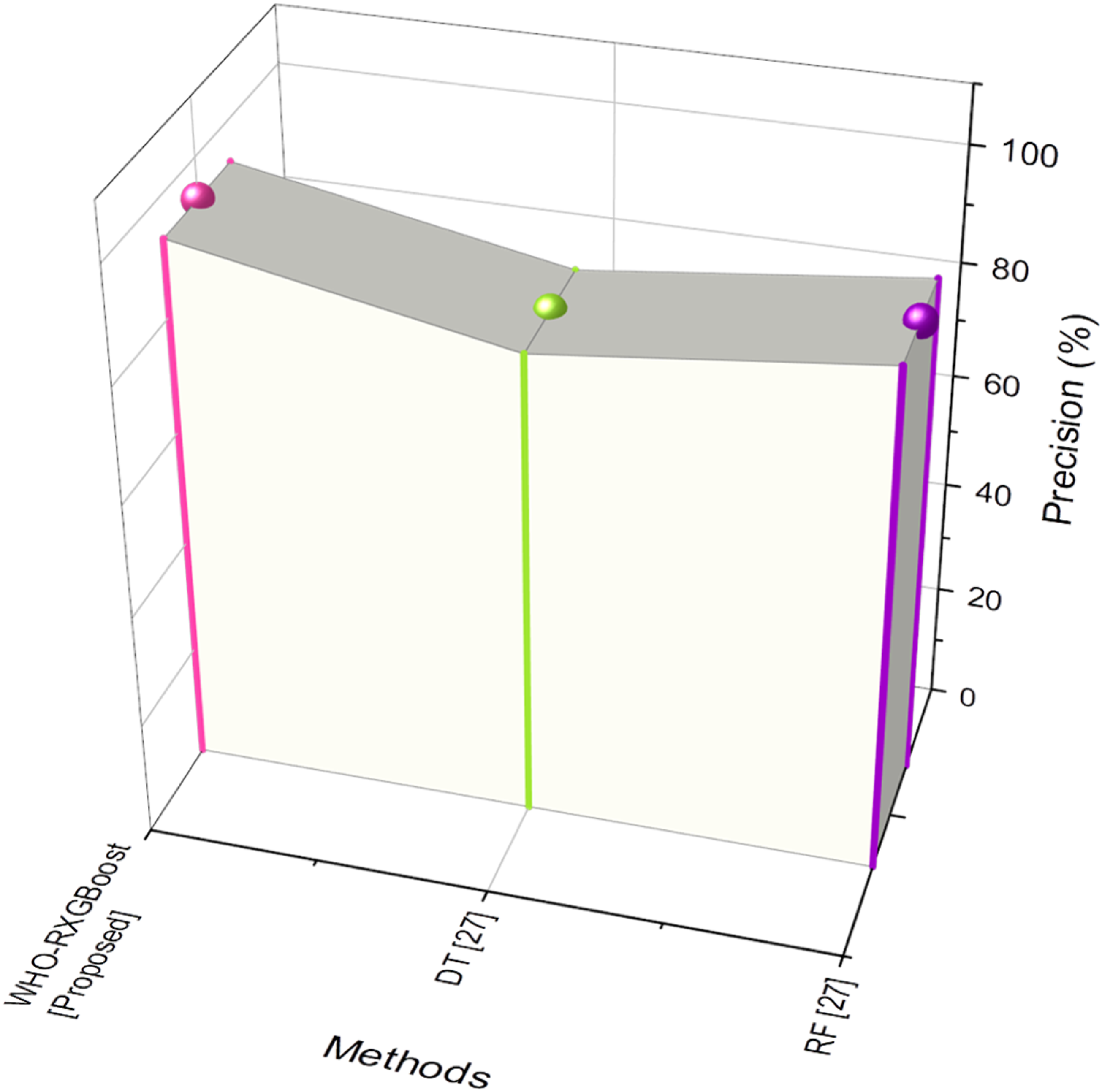
Specificity
Specificity is a statistical measure used to assess the success of tests. It indicates the percentage of genuine negative situations identified correctly by the test. Specificity could be used to correctly identify persons with great potential for entrepreneurial success while ensuring that others who are not well-suited to entrepreneurial paths are not misled. This would entail employing highly detailed predictive models or evaluations, eliminating false positives, and directing only individuals with the necessary traits and talents toward entrepreneurial opportunities, resulting in more tailored and effective career advice. WHO-RXGBoost determines the overall specificity of a model’s predictions. Figure 4 assesses and compares the specificity of the proposed methodology to existing approaches. The specificity rates for RF and DT were 66% and 53%, respectively. In comparison, the proposed WHO-RXGBoost approach produces a specificity of 91%. Performance of specificity.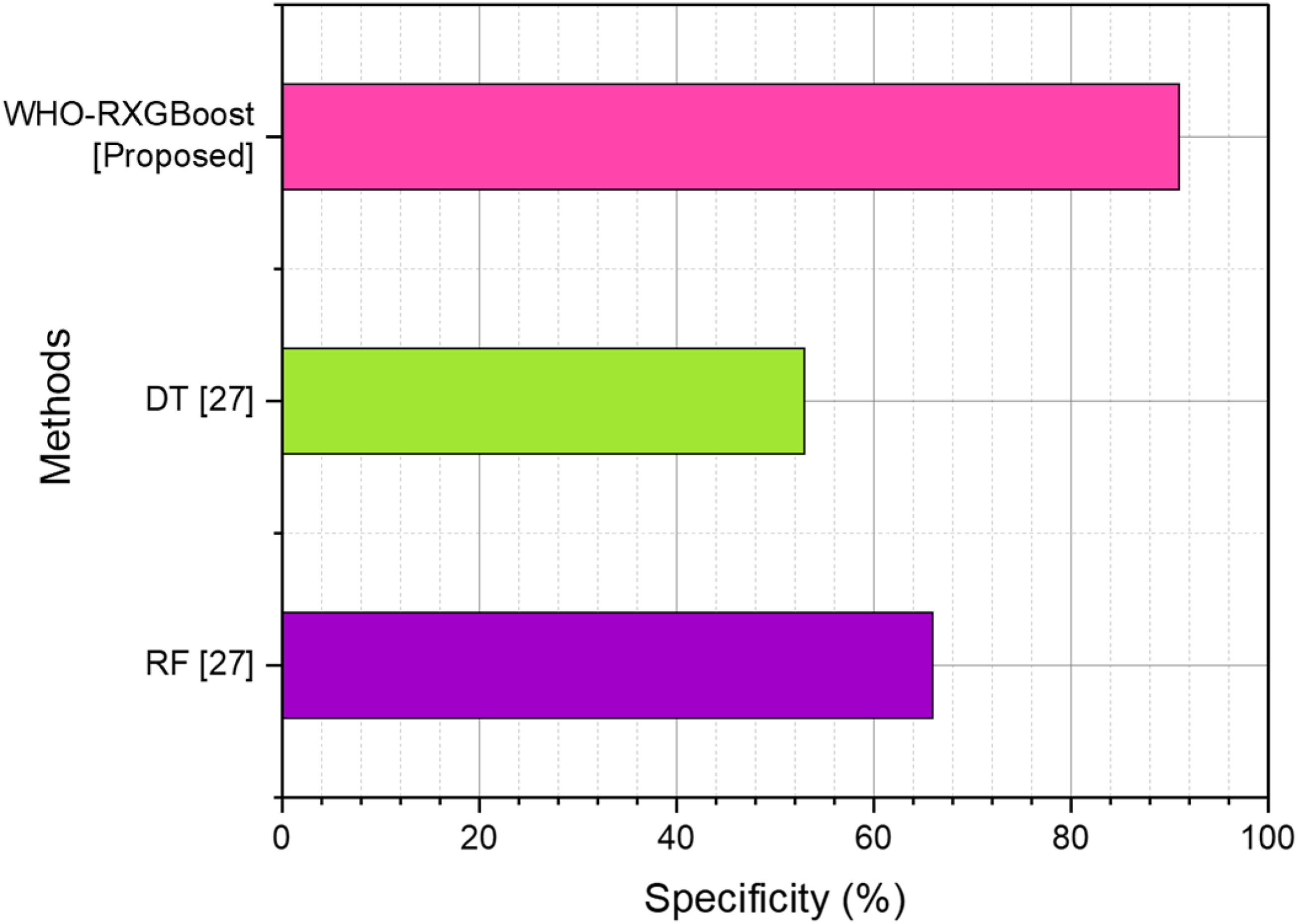
Accuracy
A classification model’s total performance is evaluated using a statistical parameter known as accuracy. It denotes the model’s fraction of correct predictions, including true positives and true negatives among all forecasts. Accuracy is the proportion of right predictions generated by a predictive model regarding career guidance and entrepreneurial growth, indicating how well the model detects individuals’ possible career routes or entrepreneurial prospects. Figure 5 assesses and compares the accuracy of the proposed methodology to existing approaches. The accuracy rates for RF and DT were 89% and 87%, respectively. The proposed method, WHO-RXGBoost, uses AI and machine learning approaches to career guidance and entrepreneurial development for student outcomes, with a 95% accuracy. Performance of accuracy.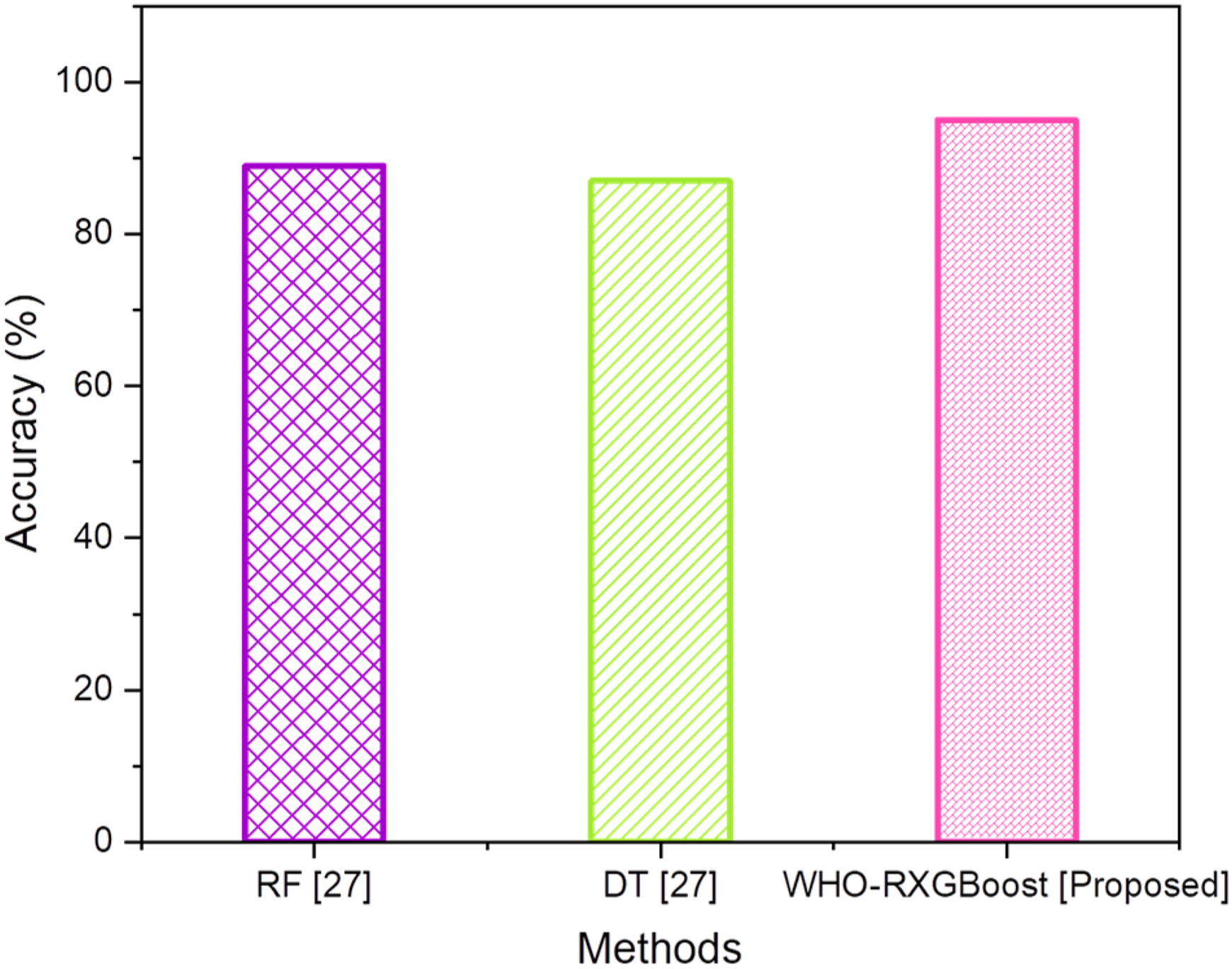
F1-score
A single score that strikes a balance between recall and accuracy reflects the model’s capacity to reliably predict students’ career guidance and entrepreneurial development motions in college students while minimizing false positives and negatives. A high F1 score is required to ensure consistent performance and feedback when measuring instructional actions in career guidance classes. Figure 6 shows the F1-score for the standard approaches: RF (69%) and DT (77%). In comparison, the proposed approach produces an F1 score of 90%. These results demonstrate that the suggested technique outperforms current strategies for optimizing instruction in career guidance and entrepreneurial development. Table 1 shows a full depiction of the F1-score, specificity, accuracy, and precision metrics. Performance of F1-score.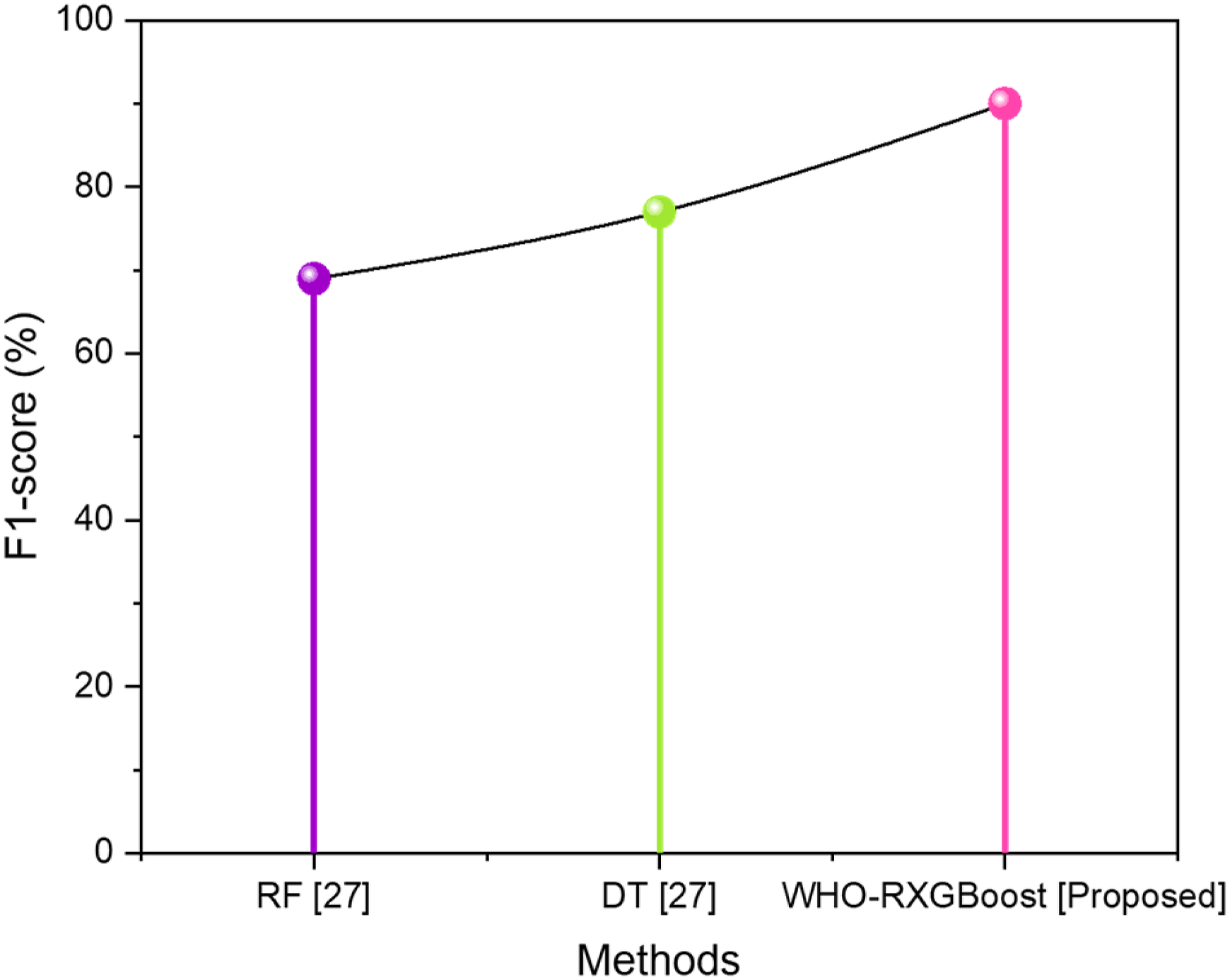
Discussion
Random Forest and Decision Tree, whilst popular for their interpretability and simplicity of usage, have vast drawbacks. Decision trees, specifically deep ones, are prone to overfitting, resulting in models that perform well on education records but badly on unseen data. This overfitting happens because the tree is sensitive to modifications in the dataset, causing it to seize noise instead of the underlying patterns. Furthermore, Decision Trees may be volatile and little modifications in records would possibly bring about completely one-of-a-kind tree architectures, impacting consistency. While Random Forest addresses overfitting through ensemble learning, it is extra computationally highly priced and less interpretable than a single Decision Tree. While averaging improves accuracy, it could also reduce interpretability and readability in phrases of function relevance. Furthermore, both models may additionally conflict with unbalanced datasets, which can skew consequences and convey-biased predictions. To deal with those restrictions, Wild Horse Optimized Resilient Extreme Gradient Boosting (WHO-RXGBoost) provides various advantages. This novel method builds on the merits of Extreme Gradient Boosting (XGBoost) and carries the Wild Horse Optimization (WHO) set of rules, improving the model’s capability to escape neighborhood optima and reach better global consequences. WHO-RXGBoost handles characteristic interactions higher than Decision Trees and Random Forests, so it could seize complicated styles more efficiently. It is also more proof against overfitting due to the fact regularization techniques increase generalization on formerly unknown data. Adaptive sampling strategies improve the model’s capability to address imbalanced datasets, resulting in robust predictions throughout an extensive variety of occasions. Furthermore, WHO-RXGBoost keeps a higher level of interpretability at the same time as turning in improved accuracy, making it a powerful solution for quite a few predictive modeling applications.
To enhance the model’s applicability across various demographics, it is essential to consider factors such as cultural background, socio-economic status, and distinct educational systems. Tailoring the model to account for these variations will improve its relevance and effectiveness in diverse contexts. For instance, the integration of region-specific data and localized job market analyses could significantly refine the model’s recommendations, ultimately fostering greater career guidance and entrepreneurial support for students from varying backgrounds. Despite the promising results, it is essential to acknowledge the limitations inherent in our dataset. The reliance on university records and self-reported data may introduce biases that affect the accuracy of the predictions. For instance, self-reported entrepreneurial experiences may be influenced by students’ perceptions, which could vary significantly across different backgrounds. Moving forward, it is crucial to incorporate diverse data sources to ensure that our model captures a more comprehensive view of students' career aspirations and experiences.
Conclusion
Research proved the application of a WHO-RXGBoost model to improve career guidance and entrepreneurial development in university students. Gathered university students’ records and robust scaler techniques were used to preprocess the data effectively. To extract the collections, the PCA feature extraction approach was used. The proposed strategy produced outstanding results, outperforming standard methods in the identification of development. Metrics such as F1-score (90%), precision (93%), accuracy (95%), and specificity (91%) confirmed the model’s reliability in predicting entrepreneurial development. The results demonstrate how merging deep learning and artificial intelligence improves student career development. One significant weakness of this study is its dependence on university records and self-reported data, which may not reflect the full complexity of students’ job needs or account for external influences impacting their career pathways. Furthermore, the model’s performance may vary across different student demographics. Future studies could broaden the dataset to include more varied universities and look at incorporating real-time labor market trends to increase forecasting accuracy and entrepreneurial development for students from various academic and cultural backgrounds.
Statements and declarations
Footnotes
Declaration of conflicting interests
The author(s) declared no potential conflicts of interest with respect to the research, authorship, and/or publication of this article.
Funding
The author(s) received no financial support for the research, authorship, and/or publication of this article.
