



Abstract
Athletics is a highly technical and comprehensive sport that requires not only the technical ability of athletes but also strong physical fitness. The traditional training method mainly relies on the experience and observation of coaches, lacking objective and quantitative analysis. On this basis, this article proposed an EfficientPose model based on mobile neural networks and combined it with the RANSAC matching algorithm to achieve real-time analysis and optimization of the process of track and field sports. The significance of this research lies in its potential to enhance athletic performance through advanced motion analysis. The purpose of the study was to develop a method for real-time analysis and optimization of athlete movements. Firstly, motion data was collected through a camera during the movement process. Secondly, the EfficientPose model was used to locate key moving points in real-time. Targeted training plans were then proposed to improve and optimize movements. The research results indicated that the EfficientPose model could effectively analyze and optimize athlete movements during training.
Keywords
Introduction
Track and field, a sport with a profound historical background and a highly competitive nature, demands exceptionally high standards for athletes’ technical proficiency and physical fitness.1,2 Historically, training methods in track and field have predominantly relied on the intuition and experience of coaches. While this approach has its merits, it often lacks objective metrics for evaluating the depth and accuracy of technical movements. Consequently, this reliance on subjective judgment can lead to imprecise and incomplete assessments of athletes’ performance.3,4
Traditional evaluation techniques in track and field are frequently constrained by their inability to provide comprehensive and quantifiable data.5,6 This shortfall underscores the need for more robust methods of assessment that can deliver precise and actionable insights into athletes’ technical execution and overall performance. The advent of machine vision technology and deep learning models has introduced new possibilities for enhancing evaluation accuracy and efficiency. For instance, the OpenPose model represents a notable advancement in this domain.7,8 This model, based on pose estimation techniques, enables the tracking of key body joints and movements, providing valuable data for analyzing athletic performance. Despite these advances, there is still significant potential for improvement, particularly concerning real-time processing, precision, and adaptability to specific training needs.
Machine vision technology has been instrumental in bridging some of the gaps left by traditional evaluation methods. By capturing detailed visual data of athletes in action, these technologies can analyze complex movements with greater accuracy. The integration of deep learning models further enhances this capability by enabling the automated recognition and interpretation of patterns within the visual data. These models can process vast amounts of data, learning from previous instances to improve the accuracy of their predictions and analyses over time.9,10 However, while these advancements have made strides in improving the objectivity of evaluations, the challenge remains to address the limitations related to real-time processing and the adaptability of these models to various athletic contexts.
One notable example of a model that has contributed to the advancement of sports performance evaluation is OpenPose. OpenPose uses a combination of convolutional neural networks to detect and track human body keypoints across frames of video data. This model has been widely adopted for its ability to provide detailed and accurate pose estimations, which are crucial for analyzing athletic movements.7,8 Despite its contributions, OpenPose is not without limitations. For example, while it offers enhanced objectivity compared to traditional methods, it may still struggle with issues related to real-time performance and varying environmental conditions.
To address these challenges, researchers and practitioners have continued to explore alternative models and methods. One such model that has shown promise in competitive sports training is EfficientPose. EfficientPose offers significant advantages in terms of accuracy, real-time processing, and adaptability to specific training needs.11,12 This model leverages advanced deep learning techniques to improve the precision of pose estimation, making it particularly well-suited for dynamic and high-intensity sports contexts.
EfficientPose builds on the principles of efficient network design and pose estimation to deliver more accurate and faster results. It utilizes a streamlined architecture that reduces computational complexity while maintaining high levels of performance. This efficiency is crucial for applications in real-time sports analysis, where timely feedback can make a substantial difference in training outcomes. Additionally, EfficientPose’s adaptability allows it to be customized for various sports and training scenarios, further enhancing its utility for coaches and athletes.
In practical terms, the application of EfficientPose in track and field training can lead to more precise assessments of athletic performance. For example, by analyzing the positions and movements of key body parts—such as the head, shoulders, elbows, wrists, hips, knees, and ankles—coaches can gain a more nuanced understanding of an athlete’s technique. This detailed insight enables targeted interventions and adjustments to training regimens, ultimately leading to improved performance and reduced risk of injury.
The integration of EfficientPose into training programs also supports the development of personalized training plans. By providing accurate data on an athlete’s movement patterns, the model helps coaches identify areas for improvement and design exercises that address specific needs. This personalized approach enhances the effectiveness of training sessions and contributes to the overall development of the athlete.
Furthermore, the ability to analyze movement in real-time allows for immediate feedback, which is crucial for making on-the-fly adjustments during training. Athletes can benefit from real-time corrections and refinements to their technique, leading to more efficient learning and quicker improvements in performance. The potential of EfficientPose extends beyond individual performance analysis. It also offers valuable insights into the collective dynamics of training groups. By analyzing data from multiple athletes, coaches can identify common patterns and trends, facilitating the optimization of training strategies for entire teams. This broader perspective supports the development of more effective training programs and contributes to the overall success of the team.
While traditional methods of evaluating athletic performance in track and field have provided valuable insights, they have often fallen short in terms of objectivity, accuracy, and adaptability. The advent of machine vision technology and deep learning models has introduced new possibilities for enhancing performance evaluation. Models like OpenPose have made significant contributions, but challenges remain in real-time processing and adaptability. EfficientPose represents a promising advancement, offering improvements in accuracy, efficiency, and real-time processing. Its application in track and field training has the potential to transform how athletes’ performance is assessed and optimized, leading to more effective training strategies and enhanced athletic outcomes. As research and technology continue to evolve, the integration of advanced models like EfficientPose will play a crucial role in advancing the field of sports performance evaluation. By addressing existing limitations and harnessing the capabilities of cutting-edge technologies, coaches and athletes can achieve more precise and actionable insights, ultimately driving improvements in training effectiveness and athletic performance.
The purpose of this study is to develop a method for real-time analysis and optimization of track and field sports performance using the EfficientPose model in conjunction with the RANSAC matching algorithm. By capturing motion data and accurately identifying key movement points, the study aims to provide targeted training plans that enhance athletes’ performance. The research results demonstrate that the EfficientPose model can effectively analyze movements and optimize training outcomes, significantly improving the objectivity, real-time feedback, and personalization of training evaluations. This approach introduces new possibilities for advancing track and field training methods.
Collection of athlete movement data
First, a high-definition camera is installed near the training ground. The location of the camera is shown in Figure 1. Camera layout position.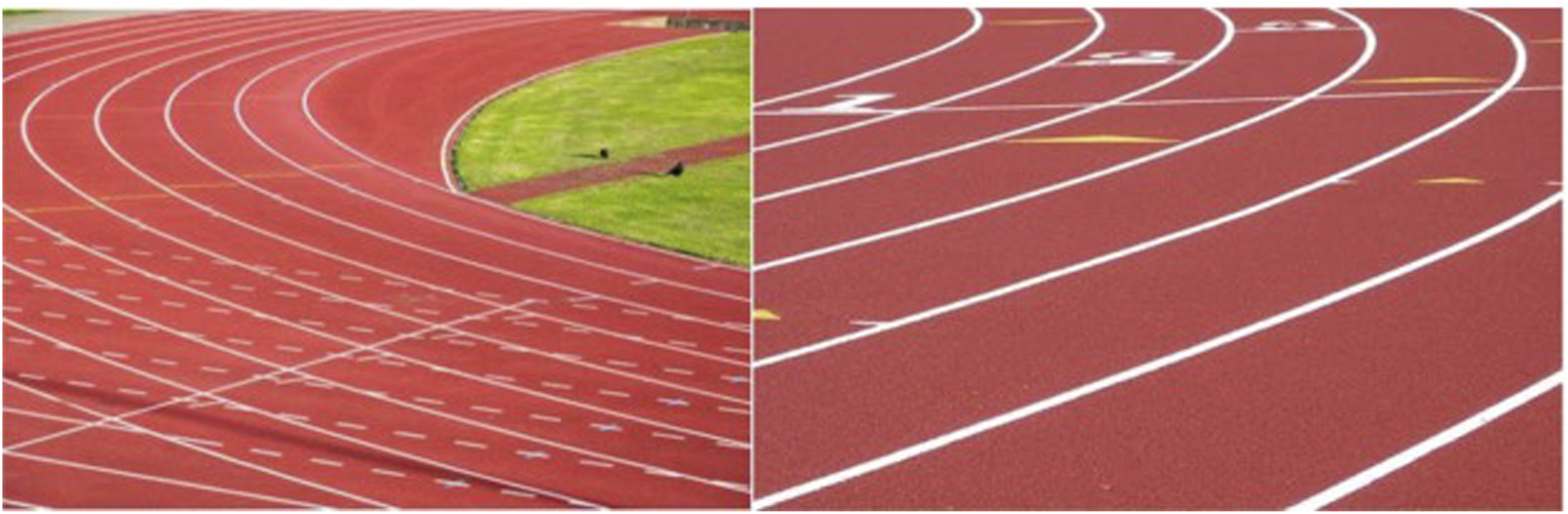
The camera can provide high-quality image data, including information such as the player’s posture, movement speed, and movement angle. The output data of this device is as follows:

Among them, i represents the ith video frame; j represents the jth key point; k represents the kth athlete.
Finally, the recorded video data is annotated and organized, including recognition and classification of different actions. The organized data should be organized in chronological order or action types to facilitate subsequent action recognition and analysis.
Real-time action recognition
To achieve real-time analysis and optimization of track and field athlete movements, this article utilizes the EfficientPose model for instantaneous action recognition. This approach allows for precise tracking and evaluation of athletes’ movements, facilitating immediate feedback and adjustments during training sessions. By leveraging the EfficientPose model, the study aims to enhance the accuracy and efficiency of movement analysis, ultimately improving athletic performance and reducing the risk of injury through optimized training techniques.
Firstly, the motion data collected from the camera during athlete training includes continuous video frames. These video frames undergo preprocessing such as image enhancement and size standardization13,14 to meet the input requirements of the EfficientPose model, as shown in Figure 2. Image preprocessing.
Figure 2 shows an image preprocessing program. This study utilizes image processing techniques to enhance the motion characteristics and details in images. On this basis, further denoising is performed on the image after contrast enhancement, removing the influence of noise and making the behavior points more prominent. Finally, an edge enhancement on the denoised image is performed to highlight the boundaries of the behavior.
The core of the EfficientPose model is the use of lightweight network structure and optimization algorithms. The specific model structure and algorithm are complex and can be expressed as the following mathematical formula:

Among them,
The EfficientPose model can identify critical motion points in real-time while ensuring accuracy. This article intends to combine convolutional neural networks15,16 with recurrent neural networks17,18 to accurately determine the position of key motion points for athletes through multi-layer feature extraction and spatial correlation modeling.
In the real-time action recognition process, the EfficientPose model begins by performing forward propagation on each frame to extract key action point information. To enhance accuracy and stability, it employs feature matching and key point tracking algorithms in conjunction with contextual information and action prior knowledge. 19
Initially, feature points such as the head, shoulders, elbows, wrists, buttocks, knees, and ankles are extracted from each frame. SIFT and SURF descriptors are then used to characterize these feature points. The RANSAC method is applied to match feature points between the current and previous frames, identifying the optimal correspondences. This matching process helps to update the positions of the points in the current frame.
By matching features from the previous frame, the model establishes correspondences between key points in the current and previous frames. Next, it searches for potential new key points in the current frame. Using the uniform motion model and acceleration model, the positions of key points in the subsequent frame are predicted. Finally, the model integrates the matching results, search outcomes, and motion model predictions to update the positions of key points in the next frame. In order to solve the real-time problem that may exist in the action recognition process, a simpler MobileNet network model is adopted.
20
GPU hardware accelerator is used to accelerate the model inference process and improve the recognition speed. The mathematical expression of hardware acceleration can be simply expressed as follows:

Among them,
In this experiment, the inference speed of the EfficientPose model is improved through techniques such as model compression, quantization, and acceleration, ensuring the performance requirements of real-time action recognition.
Finally, the established model is utilized to analyze the movement trajectories of various parts during the motion process and obtain the movement trajectories under various motion states, such as head, shoulder, elbow, wrist, hip, knee, and ankle. The key parts in the image are marked, and the results obtained are shown in Figure 3. Based on this, corresponding training plans are proposed to guide athletes in personalized sports improvement and optimization. Athlete node annotation.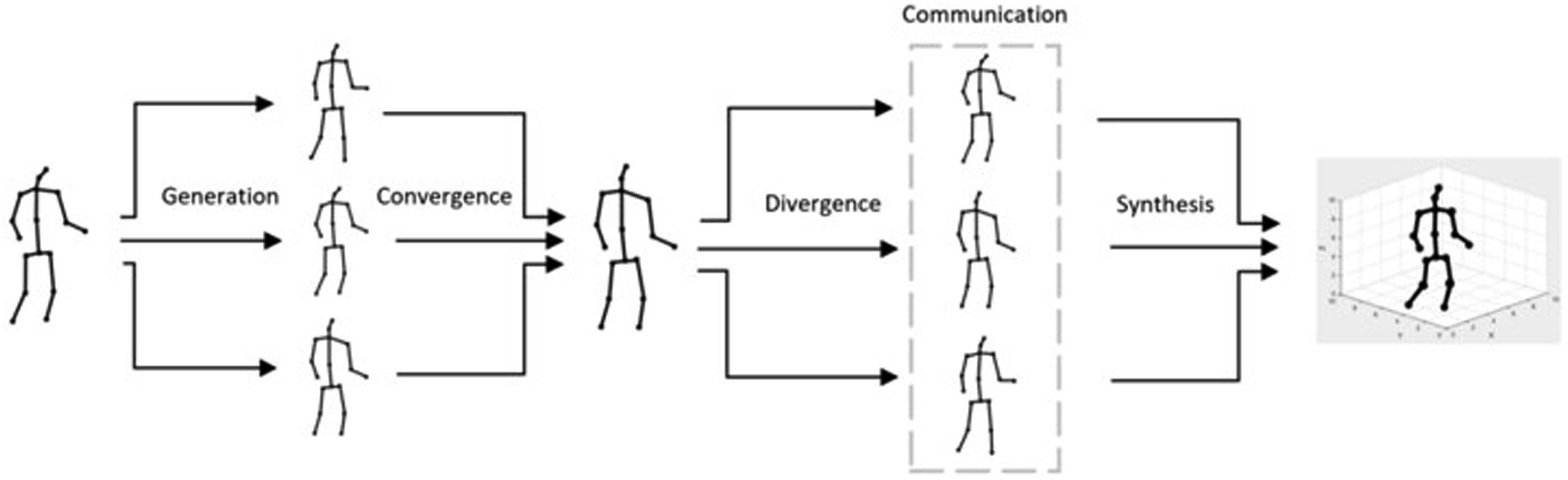
After extracting the 3D pose of the recognized target frame by frame in the video, the coordinate changes of key points in the time series can reflect the motion changes of the moving object. The methods for detecting whether there are non-standard actions in motion can be divided into formula method and modeling method. The formula method first abstracts normative indicators into mathematical representations in space through human analysis, connects 3D key points, and calculates indicator data. By judging whether the indicator data is within a reasonable range, it determines whether the athlete’s movements are standardized. The disadvantage of this method is that it only focuses on local movements, and the overall analysis of athletes requires the use of numerous formulas. The approach involves first creating a model of standard actions in 3D space. Then, the athlete’s 3D posture is estimated and compared to this model. In the experiment, two types of errors are analyzed: global and local. If the error exceeds a predefined threshold, the specific time period is marked, indicating that the athlete’s actions in that part of the video may deviate from the standard. This method allows for precise identification of non-standard movements, providing targeted feedback for improvement.
Data analysis and mining
The collected behavioral data is analyzed and mined. This step involves comprehensive statistics and analysis of the execution of technical actions, in order to identify their technical shortcomings. Using mathematical statistical methods, the performance data of athletes in each movement stage are obtained. The changes in posture, speed, and angle of athletes during the movement are shown in Figure 4. Performance data of a certain athlete during training.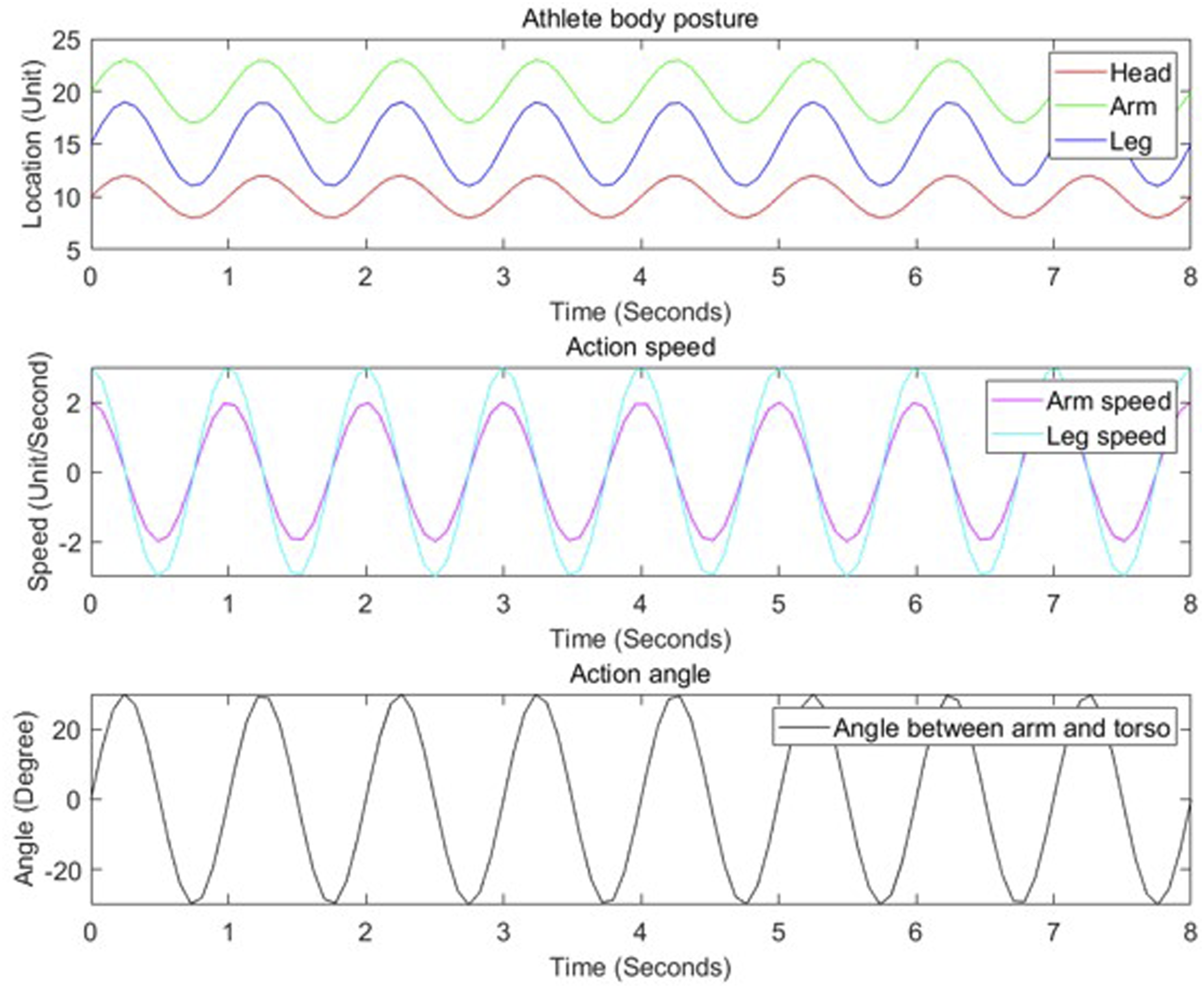
Figure 4 shows the changes in the position of important joints such as the head, arms, and legs, as well as the changes in the movement speed of the arms and legs, and the angle between the arms and the body during the practice process of this athlete. The athlete’s head exhibits an up-and-down undulation with a frequency of 10, the arm position oscillates with a frequency of 20, and the leg position varies within a range of 15. These joint position changes reflect the athlete’s posture adjustments at various stages. In terms of movement speed, both arm and leg motions demonstrate significant time dependence. For instance, periods of high maximum arm speed indicate vigorous swinging, while slower speeds suggest the athlete is either preparing or recovering. Similarly, leg movement speeds fluctuate, alternating between rapid kicking and more stable preparatory movements. This cyclical variation in speed underscores the rhythmic patterns associated with different exercise intensities, highlighting the athlete’s adaptive responses during training.
Indicator evaluation
Accuracy evaluation
The position of the athlete is recorded by the camera. The marking data is fed into the EfficientPose model, and the Euclidean distance is calculated to confirm the accuracy of the model. This ensures the precise analysis of athletes’ movements and provides a reliable basis for the formulation of training plans, thereby effectively improving the training effect.
21
The formula for calculating Euclidean distance is as follows:

Among them,

Among them, Accuracy of five models.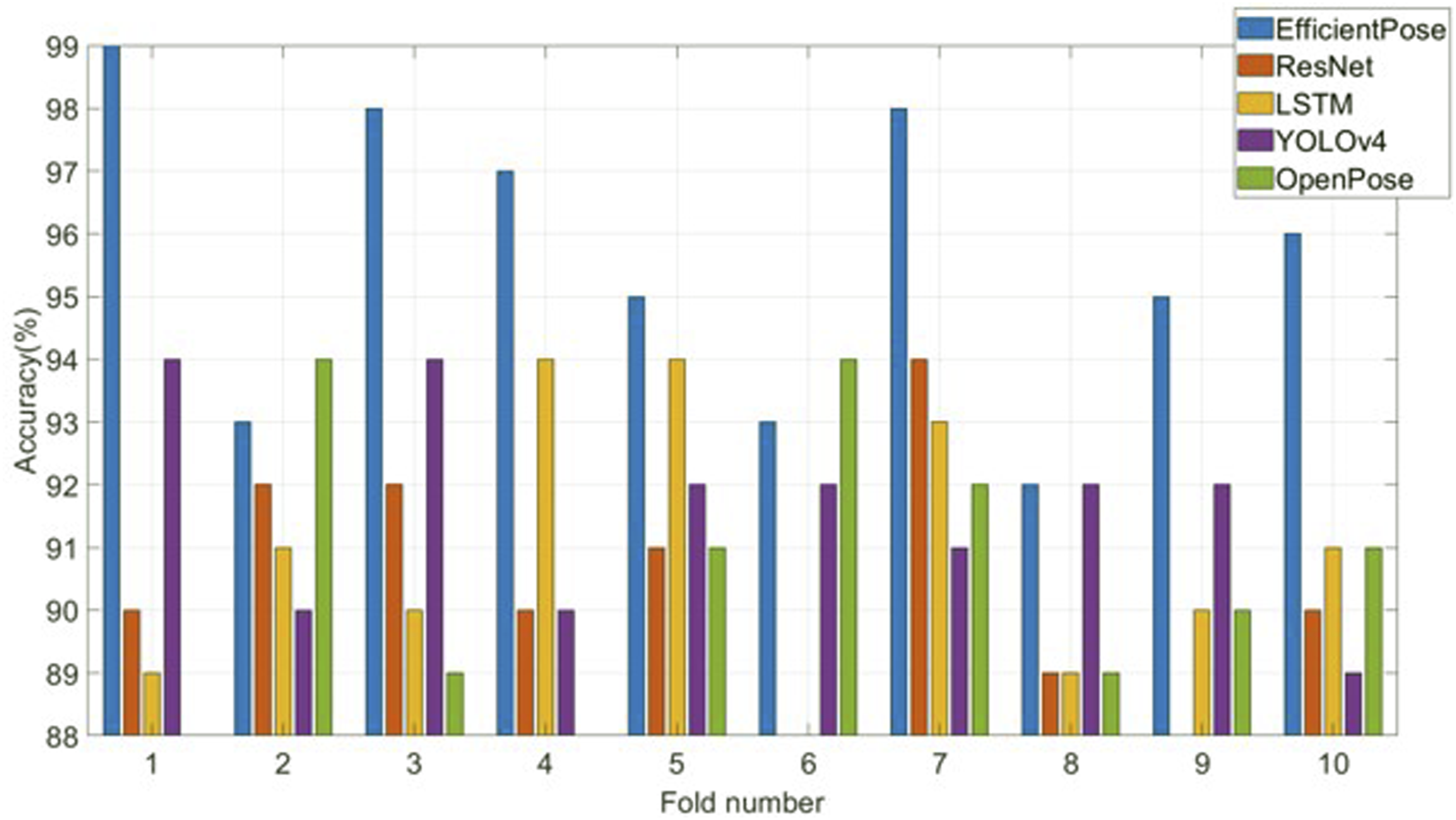
Figure 5 shows the accuracy of different models for different iterations. This article takes the EfficientPose model as the research object and uses iterations of 3, 4, and 5 as examples to achieve accuracy rates of 98%, 97%, and 95%, respectively. In sharp contrast, other models such as ResNet, LSTM, YOLOv4, OpenPose, and other algorithms have significant fluctuations during iterations.22,23 The experimental results reveal that the EfficientPose model consistently outperforms the other four models in recall rate across all behavior classifications. This superior performance highlights EfficientPose’s greater accuracy and reliability in recognizing actions such as running, jumping, and turning. Moreover, its robust recall across diverse behaviors suggests a more comprehensive understanding of action dynamics, making it a valuable tool for applications requiring precise action recognition. The results align with the model’s design goals, affirming its effectiveness in real-world scenarios.
In this article, the calculation of recall for action recognition tasks such as running, jumping, and turning involves the accuracy of the model in recognizing these actions. For the above actions, the recall of EfficientPose model, ResNet model, LSTM model, YOLOv4 model, and OpenPose model are counted as shown in Figure 6. Recall rates of five models for running, jumping, and turning movements.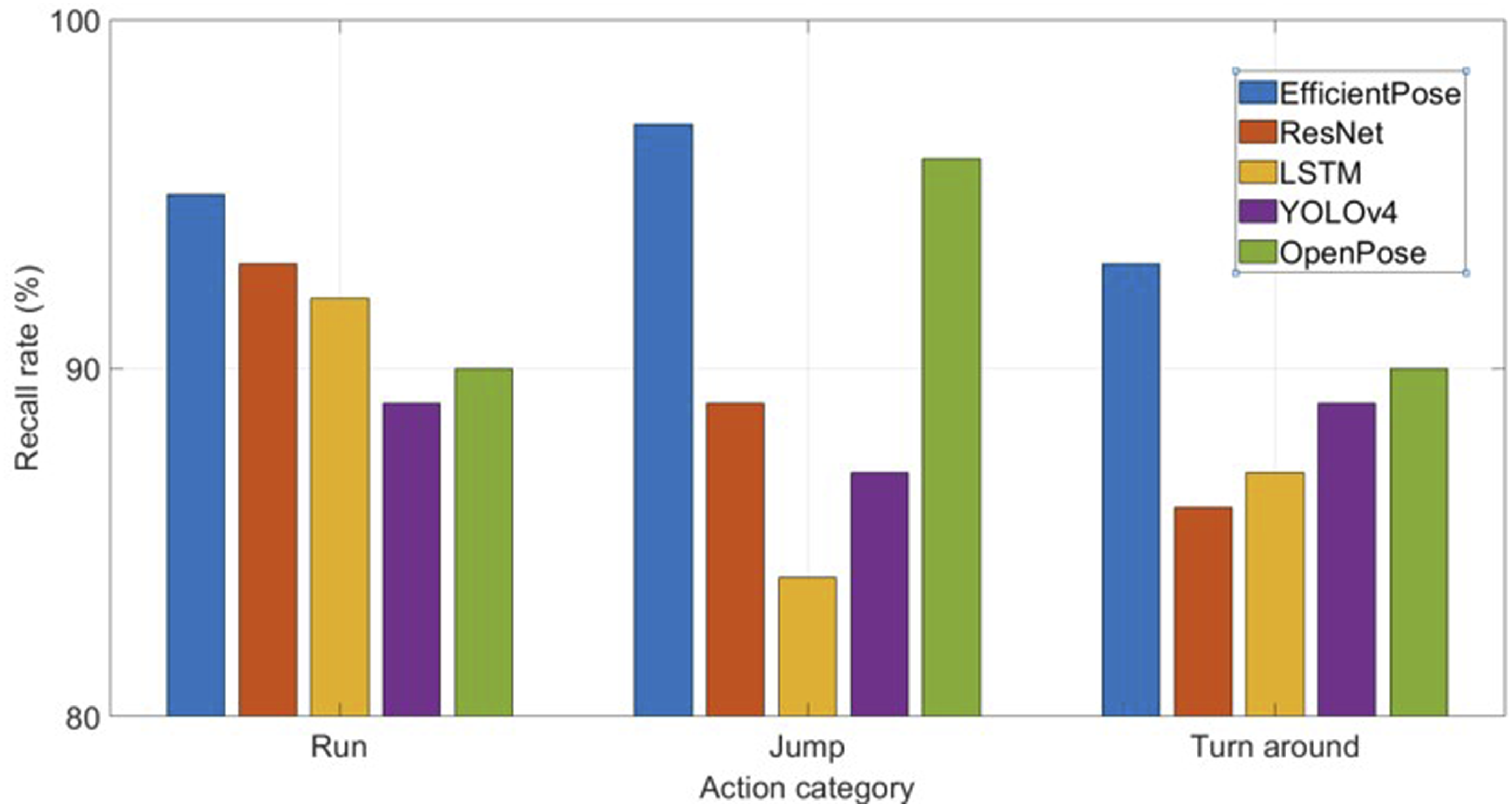
Figure 6 shows the recall rates of five models under different motion types such as running, jumping, and turning. The experimental results demonstrate that the EfficientPose model consistently achieves a higher recall rate across all behavior classifications than the other four models. This indicates that EfficientPose is more accurate and reliable in recognizing actions such as running, jumping, and turning.
F1 score is a comprehensive evaluation indicator commonly used to evaluate the performance of classification models. It combines the accuracy and recall of the model, which can better reflect the comprehensive performance of the model in situations of imbalanced categories. The specific formula for calculating F1 score is as follows:

In this study, F1 scores are used to evaluate the performance of five different models (EfficientPose, ResNet, LSTM, YOLOv4, and OpenPose) for action recognition such as running, jumping, and turning. Among them, the variation of F1 scores for running action is shown in Figure 7. F1 scores of five models regarding running actions.
Figure 7 shows the F1 scores of different models in running actions. The EfficientPose model stands out with a notably higher F1 score for running actions than other models, achieving a peak value of 0.97, whereas other models exhibit scores ranging between 0.91 and 0.94. This superior performance underscores EfficientPose’s effectiveness in action recognition, aligning well with the objectives and findings of this study.
Real-time evaluation
Real-time evaluation is the process of comprehensively evaluating the time latency of a model in recognizing key points of athlete movements. Firstly, time latency measurement is used to record the time interval between the model receiving the image and outputting the action key points. Specifically, the average latency (


Among them, Latency distribution of different models.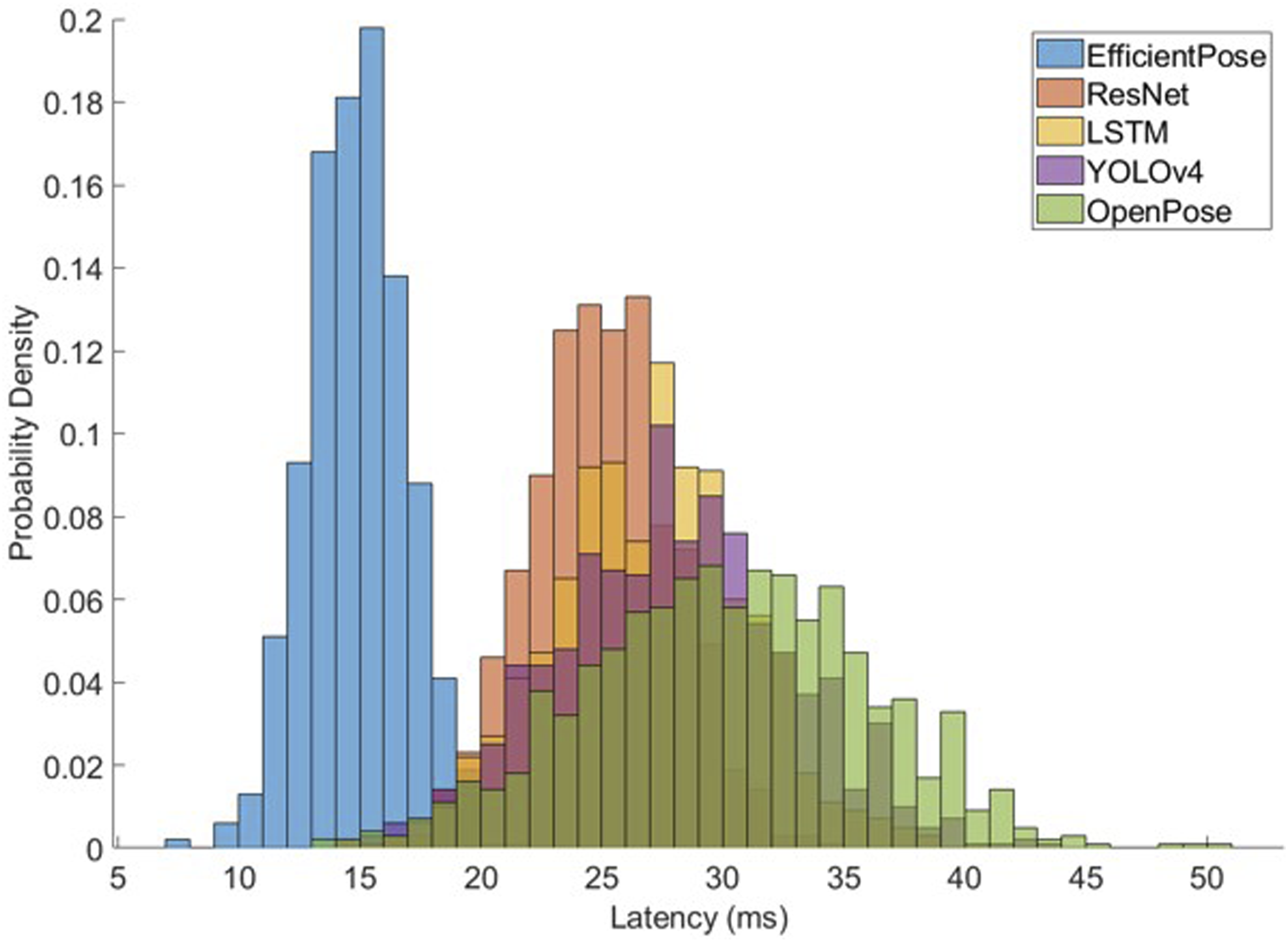
Figure 8 shows the latency of five modes when the critical point of action is determined. The latency of EfficientPose mode is about 15 ms, which has high stability and good real-time performance; the latency of other modes is generally 25 ms, with large latency and significant variation. This method fully embodies the real-time performance of the EfficientPose model, which can quickly and accurately recognize the key points of behavior, and is suitable for applications with strong real-time performance. On this basis, the performance of the model is combined with latency to prove the feasibility of the EfficientPose model in behavior recognition.
When evaluating the real-time performance of the model, it is found that the average latency of the EfficientPose model is about 15 milliseconds, while other models have a latency of 25 milliseconds. On this basis, this article adopts a series of time latency optimization strategies to perform real-time optimization on the constructed model. The specific research content is as follows: by analyzing each link in the image processing process, the main causes of system latency are identified. In general, data preprocessing, model computation, and post-processing all generate latency. At each step, a detailed performance analysis is conducted to recognize the best aspects; the EfficientPose model is structurally optimized. This method reduces the computational complexity of the algorithm while maintaining the accuracy of the model by adjusting the hierarchical structure of the neural network and the parameters of each layer. The latency before and after optimization is shown in Figure 9. Comparison of latency before and after optimization.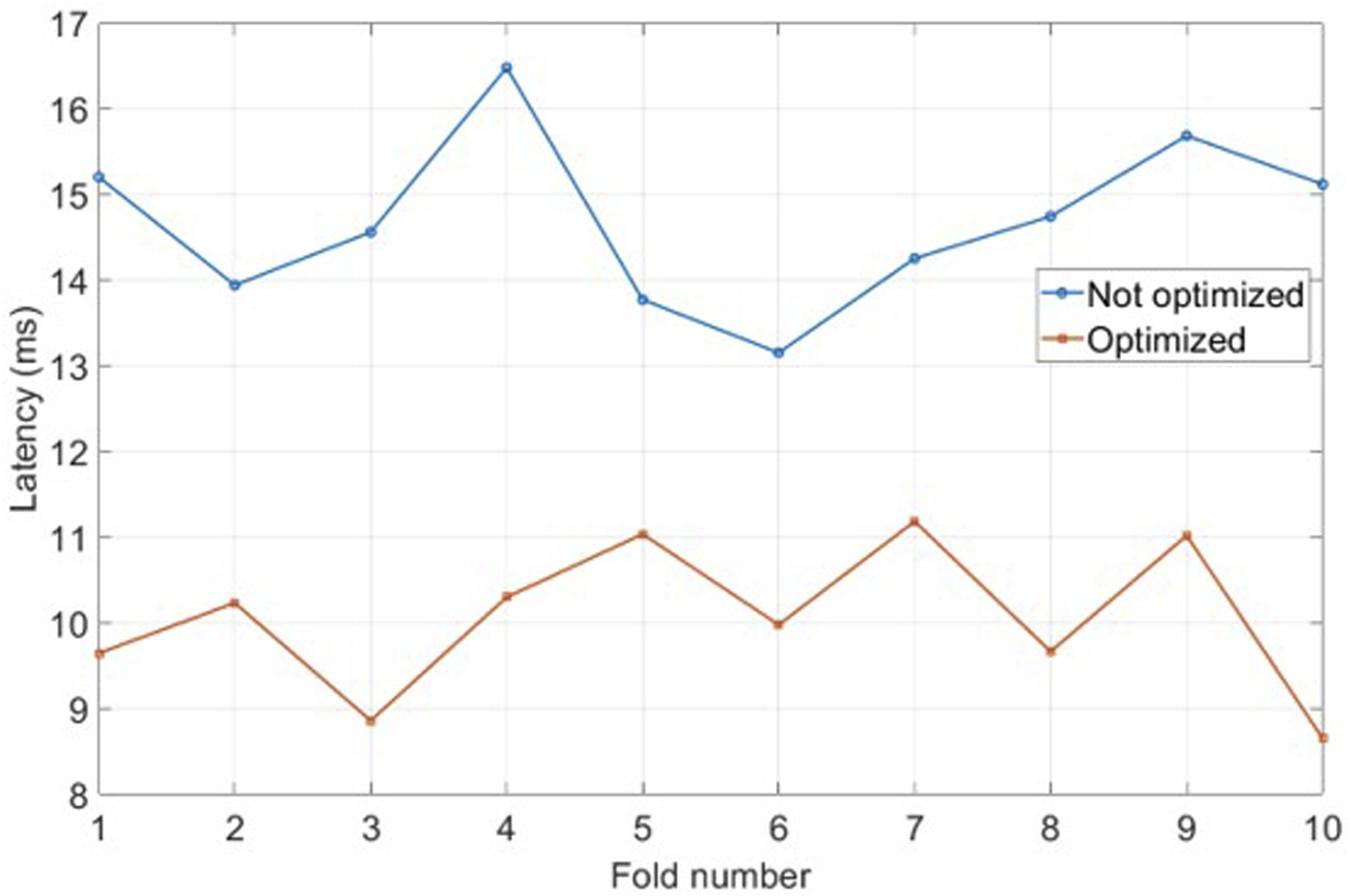
By combining the above multiple optimization methods, the system latency is effectively reduced. Figure 9 shows the contrast in latency between EfficientPose mode before and after optimization. The horizontal axis represents the number of iterations from 1 to 10, and the vertical axis represents the latency time in milliseconds. The average latency data before optimization is 15 milliseconds, and the optimized latency is 10 milliseconds. The comparison results show that the latency performance of the algorithm has been greatly improved, indicating the effectiveness of the algorithm. The experimental results show that the model has strong real-time performance and can effectively improve the performance of motion analysis and training optimization for track and field athletes.
Targeted evaluation of training suggestions
Optimization of athlete training based on EfficientPose model.

From Table 1, it can be seen that the coach feedback scores for each player range from 8.5 to 9.3, indicating that the suggestions proposed by the EfficientPose model have a high degree of agreement. 24
The experimental results show that the model can not only effectively improve motor skills but also shorten training time and reduce the occurrence of injuries, making it highly practical. The above results indicate the potential and advantages of the EfficientPose model in track and field sports, which can provide athletes with more scientific and effective training methods.
Conclusions
This article proposes a machine vision-based motion analysis and training optimization method for track and field athletes, utilizing the EfficientPose model for real-time analysis and movement optimization. The approach involves several steps: first, collecting athletes’ movement data during training using cameras; second, applying the EfficientPose model to identify key action points in real-time; and finally, generating targeted training suggestions based on the recognition results, including recommendations for action improvement and optimization.
The research findings indicate that this method can significantly enhance the training effectiveness and competitive performance of track and field athletes. Key achievements of the study include precise recognition and quantitative analysis of athlete movements through machine vision technology, improved accuracy and real-time performance of action recognition using the EfficientPose model, and the provision of effective training suggestions through data analysis and optimization strategies. However, the study also identifies some limitations, such as the need to improve recognition accuracy in complex environments. Future research should focus on optimizing algorithms to enhance the system’s adaptability and robustness across various environments and integrating more sensor data to achieve more comprehensive and accurate action analysis and training optimization.
Future research can focus on improving recognition accuracy in complex environments and enhancing the system’s adaptability and robustness. By developing more advanced algorithms, incorporating machine learning techniques, and conducting comprehensive environmental testing, the system can become more reliable under various conditions. Additionally, integrating data from multiple sensors (such as IMUs, GPS, and pressure sensors) for multisensor fusion will provide more comprehensive motion analysis. The application of big data analytics and predictive analytics will further deepen insights into athletic performance, and developing personalized training plans and real-time feedback mechanisms will enhance the user experience.
At the same time, future research should focus on enhancing user interfaces and experience, ensuring that analysis results and training suggestions are easy to understand and act upon. In terms of data privacy and ethics, robust data protection measures must be implemented to ensure the privacy and security of athletes’ data, and the ethical use of AI should consider fairness, transparency, and accountability. By focusing on these directions, future motion analysis and training optimization systems will become more effective and comprehensive, helping to improve the training effectiveness and competitive level of track and field athletes.
Statements and declarations
Footnotes
Conflicting interest
The authors declared no potential conflicts of interest with respect to the research, authorship, and/or publication of this article.
Funding
The authors received no financial support for the research, authorship, and/or publication of this article.