




Abstract
With the development and maturation of artificial intelligence (AI) technology, AI service contexts have become a new scenario in the service industry. This study explores the impact of three types of customer behaviors on front-line employee service silence in the context of AI service contact compatibility in China’s service industry. It also examines the mediating role of employee emotional reactions and the moderating effect of employee AI perception. The study empirically tests these relationships using data from 657 samples in China’s hotel service industry. The results show that customer participation and positive feedback behaviors have a significant negative impact on employee service silence, with employee emotional experiences mediating the relationship between customer behaviors and service silence.
Introduction
In recent years, artificial intelligence (AI) technology has made rapid progress. Intelligent service robots, a significant manifestation of AI, have been widely applied in commercial retail and hotels, playing roles such as online customer service and hotel attendants. They have become an important channel for interaction between consumers and businesses. 1 With the coexistence of AI and human services, service companies face more severe challenges in “service contact.” 2 In this new context of emerging AI services, it is necessary to explore the impact of AI on traditional service interactions, how to motivate positive service behaviors among frontline employees, and how to avoid negative service silence behaviors during service contact.
Based on this, this study collects evidence from the hotel service industry in China. It combines service contact theory and emotional contagion theory to analyze the impact mechanisms of three types of customer behaviors (active participation, positive evaluation, and negative complaint behaviors) on frontline service employees’ service silence behaviors. It also examines the mediating role of employee emotional reactions in this relationship, which is significant for improving service interaction management in the context of AI services.
Literature review and hypotheses development
With the development of the AI era, AI has formed a closer relationship with employees and organizations, exerting a profound impact on employees and the workplace. 3 In the context of AI service contact, especially when human service coexists with AI customer service, customers take on more responsibility and actively participate in service interactions. They have greater control over the service process and more opportunities to express themselves. 4 This greatly stimulates customer value co-creation behaviors and enables them to achieve personalized service outcomes. Existing research suggests that the performance of employees and customers is not independent. Since both parties are involved in co-creating service value, their behaviors will affect each other, a phenomenon known as the mirror effect. 5 When customers lack the ability to achieve satisfactory service outcomes, employees may feel dissatisfied and stressed. Conversely, if employees fail to fulfill their duties, it may hinder customers from obtaining the desired service results and lead to negative customer experiences. Therefore, this study posits that in the context of AI service compatibility, customer behaviors (participation, praise, and complaint behaviors) will significantly impact frontline employees’ service behaviors (service silence behaviors).
The impact of customer participation on employee service silence
Customer participation refers to the behavior of customers who engage in the design and delivery processes of services while consuming them. 6 It reflects the degree of customer involvement, manifested as material and psychological activities during service production and delivery. 7 In the context of AI service contact compatibility, customers’ active participation will lead to more proactive value co-creation interests and behaviors. For example, they may actively express service needs, use AI service robots for self-service, propose suggestions for service process optimization, or show more tolerance towards service personnel. In this context, customers are not only evaluators and purchasers of services but also coordinators and creators who provide necessary resource support for the service production process. This study argues that active customer participation can improve the quality of interactions between service employees and customers. It enhances frontline employees’ sense of achievement and pleasure in their work, increases their control over the service production process, and forms positive emotional experiences. This, in turn, boosts employees’ willingness to make proactive suggestions and effectively inhibits service silence behaviors.
In the context of AI service contact compatibility, active customer participation has a significant negative impact on frontline employee service silence, meaning that active customer participation will suppress employee service silence behaviors.
The impact of customer positive feedback on employee service silence
Chinese scholars 8 suggest that customer positive feedback behaviors include two dimensions: First, customers’ positive evaluations of frontline employee service quality, which enhances employees’ sense of achievement; second, customers’ relationship-building behaviors with employees, which increase employees’ perceived interpersonal closeness. In the context of AI service contact compatibility, frontline employees’ negative service silence behaviors may also be influenced by customer feedback behaviors. Specifically, customers' positive evaluations of service quality can be seen as positive performance feedback from customers. Relationship-building behaviors from customers convey a sense of care and concern. When customers positively evaluate the service or service quality provided by employees (either outcome or process quality), it reinforces employees’ confidence in their service efforts, boosts their self-esteem and sense of achievement, and motivates them to provide more positive service inputs in future interactions to gain further praise and recognition. Therefore, positive customer feedback behaviors can enhance frontline employees’ sense of achievement and closeness, thereby suppressing their service silence behaviors.
In the context of AI service contact compatibility, customer positive feedback has a significant negative impact on frontline employee service silence, meaning that positive customer feedback will suppress employee service silence behaviors.
Customer service evaluation behaviors have a significant negative impact on frontline employee service silence.
Customer relationship-building behaviors have a significant negative impact on frontline employee service silence.
The impact of customer complaint behavior on employee service silence
Customer complaints are behaviors taken by customers after experiencing dissatisfaction during a purchase or consumption process. 9 These behaviors are driven by customers’ dissatisfaction and aim to change the unsatisfactory situation. 10 In the context of AI service contact compatibility, the main touchpoints between customers and companies include AI robots, human service personnel, service environments, and other facilities. Frontline employees, who directly face customers’ immediate reactions of anger, are the main subjects responsible for service recovery. While customers’ expression of anger through complaints can provide psychological relief and potentially lead to better brand image perception and satisfaction in the long run, in the short term, customer complaints, as a manifestation of negative evaluations of a particular service experience, can negatively impact frontline service employees’ self-assessment of their service capabilities. 11 Specifically, employees may become less confident, doubt their professional skills, and feel discouraged or frustrated. This can lead to service silence behaviors in subsequent similar service situations as employees try to avoid taking risks and responsibilities.
In the context of AI service contact compatibility, customer complaint behaviors have a significant positive impact on frontline employee service silence, meaning that customer complaints will increase employee service silence behaviors.
The mediating role of employee emotional reactions
In recent years, emotional contagion theory has gained practical value in service management and other personnel-intensive industries. Research on employee behaviors has confirmed that “emotions” and “cognition” are two major drivers of individual behaviors. Individual behavioral responses are proactive actions resulting from the cognitive evaluation of external events, which trigger specific emotional states. These behaviors are influenced by differences in cognitive levels, information processing, and emotional reactions, leading to diverse individual behaviors. With the introduction of AI tools as a means to facilitate or support service interactions and service provision, research has also begun to focus on emotional contagion in human-machine interactions. 12 Specifically, studies have explored how the anthropomorphism level of AI can trigger different emotions in human-machine interactions. Research suggests that examining the impact of employees’ emotions and cognitions on their behaviors is actively beneficial. Positive emotional contagion can lead to positive impacts, satisfaction, and loyalty intentions, while negative emotions can affect employees' work performance and engagement. Therefore, this study posits that employee emotional reactions play a mediating role in the impact of customer behaviors on service silence behaviors.
In the context of AI service contact compatibility, employee emotional experiences mediate the impact of customer behaviors on service silence behaviors.
Positive emotions mediate the impact of customer participation on service silence behaviors.
Positive emotions mediate the impact of customer positive feedback on service silence behaviors.
Negative emotions mediate the impact of customer complaints on service silence behaviors. Overall, this study follows the logic of “contextual cues—emotional reactions—individual behavior” and, based on the service context where AI services coexist with human services, analyzes the impact mechanisms of different customer behaviors on employee service silence. It also verifies the influence pathways of employee emotional reactions on service silence behavior, constructing the following research model: (Figures 1 and 2). In this figure, the research model illustrates the relationships between different customer behaviors (customer participation, positive feedback, and complaints), employee emotional experiences (positive and negative), and employee service silence behavior. The model highlights the mediating role of emotional experiences in the impact of customer behaviors on service silence.
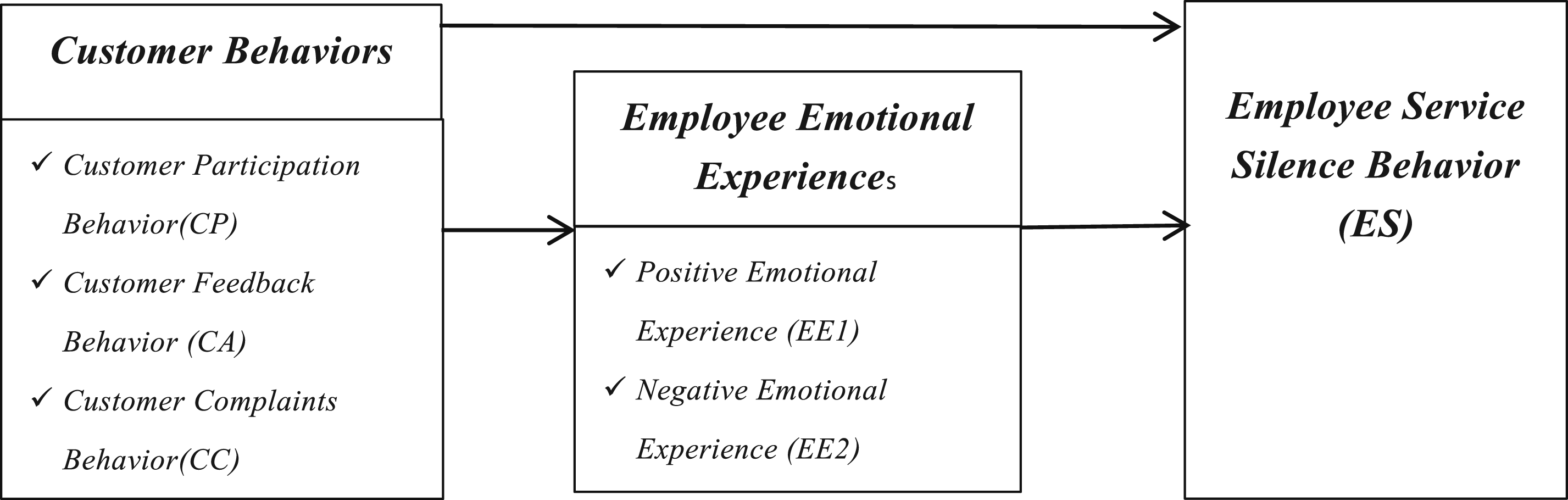
Research model.
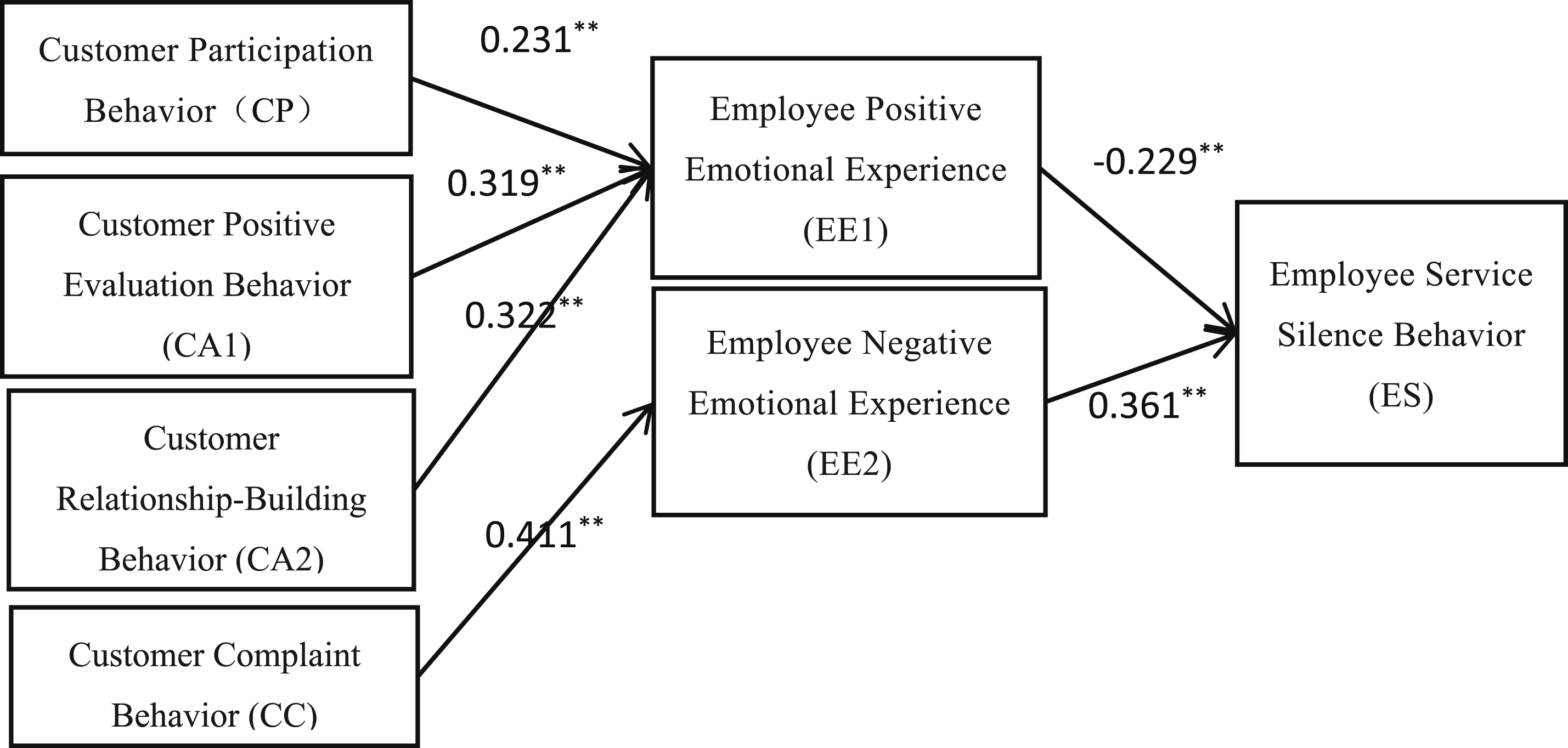
Path analysis results.
Research design
Data source and sample selection
This study employed a combination of online and offline questionnaires. The online survey was distributed via the “JianShu” online survey platform (https://www.wjc.cn), while the offline survey was conducted in five cities (Shenzhen, Jinan, Tianjin, Nanchang, and Changsha) through the China Hotel Industry Association. A total of 500 online and 500 offline questionnaires were distributed, resulting in 657 valid responses, with an effective response rate of 65.7%.
The choice of the Chinese hotel industry as the sample was based on several reasons: First, the hotel industry is a typical service-oriented sector with strong service representation. Second, it has widely adopted AI robots to handle some services, creating a compatible context of AI service contact that aligns with the study’s requirements. Third, the research team had previously conducted foundational research in the Chinese hotel industry, accumulating relevant data that facilitated the data collection for this study.
Descriptive statistical analysis revealed that the sample consisted of 45.05% males and 54.95% females. In terms of age, 34.75% were under 25 years old, 42.53% were between 25 and 30 years old, and 22.74% were over 30 years old. Regarding job positions, 69.63% were frontline service personnel, 20.42% were service supervisors, and 9.65% were company managers. In terms of work experience, 44.43% had less than 2 years, 32.84% had between 2 and 5 years, and 22.72% had over 5 years. The types of hotels included 30.11% chain hotels, 41.47% business hotels, 18.32% resort hotels, and 10.11% international hotels.
Variable measurement
All variables were measured using established scales from domestic and international sources. The scales were adapted to fit the study context (service contact) and industry background (hotel service) by two service marketing experts and three hotel managers to ensure accurate semantic expression. Specifically, customer participation behavior (CP) was measured using the scale developed by Ennew and Binks (1999), consisting of seven items. Customer positive feedback behavior (CA) was divided into service evaluation behavior (CA1) and relationship-building behavior (CA2), measured using scales adapted from Olgun (2019), with five items each. Customer complaint behavior (CC) was measured using a scale based on Olgun (2019), consisting of five items. Employee emotional experience (EE) was measured using scales referenced from Olgun (2019). Employee AI perception was measured using the AI Attitude Scale (AIAS-4) developed and validated by Simone Grassini, consisting of five items. A five-point Likert scale was used, ranging from “1” (strongly disagree) to “5” (strongly agree). A pre-survey was conducted to test and refine the scales.
Data analysis and results
Common method bias test
The study conducted KMO and Bartlett’s tests on the variables. The results showed that the KMO value was above 0.9 (p < 0.001), meeting the requirements for factor analysis. Subsequently, Harman single-factor test was performed using SPSS 26.0. The results indicated that the first principal component with eigenvalues greater than 1 explained 43.089% of the variance, which is below the 50% threshold. Therefore, it was concluded that there was no common method bias in this study.
Reliability and validity test
Factor analysis was conducted using AMOS 26.0, and all item loadings were above 0.5, indicating good reliability. Exploratory factor analysis was also performed. The results showed that the Cronbach’s alpha coefficients for customer participation behavior (CP), service evaluation behavior (CA1), relationship-building behavior (CA2), and customer complaint behavior (CC) were 0.827, 0.844, 0.837, and 0.799, respectively, all above the standard of 0.7, demonstrating strong internal consistency and reliability of the scales.
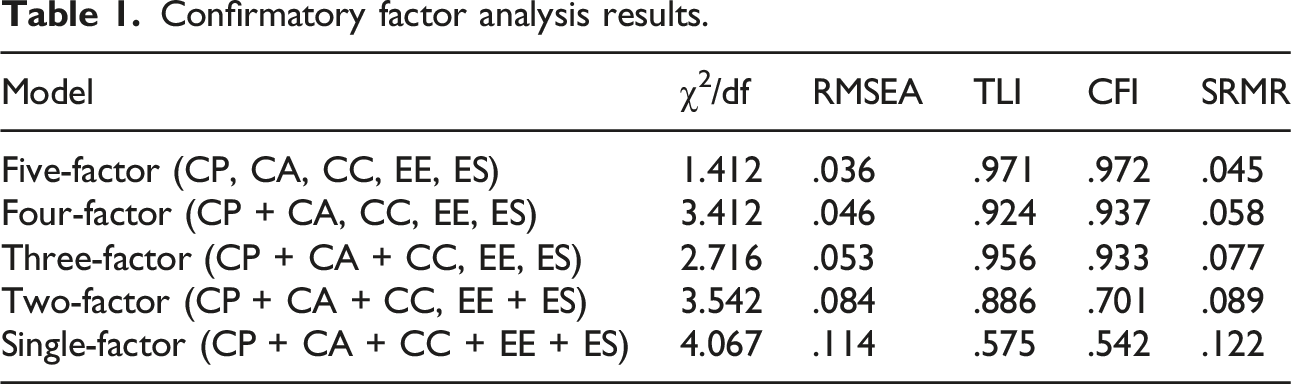
Confirmatory factor analysis results.
Descriptive statistics analysis.
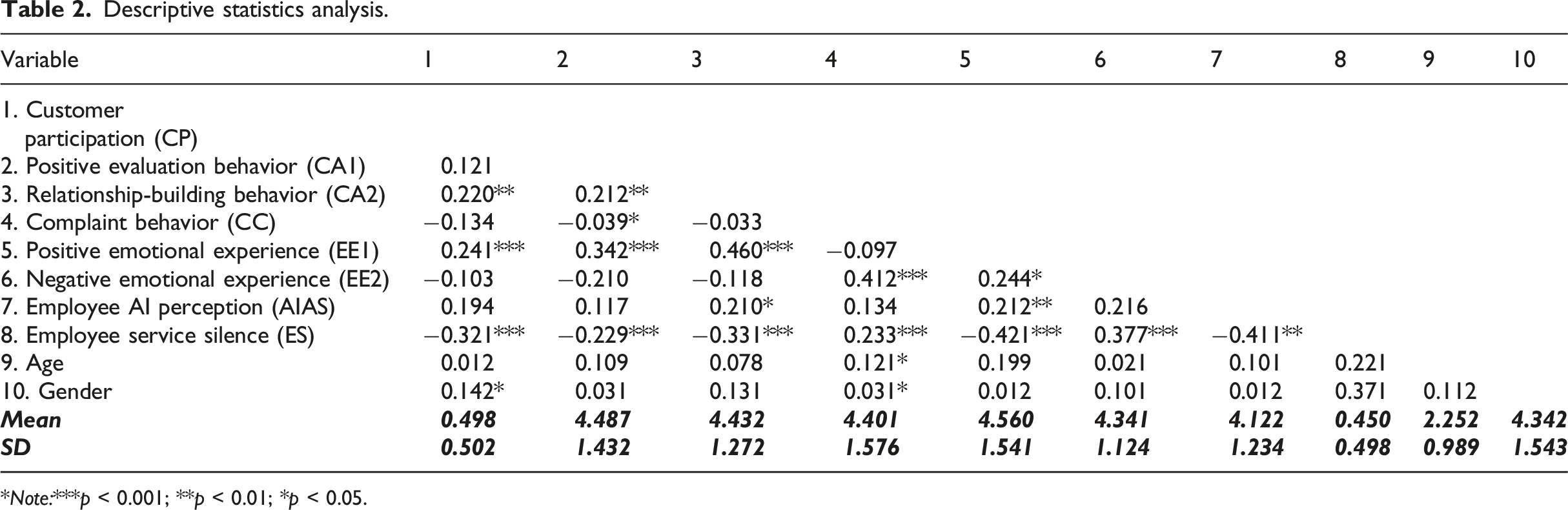
*Note:***p < 0.001; **p < 0.01; *p < 0.05.
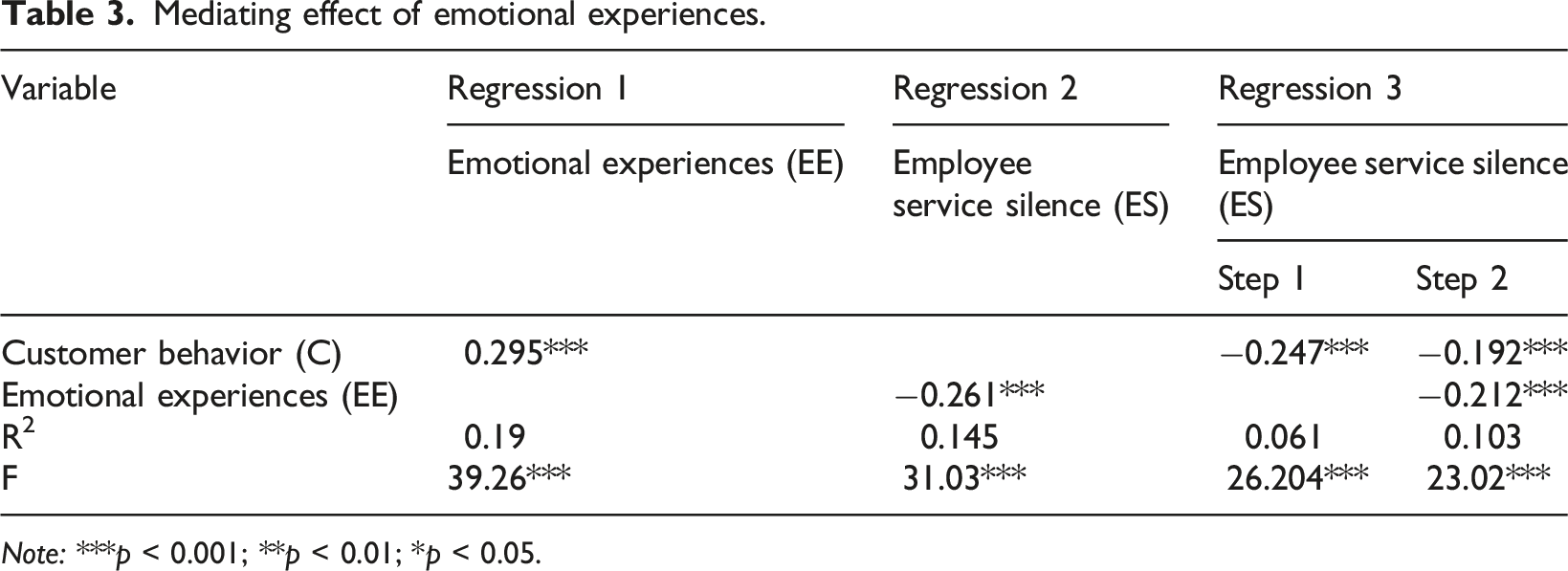
Mediating effect of emotional experiences.
Note: ***p < 0.001; **p < 0.01; *p < 0.05.
Descriptive statistics and correlation analysis
The results of the correlation analysis showed that customer participation (r = −0.321, p < 0.001), positive evaluation behavior (r = −0.229, p < 0.001), relationship-building behavior (r = −0.331, p < 0.001), and complaint behavior (r = 0.233, p < 0.001) all had significant impacts on employee service silence. Additionally, employee emotional experience was significantly related to service silence. Demographic variables (age and gender) also had some influence on employee service silence. These results provided an important basis for subsequent analysis.
Hypothesis testing results
First, this study constructed path analysis models using Mplus 8.3 software to test H1 to H4 individually. After controlling for gender and age, the study found that the three types of customer behavior significantly impacted employee emotional experiences. Specifically, customer participation had a significant positive impact on positive emotional experiences (β = 0.231, SE = 0.077, p = 0.001). Positive evaluation behavior also had a significant positive impact on positive emotional experiences (β = 0.319, SE = 0.081, p = 0.001). Relationship-building behavior had a significant positive impact on positive emotional experiences (β = 0.322, SE = 0.092, p = 0.001). In contrast, complaint behavior had a significant positive impact on negative emotional experiences (β = 0.411, SE = 0.089, p = 0.001). Additionally, positive emotional experiences had a significant negative impact on service silence behavior (β = −0.229, SE = 0.019, p = 0.001), while negative emotional experiences had a significant positive impact on service silence behavior (β = 0.361, SE = 0.079, p = 0.001).
Subsequently, the study found that positive emotional experiences had a significant indirect effect between customer participation and service silence behavior (b = 0.073, SE = 0.027, 95% CI = [0.015, 0.128]). Positive emotional experiences also had a significant indirect effect between positive feedback behavior and service silence behavior (b = 0.056, SE = 0.029, 95% CI = [0.001, 0.113]). The mediating effect of negative emotional experiences between complaint behavior and service silence behavior was partially significant (b = 0.023, SE = 0.017, 95% CI = [0.011, 0.223]). Except for Hypothesis H4c, the results supported the other research hypotheses of this study.
Secondly, this study employed hierarchical regression analysis to examine the mediating effect of emotional experiences between customer behavior and employee service silence. In Regression 1, customer behavior was positively correlated with employee emotional experiences (β = 0.267, p < 0.001). In Regression 2, employee emotional experiences had a significant negative correlation with service silence behavior (β = −0.277, p < 0.001). In Regression 3, with customer behavior and emotional experiences as independent variables and service silence as the dependent variable, the results showed that customer behavior still had a significant impact on service silence (β = −0.199, p < 0.001). However, the impact was weaker than in the first step (−0.234). Therefore, emotional experiences partially mediated the relationship between customer behavior (C) and service silence behavior (SS).
Conclusions and discussion
This study, based on the context of AI service contact compatibility in China’s hotel industry, investigated the underlying mechanisms influencing employee service silence behavior. It introduced the mediating variable of “emotional experiences” and the moderating variable of “AI perception level,” constructing a research framework of “customer behavior - emotional experiences - service silence.” The empirical results revealed that customer participation, positive feedback, and complaint behaviors significantly impacted frontline employee service silence. Furthermore, employee emotional reactions (positive or negative emotions) played a significant mediating role in this relationship, acting as the driving force behind service silence behaviors.
Therefore, considering the hotel industry context and AI-compatible contact scenarios, this study offers valuable managerial insights for effectively addressing employee service silence behaviors. First, it is essential to recognize the impact of customer behavior on employee negative work behaviors. Strengthening service contact and interaction management, as well as customer behavior management, is crucial. In the context of AI service contact compatibility, opportunities should be created for customers to actively participate and express their opinions, enhancing the depth of service interaction. Second, frontline service personnel should be empowered and affirmed. A service atmosphere that tolerates and encourages experimentation should be established. Employees should be encouraged to voice their opinions on service issues, ensuring timely and synchronized communication. This will foster a sense of psychological safety and proactive suggestion intentions among team members, guiding shared visions and enhancing collaboration and responsibility. Third, interventions should be implemented to acknowledge employee value and provide social support. Measures should be taken to stimulate positive emotional experiences among employees, creating scenarios that elicit positive emotions during service contact and promoting emotional interactions among employees. This will help minimize workplace loneliness and service frustration. Finally, employee psychological resilience should be considered. Based on the characteristics of the ceramic cultural and creative service context, organizational context, and individual employee psychological perceptions, targeted “resilience education” and psychological safety guidance should be provided to enrich the intervention methods for enhancing employee psychological resilience.
Footnotes

Funding
The authors received no financial support for the research, authorship, and/or publication of this article.
Declaration of conflicting interests
The authors declared no potential conflicts of interest with respect to the research, authorship, and/or publication of this article.