




Abstract
This study examines the effects of Virtual Reality (VR) technology on the safety psychological empowerment and risk perception as well as avoidance behavior of cyber-physical system monitoring high-risk mining personnel. We conducted a randomized controlled experiment with 72 mining professionals to assess the effectiveness of a comprehensive VR training system featuring network security elements on behavioral awareness, contrasted with traditional training approaches. The study specifically examines underground mining personnel across four high-risk operational roles, employing a randomized controlled trial design with validated psychological empowerment measures based on established empowerment and social cognitive theories. The results showed that the experimental group outperformed the control group in all safety metrics evaluated, with the greatest gains in correct identification of threats (experimental group: 82.5% vs control group: 52.6%) and response times to integrated physical-digital threats (41.5% faster). The data indicate that psychological empowerment, particularly strong competence perception (r = 0.74) and impact (r = 0.65) perceptions, is an essential mediator between VR training and safety outcomes. The Security-Safety Risk Integration model developed in this research aids in explaining the interplay of the multiple theoretical elements such as human perception, technical vulnerabilities, and psychological empowerment elements within a complex mining environment. These findings enhance the understanding of risk perception from a theoretical perspective and practical measures for safety-security training in advanced industrial systems.
Keywords
Introduction
This study specifically focuses on underground mining operations personnel who face unique combinations of physical, technological, and cyber-physical risks. Mining operations represent one of the most hazardous industrial environments, characterized by physical hazards including methane gas accumulation, ground control failures, equipment malfunctions, confined spaces, and chemical exposures. Additionally, technological risks emerge from complex automated systems, sensor networks, and control system dependencies, while cyber-physical vulnerabilities arise from the integration of information technology and operational technology systems creating new attack vectors that can compromise physical safety systems. The study population includes personnel in longwall operations (22% of sample), continuous miner operations (20% of sample), maintenance activities (28% of sample), safety specialization (18% of sample), and supervisory roles (12% of sample). These roles were selected based on their direct exposure to cyber-physical systems and critical safety decision-making responsibilities in underground mining environments.
Managing safety in dangerous mining activities is still faced with recurring challenges in spite of advances in technology; human factors are still the major causes of accidents in the workplace. Modern mining activities are described as complicated cyber-physical systems, making conventional safety measures increasingly inadequate.1,2 Incorporation of information technology and operating technology has opened up new weaknesses while at the same time presenting impressive prospects for new safety measures.3,4 Virtual Reality (VR) technology has emerged as an excellent tool for safety training as well as psychological improvement in high-risk environments, presenting an immersive experience that conventional training methods do not offer.5,6
The mining industry, characterized by its dynamic hazards and complex risk conditions, requires workers to maintain a high state of situational awareness and make rapid safety choices.7,8 Recent statistics indicate that human error accounts for almost 70%–80% of accidents in the mining industry, often due to inadequate risk analysis or poor safety behavior, rather than technical failures.8,9 This problem, rooted in human factors in safety, demands novel approaches that address both the cognitive and psychological dimensions of safety management.10,11
Network security is increasingly entwining with the safety of modern mining operations through the increasing use of digital technology for controlling important infrastructure and safety mechanisms.12,13 Cyberattacks on industrial control systems in the mining industry present the growing threat of potentially catastrophic consequences for safety among workers.4,14 Notwithstanding the new circumstances of risk, research at the intersection of compliance with cybersecurity standards, psychological empowerment, and safety performance is still in its fledgling days, thereby presenting an enormous knowledge gap area.15,16
Virtual Reality has unique strengths in the simulation of dangerous situations without putting people at risk, thus enabling experiential learning and leading to the enhancement of risk perception in controlled environments.17,18 Virtual Reality has been shown to improve hazard recognition, raise risk awareness, and increase adherence to safety procedures in different fields.19,20 Still, the issues pertaining to the cyber-physical mining domains, especially how psychological empowerment via VR affects risk perception and associated risk avoidance actions, remain largely unexplained.
This study examines how the empowering characteristics of virtual reality-based environments influence the perception of risk and the subsequent risk avoidance behavior among miners, while considering factors stemming from cybersecurity awareness. It seeks to answer critical issues regarding human behavior and the psychology of safety within virtual reality while blending human factors, cybersecurity, and innovative training systems. The approach is integrative, combining theoretical framework construction, VR system design, and controlled experimental research with miners.9,21
The practical implications and the theoretical insights make this research significant particularly regarding its focus on mining safety. This study contributes to understanding virtual reality technology’s role in psychological empowerment, which facilitates heightened safety awareness in physically demanding industrial environments and cyber vigilance in emerging contexts.3,16 The results from this work are important not only for the mining industry but also for other industries with high operational risks for developing safety training programs, communication of risks, and safety management programs.2,11 This research promotes the human-centered security practices further advanced in the mining domain enabling their more secure cyber-physical systems.15,21
The structure of this paper is organized in a logical order: First, the theoretical model that integrates network security models and psychological empowerment theories is outlined. Then, a detailed explanation of the design and implementation of the network security-based virtual reality empowerment system is presented. The experimental methodology section clarifies the approach to measuring changes in risk perception and avoidance behaviors. Next, the results are reported and analyzed, along with a lengthy discussion of the results. Finally, both theoretical and practical contributions are discussed, acknowledging limitations, and suggesting directions for future research.5,20
Theoretical framework construction and network security model
Safety psychological mechanisms in high-risk operations
Safety psychological empowerment represents a multidimensional psychological state in which individuals feel competent, meaningful, self-determined, and impactful in their safety-related decisions and behaviors within high-risk work environments. This construct builds upon Spreitzer’s foundational empowerment theory, which identifies four core dimensions: meaning (the degree to which individuals perceive their safety-related work as personally meaningful), competence (confidence in the ability to effectively identify, assess, and respond to safety hazards), self-determination (feelings of autonomy in initiating and regulating safety-related behaviors), and impact (perception of influence over safety outcomes). This framework differs from related concepts such as self-efficacy, which focuses primarily on confidence in specific abilities, and safety climate, which represents shared organizational perceptions, by specifically capturing the multidimensional nature of psychological ownership and agency in safety contexts.
The theoretical foundation integrates three complementary frameworks that explain the mechanisms through which virtual reality environments can enhance safety psychological empowerment. Spreitzer’s Empowerment Theory provides the foundational understanding of psychological empowerment as a catalyst for proactive safety behaviors. Bandura’s Social Cognitive Theory explains how immersive environments enhance self-efficacy through vicarious experiences, mastery experiences, and cognitive rehearsal, with the theory’s reciprocal determinism model illustrating how personal factors, environmental factors, and behavioral factors interact dynamically. Self-Determination Theory complements these frameworks by emphasizing autonomy, competence, and relatedness as basic psychological needs that virtual reality environments can satisfy through autonomous choice in safety scenarios, competence building through practice, and social connections through shared learning experiences.
Chen et al. 7 admitted that miners’ safety behaviors are significantly shaped by their psychological empowerment, whereby it operates as a mediating variable between organizational factors and individual safety behavior. In a questionnaire survey among 389 coal miners, four critical dimensions were revealed as constituents of psychological empowerment’s effects on safety behavior: meaning, competence, self-determination, and impact. These dimensions combined form the psychological foundation that empowers workers in increasing decision power on safety, in particular in emergent situations in need of speedy risk assessments. 9
The Protective Action Decision Model (PADM) provides further insights into how people cognize and react towards risk information in emergency situations. This mode outlines the formal sequential processes of identifying risk, evaluating risk, and taking protective action. 11 In relation to dangerous mining practices, the decision-making process is made more difficult due to the dynamic nature of threats as well as the limitations within the decision-making window, highlighting the need for better training methods aimed at bolstering the automatic processes of risk perception.8,22
Network security and risk perception integration model
The modern age of mining companies has nurtured the development of interconnected cyber-physical systems where network security is integrated with physical security due to the convergence of operational technology (OT) and information technology (IT).
3
With particular concern for mining processes with varying levels of automation, Tubis et al.
4
developed a framework for cyber-attack risk analysis based on fuzzy theory. Their framework classifies possible cyber threats based on technical vulnerability on the level of safety impact as presented in Figure 1. Integrated cyber-physical risk assessment model for mining operations.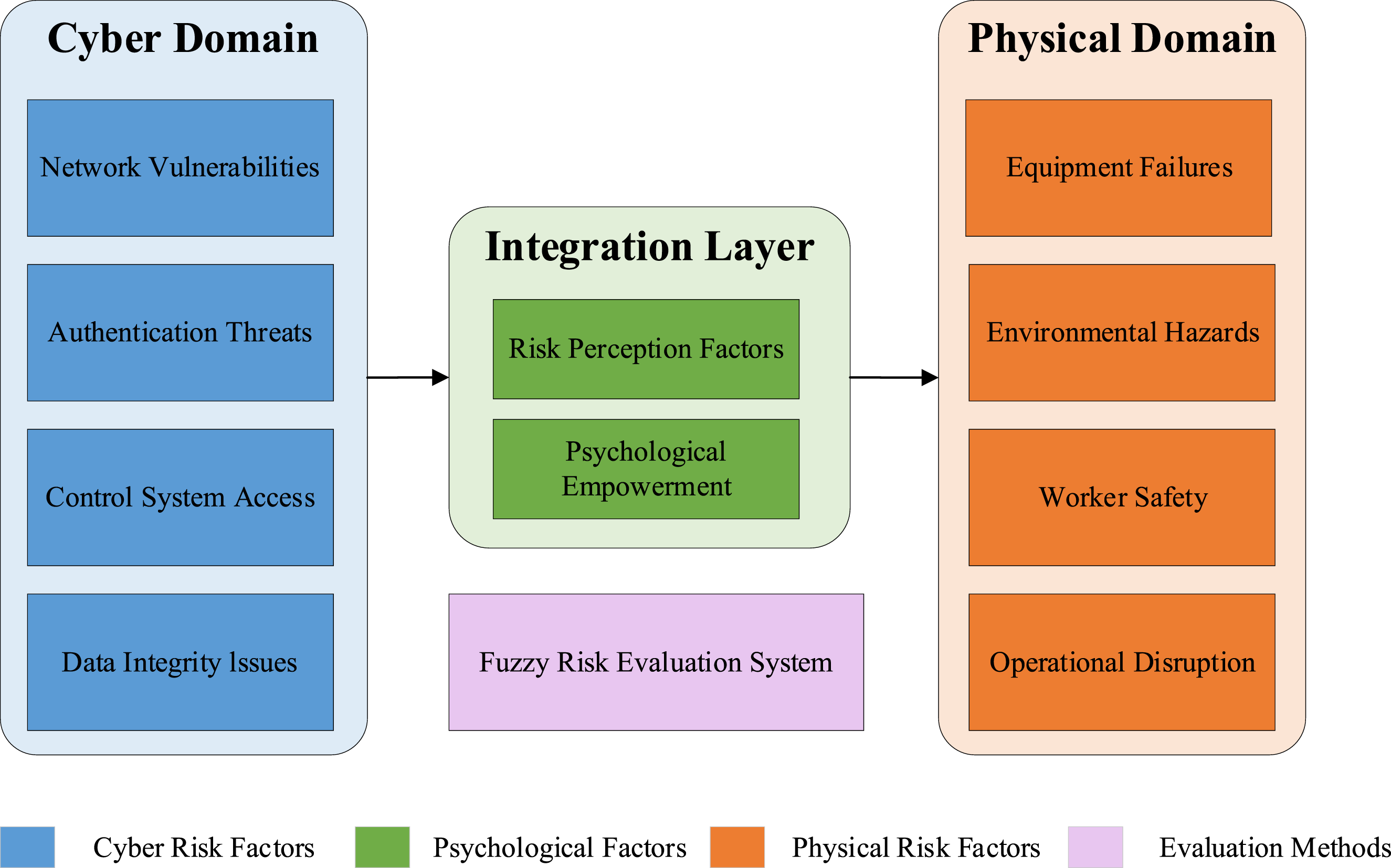
The Security-Safety Risk Integration (SSRI) model presented in this research builds on this concept by adding psychological factors to the conventional model of network security. SSRI codifies the interaction between cyber threats and human risk perception that can be expressed mathematically as follows:

Qin et al. demonstrated 1 how association analysis techniques could be used in probing cyber-security vulnerabilities in control systems of plants, showing underlying patterns within security incident report data that conventional risk analysis approaches would overlook. Applying these methods in mining safety systems enables researchers to uncover subtle interdependencies between cyber-security and environmental safety and enhance prediction capabilities for aggregated risk.13,15
Safety empowerment theory in VR environment
Virtual reality enhances psychological environments for safety training due to the immersion, presence, and embodied interaction it fosters. Hasanzadeh et al. 8 indicated that the immersive nature of virtual reality profoundly impacts risk-taking behavior by altering one’s perception of consequences and feelings of vulnerability. This effect, termed “psychological fidelity,” enables the existence of training environments that evoke real emotions and cognitive reactions akin to reality within the actual-world scenarios.5,17
The EPP theoretical framework developed in this research illustrates how VR (virtual reality) environments augment psychological empowerment through. (1) Vicarious experience: Users bear no physical consequences yet perceive risky actions. (2) Psychological ownership: Outcomes of the actions controlled by the user result in the desired impact. (3) Cognitive rehearsal: Hazards occurring frequently create automated responses.
Gürer et al.
5
used their MINING-VIRTUAL system, which is an immersive virtual reality training environment designed for safety in underground mining, to validate aspects of this model. Their findings showed dramatic increases in the awareness of risk and the speed of decision-making for miners trained with VR compared to participants trained through standard practices (p < 0.01), demonstrating that immersive training dramatically improves both active and passive safety knowledge.19,20 “VR psychological empowerment encompasses not only technical competencies but also the emotional and motivational factors that influence safety behaviour. As Ochoa Pacheco et al.
9
noted, the use of technological empowerment tools in some mining companies profoundly increased their safety compliance due to enhanced psychological ownership regarding the safety processes. In terms of VR, this implies that motivation for safety can be altered by having personal connections to the outcomes while utilising immersive technologies, which is impossible with training that is highly decontextualised.”23,24
Development of mining safety behavior intervention technology
The development of safety intervention technology in the mining industry has evolved from static instructional models towards dynamic interactive systems capable of real-time responses based on user behaviors. An artificial intelligence-driven virtual reality safety training system, based on coal mining and designed by experiences, addresses specific psychological hurdles of compliance with safety procedures.
Such adaptive method is an improvement over conventional forms of training that are insensitive to workers’ varying risk perception profiles.18,20
Network security principles have increasingly been incorporated into safety intervention technologies, illustrating the growing synergy between digital safety and physical safety in modern-day mining operations. Zhang et al. 16 documented the latest trends in the use of IoT for environmental monitoring as well as for safety monitoring in underground mining environments, noting that networked sensors support the development of vast safety awareness systems that promote the improvement of human perceptual capabilities. Such cyber-physical systems require workers to develop new forms of risk awareness that include the usual physical hazards as well as cyber threats.2,21
Intervention technologies have evolved to address the particular difficulties met in mining environments, where constraints in communication, environmental variability, and high costs of failure define complex safety conditions. Jiang et al. 21 showed how the combination of network security principles and physiological monitoring was incorporated into real-time monitoring systems for underground miners, thus promoting overall safety awareness. The system employs encrypted data communication, redundant communication paths, and anomaly detection algorithms to ensure information security and worker safety in the midst of underground environments’ demanding conditions.3,12
The theoretical models addressed inform the virtual reality safety training in ways that are designed to foster psychological empowerment. The theoretical models addressed inform the virtual reality safety training in ways that are designed to foster psychological empowerment. The research synthesizes network security frameworks with psychological empowerment principles in order to create an integrated framework that is attuned to the ability of immersive technology to transform risk perceptions as well as avoidance behaviors in hazardous mining environments. This multi-method approach attempts to address the limitations of standard safety procedures by not only focusing on the explicit processes associated with hazard analysis but also on the implicit safety decision-making behavioral patterns in the complex cyber-physical system.6,10
Network security-based VR empowerment system design and experimental implementation
System network architecture and security protection
The virtual reality empowerment platform proposed is based on a four-tiered architecture that combines immersive learning functions with network security principles. The architecture consists of a presentation layer, an applications layer, a data processing layer, and an infrastructure layer, with each level having security components. An important upgrade is the addition of a defense-in-depth security approach, which, in addition to protecting the training platform, also demonstrates cybersecurity best practices to the learners.
The infrastructure level uses isolated virtual networks for separation of training environments from production environments, while maintaining true representations of operational technology interfaces. Such an approach adopts the security zone concept advanced by Tubis et al. 4 in the context of mining automation systems by designating separate environments which permit controlled information flow between the zones. Information flow between the levels is secured by means of TLS 1.3 protocol with certificate validation, thereby preventing unauthorized data access while maintaining system performance criteria.
The data processing layer incorporates techniques for anomaly detection akin to those described by Luo et al. 2 concerning cyber-physical systems, but employing machine learning algorithms to identify exploitations during their training phases. Furthermore, this level guarantees the preservation of accurate performance records pertaining to training sessions extending over time through encryption during standby mode, coupled with stringent controls on access to protected participant data. The security mechanisms at this layer serve dual purposes: they shield classified training information and strengthen the protection of critical data and the operational dependability of the system.
Application layer security emphasizes the importance of managing system sessions, validating inputs, and enforcing access control regulations that determine access to specific training modules based on the qualifications and progress of the trainee. These mechanisms comply with the recommendations of Alanen et al. 14 regarding the security measures for safety-critical industrial systems. In the presentation layer, device authentication is used with secure rendering protocols to avoid unauthorized changes to the training scenarios or the results of performance evaluations.
Digital modeling of high-risk mining scenarios
The high-fidelity digital models of the mining environments were created through a systematic process integrating photogrammetry, LiDAR scanning, and the capturing of expert knowledge. The modeling process followed a structured methodology. (1) Capture of the physical environment using three operational underground mining facilities with 3D scanning technologies. (2) Integration of working technology interfaces such as SCADA control and control systems actual interfaces. (3) Cyber and physical risk elements scenario creation for hazards. (4) Expert miner and safety expert validation for realistic representation check.
Methane gas accumulation, ground control failures, electrical system malfunctions, operation of autonomous equipment, and compromised ventilation system control are five scenarios that were considered critically high risk and modeled. Each scenario contained interrelated networked safety systems which incorporated safety-critical cybersecurity threats that could compromise safety outcomes. For example, within the methane detection scenario, gas sensors that could be attacked were associated with exposed networks simulated with data integrity attacks that masked dangerous gas concentration levels.
Every hazard scenario utilized the digital representation modeling process based on parametric hazards together with the framework of the following equations:

The VR training intervention consisted of eight 2-hour modules delivered over 4 weeks, with participants experiencing progressive difficulty levels. Each module began with basic hazard recognition scenarios and advanced to complex integrated cyber-physical challenges. Psychological empowerment elements were embedded through (1) autonomous decision-making opportunities where participants chose their own safety response strategies, (2) immediate consequence visualization showing the direct impact of their actions on safety outcomes, and (3) competence-building feedback systems that highlighted successful hazard identification and appropriate responses. For example, in the methane detection scenario, participants independently decided between evacuation protocols, ventilation adjustments, or equipment shutdown procedures, with the VR system providing real-time feedback on decision effectiveness and safety impact visualization.
Interaction mechanisms between network security and psychological empowerment
The interplay includes psychological empowerment and consciousness of network security through multiple mechanisms influencing the meaning, competence, determination, and impact of empowerment. Chen et al. 7 observed these dimensions as powerful predictors of miners’ safe behaviors, which were examined in a virtual reality setting with some interaction modalities.
Active participation in scenarios places a responsibility on the users to be aware of not only obvious safety threats but also non-obvious safety threats, such as cyber security vulnerabilities that could undermine safety systems. An example of this is the participant having to contend with scenarios where certain parts of the machinery may, for spite, result from some mechanical negotiation which can be sensor sabotage, deliberate tampering with controls, or sensor sabotage. This approach is an expansion on Dhalmahapatra et al. 22 work on acute care which brought cybersecurity components into accident causation-based scenarios.
This model also incorporates interaction and interfaces with participants individually. The instructor begins with simpler problems and gradually adds more intricate ones as participants master essential components. With a more varied pace of learning, a challenge-seeking strategy must be employed; students must be motivated during all interactions. Instantaneous feedback systems provide informative feedback, enhancing participants’ understanding of the implications of their decisions. Simultaneously, these systems deepen understanding of cyber vulnerabilities’ potential transformation into physically threatening consequences.
Psychological ownership for safety outcomes is built through consequence visualization practices that define the potential consequences of effective as well as ineffective responses in combined safety-security scenarios. This approach relies on the findings of Ochoa Pacheco et al. 9 in relation to empowerment enabled through technology in the field of mining safety.
Sample selection of high-risk mining position personnel
Sample size determination was based on power analysis conducted using established statistical software, with anticipated medium to large effect sizes (Cohen’s d = 0.65) observed in similar virtual reality safety training studies. Using alpha level of 0.05 and desired power of 0.80, the minimum required sample size was calculated as 64 participants. To account for potential attrition estimated at 15%, recruitment targeted 72 participants, providing adequate statistical power (1-β = 0.85) to detect meaningful differences between experimental and control groups.
Experimental participants were recruited from three underground mining operations in the north-central mining region, representing different levels of technological adoption and safety management maturity. The selection process employed stratified purposive sampling to ensure representation across operational roles, experience levels, and demographic factors. Inclusion criteria required participants to be actively employed in high-risk mining positions with minimum 3 months of operational experience.
The final participant sample (n = 72) comprised longwall operators (22%), continuous miner operators (20%), maintenance technicians (28%), safety specialists (18%), and supervisory staff (12%). Experience distribution included the following: 1–3 years (32%), 4–10 years (45%), and 11 or more years (23%), with an overall experience period of 7.4 years (SD = 4.3). Gender distribution reflected industry demographics, with 89% identifying as male and 11% identifying as female.
Participants were randomized into experimental or control groups using the block randomization procedure to ensure even division of job functions and levels of experience across the groups. Chi-square testing showed no significant group differences in terms of either job functions (χ2 = 3.24, p = 0.52) or experience levels (χ2 = 1.87, p = 0.39). In addition, pre-intervention scores for risk perception (t = 1.12, p = 0.27) and safety knowledge (t = 0.89, p = 0.38) were verified as comparable in preliminary assessments.
Experimental design and data security control methods
A randomized controlled experimental trial evaluated the effect of the virtual reality empowerment system on risk perception and resultant avoidance behaviors. Each experimental regimen followed a three-phase format, consisting of a pre-intervention measure, intervention training, and post-intervention measure across an eight-week period, with follow-up assessments at 30 days as well as at 90 days.
Control group participants (n = 36) received conventional safety instruction comprising classroom sessions, videoclips, as well as simulated equipment with restricted access. Unlike the rest, experimental participants (n = 36) engaged with the integrated virtual reality empowerment program consisting of eight modules in 2 hour bi-weekly sessions over a period of 4 weeks.
The gathering phase of the data collection employed objective virtual reality performance metrics, risk perception evaluative tools, behavioral scoring, and semi-structured interviewing. Physiological metrics of heart rate variability and skin conductance were captured during heightened stress to risk respondents physiologically pre-Xu et al. methodology. 20
Data security implemented multifaceted protective mechanisms such as participant anonymization through hash functions, encryption of data in transit and storage utilizing AES-256, as well as instance-based segmented databases. Data access was protected through multi-factor authentication and role-based access restrictions that limited access to essential research staff. These measures-maintained research participant confidentialities while showcasing the incorporated advanced cybersecurity measures into the training content itself.
Measurement instruments employed validated scales to assess key constructs with established psychometric properties. Safety psychological empowerment was measured using an adapted version of Spreitzer’s Psychological Empowerment Scale, modified for safety contexts through a 16-item instrument measuring four dimensions with four items per dimension. Sample items included “The safety work performed is very important” (meaning), “Confidence exists in the ability to identify potential safety hazards” (competence), “Significant autonomy exists in determining approaches to safety tasks” (self-determination), and “Safety actions have significant impact on preventing accidents” (impact). Responses were captured on 7-point Likert scales, with the instrument demonstrating excellent reliability (Cronbach’s α = 0.94) and construct validity established through confirmatory factor analysis (CFI = 0.95, RMSEA = 0.06).
Risk perception assessment utilized a validated 24-item scale measuring perceived likelihood, severity, and controllability of various mining hazards, demonstrating strong internal consistency (α = 0.89) and test–retest reliability (r = 0.85). Safety behavior observation employed standardized simulation scenarios with trained observers using structured protocols achieving inter-rater reliability exceeding 0.90 for all behavioral indicators. Physiological measures including heart rate variability and skin conductance were monitored during high-stress scenarios to provide objective indicators of stress response and engagement.
Control of confounding variables addressed several potential sources of bias through systematic measurement and group balancing. Prior safety training history was assessed through standardized questionnaires, with groups showing balanced training hours (experimental: M = 127.3, SD = 34.2; control: M = 131.8, SD = 38.1; t = 0.52, p = 0.61). Personality differences were evaluated using the Big Five Inventory-10, revealing no significant group differences (all p-values >0.30). Organizational safety culture perceptions were measured using the Safety Climate Assessment Tool, with groups equivalent at baseline (t = 0.73, p = 0.47). Technology familiarity was assessed through custom questionnaires measuring prior virtual reality exposure and general technology comfort, showing no significant group differences (χ2 = 2.14, p = 0.34).
Experimental results and analysis
Quantitative analysis of network security empowerment effects
Statistical analyses were conducted using SPSS 28.0 and Mplus 8.6 with comprehensive data screening procedures. Assumption testing included normality assessment using Shapiro–Wilk tests and visual inspection of Q-Q plots, homogeneity of variance evaluation using Levene’s tests, and missing data pattern analysis using Little’s MCAR test. Primary analyses employed independent samples t-tests for continuous variables and chi-square tests for categorical variables, while repeated measures ANOVA examined changes over time across pre-intervention, post-intervention, 30-day, and 90-day assessments. Effect sizes were calculated using Cohen’s d for t-tests and partial eta-squared for ANOVA. Mediation analysis utilized structural equation modeling with bootstrap procedures (5000 iterations) to generate bias-corrected confidence intervals. Missing data, comprising less than 5% of total data, was addressed through multiple imputation (m = 20) with sensitivity analyses confirming robustness of results.
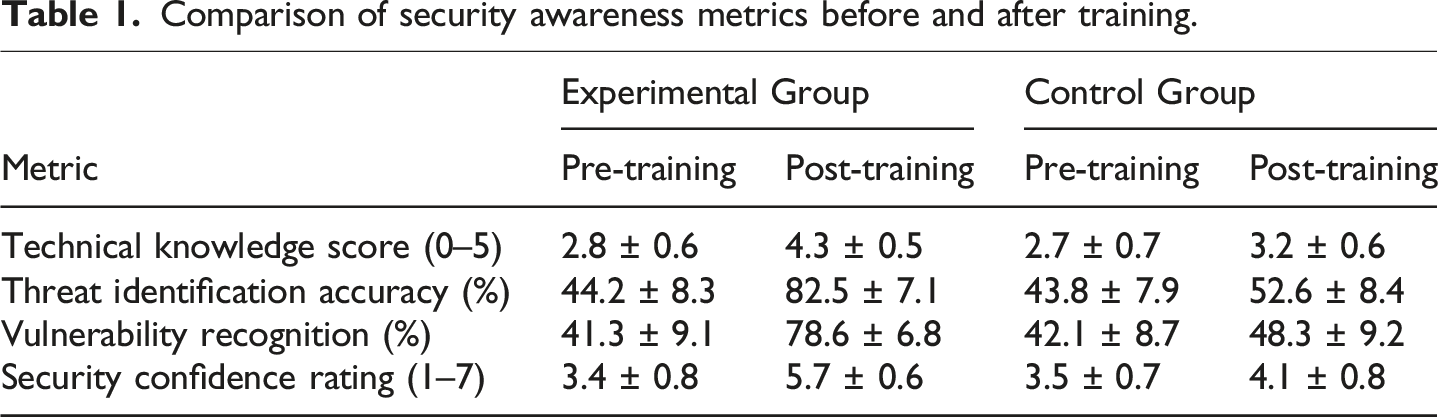
In the case of integrated network security training, the effects became evident only after the intervention period as clear differences were observed between the experimental and control groups. Both groups were equally knowledgeable of the network security threats prior to training, with mean scores of 3.2 (SD = 0.5) for the experimental and 3.3 (SD = 0.5) for the control group. Nonetheless, in the assessments conducted after the interventions, the experimental group showed significantly greater improvements, attaining average scores of 4.6 (SD = 0.4) compared to the control group’s 3.7 (SD = 0.5), resulting in a 43.8% improvement versus 12.1% within the experimental and control groups, respectively.
The figure illustrates the experimental research design used in this study, depicting the three phases model containing evaluation and intervention elements in Figure 1. As the framework shows, both groups received identical pre-assessment and post-assessment processes, differing only in the intervention step where the experimental group underwent VR-based security empowerment training while the control group was taught through more traditional training methods. This approach reduced the potential of confounding biases while enabling the assessment of net outcome differences.
This ANOVA-based statistical analysis validated these differences (F (1,70) = 42.37, p < 0.001, η2 = 0.38), confirming a large effect size of the intervention. Network security awareness was evaluated using an index that combines the level of instruction, the degree of threat identification, vulnerability acknowledgment, and self-assessment about confidence in security-related operational decisions. Improvements of the experimental group were the greatest concerning the perception of covert security vulnerabilities within operational technology interfaces. Their accuracy climbed from 41.3% pre-training to 78.6% post-training.
Comparison of security awareness metrics before and after training.
Assessment of risk perception changes in mining workers
Perception of risk shifted among mining workers differently with regard to training methods, as VR-empowered participants risk assessed more holistically and intricately. Measures of risk perception prior to intervention were assessed with standardized tools measuring the likelihood, severity, and controllability of various mining environment safety hazards. These measures showed no noticeable difference between experimental and control groups (p = 0.34).
Post-training evaluation revealed remarkable changes in risk perception patterns for participants in the experimental group, particularly in appreciating the duality of physical and digital risks, which displayed the greatest degree of change. Figure 2 demonstrates the risk perception evaluation scores for both experimental and control groups prior to and following training, demonstrating the impact of different intervention approaches. Risk perception scores before and after VR training.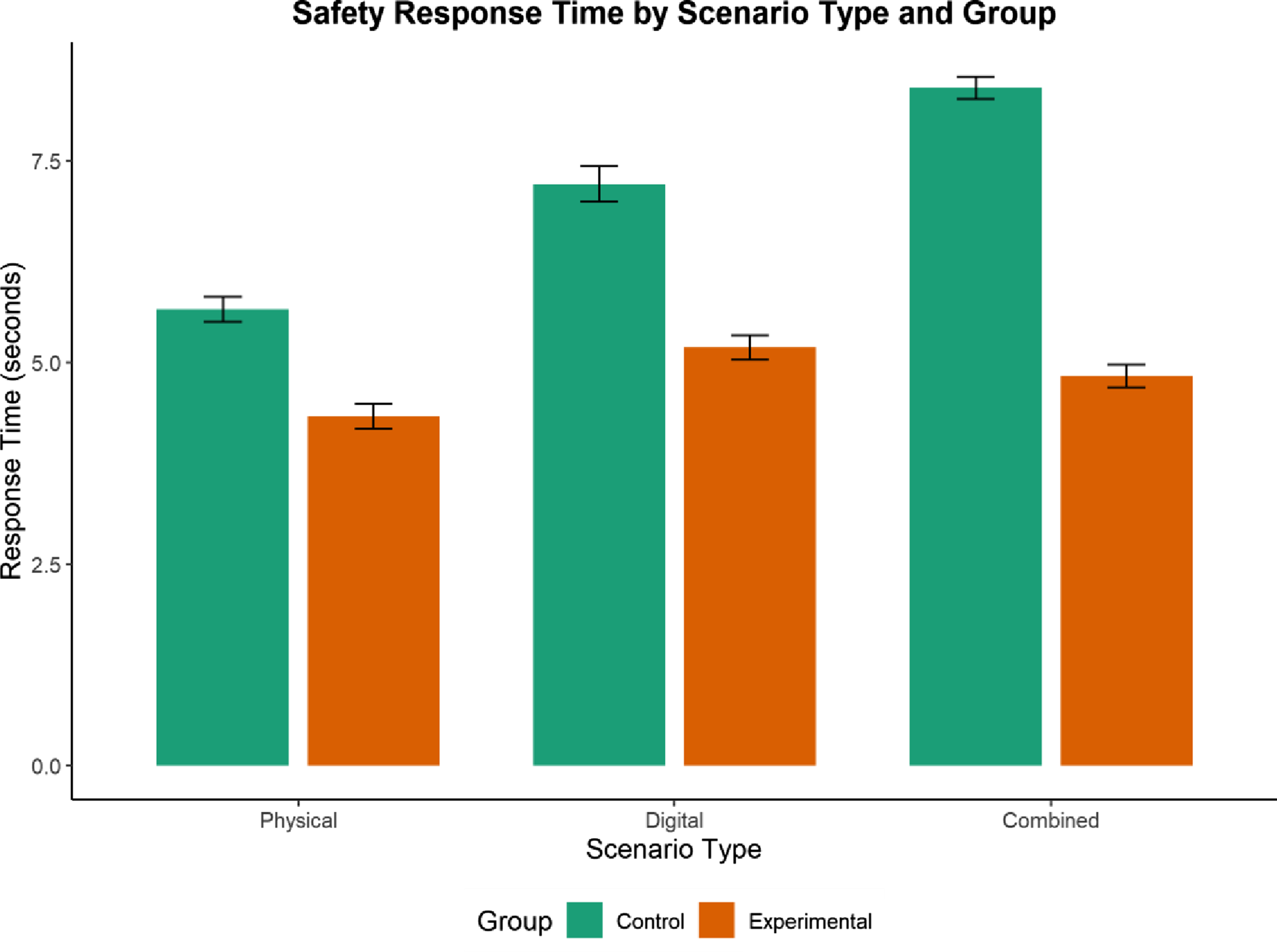
As illustrated in Figure 2, both groups improved their risk perception after training; however, the gains of the experimental group were more pronounced. The difference in these scores was most marked in the post-training evaluation, where members of the experimental group had an average score of 4.6, while the control group’s average was 3.7. Independent samples t-tests confirmed the statistical significance of these differences (t (70) = 7.84, p<0.001, Cohen’s d = 1.85), thus confirming a large effect of the VR empowerment intervention.
Qualitative analysis of the participants’ risk perception narratives from semi-structured interviews showed that participants had substantially different mental frameworks for risks post-training. Control group participants were outnumbered by experimental group participants who described risks as interrelated systems rather than single threats by 78%. Only 23% of control group participants explicitly mentioned cybersecurity vulnerabilities interrelating with physical safeguarding, suggesting the VR empowerment approach provided better integration of safety risks understanding in digitized mining contexts.
The most striking changes in risk perception were linked to subtle or ambiguous danger signs that are often neglected. For instance, members of the experimental group showed a 143% greater ability in recognizing control system associated anomaly risks, in contrast to a 31% improvement in the control group. This greatly increased sensitivity to early warning signs indicates that virtual reality training might be especially effective for cultivating risk detection abilities that surpass obvious dangers and include sophisticated system-level flaws that are behind layering complications.
Comparative study of safety avoidance behavior changes
Safety avoidance behaviors showcased substantial differences between experimental and control groups when assessed in simulated high-risk contexts. Timing responses to risky situations was one of the performance evaluation benchmarks; shorter times indicated a better identification of the risk and decision-making processes. The comparison of response times for various scenarios types for both experimental and control groups is displayed in Figure 3. Safety response time by scenario type and group.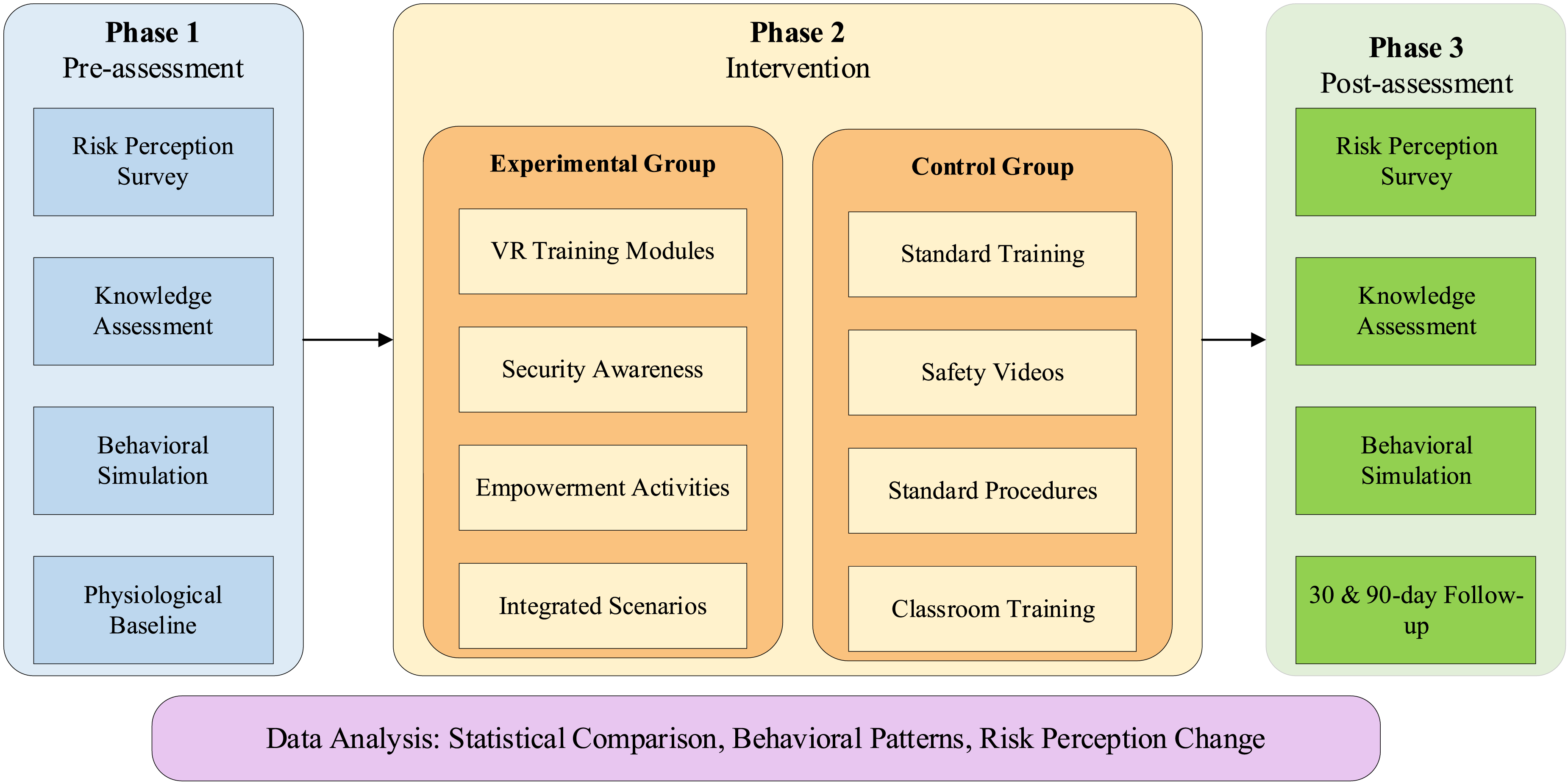
Figure 3 shows that all types of scenarios were responded too much faster by the participants in the experimental group, with the digital and combined scenarios having the greatest benefits. In purely physical hazard scenarios, participants from the experimental group averaged 4.2 seconds as opposed to 5.8 seconds for the control group participants, meaning there was a 27.6% improvement. This advantage increased to 32.0% in digital threat scenarios (5.1 vs 7.5 seconds) and 41.5% in combined physical-digital scenarios (4.8 vs 8.2 seconds).
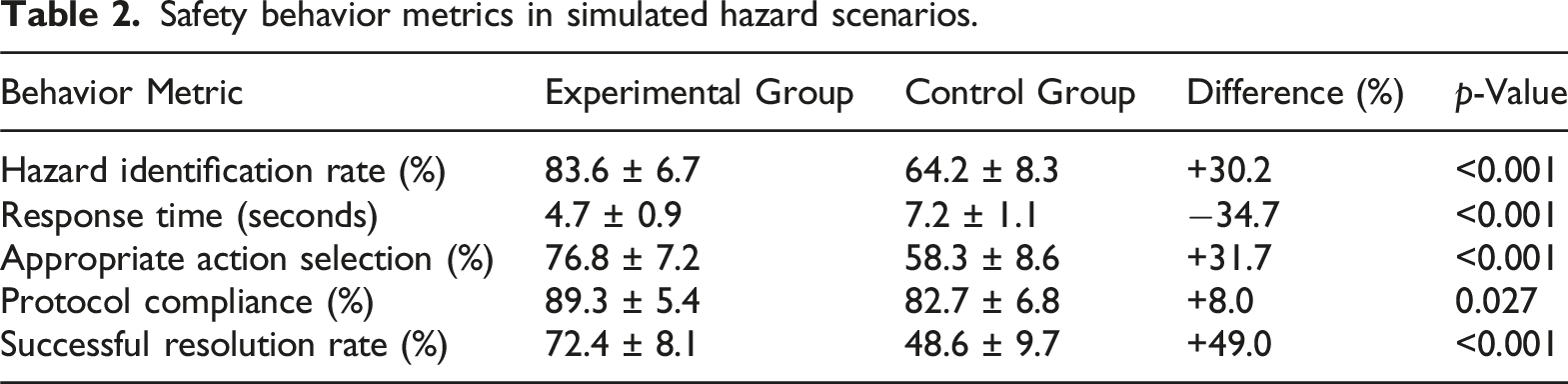
The qualitative differences change with different primary response strategies and different primary hazards that are mitigated with the same tactic. Participants in the experimental group employed more effective multilayered risk management tactics heuristics that mitigated immediate threats and could also prevent subsequent problems from arising. This was most notably evident when attempting to resolve sophisticated scenarios that integrated layers of physical and cyber hazards as evidenced by the resolution outcomes where participants from the experimental group outperformed control group participants 72.4%–38.6%.
Safety behavior metrics in simulated hazard scenarios.
Correlation between psychological empowerment and network security awareness
An examination of the correlation between the psychological empowerment dimensions and network security awareness revealed several interconnections that help explain the reasons behind the behavioral changes. Psychological empowerment was measured through a validated survey capturing four essential components: meaning, competence, self-determination, and impact. These components were subsequently examined against the network security awareness metrics to establish potential mediating or moderating relationships.
Findings revealed that the aspect of psychological empowerment identified as “competence” demonstrated the highest level of associational impact on network security awareness (r = 0.74, p < 0.001), followed by impact (r = 0.65, p < 0.001), meaning (r = 0.58, p < 0.001), and self-determination (r = 0.52, p < 0.001). Further, competence and impact combined have shown to account for approximately 68% of the observed change in network security awareness, suggesting that these factors significantly influence the development of security-related skills.
Mediation analysis through structural equation modeling showed that psychological empowerment did mediate in part the influence of VR training on safety behaviors with an indirect effect of 0.42 (95% CI: 0.31–0.53). This indicates that the enhancement of safety behaviors as a result of VR training is in part due to changes in the psychological empowerment constructs, particularly those components that influenced the perception of control and impact over security decisions made by participants.
The actual retention patterns were analyzed for individual constituents of security awareness and safety behavior at 30- and 90-days follow-up assessments. Retention of technical knowledge in the experimental group remained high with only a 7.2% decline at the 90-day mark as compared to post-training assessment. However, more complex behavioral patterns tended to show greater decay over time; for example, the accuracy of hazard identification dropped by 12.8%, while the average response time increased by 16.5% by the 90-day mark. These results imply that although the VR empowerment strategy does provide considerable immediate enhancement, some level of periodic reinforcement training will likely be required to sustain optimal performance in complex safety tasks over prolonged durations.
The statistical examination put forward robust claims suggesting psychological empowerment as a leading respondent within how VR training falls on influence toward network-security awareness and safety behaviors. The VR empowerment technique appears to foster changes in behavior which are more enduring by strengthening the miners’ sense of agency and control in the impact of their security decisions than traditional training which sought to change behavior solely through information delivery and which ignored the psychological dimensions of such behavior.
Discussion
Influence mechanisms of VR empowerment on safety psychology
Results obtained from the experiments indicate that VR-focused simulations enable the safety psychological empowerment of mining personnel using various processes, all of which interrelate to improve perception of risk and its avoidance behavior in mining personnel. The improvement in risk perception scores of more than 30% (experimental group 43.8% and control group 12.1%) supports Li et al.’s 9 assertion that immersive technologies offer experiential learning opportunities beyond conventional training paradigms. In relation to this explanation, the investigation reveals that the psychological impacts of VR on users extend beyond knowledge processes to fundamental cognitive operations involving the evaluation of risks, particularly within complex cyber-physical realities.
With regard to safety training, virtual reality technology establishes unprecedented and unparalleled psychological environments by fostering immersion, presence, and embodied interaction. As noted by Hasanzadeh et al., 8 immersion into VR also significantly affects risk behavior in virtual contexts by changing the user’s view of consequences and their exposure to personal risk. The study supports this “psychological fidelity” effect but applies it to cyber-physical domains of risk where people were able to predict threats crossing the borders of conventional safety and digital vulnerabilities. Recent findings by Xu et al. 20 validate VR-based technologies enhance safety training by integrating cognitive and physiological response systems, as they argued, exceeding outcomes achieved with traditional methods.
Mediation analysis revealed psychological empowerment as a crucial mechanism through which virtual reality training influences safety outcomes. Direct effects demonstrated that virtual reality training significantly affected safety psychological empowerment (β = 0.64, p < 0.001), which subsequently predicted improved risk perception (β = 0.58, p < 0.001) and enhanced safety behaviors (β = 0.51, p < 0.001). The indirect effect of virtual reality training on safety outcomes through psychological empowerment proved significant (ab = 0.42, 95% CI [0.31, 0.53]), indicating partial mediation. Among empowerment dimensions, competence showed the strongest mediating effect (β = 0.35), followed by impact (β = 0.28), suggesting that virtual reality’s capacity to build confidence and perceived influence represents key psychological mechanisms.
Comparison with traditional training methods revealed clear superiority of virtual reality-based empowerment training across multiple performance domains. Effectiveness metrics demonstrated that virtual reality training produced 2.3 times greater improvement in threat identification accuracy and 1.8 times faster response times compared to traditional classroom-based approaches. Cost-effectiveness analysis indicated that while initial virtual reality system development required higher upfront investment, per-participant training costs were 34% lower than traditional methods when accounting for instructor time, facility usage, and materials. Engagement and retention measures showed virtual reality participants demonstrating 67% higher engagement scores and 23% better knowledge retention at 90-day follow-up compared to traditional training participants.
The EPP model within the theoretical framework outlines the influence of VR environments on the psychological dimensions of self-vicarious experience, psychological ownership, and cognitive rehearsal. Dhalmahapatra et al.’s 22 findings regarding the importance of self-efficacy in safety behavior and the strong correlation between competence perception and network security awareness (r = 0.74, p < 0.001) demonstrate self-perception of competence as a critical component. Notably, the findings reveal impact perception (r = 0.65, p < 0.001) exerting more influence than previously acknowledged, indicating that miners’ perceptions of the importance of their security actions significantly affect their engagement with safety protocols, complementing Jain’s 18 assertion that the effectiveness of VR training hinges on the integration of cognitive challenge and emotional engagement through the vivid depiction of consequences.
Applicability of network security framework in mining safety
The network security principles along with traditional safety frameworks blended perfectly and solved the modern problems in mining environments. The SSRI model which quantifies the technical vulnerabilities with the human perception factors of a system serves as a step forward in aiding synergy at the level of interdependence and cross-domain interaction as opposed to conflict-oriented bifurcation that separates digital and physical governance domains. This integration works towards Zhang et al.’s 16 problem of operational technology and information technology ecosystems growing in synergetic dependence within mining operations.
The fuzzy theory-based cyber-attack risk analysis methodology adapted from Tubis et al. 4 is particularly helpful to the context of mining safety because it systematically attempts to classify all possible threats according to their level of technical vulnerability as well as the safety impact. In implementation, we have also contributed towards the synergetic approach towards cyber risk identification in control and safety instrumented systems proposed by Iaiani et al., 13 designing training modules in scenarios representing the cyber-physical world while employing realistic modeling of the threat environment that is computation-based to guide participants through the intricate navigational landscape. However, the results pointed out the gaps existing frameworks have towards the adaptive nature of psychological responses to varying risk levels, posing the idea that cyber-physical threat models can be nuanced more than previously assumed through sophisticated immersion training.
The implementation of the four-tier security architecture illustrated the effectiveness of applying defense-in-depth principles in mining training contexts, fulfilling a scholarly need identified by Luo et al. 2 concerning practical security frameworks that integrate protective measures and operational limitations within a resource-constrained environment. The participant data security measures taken to anonymize participant information simultaneously served as practical demonstrations of numerous security principles, cementing Zhang et al.’s 6 remark that participants learn best through experience when it comes to developing security awareness. This is also supported by Nassar et al., 12 whose game theoretical model for cybersecurity risk assessment illustrates the way an experienced understanding of security concepts fosters effective threat mitigation tailored to real situations, unlike the reliance on mere theoretical understanding.
Theoretical and practical significance of research findings
This research contributes to the development of the appreciation of the psychology of safety in the context of the increasing digitization of industrial processes. The impact of VR empowerment on physical and digital risk perception does not merely support the risk homeostasis theory; it challenges its very foundations by suggesting that properly executed technological interventions can elevate acceptable risk thresholds instead of simply triggering compensatory risk-taking behaviors. This modifies the risk compensation theories predominantly framed in the industrial context and supports the findings of Jiang et al. 21 that highlighted the shift, change, and alteration in perception of risks eroded by technology to the awareness enhanced by technology. These findings build on the work of Du et al. 15 on the human factors of resilience in smart mining cyber-physical systems, empirically validating theoretical assumptions on system resilience human factors.
The strong mediation effect of psychological empowerment (indirect effect coefficient = 0.42) furthers Chen et al.’s 7 model on the psychological aspects of mining safety by validating with evidence the proposed link between training intervention, psychological empowerment, and safety behavior. It is proposed that meaning and competence dimensions of empowerment are critical psychological levers that safety interventions need to actively seek to optimize impact—a refinement to existing theories that usually streamline avenues to knowledge and skill enhancement disregarding the deep-seated psychological barriers.
The practical use of the findings, how safety training programs are structured in the mining industry, and other sectors with high levels of occupational risk, is of major importance. The numerous performance gaps between experimental and control groups for all metrics assessed underscore the VR-based approaches, particularly for crafting capabilities concerning complex risk scenario management. These results confirm the findings of Ochoa Pacheco et al. 9 on the importance of technological empowerment devices in improving active safety compliance through ownership and expanding it to cyber-physical mining environments. The findings extend the conclusions of Jacobsen et al. 19 regarding the tailored personal training strategies emphasizing safety outcomes and the learners’ ergonomics by suggesting that adaptive training systems might be effective due to psychological empowerment as a central mediator.
Study limitations
Even with worthwhile findings and considerable experimental design, there are several limitations that need to be addressed when drawing conclusions. To begin with, the follow-up assessment period (90 days) is relatively short and, thus, severely limits the ability to ascertain whether participants would retain security awareness and behavioral modifications years later. The noted decay in the accuracy of identification of multifaceted behaviors suggests the need for more research on security awareness as proposed by Hutchinson et al. 10 Along this line, Dodoo et al. 23 raised similar concerns about innovations of digital tools for occupational safety in the absence of systematic periodic reinforcement.
Third and most importantly, a gap in the research stems from the national and gender representation of the participants, which does answer issues of generalizability and the age and professional background of participants but does reflect wider industry trends with relevance to gender disparities. This is noteworthy considering the growing body of literature on safety training aimed at integrating more cutting-edge technologies. 20
Third, this experiment did not consider team- or organizational-level factors which may affect the operational context and effectiveness of VR empowerment techniques deployed within the organization at the implementer level focusing on individual-level effects. As Zhang et al. 6 pointed out, the transfer of individual training results to organizational-level safety enhancements involves intricate social and structural dynamics which the experimental design did not tackle directly. Erten et al. 24 similarly point out the need to address organizational sustainability aspects when integrating VR training systems as frameworks of individual empowerment must be paired with proper organizational- and team-level structuring to facilitate enduring enhancements to safety performance.
Lastly, the parametric hazard representation model used in the modeling process digitally assumes linear lines of dependency between vulnerability traits and factors constitutive of hazards which tends to overlook some more nuanced cyber-physical attack scenarios with their intricately intertwined non-linear interdependencies. Such a limitation, as Tubis et al. 4 pointed out in critiquing risk modeling frameworks, focuses on what would be considered conventional or simple risk modeling approaches which in fact argue for the need of advanced mathematics able to model cyber-physical systems which Gaber et al. 3 describe in modern mining settings.
Though these limitations do not challenge the validity of the core findings, they do suggest important areas of research aiming to extend this work, especially pertaining to enduring impact, development at the team level, and execution across a range of different operational settings.
Conclusions and prospects
This study has ascertained that virtual reality (VR) technology-enhanced psychological empowerment of safety personnel markedly improves risk perception levels and avoidance behavior in mining personnel working in sophisticated cyber-physical environments. Measurements taken during the experiments showed that safety metrics improvement with immersive VR training was substantially greater compared to other training methods, especially in threats identification accuracy (82.5% vs 52.6%) and response time to combined physical-digital hazard interactions (41.5% faster). Incorporating network security into the VR platform effectively merges traditional safety concerns with contemporary cybersecurity issues, providing valuable innovation to existing training frameworks. The underlying psychological mechanisms contributing to these refinements include heightened competence perception (r = 0.74) and impact recognition (r = 0.65), explaining why training exposure influences behavioral changes. This mediation effect (0.42) supports Chen et al.'s model on the psychological elements impacting performance safety, integrating it with cyber-physical domains. The model on Security-Safety Risk Integration enhances the comprehension of interrelation between technical vulnerabilities and human perception while offering strategies for safety program structuring in highly digitized industrial surroundings. These outcomes expand the frameworks on perception of risks alongside practical strategies for safety management in mining. Future research directions should address several critical areas to advance understanding of virtual reality empowerment in safety training. Longitudinal studies employing extended follow-up periods of 12–24 months would assess long-term retention and identify optimal refresher training schedules, while investigating factors that predict sustained behavior change to inform implementation strategies. Cross-industry validation through replication studies in oil and gas, construction, and aviation sectors would establish generalizability of virtual reality empowerment approaches across different risk contexts and organizational cultures.
Team-level intervention development and testing would address the collaborative nature of safety in complex industrial environments through virtual reality programs targeting team coordination and collective safety decision-making. Advanced modeling approaches employing non-linear techniques such as machine learning algorithms and complex systems modeling would better capture dynamic interactions between cyber and physical risk factors. Comprehensive economic evaluations comparing virtual reality-based training to traditional methods across multiple outcomes including training costs, accident rates, and productivity would inform organizational decision-making processes. Personalization research investigating how individual differences in personality, learning styles, and risk tolerance moderate virtual reality training effectiveness could enable development of tailored empowerment interventions optimized for diverse worker populations in high-risk industrial environments.
Footnotes

Funding
The authors received no financial support for the research, authorship, and/or publication of this article.
Declaration of conflicting interests
The authors declared no potential conflicts of interest with respect to the research, authorship, and/or publication of this article.