




Abstract
This research carried out the durability assessment of manufactured sand concrete under the combined effects of stray current and chloride ions. Experiments demonstrated that manufactured sand concrete resists chloride ion penetration 15%–25% more than natural sand concrete does, with the best performance registered at 6.4% stone powder content. Stray current causes the electromigration effect which causes chloride ion migration to be more rapid. The depth of chloride penetration is about 30% greater when 10 V is supplied compared to 40 V. COMSOL Multiphysics-based numerical simulations (a finite element analysis software) showed that the irregular morphology of manufactured sand particles increases the transport paths of chloride ions, creating a “tortuosity effect” with a value of 1.35. This value is higher than that of natural sand, which is 1.22, and the circular aggregate models, which is 1.15. At the same time, the stone powder filling effect reduces the porosity of concrete. The simulation results accurately matched the experimental data by more than 90% for the early stage of corrosion. This research offers theoretical evidence for the feasibility of manufactured sand concrete applications in coastal metro engineering and shows its best performance under severe conditions of stray current and chloride exposure. The use of manufactured sand provides significant sustainability benefits by reducing natural sand depletion and environmental impact while maintaining superior durability performance.
Keywords
Introduction
In modern society, the continued depletion of river sand deposits, along with a growing concern for environmental protection, has promoted the wider use of manufactured sand as a major fine aggregate in concrete mixes. The material has widespread use in many fields, such as construction, hydraulic engineering, and road construction. However, its application in the construction of coastal areas in urban environments is still in the initial exploration phase, thereby highlighting the urgent need for thorough research on its sustainability under the combined effects of stray current and chloride ions.
Stray current corrosion in metro systems represents a critical durability concern for reinforced concrete structures. Research has consistently demonstrated that stray current accelerates electrochemical corrosion of metallic components and enhances chloride ion transport within concrete.1,2 This phenomenon becomes particularly severe in coastal areas where high chloride concentrations in groundwater create synergistic effects with stray current, leading to accelerated reinforcement corrosion and reduced structural service life.3–6
The substitution of natural sand with manufactured sand in concrete production has gained significant attention due to resource scarcity and environmental concerns. Studies have shown that high-quality manufactured sand concrete can provide superior chloride resistance compared to natural sand concrete.7,8 This enhanced performance is attributed to two key characteristics of manufactured sand: its unique particle morphology and stone powder content, both of which significantly influence concrete durability.9–12
In regards to particle morphology, Wu et al. 9 carried out a comprehensive study on particle characterization and concluded that the major difference between manufactured sand and natural sand lies mainly in particle morphology. Shen et al. 10 proved that particle morphology plays an important role in the workability and durability of concrete. Cho et al. 11 stated that the geometric forms of irregular and multi-angled particles significantly affect the mechanical properties of concrete and the interior structure. The “interlocking effect” among manufactured sand particles strengthens the compactness of concrete, reinforces the interfacial transition zone between cementitious materials and aggregates, and aids in the improved durability of concrete manufactured using manufactured sand. Naderi et al. 12 also verified the benefit of the effects of irregular particles on the performance of concrete through meso-scale simulations.
The availability of stone powder forms the first key distinguishing feature that separates manufactured sand from natural sand. Li et al. 13 carried out an extensive study on the stone powders produced by different lithologies and ascertained that various forms of stone powder have profoundly different effects on the behavior of cement-based materials. Recent findings suggest that the ratio of stone powder in manufactured sand increases the ability of concrete to retain chloride ions, thus curbing the rate of permeability of the latter. 14 Bayesteh et al. 15 studied the impact of stone powder on cement-stabilized marine clay/sand’s rheological and mechanical behavior and asserted that a moderate amount of stone powder could affect the behavior of the material considerably. Wang et al. 16 carried out a detailed review of the progress in the field of research on the chloride ion binding ability of cement composite materials and reported a direct relation between the level of stone powder and this ability. Cao et al. 17 also explained the mechanism of chloride ion binding in cement through both experimental investigation and thermodynamic modeling, thus providing a theoretical framework to understand the role of stone powder.
In the field of numerical simulation, researchers have utilized advanced computational tools to model chloride ion transport mechanisms and assess concrete durability under stray current conditions. However, as described by Yan et al., 18 mainstream research still largely addresses aggregates as spherical particles, thus omitting the true effect of particle morphology. Zhang et al. 19 applied a coupled multi-physics field simulation method to study chloride ion diffusions in unsaturated and saturated concrete; however, the method has not yet well embedded the properties of manufactured sand. While the investigations done by Yu et al. 20 and Maleki et al. 21 have been improved in terms of accuracy, a lack is still felt in the evaluation of how particle morphology and the ratio of stone powder, which is specific to manufactured sand, affect chloride ion transportation. Shen et al. 22 studied the carbonation influence on chloride ion binding in concrete, yet omitted the influences of stray current factors.
The practical implications of this research extend beyond academic interest to real-world infrastructure challenges. Coastal metro systems worldwide face increasing maintenance costs due to chloride-induced corrosion, with repair and replacement expenses often exceeding initial construction costs. The development of durable manufactured sand concrete formulations could provide substantial economic benefits while addressing sustainability concerns related to natural sand depletion. Current applications in coastal infrastructure projects demonstrate the potential for manufactured sand concrete to meet both performance and environmental requirements.
The uniqueness of this research lies in the thorough analysis of how manufactured sand particle morphology and stone powder ratio affect chloride ion transport in concrete, especially under the synergistic impact of chloride ions and stray current. With the aid of COMSOL software, the research creates a numerical simulation that uses actual particle morphology and stone powder ratios of manufactured sand, thus simulating accurately the phenomena of concrete transportation under the synergistic impact of chloride ions and stray current in different working scenarios. With a comparison and analysis of numerical simulation results with experimental data, the research provides a theoretical background and design guidance on the application of manufactured sand concrete in coastal metropolis infrastructure. This detailed research bridges a major lacuna in the literature on manufactured sand concrete durability, and it has a very high level of significance in its application in harsh environmental situations.
Experimental design
Test materials
Concrete mixture proportions (kg/m3).

Coarse aggregate used was crushed stone with continuous gradation of 5–25 mm, having an apparent density of 2680 kg/m3, mud content of 0.5%, and flaky particle content of 8.2%, meeting the requirements of GB/T 14685-2022 “Pebble and Crushed Stone for Ordinary Concrete.” The superplasticizer was high-concentration polycarboxylate powder with a water-reducing rate exceeding 25%, showing good compatibility with the cementitious material system used in this study.
For fine aggregates, manufactured sand with pebble parent rock was selected, with its gradation curve shown in Figure 1. Manufactured sand gradation curve.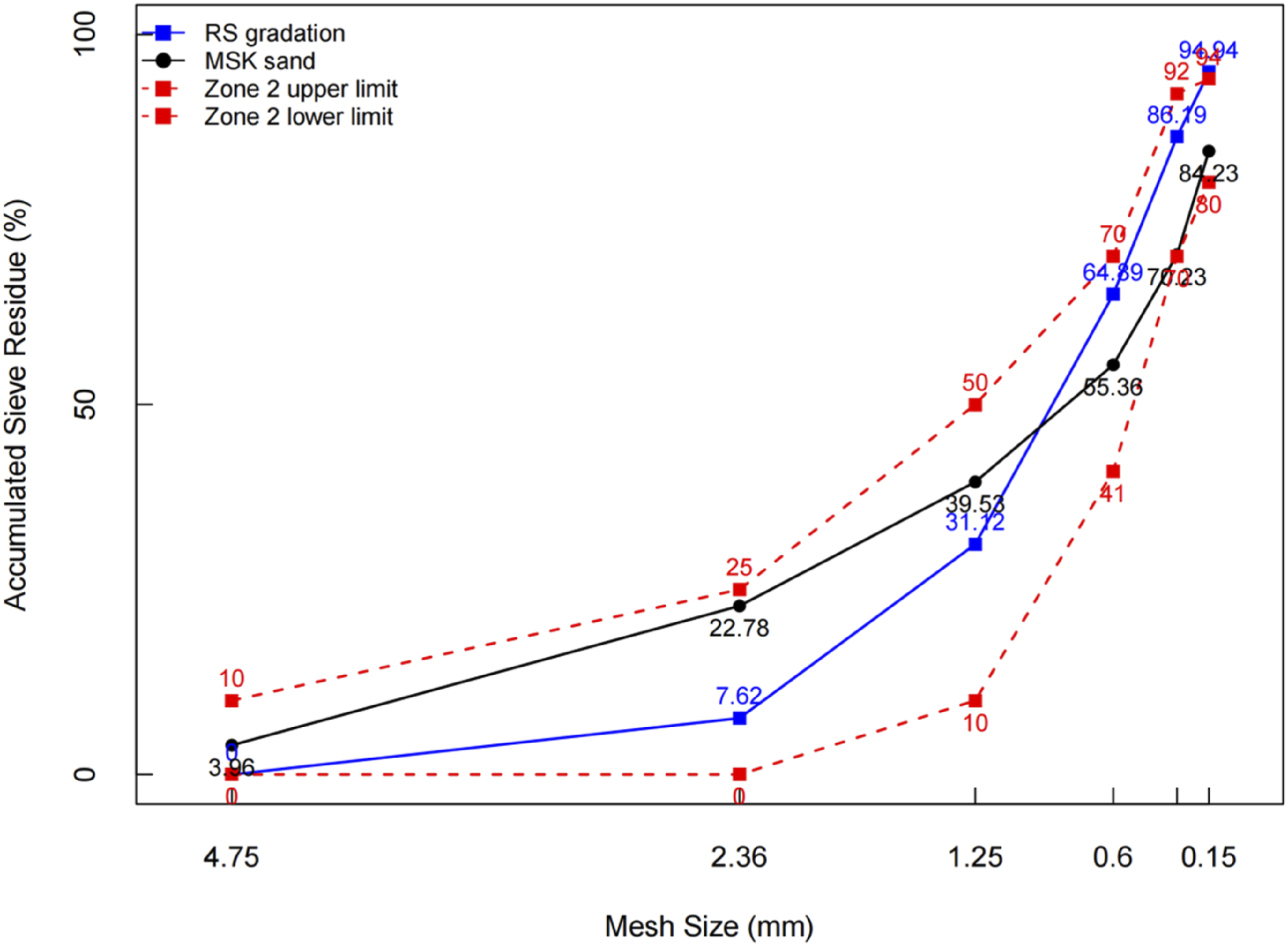
Physical properties of fine aggregates.

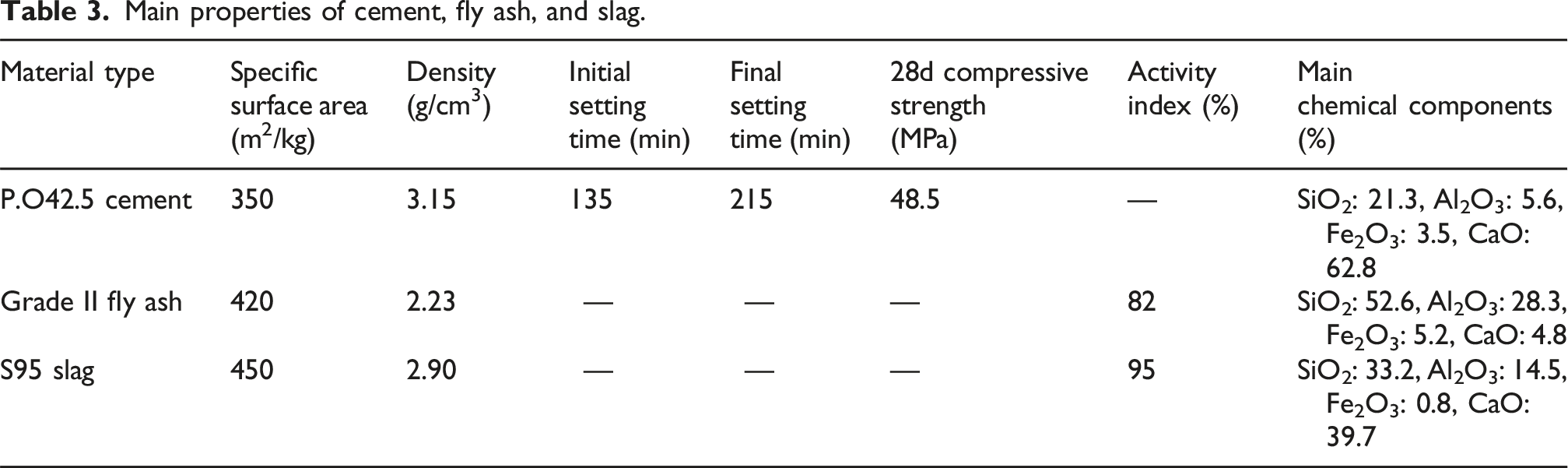
Main properties of cement, fly ash, and slag.
Experimental design
Test conditions
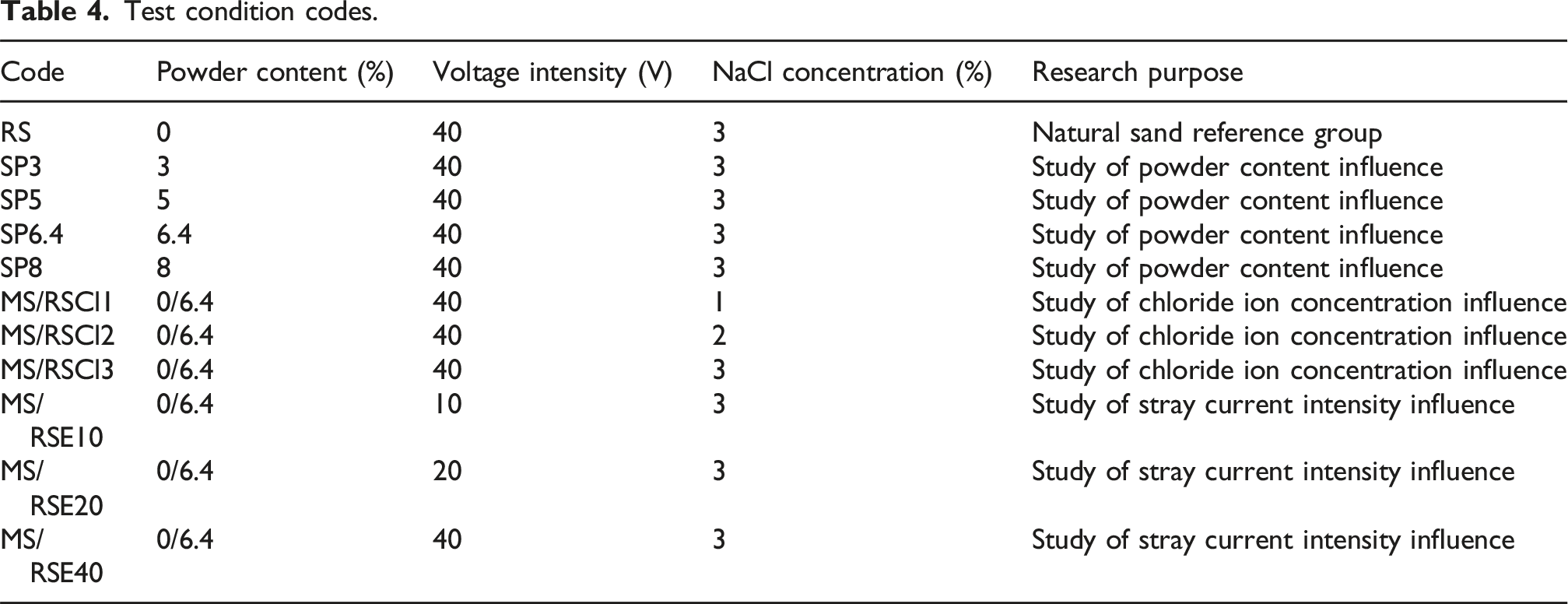
Test condition codes.
Specimen preparation
Following the procedure outlined by Maleki et al., 21 100 mm × 100 mm × 100 mm cubic samples were prepared. Each sample used HRB400 steel reinforcement bars, each of 12 mm diameter and centrally embedded in the matrix. Steel bar surfaces were polished to remove any oxide film, followed by the application of epoxy resin to the exposed lengths to provide consistent contact length with the concrete. After 28 days of curing in ambient air, one of the faces of the specimen, perpendicular to the steel bar’s alignment, was chosen as the corrosion surface, and the other five surfaces were covered with epoxy resin. This arrangement allowed for unidirectional flow of chloride ions and stray currents, simulating the single-sided corrosion conditions commonly found in many engineering applications.
Simulated corrosion test design
A DC power supply simulated stray current conditions. Based on methods from Li et al.
5
and Zhou et al.,
23
a test apparatus was designed to simultaneously simulate stray current and chloride ion erosion (Figure 2), consisting of a DC power supply, NaCl solution containers, and specimen holders for parallel testing. Schematic diagram of simulated corrosion test apparatus.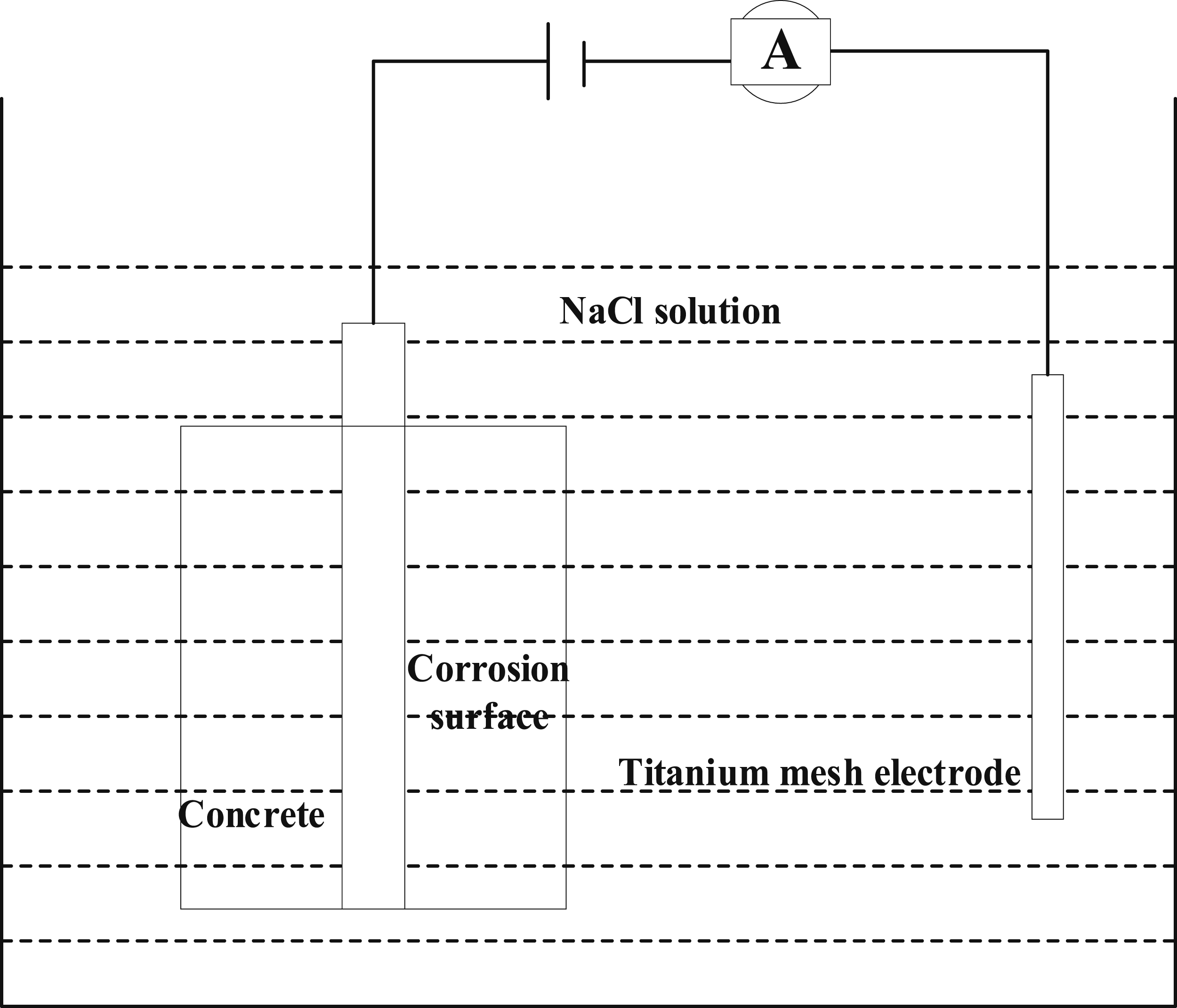
Concrete specimens with varying powder contents were placed in different concentration NaCl solutions with their corrosion faces fully immersed. Stray current was applied at set voltages (10 V, 20 V, or 40 V), and samples were removed for testing after 3, 7, 14, 21, and 30 days. Solution concentration and level were regularly monitored and maintained throughout testing.
Test methods
Electrochemical test methods
Following the research methods of Ai et al., 6 after the test completion, a Zennium E4 electrochemical workstation from Zahner was used to conduct electrochemical tests using the polarization curve method. A three-electrode system was employed, with the exposed steel bar as the working electrode, a saturated calomel electrode (SCE) as the reference electrode, and a platinum sheet as the auxiliary electrode. Tests were conducted in the same NaCl solution to maintain consistency with the corrosion environment.
The polarization curve test parameters were set as follows: scanning range from open circuit potential −250 mV to +250 mV, with a scanning rate of 0.5 mV/s. Through the measured potential-current density curves, the Tafel extrapolation method was used to analyze the corrosion potential (Ecorr) and corrosion current density (icorr) of the steel bars, evaluating the corrosion state and corrosion rate under different test conditions.
Chloride ion content test method in concrete
Referencing the research methods of Cao et al. 17 and Dang et al., 14 split stone blocks were taken after corrosion, and powder samples were collected at depths of 1 cm, 2 cm, 3 cm, and 4 cm from the corrosion surface along the perpendicular direction. Three parallel samples were taken at each depth to ensure data reliability. After drying the samples at 105°C to constant weight, the Rapid Chloride Test (RCT) method was used to measure the water-soluble chloride ion content in the samples. Sample preparation before testing involved: placing 2.0 g of sample in a conical flask, adding 20 mL of distilled water, shaking for extraction for 1 h, and then filtering and testing the filtrate. Chloride ion content was expressed as a percentage of concrete mass.
Manufactured sand particle morphology test method
This paper utilized Digital Image Processing (DIP) to analyze manufactured sand morphology, a method validated by Wu et al. 9 and Cho et al. 11 Testing involved:
1. Sieving sands into six size intervals (2.36–4.75 mm to 0.075–0.15 mm) with 30 particles selected per interval.
2. Capturing 4800 × 3600 pixel images with an Olympus SZX16 stereomicroscope.
3. Processing using ImageJ for binarization, edge extraction (Canny algorithm), and particle recognition.
4. Parameter calculation: Based on the image analysis results, morphological parameters of each particle were calculated, including aspect ratio (e), sphericity (S), angularity (l), and roughness (r), using the following formulas:



5. Data analysis: Based on the test results of each particle size interval, combined with the mass proportion of each particle size in the overall distribution, the weighted average morphological parameters of manufactured sand and natural sand were calculated to comprehensively characterize their particle geometric properties.
Through these detailed test methods, this study can comprehensively evaluate the durability performance of manufactured sand concrete under the coupled action of stray current and chloride ions, providing a scientific basis for the application of manufactured sand in coastal subway engineering.
Experimental results
Polarization curves
Figures 3 and 4 present the polarization curves of steel bars tested under different concentrations of manufactured sand powder and different intensity levels of stray current. It is possible to discern several apparent patterns in an analysis of the polarization curves: (1) With progression of the corrosion process, the polarization curves in all conditions uniformly shift in the negative direction, showing a steady decrease in corrosion potential of the steel bars and a greater propensity to corrosion; (2) In the first phase of corrosion, the anodic polarization slopes under all conditions are significantly low, indicating a high level of corrosion resistance in steel bars; however, with progression of corrosion, the anodic polarization slopes increase progressively, indicating degradation of the passive film on the steel surface and, hence, a rising corrosion rate. Time-varying polarization curves of steel bars with different manufactured sand powder contents. Time-varying polarization curves of steel bars under different stray current intensities.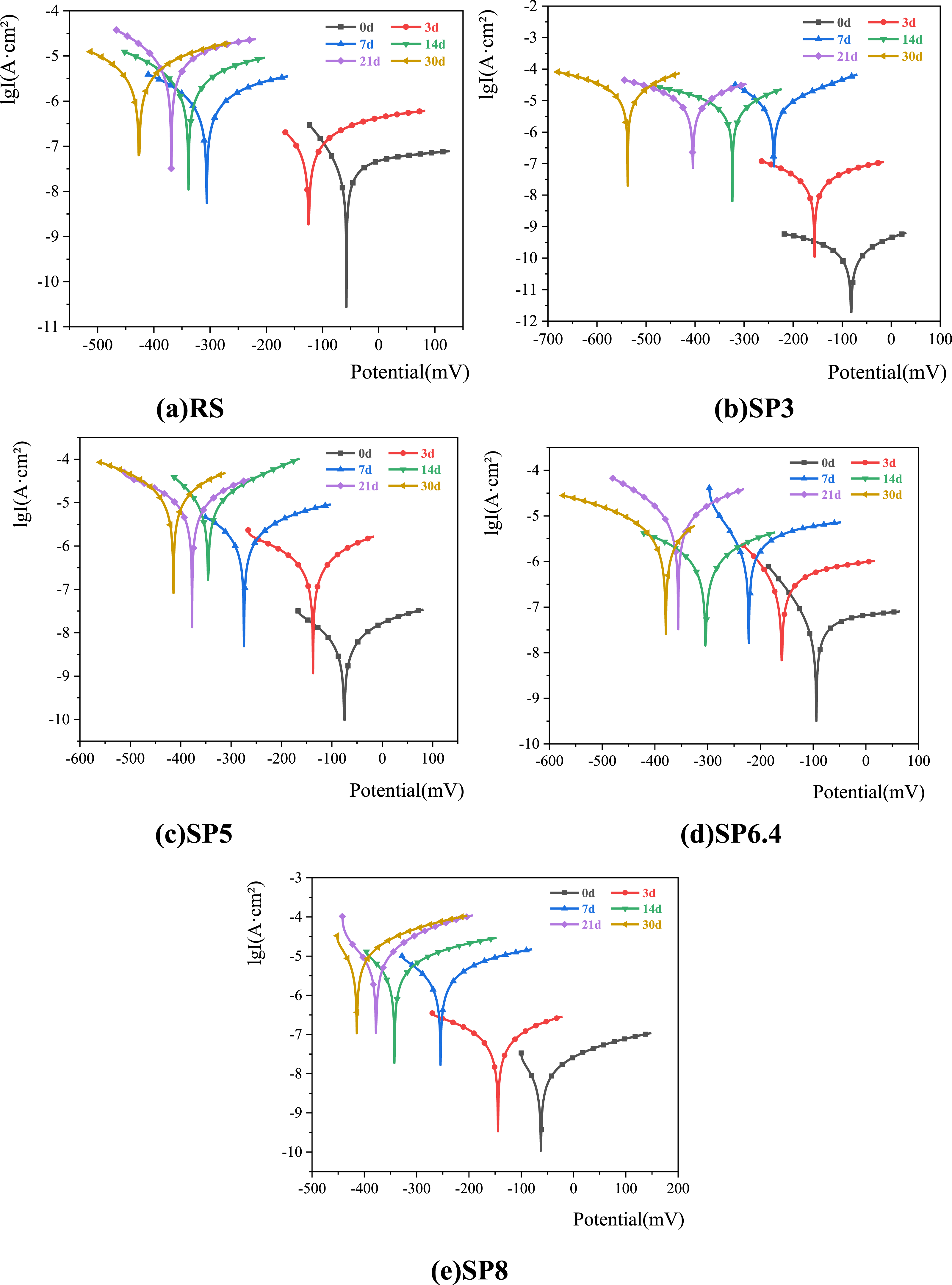
Influence of powder content
Changes in steel corrosion potential (ecorr) and corrosion current density (icorr) over time under different conditions.
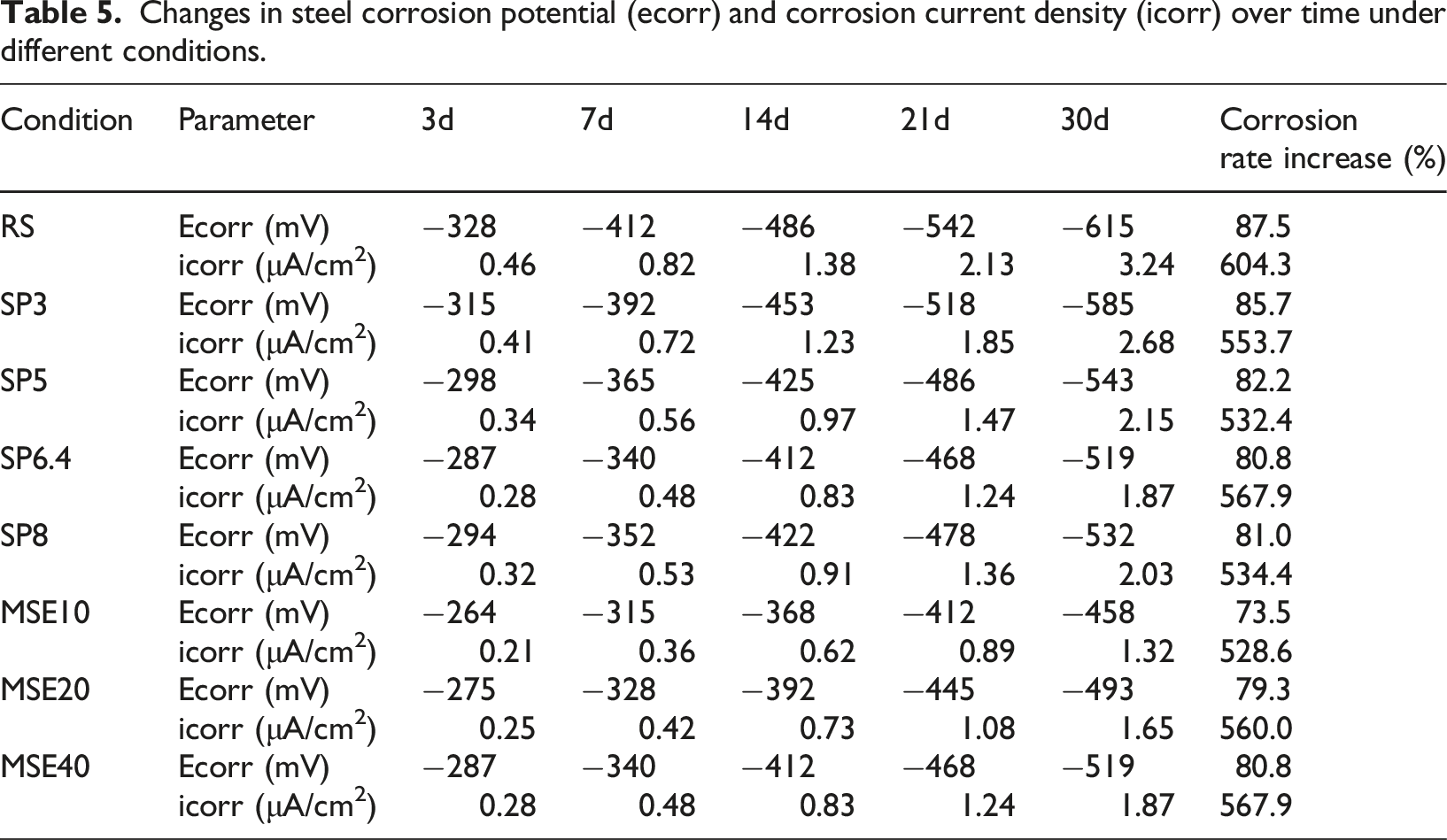
Furthermore, as seen in figures (a) and (d), the degree of negative shift in the polarization curves of the natural sand condition is significantly greater than that of the manufactured sand condition, with the corrosion current density 73.3% higher than the SP6.4 condition, demonstrating that manufactured sand has better erosion resistance than natural sand. This difference mainly stems from the unique particle morphology of manufactured sand and the combined effect of an appropriate amount of powder, as confirmed by the research of Wu et al. 9 The observed reduction in corrosion current density with increased stone powder content aligns with the chloride penetration resistance shown in the chloride ion concentration results, indicating a direct relationship between electrochemical behavior and chloride transport mechanisms.
Influence of stray current intensity
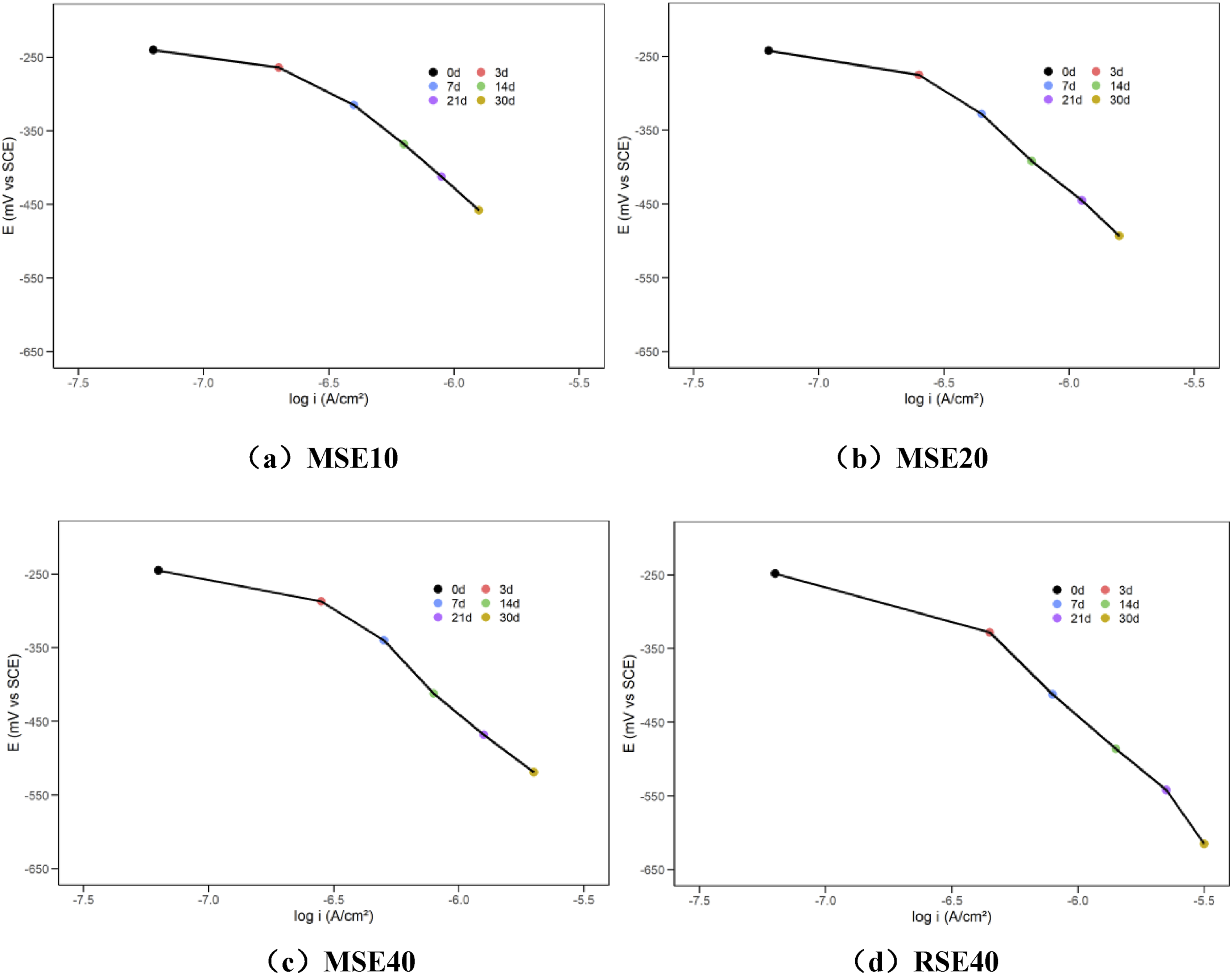
Figures 4(a)–(d) respectively show the time-varying characteristics of the polarization curves of steel bars in manufactured sand concrete under current intensities of 10 V, 20 V, and 40 V, and in natural sand concrete under a current intensity of 40 V. Overall, as the stray current intensity increases, the polarization curves of the steel bars generally show a negative shift trend, and the degree of negative shift strengthens with increasing current intensity.
The quantitative data in Table 5 exhibit that, after being exposed to corrosion for 30 days, the corrosion current density of the MSE40 condition increased by 41.7% compared to the MSE10 condition, from 1.32 μA/cm2 to 1.87 μA/cm2. At the same time, the corrosion potential dropped from −458 mV to −519 mV. Such a phenomenon indicates that the increased intensity of the stray current markedly promotes the corrosion process of steel embedded in concrete. The findings agree with the recent research by Liu et al. 1 and Zhao et al., 2 which verifies the existence of a certain positive correlation between the intensity of the stray current and the corrosion rate of steel.
Further comparison of Figure 4(c) and (d) reveals that under the same stray current intensity (40 V), the degree of negative shift in the polarization curves of steel bars in the manufactured sand condition is generally less than that in the natural sand condition. At 30 days, the corrosion current density of the RSE40 condition was 3.24 μA/cm2, while that of the MSE40 condition was 1.87 μA/cm2, and a reduction of 42.3%. This indicates that steel bars in manufactured sand concrete have a lower corrosion tendency, and their resistance to stray current corrosion is superior to that of natural sand concrete. This result reveals that manufactured sand concrete has better durability in stray current environments and can more effectively inhibit steel corrosion, which is consistent with the research findings of Chen et al. 3 The correlation between higher stray current intensity and increased corrosion rates is consistent with the accelerated chloride penetration observed under identical voltage conditions, confirming the synergistic effects of electrical and chemical degradation.
Effect of external chloride ion concentration
Figures 5(a)–(d) respectively show the time-varying characteristics of the steel reinforcement polarization curves in manufactured sand concrete under chloride ion concentrations of 1%, 2%, and 3%, as well as in natural sand concrete under an external chloride ion concentration of 3%. When maintaining a constant stray current intensity while varying the external chloride ion concentration, the degree of negative shift in the steel reinforcement polarization curves increases with higher external chloride concentrations, indicating that high concentrations of chloride ions in conjunction with stray current conditions accelerate steel reinforcement corrosion. Steel reinforcement polarization curves under different external chloride ion concentrations.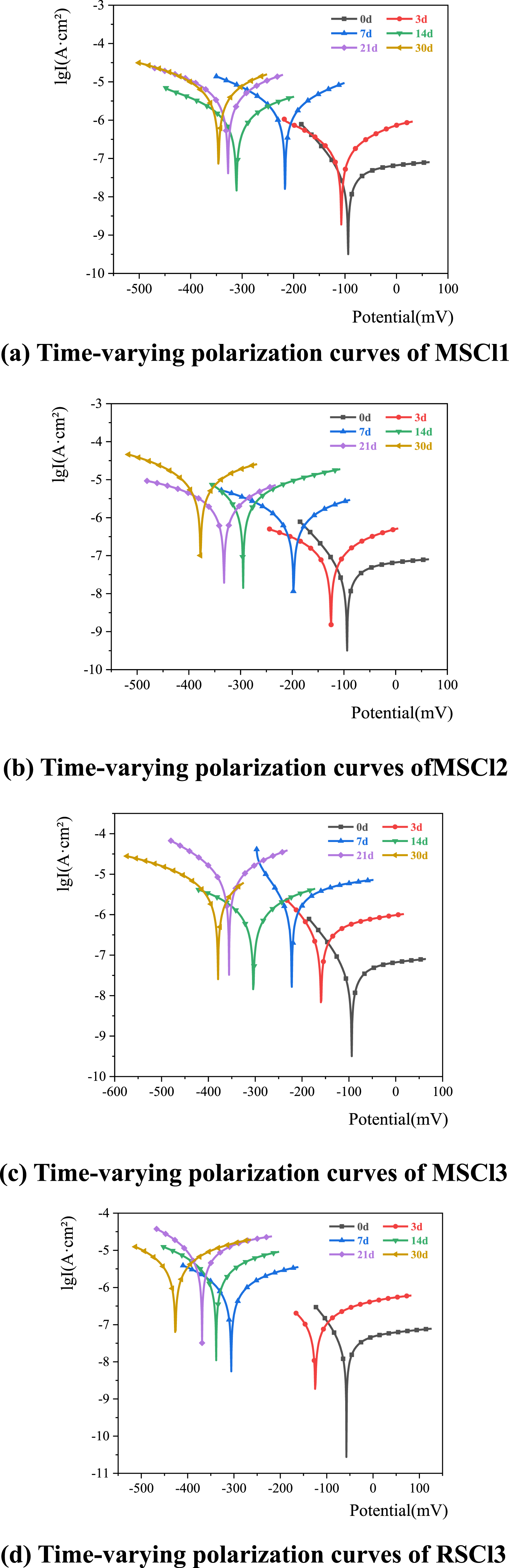
Data in Table 5 shows that after 30 days, MSCl3 corrosion current density was 54.8% higher than MSCl1 (1.87 vs 1.21 μA/cm2), confirming increased chloride concentration accelerates reinforcement corrosion, consistent with Dang et al. 14 Comparing Figure 5(c) and (d) reveals manufactured sand concrete shows less negative polarization curve shift than natural sand concrete under identical chloride conditions, indicating superior corrosion resistance when exposed to combined chloride and stray current effects. This advantage stems from higher internal compactness blocking chloride penetration and stone powder’s ability to trap free chloride ions, as demonstrated by Wang et al. 16 and Cao et al. 17 The progressive increase in corrosion current density with higher chloride concentrations correlates well with the enhanced chloride penetration depths discussed in the chloride penetration analysis, demonstrating the interconnected nature of chemical attack and electrochemical deterioration processes.
Chloride ion concentration in concrete
Effect of stone powder content
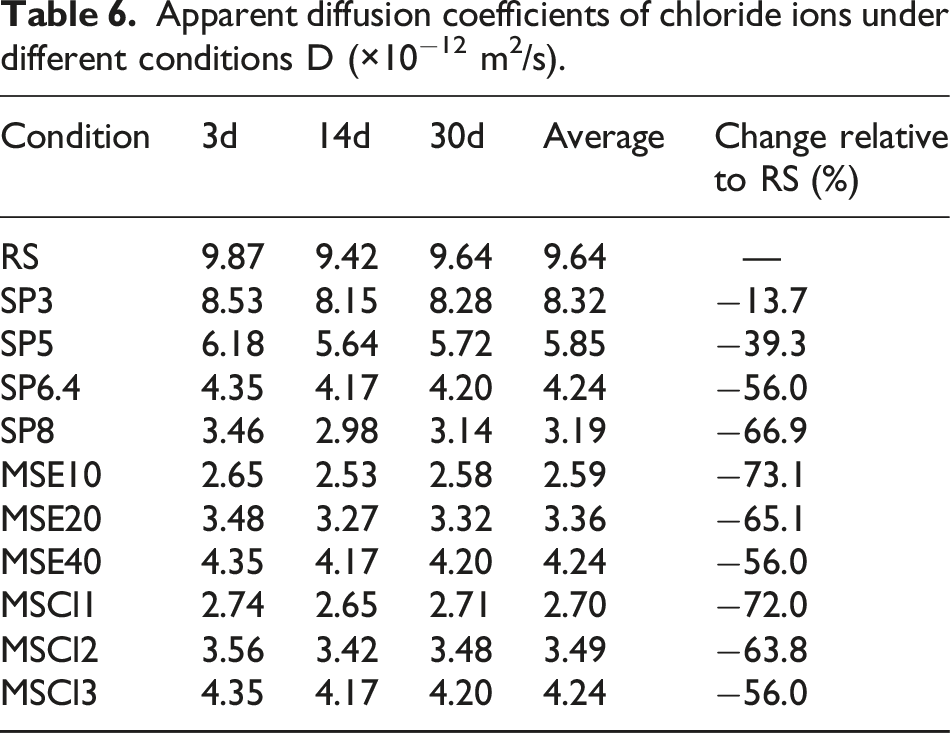
Variability in chloride ion concentration in concrete with varying amounts of stone powder is seen in the experimental groups represented in Figure 6. It is seen that the chloride ion concentration in concrete with natural sand is largely higher than that of concrete with manufactured sand. For better comparison of chloride ion transport behavior under different conditions, apparent diffusion coefficients based on Fick’s second law are shown in Table 6. Chloride ion concentration profiles under different stone powder contents. Apparent diffusion coefficients of chloride ions under different conditions D (×10−12 m2/s).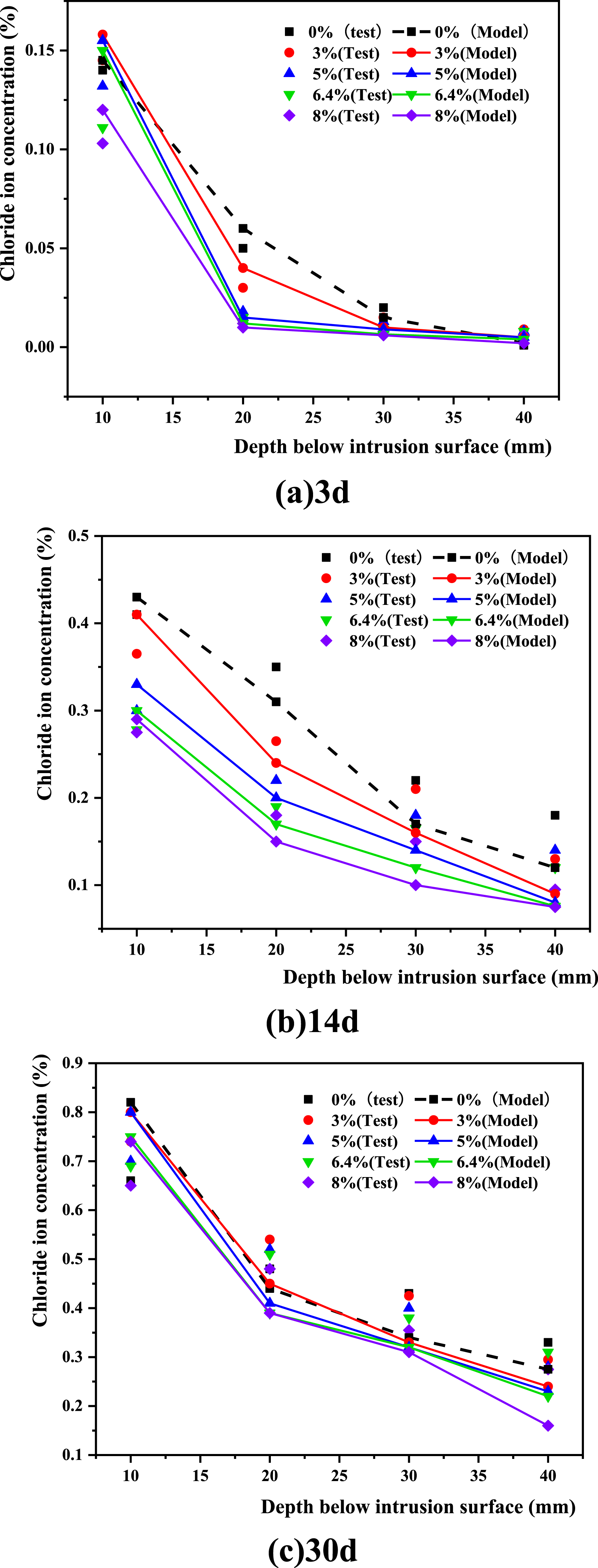
As stone powder content increases, the chloride ion content in concrete decreases significantly. At a depth of 10 mm from the penetration surface after 3 days of corrosion, the chloride ion content for the RS condition is 0.092%, while for SP3, SP5, SP6.4, and SP8 conditions, it is 0.084%, 0.072%, 0.061%, and 0.055%, representing reductions of 8.7%, 21.7%, 33.7%, and 40.2%, respectively. This demonstrates that at shorter corrosion times, when the concrete structure remains relatively intact with fewer ion transport channels, increasing stone powder content significantly enhances chloride ion resistance.
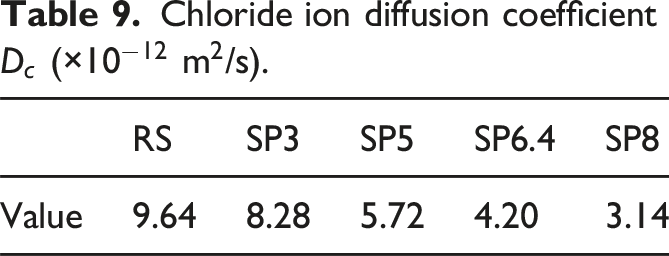
As corrosion progresses to 30 days, the linear correlation between chloride ion content and depth strengthens across all conditions. The apparent diffusion coefficient for the RS condition is 9.64×10⁻¹² m2/s, while for the SP6.4 condition, it is 4.20×10⁻¹² m2/s, representing a substantial reduction of 56.0%. This notable decrease in the diffusion coefficient with increased stone powder content suggests that stone powder plays a crucial role in filling concrete pores and optimizing the interfacial transition zone, which aligns with the research conclusions of Bayesteh et al., 15 Li et al., 13 and Wang et al. 16
The diminishing returns observed at 8% stone powder content can be attributed to reduced concrete workability, as evidenced by preliminary slump tests showing a 15% reduction in slump value compared to the 6.4% content mix. This reduced workability leads to increased porosity and potential microcrack formation during casting, offsetting the beneficial filling effects of additional stone powder.
Effect of stray current intensity
As Figure 7 shows, higher stray current intensity increases chloride ion concentration in both concrete types. After 30 days at 10 mm depth, chloride content in RSE40 exceeds RSE10 and RSE20 by 25.49% and 12.02%, respectively, while MSE40 exceeds MSE10 and MSE20 by 30.94% and 16.46%. Table 6 indicates increasing stray current from 10 V to 40 V raises the diffusion coefficient by 63.7% (from 2.59 × 10⁻¹² to 4.24 × 10⁻¹² m2/s), confirming stray current promotes chloride transport through electromigration, consistent with Zhao et al.
2
and Li et al.
5
Under identical voltage, manufactured sand concrete generally shows slightly lower chloride content than natural sand concrete, though this advantage diminishes at higher currents, suggesting stray current eventually dominates the transport mechanism regardless of aggregate type. Variation of chloride ion content in concrete under different stray current intensities.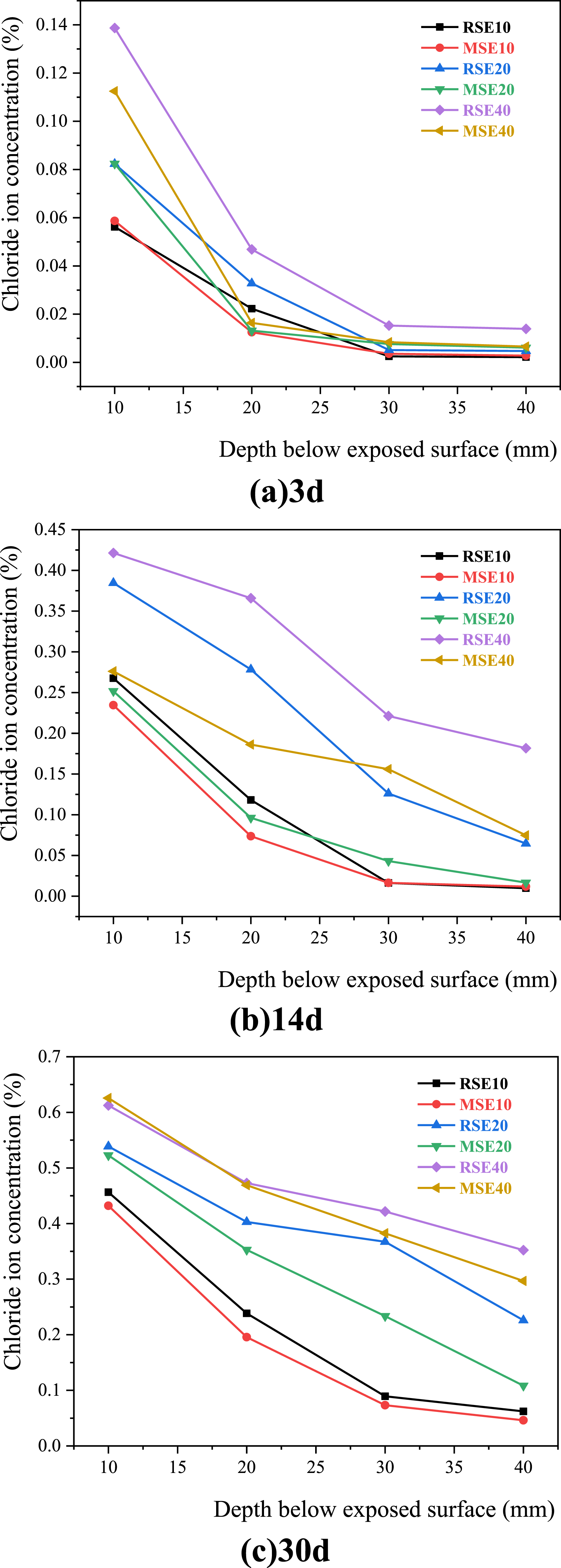
Effect of external chloride ion concentration
As shown in Figure 8, chloride ion concentration increases with higher external chloride ion concentrations in both concrete types at the same corrosion age and depth. Higher external concentrations create larger concentration gradients between concrete interior and external environment, accelerating ion transport when coupled with stray current electromigration. Variation of free chloride ion content in concrete under different external chloride ion concentration conditions.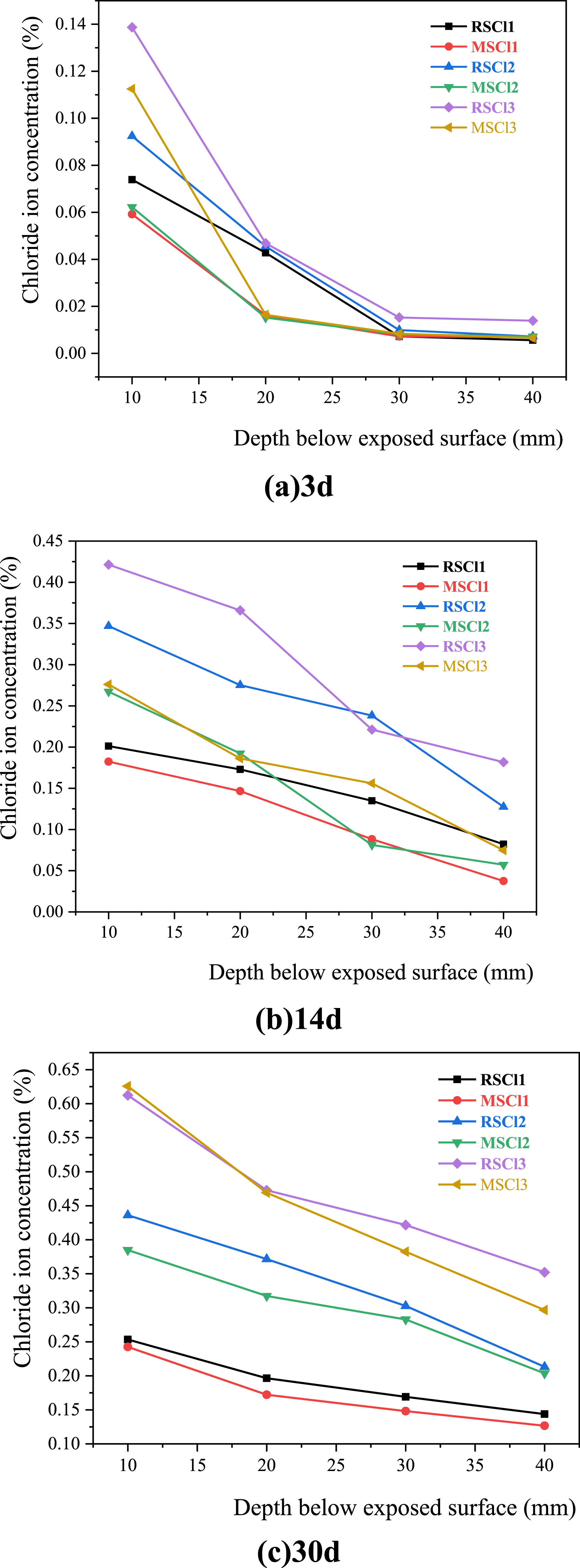
After 30 days at 10 mm depth, chloride content in RSCl3 is 58.64% and 28.79% higher than in RSCl1 and RSCl2, respectively, while in MSCl3 it’s 61.24% and 38.48% higher than in MSCl1 and MSCl2. Table 6 shows that as external chloride concentration increases from 1% to 3%, the apparent diffusion coefficient rises from 2.70 × 10⁻¹² m2/s to 4.24 × 10⁻¹² m2/s (57.0% increase), consistent with findings by Dang et al. 14 and Cao et al. 17
Under identical external chloride concentrations, manufactured sand concrete generally contains slightly less chloride than natural sand concrete, with RSCl1 showing 6.56% higher content than MSCl1 and RSCl2 showing 11.74% higher than MSCl2. This demonstrates manufactured sand concrete’s superior resistance to chloride penetration, particularly in low-concentration environments, aligning with conclusions by Zhang et al. 8 and Wu et al. 9
Morphology of manufactured sand particles
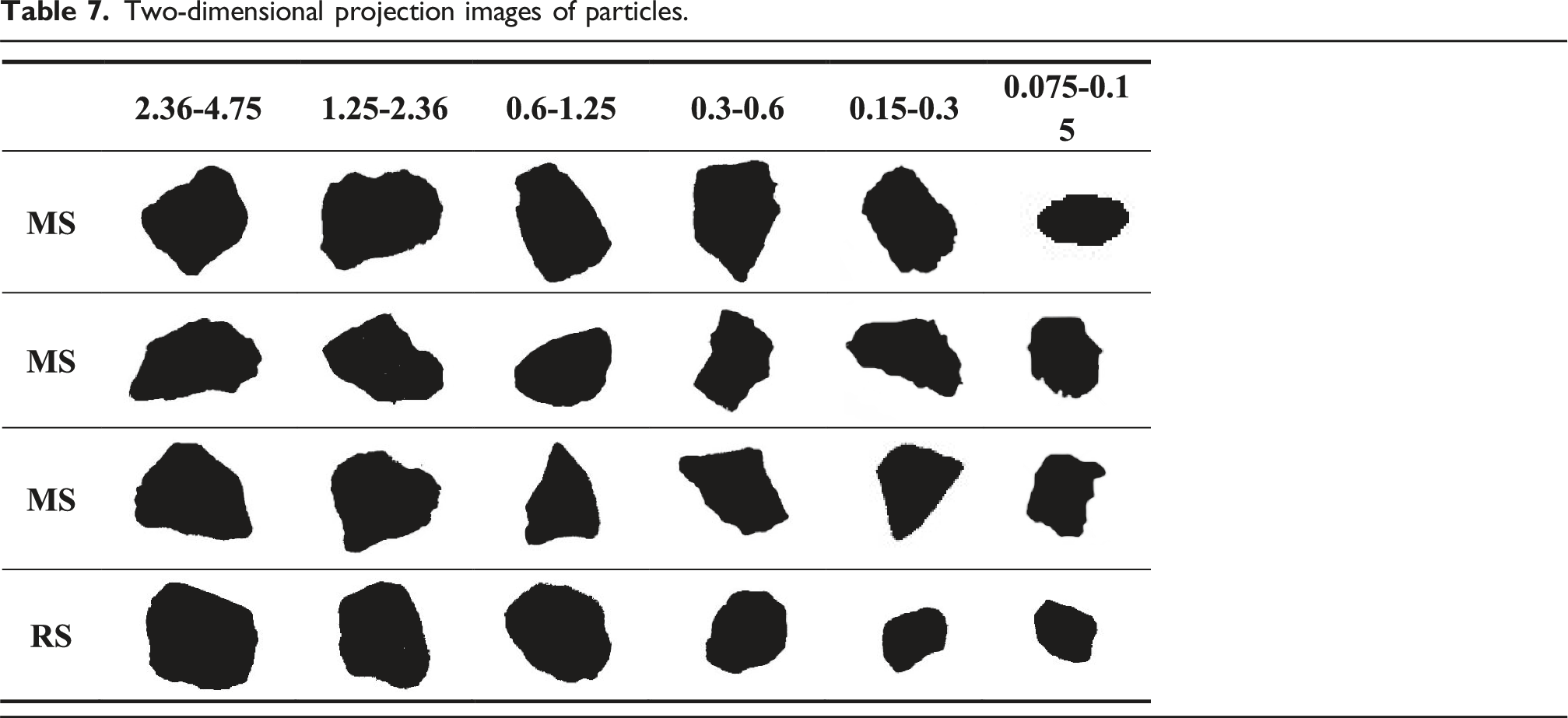
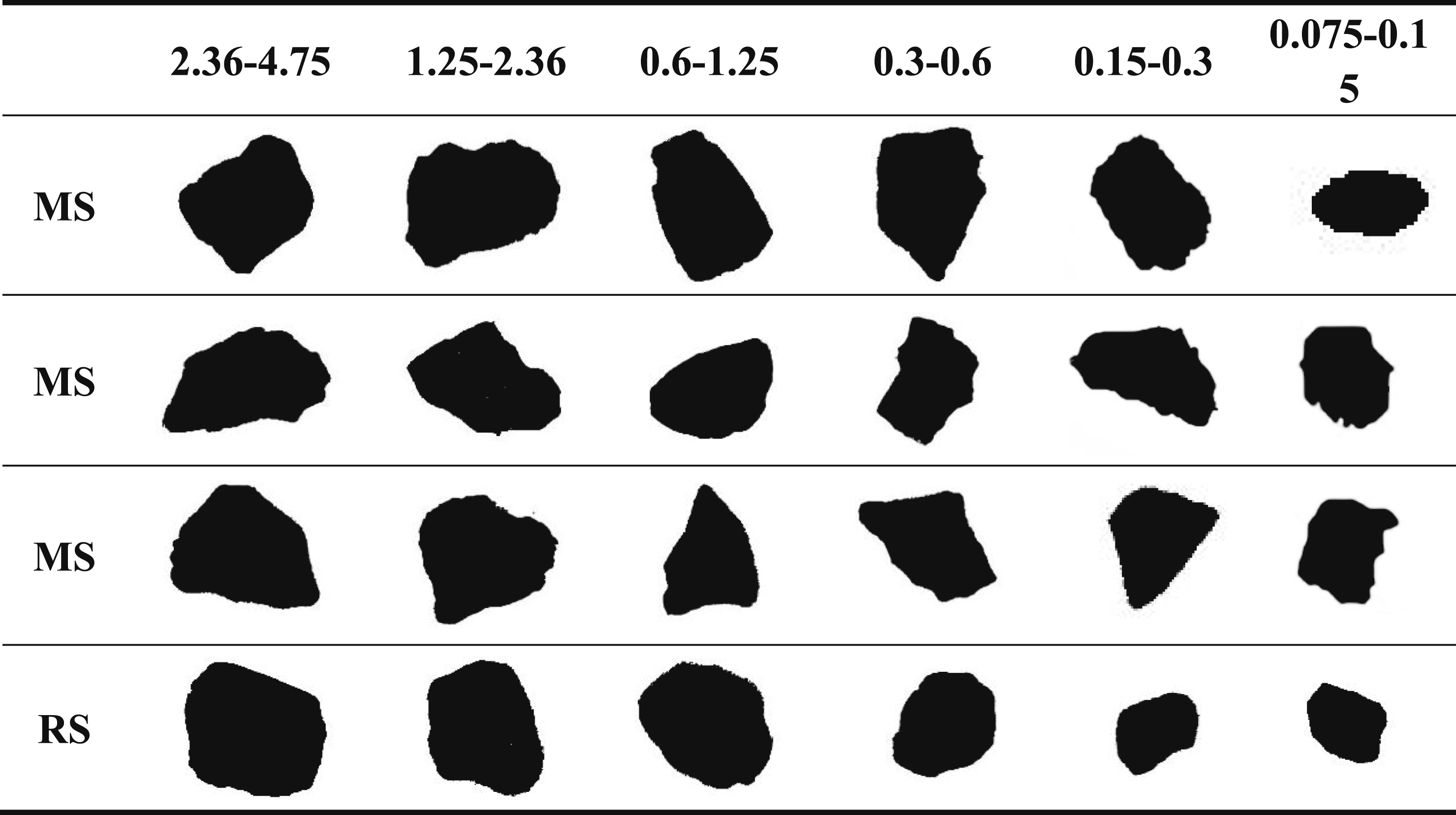
Two-dimensional projection images of particles.
Morphological parameters of particles in different particle size intervals.
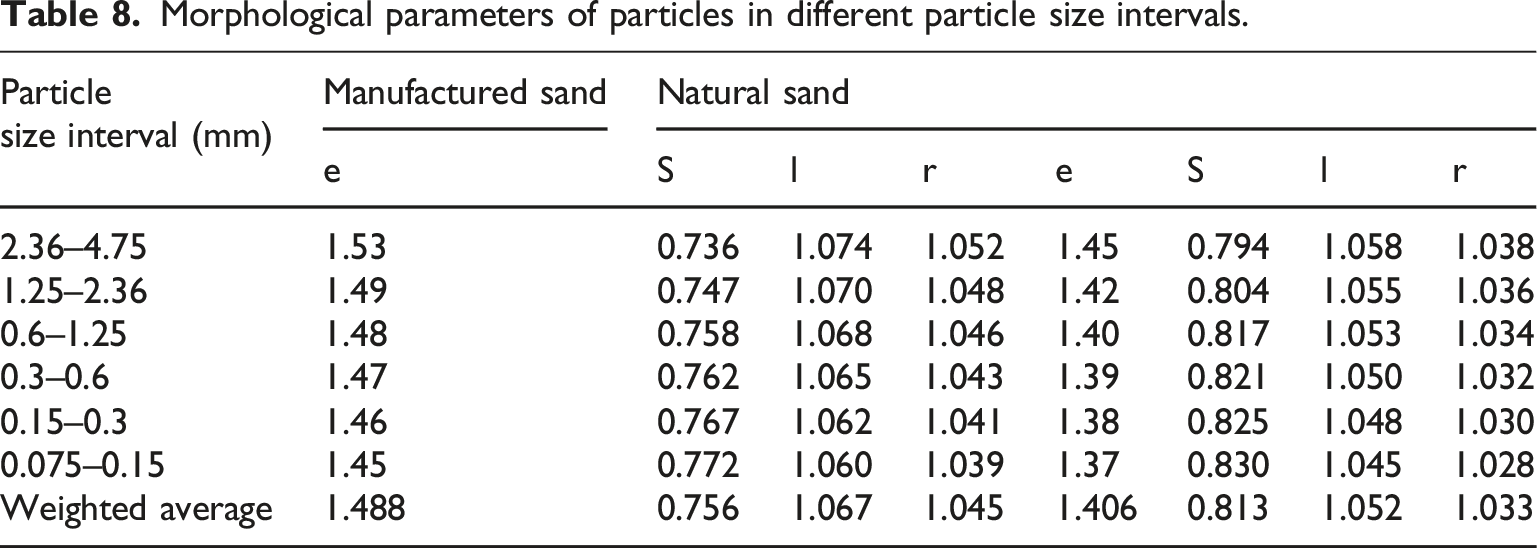
Statistical analysis of the morphological parameters reveals significant differences between manufactured sand and natural sand. For manufactured sand, the standard deviations of aspect ratio, sphericity, angularity, and roughness across all size fractions are 0.032, 0.013, 0.006, and 0.005 respectively. Natural sand shows lower variability with standard deviations of 0.034, 0.016, 0.005, and 0.003. The coefficient of variation for aspect ratio in manufactured sand (2.15%) is notably higher than natural sand (2.42%), confirming the greater morphological irregularity that contributes to the enhanced tortuosity effect.
Numerical simulation
Chloride ion transport model
Under stray current conditions, chloride ion transport is influenced not only by diffusion but also by electromigration. Therefore, to derive the chloride ion transport model under stray current, it is necessary to combine Fick’s law and the Nernst–Planck equation.
Fick’s second law calculates the apparent diffusion coefficient of chloride ions, expressed as:
If 
Chloride ion transport is influenced by diffusion and electromigration, which can be represented by the Nernst–Planck equation:
According to the principle of mass conservation, the rate of concentration change in any volume element equals the negative of the divergence of the flux, expressed as:
Substituting the Nernst–Planck equation (7) into equation (8):
Based on the above equation, numerical simulation research on chloride ion transport in manufactured sand and concrete under stray current will be conducted.
It should be noted that this model assumes constant diffusion coefficients for cement paste and interfacial transition zones throughout the simulation period. In reality, these coefficients may evolve due to microstructural changes during corrosion, including microcrack formation, pore structure modification, and chemical binding reactions. Future model improvements should incorporate time-dependent diffusion coefficients to account for these evolving concrete properties.
Numerical modeling
Random aggregate model
To establish a random polygonal aggregate, it is first necessary to generate randomly packed circular aggregates using the following method: (1) Randomly generate a random number between [0, 1], and define the aggregate particle diameter for each gradation interval as: (2) Calculate the sum of aggregate areas, proceed to the next interval once the current gradation interval’s total is reached, until all gradation aggregates are generated. Then verify whether the difference between the total area and the set value is within the allowable error range. The aggregate gradation adopts the measured results from Section 2. (3) When placing aggregates, ensure there is no overlap with already generated aggregate particles while reserving the interfacial transition zone, as follows:


The specific steps for generating and placing polygonal aggregates are as follows: (1) Generate a point (2) Divide the circle equally into n-1 arc segments, generate one vertex for each segment, and connect them clockwise to create a random polygon. n is the number of vertices, with the following range: (3) Since aspect ratio strongly correlates with roundness (while angularity and roughness minimally affect durability,
24
only aspect ratio evaluation is necessary after polygon generation. If ratio S (maximum to minimum distances from center to polygon sides) falls outside the defined interval [ (4) This process repeats until required area is reached for each gradation. After all gradations are completed and verified, non-intersecting random polygonal aggregates are generated using circular placement method. Vertex coordinates are imported to AutoCAD to create 50 μm interfacial transition zones before importing into COMSOL for final model creation.

Establishment of mortar model
A 20 mm × 20 mm mortar model with 50% fine aggregate by volume was created as shown in Figure 9, with stone powder randomly distributed in the cement paste and interfacial transition zone. Mortar geometric model.
Three model types were developed to analyze aggregate morphology effects: (1) Circular aggregate model: all aggregates are circular, representing idealized natural sand; (2) Polygonal aggregate model 1: polygons generated according to natural sand morphological parameters (3) Polygonal aggregate model 2: polygons generated according to manufactured sand morphological parameters
Boundary conditions included a 1 mol/L chloride concentration on the left side with no flux on remaining sides. The diffusion coefficient of cement paste was determined using the porosity-based equation:
According to the above equation, the chloride ion diffusion coefficient of cement paste was calculated to be 1.937 ×
Chloride ion diffusion coefficient
Establishment of concrete model
The concrete model used a 10 cm × 10 cm geometric structure with circular coarse aggregates (50% volume) and a centrally placed 12 mm diameter steel reinforcement, as shown in Figure 10. The simulation employed coupled physics, combining dilute material transfer (with diffusion and electric field migration) and electric current to model chloride ion transport under stray current conditions. Reinforced concrete geometric model.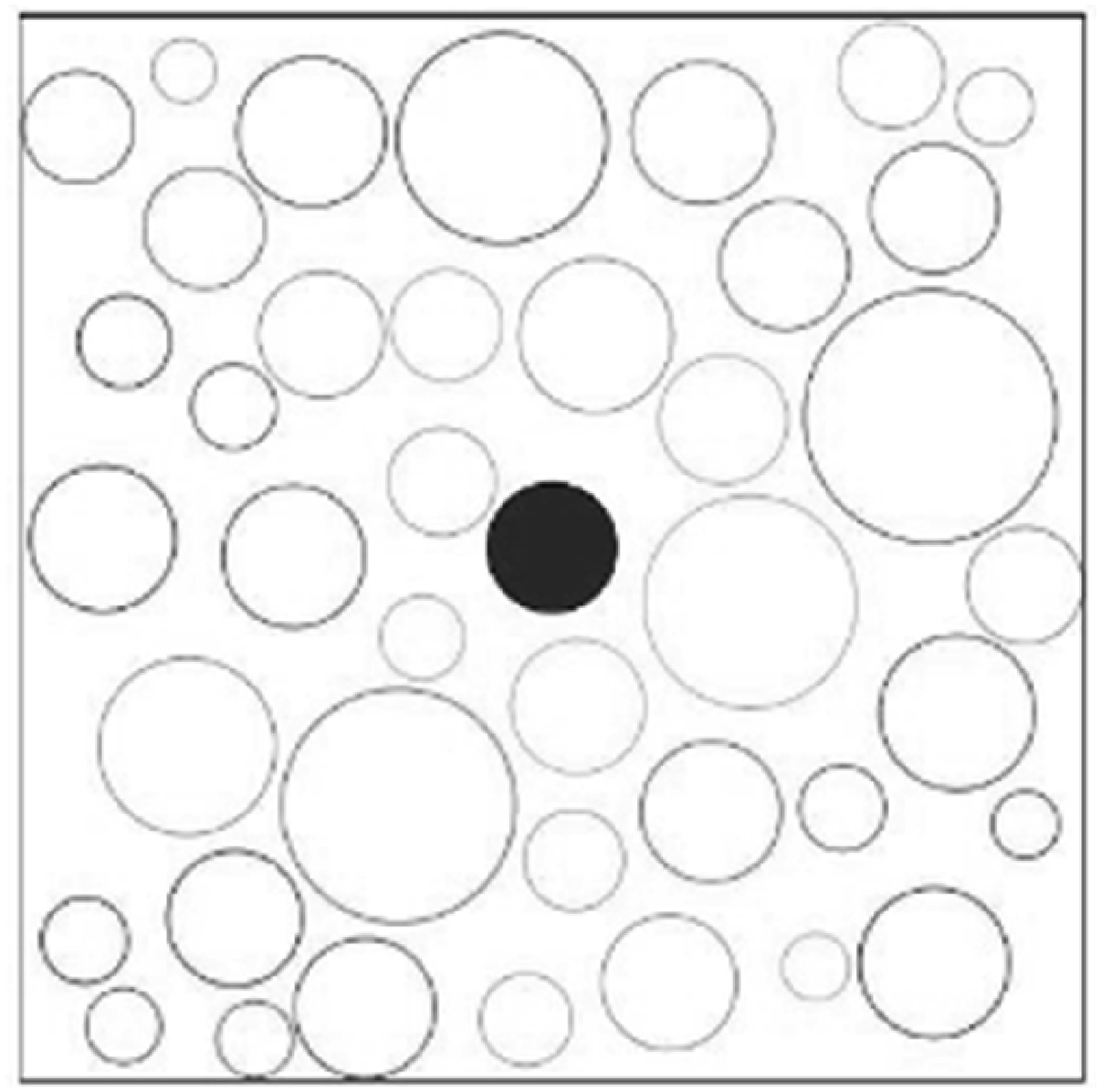
For boundary conditions, the top, left, and bottom faces were set as no flux and electrically insulated, while the right face served as the intrusion boundary (0 V cathode) with 513 mol/m3 chloride concentration. The steel reinforcement was set as the anode (40 V). Initially, both chloride concentration and electric potential throughout the model were zero.
The model also considered the effect of temperature on the diffusion coefficient, using the Arrhenius relationship:
The simulation used a fully coupled solver with adaptive time stepping (initial 0.1 h, maximum 6 h) and a 25-iteration limit. Results were recorded at three time points: 3, 14, and 30 days to analyze the chloride penetration under stray current conditions.
Analysis of simulation results
Influence of different aggregate morphologies on chloride ion transport
Aggregate morphology significantly affects chloride ion transport paths and distribution. In circular aggregate models, chloride ions travel along relatively regular paths between aggregates. In contrast, polygonal aggregate models show more tortuous transport paths, especially with manufactured sand morphological parameters due to their larger elongation ratio and lower circularity.
Quantitative analysis revealed that compared to circular aggregate models, the effective transport distance of chloride ions increased by 12.8% in natural sand polygonal models and by 18.5% in manufactured sand polygonal models. At equivalent depths, chloride ion concentration was highest in circular models, lowest in manufactured sand polygonal models, and intermediate in natural sand polygonal models, indicating more irregular aggregates provide stronger resistance to chloride penetration.
The “tortuosity effect” was most pronounced in polygonal models, with manufactured sand showing a tortuosity coefficient of 1.35, higher than natural sand (1.22) and circular models (1.15), explaining why manufactured sand concrete exhibits better chloride ion penetration resistance.
Simulation of the influence of stone powder content on chloride ion transport
Five stone powder contents (0%, 3%, 5%, 6.4%, and 8%) were tested in the manufactured sand model. Results showed that increasing stone powder content significantly reduced chloride ion diffusion coefficient through two primary mechanisms. First, the physical filling effect where stone powder particles fill cement paste pores, reducing transport channels; second, the chemical binding effect where active components react with chloride ions to form insoluble chloride salts. Stone powder particles were modeled as impermeable regions distributed in both cement paste and interfacial transition zones, with higher concentration in the latter. When content increased from 0% to 6.4%, effective chloride transport paths extended by 25.7% and apparent diffusion coefficient decreased by 56.0%. However, at 8% content, further reduction in diffusion coefficient became less significant despite increased transport path, indicating an optimal content threshold exists beyond which concrete workability may be compromised, potentially affecting overall performance.
Comparison of experimental and simulation results
Both experimental and simulation results confirmed that chloride ion concentration in natural sand concrete exceeded that in manufactured sand concrete, with consistent trends showing stone powder’s inhibitory effect on chloride transport.
Model accuracy assessment showed average relative errors of 8.5%–12.3% at 3 days, 10.2%–15.7% at 14 days, and 15.8%–22.6% at 30 days. This declining accuracy with time suggests the model doesn’t fully account for concrete structural changes during corrosion, particularly microcrack formation and development.
After 30 days, simulation results were significantly lower than experimental results, likely due to reinforcement corrosion causing cracks that allow accelerated chloride penetration. This indicates future model improvements should incorporate microcrack evolution caused by reinforcement corrosion expansion. Specific enhancements could include: (1) implementing a cohesive zone model to simulate crack initiation and propagation, (2) incorporating time-dependent porosity changes due to corrosion product formation, (3) developing coupled mechanical-chemical damage models that account for concrete swelling and cracking, and (4) integrating stochastic variations in material properties to better represent concrete heterogeneity. These improvements would enhance the model’s predictive capability for long-term durability assessment.
The model accurately reflected stray current intensity effects, showing stronger electromigration and faster chloride transport rates at higher voltages, with trends consistent between simulation and experimental data.
Model sensitivity analysis
Sensitivity analysis was conducted to evaluate the influence of key input parameters on simulation results. The model shows highest sensitivity to interfacial transition zone (ITZ) thickness (±20% variation causes ±15% change in diffusion coefficient) and porosity (±15% variation causes ±12% change). Moderate sensitivity was observed for chloride binding capacity (±10% variation causes ±8% change), while relatively low sensitivity was found for aggregate geometry variations (±5% variation causes ±3% change). These findings indicate that accurate characterization of ITZ properties and concrete porosity is critical for reliable simulation results.
Discussion
Engineering implications
The findings of this study have significant implications for coastal infrastructure design and construction. The superior performance of manufactured sand concrete under combined stray current and chloride exposure conditions provides engineers with a viable alternative to natural sand, particularly in environments where both electrochemical and chemical degradation mechanisms are present, as highlighted by Chen et al. 3 and Li et al. 5 The identified optimal stone powder content of 6.4% offers practical guidance for mix design in metro tunnel construction, where durability requirements are stringent, consistent with the findings of Fu et al. 7 and Zhang et al. 8
The quantified tortuosity effect (1.35 for manufactured sand vs 1.22 for natural sand) demonstrates that the irregular particle geometry, often considered a disadvantage, actually contributes to improved chloride resistance. This finding challenges conventional thinking and aligns with the research by Wu et al. 9 and Cho et al., 11 suggesting that aggregate shape optimization could be a valuable strategy for enhancing concrete durability in aggressive environments. The enhanced interfacial transition zone properties observed in this study support the conclusions of Naderi et al. 12 regarding the benefits of irregular particle geometry.
The economic implications are substantial, as coastal metro systems worldwide face increasing maintenance costs due to chloride-induced corrosion, with repair expenses often exceeding initial construction costs.1,2 The development of durable manufactured sand concrete formulations, as demonstrated in this research, could provide significant economic benefits while addressing sustainability concerns related to natural sand depletion, supporting the environmental considerations discussed by Shen et al. 10
Future research directions
While this study provides comprehensive insights into manufactured sand concrete behavior, several areas warrant further investigation. The development of time-dependent diffusion models that account for microcrack evolution would improve simulation accuracy for long-term predictions, building upon the multi-physics simulation approaches developed by Zhang et al. 19 and Yu et al. 20 Additionally, investigating the performance of manufactured sand concrete under other environmental stressors, such as freeze-thaw cycles or sulfate attack, would provide a more complete understanding of its durability characteristics, as suggested by the comprehensive durability framework of Ai et al. 6
The integration of machine learning techniques with the established numerical models could enhance predictive capabilities and optimize mix designs for specific environmental conditions, extending the numerical modeling approaches demonstrated by Maleki et al. 21 and Yan et al. 18 Furthermore, long-term field studies in actual coastal metro environments would validate these laboratory findings and provide confidence for widespread adoption of manufactured sand concrete in critical infrastructure applications, following the field validation approaches suggested by Zhou et al. 23
Future research should also explore the chemical binding mechanisms in greater detail, building upon the thermodynamic modeling work of Cao et al. 17 and the chloride binding studies of Wang et al. 16 The interaction between stone powder chemistry and chloride binding capacity, particularly under varying pH conditions and in the presence of other ions, requires further investigation to fully optimize manufactured sand concrete formulations for specific environmental conditions.
Conclusions
This research examined manufactured sand concrete durability under stray current and chloride ion exposure. Results show manufactured sand concrete exhibits 42.3% lower apparent diffusion coefficient and 56.0% reduced corrosion current density compared to natural sand concrete after 30 days. Stone powder incorporation improves concrete structure through physical filling and chemical bonding, with optimal performance at 6.4% content (diffusion coefficient: 4.24 × 10⁻¹² m2/s), while content above 8% shows diminishing returns. Stray current significantly accelerates steel reinforcement corrosion and chloride ion penetration through electromigration. Increasing stray current from 10 V to 40 V raises the diffusion coefficient by 63.7%, while increasing external chloride concentration from 1% to 3% raises it by 57.0%. Despite manufactured sand’s higher elongation ratio (1.488 vs 1.406) and lower circularity (0.756 vs 0.813), its irregular particle shape creates a beneficial “tortuosity effect.” Numerical calculations show the tortuosity coefficient of manufactured sand (1.35) exceeds both natural sand (1.22) and round particle models (1.15). The numerical model accurately simulates chloride transport dynamics, with 8.5%–12.3% error for short-term corrosion but 15.8%–22.6% for long-term periods. For engineering applications, high-quality manufactured sand with 6%–7% stone powder content is recommended for coastal subway sections.
Footnotes

Funding
The authors received no financial support for the research, authorship, and/or publication of this article.
Declaration of conflicting interests
The authors declared no potential conflicts of interest with respect to the research, authorship, and/or publication of this article.