




Abstract
Customer engagement is a cornerstone of successful power marketing, especially as energy providers move towards digital transformation. However, traditional marketing strategies often fail to capture real-time customer sentiment and adapt dynamically to individual needs. The research introduces a data-driven method utilizing deep learning (DL)-based Natural Language Processing (NLP) techniques to interpret and respond to customer feedback, thereby enhancing engagement through personalized, timely, and context-aware communication. Data was collected from social media, customer service chat transcripts, and online feedback from energy company websites. The text was refined using preprocessing techniques such as lemmatization and stop-word removal. Word2Vec was used for feature extraction to capture the semantic meaning and context of customer expressions. The proposed method integrates Bidirectional Encoder Representations from Transformers (BERT) with an Attention-based Temporal Convolutional Neural Network (Att-TCNN) to capture contextual and temporal features in customer communication. The system uses BERT to understand customer language and track behavioral patterns by extracting contextual word representations and processing them through temporal convolution layers enhanced with attention, focusing on relevant text sequence parts. This hybrid BERT-Att-TCNN approach supports sentiment classification, topic identification, and engagement prediction, delivering personalized, adaptive, and real-time customer engagement in power marketing. Python was used to implement and train the model efficiently. Results from experimental evaluation demonstrate that the proposed BERT-Att-TCNN model achieved performance metrics ranging from 90 to 96%, highlighting the model’s robustness and reliability compared to traditional NLP models. This hybrid approach ensures scalable, intelligent, and real-time engagement in modern power marketing management.
Keywords
Introduction
In the dynamic world of the power industry, power management plays a critical role in ensuring the effective generation, transmission, distribution, and consumption of electric power. It involves a wide array of activities such as load forecasting, grid balancing, energy trading, and demand-side management, each requiring specific coordination and effective decision-making. 1 As the energy demand globally increases and sustainability is a key concern, power management must evolve to integrate smart, adaptive systems that respond to dynamic patterns of consumption and distributed energy resources. 2 Customer engagement plays a pivotal role in bridging the gap between energy suppliers and consumers. Effective customer engagement facilitates sustainable and cost-efficient choices through real-time information and customized interactions. 3 With the liberalization and digitalization of energy markets, customer expectations have changed, requiring real-time, personalized, and transparent communication. Consequently, customer engagement has become a strategic priority for power utilities and energy marketers, enabling them to remain competitive and establish long-term relationships with customers. 4 The NLP technique has emerged as a revolutionary technology that could process, understand, and generate human language, offering immense potential to maximize communication strategies and customer service operations within a powerful marketing framework.
Customer interaction in the power industry has traditionally relied on static communication channels like billing documents, call centers, and email campaigns. 5 Although functional, these channels were inadequate to address the needs of a digitally connected customer population that expects real-time, interactive, and context-sensitive responses. 6 Additionally, current systems were not well equipped to handle high volumes of unstructured data like customer comments, inquiries, complaints, and social media interactions. 7 This translates to slow reactions, miscommunication, and eventually, customer discontent. One major challenge is the inability to deliver personalized services, which compromises customer loyalty and inhibits the capacity of powerful marketers to provide customized energy solutions based on user patterns, preferences, and behavioral indicators. 8 Despite the implementation of customer relationship management software and data analytics solutions, intelligent automation for proactive customer interaction remains significantly lacking. Traditional data-driven approaches lack the semantic meaning and contextual appropriateness required to deeply analyze customer needs and sentiments. 9 Furthermore, the lack of real-time language processing ability in most power utility interfaces contributes to inefficiency in complaint redressal, product suggestion, and service customization.
This research contributes to the domain by introducing a feedback-loop mechanism wherein customer feedback is continuously monitored to refine marketing strategies, maximize engagement touchpoints, and maintain continuous service enhancement.
10
With this mechanism, NLP not only serves as a communication enabler but also as a strategic tool enabling predictive analytics, demand forecasting, and customer segmentation in the power marketing space.
11
Integrating power management and intelligent customer engagement systems highlights the role of interactive, data-driven solutions that respond to both operational limitations and consumer behavior. NLP serves as a pivotal catalyst in this transition, turning passive energy consumption into an educated, participative experience. One limitation is the dependence on large, labeled datasets for training NLP models, which might not be present in all power utilities. Moreover, NLP systems face challenges by domain-specific jargon, impacting interpretation accuracy and real-time responsiveness. The research aims to enhance customer engagement in power marketing by using DL-based NLP techniques, specifically a hybrid BERT-Att-TCNN model, to analyze and respond to customer feedback with personalized, timely, and context-aware communication. The key contributions of this research include the following. • Contextual Sentiment Analysis with BERT-Att-TCNN: Developed a DL-based NLP model incorporating the BERT-Att-TCNN approach to better analyze customer sentiment by capturing contextual sense and temporal trends. • Real-Time Adaptive Interaction: Enabled dynamic and adaptive customer interactions through real-time sentiment analysis and topic modeling from social media data, chat records, and customer assessments. • Enhanced Accuracy for Smart Power Marketing: Achieved higher accuracy in analysis and speedier response generation compared to traditional NLP approaches to improve customer satisfaction and inform intelligent power marketing strategies.
Related work
This section presents a comprehensive review of research combining deep learning (DL)-based natural language processing (NLP) methods, artificial intelligence (AI), and real-time customer feedback to improve customized customer interaction in power marketing management. Abu-Salih et al. 12 investigated improving online consumer advocacy by recognizing brand advocates using a novel hybrid DL model (BERT-BiLSTM-TextCNN) with natural language inference. Their model identifies semantic links in brand-customer interactions. Results demonstrated superior performance across all evaluated parameters. However, limitations include reliance on labeled data and potential biases arising from social media language and context variability. Pereira et al. 13 proposed quantifying risk in electricity transmission using unstructured text from reports published by the Brazilian National Electric Energy Agency (ANEEL). They employed NLP techniques such as stemming and tokenization to identify keywords associated with risk. This approach integrates multiple risk domains from a single source, differing from previous studies that relied solely on structured data. A key limitation is its exclusive reliance on textual data.
Han et al. 14 developed a technique for categorizing Positive Energy Districts (PEDs). Their strategy involved detecting 19 specific PED components and employing machine learning (ML) and NLP to simulate, extract, and map them. Results indicate that ML and NLP were beneficial for optimization, control, and design. Limitations include the necessity for explicit element descriptions and more user-friendly interfaces. Hartmann et al. 15 analyzed the impact of generative AI on visual marketing by comparing AI-generated images with those created by humans. Using seven leading AI models, they assessed image quality, inventiveness, and performance through human evaluations and field tests. Results demonstrated that AI-generated images frequently surpassed human-created ones in attractiveness and engagement. However, constraints include rapidly evolving model capabilities and potential ethical or regulatory concerns.
Singh et al. 16 proposed enhancing microgrid power administration by utilizing Support Vector Regression (SVR) for accurate energy source forecasting. Their approach integrates historical data, weather variations, and grid characteristics. Results demonstrated significant accuracy improvements, reducing operational costs by 8.4%, enhancing grid stability, and increasing renewable energy utilization by 12%. Limitations include potential overfitting and the requirement for large datasets. Dimanchev et al. 17 analyzed the effects of uninsured investment risk in partial markets on power system performance and emissions. Using a novel equilibrium generation expansion model incorporating gas price instabilities, they found that the absence of long-term risk markets increases emissions and reduces renewable investment. While the model addresses multiple equilibria, its abstract nature may limit real-world application and sector-specific detail.
Rani et al. 18 suggested improving household energy efficiency forecasting for smart cities using an optimized Deep Neural Network (DNN). Their method employs a large dataset for feature engineering and hyperparameter optimization. Results show enhanced performance, achieving 99.52% recall and reduced error rates. Limitations include potential generalization issues across diverse urban contexts and dependence on high-quality, real-time data. Jiang et al. 19 proposed enhancing power grid flexibility by establishing a combined transmission-distribution flexibility market. They employed a distributed alternating direction method of multipliers (ADMM)-based market clearance mechanism, combining linear programming for transmission and second-order cone programming (SOCP) for distribution simulations. Results for a modified IEEE 30-bus system demonstrated a 17.7% cost decrease and improved competitiveness.
Eltamaly and Almutairi 20 investigated optimizing the architecture of a Clean Energy Smart Grid (CESG) system using a nested Lotus Effect Algorithm (NLEA) and artificial neural networks (ANN). Their method involves hourly and annual optimization for operations and sizing. Results show a 28% cost reduction and 43% faster convergence. Although ANN integration significantly reduces computational burden, computational cost remains a limitation. Bai et al. 21 suggested improving power demand forecasting by incorporating social event data into NLP algorithms. Their method utilizes textual features such as word frequencies, sentiment, and embeddings derived from unstructured text. Results indicate enhanced day-ahead forecasting accuracy and reveal connections between demand and events like pandemics or conflicts. Limitations include challenges in causal interpretation and dependency on data quality and event representation accuracy.
Sadhukhan et al. 22 proposed maximizing sustainable net-zero electricity (NZE) mixtures at regional levels using a robust non-linear programming approach considering spatiotemporal and load constraints. They introduced the Reliability Against Discharge Analysis (RADA) for determining energy storage requirements. Results indicate that 96 hours was the optimal storage duration, with storage significantly enhancing renewable contributions. Limitations include regional specificity and the cost-intensive nature of certain energy storage system (SES) alternatives. González-Romera et al. 23 proposed a residential virtualized power plant integrating domestic loads, solar systems, electric vehicles (EVs), and storage. A genetic algorithm regulates energy consumption to achieve economic and technical objectives. Results showed that single-objective approaches outperformed multi-objective ones, verified using gradient-based optimization. Limitations encompass scenario-specific findings and scalability challenges for larger or more complex grid configurations.
Jin et al. 24 proposed using a multi-objective deterministic model to improve electricity utilization in flexible-renewable combined energy sources within smart distribution networks. Their approach manages uncertainty through non-linear programming, linear approximation, and adaptive robust optimization. Results indicate reductions in energy losses and harmonics, alongside an improved voltage profile. Maintaining a power factor of ≥0.9 was crucial for performance, but uncertainties remain a consideration. Jauhar et al. 25 proposed an AI and ML-based approach for EV charging infrastructure, forecasting power consumption and determining optimal station characteristics. They present a digital business model aimed at improving customer engagement and operational efficiency, emphasizing the need for adaptive systems capable of handling vast data volumes and environmental inputs. While infrastructure challenges and data complexity were limitations, outcomes in decision-support systems were promising.
Advanced NLP methods are being applied in power marketing to enhance customer interaction. The hybrid BERT-BiLSTM-TextCNN model proposed by Abu-Salih et al. 12 aims to identify brand advocates via semantic link detection in customer-brand interactions, but its effectiveness is limited by biases inherent in social media language. Singh et al.'s 16 SVR energy forecasting method enhances microgrid power management but faces accuracy compromises due to overfitting risks and substantial data requirements. The optimized DNN method by Rani et al. 18 improves energy efficiency forecasting but encounters scalability issues. To address these limitations, the proposed BERT-Att-TCNN approach employs a DL-driven NLP model designed to adapt to dynamic customer behavior, provide real-time scalability, and enhance the personalization of customer interactions across diverse platforms.
Proposed system
The Customer Engagement Feedback Power Marketing Dataset consists of real customer feedback collected from social media posts, chats, and web forms annotated with sentiment ratings and thematic labels. Raw text is cleaned using NLP preprocessing, lemmatization to standardize word forms, and stop-word removal to eliminate noise, producing semantically uniform inputs. Feature extraction uses Word2Vec to map energy-specific terms to dense vector embeddings that preserve contextual relationships. The BERT-Att-TCNN approach to temporal interaction pattern learning facilitates precise real-time sentiment classification and engagement prediction. Customer engagement flow in power marketing management is illustrated in Figure 1. Framework of customer engagement in power marketing management.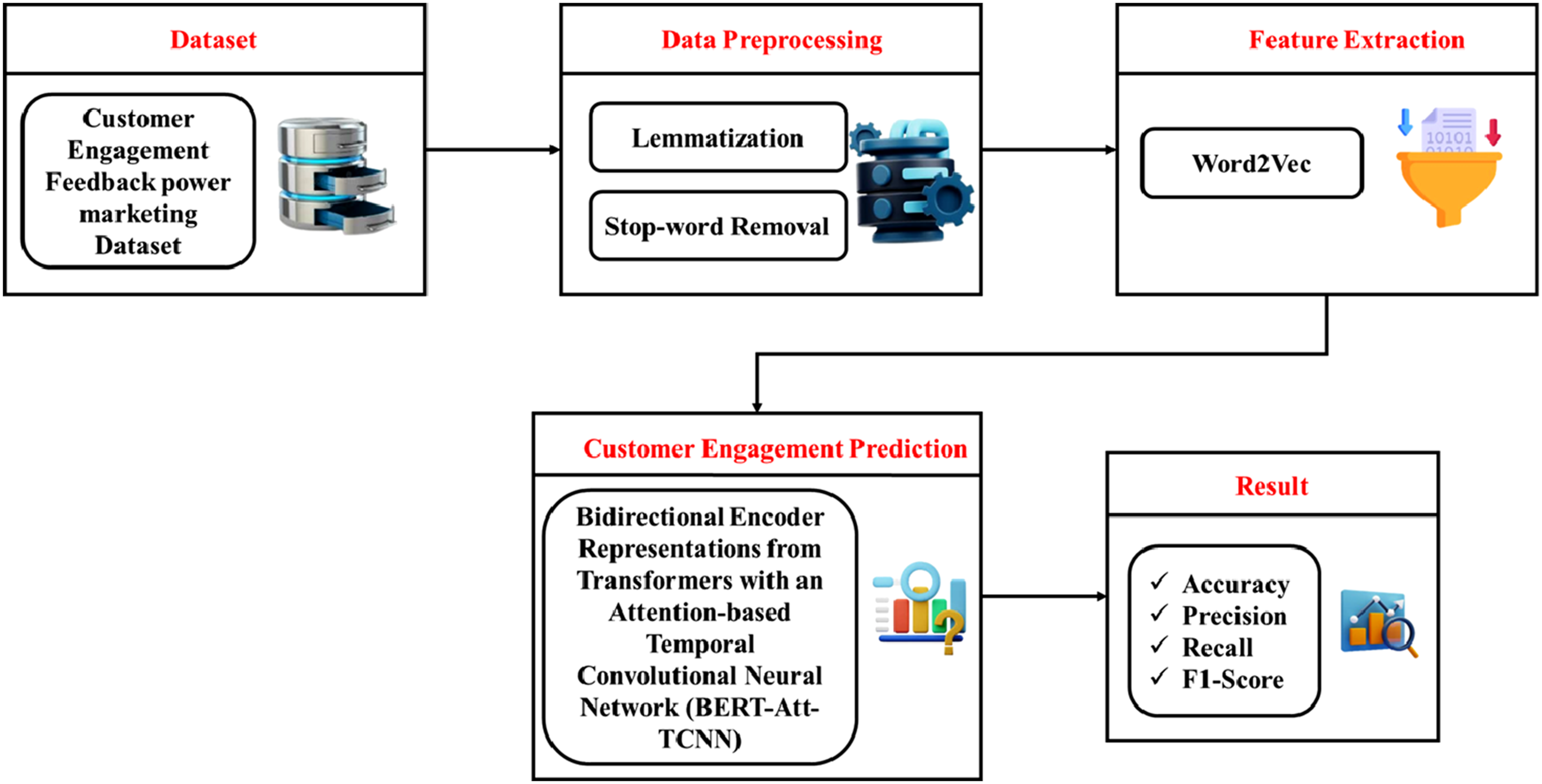
Dataset
Sample data.

Source: https://www.kaggle.com/datasets/zoya77/customer-engagement-feedback-power-marketing-data.
Data preprocessing using natural language processing
NLP-based preprocessing techniques, such as lemmatization and stop-word elimination, are used to improve customer feedback analysis by filtering textual data, making it consistent, eliminating noise, and enhancing sentiment analysis and topic modeling in power marketing interaction systems.
Lemmatization
Preprocessing of Lemmatization output.
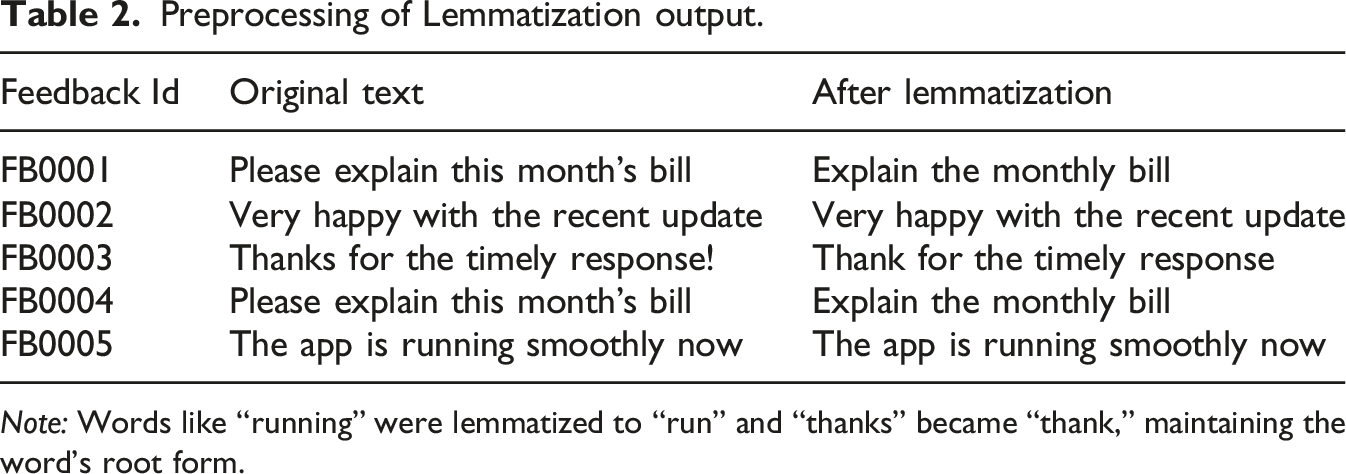
Note: Words like “running” were lemmatized to “run” and “thanks” became “thank,” maintaining the word’s root form.
Stop-word removal
Preprocessing of Stop-word Removal output.
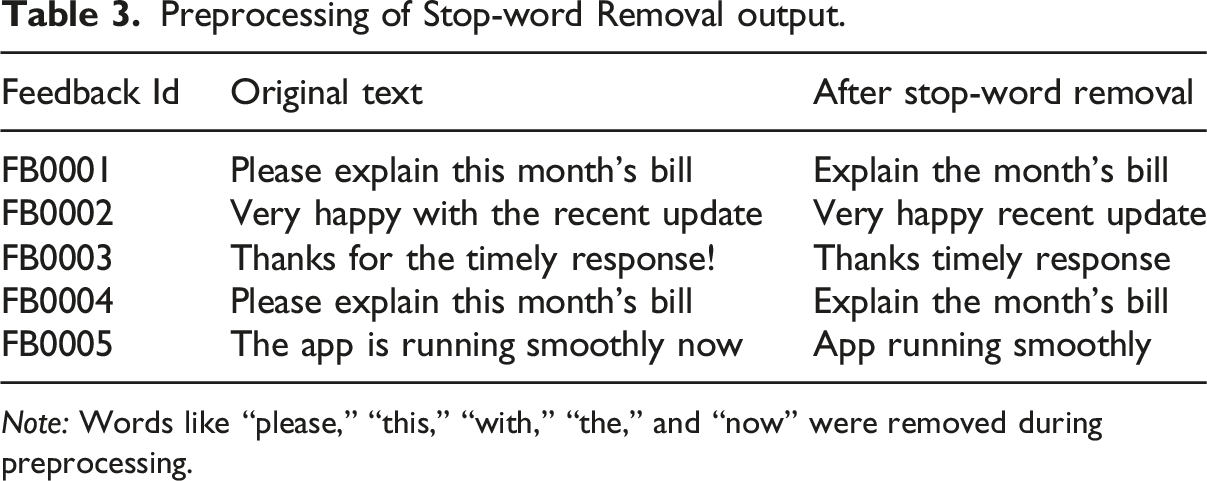
Note: Words like “please,” “this,” “with,” “the,” and “now” were removed during preprocessing.
Word2Vec using feature extraction
By mapping words into a continuous vector space, Word2Vec captures contextual similarities and semantic linkages between words, improving the model’s comprehension of complex consumer expressions for more accurate engagement analysis. These mathematical representations have each dimension representing a semantically valuable concept. Word2vec allows for the representation of text using distributed vectors. The Word2vec model outperforms traditional vector space models in terms of dimensionality, semantic parameters, and contextual data for short text classification. Two models were used: CBOW (Continuous Bag-of-Words or continuous word bag method) and Skip-Gram. CBOW predicts target words based on context, whereas Skip-Gram predicts context from a given word. It demonstrates that the corpus size exceeds 200 MB, the Skip-Gram method outperforms the CBOW method, and the inverse was true when the corpus size was less than 100 MB. Figure 2 demonstrates CBOW and Skip-Gram architectures. Word2Vec improves customer feedback analysis by translating energy-specific words like “high bill,” “power outage,” and “account issue” into vector representations so that the model can better interpret semantic patterns and customer sentiment nuances. (a) CBOW model (b) Skip-gram model.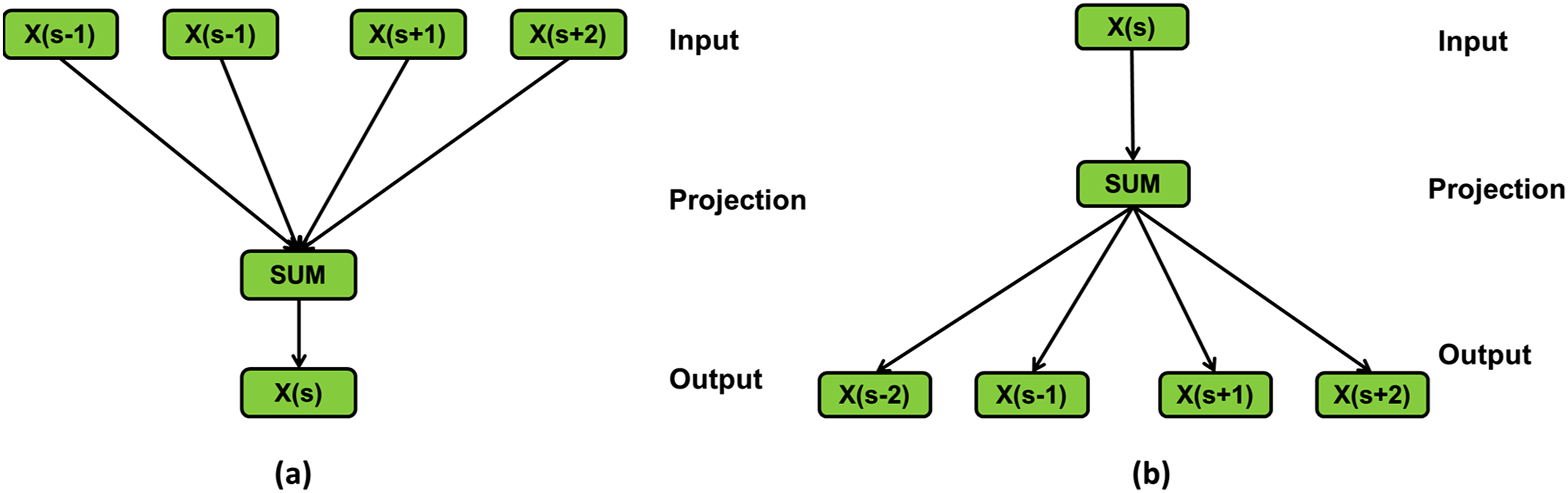
Word2vec might be trained to convert textual information into vector representations in
BERT-Att-TCNN for real-time customer engagement prediction in power marketing
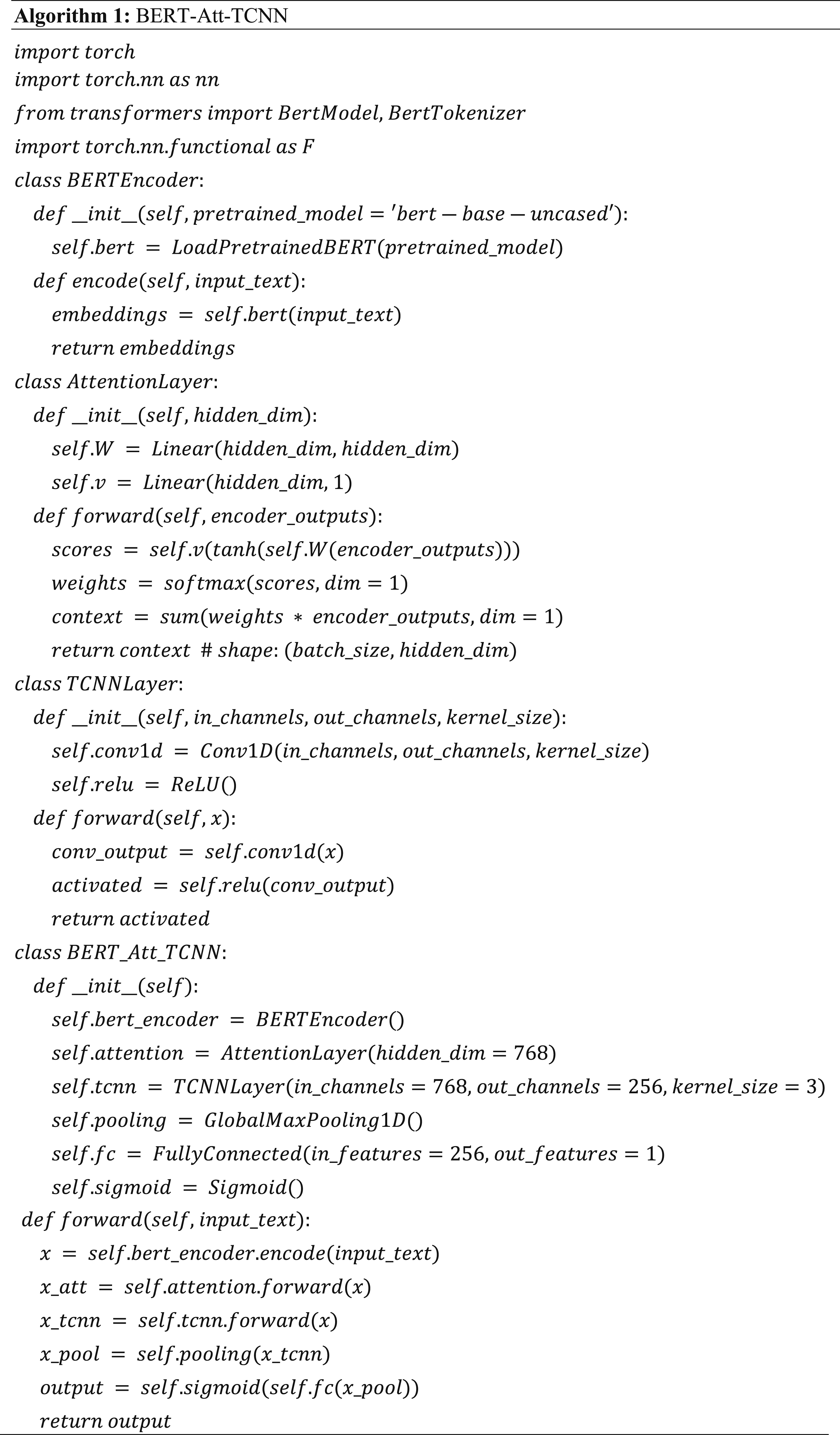
The hybrid Bidirectional Encoder Representations from Transformers with an Attention-based Temporal Convolutional Neural Network (BERT-Att-TCNN) to improve real-time customer engagement prediction in power marketing. The Attention-based Temporal Convolutional Neural Network (Att-TCNN) is a deep learning architecture that combines convolutional layers with an attention mechanism to effectively capture temporal dependencies and salient features in sequential text data. This approach allows the model to focus on the most relevant parts of the input sequence, improving the accuracy of engagement prediction in dynamic customer interactions. BERT extracts bidirectional language dependencies and semantic subtleties from customer feedback, enabling precise interpretation of sentiment, behavioral intent, and emotional tone. Encoded BERT outputs are then propagated through TCNN layers, where
Bidirectional Encoder Representations from transformers (BERT)
BERT was utilized in power customer engagement analysis due to its capacity for deep contextual understanding and bidirectional language comprehension, which allows for client sentiment, emotion classification, and behavioral intent, thereby improving personalized and real-time customer connection. The BERT model was a variation of the Transformer architecture. Transformers utilize the encoder and decoder structures. The BERT model removes the Transformer Decoder while retaining the Transformer Encoder, which was denoted by the sign Architecture of bidirectional encoder representations from transformers (BERT).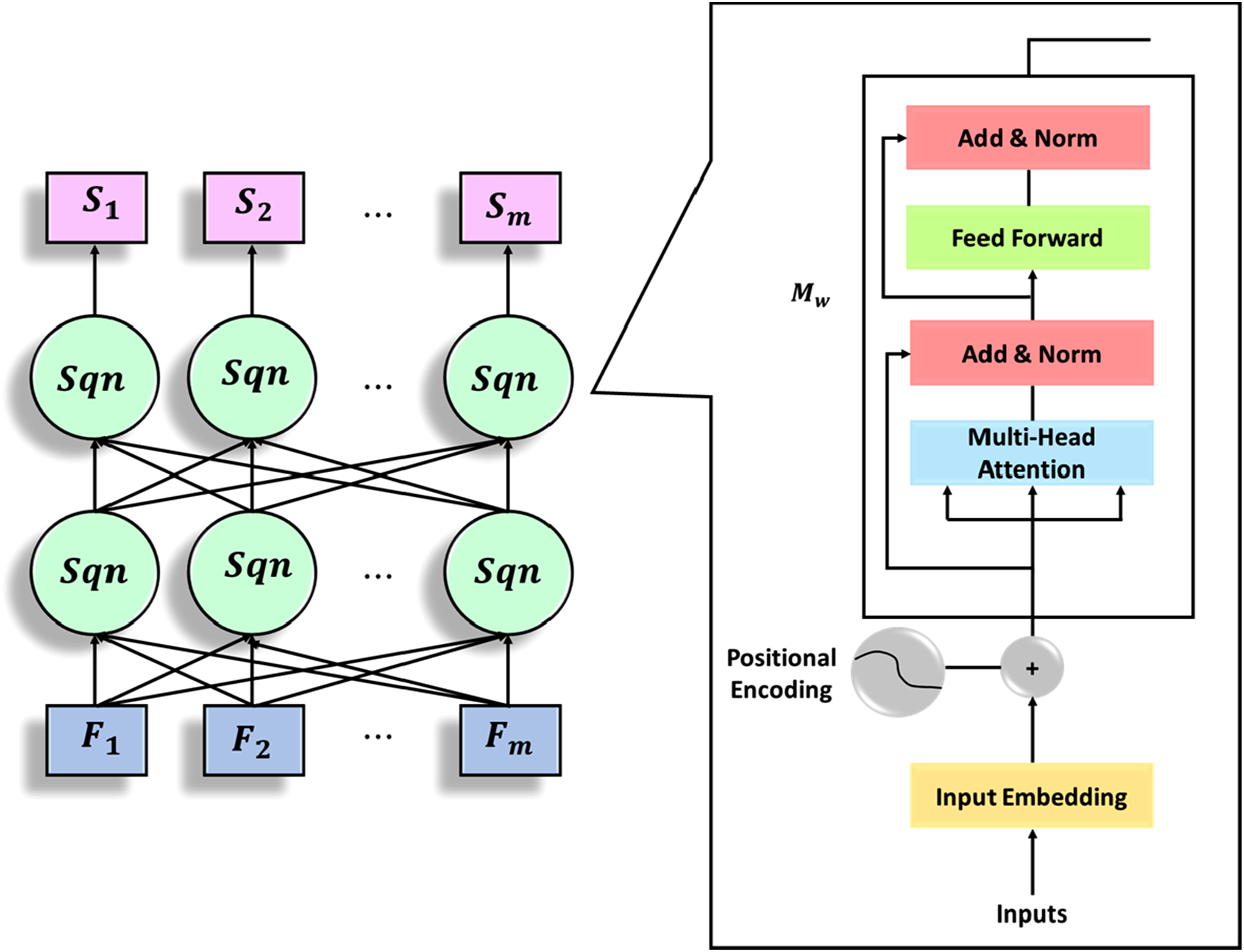
BERT was essentially a language creation structure whose purpose was to produce a pre-training language system. Pre-training might be defined as training the model with a vast quantity of data, creating a generic language framework, and then fine-tuning the system for various downstream tasks such as sentiment classification, topic detection, and engagement scoring. In the masked language model (MLM) task performed during BERT pre-training, a subset of the input tokens was randomly masked, and the model was instructed to predict in equation (1).
Attention mechanism
Real-time engagement in power marketing and sentiment classification accuracy was further improved by the attention mechanism, which filters and concentrates on the most important aspects of customer feedback communication. The model better identifies contextual subtleties and useful emotional signals. After encoding customer interaction data, the output was sent to the attention layer. The attention mechanism could learn the relevance of each feature representation from the encoded inputs. The attention process might be represented as a weighted sum. The relevance of the input characteristics must be determined initially. The contribution of every characteristic at each stage was then determined using a 


The variables
Temporal Convolutional Neural Network (TCNN)
The temporal patterns of customer interactions across time were successfully simulated using TCNN, which allowed the system to detect shifting sentiment patterns and behavioral dynamics necessary for real-time context-sensitive engagement in power marketing. The section describes the DL architecture meant to improve consumer interaction in power marketing management by utilizing NLP approaches. The fundamentals of DL networks for NLP applications, followed by the application of temporal convolutions to consumer-generated text sequences. It also presents pooling strategies specifically designed for extracting behavioral characteristics and enhancing engagement detection in digital marketing environments.
General Principles
To efficiently identify semantic and contextual trends in customer text data for reliable real-time engagement prediction in power marketing. DL models for NLP often had multiple layers that modify the text representation to semantic, syntactic, and engagement-relevant contextual data. To extract higher-level features, Figure 4 shows a simple architecture where input tokens (such as social media inquiries, energy service comments, or customer evaluations) were embedded in dense vectors and processed through hidden layers. The output layer was intended for tasks such as sentiment polarity classification and customer engagement prediction. The hidden description Architecture of temporal convolutional neural network (TCNN).

where 
Temporal Convolutions
The approach identifies local linguistic trends and hierarchical characteristics crucial for real-time sentiment and engagement analysis in changing power marketing scenarios. TCNN was commonly used in NLP to identify local trends from text patterns, such as 

For
Pooling and Feature Aggregation
To identify leading engagement signals from text, allowing strong, scalable predictions of consumer behavior over variable-length power marketing inputs. Pooling layers in TCNN-based NLP models were essential for reducing variable-length feature mappings to fixed-size representations. It enables the model to accommodate inputs of different lengths. To use global max-pooling to extract the most important characteristic from each filter represented in equation (9).

The proposed BERT-Att-TCNN model was completed by integrating BERT for semantic comprehension, an attention mechanism to highlight significant features, and TCNN to learn temporal patterns and effectively improves customer engagement prediction based on real-time textual and behavioral information.
Results and discussion
The experimental setup was implemented using Python 3.10 as the primary software environment, allowing seamless integration of NLP libraries like TensorFlow. Python allowed for effective sentiment analysis, data preprocessing, model training, and visualization, making it well-suited for improving customer engagement in power marketing management.
The heatmap demonstrates the sentiment distribution (Negative, Neutral, Positive) across platforms: Chat, Twitter, and Website. Twitter exhibited the highest number of negative sentiments (130), followed by Chat, with a balanced 107 Negative, 111 Neutral, and 112 Positive entries. Website feedback was also well-distributed, with more Neutral and Positive sentiments than Negative. The color gradient represents frequency, with darker shades indicating higher values. It provides insights into customer feedback sentiment trends by source, as illustrated in Figure 5. Sentiment distribution analysis in digital platforms for enhanced power marketing.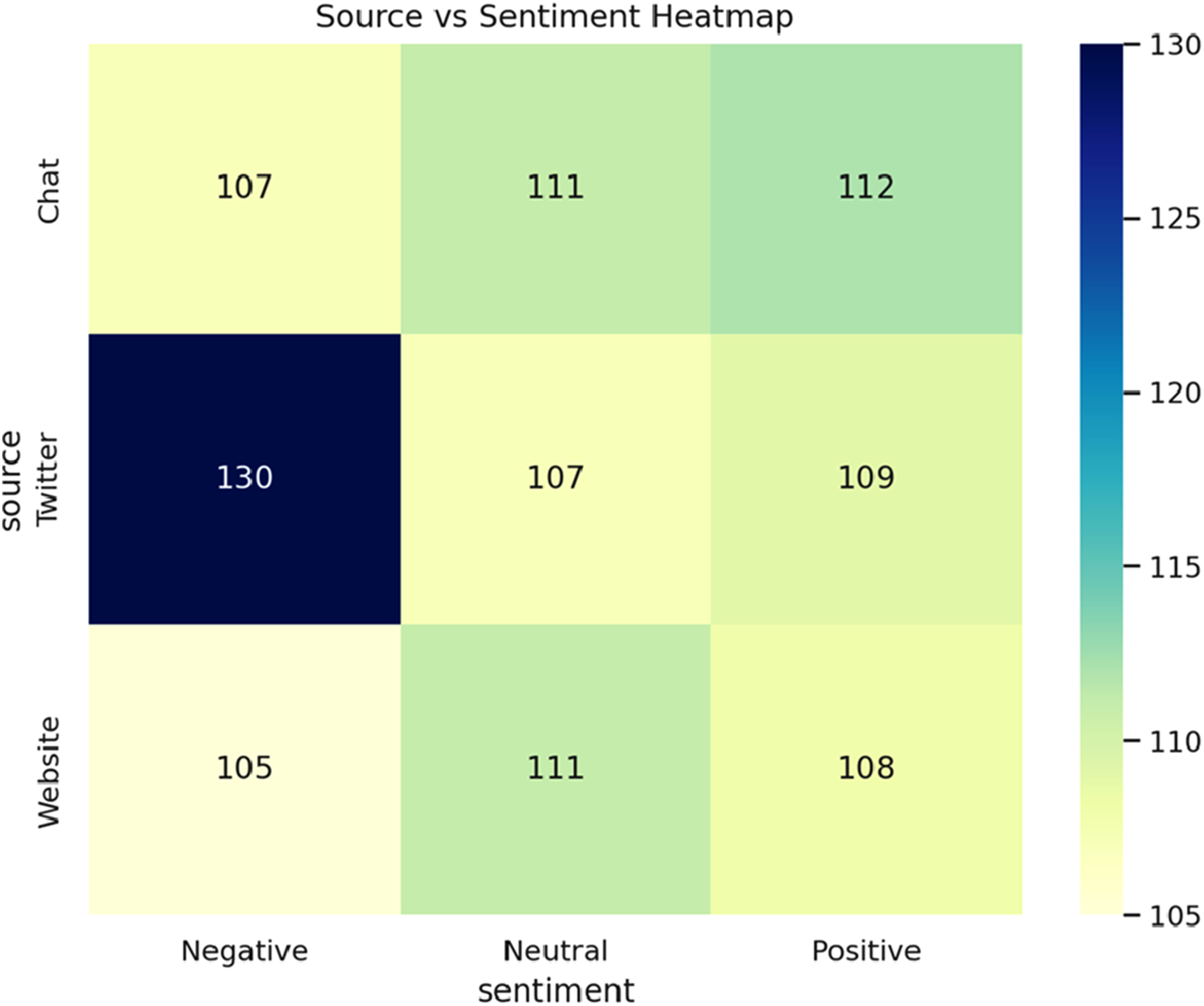
The sentiment distribution across key customer service issues: Billing, App/Tech, Support, Outage, and Technical was illustrated in Figure 6. Negative sentiment prevails over App/Tech and Technical, which were the priority areas for improvement. Neutral feedback was highest for Technical, while Support showed a balanced sentiment distribution. These findings, obtained through BERT-Att-TCNN-based NLP methods, inform targeted communication and proactive service strategies in power marketing. These insights support the development of facilitating personalized and adaptive interaction through intelligent sentiment-aware systems. Sentiment classification for intelligent customer engagement.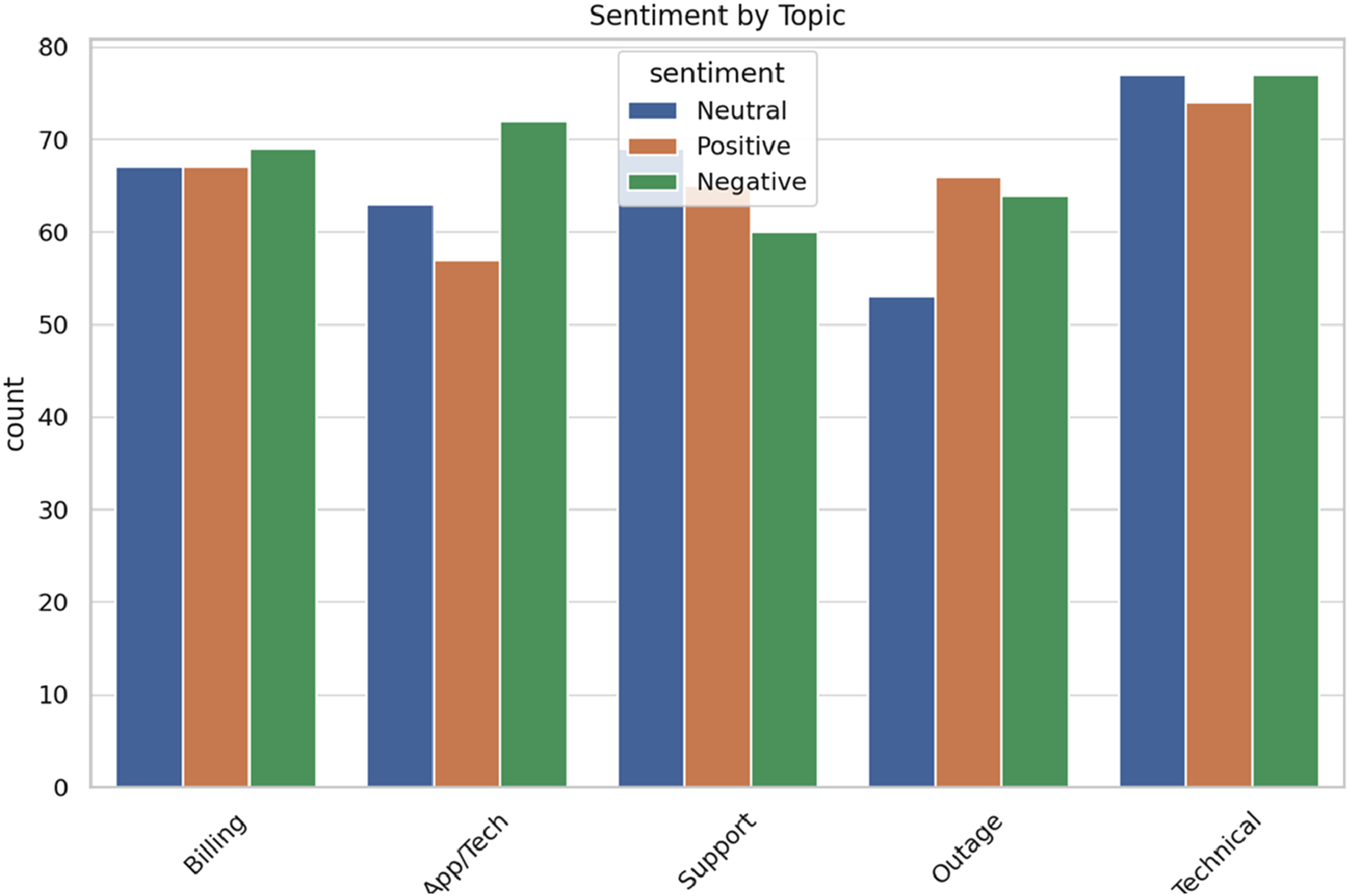
The visualizations provide key insights into customer feedback behavior. Figure 7(a) indicates text length distribution in feedback, revealing two prominent peaks at 28 and 34 characters, reflecting brief feedback patterns. Figure 7(b) indicates feedback volume trends over time and illustrates regular activity with variations between 8 and 24 entries per day. These findings validate the need for adaptive customer interaction strategies in power marketing through aligning content creation strategies with temporal patterns and brevity of communication, ultimately improving personalization and system responsiveness through intelligent sentiment-based models such as BERT-Att-TCNN. Analysis of feedback patterns for intelligent power marketing insights.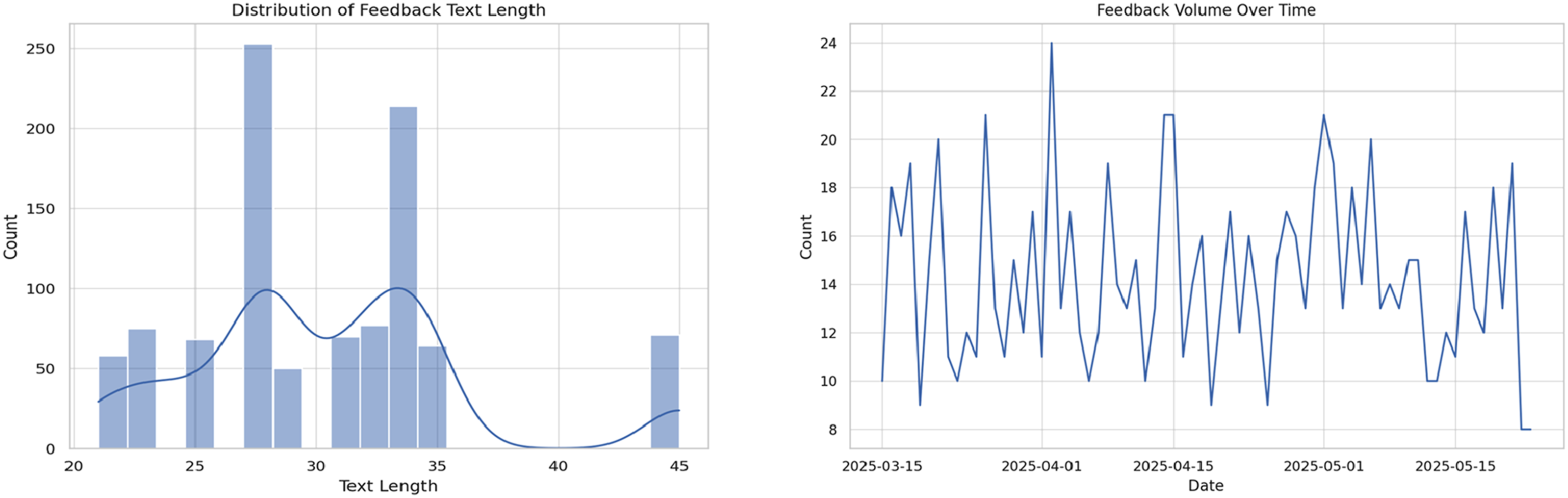
Performance metrics outcome in BERT-Att-TCNN framework.
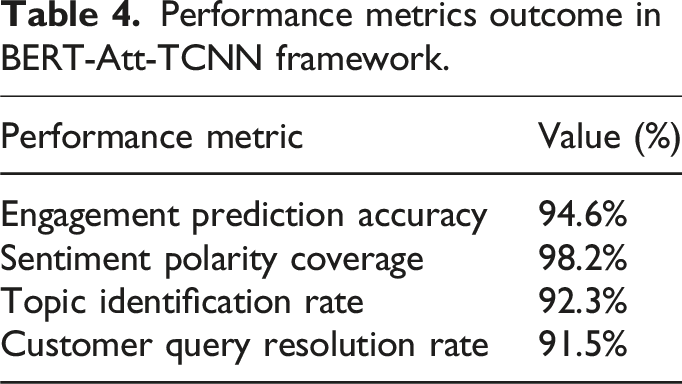
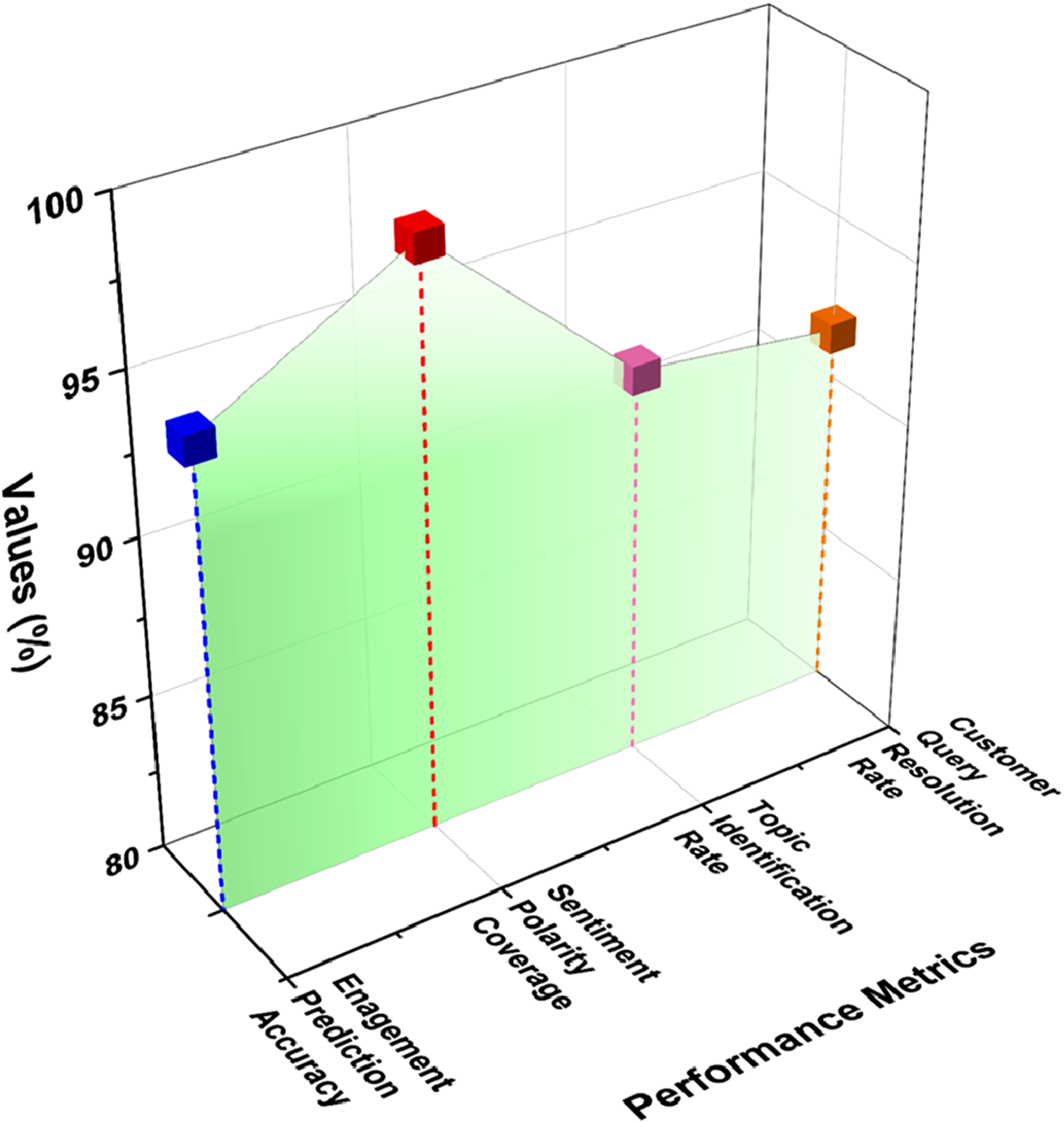
Customer engagement in power marketing through BERT-Att-TCNN.
The output underscores patterns in customer feedback length and submission timing, contributing to intelligent power marketing strategies. Short, consistent feedback indicates effective sentiment extraction, and volume fluctuation informs adaptive scheduling, which enhances the contextual accuracy and customer engagement of the BERT-Att-TCNN model.
Comparative result analysis
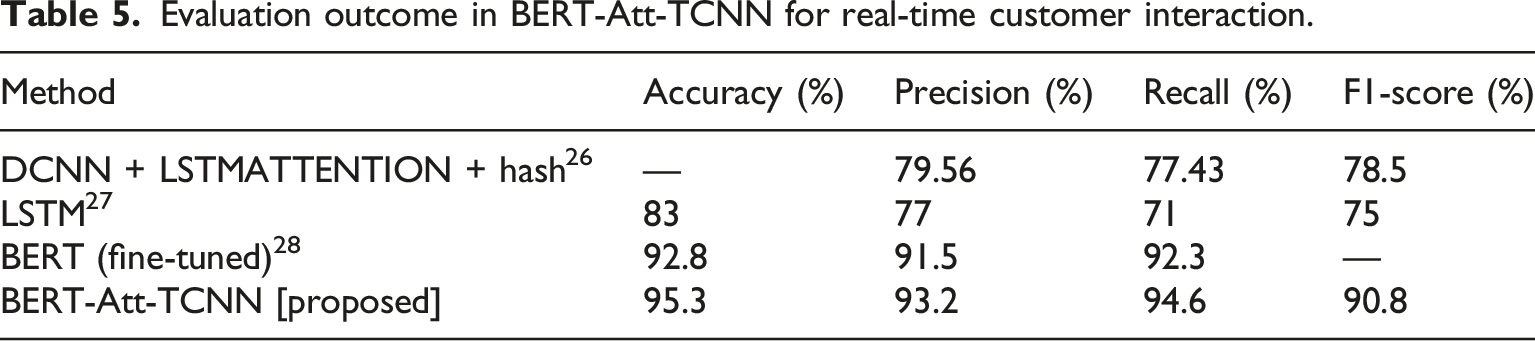
In this section BERT-Att-TCNN framework result was compared with existing literatures. The enhancement of customer feedback analysis by using improved contextual embeddings and temporal attention techniques enables accurate sentiment labeling, topic classification, and live engagement prediction for powerful marketing applications. The DCNN + LSTMATTENTION + hash 26 technique lacks profound contextual perception of language; Hash embedding limits semantic generalizability and results in lower performance for complex customer expressions and delayed adaptability in engagement scenarios. LSTM 27 technique does not handle long-term dependencies and lacks contextual word representations, leading to challenges in capturing subtle customer sentiments and engagement patterns across subsequent comments over a duration of time. BERT (fine-tuned) 28 approach had superior contextual comprehension but no temporal modeling, which makes it inadequate for observing customers’ behavior, especially in real-time, sequential interaction contexts.
The deep convolutional neural network (DCNN + LSTMATTENTION + hash), 26 Long Short-Term Memory (LSTM), 27 and fine-tuned BERT model 28 were outperformed by the proposed BERT-Att-TCNN framework. In the power marketing management scenario, the proposed model achieved better performance across important metrics such as Precision, recall, accuracy, and F1 score. The findings confirm the robustness of the model and its ability to support scalable, smart, and real-time customer interaction in the digital energy service economy.
Evaluation outcome in BERT-Att-TCNN for real-time customer interaction.
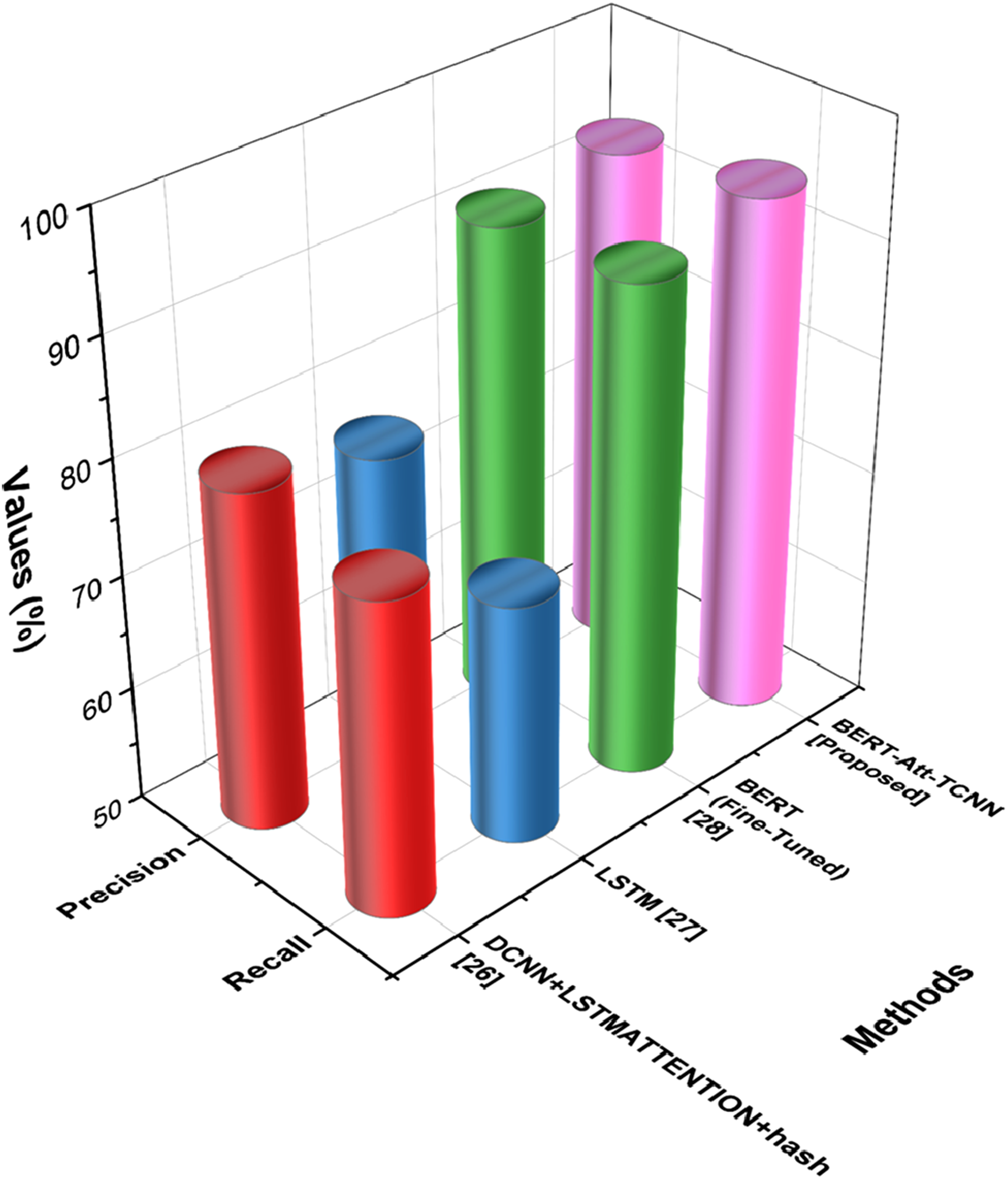
Precision and recall results in BERT-Att-TCNN in customer engagement.
The performance of the model results based on Accuracy and F1 score for predicting customer engagement was illustrated in Table 5 and Figure 10. The LSTM obtained an accuracy (83%) and F1 Score (75%), DCNN + LSTMATTENTION + hash with an F1 Score of 78.5%. The fine-tuned BERT model achieved excellent performance at accuracy (92.8%). The developed BERT-Att-TCNN model exceeded all others’ performance with accuracy (95.3%) and F1 Score (90.8%), highlighting the model’s robustness of sophisticated customer feedback. (a) Accuracy and (b) F1 Score comparison of BERT-Att-TCNN in power marketing.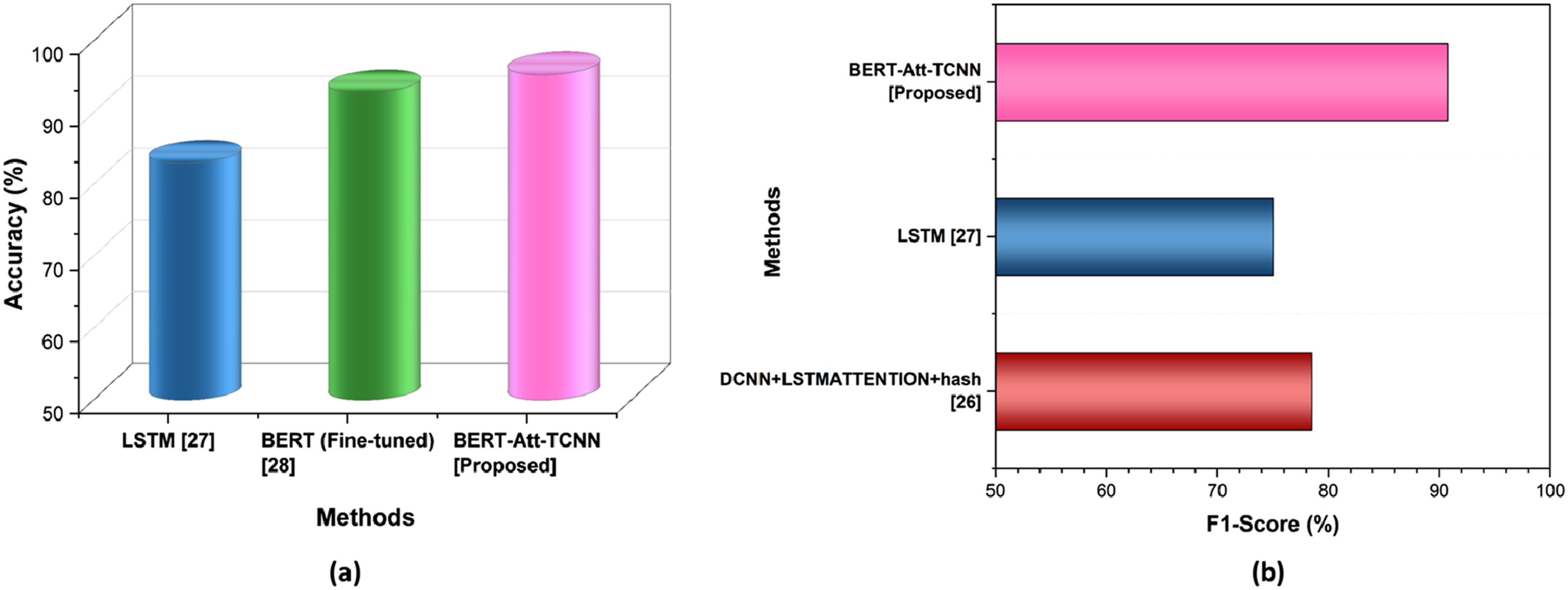
The suggested BERT-Att-TCNN model addresses this effectively by combining BERT’s powerful contextual word model. Unlike DCNN + LSTMATTENTION + hash, it learns both semantic depth and temporal patterns, allowing it to make accurate sentiment and engagement predictions. It addresses LSTM’s difficulty with long-term dependencies by using convolutional layers that process sequence data more effectively. In addition, through the inclusion of temporal modeling with BERT’s context-aware embeddings, it addresses BERT’s weakness in sequential comprehension. With the combined architecture, real-time, adaptive, and personalized customer interaction was provided, resulting in increased prediction accuracy, higher response, and better marketing intelligence.
Conclusion
The research demonstrates the efficacy of combining deep learning-based NLP methods to boost customer engagement in power marketing. With BERT for contextual comprehension and Att-TCNN for identifying temporal patterns, the system provides customized, real-time interactions through precise sentiment classification, topic identification, and behavioral analysis. The hybrid model addresses limitations of the traditional marketing systems by enabling dynamic, adaptive communication based on customer feedback from various digital sources. The preprocessing stages, including lemmatization, stop-word removal, and Word2Vec-based feature extraction, provide semantic depth and interpretative clarity. The hybrid BERT-Att-TCNN approach supports sentiment classification. In the rapidly increasing need for intelligent and scalable marketing solutions, the model provides a strong framework for digital transformation within the energy industry, enhancing customer satisfaction, operational responsiveness, and strategic marketing efficacy within the competitive environment. Experimental evaluation results show that the developed BERT-Att-TCNN model demonstrated exceptional performance with 95.3% accuracy, 90.8% F1 score, 98.2% sentiment polarity coverage, and 94.6% engagement prediction accuracy. Compared to conventional models, the hybrid approach improved real-time sentiment analysis, minimized response times, and increased customer satisfaction, demonstrating its applicability in intelligent, data-driven power marketing systems. The primary limitations lie in the reliance on high-quality data and computational power for the real-time running of DL models. Future work will explore the integration of voice and speech processing features to manage verbal customer interactions, making the system more accessible and responsive. Adding Explainable AI (XAI) will increase the transparency of the model’s predictions, supporting trust and actionable insights for marketing teams. Implementing the solution as a mobile-based chatbot will provide real-time, personalized assistance, thereby improving satisfaction and engagement. These developments will greatly expand the system’s reach in dynamic and changing power marketing environments.
Footnotes

Funding
The authors received no financial support for the research, authorship, and/or publication of this article. This research received no external funding.
Declaration of conflicting of interest
The authors declared no potential conflicts of interest with respect to the research, authorship, and/or publication of this article.
Data availability statement
The authors declare that the data supporting the findings of this study are available within the article. The raw/derived data supporting the findings of this study are available from the corresponding author at request.