




Abstract
Interior design is the art and science of upgrading interior spaces to create a practical and aesthetically pleasant environment. It entails envisioning, planning and implementing designs that take into consideration spatial layout, color schemes, vases and pottery choices, lighting, along with decorative components, while balancing functionality with the client’s preferences and the space’s purpose. The purpose of this research is to develop an innovative VR technology integrated interior design method for living space experience. We propose a novel sea horse optimized-versatile deep convolutional neural network (SHO-VDCNN) algorithm for recognizing innovative interior designs in living spaces. At first we gathered a dataset, to train our proposed recognition model. Image standardization is employed to pre-process the gathered data. In this research, we utilize a VR interior design layout mechanism to improve the potential of autonomous layout interior while enhancing interactions of machines with virtualization. Furthermore, the optimal placements (states) for these internal model components in simulated environments could be spontaneously identified by employing the deep Q-learning network (DQN) method. The proposed model is implemented in Python software. We assessed our suggested framework with various evaluation metrics. We also conducted a comparison analysis to examine the effectiveness of the suggested paradigm. The experimental findings demonstrate that the approached recognition model performed better than other traditional learning models for recognizing interior design frameworks in living spaces.
Keywords
Introduction
VR technology has multiple fascinating applications capacity to improve and introduce new interior design in residential environments. 1 The substantial influence of VR technology on interior design has revolutionized traditional methods and empowered designers to create immersive and distinctive designs. An innovative era of efficiency and creativity has been created through the integration of VR technology into interior design procedures.2,3 Designers can provide customers with rich virtual experiences traditional plans and designs by utilizing VR tools. Customers can explore different architectural ideas, resources and configurations authentically and fascinatingly through VR. The interaction and collaboration among designers and clients improve the client’s comprehension of the recommended design layout. 4
Virtual reality innovation has revolutionized architecture, increasing accessibility for residences. The visualization ideas for design are utilized to require an extensive amount of money and time with restricted exploration and modification.5,6 With VR technology, designers can swiftly create and edit digital designs, liberating from physical constraints explore a wide range of design ideas. The design process offers suggestions and determines trends based on their virtual excursions. 7 VR has the potential to bridge the separation between reality and imagination for interior design. Designers provide various interior designs to customers to clarify visualizing ideas and impact environments. VR technology enables designers to realize their ideas in different ways that were previously unthinkable and design interiors with new colors, decor, and architectural aspects. 8 Designers can discover new substances, spatial plans, and effects of lighting by immersing in virtual environments extending the realm of possibilities in the field of interior architecture. 9
With VR technology, designers can explore novel design concepts transcend conventional rules and stretch the boundaries of creativity. VR technology additionally possesses the possibility to completely transform the constantly interacting and connecting with our physical surroundings. 10 The dynamic and adaptable living spaces are flexible to modify perpetually shifting desires and tastes through VR technology that eliminates the real and digital realms. 11 Virtual reality technology also increases the design of interior projects’ precision and effectiveness. Designers can precisely evaluate dimensions, ratios, and spatial connections in constructing virtual versions of real destinations. 12
The study aims to develop an innovative VR technology integrated interior design method for living space experience by implementing a sea horse optimized-versatile deep convolutional neural network (SHO-VDCNN) algorithm for recognizing innovative interior designs in living space. By performing the use of simulated settings, the ideal locations (states) for the internal model components might be automatically determined by the DQN method.
Contribution
• We gathered a dataset, to train our proposed recognition model. • Image standardization is employed to pre-process the gathered data. • The sea horse optimized-versatile deep convolutional neural network (SHO-VDCNN) algorithm was used for recognizing innovative interior designs in living spaces. • The optimal placements (states) for these internal model components in simulated environments could be spontaneously identified by employing the deep Q-learning network (DQN) method.
The following sections comprise the article: Part 2, Related Works; Part 3, Methodology; Part 4, Result; Part 5, Conclusion.
Related works
The neural system components, including FNN and 3DSC systems, investigate the scientific method of applying AI deep comprehension techniques for recognizing interior decorations introduced by the author. 13 The ANN was utilized to develop ISLD. The experimental outcome demonstrated that the individual viewer assessment was superior compared to other methods. The sensible and distinctive layouts were efficient for interior design projects. The customer can utilize a multimedia home design audition tool by integrating the smartphone’s augmented reality platform examined in Ref. 14. The augmented reality was deployed for personalized and dynamic interior design equipment. The experimental result demonstrated that the approached method provided superior results in logical layout production.
The system in real-time has incorporated GAN, reduced reality, and mixed reality towards designers of architecture and customers. The implementation of GAN enabled interior renovation layouts according to user selections and architect trends examined in Ref. 15. The outcome of the result showed that designers can easily make changes to restoration plans and obtain insightful information using this strategy.
They suggested a 3D cartography structure of living areas that utilizes the RGB-D gauges and digital graphics resources. RGB-D sensors were the main source of data generated at a single point by authors. 16 The interface restoration developed a realistic 3D mesh depiction of the living area employing strategies like Poisson’s Interface Restoration technique. The result exhibited that approach was cost-effective and user-friendly for accurately recording and portraying physical settings. The fundamentals of VR, create a foundation of an interior design platform and develop the system’s interface materials and interaction processes design examined in Ref. 17. The design of the interior mechanism was performed and the rotational destiny of the equipment in environments was computed by specific point estimate. The experimental outcome demonstrated that the design was stronger and enhanced the user’s interaction engagement.
The VR and computer vision-oriented platform for the visual assessment of interior decorations in Ref. 18. The objective of the study was to enhance the layout of architectural decorations by creating a simulation that closely resembles reality and actual time structural modifications. The experimental findings demonstrate that the effectiveness of the system has satisfied the demands of the evaluation of architectural design elegance. The VR-based interior landscape restoration approach used VR technology to generate interior landscape images and material examined in Ref. 19. To regulate design selection and realistic scenario design ideas in the iterative procedure of the instrument, restrictions were applied as density functions to develop the interior design. The result demonstrated the design of 3D sceneries with accurate time and precision.
The innovative visual approach generated realistic VE for the design in AEC fields. The vision degeneration can be effectively simulated in a VE utilizing tools for image processing and 3D design platforms. 20 The decorators of the architectural design sector can employ 3D engines for designing interiors. The experimental outcome articulated that designers were able to recognize design issues through VR technology.
The IVR enabled navigation across the developed environment and instantaneous interaction examined in Ref. 21. By creating a sense of immersion in a virtual world, IVR technology could simulate incredibly realistic settings and influence cognitive realism. The results of the trail demonstrated that the standard VR was utilized for visual region and spatial perception. The planning impacts of multiple designs and massive sceneries were unable to be effectively, automatically, and collaboratively expressed using traditional methods of urban environment design and landscape planning. 22 The results indicated the realistic effects of designers’ information processing, design productivity, and their successful elevation of the design standard.
The design instrument comprises an application of a program with a three-dimensional representation of the living area and living room in a simulated environment that was examined. 23 To generate and visualize ideas before implementing any genuine alterations in buildings, designers and interior decorators access the VR technology. The experimental outcome exhibited recent advances in VR innovations and trends, ensuring optimal and successful utilization of technology.
Methodology
In this paper, Figure 1 depicts the flow of the proposed methodology. We gathered a dataset, to train our proposed recognition model. Image standardization is employed to pre-process the gathered data. We propose a sea horse optimized-versatile deep convolutional neural network (SHO-VDCNN) algorithm for recognizing innovative interior designs in living spaces. A deep Q-learning network (DQN) is used to identify the best position in a virtual scenario. Flow of proposed methodology.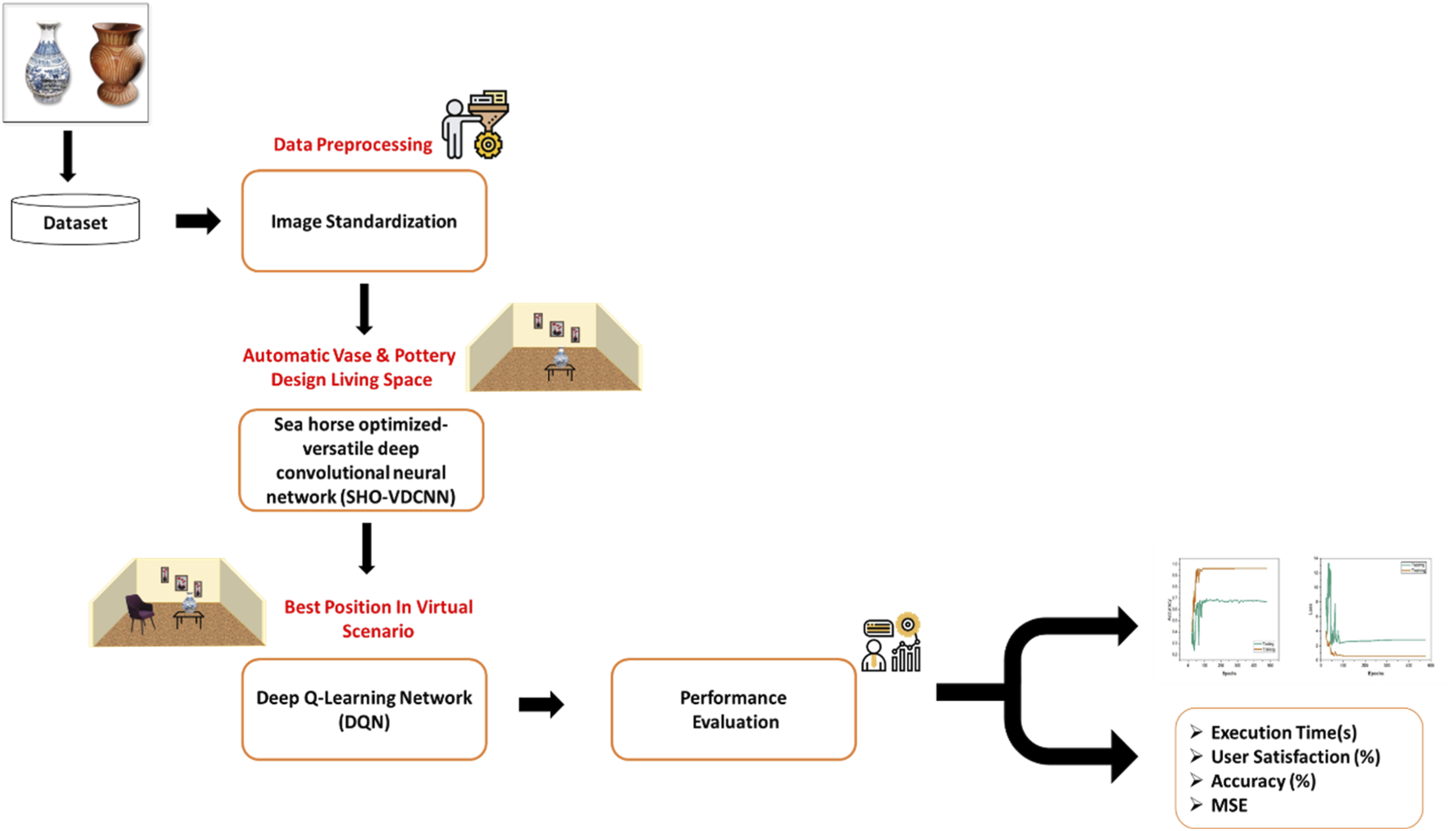
Dataset
Vases and pottery dataset.
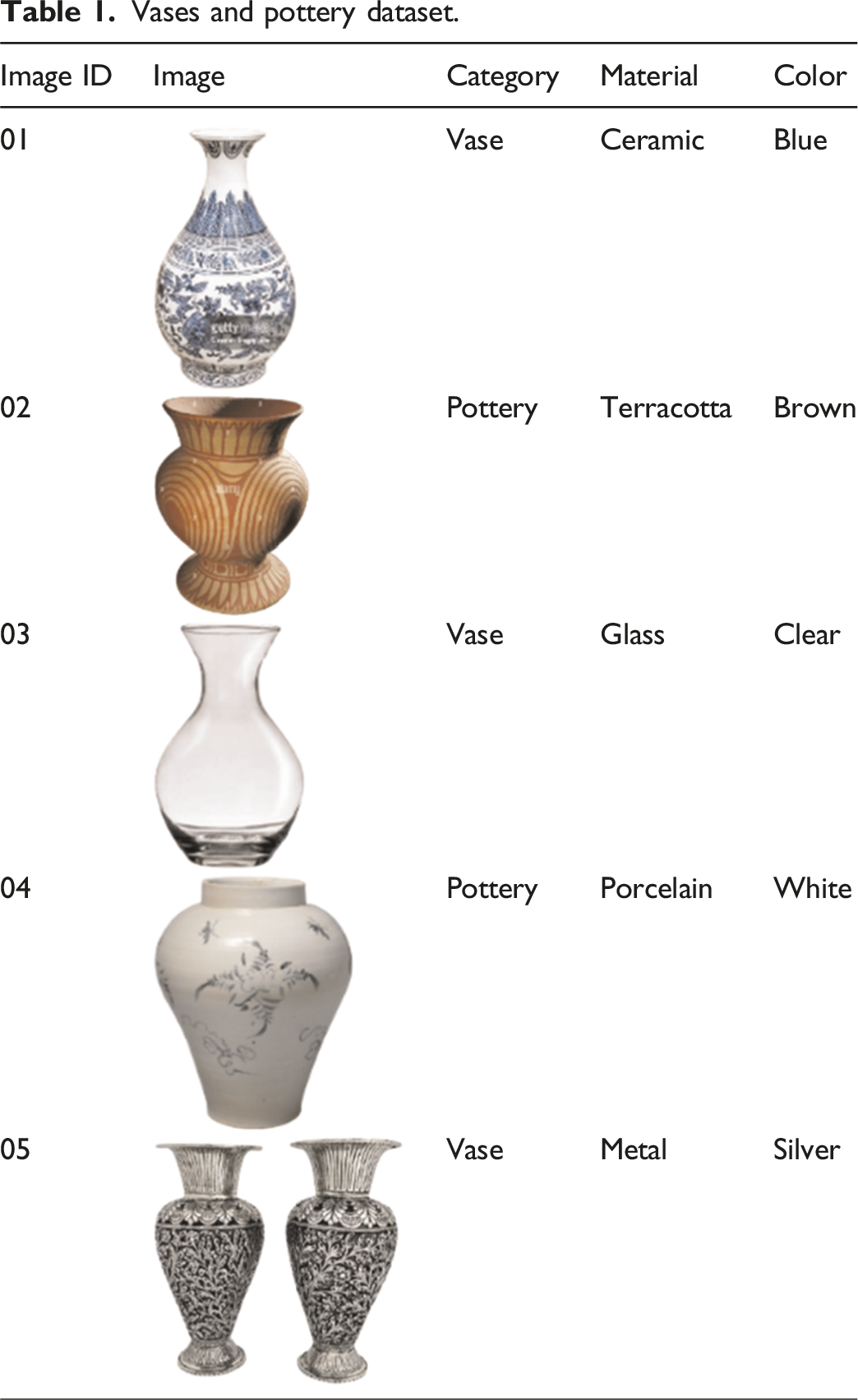
Image standardization
Image standardization is a pre-processing technique crucial in machine learning and computer vision tasks. It involves transforming the dimension of each pixel’s value that must be uniform and distributed usually by dividing the average deviation and removing the median. The formula for standardization is
Recognizing innovative interior designs in living space
To recognize the innovative interior designs in living space by using sea horse optimized-versatile deep convolutional neural network (SHO-VDCNN).
Sea horse optimization (SHO)
SHO enhances interior design by creating inspiration from the effective space usage of seahorses. Subsequently it improves the utilization of space and aesthetics through optimizing schemes of colors and lighting. The SHO system replicates a sea horse’s transportation, hunting, and mating habits. These three actions are essential elements of SHO. The mobility and predation characteristics are exposed to the universal and locaters methods, respectively, enhanced by the SHO algorithm.
Movement behavior of the seahorse
The actions of seahorses are classified into two distinct groups: as cerebral cortex swimming in a pattern of spirals close to an ocean vortex and the hippocampal moving in a Brownian fashion across the surges of water.
Using Lévy flying to mimic the Seahorse’s movements, the reptile swirls deeper to obtain optimum position. The special spiral motion of the seahorse enables it to continuously alter its angle of rotation and extend the proximity of the current localized solution, preventing the SHO approach from ending up at the local optimal solution. The following formula was used to accomplish the following:

Brownian motion was utilized to replicate the sea horse’s movements. The dimensions are described below. The departed 
Preying habits of seahorses
Achievement and failure are the two conditions that happen when seahorses are preyed against. An arbitrary number 
The seahorse’s new position at time
Reproductive behavior of seahorse
The male seahorses reproduce in the wild. The SHO algorithm uses a mathematical expression whereby some of the higher fitness values are used as male populations for reproduction and the remaining portion is used as female populations to identify the next generation with superior characteristics.

The male and female species are represented in the terms father and mother, respectively. The fitness value across every
The pair of seahorses mated at random only produces one offspring, rendering the SHO algorithm easy to execute. The expression for this assumption is outlined below:
Versatile deep convolutional neural network (SHO-VDCNN)
Living room interior design layout techniques are revolutionized by VDCNN. The flexibility makes it suitable according to tastes, adding refinement and balance to the atmosphere and reinventing. The classification of separability data to the crossover entropy expense function exhibits an element of regularization during VDCNN development, the classification separation of the characteristics retrieved by the VDCNN algorithm was enhanced. 

The value 
The respective weight factors are represented by
The error vector of the updated expense function was essential because it was utilized to modify the
The result of the output layer’s 
The result of the output layer’s 

Constantly estimating the error vector in every layer was possible until the erroneous vector in the resultant level had been determined. For all layers, the updated
Sea horse optimized-versatile deep convolutional neural network (SHO-VDCNN)
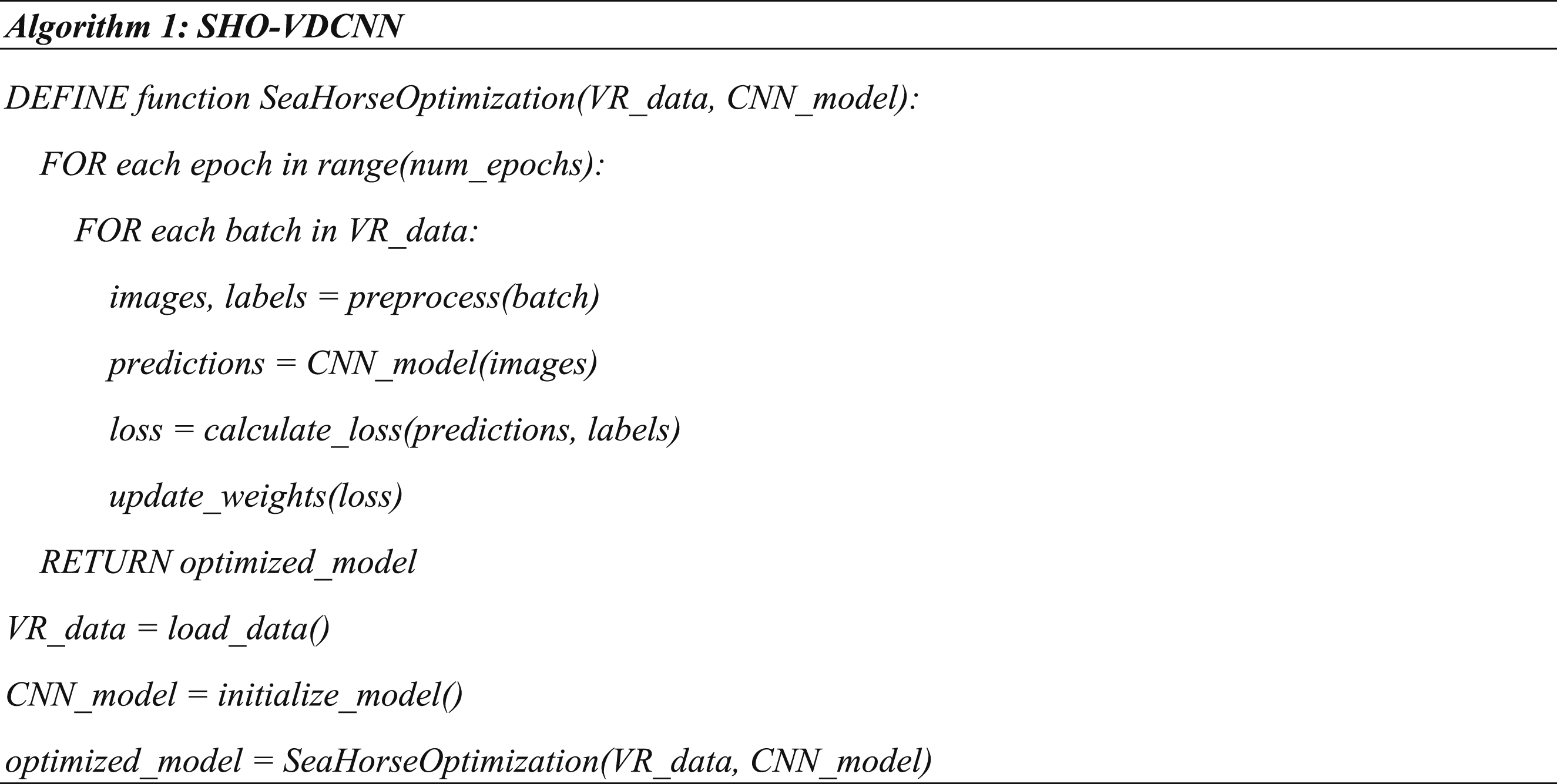
Combining VR technology with Sea Horse Optimization-Versatile Deep Convolutional Neural Network (SHO-VDCNN) provides an innovative approach to transform interior design procedures in residential environments. With the smooth integration of SHO-VDCNN and strong computational power featuring submersion, designers can create interior designs with unsurpassed reliability and adaptability. In the hybrid system, design aspects can be explored and altered in instantaneous fashion facilitating swift prototyping and repetition considering design, usefulness, and aesthetics attention. By utilizing SHO-VDCNN optimization capabilities, the system cleverly enhances design alternatives by user choices and geographic constraints, fostering creativity and efficiency during the design phase. The visualization and interaction aspects of interior design are improved and designers are empowered to push the limits of creativity and innovation, fully immersive living environments that genuinely connect with residents. The creative integration of VR technology and modern facilities require neural network design methods. Algorithm 1 shows the SHO-VDCNN pseudo code.
Foundations of vases and pottery layout design
The process of designing the layout involves choosing a suitable approach for each item of pottery and vases in the living space.
Describing the value Q for a state
The Q-learn was a fundamental technique in reinforcement instruction that finds numerous applications in video games, automation and cognitive management. Q-learning enables a system to acquire the spatial between both states and actions, maximizing its enduring accumulated payoff through failure and success. Q-learning differs significantly from different methods of machine learning, including VDCNN lacks pre-training alternatively, it employs the information for interacting with intricate context. Q-learning offers extensive application possibilities for resolving a variety of challenging selection optimization problems that possess instructor indications stipulated in various conditions. The layout design issue remains primarily a three-dimensional version of the traditional multi-target optimization problem. The problem contains multiple complex relations among many pieces of pottery and vases for careful analysis of the relationships.
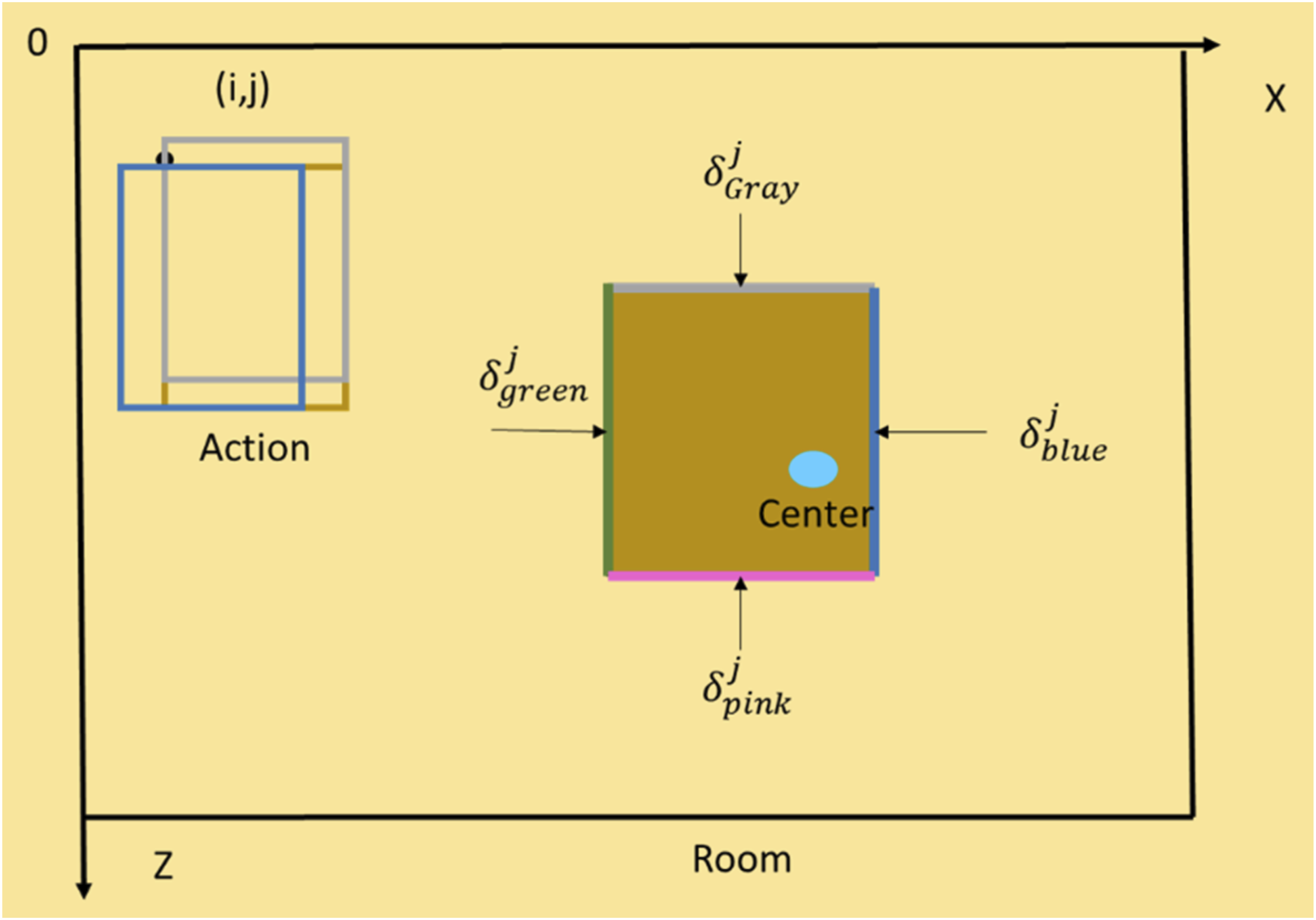
Consider a vase and pottery in living space. The vases and pottery items can be adjusted left, right, forward, and backward throughout the design layout. The three-dimensional vector position in the living room represents an operation to determine the value of Q in every location enabling interaction with surroundings.
The pottery and vases can be moved in four distinct ways: Forward (F), Backward (B), Left (L) and Right (R). The piece of pottery and vases includes four-line segments. Figure 2 depicts the vases and pottery piece’s surrounding region made up of four-line segments, which are represented by Visualization of the interior layout design problem.
Equation (16) illustrates the value of Q and can be computed for an event 

The number of feasible actions from the current situation
Employing deep Q-learn for designing layouts
Particularly,
Apart from collaborations among the vases and pottery environment leads to complex interactions among multiple pieces of vases and pottery. The long-range anticipated return of performing a procedure by the model-free off-policy approach is termed Q-learning. An operation was assessed to provide superior benefits over time. Continuously, Q-values are acquired by contrasting the current assessment of Q-value measure the payoff R plus the highest quality-value for every feasible action 
The parameter ξ represents a rate of discounting and depreciation ratio, parameter remains constant. The capacity to optimize the connections between randomized activities and anticipated activities is frequently utilized by deep neural networks. Despite stochastic methods, being anticipated by the conventional Q-learn approach, specific actions are predicted by the VDCNN-based algorithm. The disparities among the value of Q of randomly developed activities and value of Q of predictions are expressed as function of loss that can be minimized by VDCNN-based algorithm. The optimal network settings were obtained to forecast a certain action agent’s visible condition, such as the position of vases and pottery in the simulated setting.
The neural network’s settings are constantly shifting during the learning phase, denoted by
Training level of Q-learn system
Specifically, they describe the DQN training process. Figure 3 illustrates an exposition of the entire procedure. There are three phases of training procedure. The initial phase was pre-processing that consists of categorizing the image into a layout and crucial pre-processing methods. The real scene’s conceivable states are infinite. To generate a realistic and dependable discrete model of the location, the geographical matrix from the fluid simulations area period needed to calculate the desired state for each agent. The realistic and resilient discrete representation of the environment through spatiotemporal grids from the context of hydraulic computations. The grid cell was deemed as an ideal spot for substance inside the grid unit. The restricted set of distinct grid cells can intuitively reflect the environment’s space of states. Furthermore, every image submitted requires its dimensions. The massive source image dimension could negatively affect the ultimate outcomes and substantially slow down the instruction procedure. Dqn training technique.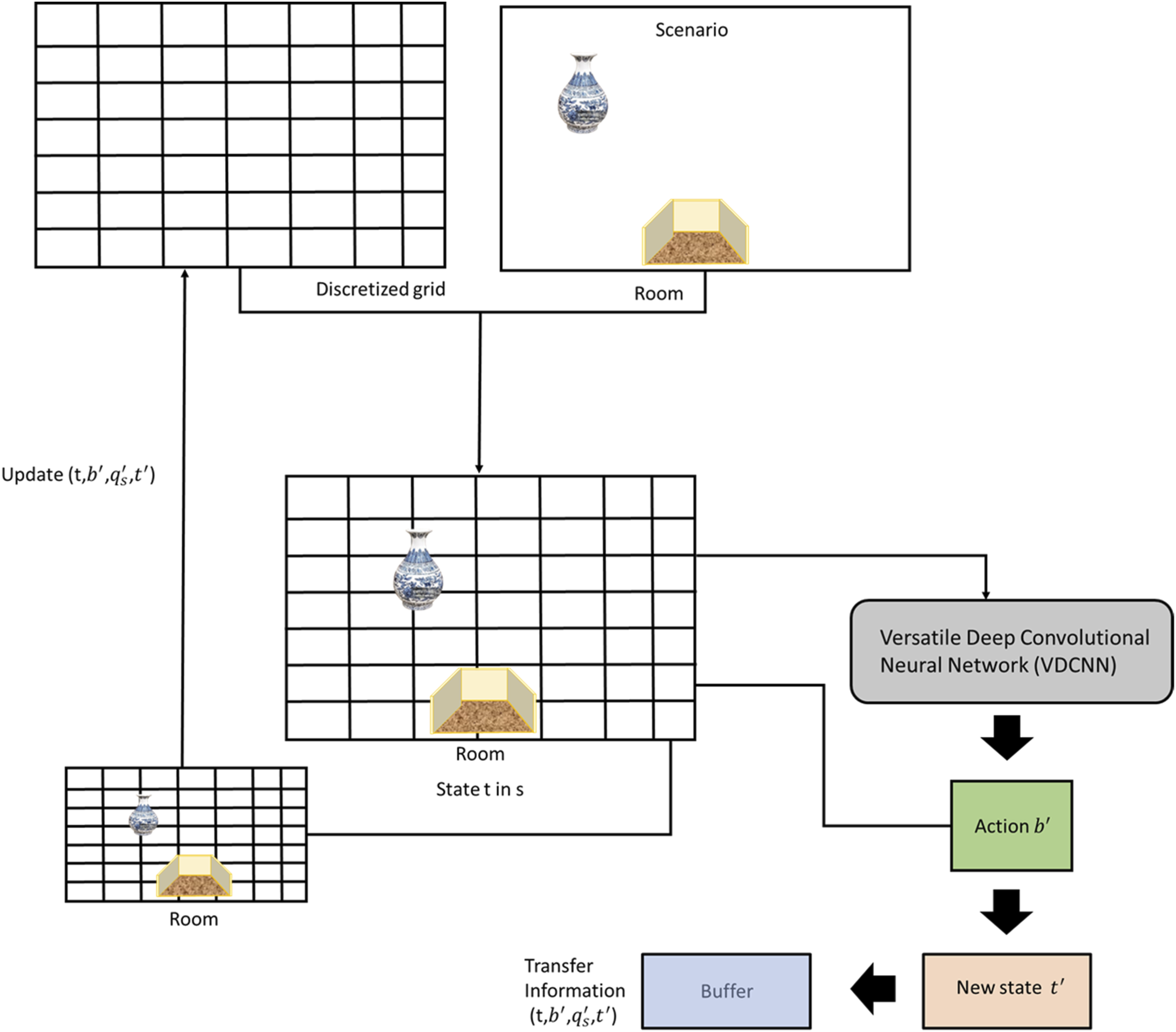
Furthermore, the system 
The constant values assigned to the variable 
In real-world applications, subsets of relevant information about transfers regarding incentive, behavior and situation of each agent are gathered using predetermined buffer preservation. The training phase will end any time after a specific maximum amount of practice phases has been attained. The maximum reward was obtained, the cumulative incentive operation, represented by 
Here,
Testing of DQN
After training, the DQN can produce accurate forecasts that include a legitimate, particular measure of each agent moment. The DQN movement forecasting represents the objective to identify each agent optimal setting, illustrated in equation (22). Securing an optimal design can be achieved after the termination requirement was satisfied.
Modifying vases and pottery poses
An essential challenge was finding an item of 3D vases and pottery position. Whenever vases and pottery arrive inside an interior setting, consistently assumes an identical orientation. Adjusting the alignment of vases and pottery was essential.
The classic design paradigm that was extensively utilized in several architecture fields, such as scenario design FBS. Every item of vases and pottery in an interior design layout has a prominent functionality. Equation (23) is used to calculate the rotation angle 
The location of the multiplying function among the vector Design concept leveraging FBS interior setting.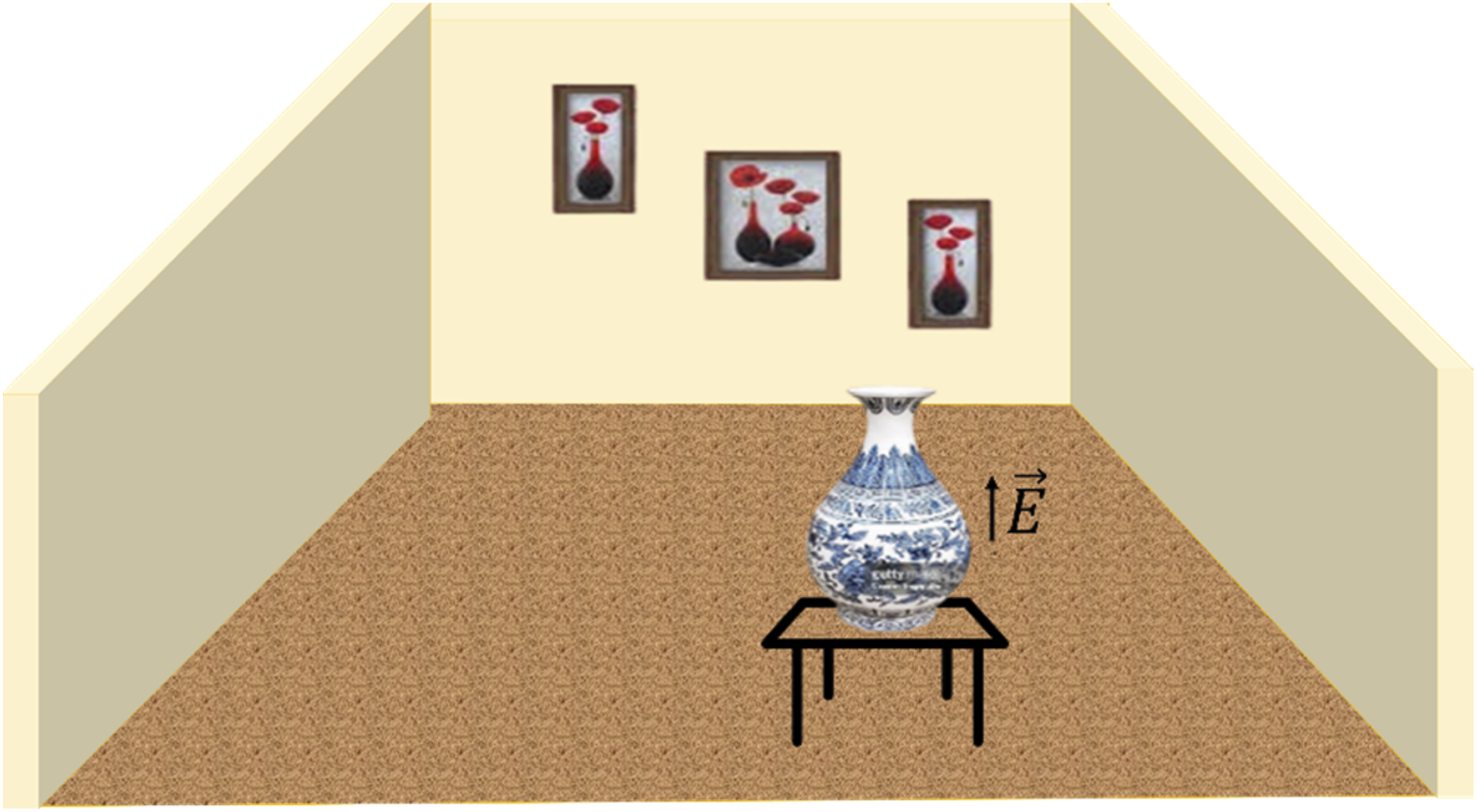
Experimental result
The recommended task is executed using Tensor-flow 1.12.0 and it is accelerated by Nvidia GPUs. It is required to be installed alongside Python to carry out the procedure. We assess the proposed approach and gauge its performance with the following criteria such as Accuracy (%), User satisfaction (%), Execution time (s) and MSE. Furthermore, a comparison investigation will be conducted with other traditional approaches, an entire set of 500 samples were collected, of which 80% were used for training and 20% were used for testing sample.
Sketch-based recognition of vases and pottery
The vases and pottery sketch identification were used to improve user experience by retrieving similar vases and pottery models from input sketches. Figure 5(a) and (b) display the outcomes in terms of accuracy and loss indicators that were attained throughout the training and testing phase. Our approach achieved highest accuracy and lowest loss. (a) Accuracy and (b) loss.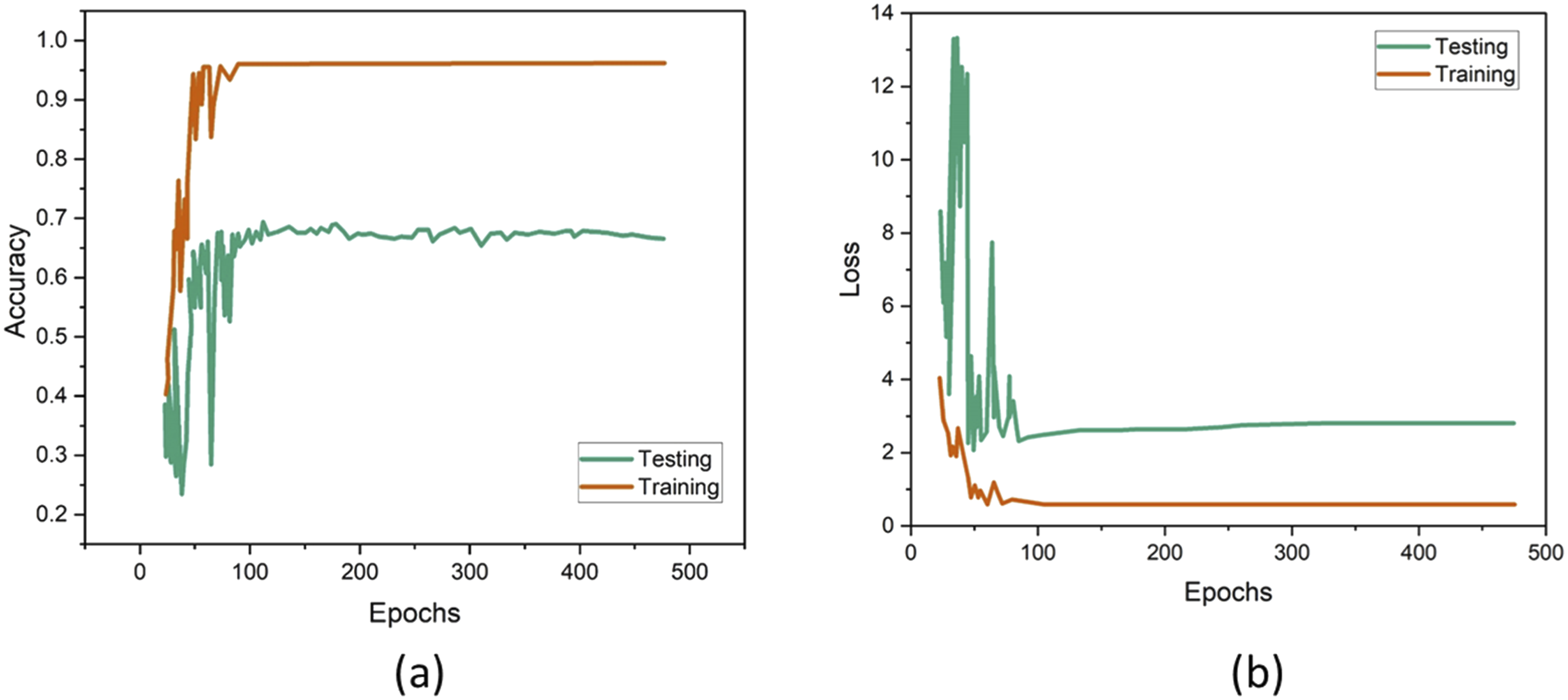
Indoor layout results
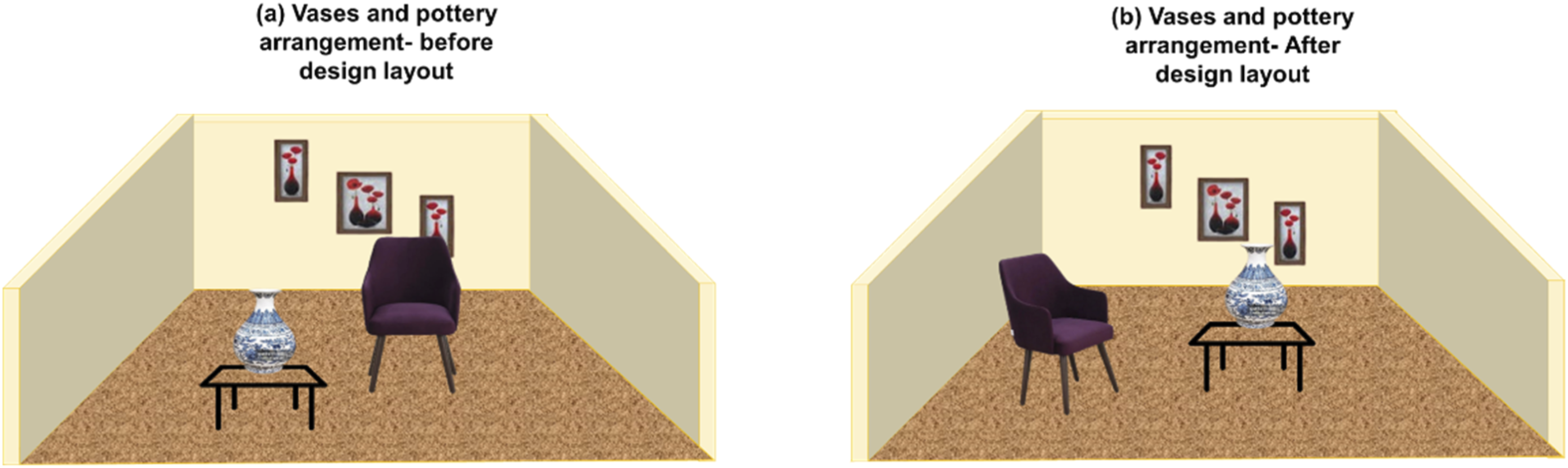
The comprehensive Q-learn approach was utilized for interior design planning to facilitate task performance. The vases and pottery were initially arranged in the living room instinctively and it was complicated to customize 3D components. Furthermore, manipulating such vases and pottery pieces with fundamental drag-and-pull operations was laborious and tedious position. Figure 6: (a) Before design layout and (b) After design layout. Figure 7: (a) Before design layout and (b) After design layout. (a) Before design layout and (b) After design layout. (a) Before design layout and (b) After design layout.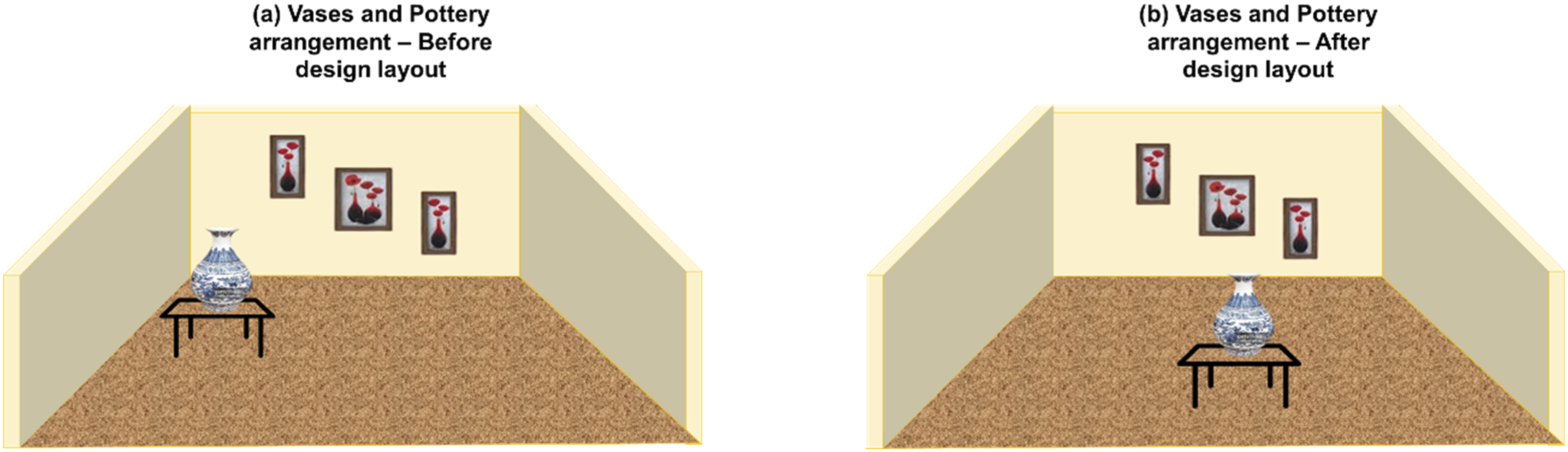
Accuracy performs a measure indicating how correct a model exists, determined by comparing the quantity of correctly identified cases to the entire number of occurrences. The following provides a reliable assessment of the system’s efficiency. Figure 8(a) and Table 2 illustrate a comparative assessment of accuracy between the proposed and conventional approaches. In contrast to traditional approach with accuracies of 85%, the suggested SHO-VDCNN attains an accuracy level of 91%. Our proposed method provided superior results for recognizing innovative interior designs in living space. (a) Accuracy and (b) User satisfaction. Outcome of accuracy and user satisfaction.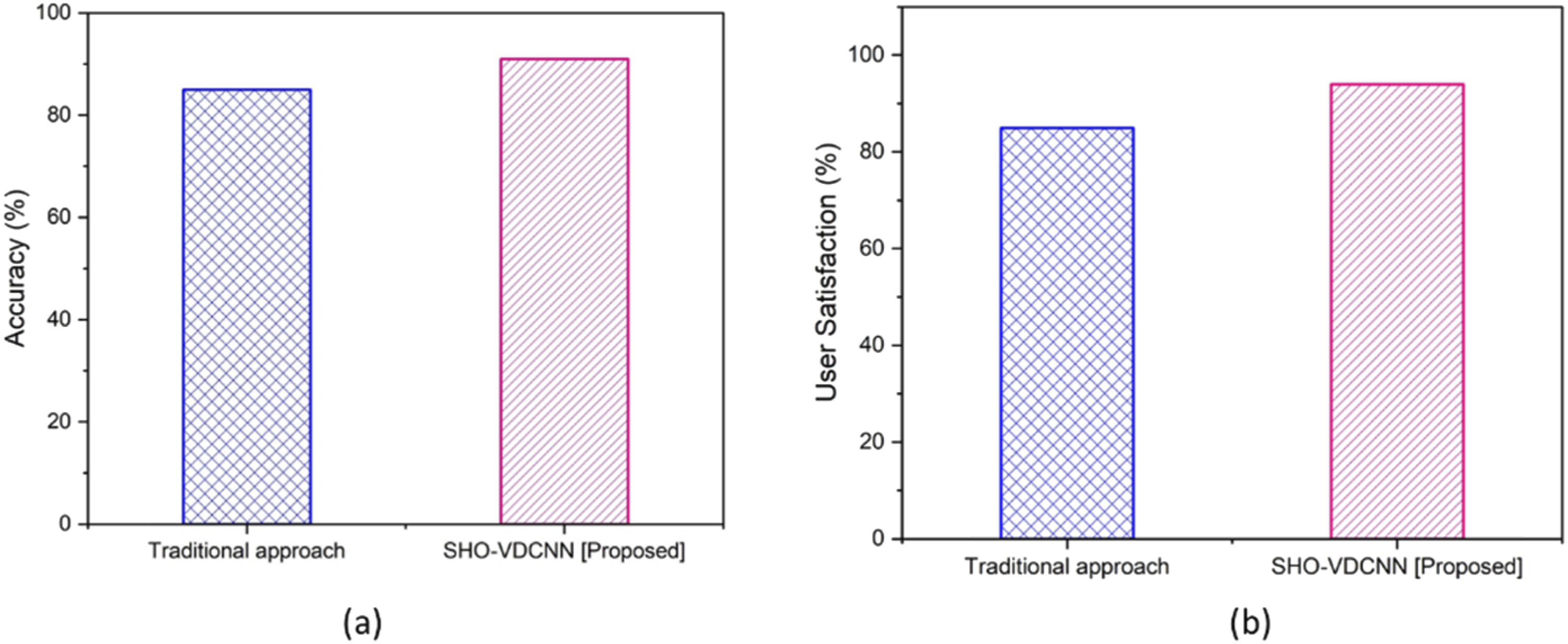
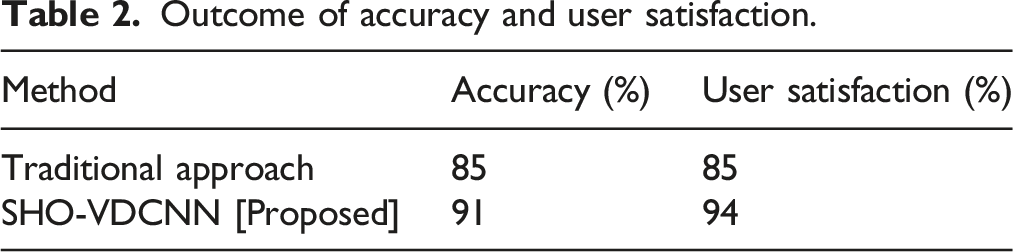
User satisfaction is the degree of happiness that users feel satisfy while utilizing an application, delivery, and item. Satisfaction was frequently assessed by statistics, suggestions, and evaluations of how effectively they satisfy needs and demands. Figure 8(b) and Table 2 illustrate a comparative assessment of user satisfaction between the proposed and conventional approaches. In contrast to existing traditional approach with user satisfaction of 85%, the suggested SHO-VDCNN attains 94%. Our proposed method provided better outcome for recognizing innovative interior designs in living space.
Execution time describes the amount of time for operation, procedure and application requires to complete processing in a computer context. It states that how quickly and efficiently computing systems operate. Figure 9(a) and Table 3 illustrate a comparative assessment of execution time between the proposed and conventional approaches. In contrast to traditional approach with execution time of 40(s), the suggested SHO-VDCNN attains of 25(s). Our proposed method provided better results for recognizing innovative interior designs in living space. (a) Execution time and (b) MSE. Outcome of execution time and MSE.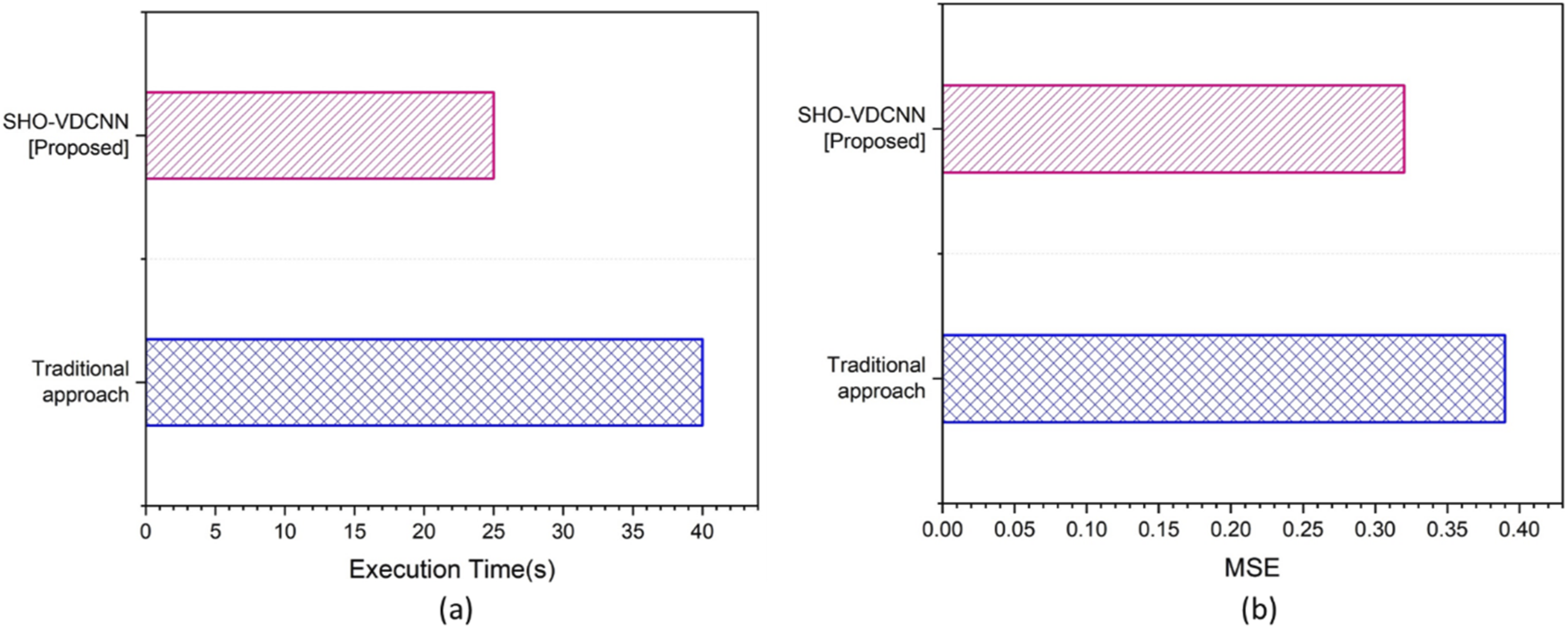
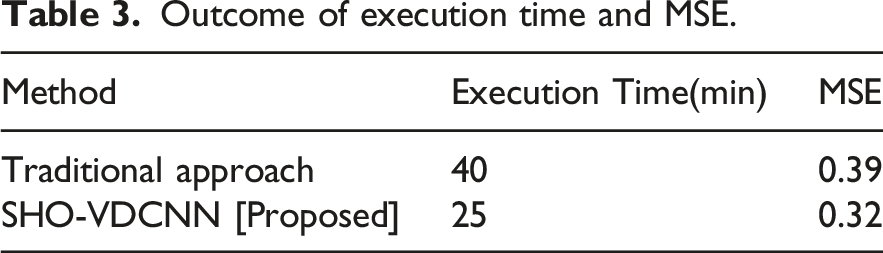
MSE is a statistical metric that’s used to assess an estimator’s and prediction’s accuracy. The average squared difference between the actual and anticipated values was computed. Figure 9(b) and Table 3 illustrate a comparative assessment of MSE between the proposed and conventional approaches. In contrast to traditional approach with MSE of 0.39, the suggested SHO-VDCNN attains of 0.32. Our proposed method provided superior results for recognizing innovative interior designs in living space.
Conclusion
In this study, we introduced a novel approach, sea horse optimized-versatile deep convolutional neural network (SHO-VDCNN) algorithm for recognizing innovative interior designs in living space. Furthermore, the use of simulated settings, the ideal locations (states) for the internal model components might be automatically determined by DQN method. To evaluate the proposed method with the traditional method in terms of accuracy (91%), user satisfaction (94%), execution time 25(s) and MSE (0.32). The result demonstrate that approached model performed better than other traditional models for interior design framework in living space. Designers without experience in VR development, developing VR materials for interior design projects can be difficult due to the requirement for specific tools and capabilities. Some designers and consumers cannot be able to afford VR technology due to the high price tag, especially it involves sophisticated VR software. In future research, designers can build extremely individualized and personalized spaces for clients, providing opportunity to explore several potential designs prior to choosing a selection.
Footnotes
Funding
The author disclosed receipt of the following financial support for the research, authorship, and/or publication of this article: This research was funded by the 2024 Fujian Provincial Social Science Fund Project: “Fu” cultural tourism products to enable rural revitalization of innovation and application research (NO: FJ2024B162).
Declaration of conflicting interests
The author declared no potential conflicts of interest with respect to the research, authorship, and/or publication of this article.
Data availability statement
The authors declare that the data supporting the findings of this study are available within the article. The raw/derived data supporting the findings of this study are available from the corresponding author at request.