




Abstract
Choral music, as a collective art form, achieves harmonious and rich musical effects through multi-voice coordination and cooperation. However, sound balance issues often affect the quality of choir singing. Traditional methods mainly rely on subjective adjustments by conductors and vocal teachers, lacking consistency, objectivity, and adaptability. To address this issue, this article proposed a choir sound balance optimization model based on simulated annealing (SA) algorithm. The experiment included sound data collection, environmental characteristic measurement, and evaluation index setting, which verified the effectiveness of this method in dealing with different voice parts and complex environmental factors. The outcomes demonstrated that the simulated annealing algorithm significantly reduced the standard deviation of the volume and frequency of each voice and improved the balance of the volume and frequency. In all scenarios, the volume standard deviation of the simulated annealing adjustment method was smaller or equal to the standard deviation of the conventional adjustment method. The standard deviation of the simulated annealing adjustment method was always the lowest among all voice parts and time windows. The average frequency standard deviation of the four voice parts decreased by 51.21% and 31.70% in indoor environments, 52.10% and 30.96% in semi-open environments, and 49.25% and 29.49% in outdoor environments, respectively. The subjective evaluation results of users further verified the effectiveness of the model, and various listeners gave high ratings to the adjusted volume balance and overall sound quality. This indicates that the method has broad application potential and can cope with diverse practical performance environments. The research results of this article provide a scientific sound balance optimization tool for choir groups, which can help choir conductors and sound engineers achieve higher levels of sound balance and harmony in actual performances.
Keywords
Introduction
As a collective art form, the unique charm of choral music lies in the coordination and cooperation of multiple voices. However, the issue of sound balance is a key factor affecting the quality of chorus.1,2 Sound balance involves the volume and frequency between different parts, and good balance can significantly enhance the overall effect of a work. The sound balance of a choir is affected by many factors, including the number of voices, volume, timbre characteristics, and performance environment, which makes the adjustment of sound balance complex and challenging. Traditionally, the adjustment of sound balance mainly relies on the conductor’s experience and subjective judgment, but this method has limitations: subjective judgment lacks consistency and objectivity, and the standards of different conductors vary greatly; manual adjustment is complex and time-consuming, especially for large choirs; there is a lack of scientific quantitative indicators to evaluate sound balance, and the optimization process is difficult to be precise; poor adaptability makes it difficult to quickly respond to changes in different performance venues and acoustic conditions.3,4
The simulated annealing (SA) algorithm is a probability-based optimization algorithm5,6 inspired by the physical phenomena in the metal annealing process.7,8 Algorithm design needs to balance the contradiction between exploration and exploitation, that is, while extensively searching the solution space, it also needs to effectively focus on deep search near potential solutions. This is achieved through dynamic adjustment of temperature parameters. This algorithm gradually approaches the global optimal solution by randomly searching in the solution space and combining a gradually decreasing “temperature” parameter.9,10 Optimizing the sound balance of a chorus has demonstrated notable benefits when using the simulated annealing approach. Choir sound balance is a complex multi-objective optimization problem that involves multiple acoustic variables, including loudness and timbre.11,12 Through the use of a random search mechanism and an annealing process, the simulated annealing technique can successfully avoid the tendency of traditional methods to determine locally optimal solutions, and instead find solutions that are closer to the global optimum. Furthermore, the adaptability of the algorithm allows it to cope with complex and dynamic choral situations. By optimizing and adjusting parameters in real-time, it can quickly adapt to various acoustic environments.13,14 The simulated annealing algorithm simulates the temperature concept during the physical annealing process, gradually reducing the temperature over time. This means that the algorithm allows for large jumps in the initial search, even if these jumps may temporarily decrease the quality of the solution. This mechanism helps algorithms escape from local optima, reduces sensitivity to initial values, and enhances adaptability and stability when facing complex optimization problems. Therefore, the simulated annealing algorithm also has good robustness and easy implementation. It only needs to set the initial solution and objective function to start optimization. By utilizing recorded sound data for optimization, the choir can obtain the best sound balance adjustment plan and significantly improve the overall choir performance. Therefore, the simulated annealing algorithm, as a powerful optimization tool, performs well in solving complex and multi-objective optimization problems and is an ideal choice for optimizing choir sound balance.
In this article, a computational method for improving ensemble performance is proposed based on the simulated annealing algorithm, which is used to transform the choir sound balance optimization problem into a mathematical optimization problem. The findings suggest that the simulated annealing algorithm significantly reduces the standard deviation of volume and frequency of each voice part in indoor, semi-open, and outdoor environments, and improves the balance of volume and frequency. Especially in terms of frequency balance, the algorithm has reduced the standard deviation by 51.21%, 52.10%, and 49.25% in various environments, demonstrating significant improvement over traditional adjustment methods. In addition, the subjective evaluation of users also confirm the experimental results, with various listeners giving high praise to the optimized volume balance and overall sound quality. This study provides a scientific and practical sound balance optimization tool for choir groups, thereby improving the sound quality and harmony effect of chorus.
Related work
The sound signal processing technology plays a key role in optimizing the balance of choir sounds. Signal processing technology is an engineering discipline that involves operations such as signal analysis, transformation, filtering, compression, and estimation, with the aim of extracting useful information from raw signals or improving signal quality. A signal can be sound, image, video, or any other form of data that is analyzed and manipulated in the time and frequency domains. By precisely analyzing and adjusting the sound characteristics of each voice part, it is ensured that the overall performance of the choir is more harmonious.15,16 The processes of feature extraction and sound acquisition are covered by sound signal processing technology.17,18 To guarantee quality sound input, sound acquisition technology is required to record the sound of each part. Key features are extracted from the recorded sound using feature extraction techniques and these features are crucial optimization factors.19,20 Scholars such as McQuade 21 used spectrogram analysis tools to help students better understand and improve instrument performance, transforming auditory art into visual experience, enabling students to gain a deeper understanding of how to use instruments efficiently and expressively. Yang 22 and other scholars proposed a lightweight bird voice recognition model to solve the problems of poor generalization ability of bird voice recognition models and complex algorithms for extracting bird voice features. MobileNetV3 was used as the backbone network to construct a lightweight feature extraction and recognition network. The experimental results showed that on the self-built dataset, the model achieved recognition accuracies of 95.12% and 100% for 264 bird species, respectively. Abdul 23 et al. reviewed the application of Mel Frequency Cepstrum Coefficient (MFCC) and discussed some problems encountered in MFCC calculation and their impact on model performance. They also reviewed the application of MFCC, including its usage in different fields. Phan 24 and other scholars were committed to improving the performance of machine learning (ML) models in bee monitoring to help beekeepers better care for bees. The experimental findings indicated that this method significantly improved the accuracy of machine learning models in distinguishing bee calls from other environmental noise.
Using a probabilistic search mechanism, the simulated annealing approach offers significant advantages in solving challenging optimization problems, especially in avoiding locally optimal solutions.25,26 Abdel-Basset 27 and other scholars proposed an algorithm incorporating simulated annealing for feature selection in order to solve the feature selection problem that arises in big data processing, especially in dealing with feature redundancy, irrelevance and noise. The experimental results indicated that the proposed algorithm exhibited superior results compared to other state-of-the-art algorithms. Scholars including Chantar 28 presented a new algorithm that combines SA with Dragonfly Algorithm (DA) in order to solve the problems associated with the growth of data dimensions, such as high memory requirements. Experimental results showed that the proposed hybrid method performed better in feature selection than multiple feature selection methods. Davari 29 and other scholars put forward an online weight factor optimization method based on simulated annealing algorithm in order to solve the problem of weight factor adjustment in Model Predictive Control (MPC). The experimental results showed that the proposed method was effective through testing. In order to address the challenges in task allocation and path planning for multiple unmanned aerial vehicles (UAVs), especially in natural disaster rescue, detection, and battlefield collaboration scenarios, how to effectively balance tasks and efficiently generate feasible solutions from current solutions, Huo 30 et al. put forward a new simulated annealing algorithm to improve the efficiency of generating feasible neighborhood solutions. The experimental results showed that the proposed algorithm outperformed precise algorithms and other metaheuristic algorithms in efficiency in different scenarios.
The innovation of this article is as follows: (1) The simulated annealing algorithm simulates the metal annealing process, combines probability mechanisms and gradually decreasing “temperature” parameters, effectively avoids local optima, and finds global optima. (2) By utilizing recorded sound data for optimization, the choir can obtain the best sound balance adjustment plan and significantly improve the overall choir performance.
Methods
Principle of simulated annealing algorithm
The simulated annealing algorithm was first proposed in 1953 and began to be applied to solve combinatorial optimization problems in 1983. This algorithm is named after the simulation of solid annealing process in physics, and its core idea is to find the optimal solution to the problem by simulating the gradual cooling process of metal at high temperature.31,32 The simulated annealing algorithm starts with a high initial temperature and randomly searches for a globally optimal solution to the objective function in the solution space as the temperature parameter is gradually reduced. Through the probability jump characteristic, when trapped in a local optimal solution, the algorithm utilizes a certain probability to accept poorer solutions, which may lead to escaping from the local optimal solution and ultimately approaching the position of the global optimal solution. The simulated annealing algorithm effectively avoids falling into local extremes during the solution process and eventually converges to the global optimum by assigning the probability jumps that vary with time and eventually converge to zero during the search process.33,34 The algorithm consists of two loops: an outer loop to control the gradual decrease of the temperature, and an inner loop, the Metropolis algorithm, which iterates several times at the current temperature and achieves the purpose of jumping out of the local optimum by randomly selecting a new solution within the neighborhood and accepting the inferior solution according to the probability. 35
Metropolis criterion
The Metropolis criterion is a rule used in simulated annealing algorithms to determine whether to accept a new solution, inspired by statistical mechanics. The Metropolis criterion is a key part of the simulated annealing algorithm for deciding whether to accept a new solution, especially if the new solution is worse than the current one. When applying the Metropolis criterion for Markov Chain Monte Carlo (MCMC) sampling, directly using all samples for estimation may lead to bias. Appropriate consideration should be given to the correlation between samples, or thinning strategies should be adopted to reduce samples and decrease correlation. When the simulated annealing algorithm generates a new solution

Neighborhood functions
The neighborhood function is a key component in the simulated annealing algorithm that defines how to generate a new candidate solution from the current one. It guides the algorithm to perform an efficient search in the solution space by specifying the neighborhood range and search strategy of the current solution. When designing neighborhood functions, it is necessary to balance the diversity of exploration and the constraints of the solution space. A good neighborhood should be large enough to avoid falling into local optima too early, while not being too large to lose the directionality of the search. Neighborhood functions generate new solutions by making certain changes to the current solution. Firstly, the current solution is obtained from the current state of the algorithm, and then the range and strategy that can be changed on the current solution are determined. Within the defined neighborhood range, a new candidate solution is generated through random adjustment or heuristic methods. The objective function value or fitness of the new solution is evaluated to measure its superiority or inferiority relative to the current solution. Whether to accept the new solution based on criteria such as Metropolis is determined (Calculate the energy difference (ΔE): Firstly, determine the energy of the current solution (E current) and the energy of the proposed new solution (Enew). Energy difference ΔE = Enew − Ecurrent. Judging energy difference: If ΔE ≤ 0, that is, the energy of the new solution is less than or equal to the current solution, according to the Metropolis criterion, the new solution is always accepted because it is an improved or equally good solution. If ΔE>0, that is, the energy of the new solution is higher than the current solution, further calculation of the acceptance probability is required). If the new solution is invalid, a new solution is generated. If the new solution is valid, it is updated to the current solution. The specific process is shown in Figure 1. Workflow diagram of neighborhood function.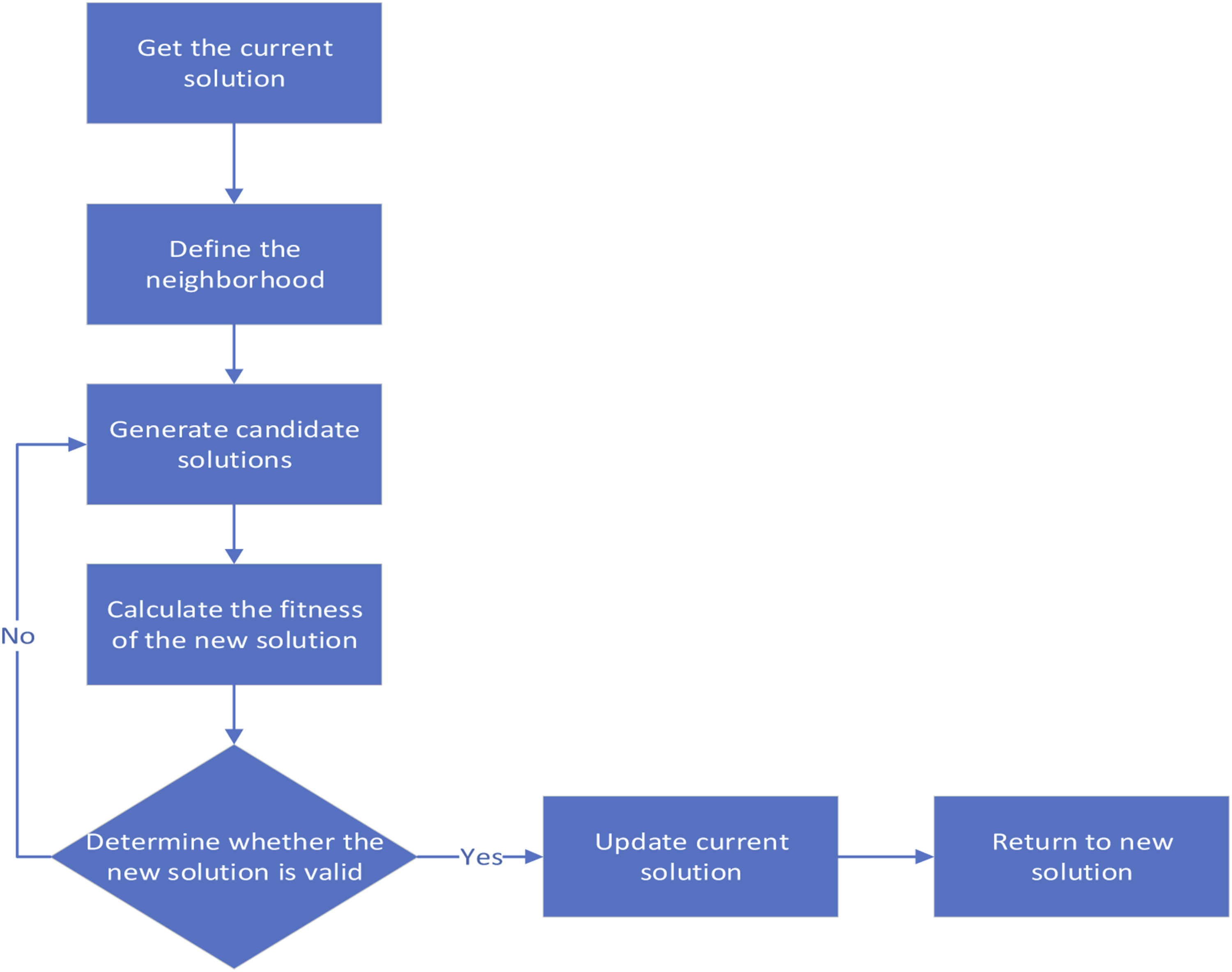
Firstly, the neighborhood should be carefully defined based on the specific situation of the problem. The neighborhood function needs to be able to generate “neighbor” solutions of the current solution, which are usually obtained by slightly changing the current solution. Secondly, the size of the neighborhood needs to be appropriate. A too small neighborhood may limit the search range, causing the algorithm to fall into local optima. Although an excessively large neighborhood can increase exploration, it may decrease search efficiency. It is necessary to balance exploration and utilization based on the characteristics of the problem and algorithm requirements. Through the above process, the neighborhood function can generate new candidate solutions based on the current solution, and decide whether to accept the new solution through the set rules. This mechanism effectively guides the simulated annealing algorithm to search in the solution space, balancing local search and global exploration, thereby improving the convergence speed and global optimization ability of the algorithm.
Problem modeling
By accurately modeling the problem, it can help the team clearly define the boundaries of the problem, identify the core issues that need to be solved, and avoid wasting time and resources on irrelevant details. Moreover, the model can provide a foundation for data analysis, helping decision-makers evaluate possible solutions and their impacts by simulating different scenarios, thus making more scientific and reasonable decisions. Problem modeling is the process of transforming the optimization problem of choir sound balance into a mathematical optimization problem, in order to apply simulated annealing algorithm for solving. To model a problem, the first step is to construct variables. The number of voices in the choir is defined as
The objective function measures the balance of choir sound, including the following two aspects. (1) Volume balance: the degree of difference in volume between different voice parts. It is hoped that the volume of each voice part is close to the target volume

Among them,
In simulated annealing algorithm, it is necessary to define neighborhoods when generating new solutions. As the algorithm progresses, the neighborhood size can be dynamically adjusted. In the initial stage, a larger neighborhood is set for extensive exploration, and as the number of iterations increases and the temperature decreases, the neighborhood size is gradually reduced for refined search. Neighborhood solutions can be generated by adjusting the volume and spectrum. The volume of each voice part is randomly increased or decreased within a range of 1 dB, and the energy of each voice part in each frequency band is randomly adjusted. The methods for generating neighborhood solutions are:


Among them, Simulated annealing applied to choir sound balance process.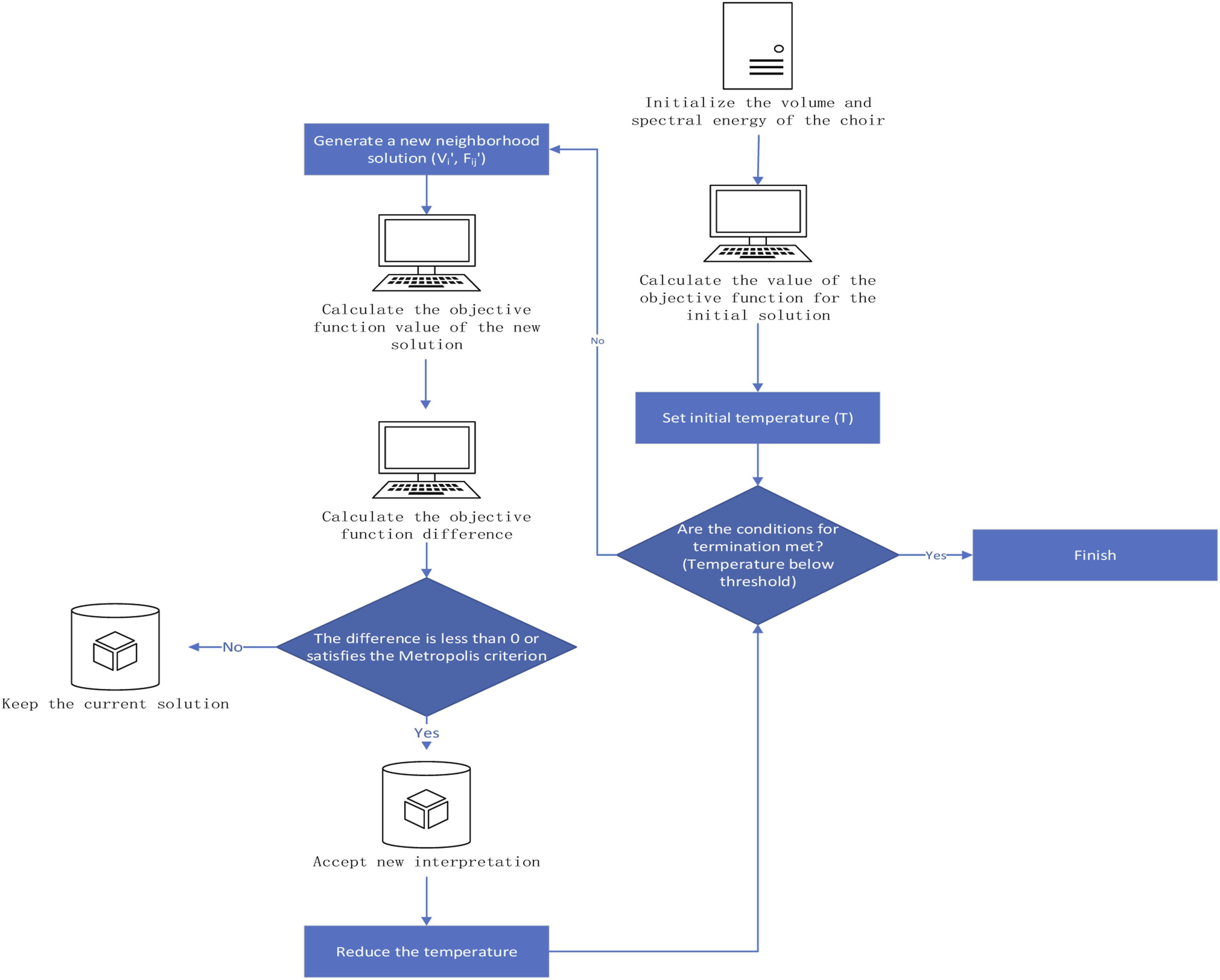
Choir sound balance model based on simulated annealing
Building a choir sound balance optimization model based on simulated annealing requires real-time adjustment and handling of environmental influences, as the performance of each voice part and singer can change at any time during choir performances, influenced by environmental factors such as acoustic characteristics, temperature, and humidity of the venue. This article utilizes professional audio editing software such as Ableton Live, Pro Tools, or Logic Pro, which have real-time sound processing and automation capabilities. Multiple effect chains and volume adjustment schemes can be preset, allowing for quick switching or gradients based on the live performance. Real-time adjustment can respond to these changes in a timely manner, ensuring that each voice part always maintains the best volume, sound quality, and timbre balance, thereby improving overall ensemble performance and allowing the audience to always enjoy a high-quality music experience. This dynamic optimization not only improves the stability and professionalism of performances, but also enhances the choir’s ability to cope with various complex performance environments.
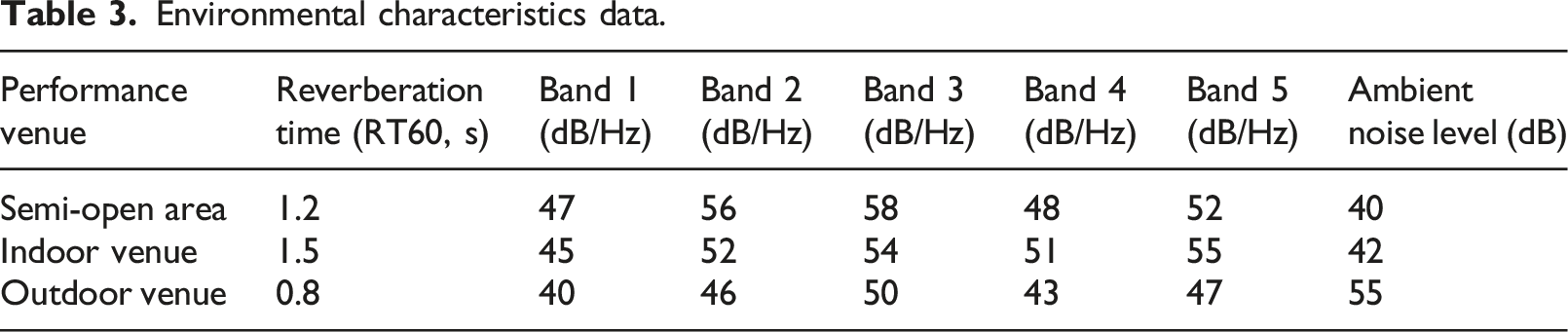
In order to construct a choir sound balance optimization model based on simulated annealing, achieve real-time adjustment and processing of environmental factors, first in the data acquisition stage, separate sound data is collected for each voice part, and its sound characteristics are recorded. In terms of environmental factors, sound collection is conducted within the performance venue to record the acoustic environmental characteristics of the venue (reverberation time, frequency response curve). From the recording, the volume and spectral features of each singer are extracted. An environmental impact model is established using environmental noise and acoustic characteristic data. The environmental impact matrix

Among them,
The data processing flow of this model is as follows: the starting temperature T0 is set to 100; the cooling rate is set to 0.95; a fast audio analysis algorithm is used to extract real-time volume and spectral features. Among them, the schematic diagram of spectral characteristics is shown in Figure 3. Schematic diagram of spectral characteristics.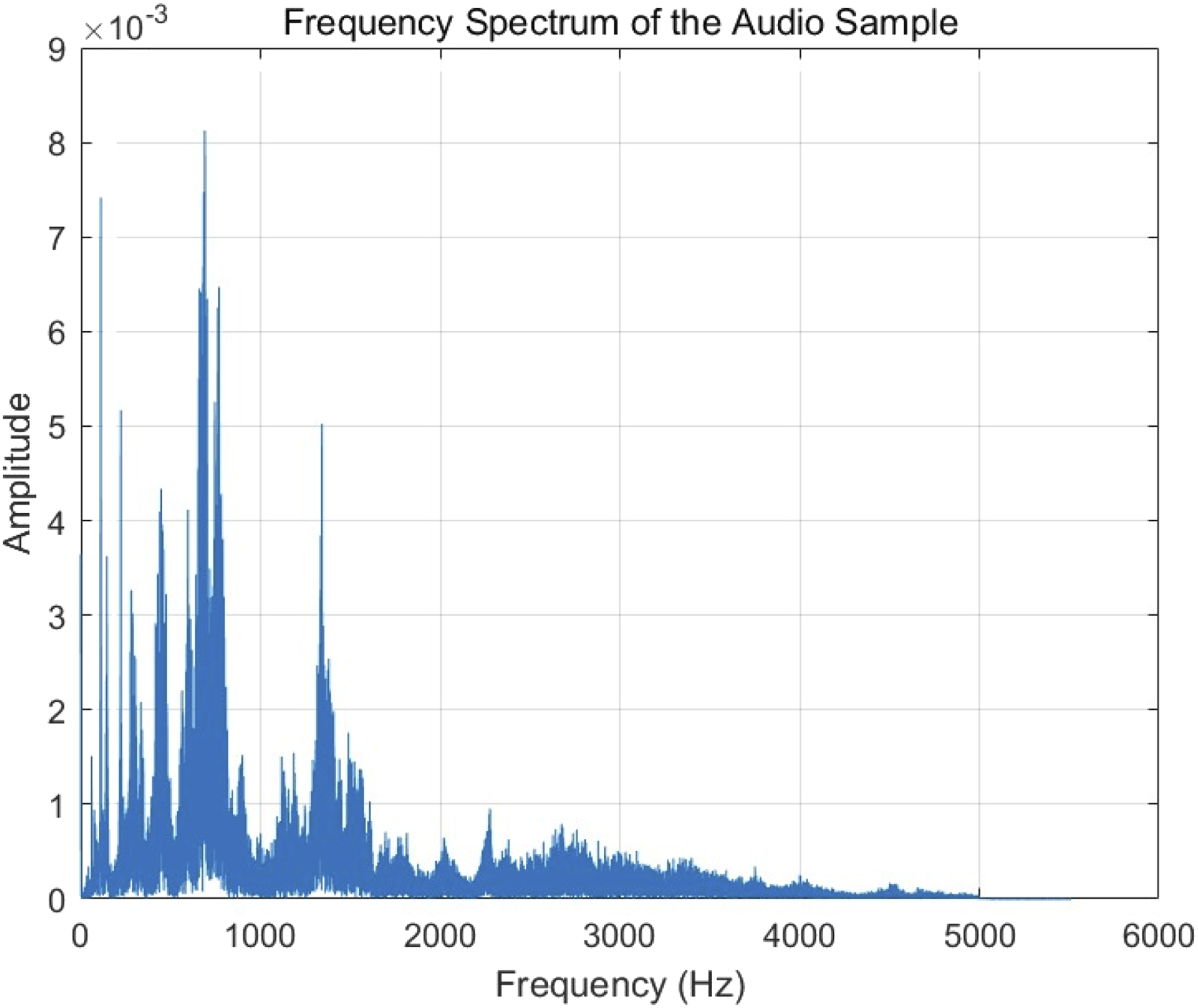
The initial volume and spectrum settings are generated based on real-time data, and the objective function value for this setting is calculated, including the environmental impact correction term. The new solution is randomly generated in the neighborhood of the current solution, and the adjustment margin is dynamically adjusted based on real-time feedback. The objective function value of the new solution is calculated and a decision is made whether to accept the new solution based on the Metropolis criterion. The current temperature is updated based on the cooling rate. The iteration stops when the temperature is reduced to a threshold or when the change in the objective function value is no longer significant. The system mainly consists of four modules, namely, sound acquisition module, audio processing module, optimization algorithm module, and control feedback module, as shown in Figure 4. Choir sound balance model based on simulated annealing.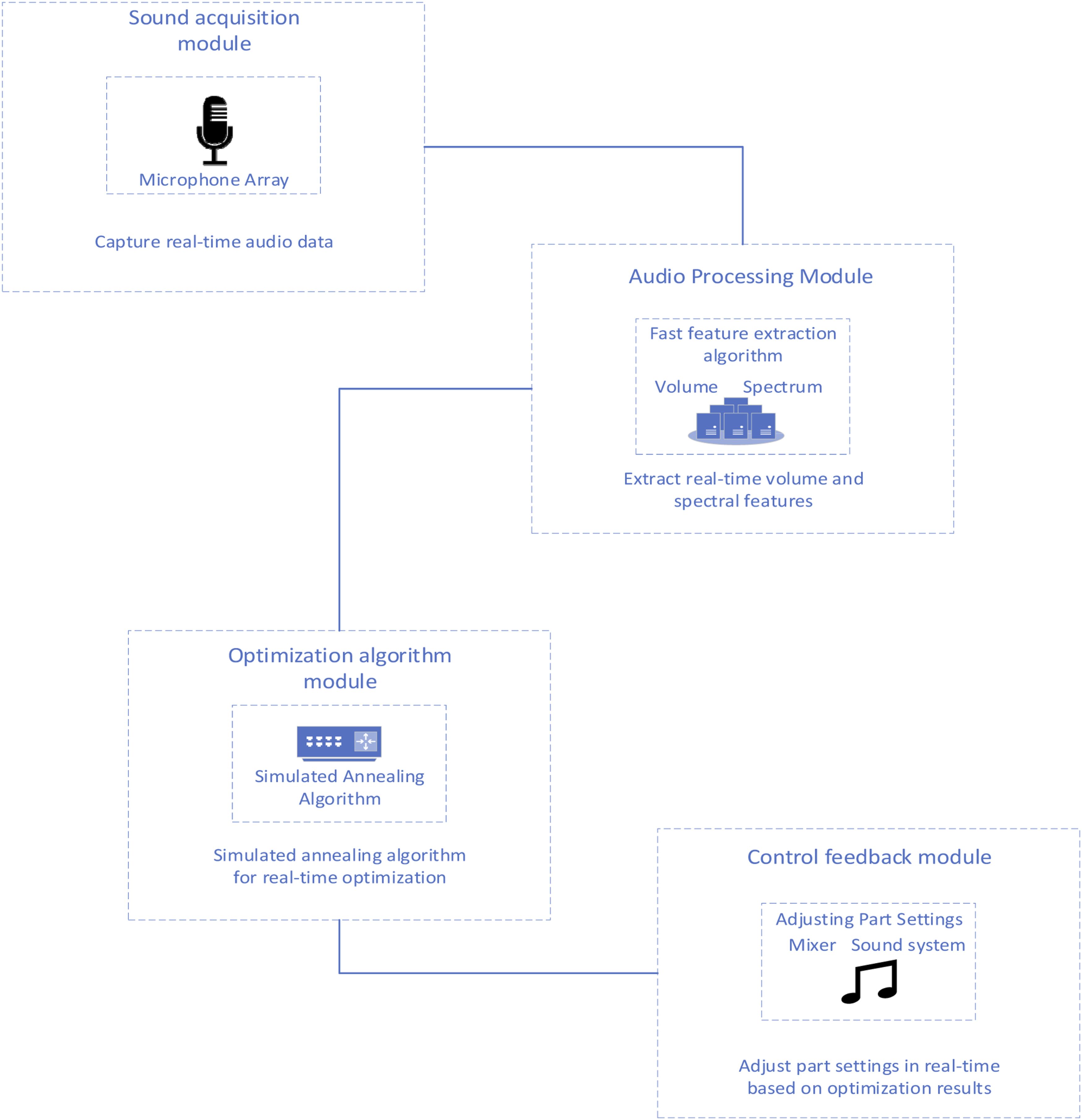
In Figure 4, the sound acquisition module includes a microphone array for collecting real-time audio data. The audio processing module is responsible for fast feature extraction algorithms, extracting real-time volume and spectral features. The optimization algorithm module is responsible for the simulated annealing algorithm, achieving real-time optimization. The control feedback module adjusts the voice settings (such as the mixing console, audio system, etc.) in real-time based on the optimization results. Through the above steps, a choir sound balance optimization model based on simulated annealing can be constructed to achieve real-time adjustment and effectively handle environmental impacts, ensuring the best sound balance and overall performance of choir performances.
Experiments
Sound data collection and environmental characteristic measurement
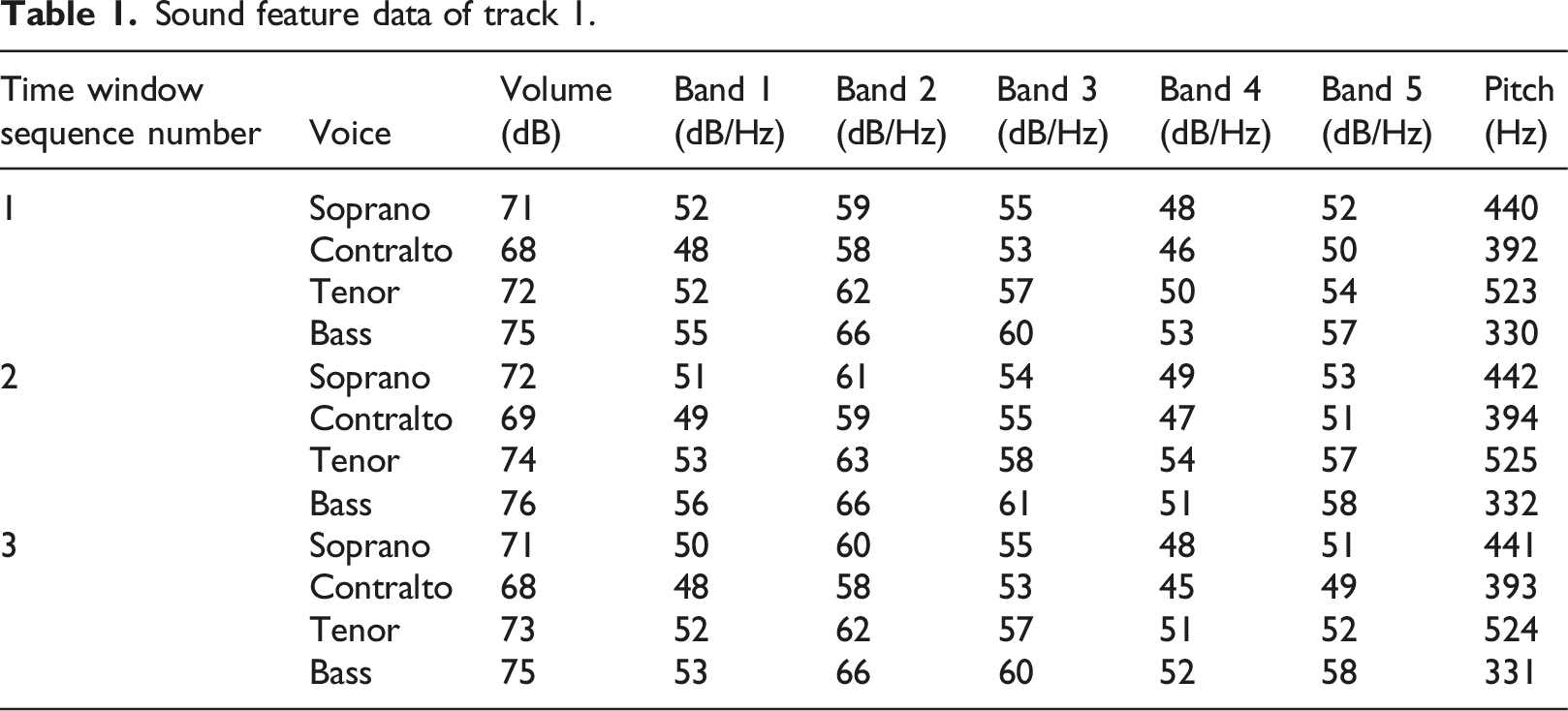
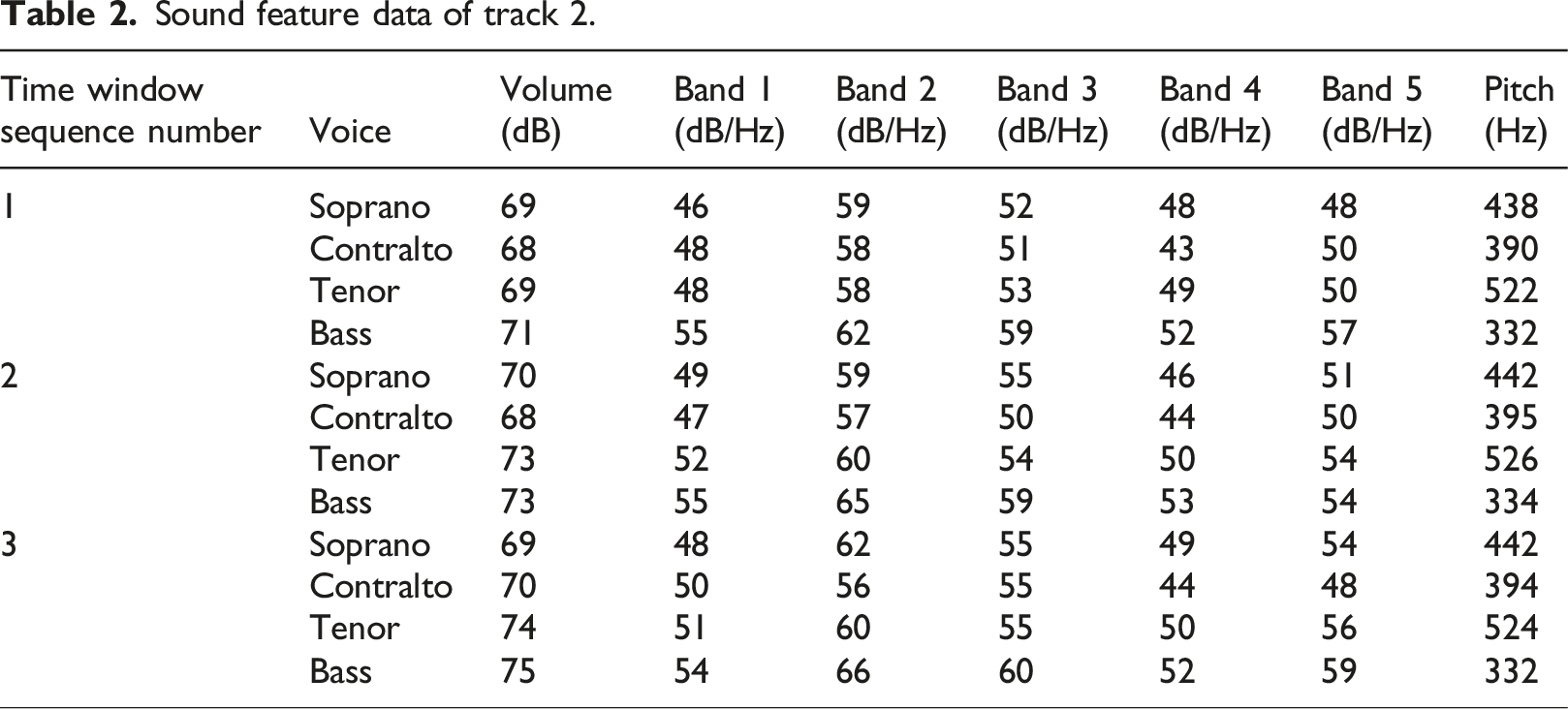
In order to achieve optimization of choir sound balance, it is first necessary to accurately collect sound data during choir performances and measure the characteristics of the performance environment. The collection of sound data includes the volume and spectral distribution changes of different voice parts at different time points. In terms of sound data collection, high-precision recording equipment and spectral analysis tools are used to ensure the accuracy and completeness of the data. The data categories include the following:
Audio and video recording: Record the entire performance, including on-site multi angle filming and professional audio recording, to evaluate performance synchronization, sound quality, and stage performance. Audience feedback: Collect audience feedback and suggestions through questionnaire surveys, app voting, or social media interactions. Technical data: operating parameters of stage lighting and sound equipment, as well as any technical fault records. Rehearsal and rehearsal data: including time management, error frequency, and correction efficiency, helps analyze the efficiency of the team’s preparation process.
Implementation steps:
Preparation: Set up recording and video equipment, and prepare channels and tools for audience feedback. On site execution: Record the performance according to the plan, guide the audience to participate in feedback, monitor and record technical parameters. Post production organization: Organize recording materials, summarize audience feedback, and analyze technical data. Evaluation and Report: Based on the collected data, write an evaluation report, point out strengths and weaknesses, and propose improvement suggestions.
Sound feature data of track 1.
Sound feature data of track 2.
Environmental characteristics data.
Evaluation indicators
In order to comprehensively evaluate the effectiveness of simulated annealing algorithm in choir sound balance optimization, this article conducts experiments from both objective and subjective aspects. Objective evaluation is conducted using scientific indicators such as volume balance and frequency balance for measurement; subjective evaluation is collected through user surveys to gather feedback. The volume balance is evaluated by calculating the average volume and standard deviation of each voice part at different time points. The smaller the standard deviation, the higher the volume balance; frequency balance is achieved by analyzing the frequency energy distribution of each voice part in different frequency bands, with standard deviation as the indicator. The smaller the standard deviation, the higher the frequency balance.
Experimental results
This section presents the experimental results in detail. By analyzing the data in three aspects: volume balance, frequency balance, and subjective user evaluation, the practical effectiveness of the simulated annealing algorithm in optimizing choir sound balance is evaluated. In choir singing, the sound intensity of different parts or individuals needs to be harmonious and unified to avoid an imbalance in the overall effect caused by one part being too strong or too weak. By analyzing the volume balance, the relative loudness of each voice part can be quantified to ensure that each part can be heard clearly and fused properly. Simulated annealing algorithm can be used to adjust the volume parameters of each voice part and find the solution that maximizes the overall volume distribution. The experiment includes three environmental conditions (indoor, semi-open, and outdoor) and four voice parts (tenor, bass, soprano, and contralto) to comprehensively test the algorithm’s performance in different scenarios.
The experimental results of volume balance in indoor environment are shown in Figure 5; the experimental results of volume balance in a semi-open environment are shown in Figure 6; the experimental results of volume balance in outdoor environment are shown in Figure 7. Figures 5–7 show the standard deviation of volume balance for four voice parts using different adjustment strategies in three different environments. Standard deviation result of indoor environment volume balance. Standard deviation results of volume balance in semi-open environment. Standard deviation result of outdoor environment volume balance.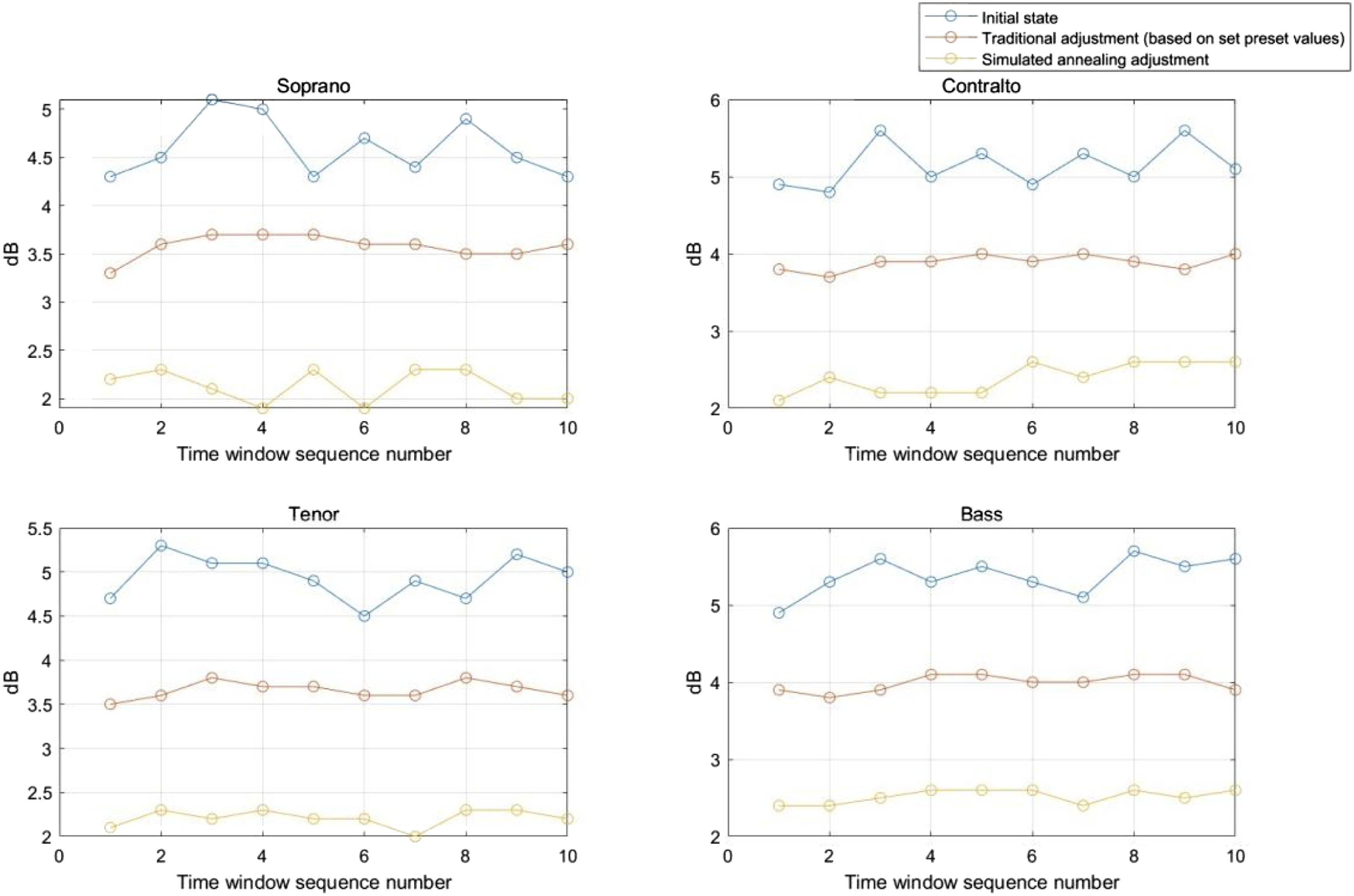
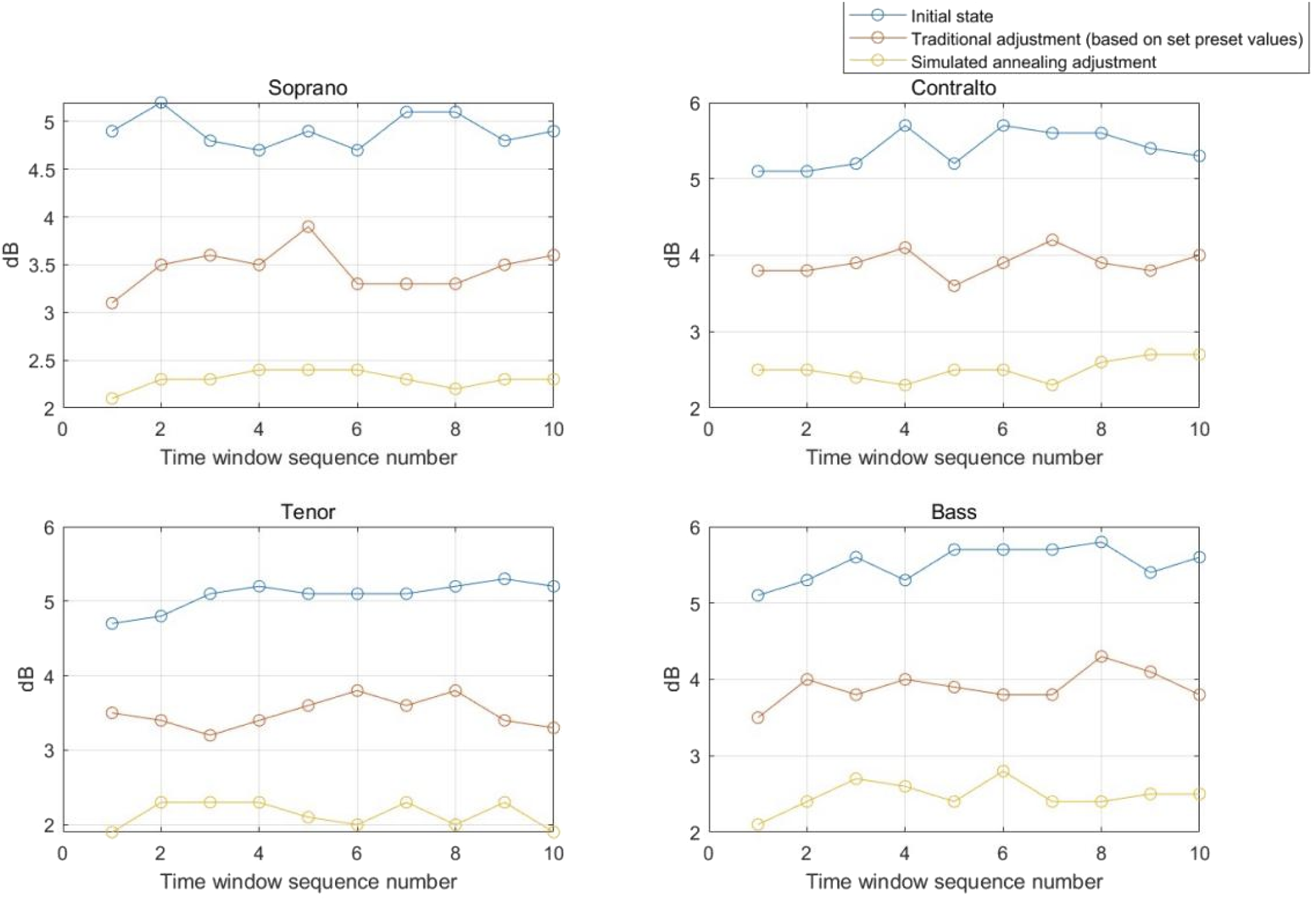
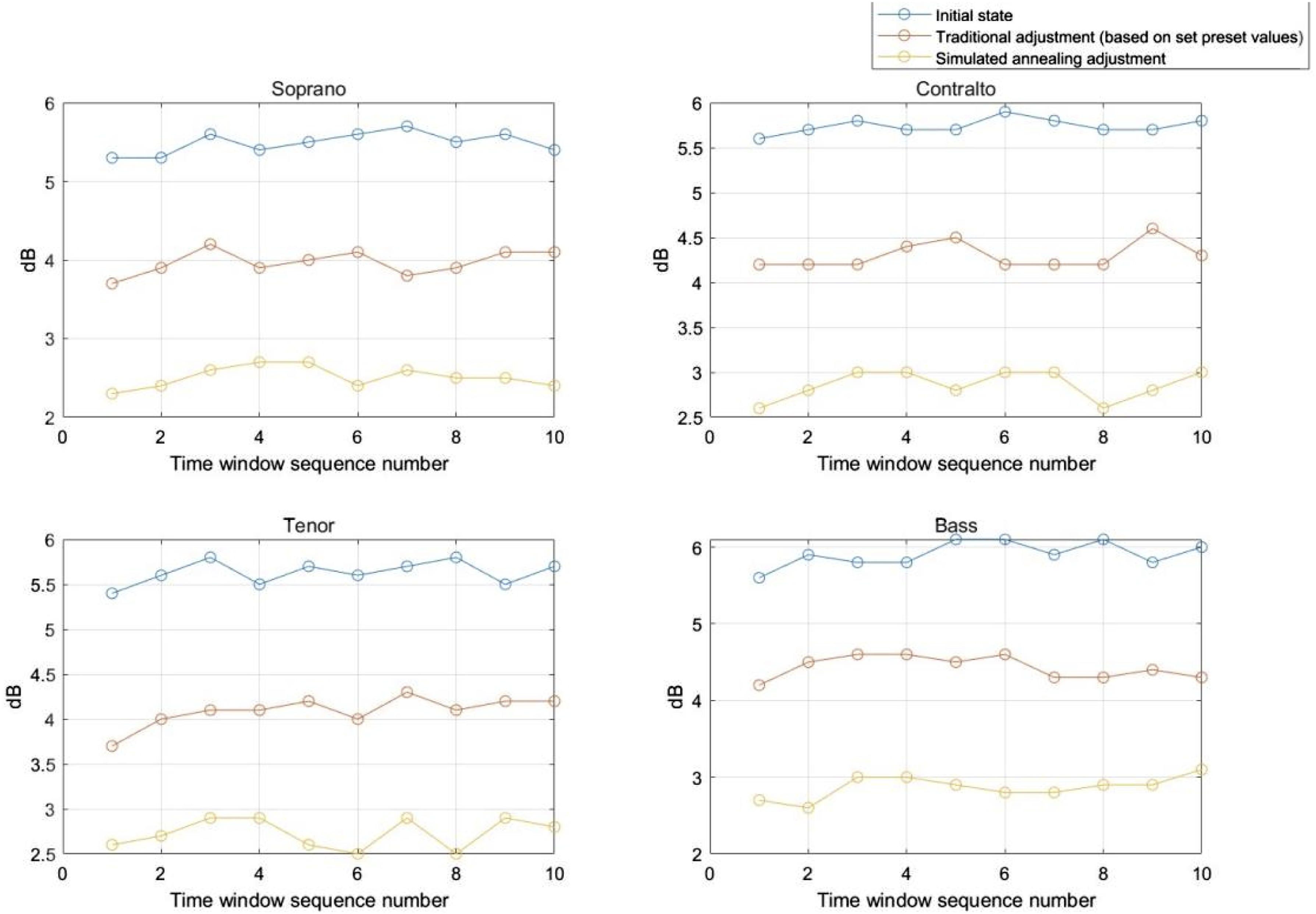
From Figures 5–7, it can be seen that comparing the initial state with the traditional adjustment method (based on the preset values set), the traditional adjustment method reduces the volume standard deviation in all voice parts and time windows in the three environments, indicating that the traditional method effectively improves volume balance. However, the simulated annealing algorithm further reduces the volume standard deviation and significantly improves the volume balance. The simulated annealing algorithm seeks the global optimal solution by mimicking the atomic arrangement during the solid cooling process. It introduces temperature parameters, allowing the algorithm to accept solutions that are worse than the current solution with a higher probability in the early stages, which is equivalent to extensive exploration in the solution space. As the temperature gradually decreases, the algorithm tends to accept better solutions and enters the local optimization stage. This balancing strategy reduces the possibility of getting stuck in local optima, thereby reducing the standard deviation of the final solution set as a whole. In all cases, the standard deviation of the simulated annealing adjustment method is smaller than that of the traditional adjustment method. The standard deviation of the simulated annealing adjustment method is always the lowest among all voice parts and time windows. This indicates that the simulated annealing algorithm performs better than traditional adjustment methods in optimizing volume balance.
The average experimental results of the standard deviation of frequency balance under three different environments are shown in Figure 8. Average results of environmental frequency balance.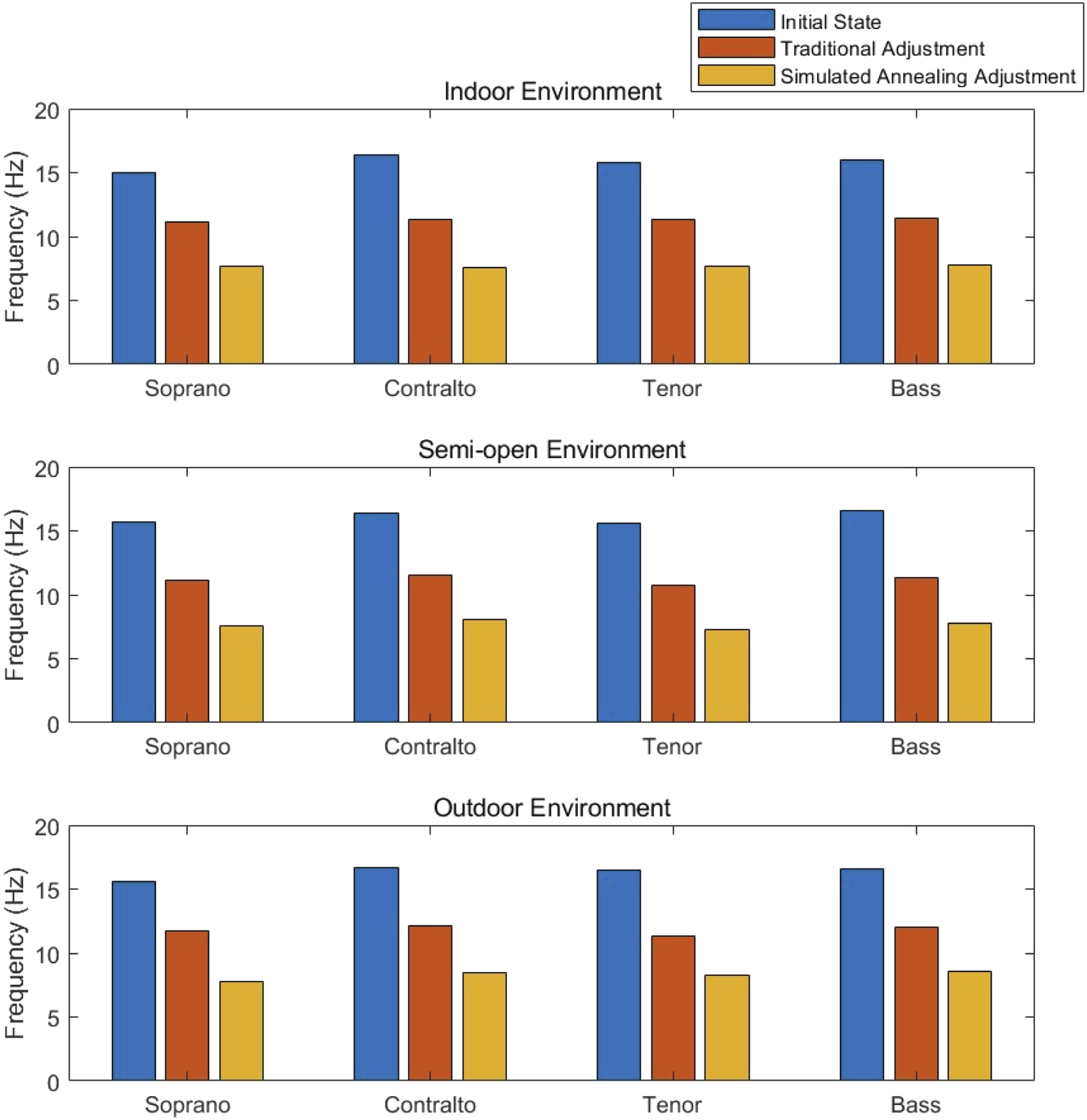
From Figure 8, it can be calculated that under three different environments, the average standard deviation of the frequency of each part of the choir voice optimized by simulated annealing is significantly lower than that of the initial state and traditional adjustment methods. In indoor environments, the average frequency standard deviation of the four voice parts decreases by 51.21% compared to the initial state and 31.70% compared to traditional methods. In a semi-open environment, the average frequency standard deviation of the four voice parts decreases by 52.10% compared to the initial state, and decreases by 30.96% compared to traditional methods. In outdoor environments, the average frequency standard deviation of the four voice parts decreases by 49.25% compared to the initial state and 29.49% compared to traditional methods. Many traditional optimization algorithms are very sensitive to parameter settings, such as learning rate, step size, etc. Improper parameter selection may result in the algorithm not converging or converging slowly. Adjusting these parameters usually requires a lot of trial and error, increasing the complexity and time cost of the optimization process. In all environments, the simulated annealing optimization method significantly reduces the standard deviation of frequency, demonstrating better frequency balance performance. The decrease in frequency standard deviation varies in different environments, but the overall trend is consistent. Simulated annealing method has a stable advantage in optimizing frequency balance.
User subjective evaluation results.
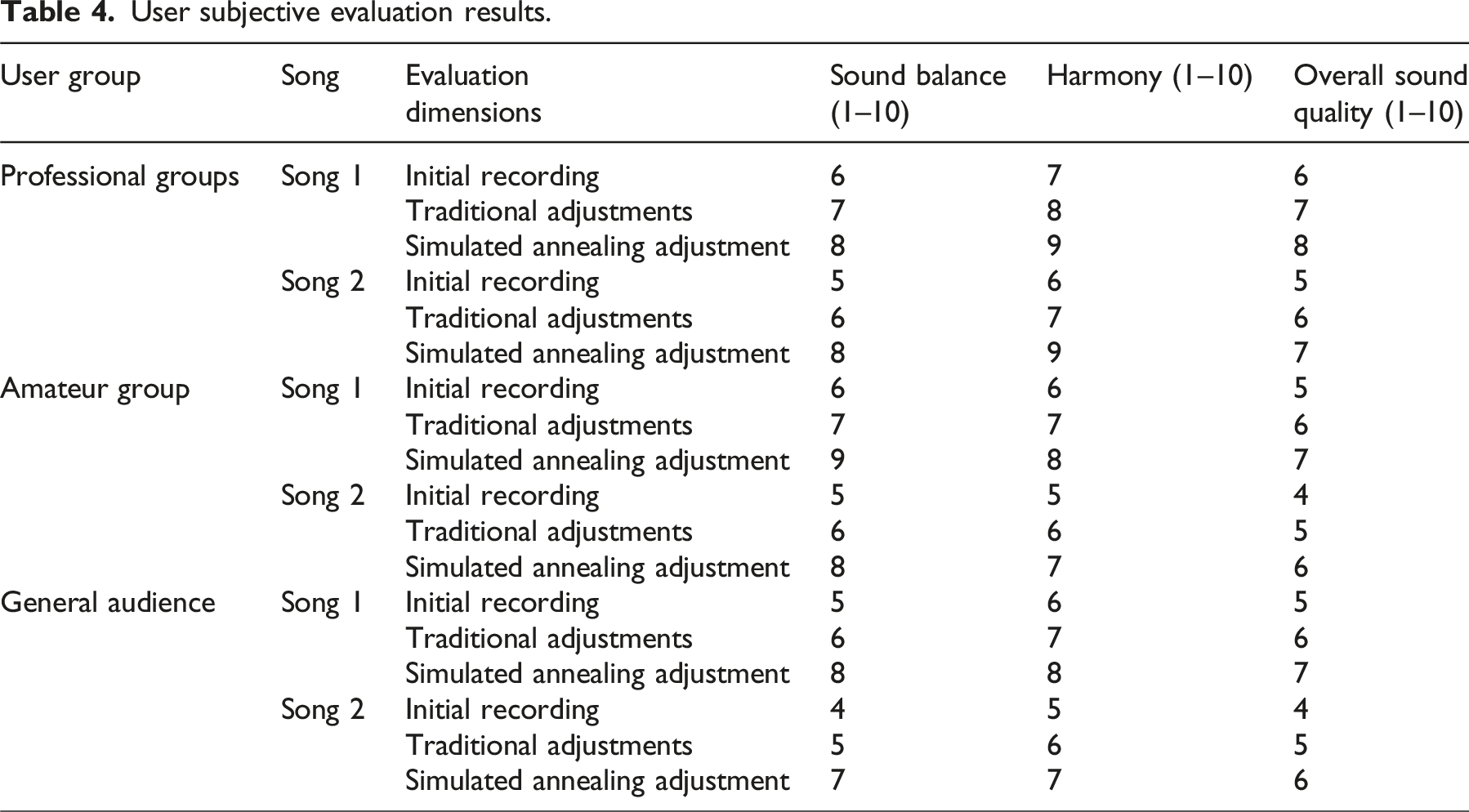
From Table 4, it can be seen that for the two songs, simulated annealing adjustment has higher volume balance, harmony, and overall sound quality ratings than initial recording and traditional adjustment. Simulated annealing algorithm is adept at finding global optimal solutions in large-scale solution spaces, which is particularly important for optimizing choir sound quality. Chorus involves complex mixing of multiple voices and tracks, and the volume, balance, delay, and other parameters of each voice need to be finely adjusted. Simulated annealing can break out of local optima and find the overall most harmonious sound quality configuration, rather than just the best of a single parameter. From subjective evaluation data, the simulated annealing method is significantly better than traditional adjustment methods in improving choir sound quality. Whether professionals, amateurs, or ordinary listeners, they all recognize the effect of the simulated annealing optimization, indicating the wide applicability of the method. By using the simulated annealing method, the volume balance as well as the harmony of choral performances can be significantly improved, thus enhancing the listening experience.
Conclusions
This study validated the effectiveness of simulated annealing algorithm in optimizing choir sound balance under different voice parts and complex environmental factors. The experimental results showed that the simulated annealing algorithm had significant advantages in optimizing volume balance and frequency balance, outperforming traditional adjustment methods, and could operate stably under various environmental conditions. In economic management, complex decision-making problems are often faced, such as resource allocation, portfolio optimization, production scheduling, etc. Simulated annealing algorithm can search for the global optimal solution, helping managers find the best strategy among numerous possible decision options, and improving decision quality and efficiency. The experimental results of volume balance showed that the simulated annealing algorithm significantly reduced the standard deviation of volume for each voice part and improved the volume balance in indoor, semi-open, and outdoor environments. The experimental outcomes of frequency balance also showed that the simulated annealing algorithm significantly reduced the standard deviation of frequency energy distribution in different environments. Compared with the initial recording and traditional adjustment methods, the simulated annealing algorithm reduced the average frequency standard deviation of the four voices by 51.21% and 31.70% in indoor environments. The subjective evaluation results of users further support the above conclusion. Professional groups, amateur enthusiasts, and ordinary listeners have given high ratings for the volume balance, harmony, and overall sound quality after simulated annealing adjustment. However, although the choir sound balance optimization method based on simulated annealing algorithm has shown significant advantages in experiments, there are still some shortcomings and improvements. The spatial simulated annealing algorithm requires a large number of iterations and calculations in the optimization process, especially in real-time performances, which may cause calculation delays and affect the actual application effect. In the future, the combination of parallel computing and distributed computing technologies can be explored to improve the computational speed and real-time performance of algorithms.
Footnotes
Funding
The author received no financial support for the research, authorship, and/or publication of this article.
Declaration of conflicting interests
The author declared no potential conflicts of interest with respect to the research, authorship, and/or publication of this article.