




Abstract
In an era marked by the rapid ascension of the global digital economy, the digital innovation ecosystem has emerged as a vital conduit for businesses to pursue digital innovation endeavors and enhance their core competitiveness. This paper marries the theoretical discourse and empirical analysis of digital innovation ecosystem theory with modular theory, systematically expounding the concepts of digital innovation ecosystems and modularity, as well as elucidating the design principles of a modular digital innovation ecosystem. It delves into the characteristics and design processes of modularity and dissects the collaborative mechanisms underpinning the Apollo digital innovation ecosystem. Moreover, employing a modular perspective, it empirically scrutinizes the Apollo digital innovation ecosystem to clarify the framework constituted by modularity, the symbiotic operation among the ecosystem modules, and the collaboration within the system’s internal modules. This study embarks from the vantage point of digital innovation ecosystems and modularity to offer an in-depth explanation of the collaborative mechanisms within the Apollo digital innovation ecosystem. It not only broadens the methodological horizons for research on digital innovation ecosystem theory but also delineates, from a practical application standpoint, the modes of collaboration between the ecosystem’s modules. In the process of exploring the collaborative mechanisms of the Apollo digital innovation ecosystem, this research integrates global autonomous driving technology with the digital innovation ecosystem in a modular analysis. The innovative contribution of this paper lies in the construction of a collaborative mechanism for the Apollo digital innovation ecosystem from a modular viewpoint.
Introduction
With the flourishing development of artificial intelligence technology, its extensive application within the realm of automotive driving has attracted considerable global attention. In contrast to the traditional mode of manual driving, which is plagued by a high incidence of traffic accidents, drunk driving, and fatigue behind the wheel, autonomous driving technology—represented by artificial intelligence—possesses vast potential in enhancing road safety, elevating travel comfort, and alleviating traffic congestion. 1 This technology not only meets the public’s demand for efficient, safe, and low-risk transportation services but also promises to profoundly impact the future evolution of transportation services. Current intelligent driving technology integrates intelligent perception, comprehensive judgment, reasoning, decision-making, memory, as well as the ability to enact active control and facilitate human-machine interaction. 2 It can intelligently analyze changes in the vehicle’s surrounding environment in real time, smartly plan travel routes, and ensure the vehicle’s safe arrival at its destination. China’s intelligent driving automobile industry exhibits rapid development, with its technology holding a leading international position. Since the concept of ecosystems was introduced into the field of business innovation, scholars have conducted research around stakeholder groups based on lifecycle theory.3,4 As research deepens, there is an increasing emphasis on the co-evolutionary mechanisms between different entities within the ecosystem, between entities and their internal and external environments, as well as on the ecosystem’s self-adaptive and self-balancing development processes. First, through literature review, the expert Chen Kaihua proposed that the introduction of digitalization introduces data as a new factor of production, leading to new combinations of production factors and generating new production functions. Additionally, the emergence of digital technology promotes the optimization and recombination of existing factors of production within the economic system, facilitating innovation. However, the theory lacks detailed study on the growth of the digital innovation ecosystem as a whole and systemically. Second, research on innovation ecosystems has gradually evolved into an important topic in the intersecting fields of organizational theory, innovation management, and strategic management. Despite this, there is a lack in existing studies of digital innovation ecosystems as a digital organizational innovation paradigm, specifically regarding research on digital innovation ecosystems built around intelligent driving technology represented by artificial intelligence.
Therefore, this article proposes integrating modular theory with digital innovation ecosystem theory, delineating the concepts of digital innovation ecosystems and modularity, and presenting the stakeholders in the digital innovation ecosystem from the perspective of intelligent driving technology modules for a holistic, systematic, and collaborative study. This paper takes the design of a modular digital innovation ecosystem as the entry point for research, systematically expounding on the relevant principles of digital innovation ecosystem design, and then constructs the collaborative mechanism of the Apollo digital innovation ecosystem. The research has three main innovations: (1) It integrates Baidu’s Apollo, a software platform aimed at the automotive industry and the field of autonomous driving, with the digital innovation ecosystem, to stimulate and quantify the platform’s contribution to the ecosystem’s development; (2) It builds and empirically analyzes the Apollo digital innovation ecosystem from a modular perspective, clarifying the logical changes between modules within the digital innovation ecosystem; (3) It conducts research on the collaborative mechanisms of the modules within the Apollo digital innovation ecosystem and outlines potential future research directions, providing a new perspective for subsequent studies.
The conclusions proposed in this paper not only guide research on digital innovation ecosystems and the development of intelligent driving but also aid in directing the construction of collaborative mechanisms in digital innovation ecosystems. They bear significant theoretical and practical implications. The overarching aim is to explore the research approach for the collaborative mechanism of the Apollo digital innovation ecosystem from a modular perspective. 5
Theoretical basis
Digital innovation ecosystem
Digital innovation refers to activities such as organizational pattern transformation, product innovation, production process improvement, and business model innovation, which leverage a combination of information technology, computation, connectivity, and communication technologies during the innovation process. 6 A digital innovation ecosystem is a complex system composed of socio-economic environments, businesses, customers, and markets. The characteristics of this system are twofold.
On one hand, there’s the digitization of innovation elements. The key components of an innovation ecosystem are constituted by the flexibility and scope of connections between digital infrastructure and digital technologies. These components, along with a multitude of highly heterogeneous participants, form the entities that create value. These innovating entities achieve boundless virtual linkages through platforms, facilitating collaboration and cooperation amongst each other. On the other hand, there is the prevalent digital ecological nature. Digital ecology is widespread among all participants and unfolds digital innovation at different digital architectural levels. This digital ecology fosters more open and dynamic cooperative relationships of interactive innovation. Participants include governments, digital platform companies, platform service providers, customers, and social institutions. 7
The innovation ecosystem is a complex economic structure that reflects the symbiotic and cooperative relationships between innovating entities, aiming to jointly produce new products, services, or solutions, and to achieve corporate value creation. 8 The innovation capacity of a digital innovation ecosystem is primarily reflected in whether businesses have the appropriate digital hardware infrastructure and digital technology capabilities that represent the basic capacity for digital technology. In terms of digital technology integration capacity, it is reflected in whether businesses can fully integrate digital technology with corporate strategy, products, operations, and human resources to promote corporate innovation. 9 In terms of innovation demand capturing capacity, it is reflected in whether businesses can meet customer needs more creatively and efficiently through the modularity and interactivity of digital technology. In terms of innovation system collaborative capacity, it relies on the resource integration mechanisms and collaborative innovation mechanisms of the innovation ecosystem to enhance the coordination and cooperation abilities of participants in the innovation ecosystem. 10
The digital innovation ecosystem is a complex economic structure in which different entities and organizations innovate products and services by relying on digital technologies. An innovation-oriented digital innovation ecosystem, with digital entities at its core, promotes the generation, diffusion, and application of digital innovations. Gerli et al. regard the digital innovation ecosystem as a complex adaptive system, which is the deep integration and interactive collaboration of digital ecosystems guided by digital innovation and innovation ecosystems empowered by digitization. 11 Montresor and Vezzani recognize the digital innovation ecosystem as a complex economic structure that promotes the collaborative innovation of digital products and services, based on data resources, digital technologies, and digital infrastructures, achieving boundaryless virtual connection among innovation participants and facilitating cross-level resource complementarity and sharing among innovating entities. 12 In terms of platform-enhanced aspects, the digital innovation ecosystem reflects the expansion of platform innovation ecosystems centered around different types of digital lead enterprises and data resource centers, strengthening the interactive relationships between different digital platforms. 13
The Apollo digital innovation ecosystem studied in this paper better reflects the interplay between the digitization process and innovating entities, achieving a comprehensive digital transformation of the innovation ecosystem, including aspects such as entities, structure, and functions. It is an organizational system that integrates and coordinates the resources of all elements of innovation, requiring not only close connections and interactions between various innovating entities but also relying on digital technology to intelligently allocate and combine resources for innovation.
Modularization
The theory of modularity captured the attention of the academic community in 1997, particularly because of an article published in the Harvard Business Review titled “Managing in an Age of Modularity” by Harvard Business School’s Carliss Baldwin and Kim Clark. 14 They posited that modularity had revolutionary implications for organizational structures. Subsequently, many scholars have studied modularity from various perspectives. The independent design of modularity means that each module has its standards and solutions, and tasks such as fundraising, product design, and production can be resolved within the module itself. The variability of modules is reflected in the system’s ability to respond to uncertainty by adding, splitting, integrating, and transforming operations, and adjusting to changes within submodules. 15 The extensibility of modules is achieved by expanding submodule methods to add functionality, making the system more resilient and more adaptable to market changes. 16 Each module exists independently within the entire system, including the independence of hardware entity modules and software function modules. In terms of module variability, a digital innovation ecosystem can adapt and adjust functional modules according to changes in demand, maintaining the integrity of the system. In terms of module extensibility, the functionality of modules is expanded by developing new module software functions to better adapt to system changes. Modules are both competitive and cooperative. Competitiveness is reflected in the competitive relationships between modules, where higher-level modules can freely choose lower-level modules based on unified standards. 17 Cooperation is manifested in the cooperative relationships formed between modules of the same level to maximize system functionality. The overall function of a digital innovation ecosystem depends on the synergistic performance of various module functions and the support of the system’s operation, thereby improving system efficiency and reducing costs. 18
The Apollo digital innovation ecosystem, studied from a modular perspective in this paper, combines the Apollo automotive industry’s autonomous driving domain software platform with a digital innovation ecosystem for the first time, based on the research of relevant scholars on modularity theory. It constructs a modular Apollo digital innovation ecosystem by designing independent and independently operating submodules to maximize system efficiency. Modularity allows the combination of powerful modules owned by different entities within the Apollo digital innovation ecosystem into a modular system. This modular approach enhances the system’s flexibility, adaptability, and efficiency, and promotes the development of the innovation ecosystem. 19
Design of digital innovation ecosystem based on modularity
System design follows principles
According to the perspective of Spicka, systems are characterized by their holistic nature, which allows for the decomposition of a larger system into various subsystems comprised of one or more unit modules. In the design of systems, adherence to the principle of holism is imperative, presenting a hierarchical structure through which different levels of modules perform distinct functions, thereby promoting the maximization of the overall system’s capability. The advantage of this modular architecture is that it enables superior management and coordination by segmenting the system into multiple subsystems and modules, with each module responsible for specific functions or tasks, streamlining the design, development, and maintenance of the system for greater simplicity and efficiency. Flexibility and scalability are also fundamental principles in system design, allowing for the addition or modification of specific modules as needed, so the system can adapt to changing requirements. Nonetheless, it is critical to consider the interdependencies and cooperative nature of the modules within a modular structure; while each may operate independently, effective communication and coordination between them are essential to ensure the system functions collaboratively and achieves its intended purpose. By organizing and managing these modules into a layered structure, a modular architecture facilitates the fullest expression of the system’s capabilities, with wide applications in practice, enhancing the system’s manageability, maintainability, and adaptability. 20
Furthermore, the principle of similarity dictates that within a larger system, modules with analogous functions and structures may exist. These similar modules share certain compositional commonalities, and through categorization and induction, their substitution and transformation can be facilitated. The core idea is to view similar modules as part of the same category and to analyze and abstract their shared characteristics and functions to form a classification system. Employing this principle in practice aids in the replacement and transformation of modules; when a module fails to meet system requirements or needs improvement, a similar module can be identified and substituted with relative ease and efficiency. The application of the principle of similarity enhances the system’s flexibility and maintainability by utilizing the commonalities between similar modules to better address system changes and evolving requirements, while also promoting modularity and development efficiency. The principle of standardization is another crucial element in system design, key to maximizing the functionality of numerous modules within a large system. 21 Through the standardization of complex structures and similar features, modules can be quickly replaced, design cycles shortened, and systemic demands promptly met. The primary goal of standardization is to establish a unified and specialized system of generic connective units, enabling functionally characteristic modules to be utilized interchangeably. 22 The standardization process involves the normalization of module design, interfaces, and operational regulations, ensuring compatibility, interchangeability, and combinability among different modules. 23 Modular design is predicated on analyzing system functions and crafting various functional modules based on set rules. The selection and assembly of these modules give rise to new systems better aligned with emerging functional requirements. Its strengths lie in the flexibility, scalability, and maintainability it offers, alongside enhanced development efficiency due to the potential for reusing pre-designed modules.
System design principles play a pivotal role in guiding modular design, with modules crafted in accordance with principles of holism, standardization, similarity, flexibility, and expandability, enabling swift module replacement, reduced design cycles, and rapid response to systemic demands. The Apollo digital innovation ecosystem, through modular design, continuously invigorates the Apollo automotive industry’s autonomous driving software platform, fostering sustained innovative growth in AI-driven autonomous driving technology. Its commercial deployment is poised to yield substantial economic and societal benefits, propelling continuous innovation in automotive industry technology and commercialization.
Modular design
The modular design of the Apollo digital innovation ecosystem, based on system design principles, can be categorized into the modular design of the entire system and the modular design of individual functional units. The modular design of the entire system involves a functional approach to overall system design in alignment with the project’s comprehensive task requirements, whereas the modular design of a single function focuses on the selection and combination design of individual modules to meet specific system demands.
24
The fundamental process of modular design encompasses several steps: (1) Comprehensive Task Requirement Analysis: Define the overall functions of the system in accordance with the comprehensive task requirements of the project and decompose these into the necessary sub-functions, while conducting an analysis of specific functions and requirements. (2) Analysis of the Relationship between Functions and Requirements: Examine the interdependence and collaborative relations between functions, which aids in determining a congruent design of modules and functions. (3) Matching Design of Modules and Functions: Based on the outcomes of functional decomposition and demand analysis, design the structure of each functional module and select appropriate interfaces to establish the functional module systems.
25
(4) Establishment of a Module Repository: Evaluate the completed functional module systems to ensure their design, interfaces, and functionalities meet the requirements set by the functional decomposition and demand analysis. Upon confirmed evaluation, establish a repository consisting of multiple functional modules, specialized functional modules, and non-functional modules. (5) Determination of Module Combination and Optimization Standards: Integrate the system’s functional modules according to the set standards for module combination and optimization, achieving the maximization of the overall system functions.
26
(6) The core principle of modular design is the segmentation of the system into independent modules with defined functionalities and interface structures. Modules are generic units that compose the system and can be broken down and recombined using specific methods. Modular design allows for an examination of the system’s structural composition from a systemic perspective to achieve optimal economic benefits
27
(see Figure 1). Basic flow chart of modular design.
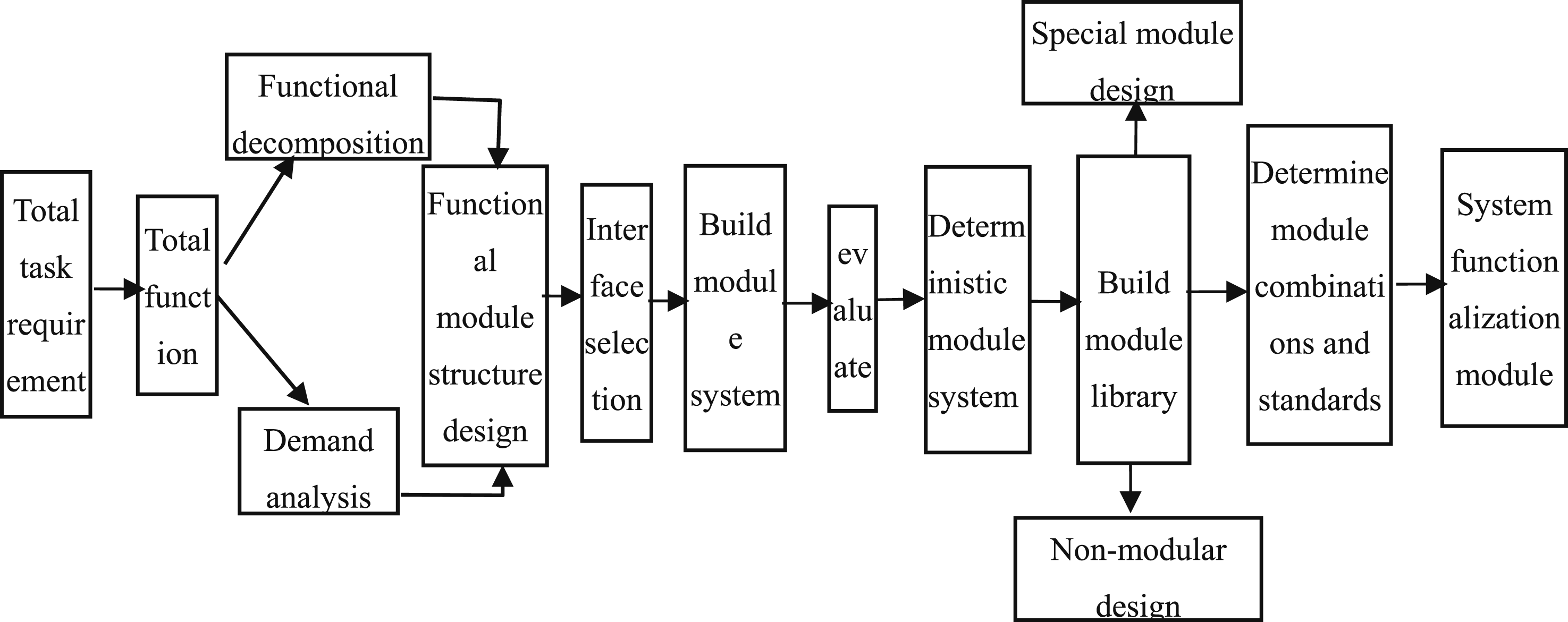
In summary, the modular design of the Apollo Digital Innovation Ecosystem is constructed by analyzing system requirements, decomposing functions, selecting interfaces, and establishing module libraries, thereby forming a modular framework that maximizes system functionality. This design process enhances the system’s flexibility, maintainability, and reusability, while fostering optimization and economic efficiency. 28
Construction of synergistic mechanism of Apollo digital innovation ecosystem
From a modular perspective, the design of Apollo’s digital innovation ecosystem necessitates the further construction of synergistic mechanisms among the system’s internal modules to maximize its efficacy. Synergy theory posits that any system comprises a series of subsystems that interact and influence one another. Within the collective framework, the collaboration of these subsystems yields a functional effect greater than the mere sum of individual subsystem effects. In the digital innovation ecosystem, the synergy manifests as competitive and cooperative dynamics among innovating entities, with the complementary augmentation of technological resources and products fostering concurrent development of innovators, the innovation milieu, and innovation assets. 29 The Apollo digital innovation ecosystem principally comprises four innovative entity modules, along with their submodules: the Vehicle Reference Platform, Hardware Development Platform, Open Software Platform, and Cloud Service Platform. 30 These modules underscore the collaborative development between different system entities, realizing the maximization of the entire ecosystem’s efficacy through interaction, influence, and behavioral evolution both within and between systems and the environment. 31 This collaborative mechanism allows entities within the innovation ecosystem to foster the innovation process by synchronizing internal and external factors and complex relationships, thereby maximizing innovation value. 32
In establishing synergistic mechanisms for the four innovative entities and their submodules within the Apollo digital innovation ecosystem, realization can occur through three approaches: (1) Adaptive methods, where subsystems and modules continuously learn from both internal and external sources to better adapt to changes in the digital innovation environment. 33 (2) Collaborative innovation element methods, where entities and modules maximize system functionality through data transfer and processing. 34 (3) Entity synergy, operational process synergy, and resource synergy, which involve project-driven collaboration, knowledge exchange for functional synergy, and system resource balance maintenance through the application of dynamic, feedback, resource supply, benefit distribution, and support principles to optimize and maximize overall system efficacy. 35
In conclusion, Apollo’s digital innovation ecosystem achieves synergistic mechanisms between its four innovative entities and their submodules through adaptive methods, collaborative innovation element methods, and a combination of entity, operational process, and resource synergy, thereby promoting the maximization of the system’s innovative value.
An empirical analysis of the Apollo digital innovation ecosystem from a modular perspective
Baidu’s Apollo represents a paragon of digital innovation within the autonomous driving sphere globally, its ecosystem comprising an extensive alliance of over 150 entities, including Baidu itself, Tianjin University, Southwest Jiaotong University, the municipal governments of Wuhan and Changsha, the Xiong’an New Area in Beijing, Zoomlion, Qingdao Thor Technology, Hainan Airlines Quantum Intelligence, Lionbridge Technologies, Innovusion, and others, thus forming the largest digital innovation ecosystem of its kind worldwide.
36
The Apollo Digital Innovation Ecosystem’s architecture is composed of four integral modules: the Vehicle Reference Platform, the Hardware Development Platform, the Open Software Platform, and the Cloud Service Platform. The Open Software Platform, representing a collective term for various subsystems situated on the right of the diagram, is Apollo’s open-source software hub. The RTOS (Real-Time Operating System) provides an efficient underpinning for the execution of higher-level functional modules, characterized by its immediacy. The Map Engine, serving as a geographic data utility, acquires diverse geospatial data within the ecosystem, furnishing pertinent geographic data interfaces.
37
Localization and Perception operate as modules that process environmental information surrounding the vehicle, tasked with refining data collected by sensors into organized results that articulate the scene around the vehicle. The Planning module, responsible for further processing of structured scene information, calculates a safe and navigable trajectory. Control, the module in charge, translates the planned outcomes into directives for the electronic throttle, brakes, and steering, ultimately governing vehicular motion.
38
The detailed modular framework of the system is depicted in Figure 2. Framework of the digital innovation ecosystem composed of modules.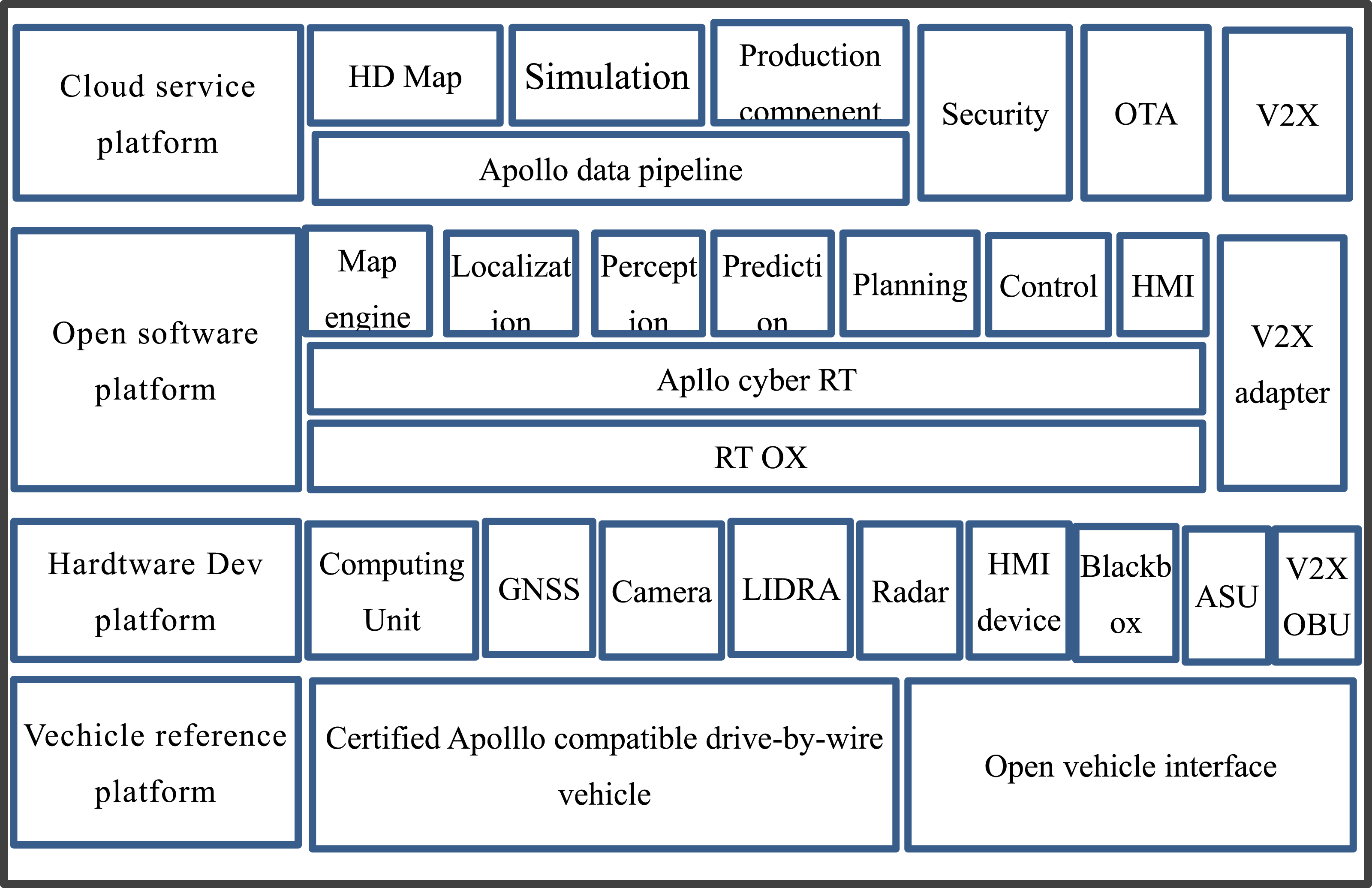
The Perception Framework diagram of Apollo’s open-source project reveals an intricate structure. It demonstrates parallel processing of multiple data handling paths, with each node submodule involving numerous algorithmic computations. Concurrently, data exchange occurs among these paths,
39
culminating in an aggregate result from multiple routes to generate the output of the perception module. The design of this perception framework aims to handle vast amounts of sensor data in real-time, identifying scene information with accuracy and efficiency. As such, the perception module stands as one of the most engineering-challenging submodules within the framework. Through parallelization and data exchange, it can expedite processing of copious sensor data. Diverse data processing paths allow the module to handle data in various ways, integrating the processed results thereafter. This method of parallel processing and integration assists in enhancing the accuracy and efficiency of the perception module. Hence, Apollo’s perception framework diagram illustrates a complex yet efficient perception module structure, capable of handling substantial sensor data and generating precise scene information. This perception module is among the submodules facing the greatest engineering challenges within the entirety of the Apollo digital innovation ecosystem. As depicted in Figure 3. Collaborative operation among modules in the digital innovation ecosystem.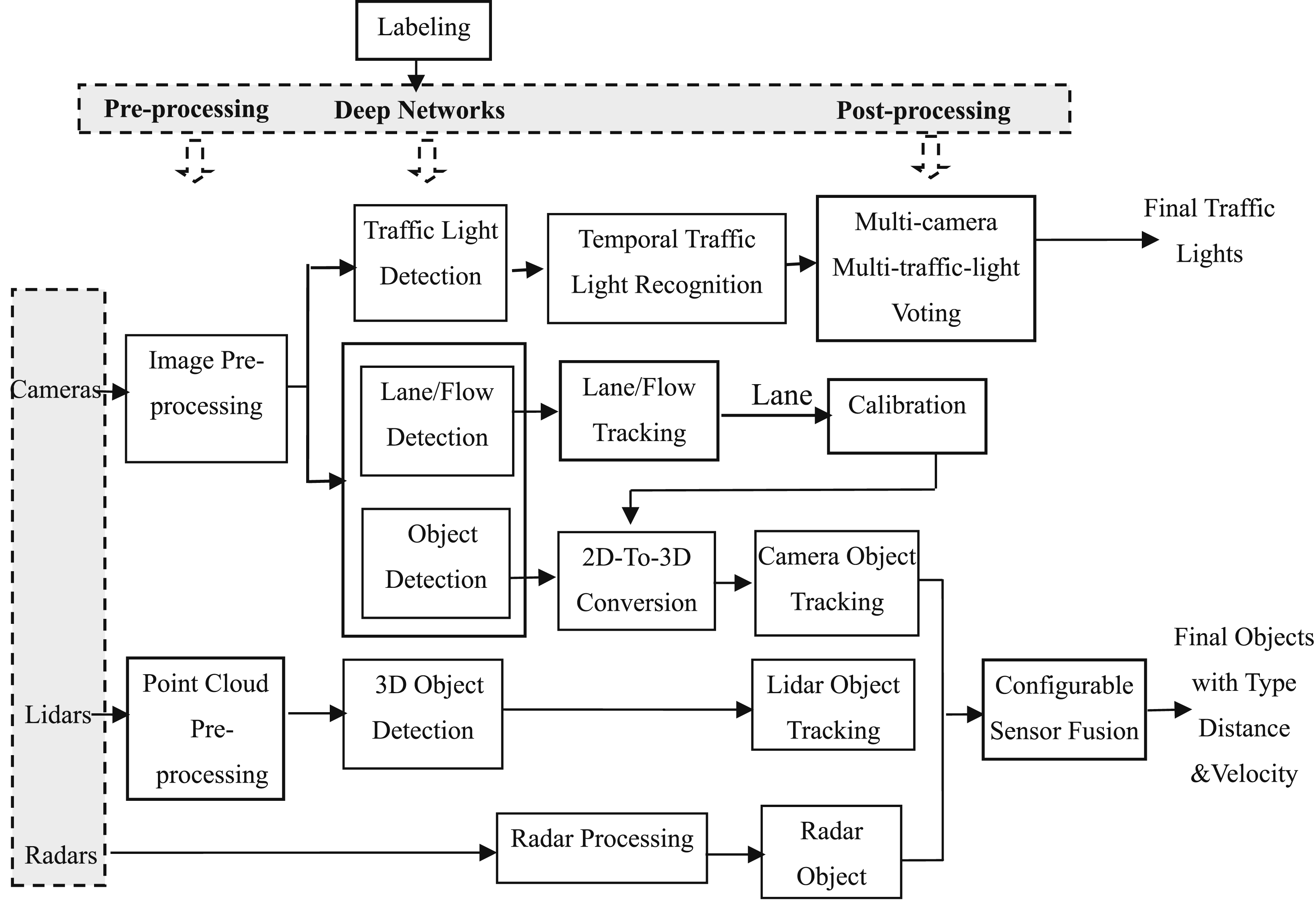
In the Apollo open-source project, inter-module collaboration is facilitated through data flow. From the data input perspective, there are several primary sources: (1) Lidar: A Lidar sensor measures distance and shape information of the vehicle’s surrounding environment, providing high-precision point cloud data for scene recognition and reconstruction within the perception module. (2) Camera: Vehicle-mounted cameras capture imagery of the car’s surroundings, offering rich color and texture information for tasks such as object detection, recognition, and classification. (3) Radar: Millimeter-wave radar provides information on the distance, speed, and angle of objects around the vehicle. It can operate under complex weather conditions and has proficient detection capabilities for distant objects. Additionally, signals from the vehicle’s chassis, including speed, acceleration, and steering angle, contribute to vehicle motion state information, which is vital for the planning and control module’s route planning and vehicle control. These sensor and signal data inputs are fed into the Apollo system, allowing the data to flow, be transmitted, and shared among various modules. For instance, data from Lidar, cameras, and millimeter-wave radar can be simultaneously received by the perception module for tasks like scene understanding and object detection. The vehicle’s signals can be utilized by the planning and control module to generate safe and motion-compliant paths and control signals. Through collaborative data input, different modules can share and leverage data from various sensors and vehicle signals, achieving more accurate and comprehensive scene perception and decision-making. This data flow collaboration is pivotal for the tight cooperation among modules within the Apollo system, as exemplified in Figure 4. Collaboration between modules within the digital innovation ecosystem.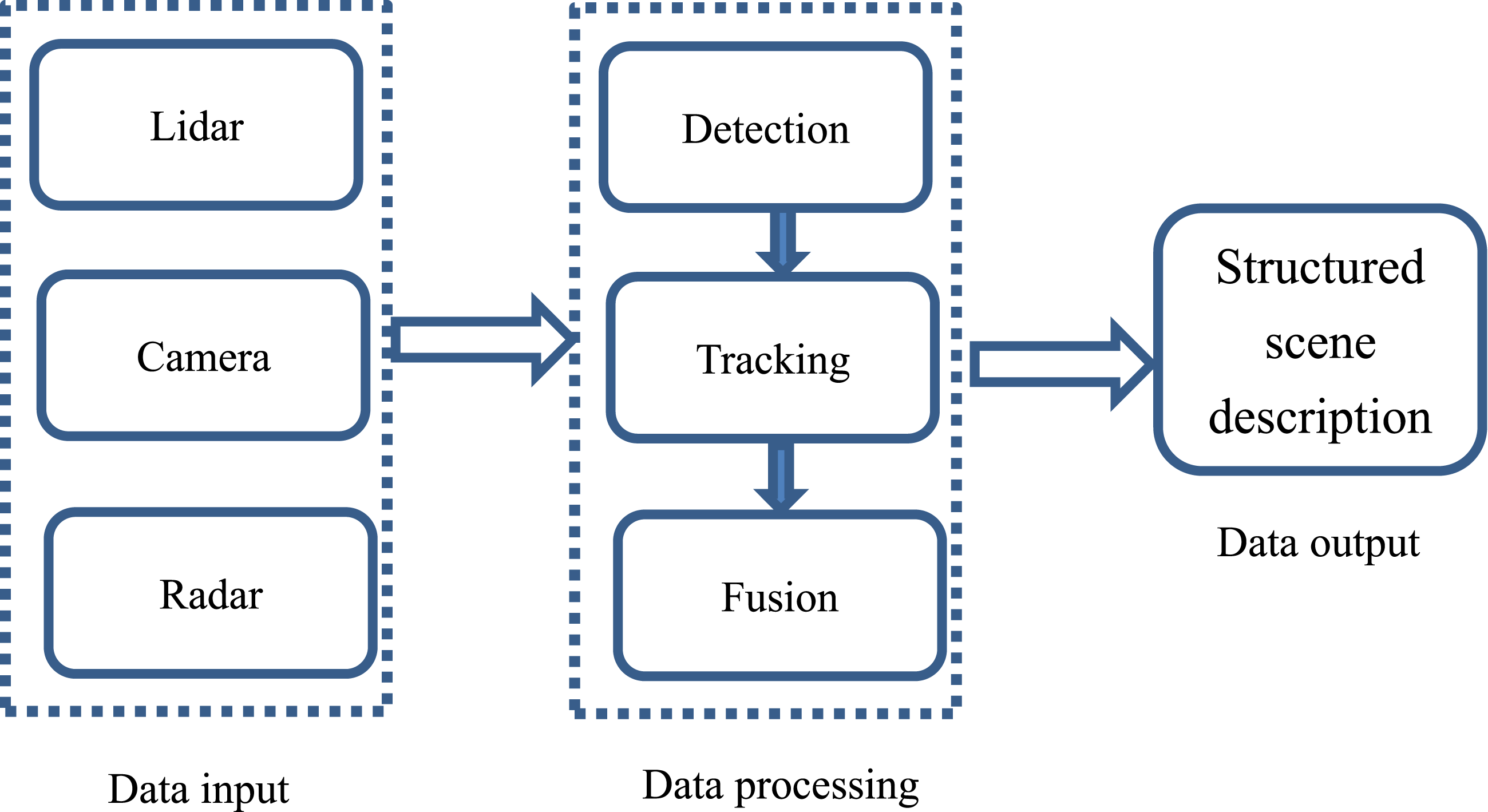
The Lidar module uses lasers to illuminate the surface of objects and receives reflected light to calculate the spatial coordinates of the reflection point relative to the emitter. Although Lidar devices from different manufacturers may send point cloud data in different formats, they essentially describe the point cloud data. 40 The Camera module is composed of a lens, a photosensitive sensor, and an image signal processor. Photosensitive sensors usually use CMOS technology to convert the light signals of the scene into electrical signals. They are then converted into digital signals through ADC and processed by the Image Signal Processor (ISP) for automatic exposure, automatic white balance, auto-focus, dark corner correction, etc. After processing, communication with the outside world is carried out via the SCCB bus interface, outputting images in RGB format. The Radar module performs well in poor weather and low-light conditions, but it performs poorly in object classification and lane line detection. By using various sensor data and based on their respective working characteristics and advantages, the overall data can perform excellently in multiple dimensions, improving the representativeness and robustness of the scene data. 41 After a large amount of raw data is transmitted to downstream modules, the perception module further processes these data through rich algorithms. According to the framework of the Apollo Digital Innovation Ecosystem, the data from Lidar, Camera, and Radar are divided into three processing paths and then fused. This process can be divided into sensor data preprocessing, detection, tracking, and fusion. The perception module outputs the processed data and passes it to the downstream prediction module. Finally, the data from each processing path are fused again to obtain the final output result. In summary, starting from data collection, the various modules within the Apollo Digital Innovation Ecosystem work together. Through detection, tracking, fusion, and other processes, all modules jointly propel the data to output necessary information to the downstream in the system.
Conclusion and prospect
Main conclusions
This article synthesizes theories of digital innovation ecosystems and modularization, delving into the concepts of digital innovation ecosystems and module-based design principles for such systems. It refines the characteristics and design processes of modularization and dissects the collaborative mechanism construction within the Apollo Digital Innovation Ecosystem. Moreover, empirical analysis from a modular perspective sheds light on the framework of the digital innovation ecosystem constituted by modules, the synergy among them, and the collaboration within the system’s internal structure. Thereupon, a collaborative mechanism for the Apollo Digital Innovation Ecosystem, grounded in modularization, has been established. Research reveals that this mechanism enables the various components of the Apollo ecosystem to function in concert within the system, facilitating more efficient and accurate operations based on data flow and processing. Guided by modular design principles and processes, the system’s modules work in a coordinated and harmonious manner, culminating in a cohesive system. In summary, from the standpoint of digital innovation ecosystems and modularization, this paper investigates the collaborative mechanisms of the Apollo Digital Innovation Ecosystem. Through theoretical exposition and empirical analysis, a modularly based collaborative mechanism has been constructed for the Apollo system, offering valuable guidance for the design and development of digital innovation ecosystems.
Theoretical and practical implications
First, the study expanded the methodology for digital innovation ecosystem theory by constructing a collaborative mechanism within the Apollo digital innovation ecosystem based on modularity theory and establishing an evolutionary model, thus enriching the understanding of the system’s evolutionary process. This interdisciplinary approach offers fresh perspectives and methodologies for the theoretical advancement in the field of digital innovation ecosystems.
Second, the study elucidated the collaborative methods among modules within the digital innovation ecosystem from a practical application standpoint. Taking Baidu’s Apollo digital innovation ecosystem platform as an example, it delineated the inter-module collaboration and the coordination among internal system modules, especially in terms of data flow. This analysis transcended the constraints of traditional, single-discipline studies on the collaborative mechanisms of digital innovation ecosystems.
Third, in researching the collaborative mechanism of the Apollo digital innovation ecosystem, the study integrated global autonomous driving technology with the digital innovation ecosystem through a modular approach. This research method surpassed previous literature that focused solely on digital innovation ecosystems without considering their integration with specific application contexts. Additionally, by developing collaborative theory, it provided guidance and reference for the practical application of digital innovation ecosystems.
In summary, the research on this collaborative mechanism is of significant importance both theoretically and practically. It not only broadens the methodological research in digital innovation ecosystem theory but also offers an in-depth understanding of inter-module and intra-system collaboration methods. Moreover, by uniting global autonomous driving technology with the digital innovation ecosystem, it breaks through traditional research limitations, advances collaborative theory, and presents valuable insights for practical application.
Limitations and future prospects
The present study acknowledges certain limitations, and future research delving into the role of industry, academia, and research institutions within the digital innovation ecosystem is deemed highly valuable. Currently, there is a dearth of research concerning the role and contributions of these entities within such ecosystems. Therefore, more extensive investigations from an industry-academia-research perspective will enhance the comprehensive understanding of the formation and evolution of digital innovation ecosystems. Employing methods such as interviews and surveys for field research can yield primary data for a more precise assessment of their role within digital innovation ecosystems. This kind of research can unveil the synergistic relationships between industry, academia, and research, as well as their interplay in innovation activities.
Through collaborative innovation among these sectors within the digital innovation ecosystem, the efficacy of the entire system can be significantly elevated, assisting various innovating agents in achieving their objectives. By cross-sector integration, resource sharing, and outcome dissemination, industries, universities, and research institutions can all benefit from innovation activities, thereby fostering the sustainable development of the digital innovation ecosystem. Hence, future studies could focus more on the role of these sectors within digital innovation ecosystems and delve deeper into their contributions through field research. This will aid in a better understanding of the operational mechanisms of digital innovation ecosystems, offering more targeted recommendations and guidance for promoting collaborative innovation among industry, academia, and research, and advancing the development of the digital innovation ecosystem.
Footnotes
Funding
The author received no financial support for the research, authorship, and/or publication of this article.
Declaration of conflicting interests
The author declared no potential conflicts of interest with respect to the research, authorship, and/or publication of this article.