




Abstract
Table tennis is a highly technical and fast sport, which requires athletes to have good technical level and physical fitness. In order to achieve more efficient and intelligent table tennis assisted training, a knowledge-based general sports-assisted training framework (KGSTF) was introduced, and the functions of each module were analyzed. At the same time, an adaptive contact judgment threshold generation algorithm was proposed for the implementation of this framework in specific table tennis training. On this basis, a pose correction method based on contact position constraints and an optical motion capture data preprocessing method were designed, and an automated program was developed to handle data stitching, clutter removal, and labeling. The results showed that in the validation experiment based on the adaptive contact judgment threshold generation algorithm, by incorporating the optimization results of the previous frame into the objective function, the optimized actions can be made smoother. Meanwhile, the landing error of the advanced subjects was only 1.539 cm when receiving a slight topspin serve, 0.947 cm when receiving a downspin serve, and 5.294 cm when receiving a strong topspin serve, which illustrates that a smaller serve speed has more stability. In addition, the return success rate of advanced subjects in the slight topspin mode was the best, with a maximum value of 95.12% and an average of 91.38%. The average return success rate of intermediate subjects in the slight topspin mode was as high as 75.36%. Compared with the strong topspin and downspin service modes, the return success rate was increased by 13.72% and 26.26%, respectively. Meanwhile, the return success rate of advanced subjects was significantly higher than that of other subjects. The results show that the sports auxiliary framework designed by this study can be effectively applied to the sports evaluation of table tennis auxiliary training, which is helpful to provide personalized training guidance and improvement suggestions for table tennis players, and promotes the scientific and professional development of table tennis.
Introduction
As a highly competitive sport, table tennis requires extremely high technical level and physical fitness of athletes. 1 Table tennis auxiliary training is of great significance for improving technical level, developing basic skills, improving competitive ability, and avoiding sports injuries. Traditional table tennis training methods include static and dynamic practice equipment and coach guidance. However, traditional auxiliary training methods often only simulate specific ball paths or movements, lacking the variations, and challenges of real games. Athletes may develop a dependency in training and are unable to adapt to the complex situations of real competition. At the same time, traditional assisted training methods are often generic and cannot be individually adapted to the characteristics and needs of different athletes. 2 Each athletes’ skill level, physical fitness, weaknesses, and strengths are different and require a personalized training approach to improve in a targeted manner. To improve their technical level more effectively, new technologies and methods such as virtual reality training, human motion capture, and intelligent auxiliary training equipment can be considered. 3 In digital automatic training systems, motion capture technology can use digital means to record the training process, while accurate modeling and calculation can analyze the training effect and provide appropriate guidance and feedback. The original motion information obtained through motion capture devices is more accurate and transparent compared to the naked eye observation of coaches, and is also easier to record, save, and analyze in the future. Automated evaluation and training based on this information can reduce the dependence on coaches’ experience. There are many studies on the digitization of sports training, but the vast majority only focus on the digitization of certain aspects. Existing research has limited assistance in improving the skill level of trainees, and there is a lack of more universal and complete digital research on sports training. At present, there are many studies on the digitization of table tennis training, but the vast majority only stay at the digitization of some aspects. Moreover, existing research has limited assistance in improving the skill level of trainees, and there is a lack of more universal and complete digital research on sports training. Therefore, in order to improve the accuracy of motion capture in table tennis and further improve the effectiveness of auxiliary training, a knowledge-based general sports-assisted training framework (KGSTF) was introduced. At the same time, an adaptive contact judgment threshold generation algorithm was introduced for posture correction, and it was applied to the auxiliary training of table tennis to achieve the expected training goals. The innovation of the research lies in addressing the shortcomings of poor performance in intelligent assisted training of table tennis. A complete universal sports-assisted training framework is proposed, which includes the calculation principles of optimal feedback content and optimal feedback instructions, enabling trainees to approach the expected goals in various skill indicators in the most efficient training method at their current skill level. The contribution of the research lies in proposing an intelligent sports-assisted training framework, which helps improve training efficiency and accuracy by digitizing motion knowledge, recording trainee reactions and actions, motion evaluation, and controller modules, providing data support for personalized training, and providing objective and accurate evaluation and improvement suggestions. At the same time, this article also lays the foundation for further research on high precision and interactive sports auxiliary training systems, and provides operational guidance for the engineering practice of sports auxiliary training systems.
The research consists of four parts, the first part of which mainly reviews table tennis training and motion capture. The second part introduces the auxiliary training of KGSTF for table tennis. The first section mainly introduces the design of KGSTF and the functions of each module, and the second section introduces the application of KGSTF in table tennis auxiliary training. The third part mainly conducts experimental verification of the proposed training framework. The fourth part discusses the experimental results and proposes future prospects.
Related works
Table tennis training is of great significance for improving the physical fitness, psychological quality, and competitive level of athletes. To better improve motion analysis of table tennis forehand hitting, Gomez-Gonzalez et al. compared the performance of three models: support vector machine, 2D convolutional neural network (CNN), and long short-term memory. By measuring the batting signal with the BNO055 sensor, data from professional and novice table tennis players was collected, and model parameters were adjusted. The results showed that the classification accuracy of the support vector machine model was the lowest, and the performance of the other two was improved by about 7%. 4 In order to solve the problem of action specification of table tennis enthusiasts, Fritsch et al. utilized wearable inertial sensors to capture table tennis players’ action data and extract features. They proposed a method that combines multi-dimensional feature fusion CNN and fine-grained evaluation of human table tennis movements. This approach enabled the recognition and evaluation of table tennis movements, providing assistance in training. Results showed that the average recognition rate of the proposed method was improved to 0.17 and 0.16, respectively, compared with the traditional method. 5 Tabrizi et al. used a combination of shadow practice and multi-ball training to design the training to improve female college athletes learning table tennis forehand and backhand volleys in limited practice time. Subjects underwent pre-test, post-test, and retention tests. Results showed a significant increase in the average scores of all subjects after 4 weeks of training. 6 Huang’s team proposed a combination of wearable sensors and machine learning technology to solve the problem of training evaluation in table tennis. By recording data such as training volume and the number of shots with both hands, the sensor monitored and collected key information during table tennis training in real time. The results showed that this method of fusion of smart sensors and table tennis improved the evaluation when teaching and training. 7 Oagaz et al. proposed a method for intelligent table tennis rackets with adjustable stiffness based on anisotropic electrorheological elastomers in order to adapt to the problem of adapting to diverse playing styles in table tennis. The results showed that in shear mode, the shear energy storage and compression modulus increased by 5.2 and 6.4 MPa, respectively. 8
Motion capture technology is of great significance for modern sports training. To improve the application of industrial MoCap technology, Chen et al. proposed sensor solutions based on cameras and inertial measurement units, and evaluated their effectiveness in different industries and applications. The results showed that advances in machine learning algorithms improved the MoCap system in activity and fatigue detection, etc. 9 Takeda et al. proposed a new method for integral-free velocity detection to solve the drift and instability problems of traditional limb motion capture methods, and developed a wearable device using a miniature triaxial flow sensor and a miniature triaxial inertial sensor. The results showed that wearable devices exhibited excellent performance and robustness in dynamic motion recognition and human limb reconstruction. 10 Sha et al. proposed the PhysCap algorithm, which was the first physically reasonable and label-free method for human beings to solve the challenging problem of label-free 3D human motion capture with monochrome cameras. The results showed that the proposed method captured physically plausible and temporally stable global 3D human movements in real-time video and general scenes. 11 To address the real-time challenge of multiplayer 3D motion capture using a single RGB camera, Abtahi et al. proposed a new CNN architecture called SelecSLS net, which improved information flow and increased network speed through selective long-distance and short-distance jump connections. The results showed that the method ran on consumer hardware at over 30 fps and achieves state-of-the-art accuracy. 12 Mehta’s team proposed a new monocular method for hand shape and pose estimation with an unprecedented 100fps run time and advanced accuracy. The method used 2D or 3D annotated image data and independent 3D animation data for training and was implemented using a learning architecture. Results showed a significantly improved quantity and quality in multiple benchmarks. 13
In summary, numerous researchers have reviewed the auxiliary training methods and motion capture techniques for table tennis, and have achieved good results in both motion capture accuracy and table tennis training. However, there are still problems with efficiency and accuracy in capturing table tennis movements, and it is not possible to significantly improve the skill level of athletes, lacking systematic research on a universal auxiliary training framework. In order to further promote the scientific and intelligent development of table tennis training, a general sports-assisted training framework was designed, which integrated advanced motion capture technology, in order to provide more efficient and scientific training methods for table tennis players.
Knowledge-based general sports-assisted training framework for table tennis auxiliary training
This chapter introduces the KGSTF for intelligently assisted training in table tennis, which consists of four modules. The study first analyzes the main components of the four modules and the functions of each part. Then, the KGSTF helped table tennis auxiliary training, and the meaning and distance calculation of each element in the practice content, real-time performance and skill indicators were clarified. At the same time, the original capture system is improved, and the pose correction using contact position constraint and optical motion capture data processing method are introduced.
Design of a knowledge-based general sports-assisted training framework
For the auxiliary training of table tennis, the traditional sports training process was refined and integrated, and the concepts and connections in the original framework were rearranged into four modules: domain knowledge, trainees, sports evaluation, and controller. A KGSTF is shown in Figure 1. Knowledge-based general sports-assisted training framework.
In Figure 1, the green part represents domain knowledge, the blue part corresponds to the trainee module, the orange part corresponds to the controller module, the pink part corresponds to the motion evaluation module, and the red part represents the partially implemented content, all of which together constitute the general sports-assisted training framework. Next, we will provide a detailed introduction to these sections. Domain knowledge consists of three parts: reference library, instruction library, and practice library. The reference library is used to store the scores of high-level athletes or skill indicators corresponding to a certain level for the reference of trainees.
14
The skill level is represented in equation (1). Construction process of the reference library and the instruction library. (a) Reference Library. (b) Instruction library.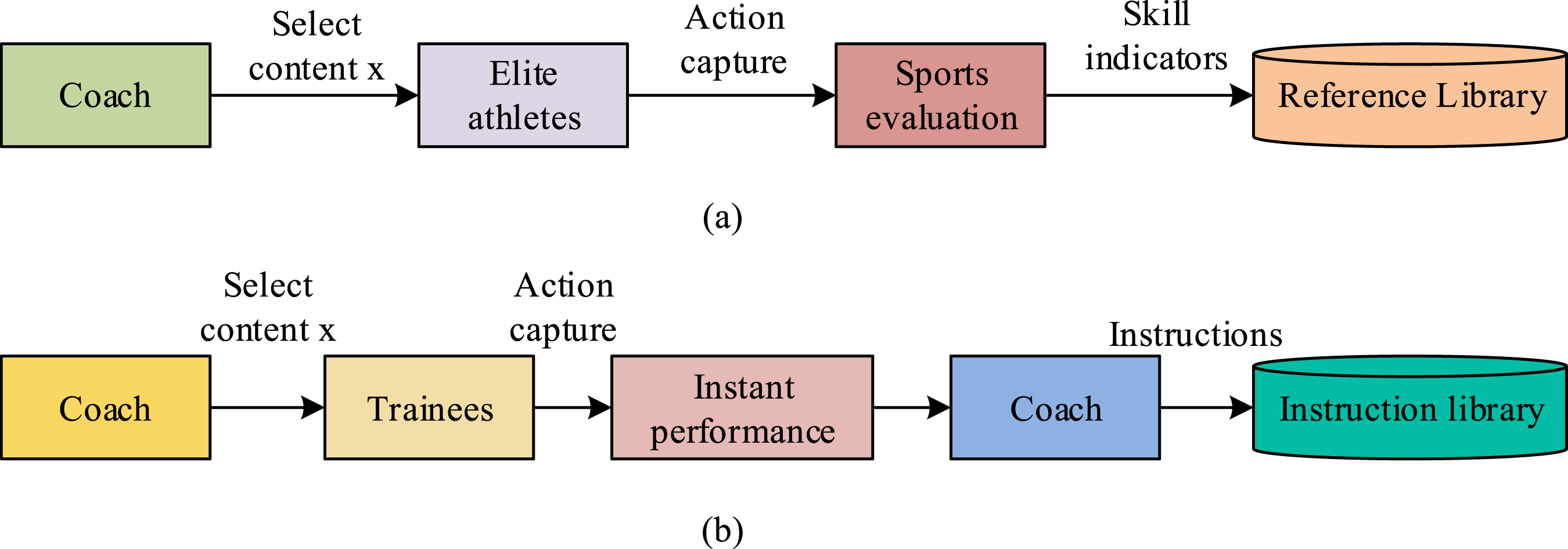




The exercise library covers the exercise and is represented as shown in equation (5). Interactive training process.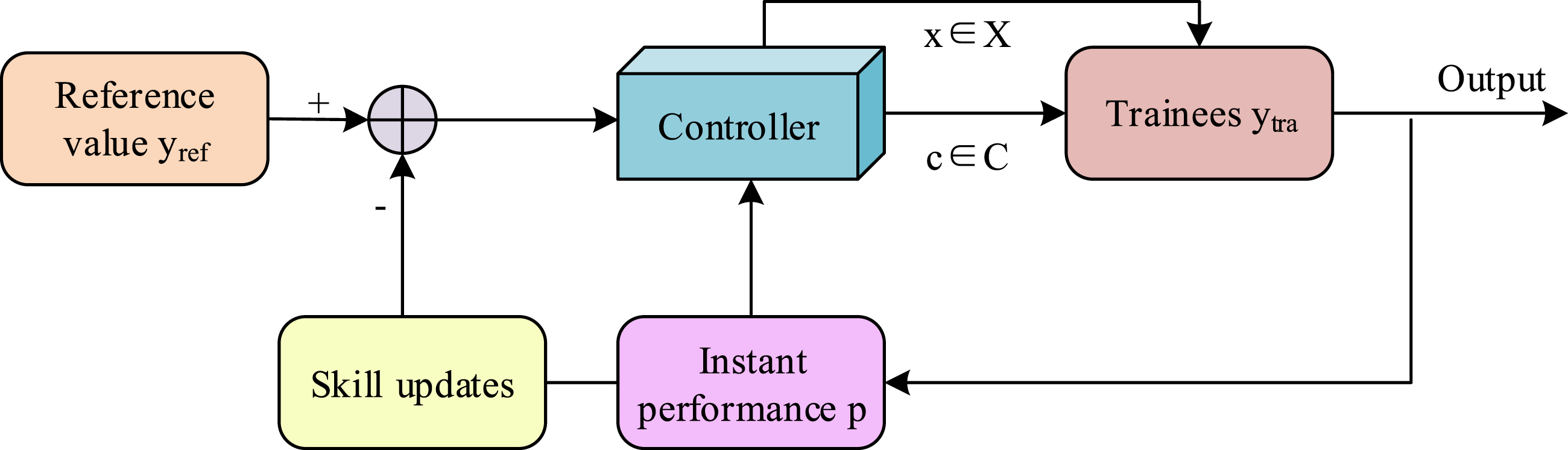






Table tennis auxiliary training based on KGSTF
The key issues in the implementation of KGSTF include clarifying the meaning and distance calculation of each element in the practice content, real-time performance and skill indicators, while keeping the motion capture measurement error within an acceptable range. To enhance the accuracy of trainee’s body posture restoration, the original inertial motion capture system was enhanced with contact judgment and pose correction based on contact position constraints. Figure 4 illustrates the schematic diagram of the knowledge-based table tennis assisted training prototype. A Schematic diagram of the knowledge-based table tennis assisted training prototype.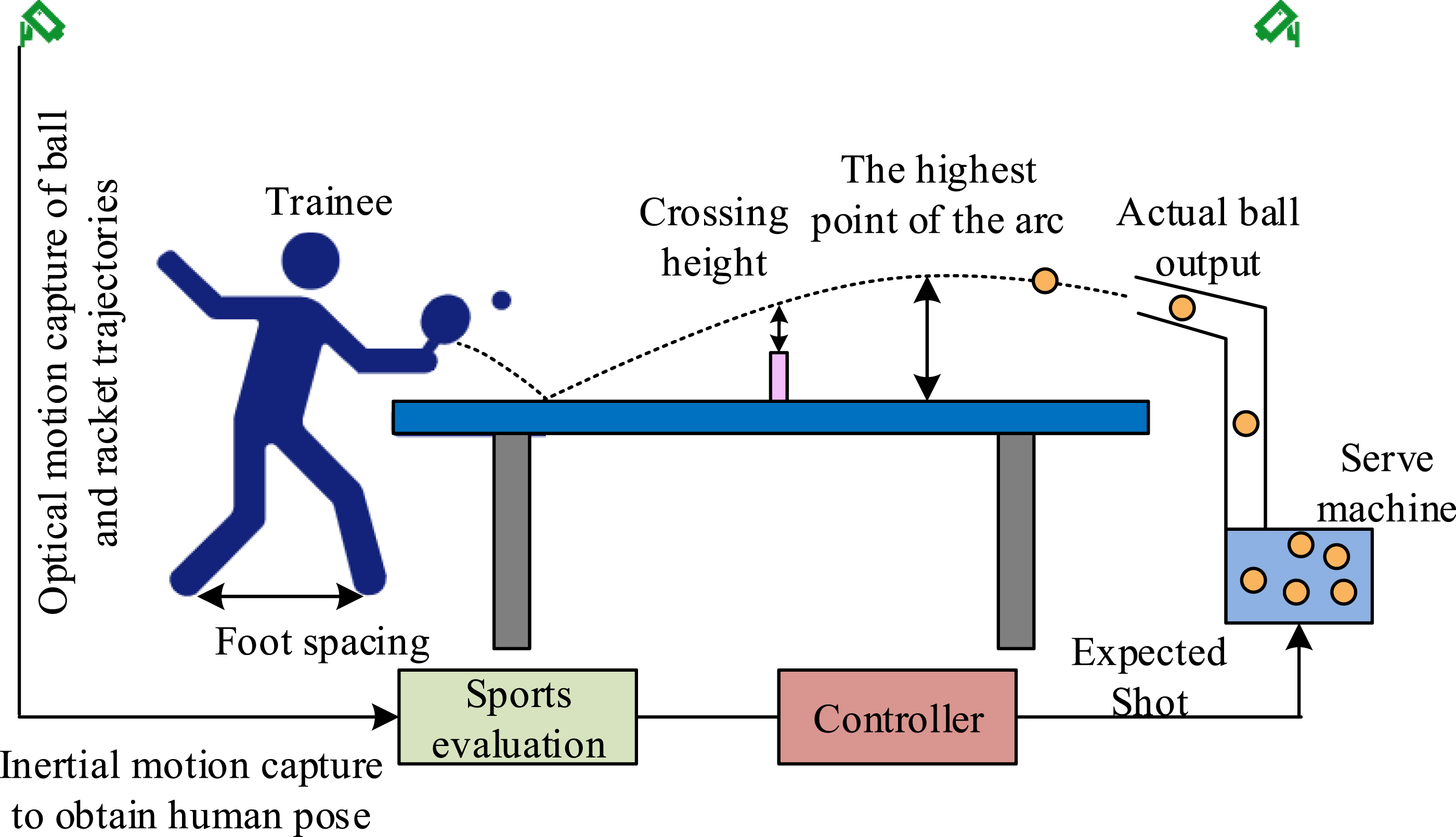
The table tennis practice content under the simplified framework refers to the serving of the ball machine. Each serve corresponds to the six-degree-of-freedom trajectory of a table tennis ball in physical space.
22
The study mainly analyzed the three forces experienced by the table tennis ball during flight, including gravity, air resistance, and Magnus force. The expression for gravity is shown in equation (11). Schematic diagram of motion characteristics.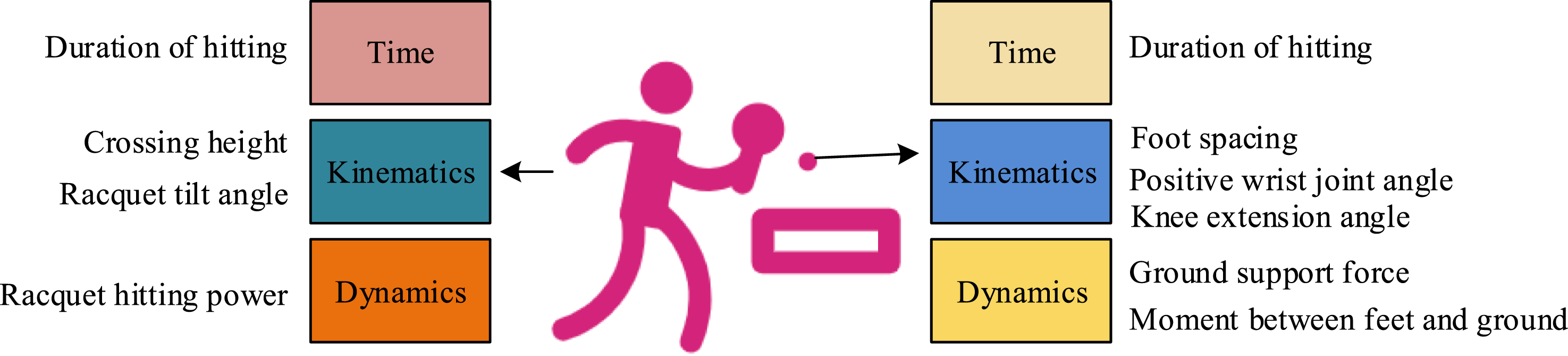



The size of the skill indicator value directly reflects a person’s level in a particular sport. Skill indicators can be divided into two aspects: the quality of receiving the ball and the regularity of the action.
24
Skill indicators in terms of movement specification include standing, racket grip, footwork, hand-eye coordination, and agility. Skill indicators in terms of return quality include speed, power, spin, on-stage rate, and landing control. In terms of human motion capture, the whole body optical motion capture system can restore the human posture with high precision in simple scenarios. However, the movement of the athlete during the experiment may cause part of the body to be obscured by the table or other limb parts, making it difficult to restore the obscured body part. In order to improve the accuracy of human position capture, the binding relationship between the racket and the batsman when hitting the ball was used to preliminarily correct the human skeleton position by using the racket position. Then, a second fine-tuning of bone position and posture was made by the trusted contact provided by the homemade plantar pressure insole. The main difficulty in contact judgment lies in the non-standard installation of pressure sensors and the complexity of human movement, which sometimes leads to similar pressure values in two completely different states of contact and clearance. The threshold value of pressure judgment generated by the algorithm varies with different sensor installation locations, different weight groups, and different exercise types. Based on this, the study analyzed data from different insole products, different testers, and different movements, and designed an adaptive contact judgment threshold generation algorithm on this basis. In this algorithm, the input variables include the Ad value of the i-th sampling point at time r, the sliding window width, the pressure change threshold within the same contact state, the pressure change threshold between contact state transitions, and the fluctuation of the contact judgment threshold. The intermediate variables involved in the algorithm include the weighted pressure value of each frame, the pressure variance within the sliding window width, the mean sequence and maximum value sequence corresponding to small variance segments, the rate of change of mean between small variance segments, the two contact reference thresholds of large/small, and the final contact judgment threshold. The contact threshold calculation process for a period of time is shown in Figure 6. The calculation process of contact threshold for a period of time.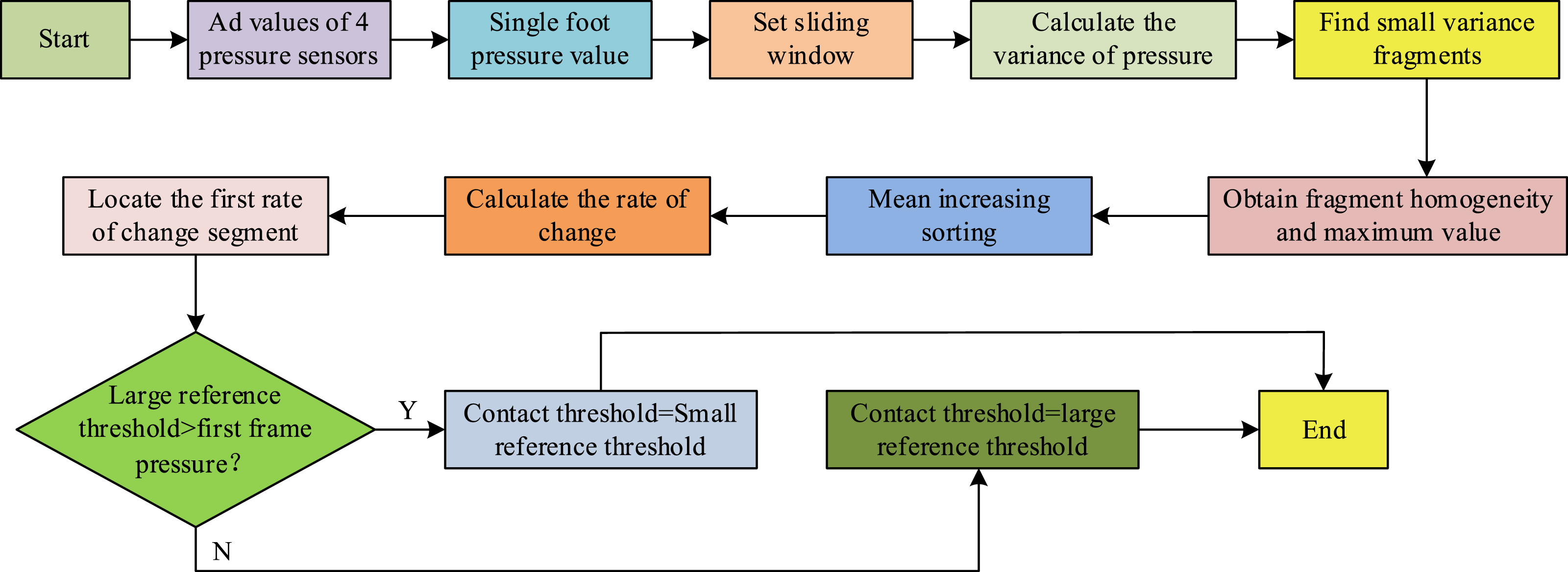
The algorithm applies four contact judgment rules. Firstly, contact can be determined by the pressure weighted value of the foot sampling points. The study placed three sampling points on the forefoot, while there was only one at the heel, so the heel pressure weight was 3, and the other sampling points had a weight of 1. Secondly, the average pressure during contact time is higher, while the average pressure during takeoff time is lower. Thirdly, the pressure changes during the contact and airborne periods are small, while the pressure changes between the two state transitions are large. Fourthly, the first frame reflects the contact pressure in a calm state, and the pressure value during takeoff is generally lower than the pressure value in the first frame. In the bone position and posture correction method based on contact judgment, the human lower limb is mainly regarded as two skeletal motion chains. In the process of optimizing the pose, only the case that satisfies the contact position constraint is considered, so as to reduce the number of solutions. The optimization expression is shown in equation (14).

In equation (14), The data processing process from raw capture data to real-time performance.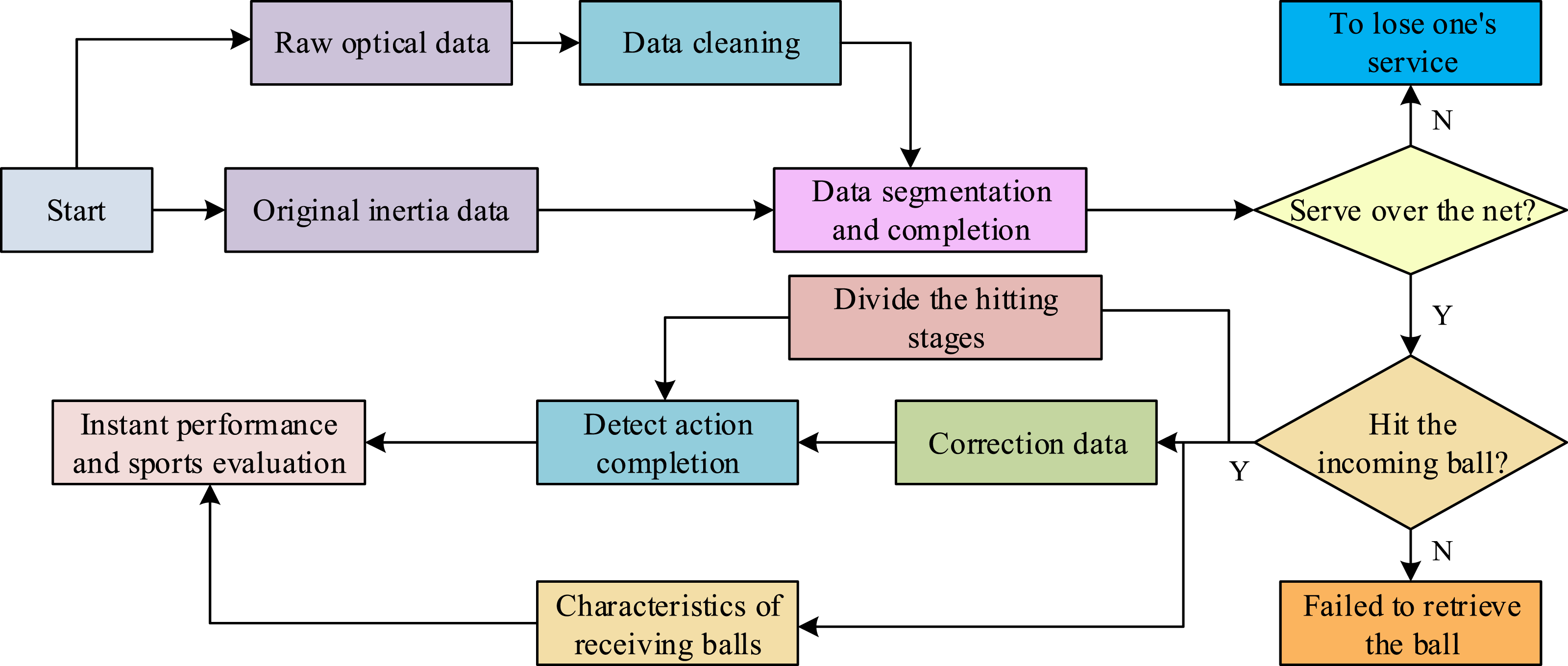
In order to process the table tennis trajectory data obtained by the optical system, a self-programmed computer program was used. Preprocessing of the data from the optical system is required because the data obtained by the optical system may have problems such as spatial noise, multi-spherical coexistence, and object occlusion. The use of manual correction methods can be very cumbersome and prone to errors, so an automated program has been developed to handle data stitching, noise removal, and labeling. The workflow of this procedure is shown in Figure 8. Optical data processing flow.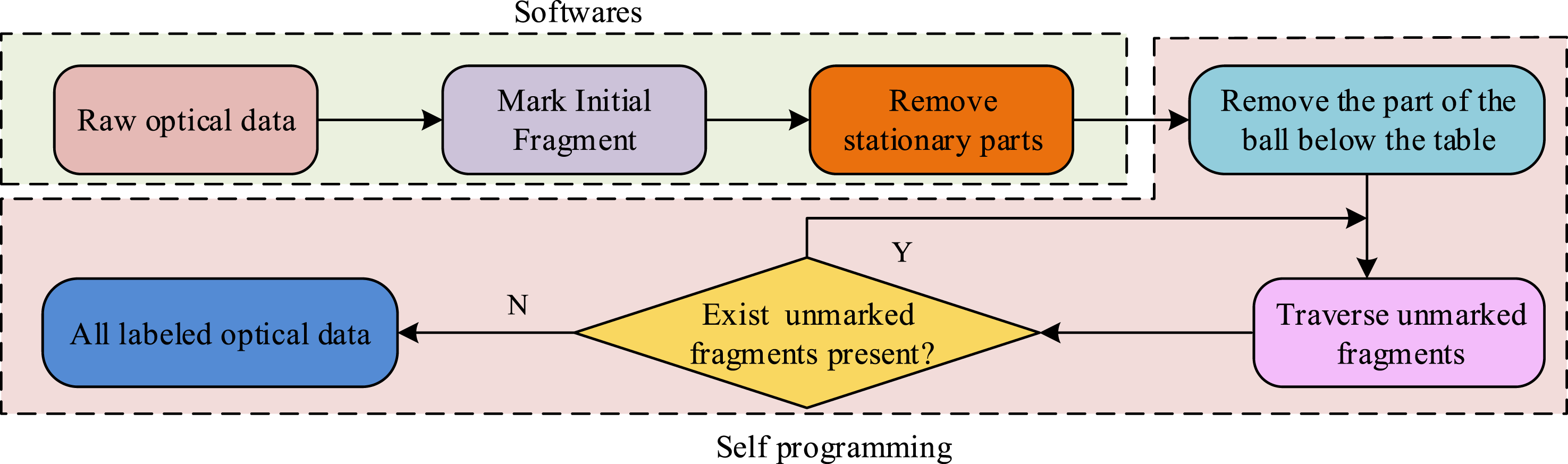
The optical data processing step is to first label the initial fragments of all active reflectors. The spatiotemporal characteristics of the ping-pong ball flight were used to compare frames from labeled and unlabeled clips. If the time difference is small and there is smooth continuity in velocity after stitching, the clips are considered to correspond to the same ball trajectory and are merged. The program can also identify and remove uninformative segments, such as clips with zero ball speed or significantly lower height than the table, by detecting ball speed and height across all clips.
Experimental analysis of a knowledge-based general sports-assisted training framework
This chapter mainly verifies the application effect of KGSTF in table tennis training. Firstly, the experimental environment and experimental parameters were introduced. Then, the effectiveness of the contact judgment based bone position and pose correction method and the optical motion capture data processing method in KGSTF is verified. Subsequently, landing point distribution, the return ball’s quality and KGSTF success rate in different difficulty service modes were verified. Finally, the correlation between the trainees’ body movements and the batting rounds in time is verified.
Pose correction method and data processing experimental analysis
Relevant information of the subjects.
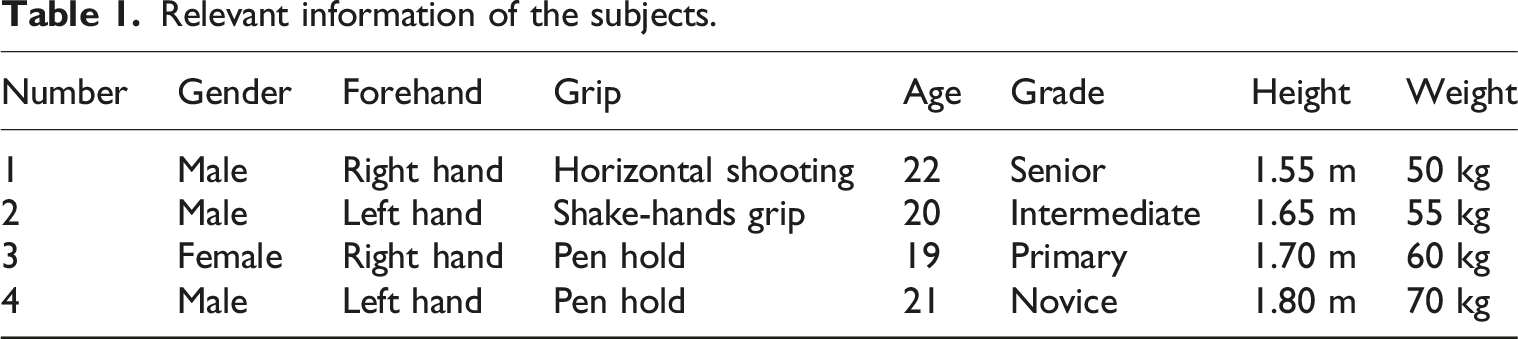
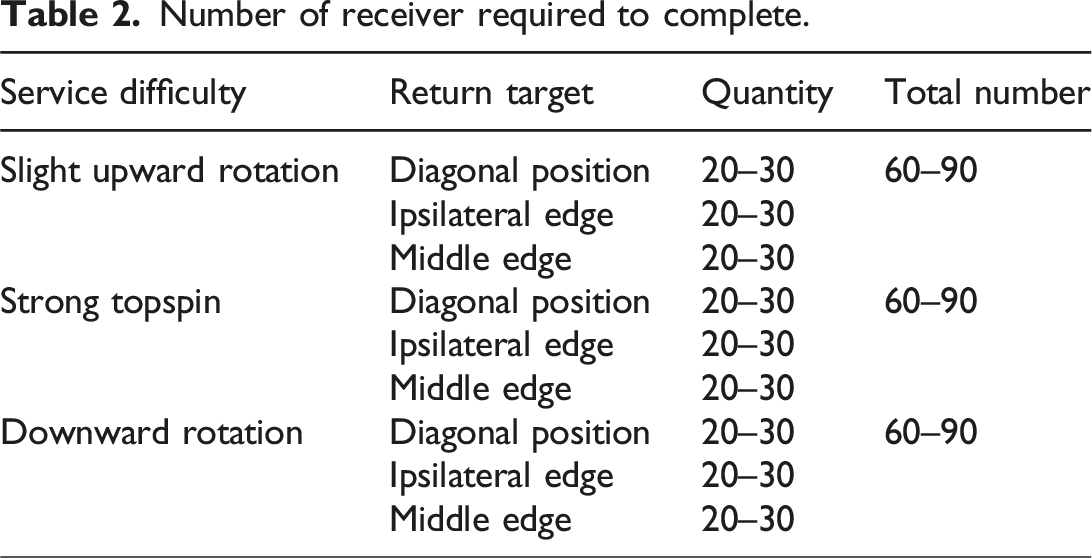
Number of receiver required to complete.
The study first verifies the effectiveness of the bone position and posture correction method based on the adaptive contact judgment threshold generation algorithm, and explores the impact of introducing the previous frame optimization value into the optimization variables on action smoothness. In this study, the change of the abduction angle of the left hip joint of the human body was used as the effectiveness of posture correction, and the lower limb posture correction results were shown in Figure 9 by considering only the measured values and the optimized values of the previous frame. In Figure 9, the left hip joint abduction angle of the human body with only the measured value is considered larger, and the maximum change rate is as high as 1.80, which is 0.05 higher than that of the comprehensive consideration of the measured value and the optimized value of the previous frame. At the same time, the average rate of change of the abduction angle of the left hip joint of the human body considering only the measured value was as high as 0.32, which was 0.06 higher than that of the comprehensive consideration of the measured value and the optimized value of the previous frame. By incorporating the optimization result of the previous frame into the objective function, the optimized action can be smoother. Changes in left hip joint abduction angle using different methods.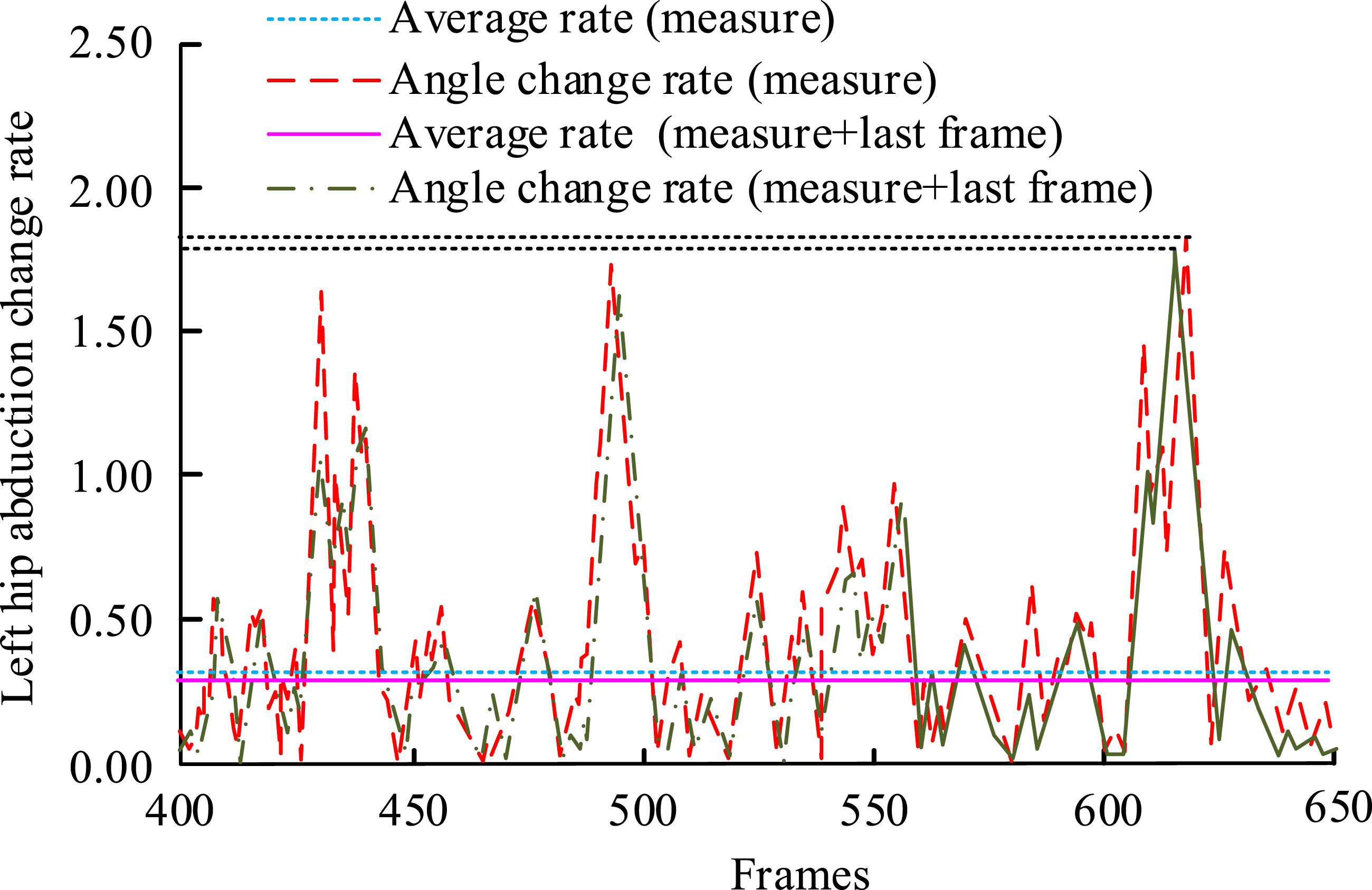
Next, the effectiveness of optical motion capture data processing was verified, and the unlabeled and labeled clips in the 600 frame time range were preprocessed. Figure 10 shows the effect of optical motion capture data preprocessing. As can be seen in Figure 10(a), there are multiple unlabeled fragments in the 600 frames time frame before data preprocessing. As shown in Figure 10(b), the unlabeled data fragments are clipped to the corresponding labeled fragments according to the spatiotemporal continuity, and the two fragments correspond to the same ping-pong ball flight trajectory. The results show that the preprocessing method of optical motion capture data proposed in this study can efficiently process optical motion capture data, avoid the cumbersome manual correction process, and reduce the generation of errors. Preprocessing effect of optical motion capture data. (a) Before preprocessing. (b) After preprocessing.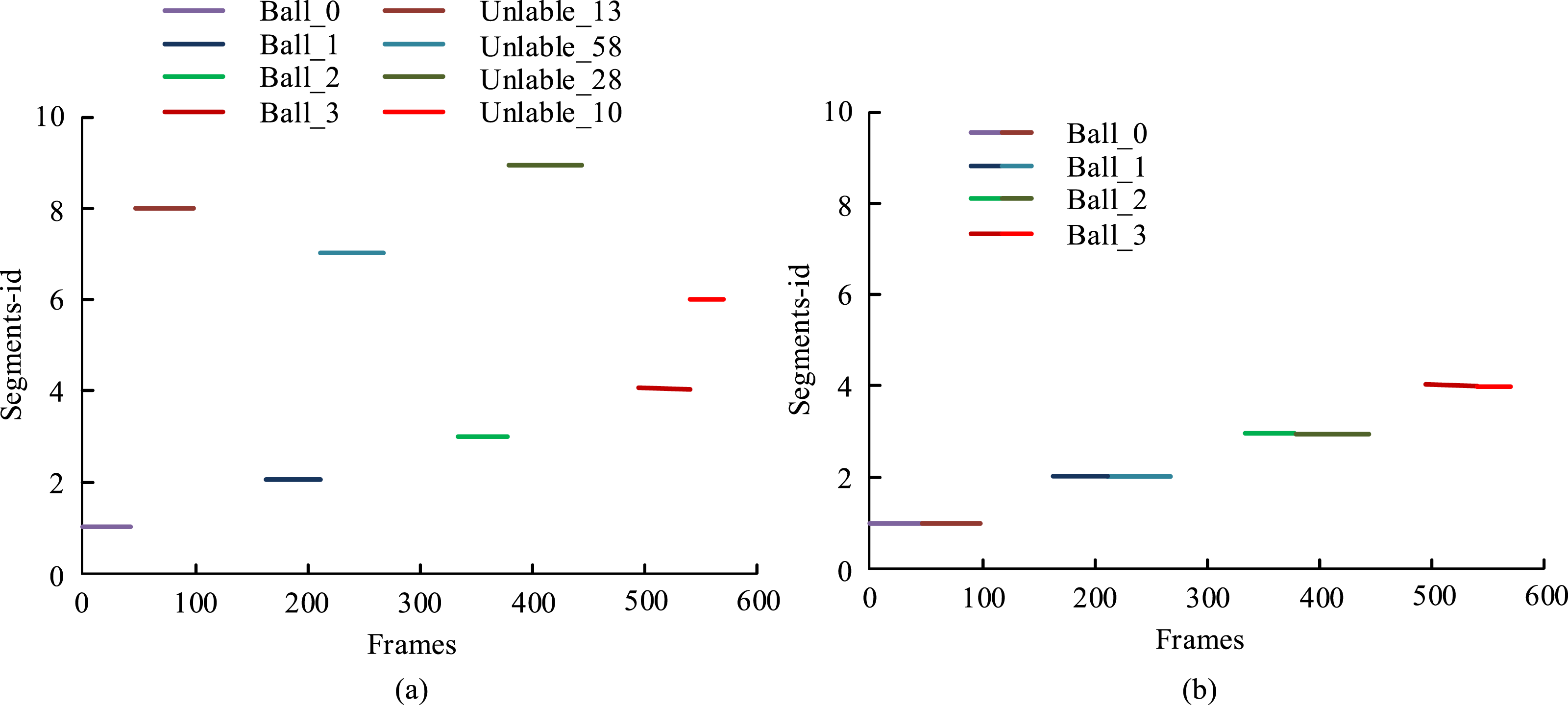
Experimental verification of table tennis assisted training based on KGSTF
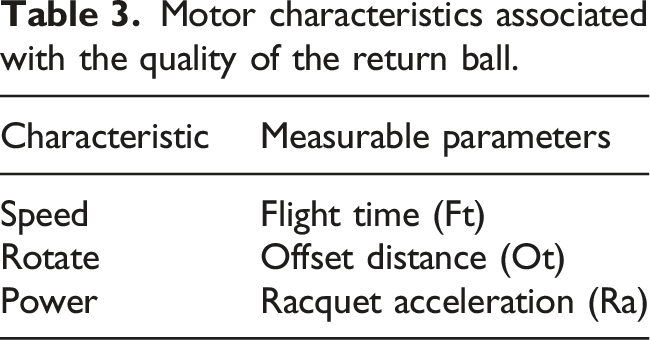
Motor characteristics associated with the quality of the return ball.
When the ball machine is in a fixed position, the distribution of the service landing point can indicate variance in curvature, etc. Figure 11 illustrates three challenging serves distribution received by Trainees No. 1 and No. 2. As can be seen from Figure 11, the distribution of service points is more dense for light topspin and downspin, and more scattered for strong topspin serves. As can be seen from Figure 11(a), the landing error of subject 1 is only 1.539 cm when receiving a slight topspin serve, 0.947 cm when receiving a downspin serve, and 5.294 cm when receiving a strong topspin serve. As can be seen from Figure 11(b), the landing error of subject No. 2 was as high as 7.843 cm, which was 6.876 cm and 4.059 cm higher than that of the slightly topspin serve and the downspin serve. This indicates that the stability of the serve is better than that of the slight topspin and the downspin is better than the strong topspin, and it is inferred that the smaller serve speed has more stability. Distribution of landing points for subjects receiving serve. (a) Distribution of serve landing points for subject 1. (b) Distribution of serve landing points for subject 2.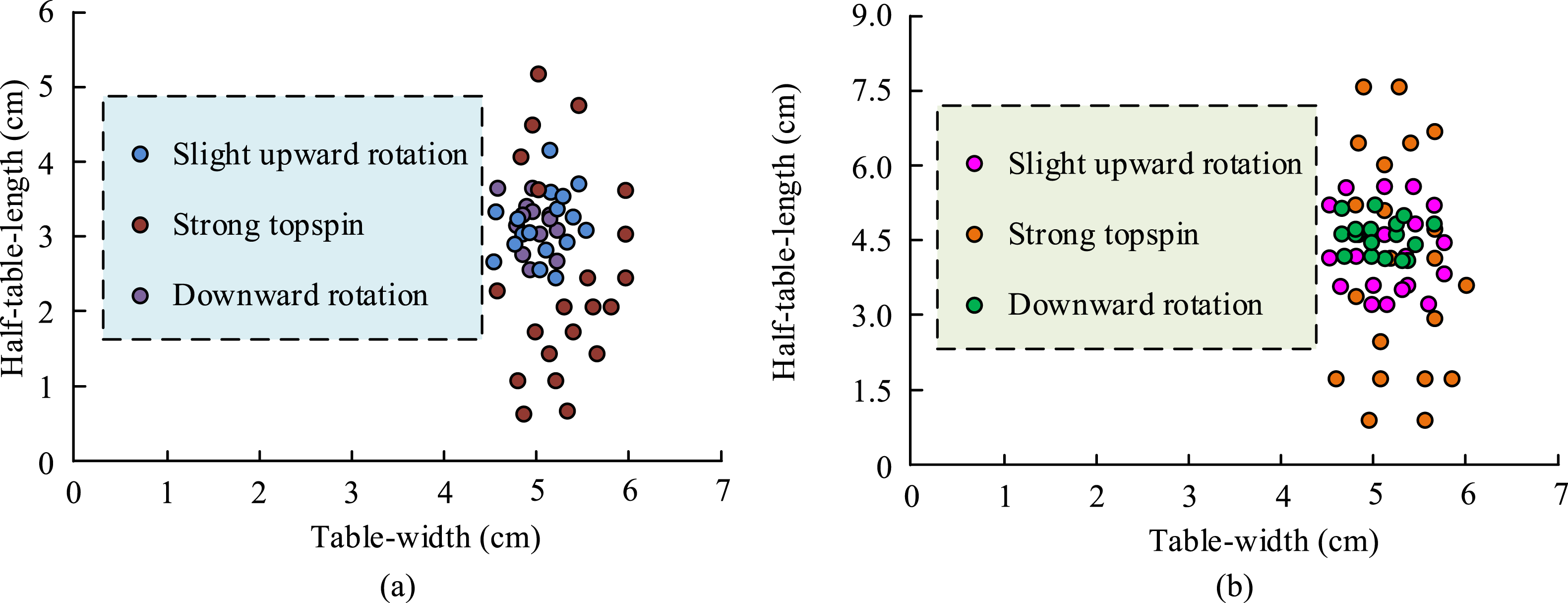
The study continued to verify the quality of the return ball, and the 1-Ft value, Ot absolute value and Ra value were used as evaluation indexes. Among them, the smaller the Ft, the larger the Ot and Ra values, indicating the higher the return level of the trainee. To compare the return level of the four trainees more intuitively, the 1-Ft value, Ot absolute value, and Ra value of the three service modes were normalized. Return indicators’ mean value for the three serving modes is shown in Figure 12. As can be seen from Figure 12(a), subject 1 had the highest indexes in the slightly topspin serving mode, with 1-Ft value, Ot absolute value, and Ra value of 0.95, 0.99, and 0.98, respectively. Subject 2 was second only to Subject 1 in all indicators, reaching 0.85, 0.96, and 0.29, respectively. Trainees 3 and 4 scored relatively low on the relevant indicators. As can be seen from Figure 12(b), in the strong topspin serve mode, the No. 1 trainee scored higher in various indicators, which were 0.99, 0.92, and 0.96, respectively. The indicators of subject 4 were only 0.51, 0.45, and 0.38, respectively. As can be seen from Figure 12(c), the scores of the No. 1 trainee were significantly better than the rest of the subjects in the underspin service mode, reaching 0.99, 0.80, and 0.99, respectively. Description Trainee No. 1 has the highest level of all trainees. The results showed that KGSTF could be effectively applied to the sports evaluation of table tennis auxiliary training. Mean value of the return index in the three serve modes. (a) Slight upward rotation. (b) Strong topspin. (c) Downward rotation.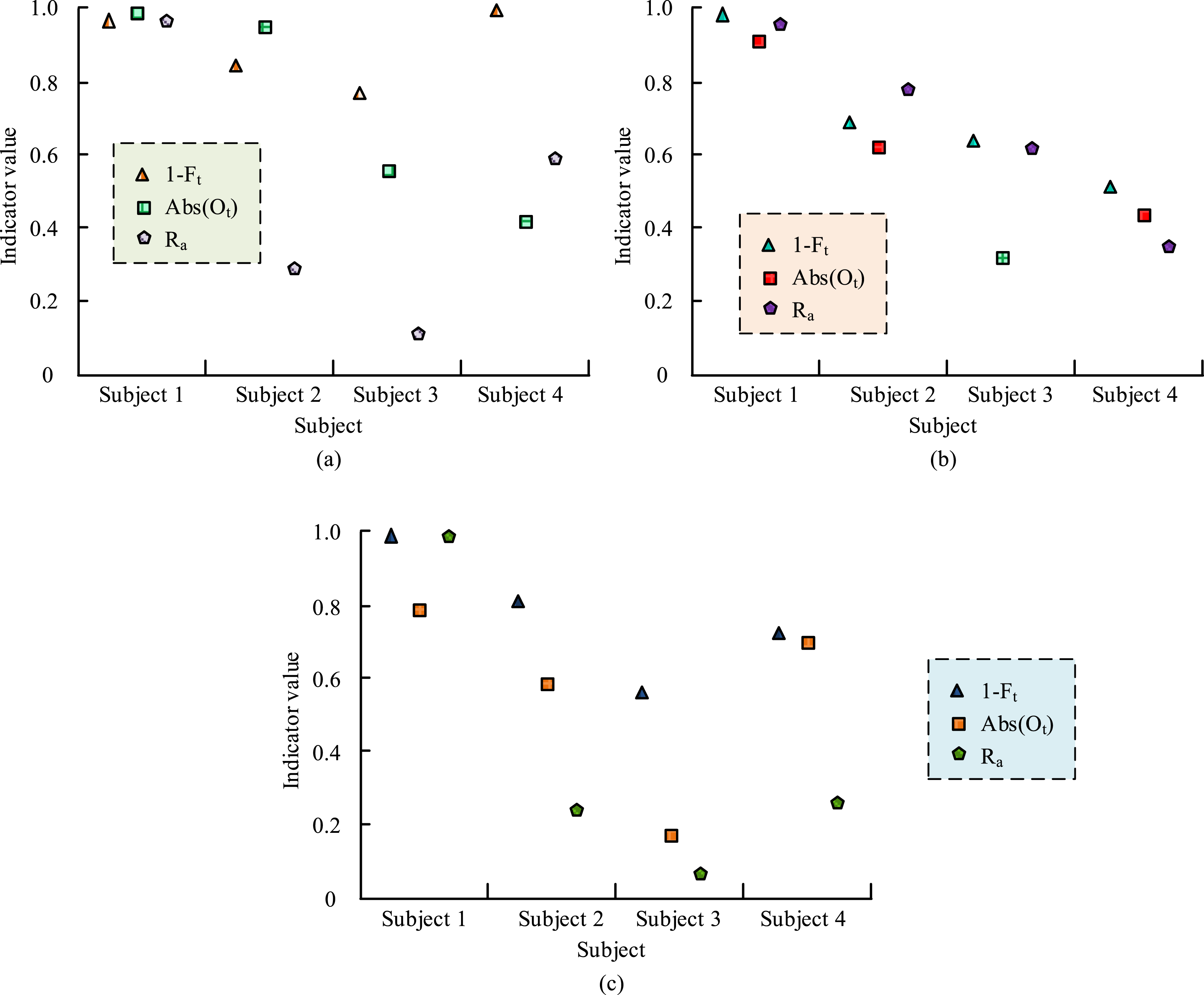
The study continued to verify the return success rate of four subjects on three service difficulties, and a total of 10 tests were conducted to ensure the effectiveness of the experiment in Figure 13. In Figure 13(a), Subject 1 had the highest return success rate in the slightly topspin serve mode, with a maximum value of 95.12% and an average of 91.38%. On the other hand, the return success rate for strong topspin serves is relatively low, with an average of 75.63%. As can be seen from Figure 13(b), Subject 2 had the highest return success rate in the slightly topspin serve mode, with an average value of 75.36%, which was 13.72% and 26.26% higher than that of the downspin serve and the strong topspin serve, respectively. As can be seen from Figure 13(c), the average return success rate of subject 3 in the slightly topspin serve mode was as high as 49.68%, which was 17.93% and 23.61% higher than that of the downspin serve and the strong topspin serve, respectively. As can be seen from Figure 13(d), the average return success rate of subject 3 in the slightly topspin serve mode is 43.63%. The results indicated that each subject had the highest return success rate for the slightly topspin serve pattern. At the same time, it can be seen that the return success rate of subject 1 is significantly higher than that of the other subjects, which further indicates that this subject has the highest level. Return success rate for four subjects under three serve difficulties. (a) Subject 1’s success rate in returning the ball. (b) Subject 2’s success rate in returning the ball. (c) Subject 3’s success rate in returning the ball. (d) Subject 4’s success rate in returning the ball.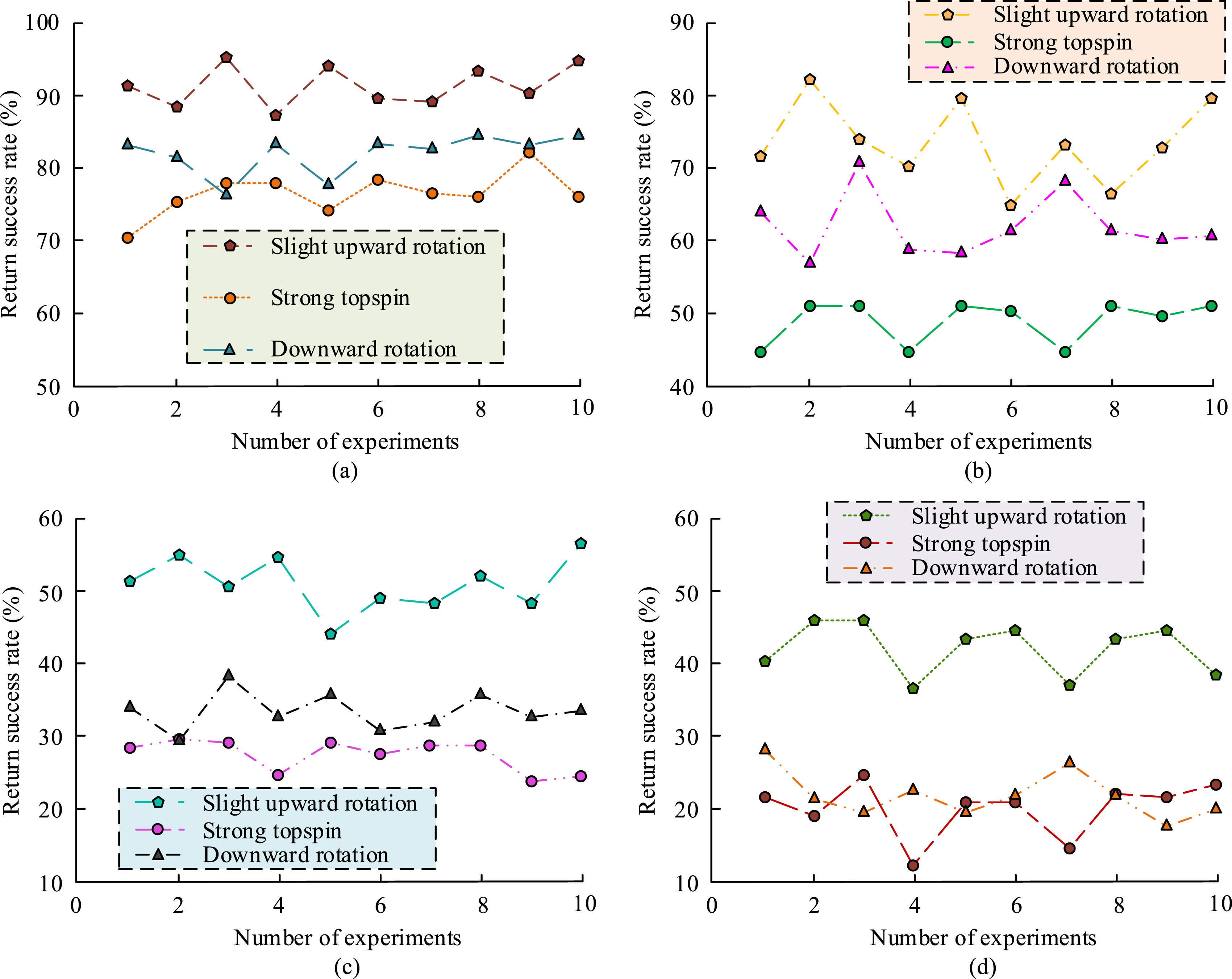
In order to verify that there is a temporal correlation between the body movements of the trainees and the batting rounds, the actions of subject 2 in a particular batting round were evaluated. The ball’s trajectory and trainee’s left arm extension during the same round are shown in Figure 14. In Figure 14(a), green, blue, and red represent the table tennis ball position along table’s long side, vertical upward direction, and short side. As can be seen from Figure 14(a), the position of the table tennis ball along the long side of the table decreases first and then increases. Among them, the distance between the subject and the subject at the moment of impact is 0. The position of the table tennis ball along the table vertically changes relatively smoothly, all stable at about 0.8 m, indicating that the position in this direction has not changed much. In the short-side direction, there was a positive and negative relationship between the position changes before and after the shot, indicating that Subject 2 changed the direction of the shot. Figure 14(b) shows the variation of the extension angle of the shoulder joint, with an increase in the absolute extension angle, reflecting the forward swing of the trainee’s arm. Results showed a strong correlation between the body movements of the trainees and the batting rounds in terms of time. The trajectory of the ball with the left arm extension. (a) The trajectory of the ball during the same round period. (b) Left arm extension of trainees during the same round period.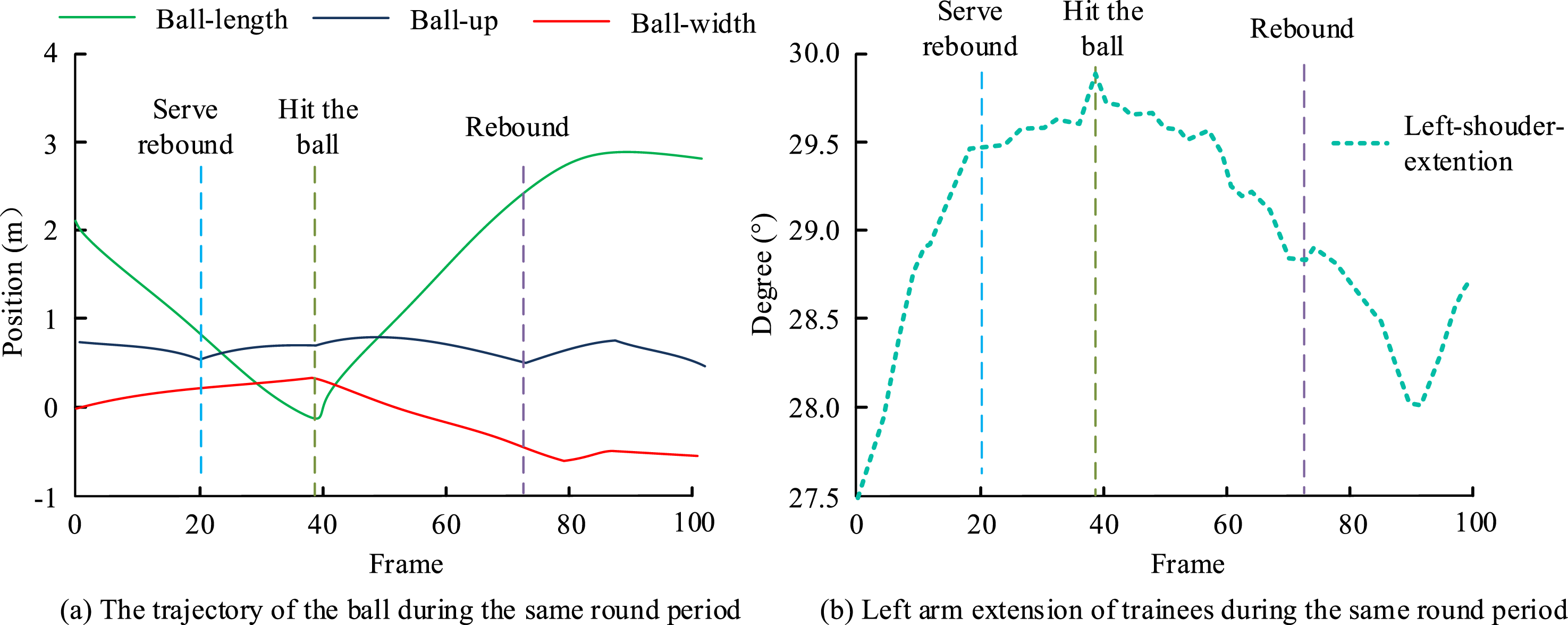
Conclusion
To achieve efficient and intelligent table tennis assisted training, KGSTF was introduced in this study, and a posture correction method based on contact position constraint and an optical motion capture data preprocessing method were proposed. The results showed that the rate of change was only 0.26 considering the measured value and the optimized value of the previous frame. By introducing the optimization result of the previous frame into the objective function, the optimized action can be made smoother. In the strong topspin serve mode, the No. 1 trainee scored higher in various indicators, which were 0.99, 0.92, and 0.96, respectively. The indicators of subject 4 were only 0.51, 0.45, and 0.38, respectively. In the underspin serve mode, the No. 1 trainee scored significantly better than the rest of the subjects, reaching 0.99, 0.80, and 0.99, respectively. In addition, as the absolute value of the extension angle increased, the amplitude of the trainee’s arm swing forward increased. At the same time, the maximum extension angle moment corresponded to the shot moment, which indicated that trainee’s body movements had a close correlation with the batting round in time. The results showed that KGSTF could effectively evaluate the movement skill level of table tennis players and provide targeted guidance and training for athletes. However, the study only analyzed the standardization of movements under different serving difficulty levels. In the future, more accurate estimates of existing movement characteristics or the introduction of other relevant features are needed to more accurately and objectively measure the skill level of the subjects. At the same time, the general sports auxiliary training framework will be further refined, including more refined problem definitions, clearer data forms, etc., to further enhance the effectiveness of auxiliary training.
Footnotes
Funding
The author received no financial support for the research, authorship, and/or publication of this article; The research is supported by Jiangsu Province Education Science Planning Project: Research on Ideological and Political Teaching of College Physical Education, (No. T/2022/10).
Declaration of conflicting interests
The author declared no potential conflicts of interest with respect to the research, authorship, and/or publication of this article.