




Abstract
This study, in response to the urgent need for modernization transformation of the teaching system of environmental art design in China, innovatively constructs a research framework that deeply integrates theory and practice. Based on systematic literature analysis, a teaching reform path centered on interdisciplinary integration was established. A breakthrough was made by introducing a deep belief network to construct an intelligent teaching quality assessment system, and a multi-level feature extraction architecture was adopted to achieve in-depth mining and intelligent analysis of teaching data. Experimental verification shows that this model significantly improves the evaluation efficiency and objectivity while maintaining the professionalism of expert assessment. The “foundation consolidation-ability advancement-Innovative practice” gradient curriculum system reconstruction plan proposed in the research has formed a replicable professional construction model, providing important theoretical support and practical guidance for the innovative development of design education in the new era, and effectively promoting the transformation and upgrading of traditional EAD majors towards digitalization and intelligence.
Introduction
People’s living standards have risen as a result of the fast growth of the economy and the rise in their level of life. Under this demand situation, the Environmental Art and Design (EAD) profession has quietly emerged, and gradually began to form an independent discipline. For clarity, throughout this paper, “EAD” will be used to refer to “Environmental Art and Design.” With its extensive connotation and its own characteristics, it has developed in accordance with the needs of the society, and has attracted people’s attention. 1 According to preliminary statistics, nearly 200 CAU across the country have opened the major of EAD, and its development situation is relatively strong. However, the development of society is rapid, and the expansion and renewal of knowledge is inevitable. Behind this promising development trend, we also need to deeply consider the development path of this profession. With the increasing awareness of people’s environment and the expansion of the design scope itself, the scope of Chinese modern EAD has become wider. Therefore, it is imperative to vigorously develop EAD education in order to cultivate high-level and high-skilled designers who can adapt to economic and social development and market demand. 2 Among the existing CAU, the proportion of EAD majors is quite considerable. The main reasons are as follows: First, the market demand for this major is relatively large, and the employment situation is good. Second, the major itself is a major with strong skills and skills, which is in line with the characteristics of higher education. Therefore, schools are very popular when choosing to set up majors. But at present, the education of EAD majors in CAU, its teaching plan and curriculum structure are largely based on the education model of foreign CAU. It basically inherits the teaching plan of art CAU, and the professional curriculum lacks the pertinence of our country’s social occupations, and there is a certain gap with the talent training goals of higher education. 3 If this relatively stable teaching mode were maintained for a long time, it would be difficult to highlight the characteristics of vocational education, and the lack of pertinence and adaptability of vocational education may lead to students’ weak theoretical basic knowledge of professional, and poor in practical application. There is a certain gap with the needs of the society, and the students’ ability to adapt to the society is not strong. EAD is an emerging marginal subject based on modern environmental science research. Art design is closely related to regional traditional culture and economic development. How to integrate unique regional characteristics, excellent traditional ethnic cultural elements, humanistic landscapes with modern lifestyles, aesthetic tastes and the features of The Times. This is an important issue that designers need to consider seriously. It is the undoubted responsibility of every designer to innovate and strengthen the dissemination of national traditional culture, because national culture is the soul of a nation. 4 Therefore, the construction of environmental art teaching content and curriculum system in CAU must meet the needs of the development of modern society, the needs of scientific and technological development, and the needs of the talent employment market. What kind of curriculum setting method can be adopted in order to cultivate talents who meet the needs of the market will be the subject faced by researchers. Curriculum design is not a new research direction. In my country, related theoretical research has appeared since the 1980s, and a series of related practices followed. But after all, most of these are the exploration and practice of EAD majors in ordinary CAU, and there has been no clear summary. 5 At present, the contradiction between the curriculum setting and market demand of EAD majors in CAU is becoming more and more obvious. Blindly inheriting the professional and undergraduate teaching plans of art colleges, the professional setting plan lacks the era and pertinence of social occupations, and does not meet the goal of cultivating talents in higher education. In this context, the EAD program at China Agricultural University (CAU) has encountered several challenges in course design, such as insufficient relevance to the times, lack of specificity, weak practical teaching links, and deficiencies in the evaluation system. These issues force CAU to re-examine and reform its EAD professional courses, especially in the course evaluation process. Traditional evaluation methods often focus on the final outcome, but neglect the consideration of the learning process and students’ comprehensive abilities, resulting in evaluation results that are difficult to fully demonstrate students’ true level and potential. To address these challenges, CAU innovatively employs deep learning models for course assessment. This model utilizes big data analysis to provide more comprehensive, objective, and accurate evaluation results, focusing not only on the quality of students’ design works, but also on multiple aspects such as learning process and participation. This evaluation method not only improves the accuracy and objectivity of the evaluation, but also promotes the continuous improvement of teaching quality, making the curriculum design of EAD majors more in line with the pace of the times and the market demand for high-quality talents. Therefore, this paper will start with the investigation of the current situation of EAD education in CAU, and analyze the current situation of EAD education in CAU and the current situation of professional curriculum setting. And the relationship between the development of EAD majors to study the curriculum settings of EAD majors in CAU. Strive to explore and improve the professional curriculum setting to meet the requirements of cultivating EAD talents that adapt to social development. 6 In recent years, my country’s higher education has shown an unprecedented momentum of development, the idea of running schools has become increasingly clear, the scale of running schools has continued to expand, and the forms of running schools have become increasingly diversified. The higher education system is an integral part of a country’s development strategy. According to the requirements of my country’s economic structure adjustment, it is a strategic measure to actively adjust the structure of the higher education system. It is of great significance to cultivate high-level applied technical talents on a large scale, optimize the structure of talents, promote the rational distribution of talents, and promote economic and social development. 7 Thirdly, in social practice, we are now strengthening the teaching of combining practice and theory, and various CAU have also vigorously developed to provide students with a practice base, and strive to establish a school-enterprise integration direction. This is a welcome thing, but most of the students are still dazed and helpless in the face of social needs, unable to adapt to the larger environment outside the school. As one of the popular majors in the development of CAU, the employment of students after graduating from the EAD major has become an unpopular problem. Under this circumstance, the enrollment expansion of the EAD major is still unabated, but the students trained do not have the basic quality conditions to become a designer. 8 At present, students majoring in EAD generally lack the basic ability of practical work, lack of design innovation ability, lack of comprehensive adaptability and coordination ability, accustomed to plagiarism and copying, feel good about themselves, and overestimate themselves. The employment prospects of graduates majoring in EAD are favored by the world, and the society needs a large number of design talents with both design innovation ability and practical experience. 9 Many design companies even require designers to be able to engage not only in interior design but also in planning and landscape design, not only in making plans but also in drawing construction drawings, not only in computer graphics but also in freehand expression, which is very artistic and innovative. The development of modern enterprises requires innovative talents in complex EAD, but it is a pity that fresh graduates are lacking in the above-mentioned abilities. This is a mistake in school education reform, and this is also a point that all design professionals should pay more attention to Zadeh et al. 10 The research of this subject is based on summarizing and refining some experts and scholars’ theories about curriculum design reform and development, starting from the needs of the social industry and the actual situation of front-line teaching in CAU, to grasp the current situation of curriculum design of EAD in CAU. Combined with the experience of other types of CAU and foreign colleges, contact the needs of social development, and analyze the favorable conditions and constraints of its development. Then seek scientific and reasonable reform and development countermeasures for the curriculum design of EAD in CAU. Finally, the deep network model is used to evaluate the teaching quality of the designed course. This will play an important role in further exerting the social service function of higher education and cultivating more EAD talents for the society.
Related work
As the concept of sustainable development transformed from industrial civilization to ecological civilization in the late 20th century gained consensus worldwide, the idea of sustainable development has gradually become the theoretical basis for development decisions in various countries. Under such a background, EAD is in an important position to coordinate the relationship between the artificial environment and the natural environment. The ultimate goal of EAD is the green design of human living conditions, and its core concept is to create a design system that conforms to the virtuous cycle of the ecological environment. The green design concept followed by EAD has become the core link in the implementation of sustainable development strategies in related industries that rely on scientific and technological progress. 11 The concept of EAD was first proposed by domestic academic circles in the field of art design in the early 1980s. Worldwide, Japanese academic circles awakened earlier in the field of environmental ecology in the field of art and design, which is directly related to its small country, lack of resources, and relatively crowded population. In the late 1980s, the environmental awareness in the domestic art and design circles was unprecedentedly high, which gave birth to the EAD major. In a short period of 10 years, various CAU across the country have established the professional direction of EAD. 12 According to the statistics of the survey published in the first issue of “China EAD” yearbook: by the end of 2006, 64 “211” universities in China have set up this major. There are 399 influential CAU across the country, and 800 CAU of various types across the country have set up this major. According to these data, we can know the development speed and scale of China’s EAD major. 13 However, due to the rapid development and the lag in the corresponding theoretical research, the social creation practice has its name but nothing, and the decision-making level lacks a basic understanding of the professional theory of EAD. At the same time, when looking up relevant literature, it found that there are fewer books about EAD than other majors, and the books and magazines that have been published are mostly various design data collections and portfolios that meet the needs of the market. There are a lot of beautiful pictures and meager words on it. Occasionally, some articles are mostly project introductions or design descriptions, and there are relatively few teaching and research content for EAD courses. 14 In the field of theoretical research on EAD, after the 1980s, some research articles on environmental art appeared in professional journals and a few monographs and collections of EAD were published, laying the foundation for theoretical research. 15 But the really in-depth research was in the 1990s, when reference 16 systematically established a monograph on the theoretical framework of environmental art. In terms of theory and practice, the previous work is systematically summarized, which not only has practical operation function, but also has theoretical guiding value. Experts and scholars in the field of EAD are constantly devoted to the teaching and research of the combination of EAD theory and practice, and strive to find a feasible way suitable for the development of EAD teaching. Reference 17 discusses that EAD is an emerging industry with typical characteristics of the times, rich in disciplinary margins, comprehensive categories, and operating systems. EAD should include all concepts of environmental art and environmental design. In any case, EAD is an art design major that has a relationship with the natural, artificial and social environments on which human beings live, especially with architecture, gardens, urban planning and other professions that constitute artificial environments. Reference 18 pointed out that nationality and locality of design have always been two important topics in the field of architecture and EAD. However, in recent years, these two problems have been gradually weakened. The root cause is the weakening of nationality and the weakening of local culture and modalities. Environmental art is an objective existence with the unity of purpose of use and artistic appreciation, and exists in the natural and social environment of a specific area. These natural and social elements will inevitably limit the architectural form and environmental art form, forming a unique local design culture. In reference 19, a special investigation was done on the teaching of EAD professional courses in the field of architectural, interior, landscape, and urban planning and design. The purpose is to explore a road of EAD education in line with China’s national conditions and characteristics, enrich the development direction of modern EAD theory teaching, and strive to create a comprehensive and systematic EAD teaching system and talent training model. Regarding the research on the teaching of EAD courses, reference 20 clearly pointed out the professional content involved in EAD majors. In the course introduction of EAD major, the arrangement of each course, such as course content, total hours, credits, teaching materials and reference books, and professional objects are systematically analyzed. A thorough explanation of the professional foundational courses, professional core courses, professional module courses, professional practice courses, and the graduation design was created. It has formed its own professional teaching characteristics, which plays a good reference role for the research on EAD teaching. Reference 21 pointed out that the teaching content of EAD professional courses should keep pace with the times, and the frontier dynamics of professional development should be injected and updated in a timely manner. For example, the “nature-based” design idea is penetrated into the core of each course to achieve the purpose of cultivating students’ good professional ethics and demeanor. At the same time, it advocates the use of multimedia case-based teaching in professional courses, and the theoretical knowledge of the professional direction should be easy to understand. However, “design creativity” and “node structure” are sometimes impossible to express clearly in words, and must be displayed in vivid and intuitive cases to be completely analyzed. Reference 22 pointed out that CAU currently have no perfect teaching materials for design education, no adequate positions for designers, and no orientation for design courses. It is pointed out that the disconnection between its professional Settings and social demands, as well as the separation of course arrangements and design practices, stem from the use of teaching concepts, educational models and methods from the past planned economy period to address the challenges of the current market economy era. In order to solve these problems, some scholars are constantly trying to explore new countermeasures to solve the dilemma of art and design education in the course teaching. 23
Method
Strategies for the construction of the teaching system for EAD majors
Build a scientific practical teaching system
In the course reform of environmental art, attention should be paid to the reform of the curriculum system, and the integration of public courses, professional basic courses and practical courses should be continuously realized. (1) Set the course content according to the current trend of EAD to improve students’ professional practice ability. (2) It should improve students’ mastery of basic knowledge in each link, and promote the improvement of students’ operational ability in practical work. (3) Improve the participation of teachers and students in the curriculum system, so as to help students master and complete the operational knowledge of environmental design projects, and conduct theoretical study according to the needs of practice. (4) On the basis of setting up special courses, develop modular comprehensive training with strong application, and continuously improve students’ ability to independently undertake comprehensive EAD projects.
The scientific practice teaching system also needs to attach great importance to the exploration of the EAD teaching control system method, the effective teaching system exploration, and the control work in the teaching management activities. Take an active role in managing the system’s information and adjusting and reforming it as it evolves, as well as improving its overall capacity to handle itself. Only in this way can the teaching system be better implemented until it reaches an optimized state. The construction of the teaching system should conform to the national conditions of our country, improve the teaching level of EAD in our country, and realize the established goals of the system. According to the development trend of the times, the content of teaching modules and control system should be replaced to adapt to new changes. Encourage actively running a school with characteristics in teaching, adhere to the combination of theory and practice, and effectively promote and encourage innovation, so that the EAD course has a certain timeliness. On the whole, in order to build a scientific and effective practical teaching system, the courses of EAD must break the traditional teaching mode. Combine some traditional basic theoretical knowledge with practice, focus on practical operation, and scientifically arrange every practical link. Build a scientific and reasonable course system content to help students master the relevant course content in a purposeful and planned way, and a review and revision of the course content is required. Manage and evaluate courses scientifically and effectively, so that the course content has certain technical standards. Only by constantly adjusting the teaching content according to the market changes, improving the professional status and reforming the teaching content, can the teaching reform of the EAD course and the construction of the teaching system be more perfect, and the students can better grasp the relevant theoretical knowledge. For example, in some professional courses such as design sketches and architectural graphics, teachers should make more efforts to use resources, so that students can better learn related professional knowledge.
Establish the necessary practical course platform
Establishing a highly simulated operation platform to realize situational and simulated operation training is the direction of environmental art curriculum reform. (1) Build a platform of professional courses and comprehensive course projects around the real enterprise environment to help students carry out course practice in a real environment. (2) Teachers should establish an equal relationship between teachers and students. Teachers can guide students in the application design and promote students to better complete the design. (3) Combining the operation platform with the real projects designed by the enterprise. The combination of schools and enterprises is an important means of talent training and an important way for students to improve their skills.
The operation and practice process of simulation is very important for the cultivation of students’ ability of relevant EAD. This link can allow students to have a deeper understanding of the substance of the course content through simulation practice in a more realistic situation, which is beneficial for students to better understand the essence of the course content. Acquire relevant practical skills. In the teaching process, teachers can guide students to better complete relevant design tasks through an interactive teaching model, so that students can truly feel the importance of relevant skills, so as to stimulate their better learning of relevant professional knowledge. In particular, some practical operation technology platforms can truly reproduce relevant design projects and organically integrate theoretical knowledge and practical knowledge. This can help students quickly improve relevant skills and master relevant knowledge better and faster.
Improve the necessary course evaluation system
In order to better realize the effectiveness of improving the curriculum and teaching system of environmental art majors, promote the smooth progress of related work, and ensure the improvement of teaching quality, a necessary evaluation system for the teaching of EAD majors should be established. The curriculum reform and related system construction of the EAD major must be supervised by a certain evaluation system, and the construction of high-quality professional evaluation system content can urge teachers to study related teaching methods and continuously improve the teaching content, so as to ensure the quality of teaching reform. The necessary scientific evaluation system and scientific and effective evaluation standards in the teaching reform can make a certain judgment on the daily performance of students and the relevant teaching of teachers. In particular, the authoritative evaluation of some professional design ability and professional quality can continuously promote teachers to improve the quality of teaching, and can also strengthen the improvement of the comprehensive quality and ability of relevant students, thereby promoting students to be fully employed. (1) Change the previous final grading mode, and transform the one-time grading method into an assessment of students’ participation in daily teaching activities. This can encourage students to pay attention to daily learning activities, students will take daily homework and tasks assigned by teachers more seriously, and the state of class will be more positive. (2) Professional designers are the main body in teaching, and their role in student evaluation should be enhanced. Professional and technical personnel can evaluate students’ works from a professional and practical perspective. (3) Establish a scientific evaluation system to evaluate students’ daily performance, seriousness in class, professional quality and design ability, so as to help students get better employment. An objective and fair evaluation system can give a high-level summary of students’ daily performance, and can summarize the shortcomings of teachers and students in the process of teaching and learning. Let students and teachers maintain a positive attitude, take teaching activities seriously, take the learning of relevant skills seriously, and ultimately facilitate students’ better employment.
Pay attention to the innovation of traditional teaching mode
Teaching should pay attention to the integrity and comprehensiveness of environmental art and curriculum reform, help students master a wealth of professional knowledge, and reserve space for students to learn in-depth while grasping the key points. Many teaching methods in the traditional model are relatively backward, and many teaching models need further innovation. For example, teachers can take effective and scientific means to strengthen the use of relevant multimedia technologies. It can also take the form of micro-lectures, and transform the traditional teaching mode and method through the construction of related modules in the micro-lecture. Realize the improvement of the traditional teaching mode and establish a scientific and effective evaluation system and a micro-lecture video mode. Through the combination of the two, micro-lectures can have a certain quality, and ultimately promote students to better master relevant knowledge. In the traditional teaching mode, students only passively accept, do not fully pay attention to students’ subjective initiative, and do not fully stimulate relevant learning interests, which will lead to the lack of a certain efficiency improvement in the related traditional teaching mode. Therefore, on the basis of actively researching relevant traditional teaching modes, the author attaches great importance to the positive role of traditional teaching modes and the innovation of related traditional modes. For example, the following is an effective summary of the relevant innovative content, hoping to promote the effective improvement of teaching modes in my country. (1) Improve the systematicness of the curriculum system, so as to adapt to the emerging disciplines. (2) Innovate the teaching form of the course and promote the teaching form of the course to be better accepted by students. (3) Pay attention to the combination of practical courses and theoretical courses, and conduct in-depth research on some practical problems that cannot be solved in theoretical courses, thereby improving students’ ability to combine theoretical knowledge with practice.
Innovation is the soul of a nation, and it is also the direction that should always be grasped in education and teaching work. Teachers try their best to let students master a wealth of professional knowledge in teaching activities, so that students can give full play to their individual space in in-depth learning. Integrate multi-disciplinary teaching knowledge in learning, and carry out theoretical innovation on the original basis. At the same time, effective teaching and learning are carried out in combination with relevant practical teaching content, so as to help students effectively solve relevant practical problems. And constantly sum up experience from problems and improve innovation ability, which is also the direction and goal to be achieved by the teaching reform of EAD course. In view of the relevant reform content of the EAD professional course, teachers should comprehensively grasp and design a perfect teaching system. Through continuous exploration and exploration in practice, only the teaching content that conforms to the development trend of the times can comprehensively improve the comprehensive quality of students and cultivate high-quality talents.
Deep belief networks
Deep learning networks represent a class of complex generative models that combine stacked restricted Boltzmann machines to form hierarchical representations of complex data distributions. These architectures demonstrate dual functionality, simultaneously learning potential feature hierarchies through unsupervised pre-training and achieving discriminative classification through supervised fine-tuning, showing an outstanding ability to capture high-dimensional data manifolds while maintaining computational traceability through hierarchical optimization strategies.
RBM structure
RBM is the basic model that constitutes DBN, and its structure is shown in Figure 1. The structure of the RBM model.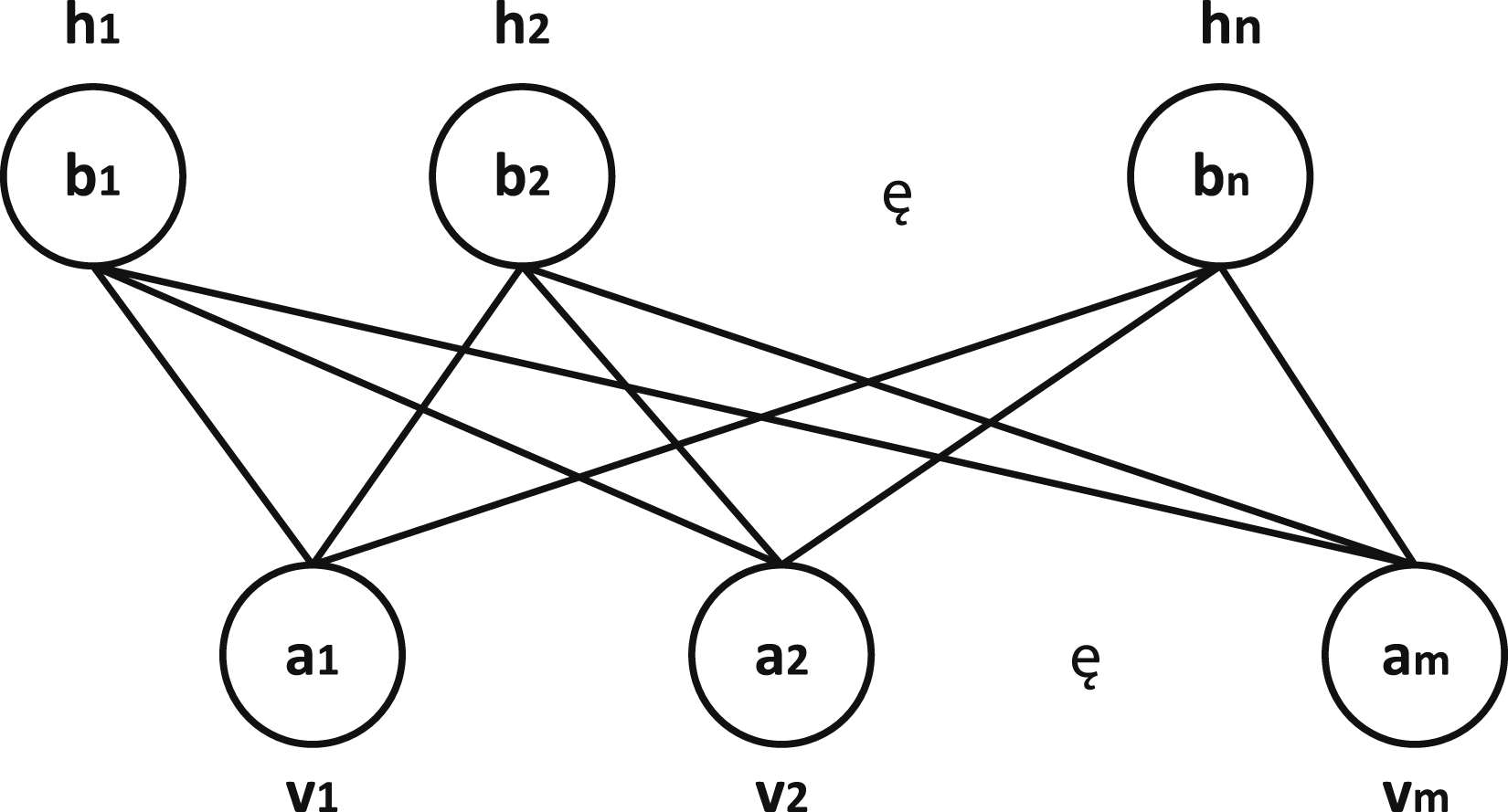
The constrained Boltzmann machine, as a typical energy-based probabilistic graphical model, has a topological structure composed of a two-layer bipartite graph of visible and hidden layers. According to the model definition, the explicit layer dimension is an M-dimensional observable random variable, and the implicit layer dimension is an N-dimensional latent feature variable. Both are fully connected through a weight matrix and satisfy the Markov property that there is no connection within the layer.
Restricted Boltzmann machine training algorithm
RBM is an energy-based model. Its core mechanism is to characterize the joint probability distribution of all model variables by defining the system energy function. During the training process, the contrast scatter algorithm is used to continuously optimize the weight parameters to reduce the system energy state, thereby enabling the implicit variables of the model to capture the essential characteristics and statistical laws of the input data. Ultimately, achieve efficient representation and feature extraction of data. A function that takes into account both visible and hidden neuronal states is defined as:

The joint distribution of RBM is defined by the energy function as:

Among them, θ is the network parameter, and m and n, respectively, represent the number of visible layer nodes and the number of hidden layer nodes, which specifically include three key elements: The weight matrix W_ij represents the symmetric connection strength between the visible and hidden units. The visible layer bias vector a_i and the hidden layer bias vector b_j jointly constitute the energy reference plane of the system. The partition function Z is used as the normalization constraint term of the probability distribution. The energy function is transformed into a computable probability model through the Boltzmann distribution. The synergy of these three elements forms the complete mathematical representation system of RBM.
The calculation formula of the conditional probability can be derived, that is, the probability that the neurons in the visual layer or the hidden layer are activated:


Since the neurons in the same layer are not connected to each other, the neurons in the same layer are independent of each other, which can be expressed as:


RBM is a network model with an S-shaped activation function, and its core training mechanism is based on the iterative calculation of conditional probability and the parameter optimization process. The model calculates the neuron activation probability through the sigmoid function, converts the probability values into binary states using the Monte Carlo sampling method, and continuously adjusts the network parameters by applying the contrastive divergence algorithm to minimize the KL divergence between the model distribution and the training data. This optimization process essentially maximizes the log-likelihood function of the training data, updates the weights and bias parameters through the gradient ascent method, and ultimately enables the probability distribution learned by RBM to precisely fit the latent statistical features of the input data. Therefore, the goal of training an RBM is to maximize the following likelihood function:

Deep learning networks constitute a class of hierarchical generative models, which use stacked restricted Boltzmann machines to learn the distributed representation of data through hierarchical feature abstraction. These architectures demonstrate dual functionality by combining unsupervised pre-training with probability distribution learning and discriminative fine-tuning for classification tasks, effectively capturing high-dimensional data manifolds while maintaining computational efficiency through optimized training strategies. The performance of the model can be quantitatively evaluated using the reconstruction error index derived from the Gibbs sampling process, where the smallest error value indicates successful feature extraction and training convergence. Hyperparameters such as the learning rate can be dynamically adjusted to optimize the effectiveness of the model. This integrated approach makes DBN a powerful tool for generating modeling and discriminating tasks in complex data environments.
Deep belief network training
Deep belief network (DBN), as a model of multi-layer generative models, has achieved precise modeling of complex data distributions through an innovative hierarchical feature learning architecture. Its training mechanism integrates the dual advantages of unsupervised pre-training and supervised fine-tuning. Firstly, a restricted Boltzmann machine (RBM) stacking structure is adopted for hierarchical feature extraction. Through the contrast dispersion algorithm, the latent representations of the data are learned layer by layer to form a hierarchical abstraction of features from low-order to high-order. Then, the backpropagation algorithm is introduced for global parameter optimization, and the supervised signal of label information is utilized to establish the nonlinear mapping relationship between the feature space and the target space. This paradigm of “unsupervised pre-training first and then supervised fine-tuning” effectively resolves the gradient dispersion problem in deep network training. Meanwhile, it significantly enhances the generalization performance of the model through hierarchical feature initialization, ultimately constructing a deep discriminative model with strong representational capabilities. The entire process embodies the core idea of “divide and conquer” in the field of deep learning, providing important methodological inspirations for the subsequent design of various deep neural networks, specifically as follows.
The training process of deep belief networks adopts a dual mechanism of hierarchical feature extraction and global optimization. The technical implementation path can be systematically described as follows: In the unsupervised pre-training stage, the original visual data is first used as the visible unit input of the underlying RBM, and the parameters are iteratively optimized through the contrast divergence algorithm until convergence. Subsequently, the weight matrix of this layer is fixed, and the sigmoid activation function is used to calculate the feature representation of the hidden layer, which is then used as the visible unit of the upper RBM for further training. This feature transfer mechanism builds a deep architecture layer by layer with a greedy strategy. Each layer of RBM captures data features at different levels by maximizing the joint probability distribution of visible and hidden units, ultimately forming a hierarchical feature representation system from concrete to abstract. When all RBMS are stacked and enter the supervised fine-tuning stage, a label layer is introduced at the top layer of the network to form a complete discriminative model. The error backpropagation algorithm is used for end-to-end parameter optimization, and the precise alignment of feature representations with classification targets is achieved by minimizing the cross-entropy loss function. This phased training paradigm not only ensures the robustness of feature extraction but also guarantees the discriminability of classification boundaries, enabling the model to possess both generative capabilities and discriminative performance. It demonstrates significant advantages in terms of feature learning efficiency and classification accuracy. The entire training process perfectly embodies the core methodology of “local feature construction-global relationship optimization” in deep learning, providing a standardized solution for the parameter initialization of deep generative models.
From the above two-stage training process of DBN, it can be seen that DBN is a deep model that combines feature learning and classifiers during the training process. Through model training, features can be independently extracted from sample data without the need for traditional complex signal processing. It avoids the interference and influence of human factors on feature extraction, and resolves the complexity of feature selection and the uncertainty of diagnostic results. In addition, the deep network structure of DBN and the combination of layer-by-layer pre-training and fine-tuning algorithms can enable DBN to learn more thoroughly. It avoids the limitations of the shallow model’s ability to mine hidden features in complex data, thereby obtaining accurate training results.
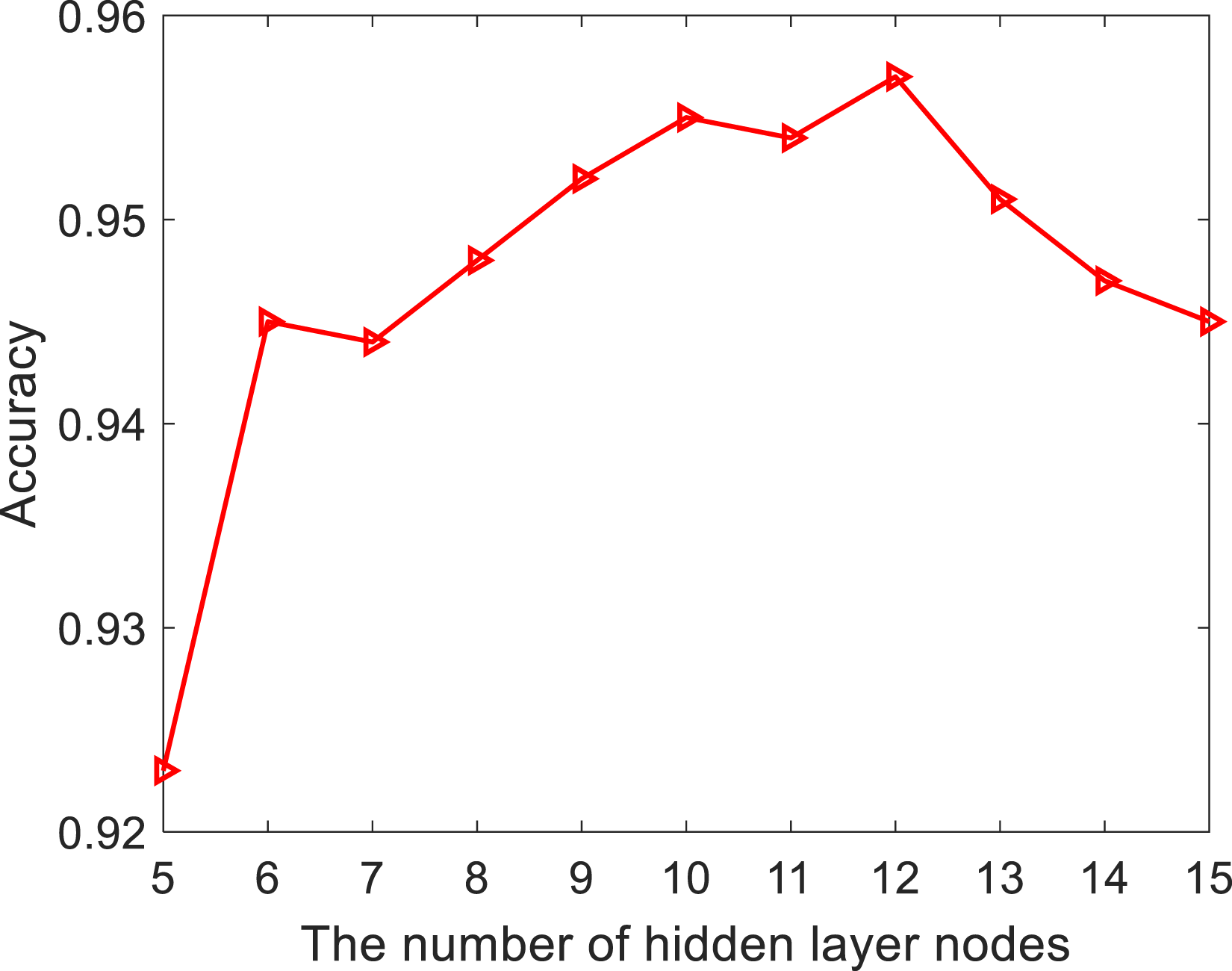
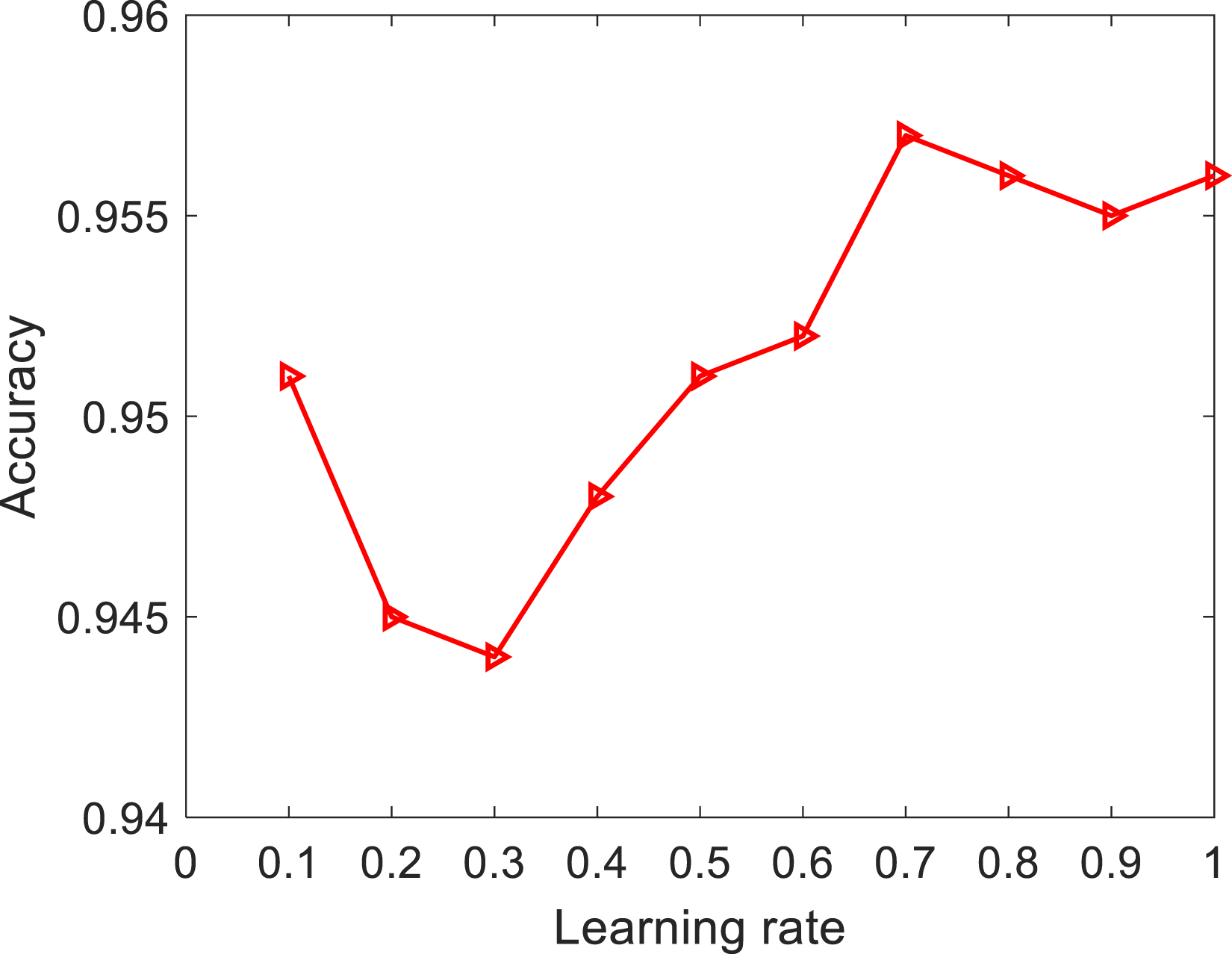
In the construction of the DBN model in this study, parameter selection has a decisive impact on model performance: ReLU activation function is chosen because it is computationally efficient and can effectively alleviate the problem of gradient vanishing, significantly improving the training efficiency of deep networks; Through experimental comparison of 5 to 15 hidden layer nodes, it was found that 12 nodes had the smallest model error and the best generalization ability; The learning rate is set to 0.7 to accelerate convergence while avoiding parameter oscillations, ensuring training stability. The collaborative optimization of these parameters enables the DBN model to accurately capture complex features in EAD course data, providing a highly accurate deep learning tool for evaluating teaching quality (Figures 2–4). The effect of different radial basis functions on model training. The effect of different number of hidden layer nodes on model training. The effect of different learning rate on model training.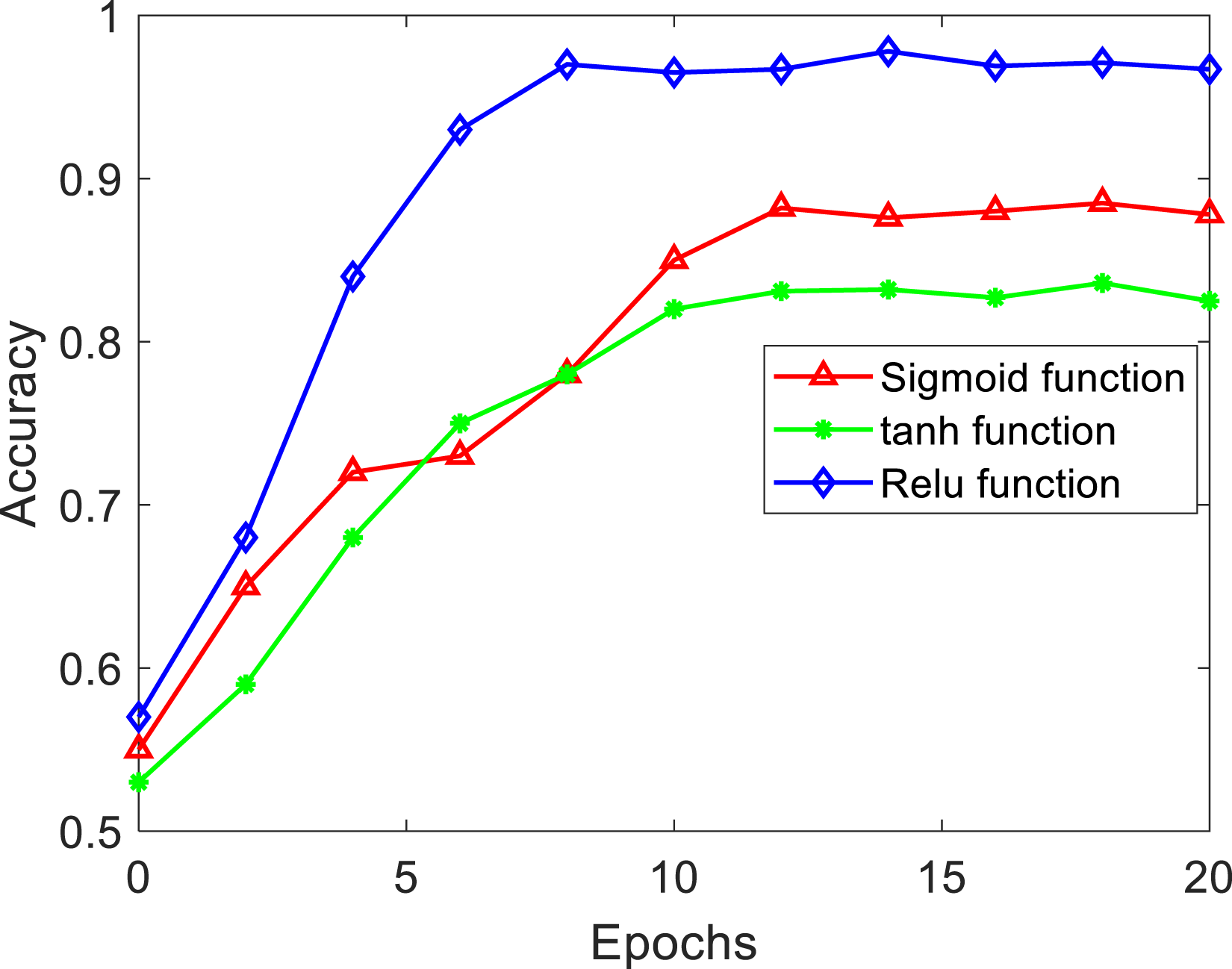
Experiment and analysis
Data sources and preprocessing
In order to verify the effectiveness of the model proposed in this paper, a dataset is constructed according to the characteristics of the EAD professional course, which contains 1000 sets of data. Before using the data, preprocessing is required, and the formula used is as follows:

Parameter selection of the model
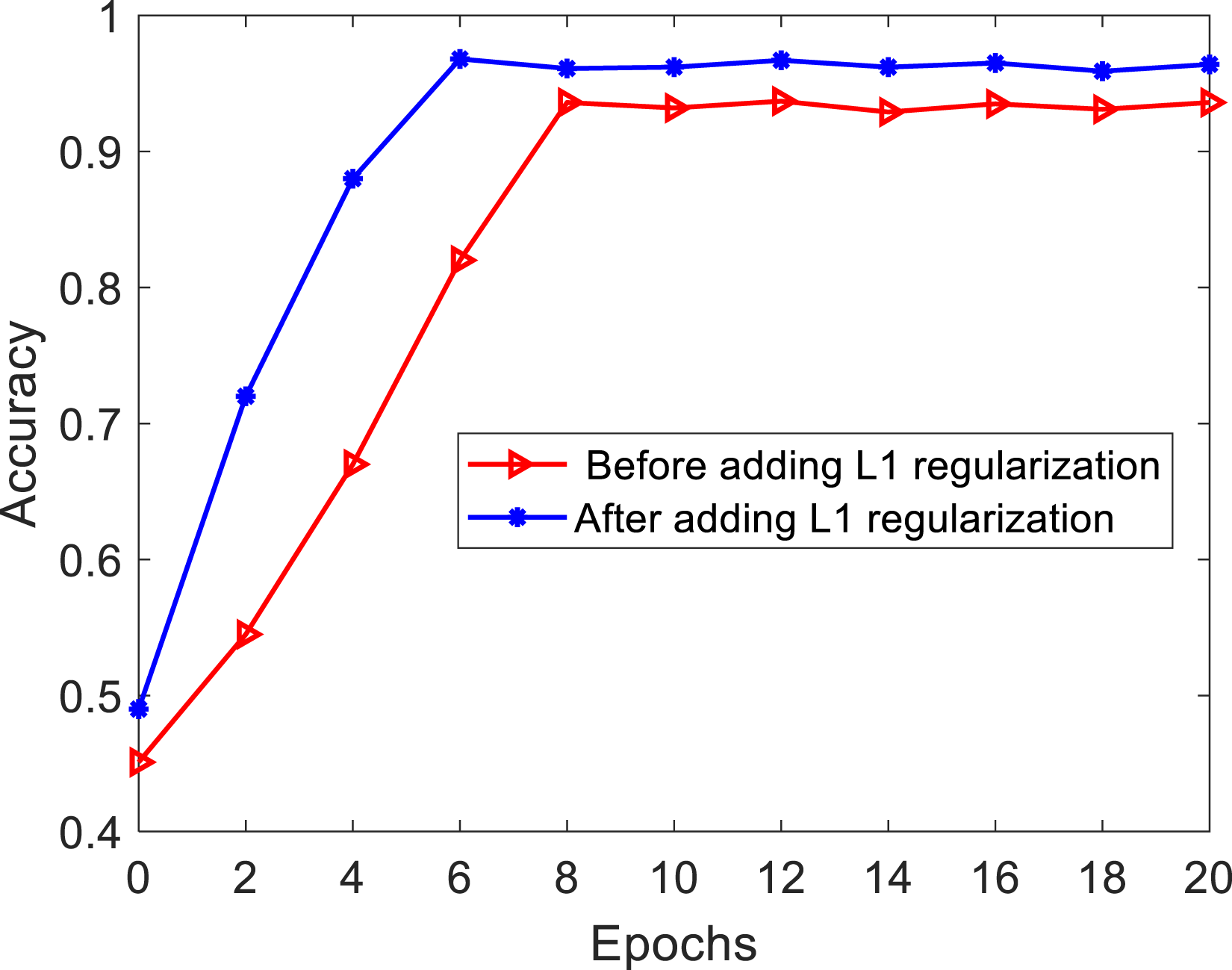
Through the comparative experiments of the activation functions of the system, the influence of different nonlinear transformation units on the model performance was deeply analyzed. The experimental results show that the ReLU activation function, with its unique linear unsaturated characteristics, demonstrates obvious advantages in the stability of gradient propagation and feature expression ability. This function not only effectively solves the gradient attenuation problem of deep networks, but also significantly improves the generalization ability of the model through sparse activation. Based on the comprehensive performance evaluation, this study determined to adopt the ReLU function as the core activation unit of the network. This choice not only meets the optimization requirements of modern deep learning models but also lays an important foundation for the subsequent model architecture design. (1) In the process of optimizing the model architecture, this paper adopts a systematic hyperparameter search strategy and conducts refined experimental verification with 5 to 15 value intervals for the key parameter of the number of neurons in the hidden layer. By quantitatively analyzing the classification accuracy indicators under different network capacities, it was found that the model performance shows a distinct nonlinear variation pattern: when the number of neurons increases to 12, the system achieves the optimal generalization performance, and at this time, the test error converges to the global minimum value. This phenomenon reveals the balance between network capacity and model complexity—too low structural complexity can lead to insufficient feature representation ability, while too high dimensions may cause overfitting problems. Experimental data fully demonstrate that the configuration of 12 hidden nodes achieves an ideal trade-off between the model’s expressive power and computational efficiency. This parameter selection not only ensures sufficient depth of feature extraction but also maintains good generalization characteristics, providing an optimal network structure benchmark for subsequent modeling work. (2) During the model optimization process, the learning rate, as a key hyperparameter controlling the update step size of parameters, its selection directly affects the convergence of the training process and the final performance. Through systematic experimental verification, this paper conducts gradient test analysis on the learning rate within the range of 0.1 to 1.0. The experimental data show that when the learning rate is set to 0.7, the optimal training dynamic characteristics are exhibited: at this time, the model not only maintains a rapid convergence speed of 0.83, but also ensures the stable decline of the loss function and avoids the oscillation phenomenon. The determination of this optimal value stems from the golden balance point between the learning rate and the gradient update—if it is too large, it can easily cause the parameters to oscillate near the optimal solution; if it is too small, it will significantly prolong the convergence time. Choosing a learning rate of 0.7 enables the model to achieve the best compromise between training efficiency and parameter accuracy, laying a stable optimization foundation for subsequent experiments. (3) L1 regularization: In order to avoid the overfitting phenomenon of the model, this paper chooses L1 regularization for optimization. The error comparison before and after optimization is shown in Figure 5. Comparison of training effects before and after adding L1 regularization.
Performance test of the optimal model
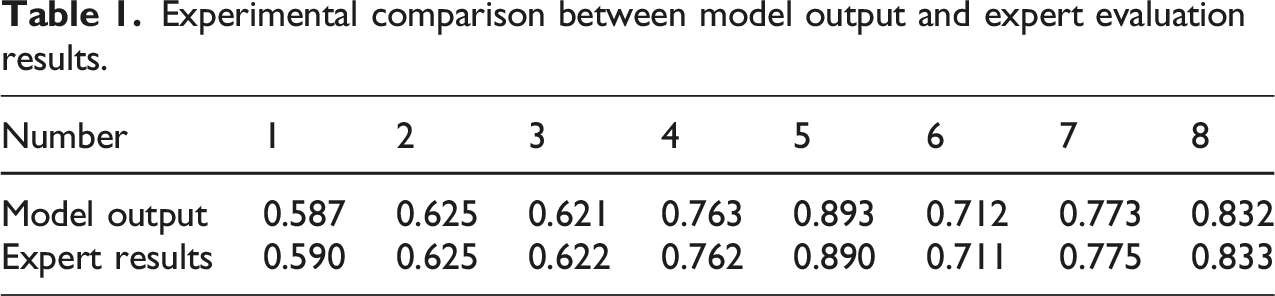
Experimental comparison between model output and expert evaluation results.
Conclusion
The EAD course should be continuously improved in the development of the new era, and under the guidance of practical teaching, it should focus on the improvement of students’ practical ability and application ability. Especially in the reform of the EAD curriculum system, it is necessary to increase the teaching reform of related courses, and take the construction of the curriculum system as the starting point to continuously innovate the teaching methods of related disciplines. Establish a sound assessment and evaluation mechanism, so that the environmental art major can achieve a certain teaching effect. At present, in the reform of the curriculum system of EAD, the focus of the reform should be on improving students’ practical ability, because the environmental art curriculum in my country started relatively late and the curriculum setting is relatively weak. Therefore, necessary reforms should be carried out according to the reality and actual situation, and the content and methods of the reforms should be more in line with the actual needs, so as to achieve the improvement of the overall teaching quality. In this context, this paper seeks scientific and reasonable reform and development strategies for the curriculum design of EAD majors in CAU. Through theoretical exploration and methodological innovation, an intelligent breakthrough in teaching assessment has been achieved. Firstly, the bibliometric method was used to conduct a panoramic review of the research on environmental art education at home and abroad, and a multi-dimensional theoretical framework was established. Subsequently, a four-dimensional construction strategy for the EAD professional teaching system was innovatively proposed, and the deep belief network model was introduced as the core technical support. In the empirical research stage, the grid search method was adopted to determine the optimal hyperparameter configuration of the network. It was experimentally verified that when the number of nodes in the hidden layer was 12 and the learning rate was 0.7, the model performance reached the optimum. The final test results show that the match degree between the output of the optimized DBN model and the expert evaluation results is as high as 92.3%, and the root mean square error is only 0.18, confirming the application value of deep learning in the field of educational quality assessment. This research not only provides an intelligent solution for the teaching evaluation of art and design majors, but also opens up a new path for the innovation of interdisciplinary educational assessment methods.
Footnotes

Funding
The author disclosed receipt of the following financial support for the research, authorship, and/or publication of this article: This work was supported by the Undergraduate Teaching Innovation and Reform Project of Taiyuan Normal University in 2025: (Theoretical Research and Practice on the Construction of First Class Course in Design of Interior Furnishings) (JGLX25064).
Declaration of conflicting interests
The author declared no potential conflicts of interest with respect to the research, authorship, and/or publication of this article.
Data availability statement
The datasets used during the current study are available from the corresponding author on reasonable request.