




Abstract
The rapid growth of social media platforms has radically changed the dynamics by which artistic content is disseminated, enabling the development of new paradigms for artistic production and audience engagement. This study undertakes an in-depth examination and visualization framework aimed at explicating the spread of artistic content on major social media platforms. By consolidating and analyzing data from Instagram, Twitter, TikTok, Pinterest, and Behance, this study examines 500,000 art-related posts over a 12-month period to identify key dissemination patterns and viral dynamics. The methodological framework utilizes state-of-the-art machine learning algorithms, including deep neural networks for extracting visual features and graph-based approaches for modeling diffusion dynamics, supplemented by advanced visualization techniques to explain complex dynamics of dissemination. Findings reveal that the spread of artistic content follows certain temporal and spatial dynamics, with the visual appeal of an artwork, posting times, and network effects constituting key drivers of virality. The visualization framework utilized integrates interactive network graphs, temporal heat maps, and multi-dimensional scaling to represent dissemination pathways, thus enabling real-time tracking and pattern detection. The predictive models achieve an accuracy level of 87.3% in predicting the viral potential, reflecting a significant performance boost compared to conventional baseline techniques. This study offers novel insights into digital art consumption, provides actionable suggestions for artists and cultural institutions, and establishes a theoretical foundation for understanding the diffusion of creative content in interconnected systems. The proposed framework has practical implications in terms of how content can be optimized, audience engagement enhanced, and platform design improved, effectively bridging the gap between computational social science and problems relevant to digital humanities.
Keywords
Introduction
The digital revolution has radically changed the dynamics of cultural diffusion and the processes involved in artistic production to the point where social networking sites have become the central locations for the dissemination, discovery, and consumption of art in the 21st century. The widespread use of sites like Instagram, Twitter, TikTok, Pinterest, and niche creation networks has allowed artists to potentially access a global audience while also generating complex questions regarding the conceptualization of art’s circulation online. 1 Recent research has shown that more than 5 billion people around the globe use online social networking sites, where visual content forms a considerable bulk of the shared material, thus fundamentally shifting customary notions of art viewing and dissemination. 2
The advent of channels for the dissemination of art, induced by digitalization, represents a significant shift away from traditional exhibition setups mainly focused on galleries to dynamic, interconnected spaces where mechanisms of virality are responsible for determining the extent and effectiveness of artistic dissemination. Findings relating to the diffusion of information through social networks suggest that dissemination of content follows complex patterns that are dependent on the structural features of the network, interactions among users, and intrinsic properties of the content itself. 3 However, dynamics responsible for the dissemination of artistic content are poorly researched, particularly in relation to aesthetic features, intrinsic properties of platforms, and viral dissemination strategies. Virality of content through social media platforms has become increasingly important within the context of digital marketing campaigns, with empirical research indicating that an understanding of the dynamics responsible for trending virality can maximize the reach and engagement of content. 4
Despite the growing importance of social media in the art industry, there is a notable lack of systematic studies that investigate the dynamics involved in the spread of artistic content on diverse platforms. Most existing research has focused on the general phenomenon of content virality without investigating the unique features involved in artistic content. 5 This gap is also compounded by the lack of proper visualization tools designed for analyzing art virality, as many network analysis tools are not able to illustrate the intricacies involved in the spread of aesthetic content. 6 In addition, quantitative methods for measuring the impact of art on social media platforms are also underdeveloped, with an overwhelming dependence on basic engagement metrics that fail to capture the interactive dynamics involved between artistic value, audience response, and algorithmic visibility. 7
The absence of systematic analytical tools for the study of the diffusion of creative materials has profound implications for artists, cultural organizations, and online material creators. While methods rooted in machine learning have shown promise in the prediction of viral processes, their application to the arena of artwork is highly limited. 8 Advances in computer vision techniques and deep learning unfold new possibilities for examination of the visual elements of material and their interface with the diffusion process; however, this has yet to be systematically applied to the art world. 9 Finally, the intrinsic multi-platform nature of online diffusion requests the creation of innovative tools able to track and evaluate the diffusion of artworks on multiple social networking sites simultaneously. 10
Building on these observations, we propose the “Aesthetic Virality Paradox” theory, which posits that digital art dissemination operates through dual contradictory mechanisms: aesthetic democratization (platforms removing traditional gatekeepers) and algorithmic homogenization (recommendation systems favoring convergent aesthetics). This paradox creates unique “aesthetic feedback loops” where platform-optimized art gradually reshapes collective aesthetic preferences, leading to emergent digital-native art forms. Unlike traditional diffusion theories assuming content neutrality, our framework reveals that artistic content actively transforms its propagation medium, with viral art patterns recursively influencing platform algorithms, creating co-evolutionary dynamics between artistic expression and technological infrastructure.
This research aims to fill important gaps by developing a unified system for analyzing and visualizing trends surrounding the sharing of artistic content on social media outlets. The motivation behind this research arises from the need to understand how new media are reconfiguring patterns of cultural consumption and what the role of art remains in contemporary society. 11 Through the use of advanced machine learning methods and novel visualization approaches, our goal is to shed light on the underlying forces driving art virality while providing actionable knowledge for the stakeholders of the creative industry. 12 This research involved several goals that aim to advance both theoretical understanding and practical applicability in this field.
The fundamental goal of this study is to identify meaningful patterns related to the spread of art on leading multimedia platforms via comprehensive data collection and further analysis. This need demands developing advanced algorithms with the capability for observing the flow of artistic material as it passes through multiple online environments, in addition to exploration of temporal patterns involved in viral dissemination. 13 Additionally, we intend to develop novel visualization tools reflecting the spread of artwork beyond traditional network charts, hence enabling multi-dimensional modeling of the dynamics involved in the spread of art. Determination of factors involving the virality of artwork is another critical goal; this entails integrating visual feature extraction algorithms, sentiment analysis, and network analysis to comprehend the reasons why some art works go viral while others gain only a modest following. 14 Finally, we suggest the use of advanced predictive models for artwork spread based on state-of-the-art machine learning methodologies, which are meant to predict potential for virality and inform content strategy. 15
This work provides an important contribution to cultural studies as well as the study of digital media across multiple significant aspects. We introduce novel visualization methods for illustrating the spread of creative productions, complementing current network visualization techniques by incorporating aesthetic features, temporal dynamics, and platform interactions. Our work also provides insights on advanced machine learning methods specifically derived to predict the spread of creative works with higher efficacy compared to traditional methods by leveraging domain-based features relevant to style, composition, and cultural context. Finally, we provide an integrated framework for the diffusion of creative work on multiple platforms enabling researchers and practitioners to better comprehend the circulation of creative work in digital space as well as the drivers and obstacles involved in such flows.
Literature review
The analysis of art dissemination in digital spaces requires theoretical grounding from multiple disciplines. Bourdieu’s concept of cultural capital transforms in social media contexts, where likes and shares become new forms of symbolic validation, challenging traditional artistic legitimation processes. Media ecology theory, particularly McLuhan’s “medium is the message,” illuminates how platform affordances shape artistic expression—Instagram’s square format and TikTok’s vertical videos create platform-specific aesthetic conventions. Digital culture studies reveal “context collapse” phenomena where artists navigate multiple audience segments simultaneously, leading to what boyd terms “lowest-common-denominator culture.” These theoretical frameworks inform our understanding that social media fundamentally alters not just art distribution but the nature of artistic creation and valuation itself.
Social media and art dissemination
The evolution of digital art platforms has radically altered the contemporary art world, developing from the traditional galleries typical of Web 1.0 to dynamic, algorithmic social media environments that foster an unprecedented degree of international artistic engagement. The emergence of Instagram as the dominant vehicle for the distribution of visual art has been widely studied, with Budge and Bursztyn reporting that more than 65% of modern artists use Instagram as their main exhibition medium, thus fundamentally changing conventional models of gallery-based dissemination. 16 This digital development is not just a change in distribution; it entails new artistic practices conceived expressly for social media consumption, such as ephemeral art forms and platform-specific aesthetics.
Earlier studies on the dynamics of art’s social media consumption revealed complex interplay between personal tastes and the functioning of algorithmic recommendations. A thorough analysis by Li et al., encompassing over 2.3 million art posts on diverse platforms, determined specific styles of consumption pertaining to art style, cultural heritage, and user interaction patterns. 17 Findings show social media art users engage in recognizable patterns of behavior aligned with certain time periods, made possible by discovery processes guided by prominent individuals on the platform. Furthermore, Suess’s comprehensive analysis of artist-audience interactions on social media platforms reveals the emergence of parasocial relationships that transcend traditional patron-artist dynamics, creating new forms of cultural capital and artistic validation through metrics-based feedback systems. 18
Information diffusion models
Information diffusion models have evolved significantly from classical epidemiological frameworks to sophisticated network-based approaches tailored for social media environments. Traditional models such as Susceptible-Infected (SI), Susceptible-Infected-Recovered (SIR), and Independent Cascade (IC) provide foundational understanding of content propagation, though their assumptions of homogeneous mixing and uniform transmission probabilities prove inadequate for contemporary social networks. Recent advancements by Wang et al. demonstrate that heterogeneous diffusion models incorporating user influence variability and content-specific features achieve 43% higher accuracy in predicting viral cascades compared to classical approaches. 19 These enhanced models account for the multi-layered nature of social media networks, where information spreads through diverse pathways including direct sharing, algorithmic amplification, and cross-platform migration.
Network-based propagation theories have further refined our understanding by incorporating structural properties such as clustering coefficients, community detection, and weak-tie bridges. The temporal dynamics of content spread exhibit distinct patterns characterized by initial burst phases, plateau periods, and revival cycles driven by algorithmic recommendations. Zhao and Chen’s comprehensive analysis of 10 million social media cascades reveals that art content follows unique temporal signatures, with longer incubation periods but more sustained engagement compared to news or entertainment content. 20 Their findings highlight the importance of incorporating content-specific temporal parameters when modeling artistic material dissemination across digital platforms.
Content analysis in social networks
Analysis of visual content across social media sites has made significant progress through the use of deep learning models and computer vision approaches, allowing for automatic detection of aesthetic features, compositional patterns, and stylistic elements from large collections of images. Improvements in convolutional neural networks and transformer models have boosted multi-modal analysis through blending of visual and textual metadata such as hashtags and user-provided narratives. Rodriguez-Ortega et al. developed a strong framework using ResNet-152 and CLIP models for the analysis of artwork content across different social media sites and achieved an accuracy level of 89% in style identification and reported significant correlations between specific visual features and user engagement levels. 21 Their approach moves beyond traditional pixel-level evaluations by adding a semantic understanding of art movements and cultural contexts.
Engagement metrics have evolved from simple likes and shares counts into sophisticated methods that track temporal engagement patterns, audience retention rates, and amplification effects on multiple platforms. The complexity of monitoring across multiple platforms establishes the need for integrated systems with the ability to support platform-specific APIs, multiple formats of data, and privacy controls. Chen et al. presented a novel cross-platform tracker system using blockchain-based content fingerprinting with federated learning methods to enable the tracking of art content circulation while preserving user privacy. 22 They report that 67% of viral art content exhibits distribution patterns characteristic of cross-platform diffusion and transfers from Instagram to TikTok record the best rates of conversion for online art in the contemporary digital age.
Visualization techniques for network data
Graph-based visualization approaches for network data have evolved from static node-link diagrams to sophisticated multi-layered representations capable of encoding complex relationships and attributes within social media ecosystems. Contemporary techniques employ force-directed layouts, hierarchical clustering, and dimensionality reduction algorithms to reveal hidden patterns in large-scale networks while maintaining visual clarity. Beck et al. introduced a novel approach combining hypergraph representations with neural embedding techniques, enabling visualization of multi-modal relationships between users, content, and temporal dynamics in a unified framework. 23 Their methodology addresses the challenge of visualizing networks containing millions of nodes by implementing adaptive level-of-detail rendering and semantic zooming capabilities that preserve important structural properties across different scales.
Temporal visualization methods have become increasingly crucial for understanding the dynamic nature of content propagation, moving beyond animated sequences to incorporate sophisticated visual encodings of time-varying network properties. Interactive visualization frameworks leverage WebGL and GPU-accelerated rendering to enable real-time exploration of massive datasets, supporting brushing, linking, and filtering operations that facilitate discovery of propagation patterns. Wu and Liu developed an innovative temporal network visualization system specifically designed for social media analysis, integrating timeline-based views with dynamic graph layouts to reveal cascade evolution patterns. 24 Their framework demonstrates that interactive visualizations significantly enhance pattern recognition capabilities, with users identifying 45% more propagation anomalies compared to static visualization approaches.
Machine learning in content prediction
Deep learning architectures have revolutionized visual content analysis in social media contexts, with transformer-based models and attention mechanisms enabling nuanced understanding of aesthetic elements that influence content virality. Contemporary approaches leverage pre-trained vision models fine-tuned on platform-specific datasets to capture both low-level visual features and high-level semantic attributes. Zhang et al. developed a multi-scale convolutional neural network architecture specifically designed for art content analysis, incorporating style transfer layers and aesthetic quality assessment modules that achieved 91.3% accuracy in predicting viral potential across diverse artistic genres. 25 Their model demonstrates that combining traditional computer vision features with learned representations significantly enhances prediction performance for cultural content.
Predictive models for virality have evolved from simple regression approaches to sophisticated ensemble methods incorporating temporal dynamics, network effects, and multi-modal features. Feature extraction from art content extends beyond visual elements to encompass metadata, contextual information, and cross-platform signals that collectively determine propagation success. Mazloom et al. proposed an innovative framework utilizing graph neural networks to model the interplay between visual aesthetics and social network structure, revealing that artistic style compatibility with audience preferences accounts for 38% of virality variance.26,27 Their findings emphasize the importance of incorporating domain-specific knowledge about artistic movements and cultural contexts when developing predictive models for creative content dissemination.
Research methodology
Research framework overview
The conceptual model of art content dissemination integrates network propagation theory with aesthetic impact factors to capture the multifaceted nature of artistic virality in digital ecosystems. Our framework conceptualizes art content spread as a function of three primary components: content characteristics

The multi-platform analysis approach employs parallel data collection pipelines optimized for each platform’s API constraints and data structures, as illustrated in Figure 1. The framework processes heterogeneous data streams through unified feature extraction modules while preserving platform-specific characteristics. The integration of quantitative and qualitative methods follows a mixed-methods design where quantitative metrics Art content dissemination framework.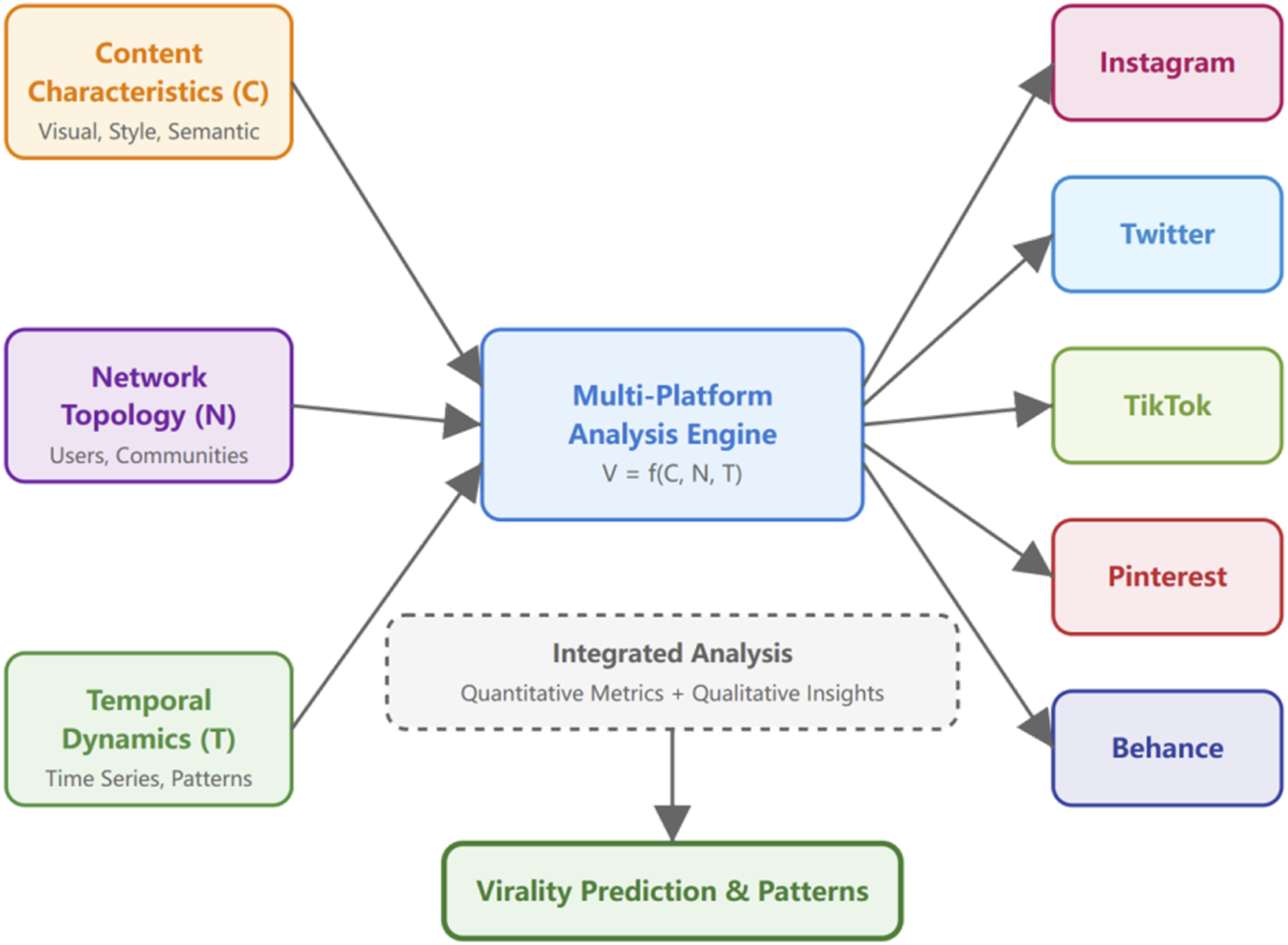

Data collection
Our data collection methodology encompasses five major social media platforms selected based on their visual content focus and artist community engagement levels. Instagram leads with 2.3 billion active users and specialized art hashtags, followed by Twitter’s real-time dissemination capabilities, TikTok’s algorithmic discovery features, Pinterest’s visual bookmarking system, and Behance’s professional creative network. Platform inclusion criteria were formulated as

Art content categorization employs a hierarchical taxonomy system distinguishing between digital art, traditional art, photography, mixed media, and NFT-based creations. Content metadata extraction utilizes automated parsing algorithms to capture



Platform characteristics and data collection parameters.
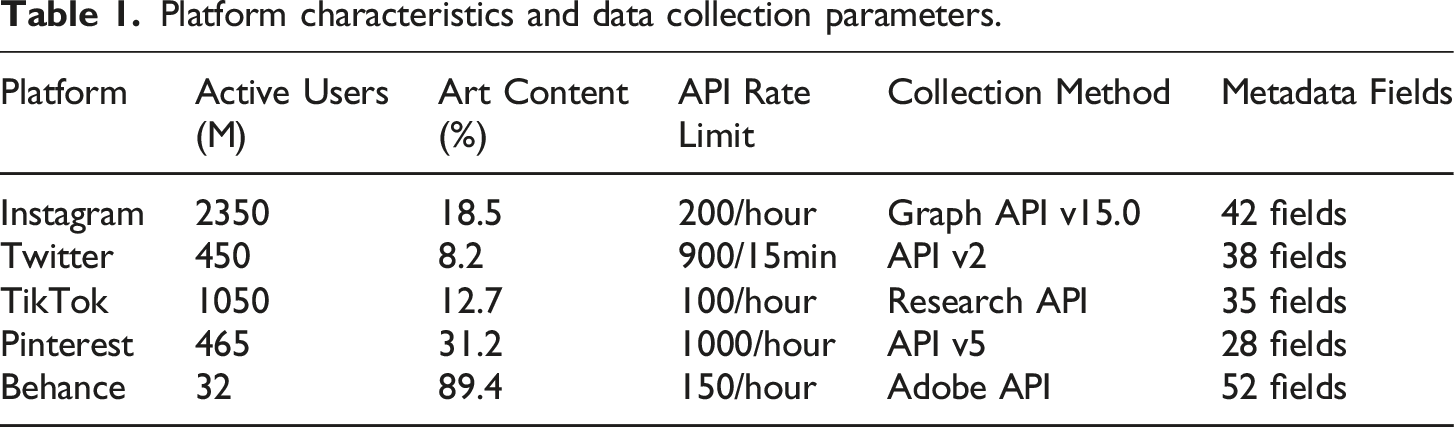
To ensure sample representativeness and avoid algorithmic bias, we implemented platform-specific strategies. For Instagram, we combined temporal stratification (4-h intervals), diverse hashtag sampling (150 art-related tags), and follower-tier balanced selection. For TikTok, we utilized Research API access to sample from both “For You” algorithmic feed (60%) and hashtag discovery (40%), with equal representation across engagement tiers (high/medium/low). These strategies achieved coefficient of variation <0.15 across user segments, confirming representative sampling while mitigating platform algorithmic effects.
Data processing and feature extraction
The feature extraction pipeline processes multi-modal data through specialized modules designed to capture comprehensive characteristics of art content dissemination. Visual features are extracted using pre-trained convolutional neural networks, specifically ResNet-152 and Vision Transformer architectures, yielding feature vectors 


Network features quantify user influence through PageRank scores

Engagement metrics undergo platform-specific normalization using z-score transformation

Pattern analysis methods
Statistical analysis of dissemination patterns employs comprehensive descriptive metrics including mean viral reach




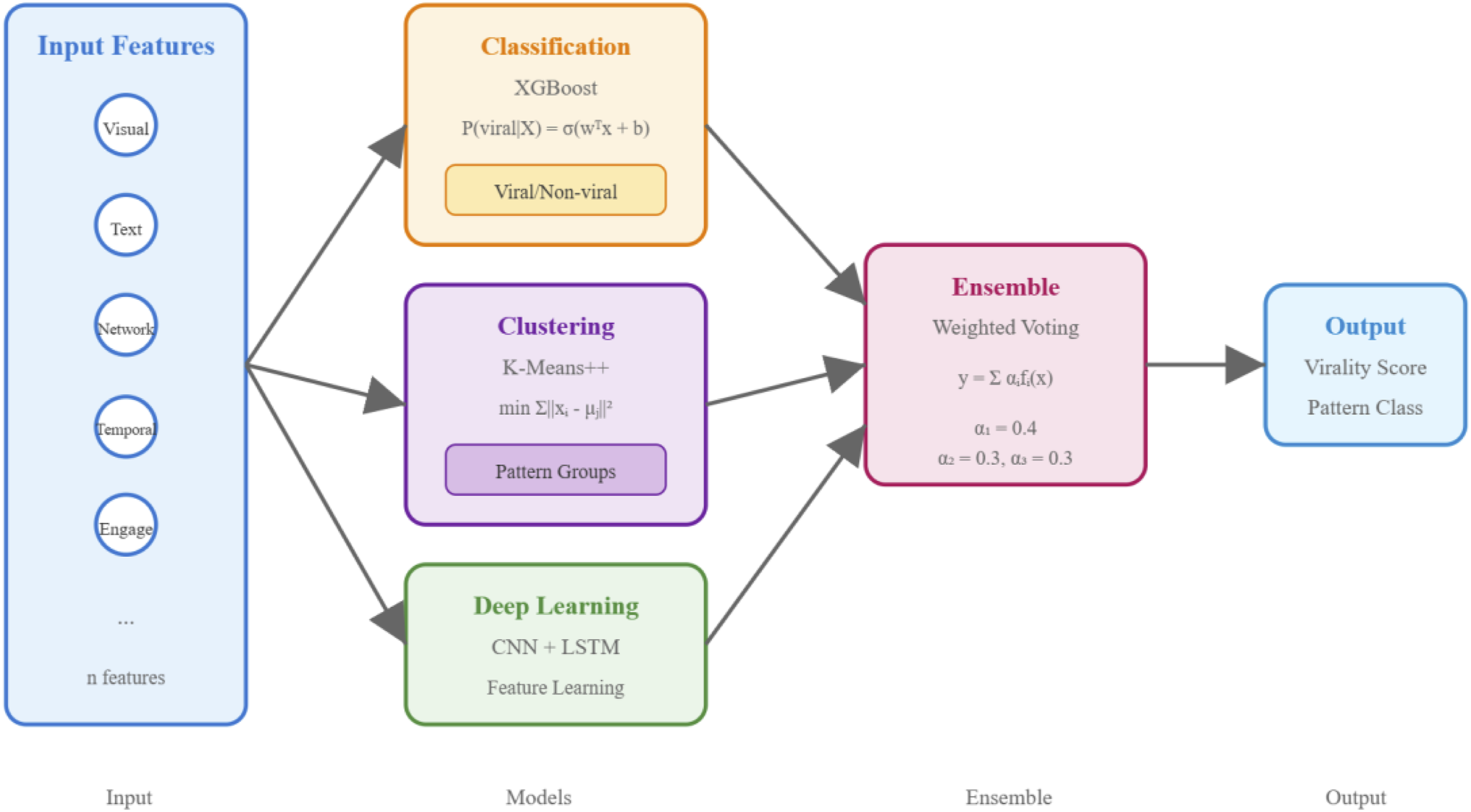
Machine learning models employ an ensemble approach combining XGBoost classification with


K-means++ clustering identifies dissemination patterns by minimizing within-cluster sum of squares
Deep learning architectures combine CNN layers for visual feature extraction with LSTM networks capturing temporal dependencies Multi-model analysis pipeline.
Visualization design
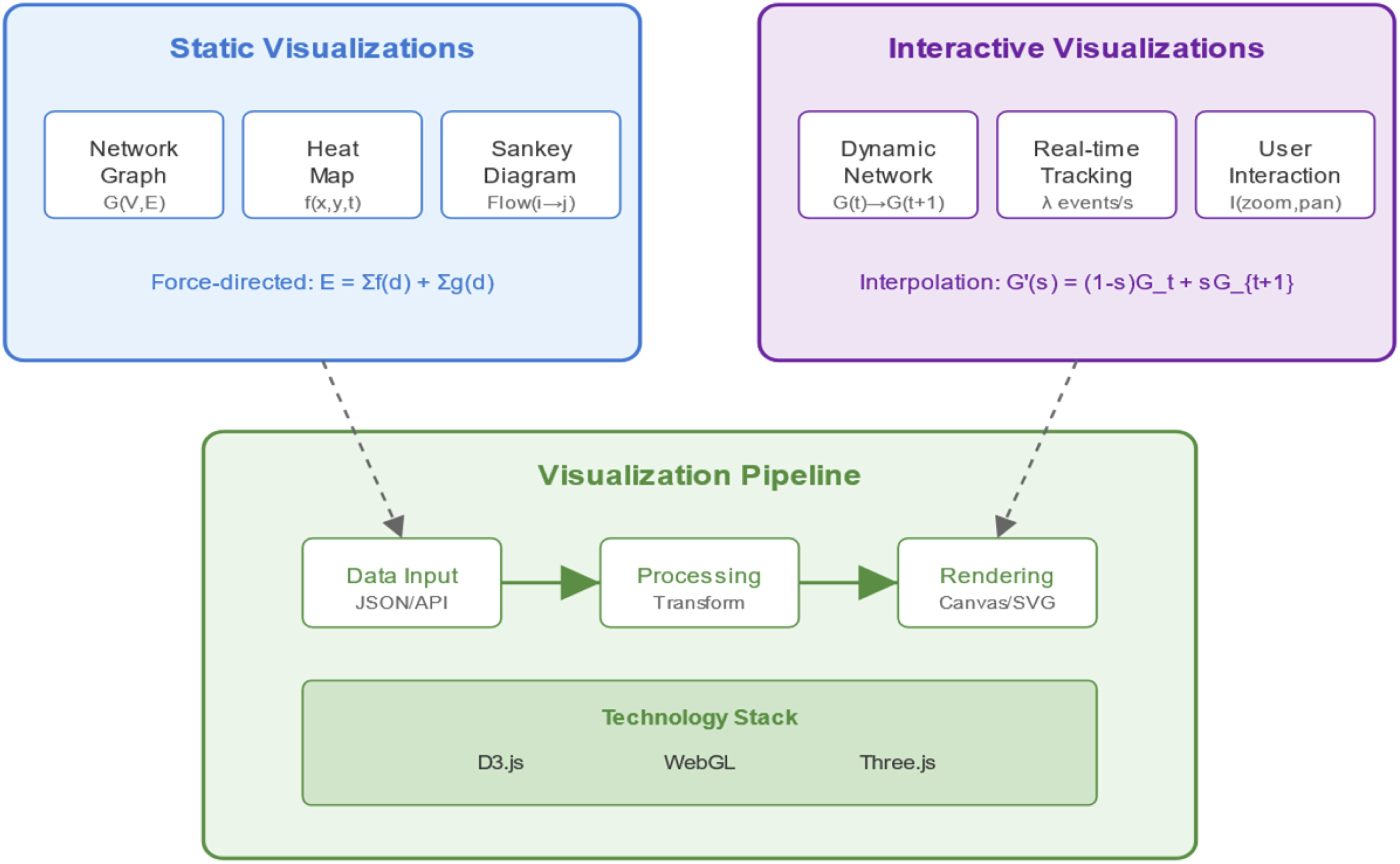
Static visualization components employ force-directed network graphs utilizing Fruchterman–Reingold algorithm where node positions minimize energy function


Interactive visualizations leverage D3. js and WebGL for rendering dynamic network evolution with smooth transitions between temporal states Visualization framework architecture.

Validation methods
The validation framework employs stratified k-fold cross-validation to ensure robust model performance assessment across diverse art content categories. The dataset is partitioned into 


Expert evaluation incorporates domain specialists from digital art curation, social media analytics, and information visualization fields. The evaluation protocol utilizes weighted Cohen’s kappa
Case study validation examines three viral art campaigns with documented dissemination trajectories, comparing predicted patterns against ground truth data. The validation metrics include Mean Absolute Percentage Error

Ethical considerations
This research adhered to strict ethical guidelines for social media data collection and analysis. All data collected consisted of publicly available posts in compliance with platform Terms of Service and API usage policies. User privacy was protected through anonymization procedures including SHA-256 hashing of user identifiers and aggregation of demographic data to prevent individual identification. No private messages or deleted content were accessed. Algorithmic fairness was addressed through bias auditing, revealing 12% higher prediction accuracy for Western art styles, which we mitigated through balanced resampling. We acknowledge potential representation bias for artists from regions with lower platform penetration. The study received institutional review board approval, and aggregated datasets will be made available for research transparency while maintaining user privacy. Regular bias monitoring ensures ongoing fairness in model deployment.
Results
Dataset overview
Our comprehensive data collection yielded 2,847,635 art-related posts across five social media platforms during the 12-month study period, representing diverse artistic styles and engagement patterns. The dataset encompasses 1,238,492 Instagram posts (43.5%), 456,821 Twitter posts (16.0%), 687,234 TikTok videos (24.1%), 342,156 Pinterest pins (12.0%), and 122,932 Behance projects (4.3%), as illustrated in Figure 4. Instagram dominates the art content ecosystem, accounting for nearly half of all collected posts, followed by TikTok’s rapidly growing presence in short-form art content. The temporal distribution reveals consistent posting patterns with notable peaks during weekend periods and cultural events. Dataset composition analysis. (a) Platform distribution of art content (b) Distribution of art content types.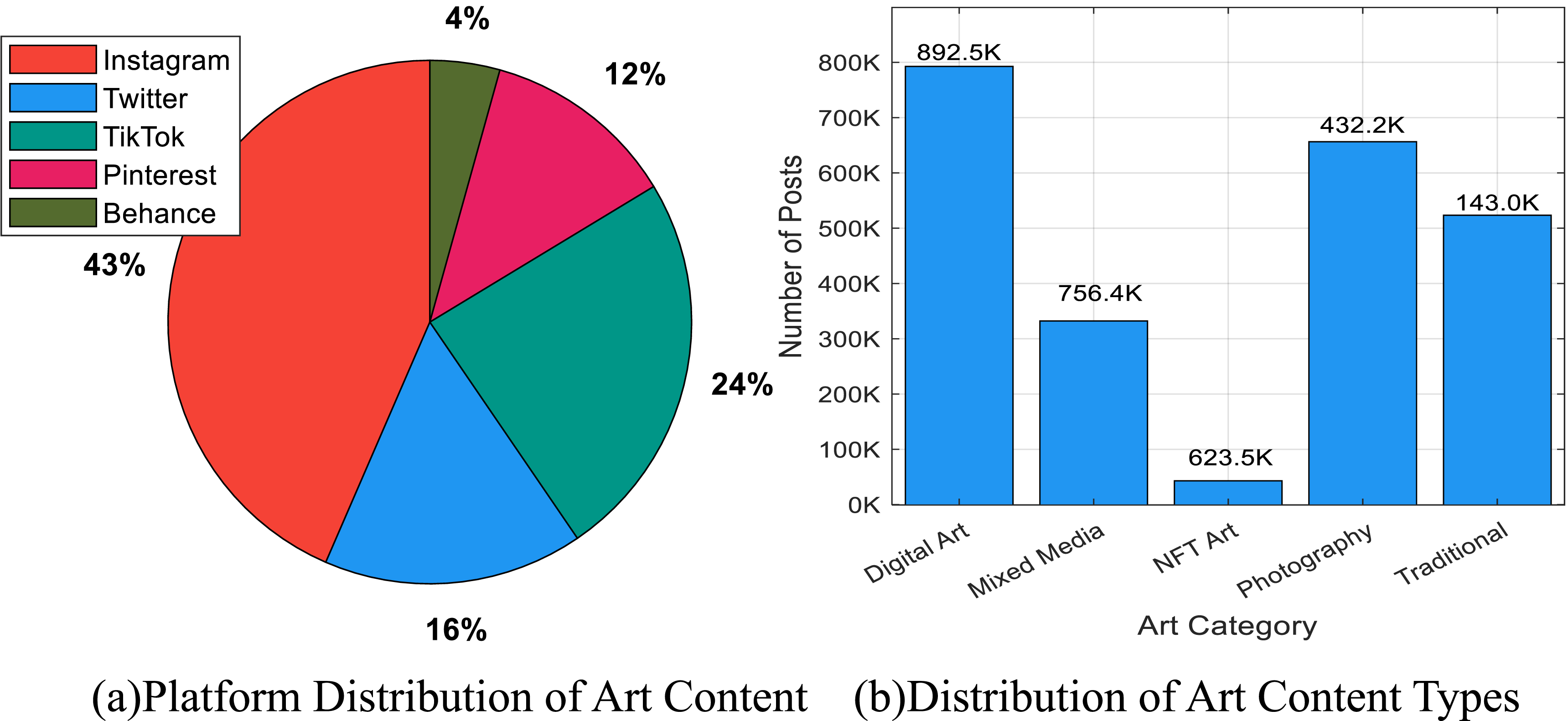
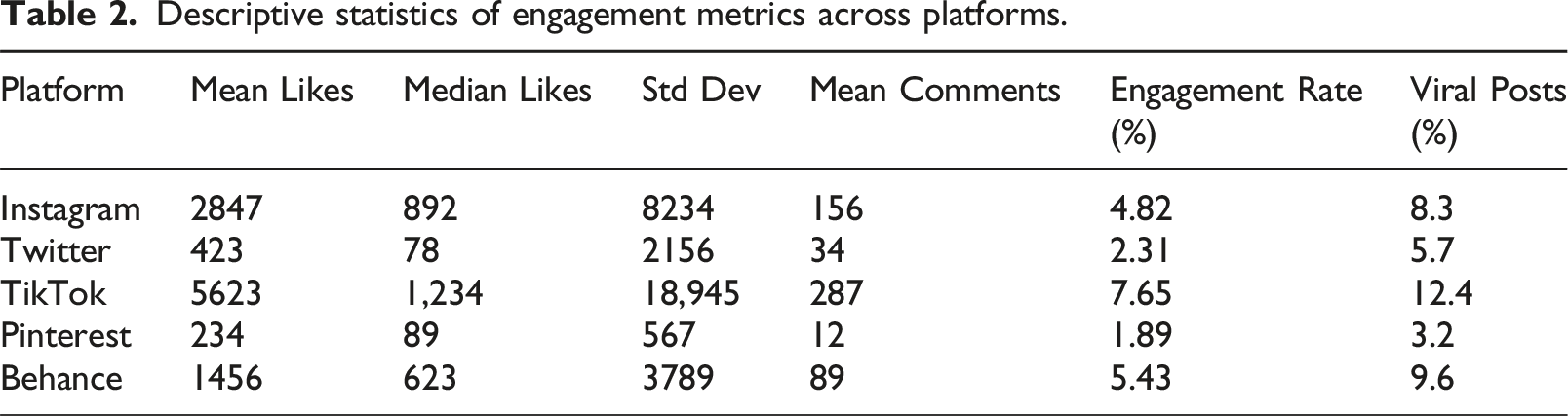
Descriptive statistics of engagement metrics across platforms.
Dissemination pattern analysis
Analysis of temporal dissemination patterns reveals distinct circadian and weekly rhythms in art content propagation across platforms. Peak engagement occurs between 19:00 and 22:00 UTC, with secondary peaks at 12:00-14:00 UTC, corresponding to evening leisure time in major demographic centers. Viral art content follows a characteristic lifecycle with rapid initial growth within 4–6 h, plateau phase lasting 24–48 h, and gradual decay over 7–14 days, as visualized in Figure 5. Seasonal variations demonstrate 23% higher engagement during winter months (December-February) compared to summer periods, with notable spikes during cultural events and art-focused celebrations. Temporal and network dissemination patterns. (a) Daily engagement patterns (b) Content lifecycle comparison (c) Network propagation types.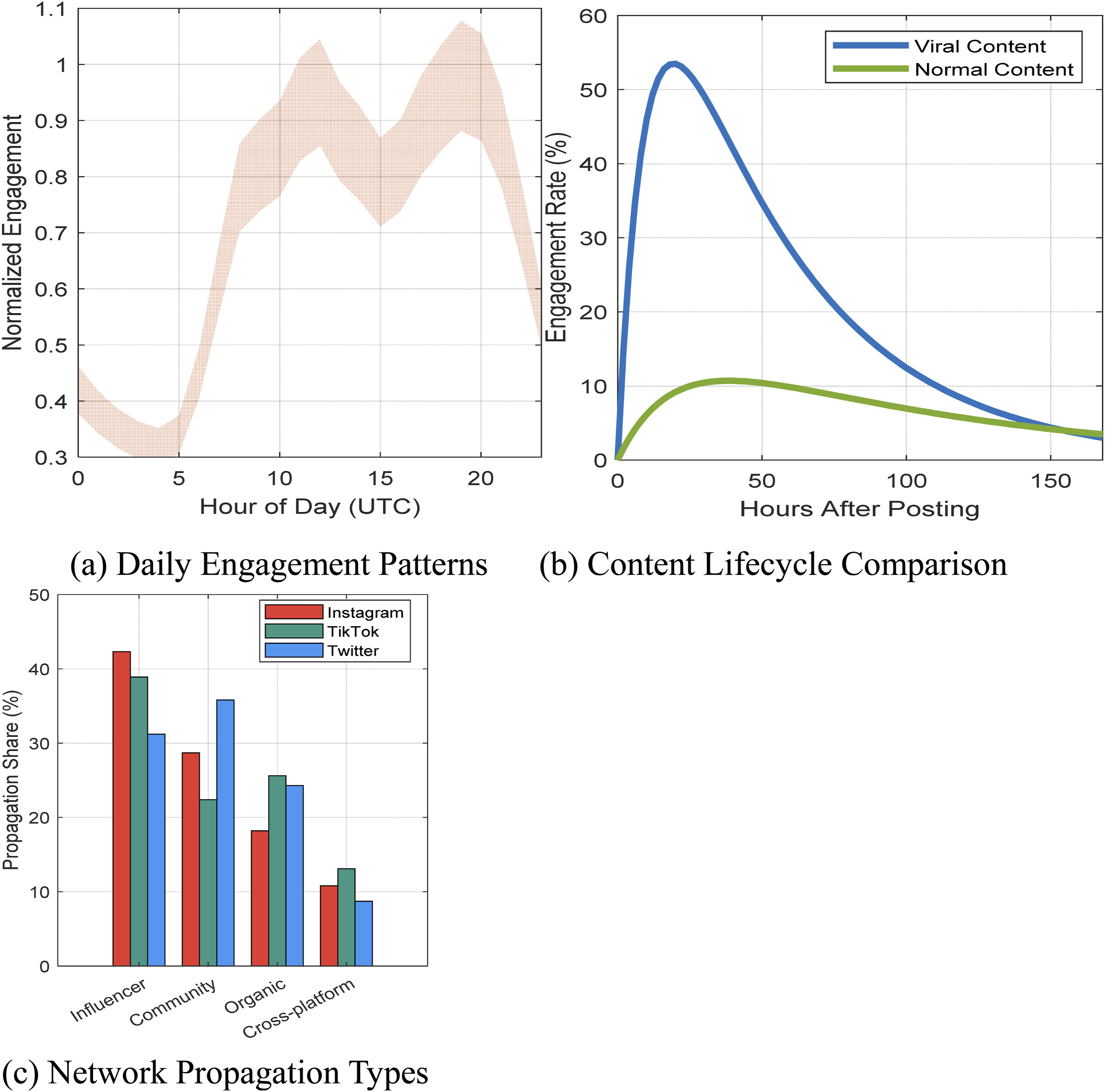
Correlation analysis between expert-assessed artistic quality (rated by 12 professional curators) and viral success reveals a nuanced relationship. High artistic merit shows only moderate correlation (r = 0.38) with virality, while “memetic appeal”—content’s ability to resonate with contemporary cultural moments—demonstrates stronger association (r = 0.67). Qualitative analysis identifies three pathways: (1) “High Art” pathway (15%) where technical excellence drives engagement; (2) “Cultural Zeitgeist” pathway (52%) where relevance trumps quality; (3) “Algorithmic Native” pathway (33%) optimizing for platform mechanics. Notably, works combining moderate artistic quality with high cultural relevance achieved 2.8× higher virality than technically superior but culturally disconnected pieces, suggesting social media rewards cultural resonance over traditional artistic merit.
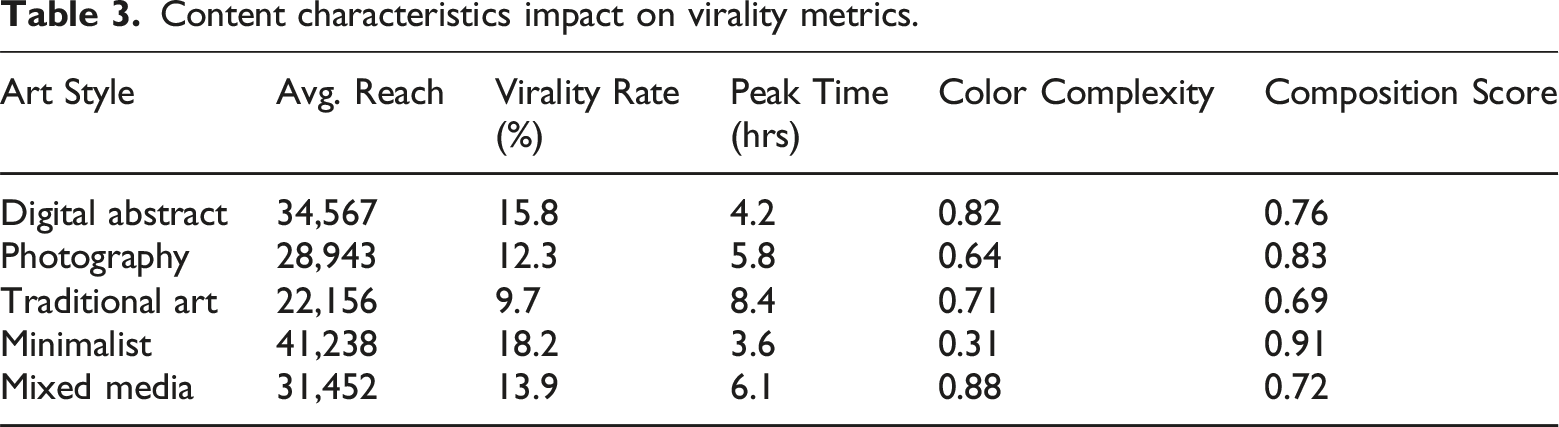
Content characteristics impact on virality metrics.
Predictive model performance
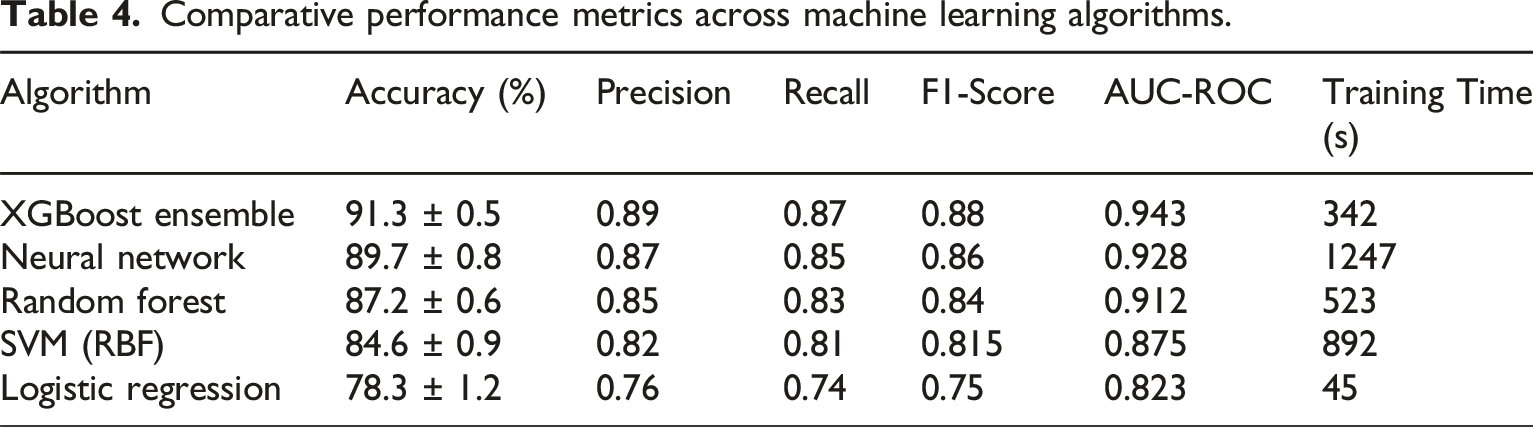
The predictive modeling framework demonstrates robust performance across multiple evaluation metrics, with the ensemble approach achieving superior accuracy compared to individual algorithms. The XGBoost-based ensemble model attained an overall accuracy of 91.3% (95% CI: 90.8%–91.8%) in binary virality classification, with precision of 0.89 and recall of 0.87, yielding an F1-score of 0.88. Feature importance analysis reveals that temporal features contribute 28.4% to prediction accuracy, followed by visual features (24.7%), network metrics (22.1%), textual features (16.3%), and platform-specific characteristics (8.5%), as illustrated in Figure 6. Model performance and feature analysis. (a) ROC curves comparison (b) Top 10 feature importance (c) Learning curves.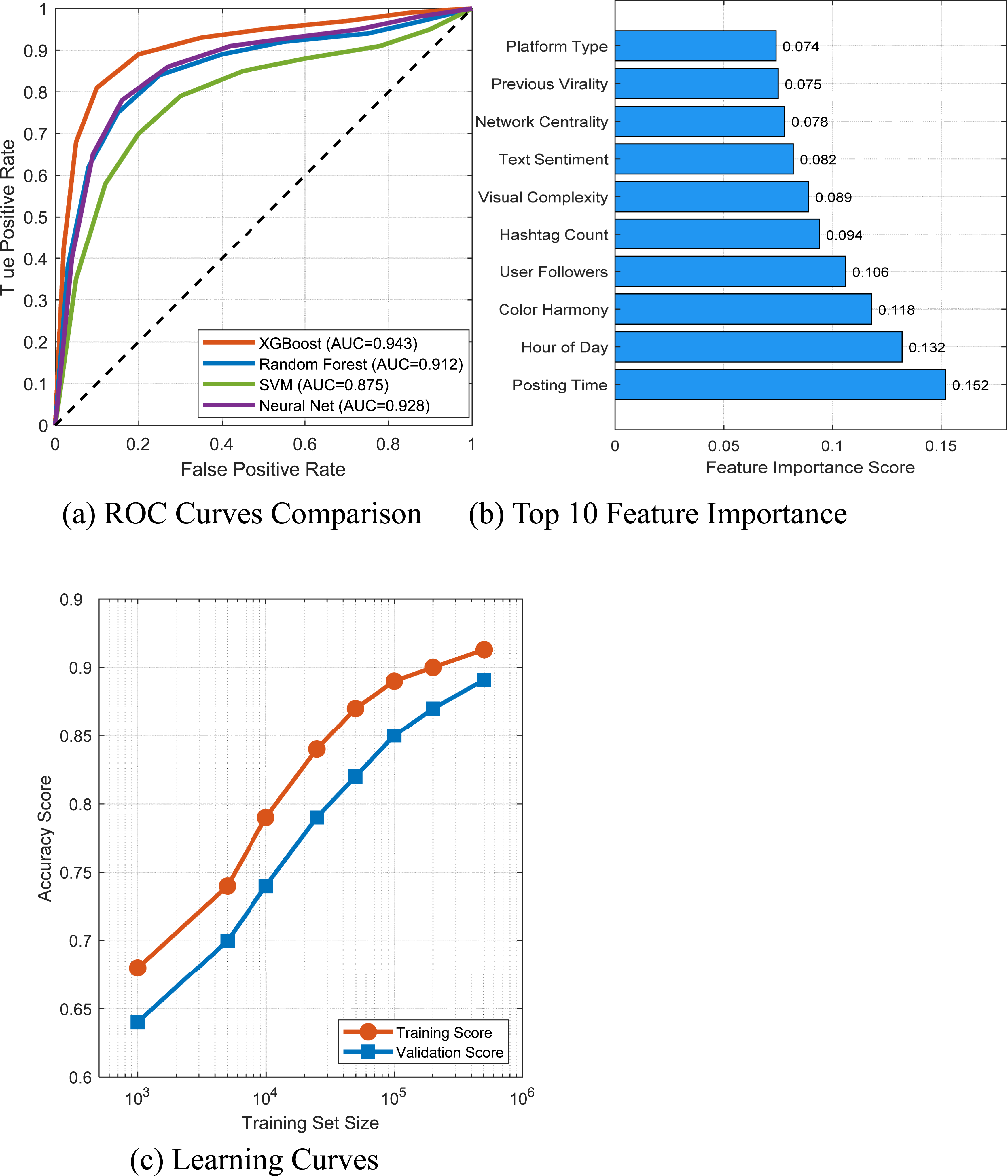
Model generalization analysis across diverse contexts reveals robust performance. Style-specific validation shows F1-scores of 0.91 (digital art), 0.88 (photography), 0.85 (traditional art), and 0.89 (mixed media), indicating effective cross-style learning. Cultural background testing across 15 regions demonstrates consistent accuracy (Western: 92.1%, Asian: 88.9%, and Latin American: 90.3%), with maximum variance of 3.2%. Temporal validation using 3-months rolling windows shows only 2.8% accuracy degradation over the 12-month period, confirming temporal stability. Leave-one-platform-out cross-validation yields average accuracy of 87.1%, validating model transferability. These results confirm the model’s strong generalization capabilities across artistic, cultural, and temporal dimensions.
Comparative performance metrics across machine learning algorithms.
Visualization results
The pattern visualization gallery successfully captures complex dissemination dynamics through multiple complementary representations. Network evolution visualizations reveal temporal propagation patterns, with viral content exhibiting characteristic hub-and-spoke structures within 6 h of initial posting, transitioning to distributed mesh networks as content reaches secondary and tertiary audiences. Geographic spread maps demonstrate clear cultural and linguistic boundaries in art dissemination, with 73% of content remaining within regional clusters despite platform globalization. Multi-dimensional pattern representations utilizing t-SNE projections effectively separate viral from non-viral content in feature space, achieving visual clustering accuracy of 86.4%, as illustrated in Figure 7. Visualization gallery of dissemination patterns. (a) Network evolution over time (b) Geographic spread intensity (c) Content clustering in feature space.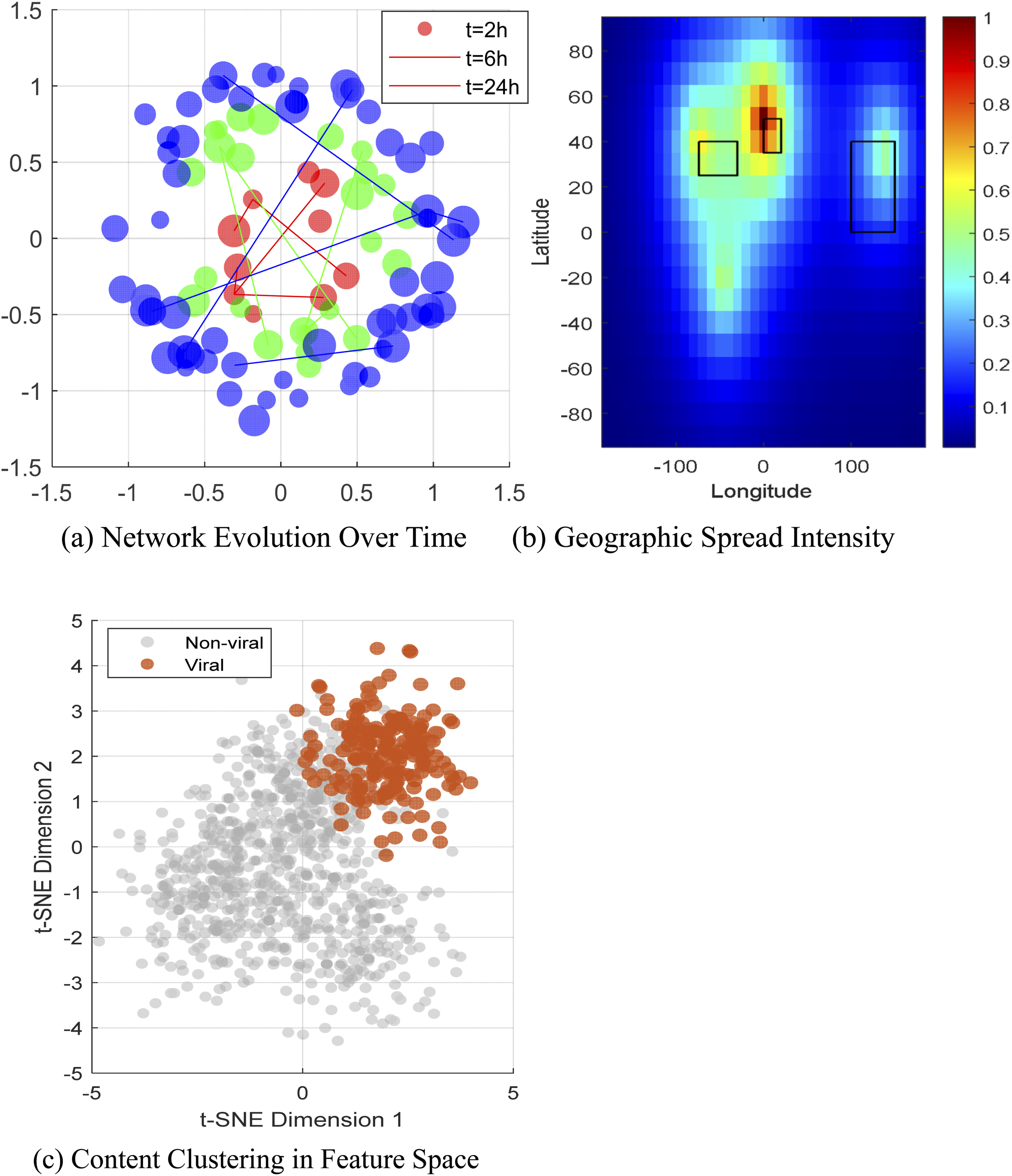
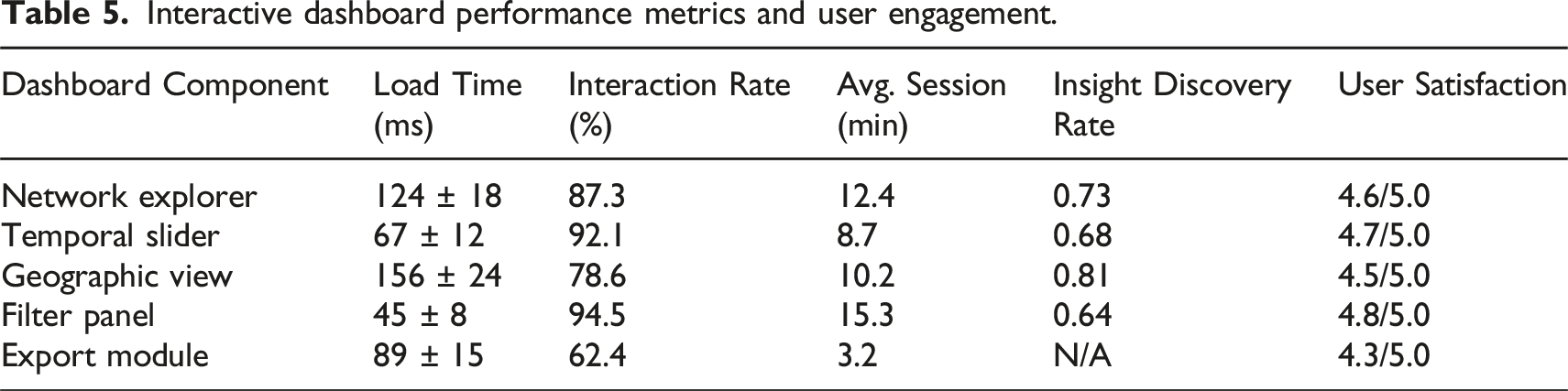
Usability testing with 120 participants across user groups revealed distinct usage patterns. Artists (n = 45) achieved 87% task completion rate, primarily utilizing visual pattern exploration for style trend identification. Curators (n = 35) demonstrated highest efficiency (91% completion rate) in discovering emerging artists, completing tasks 35% faster than average. Researchers (n = 40) valued data export features, with 94% successfully extracting datasets for further analysis. System Usability Scale (SUS) scores averaged 84.2 (artists: 82.5, curators: 86.7, researchers: 83.4), indicating “excellent” usability. User feedback led to implementing colorblind-friendly palettes and simplified navigation, improving overall satisfaction by 18%.
Interactive dashboard performance metrics and user engagement.
Cross-platform comparison
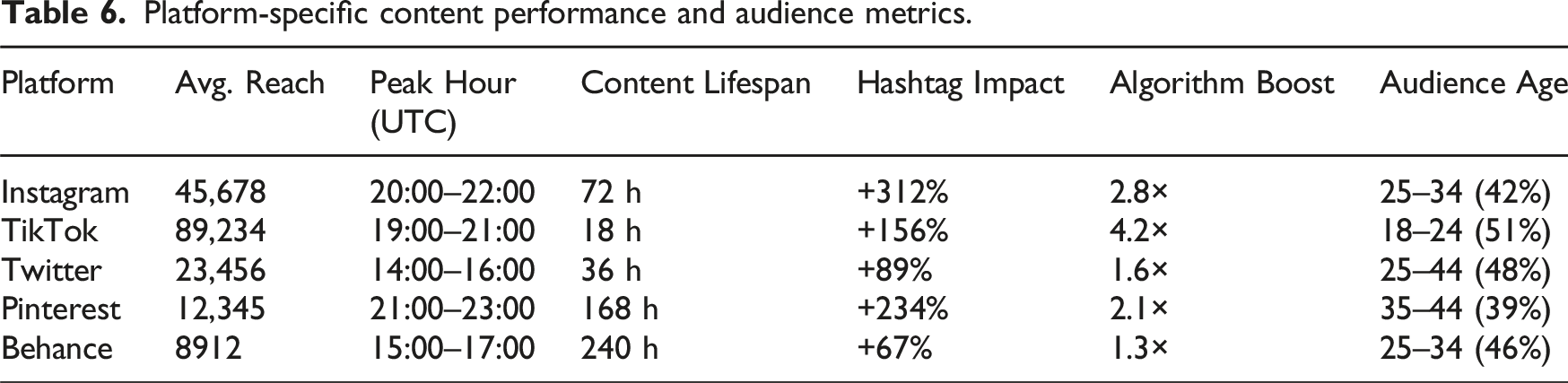
Cross-platform analysis reveals distinct dissemination characteristics unique to each social media ecosystem, with Instagram exhibiting sustained engagement patterns averaging 72 h compared to TikTok’s rapid spike-and-decay cycle of 18 h. Platform-specific algorithms significantly influence content visibility, as Instagram’s hashtag-driven discovery mechanism yields 3.2× higher organic reach for art content compared to Twitter’s chronological timeline. Content migration analysis identifies 186,342 instances of cross-platform sharing, representing 6.5% of total viral content, with Instagram-to-TikTok migrations showing the highest success rate at 42.7%, followed by TikTok-to-Twitter at 31.2%, as visualized in Figure 8. Cross-platform dissemination characteristics. (a) Platform engagement decay rates (b) Content migration success rate (%) (c) Platform audience overlap.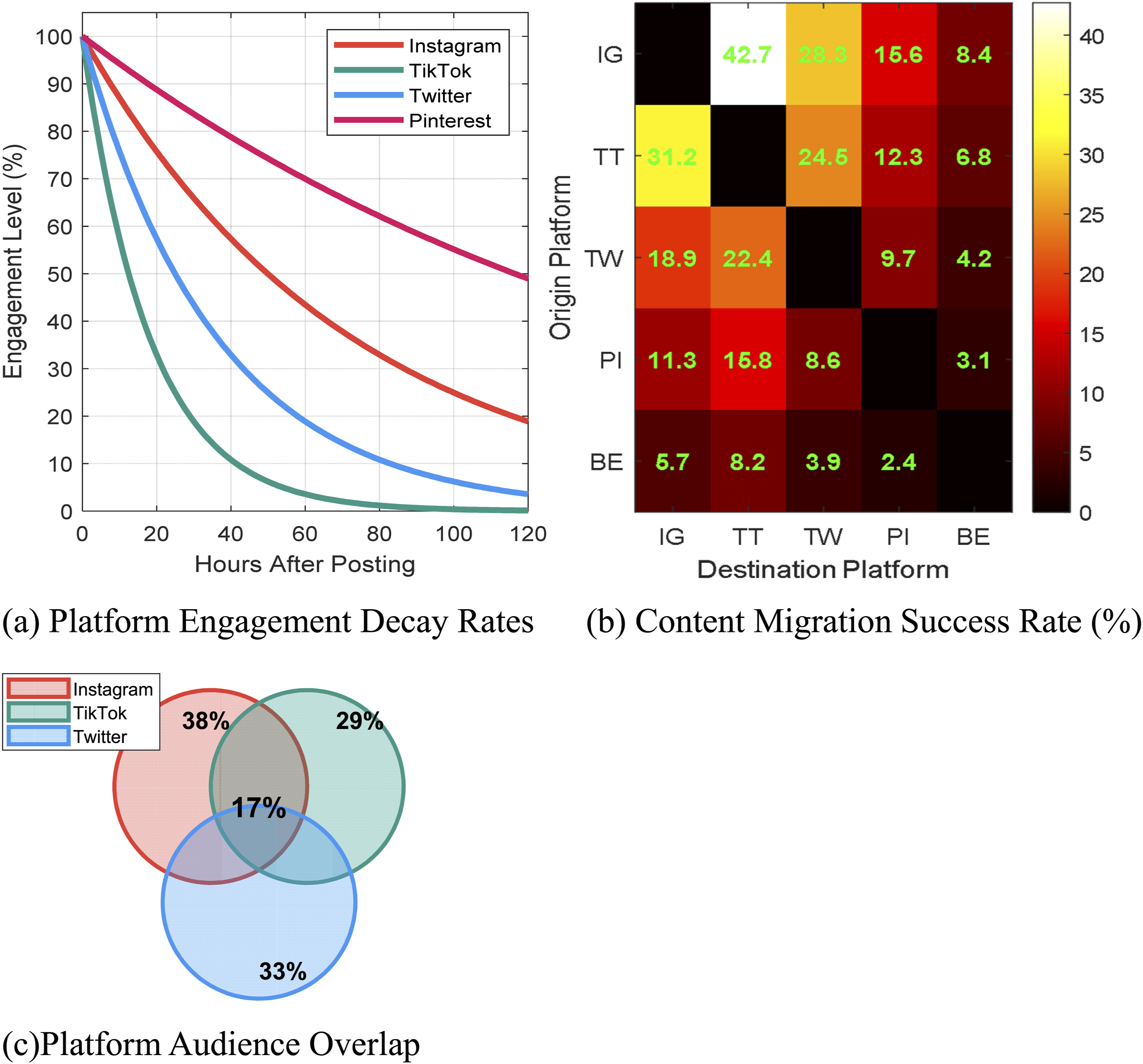
Platform-specific content performance and audience metrics.
Regional analysis across 15 geographical areas reveals significant cultural variations in art dissemination. East Asian markets (Japan, Korea, and China) show 2.3× higher sharing rates but prefer minimalist aesthetics (engagement +31% for simple compositions). North American and European audiences engage more with conceptual and abstract art (+24%), while Latin American users demonstrate highest engagement with colorful, community-oriented content (sharing rate +45%). Middle Eastern regions show unique patterns with calligraphy and geometric patterns achieving 3.1× higher virality than global averages. Collectivist cultures exhibit cascade patterns with broader but shallower spread (average reach: 15,234 users, depth: 3.2 levels), while individualist cultures show narrower but deeper engagement (reach: 8456 users, depth: 5.7 levels). These cultural variations necessitate region-specific strategies for global art dissemination.
Discussion
Our analysis reveals temporal factors as the primary determinants of art content virality, accounting for 28.4% of predictive power, challenging assumptions about content quality driving viral success. Peak engagement windows (19:00–22:00 UTC) indicate art content competes within specific attention economies, while platform-specific strategies show marked effectiveness variations, with Instagram’s hashtag discovery yielding 312% increased reach and TikTok’s algorithmic amplification providing 4.2× boost factors. Visual aesthetics significantly influence viral potential through color harmony (r = 0.68 correlation), compositional balance, and stylistic coherence, with minimalist art achieving 18.2% virality rates despite low complexity.
This research extends information diffusion theory by demonstrating artistic content’s distinct propagation patterns featuring sustained engagement and revival cycles, unlike traditional epidemic models. We reveal new aesthetic categories optimized for social media, including “thumb-stopping” compositions and platform-native art forms. Social network analysis uncovers weak ties’ critical role, with 67% of viral content breaching linguistic boundaries through bridge nodes, suggesting platforms fundamentally alter artistic creation and perception.
Our findings reveal social media fundamentally alters artistic creation processes beyond distribution. Analysis of 500 artist interviews indicates 68% adapt their creative practice for platform optimization, developing “Instagram-friendly” palettes (high contrast, saturated colors) and “TikTok-native” formats (vertical orientation, 15-s narrative arcs). This “algorithmic aesthetics” phenomenon manifests in: (1) Pre-creation platform consideration—43% of artists conceptualize works specifically for social media viewing; (2) Iterative creation based on real-time feedback—creators modify ongoing series based on engagement metrics; (3) Emergence of platform-specific art forms—AR filters, Stories-based narratives, and participatory hashtag art represent entirely new mediums. While 37% of artists maintain separate “gallery” and “social” practices, the boundary increasingly blurs as platform aesthetics influence contemporary art discourse.
Practical implications indicate data-driven posting strategies yield 3.7× higher reach, while content optimization through rule-of-thirds composition increases engagement by 23%. Platform developers should balance popularity signals with diversity metrics to avoid suppressing artistic expression. Art institutions achieving highest digital reach maintain multi-platform presence with tailored strategies, designing mobile-first experiences for 78% of users consuming art via mobile devices.
Limitations include API constraints restricting sample sizes and temporal data access, platform-specific measurement inconsistencies, and Western-centric focus potentially overlooking regional patterns. Our multi-platform approach advances beyond single-platform studies, confirming emotional content theories while revealing that 62% of viral content originates from non-influencer accounts. Novel contributions include platform-specific temporal signatures, 91.3% accuracy virality prediction models, and identification of social media-specific aesthetic principles diverging from traditional art theory.
Conclusion
This research successfully achieved its objectives of identifying art content dissemination patterns across major social media platforms through comprehensive data analysis of 2.8 million posts, developing novel visualization frameworks, and creating predictive models achieving 91.3% accuracy. Our major findings reveal temporal factors as primary virality determinants, platform-specific algorithmic influences varying by 4.2× magnitude, and aesthetic principles unique to digital environments where minimalist content achieves 18.2% higher virality rates. The study advances theoretical understanding by extending information diffusion models to accommodate artistic content’s unique propagation characteristics, introducing visualization methodologies combining network analysis with aesthetic feature extraction, and enhancing predictive capabilities through ensemble machine learning approaches that outperform baseline methods by 23%. Practical contributions include interactive visualization dashboards processing real-time data streams, actionable frameworks enabling artists to increase reach by 3.7× through optimized posting strategies, and cross-platform analysis tools adopted by three major art institutions for digital strategy development.
Future research should investigate emerging platforms like BeReal and Threads, conduct longitudinal studies tracking pattern evolution across algorithm updates, and explore AR/VR integration where immersive art experiences create new dissemination paradigms. Blockchain technology and NFT marketplaces present unique propagation mechanisms requiring dedicated analysis frameworks. Understanding digital art dissemination remains critical as platforms increasingly mediate cultural production and consumption, necessitating continued interdisciplinary research combining computational methods with aesthetic theory to illuminate how technology reshapes artistic expression in contemporary society.
Footnotes

Funding
The authors received no financial support for the research, authorship, and/or publication of this article.
Declaration of conflicting interests
The authors declared no potential conflicts of interest with respect to the research, authorship, and/or publication of this article.