



Abstract
This study concerns the incidence and aetiology of breach of youth community sentences. A between-groups archival study compared those who breached with those who did not, on socio-demographic and criminogenic factors. Breachers were a minority, likely to breach repeatedly and were similar to those who re-offended. Whether they breach or re-offend may depend on something other than the characteristics of the Order and the young person’s situation. Youth Justice Professionals should be mindful of the identified areas of need and responsivity when considering compliance.
Introduction
Context
Youth Courts in England and Wales have several sentencing options when dealing with young people convicted of a crime. If a Discharge or Fine is not deemed appropriate, three other options are available. These are Referral Orders (ROs), Youth Rehabilitation Orders (YROs) and Detention and Training Orders (DTOs) (Sentencing Council, n.d.). These sentences usually include a period of supervision by Youth Justice Professionals in the community. The scaled approach (Youth Justice Board (YJB), 2010c) stipulates the level of intervention a young person should receive based on the practitioner’s assessment and is utilised alongside these Orders; this means that the frequency and intensity of supervision will vary. Additionally, Intensive Supervision and Surveillance (ISS) can be added to some Orders and requires a minimum of 25 hours programmed contact time each week (including evenings and weekends) (YJB, 2013a). If a young person is not willing or able to follow the requirements of their Order and the Youth Justice practitioner assesses this non-compliance as unacceptable, the young person will be returned to Court for breach proceedings. The Court must then decide how to respond to the young person’s non-compliance.
Failures to comply include not attending or being unacceptably late for a planned appointment without good reason, behaviour that is assessed as unacceptable in meetings and not adhering to a curfew (YJB, 2010b, 2013a). This means a young person can be breached, returned to Court and potentially sentenced to custody without committing any further offence. Furthermore, this can happen even when the initial offence would not warrant a custodial sentence. 1 Breach offences were the third most common primary offence of young people (16%) in custody in 2011/2012 (YJB, 2013b) and the fourth most common primary offence (14%) in 2012/2013 (YJB, 2014c). The rate of breaches and resulting further criminalisation of young people has become a topic of concern (Glover and Hibbert, 2008; Hart, 2010, 2011a; YJB, 2010c).
The decision to breach permits discretion and can be complicated for professionals. Practitioners must consider potentially conflicting information regarding youth justice and youth welfare requirements and are not always agreed about what constitutes engagement and participation (Mori, 2010; Stephenson et al., 2011; YJB, 2010b, 2013a). Also, it is worth noting that Youth Offending Teams (YOTs), the multi-disciplinary teams whose responsibility it is in England and Wales to supervise young offenders, must do their best to engage and support a young person (YJB, 2013a) and their efforts and flexibility are discussed as part of breach proceedings. Buffers exist between non-compliance and breach proceedings to help prioritise the young person’s welfare and ensure that an Order is only returned to Court if serious compliance concerns are present.
The problem with breach
Increasing numbers of breaches have been attributed to what Bateman (2005, 2011b), among others, describes as a ‘Punitive Turn’ in Youth Justice in the mid-1990s. Policy initiatives led to tougher responses to youth crime (Home Office, 1997) and the YJB National Standards (YJB, 2000, 2004, 2010b) became prescriptive (Bateman, 2005), ultimately leading to a rise in the use of custody.
Young people who are breached while on Youth Justice Orders are further criminalised and accelerated up the Youth Justice Tariff (Bateman 2005). Hart (2011a) says that this punitive treatment of young offenders further drains resources and leads to increased negative outcomes for young people, such as disrupted education and potentially even increases the likelihood of re-offending.
Some positive progress has been made since Hart’s (2010, 2011a, 2011b) and Bateman’s (2011b) articles. The Court proven offence of Breach of a Statutory Order saw a proportional reduction of 61 percent between 2009/2010 and 2012/2013. This was the largest reduction in any proven offence rate during this period (YJB, 2014c). Also, changes in the National Standards (YJB, 2013a) required practitioners to take better account of young people’s individual needs when enforcing Statutory Orders. However, the lower rates of breaching overall did not seem to have an impact on the proportions of young people in custody for breaching – 14 percent in 2012/2013 (YJB, 2014c) cf. 17 percent in 2008/2009, 15 percent in 2009/2010, 13 percent in 2010/2011 and 16 percent in 2011/2012 (YJB, 2013b).
What is already known about young people who breach?
There has only been one study focusing specifically on young people who breach Statutory Orders (reported in Hart, 2010, 2011a, 2011b). There were two parts to this study: the official data about breach and the experience of breach. Official data indicated that boys, older offenders and Black and Mixed ethnicity offenders are over represented in the breach sample. In London, the difference across ethnicities was smaller and the difference between boys and girls was very small and in the other direction (i.e. girls were over-represented among those who received a disposal for breach). The qualitative stage revealed that high levels of disadvantage and a complex intersection of other socio-demographic factors were also relevant, findings that are consistent with Halsey et al. (2010) and Jacobson et al. (2010).
Two slightly different suggestions have been made about how young people who breach may differ from the general young offender population. Hart’s (2011a) sample of young people displayed a specific subset of needs that seem qualitatively different from those generally experienced by young people in the Youth Justice System and that directly impact on their ability to comply with an Order. For example, conflict from within the family was more likely to be associated with parental unwillingness or inability to care for the young person, potentially through mental illness. Alternatively, Bateman (2011a, 2011b) suggests that young people who breach would generate higher ASSET 2 scores (increased needs) because they are ‘more likely to lead chaotic lives, to suffer mental ill health, or to misuse drugs or alcohol’ (p. 179).
Further research is needed in this area for a number of reasons. First, there are doubts about the accuracy of the YJB data used previously (Hart, 2011a: 13). In addition, the interview data used in the study, while being detailed, are from a small sample and are not generalisable to the wider breach population. The data are also not compared against the experience of other compliant young offenders. Hart (2010) highlights some other specific gaps in the data she analysed (pp. 25–26; emphasis added):
Which ‘statutory orders’ are being breached,
The profile of young people breaching each type of order,
The disposals for breaching each type of order …,
The proportion of breach proceedings that do not result in a significant disposal,
The ethnicity of those in custody for breach,
The numbers/proportion of young people being breached more than once and their sentencing patterns,
The numbers of first time entrants to custody who are there solely for breach,
Index offences of those being breached.
Investigating the characteristics of young people who breach
When planning a more detailed study about young people who breach Statutory Orders, it was decided that data about young people already collected by YOTs on the Youth Offending Information System (YOIS) (see Note 2) could provide insight. Information stored on this system includes each young person’s offending and sentencing history, personal information, an evaluation of their personal characteristics and circumstances including their Scaled Approach Score (YJB, 2010c), summary data of interventions by social services (historical and current) including any periods of Looked after Child (LAC) status when the young person was in local authority care and a case diary of interventions and contacts by the YOT.
Hypotheses
Hypothesis 1. Compared with young people who are not returned to Court for breach during their study-order, young people who are breached will be older and are more likely to be female (Eastmanor 3 is an urban borough demographically similar to London) and of Black or Mixed ethnicity.
Hypothesis 2. Young people subject to less arduous Orders (e.g. shorter and less intensive) and ROs will be less likely to be returned to Court for breach than young people subject to longer and more arduous Orders.
Hypothesis 3. Young people who are returned to Court for breach will differ from those who are not in relation to risk of re-offending and of serious harm, but there will be no difference in type of index offence.
Hypothesis 4. Young people returned to Court for breach will differ from those who are not in relation to personal circumstances, interrelationships and characteristics relating to higher levels of need.
Hypothesis 5. Demographic factors will be associated with whether or not breaching ever occurs during a young person’s offending career. Young offenders who are female and of Black or Mixed ethnicity will be over-represented in the sample of young people who are ever (compared with never) returned to Court for breach.
Hypotheses 6. Offending histories will not be associated with ever breaching.
Hypothesis 7. The majority of the ever breach population will have breached more than once.
Method
Sample
A cross-sectional study was conducted on a sample of data about young people who were subject to ROs, YROs, YROs with ISS and DTO Custody Licenses in the urban borough of Eastmanor.
The sample consisted of information about all the young people known to Eastmanor’s Youth Offending Service (YOS) who started their sentence between June 2012 and December 2012. This sentence will be referred to as the Study-Order. Each Order and young person was tracked for a minimum of 18 months after the Study-Order started with data being collated in May and June 2014.
The sample consisted of data about 97 young people. At the start of their Study-Order, the youngest offender was 13.3 years old and the oldest was 18.2 years old (mean age = 16.4 years; standard deviation (SD) = 1.2 years). The Study-Order length ranged from 1 to 24 months long (mean = 9.5 months; S.D. = 4.2 months) and 44 of the Study-Orders were ROs (45.4%). See Table S.1 in the supplementary materials 4 for descriptive statistics of the sample. Full ethical approval and data protection measures were implemented. Again, please see supplementary materials for further information.
Design
This study comprises two between-groups analyses: the first considers factors associated with breach (and repeated breaches) in comparison to other possible Order outcomes, and the second examines potential differences between those young people who never breached with those who were breached at some point.
Phase 1
Focusing on the Study-Order, the sample was split into groups depending on the Order outcome:
Successful. The young person successfully completed the Order including early revocations and partial completions. 5
Breached. The young person was returned to Court for Breach.
Re-offended. The young person was convicted of a new offence (other than Breach) while subject to the Study-Order.
Transferred. The Order was not completed with Eastmanor YOS due to the young person’s case being transferred to another borough or being transferred to Probation.
Phase 2
The sample was split into two groups relating to breach as it occurred during the whole time each young person was known to the Youth Justice System (as recorded on YOIS) up until the point when data were collated:
Never breached. Young people with no Court appearances for breach
Ever breached. Young people with at least one Court appearance for breach
Materials
Specific YOIS information about each young person was sentencing history, ASSET assessment, case diaries, offences and proceedings. When data stored were incomplete, additional information was also drawn from Pre-Sentence Reports (PSR) and Breach Reports.
YOIS provides a central, official resource to access information about young offenders on Statutory Orders. However, information and ASSET scores recorded in YOIS are reliant on the quality of the data input by Youth Justice professionals. Previous research has been positive, finding ASSET scores predict re-offending well (Wilson and Hinks, 2011).
Following Eastmanor’s Inspection of Youth Offending (reference removed for anonymity), there was internal and external auditing and all Core Leaders (Case Responsible Officers) have received ongoing training from an experienced, external Youth Justice Practitioner to improve the standard of recording and adherence to National Standards (YJB, 2013a, 2014b). The time of data collation was set at a point at which revised processes should have been able to bed down.
Procedure
Phase 1
After data coding, between-groups analyses were conducted to compare Gender Age at time of sentence Ethnicity Religion Order type Order Length Electronically monitored curfew (EMC) requirement Dynamic ASSET score Risk of Serious Harm (ROSH) Index Offence Core Leader of Supervising Unit LAC Status Family/Home Environment Substance Use
Additionally, a multinomial logistic regression (Field, 2013; Menard, 1995) was used to create a model that could predict Order outcome from offending behaviour characteristics (ASSET score and ROSH categorisation).
Finally, a log-linear analysis (Field, 2013) was conducted to explore any association and interaction between a breach outcome and personal characteristics (LAC status, family/home environment and substance use).
Phase 2
The incidence of breach over time was analysed. The groups were compared on Gender Ethnicity Religion Total number of offences Total number of Court disposals
For more information about data collation and coding, please see supplementary materials. Table 1 provides a summary of the information drawn on for the Hierarchical Log-Linear Analysis.
Sources of information and rating method for personal circumstances factors used in Study One Hierarchical Log-Linear Analysis.
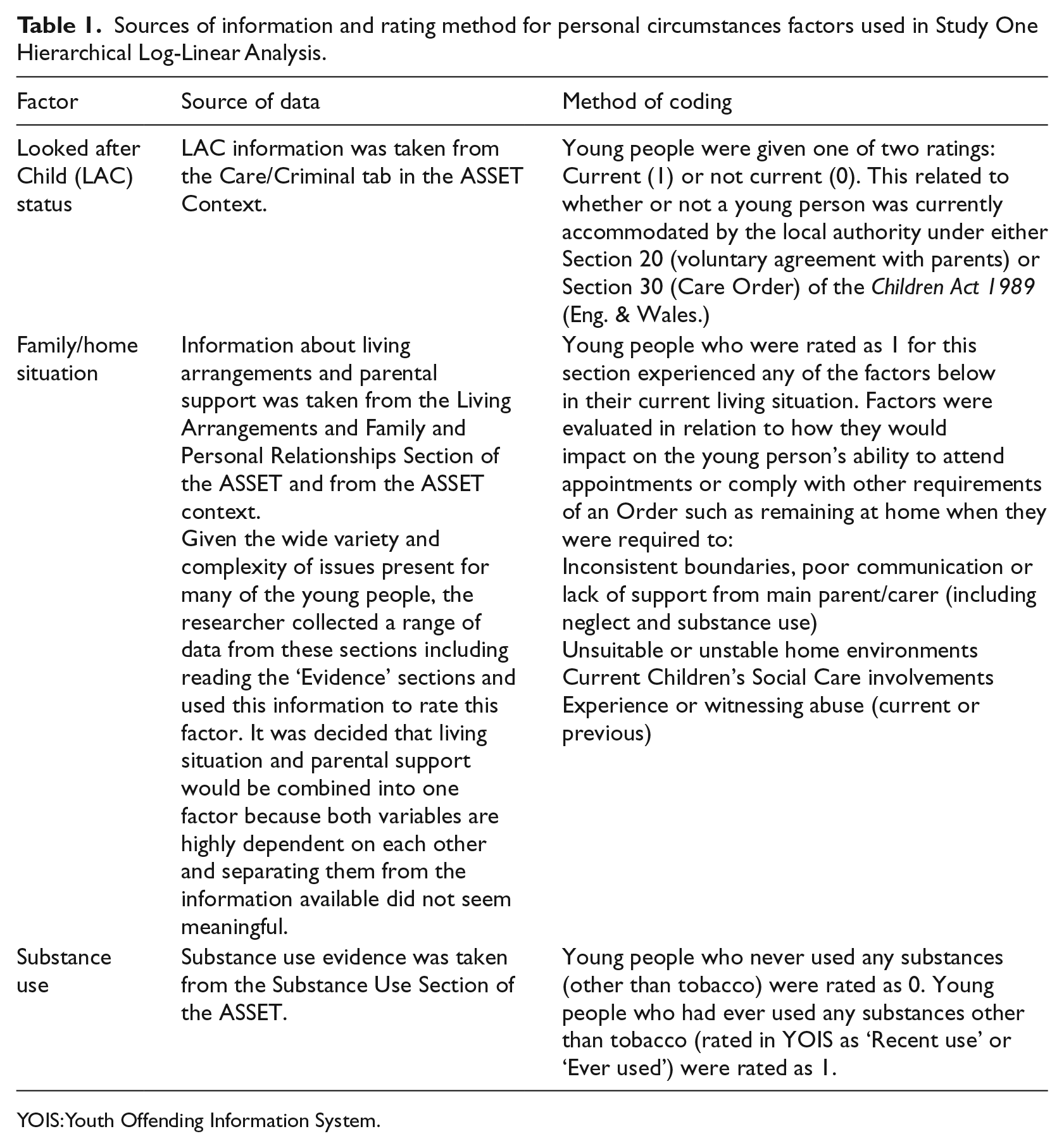
YOIS: Youth Offending Information System.
Limitations
Generalisability
The generalisability of these findings is limited because it was not possible to compare level of or trends in breach in our sample with those nationally or in other YOTs due to the dearth of available information (as noted by Hart, 2010, 2011a, 2011b).
It was also not possible to conduct inferential analysis between the sample and the local population because there were discrepancies in age ranges and classification categories between the sample and the census data. In the sample, ages ranged from 13 to 18 years, whereas available age range divisions in the census data were 10–14, 15, 16–17 and 18–19. Religion, nationality and ethnicity categorisations did not correlate between the two sets of data. For example, the number of Turkish young people was reported in the sample but not the census data.
Finally, in terms of generalisability, Eastmanor has a unified Youth Service which combines the YOS, the Youth Support Service and Young People’s Services in one organisation (reference removed for anonymity). As such, the ethos and practice of Eastmanor YOS may differ from those of more traditional YOTs, meaning that findings in this study may not be generalisable to some other YOTs, although all will work within National Standards (YJB, 2010b, 2013a).
Data sampling, normality assumption and sample size
The small sample size (n = 97) and low number of breachers in Phase 1 (n = 13) will also limit the generalisability of this study to the wider population of young offenders in general and breachers in particular. Furthermore, the small sample and group size may have resulted in floor effects (see contingency tables).
In June 2014, data pertaining to all young people sentenced between June and December 2012 were extracted. These data included all offending and sentencing history data that were known to Eastmanor YOS for each young person until June 2014 but not after. This means that the entire offending careers of some young people (who would have transitioned into official adulthood) were captured. However, for other young people, only part of their offending career may have been captured (as they could have gone on to offend subsequently). Relatedly, some of the offending of other young people may have occurred while they were the responsibility of other areas or after being transferred to Probation and records may have been incomplete. It should also be noted that only proven re-offending was used in this study and undetected offending could not be included. Taken together, this means that Phase 2 is based on incomplete but best available data.
It was also not possible to create full models that included all factors thought to affect breach because there would have been too many empty cells in the model. Instead, a number of individual analyses and smaller models were studied. This meant that all possible interactions between different types of factors could not be investigated in this study.
The sample was not randomly allocated to intervention and was not normally distributed. This could be problematic as the sample violates the assumptions of some of the statistical analyses. Although this may point to a need for caution in interpretation (Osborne, 2013), it is not that uncommon in quantitative social science and we have drawn on the data as the best available information to elucidate a neglected topic in Youth Justice.
No information about learning needs and mental health
Information was also insufficient to allow for consideration of mental health and learning needs. Furthermore, Speech, Language and Communication Needs (SLCN) are an issue of growing concern for services aimed at young offenders (Nacro, 2011; Royal College of Speech and Language Therapists (RCSLT), 2009). Unfortunately, the then current ASSET tool did not capture any information about SLCN, so this study was not able to explore this possible cause of breaches. AssetPlus (see Note 2) should capture these data allowing future research to explore this (YJB, 2014a).
Findings 6
The demographic characteristics of the young people whose records were contained within the dataset are summarised in Table 2, which compares the research sample as closely as possible against the most recent census data for Eastmanor (see ‘Limitations’).
Young people in sample compared with census data.
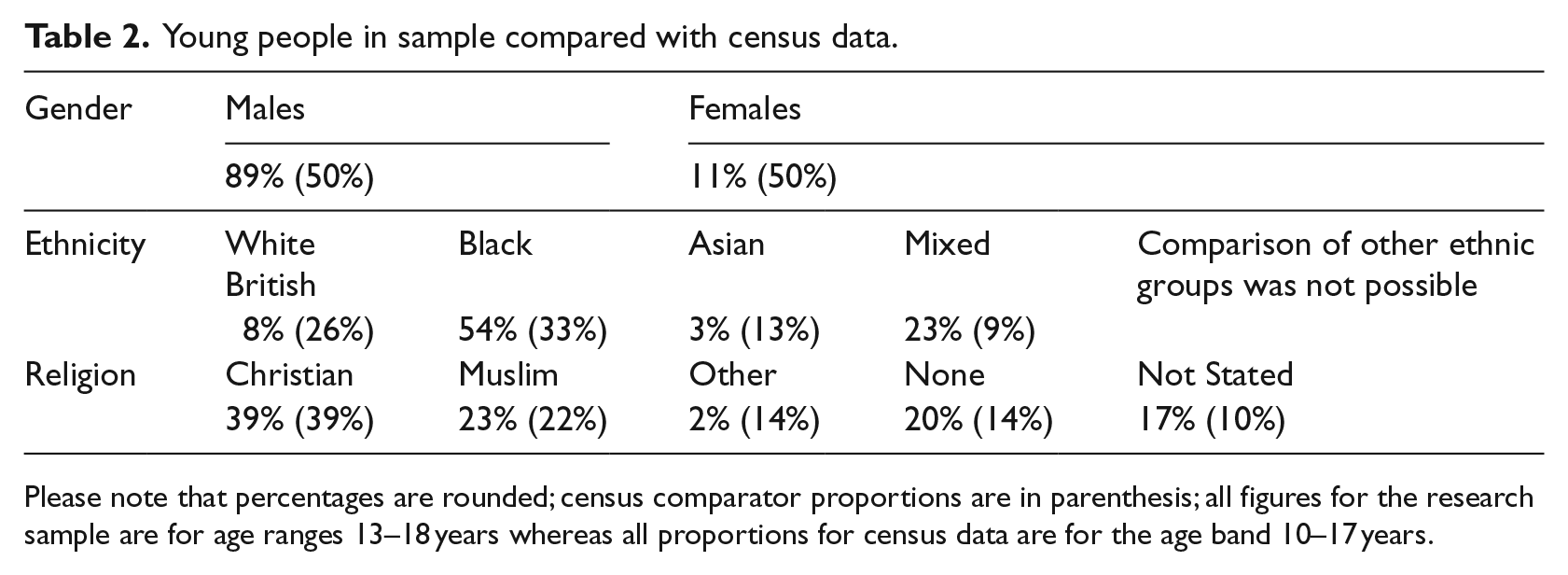
Please note that percentages are rounded; census comparator proportions are in parenthesis; all figures for the research sample are for age ranges 13–18 years whereas all proportions for census data are for the age band 10–17 years.
Phase 1
The final dataset was based on 96 young people (one set of records was excluded). Only 13 of the Study-Orders were breached (13.40%). There were 42 first-time entrants in the dataset, of whom 2 breached their order. There were no significant associations between gender, age, ethnicity or religion and Study-Order outcome. In other words, the demographic characteristics of those who breached were broadly similar to the sample as a whole. Contingency tables and additional data for non-significant findings can be found in the supplementary materials. Table 3 provides descriptive data for Study-Order outcomes.
Descriptive statistics of Study-Order by outcome.
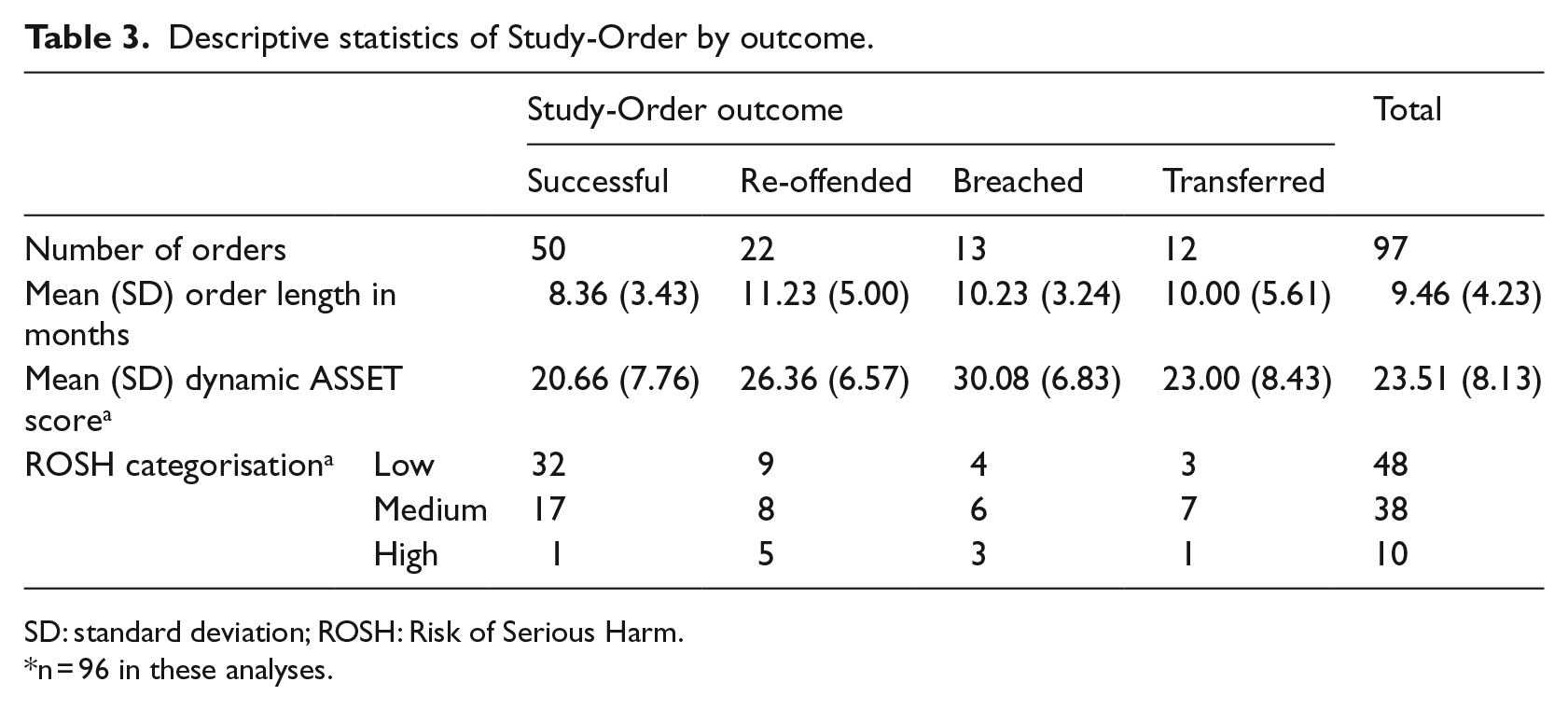
SD: standard deviation; ROSH: Risk of Serious Harm.
n = 96 in these analyses.
The most common reason for breach was missed appointments, the only reason for breach in four cases and part of the reason in seven. One young person was breached for entering an exclusion zone. Other common contributions to breach were EMC breaches (n = 5) and unacceptable behaviour (n = 2) (see Table S.2 in the supplementary materials for all stated reasons for breaches).
The most common Court disposal for breach was a YRO (n = 5). Only two young people received custodial sentences for breach. Most young people’s Orders (n = 7) were revoked and resentenced to an Order similar to the one they were originally serving, with only two being more serious.
Order length
A one-way between-groups analysis of variance (ANOVA) was conducted to compare the mean Order length for each of the four Study-Order outcomes, and post hoc comparisons were conducted using the Hochberg’s GT2. A significant difference (p < .05) was found between the mean length of successfully completed Orders (µ = 8.36, SD = 3.43) and Orders during which the young person re-offended (µ = 11.23, SD = 5.00). No other significant differences at the 0.05 level were found between the mean Order lengths of the successful, re-offended, transferred (µ = 10.00, SD = 5.61) or breached (µ = 10.23, SD = 3.24) groups. This suggests a young person who committed a further offence (not including breach) is likely to have been sentenced to a longer Order than a young person who successfully completed their Order. However, of relevance to this study, the mean Order lengths of young people who breached did not differ significantly from the mean Order length of young people whose Orders ended in any other outcome.
Order type
There was a significant association between type of Study-Order and Study-Order outcome, χ2(9) = 24.30, p < .01. (See supplementary materials Table S.3 for contingency table and Figure 1.) Looking at standardised residuals greater than ±1.96 (Field, 2013), it was observed that young people sentenced to a YRO with ISS were more likely to re-offend and young people sentenced to a RO were more likely to complete successfully. Based on the odds ratios, young people subject to a YRO with ISS were 8.11 times more likely than young people subject to any other Order to be convicted of a further offence (other than breach). Young people subject to a RO were 5.19 times more likely than young people subject to other disposals to successfully complete their Order.
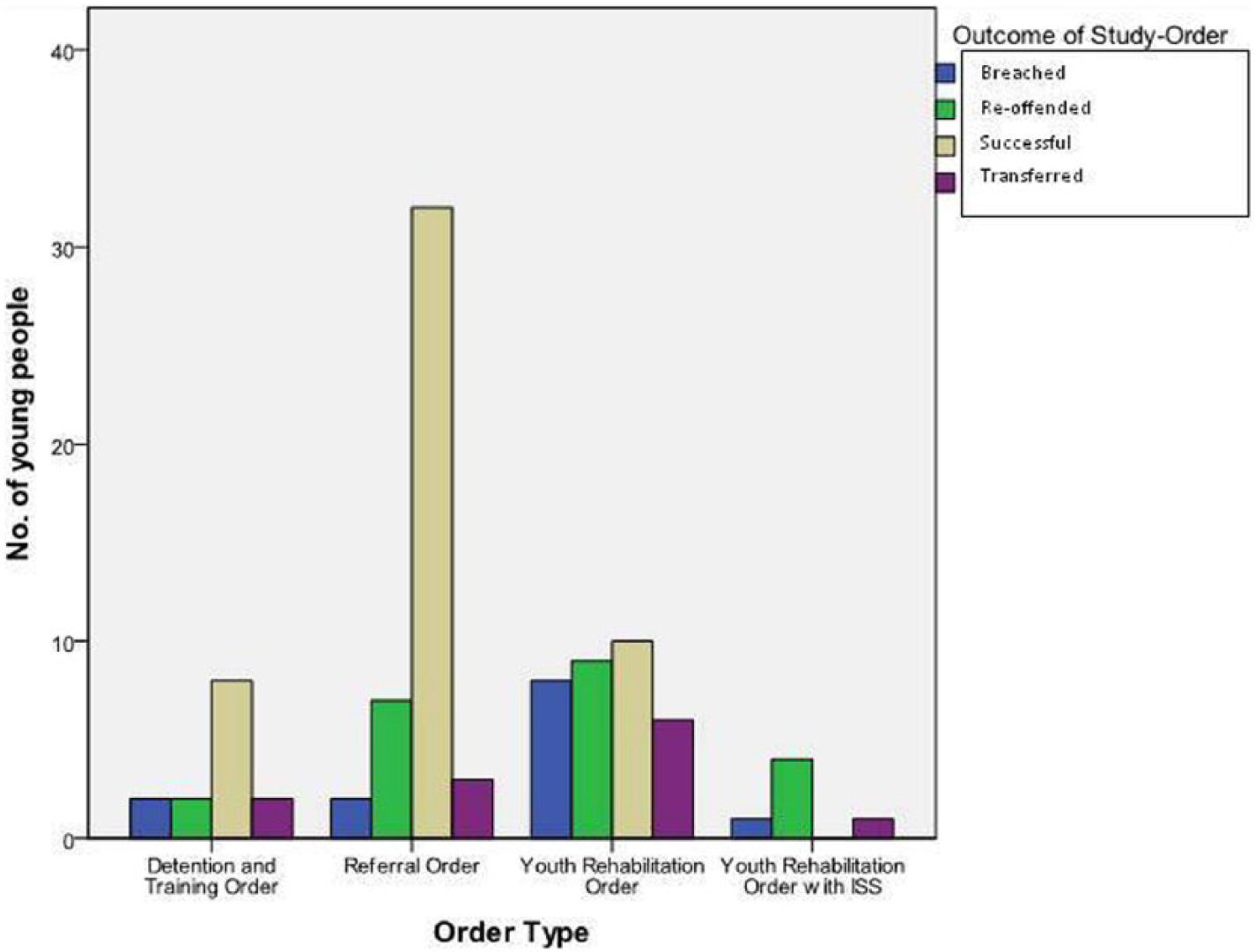
Distribution of Study-Order Outcomes by Study-Order Type.
There was also a significant association between having an EMC requirement attached to the Order and Study-Order outcome (EMC) χ2(3) = 10.57, p < .05 (see Table S.4 for contingency table). Standardised residuals greater than ±1.96 (Field, 2013) indicate that young people who were subject to an EMC were more likely to breach than would have been expected. Based on odds ratios, young people who were subject to an EMC were 4.51 times more likely to breach than young people who were not.
Time to breach
The mean time on an Order prior to breach being instigated was 80.08 days (SD = 83.79 days), and the mean proportion of the Order served prior to breach being instigated was 25.7 percent (SD = 24.3%). Although there was considerable variation in the time to breach, most young people were returned to Court within the first quarter of their Order.
Offending characteristics
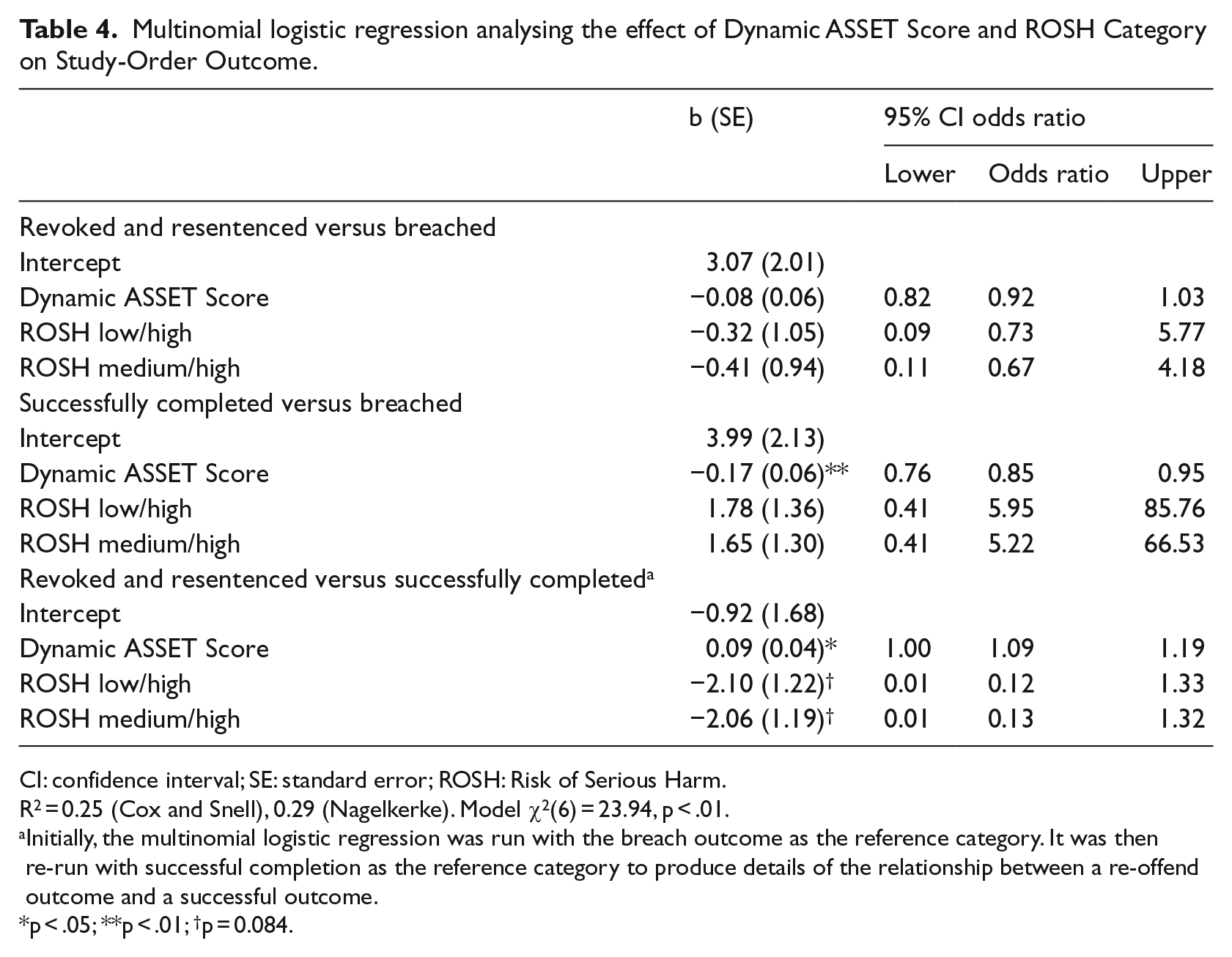
A stepwise multinomial logistic regression was carried out to test whether the outcome could be predicted by ASSET Score, ROSH to others rating or an interaction between the two. The results of this multinomial logistic regression are reported in Table 4. No interaction effects could be added to the model and two main effects were significant, although of limited effect size. Please note that 12 orders were excluded from this analysis as the young people concerned were transferred before the end of the order and the outcomes were unknown.
Multinomial logistic regression analysing the effect of Dynamic ASSET Score and ROSH Category on Study-Order Outcome.
CI: confidence interval; SE: standard error; ROSH: Risk of Serious Harm.
R2 = 0.25 (Cox and Snell), 0.29 (Nagelkerke). Model χ2(6) = 23.94, p < .01.
Initially, the multinomial logistic regression was run with the breach outcome as the reference category. It was then re-run with successful completion as the reference category to produce details of the relationship between a re-offend outcome and a successful outcome.
p < .05; **p < .01; †p = 0.084.
When breach outcome was compared against a successful completion outcome, then the Dynamic ASSET score significantly predicted whether a young person would successfully complete their Order, b = −0.17, Wald χ2(1) = 8.34, p < .01. The ASSET score also predicted whether a young person would successfully complete their Study-Order when it was compared against being convicted of a further offence (not including breach), b = 0.09, Wald χ2(1) = 3.93, p < .05. In both cases, lower ASSET scores were associated with successful completion. Although ROSH scores seem to have potentially greater effect sizes, the findings did not reach significance.
Offence, situational and personal factors
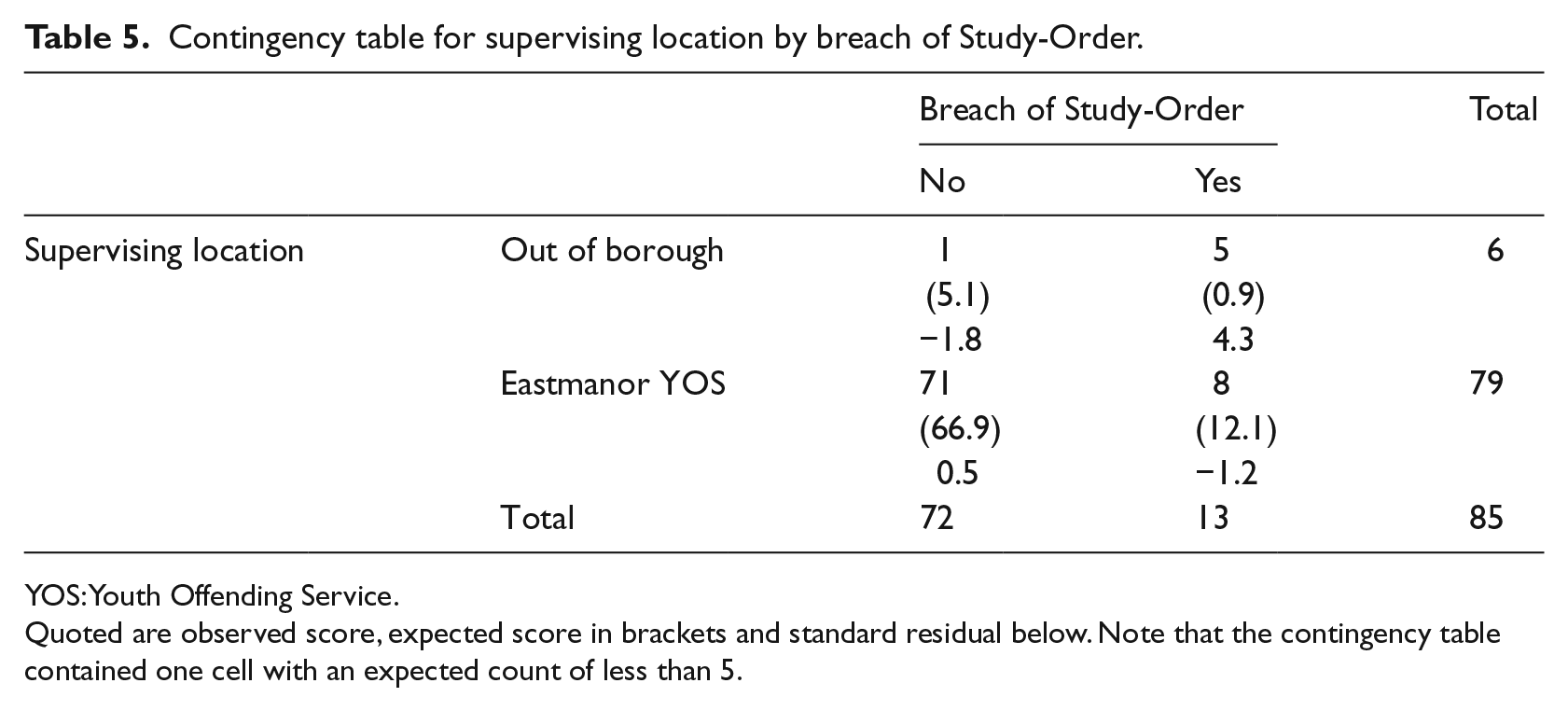
The most common index offence in the sample was Robbery (n = 21). There was no significant association between index offence and breach outcome. Analysing the relationship between Core Leader (the case-responsible officer) and breach outcome was not possible. There was a significant association between a breach outcome and the supervising authority, χ2(1) = 23.07, p < .001 (see Table 5 for Contingency Table). Based on the odds ratio, young people supervised out of borough under a caretaking agreement were 44.38 times more likely to be breached than those supervised by Eastmanor YOS, although the very low numbers involved should be noted.
Contingency table for supervising location by breach of Study-Order.
YOS: Youth Offending Service.
Quoted are observed score, expected score in brackets and standard residual below. Note that the contingency table contained one cell with an expected count of less than 5.
Personal circumstances
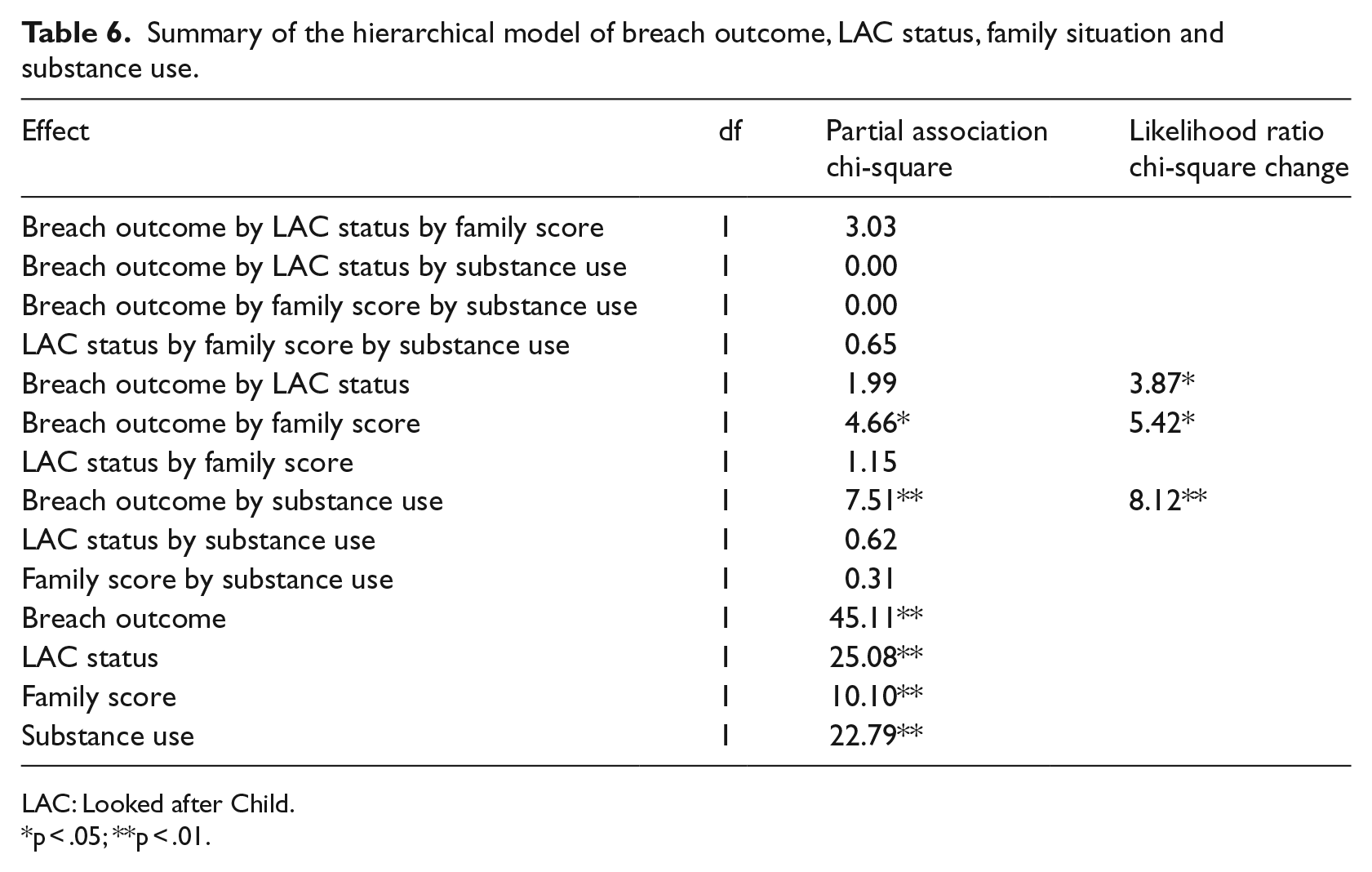
A hierarchical log-linear model of breach outcome, LAC status, family situation and substance use was developed using a four-way frequency analysis with the data from 85 young people. Using backward elimination of effects, a model was produced that included three of the two-way effects but none of the other three two-way effects. The likelihood ratio of the model was χ2(8) = 5.22, p = .734. Neither the four-way effect nor any of the three-way or first-order effects were found to be significant. Table 6 summarises the model with the results of significance tests (partial likelihood ratio chi-square) and likelihood chi-square change statistics for the retained effects.
Summary of the hierarchical model of breach outcome, LAC status, family situation and substance use.
LAC: Looked after Child.
p < .05; **p < .01.
Significant two-way effects are summarised below. Overall, young people were less likely to breach their Order than not to breach them, but there were some circumstances and characteristics that did increase the likelihood of breach.
The odds ratio shows that looked after (LAC) young people were 7.01 times more likely to breach their Order than young people who were not looked after χ2(1) = 4.37, p < .05 (see supplementary Table S.5); similarly, the odds ratio shows us that young people with family issues were 7.20 times more likely to breach than those who did not have family issues χ2(1) = 4.43, p < .05 (see Table S.6 for the Contingency table). Although it was not possible to calculate an odds ratio, Table S.7 indicates that all of the young people who breached their order were classified as misusing substances (although here too, there were still more young people who did not breach their order than did) χ2(1) = 504, p < .05.
Phase 2
The second phase of the study was an exploratory look at breaches by each young person during all the time they were in contact with the Youth Justice System, that is, not just during their study-order. Young people in the sample were split into two groups for comparison, those who had at least one Court appearance for breach on their YOIS record (ever breached) and those who did not have any Court appearances for breach on their YOIS records (never breached). In the sample, 33 young people (34.0%) had ever been returned to Court for breach proceedings, while 64 (66.0%) had not.
Most young people who breached, breached more than once (25/33 or 75.8%). The number of breaches ranged from one to seven. The mean number of breaches for the ever breached group was 2.73 breaches (SD = 1.59). There were no significant associations found between ever breaching and gender, ethnicity or religion. The dataset was also considered in relation to sentencing history and offending careers.
The total number of offences committed (not including breach) and the number of disposals 7 received were compared between the ever breach and the never breach groups using the Mann–Whitney test because these data were not normally distributed. Young people who had ever been returned to Court for breach committed significantly more offences (not including breach) during their contact with the Youth Justice System (Mdn = 8) than young people who had never been returned to Court for breach (Mdn = 3), U = 1676.00, z = 4.74, p < .01, r = 0.48. Young people who had ever been returned to Court for breach also received significantly more Court disposals during their contact with the Youth Justice System (Mdn = 6.00) than young people who had not (Mdn = 2.00), U = 1920.50, z = 6.66, p < .01, r = 0.68.
Discussion
Sample characteristics
From an approximated comparison between the sample and the 2011 census data (specific reference removed for anonymity), certain previously recognised trends in young offender populations were observed including a higher number of boys (YJB, 2014c) and of young people of Black ethnicity (YJB, 2010a). Although other demographic differences were found, no inferential analysis was possible (see ‘Limitations’).
Incidence of breach
In this study, 13.4 percent of all Orders that started during a 6-month period in Eastmanor were returned to Court for breach. There is no comparable finding to compare this against from the previous research. As expected, it is lower than the 31 percent of YROs with ISS that Hart (2011a) found to be breached. Although 43 percent of the sample were first time entrants to the Youth Justice System, only two of the breachers were. There was large variation in the time to breach among the 13 breachers, so as predicted, there was no specific time during a sentence when a young person seemed more at risk of breach. However, where compliance was an issue, breach occurred earlier rather than later in the Order in most cases. Reasons for breach varied and often included more than one type of failure to comply but, as predicted from previous findings (Hart, 2011a), missed appointments were the most common reasons for breach. This suggests that in relation to the engagement/participation debate (Mori, 2010), Eastmanor Youth Justice workers breached more for attendance-related compliance than for not participating (only two young people received a warning for behaviour during a session). Findings regarding sentencing for breaches indicated that they were broadly comparable with initial sentences, and as such, findings did not indicate an acceleration towards custody in Eastmanor (see concerns in Hart, 2010, 2011a, 2011b). However, it is worth noting that if a young person receives a similar order to one that was breached, the end date of the sentence is likely to be pushed back. This is tantamount to receiving an extension of the original Order and could be regarded as a punitive, rather than supportive, response, although this was not testable within the dataset.
Hypothesis 1. The hypothesis that young people who were returned to Court for breach would differ on demographic factors was not supported. There was no significant association of age, gender or ethnicity with Order outcome; this could in itself be a positive finding related to good practice in the borough. However, the lack of variation could also be due to the small sample size.
Hypothesis 2. The hypothesis that sentence characteristics will be associated with a breach outcome was partially supported. No association between Order length and breach was observed. Conversely, as expected, ROs were significantly more likely to be successfully completed than other Orders. Only 16.7 percent of YROs with ISS were breached; this is a lower proportion than the 31 percent of these Orders Hart, (2011a) found to be breached. It is also surprising that this proportion is not much larger than the overall proportion of Orders that were breached (13.4%). However, the high level of re-offending by young people on YROs with ISS could have meant that any tendency to breach these Orders was hidden by curtailment of the Order due to a new Court disposal. EMC requirements were associated with breach outcomes. This is consistent with Hart’s (2010, 2011a, 2011b) findings, and it should be noted that in both the EMC and ISS conditions, additional surveillance is part of the Order; thus, authorities are much more likely to find out about technical and other violations of an Order. Also, the most obvious confounding factor is that young people sentenced to longer and more intensive sentences will have committed a higher number of offences or more serious offences. The young person’s propensity to offending could, in turn, be related to their ability to complete a sentence successfully. This relates directly to the next hypothesis.
Hypothesis 3. The hypothesis that risk of re-offending and of serious harm to others will be associated with Order outcome was partially supported. The model was very effective at correctly identifying successful completers but not re-offenders or breachers. This suggests that in relation to offending factors, successful completers differ more from re-offenders and breachers than do re-offenders and breachers from each other.
Higher dynamic ASSET scores were associated with both breaching and re-offending when compared with successful completion. The finding for breach supports previous suggestions that high levels of need (as shown by high ASSET scores) will be associated with breach (Bateman, 2011b; Hart, 2010, 2011a, 2011b). The finding for re-offending while subject to an Order supports previous findings that high ASSET scores are predictive of re-offending (Wilson and Hinks, 2011). The breach group had a higher mean ASSET score than the re-offender group (although not significantly so).
The level of intervention by YOT staff is decided by combining the dynamic ASSET score (used in this study) and the static ASSET score. The static ASSET score is based on historical offending data and has a maximum possible score of 16. If this combined score is greater than 33, the intervention level is intensive, which, at the time of the Study-Orders, would result in the young person being required to attend three appointments per week (YJB, 2010c). Breachers’ mean dynamic ASSET score was 30.1, which is close to the threshold for intensive intervention and could easily exceed it when the static score is added. Re-offenders’ mean score was 26.4 and further from the cut-off point. Although not directly possible to test, a greater level of supervision intensity would also be consistent with the earlier findings considered relating to ISS and EMC. It should also be noted that the ROSH level was not associated with any Order outcome.
Overall, this study suggests that young people who are returned to Court for breach have either higher levels of need or more arduous levels of intervention but do not pose a significantly higher risk of serious harm to the public than other young offenders who complete their Orders. Both ASSET score and breach proceedings are generated by the practitioners. A possible explanation of the link between high ASSET score and breach acknowledges that high scores are given to young people who are assessed by YOS staff to be risky. It is possible that risk averse practitioners may be stricter in their management of compliance, leading to more breaches.
Additionally, breachers and re-offenders may show similar characteristics because, from a YOT perspective, re-offending obviates the need to instigate breach proceedings as the young person will be returned to Court in any case. However, it is also possible that re-offenders could be engaging well prior to being returned to Court, thus making their presentation different to that of breachers. In this study, data on the engagement of re-offenders was not collected, so it is not possible to test whether or not they were likely to be breached had they not re-offended.
Hypothesis 4. The hypothesis that young people who are returned to Court for breach will differ from those who are not returned to Court for breach in relation to their personal circumstance was partially supported, particularly in the case of young people supervised out of borough. There are a few possible explanations for this finding:
Young people supervised out of borough will have been moved due to difficult home circumstances and possibly difficulty in interpersonal relationships. They may also find it difficult to comply with professionals and their Order. Furthermore, once moved to a new area, these young people will have to build new relationships and the transfer is likely to exacerbate any such social difficulties, to result in a poor relationship with their new supervising officer and to reduce compliance.
Transfer to new boroughs increases the need for multiagency working. This has been found to result in additional challenges to communication and confusion over lines of accountability between organisations (Atkinson et al., 2002). These challenges could affect how the authority supervises young people because they are acting on behalf of another authority.
Eastmanor had recently undergone an inspection of Youth Offending work (reference removed for anonymity) which could mean that their work engaging young people was to a higher standard than other boroughs as a result of the post-inspection input to the service.
Eastmanor YOS may take a less punitive view of compliance issues than other boroughs.
Young people whose Orders were returned to Court for breach also had higher levels of need in the personal circumstance factors studied. 8 The findings that LAC and young people with family/home situation difficulties and substance use problems were more likely to breach than those without were consistent with previous findings (Bateman, 2011a, 2011b; Hart, 2010, 2011a, 2011b). However, the profile of need did not differ between the groups as suggested by Hart (2011a). This suggests that it was higher levels of need overall, not a specific combination of needs, that increased the likelihood of breach.
Hypothesis 5. As with Hypothesis 1, the hypothesis that demographic factors would differ between young people who had ever been returned to Court for breach and those who had not was not supported. There was no association between any demographic factors and ever breaching.
Hypothesis 6. The hypothesis that there would be no difference in the total number of offences committed by young people who were ever returned to Court for breach and those who were not was also rejected. Young people in the ever breach group committed significantly more offences and received significantly more Court disposals (note that breaches were not included in the total offence count). This finding adds to the evidence that similar factors are associated with both breach and re-offending (see Hypotheses 3 discussion). While previous studies have discussed the concern that young people who are breached are accelerated up the Youth Justice tariff without actually committing further offences, this study found that those young people who breach are also repeat offenders. It may be that Eastmanor YOS staff are more likely to address compliance punitively with warnings and return a young person to Court for breach if they are a prolific offender, whereas they may be more flexible with young people who have committed fewer offences. In this way, prolific offenders may also be seen as more risky by the YOS staff and potential risk aversion may again lead to more breaches. It may also be the case that young people who are returned to Court for breach are more likely to re-offend because they feel further criminalised by breaching. However, this study did not look in detail at the offending careers of these young people.
Hypothesis 7. The hypothesis that the majority of the ever breach group will breach more than once was supported. More than three quarters of the ever breach sample breached more than once. National Standards (YJB, 2013a) state that Young people who are returned to Court should be offered a number of opportunities and support to comply. If this extra support is not enough to improve their compliance, it is likely that the issues causing the non-compliance are deep rooted and it is understandable that one Court appearance is unlikely to resolve the compliance issues. Furthermore, once a young person has breached once, it is possible that YOT staff will treat subsequent non-compliance more punitively.
Conclusions and Implications
This is the first comprehensive, quantitative study into breach outcomes of Youth Justice community disposals and its findings support many of the previous research suggestions (Bateman, 2011b; Hart, 2010, 2011a, 2011b). A number of risk factors for breach were highlighted, and a clearer picture was given of the instances of breach and responses to breach in Eastmanor.
In a sample of young offenders in which boys and young people of Black and Mixed ethnicity appear to be over-represented compared with the community population they were drawn from, a minority of young people were breached and most of them received a punitive response from the Courts. It was also confirmed that missed appointments and EMC breaches are the most common reasons for breach. EMCs were associated with breach proceedings, while high ROSH categorisation was not. The majority of young people who breached, breached more than once.
Contrary to previous research, no demographic group was over-represented among young people who breached, more arduous Orders were not associated with breaching although higher levels of intervention may have been and young people were not likely to be accelerated up the Youth Justice Tariff.
Breach seems to be associated with a lack of support or conflict at home, LAC status, substance use, intensity of Order requirements, high levels of offending and the Order being supervised by another borough. Young people who are breached are a highly disadvantaged subset of young offenders who differ from other young offenders by having more difficult and unsettled home and personal circumstances. However, breachers are similar to young people who re-offend. It appears that the difference between being returned to Court for Breach or for re-offending may be timing rather than any inherent personal or situational factors as difficult personal situations and high levels of need (represented by high dynamic ASSET scores) are associated with both.
Given their high levels of need, breachers are broadly similar to life course-persistent or other youth re-offenders although the seriousness of that offending is not associated with breach. This would reiterate the importance of consideration of need alongside responsivity and risk. There are already many options for flexibility and creative supervision outlined in the revised National Standards (YJB, 2013a). Therefore, it may be more useful to explore other options for sentencing that are more achievable for young people who have higher levels of need and disadvantage but that still fulfil the aims of the Criminal Justice System (CJS). This suggestion is made while acknowledging that sentences must be meaningful for the CJS to maintain credibility and that over-intervention may be detrimental (Bateman, 2011b; National Audit Office, 2010).
Professionals who sentence and manage young offenders in Eastmanor seem to take proper account of their needs, as evidenced by the low levels of breach (particularly for ISS programmes), the variety of disposals given for breach and the equal representation of all demographic groups in the breach sample. However, looked after young people seem to find compliance problematic. LAC processes in general, and caretaking agreements with other YOTs in particular, should be reviewed to see whether improvements can be made in supporting young people to adhere to their Orders while in care. In addition, Professionals should be mindful that looked after young people are often given little choice over the location of their placements and this can have an impact on the practicalities of engaging with an Order (e.g. the journey to the YOT could be made harder, or even dangerous).
Future research could hopefully increase the sample size (by either reviewing data for a longer time period or from more areas) and take into account limitations noted above. Additionally, qualitative research may help to develop a more nuanced, richer understanding both of young people’s experiences and the processes involved in their supervision and breach.
Footnotes
Acknowledgements
Jonathan Sigger, Jean Waugh and Glenroy Hylton from Middlesex University offered the first author invaluable support and grounding in research methods and statistics. The senior management team and staff in the research borough must remain anonymous so we are unable to thank them by name. However, this research would not have been possible without their openness to and support of this project.
Declaration of Conflicting Interest
This research was independently completed as an MSc Forensic Psychology Dissertation thesis by the first author, supervised by the second. The first author was employed by the borough where this research took place while conducting the study. However, there was no payment for this project and it was not commissioned or influenced in any way by the borough.
Funding
The author(s) received no financial support for the research, authorship, and/or publication of this article.