




Abstract
This article traces the construction of poverty in case reports produced by social workers, who investigated the needs of nearly 500 clients of soup kitchens in Palestine during the 1930s. Ideas expressed in the reports reflected both the tenets of Zionist ideology and dominant social work thinking in the Weimar Republic, where most of the social workers were trained. The reports offer rich evidence of the ways in which notions about the poor, poverty and the role of social workers were historically and culturally constructed and designed.
Introduction
Responding to the needs of people living in poverty was, and remains, a central goal of the social work profession (Harris, 2008; Loewe and Reid, 1999). This is hardly surprising since social work emerged as an effort, initially on the part of individuals and non-state organizations, to deal with the acute implications of poverty in the industrializing market economies of Europe and North America (Abramovitz, 1998; Webb, 2007). Indeed, during the initial decades of the 20th century, social workers were at the forefront of efforts to provide adequate solutions to the ravages of societies with rapidly growing impoverished masses and only rudimentary social services and benefits, much of which was still provided by non-state sources (Axinn and Stern, 2007; Hong, 1998; Payne, 2005; Trattner, 1999).
As such, the ways in which social workers perceived poverty, its causes and solutions to it, had a major impact not only on the manner in which these professionals dealt with the poor but also, to differing degrees, on the form taken by social work institutions intended for the poor. These conceptions reflected the ethos of the social work profession and were rooted in the wider cultural epoch, which was historically and socially constructed (Somers and Block, 2005).
A mixture of ideas and assumptions about poverty was certainly the case in Palestine during the British Mandate. A small group of Jewish women, most of whom were trained as social workers in the Weimar Republic in the mid- or late 1920s, brought social work ideas and practices to this country and established the first formal social welfare services for the poor. Members of this group later played a very influential role in training social workers, in providing services, and in formulating the social welfare infrastructure of the Jewish community and the State of Israel, with its establishment in 1948.
Following a scholarly tradition that has identified social work case files as a useful means to better understand social work attitudes towards poverty (Iacovetta and Mitchinson, 1998; Peel, 2011), this article examines reports authored by social workers following their visits to clients of a soup kitchen in Jerusalem during the early 1930s. It employs a social construction approach (Loseke, 2003) in order to trace the rationales embedded in the social workers’ evaluations of the soup kitchen clients they visited. The article examines the ways in which assumptions about poverty and the poor were mediated by preconceptions on the part of professionals assuming a leading role in the introduction and implementation of welfare policies and social work practice at a socio-cultural transitional period in Palestine, when new concepts about collective membership and entitlement were emerging.
Contextualizing poverty and social welfare in Mandatory Palestine
By the end of the First World War, 660,000 Arabs and 85,000 Jews lived in Palestine. While members of these two national groups often resided in the same localities and interacted in social and occupational arenas, relations between them were often conflictual and grew more so over time. With the support of the British Mandatory Government, which ruled the country between 1920 and 1948, the two communities established separate political and social institutions. The focus of this article will be on one such institution in Jerusalem, where more than half of the Jews resided at the time (Kaniel, 2000).
The Jewish community under Ottoman administration, which preceded British rule, lacked a political center and social lives were organized according to ethnic sub-groups (Kabalo, 2009), each of which had its own social institutions administrating the lives of its members in various spheres of lives. The most important of these was the Kollel, a religious community that provided education, health, welfare, and religious services to its members (Ben-Arieh, 1984). The community had orphanages, schools, and hospital. It provided food and accommodation for visitors and newcomers as well as residency for those who could not afford to pay rent. These services were funded by donations from Jews in Europe and the United States (Shilo, 2008). However, with the outbreak of World War I, the flow of money into the Jewish community in Palestine decreased dramatically, leading to severe poverty (Eliav, 1978).
The end of World War I led not only to the establishment of a Mandatory Government in Palestine but also to an increased flow of Zionist 1 -motivated Jewish immigrants seeking to establish a modern Jewish nation in Palestine.
The young, secular newcomers criticized the traditional system of assistance, claiming it encouraged a parasitic way of life and prevented people from engaging in productive work (Shindler, 1989). For the newcomers, this practice of assistance to the poor symbolized the ills and failures of the ‘old’ world, an impediment to their efforts to create a new, advanced society (Kaniel, 2000). The Zionists advocated replacing the existing system with one that would distinguish between indigents who could not be employed and the employable, who ought to find a remedy to their poverty in the labor market (Golan, 2002; Razi, 2009). Those refusing to help themselves were perceived as mirroring the negative, dangerous manifestations of broader social problems, such as idleness, which were considered a danger to the newly-formed society that could lead to social degeneration and deterioration.
Among the newcomers were a small group of young Jewish female social workers who engaged in various welfare-related activities in Palestine, most by Zionist oriented women’s organizations. A number of these women were contracted by a soup kitchen in the early 1930s to compile reports on its clients on the basis of home visits.
Clearly the professional activities of these women, all of whom immigrated to Palestine as Zionists, were influenced by the Zionist ethos which sought to develop a modern Jewish state. As fresh graduates of schools of social work in Weimar Germany (Barney and Dalton, 2006; Wieler, 1988), the social workers in Palestine were inevitably also influenced by the approaches to social work interventions and poverty that then prevailed in Germany. While drawing upon specifically German notions of social work and social pedagogy (Baron et al., 1986; Hong, 1998), social work education and practice in Germany was also strongly influenced by the move towards social casework and greater professionalization in the United States during the pre-depression decade (Lubove, 1965; Trattner, 1999).
During this period, the focus of most social work was on the individual and the family. The role of social workers was generally seen as one of helping the needy and the poor by identifying the sources of their inability to adapt to the existing social order and to play a constructive part in the community. German social workers were expected to employ a sense of empathy and their professional knowledge and experience in order to educate clients and offer them advice. Though they often determined eligibility for material assistance, its actual provision was the responsibility of non-professional bureaucratic agencies or charity organizations. The dominant approach was that, regardless of the source of poverty, “the elimination of ‘dependence’ still required a therapeutic, pedagogical remedy in addition to the alteration of the material environment” (Hong, 1997: 5). Thus the primary task of the professional social worker was to assess need and its causes, deal with underlying psychological distress, and offer the poor individual spiritual sustenance and normative guidance. These practices were regarded as an important stage in the development of a modern society.
Soup kitchens in Mandatory Jerusalem
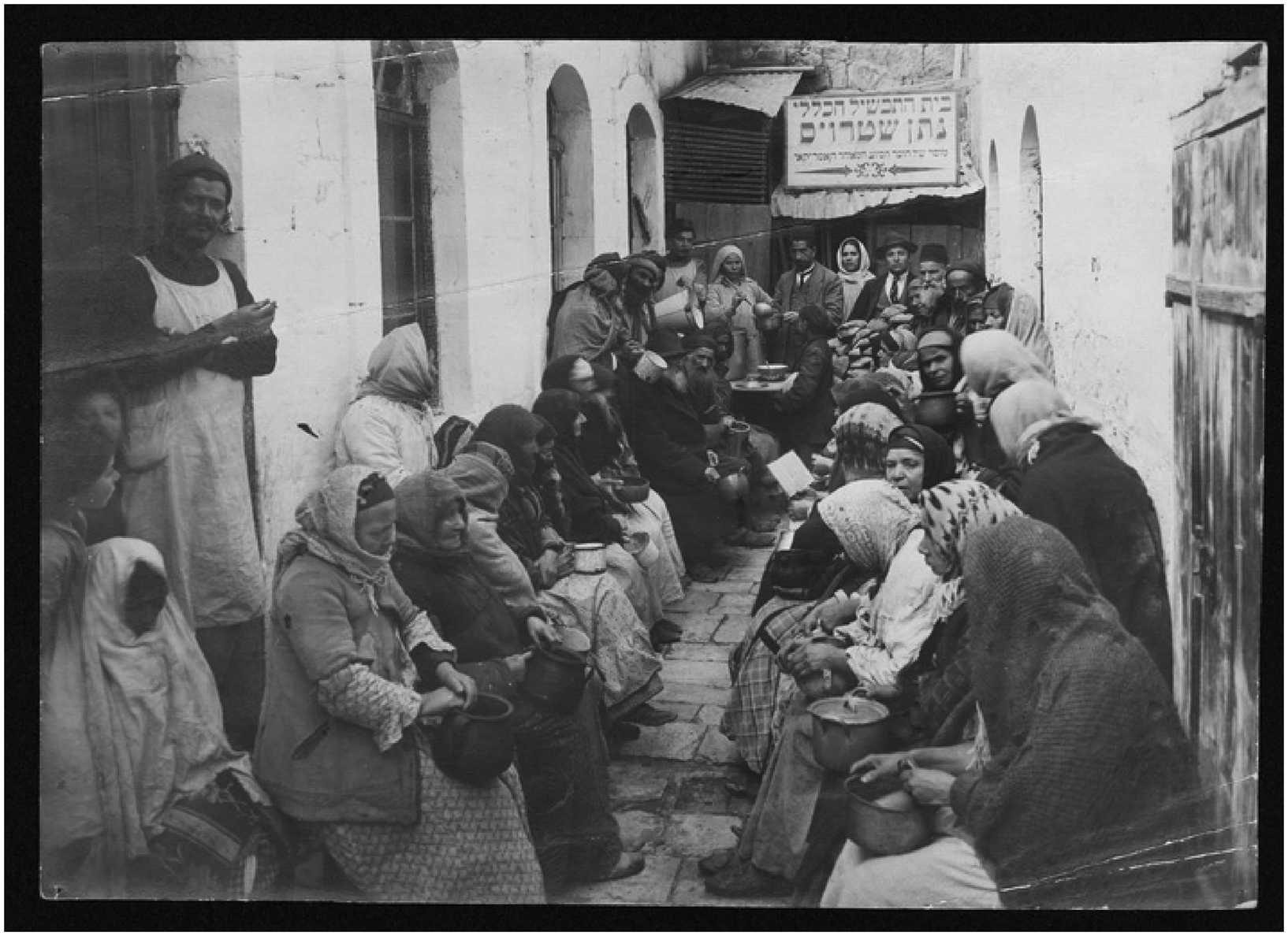
As noted, the British Mandatory authorities in Palestine preferred to devolve to the Arab and Jewish communities the role of establishing and funding services and social welfare institutions, among them soup kitchens. A number of soup kitchens operated in Jerusalem providing free meals to the needy. The largest of these, the Straus soup kitchens, were established in 1912 by the Jewish-American philanthropist Nathan Straus. By 1930 the institution comprised two soup kitchens that provided soup and bread on a regular basis to 1405 Jewish families, a total of 5111 adults and children (inquiry, nd: 55). In all, the soup kitchens’ clientele comprised a-tenth of the Jewish population of the city at the time.
Straus’s death in 1931, the impact of the Great Depression on his family’s finances, and a growing disenchantment by his heirs with the soup kitchens, led to the closure of the soup kitchens in mid-1933 (Gal and Ajzenstadt, 2013). An initial step in this direction was the undertaking of a unique, large-scale survey of the soup kitchens’ clientele in order to determine the recipients’ level of need. Between December 1931 and February 1932, six investigators (five of whom were social workers) visited 1301 households, comprising 92% of the soup kitchen clients. The data and recommendations in the reports were the basis for a comprehensive document that analyzed the conditions of the soup kitchen clients and offered recommendations to the members of a sub-committee established to investigate the soup kitchens (Inquiry, nd: 55).
Methodology
In all, 462 of the original reports on the soup kitchens' clientele were uncovered in the Jerusalem municipal archives. In order to better understand social workers’ ideas about poverty, its causes and the appropriate methods to assist the needy in Palestine, this article analyzes all the existing reports on the soup kitchens’ clients. In addition, the study gathered information from the final report of the sub-committee of the Soup Kitchens Committee and drew upon some additional archival sources. Each individual report consisted of a series of questions about the people residing in the dwelling, their health, education, age, gender, place of origin, employment, property ownership, and assistance received from relatives, organizations as well as rations from the soup kitchen and the duration of receipt of aid. In addition, the investigators added descriptions about the status of the dwellings, the family members’ attire and their behavior. The reports all ended with a specific recommendation.
The analysis of these “documentary texts” (Skehill et al., 2013) facilitates a unique opportunity to learn what the investigators who met the poor saw and heard and how they framed this information into explanations of the causes of poverty and possible solutions. These accounts were produced in a specific time and place and were shaped by local history and context (Shaw, 2010). Thus these testimonies of poverty allow us to trace the nature of social workers' practices and their perceptions of the situation of the poor families they visited and their visions of the clients’ future (Peel, 2011).
The reports were treated as social constructs and analyzed in the context of the conditions of their production (Hooder, 2000). The study coded claims appearing in the reports, using an iterative search procedure for expressions and ideas (Denzin, 1994). The interpretative narrative analysis (Atkinson and Hammersley, 1998) was comprised of three stages. First, each of the two researchers independently read one-third of the reports, selected randomly, searching for emerging codes and categories relating to the study aim. The purpose of this analysis was to detect conceptual similarities and to discover patterns. The two researchers discussed the categories that were identified in this initial stage, summarizing the content of each category, establishing category boundaries, and searching for negative evidence. In the second stage, both researchers individually and systematically assigned data segments to all the reports to the categories formulated. Finally, they organized the codes created in the initial stage into a smaller number of meaningful thematic clusters (Coffey and Atkinson, 1996). The compiling of codes into extended themes was based on the identification of recurrent themes found across the reports. Through a process of comparing and contrasting, the two researchers compiled the codes into three overarching themes: the profile of the clients, the causes of poverty and the solutions to the problem of poverty. Secondary sources enable us to trace the ways in which the themes were the product of the historical and cultural context within which they were created. With regard to the trustworthiness of the themes constructed in the study (Morse et al., 2002), the researchers employed peer debriefing between themselves to ensure that the criterion of credibility was addressed. In addition, the researchers kept an audit trail throughout the data analysis process that clearly described the steps they took, enabling them to follow their research procedures consistently.
It is important to highlight the limitations of this analysis which examines only those reports which were archived (just over a third of the total). In addition, the testimonies provide the investigators’ accounts, lacking the presentation of poverty by the people who experienced it, and thus do not allow us to grasp their agency. Notwithstanding these limitations, this historical study offers a snapshot of the situation of poverty in Palestine during the analyzed period and social workers’ perceptions of it.
Who were the soup kitchen clients?
The social worker’s reports on their visits to the Straus soup kitchens’ clients offer stark descriptions of the hardships faced by many of them. The reports depict vulnerable, tired female and male bodies, suffering from a host of physical and mental illnesses. Seventy-four percent of the interviewees were physically and mentally sick, blind in one or two eyes, afflicted with tuberculosis, maimed and chronically ill (Viteles, 1932). They were “in a very bad condition of physical negligence” (195 2 ). Mrs Z 3 had a burning accident 10 years ago, which made her horribly disfigured. She is described by the investigator as “nauseating”, “a revolting sight”, and in a “frightful condition”. Some were “bare-footed”, “dressed in rags” and “unkempt” (415). Others were lame, “thin, toothless and bent” (113). Some of them were ignorant (184), “very stupid” (347), “a low grade idiot” (100), ”senile and neglected“ (191).
Most (70%) of the soup kitchen clients were women, their average age was 61 and they had two to three children. Over three-quarters were non-European Jews, who came to Palestine from North Africa and Asia. Many of the married women had married young with the age gap with their husbands ranging from 15 to 39 years (Viteles, 1932: 9). The social work visitors depicted women who married young as ”exhausted“ (374) from caring for their husbands and children. One such woman was 32 year old Mrs S, who was married at the age of 8 and was described by the investigator as a ”worn out, illiterate woman … who cries eagerly“ (384).
Social workers claimed that poverty and the need to find gainful employment led some parents to provide inadequate child care. Some of the mothers worked as maids, visiting their families only a few times a week and leaving the children to be cared for by elderly grandmothers (3), others were unable to pay tuition fees, and thus did not send their children to school (213). Girls were often forced to leave school and find work in private homes (131) or assist in caring for younger children.
The reports also describe parents who were unable to take their ill children to doctors or to follow doctors' instructions due to a lack of adequate resources. Despite her daughter’s illness, Mrs M could not move her family to ventilated dwellings or provide better food and was thus forced to place her daughter in an orphanage (158). 4
The living conditions of the soup kitchen clients were dismal. Most of the dwellings were described as dirty, lacking in clean air and the bare necessities for living. They were ”small, dark, full with indescribable filth” (21). They were “tiny ill-smelling holes” (5), “uninhabitable” (172), “windowless and poverty-stricken” (8). Many of the rooms were meagerly furnished (246), had only mats, quilts, and a few rags (186). Some rooms were part of demolished buildings (148), while the walls of others were made out of Zinc (277). In some of the dwellings the walls and ceiling were black from the smoke of a small coal stove (52), while others had rotting wooden floors and were in danger of collapse (251).
Many of the soup kitchens’ clients lived with relatives or even strangers, their stay conditional upon their assistance with housework even when they were old and sick. Mrs E, for example, lived with her relatives who were unsympathetic to her and agreed to allow her to stay with them in exchange for helping around the house and raising the children (277). For some sharing accommodations meant sharing the soup kitchen rations (314).
Causes of poverty
In the reports, the social workers constructed a discourse which was combined from descriptions of a series of causes which they saw as leading to poverty and from moral judgments of the clients' behavior. Utilizing a scientific narrative, they presented a series of external causes, either a lack of sufficient income from the labor market, the lack of financial support from families, or individual deficiencies were identified as causing poverty.
Lack of adequate work
Though the labor market was perceived as a potential source of income for the soup kitchens’ clients, the social worker visitors claimed that, for many of the clients, it was unreliable. Those who engaged in low-wage jobs did not escape poverty but instead faced an ongoing, and ultimately futile, struggle to support themselves and their families. Mr S, for example, worked as a quilt maker but his earnings were scarce and “the family is dependent for its maintenance on the begging activities of the father and the earnings of the child” (227).
While marriage was seen as a means of security for women (Abelson, 2003), this was not the case for most of those interviewed as only 8.4% of them were married. Eighty-one percent were widows and the remainder divorcees, had been deserted or were single. These women were forced to join the labor force in order to provide for themselves and their families. In most cases, their wage work was a manifestation of traditional female roles: washing, cleaning, seamstressing, and cooking, thereby extending domestic labor into the public arena. The emerging Palestinian labor market was largely unregulated, women were generally unprotected by legislation or unions, and many were exploited by their employers (Stern, 2003). Job segregation among the female clients of the soup kitchens was not unusual, as it characterized female employment during this period (Bar-Yishay, 1991; Bernstein, 1992). Women worked even when they had small children, like Mrs G who had three children, one of them disabled: “Although she got the room rent free, she still needs to pay 2 liras a year for taxes and water” and thus worked as a washer-woman (429).
Market volatility was seen as putting the soup kitchens’ clients at constant risk of losing their livelihood. In order to secure their jobs in an unstable and fragile labor market, many continued working even when sick. This was the case with Mrs P, aged 68, who was ill for six years but continued to work as a cleaning woman (258), and with Mr A, who worked as a builder earning good wages before being involved in an accident. “He now works at the market, competing with little boys in carrying home … baskets” (190). Women who became sick continued to wash, sew, and iron in their own homes. This was the case for Mrs S, who was blind in one eye and suffered from a heart condition, which prevented her from working outside her own home (237). Upon leaving the workforce, these people sought additional sources of income. Thus Mr N, who worked as a tinsmith before he lost his sight, begged for a living (214) and Mrs A, who worked for as long as she could, was peddling bread and sugar donated by housekeepers (348).
Elderly people such as Mr K, who “is still working as a cobbler, but due to his old age, he is slow and inefficient” (304), remained in the workforce but earned a pittance. The labor force also proved difficulties for immigrants who did not know the language. Mr L, for example, “does not know Hebrew and Yiddish, and it makes it hard for him to sell his merchandise in the market” (153).
Lack of family support
Support from family members was considered by the social workers as a possible source of assistance to the poor. However, many clients (68.1%) could not be assisted by their grown-up children who were poor themselves and had large families. Daughters who married young had to take care of their own families (127). Mrs H’s daughter “could not help her mother as her husband was cruel to her and she had no access to either money or food supplies” (19). Some of the clients could not be assisted by their relatives, especially their children, who were scattered around the world. Some of those who did send money to help their parents stopped due to political difficulties. The allowance sent by Mrs W’s sons in Germany ceased due to “the trouble in Germany” (369).
Individual factors
Individual shortcomings were regarded as a major cause of the poverty suffered by the soup kitchen clients. In the reports, clients were portrayed as freely and deliberately choosing to be passive and dependent on the scarce resources of the community. Thus, Mr M was described as “sitting in his house doing nothing” (208); J ran “around town doing nothing” (258) and Mrs R was discovered sleeping at 9:30 in the morning (333).
Some were criticized for preferring to receive food rations while waiting for a job they considered appropriate for their skills. A 17-year-old high school graduate was described thus: “Since she knows a little English and can typewrite, she feels that she ought to get a well-paying office job and since such a position is not available, she sits about the house unemployed.” (17). The social workers highlighted the gap between some of the soup kitchens’ clients’ capacity to work and their ‘luxurious’ living conditions, which stood in sharp contrast to the poverty of those who wanted to join the workforce but could not do so. The N family, for example, is described as living in a nice apartment with a separate kitchen and a courtyard: “the house is clean and nicely furnished”. Mrs N “is 36, but looks younger, well cared-for, is a good looking woman, and speaks Hebrew fluently, and there is no reason why Mrs N shouldn’t be working” (215).
Close examination of the employment conditions of some of the clients also revealed disturbing findings for the investigators. Mrs M, for example, reported that her income from work was not sufficient for the family’s needs. After questioning her employer, the investigator commented that “she is a good worker although a little slow and there is no reason why she should not accept full-time employment” which would allow her to support her family (43). The demand for self-support and efficiency at work was extended to older and sick clients who were encouraged to participate in the labor market in order to contribute to their family’s income. Mrs S, a 55 year old who was “sickly and blind in one eye”, was expected to earn money by peddling (235).
The reports produced a narrative that perceived poverty as an inevitable outcome of those who were accustomed to relying on public support and were not encouraged to support themselves. Charity was seen as corrupting people who were described as “aggressive paupers” who “never had been trained to do any kind of special kind of work and were brought up in the old tradition of a money distribution atmosphere” (274). Having always lived off charity (414), they refused to be helped by various agencies that tried to “help him to become self-supporting” (40). The investigators blamed situations of chronic dependency as being created, among others, by the customs of the religious community, which supported men who “spend all day in the synagogue” (395). The social workers claimed that, after becoming used to relying on public assistance, this group of people perceived the soup kitchen as a legitimate alternative to work done by parents or a husband: “… the soup kitchen is a husband. The husband must worry about his family; so, too, must the soup kitchen" (Inquiry, nd: 15).
Some of the soup kitchens’ clients were depicted as immoral. Clients were described as “corrupted” or a “troublemaker” (107), as chronic thieves (87), or as appropriating other people’s vouchers for obtaining rations from the soup kitchen (17). Immoral behavior was further highlighted by references to attempts made to cheat the existing assistance programs and to appropriate public money for a client’s own egoistic needs. Mr P, for example, took a whole loaf of bread from the soup kitchen even though “on his doctor’s orders he can’t eat this type of bread” (257). Sometimes the social workers uncovered evidence that led to suspicions about a client’s honesty; in the case of Mrs Z, who claimed that she could not work, “when the investigator came to interview her, she was washing a large amount of clothes, which she claimed were hers” and evaded questions (277). A social worker noted that Mr W had more resources than he reported, as evidenced by the fact that he was trying to conceal the meat he was eating for lunch when the visit occurred (377). Some did not report property they owned (114), while others avoided reporting aid received from various charities (367). Immoral clients falsified information concerning their health condition. For example, Mr H who claimed to be blind was able to point out places from far away in the neighborhood and to correct mistakes made in the investigator’s notes (383).
Possible solutions
The reports offered different solutions to the poverty experienced by the soup kitchens’ clients. Refusal to work, an unwillingness to contribute to the community, and prolonged reliance on communal resources were represented as pathological and as producing chronic dependency and irresponsible behavior. Here poverty was framed in moralistic terms, originating in personal character and a failure to assume responsibility. The unmotivated poor were regarded as rational individuals who chose not to support themselves and undeserving of assistance. The social workers regarded these people as “aggressive paupers” (23) who could manage without help but preferred to exploit available assistance. Being classified as immoral led to a recommendation to end their soup kitchen ration. Indeed the investigators recommended ending soup kitchen rations in the case of 60% of the clients they had visited. Leaving these people to their own resources was considered therapeutic, a way to change their behavior and encourage them to seek work in the labor market.
Community assistance was reserved for those whose poverty was due to bad luck, fate and conditions beyond their control. Most of these clients were old, sick, and unemployed. They sought to contribute to their own income but failed to do so due to a host of circumstances. Their lives were seen as being structured by the conditions in which they lived. Investigators expressed compassion concerning their fate and defined them as miserable and being in “a critical condition” (107). They respected their struggles to support themselves or at least to live in dignity, as in the case of Mrs B, who “leaves an impression of a respectable, though very poor, old woman” (450). The social workers recommended that 18% of the clients be referred to orphanages, hospitals, and the social work department.
Finally, many of the soup kitchens’ clients were described as deserving of short term assistance by the community, usually until they could heal, find a way to care for their dependents at home, learn Hebrew, and be integrated into the workforce. Poverty was seen as a temporary situation that could be remedied by requiring these people to get jobs and providing them with assistance aimed at rehabilitating the family. For example, welfare services were advised to find a way to care for Mr N’s mother so that she “could work in order to support her crippled son and herself” (212). In the case of Mr H, who was afflicted with tuberculosis, the recommendation was to help him get safer work utensils (367). It was recommended that the soup kitchens provide food for three months until Mrs K, a new immigrant from Romania (where she had owned a bakery), “would be able to establish herself as a pastry cook. Assistance for a longer time would prevent her returning to work” (332). In other cases, it was recommended to help clients find jobs.
These types of recommendations, which advocated helping the very needy and simultaneously teaching the majority to look after themselves, reflected a belief in the self-sufficiency of most individuals and a professional perspective that called for intervention in the lives of the poor in order to rehabilitate them, changing them from idle and passive recipients to active citizens. This attitude was evident in the sub-committee’s conclusion that the soup kitchens did not contribute to the rehabilitation of those who depended on it for food: “The soup kitchens are not doing constructive work. They are neither fulfilling the functions of a soup kitchen as the term is understood in other countries – namely, to afford temporary relief in times of emergencies, temporary unemployment, and temporary distress – … nor have the soup kitchens served as a relief agency doing case work with a view of eventually rehabilitating the families and making them self-supporting” (Inquiry, nd: 18–19). The soup kitchens were perceived as an obstacle to the productive work required for the smooth operation of society, and thus had to be terminated.
The sub-committee recommended adopting a stricter policy in the selection of clientele for a period of three months and to serve only 25% of the clients. It went on to recommend closing the soup kitchens, using the money to fund a municipal social work department that could engage trained social workers and grant relief. While acknowledging that a considerable number of the clients “need the food they receive … to supplement their standard of living”, the report authors observed that there was no convincing evidence that “they cannot get the same rations either from other institutions or by increasing their earnings and buying such food themselves” (Inquiry, nd: 14). At the same time, the sub-committee conceded that a number of the clients might go hungry if the soup kitchens were closed.
The recommendations advocated shifting the focus from aid to the development of a professional agency, which would be based on scientific methods and have discretion over decisions concerning welfare provision. Eligibility for public assistance would be determined by a professional social worker. Careful scrutinizing and investigating procedures conducted by public professionals were seen as necessary for identifying those few who could not care for themselves, ensuring that undeserving people would not “slip in” and access public funds.
The sentiments expressed in the soup kitchen reports and the sub-committee recommendations reflect Zionist and professional social work perceptions of poverty and the orientation of social welfare policy and practice in the following years. The social workers who served as investigators in the soup kitchen clientele survey became actors in a small group of social workers who played a major role in the formulation of social welfare policy and social work practice and education in the Jewish community and in Israel in the decades to come (Doron, 2004; Spiro et al., 1998). Two of them became teachers in the social work training institution established in the early 1930s. Another played a central role in major women’s organization. A fourth member of the team was appointed to head the first social welfare department in Jerusalem and later became a high level civil servant in the Israeli Ministry of Welfare, while the last of them headed the social welfare department in Petah Tikva, a large Jewish city.
More concretely, the establishment of the Social Work Department of the Jewish Community in 1931 institutionalized the narratives of poverty produced in the reports. It emphasized reliance on one’s own abilities, and favored instruction of the needy instead of providing them with money (Dushkin, 1935). Professional social workers were appointed in order to provide aid to the needy individual “in the form of consultation, instruction and productive aid” (Golan, 2002: 71). The principles of the social welfare department in Jerusalem, established in 1932 and headed by one of the social work investigators, emphasized changing past habits of dependency and the provision of constructive aid only to those who were found to be unable to support themselves (Report of the Jerusalem Department, 12/1932-2/1933, CZA A125-5861).
Conclusion
This article has traced the ways in which poverty was constructed in reports produced by social workers who were authorized to examine various aspects of poverty. Reflecting both the tenets of Zionist ideology and dominant social work thinking at the time, the reports offer rich evidence of the ways in which notions about poverty, community assistance, and the role of social workers were constructed and designed.
The recommendations to close the soup kitchens were part of a wider process of creating a new mode of service to the needy. The representation of the causes of poverty created a discourse, legitimatizing the creation of a normalizing device (Garland, 1985), aiming to educate the population to become active citizens, exercise responsibility for themselves and receive support from the state only in extreme situations. The poverty of most of the clients of the soup kitchen was seen as an outcome of circumstances created due to their irresponsible conduct. They were portrayed as choosing to refuse to adhere to the values of modern society with severe consequences for the community. The behavior of those chronically dependent on the soup kitchen was defined as the measure of deviance from the envisioned moral conduct in the ideal future society.
5
The courtyard of a Jewish home in the Old City of Jerusalem, 1931 (Courtesy of the Central Zionist Archive, Jerusalem). The Nathan Straus Soup Kitchen in the Old City of Jerusalem, 1921 (Courtesy of the JDC photo archive, New York).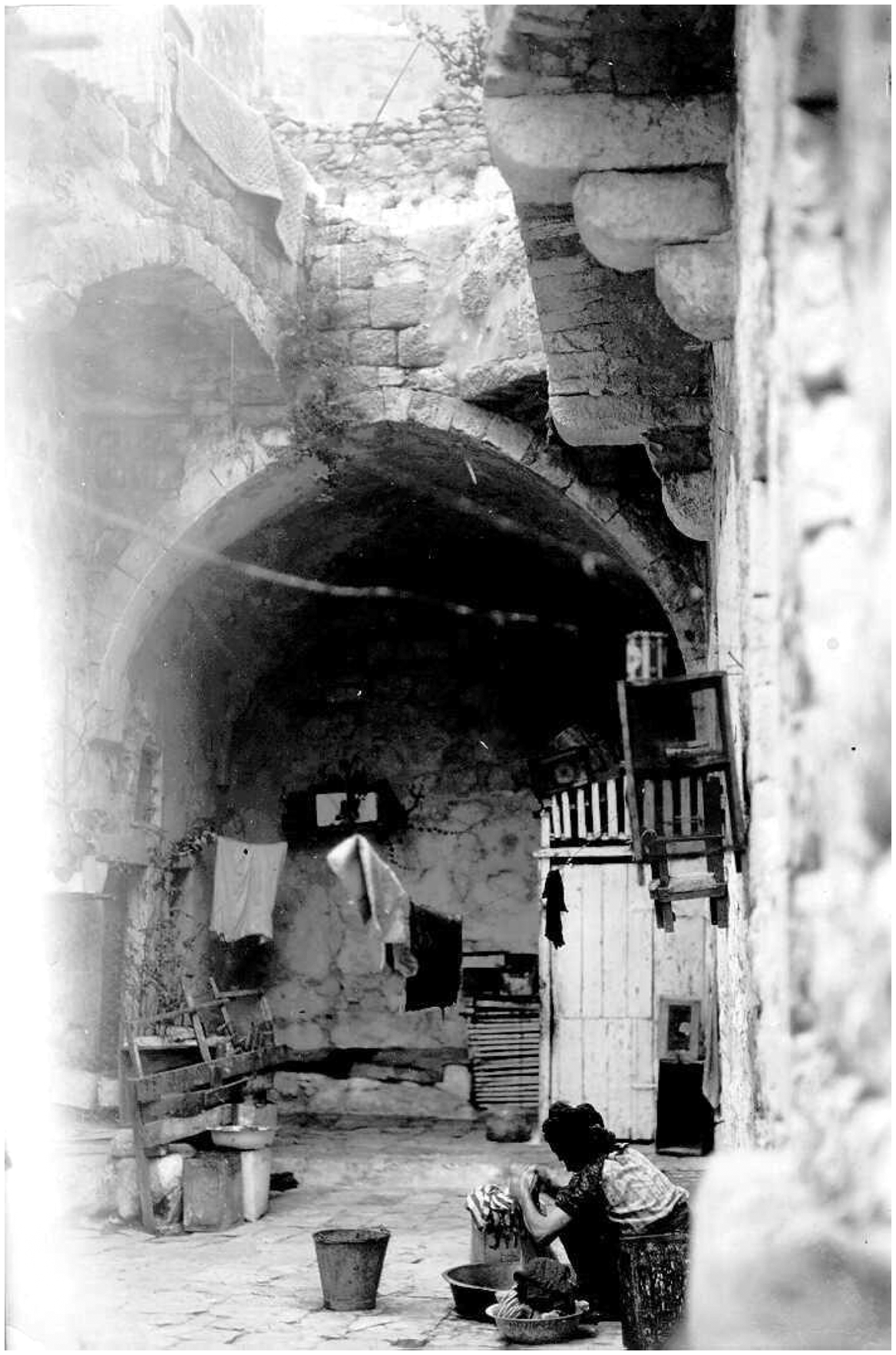
In this way, the aid that the investigators and members of the soup kitchen sub-committee offered was intended to discipline clients and pave their way to a productive life, in the hope that many of them would be integrated into the workforce. While most were expected to go through this move very quickly, others had to be assisted by professionals; only a minority was recognized as unable to care for themselves and being totally dependent on the community. Social workers saw the soup kitchen institution as a symbol of a pre-modern society in which members were dependent upon the public, thereby preventing advancement to modernity. This behavior was construed as being at odds with the developing modes of assistance. Soup kitchen clients were perceived negatively, while the clients of the social work department were assigned a positive significance. The soup kitchen represented for them the old way of providing assistance while social work mirrored the new.
The recommendations to gradually close the soup kitchens were part of a wider process of creating a new mode of service for the needy. Trained social workers utilizing scientific methods were considered as experts who should determine a person’s eligibility for assistance and the best way in which to provide assistance and guidance. Such scientific assistance was represented a modern method replacing the old practice of dealing with poverty thorough the institution of the soup kitchen.
Footnotes
Funding
This research received no specific grant from any funding agency in the public, commercial, or not-for-profit sectors.