




Abstract
This article is a reflective piece in which I account for how and why I have developed my current understanding of the relevance of epistemology to practice, to social work research and to the relationship between the two. Social work as a profession has itself faced something of an epistemological crisis of late, which has impacted on both practice and research in ways which have not necessarily been beneficial. I will draw my own practice and reseach to highlight the twists and turns in the development of my thinking about these issues and as a corollary, my views regarding the bridging role that pragmatic epistemology might play between research and practice.
Introduction
In what follows I will explain how I have arrived at my current understanding of the relevance of epistemology to practice, to social work research and to the relationship between the two. Research, it seems to me, is concerned with finding solutions to problems and answers to questions, as is social work practice, and so the similarities between the logics underpinning research and practice are quite clear, though – paradoxically – not always obvious. My starting point is the assumption that social work practice – assessment and evaluation, clearly, but also intervention – is itself a form of social inquiry – finding things out about the social world – and that whether they realise it or not, social workers are epistemologically adept. This adeptness is an inherent and evolved human trait (Leslie, 2014), and one which the processes of professional education and experience have the potential to hone. Social work as a profession has itself faced something of an epistemological crisis of late, at least in the domains and jurisdictions with which I am most familiar. Indeed, my own entry into the profession coincided – at least in the UK – with the emergence of evidence based practice as a deliberate attempt to counter questions about the legitimacy of social work emerging from concerns regarding the substance of its disciplinary knowledge base. This contextually quite specific backdrop has impacted on both how I have understood and undertaken social work practice, and subsequently on my research interests, most of which, in one way or another, grapple with fundamental philosophical questions regarding the nature and status of knowledge and how we might know. Here, I will draw upon both practice and research to highlight the twists and turns in the development of my thinking about these issues and as a corollary, my views regarding the bridging role that epistemology might play between research and practice.
Epistemology, then, is at the heart of social work practice. That is my contention. This, however, is not necessarily an either straightforward or obvious statement, or for that matter one that the majority of social work practitioners would find comprehensible or agree with. Indeed, despite having been involved in social work in one capacity or another now for over two decades, it is only relatively recently that an awareness and appreciation of the significance of epistemology to practice and research has reached the forefront of my awareness and so impacted explicitly and consciously either in terms of my actions – practice – or my thinking – theory. And it is the explicitness of the connection between practice and research which is often missing from accounts of the relevance of epistemology. The lack of a clear explication of this relationship means that for many social workers, the utility of epistemology as a branch of the philosophy of knowledge to practice remains unclear, confusing and often irrelevant. Without doubt, the language and terminology via which epistemological considerations are discussed ensures that efforts to render them intelligible often flounder. I do not claim that what follows will necessarily be clear, straightforward or wholly relevant to the principal concerns of practitioners. However, by integrating thoughts and experiences from both practice and research, I do hope that a relatively coherent and to some extent convincing explication of the practical relevance of epistemological issues to everyday social work will emerge. I will begin with an account of how epistemological considerations entered into my consciousness as a practitioner, using practice based examples to illustrate the substantive nature of these issues in social work; next, I will draw upon research I have undertaken to demonstrate the ways in which the practical challenge of seeking to provide answers to questions has impacted on my views regarding the utility of research based knowledge in practice based disciplines. I will then focus on the relationship between research and practice by exploring the challenges of synthesising knowledge from various sources of expertise, drawing on parallel work in science and technology studies. Finally, I will reiterate the significance of epistemology as a bridge between practice and research by reviewing recent developments which, in seeking to understand better how research might gain from practice, in the process invert the oft assumed hierarchies between discipline and profession and between theoretical and practice based disciplines.
Epistemology in practice
The social work ‘journey’ – from novice to practitioner to ‘expert’ (a hostage to fortune if ever there was one) – is underpinned by well established, if necessarily imprecise, benchmarks. Via teaching, learning, training and experience, ways of thinking and doing emerge and develop, sometimes following pre-proscribed routes, sometimes according to contingent logics in which intention and necessity intersect to create hybrid and variable trajectories. In my own case, this progression – rather like my social work career more generally – was piecemeal, haphazard and punctured by discontinuity and rupture. Thus, although cumulatively such experiences have taken me this far, the journey has not been a straightforward one.
It is worth highlighting that although social work education in the UK is generic, the format and the content of qualifying programmes vary. My own training – thoroughly effective and enjoyable professionally and personally – emphasised certain preferences, meaning that consequently other possibilities, which from different vantage points some might regard as crucial, did not feature at all. Indeed, conspicuous by their absence was any emphasis on logics of enquiry and their relevance for practice, accompanied by a (then common) disregard for any meaningful research-related component. This cumulative absence meant that I qualified for practice without any grounding in the philosophy of knowledge or science. Professional competence, of course comprises values, skills and knowledge. I had developed understanding of the relevance of values to practice, and skills with which to communicate and engage, but possessed a curious (although still facts rich) lack of understanding of the nature of the disciplinary knowledge base and its relevance and utility in practice. Put another way, my explicit epistemological awareness was seriously underdeveloped, to say the least.
As I have indicated, however, it would be a mistake to assume that for social workers, like other professionals affiliated to practice-based disciplines, formal education is the only or even primary route to understanding. Necessity being the mother of invention, experience forces thinking and development. Sometimes experience is consolidating, sometimes challenging, but it ordinarily forces us to think. In that vein, in the very early stages of my career as a practitioner, I was required to testify in a civil trial so as to justify my decision to attribute a ‘low risk’ status to a particular service user. I had been called to attend by the legal team of the individual concerned, who was challenging a decision to evict him from his home on the basis that he posed a risk to nearby residents. The barrister for the housing authority asked me a clear, unambiguous but nevertheless perplexing question, which I paraphrase here: “Sir [a rarity], this man is judged by local police and community safety officers to pose a clear risk to other residents. You, on the other hand, have decided that the risk he poses is ‘low’. My question to you is ‘how do you know?’” Leaving aside the details of the case, I recollect a clear ‘moment’ in which I simultaneously provided an account of the process of reasoning I had followed in arriving at the judgment I had made – my logic of inquiry – while at the same time, and from a vantage point I can only describe as ‘out of body’ (court proceedings can be anxiety provoking!), recognising that what I was referring to as ‘knowledge’ might just as accurately be described as ‘guess work’.
In a less adversarial context, subsequently I was fortunate enough to secure a research fellowship to undertake practitioner research. I was working as a probation officer at the time (the equivalent of a corrections officer in the US), a role which then required a social work qualification. I was introduced by my host to a PhD student undertaking a thesis on the broad topic of the effectiveness of offender rehabilitation – coincidental, as this related quite closely to the theme of the study I was conducting. For the first and last time in my career, my practitioner status generated evident excitement. The student concerned, who at that time was immersed in the rehabilitation literature prior to commencing field work explained to me her admiration for those who engaged in this type of work. Then, the crucial question – again, I paraphrase –‘How do you know what will work?’ My response, I believe (memory being an increasingly fallible register, I do not ‘know’) would have amounted to an account and defence of the value of the knowledge which emerges in the context of a professional relationship between practitioner and service user, or a favourable representation of the merits of professional opinion. And although in this instance, and at that time, this seemed a reasonably robust response, with reflection I realised that it raised its own questions. My work as a practitioner – the judgments I made, the assessments I formulated, and recommendations I made, like those of social workers throughout time and space – were of potentially crucial significance for both my clientele and wider networks within the community and society more generally. Was mere opinion – professional or otherwise – sufficient to justify such significant judgments? This is a question which has subsequently intrigued me. In seeking to resolve it, both theoretically and practically I have discovered that the issues which this question raised for me are much broader than my own individual competence as a practitioner. Indeed, they touch on the legitimacy of social work itself. In fact, questions regarding the nature and status of professional knowledge are exemplars of enduring issues which philosophers have grappled with for millennia (Scruton, 1981). Exposure to this philosophical literature has convinced me that contemporary debates regarding knowledge in social work, particularly as these play out with regard to the role of evidence and various forms of knowledge in professional judgment and decision making are best understood as contemporary manifestations of longstanding debates within the philosophy of knowledge regarding the various different ways of conceiving of fundamental concepts – belief, knowledge, opinion – and the trajectories we might follow to achieve these – and are, to a large extent, equally irresolvable.
Epistemology in theory
So, what distinguishes professional opinion from ‘mere’ everyday lay opinion? Usually the distinction is accounted for in terms of the skills and knowledge that training and experience confer or the benefits of the status of membership of a profession, which manifests in expertise (Schon, 1983). For good reasons, however, expertise is associated with knowledge, and indeed it is the distinguishing characteristics of what we refer to as knowledge that represent the distinctive foci for epistemology as a branch of the philosophy of knowledge. According to Shaw (2009), there are three issues which fall under the epistemological banner: what is knowledge, what can we know and how do we know what we know? These questions intersect both logically and practically in attempts to address the fundamental issues of what are the most appropriate ways to find out answers to questions and develop solutions to problems, recognising that the nature of the question or problem impacts on the variety of knowledge that is appropriate and relevant to the issue to hand. Epistemology, then, is about finding things out. It does not concern itself with particular techniques for doing so – that is the realm of methodology – but rather with the underlying process and logics which do, ought, could or should inform these processes. In research contexts, this manifests in attempts to ensure cohesion between research design and method and underpinning research philosophy. But what of social work practice? As Philp more ably puts it: ‘What, then, characterises social work knowledge: how does its product differ from other forms of knowledge: what is social work’s regime of truth?’ (1979: 91).
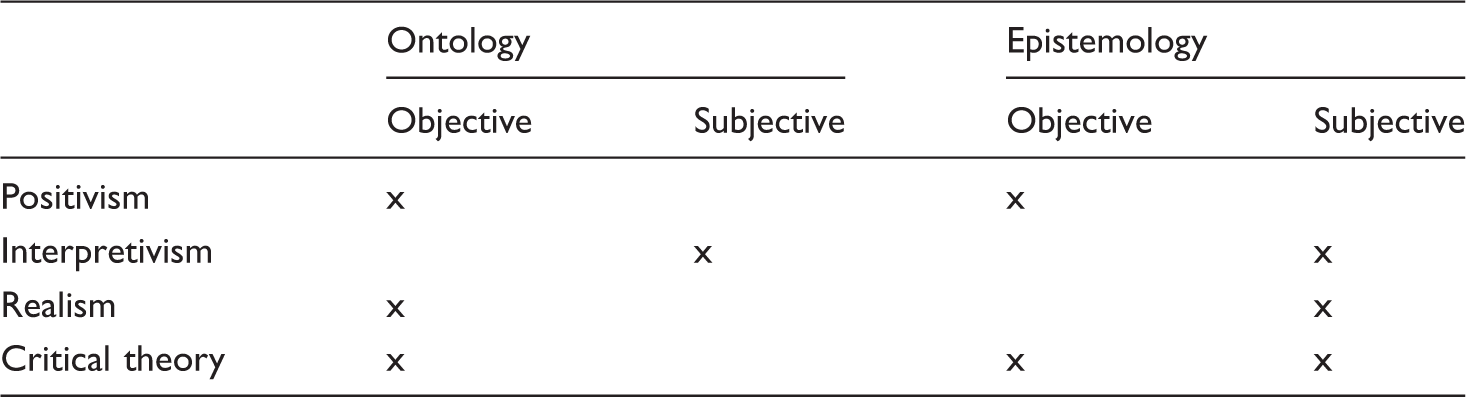
I have found it useful to distinguish logics of enquiry according to the distinctions between artistic and scientific approaches to understanding and undertaking both social work practice and research. Artistic ‘ways of knowing’ privilege the relationship between service user and practitioner as the basis for the process of creative interpersonal meaning making which generates highly relevant individualised knowledge and understanding of the client and their situation. Although it is a generalisation, this approach underpinned social work as it was traditionally undertaken, as is evident in the work of Richmond in the 1920s, Biestek in the 1960s and now, in the twenty-first century, in the work of advocates of relationship based practice. In order to determine what is going on in a particular service user’s situation, circumstances or behaviour, social workers engage in a type of case formulation which entails combining of social and psychological knowledge sources which intersect as hybrid forms of professional expertise (McCallum, 2003). In research, this logic is also apparent in the sorts of small scale qualitative studies which researchers aligned with an interpretivist paradigmatic affiliation tend to undertake under the banners of, for example, narrative studies, interpretive phenomenological analysis or ethnomethodology (Saldana, 2015). More systematic ‘scientific’ approaches to practice and research, meanwhile, emphasise the value of knowledge generated via empirical methods, tested via collective observation over time. Here the quality of knowledge – its substantive basis – is inferred from the presumed strengths of their method of generation. More recent efforts to ‘scientise’ social work and its knowledge base – empirical practice, evidence based practice, actuarialism and even the incorporation of epidemiological approaches – reflect these assumptions. Although there is more to the various different varieties of practice and research than alternative epistemological presuppositions, paradigmatic perspectives in the social sciences – positivism, interpretivism, realism, critical theory – do embody particular epistemological assumptions, which relate to this ‘art/science’ distinction, as well as perspectives regarding the substance and value of objective and subjective knowledge and understanding.
Ontology and epistemology
Although my concern here is with epistemology, ontological and epistemological issues hang together, and it can be useful in the explication of epistemological issues to utilise ontological exemplars. Take, for example, the contested debate regarding what is referred to as ‘madness’ as a form of mental illness. Ontology concerns itself with the nature and status of phenomena. Particularly in the social world, the status of the sorts of phenomena that practitioners seek to make sense of and intervene to address is often controversial. It can quite justifiably be asked – is mental illness real or is it a social construction? The same question might be asked of child abuse. These ontological issues are significant to epistemological concerns in that our personal ontological positioning with regard to these issues will impact on if and how we seek to find out about these issues via our own sense making activities – our epistemologies. Someone who regards mental illness as real might well be concerned to better identify factors at play in its aetiology so as to better – more effectively – intervene to alleviate symptoms, incidence or severity. Someone who believes mental illness is a social construction, however, may well be more interested in asking and answering questions about the processes via which a non- disease entity has come to be conceived as such and with what effects for professionals, service users and society at large. Calquilem (1938) demonstrated how the epistemological foundations of modern medicine were intertwined with political, economic and technological imperatives, and it seems to me that there are no good reasons for asserting that such concerns are not at play in the contemporary formation of medical, psychological or social phenomena. This constuctionist perspective has evident limitations – its inherent relativism, for example – but it is an appropriate and useful means of making sense of such phenomena (Elder-Vass, 2012). This is particularly the case in practice because – as Beckett (2006) makes clear – practitioners do not have the luxury of engaging in interesting but irresolvable intellectual debates regarding the nature and status of the problems they are employed to address and the basis on which they do so. Instead, they need to make decisions, act and possibly intervene, often quickly. This requirement means that in practice based disciplines, the character of debate regarding these issues is perhaps different from in non-practice based disciplines. Sheppard (2006) has suggested that practitioners inhabit a space in which traditional distinctions between objectivity and subjectivity become problematic. On one hand, professionals fully understand that the sorts of social problems they are mandated to intervene in have a contested character which varies over time and space. But on the other hand, in the moment, practitioners have no choice but to act, as though these phenomena are objective (uncontested). This is a curious, exciting and perhaps occasionally scary predicament to be in, and one which remains under explored and thus poorly understood.
Epistemological and ontological assumptions regarding the respective merits of subjective and objective positions mean that particular paradigmatic perspectives have distinctive takes on the value of different varieties of knowledge, exemplified by positions taken on the strengths and limitations of broadly artistic or scientific approaches to generating knowledge. These distinctions are exemplified – somewhat simplistically – in Diagram 1.
Diagram 1
So how do practitioners ‘know’, and how do these ways of knowing contribute to the nature and status of the knowledge base upon which social work practice rests? Tacit knowledge – hard earned through life and practice – does have an experiential basis. However, because experiences vary, practitioner knowledge will vary. And much existing research does suggest that generally, social workers rely on experientially based intuition, in conjunction with heuristics and pattern recognition, in making sense of people, their situations and circumstances and what they will do in terms of intervention or action (Munro, 2008). However, it would be wrong to suggest that practitioner ‘ways of knowing’ are comprised solely of individualised experience, not least because this is a problematic category, itself arguably a hybrid of individual and collective observation and experimentation. A full and proper understanding of practitioner epistemologies would entail a difficult and elaborate disentanglement exercise. However, we can confidently expect that to varying degrees the knowledge base of individual practitioners will comprise combinations of formally and informally generated knowledge of the sort that the typology developed by Pawson et al. (2003) captures. Each of these stakeholder groups – service users, practitioners, policy makers, organisations and researchers – derive their knowledge in diverse and distinctive ways, and utilise combinations of facts, opinions and beliefs drawn from multiple sources. The temptation is to order such typologies hierarchally but that would be both misguided and problematic. Each of these sources of knowledge has strengths and limitations, depending on the situation in which it is applied. Service user knowledge, for example, oft neglected in the history of social work (Beresford, 2000), is derived from direct experience, and so is essential to judgments of the relative success of particular interventions, such that our understanding of if and how intervention has effect would clearly be incomplete without its inclusion; organisational knowledge, developed and held within local contexts, and accumulated over time through grounding in local communities, represents a specific understanding of what is possible within local contexts and constraints. Sometimes, it functions as a necessary and significant buffer against tempting but ultimately misguided plans to instrumentalise the use of formal knowledge on a large scale (e.g. Fisher, 2002) without attention to the mediating effect of context on the roll out of ‘policy’ knowledge (Scott, 1999). As for researcher and practitioner knowledge, there is clearly a tension between the generalising tendencies of the former and the individualised tendencies of the latter. The assumption here is that in seeking to remedy problems characterised by uncertainty, expertise from various knowledge sources should be marshalled and integrated. Tensions between sources to an extent reflect differing epistemological preferences but each source has value. It is in their integration that practitioners seek to practically resolve philosophical conundrums and in doing so reveal social works own particular ‘ways of knowing’.
Researching practitioner epistemologies
Social work, of course, is inherently interesting. The subjects it comprises, and the social problems it intervenes in, attract attention from wide constituencies of citizens, community groups, professionals and politicians as well as academics and researchers from other disciplines. Arguably, however, the approach taken by ‘insider’ researchers with a background and/or affiliation to social work as either a discipline or profession is often different from that which a non-social work researcher will take. At face value it would be difficult for a researcher without such an affiliation to unproblematically subscribe to and embody the principles that Shaw (2012) regards as characteristic of ‘distinctively good’ social work research. Indeed, standard (often sociological) theoretical critique of social work’s tendencies for labelling and oppressive potential, though persuasive at a rhetorical level (so much so that they have infiltrated social works own identity, sometimes usefully, sometimes less so) can be rather less convincing if you have, for example, experienced the reality of untreated mental illness in a professional capacity. Social workers know things about questions and problems germane to social work that researchers from other disciplines do not. As a consequence, they – we – are well placed sometimes to challenge the epistemological foundation of grand theory. I once failed to secure an academic job in a non-practice based discipline. Later, informally, I was told by a member of the interviewing panel that generally within that field, practitioners are regarded as ‘scary’, precisely because their experientially derived knowledge often challenges academic expertise (there were undoubtedly other reasons I was unsuitable for the role). Much of my own subsequent research has focused on practitioner epistemologies in one way or another, and, in the process, has challenged aspects of the theoretical critique of social work. For example, according to social theorists, society and its institutions are now structured to understand and respond to risk (Beck, 1992), and social work has become defensive and risk averse. Practitioners themselves are portrayed as compliant with shifts towards neoliberal priorities which downgrade traditional commitments to welfare and undermine the idea of social work as a vehicle for emancipatory ends. But how do proponents of such viewpoints know this to be so? The work of Garland (2001) and Rose (1999), for example, exemplify highly sophisticated, influential theoretical accounts of the shift from welfare to risk over the last thirty years or so, but are not based on empirical research by the authors themselves. Often such work instead utilises analysis of discursive sources – talk and text, as manifest in political rhetoric and policy documentation (the two overlap) – which are taken somewhat simplistically as representative of the ‘reality’ of front line practice. These sources, however, privilege certain ‘voices’ – usually fellow academics – at the expense of others, in particular service users (Beresford, 2016) and practitioners (Barry, 2007).
I have followed these debates for some time now. They intersect with an interest in practitioner epistemologies. Questions regarding the substance of social work’s knowledge base and the expertise of its practitioners are at heart epistemological. How does a social worker know that their particular account of what is going on and why, and thus how to intervene, is correct? These questions are especially apt when considering risk. Underpinning ‘the rise of risk’ is a concern with the nature and substance of the knowledge base of social work. The legitimacy of the profession has been undermined as a result of the prevalent – although in my view unsubstantiated – perception that the judgments and decisions that social workers make are of a poor quality, in the main because of a tendency for informal knowledge to override formal knowledge, either as a result of the unfounded insistence that clinical judgment is more accurate than – for example – actuarial reasoning or because of a (not unrelated) tendency towards partisan decision making. My own work on this issue (Hardy, 2013, 2015a) investigated if, how and why ‘the rise of risk’ was impacting on social work practice in various domains of practice. Contrary to the dominant critical consensus, whereby practitioners are often characterised as ‘neo-liberal conspirators’ who classify service users on the basis the risk they pose, calculated via actuarial ‘ways of knowing’ with the aim of managing risk via exclusionary practices rather than addressing need via emancipatory work, in practice the picture is much more complicated. Although there are some tendencies towards risk aversion and control oriented responses, practitioners themselves demonstrate these are by no means wholesale and that managerial imperatives have not necessarily superseded transformative endeavour. These findings are significant in the context of the current discussion in two respects. First, they highlight that epistemological issues are key to the value we ascribe to a knowledge claim, and that critical thinking demands that the claims of researchers be subject to as much scrutiny as any others, even when they correspond to preferred perspectives or narratives; second, practitioners themselves are aware that their own knowledge claims are often tentative, based on limited and inconclusive information and quite possibly ‘wrong’. Indeed, they “have no option but to make decisions and act as though these choices are objective, knowing full well that the knowledge upon which they are based is often contested and so their judgments and actions may be ‘wrong’” (Evans and Hardy, 2010: 175). Nevertheless – and contrary to the common view – ordinarily these judgments are ‘good enough’. If that does not demonstrate epistemological awareness, I am not sure what would!
The significant relationship between ontology and epistemology is also evident in work I am currently undertaking with a colleague evaluating a newly established local initiative to work with men in community-based settings who have a diagnosis of personality disorder. The status of personality disorder as a form of mental disorder is controversial in most respects, including both its aetiology and appropriate responses to individuals who behave in sometimes disturbing or aggressive ways. In fact, for many, personality disorder does not exist (Glover, 2014). In such circumstances, how can and do practitioners make sense of and work effectively with their clientele? Michael Sheppard takes a distinctive position on this issue, in relation to mental disorder more generally, arguing that “… while the very idea of mental illness may be disputed in some quarters … in social work, as an aspect of the work of practitioners, it is an objective reality. Mental illness exists … while processes of social construction occur in order for certain classes of social problems to emerge and become the concern of social work, their institutionalised acceptance as a social problem leads, for social work itself, to their objectification. They are, for social work, real, existing and objective areas of social life. Others, outside the discipline, may seek to contest these definitions, and consider it legitimate to do so. From the ‘inside’, however, they are objective.” (2006: 52).
The evaluation of clinical outcomes, of course, raises its own practical and philosophical challenges (Howell, 2013; Schwandt and Burgon, 2006). While outcome-oriented evaluation is generally undertaken according to scientific logic and associated methods, process-oriented evaluation cannot be meaningfully accomplished without recourse to alternative approaches. As Pawson and Tilley (1997) have argued, the challenge in practice based disciplines in particular is not just to know whether or not an intervention is effective; rather it is to establish ‘what works in which circumstances, for whom and why’. Answering these related but nevertheless distinct questions requires plural ways of knowing. As the realist ‘equation’ – context plus mechanism equals outcome – makes clear the pursuit of definitive and generalizable knowledge – the holy grail of ‘scientific’ research – is inherently problematic because irrespective of the validity of data or findings, the context in which knowledge is applied means that new variables enter into the mix, such that interaction between components cannot be replicated. This is why the ‘reality’ of social work is so difficult to capture, and why of necessity it is irreducible to one dimensional portrayal (Cartwright and Hardie, 2012). Incidentally, this is not dissimilar to the ‘linking of setting, sequence and outcome’ that Rabins (2013: 164) regards as characteristic of narrative psychiatry. Instead, diversity and complexity are par for the course, the realisation of which augments the value of ‘the small’ alongside ‘the big’, the qualitative alongside the quantitative, the local alongside the distant (Flyvbjerg, 2006). As Cetina (1999) makes clear, science is itself no fixed entity but instead characterised by a diversity of approaches to generating knowledge. Wooton (2014) points out that knowledge need not be definitive to be deemed reliable; experience can be systemicised and shaped by observation and experience; and that knowledge generation is of necessity collective. Ultimately, it is not some monolithic conception of scientific method that determines how we know what we know, but distinct epistemic cultures, themselves shaped by affinity, necessity, coincidence and history.
Social work research
I have previously argued that the tricky position that social workers face, characterised by uncertainty and complexity, pushes us towards an understanding of the nature of social work as an inherently pragmatic undertaking, and thus one which might benefit from the elaboration of a more explicitly pragmatic framework for practice. The work of Brendel (2006) is useful here, specifying as it does four principles – practicality, pluralism, participation and provisionalism – which potentially enable the tensions between different perspectives and stakeholders in social work to be effectively managed. Elsewhere I have sought to address the particular challenges that the application of these principles to social work practice provoke by applying them to particular domains and challenges in social work – mental health and risk assessment, for example (Hardy 2015b, 2015c). Here, I will explore their implications for social work research, not least for the epistemological positioning of its practitioners. These are quite tentative suggestions, certainly untested, but I do think that they hold promise as a means of practically reconciling some of the tensions that characterise disciplinary debates regarding the merits of different ways of knowing.
Practicality
Social work research, it seems to me, should be problem rather than method based. Flyvbjerg (2001) highlights the distinction between problem and method based approaches to conceiving and doing research. Problem led researchers choose methods which seem most likely to facilitate the provision of answers to questions or solutions to problems. Method led researchers, by contrast, have an affiliation to a particular method – randomised control trials, narrative approaches, discourse analysis, whatever – and use these irrespective of the question or problems that a piece of research is seeking to address, or else choose to address questions or problems that are amenable to these methods. However, the issues that social workers face, the variables they seek to disentangle and manipulate, are multiple and varied and certainly not amenable to resolution via the application of one particular methodology. Such a perspective does challenge those researchers whose work is method led, indeed it suggests that an affinity for a particular approach reflects a paradigmatic affiliation and, in the process, challenges adherence to any one particular paradigmatic perspective, with its underpinning assumptions regarding the world we live in and how we might understand it. Interesting as they may be, ontological and epistemological issues lack relevance or utility in social work unless they have practical utility, thus pushing social work researchers to generate knowledge which is practically useful within ‘the practice paradigm’ (Sheppard, 2006). Similarly, Flyvbjerg (2006) counters the common academic insistence that theoretical knowledge is more significant than practical wisdom, suggesting instead that phronesis – Aristotle’s term for practical wisdom – as a distinct form of knowledge ought to be judged according to more appropriate measures. The limitations of theoretical knowledge, it seems, are increasingly evident within broader social science (Flyvbjerg et al., 2012), as well and social policy (Spicker, 2011) and social work (Uggerhoj, 2011; Whitaker, 2014). Indeed, there has been a notable recent emphasis on challenging the presumed hierarchy via which the relationship between theory and practice has traditionally been represented (van Heughten and Gibbs, 2015; Trevillion, 2010), the reasons for which should now be apparent.
Pluralism
Following on from this, clearly the foci and methods of social work research ought to be plural. This plurality will reflect the interests and motivations of the various stakeholders whose interests are encompassed within social work. There are, of course, sometimes tensions between these stakeholders, for example between policy makers and practitioners, whose understandings of the relationship between their respective knowledge bases have been known to differ according to their respective positionings within organisations and hierarchies, and the impact that relative distance from the ‘front line’ has on assessments of the merits of subjectivity and objectivity (Schon and Rein, 1995). The goal within a pragmatic framework, however, is consensus, premised on knowledge integration rather than antagonism. Although such a perspective would be controversial in critical circles (Mouffe, 2013) plurality demands compromises between competing interests, so that the interests of one group of stakeholders are not simplistically privileged ahead of those of others. This perspective asks that both practitioners and researchers adopt a humble stance with regard to – at the very least – the specificity of their professional expertise and scholarly knowledge, recognising the inherent value of other knowledge sources and the necessity of integrative knowledge synthesis.
Provisionalism
Of course social work is by no means the only profession, discipline or domain grappling with the challenges of uncertainty (Nosworthy, 2015). Even in more straightforwardly ‘scientific’ arenas, there is a need to make judgments and decisions without knowing if or what will follow. Can social work learn from these disciplines? Certainly, and here the work of Callon et al. (2011) is very helpful. They focus on decision making in science and technology more generally. Here, ‘hybrid forums’ are advocated as a space in which experts and non-experts, scientists and lay people, citizens and politicians can collectively formulate a course of action in situations characterised by uncertainty, complexity and ambiguity. Knowledge is shared, expertise is recognised as dispersed and although there is no assumption of either certainty or accuracy, dialogic decision making is relatively democratic compared with traditional dispersed forms and so simultaneously seeks to minimise biases and enhance legitimacy in decision making. The parallels in social work are clear. Although there is no presumption of infallibility in such forums, there is an expectation of ‘measured action, the only possible action in situations of high uncertainty’ (2011: 11). Their work exemplifies longstanding scepticism regarding the purity of scientific ways of knowing, most famously articulated in the work of the philosopher of science Karl Popper, who insisted that in reality, the natural and social sciences share a unity of method which is rarely acknowledged and often downplayed. Not so long ago, I was surprised to discover that Popper spent a brief period employed as ‘a social worker for neglected children’ (Parvin, 2013: 8). This does not seem to be commonly known in social work, and although it would be an overstatement to claim Popper as ‘one of our own’, this does have relevance to our current discussion. Popper advocated experimentation (quite different from experimental method) as a necessary response to uncertainty. Put another way, in situations in which we are unsure regarding precisely what is going on, and why (not unheard of in social work), we have little option but to experiment with various different explanations and interventions until we (hopefully) find one that works. This is the underlying philosophy for the model Sheppard (2006) recounts, whereby a major aspect of the work practitioners undertake is characterised as ‘hypothesis testing’. Although in my view the critique of the decision making competencies of social workers is largely overstated, fallibility is built into this approach, not least because – as Popper famously demonstrated – the failure of a hypothesis – its falsification – is just as important as its verification. This does mean that sometimes social work decisions will be ‘wrong’ or intervention ‘ineffective’, at least in the first instance. And so we can add a further ‘P’ to Brendel’s model – perseverance. That social work is difficult work to get ‘right’ is axiomatic. But this is no more a reflection on the competence of social work practitioners, either individually or collectively, than crime rates are (or ought to be) of police officers or enduring conflict is of the military. In a working environment defined by its relationship to uncertainty (Fook, 2006) perseverance represents a necessary trait of good social work practice.
Conclusion
A few years ago, I attended a dinner associated with a visiting lecture by one of the world’s pre-eminent moral philosophers. Over wine, port and coffee (as is the way at such gatherings) discussion hinged on if and how we might individually and collectively develop criteria to distinguish between ‘right’ and ‘wrong’. As human beings, we are all moral philosophers, albeit non-professional, and so the discussion was lively. Indeed, it also strayed into familiar territory when our distinguished guest argued – out of the blue – that social work education was an exemplar of moral relativism writ large, by virtue of its apparently whole hearted affiliation to postmodern principles. In challenging this view, mainly on the basis that as an ‘insider’, I knew that it wasn’t true, I argued that social workers were perhaps better placed that some other professionals to make judgments regarding the behaviour of others because where done well, knowledge integration represents the closest approximation to ‘truth’ that is possible in complex and contested scenarios. This, evidently, was a faux pas. By downplaying the significance of research based scholarly expertise I provoked looks of blank incomprehension, embarrassed mutterings and a distinct uneasiness of mood. Moving swiftly on, the topic of conversation changed and normal service was resumed. But clearly by asserting the potential value of practical wisdom ahead of academic authority and expertise I was seen as biting the hand that feeds. And yet, without necessarily defending postmodernism, clearly, in practice based disciplines, academic expertise has both strengths and limitations, hence the increasing and welcome emphasis on practice based and practice near research (Dodd and Epsteinm 2012; Shaw et al., 2014). Where the goal is to generate knowledge that has practical utility, phronesis (‘wisdom’) takes equal precedence alongside epistme (‘science’) and techne (‘art’). This requires the integration of research based knowledge with that derived from other sources, and consequently the replacement of presumed hierarchies of knowledge with complementary knowledge variants. Even strong advocates of evidence based practice (Mullen, 2014) are beginning to acknowledge the difficulties in application that reification of particular frameworks provoke. Nevertheless, there remains a need to ‘dispel the myth that research has the answer to practice problems in the form that practitioners may require’ (Corby, 2006: 167). The synthesis of different perspectives that pragmatism advocates seems well suited to this ‘real world’ of social work practice.
Footnotes
Declaration of conflicting interests
The author(s) declared no potential conflicts of interest with respect to the research, authorship, and/or publication of this article.
Funding
The author(s) received no financial support for the research, authorship, and/or publication of this article.